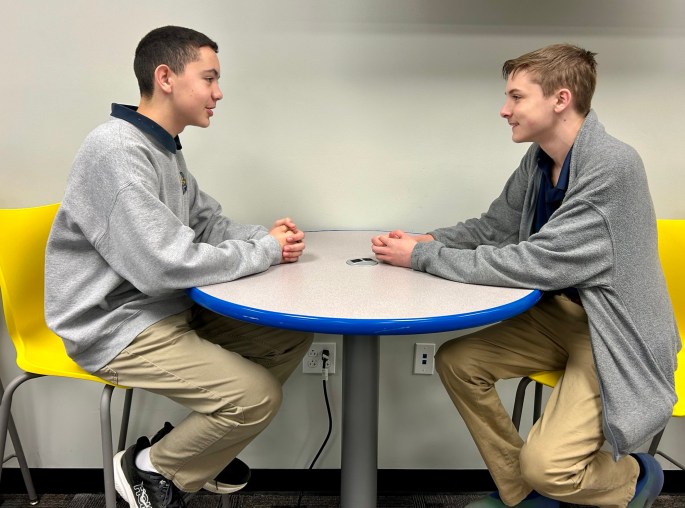
The Power of Mindful Listening: Enhancing Understanding

“I remind myself every morning:  Nothing I say this day will teach me anything. So if I am going to learn, I must do it by listening. I never learned anything while I was talking.”–Larry King

Photo by Pixabay on Pexels.com

Focused Listening 👂

I was recently engaged in conversation with a friend, Jan, sharing about a trip she took with her husband to the United Kingdom. Her descriptions kept me spellbound. While there were many points of interest and wondrous highlights of her trip, there was one item she repeated that planted a seed: She had to actively listen. 

Jan described how she could not allow her eyes to wander to paintings on a wall, people walking past, or other points of interest. Instead, in order to best understand the people she encountered, she had to, as she said, “really focus” on the person speaking. This was due to the unique dialects and word usage that varies from one part of the UK to another, much in the same way that dialects (accents) vary across the U.S. 

This idea of focused listening sounded quite similar to mindfulness: the ability to fully focus our awareness of the moment at hand. Jan was a visitor in another country participating in multiple new sensory experiences that vied for her attention.  However, when engaged in a conversation with a local, she had to remain focused in the present–in order to understand. By repeatedly practicing mindful listening, Jan and her husband were able to glean helpful tips and advice that fostered their successful navigation of the UK via The Tube and create memories of a lifetime. 

Photo by Christina Morillo on Pexels.com

Mindful Listening 🗣️

Mindful, or active, listening does not come naturally to many of us, and it is typically not taught. The good news is that we can learn to improve our listening skills. However, it does require practice, and it is often an ongoing process for which Jan’s story reminded me.

In a previous article, I explored the types of listening with emphasis on: listening to react/criticize, listening to respond, and listening to understand. Each of these types of listening can be appropriate for various situations. However, after talking with Jan, I wanted to examine the specifics of listening to understand via mindful listening, or what most business professionals call active listening.

Many of us know what it feels like to try to have a conversation, serious or otherwise, with another person who clearly isn’t listening. Likewise, we can most likely identify times in which someone was trying to have a conversation with us, but our attention was elsewhere. Both of these scenarios can be frustrating for both the listener and the speaker. Clearly, listening for understanding is often not as easy as it seems.

Photo by August de Richelieu on Pexels.com

Listening to understand 🤔

One way to increase listening skills, according to a 2023 Cleveland Clinic article, is to set an intention to listen. This may sound over-simplistic.  However, when we consider how good it can sometimes feel to talk or share entertaining tales, setting an intention to listen, rather than talk, makes sense. After all, if we want to improve our listening skills, we have to enter a conversation with the intent to listen more and talk less. 

Furthermore, when listening, it is important to focus on the speaker and set aside the phone or other distractions in order to be fully present with that person, especially when the conversation is important. My friend found that if she was going to navigate the UK successfully, she had to fully concentrate on the speaker when asking for directions or help.  When her mind wandered to the new environment around her, she had to nudge her attention back to the speaker.  

Photo by KATRIN BOLOVTSOVA on Pexels.com

Focus on speaker and the message 🔎

The same is true for us. It can be difficult to fully focus on what is being said, and this is where mindfulness comes in.  When we notice our mind has drifted, it is a matter of redirecting our attention back to the speaker. We may have to do this several times, especially for those of us with focus issues.

That said, one thing I am learning to do, when my mind wanders or becomes distracted, is to be honest.  I will tell the person if I become distracted and ask them to repeat what was just said.  Of course, I have to be careful not to do that too much because it can cause the speaker to get distracted. Nonetheless, I find, as a general rule, that asking someone to repeat what they said is overall beneficial to my focus and understanding of the speaker’s message.

An article by the British Heart Foundation, nevertheless supports the importance of listening with minimal interruptions in order to avoid distracting the speaker. The author does suggest occasionally repeating a person’s last few words or asking clarifying questions in order to increase the listener’s understanding of the message. Plus, it maintains the focus on the speaker and their message, rather than focusing on responding.

Photo by Vera Arsic on Pexels.com

“listen” to the Nonverbal cues 🙊

Furthermore, it is also important to “listen” to the speaker’s body language. A 2021 Harvard Business Review article suggests that those nonverbal cues can provide additional key information, especially with regard to the speaker’s emotion. 

Likewise, it is also important for the listener to be mindful of our own body language and eye contact. Making eye contact and nodding at key points, while also not crossing arms and maintaining a relaxed demeanor, can put the speaker at ease. In some situations, it may also be appropriate to ask if the speaker wants suggestions or just wants to be heard.

Photo by fauxels on Pexels.com

Connect to your breath 😮‍💨

Connecting to our breath as we listen can help us regulate our emotions, which can be vital if the conversation becomes difficult. It is easy to become dismissive, defensive, or argumentative if the topic is controversial or one with which there is disagreement.  In these situations, doing our best to take relaxing breaths can aid us in remaining non judgemental and avoid imposing our opinions or solutions. 

Ultimately, learning to be a mindful, fully engaged, active listener takes practice for many of us. And, if we walk away from a conversation thinking we could have been a better listener, it is important to practice self-compassion, learn from our mistakes, and try again in the next conversation. The key, I believe, is to stay committed.

Photo by cottonbro studio on Pexels.com

More Listening; less talking 👂

Our commitment to improving our listening benefits not only us, but those with whom we daily encounter. Learning to listen well increases empathy for others, fosters healthy relationships both at work and among family/friends, demonstrates respect, increases opportunities for understanding, which in turn can reduce, diffuse, or even avoid potential points of conflict. The more we are willing to listen mindfully, the more we can increase understanding.  And heaven knows, the world could surely benefit from the blessing of more listening and less talking!


The gift of single-mindedness–we tap into the present moment

“This very moment is the perfect teacher, and, lucky for us, it’s with us wherever we are.”–Pema Chödrön

REsistance is Futile🤯

I heard the thud and subsequent scattering of parts.  Then, I heard John, my husband, enunciate a few choice words.  Since I wasn’t in the same room of the house, I wasn’t sure what had happened.  Soon enough, John walked into the kitchen-dining room area and set an open socket and driver kit on the table.  Pieces of varying sizes were scattered around the kit like a collage of autumn leaves covering a walkway.

As a few more select words were uttered, John went to work. Watching him work reminded me of those long ago hidden picture pages in Highlights magazine that would entertain me as a young child anytime I visited the pediatrician’s office.  John focused intently as he matched pieces to their corresponding recessed area for storage.  Observing his level of attentiveness to the task at hand, I was struck by the fact he was exemplifying the power of single-minded focus.

Single-minded attention is not myopic 🔎

Bringing single-minded attention to a task is different than being so myopic on one thing, you fail to see the bigger picture of life.  Rather, single-mindedness is the ability to prioritize tasks, and then focusing solely on the most important task before moving on to the next.  This level of concentration requires the self-discipline to remove distractions and remain present with the task at hand.  By removing distractions and avoiding the temptation to multitask, the brain can more easily slip into a flow-state of productivity and/or presence. 

Sure enough, I noticed that in the beginning, when John was resisting the moment, as we have all done, by giving into anger and frustration–as evidenced by the colorful language–he was unable to correctly match the parts to their corresponding depressions.  However, as he let go of the resistance, surrendered to the task at hand, he began to more easily match each part to its recess.  A few moments later, John was into a flow-type state, with each successive match, the quicker the next match came.  Soon enough, albeit probably not soon enough for John, the kit was fully assembled, all parts righted into their nesting spot.

Photo by William Fortunato on Pexels.com

There’s nothing wrong with Mutli-tasking, but . . . 🎧

Many of us multi-task, and our busy, fast-paced world tends to promote multitasking as a regular practice. Obviously, there are merits to multitasking to “kill two birds with one stone” as the old expression goes.  However, there are limits to our focus.  When we are engaged with several tasks at once, no one task gets our full attention.  This is fine in the case of listening to a podcast or book while doing something else where the stakes are low–after all you don’t need to focus on every detail of the book or podcast to glean the overall message/meaning. Thus, nothing is majorly lost if we are not fully focused, and if it is, that’s what the rewind button is for.

In life, however, we don’t always get a rewind button.  Therefore, there are times when it is important to only focus on one thing at a time.  Most of us understand this.  For example, you most likely wouldn’t take a phone call during an important meeting at work or complete work tasks while attending an important doctor’s visit. (Well, maybe in the waiting room, but definitely not when the doctor or staff is in the room with you!)  Likewise, you would be offended and feel short-changed if you encountered either of these scenarios during an important work meeting or an urgent doctor’s appointment.  Nonetheless, how many other moments do we short-change by multitasking?

Photo by Andres Ayrton on Pexels.com

Single-mindedness can be applied to any moment in life 🍏

Any moment in life can be met with single-minded attention, and I do believe there is value in also practicing it.  Eating an apple, going for a walk, talking with a spouse, child, or loved one, even washing dishes after an evening meal can be completed with single-mindedness.  When we take time to solely and fully focus on one event, we are taking time to honor its importance in our lives.  For example, when eating a green apple, as we take a bite, we notice the crunch of the apple, the juice that seeps from the tender fruit with each successive bite, the sweet and tart taste on our tongue as our own mouth begins to dance with saliva.  As we fully taste the apple we can appreciate the nuance of flavors and texture experiencing pleasure, and perhaps, gratitude.

During the act of single-mindedly washing dishes, we are more readily able to take in the scent of the detergent bubbles filling our sink.  We notice the blue and red hues that skim the surface of each bubble.  Our hands warm and turn pink as we immerse them repeatedly in the silky water of soap.  Each dirty dish frees itself from the remains of the meal under the guidance of our hands, and it is rinsed shiny clean under a stream of water from our faucet.  As your mind enters into the flow of washing dishes, there might even be a moment when it occurs to you how fortunate you are to have running water and the opportunity to own enough dishes for everyone in your family.

Obviously, not every moment can be that idyllic, but I do think that practicing single-mindedness can offer numerous benefits.  When it comes to work productivity, focusing on one task well before moving onto the next, increases both productivity and accuracy.  For those in creative fields, single-mindedness can guide the brain into a desired flow-state where ideas begin to stream with ease.  Additionally, when applied to a conversation, single-mindedness not only conveys importance and value of the other person, but it also allows both parties to hear and be heard. 

Photo by Anna Shvets on Pexels.com

sprinkle it throughout your life like spice to enhance specific moments 🧂

Our time and energy for each day is limited. Thus, there will always be a time and a place for multitasking.  However, it is also important to recognize the preciousness of life. Therefore, it is a worthwhile endeavor to consider and prioritize certain tasks and events for which we will single-mindedly focus our attention. 

When we take time to give something or someone our full attention, we are also giving it our full appreciation. Giving an event our full appreciation leaves us open to feelings of gratitude. Our ability to perceive and appreciate details increases, and the event becomes more sacred as corny as that sounds. 

Practicing single-mindedness is not an all or nothing attitude.  It is a practice we can apply to specific moments in our daily lives.  The more we practice it, the more it is possible to feel the richness of our lives.  We have been endowed with special attributes, talents, and blessings, and it is only for a length of our short life on earth. Why not occasionally and single-mindedly take time to fully immerse ourselves in those gifts?