The Power of Mindful Listening: Enhancing Understanding

“I remind myself every morning:  Nothing I say this day will teach me anything. So if I am going to learn, I must do it by listening. I never learned anything while I was talking.”–Larry King

Photo by Pixabay on Pexels.com

Focused Listening 👂

I was recently engaged in conversation with a friend, Jan, sharing about a trip she took with her husband to the United Kingdom. Her descriptions kept me spellbound. While there were many points of interest and wondrous highlights of her trip, there was one item she repeated that planted a seed: She had to actively listen. 

Jan described how she could not allow her eyes to wander to paintings on a wall, people walking past, or other points of interest. Instead, in order to best understand the people she encountered, she had to, as she said, “really focus” on the person speaking. This was due to the unique dialects and word usage that varies from one part of the UK to another, much in the same way that dialects (accents) vary across the U.S. 

This idea of focused listening sounded quite similar to mindfulness: the ability to fully focus our awareness of the moment at hand. Jan was a visitor in another country participating in multiple new sensory experiences that vied for her attention.  However, when engaged in a conversation with a local, she had to remain focused in the present–in order to understand. By repeatedly practicing mindful listening, Jan and her husband were able to glean helpful tips and advice that fostered their successful navigation of the UK via The Tube and create memories of a lifetime. 

Photo by Christina Morillo on Pexels.com

Mindful Listening 🗣️

Mindful, or active, listening does not come naturally to many of us, and it is typically not taught. The good news is that we can learn to improve our listening skills. However, it does require practice, and it is often an ongoing process for which Jan’s story reminded me.

In a previous article, I explored the types of listening with emphasis on: listening to react/criticize, listening to respond, and listening to understand. Each of these types of listening can be appropriate for various situations. However, after talking with Jan, I wanted to examine the specifics of listening to understand via mindful listening, or what most business professionals call active listening.

Many of us know what it feels like to try to have a conversation, serious or otherwise, with another person who clearly isn’t listening. Likewise, we can most likely identify times in which someone was trying to have a conversation with us, but our attention was elsewhere. Both of these scenarios can be frustrating for both the listener and the speaker. Clearly, listening for understanding is often not as easy as it seems.

Photo by August de Richelieu on Pexels.com

Listening to understand 🤔

One way to increase listening skills, according to a 2023 Cleveland Clinic article, is to set an intention to listen. This may sound over-simplistic.  However, when we consider how good it can sometimes feel to talk or share entertaining tales, setting an intention to listen, rather than talk, makes sense. After all, if we want to improve our listening skills, we have to enter a conversation with the intent to listen more and talk less. 

Furthermore, when listening, it is important to focus on the speaker and set aside the phone or other distractions in order to be fully present with that person, especially when the conversation is important. My friend found that if she was going to navigate the UK successfully, she had to fully concentrate on the speaker when asking for directions or help.  When her mind wandered to the new environment around her, she had to nudge her attention back to the speaker.  

Photo by KATRIN BOLOVTSOVA on Pexels.com

Focus on speaker and the message 🔎

The same is true for us. It can be difficult to fully focus on what is being said, and this is where mindfulness comes in.  When we notice our mind has drifted, it is a matter of redirecting our attention back to the speaker. We may have to do this several times, especially for those of us with focus issues.

That said, one thing I am learning to do, when my mind wanders or becomes distracted, is to be honest.  I will tell the person if I become distracted and ask them to repeat what was just said.  Of course, I have to be careful not to do that too much because it can cause the speaker to get distracted. Nonetheless, I find, as a general rule, that asking someone to repeat what they said is overall beneficial to my focus and understanding of the speaker’s message.

An article by the British Heart Foundation, nevertheless supports the importance of listening with minimal interruptions in order to avoid distracting the speaker. The author does suggest occasionally repeating a person’s last few words or asking clarifying questions in order to increase the listener’s understanding of the message. Plus, it maintains the focus on the speaker and their message, rather than focusing on responding.

Photo by Vera Arsic on Pexels.com

“listen” to the Nonverbal cues 🙊

Furthermore, it is also important to “listen” to the speaker’s body language. A 2021 Harvard Business Review article suggests that those nonverbal cues can provide additional key information, especially with regard to the speaker’s emotion. 

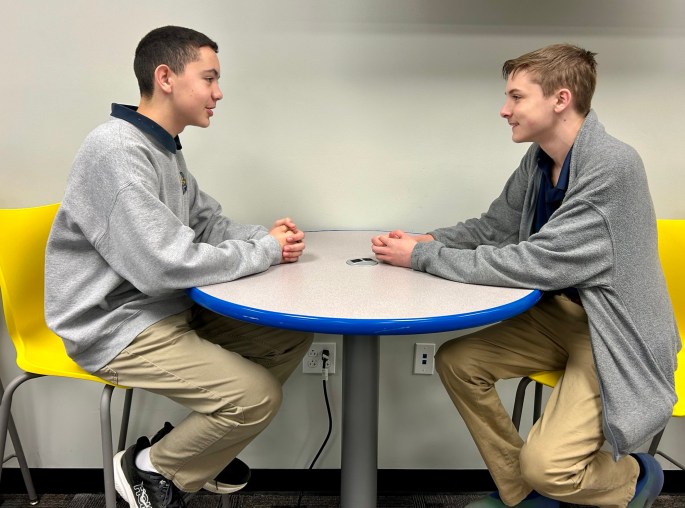
Likewise, it is also important for the listener to be mindful of our own body language and eye contact. Making eye contact and nodding at key points, while also not crossing arms and maintaining a relaxed demeanor, can put the speaker at ease. In some situations, it may also be appropriate to ask if the speaker wants suggestions or just wants to be heard.

Photo by fauxels on Pexels.com

Connect to your breath 😮‍💨

Connecting to our breath as we listen can help us regulate our emotions, which can be vital if the conversation becomes difficult. It is easy to become dismissive, defensive, or argumentative if the topic is controversial or one with which there is disagreement.  In these situations, doing our best to take relaxing breaths can aid us in remaining non judgemental and avoid imposing our opinions or solutions. 

Ultimately, learning to be a mindful, fully engaged, active listener takes practice for many of us. And, if we walk away from a conversation thinking we could have been a better listener, it is important to practice self-compassion, learn from our mistakes, and try again in the next conversation. The key, I believe, is to stay committed.

Photo by cottonbro studio on Pexels.com

More Listening; less talking 👂

Our commitment to improving our listening benefits not only us, but those with whom we daily encounter. Learning to listen well increases empathy for others, fosters healthy relationships both at work and among family/friends, demonstrates respect, increases opportunities for understanding, which in turn can reduce, diffuse, or even avoid potential points of conflict. The more we are willing to listen mindfully, the more we can increase understanding.  And heaven knows, the world could surely benefit from the blessing of more listening and less talking!

Mastering the Art of Listening: Key Techniques

“Most people do not listen with the intent to understand; they listen with the intent to reply.”–Stephen R. Covey

Photo by Jopwell on Pexels.com

Listening is an Art 🎨

I listened to an acquaintance share a problem with me. I tried to fully listen, and then proceeded to offer my best advice.  Later, however, I reflected upon that conversation and wondered if I should have responded differently.  Was she really seeking advice, or did she just want someone to listen and empathize with her? Perhaps, I should have taken more time acknowledging her feelings, and then asked if she wanted advice, instead of assuming she wanted it.

Listening, really listening to others, is a skill and an art. I once heard a speaker say, “Hearing is uncontrollable; listening takes a special knack.” This is so true. We are constantly inundated, it seems, with an assortment of sounds, clamor, and all types of conversations.

 I was reminded of this quote in a past conversation with my daughter, Maddie. We were, ironically enough, talking about listening.  Specifically, I wondered aloud about ways to improve my own listening. She shared with me what a friend once taught her.

Photo by Andrea Piacquadio on Pexels.com

Three ways of listening 👂

According to Maddie’s friend, there are three types of listeners: Those who listen to respond; those who listen to react or criticize; and, those who listen to understand.  This stuck with me, and I decided to do a short bit of research into this topic. 

One quick internet search on “types of listening” resulted in hundreds of articles. Some pieces were geared more towards high school or college students taking communication classes.  Others were framed around mental health. However, based upon my informal searches, business/work implications seem to make up the largest number of “ways to listen” write-ups.

While I can’t claim to have done the deepest research dive, what I did find seemed to support the overall point of what Maddie shared with me–there are different types of listeners and a number of identifiable ways of listening.  It seems the biggest point of agreement is that most of us can, and would probably benefit from, improving our own listening skills.  What mostly varies, from article to article, is the identification of how many different listening types/styles there are.  

Photo by Andrea Piacquadio on Pexels.com

Two Other types of Listening 🎧

Two types of listening that Maddie’s friend did not identify were what several articles called “pseudo listening” and “appreciative listening.” Pseudo listening are those times when we pretend to listen, but we are not really absorbing the speaker’s information.  This can occur across a wide array of situations, from the classroom to the board room, and from having the TV or radio on in the background to a person droning on and on about a topic for which you have little interest, but don’t want to be rude.

Appreciative listening is the type of listening we engage in when listening to a favorite song or piece of music.  It can also occur when listening to a presentation or speaker talking about a favorite subject.  You are not, per se, learning anything new, just appreciating the appeal of the subject matter.

Photo by nappy on Pexels.com

Listening to Respond 🗣️

To the point of “listening to respond,” there are several key points.  First of all, in day-to-day life, there are numerous situations which require listening carefully and responding quickly. From minute tasks, such as ordering food, when the staff asks how you want a certain dish served to listening to a friend or loved one ask if you could lend a hand, there are moments that require listening and responding/acting accordingly.  

However, some situations require more than just a response. There are times when we need to analyze before responding. This action-oriented form of listening, requires dialed-in focus and a timely response in order to efficiently deliver information. Doctors, teachers, pharmacists, lawyers, and numerous other types of jobs require this type of listening, which analyzes the person’s problem from a neutral point of view in order to guide the patient, student, client, and so forth to what is, hopefully, an appropriate solution.  Although the listener is still responding, the listener is responding from a point of thoughtful consideration in order to best help the person solve the problem.

Photo by August de Richelieu on Pexels.com

Listening to react 🙎‍♂️

Another action-oriented form of listening focuses on the content of the message in order to react or criticize.  This type of listening is designed to judge the content of what is being said as well as the reliability of the source or speaker. Obviously, if you are an attorney, arguing before the court for your client, this type of listening is clearly a very important skill. However, in all walks of life there are times we must listen and react defensively to a given situation. Unfortunately, this type of listening can become aggressive quickly, especially when applied to a situation in which a less-reactive approach would have better benefitted the situation. 

Photo by cottonbro studio on Pexels.com

Listening to understand 🤔

  Finally, there are times when we need to truly focus on the person, listen closely to their content in order to understand, empathize, and perhaps even build connections. This is typically the hardest style of listening to develop, but it is worth fostering in order to build and sustain relationships. Listening to understand is a skill many of us need to improve, including myself. Due to our jobs or positions in life, a large number of us spend our work days quickly analyzing, and responding to others’ problems; and therefore, this type of listening, unfortunately, tends to become our default mode of listening even in situations where it would be better to remain quiet longer in order to connect with and fully understand the speaker.

Learning to listen to the underlying emotion conveyed in a person’s message requires active and participatory listening.  This may require clarifying questions, but other times, it simply means offering space–a safe, quiet space where a person can simply share their thoughts and feelings without judgment or interruptions.  

Photo by fauxels on Pexels.com

Space for listening 🤐

Sometimes, people just want to be heard and aren’t necessarily asking for a so-called “solution.”  This is where, Maddie suggested, I might need to ask, “Do you want advice or do you just want me to listen?”  It is such a simple concept, but this clarifying question clears up any confusion on the listener’s part as to what their role is. 

Reflecting back to that initial conversation with an acquaintance made me wish I had clarified whether or not the person wanted me to listen, offer advice, or both.  Unfortunately, I cannot go back in time, but moving forward, I can ask that in future conversations. Listening well and listening appropriately to the situation does indeed take a special knack, but even more so, it requires us to think before we choose whether to respond, react, or criticize.  It requires that we slow down our thoughts, listen deeply, and if needed, take time to clarify what the person speaking needs from us.  In the end, not only will those with whom we interact benefit from our awareness, but we may find that our own relationships, work settings, family- and even community-dynamics shift and may even benefit as well.

Photo by Oleksandr P on Pexels.com

Sawubona: How this one word could change the world

“Every individual matters. Every individual has a role to play. Every individual makes a difference.”–Jane Goodall

Photo by Savvas Stavrinos on Pexels.com

Listening to a podcast recently, a word piqued my curiosity.  Sawubona.  The speaker stated that this term had a moment of notoriety in the 1990s in the business world based upon a book written to encourage companies to solve group problems through various systems of learning.  This may explain why I never heard of it up until now as I was, and still am, in the field of education as opposed to business.

As I understand it, at its most basic level, it is a Zulu expression of greeting, another way of saying “hello.”  However, as heard in the podcast, and confirmed in later reading, its meaning is far from a common greeting.

Depending upon the source read, Sawubona, means “I see you,” or “We see you.”  In response–again, depending upon the source–the other person greets, “Yebo, Sawubona,” (Yes, I/we see you too), or “Shiboka” (I exist for you).  Regardless, it is the seeing of the other person and acknowledgement of existing to help the other, that most stood out to me. 

Photo by Sora Shimazaki on Pexels.com

Quite often, in our morning rush, our greetings and responses are typically short, polite, and given with a smile as we promptly move on to our work and/or day at hand.  Certainly, there are occasions when we pause long enough to ask about a specific event or person, but as our schedule often demands, we listen, long enough to be polite before moving quickly on, without really looking.  

I know I do this, and I feel fairly certain that I am not the only one.  Therefore, I do not want the thesis of this piece to be interpreted as finger wagging or shaming.  Instead, I hope to provoke some thought regarding the importance of seeing our shared humanity in one another and existing in a state of respect –even if we don’t see eye-to-eye with everyone with whom we meet.

Photo by Yan Krukau on Pexels.com

Respect, according to Merriam-Webster, is derived from the Latin root, respectus, which means, looking back (at), refuge, regard, and consideration. The beauty, to me, of Sawubona is in the underlying message of regard for the other person. I SEE you is such a powerful acknowledgement. It is a way of communicating that I SEE (regard/consider) your uniqueness, your talents, and your gifts, no matter the differences we may have.

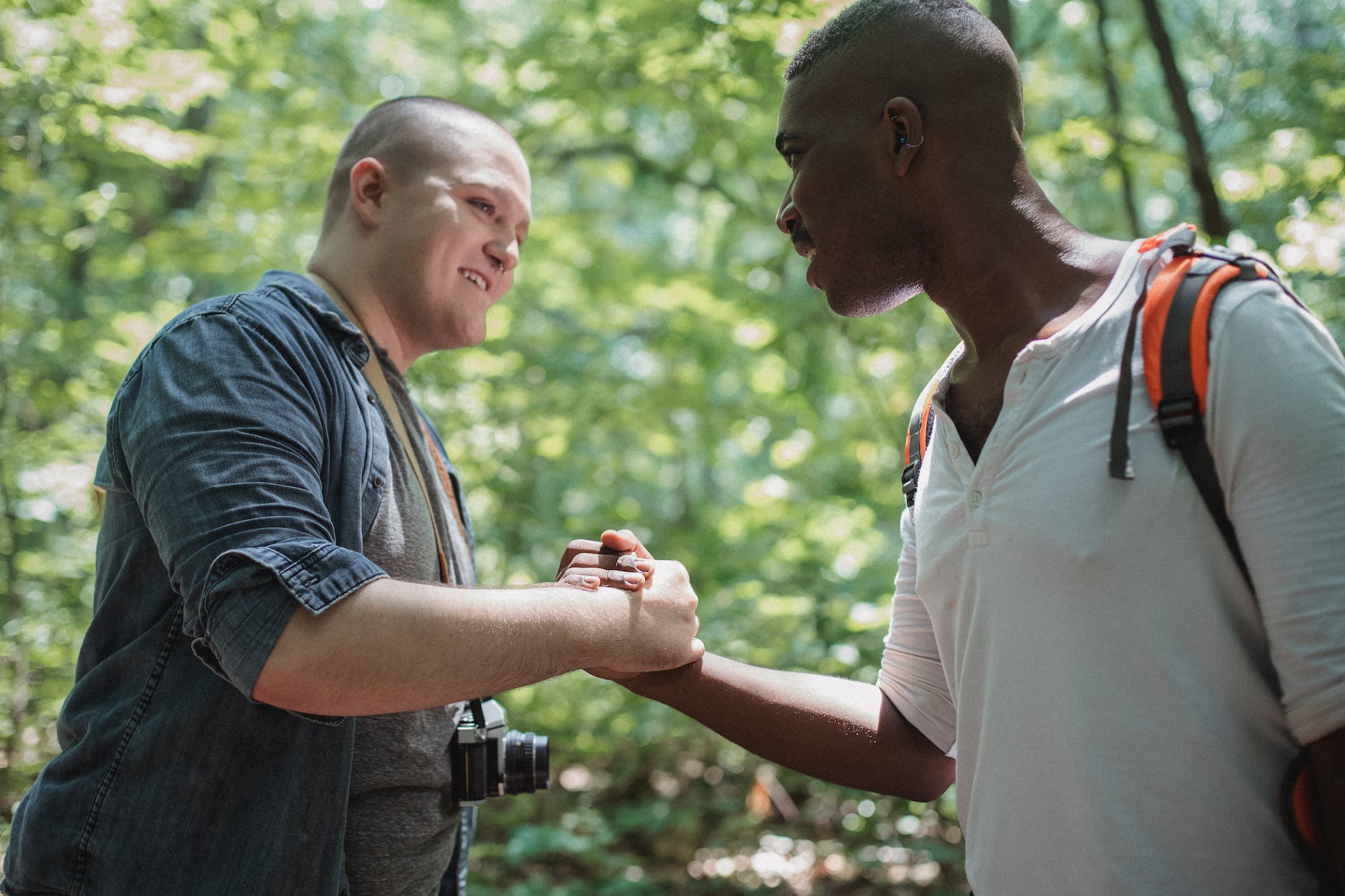
I once heard a story of a farmer who espoused hate towards a certain political figure.  As it turned out, the politician asked to visit the farmer for a conversation.  The farmer told the politician’s team that he felt reluctant for the politician’s visit because the farmer espoused a certain faith, and given the public servant’s political status, the farmer assumed the politician could not possibly have a faith affiliation.  Nevertheless, a meeting was arranged, and the two men of opposing sides walked the farmer’s land together as the farmer talked and shared his concerns about his way of living.  The political figure looked and listened. 

Later, as the conversation progressed, the two men ended up in the farmer’s house, drinking coffee and learning more about one another.  When the farmer realized that he, indeed, shared the same faith practices as the politician, he called a few of his friends to join in the conversation.  As the story goes, upon the politician’s departure, the two men shook hands, but the farmer made it clear that he still would not vote for this political figure.  However, he added that he was surprised to learn the two of them had more in common than he realized.  He further invited the politician to return to his home at a later date, so that they could continue their conversation.

Photo by Kamaji Ogino on Pexels.com

Some might ask what is the point of the story if the farmer was not convinced to vote for the politician. Instead, I think it makes a case for the idea of Sawubona. Two men, on opposite sides of the political fence, spending time with one another, asking questions, listening, learning, and finding some common ground in their shared human experience is a way of conveying consideration or regard for one another. They didn’t have to agree on all points in order to respectfully get along.  In fact, as it turned out, the politician would later reach out to the same farmer when certain legislation was being considered that would have affected the farmer and his community in order to gain a greater understanding of the potential impact.

Reflecting on Sawubona is a lesson of seeing others and being seen by others. It is understanding that we do exist together for one another.  We may have our differences, but it is those collective differences that can create a community of support.  Each individual has their own gifts and talents that we bring to the proverbial community table.  And, thank heavens, because there are so many skill sets of others upon which I rely in order to live, work, and participate in many other daily activities. 

When we truly take time to see others, we can see the common struggles, celebrations, and life experiences. We can feel compassion for another’s suffering, and we can feel the joy of their milestone celebrations. Furthermore, we can appreciate the gifts and talents of others, even those with whom we may disagree on certain subjects. 

Photo by fauxels on Pexels.com

In the end, I am not suggesting that the idea behind Sawubona is easy. Instead, I encourage us to think of Sawubona as a practice. A practice in which we take time to look others in the eye more frequently when greeting in order to make others feel seen.  Additionally, it is a practice for when we find ourselves feeling angry or incensed by an opinion different from our own, to challenge us to pause, and look more closely for the common human thread shared with that person of opposition.  

One word cannot solve all problems, but if we begin to look for more Sawubona moments, it might allow for more opportunities–like the farmer and the politician–for listening, learning, and finding common ground.  When we feel seen/heard by another person, it makes us feel respected, and that feels good.  Therefore, imagine the positive reverberations that could be created within our own local communities if we began to offer that same Sawubona feeling to even one person per day.  It is certainly worth considering. 

Photo by Pixabay on Pexels.com