Embracing Silence: The Owl’s Call to Mindful Listening

A wise old owl sat on an oak;
The more he saw the less he spoke;
The less he spoke the more he heard.” —old proverb

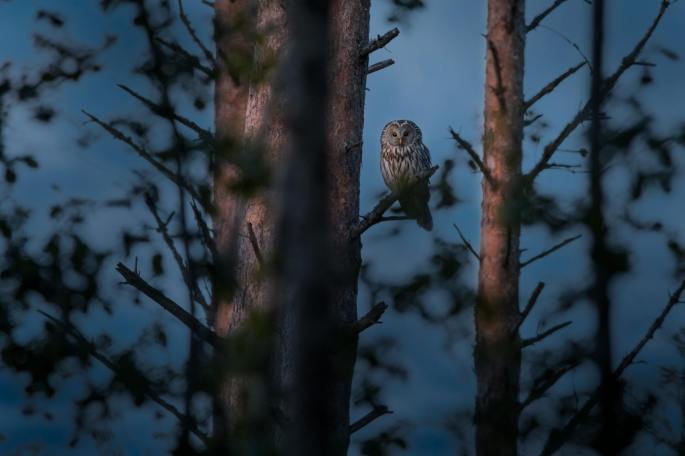
A wise-looking owl perched on a branch in a dark, wooded area, illuminated softly by moonlight.
Photo by Erik Karits on Pexels.com

Listening in the Dark 🌌

I am an early riser, typically awake before the sun. A few weeks ago, my ears perked at the haunting, penetrating call of an owl. Its “Hoo-hoo-hoo, hoo-hoo” echoed around our yard as I looked out into the murky dark. Since then, I intentionally listen for its steadfast call. It has become both a comfort and a mystery—an invitation to listen, reflect, and learn something new.

The owl’s call continues, I am certain, even when I am not listening; yet it requires my full attention in those predawn hours if I hope to notice it regularly. Its presence illustrates the importance of listening and discerning with care and purpose.
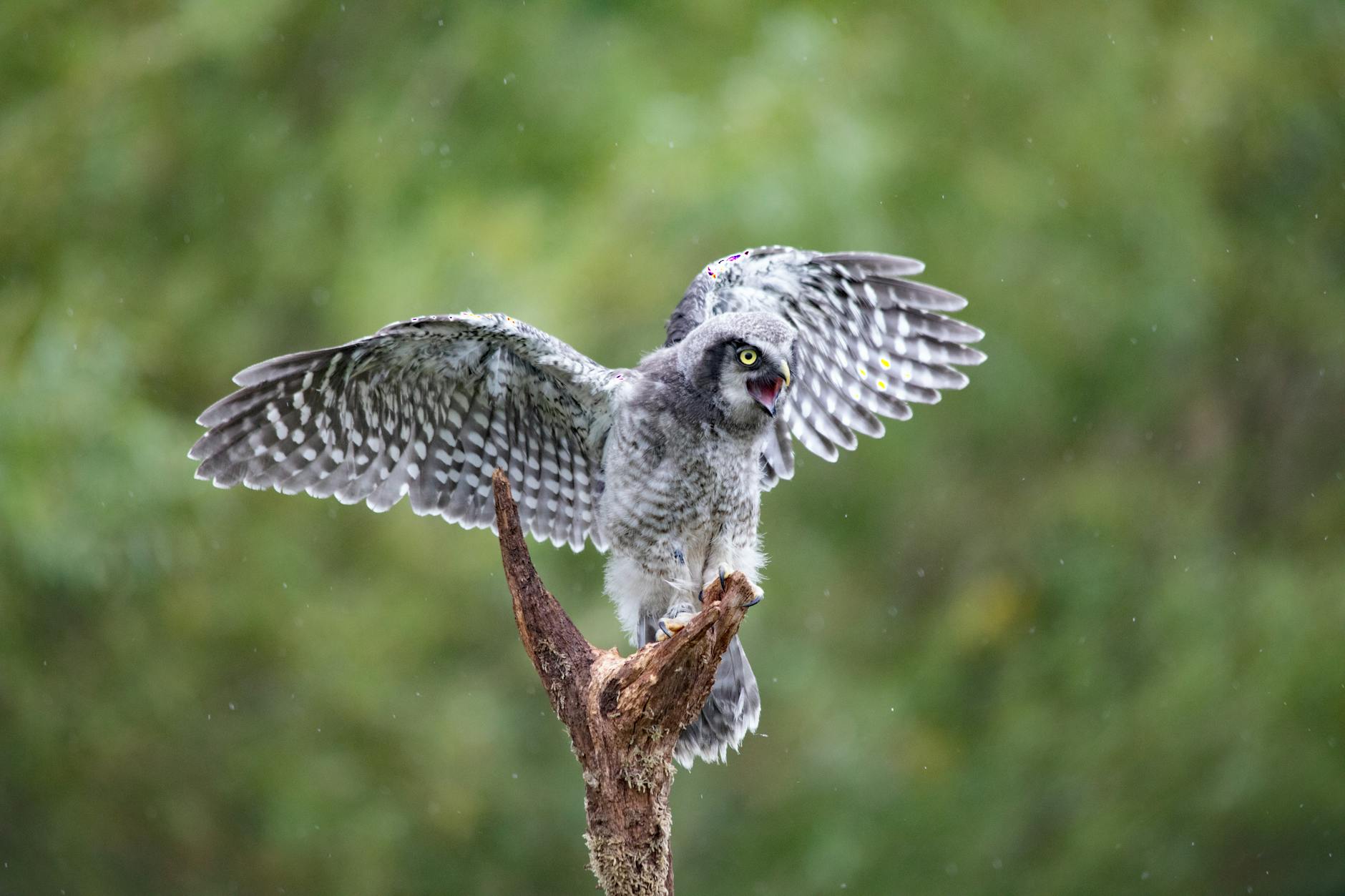
A grey and white owl perched on a branch with wings partially spread, showcasing its feathers and an alert expression against a green blurry background.
Photo by Petra Ryan on Pexels.com

What Owls Teach Us About Voice 🗣️

The autumnal hoots I hear, I learned after a bit of research, are used mostly to communicate territory and to call to potential mates. (It is worth noting that many owl species mate for life, finding another only if a partner dies or becomes separated.) Owls also use distinct calls to warn a mate, their nestlings, or even neighboring owls when danger is near. Only when the threat is imminent do they screech, hiss, or snap their beaks in defense of their young. Like the owl, we, too, can carefully choose when to use our voices amid the noise of the world, saving our own form of “screeching” for the rarest and most necessary moments.
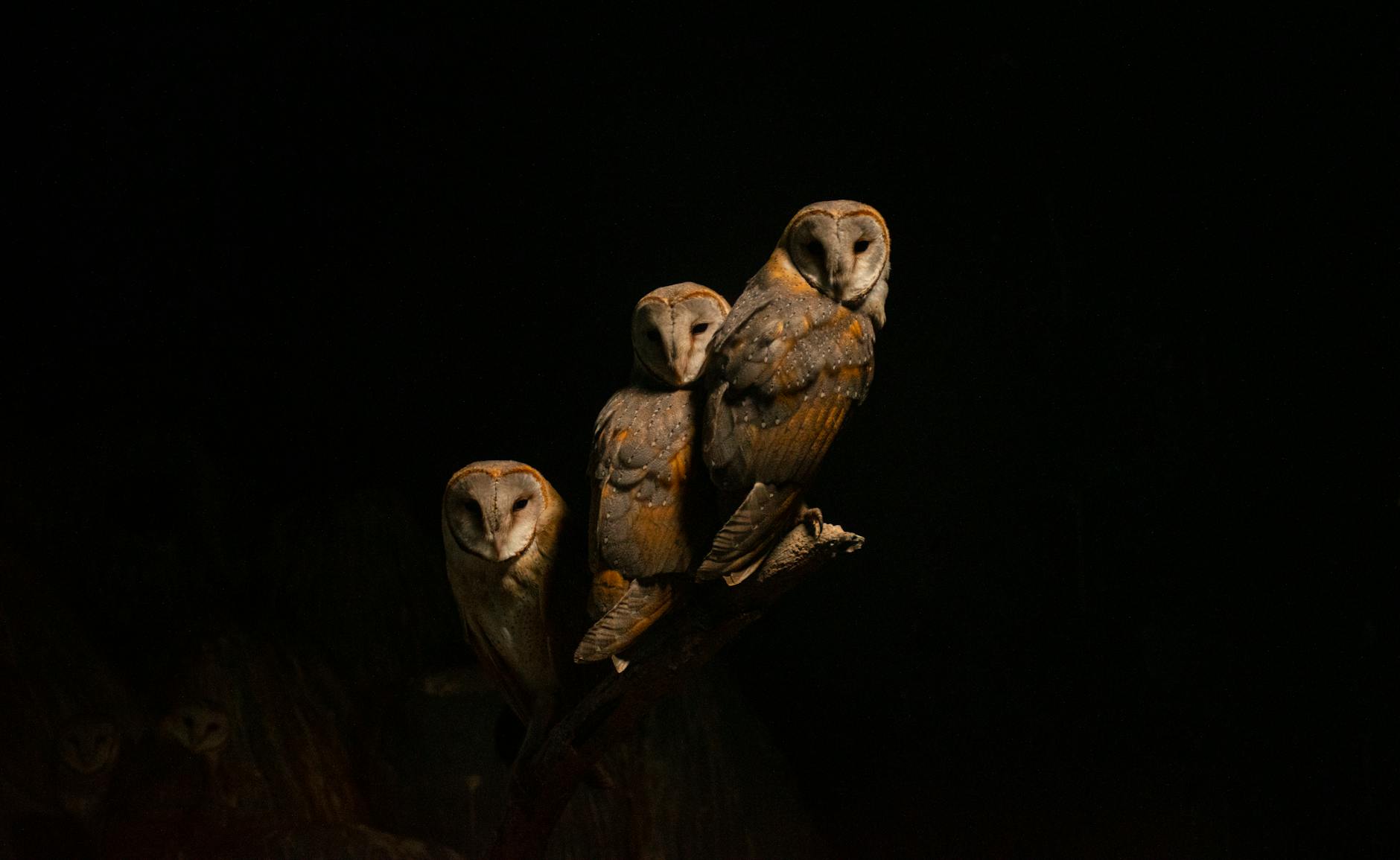
Three barn owls perched on a branch in low light, showcasing their distinctive features against a dark background.
Photo by throughmylife_in_ INDIA on Pexels.com

Signals of Respect and Coexistence 🦉

As I read more, I couldn’t help admiring how owls communicate—practically, respectfully, almost as if to say, “I am here. You are there. Let us coexist with our shared resources and help ward off danger.” To be certain, I am personifying and simplifying their communication, but perhaps there is a lesson for us. In a world that often isn’t equitable in its distribution of resources, space, or power, maybe we can learn the art of signaling like owls—communicating truthfully and transparently without silencing others. What if we approached our conversations with presence, restraint, respect, and a shared awareness of the landscape we inhabit?

Holding Our Ground with Grace 🙏

Hearing the owl’s early morning “Hoo-hoo-hoo, hoo-hoo” reinforces the importance of holding our own ground—our principles, values, beliefs, and even compassions—without becoming loud or defensive. The owl does not insist on being seen; rather, it asserts its message with a reserved dignity. We, too, can claim our “territory” through composed conviction and fairness, standing firm without demeaning others. Faith in our tenets, like my unseen morning owl, calls us to trust what cannot be seen but can be discerned only in stillness.

A tall tree with orange leaves against a clear blue sky, surrounded by a grassy area and a house in the background.
Fall is a time of release and renewal.

Autumn’s Invitation to Adapt 🍂

Autumn is a season of release and preparation. Light softens, signaling leaves to fall as trees ready themselves for winter’s quiet work. Many creatures follow this rhythm, including the owl in my backyard adapting to the shifting season. We, too, are invited to adapt—to let go of what is no longer needed, recalibrate our priorities, and listen more deeply. The natural world thrives on balance, which is different from our human desire for “fairness.” It exists in a subtle harmony in which every being plays a role. I wonder what might happen if we focused more on harmony—the give-and-take of shared ecosystems and resources—paired with the wisdom of knowing when to listen and when to speak.

A woman in a pink hijab interacts playfully with a barn owl perched on her arm, pointing towards its face, with another owl visible in the background.
Photo by Rangga Aditya Armien on Pexels.com

The Harmony of Coexistence 🕊️

The autumn owl’s voice in my backyard is solitary, and yet it reflects community. It marks its presence while acknowledging the presence of others, including us. Coexistence, the owl teaches, requires more than hearing what others say; it requires listening to the silences. Of course, human coexistence is complicated, and life often isn’t what we would call fair.

Therefore, it becomes incumbent upon us to listen, act kindly, and withhold judgment—offering small or not-so-small acts of goodness to help restore balance. This may mean choosing gentleness, or even silence, over the need to be “right,” especially when a loved one, friend, or coworker says or posts something unkind or expresses an opinion we strongly oppose. Likewise, offering compassion instead of judgment when someone is rude or ill-behaved can shift a moment for the better, even if only because we have refused to be pulled into energy-sapping negativity.

A serene forest scene with tall trees bathed in soft rays of sunlight filtering through the branches, creating an ethereal atmosphere.
Photo by Atlantic Ambience on Pexels.com

Before the Light Returns 🌅

The owl still calls unseen in the dark predawn hours, reminding us that communication, connection, and hope often begin before the light returns. The owl does not question whether the sun will rise; it simply continues its call, trusting the rhythm of creation. Like my unseen neighbor, I pray we find the courage to speak fairly, listen deeply, and have faith in the unseen process—knowing that every voice lifted in love and fairness echoes far beyond what we can see.

Perhaps that is the heart of the owl’s lesson: when we listen more deeply, we create the conditions for fairness to grow. As I recently read, “Life isn’t fair. It isn’t, which is why people should endeavor to be more fair to one another, not less.” —Kate Quinn.
Embracing Life’s Unanswered Questions

“Be patient toward all that is unsolved in your heart and try to love the questions themselves. Live the questions now. Perhaps you will then gradually, without noticing it, live along some distant day into the answer.“–Rilke 

A vibrant sunrise with deep orange and golden hues peeking through soft clouds, symbolizing new beginnings and hope.
Photo by Bradley Hook on Pexels.com

When the Mind Won’t Stop Asking 😕

Those words of Rilke, written over a century ago, remind me that some of the hardest seasons in life are the ones that offer no answers—only questions that echo back in silence.

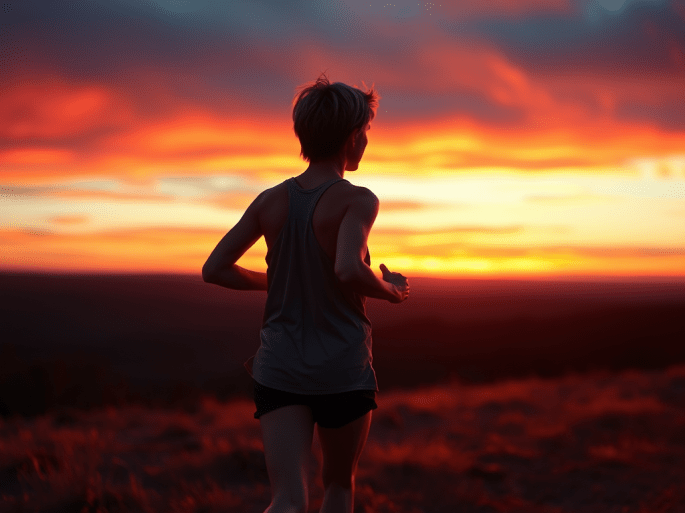
A silhouette of a person walking towards a bright sunrise, symbolizing hope and introspection.
Photo by Dom Gould on Pexels.com

Running into the Questions ⁉️

I was driving home Saturday morning after my weekly long run with a podcast playing in the background. The previous week had been difficult, and I had hoped the run would provide a reprieve from my worries. I started running well before the sun rose under the cloak of a starry sky, which served to keep my mind calm. Then, the rich crimson of dawn edged up the horizon, deepening from vermilion to the fiery orange of full sunrise. As if on cue, the monkeys in my mind began chattering—an endless loop of questions followed by equally endless, devastating possibilities. 

I tried to redirect my thoughts: “If only this or that would happen, then everything will be fine,” I told myself. The problem with this if–then principle is that it’s meant for building new habits or personal change; I can’t magically apply it to others—or to the world at large. Even after my run, the mind monkeys continued their spirals. Then a line from the podcast caught my attention, “What I think Rilke’s words are stating is that if we can learn to live in peace alongside the questions, this may allow us to witness the unfolding of the answers in some indeterminate future.” 

A hand reaching out towards a shimmering body of water under a bright sky.
Photo by Lukas on Pexels.com

An Invitation, Not a Reprimand 🙂

Of course, I had not heard Rilke’s words, so I had to rewind the podcast in order to focus on the original quote. Those words felt like an invitation to hope, rather than a reprimand for my monkey mind. To be clear, it did not feel like a promise of a positive outcome, but rather hope for a greater understanding one day. Rilke’s words seemed to affirm my questioning, as long as I let the questions simply “be,” like one ingredient in the stew of life. 

Hands holding a small, gift-wrapped box with a ribbon against a soft, patterned background.
Photo by Kim Stiver on Pexels.com

The Unsolved Nature of Life 🧐

While I cannot speak for everyone, I think many of us live with unanswered questions—and I’m probably in the camp that has more than a few. Seasons of life bring different questions, but they often center around themes of health, purpose, relationships, concern for others, and the future. It is often uncomfortable–the unsolved nature of life. We desire, like the fairy tales of our childhood, resolutions to problems in which we “all lived happily ever after.” We like knowing what is next; we desire to wrap up answers neatly and hand them over like a present. But life, as we eventually learn, isn’t wrapped in tidy endings. 

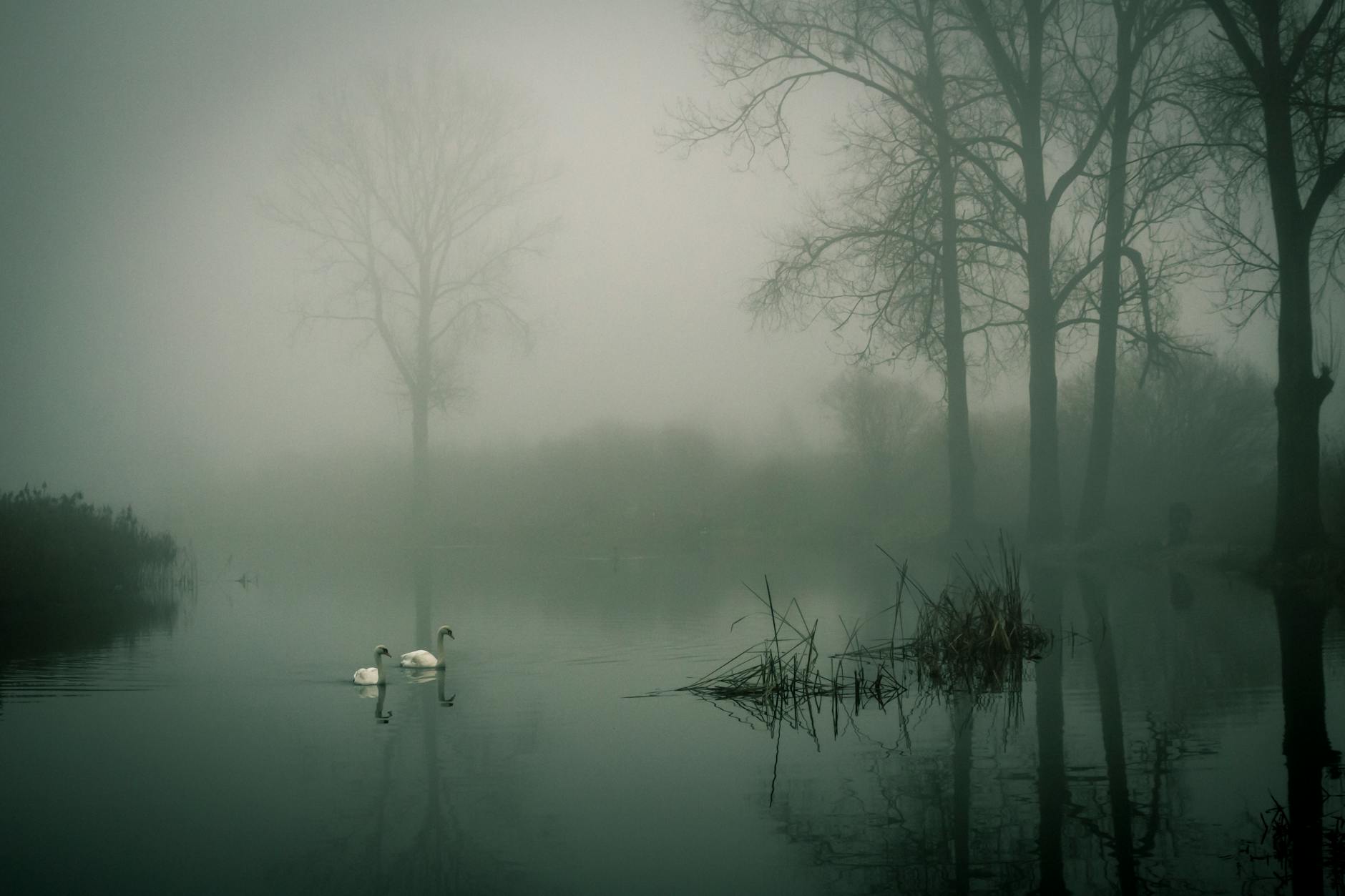
A serene landscape shrouded in fog, featuring two swans gliding on a calm body of water, with bare trees reflecting in the misty surroundings.
Photo by Karol Wiu015bniewski on Pexels.com

When Answers Refuse to Come 🤨

If you have ever encountered a personal crisis, or that of a loved one, you know the “hurry up and wait” sense of time that often accompanies these scenarios–appointments scheduled off into the distant future, followed up by more appointments with no answers, only more maybes and/or more questions or concerns. It can feel like an autumn fog settling over a town in the early morning hours. You can see outlines of various possibilities, but still not know what the future holds. And yet, even in that fog, life quietly continues. 

A chalk-drawn question mark on a black background, symbolizing uncertainty and curiosity.
Photo by Pixabay on Pexels.com

Coexisting with Uncertainty ❓

On one hand, Rilke seems to invite us to love the questions—an improbable ask, given the weight of so many of life’s uncertainties. Perhaps, as the podcaster suggested, Rilke’s words invite us to coexist with uncertainty rather than chase quick answers. Personally, when I face challenges, my first instinct is to “fix it,” whatever “it” may be. However, most of life’s bigger questions are not, per se “fixable” in a vacuum. There are many uncontrollable variables that often fill me with an anxious energy. 

This is when I tend to lean into writing, outdoor movement (especially running and walking), as well as reading–trying to learn as much as I can about the current challenge I am facing. Additionally, I will offer help (if I can be of service) to those for whom I am concerned. In this way, I feel like I am stretching and growing in understanding and empathy, rather than grasping and silently suffering. 

A close-up image of colorful daisies, featuring hues of pink, yellow, orange, and purple, surrounded by green foliage.
Photo by Leigh Patrick on Pexels.com

The Garden Rule: Sleep, Creep, and Leap 🪻

I’ve lived long enough to know that many answers only emerge with the sweet relief of distance and time—like the three-year rule of a perennial garden: sleep, creep, and leap. A long-ago biology professor once explained that in the first year of a newly planted garden, the plants appear to grow very little because they’re focused on developing and strengthening their roots. The following year, roots are still growing and establishing, but they do have enough energy to create a bit more growth above ground. However, by the third year, the roots are fully established and the plant appears to “leap” out of the ground with growth. So it can be with the answers to life’s questions. 

Three white blocks arranged to spell 'WHY' in black uppercase letters.
Photo by Ann H on Pexels.com

Growing Through What We Don’t Yet Understand 📈

There are times in life where we cannot figure out why we keep facing one roadblock and one challenge after another. We wonder how much more we can endure, why we are faced with a certain situation, or why things are not going the way we imagined. Like that early decorative landscaped garden, we cannot see that our experiences are developing roots of strength and stability. We may not see that our ability to empathize, our talents, our emotional well-being, and even our souls, are stretching and strengthening. Later, we may look back and see that those setbacks were quietly shaping us—building the strength we’d need for what came next. 

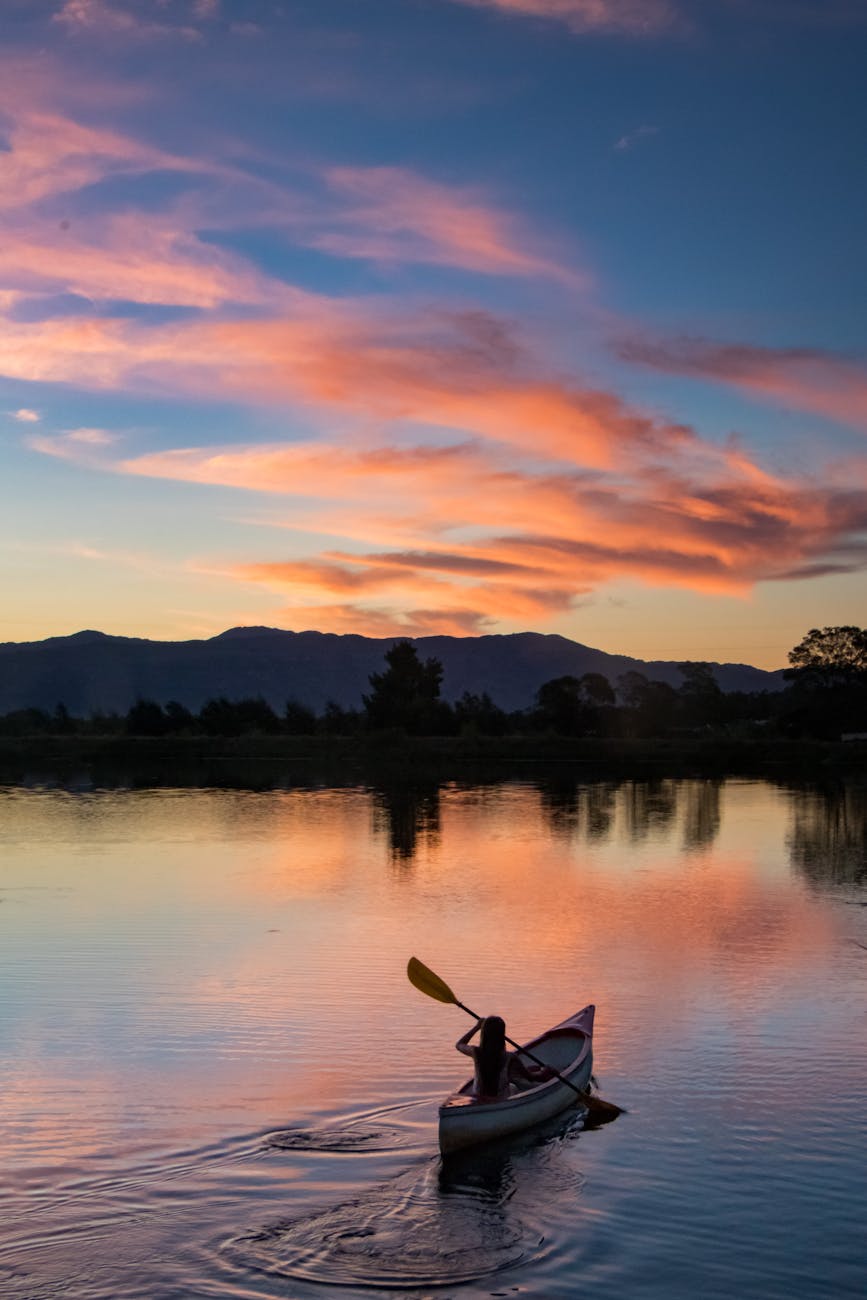
A person kayaking on a calm body of water during sunset, with vibrant pink and orange clouds reflected in the water.
Photo by Taryn Elliott on Pexels.com

The Ineffable Beauty of Living with Questions ✨

As I further reflected on Rilke’s words and my own lived experiences, I realized that there is a certain ineffable beauty that is created by living with questions because it asks us to rely upon faith and grace, granting us a greater purpose as a seeker and a doer. 

We are not here to solve life, but to live it—with curiosity, patience, and hope.

While hope does spring eternal, it is not the same as knowing the answers. Perhaps, that’s the point–it is more about trusting that our life story is continuing to unfold in its own time and season. 

A calm, reflective body of water at sunset, with vibrant streaks of orange and blue in the sky, and a small island featuring lush greenery and palm trees.
Photo by Johannes Plenio on Pexels.com

Light, Grace, and the Unfolding of Answers 💫

Finishing the drive home, I realized that Rilke had a point. As long as I have questions, as long as I seek answers, I am not only living, but I am living with an open, loving heart and a curious, empathetic mind. I have been fortunate to live to see questions answered, but I still have more questions to go–about loved ones, about the world, and about myself. 

Like the sunrise that began my run, the light of understanding will come again—slowly, beautifully, and in its own time. Until then, I feel grateful for life’s questions. They have strengthened my life in numerous ways and provided me with unpredicted opportunities for growth. In the words of John O’Donohue, “Perhaps the beauty of not knowing is that it keeps our hearts open enough to be surprised by grace.” I welcome that grace into my life—and I hope you do too.

How Gratitude Can Help Us Face Adversity with a bit more Grace

“Gratitude is the antidote to fear.  When we focus on what we are grateful for, fear loses its grip on us.”–Michael J. Fox

Photo by Inzmam Khan on Pexels.com

Curse those unexpected events 🤬

I can’t help but feel the irony that my most recent piece of writing centered on the topic of unexpected, terrible events that seem to break our lives’ direction, only to find myself once more experiencing another one of those frustrating events. Perhaps, Divine Providence feels I still haven’t learned enough.  Then again, maybe it is all part of life’s continuous process of change and learning.  Regardless, I am once more a humbled student of life.

Photo by Element5 Digital on Pexels.com

My husband, John, and I, had just completed our first day of professional development for the 2023-2024 school year in Charleston, WV.  It had been a long day, and we still needed to go vote in the Ohio special election before heading home.  Facing over an hour’s drive to get to the polling location, which was not our normal precinct due to this unusual nature of this election, John and I navigated congested Charleston roads, making our way towards Interstate 64.  

We stopped at a red light on WV 119 with three cars in front of us.  John had just commented on the amount of traffic when, BANG! CRUNCH! SCREECH! Only seconds passed, and as the shock of suddenly being whipped quickly forward and backward began, several thoughts flashed through my head in staccato fashion.

Photo by Pixabay on Pexels.com

You know from the sound, it can’t be good 🚦

What is happening? What was that sound? Is John ok? Did we just get hit?  We just got our car fully repaired from a February incident when a spooked deer collided into the rear bumper and passenger side door.  This. Can’t. Be. Happening.

“Are you okay?” My husband asked as the reality of his voice slapped my thoughts back to my surroundings.  

I was okay. He was okay.  We were both buckled, and seemingly uninjured.  First point of gratitude.

There’s no Choice But surrender 😩

Sometimes there’s nothing to do but surrender.

I could go on, but many of us have been there–that sickening moment when you have no choice but to surrender to the bad event that is happening and let go of any future thoughts and planning.  There is nothing to do, but remain present in the moment at hand.  It sounds simple, but it is incredibly difficult.  My mind kept racing to future events, such as the evening ahead, the impact this would have on the coming days and weeks as well as the amount of time and money that would be lost as a result of this incident. 

However, none of those racing thoughts would help me at that moment. Instead, I had to focus on the needs of the moment.  Call 911. Check on the person who hit us.  Call insurance.  Retrieve our registration and insurance information.   

Gratitude in the midst of chaos ✨

Photo by Brett Jordan on Pexels.com

In the midst of the din of traffic and my galloping thoughts, I began assessing and readjusting to reality as a moment of clarity occurred.  We were at the bottom of a hill.  There had been three cars ahead of us at that red light.  If the person who hit us had been speeding down that hill, the impact, and the numbers affected, would have been so much worse.  Second point of gratitude.

The person who hit us appeared uninjured, but they were confused.  This person honestly spoke to John and I as well as the police officers at the scene.  They did not remember hitting us. Specifically, they did not know if they had, “fallen asleep or zoned out or what.”  They were profusely confused and also sorry.  This person could have lied, but they did not.  Third point of gratefulness.

Traffic, along this corridor of multiple lanes and exit lanes, was heavy throughout the time our two cars (the person who hit us and ours) were pulled off to the side of the road.  The August sun beat down on the blacktop; and yet, it was an unusually cool day for the time of year.  While no one stopped to offer help, neither did any vehicles collide into our cars, despite the fact that the berm, onto which we were pulled over, was narrow. Fourth and fifth points of gratitude. 

Emotional Rescue 🚑

Photo by Aleks BM on Pexels.com

Don’t get me wrong.  I wasn’t a saint at that moment, cheerily ticking off happy, grateful thoughts like petals of a daisy–not by a long shot!  I wanted to cry, or even scream at the heavens, “Why us, again?”  My emotions were vying to rise to the surface, but I managed to keep them in-check. 

 But, really, those emotions were nothing but fear.  Fear of the impact on John. Fear of the unknown costs. Fear of the unknown impact on my body as I recently had surgery.  Fear of losing our family car once again. Fear of the change this would cause. Even the fear of inconveniencing others to pick us up and help us get home since our car was no longer driveable.  

Grace and Gratitude 🙏

Photo by Liu Moon on Pexels.com

However, the grace of the moment was that gratitude kept nagging me like a persistent toddler pulling on the hem of my shirt.  It could have been so much worse.  So many other people could have been impacted by this.  We were safe and alive, how could I not be grateful?

My car was broken, but not my body.  My car was taken away on a flatbed tow truck, but neither John, nor the person who hit us, or me, had to be taken away on the flatbed gurney of an ambulance.  The police officers who attended to the scene were professional, courteous, and efficient.  Indeed, one officer shared that our accident was their sixth car accident of the day on that stretch of road. Miraculously, not one person had been hurt in any of those fender benders. More points of gratitude.

I was able to text my daughter, Maddie, who is now a co-worker, and happened to have carpooled with a couple of other teachers to the same professional development as John and me. The three of them were able to turn around and safely pick us up.  Once at Maddie’s apartment, she was able to drive John and me directly to the polling center before it closed, and then take us home, where we have two other old vehicles that we can use in a pinch.  More points of gratitude.

Gratitude is a practice 😊

Photo by Magda Ehlers on Pexels.com

The rest of the day, and the days that followed, were not, nor will not, be all rainbows, kittens, and puppies.  I still struggle with change.  However, this real life experience offered a reminder that bad days will happen, life can change in an instant, change is ever present, and it is an illusion to think we are in control.  But we can choose to practice gratitude.  Practicing gratitude can help us put bad days into perspective, appreciate what we already have, quell our fears, and remind us that even though we cannot control events in our lives, we can control our attitude and find things for which to feel grateful.