Embracing Silence: The Owl’s Call to Mindful Listening

A wise old owl sat on an oak;
The more he saw the less he spoke;
The less he spoke the more he heard.” —old proverb

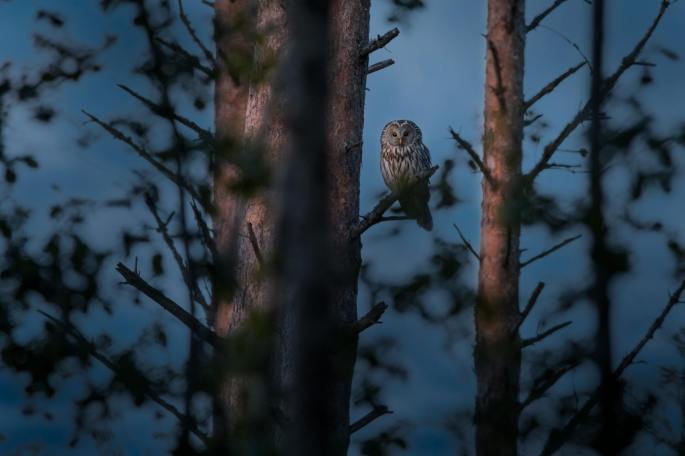
A wise-looking owl perched on a branch in a dark, wooded area, illuminated softly by moonlight.
Photo by Erik Karits on Pexels.com

Listening in the Dark 🌌

I am an early riser, typically awake before the sun. A few weeks ago, my ears perked at the haunting, penetrating call of an owl. Its “Hoo-hoo-hoo, hoo-hoo” echoed around our yard as I looked out into the murky dark. Since then, I intentionally listen for its steadfast call. It has become both a comfort and a mystery—an invitation to listen, reflect, and learn something new.

The owl’s call continues, I am certain, even when I am not listening; yet it requires my full attention in those predawn hours if I hope to notice it regularly. Its presence illustrates the importance of listening and discerning with care and purpose.

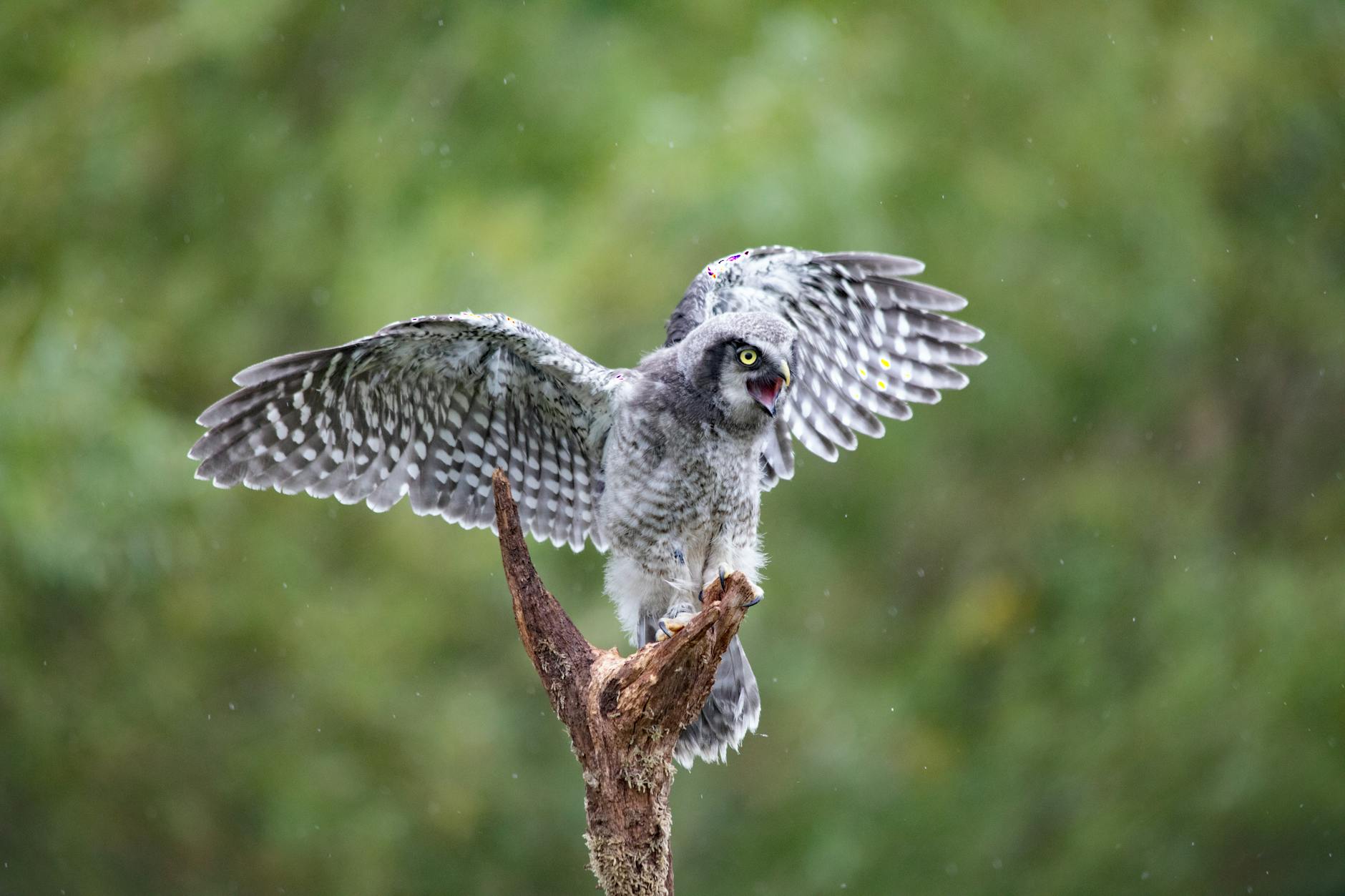
A grey and white owl perched on a branch with wings partially spread, showcasing its feathers and an alert expression against a green blurry background.
Photo by Petra Ryan on Pexels.com

What Owls Teach Us About Voice 🗣️

The autumnal hoots I hear, I learned after a bit of research, are used mostly to communicate territory and to call to potential mates. (It is worth noting that many owl species mate for life, finding another only if a partner dies or becomes separated.) Owls also use distinct calls to warn a mate, their nestlings, or even neighboring owls when danger is near. Only when the threat is imminent do they screech, hiss, or snap their beaks in defense of their young. Like the owl, we, too, can carefully choose when to use our voices amid the noise of the world, saving our own form of “screeching” for the rarest and most necessary moments.

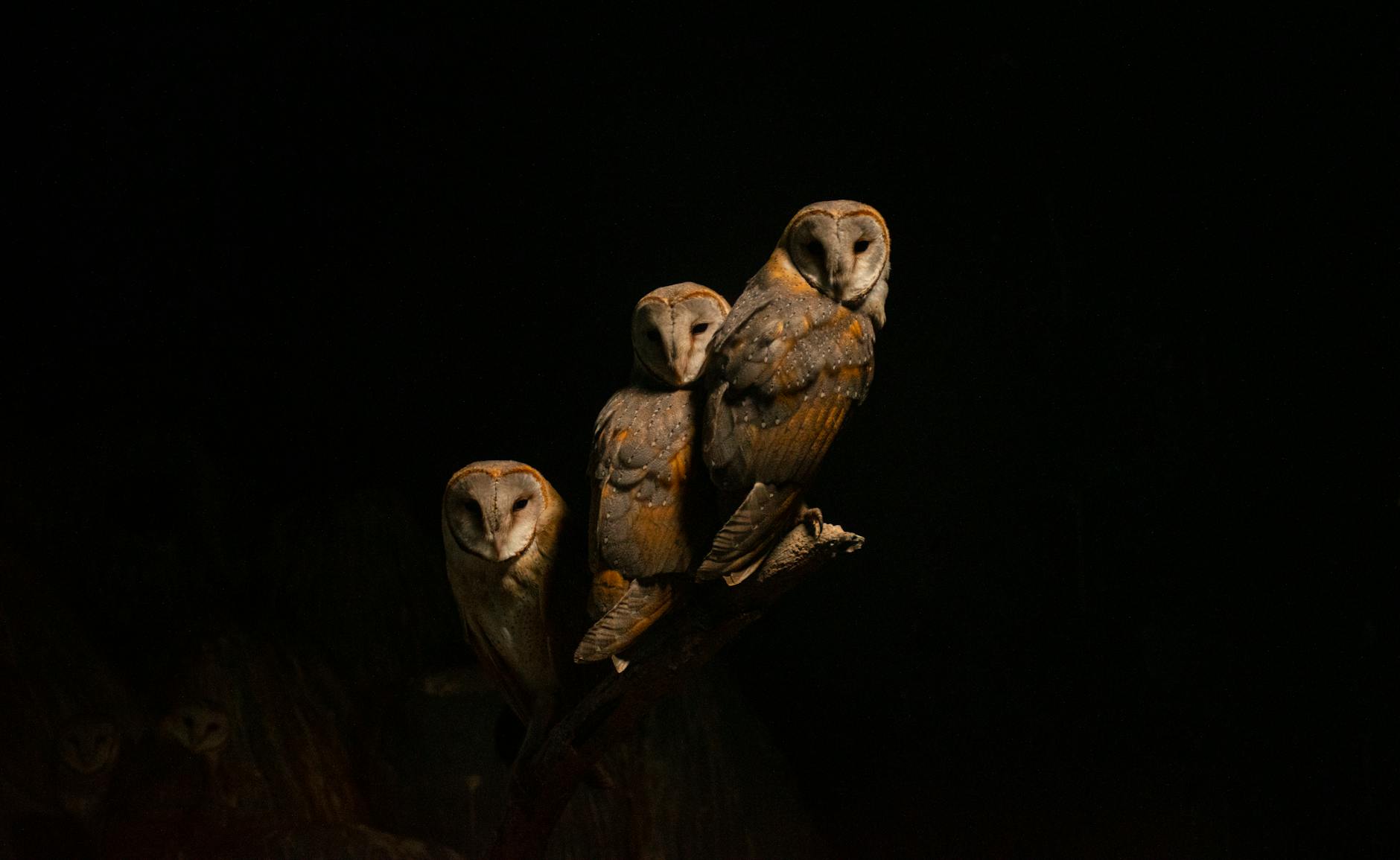
Three barn owls perched on a branch in low light, showcasing their distinctive features against a dark background.
Photo by throughmylife_in_ INDIA on Pexels.com

Signals of Respect and Coexistence 🦉

As I read more, I couldn’t help admiring how owls communicate—practically, respectfully, almost as if to say, “I am here. You are there. Let us coexist with our shared resources and help ward off danger.” To be certain, I am personifying and simplifying their communication, but perhaps there is a lesson for us. In a world that often isn’t equitable in its distribution of resources, space, or power, maybe we can learn the art of signaling like owls—communicating truthfully and transparently without silencing others. What if we approached our conversations with presence, restraint, respect, and a shared awareness of the landscape we inhabit?

Holding Our Ground with Grace 🙏

Hearing the owl’s early morning “Hoo-hoo-hoo, hoo-hoo” reinforces the importance of holding our own ground—our principles, values, beliefs, and even compassions—without becoming loud or defensive. The owl does not insist on being seen; rather, it asserts its message with a reserved dignity. We, too, can claim our “territory” through composed conviction and fairness, standing firm without demeaning others. Faith in our tenets, like my unseen morning owl, calls us to trust what cannot be seen but can be discerned only in stillness.

A tall tree with orange leaves against a clear blue sky, surrounded by a grassy area and a house in the background.
Fall is a time of release and renewal.

Autumn’s Invitation to Adapt 🍂

Autumn is a season of release and preparation. Light softens, signaling leaves to fall as trees ready themselves for winter’s quiet work. Many creatures follow this rhythm, including the owl in my backyard adapting to the shifting season. We, too, are invited to adapt—to let go of what is no longer needed, recalibrate our priorities, and listen more deeply. The natural world thrives on balance, which is different from our human desire for “fairness.” It exists in a subtle harmony in which every being plays a role. I wonder what might happen if we focused more on harmony—the give-and-take of shared ecosystems and resources—paired with the wisdom of knowing when to listen and when to speak.

A woman in a pink hijab interacts playfully with a barn owl perched on her arm, pointing towards its face, with another owl visible in the background.
Photo by Rangga Aditya Armien on Pexels.com

The Harmony of Coexistence 🕊️

The autumn owl’s voice in my backyard is solitary, and yet it reflects community. It marks its presence while acknowledging the presence of others, including us. Coexistence, the owl teaches, requires more than hearing what others say; it requires listening to the silences. Of course, human coexistence is complicated, and life often isn’t what we would call fair.

Therefore, it becomes incumbent upon us to listen, act kindly, and withhold judgment—offering small or not-so-small acts of goodness to help restore balance. This may mean choosing gentleness, or even silence, over the need to be “right,” especially when a loved one, friend, or coworker says or posts something unkind or expresses an opinion we strongly oppose. Likewise, offering compassion instead of judgment when someone is rude or ill-behaved can shift a moment for the better, even if only because we have refused to be pulled into energy-sapping negativity.

A serene forest scene with tall trees bathed in soft rays of sunlight filtering through the branches, creating an ethereal atmosphere.
Photo by Atlantic Ambience on Pexels.com

Before the Light Returns 🌅

The owl still calls unseen in the dark predawn hours, reminding us that communication, connection, and hope often begin before the light returns. The owl does not question whether the sun will rise; it simply continues its call, trusting the rhythm of creation. Like my unseen neighbor, I pray we find the courage to speak fairly, listen deeply, and have faith in the unseen process—knowing that every voice lifted in love and fairness echoes far beyond what we can see.

Perhaps that is the heart of the owl’s lesson: when we listen more deeply, we create the conditions for fairness to grow. As I recently read, “Life isn’t fair. It isn’t, which is why people should endeavor to be more fair to one another, not less.” —Kate Quinn.

Pearls of Morning: Lessons from Spider Webs and Stillness

“Heavy dew this morning and every spider web in the garden is strong with pearls of moisture…. webs wherever I look, all shining things of silver beauty.–Edwin Way Teale

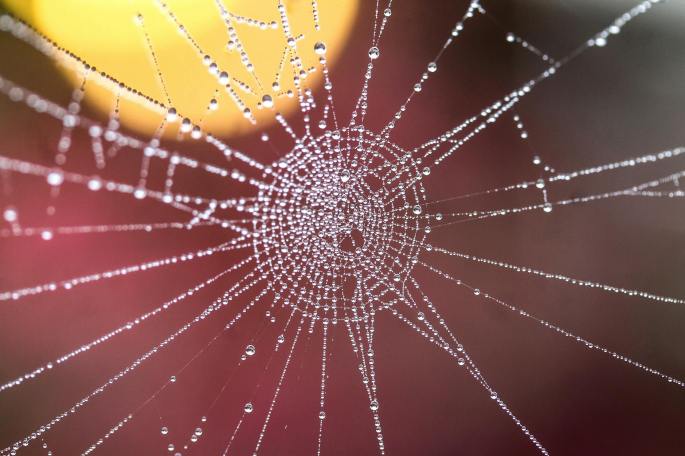
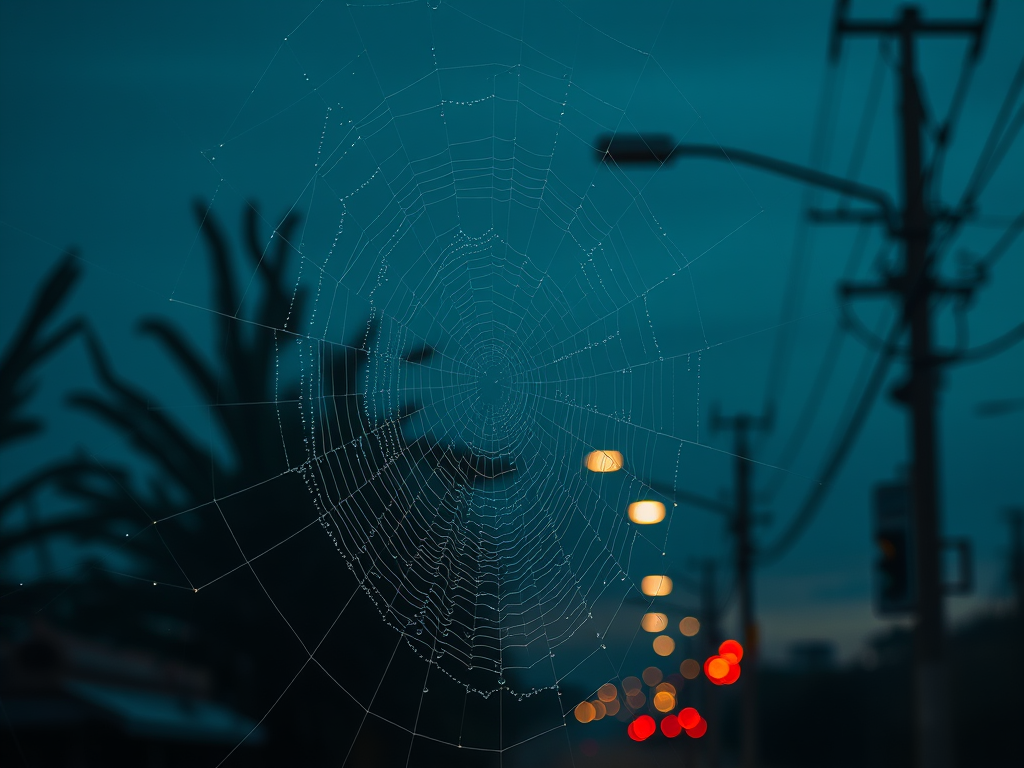
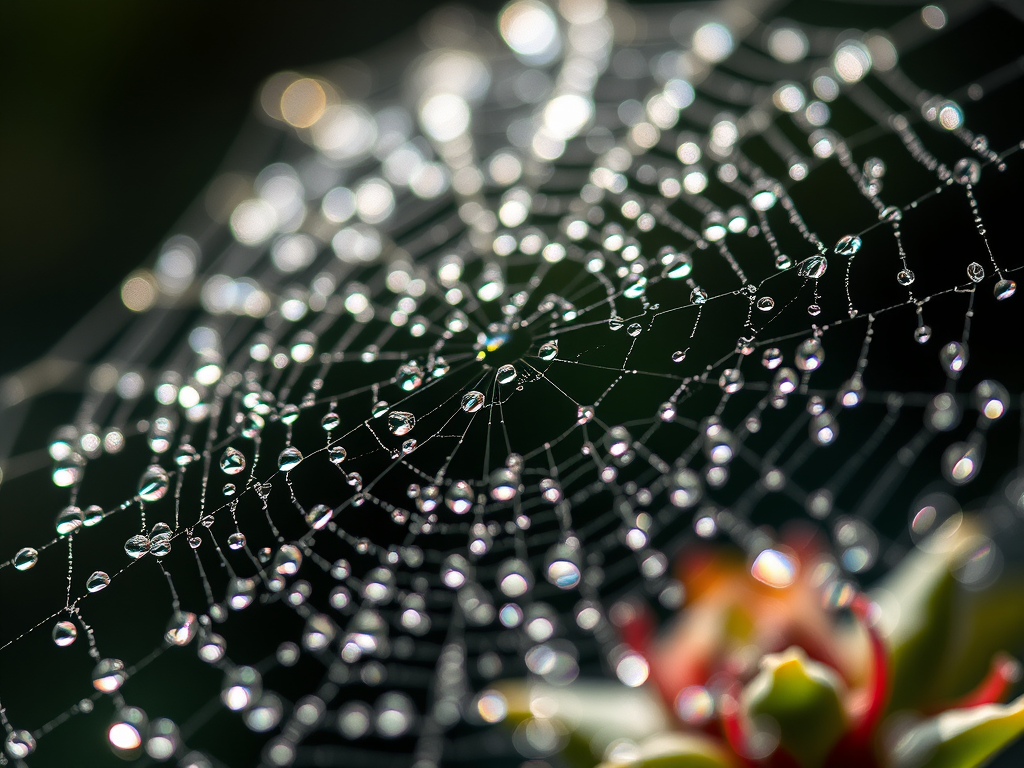
A close-up of a dewy spider web illuminated by streetlights in a quiet early morning setting, with blurred traffic lights in the background.

The Quiet Wonder Before Dawn 🌅

It was an early fall morning. Darkness still clung to the earth in a cool embrace. The traffic lights—green, yellow, red—continued their rhythm despite the empty streets. The air was cool and humid, and the hush before dawn rested easily upon the road. Pausing at the red light before continuing my jog, I noticed a spider web dappled with dew within the frame of the traffic light. I stopped in my tracks; upon closer inspection, I saw countless spider webs, draped with baubles of dew, hung from light poles and electric lines—even within the traffic lights themselves.

Hidden Beauty in Plain Sight🚦

I was awestruck by the beauty of the webs, looking ever-festive in the glow of lights—an unexpected wonder, shimmering high above me. After a few moments of appreciating the beauty, I jogged on through town, questions forming in my mind. How did they get so high? Why had I not previously noticed something so extraordinary hiding in plain sight? How many other marvels were hiding in plain sight, waiting for someone to notice?

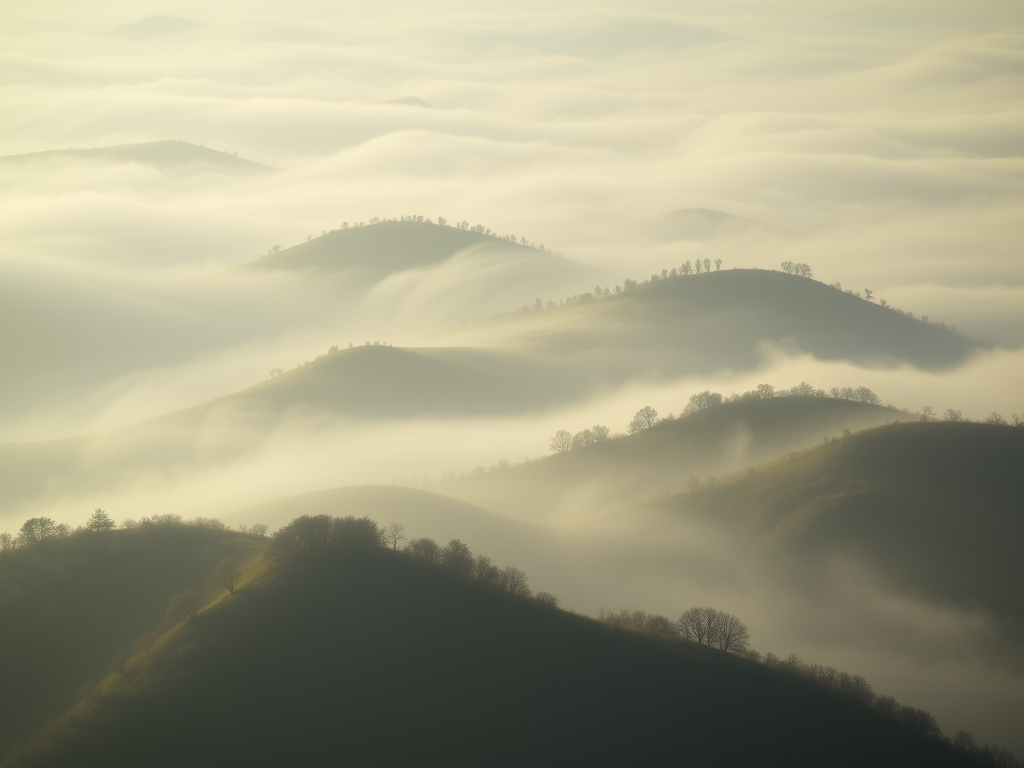
A serene landscape featuring rolling hills partially obscured by a thick layer of fog, bathed in soft, diffused light, creating an ethereal atmosphere.

When We Slow Down Enough to See 🤓

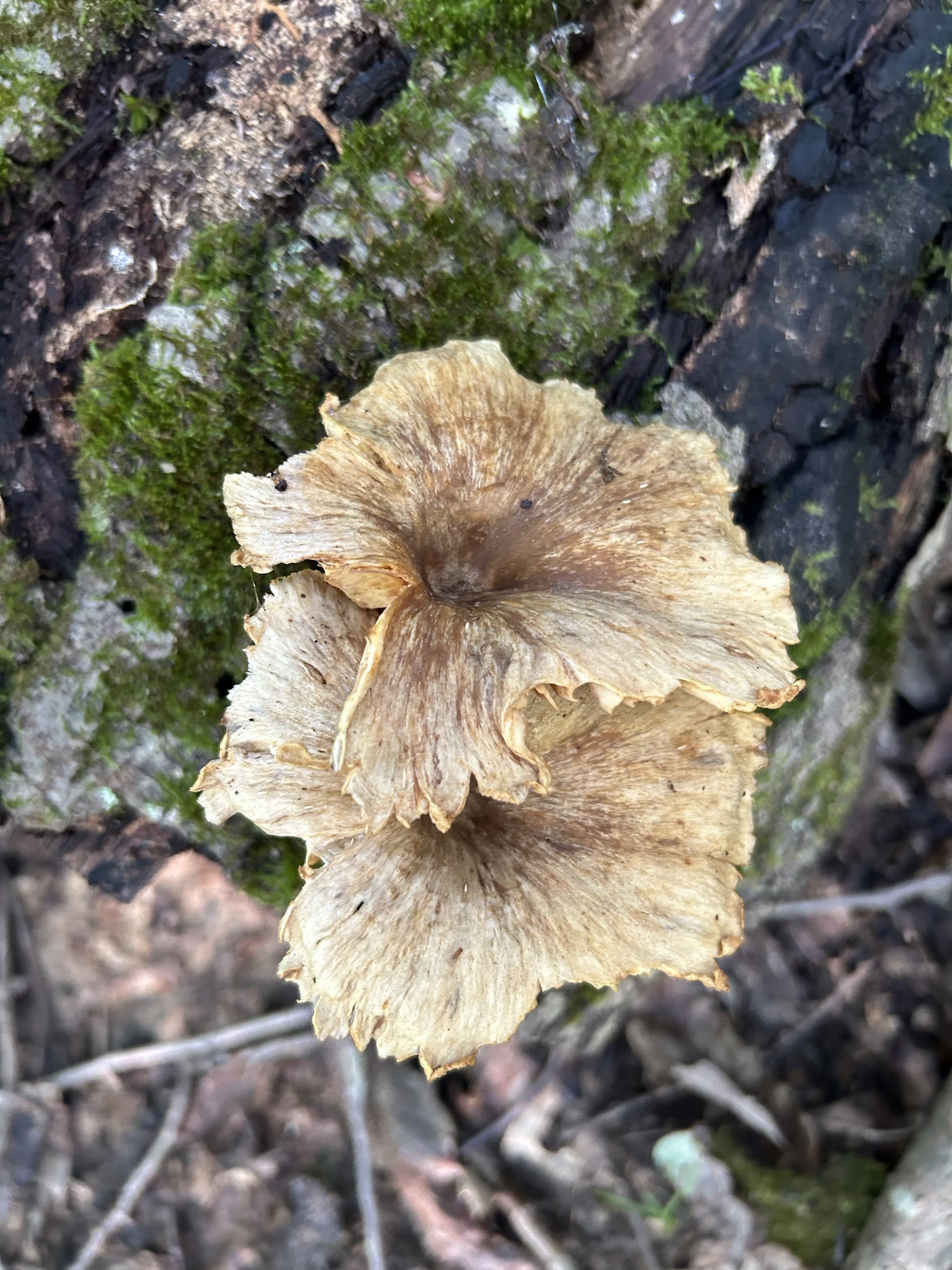
It occurred to me that more often than not, we rush through the routine of life overlooking these mini-marvels—the ballet of fall leaves chasséing from tree to stream, then pirouetting along water currents; sinuous streamers of fog tendrils meandering around hilltops; or, the multiplicity of ice crystals frosting over a car’s windshield to name a few. These wonders are woven into daily life: from the cantaloupe-colored brilliance of sunrise over the Ohio River to the glimmer of moonlight on a frost-covered lawn; from flower-like fungi blooming on fallen logs to a puppy seeing its own reflection in a puddle. Beauty surrounds us, waiting to be noticed. Like the invisible art gallery of spider webs in traffic lights on my morning jog, most go unnoticed until the light hits just right. However, when we take time to pause and pay attention, beauty will often reveal itself in unexpected yet common places, including stoplights.

A close-up image of a brownish mushroom growing on a tree trunk, highlighting its textured surface and natural surroundings.
Flower-like fungi “blossoming” from fallen tree branch

The Power of Morning Stillness 😌

That early-morning observation turned meditation centered my day. It offered more than one lesson and served as a reminder that the morning placidity can bring a sense of calming clarity before the noise of the day. Making time for stillness in the morning, whether sipping coffee, walking a beloved pet, or sitting in prayer meditation—offers an opportunity for spaciousness at the day’s start. A moment to center, notice, reflect, and connect. Even a few minutes of stillness can offer us an opportunity to ground ourselves and recalibrate our perspective. If we grow quiet enough, we may remember that peace resides within us. That is not to say that peace is the absence of movement, purpose, or challenge, but rather it is a strong presence within us—much like the hidden strength within the delicate spider web. 

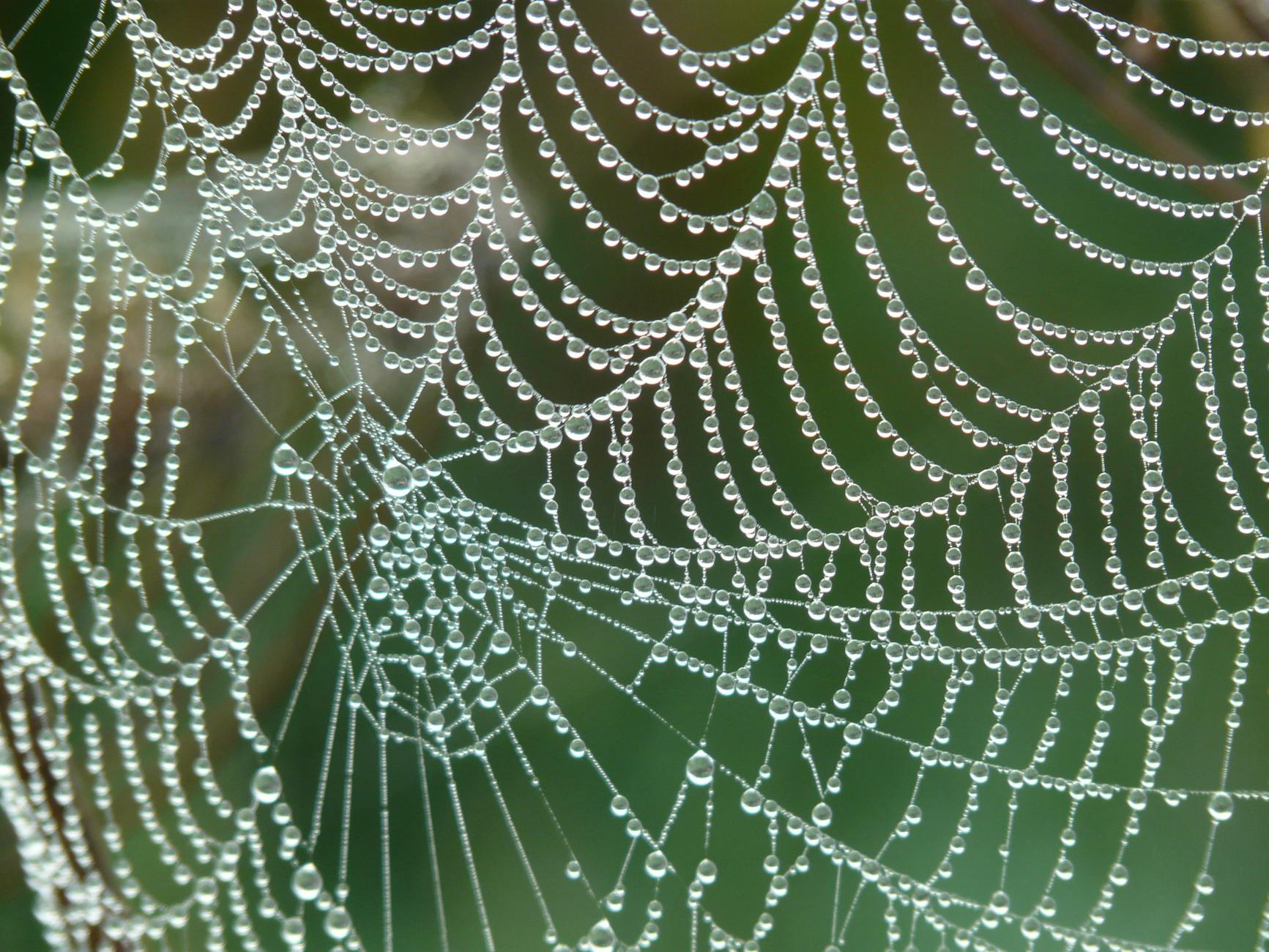
A close-up of a spider web adorned with dewdrops, creating a sparkling effect against a blurred green background.
Photo by Pixabay on Pexels.com

Lessons from the Web: Resilience and Renewal 🕸️

As I reflected on the morning jog through town, I realized that each web represented perseverance, fortitude, and tenacity–three key qualities essential for growth. Each morning, orb-weaving spiders consume their protein-rich webs to reclaim the silk for rebuilding. This ensures the new web they build in the evening is fresh, sticky, and strong enough to catch plenty of prey. Through practice, the spiders gain strength and instinctively how to rebuild after storms and strong wind.

The spiders’ resilience serves as a reminder that we, too, have the grit to rebuild after disappointments, setbacks, and loss. Like the spider, rebuilding our lives is often quiet work that begins only after we have nourished body, mind, and spirit. The spider’s persistence mirrors our own–delicate and determined–reconstructing through incremental, small steps. Life, like the spider’s web, is fragile, yet we too possess tensile strength—centered in faith—that guides us as we restore, renew, and rebuild. 

A close-up view of a spider web adorned with numerous droplets of dew, reflecting light and creating a sparkling effect against a dark background.

The Threads That Bind Us 🕷️

The spider’s web, where no thread stands alone, echoes the interconnectedness of our own lives. We are part of a collective. As the light shone through the webs, each dew drop caught the light, refracting color and seemingly creating miniature worlds. Just as the traffic/street lights played across the spider webs’ dew drops, our connected lives reflect multiple roles–friend, spouse/partner, worker, neighbor, parent, child, citizen . . . . Each strand of life possesses a quiet strength that is integral to the whole. In fact, the integrity of the web depends upon the strength and resiliency of every strand. Each facet of our lives holds and reveals meaning; together, the varied strands of our lives unite the whole, creating an array of meaningful relationships.

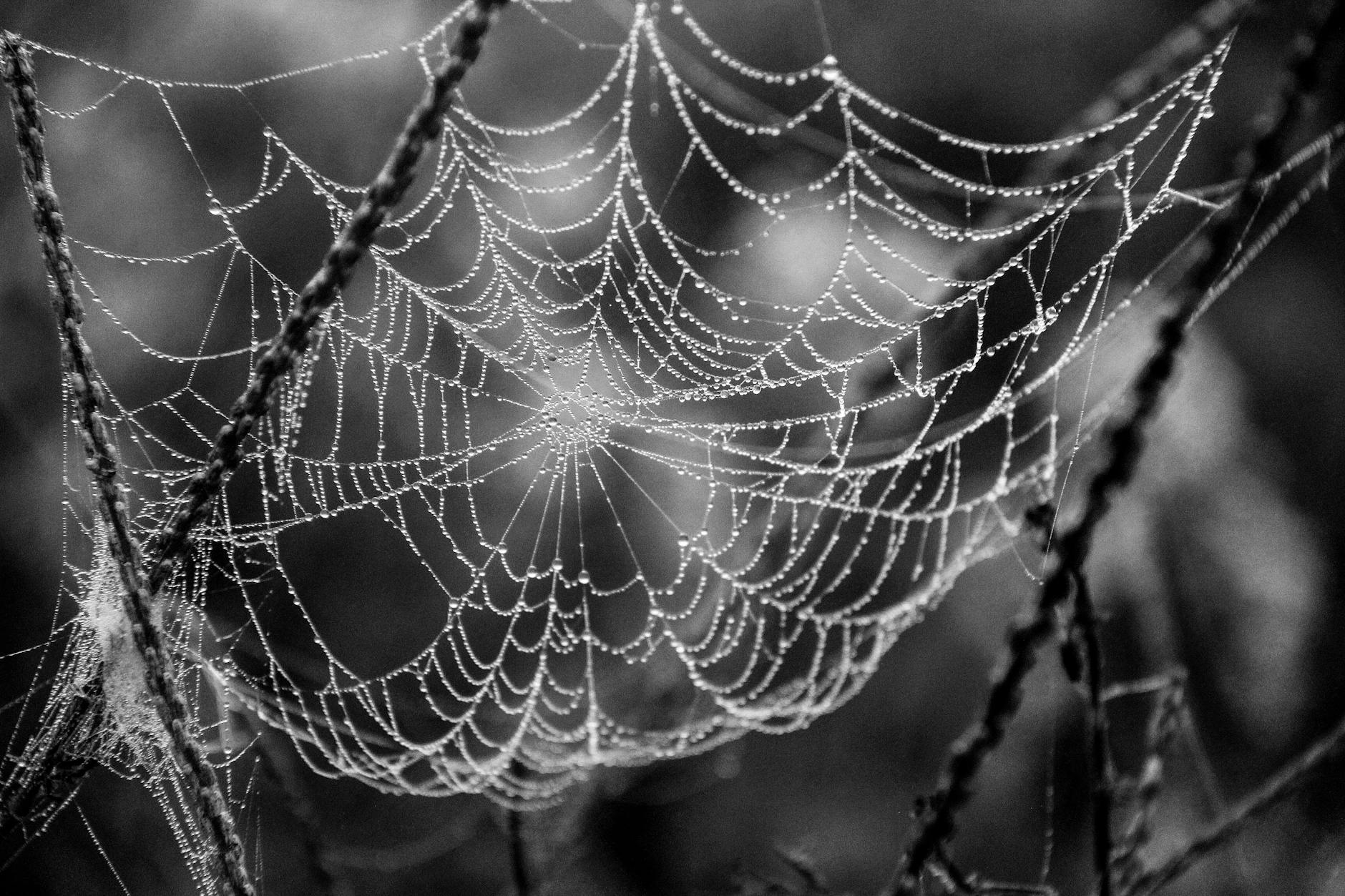
A close-up view of a beautifully intricate spider web adorned with dew droplets, creating a delicate display of nature's artistry in black and white.
Photo by don chowdhury on Pexels.com

Finding the Extraordinary in the Ordinary 🌃

In the end, the light changed, and I crossed the street as the sun rose, erasing the glimmer of those webs. Yet the image remains—reminding me to keep looking for the extraordinary in ordinary places. Perhaps it waits in the quietude before dawn, a pause at a red light, or the hush of nightfall. So many interlaced moments shimmer within the droplets of daily life, waiting for those willing to see. Those silky webs may vanish with daylight, but their pearls of wisdom still glimmer within me, reminding me that beauty often hides in ordinary light.  

May we all learn to look a little longer, to pause at life’s red lights, and to notice the silken threads of beauty connecting us in the quiet hours of dawn.

Finding Inner Peace Amidst Chaos

“Better to keep yourself clean and bright; you are the window through which you must see the world.”–George Bernard Shaw

Photo by thevibrantmachine on Pexels.com

Anxiety provoking 😬

Over the past weeks, I find I am feeling increasingly anxious as I read or listen to the news and/or various social media platforms. There are world events with real human and environmental consequences that worry me. Children are dying from injury and/or starvation in numerous parts of the world.  Plus, the current political climate in our own country is so vitriolic and divisive, it can tie my stomach in knots if I listen or read about it for too long. 

A few days ago, I was leaving work after an especially long day.  Ready to shake off the day, I unloaded my daily work wares into the back of the vehicle, and hopped in the driver seat ready to get home and shake the dust of the day off.  I started the vehicle, and the radio automatically came on.  

Photo by Sindre Fs on Pexels.com

We have a choice 🙉

By word of explanation, I had been listening to a book on the way to school, but because the bluetooth had not yet connected, the radio, set to one of the local public radio stations, automatically defaulted on. Since it was between 5:00 and 6:00 pm, the news was on.  And while NPR is fortunately not one of the news outlets that seems to shout out every headline, it was in the middle of a story that, as my ears focused, began to make me feel worried, and I could once more feel my insides churning. 

I continued listening for a bit more as I headed out of town, but found myself increasingly feeling more anxious.  Suddenly, it occurred to me. I had a choice.  I didn’t have to listen. So, I turned not only the news off, but the entire media system in my vehicle, rolled my window slightly down, and allowed the fresh air to filter in. 

Photo by Aleksandar Andreev on Pexels.com

Connect to Your Breath 😮‍💨

Then, while I drove the rest of the way home, I took time to connect to my breath and to that still, inner voice. 

Inhale. Exhale. Release the jaw. 

Inhale. Longer exhale. Relax the shoulders down and release the grip in my gut. 

Long slow inhale, fill my lungs with fresh air flowing through the window. Pause. 

Then, a longer, relaxed exhale. Loosen the grip on the steering wheel and relax

 the lower body. 

I continued driving like this, using my breath as an aid to continue to relax other parts of my body that I had been unconsciously gripping tightly as the day progressed. I would not have noticed how tightly wound my body was if I had continued listening to the news.

Photo by cottonbro studio on Pexels.com

Connect to Gratitude 🙏

Once I felt a bit more relaxed, I tried to list, in my mind’s eye, five things for which I was grateful. Nothing could be too small, such as, feeling grateful because I had not forgotten my lunch on that day as I had forgotten it on the same day the previous week. But, even more so, I was also grateful for my health, my family, my home, and so on  . . . With each point of gratitude, I took time to pull that image up in my mind and genuinely reflect on at least one particular point of joy each one brought to my life.

Now, I will be honest, there were a few times when I lost my focus due to other drivers, deer crossing the road, or other random distractions.  If I found myself lost in thought, I brought my inner attention back to my breath first, and then back to points of gratitude.  

As I drove closer to home, I mindfully began to release concerns for which I could not control. I prayed for them, but ultimately, released my worries to God. I decided to trust and have faith that my concerns will ultimately work out for the best in ways I could not see or perhaps understand. It did not mean I was dismissing the issues that concern me–I was not.  Instead, I was releasing my stress over them because my anxiety would/will not affect their outcome.

Photo by Stanislav Kondratiev on Pexels.com

Shutting out the winds 🪟

Years ago, I read a story about a monk who had been writing a book.  This was the time period prior to computers, when one would alternate between handwriting manuscripts and typing the final drafts. This monk decided he needed to take a break from writing and went out for fresh air and a walk. 

He left open the windows of the small cottage in which he lived. And as he walked, the weather began to shift, and the wind began to pick up.  When he arrived home, an hour or so later, all of his neatly stacked papers for the book had been tossed about within the house. In order to tidy up the inside of his cottage and reorganize the manuscript, the monk had to close all of his windows to keep out the changing weather.

This story simply illustrates the point that sometimes, if we are consuming too much news, social media, family/friend drama, and so forth, our inner world suffers.  Like the monk’s cottage, the winds of life can toss our inner peace about.  Therefore, it is worth remembering we have a choice. We can choose to take time to shut out, turn off, or let go of the outside world/drama, so that we can turn inwardly, and focus on “tidying-up” the worry/concern/ anxiety inside of us.  

Photo by Alex Green on Pexels.com

It’s not always “breaking News,” so set boundaries 📰

We don’t have to read/listen/scroll through/watch the news and social media at regular intervals throughout the day.  We can take breaks from all of it. In fact, we are not of any benefit to ourselves, much less others, if we aren’t settled and at peace on the inside.  Thus, taking time to connect with your breath and that small, still inner voice can strengthen and renew you, filling you with a sense of calm/peace in order to help others and/or take on challenges.

While we don’t want to completely shut off the world and hide our light, we do have a choice as to where, when, and how much we participate.  Setting boundaries and/or taking breaks from what and how we choose to consume social media and news is within our power, and it doesn’t mean we are absconding from our civic or social responsibility to the world around us. 

Shine your Light 🕯️

If we hope to shine our light and engage in meaningful ways that can contribute to the betterment of our family, friends, community, and even world to the degree possible, we must also take time to close the proverbial outside windows and tend to our own inner world.  After all, even a candle must be protected from the wind in order to burn. 

Wounded Light: How our wounds, injuries, and hurts illuminate us

“The wound is the place where the light enters you.” Rumi, Sufi poet

Photo by Anastasiia Chaikovska on Pexels.com

Pain-handler 🔥

My daughter once made an off-hand remark about the way I handle pain. She said something to the effect that my legs could be broken, my hair on-fire, and I’d still claim to be fine because my arms were still working. Of course, she was exaggerating because I am definitely not immune to pain.

Photo by Andrea Piacquadio on Pexels.com

I do, however, possess the ability to distract and/or redirect my focus away from discomfort.  On first glance, this can seem like a good thing, and I suppose, at times, it is.  Tolerating pain and challenges is what allows humans to get through tough times.  And while I could offer plenty of examples of the benefits for “shouldering through the pain/trauma/difficulty,” I think it is important to also recognize that by “shouldering through,” not only is it possible to create a bigger issue, but we are also missing an opportunity to see the Light within.

Photo by Wallace Chuck on Pexels.com

Accepting Limits 🛑

There are times when it is necessary to acknowledge and accept our wounds/injuries.  The pain is signaling that, at least for the time being, we need to accept new limits and boundaries in order to enhance the healing process.  This is true not only for physical pain, but also true for mental health trauma.

However, for many of us, myself included, sitting with and accepting pain is often difficult. Whether it is genetics, environment, or society, many of us would much rather suffer through our pain with a smile painted on our faces, than truly feel and acknowledge that we are hurting.  For some, this is a matter of pride, for others, it may mean admitting defeat and/or imperfections–while for others it is simply an extension of their stoic nature.  

Then, there are those who know that to feel the pain would mean to feel their own brokenness, quite possibly forcing them to name their suffering.  This is often a result of the connotation society has attached to specific words associated with pain.  Words such as, injury, hurt, pain, broken, surgery, depression, anxiety, recovery, often have a negative association attached to them causing many to recoil in fear and resistance at such an identification.  For others, there is an association with weakness if identified as having one of those.

Photo by Kindel Media on Pexels.com

Self-Compassion ❣️

It is with that understanding, I encourage all of us, myself included, to take time to acknowledge our wounds, our injuries, and our mental anguishes, past or present. Additionally, it is important to acknowledge the limitations and/or pain those hurts created.  Finally, it is most important to do these while offering ourselves compassion.  If a loved one was suffering with an injury, we would want to help them in any way we can, so let us begin to treat our own pains with the same level of tender-heartedness.  Taking time for our own healing is not a selfish act, but an act of seeing the Divine Light working within us.

I came across a line in a poem that said, “We are wounded healers,” and it really gave me a moment of pause.  The poet had a point, we have all been injured in some way, from scraped knees and elbows when we were children, to broken bones, illnesses, or a mental health crisis as we moved through our teens years and continuing into our present adulthood. It is important to note that each hurtful event informed and shaped us, whether we realized it or not. Unfortunately, there are many of us who have and/or continue to suffer silently through multiple painful experiences and traumas, past and present. 

 Our bodies and mental health have limits. When pushed past our natural boundaries, our injury or trauma signals us with pain in an attempt to get us to take time to allow the body and/or mind to heal. Given certain situations, there are times, events, and circumstances in which we lack the power to grant time for healing. This is often the case in childhood trauma and abusive relationships.  

Other times, however, we prefer the quick-fix route–give me a pill and make it stop method–so I can move on with my life. However, quick-fixes don’t always create an optimal environment for healing. Instead, they tend to mask the underlying issue, allowing the injury/pain to fester in silence. 

Photo by JESHOOTS.com on Pexels.com

Wounded Healers ❤️‍🩹

This is regrettable because in those moments of injury, when we allow our bodies or minds time to heal and recover; we begin to bear witness to the miraculous creations that we are.  The same Source that created us is the same Source that can help heal us, in tangent with a healthy dose of prescribed treatment.  Our bodies and minds have been uniquely fashioned with astonishing proportions of resilience, strength, and fortitude.  We can be wounded, but we can be healed.  We are all, in the words of the poet, wounded healers.

Numerous writers and poets have written that our wounds and injuries allow the Light to enter us.  This Light enlightens us.  In fact, the more we have been scared by life’s injuries, the greater our understanding of the fragility and preciousness of life.  Further, our capacity for empathy with those who are suffering also increases, thereby granting us the added insight to words and actions that may provide comfort to those experiencing similar injuries and wounds.

Photo by Pixabay on Pexels.com

The Light within 🕯️

Our many wounds and scars offer us greater illumination from within. Our True Source of strength resides in those areas. Those old wounds serve as reminders of our survival, growth, and our own knowing.  The knowing of how it feels to truly hurt, and the full joy of knowing what it means to heal and recover.  There is the additional  knowing that healing can sometimes hurt as tissue and mental faculties are fashioned together in a new, often more durable manner.  And there is the ultimate knowing that nothing, not injury, not pain, and not even us, lasts forever.

Therefore, the next time injury, pain, or suffering comes calling, can we challenge ourselves to allow it?  Can we learn the lesson it may be offering us? To be sure, the process is not easy, and it requires patience as well as a heaping portion of trust, especially when the other side of healing may not mean a pain free life. However, in the same way sunlight can illuminate even the smallest of cracks, we too can hold tightly to the faith that the Light, our True Source, can heal and shine through our wounded selves. 

Photo by EKATERINA BOLOVTSOVA on Pexels.com