Running Beyond Age: Embracing Health and Freedom in Every Step

“Running is an act of creative self expression”–Lawrence van Lingen on Extramilest podcast

A Familiar Morning Scene: Defying the Stereotype 👟👟

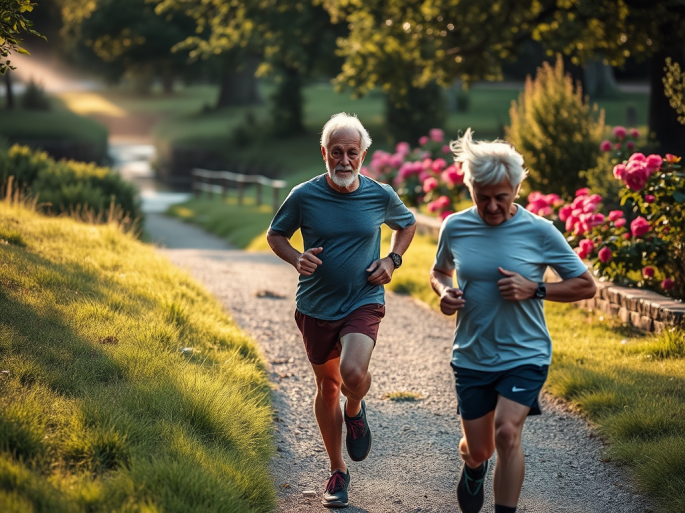
Two older runners jogging together on a path surrounded by grass and wildflowers in a park during early morning.
Photo by Anastasia Shuraeva on Pexels.com

Picture this. It’s early on a warm Saturday morning in your local park. The sun is low on the horizon, and mist is rising above the grass and a meandering stream that runs alongside a crushed gravel path. The scent of a nearby rose garden is heady as two runners descend the hill following the path. Moving at a steady clip, one runner has a full head of white hair while the other is more salt than pepper. They are relaxed and chatting as they pass by.

This is a routine sighting for me on my weekend jogs. Numerous older runners, walkers, and run/walkers defying the stereotype through exercise, that aging equals physical decline. In fact, according to AARP, beginning in 2023, the average age of runners has risen. Some of the biggest gains are those 55 years and older, with numerous runners sticking to it well into their 60s, 70s, and 80s as witnessed in the ages of Boston Marathon finishers in recent years as well as other major marathons around the world. Of course, there’s no denying aging does change the body, so why do I see numbers of people my age and older consistently outside running and/or walking?

Running as Personal Ritual and Liberation 🏃‍♀️

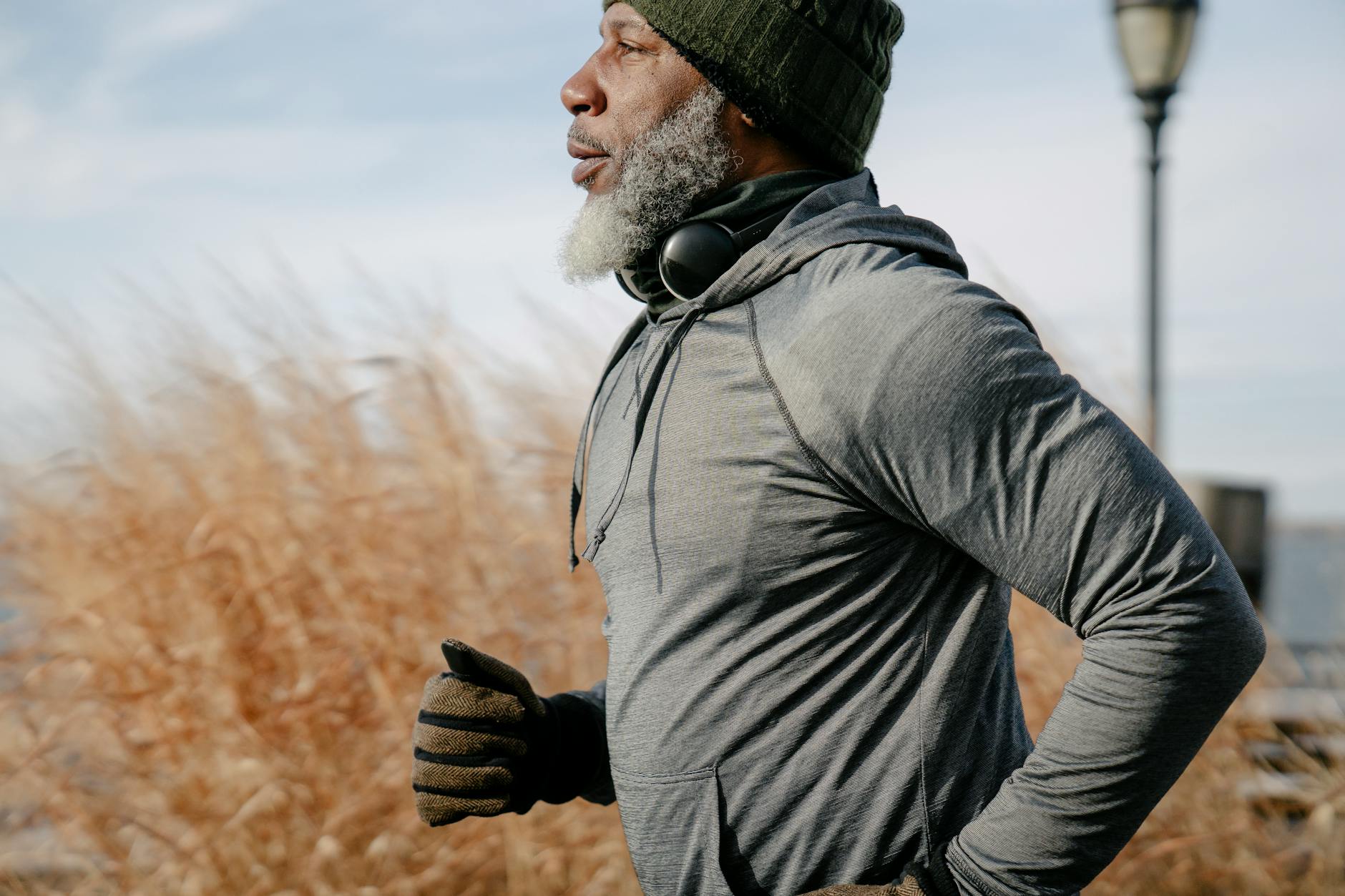
Older man jogging outdoors in a gray hoodie and gloves, surrounded by tall grass with a calm sky in the background.
Photo by Barbara Olsen on Pexels.com

For many older individuals, like myself, running or run/walking becomes a personal manifestation of life–a ritualistic form of imaginative self expression that allows us to reconnect with our inner rhythm, identity, and self-determination. It creates a sense of freedom and play that we once had as a child. Additionally, running offers numerous benefits, including improved physical health, enhanced mental well-being, social connections, and a renewed sense of personal meaning, to name a few. 

The Science-Backed Physical Benefits of Running 🏃‍♂️

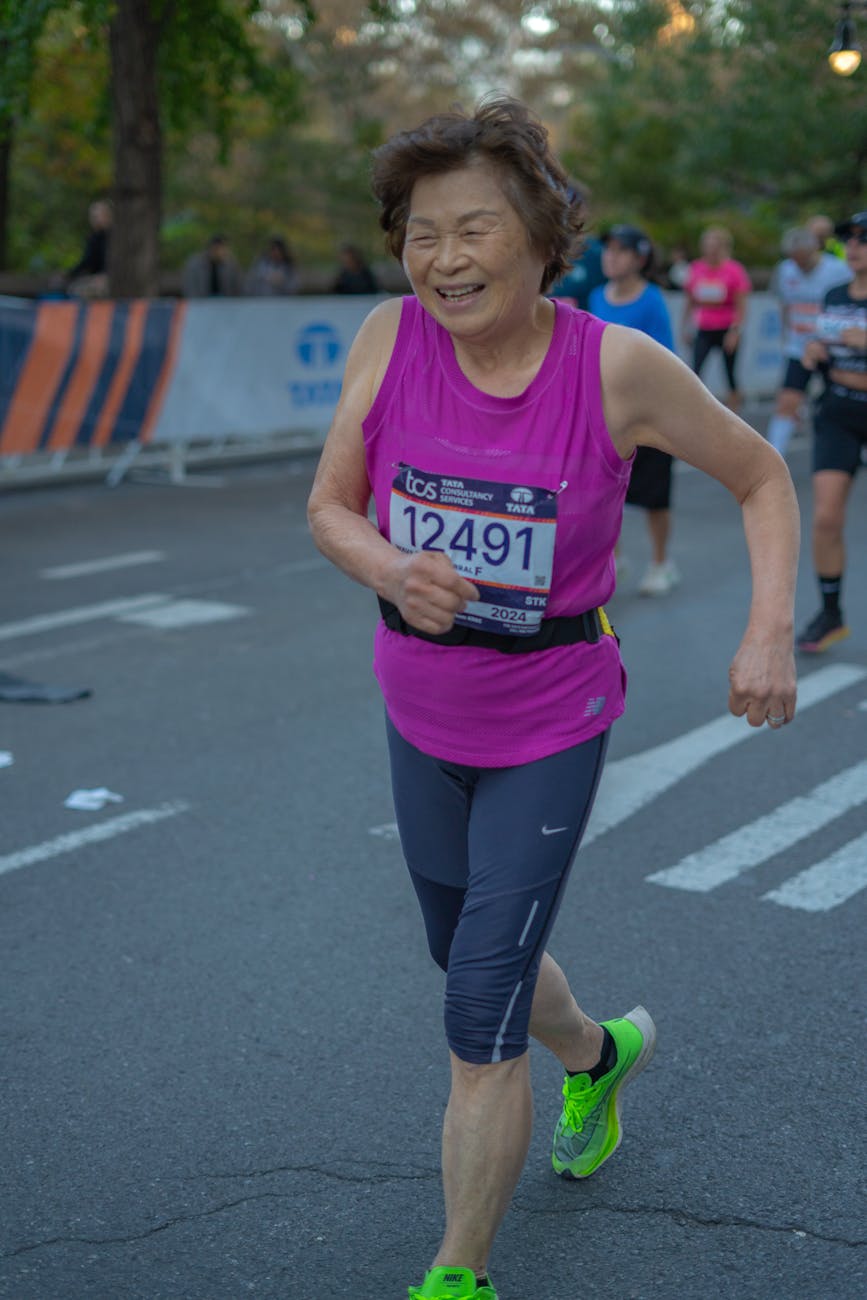
An older female runner smiling while participating in a race, wearing a bright pink tank top and bib number 12491, with greenery and other runners in the background.
Photo by khaoula Bkm on Pexels.com

I occasionally encounter critics who question the safety of running at “my age,” (a term used by my students); however, according to another 2023 AARP article, older runners just have to be “smart about it.” This is why many running groups often point beginners, including seniors, to using a run-walk-run method to establish a strong aerobic base. In fact, Cleveland Clinic, in a 2024 article, points to numerous physical health advantages to walking and/or running for all ages, but especially seniors. These advantages include:

  • Strengthens heart and improves circulation
  • Reduces risk of heart disease and stroke
  • Increases bone density, helping prevent osteoporosis 
  • Improves joint flexibility and maintains muscle function
  • Boosts metabolism and supports healthy aging
  • Improves blood sugar regulation and lowers risk for type 2 diabetes
  • Reduces risk of dementia and Alzheimer’s disease

Mental Health Gains: Silence the Inner Critic 🙉
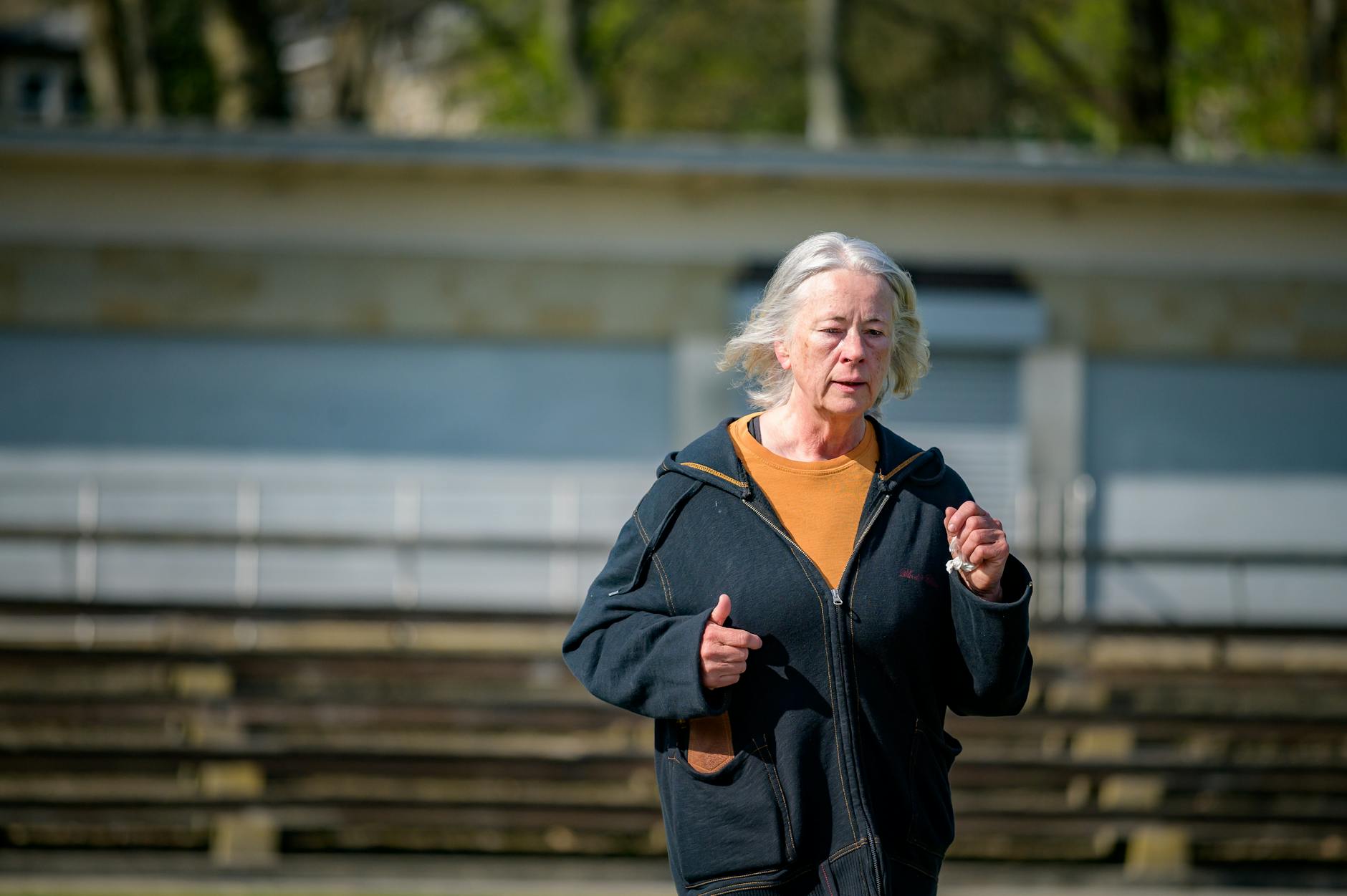
An older woman running outdoors in a black hoodie and orange shirt, focused on her exercise, with a blurred background of benches and greenery.
Photo by Centre for Ageing Better on Pexels.com

Certainly, the physical health benefits of running are important to me; however, one of the greatest advantages is the feelings of improved mental health and well-being. I often refer to monkeys living in my mind, and running allows me to rise above the swirling negative chatter that often clouds my mind. On days when it seems everything goes sideways, if I have completed my morning run, I can take solace in the fact that I completed at least one positive act, thereby helping me to keep symptoms of depression and anxiety at arm’s length. 

I also find running clears my head, improves thinking, and increases memory, which is a bonus as I age. In fact, running–and exercise in general–is like meditation in motion because it deeply connects me to my breath. Plus, it is a great source of stress reduction.

The Artistry of Movement: Running as a Creative Outlet ✍️
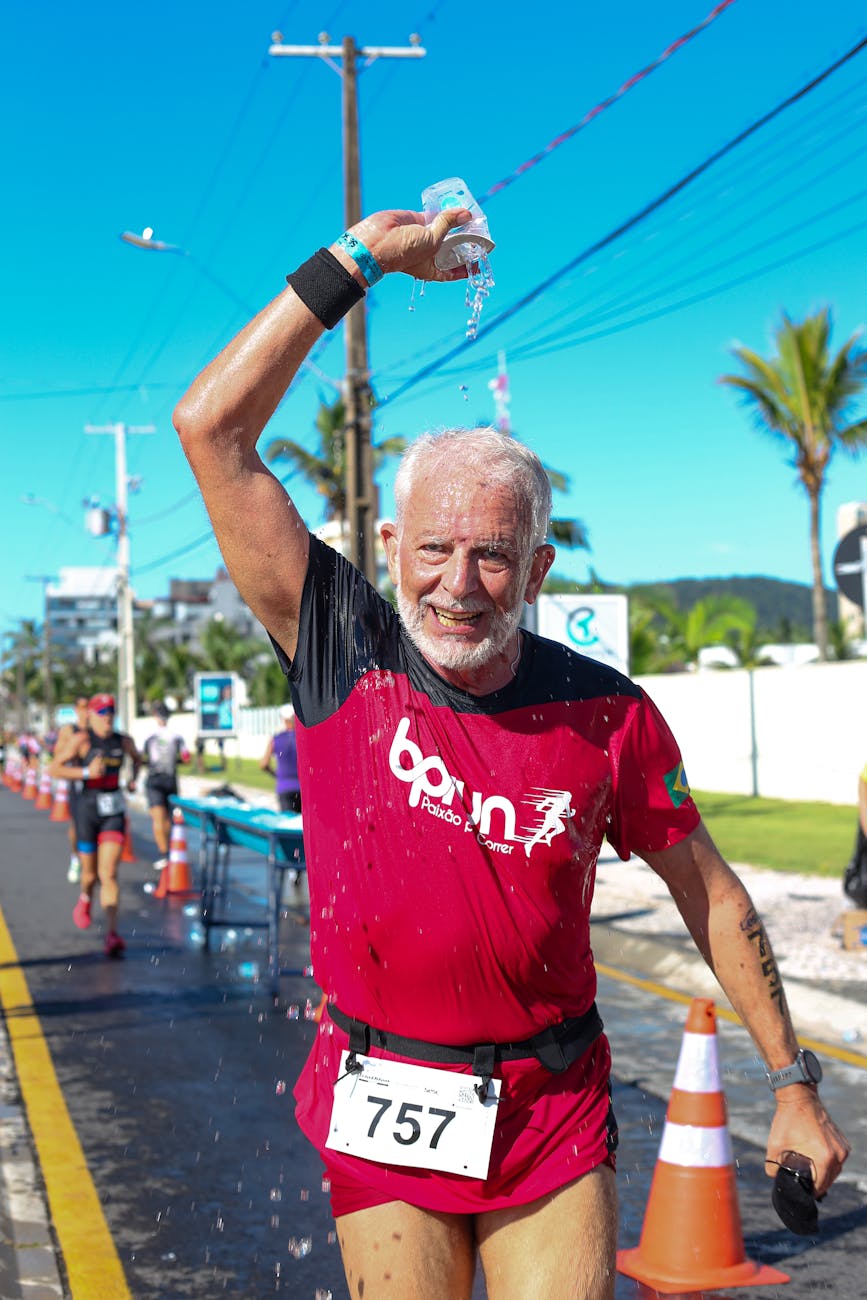
An older man with a full head of gray hair is pouring water from a cup over his head while running in a sunny outdoor setting. He wears a bright red athletic shirt and a race bib number 757. In the background, other runners can be seen along a palm tree-lined street.
Photo by Jou00e3o Godoy on Pexels.com

Running is also a form of innovative self-expression, for young and old alike. Like crafting one’s own piece of art, running showcases the beauty of a body in motion. It offers time for inspiration and reflection. Each run, like a canvas, offers the opportunity to tell a story, footstep-by-footstep. Personally, time spent running also allows me to process life as well as difficult, often buried, emotions, and it even sparks inspiration. My running, albeit slow, feels like an act of liberation, hope, and a tribute to the many obstacles I have overcome along the way. It is a symbol of inner strength, resilience, and freedom to be me–in a world that has often felt as if it boxed me in.

Spirituality, Solitude, and Social Connection 🙏

An older man running on a path surrounded by tall grass and trees on a sunny day.
Photo by Thomas Shockey on Pexels.com

For many runners, older and young, running offers an opportunity to hang out with other runners and socialize. However, some find that running solo, instead, creates a sacred space in which they can connect to their Higher Power, feeling that sense of peace and ease. Still others appreciate the opportunity to spend time in nature, soaking up fresh air and the beauty of Mother Earth.

A Healthy Routine for a Vibrant Life 🙌

Two female runners in matching orange and red jerseys sprint together, holding hands as they approach the finish line. They display expressions of determination and joy during a race.
Photo by RUN 4 FFWPU on Pexels.com

Running, for many, including myself, forms a meaningful structure to the day, a time set aside for one’s personal well-being and health.  This is important because there are numerous obligations and responsibilities that life often demands, even as we age. By setting aside regular time to run, sleep typically improves, which can be so elusive in older adults. Furthermore, those who run typically tend to eat better and don’t tend to abuse substances in order to better support their ability to run.

Staying Safe and Smart with Age 🤔

An older woman running outdoors, wearing a bright yellow tank top with a blue logo, smiling and gesturing with her hands. The background features greenery and a sunlit path.
Photo by RUN 4 FFWPU on Pexels.com

Of course, as we age, we do have to be safe about our exercise habits, which often begins with checking-in with a health-care provider. Additionally, I highly recommend finding good footwear that works for your own personal gait/foot-type; a local running store expert can help with this. Furthermore, as AARP points out, older runners should not go from “zero to 60.” Warm-ups and cool-downs are essential, and for those wanting to start running, a good walk-run program like Run Your Butt Off or the Run-walk-run training plans are two great ways to start. (I have personally used both and can attest to their gentle nature.) 

Other considerations as we age include running less on concrete and asphalt, if possible, and spending more time on softer surfaces, like the paths at local parks. Treadmills also offer a more cushioned surface, and they are a great option when weather is too hot, too cold, or otherwise uncomfortable. If you run at night or early morning, it is important to wear a headlamp and reflective vest for safety’s sake. Additionally, if you run alone, it is a good idea to let someone know where you are running and for how long. 

Every Run Is a Story: Movement as Becoming 🏃
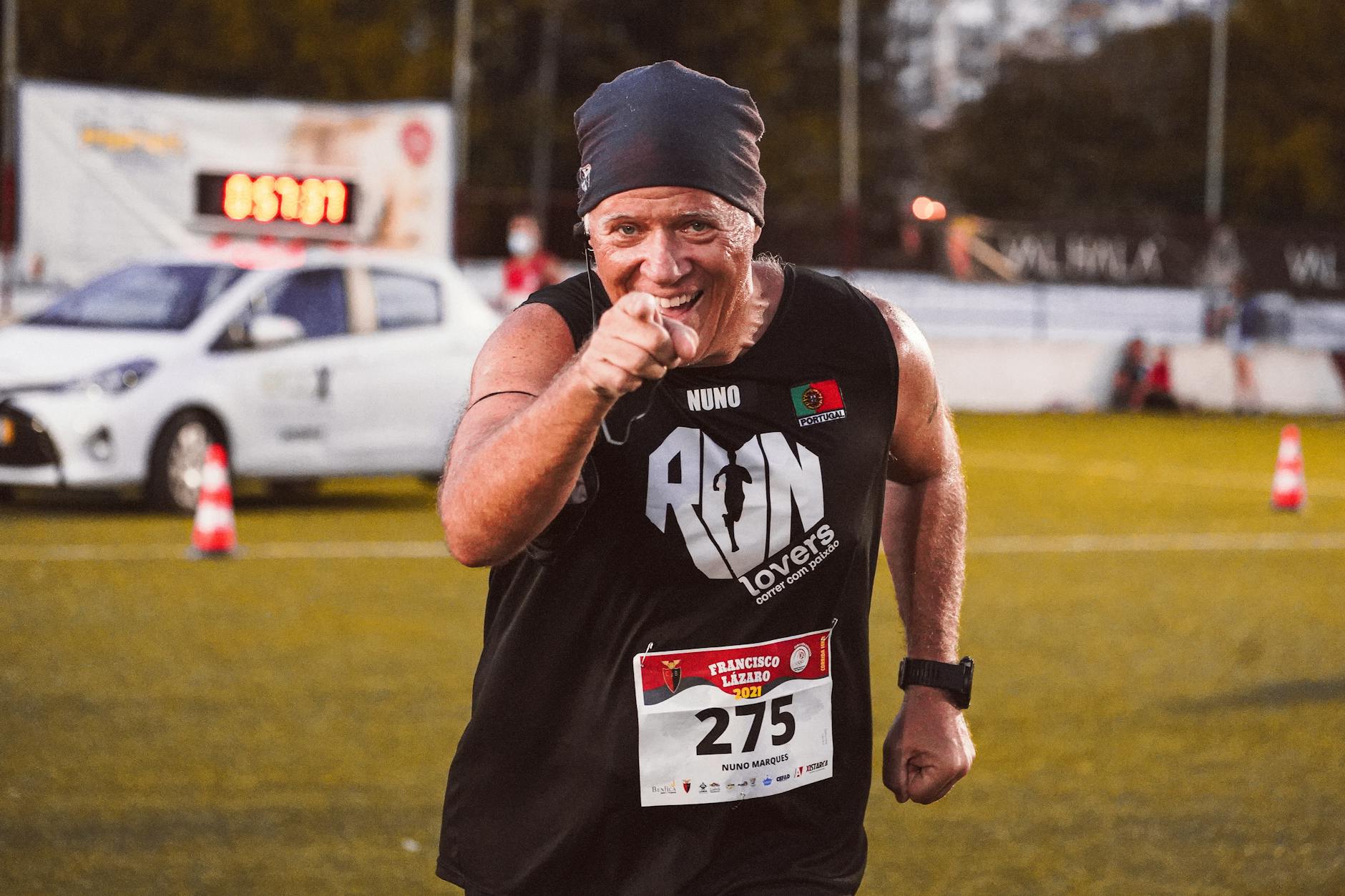
A runner with a confident expression points at the camera while sporting a black sleeveless shirt with 'RUN lovers' printed on it, a race bib, and a headband, during an event in a sporting field.
Photo by RUN 4 FFWPU on Pexels.com

Bottom line, each run or run/walk/run is an adventure. Sure, some runs are less adventurous than others, but those moments offer an opportunity to learn about ourselves if we remain open and curious. Running (and walking) is accessible and fairly low-cost, and it is an effective way for older (and even younger) adults to improve their mental, physical, emotional, and even spiritual well-being. 

Beyond these benefits, running, for me, continues to remain a quiet act of self-expression. With each step and stride I take, I am writing a story, reclaiming my space and time, and paying homage to The Creator, celebrating this gift that is life. In this way, running transcends exercise and becomes a personal journey of becoming, no matter my age. 

With the right approach and mindset, whether you run, run-walk-run, or mostly walk, moving our bodies regularly can create joy and empower older adults to age well—proving that vitality truly has no age limit!

An older man with white hair smiles while wearing a jacket and a medal, standing among a group of people in a blurred background.
Photo by Roman Biernacki on Pexels.com

Made From Scratch Black Beans–The Magical Food

“Three of the most beneficial, longevity promoting, anticancer foods are green vegetables, beans, and onions.”–Joel Fuhrman  

Let’s face it, many people, myself included, lead hectic lives. Balancing the demands of our time and energy with the desires of a little bit of comfort and/or down time, while also knowing we need to set aside time for good nutrition, can feel like an impossible task, especially when it comes to our budgets.  With the costs of food, fuel, housing, and other living expenses rising, who doesn’t want to save a little money and shave a little time whenever possible?  Saving time and money, while maintaining one’s health and sanity, can seem elusive. 

Black beans pack a cost-effective nutritional punch.

Enter the humble bag of dried beans–budget friendly, healthy, and honestly, not labor intensive! With a wide variety of beans from which to choose, dried beans are quite versatile. Even if you choose canned, beans are affordable on just about any budget and can be cooked into numerous recipes.  However, with a little bit of know-how, and especially with a pressure cooker–either electric or stove top–dried beans can be super easy to fix and much more economical than their canned counterparts.

Adding salt to the soaking water, in order to create a brine-soak, is optional. Some cooks debate whether or not you should, but most experts seem to agree that salt does allow the beans to soften even more.

Black beans and soybeans are the cornerstones of longevity diets around the world.”–Dan Buettner

 Beans are often one of the most overlooked, and even undervalued, sources of protein.  Chock full of iron, antioxidants, fiber and other nutrients, beans are a nutritional powerhouse that can be eaten daily.  In fact, regular consumption of beans is often considered an important dietary consideration in many longevity studies, including the popular, “Blue Zones,” coined by author, Dan Buettner, in his National Geographic article, “The Secrets of a Long Life,” and expanded upon in his book, The Blue Zones: Lessons for Living Longer from the People Who’ve Lived the Longest.  In fact, regular consumption of beans offers multiple benefits for the body.

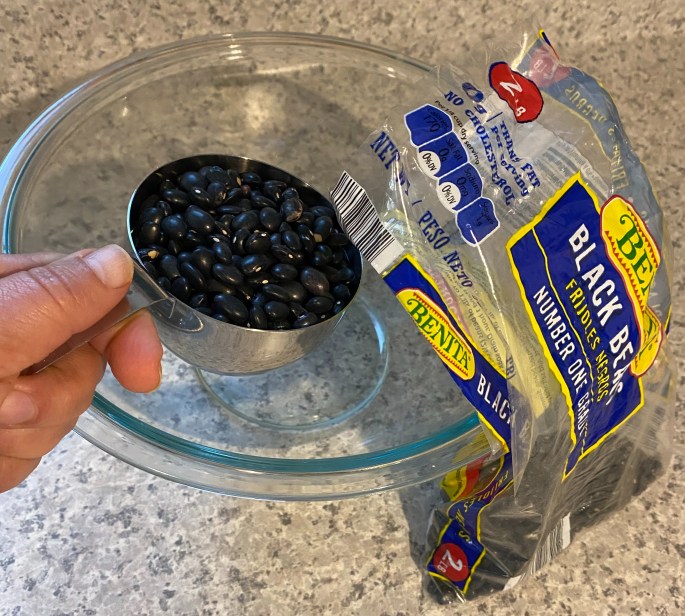
Beans can soak up to 24 hours. The longer the soak, the softer they cook up, and the easier they are to digest.

A diet filled with regular consumption of beans and legumes can reduce LDL cholesterol by up to 5 percent!  In particular, black beans, with a whopping 15 grams of protein and 15 grams of fiber per one cup serving, have a low glycemic effect.  Therefore, eating black beans may reduce spikes in blood sugar, which may also lead to a reduction of risk for diabetes.  Additionally, the high fiber and high protein count of all beans, but in particular black beans, also keeps you feeling satiated longer which could lead to weight loss, or at the very least, maintenance of a healthy weight without feeling deprived. Black beans are also an excellent source of folate, manganese, magnesium, thiamine, and iron.  Talk about a nutritional dynamo!

Rinse well after soaking beans for desired length.

“Beans are such a nice, neutral canvas, you can make a big basic pot of them and then play around with them differently every day.”–Crescent Dragonwagon 

Black beans are versatile too. They are wonderful with almost any rice variation.  Stuff beans in tortillas or taco shells, sprinkle them on salads, add them to soup or chili, spoon them over potatoes, chips, or even fries. Black beans can also be made into brownies or added to a pan with a touch of oil and/or broth, heated up, and mashed into refrieds. They can also be blended into fun dips, such as black bean hummus. The choices are nearly limitless, as black beans–also known as turtle beans– have a mild, almost sweet flavor that lends itself well to a variety of spices and condiments as well as other additions, such as avocado, oranges, peppers, onions, tomatoes, spinach, kale, chili powder, cumin, salsa, garlic cilantro, chiles, to name a few.

Draining the cooking broth from the beans after cooking is a personal choice. I typically save most of the cooking broth, and use a slotted spoon for serving.

Come on, don’t be afraid.  Cooking beans from scratch isn’t hard, time consuming, or expensive.  If you don’t have a pressure cooker, you can always use a crock pot or cook low and slow on a stove for several hours–freeing your time up to do other tasks while keeping your budget in check.  

Open an inexpensive bag of beans, pour ’em into a bowl, add salt and water, then let them soak for up to 24 hours while you go about your life. When you’re ready, cook them up, and let the magic begin!

I encourage you to give this recipe a try.  If I can do it, anyone can do it!  Let me know how it goes!  I’d love to hear from you!

Leftovers can be stored in the fridge or up to a week or frozen for up to 3 months!

Ninja Foodie or Instant Pot Black Beans

Presoaking (Quick or Overnight)

1 cup dried black beans

3 cups water 

1 teaspoon kosher salt or ½ teaspoon table salt

Ninja Foodie or Instant Pot Black Beans

Adjust, eliminate, or add in spices to taste preferences.

1-2 teaspoon olive oil (optional) for those who prefer a little fat added to their beans

1-2 teaspoons minced garlic

½ cup chopped onion

1 cup soaked or dried black beans

1 dried ancho pepper or ½ teaspoon ground ancho chili powder 

½ teaspoon garlic powder

½ teaspoon onion powder

½ sea salt

½ teaspoon black pepper

2 teaspoons reduced sodium taco seasoning

2 cups of water

1 cup vegetable broth

Juice of 1 fresh lime (optional) 

Directions for soaking if preferred:

If using a traditional soaking method of  8-10 hours (although beans can be soaked longer–up to 24 hours–if preferred), place beans, water, and salt in a glass bowl. 

(Feel free to cover for the sake of cleanliness.)

Allow beans to soak either overnight or during the day while away at work. 

When ready to cook, drain in a colander or mesh basket and rinse well.

If using a quick soak method, place dried beans, salt, and water into a pan.

Cover and bring to a boil over medium-heat, and allow to simmer for 5 minutes.

Remove from heat and allow to cool to room temperature for approximately 30 minutes.

When ready to cook, drain in a colander or mesh basket and rinse well.

OR skip all of the presoak methods and simply measure out dried black beans and rinse well before using. 

Ninja Foodie or Instant pot cooking directions:

Swirl oil in the bottom of the pot if using.

Add in minced garlic and onions.

Next add in black beans.

If using a dried ancho pepper, place it on top of beans.

Sprinkle on desired spices–either following my list of ingredients, or go rogue by adding, eliminating, or adjusting the listed spices–they’re your beans after all!

Pour on water.

Fasten the pressure cooker lid and set the nozzle to seal.

Click high pressure, and set time for cooking.

IF beans have soaked, set cooking time for 5 minutes; IF beans have NOT soaked, set cooking time for 25 minutes.

Once the cooking cycle stops, allow the recipe to sit for at least 10 minutes (Do nothing with lid or seal.)

Carefully release the pressure seal, avoiding skin contact with the steam. (Trust me, it can burn!)

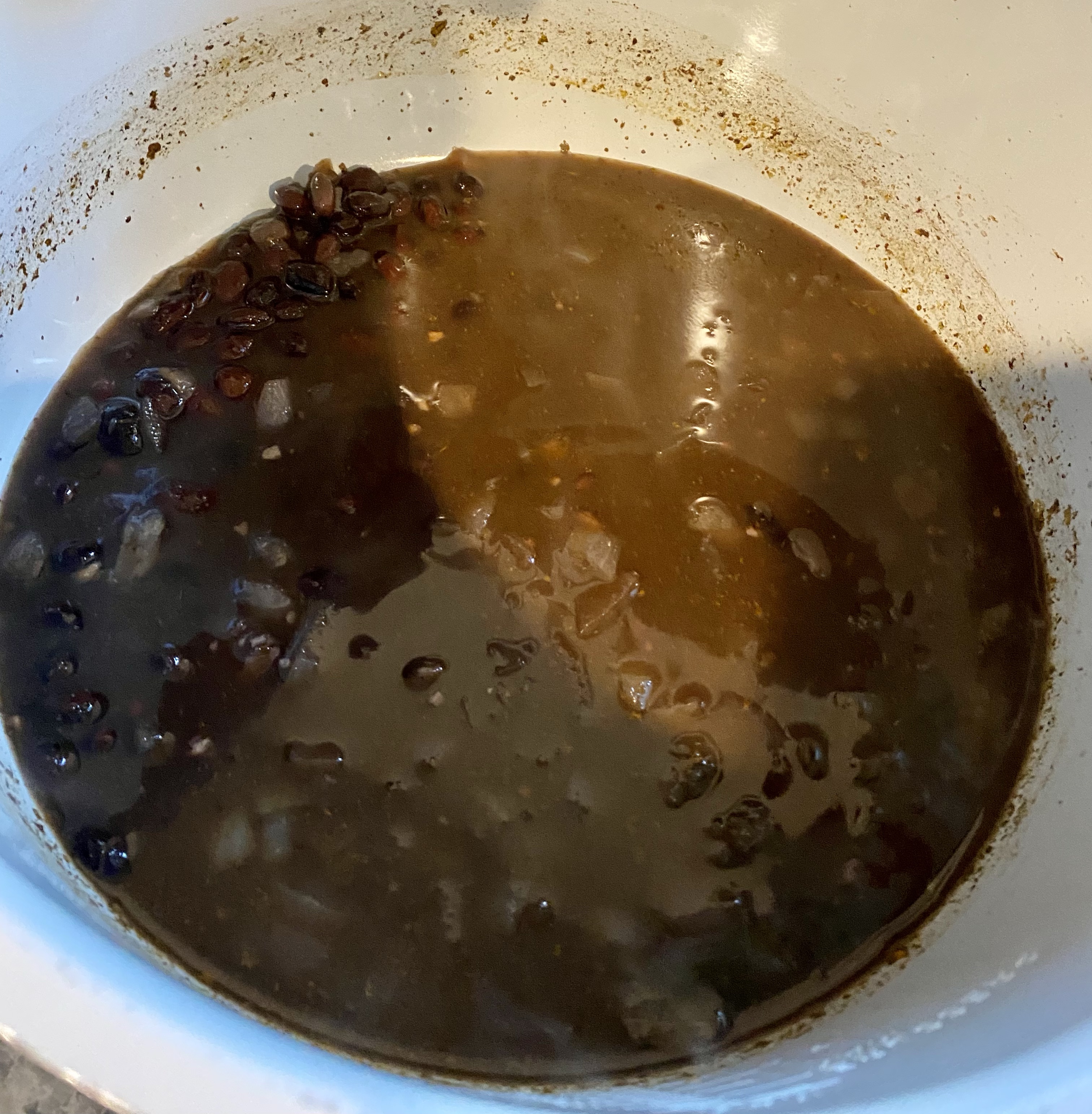
Once steam has fully released, carefully remove the lid, stir, and serve.

If you prefer, drain beans; however, I find that the beans store/taste/texture remains best when stored in a bit of their own broth, but it’s really personal preference.  We simply use a slotted spoon to ladle beans.

Can be stored up to one week in the refrigerator or in the freezer for up to 6 months.

Makes approximately 3 cups of cooked beans.

Recipe can be doubled! 

Add your favorite vegetables, starch, and condiment(s) to your made-from-scratch beans, and you’ve got one healthy meal!