Embracing Silence: The Owl’s Call to Mindful Listening

A wise old owl sat on an oak;
The more he saw the less he spoke;
The less he spoke the more he heard.” —old proverb

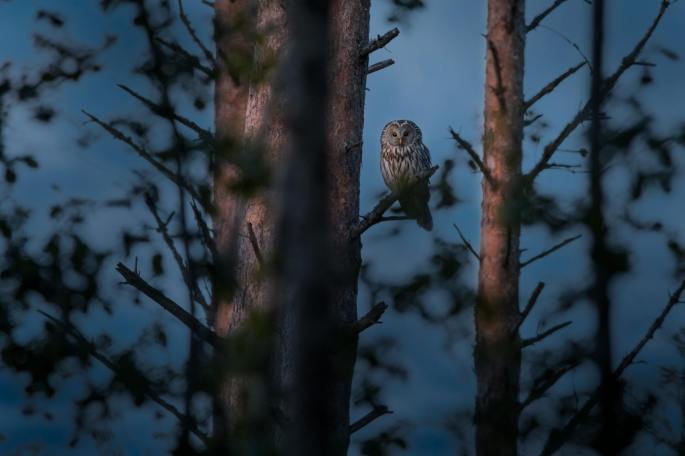
A wise-looking owl perched on a branch in a dark, wooded area, illuminated softly by moonlight.
Photo by Erik Karits on Pexels.com

Listening in the Dark 🌌

I am an early riser, typically awake before the sun. A few weeks ago, my ears perked at the haunting, penetrating call of an owl. Its “Hoo-hoo-hoo, hoo-hoo” echoed around our yard as I looked out into the murky dark. Since then, I intentionally listen for its steadfast call. It has become both a comfort and a mystery—an invitation to listen, reflect, and learn something new.

The owl’s call continues, I am certain, even when I am not listening; yet it requires my full attention in those predawn hours if I hope to notice it regularly. Its presence illustrates the importance of listening and discerning with care and purpose.
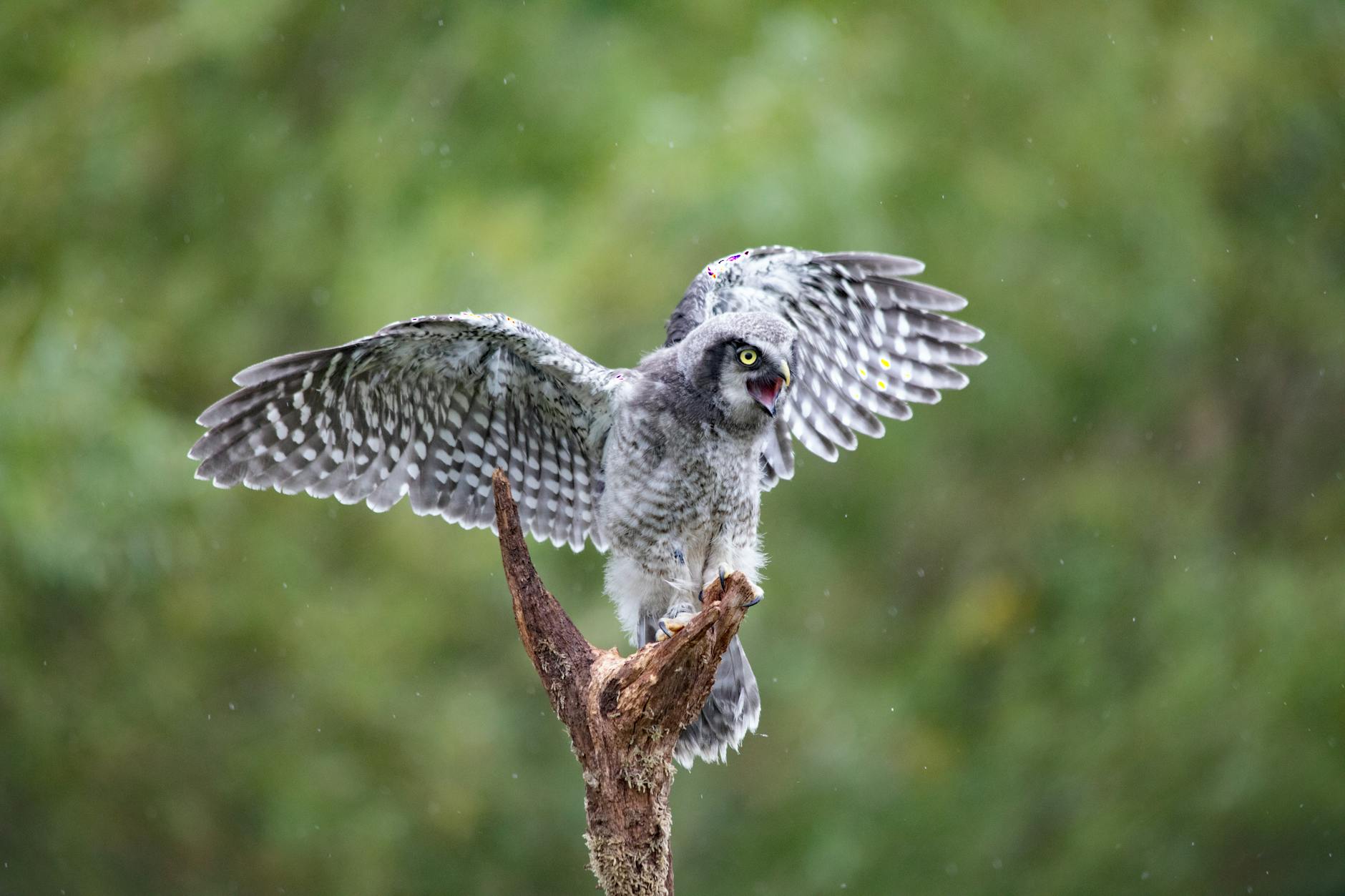
A grey and white owl perched on a branch with wings partially spread, showcasing its feathers and an alert expression against a green blurry background.
Photo by Petra Ryan on Pexels.com

What Owls Teach Us About Voice 🗣️

The autumnal hoots I hear, I learned after a bit of research, are used mostly to communicate territory and to call to potential mates. (It is worth noting that many owl species mate for life, finding another only if a partner dies or becomes separated.) Owls also use distinct calls to warn a mate, their nestlings, or even neighboring owls when danger is near. Only when the threat is imminent do they screech, hiss, or snap their beaks in defense of their young. Like the owl, we, too, can carefully choose when to use our voices amid the noise of the world, saving our own form of “screeching” for the rarest and most necessary moments.
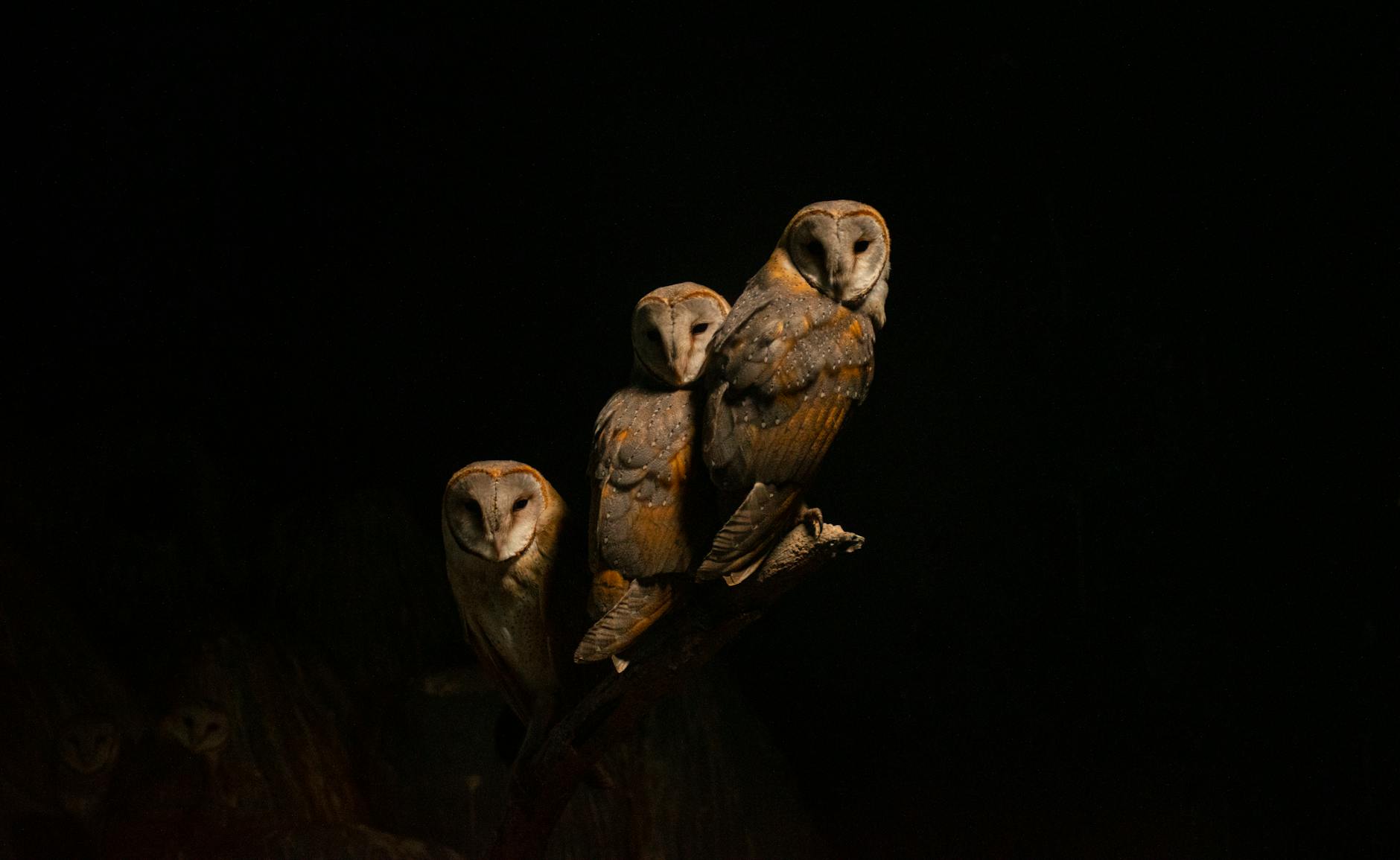
Three barn owls perched on a branch in low light, showcasing their distinctive features against a dark background.
Photo by throughmylife_in_ INDIA on Pexels.com

Signals of Respect and Coexistence 🦉

As I read more, I couldn’t help admiring how owls communicate—practically, respectfully, almost as if to say, “I am here. You are there. Let us coexist with our shared resources and help ward off danger.” To be certain, I am personifying and simplifying their communication, but perhaps there is a lesson for us. In a world that often isn’t equitable in its distribution of resources, space, or power, maybe we can learn the art of signaling like owls—communicating truthfully and transparently without silencing others. What if we approached our conversations with presence, restraint, respect, and a shared awareness of the landscape we inhabit?

Holding Our Ground with Grace 🙏

Hearing the owl’s early morning “Hoo-hoo-hoo, hoo-hoo” reinforces the importance of holding our own ground—our principles, values, beliefs, and even compassions—without becoming loud or defensive. The owl does not insist on being seen; rather, it asserts its message with a reserved dignity. We, too, can claim our “territory” through composed conviction and fairness, standing firm without demeaning others. Faith in our tenets, like my unseen morning owl, calls us to trust what cannot be seen but can be discerned only in stillness.

A tall tree with orange leaves against a clear blue sky, surrounded by a grassy area and a house in the background.
Fall is a time of release and renewal.

Autumn’s Invitation to Adapt 🍂

Autumn is a season of release and preparation. Light softens, signaling leaves to fall as trees ready themselves for winter’s quiet work. Many creatures follow this rhythm, including the owl in my backyard adapting to the shifting season. We, too, are invited to adapt—to let go of what is no longer needed, recalibrate our priorities, and listen more deeply. The natural world thrives on balance, which is different from our human desire for “fairness.” It exists in a subtle harmony in which every being plays a role. I wonder what might happen if we focused more on harmony—the give-and-take of shared ecosystems and resources—paired with the wisdom of knowing when to listen and when to speak.

A woman in a pink hijab interacts playfully with a barn owl perched on her arm, pointing towards its face, with another owl visible in the background.
Photo by Rangga Aditya Armien on Pexels.com

The Harmony of Coexistence 🕊️

The autumn owl’s voice in my backyard is solitary, and yet it reflects community. It marks its presence while acknowledging the presence of others, including us. Coexistence, the owl teaches, requires more than hearing what others say; it requires listening to the silences. Of course, human coexistence is complicated, and life often isn’t what we would call fair.

Therefore, it becomes incumbent upon us to listen, act kindly, and withhold judgment—offering small or not-so-small acts of goodness to help restore balance. This may mean choosing gentleness, or even silence, over the need to be “right,” especially when a loved one, friend, or coworker says or posts something unkind or expresses an opinion we strongly oppose. Likewise, offering compassion instead of judgment when someone is rude or ill-behaved can shift a moment for the better, even if only because we have refused to be pulled into energy-sapping negativity.

A serene forest scene with tall trees bathed in soft rays of sunlight filtering through the branches, creating an ethereal atmosphere.
Photo by Atlantic Ambience on Pexels.com

Before the Light Returns 🌅

The owl still calls unseen in the dark predawn hours, reminding us that communication, connection, and hope often begin before the light returns. The owl does not question whether the sun will rise; it simply continues its call, trusting the rhythm of creation. Like my unseen neighbor, I pray we find the courage to speak fairly, listen deeply, and have faith in the unseen process—knowing that every voice lifted in love and fairness echoes far beyond what we can see.

Perhaps that is the heart of the owl’s lesson: when we listen more deeply, we create the conditions for fairness to grow. As I recently read, “Life isn’t fair. It isn’t, which is why people should endeavor to be more fair to one another, not less.” —Kate Quinn.

Embracing Life’s Unanswered Questions

“Be patient toward all that is unsolved in your heart and try to love the questions themselves. Live the questions now. Perhaps you will then gradually, without noticing it, live along some distant day into the answer.“–Rilke 

A vibrant sunrise with deep orange and golden hues peeking through soft clouds, symbolizing new beginnings and hope.
Photo by Bradley Hook on Pexels.com

When the Mind Won’t Stop Asking 😕

Those words of Rilke, written over a century ago, remind me that some of the hardest seasons in life are the ones that offer no answers—only questions that echo back in silence.

A silhouette of a person walking towards a bright sunrise, symbolizing hope and introspection.
Photo by Dom Gould on Pexels.com

Running into the Questions ⁉️

I was driving home Saturday morning after my weekly long run with a podcast playing in the background. The previous week had been difficult, and I had hoped the run would provide a reprieve from my worries. I started running well before the sun rose under the cloak of a starry sky, which served to keep my mind calm. Then, the rich crimson of dawn edged up the horizon, deepening from vermilion to the fiery orange of full sunrise. As if on cue, the monkeys in my mind began chattering—an endless loop of questions followed by equally endless, devastating possibilities. 
I tried to redirect my thoughts: “If only this or that would happen, then everything will be fine,” I told myself. The problem with this if–then principle is that it’s meant for building new habits or personal change; I can’t magically apply it to others—or to the world at large. Even after my run, the mind monkeys continued their spirals. Then a line from the podcast caught my attention, “What I think Rilke’s words are stating is that if we can learn to live in peace alongside the questions, this may allow us to witness the unfolding of the answers in some indeterminate future.” 

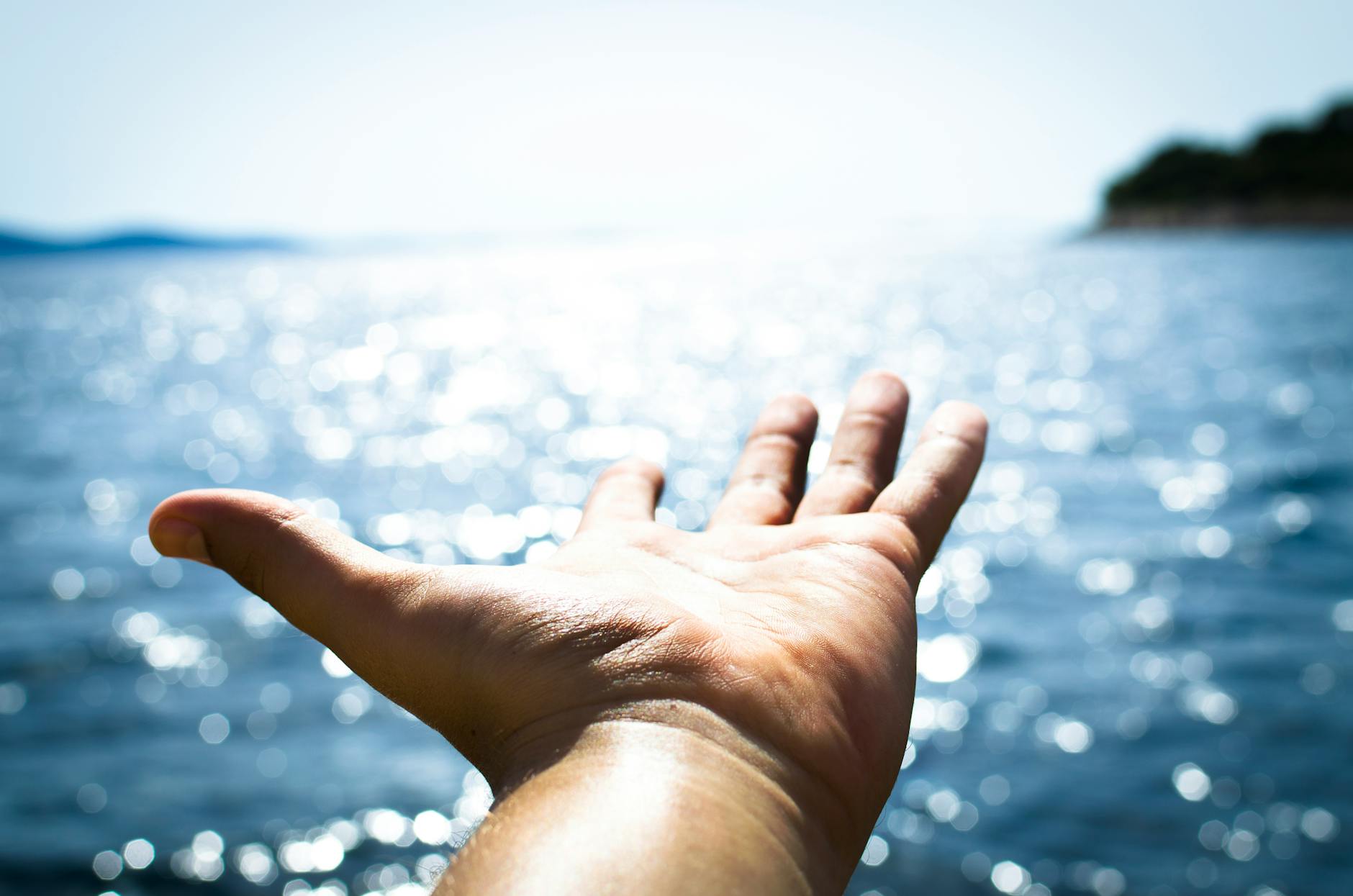
A hand reaching out towards a shimmering body of water under a bright sky.
Photo by Lukas on Pexels.com

An Invitation, Not a Reprimand 🙂

Of course, I had not heard Rilke’s words, so I had to rewind the podcast in order to focus on the original quote. Those words felt like an invitation to hope, rather than a reprimand for my monkey mind. To be clear, it did not feel like a promise of a positive outcome, but rather hope for a greater understanding one day. Rilke’s words seemed to affirm my questioning, as long as I let the questions simply “be,” like one ingredient in the stew of life. 

Hands holding a small, gift-wrapped box with a ribbon against a soft, patterned background.
Photo by Kim Stiver on Pexels.com

The Unsolved Nature of Life 🧐

While I cannot speak for everyone, I think many of us live with unanswered questions—and I’m probably in the camp that has more than a few. Seasons of life bring different questions, but they often center around themes of health, purpose, relationships, concern for others, and the future. It is often uncomfortable–the unsolved nature of life. We desire, like the fairy tales of our childhood, resolutions to problems in which we “all lived happily ever after.” We like knowing what is next; we desire to wrap up answers neatly and hand them over like a present. But life, as we eventually learn, isn’t wrapped in tidy endings. 

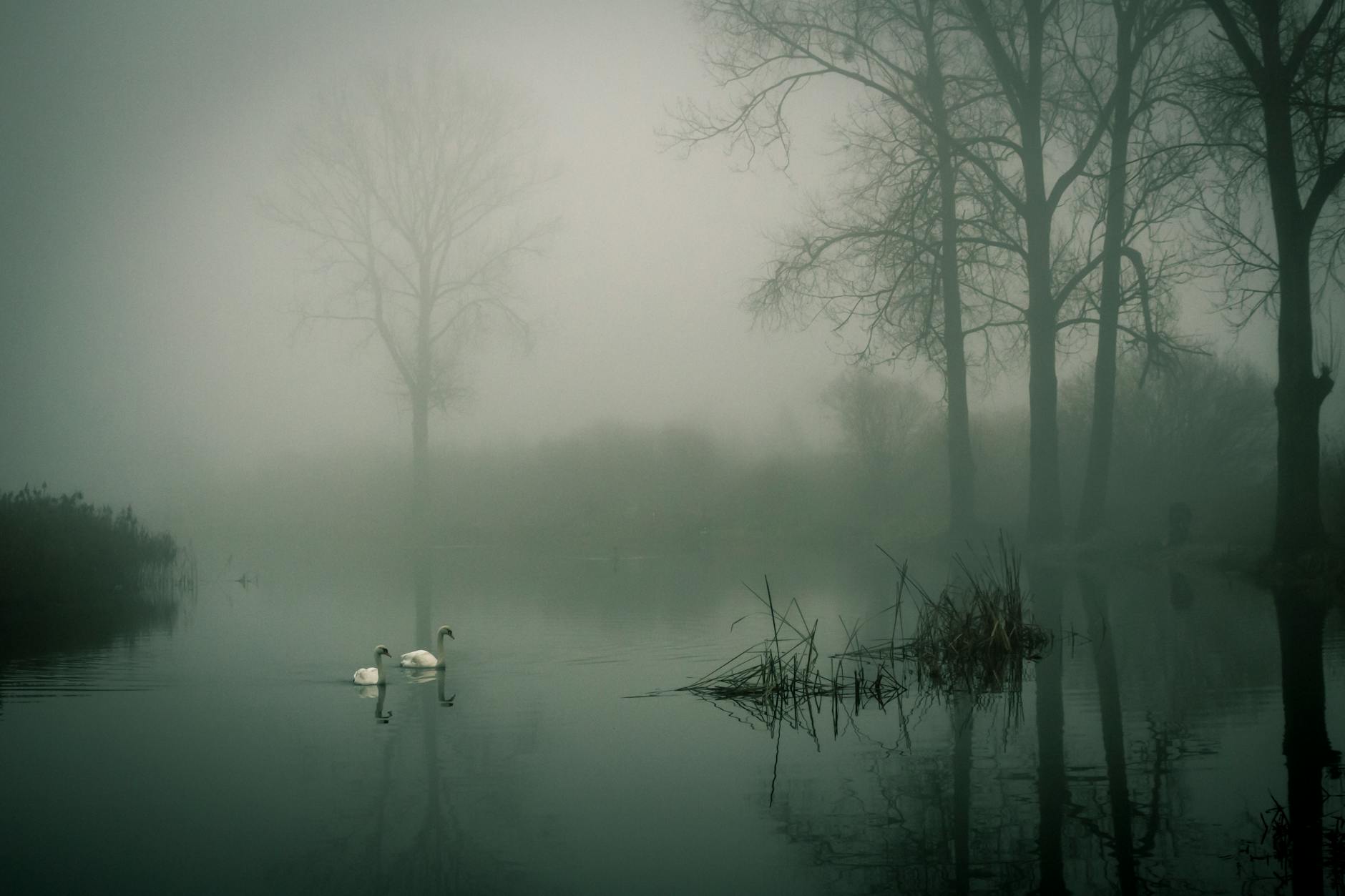
A serene landscape shrouded in fog, featuring two swans gliding on a calm body of water, with bare trees reflecting in the misty surroundings.
Photo by Karol Wiu015bniewski on Pexels.com

When Answers Refuse to Come 🤨

If you have ever encountered a personal crisis, or that of a loved one, you know the “hurry up and wait” sense of time that often accompanies these scenarios–appointments scheduled off into the distant future, followed up by more appointments with no answers, only more maybes and/or more questions or concerns. It can feel like an autumn fog settling over a town in the early morning hours. You can see outlines of various possibilities, but still not know what the future holds. And yet, even in that fog, life quietly continues. 

A chalk-drawn question mark on a black background, symbolizing uncertainty and curiosity.
Photo by Pixabay on Pexels.com

Coexisting with Uncertainty ❓

On one hand, Rilke seems to invite us to love the questions—an improbable ask, given the weight of so many of life’s uncertainties. Perhaps, as the podcaster suggested, Rilke’s words invite us to coexist with uncertainty rather than chase quick answers. Personally, when I face challenges, my first instinct is to “fix it,” whatever “it” may be. However, most of life’s bigger questions are not, per se “fixable” in a vacuum. There are many uncontrollable variables that often fill me with an anxious energy. 

This is when I tend to lean into writing, outdoor movement (especially running and walking), as well as reading–trying to learn as much as I can about the current challenge I am facing. Additionally, I will offer help (if I can be of service) to those for whom I am concerned. In this way, I feel like I am stretching and growing in understanding and empathy, rather than grasping and silently suffering. 

A close-up image of colorful daisies, featuring hues of pink, yellow, orange, and purple, surrounded by green foliage.
Photo by Leigh Patrick on Pexels.com

The Garden Rule: Sleep, Creep, and Leap 🪻

I’ve lived long enough to know that many answers only emerge with the sweet relief of distance and time—like the three-year rule of a perennial garden: sleep, creep, and leap. A long-ago biology professor once explained that in the first year of a newly planted garden, the plants appear to grow very little because they’re focused on developing and strengthening their roots. The following year, roots are still growing and establishing, but they do have enough energy to create a bit more growth above ground. However, by the third year, the roots are fully established and the plant appears to “leap” out of the ground with growth. So it can be with the answers to life’s questions. 

Three white blocks arranged to spell 'WHY' in black uppercase letters.
Photo by Ann H on Pexels.com

Growing Through What We Don’t Yet Understand 📈

There are times in life where we cannot figure out why we keep facing one roadblock and one challenge after another. We wonder how much more we can endure, why we are faced with a certain situation, or why things are not going the way we imagined. Like that early decorative landscaped garden, we cannot see that our experiences are developing roots of strength and stability. We may not see that our ability to empathize, our talents, our emotional well-being, and even our souls, are stretching and strengthening. Later, we may look back and see that those setbacks were quietly shaping us—building the strength we’d need for what came next. 

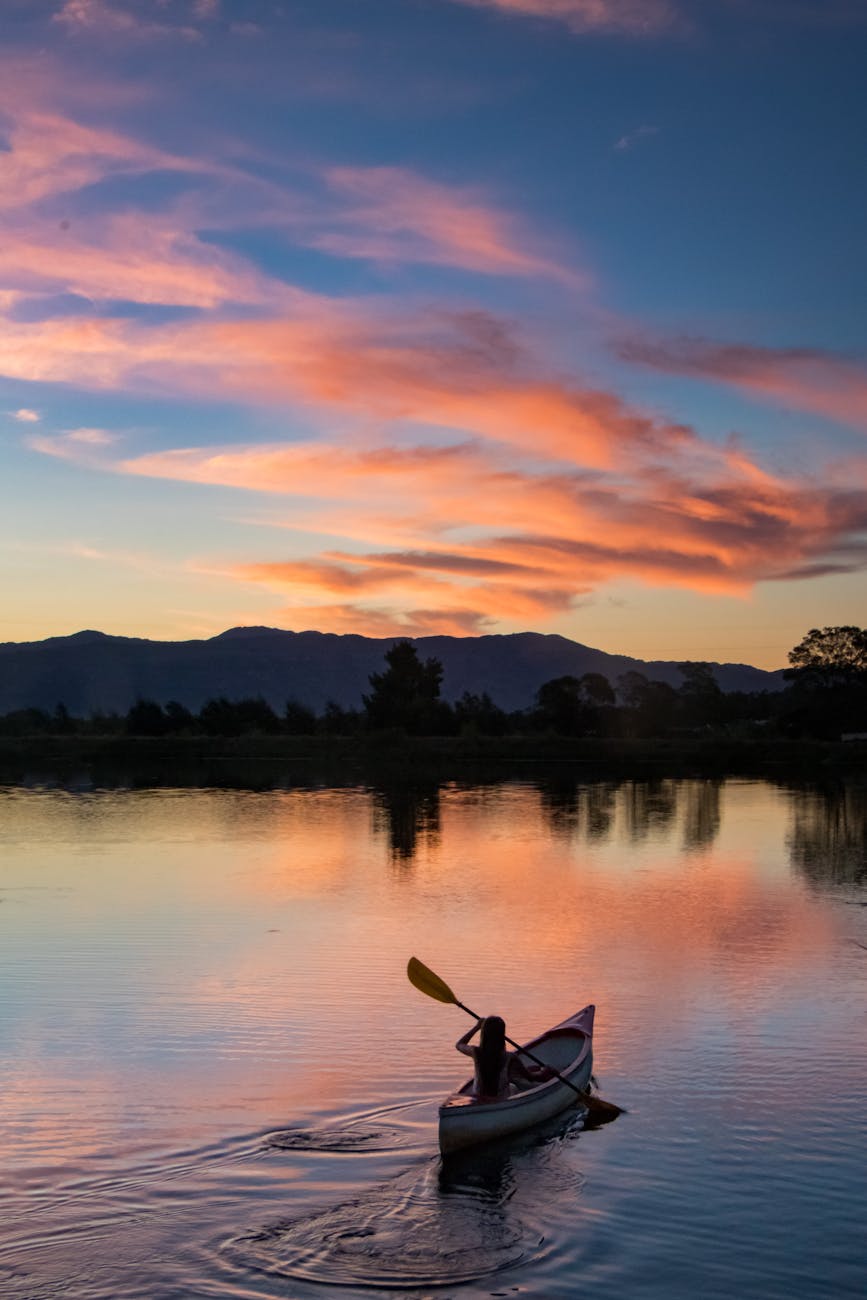
A person kayaking on a calm body of water during sunset, with vibrant pink and orange clouds reflected in the water.
Photo by Taryn Elliott on Pexels.com

The Ineffable Beauty of Living with Questions ✨

As I further reflected on Rilke’s words and my own lived experiences, I realized that there is a certain ineffable beauty that is created by living with questions because it asks us to rely upon faith and grace, granting us a greater purpose as a seeker and a doer. 

We are not here to solve life, but to live it—with curiosity, patience, and hope.

While hope does spring eternal, it is not the same as knowing the answers. Perhaps, that’s the point–it is more about trusting that our life story is continuing to unfold in its own time and season. 

A calm, reflective body of water at sunset, with vibrant streaks of orange and blue in the sky, and a small island featuring lush greenery and palm trees.
Photo by Johannes Plenio on Pexels.com

Light, Grace, and the Unfolding of Answers 💫

Finishing the drive home, I realized that Rilke had a point. As long as I have questions, as long as I seek answers, I am not only living, but I am living with an open, loving heart and a curious, empathetic mind. I have been fortunate to live to see questions answered, but I still have more questions to go–about loved ones, about the world, and about myself. 

Like the sunrise that began my run, the light of understanding will come again—slowly, beautifully, and in its own time. Until then, I feel grateful for life’s questions. They have strengthened my life in numerous ways and provided me with unpredicted opportunities for growth. In the words of John O’Donohue, “Perhaps the beauty of not knowing is that it keeps our hearts open enough to be surprised by grace.” I welcome that grace into my life—and I hope you do too.

Navigating Change: Lessons from a Supertanker’s Course

“Nothing happens until something moves.”–Albert Einstein

Photo by Pixabay on Pexels.com

Why isn’t Change easy? 🤔

“ . . . and that is still my goal,” I overheard a young woman ahead of me in a grocery checkout-line respond to an inquisitive acquaintance, “but change takes time, and it’s not easy.”

My eyes were drawn to the woman who spoke of goals and change as the person with whom she spoke walked away. She had a child in a carrier on her back, and another kid was holding onto the hem of her shirt. A third child she carried on a hip, and there was a baby in a stroller. 

When all of the same young woman’s groceries had been scanned, she realized that her method of payment was in her vehicle. I observed with amazement as she traipsed back outside with four kids in tow to the vast parking lot; several long minutes later, they all marched back inside–the woman clutching a wallet. I was sincerely impressed with the young lady’s calm demeanor throughout the ordeal. 

Upon later reflection, the woman’s reply regarding change brought to mind an expression I once heard: “Making change is like turning around a supertanker.” 

Photo by RANJITH AR on Pexels.com

IN order to change, we have to understand the Problem 🧐

Whether turning around a supertanker or making a life-change, we have to first understand the problem. The problem of turning around a supertanker requires understanding some physics, which I barely recall. Therefore, I did a bit of brushing up, and I was able to learn that turning a supertanker is a problem of inertia, friction, force, and momentum. The same, I think, might also be true in life.

NASA defines Newton’s first law of motion as “every object will remain at rest or in uniform motion in a straight line unless compelled to change its state by the action of an external force.”  Resistance to change in motion is a result of inertia. The larger the mass and/or the greater the speed, the greater the inertia. Therefore, due to the supertanker’s mammoth mass, speeding up, slowing down, turning, or stopping cannot be quickly accomplished. 

Another difficulty in turning a supertanker is due to the role friction plays. According to BBC Bitesize, friction is a “force between two surfaces that are sliding, or trying to slide, across each other.” The amount of friction depends upon the makeup of the two surfaces, but regardless, friction always slows down movement. 

Along with friction, force is another factor influencing the ability of the supertanker to slow down and turn. ByJus describes force as an “external agent capable of changing a body’s state of rest or motion” Given the supertanker’s oversized mass and its momentum (how hard it is to stop an object), the friction and force of the water is relatively weak– similar to sliding on ice. This further explains why a supertanker requires a longer distance and longer time to adjust its speed, turn it around, or bring it to a complete stop in order to avoid damaging the vessel and/or its cargo. It is likewise true for life.

Understanding the role of inertia, friction, force, and Momentum when it comes to change 🤨

Photo by Pixabay on Pexels.com

Similar to moving a super tanker, the greater our inertia and momentum in one direction, the greater the challenge to turn around and/or make a change in our life. Creating life changes, major or minor, typically takes time and planning to overcome the inertia, friction, and/or force that has either stopped our progress or has kept us moving in one (perhaps wrong) direction.

Many of us have experienced some friction that caused us to sense a need for change, but we may have ignored it or lacked the momentum to change. However, as problems, difficulties, or challenges increase their force, our momentum shifts, and we begin to take small steps that can lead to a turn-around. An example of this could be taking an online course or two per semester. While it may take years, eventually a degree or certification of training can be earned, which could lead to the start of a new career and perhaps eventually, better pay and living circumstances.

Unfortunately, there are other times when a major health or life event such as a heart attack, job loss, or an estranged relationship, creates enough of a force to bring us to a full-stop and necessitate us to change course.  However, given the momentum of the life-path that led to the colossal event, there may be physical, personal or relational harm experienced as a result, similar to the damage caused to a supertanker when forced to come to a stop too quickly.

Knowing where to apply the force 😰

Photo by Bilge u015eeyma Ku00fctu00fckou011flu on Pexels.com

The irony of turning a supertanker is that it doesn’t necessarily require a lot of effort to turn it. Sure, it could be pushed and turned from behind, but the amount of force and effort required would be unbelievably great. Another option would be to apply constant pressure to the supertanker’s large rudder at the back of the vessel, which would ultimately turn it, but it would take a lot of force in the form of manpower. 

Instead, ships (and airplanes), such as a supertanker are equipped with a trim tab on their rudder.  As described in Success Engineering, trim tabs help “fine tune the ship’s steering without the need for the ship’s operator to apply constant pressure on the steering controls.”  Hence, the ship can be turned slowly, but with minimal effort and force. 

Your North Star will serves as a guide as you walk along life’s path.

REmember your North Star? 🌟

While people may not have trim tabs, they can have a “North Star.” In the same way the North Star helped sailors navigate waters years ago, having a guiding-light–aka a purpose, goal, or principle–can fine tune our life steering. Life changes and course directions will still need to occur and will also take time, especially if our North Star has been clouded over for some time. Perhaps, this was the case for the young woman at the store. 

Once we understand a problem and set a goal to change, if we follow (or realign) to our guiding light–our true North Star–it can serve as captain of our ship, applying the trim tab when needed to our life’s rudder in order to guide change and course directions as needed.  It doesn’t mean there won’t be friction or rough water ahead; it doesn’t mean we won’t encounter outside forces, such as strong, stormy winds.  And, it doesn’t guarantee that change occurs quickly.  

The point is that in order to turn things around in life, it may be a matter of learning to apply our focus on the right force that can help us overcome our inertia and better manage our friction. Then, we can allow momentum to carry us, course corrections and changes included, as long as we faithfully follow our true North Star.

Grief and Love–one story of surviving the loss

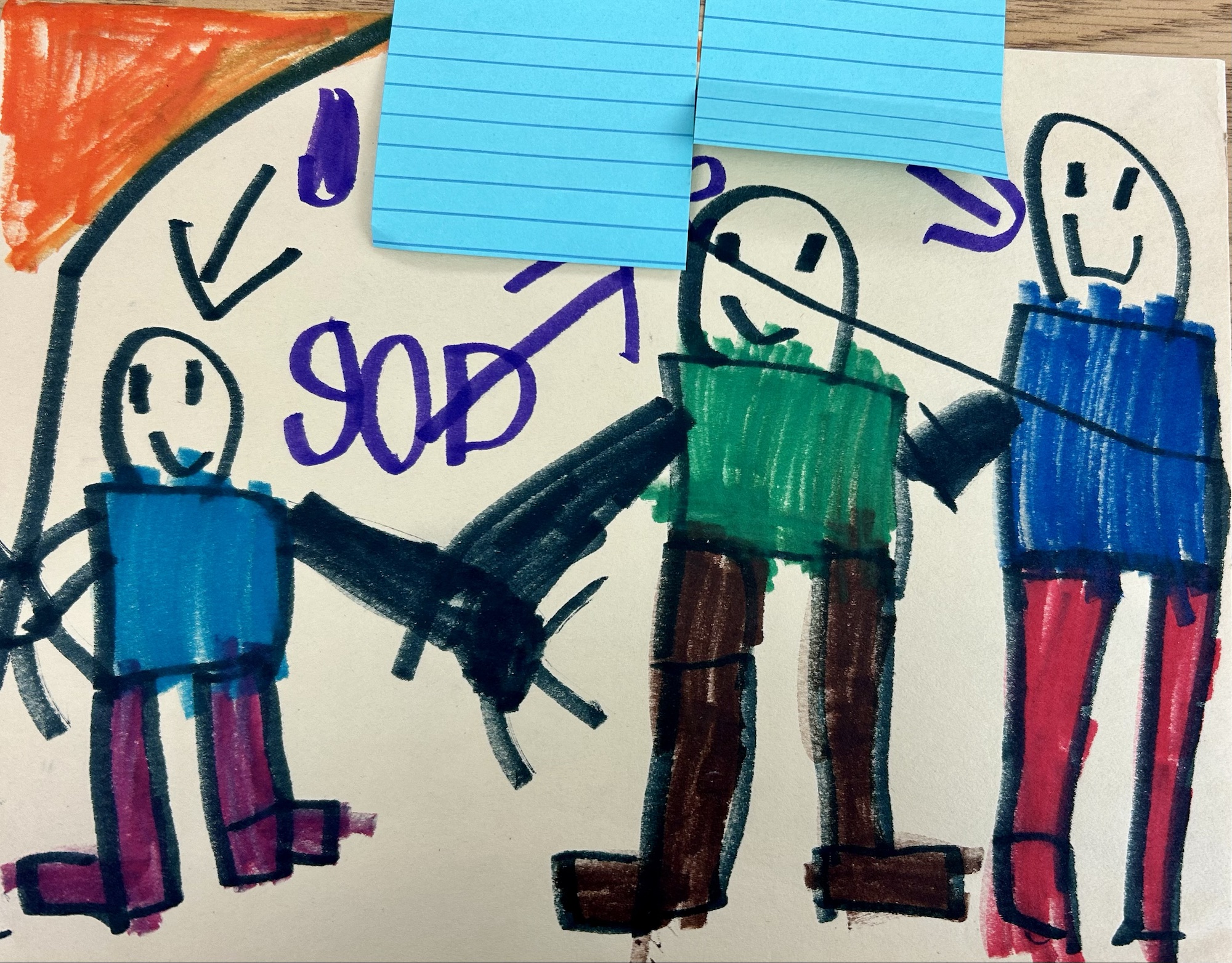
A picture created by one of my former Kindergarten students depicting what they believed was their former classmate’s ascent into heaven. The rainbow is what the heavenly friend is sending back to the friend still who is still alive. (Post-it notes are covering names.)

A story revisited 🥺

It was a spring day with wide cerulean skies and clouds of cotton puffs as I stepped out of my vehicle, as per usual, when I saw the employee approaching with my curbside grocery order.  I am a regular customer, so I tend to know the names and faces of the usual employees, but she was new to me.  Therefore, I was surprised when she asked if I was a teacher. I smiled, and said that I was. I could have never predicted what she would next say.

As she talked, there it was.  The wound, which I thought had healed, was painfully stabbed open. It is an unfortunate story, centering on a young family, a classroom of five-year-olds, their parents, and me–bound together by a loss too surreal to be true– yet it was. 

 She said she attended the funeral and saw me, and she added that she related to the family. Additionally, she added that all her kids attended that same school in which I once taught, now nearly 20 years later. As what appeared to be an after-thought she added, “You was a good teacher.” 

I asked about the surviving family and the sibling, who was only a baby at the time of the event.  The sibling, she reported, was now studying at a university.  This bit of information buoyed my spirit.  

Another picture drawn by another student depicting their deceased friend, holding hands with God and Jesus.

An event that forever changed me 😨

With over three and half decades in education, I can look back at certain points in my career and identify pivotal moments that forever changed me.  This loss of a five-year-old student was probably one of the most defining moments in my career. It sent me spiraling into a deep darkness for which I believed I should keep hidden from the world because it was my face those cherished students and their parents looked to for strength and stability–or at least that is how I perceived the situation at the time.  

On the inside, I was crumbling, questioning everything my faith had taught me.  Angry at that the Universe would allow such a senseless death, and angry at myself for what felt like was my “butterfly-effect” that seemingly set the wheels in motion for this tragedy.  Emotions, which I now know, can override logic during unexpected loss.

Outwardly for the world, I did the best I could, but none of my training had prepared me. While there were times, I felt led from within by a Source greater than myself. Other times, I felt I was driving a car without headlights after a severe storm, stumbling and bumping up against one roadblock after another.  

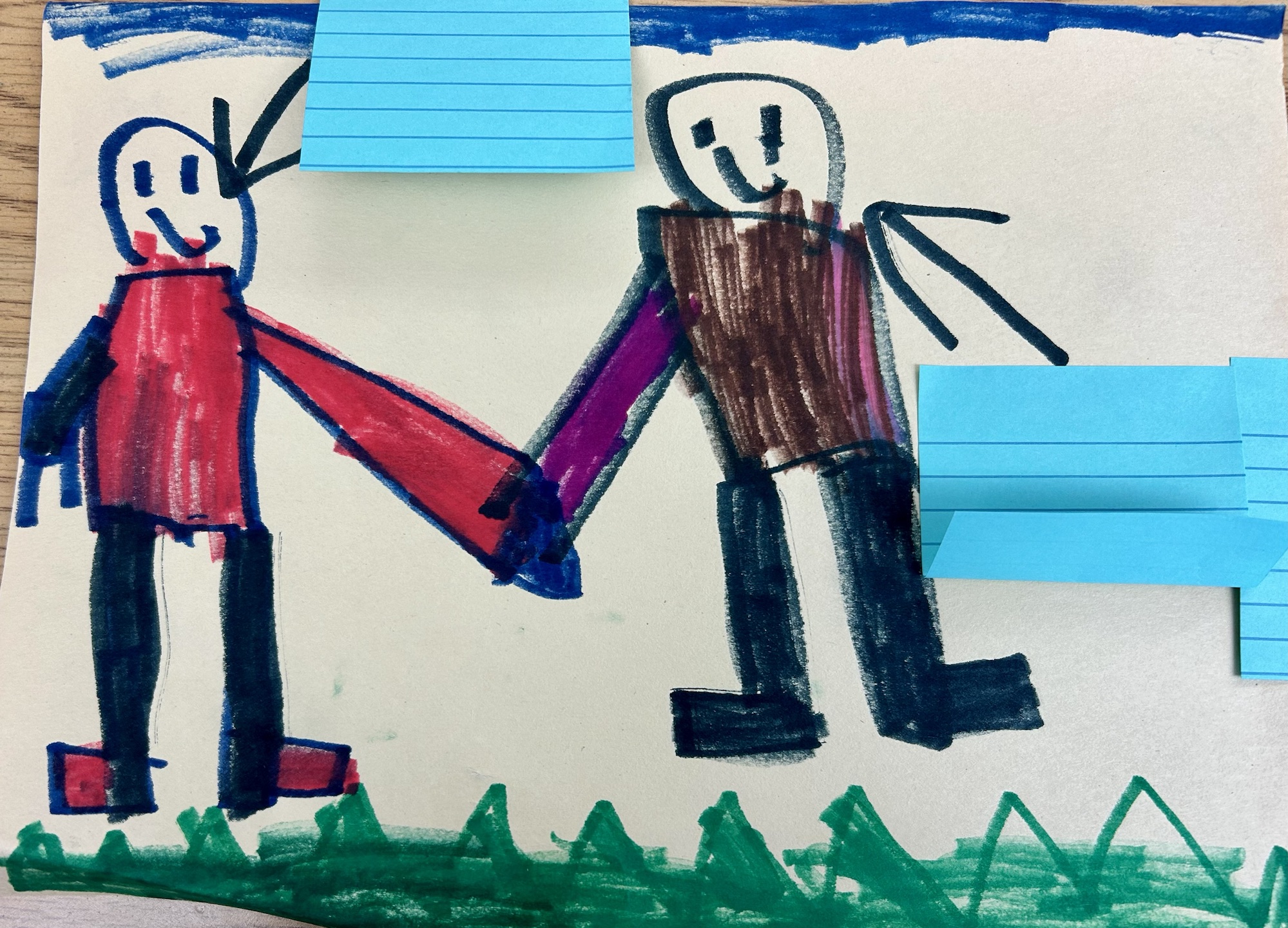
Another drawing depicting a student holding hands with the deceased classmate, adding that they missed their friend. (Names are covered with post-it notes.)

Days of Mourning 😢

There were countless days when my students would just cry, and so I let them, allowing their tears to express what they could not put into words.  I hugged them often, and permitted/encouraged them to express their feelings in a safe and productive ways.  They drew pictures, decorated their former classmates’ seat, and took turns holding and talking to a bear that had been built for them to help process their grief.

Some students, who weren’t as verbal as others, became noticeably aggressive as they moved through stages of grief.  This required much patience and tolerance.  While I understood they needed to get out their anger as they were not developmentally old enough to understand death, I could not let them harm other students.  Therefore, I had to come up with creative outlets for their feelings, such as allowing them to be the official “wrecking ball” if someone wanted their block creation knocked over or the official “paper shredder” of messed-up papers.

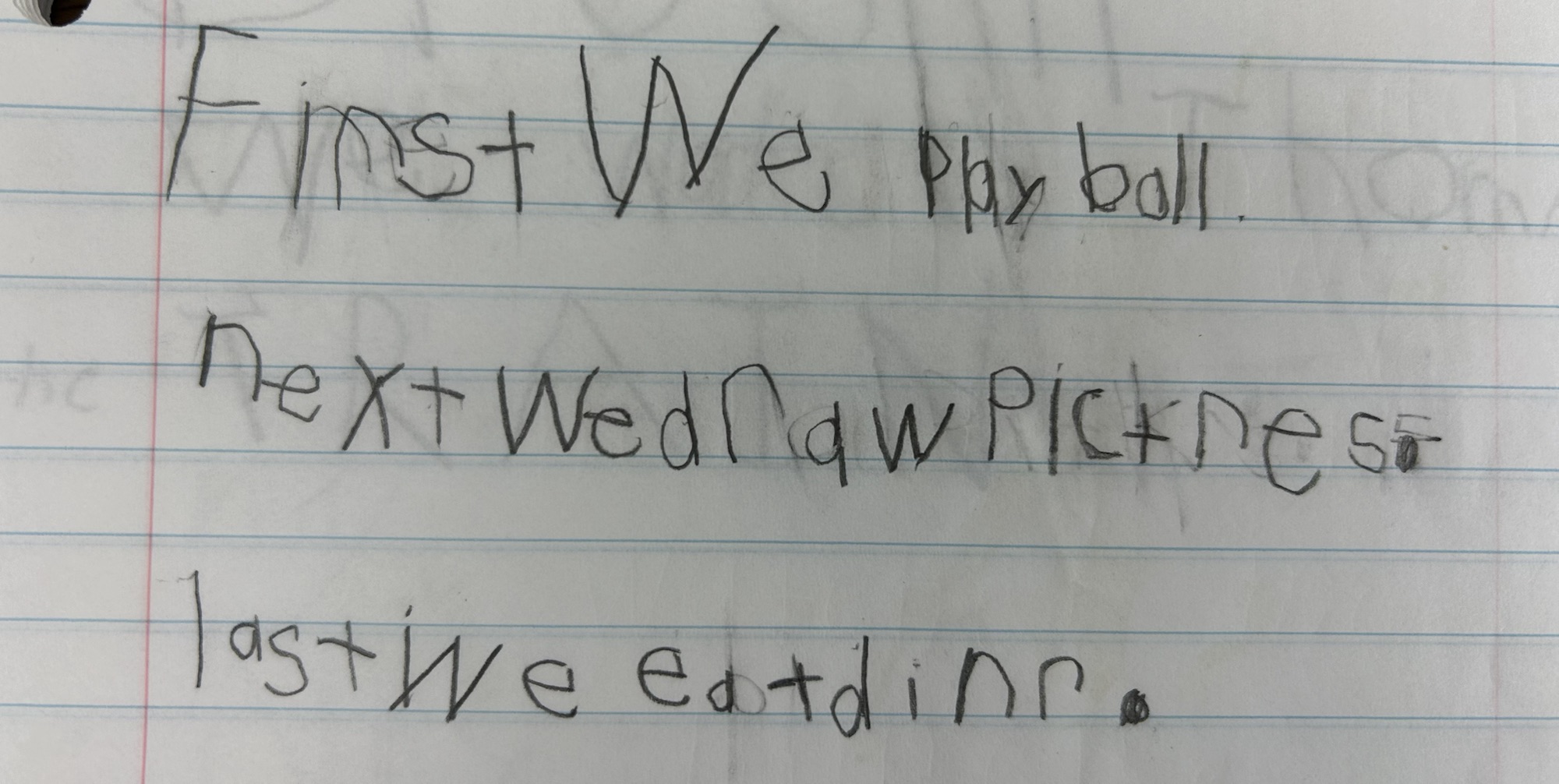
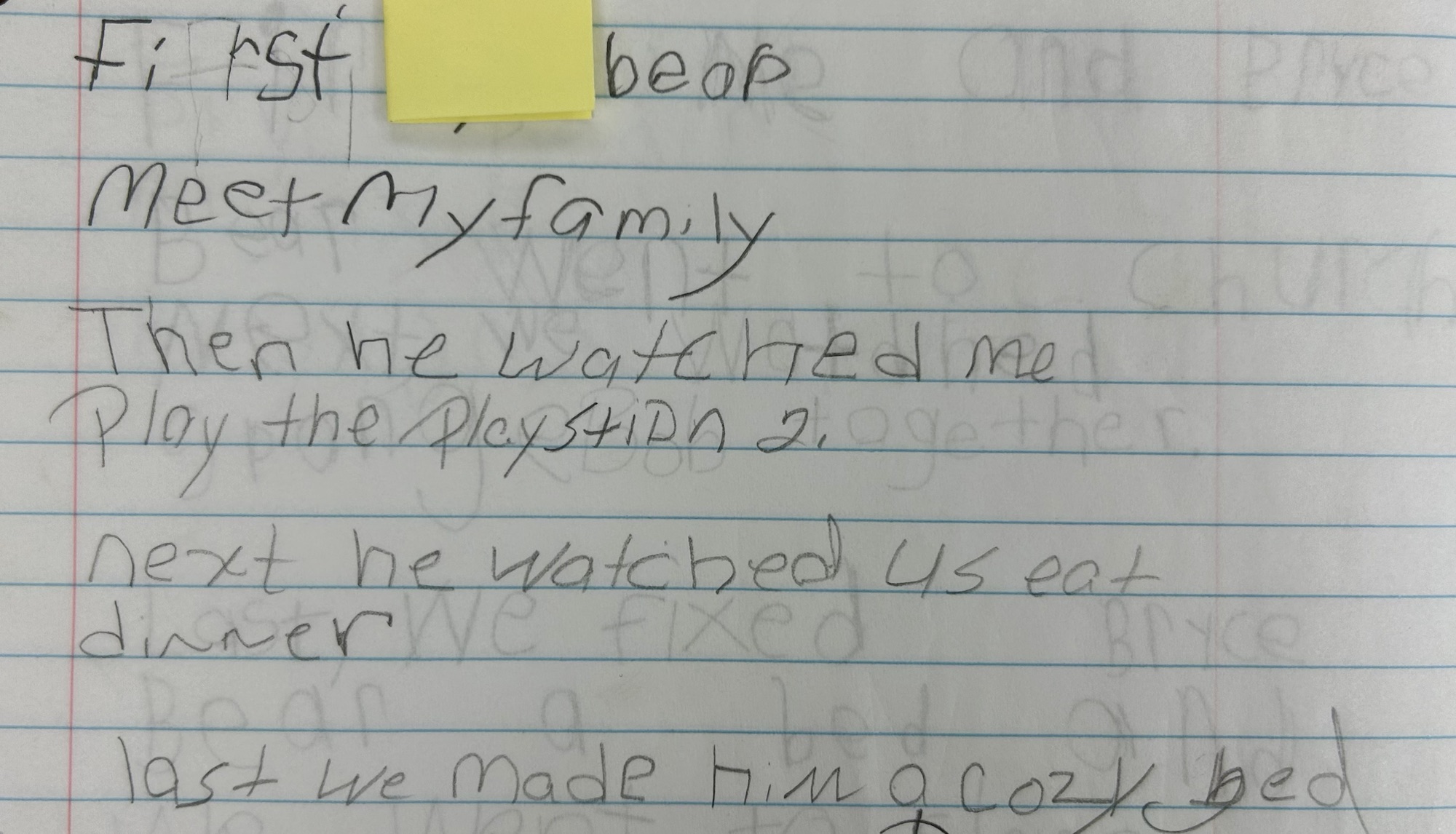
A “story” written by a student describing what happened when the student took home the grief therapy bear.

Sometimes, Life isn’t fair 😩

Thinking back to that tragedy, I wish I could go back to my younger self and say, “You’re doing ok,” in the same way I would have said to my students at the time.  Instead, I spent much time questioning what more I should be doing.  And, each night, when I went home to my own beloved daughter the exact same age, I felt simultaneously grateful and guilty.  Why did I get to keep my child, but someone else didn’t?  It wasn’t fair.

Another student’s experience with the grief therapy bear.

Nearly 20 years later . . .⏳

Now, nearly 20 years later, life continues to march on at a breathtaking pace. Those students are now in their 25th year of life.  They are all, I hope, making their way into their independence, exploring the edges of the kind of responsible adult they want to evolve into.  I pray they will each find their own version of success, however they define it. 

I especially hope the child’s family is well.  They were dealt a tragic blow for which I have no explanation.  I am certain it has not been easy for them, but I pray their hearts continue to mend to the degree possible. Most of all, I wish them peace.

Another drawing of expressing their feelings about their departed friend. (Name is covered by post-it notes.)

Does time Really heal? ❤️‍🩹

They say time heals all wounds, but I am not sure.  The wounds may heal, but the scar still remains.  Like all scars, they fade with the passing of time, but those scars remain as a reminder of who we once were.

 Once there was a young family of four, until suddenly there were three.  Once I was a kindergarten teacher with 15 students, and, in the blink of an eye, there were 14.  I wish I knew why, but that is not for me to understand.  Instead, I will forever be haunted by what more I could have done. 

Another student’s experience with the grief therapy bear.

Looking back on the love 💜

Nonetheless, looking back now, what I most recall is the love.  Love for the departed student, love for the other students of that class, and deep abiding appreciation for those students’ parents who unconditionally supported me and guided their children tirelessly through what had to be one of the darkest periods in their young and tender lives.

Their is beauty in life, even if short lived 🌸

On the day of writing this, I went for a run in a park.  It was early spring, and the air held the promise of warmer days.  All around me the wind blew off the white petals of flowering trees, and the petals danced around me like snowflakes, graceful on the currents of air.  I realized, the flowers will soon be replaced by the green leaves, and the cycle of life will continue through the seasons.  However, in that moment, I could not help but feel those petals were a heavenly reminder of the beauty that is possible in life–even if for only a short time.

Musician and writer, Nick Cave, is said to have written in a letter, “Grief and love are forever intertwined. Grief is the terrible reminder of the depths of our love and, like love, grief is non-negotiable.”  I couldn’t agree more.  

Another piece of artwork expressing the joy of friendship in spite of the loss. (Names covered with post-it notes.)
Another student’s experience with the bear.

The Stardust of Grandparents Twinkles like their eyes

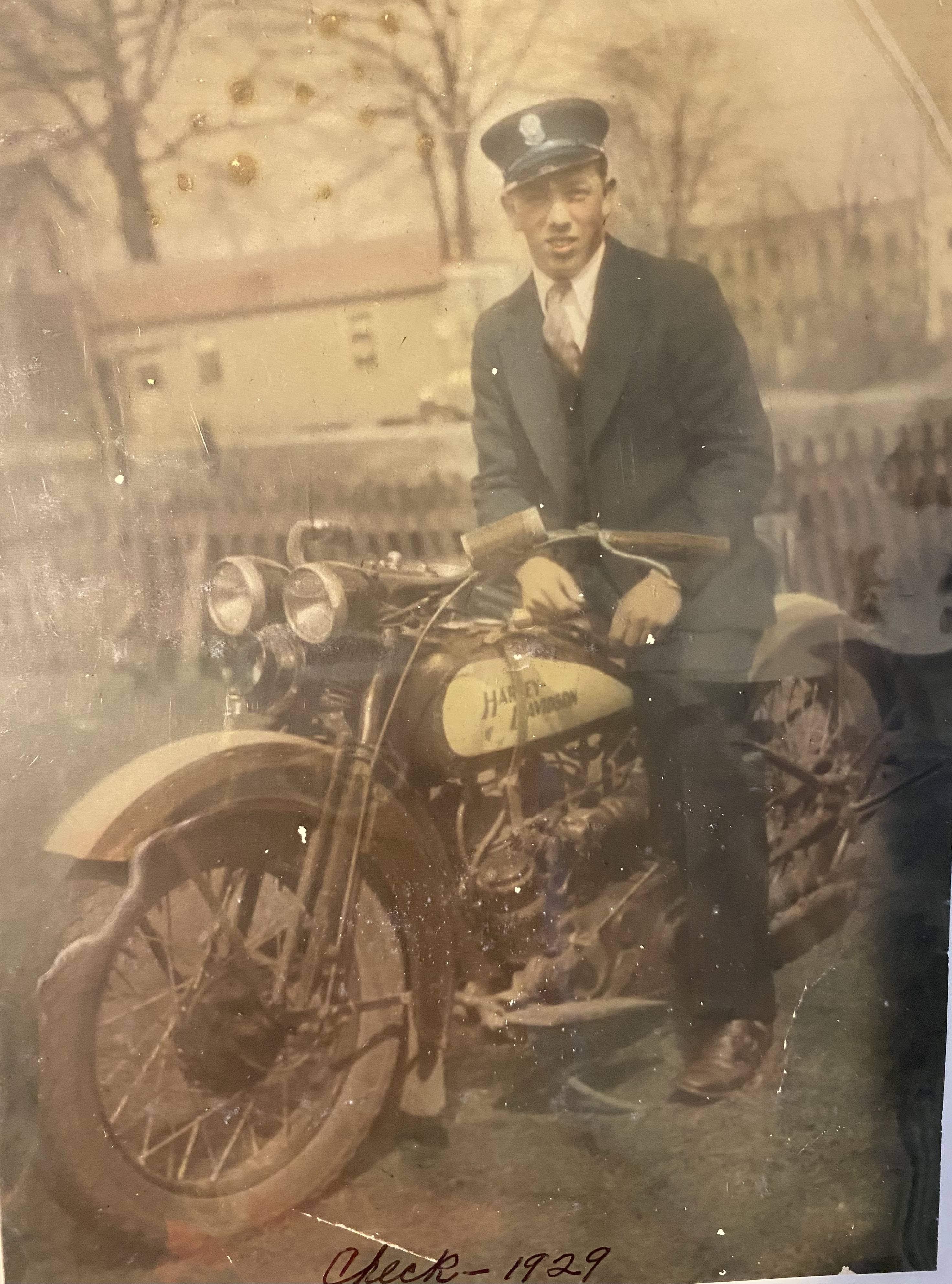
Papaw, in the backyard of my childhood home, with my hand resting on his shoulder. I am not sure what the moment or occasion was, but this photo captured a moment between the two of us.

A Light from the tunnel of times past 💡

My mom found and gave to me a picture of her dad, Papaw, as I called him.  In the photo, he is in the foreground, sitting at a table on the patio of my childhood.  In the background of that picture are several small details of my childhood home.  Gazing for some time at that picture transported me backwards through a tunnel of times past.

To begin, I noticed the infamous backdoor that we weren’t supposed to slam as children heading out to play.  Then, there’s the wooden fence my dad built, which reminded me that he also designed and poured the concrete for that patio. Additionally, I can see part of our clothes line with its bag of clothespins.  I recall my mom teaching me the proper way to hang clothes, sheets, and towels to minimize wrinkles and shorten the drying time. 

He ultimately sold his grocery store business and worked for C & O Railroad.

Papaw 👴🏻

Once the surge of those background memories drifted down the stream of remembrances, another torrent of emotions began swelling–Papaw.  In the photo he sits in one of his classic jumpsuits that he wore nearly every day of his life except for yard work and church events. His smile is tender in this photo, and despite the not-so-great quality of the camera, the picture still manages to capture that twinkle in his eyes.

 I adored that man. Now, as an aging adult, I am certain that Papaw was full of flaws.  Family rumors of the daredevil antics of his youth, his hobo days after marrying my grandmother– leaving her for weeks at a time to raise two young boys and manage an independent grocery store with its own lunch counter by herself– his issues with depression, and perhaps even some philandering, were whispered stories among the family adults.  As kids, we gathered bits and pieces of these stories, as one does a torn up letter, but we were simply too young to put the pieces together.  He was simply our Papaw.

Papaw and me in his backyard.

Traveling Backwards through the Tunnel of time 🔙

Staring at the photo of this complicated man that I am only now beginning to see in a realistic light, I assess the other person in the photo.  She is a college student with her hand on Papaw’s shoulder–a habit I recognize because it is me.  I tend to place my hand on the shoulders of people who are seated at tables, or even desks in a classroom.  I suppose it is my way of saying I care about you; how can I help; or, can I get you anything?  It took my breath away upon first seeing it.  So much is captured in that frozen image of time.

Papaw often called me a Kewpie-doll or China-doll. I am sure this was because of my size.  I was small for my age for many of my younger years.  I was also often sick during this time period, and I recall being hospitalized at least twice.  Both memories are blurs of oxygen tents, IVs in my thighs, dimly lit hospital rooms, and Papaw’s worried face when I would wake with bleary eyes from sickness induced sleep.  

Papaw and me. I am sure I just “helped” him wash his car.

Purple Hazy memories 💜

I remember during one of these stays, he gave me a purple popsicle.  Purple was my favorite color–a color he hated because he associated it with Christ’s crucifixion–but when faced with two granddaughters (my cousin and I) who both loved purple, he came to terms with that color. But, I digress. 

Anyway, he gave me that half popsicle.  (Remember how adults would break those double-stick popsicles into two?)  I was lying on my side, with the hospital bed rail up, trying to lick the popsicle for him.  He said it would make me better, but I couldn’t keep my eyes open.  The popsicle melted, and I remember waking enough to experience a short burst of fear that I would get spanked for making a mess.  (Not that Papaw would have ever laid a hand on me, but I was sick, and logic eluded me.) 

There was another time I woke up in a hospital bed crying because there were needles in my legs (IVs) and I was scared.  Papaw patted my hand and told me not to be afraid as he wiped away his own tears. 

During one of those hospital stays he gave me a bouquet of pink plastic flowers that my grandmother sprayed with perfume.  Once home, I kept it in my bedroom for years, and I would sniff it countless times to see if I could still catch a whiff of that perfume.

Runaway Story 🏃‍♀️

Another time, Grandmother and Papaw came to stay at our childhood home while my parents were out of town.  I became mad at my grandmother for some reason–that part eludes me–but I decided to run away.  I lived on a small cul-de-sac in the country, surrounded by hills, so I am not sure where I thought I would go.  Nonetheless, I took off running in my headstrong way down the street until I got to the main road with fast moving cars and no real safe space to walk.

Tail tucked between my legs, I slowly trudged back to my house, and I slumped against one side of it, arms crossed, still mad, but losing steam.  Out of the house came Papaw. I don’t know how he knew I was there, but there he was.  I am not sure precisely what he said, but he did tell me a story about a time he ran away. He added, with great solemnity, that running away never solved problems.

Looking back on that now, I wonder if there was more he was confessing, but I would not have been old enough to catch the symbolism of his words.  I do recall Papaw encouraging me to be more understanding of my grandmother.  He further added that as the oldest child, he counted on me to be her biggest helper.  He wanted me to apologize to Grandmother and be “his girl” by being her helper from then on.

Even in high school, I still adored my Papaw.

A Grandfather’s Love 💖

And that is what it came down to.  When I studied that picture, I was reminded of being “Papaw’s girl,” something he probably also told all the other grandchildren.  Nevertheless, I believed he loved me most of all, and that made me feel special.  It now seems naive and silly, but that is how he could make me feel.  A feeling that has never left me, even now as I look at that image.

Young, handsome, and daring . . .

The Abundance of his legacy ✨

 Wiping away my reminiscing tears, I gaze at this man who was complex in ways I never knew. He only had a 5th grade education, but he still managed to educate himself through his endless curiosity. Papaw was complicated, and yet simple. He managed to ultimately live an abundant life. 

Papaw traveled all over the world with my grandmother visiting and staying with missionaries, and he also traveled through his hometown as a teen standing on his circa 1920s motorcycle. He was the trusted treasurer of his church for as long as I can remember.  Papaw played football before there was all the protective clothing, and he loved the game until Alzhiemer’s disease took his mind. He retired from C & O railroad, and he once owned a grocery store that was flooded twice by the Ohio River. It was the ‘37 flood that ended those retail days and inspired him to build a house on a hill.  Yet, this same man once swam across the Ohio River from South Shore, KY to somewhere near Portsmouth. 

He had three children, my mom being a late-in-life surprise, and he had nine grandchildren.  He loved us all. 

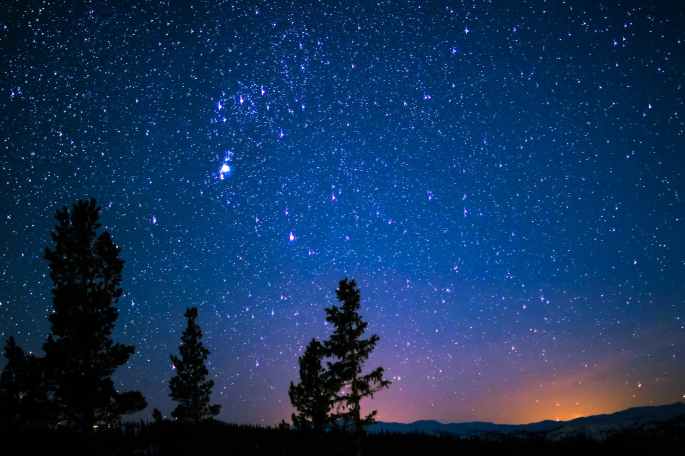
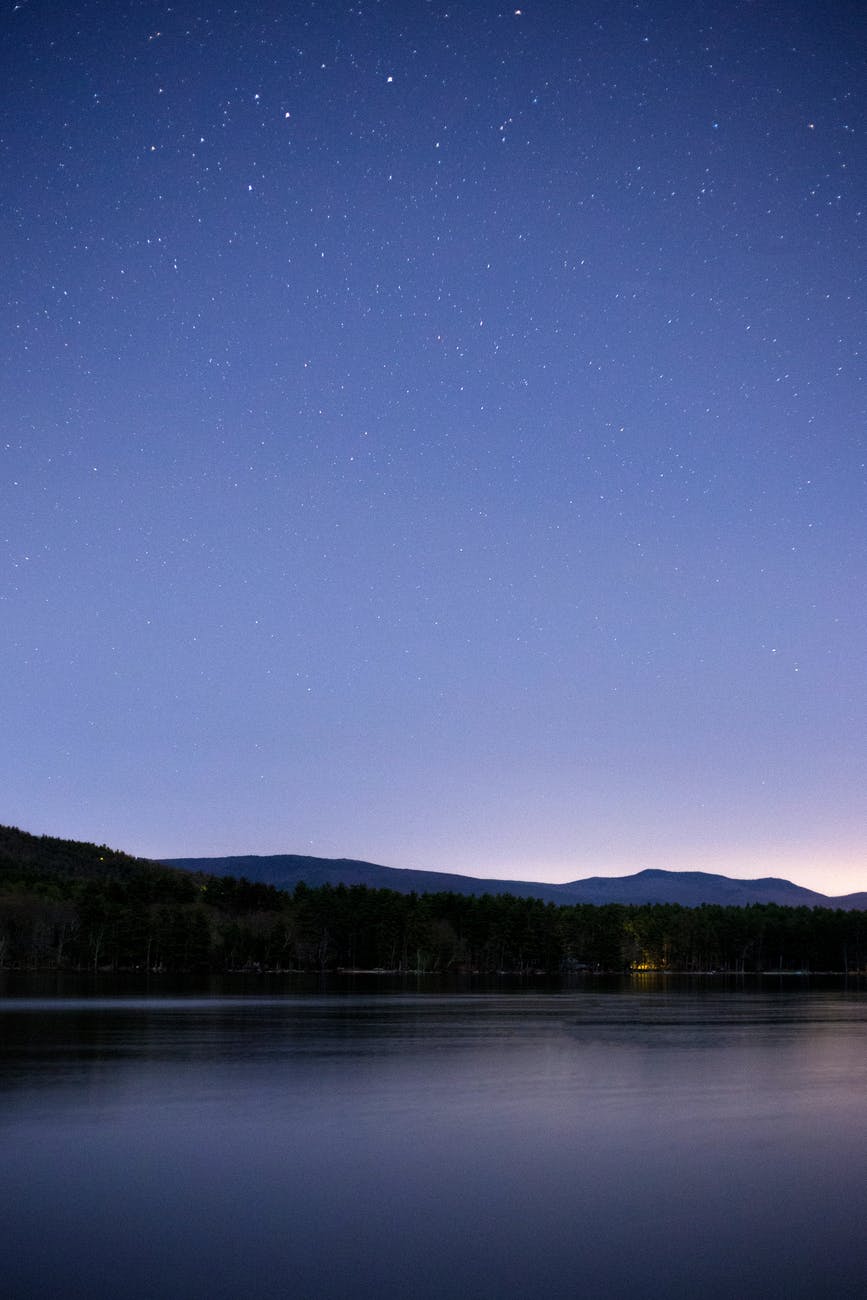
There are stars which I regard in the mornings when I walk or run.  They line heaven’s boulevard.  They twinkle their good mornings to me like Papaw’s eyes once twinkled his love.  I’d like to think he is part of their stardust. 

I wish I could give every child a grandfather like mine.

Under Pressure

“Pressure pushing down on me

Pressing down on you, no man ask for . . .

Splits a family in two

Puts people on streets . . .” from the lyrics of “Under Pressure” as written by members of Queen and David Bowie

Photo by Free Nature Stock on Pexels.com

 It was still dark as I drove alongside the glinting waters of the Ohio River, but I could see the sky lighting towards day.  I tried to listen to the news when I first left home, but on this particular day the stories were making me feel way too anxious.  Thus, I switched to a favorite satellite radio music channel as I made my way onto the 6th Street Bridge heading into Huntington, WV.  As I took the exit ramp and began motoring towards the school in which I am currently an educator, I heard the unmistakable beat drop for one of my favorite teen anthem songs, “Under Pressure,” written and performed by Queen and David Bowie.

As is my habit when I hear an old favorite, my hand automatically went to my heart.  It was late fall of 1981 when this song was wildly popular.  As a teen, I was attracted to socially compelling song lyrics, and the words of “Under Pressure” certainly were thought-provoking.  While I cannot pretend to recall my exact mental state in 1981, I do remember feeling the song’s lyrics resonating with me on a visceral level . . . and, boy do they ever resonate now.

“ . . .It’s the terror of knowing what this world is about

Watching some good friends screaming

‘Let me out!’

 . . .these are the days it never rains but it pours . . .”

Photo by Aleksandar Pasaric on Pexels.com

In the 80s, from my know-it-all teen perspective, I thought the world was incredibly messed up!  From the rallying cries and images of “Tear down the wall” to songs calling for us to “Feed the World,” and from the music and message of “Farm Aid” to the drama and news headlines surrounding the AIDS/HIV crisis alongside all of the other world/political problems that created newspaper headlines, it seemed in my young mind that the older generations were creating a world of chaos that the younger people would have to fix.  How ironic now!  

“ . . . Ee do ba be

Ee da ba ba ba

Um bo bo

Be lap . . .”

Shaking my head out of my 80s remembrances, I observed what once must have been a beautiful young lady, now bedraggled and disheveled in appearance, stumbling along the sidewalk next to the traffic light at which I was stopped.  Across the street, an older man, wet down the front of his pants as if he had unknowingly (or knowingly?) urinated on himself, began screaming curses at the woman.  She shouted incoherent phrases back to him as she attempted to stumble, bumble, fumble ahead at a faster pace, and I drove on, but the image still haunts my very human heart . . .

Photo by Grevin Kivi on Pexels.com

“ . . . People on streets

Ee da de da de

People on streets

Ee da de da de da de da . . .”

Images from my life flashed before me as I continued to drive.  Images from childhood, teen years, college years, early adult years, parenting images, teaching images, images from past world events through where I have lived, and images from on-going current events.  Words seemed to fly through the mental space of my brain. COVID. PANDEMIC. CHAOS. QUARANTINE. DIVIDE. HATE. DIVISION. HURT. DIVISIVENESS. PAIN. DISORDER. DEATH TOLL. VIRTUAL. MISTRUST. . .

 “ . . .Turned away from it all like a blind man

Sat on a fence but it don’t work

Keep coming up with love but it’s so slashed and torn

Why, why, why?

Love, love, love, love, love

Insanity laughs under pressure we’re breaking . . .”

Photo by cottonbro on Pexels.com

Am I the only one with a heart that is breaking?  It seems as if we often become wrapped up in minutiae of policies, partisanship, and even personal egos that we lose focus of our commonalities and the lives, the real lives of people.  Why is it now okay to speak, post, tweet, and write rudely?  Why does the concept of compromise seem unacceptable and/or unattainable.  Why is mountains of completed paperwork for health care workers, educators, law-enforcement, and all other humanity-based career fields more important than actual time focused on real people-to-people interaction?  Why is society as a whole burning bridges of connection? 

“ . . . Can’t we give ourselves one more chance?

Why can’t we give love that one more chance?

Why can’t we give love, give love, give love, give love

Give love, give love, give love, give love, give love?

As a young girl in the 80s, I was a hopeless romantic who believed that words like love, empathy, compassion, and understanding were the answer to all world problems.  My grandfather used to teach the importance of  “walking a mile in another man’s shoes.”  In fact, it was a consistent message I heard throughout my childhood from the adults in my life.   While my grandfather was far from perfect, he certainly tried to apply this expression to his own life.  He, along with my grandmother, would take food to those in need, offer rides to the elderly who could no longer drive, and were overall kind and pleasant with all those they encountered–even if they didn’t agree with their personal views.  Am I naive to think this aphorism should still be practiced today?

Photo by Ylanite Koppens on Pexels.com

“ . . . Cause love’s such an old fashioned word

And love dares you to care for

The people on the edge of the night

And love (people on streets) dares you to change our way of

Caring about ourselves . . .”

Currently, I feel “under pressure” in a number of ways, and I suspect, I am not the only one.  First, and foremost, I feel the pressure to remain healthy and behave safely for the sake of all others with whom I have contact, but even more so for my loved ones. I am not sure I could live with myself if I caused another person to become sick.  

Additionally, I feel professional pressure. Like most other careers, education has had to dramatically change and respond in the wake of a pandemic. Teaching simultaneously in-person students and virtual students, as I try to meet the needs of both groups, challenges me in ways for which I never dreamed nor was prepared.  Then, there is the additional pressure of keeping the in-person students safe, their environment sanitized, and still allow them to be kids.  It is a delicate balance of walking along a tightrope with strong crosswinds of politics, policies, and personal egos abounding.  

Finally, I feel pressure as a responsible citizen.  How do I separate the wheat from the chaff?  How do I parse out the truth from the half-truths and outright lies?  And, what, if anything, can I do about the people suffering in the streets, in the hospitals and other health care facilities, at their work-sites, or currently in their own home?  Anxiety, depression, and other mental illnesses seem at an all-time high with negative coping mechanisms providing easy and quick relief, but not solving problems long term. Meanwhile compassion, concern, and care seem harder to find.  

“ . . . This is our last dance

This is our last dance

This is ourselves under pressure

Under pressure

Pressure”

Photo by Helena Lopes on Pexels.com

My grandmother used to tell me that things had to get worse, before they could get better.  Meanwhile, my grandfather used to say that diamonds form under pressure. I have a Ninja pressure cooker in my kitchen. As the pressure builds, the food inside is cooked and transformed into a tasty treat.  In order not to overcook the food,  I must release the pressure valve, allowing the steam to rise as the temperature and pressure inside reduces.  I pray for the pressure valve to release soon.  I pray this isn’t “our last dance.”  I pray that love will dare us to care, once more, for others, and that we will soon dare to “change our ways” . . . .