The Art of Loving Unconditionally: Lessons from A River Runs Through It

A scenic view of a river meandering through lush greenery under a blue sky with clouds.
The flow of a river.

Words of Wisdom From a Classic read 📖

One of my favorite stories is A River Runs Through It by Norman Maclean. It is an exquisitely written, semi-biographical account of Maclean, and his brother, Paul, growing up in Montana as sons of a Presbyterian minister who taught his boys the art of fly-fishing. The movie version, directed by Robert Redford, captures the earnest beauty of Maclean’s prose. Both pieces weave together a tapestry of thought-provoking life themes centered around family love and connection (including unconditional love for a family member), grace, the fragility and brevity of life, and the eternal nature of time, with the art of fly-fishing as a metaphor as the unifying thread. 

The story’s emphasis on the complicated nature of the brothers’ relationship make it especially compelling and heart-wrenching. Therefore, I have revisited both works on numerous occasions. Each time I reread the story, (and subsequently watch the film) I discover a new gem and/or am reminded of a favorite part, such as a well-written phrase, a turn of words, a point of symbolism, and so forth. My most recent encounter with Maclean’s work was towards the end of December. 

There is a set of lines that stirs my heart every time I read them: 

“So it is . . .that we can seldom help anybody.  Either we don’t know what part to give or maybe we don’t like to give any part of ourselves.  Then, more often than not, the part that is needed is not wanted. And, even more often, we do not have the part that is needed.”

“We are willing to help, Lord, but what if anything is needed?”

Two boys hiking together by a river, wearing casual outdoor clothing and smiling at each other.
AI generated by WordPress.

How do we help others? 🧍🧍‍♂️

As I once more read each word, underlining and contemplating them in the quiet hours of morning, I reflected upon how, with each reading, those words still ring true, but their meaning evolves as I progress in age and life experience. Those bittersweet words bring to mind loved ones and students over the years for whom I have tried to help.

More recently, students of one of my classes and I were discussing their currently assigned book. The main character in their book grew up in a rough set of circumstances, and through a series of unfortunate events, wound up incarcerated in a juvenile detention center. One of the questions that book raises is: Can someone overcome their circumstances and change with the right intervention/outside help? 

The students debated valid points. Some endorsed the possibility that people can overcome their environment and change for the better. Others pointed out the difficulty of changing what has been hard wired into you. 

As the discussion continued, a student asked me what I thought. All eyes in the circle turned to me.

A silhouetted hand reaching out, symbolizing support and connection.
Photo by lalesh aldarwish on Pexels.com

Bittersweet reminder 🤔

Maclean’s words echoed in my mind as I carefully considered my response. Memories flooded my mind–former students and more personal situations in which I have been truly willing to help– offering extra time, extra care, and extra love. In many cases I have researched and offered suggestions of help–probably way too many with the presumption of, “I can help them fix it,” whatever “it ” may be.  I’ve further ridden the waves of the person’s ups and downs as they strive to overcome and change. I have been, and I still am, willing to help; Lord knows, but as Maclean so eloquently articulated, “{I}we can seldom help anybody.”

Helping others is a complicated process for which our hearts may be in the right place. However, as Maclean points out: most change within another person is not in our control.  Perhaps being willing to help is the best any of us can do unless asked–and even then–we can only offer our support; it is the person who must do the work within.  

Maybe, our support and love will help instigate the needed change, but there’s a strong chance that it won’t. Therefore, it is not our job to “fix” others; it is, instead, our job to love them.  Of course, we can still sincerely believe in the person and continue to pray and hope that the person will overcome their difficult situation or change for the better, but in the meantime we must accept them as they are. 

 Rather than say all of this to my students, I kept it simple. I shared my belief that by nature, hope springs eternal for me when it comes to believing in my students’ (and others’) capabilities for growth and change. I don’t think I could have remained an educator for nearly four decades if I did not believe that change and growth is possible for all of my students. 

A woman with long hair, dressed in dark clothing, is shown in a contemplative pose with her hands clasped together in front of her, against a dark background illuminated with red and blue lighting.
Photo by Mikhail Nilov on Pexels.com

Be Present 🙏

And, while I didn’t share this with my students, my belief and hope flows into my own personal life, too. However, my profession and personal experiences continue to inform me that overcoming what has been ingrained into you at a young age, be it genetic, environmental, or both, is difficult, even with the best help and support.  Furthermore, my experience has also humbly informed me that assuming the person wants help or wants to change is arrogant and so is thinking that we know how to help them.

This doesn’t mean we have to give up; rather, I am beginning to believe it’s about presence. We can be there for them by simply spending time with them as appropriate.  Likewise, we can provide positive support and encouragement, such as, answering the phone when they call, replying to a text they send, or being available to chat. 

Likewise, it doesn’t mean we go overboard using up all of our time and resources, leaving us emotionally, physically, or financially spent. Rather it’s important to find that fine line of being there, but not too much; having firm boundaries, but a welcoming heart/spirit. Mostly though, it seems important that we allow love to flow from us, like the waters of Big Blackfoot River in Maclean’s novella, so maybe on the person’s worst day, they will at least know that they are loved.  They. Are. Loved.

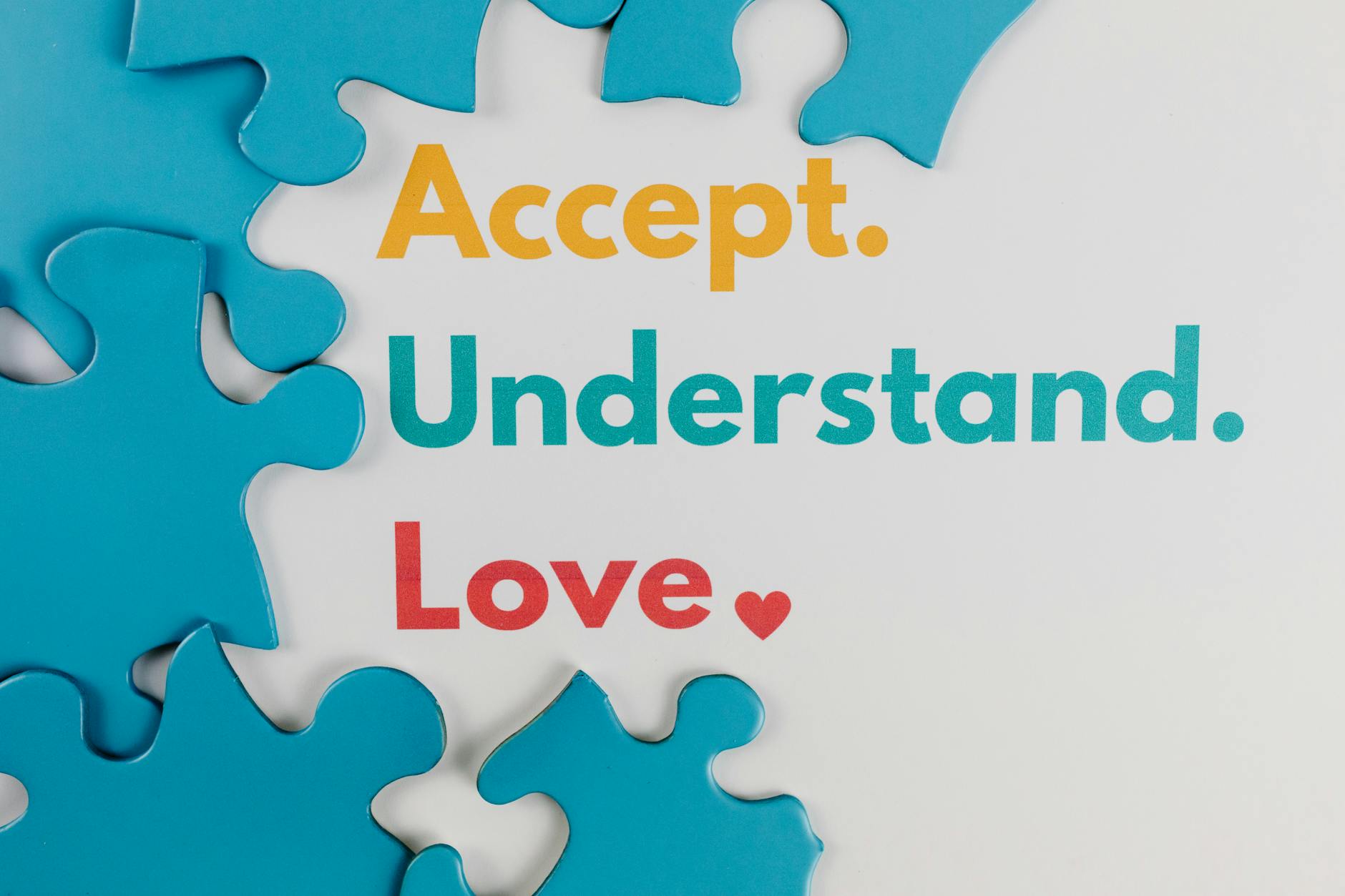
A close-up view of colorful puzzle pieces surrounding the words 'Accept. Understand. Love.' on a white background.
Photo by Tara Winstead on Pexels.com

Unconditional love 💜

In the words of thought-leader and influencer, Brené Brown, we must come to peace with the fact that “When you love someone unconditionally, you accept them for who they are, flaws and all.” And that, in the end, just as Maclean had to learn, must be enough. We can only change ourselves, no matter how much we want to help another. 

A chalkboard with the words 'HERE TO HELP' written in white letters on a black background.
Photo by Anna Tarazevich on Pexels.com

The Power of Silence: Reflections on Mindfulness Retreat

In the silence of the heart, God speaks.” Mother Teresa

Photo by Ali Elfaziki on Pexels.com

Silent Retreat? 🧘‍♀️

I don’t remember exactly how the conversation went, but I was enjoying lunch with a friend on a Saturday when she told me she was attending a silent meditation retreat in two weeks, and asked if I would be interested in it. The retreat, she said, was sponsored by The Mindfulness Tree, a meditation community in Charleston, WV, and it would be led by Dr. Christine L. Blice-Baum, MDiv, DMA. Curiosity bloomed, and in a matter of days, I was also registered for the retreat.

In the days leading up to the retreat, I vacillated between feelings of excitement and thoughts of “what-have-I-got-myself-into?” The retreat required spending time in silence with complete strangers, excluding my friend, of course. I kept reminding myself that it wouldn’t be any different than going to an appointment or to the store with numerous others I don’t know. Never once, however, did it cross my mind that this retreat would provide multiple opportunities to come face-to-face with my mind’s resistance and its desire for distractibility.

Photo by Obi Onyeador on Pexels.com

Put away those devices 📲

Upon arrival, all participants in the retreat were asked to put up our phones and take off our smartwatches until the time of our departure. We had the choice to leave our devices in our car, in our own purse/bag, or stow them in a zip lock bag that was put away until the end of retreat.  I chose the latter option as a symbolic break-away from technology and, in all honesty, to reduce any temptation to peek in my bag at either device during the day. 

Not having technology was one of the first minor “discomforts” I repeatedly noticed. It began when I tried to check the outside temperature by looking at my wrist, and then did it several more times! What time is it? No smartwatch. Does the radar show my hometown receiving as much rain as here?  No phone. Blice-Baum just shared a great idea; I should type that in my notes. No phone. I should take a picture of the church’s pipe organ. No phone. Did my husband remember to  . . . . 

Participants in seated meditation.

Lessons of Stillness 🤫

This was my first a-ha moment. I was astounded to realize the amount of time my mind spends in a day consumed with thoughts of all the ways I can implement/use my smartphone and its companion watch. What’s crazy is that I am not a big user of social media, so I had this notion that giving up my devices would not be a big deal. While on one hand, it wasn’t, on the other hand, I was humbled to realize, social media consumer or not, my mind has been trained to be distracted by devices. 

The second big lesson had to do with a notion known as “custody of the eyes”–averting the gaze to avoid visual distractions in order to maintain focus. This practice was a challenge throughout the entirety of the session. 

The retreat schedule was well organized, sessions of seated meditation were interspersed with walking, movement, and standing mediations; however, my mind kept wandering and niggling me to look around at my surroundings. During walking and movement meditations, I had to keep redirecting my attention back to the meditation focus at hand because my mind had the tendency to wander off into people-watching mode. 

Participants take part in a silent walking meditation

The third lesson: I also squabbled with my mind’s habit of entering “squirrel-mode”–moments when something in the environment, or on the wall caught my attention, and my mind would launch off into associations with whatever my eyes had noticed. I knew I was distractible, but I never realized my mind was like a puppy visiting a new environment.

Another eye-opener occurred during our silent lunch. Blice-Baum, after sharing a prayer of gratitude and blessing for the food, led the participants through a short exercise of mindful eating. Then, we were directed to continue to enjoy our meal in silence, engaging all of our senses in the eating experience. This was when my mind really rebelled.  

Since I was a young girl reading the backs of cereal boxes at the breakfast table, I have always read while eating–newspapers, magazines, books–which were later replaced with digital versions. Without such distraction, I noticed my tendency to want to eat quickly and my eyes repeatedly searched around for something on which to focus other than my food. It took time for my mind to settle, slow down, and focus on taste and other sensations associated with the simple act of eating. This was a shocker because I love the taste, textures, and fragrance of food. In fact, I love to eat, but I clearly need to practice eating mindfully more often.

Group picture of participants.

Positive takeaways 🙌

In spite of all the mental obstacles and resistance I experienced throughout the retreat, I walked away feeling refreshed and renewed. Remaining fully focused and present on one’s own breath, a mantra, or an image isn’t easy, but there is something to be said about taking time to slow down and focus on one thing at a time. I felt as if I was coming home to my heart, and my own inner knowing, despite the fact I had to repeatedly redirect my mind like a toddler walking around the Tamarack Marketplace.

Would I do another silent meditation retreat? Absolutely! Many of the things that had been worrying me when I arrived at the retreat felt less weighty when I left. I experienced a recommitment to my personal practice of meditation/mindfulness and was inspired by new techniques to incorporate, not only in my own practice, but also to include with the yoga/mindfulness class I teach at school. Furthermore, in the days that have followed, there has been an overall increase in my sense of gratitude, along with a renewed sense of purpose. I have also noticed a calmer mind with a significant decrease in the power of those negative voices that love to chatter about in my head.

 Most of all, I am much more aware of how easily and quickly my mind can be distracted. These mental diversions on the surface seem as shiny and fun as a carousel ride to a young child, but they can lead to avoidance of the moment at hand–knowledge and understanding of what is going on in the here and now. Therefore, focus––especially given all the digital distractions–more than ever requires diligence, dedication, and continued redirection. And, one of the best ways to do this is the practice of meditation, mindfully completing tasks, or by simply connecting with our own breath.

Photo by Vie Studio on Pexels.com

Interested in Learning more?

If you are interested in learning more about meditation, would like more information about The Mindfulness Tree, or would like to connect with Blice-Baum, please visit www.themindfulnesstree.life

Dr. Christine L. Blice-Baum, MDiv, DMA

Navigating Life’s Uncertainties One Moment at a Time

Take one moment at a time and do the next right thing.”–Eleanor Amerman Sutphen

Photo by Pixabay on Pexels.com

What Did I hear? 👂

My ears perked up when I heard the guest on a podcast share the above phrase based upon  a poem by Sutphen, but made popular by both Elisabeth Elliot and Carl Jung. I had just arrived home with several bags filled with groceries to put away. Setting down the bags, I typed the phrase into my phone’s reminder app in order to remember it. Then, ironically enough, I returned to the next moment: putting away the groceries.

Like a persistent earworm, that phrase kept looping through my brain. Maybe it was Divine Providence, or maybe my subconscious niggled me to recognize the words I needed to hear. Regardless, the universe had offered me a nugget of wisdom to the question I had been asking, but had not yet been able to fully articulate: What can I do in the face of the difficult and uncertain life moment in which I found myself?  

Photo by Sergey Guk on Pexels.com

Snowy Days can lead to Sluggish Ways 😏

The month of January was a slippery, and less than stellar, start to the new year.  All around me, icy roads, alleys, and sidewalks served as a reminder that I was struggling to find my footing. As one who is not naturally organized and often has no sense of time, I function optimally with a routine/schedule.  It’s not that I can’t “go with the flow.”  I can do that quite brilliantly, but I don’t accomplish nearly as much, nor do I make as many–if any–inroads towards goals.

It is as if I have been dropped deep into a dark and menacing forest filled with a multitude of statuesque tree shadows and brambling thorny briers. Meanwhile, a multitude of strands in life’s web are criss-crossing in ways that make it feel less integrous, as if at any moment, the winds will shift and blow a hole in the tenuous gossamer nexus of life. I sense time sliding sideways, and I am trying to find my footing, so I don’t fall into the thin ice at the center of the mostly frozen pond. Arms flapping this way and that way, steps shortening, stumbling, and struggling to remain upright because I need to find my stride once more. 

Photo by Christina & Peter on Pexels.com

The Struggle Can be Real 😞

I am not the first, nor am I alone, I suspect, in feeling “something” akin to a crisis–a time in life when I find myself deeply questioning my purpose, my identity, and my role in all that is occurring. It is a time where I feel helpless to help others who need it but won’t accept it; a time with still unachieved goals and dreams, but I struggle to see, much less find, the path forward; and, a time in which I frequently ask myself: Am I doing the best I can with this one precious life I have been given?

Personally speaking, it feels as if the to-do list grows longer by the day, but few items are getting marked off.  While all around me, events, completely out of my control, dictate more chaos. Pixelated ideas frequent my mind, but my brain resists zooming in and focusing on any one thought as if the identity of each idea has been hidden like a person being interviewed for an investigative, undercover documentary. Overthinking, second-guessing, and a feeling of dormancy have entered my mental home and overstayed their welcome. 

Photo by Todd Trapani on Pexels.com

The Sweet Lesson of Winter Trees ❄️

As I write these words, I pause to gaze out at the trees in my backyard. They too are experiencing dormancy. Deciduous trees have slowed their internal processes and metabolism, halting their own growth in order to conserve energy. Inside the trees, cells have hardened and shrunk. Additionally, the water between the cells has frozen, and the water inside cells is becoming more dense and syrupy. Some trees even grow thicker bark in the winter to create a sheath of preservation until warmer temperatures arrive when growth and leaf production can once more occur.

I take a deep breath and feel the rise of my belly. Dawn’s light has gifted another overcast winter morning. The birds have also risen–chirp, chirp, chirping the gossip of a new day. The rise and fall of their flight, along with their up and down hip-hops along tree branches make me smile. I sigh out the exhale I had been holding, noticing the fall of my belly. With each breath I take, as I continue to ponder the nature beyond my window, I can’t help but notice the rising and falling of my stomach.

Photo by Aleksandr Sochnev on Pexels.com

The Rising and the Falling 🌅🌄

The sunrise, the trees, the birds, and even my breath remind me that everything is subject to rising and falling. Our pain and sadness, our joys and happiness, and even current events are all impermanent, rising and falling with the various seasons of life. This season of personal dormancy that has banked to new heights in my mind will eventually thaw like the melting of the once-deep snow. This is the nature of impermanence–the rising and the falling–nothing can last forever. 

Thus, these dark doldrums of winter housed in my mental guest room might be offering me an opportunity to do less, perhaps allowing my creative juices and energy to fully concentrate and thicken, much like the trees in my backyard, into the sweet syrup of forward progress. It will just take the sweet essence of time. And the only way to get there from the dark passages of here is to take one breath, one moment at a time and keep choosing to do the next right thing.

The Dance of Time: Snowflakes and Memories

“Like snowflakes your words fall silent, but my heart still hears your voice.”–Angie Weiland Crosby

Photo by Skyler Ewing on Pexels.com

His radiant red contrasts the rambling lines of landscape blanketed in brilliant white over which Mother Nature continues to shake clouds full of crystalized sugar. There is a muted hush, like the stillness of our lungs between the inhale and exhale, and then with a shiver, she cascades more snowy powder in a frenetic freefall. The spry cardinal skips and hops through brambling branches. Then, tilts its head, as if it just remembered an important date, and lifts in flight. 

Inhale. Lips seal in a smiled memory of long ago. 

Pause. Sense the stillness 

Exhale. Perceive the prickle of the past.

Photo by Lena Glukhova on Pexels.com

Observing the steady dance of freed flakes, my mind meanders through the rolling hills of earlier life–so many memories sift through and then meld into the collective cache of moments. Childhood. Youth. Young adult. Parenting. Empty-nesting. Hands outstretched wide.  Collect the moments. Like snowflakes landing on a mitten, I cannot clasp such things for long. 

Inhale. Eyes soften their gaze.

Pause. Brain swirling through Kodacrhome images faded with time.

Exhale. Sense the shudder of time. 

Photo by Mari Anteroinen on Pexels.com

Accumulation of moments, unique in dimension and structure, pass through the sieve of consciousness. One reminiscence overlaps another in a spiraling swirl of sensory recollections. A Chex mix of her memories stirred up with mine.

Galoshes, long underwear and frosty wet jeans.

Layers of shirts and jackets, and a big ol’ coat.  

Mummified walking. 

Snowflakes dusting shoulders and hats; red, dripping noses. 

Snowballs, snowman, snowfort

Neighbors calling

Who hit me in the back?

Inhale. Gaze remains inward

Pause. Linger in timelessness. 

Exhale. Soften into space and time.

Photo by Nguyen Hung on Pexels.com

Rolling, rolling, snowballs large and small, impressions of the past and present pinging. How marvelous, to have these individual souvenirs of time heaped into a memory bank like snowflakes plowed into mounds alongside a road. 

Sounds of barking, scent of wet dog. 

Red sled, yellow cord; here we go again! 

Fearless flights of fancy, impervious to the elements

Mittens over gloves, wet and soaked through. 

Pink cheeks, cold hands; giggles and grins galore. 

Campbell soup and grilled cheese.

Cookies with hot cocoa and a giant floating marshmallow.

Soggy clothes, drip, drip, dripping on an overburdened rack.

Child, with canine companion, reading in big cozy chair

Photo by Vlad Cheu021ban on Pexels.com

Inhale deeply as eyes return to snow. 

Pause. Flakes flicker and fly 

Exhale. Present in the moment.

Photo by Skyler Ewing on Pexels.com

Scaning frosted tree arms splayed open for welcoming feathered friends. There he is again. Handsome boy. Tufted red hair, not a feather out of place. Unflappable and composed in a wintry playground. Head cocks and black eyes glisten. He seems to see me, and I am reminded of a conversation.

Before the snow arrived, my husband and I discussed the impending weather. He had worried and watched the approaching meteorological conditions.  “It will do what it will do,” I said.  Not to be dismissive of his concerns, but to instead, remind both of us that we can only watch and wait.  Then, if/when it arrives–as it did–we will know.

Photo by Yan Krukau on Pexels.com

In that moment, it occurred to me that so will life. Just like weather, life will do with us what life will do. We are not in as much control as we think we are. 

This doesn’t mean we should not prepare, plan (to the degree possible), and be aware of future events, but many, if not most, events cannot be known until we are in the midst of a whirling outpour. Sometimes, those moments merely require that we stand like a child, head thrown back and tongue out, tasting and savoring each precious moment. Other times, life drifts in deep, and we are shoveling out as best we can, holding on for the sun’s warmth.

Through the flurries and cloudbursts of storms, there is the throughline of the present moment. Life is happening now, and what is happening now will be our future memories. 

Photo by Nicki Dick on Pexels.com

The cardinal serves as a symbol for me of past and present. I cannot see the red feathered fellow in the winter without simultaneously being in awe of his present day beauty while also reminded of my Pappaw.  He loved to feed and watch the birds, especially in the winter; cardinals were his favorite.  “Now, Stethie, look at those red birds out there.  Aren’t they something?” 

Pappaw often told me bluejays were a “mean bird,” albeit “good-looking fellows.” He did not like the way they became territorial and aggressive towards other birds, especially the cardinals at his feeder. There were several occasions in which I’d watched him dart out of the house without a coat or hat and chase the bluejays away to protect “his red birds.”

Photo by Janice Carriger on Pexels.com

Pappaw is long gone. I am not sure if I appreciated my time with him during those once present moments as I should have. And yet, outside of my window, the cardinal continues its call of snowy days present and past.

 The coming and going of time begins in the “right here, right now” moments. Inhale. Connect to the arriving moment.  Pause. Feel the presence. Exhale. Tick. Tock. Another opportunity to collect a memory before, like the snow, it melts away. 

Photo by Arina Krasnikova on Pexels.com


Embrace Kindness: New Year’s Resolutions for 2025

Photo by Matheus Bertelli on Pexels.com

Who Set a Resolution for 2025? 🙋‍♀️ 🙋‍♂️

Did you set a goal or resolution for 2025? According to the Pew Research Center, the younger you are, the more likely you are to establish a resolution. Last year, about half (49%) of the adults, 18-29 years, made at least one resolution. That dropped to ⅓ (31%) of adults, aged 30-49 years, and for those over age 50, only about ⅕ (21%) of this age group sets New Year’s intentions. 

Yougov.com reported similar statistics for last year. This organization’s polling further revealed that by March 2024 nearly ⅔ (70%) of those adults who set resolutions had either mostly or entirely stuck to their goals. Not surprising, most resolutions, according to both PRC and Yougov, had to do with either health, such as exercising more or eating healthier, or wealth, such as saving more money or paying down debt. 

Establishing resolutions around improving one’s health or one’s financial security are certainly worthwhile endeavors for which I wholly support. However, I would like to put forth this idea–whether you do or don’t make New Year’s resolutions–for spreading seeds of goodwill, kindness, and simple decency. While this is a less specific goal–and flies in the face of those who argue for SMART (specific, measurable, achievable, relevant, and time-bound) goals–I would argue that setting a daily intention to plant one seed kindness is also SMART and smart. 

Photo by Polina Kovaleva on Pexels.com

Consider This . . . 🤔

The following quote by William Arthur Ward is often shared at the start of New Year’s that says: “I have the opportunity, once more to right some wrongs, to pray for peace, to plant some trees, and sing more joyful songs.” 

I believe this quote is worth considering now as social media outlets and people of influence have made it socially acceptable to bad-mouth, malign, and verbally abuse others with the intent to create division, discord, and derision. In fact, I think Ward’s decades old statement can be turned into actionable goals, a couple for which I have reworded for the purpose of goal implementation. These include: right some wrongs; pray for peace, plant some seeds, as well as celebrate and share joy.

Right Some Wrongs. This goal is simple. When you do something wrong, own it, apologize for it, make whatever amends you need to make, and learn from it.  We all make mistakes, unintentionally say something hurtful, or do something that upon hindsight wasn’t the best choice. Instead of acting like it didn’t happen or feeling a sense of self-loathing for doing it, do something about it.  Sure it may not be easy, and you may have to swallow your pride. However, in the end, both you and the other person(s) will feel better and/or benefit.

Pray/meditate for Peace. Again, this is another simple goal that takes minimal effort. Spending five to ten minutes per day contemplating peaceful actions for the day, praying for guidance for world, national, and/or local political leaders, or focusing on any other forms of peace you would like to see in the world is neither time-consuming nor hard. The world needs more peace warriors, so why not bless it with more peaceful words, prayers, meditations, thoughts, and altruistic actions.

Plant Some Seeds. Random Acts of Kindness (RAK) Foundation, started in 1995, has done an excellent job of promoting kindness.  Their motto, “Making kindness the norm ♥ ️,” I would argue remains relevant 30 years later. This can definitely fit into the SMART criteria as it is specific, measurable, achievable, relevant, and time-bound. Do and/or say something kind, helpful, and encouraging, every single day.  It’s that simple.  Even if you wake up on the wrong side of the bed, doing something for someone else has the power to not only positively affect that person, but that goodwill will fan out across a sea of souls unseen to you. As an added bonus, you will most likely feel better as well. If you’re at a loss for ideas of kind actions to implement, visit randomactsofkindness.org for scores of suggestions. Acts of kindness can create ripples of positivity on the troubled waters of life; they can be balm for a bruised and battered soul.

Celebrate and share joy. If you’ve ever had a serious illness, you know all too well the realization that can dawn on you for taking for granted those so-called “normal days” of life and health. Therefore, why not celebrate, savor, or at the very least, acknowledge (and perhaps enjoy) an average (or not-so-average) day of life? You have one precious life–that’s it–so pay attention to it. Share a “dad” joke, shake or hold a hand, pat another person the back, hug a friend, stroke your pet’s soft fur, eat that piece of cake, have coffee or tea with a friend, take a walk in the sun, smile more, frown less, take an interest in the person from whom you buy that morning cup of joe. . . . In other words, step away from the screen, from social media, and streaming/gaming services.  Not that there’s anything inherently wrong with them, but life is not lived on screen.  Even in this hyper-connected world, I can’t imagine anyone, nearing the end of their life, wishing they had spent more time with Facebook. 

Photo by Anna Tarazevich on Pexels.com

YOu can make a difference this year! 🫶

Whether you’re part of the statistics that chooses to set New Year’s resolutions or not, we can all make the choice to: right personal wrongs, pray for peace, plant seeds of positivity, and/or celebrate/savor the joy of being alive. These are not difficult tasks, but rather they are simple actions that possess potential opportunities to send forth warming rays of goodwill, tolerance, and decency in a world clouded over with ill will, acrimony, and disrespect. While your actions may not make headlines, you can be sure that one good act begets another. And, that, my dear Reader, can indeed make a difference. 

Happy New Year! 

Building Resilience Through Emotional Awareness

“Feelings build resilience: As they teach me to let go and to become new, I become increasingly flexible in the flow of life.”–Allan Schnarr

Laughter-filled joy is one of the many emotions we can experience throughout the course of a day.

Importance of Heart RAte VAriability 🫀

In this era of fitness tracking gadgets, I have begun to be quite aware of my own heart rate variability. It’s not that I wasn’t aware of the changes in my heartbeat; those oh-so-long-ago biking adventures of my youth, as I pedaled up and down hills, provided me with that lesson.  However, my handy-dandy fitness watch frequently reminds me of my own heart rate and its variations throughout the different activities of my day.

Harvard Health Publishing states that each person’s heartbeat is unique and beats at a specific rate, but the rate can vary depending upon what you are doing. When we are active, stressed, or–heaven forbid–in danger, our heart rate quickens. On the other hand, when we are resting, relaxed, or at ease, our heart rate slows accordingly. 

Photo by cottonbro studio on Pexels.com

Meet the Autonomic Nervous System 😬

The system responsible for regulating our heart rate–and numerous other involuntary functions–is the autonomic nervous system (ANS). It branches into two parts: the sympathetic and parasympathetic nervous system. At its most basic, the sympathetic (think: fight or flight) nervous system puts the body on alert, increasing heart rate and blood pressure; whereas, the parasympathetic (think: peace) nervous system sends calming signals to rest, digest, or relax. 

The two systems work together. For example, if we’ve experienced a highly stressful or dangerous situation, the sympathetic system is at the helm. It will signal your body to release adrenaline and increase your heart rate in case you need to physically react quickly. However, once the situation has passed, the parasympathetic takes over lowering the heart rate and signaling various systems of the body to relax.

Therefore, if the heart adapts to various conditions–from walking to running; from talking to singing; from startled/scared to calm/relaxed, and so on, shouldn’t we, likewise, acknowledge, or perhaps embrace, that our emotions also adapt to life circumstances?

Photo by Andrea Piacquadio on Pexels.com

Emotional Variability 😢 😁 🤣

Our heart rate varies for very real reasons, and so do our emotions. Emotions are often intense and/or reactionary to a specific event, thought, or situation.  They too are a product of the ANS, and they are our body’s signal to something it perceives occurring in our environment for which we may need to respond quickly. 

One way to think of emotions is to view them as clouds in the stratosphere of our brain. Some days, the sky is bluebird-clear; while other days, our emotional atmosphere may begin cloudless, but grey shadows gradually–or quite suddenly–creep in.  Sometimes we have days that start cloudy, clear up, and then go cloudy again. Then there are those dark, overcast periods that can last for days, but do eventually pass. 

Experiencing emotions, such as sadness, anger, or worry does not mean you are emotionally unfit–not at all.  Likewise, experiencing opposing types of emotions–enjoyment, happiness, or awe–does not define you as emotionally healthy. Similar to heart rate variability, it is just as healthy for our emotions to differ in response to what we are experiencing.

Photo by Antoni Shkraba on Pexels.com

embracing our varying emotions 🤗

Therefore, it is important to give ourselves permission to fully feel and accept a wide spectrum of emotions. In fact, there are valid reasons for us to adeptly switch among a wide range of emotions. According to Mindletic, our emotions can sometimes switch frequently throughout the day, and then on other days, we may experience little to no shifts in emotions. Emotional changes are often dependent upon conditions.

The key is to recognize when we do feel something because our ANS is reacting physiologically. We may not be able to name the emotion initially, but we may feel a desire to respond/act and not know why. If that is the case, stay curious and patient. Turn inward when time permits and reflect on how and/or what you feel without judging it as good or bad. Observe any sensations, noticing if they occur in certain parts of the body. 

Photo by Eric W. on Pexels.com

Self-Inquiry is Key 🔑

Given enough time and self-reflection, we may be able to name the feeling: anxiousness, worry, fear, happiness, and so on. Once the emotion can be named, it is important to next determine the trigger that caused it.  Sometimes, identifying the instigating event is easy, such as when a loud bang occurs, we may feel instantly startled.  Other times, figuring out what is causing the emotion can be more challenging.  
For example, there may be a day when you feel anxious, and you’re not sure why. If you allow yourself to remain curious and open to possibilities about the “why” without judgement, you may later have an aha moment when you connect the dots. An example of this could be feeling sad on the first day of winter-like weather. You might assume it is just due to the cloudy, cold nature of the day, which could be true. Later, however, with a bit of self-inquiry, you may recall that the last time you experienced this type of weather was the day you were in a car accident, which helps explain why you felt anxiety.  

Being comfortable with uncomfortable emotions can be challenging but worth the effort.

Holding Space for Difficult emotions 😩

Sitting with an uncomfortable feeling/emotion can be difficult, especially when we are not sure why it has occurred. By refraining from attaching judgement to the feeling, such as “I’m stupid to feel this way,” and continuing with curious contemplation, we can learn to offer all parts of ourselves, emotions included, acceptance. This reduces resistance to feeling certain emotions, fostering a deftness of accepting any number of emotions that may arise in response to life. After all, we wouldn’t resist our heart rate accelerating when jogging a couple of miles.

The more we practice self-reflection of our own emotional experiences, the better able we are to identify various emotions and corresponding triggers; thereby, increasing our ability to respond in a more adaptive manner. This continued practice allows us to cultivate greater emotional awareness, improve our emotional regulation, and develop our own personal toolboxes of self-care responses, such as exercising, journaling, meditating, reading, dancing, doodling, gardening, and so on. 

Photo by Lukas on Pexels.com

✅ Developing our own Emotional “tracker”

The ultimate goal is fostering our internal emotional “tracker”– much like my fitness tracker.  This gives us a window to our own emotional rate variability, allowing us to create adaptive strategies in order to appropriately feel, identify, respond to an emotion, and allow it to pass–much in the way clouds do in the sky. Similarly to the way a heart rate stays elevated for a longer period of time when running a marathon versus walking a short distance, some emotions are going to hang around longer. However, with compassionate and consistent practice, emotional self-inquiry can reduce the long term, adverse effects of our stronger emotions and/or lessen the arousal to the emotion(s) and/or their trigger(s). This allows us to accept and feel the full rainbow emotions while strengthening our ability to bounce back on life’s trampoline with greater awareness, resilience, flexibility, and empathy.

The Power of Smiling: Benefits for Health and Happiness

“If you see someone without a smile today, give ‘em yours.”–Dolly Parton

Photo by Adenir Figueiredo Carvalho on Pexels.com

How often do you smile? 😃

I recently came across a fact that stated children smile about 400 times per day . Whereas, most adults on average tend to smile anywhere from 20 times per day to, at the most, 50 times, depending upon their level of happiness for the day. That is a stark contrast!  

Whether you are grinning, beaming, twinkling, smiling from ear to ear, all smiles, or even offering a partial smile, when you look at another person, it tends to communicate a positive feeling.  Think about what happens when you see someone else smiling, especially a baby or toddler smiling–most of us typically smile in return!  I find even writing about seeing another person smile is instigating my own smile.

Photo by Teddy Joseph on Pexels.com

REasons we may not smile often 😒

In the words of the Joker, “Why so serious?” Why don’t we smile more often? What is it about adulting that doesn’t inspire us to smile more often?  According to a 2019 Psychology Today article, there are numerous adults who are simply not prone to smiling.  Reasons vary including: feeling shy or unsure of self; feeling self-conscious of own smile, especially if in need of dental work; believing it is silly or inappropriate to smile, especially those raised to not to smile frequently due to cultural or family mores; and, some don’t smile due to state of  their mental health. Furthermore, psychologists have also noted that when people have a smartphone in their hands, most of us are less likely to smile and engage because we are so focused on our phone screen. 

Photo by Mwabonje Ringa on Pexels.com

Benefits of smiling more 😁

Believe it or not, though, there are both physical and mental health benefits to smiling. First of all, dopamine, the feel-good chemical (neurotransmitter) in our brain, is released when we smile. Smiling also releases endorphins, a mild-pain reliever, and serotonin, an antidepressant that can reduce stress.  The more we smile, the more these neurotransmitters can work together to boost our overall sense of well-being, reduce our sense of pain, and increase our sense of positivity.

Smiling, along with laughter, causes our brain to also release neuropeptides which are small proteins found in the brain. These chemicals are known for staving off illness by initiating the body’s immune-system response to increase production of antibodies to fight off disease and illness. Along with warding off illness, there is evidence that smiling–and its cousin, laughter–can also help lower our blood pressure as well as heart rate.

Science still has more research to conduct regarding the specific benefits of smiling, according to the National Library of Medicine, but the studies consistently demonstrate that smiling produces a number of health-related benefits. Smiling more can foster a longer life by positively exerting influence over the immune system during times of acute stress or illness, improving recovery, and thereby reducing illness, or its duration, over time. Now, that’s worth smiling about!

Smiling also makes us appear more attractive and likable.  When we beam at another person, we are often considered courteous and trustworthy. In fact, shining those pearly whites also makes us appear more confident, successful, and knowledgeable.  Keep that in mind the next time you have an interview or have to give a presentation. 

Plus, smiling is contagious. When we smile at another person, it is hard for the other person not to smile back. To be sure, it doesn’t work on every person, but it can certainly go a long way to lightening the mood–even if it’s just our own.  So why not try smiling more? 

Photo by Kampus Production on Pexels.com

Practical, and not-so-practical, ways to increase those grins 😆

  • Practice smiling in the mirror: It sounds silly, but the more we practice smiling, the more confident we become at doing it. 
  • Try the smile challenge: One way to practice smiling more is to look up the different types of smiles.  Depending upon the source, most experts claim there are 18-19 types of identifiable smiles, but only six are for genuine happiness. Grab a friend and a mirror and see how many you can make. This is just silly enough to bring on some laughs and joy-filled smiles.
  • Waiting challenge: Stuck in a line at your favorite fast-casual dining or coffee shop?  Waiting in a doctor’s office? Waiting in any sort of line?  Instead of scrolling through your phone, try the smile challenge. See if you can maintain a gentle smile throughout the entirety of your wait, or see how many people you can make smile by smiling at them. 
  • Smile timers: Set reminders or post-it notes throughout the day to smile, especially for those time periods for which you know you most likely won’t feel like smiling. 
  • Create list(s), picture file, journal, or write positive post-it notes of things that naturally make you smile when you see/think about them. Purposely place them, so that you will encounter them throughout the day or week and be reminded to smile.
  • Daily smile challenge:  Challenge yourself to be the reason one (or more) person smiles today.  
  • Watch something funny: Whether choosing a social media/youtube reel/short, movies, comic strip, or other source jolliness, taking time to embrace humor is an immediate mood booster.
Photo by Craig Adderley on Pexels.com

unleash the power of your smile 😃

In the words of Buddy the Elf, from Elf, “I just like smiling.  Smiling’s my favorite.” And, now we know why. Smiling is a superpower, and it is not just for elves or children. Those grins are for all of us to enjoy in our everyday life. When we smile, our health, our well-being, and the well-being of those around us, benefits. So the next time you’re feeling down, frustrated, sick, or even angry, see if you can’t sneak in a smile or two.  Even if you don’t feel like it, the overall benefits seem to point to the fact that those few extra smiles might just be worth the effort. In the words of the late Jim Begg, “Before you put on that frown, make absolutely sure there are no smiles available.”

Finding Inner Peace Amidst Chaos

“Better to keep yourself clean and bright; you are the window through which you must see the world.”–George Bernard Shaw

Photo by thevibrantmachine on Pexels.com

Anxiety provoking 😬

Over the past weeks, I find I am feeling increasingly anxious as I read or listen to the news and/or various social media platforms. There are world events with real human and environmental consequences that worry me. Children are dying from injury and/or starvation in numerous parts of the world.  Plus, the current political climate in our own country is so vitriolic and divisive, it can tie my stomach in knots if I listen or read about it for too long. 

A few days ago, I was leaving work after an especially long day.  Ready to shake off the day, I unloaded my daily work wares into the back of the vehicle, and hopped in the driver seat ready to get home and shake the dust of the day off.  I started the vehicle, and the radio automatically came on.  

Photo by Sindre Fs on Pexels.com

We have a choice 🙉

By word of explanation, I had been listening to a book on the way to school, but because the bluetooth had not yet connected, the radio, set to one of the local public radio stations, automatically defaulted on. Since it was between 5:00 and 6:00 pm, the news was on.  And while NPR is fortunately not one of the news outlets that seems to shout out every headline, it was in the middle of a story that, as my ears focused, began to make me feel worried, and I could once more feel my insides churning. 

I continued listening for a bit more as I headed out of town, but found myself increasingly feeling more anxious.  Suddenly, it occurred to me. I had a choice.  I didn’t have to listen. So, I turned not only the news off, but the entire media system in my vehicle, rolled my window slightly down, and allowed the fresh air to filter in. 

Photo by Aleksandar Andreev on Pexels.com

Connect to Your Breath 😮‍💨

Then, while I drove the rest of the way home, I took time to connect to my breath and to that still, inner voice. 

Inhale. Exhale. Release the jaw. 

Inhale. Longer exhale. Relax the shoulders down and release the grip in my gut. 

Long slow inhale, fill my lungs with fresh air flowing through the window. Pause. 

Then, a longer, relaxed exhale. Loosen the grip on the steering wheel and relax

 the lower body. 

I continued driving like this, using my breath as an aid to continue to relax other parts of my body that I had been unconsciously gripping tightly as the day progressed. I would not have noticed how tightly wound my body was if I had continued listening to the news.

Photo by cottonbro studio on Pexels.com

Connect to Gratitude 🙏

Once I felt a bit more relaxed, I tried to list, in my mind’s eye, five things for which I was grateful. Nothing could be too small, such as, feeling grateful because I had not forgotten my lunch on that day as I had forgotten it on the same day the previous week. But, even more so, I was also grateful for my health, my family, my home, and so on  . . . With each point of gratitude, I took time to pull that image up in my mind and genuinely reflect on at least one particular point of joy each one brought to my life.

Now, I will be honest, there were a few times when I lost my focus due to other drivers, deer crossing the road, or other random distractions.  If I found myself lost in thought, I brought my inner attention back to my breath first, and then back to points of gratitude.  

As I drove closer to home, I mindfully began to release concerns for which I could not control. I prayed for them, but ultimately, released my worries to God. I decided to trust and have faith that my concerns will ultimately work out for the best in ways I could not see or perhaps understand. It did not mean I was dismissing the issues that concern me–I was not.  Instead, I was releasing my stress over them because my anxiety would/will not affect their outcome.

Photo by Stanislav Kondratiev on Pexels.com

Shutting out the winds 🪟

Years ago, I read a story about a monk who had been writing a book.  This was the time period prior to computers, when one would alternate between handwriting manuscripts and typing the final drafts. This monk decided he needed to take a break from writing and went out for fresh air and a walk. 

He left open the windows of the small cottage in which he lived. And as he walked, the weather began to shift, and the wind began to pick up.  When he arrived home, an hour or so later, all of his neatly stacked papers for the book had been tossed about within the house. In order to tidy up the inside of his cottage and reorganize the manuscript, the monk had to close all of his windows to keep out the changing weather.

This story simply illustrates the point that sometimes, if we are consuming too much news, social media, family/friend drama, and so forth, our inner world suffers.  Like the monk’s cottage, the winds of life can toss our inner peace about.  Therefore, it is worth remembering we have a choice. We can choose to take time to shut out, turn off, or let go of the outside world/drama, so that we can turn inwardly, and focus on “tidying-up” the worry/concern/ anxiety inside of us.  

Photo by Alex Green on Pexels.com

It’s not always “breaking News,” so set boundaries 📰

We don’t have to read/listen/scroll through/watch the news and social media at regular intervals throughout the day.  We can take breaks from all of it. In fact, we are not of any benefit to ourselves, much less others, if we aren’t settled and at peace on the inside.  Thus, taking time to connect with your breath and that small, still inner voice can strengthen and renew you, filling you with a sense of calm/peace in order to help others and/or take on challenges.

While we don’t want to completely shut off the world and hide our light, we do have a choice as to where, when, and how much we participate.  Setting boundaries and/or taking breaks from what and how we choose to consume social media and news is within our power, and it doesn’t mean we are absconding from our civic or social responsibility to the world around us. 

Shine your Light 🕯️

If we hope to shine our light and engage in meaningful ways that can contribute to the betterment of our family, friends, community, and even world to the degree possible, we must also take time to close the proverbial outside windows and tend to our own inner world.  After all, even a candle must be protected from the wind in order to burn. 

Movement as Medicine: Staying Active in Your Older Adult Years

“Movement is medicine for creating change in a person’s physical, emotional, and mental states.”–Carol Welch

Photo by Roman Biernacki on Pexels.com

Let’s get Ready to Move! 🏃‍♀️

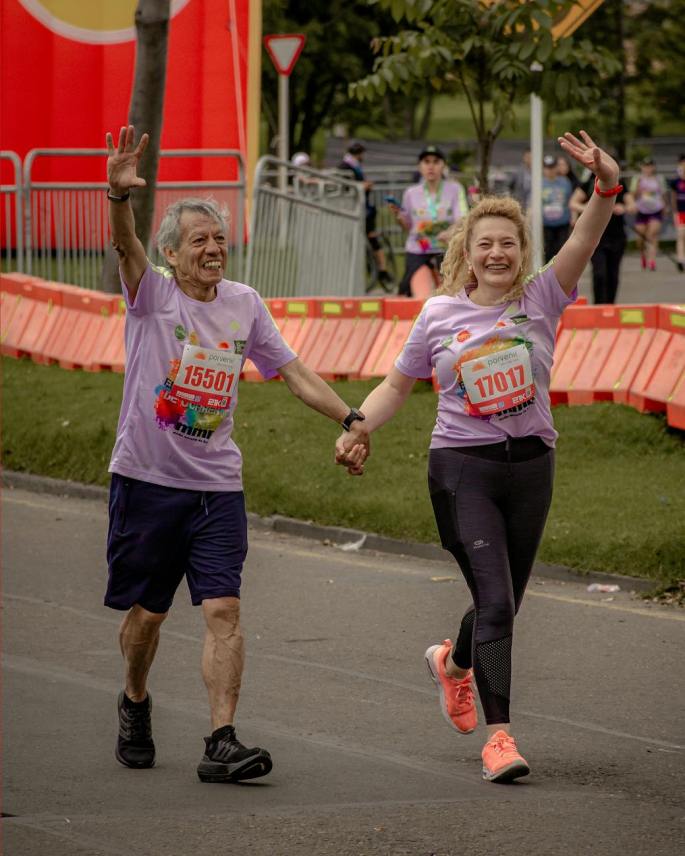
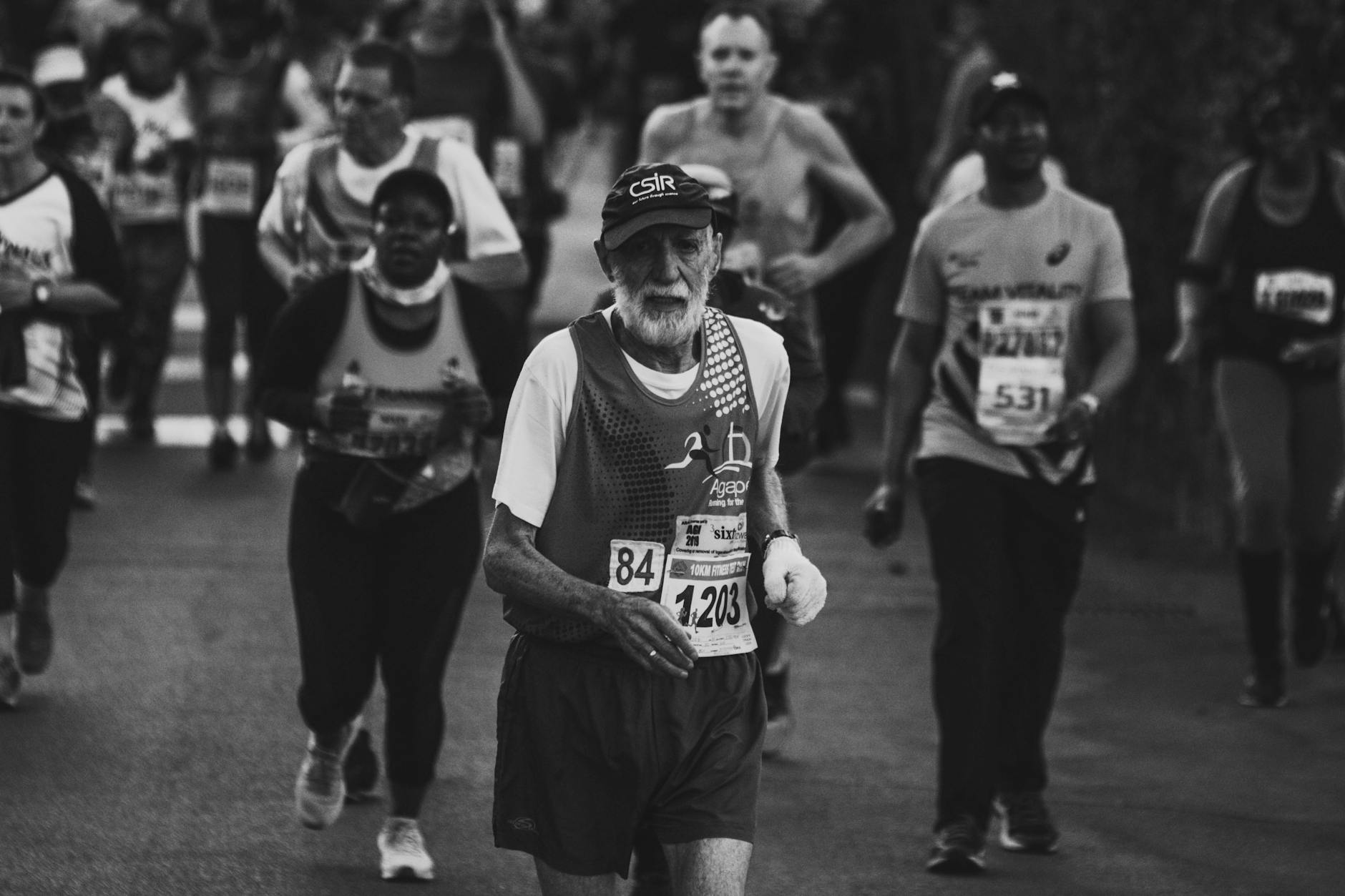
By the time you read this, I will be close to one week out from running (ok, jogging, “slogging”, whatever you want to call it) the Marshall University Half-Marathon. This annual community event motivates and inspires hundreds of locals and nonlocals to train, improve their current fitness level, and participate in the 5K, the half-, or the full-marathon distance.  Plus, it brings together a whole host of volunteers who support participants along the way.

Each year that I’ve participated, I hear numerous stories about those who haven’t trained for MUM, still participate, and do well.  My hats off to them; I appreciate that they can do that.  However, I find the training, and the build-up to the event, are part of the excitement and joy of the journey that includes completing the event.

Photo by RUN 4 FFWPU on Pexels.com

Giving meaning and purpose to Exercise through signing up ✍️

It typically takes weeks, or even months, of deliberation before I decide to sign up for a running event–even an annual event such as the MUM. Therefore, once I make the decision to pay the entry fee for an event, I am fully committed to a training plan. This is not because I have any desire to place or set records, but because signing up for an event is the extra motivation that gives meaning and purpose to my exercise.  Plus, it keeps me simultaneously excited and nervous in a good way.

Photo by RUN 4 FFWPU on Pexels.com

Exercise at any age! 👵🏼

Still, I have those who ask me if running is still safe for someone at “my age.” News alert! There is no milestone-age at which you should cut-off exercise.  In fact, exercise and/or movement can, and probably should, be embraced across all ages, including those of us in the AARP years, which is anyone over the age of 50. That said, you do have to manage your expectations, but movement and/or structured exercise can be a healthy part of the “golden years.”

That said, of course, if you have had an injury or have certain health conditions, you must respect your body’s limits and boundaries, but it doesn’t mean you give up on exercise and/or purposeful movement forever.  By working with a healthcare professional, you can find ways to adapt, modify, and/or create your own exercise plan that fits your body’s unique needs.  

Photo by Vincent Peters on Pexels.com

Tips for moving through those senior years 🚶🏿‍♂️

Here are some key tips and pointers I’ve learned along the way, gathered from other senior exercisers, as well as a few I researched, when thinking about exercise/movement in the, a-hem, “senior” years.

  1. Establish meaningful AND realistic goals appropriate for where your body is now that motivate and excite you.  This is why I enjoy signing up for a half-marathon.  My mantra is: “Set your own pace, and run your race.”  I don’t put pressure on myself that running has to be or look a certain way.  No time is too slow, and I can take as many walk breaks as I need.  That said, you can approach ANY form of exercise in a similar manner 
Set off in your own unique direction down the the tracks towards empowering your own health and fitness.
  1. Notice your narratives.  This is something that I have begun to notice more frequently. Reflect on how you talk/think about age with peers/friends/family AND self.  Is there often negative talk and thoughts associated with your current age and/or exercise?  Perhaps, you can begin to reframe those thoughts/chatter by leading by example.  Furthermore, look to role-models that motivate you to move more.  I personally often look at my Dad who still walks or hikes daily anywhere from 2-8 miles per day.
  1.  Find your edge. Whatever form of exercise we choose should challenge us, but not too much.  If something changes, and you sense you can do a little bit more, then do so.  But if doing a bit more causes serious discomfort, then back off, and try again another time. 
Map out your own fitness challenge.
  1. Strength train, stretch, and work on balance through practices such as yoga. The CDC in an article entitled,  “Older Adult Activity: An Overview,” states that in addition to cardiovascular exercise, such as jogging and walking, older adults also need to strength train and work on balance.  In fact, AARP offers a 10-minute, strength-training video that can be completed daily, seated or standing. 
  1. Manage your sleep and nutrition: There is a reason these two are often spoken/written about due to the fact both contribute positively, or negatively, towards your own health.  That said, one bad night’s sleep, one indulgent meal, or a day of eating very little, will not necessarily impact your overall health; however, consistently not getting enough sleep and not consuming proper nutrition will gradually, and negatively, begin to impact your physical and mental well-being. 
  1. Find your support or pave your own way.  There’s no one right fitness plan that works for everyone.  Find the type of movement/exercise that best suits your body and motivates you, which may mean exercising with a group, a friend, or at a club. That said, don’t be afraid to go it alone either and share the experience with others later.
Find your support!
  1. Exercise can be therapy. Personally, I know my mental health greatly benefits from movement. The National Institutes of Health, The Mayo Clinic, Mount Sinai, and numerous other institutions all point to the fact that exercise is a mood and mental health booster.
  1.  Tune in to your body’s needs with honesty and integrity. If you’re sick, tired, and/or run down, then maybe a day or two of rest may be what you need. If a joint, such as knee, elbow, wrist, or ankle begins to feel irritated.  Be curious about it.  Are you pushing a certain exercise too hard, too often? Or, are you not moving enough? Learning to listen to the signals our bodies send us is an important part of the exercise/movement journey.
Photo by RUN 4 FFWPU on Pexels.com

movement is medicine! 💊

When it comes to movement, no matter your age, focus on the positives of the experience–whether it is spending time with friends, benefiting your mental health, or feeling more overall strength, steadiness, and/or energy. To be sure, it is often hard to get started, but it is often that feeling of accomplishment you have afterwards that can keep you going. Finally, for those in the official AARP years, keep in mind, “older” doesn’t have to mean sitting on the sidelines. Becoming and staying active, however you define it, truly is medicine for imbuing well-being: socially, mentally, and emotionally. 

Dad and I pausing for a moment during hike this past summer at Barboursville Park.


Conquering Perfectionism: Tips for a Balanced Life

“Perfectionists strive to never make mistakes. Excellence is striving high but offering yourself grace for mistakes made and things you don’t know yet.”–Sharon Martin

Photo by RDNE Stock project on Pexels.com

imperfect pressure 😰

I watched in horror before school began as a student began pulling at their hair so hard, strands of it landed on the table. I quietly walked over to offer help/support. The child was a known perfectionist and quickly angered if they were unable to complete their work with total accuracy. As it turned out, they were completing math homework that was due at 8:00 a.m., which was less than ten minutes away. It was homework they had procrastinated completing and were feeling the pressure of not having the time needed to complete the work “perfect.”  

As a teacher, I encounter both students–and adults–that appear to strive (either intrinsically or extrinsically), for “perfection.” However, the idea of perfectionism is a human-construct. When we look at the natural world, we can see multiple examples of this.  Think of any three-legged animal you may have encountered.  One could argue that those creatures are not “perfect” specimens, but they are still able to function “perfectly.”  Another example is the number of plants that are classified as “imperfect” because they do not have both the male and female parts needed to produce flowers.  However, through adaptation, they are able to produce flowers.

Photo by Fox on Pexels.com

Intrinsic vs. extrinsic “perfectionism” 🗂️

Perfectionistic behavior in humans can manifest itself in various ways. So-called “perfectionism,” for some, can be intrinsically-driven. These are people who hold themselves and their work/performance to higher standards. They are self-motivated and often view mistakes as setbacks from which they can learn.  Their goals are realistic and achievable. Overall, this type of “perfectionism” can be healthy unless it evolves–either from internal or external forces–to an unhealthy, maladaptive state.

An “unhealthy” state of perfectionism can often be attributed to others–cultural and/or societal cues, well-intended friends, or even family. In fact, think about how often the word “perfect” sneaks into day-to-day interactions and conversations.  Even sports’ analysis is rife with its use of “perfect”–perfect pass, perfect catch, perfect save, perfect pitch and so on.  Similarly, from many outward appearances, one could argue life rewards those who are “perfect.”

Unfortunately, perfectionism can become problematic when people begin to set standards that are extreme and often unattainable. This can lead to a sense of “failure,” a constant feeling of stress, and/or develop procrastination/avoidance habits because the tasks/work can seem so overwhelming because it can’t be completed “perfectly.”  Perfectionism can reduce feelings of joy/happiness, diminish one’s self-esteem, and often leads to burnout. It is worth further noting that perfectionism can sometimes evolve as an extension of anxiety, OCD, ADHD, and/or depression.

Photo by energepic.com on Pexels.com

Downside to perfectionism 😫

Perfectionism, when left unchecked, is beyond “trying to be your best.”  It’s more about setting standards that are so high, they are either difficult to maintain or unrealistic to achieve. Many people think that perfect work/performance is the only way to be accepted and/or valued, often because they have a fear of not being good enough or worry about how others perceive them. 

In particular, I have noticed that students (and adults) with perfectionistic tendencies place extreme amounts of pressure on themselves to perform “perfectly.”  Then, if their work/performance misses the high-mark they have established in their mind, their self-talk becomes highly critical and often leads to self-loathing that can spiral into depression and harmful coping mechanisms.  Sometimes, this need to be perfect can spill over into their relationships in which friends and acquaintances who don’t meet “perfect standards” are berated, belittled, and shamed for not having the ability to perform at a specific level.

Photo by Christina Morillo on Pexels.com

Reframing the way we talk 🗣️

What can be done about this?  One important step that any of us can take is to reframe the way we talk about performances.  Rather than being quick to say, “that was perfect,” consider focusing on acknowledging/praising the effort or the process. This is especially important for parents or anyone working with children and teens; however, it is also equally important in the work setting or within close relationships. For example, instead of saying that a presentation is “perfect,” focus on the process.  “Your presentation was so clear and to the point. Tell me about how you came up with that idea.” The point is that we bring harm to others when we foster the myth of perfectionism.  

Proactive practice and tips for 📋overcoming perfectionistic tendencies

I’ve gathered several tips from a wide array of sources as well as a few anecdotal tips I have observed students and/or adults employ to combat perfectionistic tendencies.  Even if you are not battling perfectionism, per se, some of these tips are overall proactive practices for a healthy work/life balance.

  • Become aware of perfectionist tendencies, and reduce self-imposed pressure. Sure, you could spend hours crossing every t and dotting every i, but after a certain amount of, there is a diminished return on time invested.  Sometimes, it’s okay to complete the task well (read: not “perfect”) in a reasonable amount of time
  • Break a big job into smaller tasks, and habit bundle in order to avoid procrastination. If the thought of a task is overwhelming, break it down into smaller tasks spread out over several days, and “bundle” it with something you enjoy doing while completing the task or afterwards, i.e. Instead of cleaning the entire house, commit to cleaning two rooms while listening to your favorite playlist or podcast. Then repeat the process with two more rooms at another time.
  • Celebrate small successes and praise yourself.  When completing a step of a major task/job/assignment, take time to acknowledge and feel good about each completed step. 
  • Limit your time on task(s), and focus on meaning over “perfect.”  See the big picture/goal, so that you can be less perfect about some things and focus more on the overall, most important goal.
  • Acknowledge that “perfect” is a human construct, and reframe how you talk to others about work/skills/projects. This is one that takes practice and awareness due to how easy it is to interject the word, “perfect” when acknowledging/praising one’s job.
  • Allow yourself to make mistakes, and view them as learning opportunities. This is a big step towards a more healthy mindset. We all make mistakes, and they provide important lessons that can potentially impact future work.
  • Cut out negative influences and accept/seek constructive feedback. While it may not be completely possible to avoid those who place unrealistic expectations on you or others, it is possible to ignore those messages and seek advice from mentors who truly have your best interest at heart.
Photo by fauxels on Pexels.com

Final Thoughts 🤔

Coping with perfectionism can be challenging, especially when family, friends, and/or other outside influences may be sending other messages.  While it’s good to have high standards for ourselves, those standards should not be at the expense of our mental health and well-being. Finding a more balanced approach to work/performance can increase our peace of mind, overall well-being, and give us permission to live and work with a bit more grace and kindness towards ourselves and others.