Embracing Life’s Unanswered Questions

“Be patient toward all that is unsolved in your heart and try to love the questions themselves. Live the questions now. Perhaps you will then gradually, without noticing it, live along some distant day into the answer.“–Rilke 

A vibrant sunrise with deep orange and golden hues peeking through soft clouds, symbolizing new beginnings and hope.
Photo by Bradley Hook on Pexels.com

When the Mind Won’t Stop Asking 😕

Those words of Rilke, written over a century ago, remind me that some of the hardest seasons in life are the ones that offer no answers—only questions that echo back in silence.

A silhouette of a person walking towards a bright sunrise, symbolizing hope and introspection.
Photo by Dom Gould on Pexels.com

Running into the Questions ⁉️

I was driving home Saturday morning after my weekly long run with a podcast playing in the background. The previous week had been difficult, and I had hoped the run would provide a reprieve from my worries. I started running well before the sun rose under the cloak of a starry sky, which served to keep my mind calm. Then, the rich crimson of dawn edged up the horizon, deepening from vermilion to the fiery orange of full sunrise. As if on cue, the monkeys in my mind began chattering—an endless loop of questions followed by equally endless, devastating possibilities. 

I tried to redirect my thoughts: “If only this or that would happen, then everything will be fine,” I told myself. The problem with this if–then principle is that it’s meant for building new habits or personal change; I can’t magically apply it to others—or to the world at large. Even after my run, the mind monkeys continued their spirals. Then a line from the podcast caught my attention, “What I think Rilke’s words are stating is that if we can learn to live in peace alongside the questions, this may allow us to witness the unfolding of the answers in some indeterminate future.” 

A hand reaching out towards a shimmering body of water under a bright sky.
Photo by Lukas on Pexels.com

An Invitation, Not a Reprimand 🙂

Of course, I had not heard Rilke’s words, so I had to rewind the podcast in order to focus on the original quote. Those words felt like an invitation to hope, rather than a reprimand for my monkey mind. To be clear, it did not feel like a promise of a positive outcome, but rather hope for a greater understanding one day. Rilke’s words seemed to affirm my questioning, as long as I let the questions simply “be,” like one ingredient in the stew of life. 

Hands holding a small, gift-wrapped box with a ribbon against a soft, patterned background.
Photo by Kim Stiver on Pexels.com

The Unsolved Nature of Life 🧐

While I cannot speak for everyone, I think many of us live with unanswered questions—and I’m probably in the camp that has more than a few. Seasons of life bring different questions, but they often center around themes of health, purpose, relationships, concern for others, and the future. It is often uncomfortable–the unsolved nature of life. We desire, like the fairy tales of our childhood, resolutions to problems in which we “all lived happily ever after.” We like knowing what is next; we desire to wrap up answers neatly and hand them over like a present. But life, as we eventually learn, isn’t wrapped in tidy endings. 

A serene landscape shrouded in fog, featuring two swans gliding on a calm body of water, with bare trees reflecting in the misty surroundings.
Photo by Karol Wiu015bniewski on Pexels.com

When Answers Refuse to Come 🤨

If you have ever encountered a personal crisis, or that of a loved one, you know the “hurry up and wait” sense of time that often accompanies these scenarios–appointments scheduled off into the distant future, followed up by more appointments with no answers, only more maybes and/or more questions or concerns. It can feel like an autumn fog settling over a town in the early morning hours. You can see outlines of various possibilities, but still not know what the future holds. And yet, even in that fog, life quietly continues. 

A chalk-drawn question mark on a black background, symbolizing uncertainty and curiosity.
Photo by Pixabay on Pexels.com

Coexisting with Uncertainty ❓

On one hand, Rilke seems to invite us to love the questions—an improbable ask, given the weight of so many of life’s uncertainties. Perhaps, as the podcaster suggested, Rilke’s words invite us to coexist with uncertainty rather than chase quick answers. Personally, when I face challenges, my first instinct is to “fix it,” whatever “it” may be. However, most of life’s bigger questions are not, per se “fixable” in a vacuum. There are many uncontrollable variables that often fill me with an anxious energy. 

This is when I tend to lean into writing, outdoor movement (especially running and walking), as well as reading–trying to learn as much as I can about the current challenge I am facing. Additionally, I will offer help (if I can be of service) to those for whom I am concerned. In this way, I feel like I am stretching and growing in understanding and empathy, rather than grasping and silently suffering. 

A close-up image of colorful daisies, featuring hues of pink, yellow, orange, and purple, surrounded by green foliage.
Photo by Leigh Patrick on Pexels.com

The Garden Rule: Sleep, Creep, and Leap 🪻

I’ve lived long enough to know that many answers only emerge with the sweet relief of distance and time—like the three-year rule of a perennial garden: sleep, creep, and leap. A long-ago biology professor once explained that in the first year of a newly planted garden, the plants appear to grow very little because they’re focused on developing and strengthening their roots. The following year, roots are still growing and establishing, but they do have enough energy to create a bit more growth above ground. However, by the third year, the roots are fully established and the plant appears to “leap” out of the ground with growth. So it can be with the answers to life’s questions. 

Three white blocks arranged to spell 'WHY' in black uppercase letters.
Photo by Ann H on Pexels.com

Growing Through What We Don’t Yet Understand 📈

There are times in life where we cannot figure out why we keep facing one roadblock and one challenge after another. We wonder how much more we can endure, why we are faced with a certain situation, or why things are not going the way we imagined. Like that early decorative landscaped garden, we cannot see that our experiences are developing roots of strength and stability. We may not see that our ability to empathize, our talents, our emotional well-being, and even our souls, are stretching and strengthening. Later, we may look back and see that those setbacks were quietly shaping us—building the strength we’d need for what came next. 

A person kayaking on a calm body of water during sunset, with vibrant pink and orange clouds reflected in the water.
Photo by Taryn Elliott on Pexels.com

The Ineffable Beauty of Living with Questions ✨

As I further reflected on Rilke’s words and my own lived experiences, I realized that there is a certain ineffable beauty that is created by living with questions because it asks us to rely upon faith and grace, granting us a greater purpose as a seeker and a doer. 

We are not here to solve life, but to live it—with curiosity, patience, and hope.

While hope does spring eternal, it is not the same as knowing the answers. Perhaps, that’s the point–it is more about trusting that our life story is continuing to unfold in its own time and season. 

A calm, reflective body of water at sunset, with vibrant streaks of orange and blue in the sky, and a small island featuring lush greenery and palm trees.
Photo by Johannes Plenio on Pexels.com

Light, Grace, and the Unfolding of Answers 💫

Finishing the drive home, I realized that Rilke had a point. As long as I have questions, as long as I seek answers, I am not only living, but I am living with an open, loving heart and a curious, empathetic mind. I have been fortunate to live to see questions answered, but I still have more questions to go–about loved ones, about the world, and about myself. 

Like the sunrise that began my run, the light of understanding will come again—slowly, beautifully, and in its own time. Until then, I feel grateful for life’s questions. They have strengthened my life in numerous ways and provided me with unpredicted opportunities for growth. In the words of John O’Donohue, “Perhaps the beauty of not knowing is that it keeps our hearts open enough to be surprised by grace.” I welcome that grace into my life—and I hope you do too.
The Spirograph Effect: Creativity in Life Design

“Not all who wander are lost”–J.R.R. Tolkien

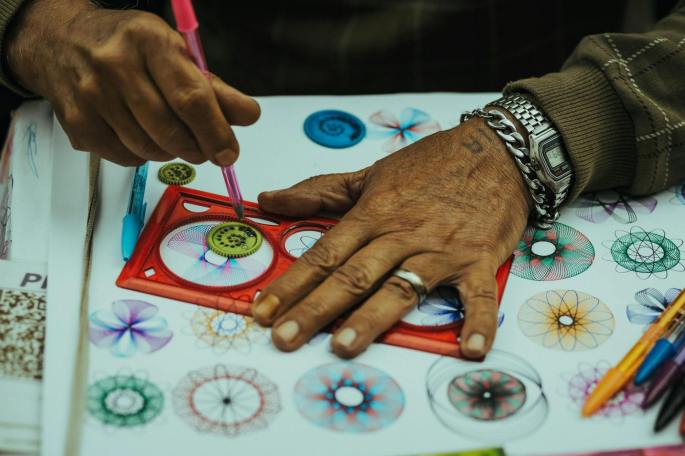
Close-up of hands using drawing tools to create a spiral geometric design on paper.

A Student’s Doodle Sparks a Memory✍️

Months ago, I observed a student drawing spiraling circles over and over on a sheet of notebook paper while participating in our class discussion. For some reason, I was reminded of an old toy my siblings and I once enjoyed: the Spirograph. I can’t remember which one of us received it, but we would sit together for what seemed like hours at the kitchen table drawing colorful, eye-popping (at least to us) geometric shapes.

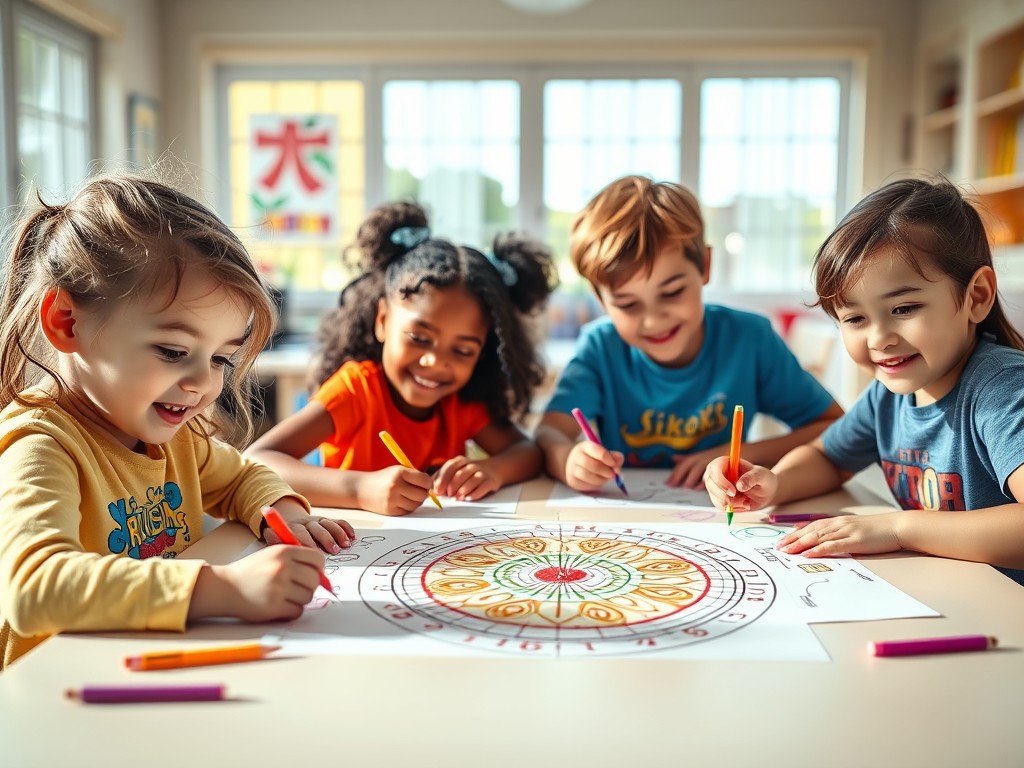
Four children gathered around a table, smiling and drawing colorful patterns on a large sheet of paper using various markers.

Lessons Hidden in a Childhood Toy ꩜

Reflecting upon that long-ago childhood toy, led to the realization that the Spirograph illustrates the significance of specific concepts when it comes to creating our own life design, such as the influence of structure, patience, persistence, and the importance of celebrating our own unique individuality. It also emphasizes the value of working through natural constraints and trusting the process of learning through repetition. What’s more, the Spirograph demonstrates the relevance of trial and error–which often includes failure–as well as accepting the beauty that can be found in our so-called “imperfections”.

The Spirograph’s Ingenious Origins 👨‍🔬

To appreciate the genius of the spirograph as a toy, requires understanding a bit of its history. Denys Fisher, a British engineer, created it as a child’s play thing based upon various iterations, beginning as early as 1827. At the time of its original conception, it was used for advancing mathematical and engineering concepts. Spirograph, the toy, wasn’t available until 1965, and it went on to win “Toy of the Year” in 1967. Unbelievably, it is still available today.

This classic geometric drawing toy originally came with two transparent rings, two transparent bars, 18 clear wheels of varying sizes, two colored ink pens, pushpins, putty, and paper. Using the various tools, my siblings and I could draw precise, and quite mesmerizing, mathematical curves known as hypotrochoids, epitrochoids, and cycloids. With the switch of any one part, we could vary the size, shape, and geometry of intricate and, at the time, mind-boggling patterns. Essentially, the Spirograph is operated on a balance of limitation and creative freedom, which reflects much of the human experience.

A box of the original Spirograph design set, featuring colorful geometric designs and detailing the contents, including pieces and tools for creating intricate patterns.

Art Through Limits: Creative Freedom Within Structure 🎨

When one is drawing with the Spirograph, one has to adapt to its restrictions. The designs made by using the Spirograph are limited by the size and shape of the wheels and whether you are using the rack or the ring, as well as the color of the chosen pen(s) used to design a figure. Additionally, there are rules for creating specific outcomes as described in its guide book.  While it isn’t necessary to follow the laid-out directions, if one desires it to create a specific shape or design, one has to follow the step-by-step instructions.

This is similar to life in many ways. Influences in life vary from person to person and from family to family, often dependent upon experiences, education, and available information. Many individuals have followed very specific guidelines provided by parents, religion, schools, and even societal norms while others may have fewer influences. For many of us, following a structured timeline is how we landed in our current field/career path.  However, there are just as many, who followed a winding path of their own creation, and still produce a meaningful life experience. Like the Spirograph, following guidelines creates remarkable results for some people, while for others, grabbing the gears and turning them their own darn way works just as well.

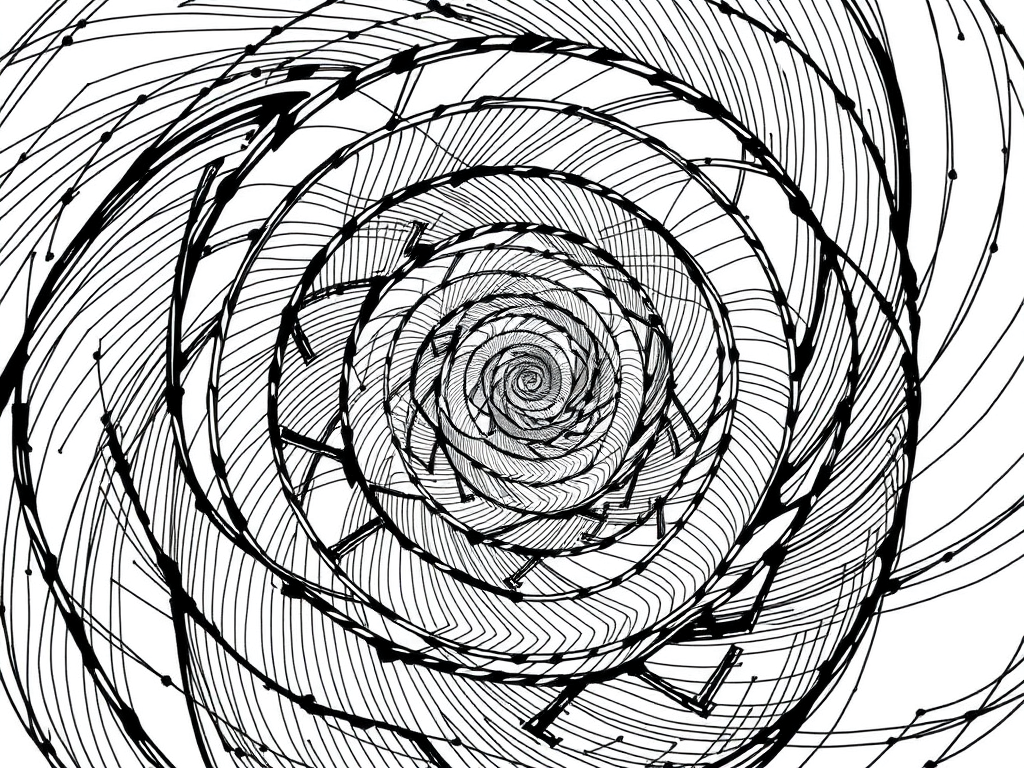
Black and white abstract spiral pattern created with lines and arrows, resembling a geometric design.

The Power of Patience and Trusting the Process 🙏

When working with the Spirograph, my siblings and I had to have faith in the process. We had to further learn that creating something meaningful takes time. The desired design outcome emerged slowly, turn by turn, and layer upon layer. In sum, the Spirograph required us to have patience, trust the process, and stay the course. 

Similarly, our life journey takes time as we, hopefully, continuously evolve and grow. We may have times we question the process, or we may waiver in our faith, patience, and persistence. However, rushing life outcomes usually ends up backfiring. Moreover, the time required for personal growth fosters resilience, a much needed companion to patience. We only have one precious life, and as our life design unfolds, with all of its curves and angles, it is never worth rushing. 

A colorful doodle featuring spiraling circles and geometric shapes, reminiscent of designs created with a Spirograph toy.

Failure, Play, and the Magic of Repetition 🖍️

With the Spirograph, I recall that we often learned through repetition and play. We might draw the same shape over and over, sometimes changing the color, or merely changing the size. Other times, we followed the guidelines, and somehow still managed to “fail”!  And, yet, many of those so-called failures ended up being unique and pretty creations–even if they did not come out as planned. Other times, we would just “mess around” to see what we could create. Some results were not so spectacular, but other times, the creations were fairly impressive or, at the very least, provided us with a new understanding for creating specific curves and/or angles. 

Life can often be the same way. How many of us have experienced times where we “followed the rules,” doing what we were “supposed to do,” and still somehow managed to fall flat on our face. Years later, however, we may look back and realize that those “failings” led to something far greater than we could have ever imagined. Other times, a bit of experimentation leads to a new life path or experience that brings unexpected joy we might not have otherwise known. Thus, like the Spirograph, a playful and experimental mindset can lead to untold delights and adventures.

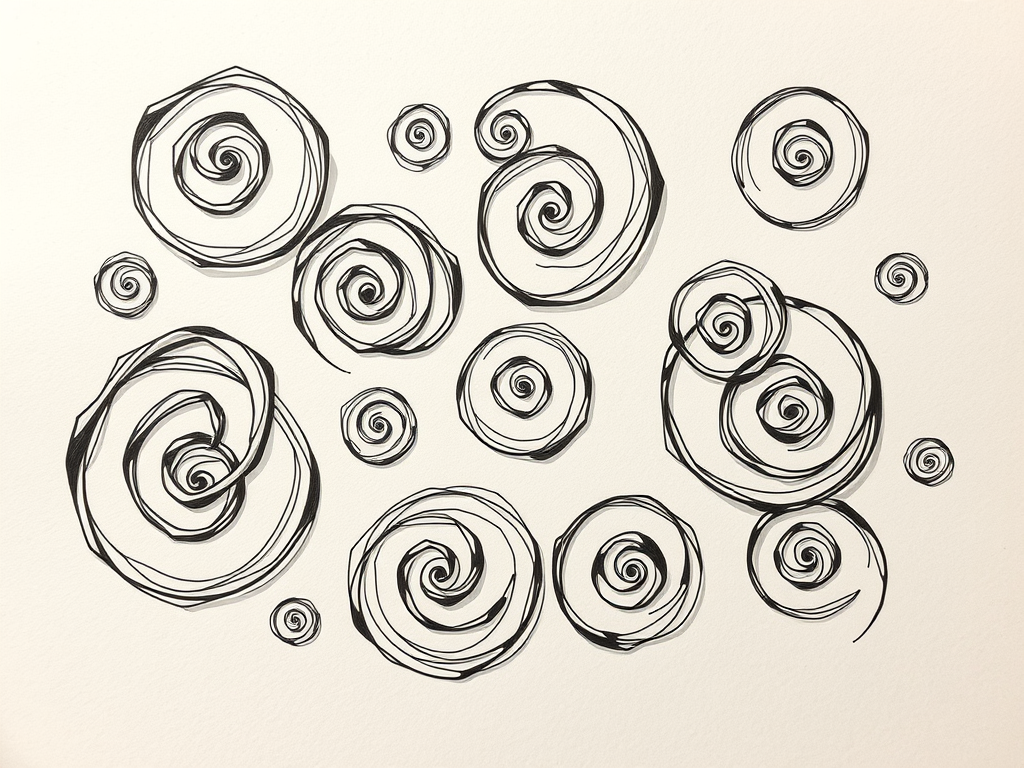
A collection of hand-drawn spirals in varying sizes, arranged artistically on a blank background.

The Beauty of Uniqueness in Design—and in Life 🖼️

Learning to welcome individual uniqueness was another life lesson the Spirograph provided. It often intrigued my young mind how my siblings and I could make the same design, but with a switch of pen color or pressure, or switch of a gear wheel, we could make each drawing unique, despite the fact we were essentially using the same tools. 

Sometimes, we would be surprised when trying to make the exact same shape, because we accidentally missed one of the required steps. Skipping one step, tended to create an irregular shape. Nonetheless, our younger selves marveled at the unique loveliness of the design. Our child-size egos told us we were pioneering artists in those moments!

Marks of Authenticity: Irregular Paths, Unique Lives

What a powerful reminder of the importance of celebrating our own–and others’– idiosyncrasies, including any so-called irregular paths. These individual characteristics and traits, as well as any “irregular paths’ traveled, are all marks of authenticity–that one-of-a-kind spice in our life serving. As humans, our genetic material is vastly similar across all humanity. Yet, this same genetic material still manages to create unique DNA characteristics, such as varying eye color, height, body shapes, and so forth. Furthermore, despite our similar genetic makeup, our lived experiences vary. In a sense, we are pioneering artists of our own lives.

A colorful collection of intricate geometric patterns resembling designs created with a Spirograph. The spirals and mandalas feature vibrant colors and diverse shapes, showcasing creativity and uniqueness.

Embracing Life’s Curves and Imperfections 🌀

Like the Spirograph of my childhood, we all deal with life constraints, no matter what path we try to create for ourselves. These life designs often, and sometimes repeatedly, require practice, patience, perseverance. Life also requires us to accept the many so-called imperfections and irregularities that come as part of the creative process. However, those “flawed” experiences give our life meaning and purpose. Therefore, it is worth remembering we have the power to play and create with the pen we have. All those curved lines and angles that make up our lives, including the missteps, are what continues to compose and create our magnificent, one-of-a-kind life design. Let’s embrace the possibilities.

Who’s ready to draw? ✍️

Do you disturb the peace, or perpetuate it?

  “If in our daily life we can smile, if we can be peaceful and happy, not only we, but everyone will profit from it. This is the most basic kind of peace work.”–Thich Nhat Hanh

The tail twitches and crouching ensues. Hips raised, ears flattened, the tail twitches more rapidly.

“LJ, stop!”

He remains immobile and continues his focus.

“LJAAAY,” said with slow emphasis on the A-sound.

A look is tossed over his lowered shoulders, signaling he doesn’t feel like listening.

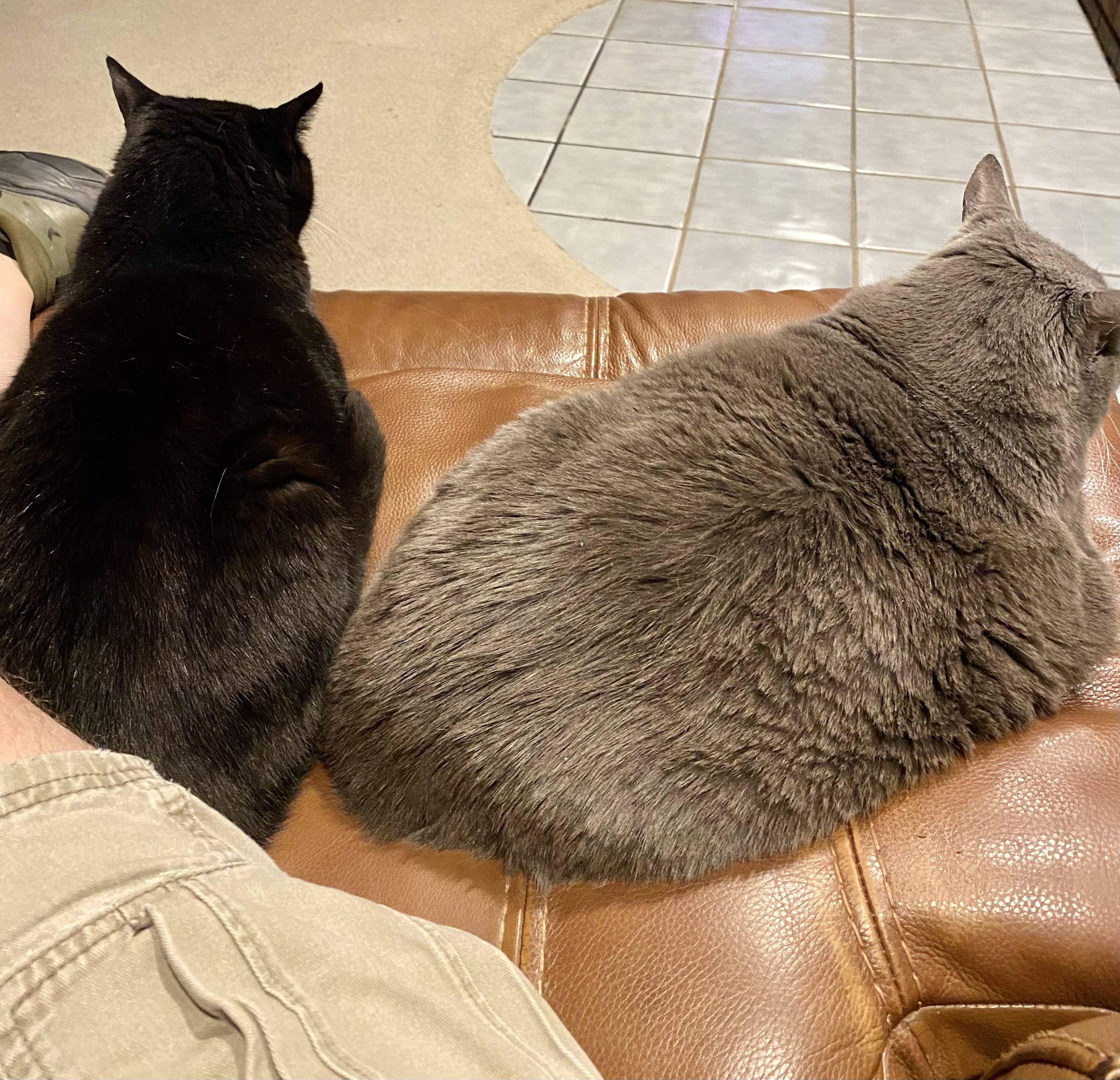
Hand reaches for the spray bottle, and John, my husband, walks towards LJ, trigger aimed.  That is all it took. LJ, our solidly black cat, takes off in an attempt to avoid being squirted, but he’s not to be conquered.  Not yet. 

He circles back around the dining room table and reenters the same room through another entry point as if we can not see him.  Meanwhile, the desire of his pouncing antics, Tippi (Tail), our 14 year old gray cat, with the exceptions of tuxedo white on her chest and tufts of white on the tips of her paws and tail, sits peacefully undisturbed.  The only sign that she is aware of his shenagings is the very slow whishing of her tail along the top of the carpet.

LJ prepares to pounce once more; however, John rapidly squirts water in LJ’s direction.  Although John isn’t trying to precisely hit LJ, the sound and sight of the water sends LJ scuttingly out of the room.

Tippi looks towards where the water missed its target, turns her head back to its original position as her body sighs towards the floor in a perfect cat loaf.  Her tail encircles her body once more.

Throughout LJ’s attack, Tippi remained peaceful, never hissing or spewing.  While her tail signaled her awareness, she did not otherwise bring attention to LJ’s negativity.  Instead, she chose to remain at peace with it.  Vigilant, but non-reactive.  

John and I have watched this play out repeatedly, yet no matter how many times LJ attempts to attack Tippi Tail, she rarely responds out of anger. To be sure, Tippi will occasionally respond if he corners her. Mostly, though, she remains peaceful and at ease.  

LJ is a bit younger than Tippi and has not moved from the self-absorbed stage of life.  He wants to be the center of attention on his terms.  If the humans in his home, family members or visitors, aren’t paying attention to him, he finds ways to draw attention to himself.

For example, if Tippi decides to sit with one of us, due to her arthritis, we find ways to offer her assistance to climb up beside us, such as slightly lowering the reclining portion of a chair or couch.  As she tries to lift herself up to position, LJ will haughtily cross the room and attempt to “beat” her to the desired person.  If we move a step stool near the bay window, in order to assist Tippi’s assent to the cat beds in the window, LJ will try to block her attempts in order to claim the bay window area for himself.

Nonetheless, Tippi Tail finds ways to persist with grace and equanimity.  Her peace remains (mostly) unflappable.  Neither does she appear to hate LJ, nor does she appear to be jealous of his presence.  Instead, she seems to understand with a sense of compassion and patience that he can’t help what is inside him–his tendencies to compete, invade, dominate and exploit perceived weakness.  

Due to her serene perseverance, there reigns an unspoken peace between the two cats . . . most moments.  The more peaceful and tolerant Tippi becomes, the more LJ is learning to become that way.  It has taken years, but there are times I will wake up in the morning to find both cats sleeping at the foot of the bed–not necessarily near each other–but in the same approximate area. Furthermore, it is not unusual during cold days to find both of them soaking up the morning sun in the same room and within the same area, albeit, not touching each other.  

Sometimes, upon waking, I am surprised to discover, after I turn on the bedroom lamp, that both LJ and Tippi Tail had been peacefully sleeping at the foot of the bed.

Thich Nhat Hanh once wrote that, “When another person makes you suffer, it is because he suffers deeply within himself, and his suffering is spilling over.” When LJ sees Tippi with one of us, he suffers jealousy because he perceives that she is getting all the attention and love.  If he sees that Tippi wants to be in one of the cat beds in the bay window, he suffers fear because he is afraid there isn’t enough secure space for him in the sunlight to cozy for a nap.  

While they both lived their early lives as stray cats, it is possible that something happened in LJ’s past that causes him to remain stunted and insecure.  Then, again, due to the fact, Tippi is older, and lived with us longer; perhaps, she feels solidly secure with her position in our family.  It could also be that she remembers a time when she was the younger cat in the house, competitively trying to exploit the weakness of one of our former cats, in order to gain our attention.  Possibly, she has simply outgrown those impulsive years. 

Whatever the reason(s), Tippi seems to understand that within LJ are potential seeds of love, compassion, playfulness and peace.  However, she also appears to sense that LJ is dominated by seeds of willfulness, anger, fear, and insecurity.  Due to age, circumstances, and/or experience, she is mindful of these seeds both within herself and within LJ.  Therefore, it often appears that she uses this insight to mindfully choose her actions–modeling peaceful behaviors, and only fighting back in order to keep from getting hurt when he corners her.  

Of course, I have personified my cats in order to make a point. To live in peace and harmony with others, we must recognize that all humans have similar needs/desires:  food, water and shelter, safety, esteem/value, love/belonging and so forth.  There is often fear and/or a feeling of lack when humans sense one of these is missing.  Additionally, everyone has the potential to develop and foster seeds of insight, self-awareness, and self-control, but not everyone focuses on developing these, much less developing them at similar rates.  

As the story of Tippi and LJ illustrates, it is important to be aware of our own insecurities, fears, and impulses in order to exercise self-control.  Recognizing our own proclivities with compassion and understanding, allows us to offer that same consideration and empathy for others.  

While this is never easy, and it takes practice, by learning to be less-reactive and modeling more appropriate ways of speaking, engaging, and responding to others, the more we can reduce conflict.  Of course, this is not to say we passively agree or accept all behavior and actions; rather, it is important to recognize that not every word, action, and deed with which we disagree needs a response.  Furthermore, if a response is required, how much more productive and beneficial they can be when given with considered insight/thought, self-control, and discipline   

Wouldn’t the world be a better place if we could all learn to do what Tippi does with LJ– pursue patience, tolerance, and think before acting.  

The more Tippi practices patience and tolerance with him, the more LJ is becoming more at peace with her.

We all need a little patience

“In a time of drastic change, it is the learners who inherit the future.”–Eric Hoffer

“Change is only felt when it is drastic.”–Lailah Gifty Akita

Dedicated to the teachers with whom I work, and all the other educators, near and far.

As I step into the warm shower, pulsating water beats down on my tight neck, my low back is still dully throbbing from the previous day’s efforts, and my feet, my heavens, my feet, they are pulsating from the constant pounding of walking on concrete.  

It’s Friday.  You can do this.  Everyone is feeling similar aches–it’s not just you.  Yes, but most others are a heckuva lot younger!  You can do this; you’ve done this before–albeit, not so drastic . . . or was it?

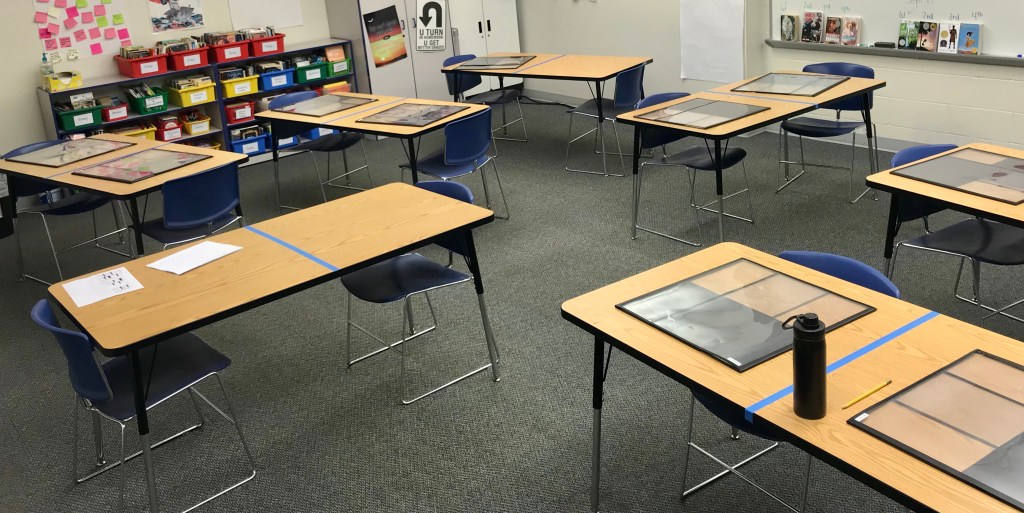
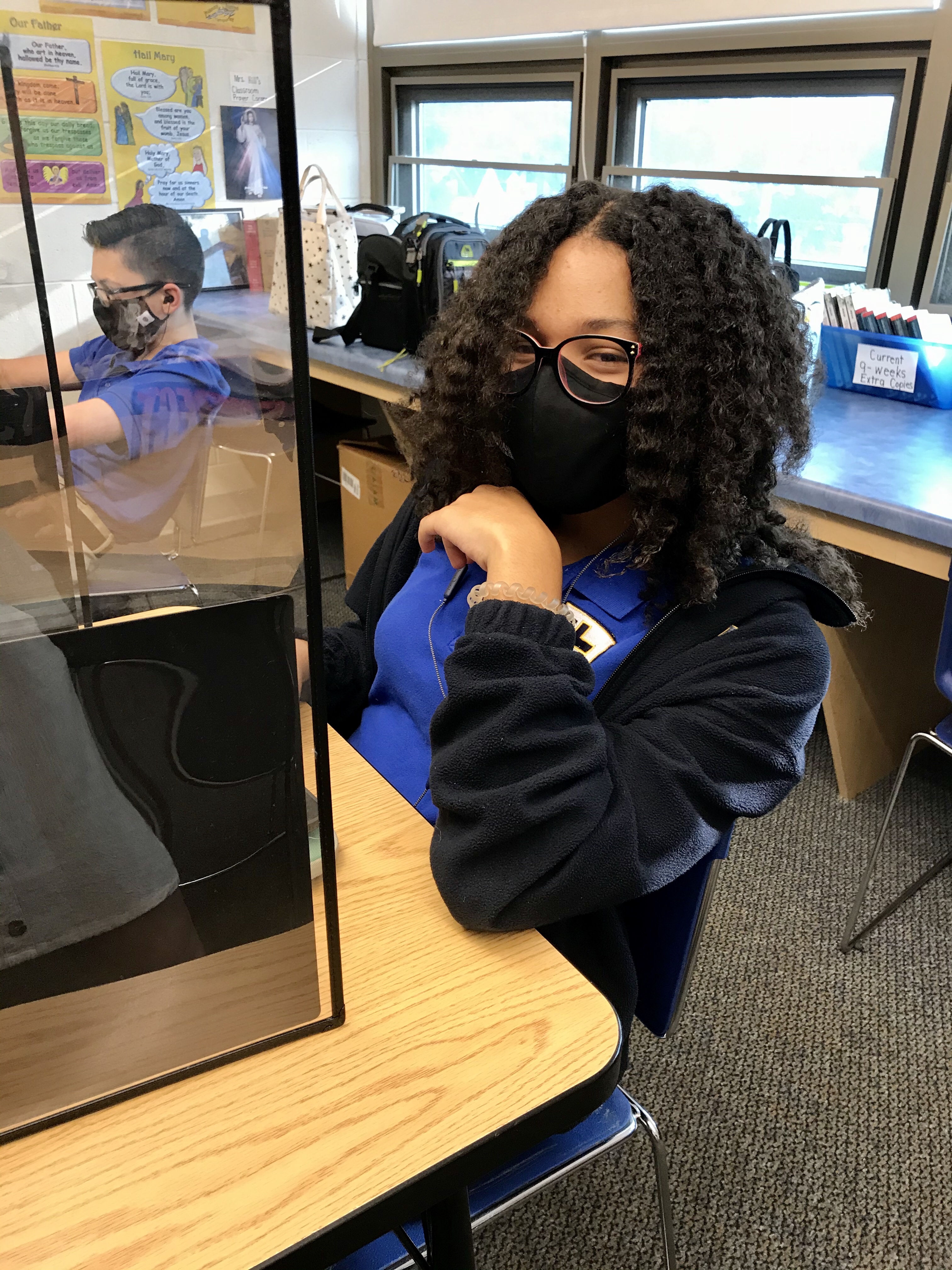
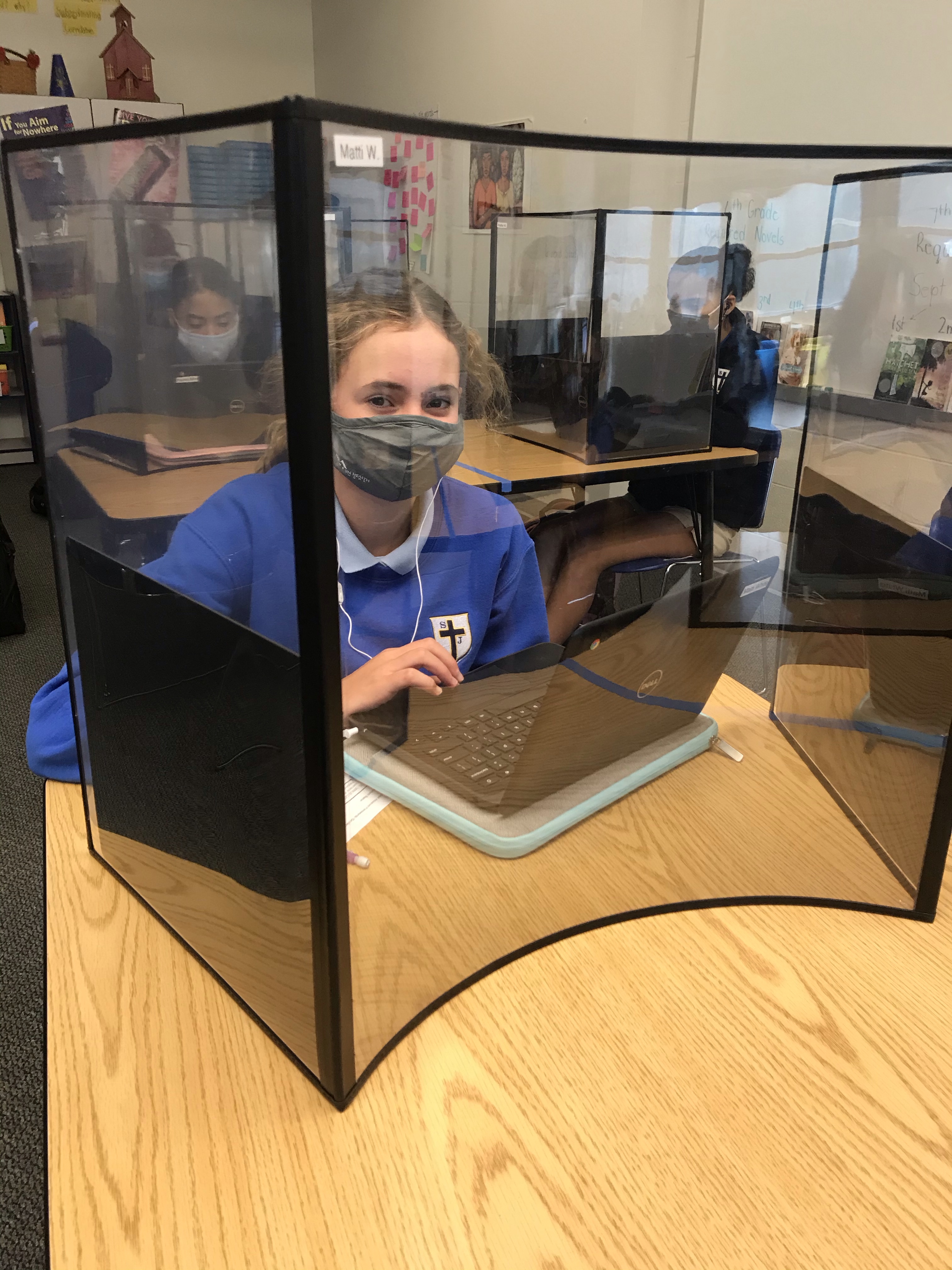
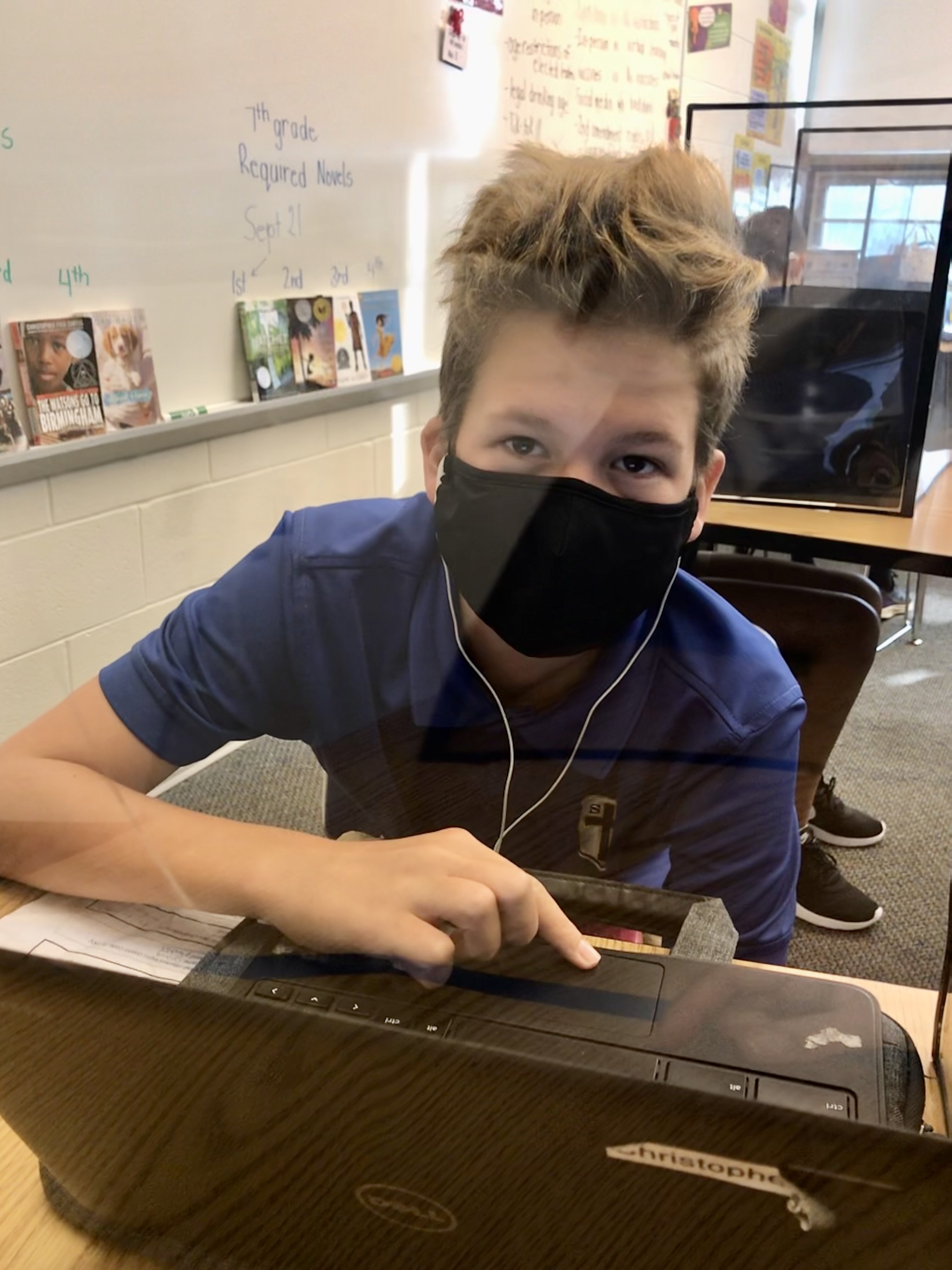
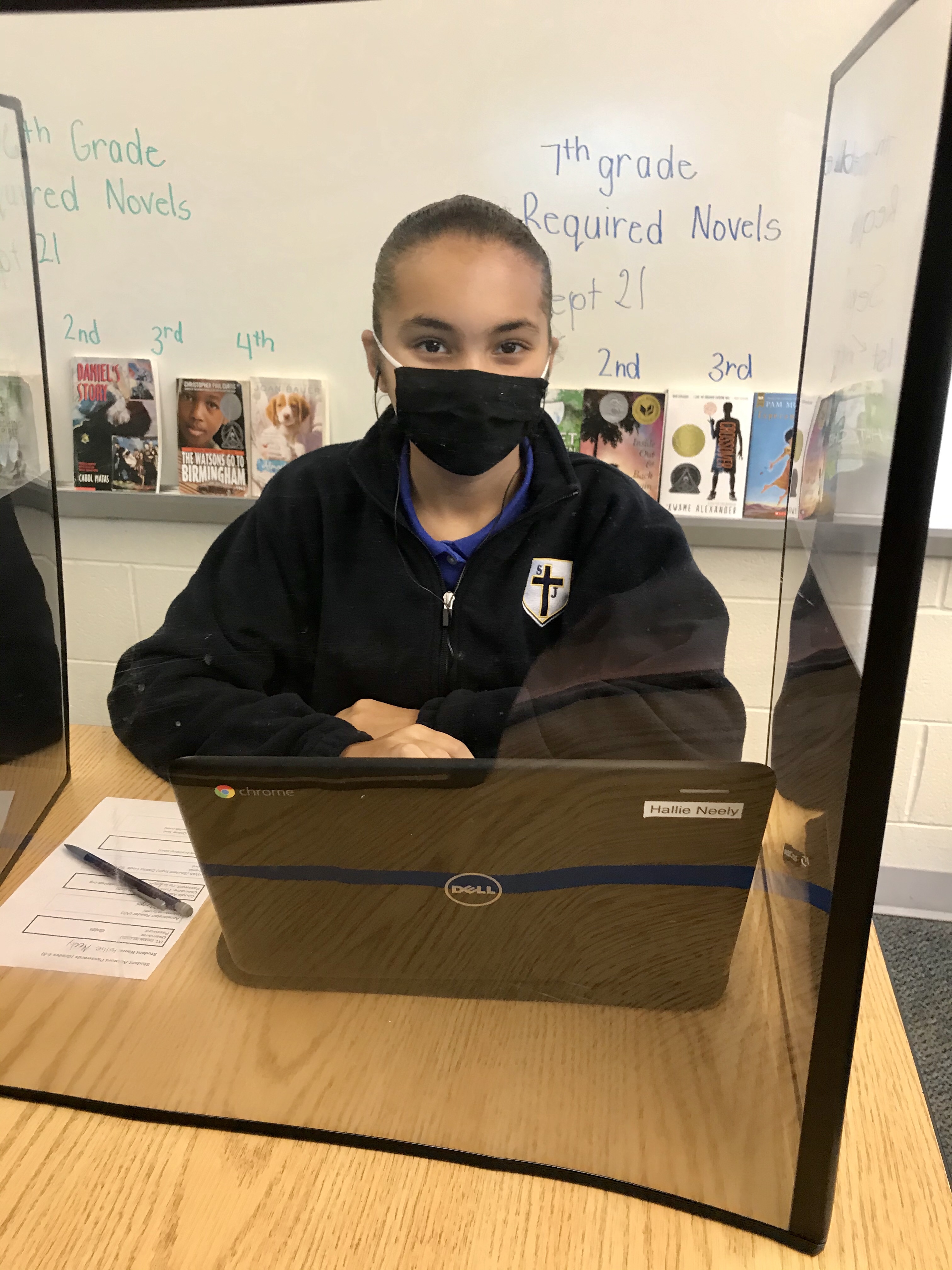
Students working at school in the age of COVID and an era of paperless (as close to it as possible) education.

I remember following the Special Education Coordinator of the county school district in which I had first been hired fresh out of college.  I felt proud, excited, and eager.  The clipped, rhythmic pace of her heels as they click-clacked across the tiled floor resounded–even more so when she continued on into the gym.  At the time I couldn’t understand why we were in the gym when she was supposed to be taking me to my classroom.  

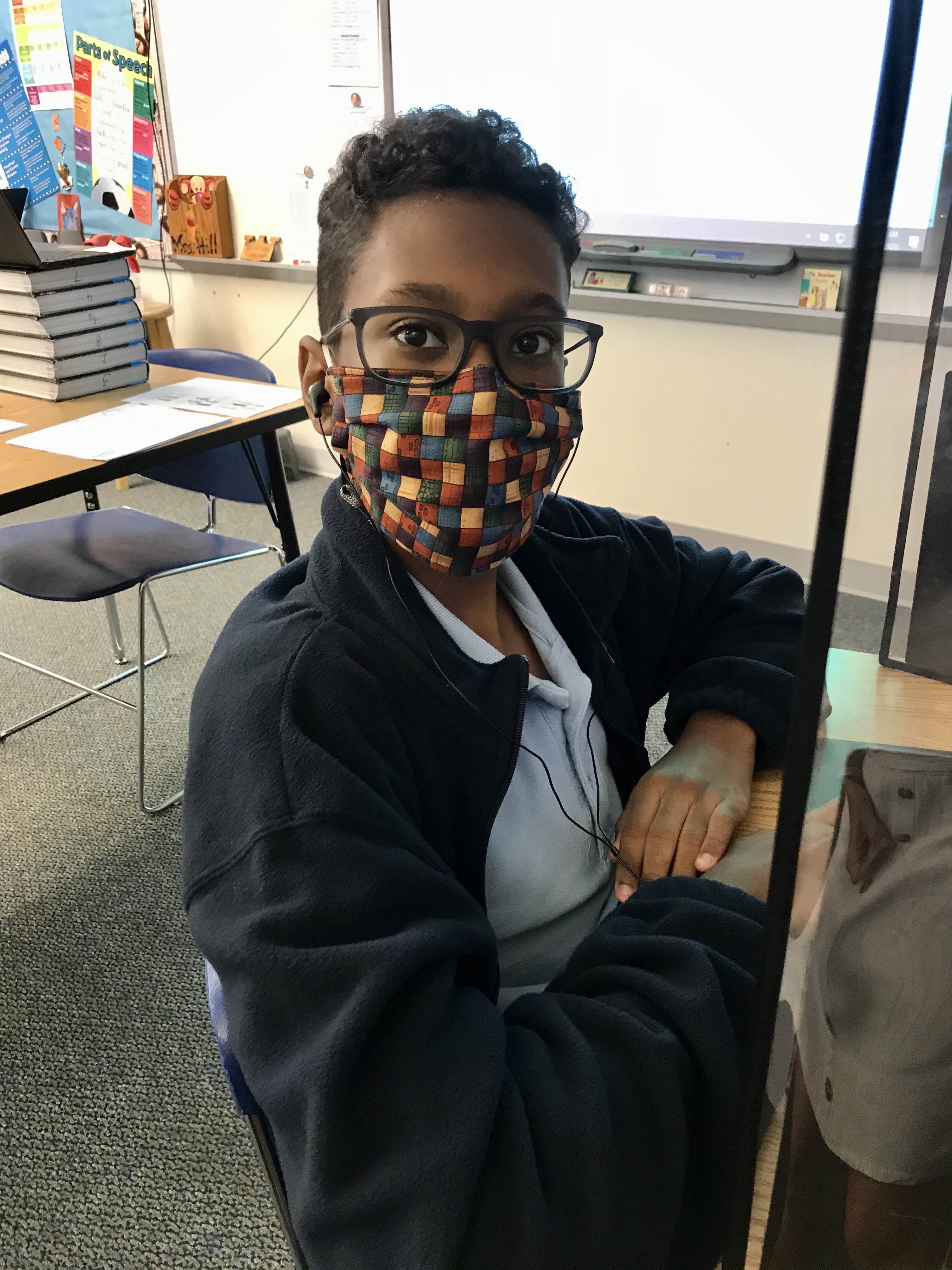
Tables cleaned and sanitized well before 7:30 am when the students begin arriving to homeroom.

Eventually we made our way to the opposite side from which we entered, walked up some steps, and began walking under one side of the gym’s bleachers.  Clickety-clack, clackety-click, past what looked like one semi-formed classroom through another vaguely formed classroom until we reached the end.  This was to be my so-called classroom with not a single window.  No textbooks.  No materials.  Broken desks.  Dirty teacher desk.  Not even real walls for two sides–just the underside of bleachers, a rolling chalkboard, one concrete wall, and metal, padded locked door with Junior ROTC weapons stowed away behind it.  All 4’11’’ of me would be serving 15-25, 9-12 grades students in this space, the majority of which were lanky, long males who did not want to be there.

Gone were those meticulous lesson plans and the abundant, never ending resources of Ohio University.  The colorful, bright, window-lined classrooms arranged, organized, and utilized based upon the current, best educational practices were nowhere to be seen.  It was 1987, so there was no internet, certainly no cell phones, and those education journals to which I had been advised by academia to subscribe were certainly not going to be of help in this unbelievable setting.  This was a drastic change, and yet, I somehow found a way to make it work for two years before facing my next challenge . . . 

Moving on to another district, I was assigned to teach twelve, K-5 grade level students with severe behavior and emotional issues that often required restraint, in a metal portable classroom isolated from the rest of the school.  I was young and foolish enough to think this was a good idea–a good move for my career.  Certainly, it was financially speaking, but after one day of passive restraint training, I began to wonder.  

Although this classroom had four walls, it was empty and bare, save for a few tables and desks.  Then, there was the challenge of all those different age ranges.  Developmentally, a kindergartener is miles apart from a fifth grader.  The challenges and changes I faced over the next seven years, the unbelievable behaviors I witnessed, and the most heart-wrenching stories–seriously, seriously horrible–still haunt me to this day.  No child should undergo what those children went through.  Baby bottles filled with beer, children sexually abused, parents addicted to drugs and/or alcohol, older children responsible for numerous younger siblings while mom did tricks for drugs . . . the gut wrenching stories never seemed to have an end.  On top of all of this depravity, it was the early 90s, autism was not clearly understood and accurately identified as it is now.  Therefore, I also had several autistic students, mistakenly identified as “behavior disordered” alongside students who were often prone to violent outbursts.  Given the combination of all of these factors, I honestly do not know how I made it work–and yet, somehow Divine Providence helped me through it all.

I have experienced numerous changes in education since those first nine years of my careers, many of which were drastic, and all created unique circumstances for which I was ill-prepared, but none can compare to the combination of educating in the midst of COVID while simultaneously teaching both in-person and virtual students at the exact same time.  As an educator, my colleagues and I are tasked with keeping kids safe from a pandemic-worthy virus, care for their emotional well-being, and educate them in the socially distanced manner of their parents’ choosing–at school or from home–attending a regular schedule of classes through the technological wonders of the imperfect internet.

Each morning begins well before sunrise, in order to begin planning, organizing, and posting from home.  Arrival at school for teachers starts well before 7:00, as each teacher must mix fresh bottles of both disinfectant and sanitizer that is used before and after every class change.  Students begin arriving in our classrooms by 7:30 after going through a routine check of health questions, temperature check, and hand sanitizing procedures.  Classes officially begin by 8:10 after morning announcements, prayer, and pledge.  As students enter my classroom, they must wait until all tables are sanitized.  Then, I must quickly log in and connect my chromebook with my virtual students for that class period.  While I am doing this, in-person students set up their tri-fold, clear plastic dividers and log onto Google Classroom.  We are all masked, and by the end of the day, my voice, and those of my peers, are hoarse from projecting through the barrier of the material covering our mouths and noses.

The day begins mixing fresh batches of both disinfectant and sanitizer. Tables, light switches, door handles, class counters, and sink area all clean well before the 7:30 arrival of students.

While offering instruction, I am simultaneously monitoring, engaging, and facilitating with students within my classroom and those at home.  This also means I must work hard to be as paperless as possible for the benefit of all students, but especially those who are participating virtually.  Then, there are the technological glitches that can cause delays, interruptions, and malfunctions with both groups of students.  Additionally, I am trying to learn, assemble, and implement a multitude of on-line educational platforms to enhance, streamline, and engage all levels of students.  By the day’s end, my Fitbit watch consistently reveals that I have taken anywhere from 15,000-20,000 steps with minimum time spent outside of my classroom walls.  

If the first week is any indication, my work day will consist of a constant stream of decisions, sanitizing, and juggling–juggling in my mind to best meet the needs of both in-person and virtual learners–as I work to redefine the art of facilitating instruction.  Never in my previous educational training did I ever receive training on how to engage and instruct students in a meaningful way during a pandemic.  Nor have I ever seen so many of my fellow teachers experience such high levels of anxiety, stress, and discomfort as I have in one week of school.  The emails from students and parents never end, and it feels as if there is not enough time, nor enough of each teacher to go around. 

And yet, that experience of my early years tells me that we will all adapt, grow, and learn from this.  Educators are a formidable, flexible force driven by the passion to educate and care for all of those entrusted into our care.  However, educators, parents, and students all need extra doses of patience with one another, the ever-evolving educational technological tools, and with ourselves.  The type of drastic change we are undergoing requires much patience, tolerance, and a new level of understanding. Educators and educational institutions are all trying to rapidly respond to a situation for which there has been no previous experience.  There are bound to be countless bumps along this new educational trail which we are currently blazing.

Personally speaking, I am stepping out of my comfort zone, stepping up my game, and stepping into a new role that feels very uncomfortable.  I have never been the most technologically savvy person, but I am learning—some of it on my own through trial and error, but most of it from my professional peers as well as my students  Therefore, I implore parents of students, far and wide, please be patient with teachers and schools.  We want to educate and care for your child as badly as you do, but cutting remarks, critical emails, and sensationalized social media posts only undermine our efforts and morale.  Instead, kind words, thoughtful notes, and genuine appreciation for our efforts can go a long way in supporting our new role within your child’s life. We understand this isn’t easy for you as many of us are parents too.  We understand that you are your child’s number one advocate, and you want what is best for them, but so do we.  We want to keep everyone safe and healthy, both emotionally and physically, including ourselves.

In conclusion, let us focus on what connects us–the well-being and education of children.  Let us, as a community, be supportive of one another as we forge together through this brave new educational world; so that, one day, we can look back on this, as I do on my early years in education, and proudly declare, “We did it; we really did it.  Look how far we’ve come!”