Embrace Kindness: New Year’s Resolutions for 2025

Photo by Matheus Bertelli on Pexels.com

Who Set a Resolution for 2025? 🙋‍♀️ 🙋‍♂️

Did you set a goal or resolution for 2025? According to the Pew Research Center, the younger you are, the more likely you are to establish a resolution. Last year, about half (49%) of the adults, 18-29 years, made at least one resolution. That dropped to ⅓ (31%) of adults, aged 30-49 years, and for those over age 50, only about ⅕ (21%) of this age group sets New Year’s intentions. 

Yougov.com reported similar statistics for last year. This organization’s polling further revealed that by March 2024 nearly ⅔ (70%) of those adults who set resolutions had either mostly or entirely stuck to their goals. Not surprising, most resolutions, according to both PRC and Yougov, had to do with either health, such as exercising more or eating healthier, or wealth, such as saving more money or paying down debt. 

Establishing resolutions around improving one’s health or one’s financial security are certainly worthwhile endeavors for which I wholly support. However, I would like to put forth this idea–whether you do or don’t make New Year’s resolutions–for spreading seeds of goodwill, kindness, and simple decency. While this is a less specific goal–and flies in the face of those who argue for SMART (specific, measurable, achievable, relevant, and time-bound) goals–I would argue that setting a daily intention to plant one seed kindness is also SMART and smart. 

Photo by Polina Kovaleva on Pexels.com

Consider This . . . 🤔

The following quote by William Arthur Ward is often shared at the start of New Year’s that says: “I have the opportunity, once more to right some wrongs, to pray for peace, to plant some trees, and sing more joyful songs.” 

I believe this quote is worth considering now as social media outlets and people of influence have made it socially acceptable to bad-mouth, malign, and verbally abuse others with the intent to create division, discord, and derision. In fact, I think Ward’s decades old statement can be turned into actionable goals, a couple for which I have reworded for the purpose of goal implementation. These include: right some wrongs; pray for peace, plant some seeds, as well as celebrate and share joy.

Right Some Wrongs. This goal is simple. When you do something wrong, own it, apologize for it, make whatever amends you need to make, and learn from it.  We all make mistakes, unintentionally say something hurtful, or do something that upon hindsight wasn’t the best choice. Instead of acting like it didn’t happen or feeling a sense of self-loathing for doing it, do something about it.  Sure it may not be easy, and you may have to swallow your pride. However, in the end, both you and the other person(s) will feel better and/or benefit.

Pray/meditate for Peace. Again, this is another simple goal that takes minimal effort. Spending five to ten minutes per day contemplating peaceful actions for the day, praying for guidance for world, national, and/or local political leaders, or focusing on any other forms of peace you would like to see in the world is neither time-consuming nor hard. The world needs more peace warriors, so why not bless it with more peaceful words, prayers, meditations, thoughts, and altruistic actions.

Plant Some Seeds. Random Acts of Kindness (RAK) Foundation, started in 1995, has done an excellent job of promoting kindness.  Their motto, “Making kindness the norm ♥ ️,” I would argue remains relevant 30 years later. This can definitely fit into the SMART criteria as it is specific, measurable, achievable, relevant, and time-bound. Do and/or say something kind, helpful, and encouraging, every single day.  It’s that simple.  Even if you wake up on the wrong side of the bed, doing something for someone else has the power to not only positively affect that person, but that goodwill will fan out across a sea of souls unseen to you. As an added bonus, you will most likely feel better as well. If you’re at a loss for ideas of kind actions to implement, visit randomactsofkindness.org for scores of suggestions. Acts of kindness can create ripples of positivity on the troubled waters of life; they can be balm for a bruised and battered soul.

Celebrate and share joy. If you’ve ever had a serious illness, you know all too well the realization that can dawn on you for taking for granted those so-called “normal days” of life and health. Therefore, why not celebrate, savor, or at the very least, acknowledge (and perhaps enjoy) an average (or not-so-average) day of life? You have one precious life–that’s it–so pay attention to it. Share a “dad” joke, shake or hold a hand, pat another person the back, hug a friend, stroke your pet’s soft fur, eat that piece of cake, have coffee or tea with a friend, take a walk in the sun, smile more, frown less, take an interest in the person from whom you buy that morning cup of joe. . . . In other words, step away from the screen, from social media, and streaming/gaming services.  Not that there’s anything inherently wrong with them, but life is not lived on screen.  Even in this hyper-connected world, I can’t imagine anyone, nearing the end of their life, wishing they had spent more time with Facebook. 

Photo by Anna Tarazevich on Pexels.com

YOu can make a difference this year! 🫶

Whether you’re part of the statistics that chooses to set New Year’s resolutions or not, we can all make the choice to: right personal wrongs, pray for peace, plant seeds of positivity, and/or celebrate/savor the joy of being alive. These are not difficult tasks, but rather they are simple actions that possess potential opportunities to send forth warming rays of goodwill, tolerance, and decency in a world clouded over with ill will, acrimony, and disrespect. While your actions may not make headlines, you can be sure that one good act begets another. And, that, my dear Reader, can indeed make a difference. 

Happy New Year! 

Finding Inner Peace Amidst Chaos

“Better to keep yourself clean and bright; you are the window through which you must see the world.”–George Bernard Shaw

Photo by thevibrantmachine on Pexels.com

Anxiety provoking 😬

Over the past weeks, I find I am feeling increasingly anxious as I read or listen to the news and/or various social media platforms. There are world events with real human and environmental consequences that worry me. Children are dying from injury and/or starvation in numerous parts of the world.  Plus, the current political climate in our own country is so vitriolic and divisive, it can tie my stomach in knots if I listen or read about it for too long. 

A few days ago, I was leaving work after an especially long day.  Ready to shake off the day, I unloaded my daily work wares into the back of the vehicle, and hopped in the driver seat ready to get home and shake the dust of the day off.  I started the vehicle, and the radio automatically came on.  

Photo by Sindre Fs on Pexels.com

We have a choice 🙉

By word of explanation, I had been listening to a book on the way to school, but because the bluetooth had not yet connected, the radio, set to one of the local public radio stations, automatically defaulted on. Since it was between 5:00 and 6:00 pm, the news was on.  And while NPR is fortunately not one of the news outlets that seems to shout out every headline, it was in the middle of a story that, as my ears focused, began to make me feel worried, and I could once more feel my insides churning. 

I continued listening for a bit more as I headed out of town, but found myself increasingly feeling more anxious.  Suddenly, it occurred to me. I had a choice.  I didn’t have to listen. So, I turned not only the news off, but the entire media system in my vehicle, rolled my window slightly down, and allowed the fresh air to filter in. 

Photo by Aleksandar Andreev on Pexels.com

Connect to Your Breath 😮‍💨

Then, while I drove the rest of the way home, I took time to connect to my breath and to that still, inner voice. 

Inhale. Exhale. Release the jaw. 

Inhale. Longer exhale. Relax the shoulders down and release the grip in my gut. 

Long slow inhale, fill my lungs with fresh air flowing through the window. Pause. 

Then, a longer, relaxed exhale. Loosen the grip on the steering wheel and relax

 the lower body. 

I continued driving like this, using my breath as an aid to continue to relax other parts of my body that I had been unconsciously gripping tightly as the day progressed. I would not have noticed how tightly wound my body was if I had continued listening to the news.

Photo by cottonbro studio on Pexels.com

Connect to Gratitude 🙏

Once I felt a bit more relaxed, I tried to list, in my mind’s eye, five things for which I was grateful. Nothing could be too small, such as, feeling grateful because I had not forgotten my lunch on that day as I had forgotten it on the same day the previous week. But, even more so, I was also grateful for my health, my family, my home, and so on  . . . With each point of gratitude, I took time to pull that image up in my mind and genuinely reflect on at least one particular point of joy each one brought to my life.
Now, I will be honest, there were a few times when I lost my focus due to other drivers, deer crossing the road, or other random distractions.  If I found myself lost in thought, I brought my inner attention back to my breath first, and then back to points of gratitude.  

As I drove closer to home, I mindfully began to release concerns for which I could not control. I prayed for them, but ultimately, released my worries to God. I decided to trust and have faith that my concerns will ultimately work out for the best in ways I could not see or perhaps understand. It did not mean I was dismissing the issues that concern me–I was not.  Instead, I was releasing my stress over them because my anxiety would/will not affect their outcome.

Photo by Stanislav Kondratiev on Pexels.com

Shutting out the winds 🪟

Years ago, I read a story about a monk who had been writing a book.  This was the time period prior to computers, when one would alternate between handwriting manuscripts and typing the final drafts. This monk decided he needed to take a break from writing and went out for fresh air and a walk. 

He left open the windows of the small cottage in which he lived. And as he walked, the weather began to shift, and the wind began to pick up.  When he arrived home, an hour or so later, all of his neatly stacked papers for the book had been tossed about within the house. In order to tidy up the inside of his cottage and reorganize the manuscript, the monk had to close all of his windows to keep out the changing weather.

This story simply illustrates the point that sometimes, if we are consuming too much news, social media, family/friend drama, and so forth, our inner world suffers.  Like the monk’s cottage, the winds of life can toss our inner peace about.  Therefore, it is worth remembering we have a choice. We can choose to take time to shut out, turn off, or let go of the outside world/drama, so that we can turn inwardly, and focus on “tidying-up” the worry/concern/ anxiety inside of us.  

Photo by Alex Green on Pexels.com

It’s not always “breaking News,” so set boundaries 📰

We don’t have to read/listen/scroll through/watch the news and social media at regular intervals throughout the day.  We can take breaks from all of it. In fact, we are not of any benefit to ourselves, much less others, if we aren’t settled and at peace on the inside.  Thus, taking time to connect with your breath and that small, still inner voice can strengthen and renew you, filling you with a sense of calm/peace in order to help others and/or take on challenges.

While we don’t want to completely shut off the world and hide our light, we do have a choice as to where, when, and how much we participate.  Setting boundaries and/or taking breaks from what and how we choose to consume social media and news is within our power, and it doesn’t mean we are absconding from our civic or social responsibility to the world around us. 

Shine your Light 🕯️

If we hope to shine our light and engage in meaningful ways that can contribute to the betterment of our family, friends, community, and even world to the degree possible, we must also take time to close the proverbial outside windows and tend to our own inner world.  After all, even a candle must be protected from the wind in order to burn. 

Finding Stillness at Charlton Lake Camp: A Reflection

“Only in quiet waters things mirror themselves undistorted. Only in a quiet mind is adequate perception of the world.”–Hans Marggolius

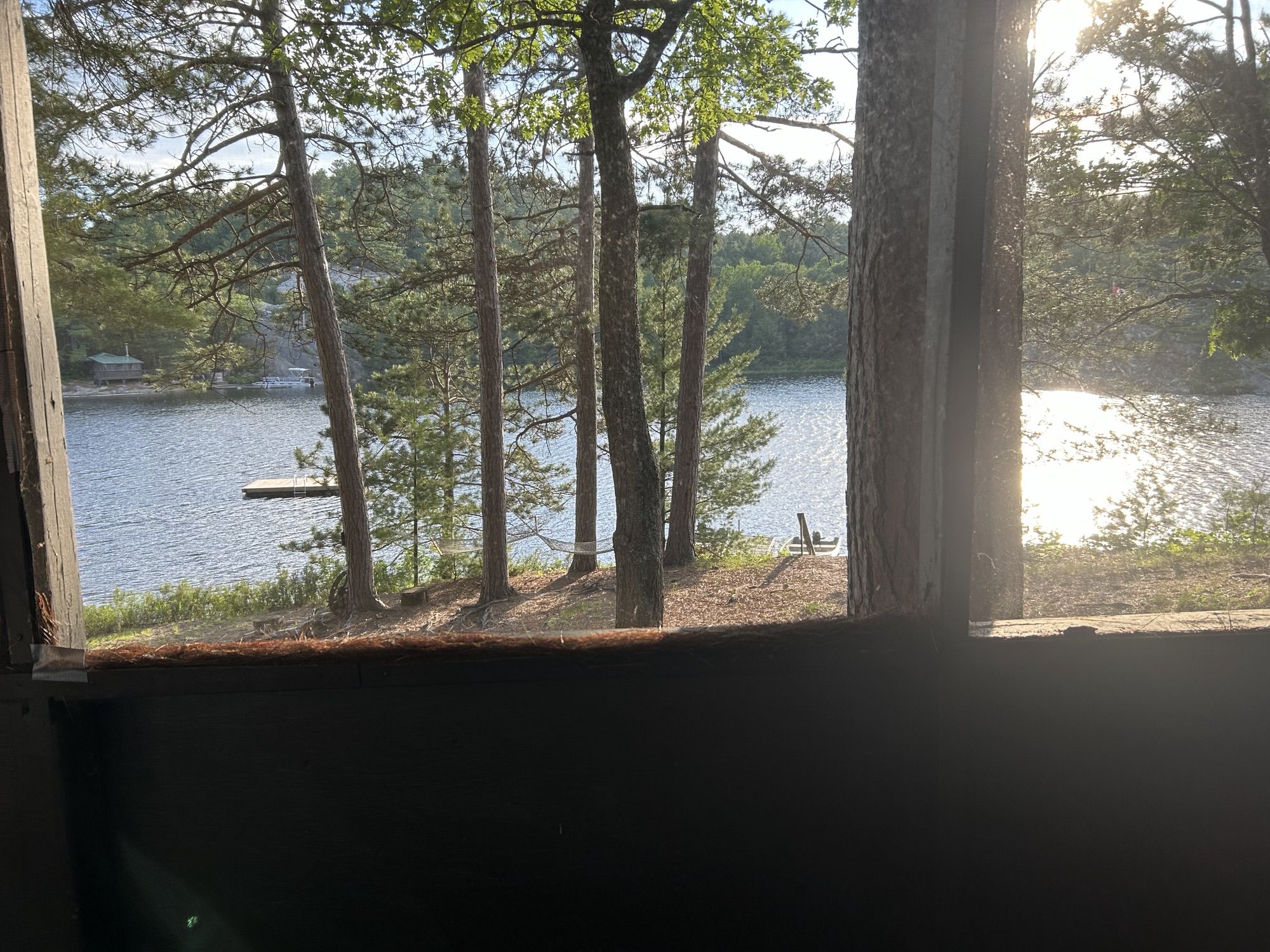
The view through the screened in porch overlooking Whitefish River a throughway to Charlton Lake, Frood Lake, and Cranberry Lake.

Still Waters 🏞️

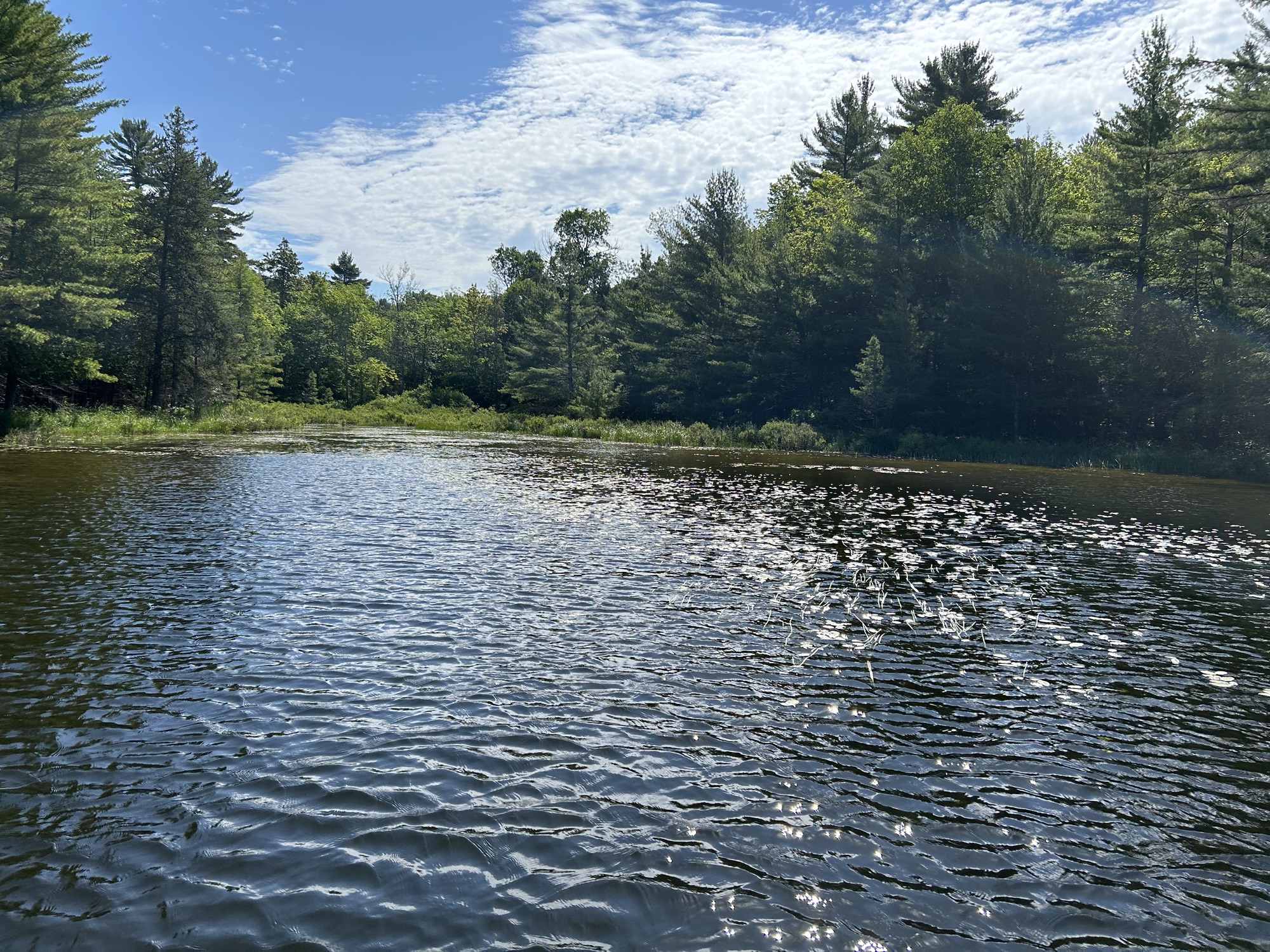
I sat observing the waters of the Whitefish River flowing toward stillness–moving from one lake to the next, but in a relaxed state of flow that most often seemed to occur in the early morning or late evening.  Occasionally, something would break the surface, and rings would begin spreading outward from the epicenter. When this would happen, I often caught myself holding my breath in anticipation until the last ring dissipated, and the water was once more placid.  Then, with the stillness restored, I resumed my own cadence of breathing slow and steady, matching the river’s pulse.

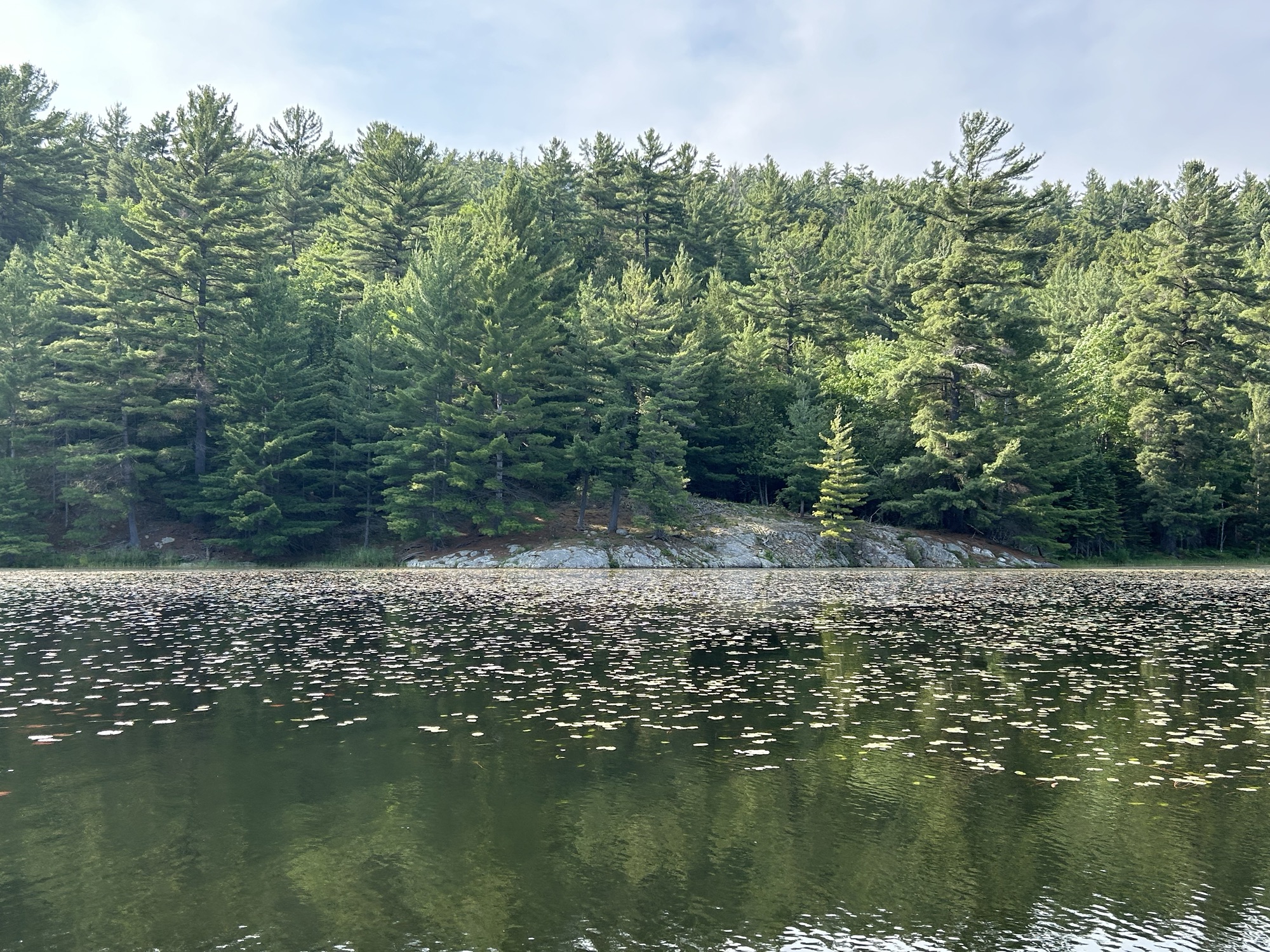
The peaceful, craggy rise of quartzite rise of the ancient La Cloche Mountains surrounding the lakes.

Lake Charlton Camp 🏕️

My husband, John, and I were staying in Charlton Lake Camp (CLC) located in Killarney Provincial Park, Willisville, Ontario. This was our second trip to CLC, situated in a natural showcase of diverse pines, surrounded by the white quartzite crests of the La Cloche Mountains and translucent, tea-stained waters of Charlton Lake, Frood Lake, and Cranberry Lake with the Whitefish River providing a throughway to the lakes. In the morning, CLC was filled with a wilderness chorus of birdsong, loon calls, bull frogs, lapping sounds of water against rocky shores, and, of course, the buzzing hum of countless varieties of insects. 

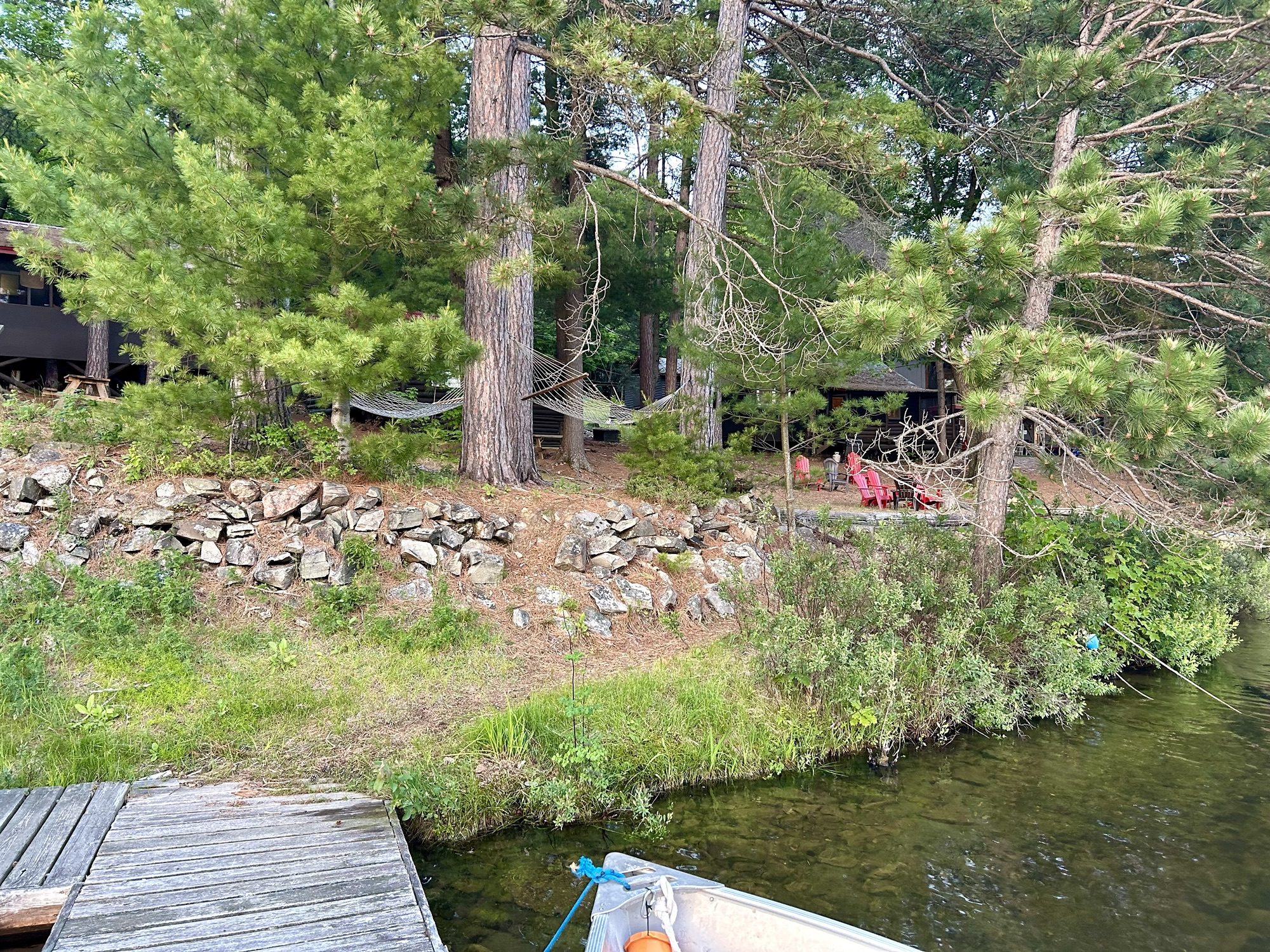
The cabin in which we stayed at Lake Charlton Camp is just beyond the steps that lead to the dock.

Settling into Quiet 🤫

Breathing in deeply, my lungs filled with the aromatic aromas of pines, damp soil, sunned rock, and a hint of morning coffee as I continued to sit and observe, communing with my surroundings. The sun would soon begin lifting above the craggy cliffs behind the cabin in which we stayed, and life would soon begin stirring with those gleaming rays. But, in that moment, hovering between the hush of night and the dawn of daybreak, there was a stillness in which my heart was soft and open–receptive to that still small voice that resides within.

Boating through Frood Lake with the La Cloche Mountains in the foreground.

Slipping into the Gap of peacefulness 😌

I once read that praying is talking to the Divine Creator; whereas, meditation is stilling the mind for the purpose of listening.  Sitting there on that screened porch on the cusp of a new day, I was reminded of that idea.  My heart, head, and soul had relaxed enough to hear the truth–to really parse the ongoing narratives that, when left unchecked, my brain tends to repeat on an endless loop. By settling into the surrounding peacefulness, I could focus on listening, and begin to see how many of those narratives were (and are) often baseless claims forged by past experiences, trauma, anxiety, negative self-talk/criticism, and even a little fear. 

Sitting, breathing calmly, and savoring CLC’s peaceful surroundings through my senses, I found I could let my mind rest easily as if the wheel of ceaseless chatter had ground to stop, or at the very least, slowed its revolution. Taking in a deep breath of the clean, wilderness air, I softened my gaze on the water and continued listening. 

Afternoon sun glistens off the calm waters of Frood Lake.

Riding the waves of emotional influence🌊

Matching my inner calmness to the stillness of the river led me to a realization. My own mind often mirrors those waters of CLC. My mind tends to be at its calmest in the early morning or at night–just before drifting off to sleep, letting go of the day’s worries.  However, once the day fully begins, I am immersed in work and various tasks with multiple decisions being made throughout the day.  As my decision making increases, my judging brain kicks into high gear.  With that continued judgment comes an inner dialogue often influenced and affected by emotions, which rise and fall throughout the day much like the water around me did during the week.

Throughout our time fishing, resting, and relaxing in CLC, I observed how the river and surrounding lakes could quickly become stirred up, rising and falling with the winds of the day, tossed about with a changing weather front, or even fill with large waves when an occasional boat sped across the waters to the farthest end of a lake. There were additional times, when for no discernable reason, the waters would suddenly ascend and descend, jostling the boat John and I were in. 

Riding out the waves of emotions can be similar to navigating a fishing boat over wave-filled waters.

Restless emotions 😬

Fishing during those moments of restless waters and winds was challenging.  The wind would take hold of a perfectly thrown cast and carry the line and lure in a completely different direction than intended. Likewise, when the waters were lifting and dipping with waves, the view beneath the waters was clouded and murky–not allowing the eye to determine if the boat was above rocks, a weed bed, a submerged tree, or any other number of possibilities. Conversely, during the moments of calm, settled waters, navigating and fishing those waters was fairly easy and what was beneath the boat was clearly visible.  

Looking out at the peaceful waters of Whitefish River through the screened porch.

The influence of a RAcing Mind 🤯

The riverview before me, in that early morning hour, was emblematic not only of ideal fishing waters, but also a peaceful state of mind.  Unfortunately, our modern world tends to create and drive the opposite effect–a constant flurry of stirred-up waters–our minds fidgety and/or frantic, racing from one thought to another, moving through agendas of busyness, entertainment, and avoidance. Therefore, if we don’t set aside time to allow our minds an opportunity to cease its chatter and rest easy, how can we ever feel calm and think clearly?

Settle into into the stillness.

The importance of intentional Quiet 🤫

Our inner dialogue is often affected by the changing weather of our emotions.  Those emotions vacillate and shift with each decision we make and with each event we encounter.  And while I fully admit that mind chatter, and all of the emotions that come with it, cannot necessarily be avoided, in similar manner to the weather fronts we experienced during my time at CLC, our emotions can vastly change within the course of a day, much less a week. Therefore, deliberately providing pockets of time for stillness allows us to detach from the emotional narratives, and instead, fosters listening to that still, small voice of knowing, which allows us to, well, “fish” for the truth.

Listen for the whisper of our Creator, the great I AM.

LeT us Listen for the whisper 👂

Ralph Waldo Emerson once penned, “Let us be silent, that we may hear the whisper of God.” What a powerful reminder of the importance of settling the mind, like the still waters that were before me on that morning at Charlton Lake Camp. The type of quiet we choose can be a formal meditation/reflection, but it could also be achieved through walking or other forms of exercise, tending to your flowers/plants, or simply sitting on the porch sipping coffee or tea and listening to the birds. It really doesn’t matter as long as it is an intentional moment set aside to calm those mental waters of ceaselessly, flowing chatter. Prioritizing time for quiet reflection or meditation, however you define it, allows the flow of our hearts and minds to settle, soften, and encounter the “whisper of God.” 

Willisville, Ontario

Mindful Breathing for Inner Peace: Embracing the Wisdom of Native American Tradition

“We are what our thoughts have made us; so take care about what you think. Words are secondary. Thoughts live; they travel far.”–Swami Vivekananda 

Author note: A reader requested I write another meditation.  I hope this benefits not only that reader, but anyone else who may be in need of a quiet mind, even if only for a few moments.  

Photo by Rachel Claire on Pexels.com

Wakeful Worries 😏

As I rose early on a recent morning, thoughts were bouncing around on the trampoline of my mind.  I had a to-do list that was growing and several creative ideas sprouting.  Overriding all of this, however, were stresses and worries springing about like jackrabbits in the desert. In fact, those negative thoughts, I realized with a sudden clarity, had been vying for residency in my mind for several weeks to the point they were disrupting my sleep.

Feeling the inner war, I opened a window, sat down in a chair near it–cup of coffee in hand–and welcomed nature’s morning muzak.  I took in a deep inhale, and slowly let it out. 

Inhaling, I felt the expanse of my ribs. Exhaling, I sensed bits of tension releasing. Focusing on my breath, I gently closed my eyes in an attempt to relax my body and release the mind noise.  Inhale, soften. Exhale, dissolve.

Photo by Anete Lusina on Pexels.com

Focused Breathing 😮‍💨

I am unsure how long I remained in this focused state of breathing, but soon, my mind drifted–as it tends to do–back into thoughts.  Thoughts of past events, worries of future events, and pressing concerns for the day ahead kept popping up. I had to keep redirecting my mind back to my breath and gently pushed aside those niggling thoughts.  It wasn’t easy.  Like a curious toddler trying to tempt fate, my mind kept circling back to those all-consuming worries and concerns.  

Inhale, redirect the mind back to the breath.  Exhale.  Let go of the negative thoughts jostling for attention. 

As my mind engaged in this game of ping-pong, I was reminded of a story I heard years ago during my yoga teacher training.  

Inhale, notice how easily the body can breathe.  Exhale, notice how naturally the body releases. 

Photo by Shelby Waltz on Pexels.com

The Parable of the two Wolves 🐺

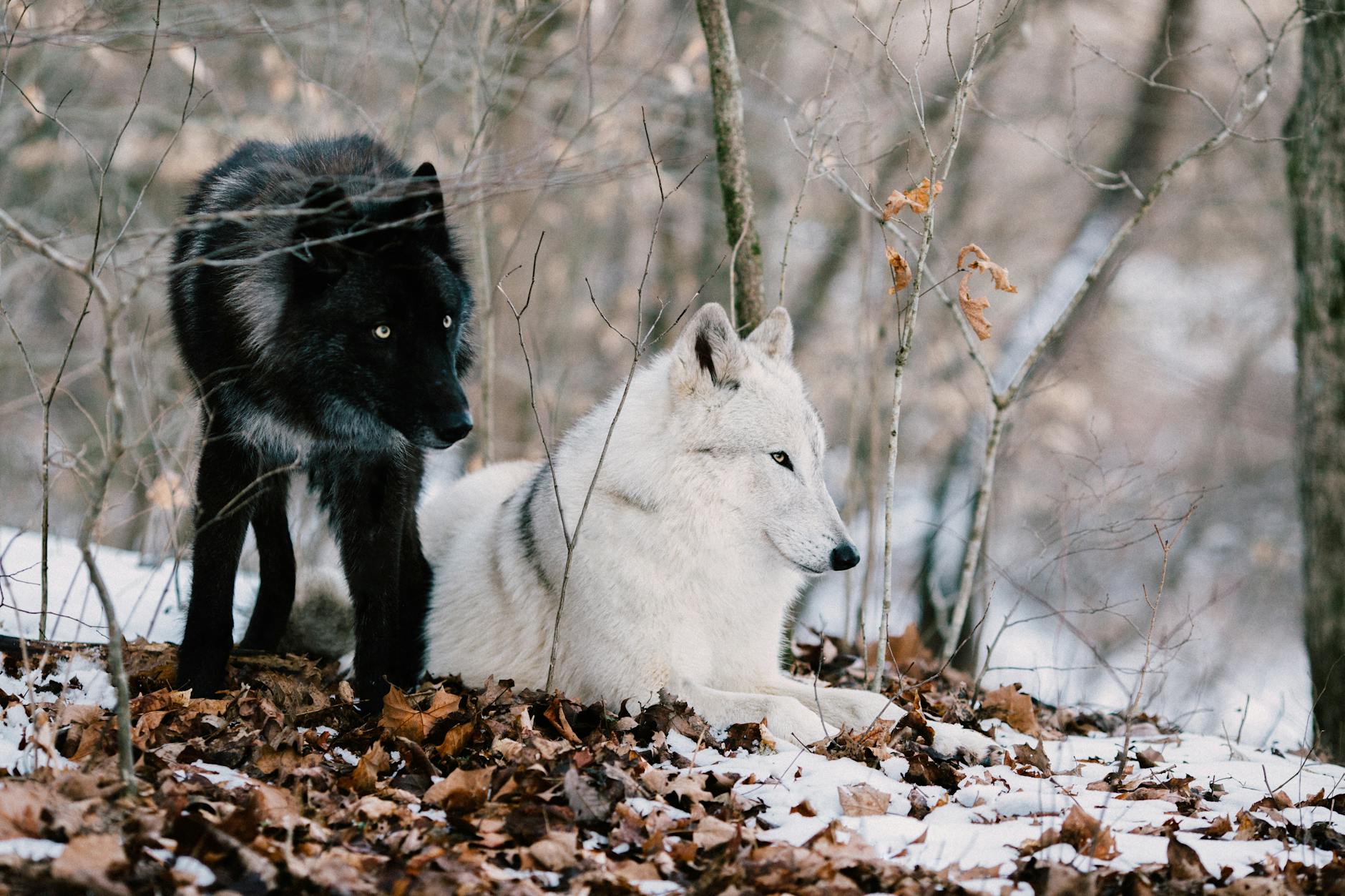
The story, as I recall, is based on a Native American parable.  An old tribal leader was teaching his grandson about life. The grandfather tells his grandson that there is a fight going on inside of him. He describes it as a terrible fight between two wolves.  

Inhale, notice the ease of breath.

One wolf is evil, the story goes. He is filled with anger, envy, superiority, regret, greed, arrogance, self-pity, guilt, resentment, inferiority, lies, false-pride, and ego.  

Exhale, let go more.

The other wolf is good. He is filled with joy, peace, love, hope, serenity, humility, kindness, benevolence, empathy, generosity, truth, and compassion.  

Inhale, lungs fill.

The grandson thought about it for a minute, and then asked his grandfather, “Which wolf will win?” 

Exhale, lungs release.

The old tribal leader smiled and replied, “The wolf you feed will win.”

Inhale truth; exhale falsities. 

Photo by Polina Tankilevitch on Pexels.com

our Thoughts can be shackling ⛓️

I sat with the story, returning to the ebb and flow of my breath. The nourishment of the inhale continued to fill me with a sense of peace.  The long, slow exhale showered the soul, washing away worries, fears, and anxieties.

Many of us have experienced moments when we feel shackled by memories and traumas of past events. For some of us, those past occurrences created deeply-rooted fears, planted in our minds like cancerous tumors. Those seeds of fear from long-ago have a tendency to create clouds of self-doubt, blocking rays of hope and joy that can be found in the present moment.

Inhale, strength.  Exhale, dread.

However, there are times when all the present can offer you is a stem full of thorny events as if the sweet blossoms of life have been stolen. Illness, disease, work-day stressors, financial struggles, and numerous other difficulties prickle and needle our days with seemingly no balm for the soul. At these times, it can be easy to dip into the waters of sorrow, the woe-is-me story.

Inhale, perseverance. Exhale, detachment from the story.

Photo by Gary Barnes on Pexels.com

mindful connections 😌

However, even when we are surrounded by the chaos of life, there is a place of peace and ease. All it takes is a moment to reconnect with our breath, the river of calm and life-giving force within us. By giving up the struggle for one moment, we can let go of the bubbles of tension held within our depths, and allow them to rise and release with each exhale.  With each inhalation, we strengthen our connection to our True Source, our Infinite Creator.  With each exhalation, we can surrender our illusion of control and trust that all is as it should be.  

Inhale, fortitude. Exhale, liberate the mind.

By watching the ebb and flow of each inhale and exhale, we can lay down our burdens of our fear, doubt, and pain for the time being, and allow the Universe to carry the load for us. We can inhale the peace, and with the exhale, perceive the lightness of nothing is weighing us down in the moment. We can allow ourselves to feel the Divine creations that we are, and have faith in the process.  All is well in this moment as we breathe.

Inhale, trust.  Exhale, believe.

Photo by Arthur Brognoli on Pexels.com

breathe. connect. have faith. 😌

  In the same way that we trust our lungs to breathe for us–even when we are not focused on them–so too must we put our trust in our Creator and the flow of our life.  It doesn’t mean all will be perfect, for life is not simple. However, when life, and/or those around you, choose to feed the bad wolf, take a breath, and remind yourself that you have the power to choose to feed the good wolf, simply by pausing and taking a few deep breaths. 

Inhale, faith. Exhale, peace. 

One breath in, one breath out for peace and calm

 “We need to find God, and that cannot be found in noise and restlessness. God is a friend of silence. See how nature–trees, flowers, grass grows in silence . . . We need silence to be able to touch souls.” –Mother Teresa

Photo by John-Mark Smith on Pexels.com

The Miracle of EArly Morning 🌅

One of my favorite times of day is the stillness of the early morning.  Don’t get me wrong, depending upon how early I have to get up, it can be a chore to drag myself out of bed.  However, once I am up, enveloped by the hum of the house and the ambiance of the celebratory, daybreak birdsong, I feel a peace begin to zip up around me like my favorite hooded jacket. 

Now that daylight arrives earlier, it is especially delightful on the weekends to sit at my desk, steaming mug of coffee beside the laptop, and gaze out the open window as the birds continue their lilting praise of the arrival of daybreak. Sometimes I see the contrails from a jet writing across the sky.  Other times I observe the rustle of trees or my neighbor’s cat stalking some unseen prey. Regardless of what I notice, I take a deep breath, and invite the silence within.

Gazing out into the trees and grass of my backyard, there is a peacefulness of the Divine Presence.  Observing the continual miracle of seasonal change, I am bearing witness to the continuity, strength, and resiliency of nature.  With one breath in and one breath out, I can connect to Divine life force within, silently supplying me with continued strength.

Photo by Engin Akyurt on Pexels.com

Welcome the Silence 🤲

I continue to welcome the silence, and I allow it to wash over me, cleansing the stresses and worries of the night that interrupted my sleep.  I ask God to hold space for me within the silence as my soul settles into place. One breath in. One breath out. Each breath, rich in the silence, nourishing my peace of mind, if only for a few minutes.

Momentarily, I become part of the silence and my brain softens into the quiet, temporarily liberated from its continuous lists of things to do, notice, and concerns. One breath in. One breath out. I feel the silence breathing peace through me, filling my cells. I ask for the peace to live through me and to emanate from my actions, knowing even then, I will still stumble into mistakes.

The early morning silence centers and anchors me to the importance of being more mindful of the here and now.  One breath in. One breath out. I allow the silence to cultivate peace within that moment, and I ask that it remain with me as I move through my day, understanding that disturbances of my inner peace will also most likely occur throughout the day. I further pray the silence will infuse and imbue my day with moments of peace I can offer others, if only through the simple act of a smile or kind word.

Photo by Csankovszki Tibor on Pexels.com

Whispers of Silent Inspiration 🙏

If I am fortunate, the silence will sometimes whisper inspiration when I do encounter stress in a later moment. It only requires that I momentarily bring awareness to my breath, and once more, I can connect to the True Source filling my lungs, giving me life. One breath in.  One breath out. 

When the silent morning meditation begins to wind down, I become more aware of my surroundings and my own physical body.  I look for those poetic plane contrails, but they have usually vaporized, reminding me of the impermanence of struggles, strife, and life in general.  One breath in. One breath out. My words, my thoughts, my deeds are like those contrails, here, in this moment, but eventually given to the heavens.

Bringing awareness to the moment, I will feel the tendrils of morning silence loosening its grip, and I mourn briefly that I must leave its embrace. There are more words to be written, more students that need taught, and more people that need loved.  One breath in. One breath out. I remind myself that I can always come back to the comforting peace of the silence of my mind with one moment of conscious breathing. 

Photo by Dom J on Pexels.com

The antidote to noise and Chatter 🧘

It seems to me that we currently live in a world where many of us have forgotten, or even fear, silence.  Chatter and noise seem to flow in an endless supply, alongside daily routines filled with responsibilities and heaping portions of distractions. However, by seeking the solace of silence and focusing on your breath, if even for a few moments, we may discover our heart rate slows, racing thoughts may decrease, and the body may relax a bit.  One breath in.  One breath out. 

The older I get, the more my appreciation and need for silence grows.  If we listen too long to the noise of the media, news, traffic, screens, chatter, and so on, our stress increases, our worry increases, and our anxiety increases.  We forget that silence soothes our souls and brings us back to the presence of God within and around us. All it takes is one breath in and one breath out. 

Get More Grounded: The Benefits and Lesson of Tree Pose

“Be like a tree. Stay grounded. Connect with your roots.  Turn over a new leaf. Bend before you break.  Enjoy your unique natural beauty. Keep growing.”–Joanne Raptis

Photo by SHVETS production on Pexels.com

The magic of Tree Pose 🌳

“Trees sway; get more grounded,” my husband chimed along with the yoga instructor on the DVD as we attempted tree pose on a Monday morning before work, the classic yoga balancing pose that requires standing on one leg. 

I appreciate tree pose for many reasons. It strengthens feet, spine, ankles, legs, and core.  Further, it opens the hip area, stretches the inner thigh and groin muscles.  Plus, it can improve one’s concentration and focus while simultaneously improving alignment of spine and posture.  Most of all, it is a pose of balance, which can help in a multitude of ways. 

Symbolically, tree pose serves up several lessons. However, one of the more literal lessons of tree pose is that of remaining in the present moment.  It’s nearly impossible to balance in tree pose and think into the future or reflect on the past because you end up falling out of the pose. I was reminded of those lessons this past Tuesday, or as I have come to know it as, “Twister (or Tornado) Tuesday.” 

Photo by Ralph W. lambrecht on Pexels.com

Shelter in Place 🌪️

As a veteran educator, I have experienced a wide-array of events, including those that require shelter-in-place. In fact, I can still recall the first time I experienced shelter-in-place with students 30+ years ago.  I was teaching in a mobile unit at a great distance from the main brick and mortar school building. The students under my care ranged from 5-12 years of age, and they had been identified as “severe behavior handicapped.”  

There were twelve students, ten boys and two girls.  Since this was the early 1990s, computers and cell phones were not widely available in the classroom setting. This classroom had an intercom type “phone” that only connected from the school office to the classroom.  It was through this “phone” that I received the message that the entire school was sheltering in place in the hallways.  The school received a call that a tornado had touched down in another part of the county and was heading our way. I was to gather my twelve, not-always-so-compliant students, and move them to the main building as quickly as possible.

By the time I received the “call,” a heavy metal concert of rain and wind had already begun, drumming and shaking the metal building rhymically with tantruming, angry torrents of sideways rain.  Quickly, the paraprofessionals and I helped the students into their school-issued red rain parkas, and that is when the resistance began.

“I am not going out in that rain.”

“I don’t like getting wet.”

“No, I won’t!”

“I’m scared!”

Whether it was the determined, I-am-not-kidding look in my eyes, Divine intervention, or a combination of both, the paraprofessionals and I miraculously gathered all of them in a line.  Holding hands as one unit, we began fighting our way through the class door that kept trying to swallow us back inside due to the enraged winds. Once outside, raindrops pelted any exposed skin, including the students’ face and heads as their hoods were immediately blown off.  We fought our way to the safety of the school while the passion of the rain and winds seemed to increase and determinedly tried to shove us backwards. 

By the time we made it to the school, none of us were dry as the pernicious storm found a way to penetrate even the sturdiest of rain coats.  Quickly, we hustled the students to the primary wing of the school, finding a piece of wall away from windows where they could drop to their knees and cover their heads, rivulets of water streaming over all of us, while adrenalin continued to accelerate my heart rate.

Photo by monicore on Pexels.com

Twister Tuesday 🪟

This memory bolted through my mind on “Twister Tuesday” as my classroom, and the surrounding classrooms, were filled with the strident sound of the emergency broadcast system sending an urgent message to seek shelter immediately. Our middle school classrooms are located on the top floor of our school building, and the entire middle school was directed to make their way to the first floor as quickly as possible. In order to do that, we had to run down three flights of stairs in a glass-lined stairwell. As we headed down, the irate storm quickly made its presence known.  Like Lyssa, a figure in Greek mythology who is said to drive others mad, the storm insanely clambered and clawed at the windows demanding to get inside, but meeting a wall of resistance.

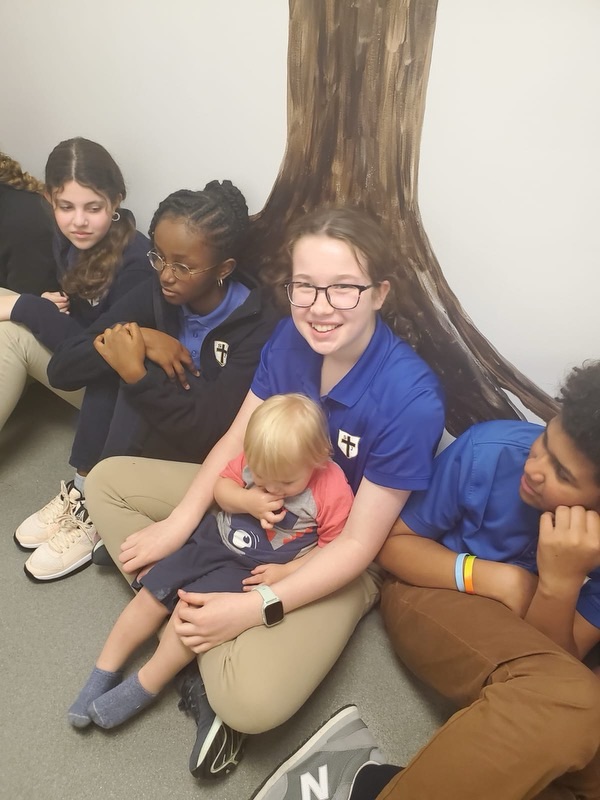
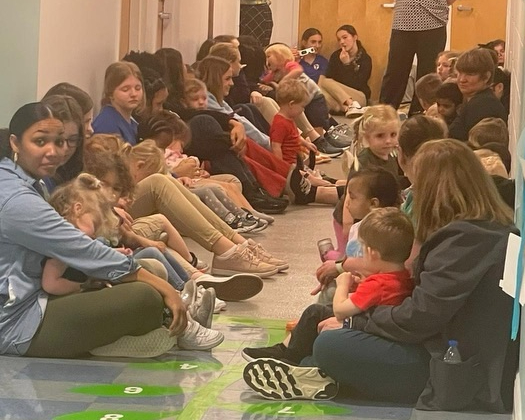
Once downstairs, it was hot, crowded, and overripe with the odor of sweaty, nervous bodies as we sheltered in place away from doors and windows alongside first and second graders as well as preschoolers from the two- and three- year old classes. At times, there were crescendos of anxious voices of students–or, in the case of some of the little ones–crying. During other moments, there were a few older students who experienced panic attacks, but there were many more who remained calm.  There were even those selfless students who chose to hold, cuddle, and comfort younger preschoolers, focusing on the needs of others, rather than themselves.

Middle school students caring for the needs of preschoolers during a shelter in place scenario.

And if you Fall . . . Pick yourself 🆙

As I walked among the students, checking on them, assuring some, answering questions of others, my mind echoed with the words from the previous day, “Trees sway; get more grounded.”  And so, I ground down into my faith.  If the students and staff of my previous school survived that former storm way back in the 90s, surely we would survive this one too.  My emotions could sway like the tree on the inside, but the more I swayed, the more I reminded myself to ground down and try to remain balanced in the present moment in order to better focus on those around me.  

It wasn’t easy, and I wasn’t perfect.  But here’s the thing about tree pose. It’s a great way to practice falling. If you fall out of tree pose, you pick yourself up, and try to return to the pose once more.  

Like my beloved tree-pose, Twister Tuesday provided another stretch and realignment personally and professionally as well as to my faith. It challenged my focus and concentration in order to remain balanced.  And when I “fell,” forgetting to remain focused on the present moment, all I had to do was “pick myself up” and try to return to it once more. Most of all, that Tuesday served as a powerful reminder of the power of the True Source dwelling within and around us, always available to keep us grounded. 

Another middle school student getting grounded in the present moment of another’s need.

Do you disturb the peace, or perpetuate it?

  “If in our daily life we can smile, if we can be peaceful and happy, not only we, but everyone will profit from it. This is the most basic kind of peace work.”–Thich Nhat Hanh

The tail twitches and crouching ensues. Hips raised, ears flattened, the tail twitches more rapidly.

“LJ, stop!”

He remains immobile and continues his focus.

“LJAAAY,” said with slow emphasis on the A-sound.

A look is tossed over his lowered shoulders, signaling he doesn’t feel like listening.

Hand reaches for the spray bottle, and John, my husband, walks towards LJ, trigger aimed.  That is all it took. LJ, our solidly black cat, takes off in an attempt to avoid being squirted, but he’s not to be conquered.  Not yet. 

He circles back around the dining room table and reenters the same room through another entry point as if we can not see him.  Meanwhile, the desire of his pouncing antics, Tippi (Tail), our 14 year old gray cat, with the exceptions of tuxedo white on her chest and tufts of white on the tips of her paws and tail, sits peacefully undisturbed.  The only sign that she is aware of his shenagings is the very slow whishing of her tail along the top of the carpet.

LJ prepares to pounce once more; however, John rapidly squirts water in LJ’s direction.  Although John isn’t trying to precisely hit LJ, the sound and sight of the water sends LJ scuttingly out of the room.

Tippi looks towards where the water missed its target, turns her head back to its original position as her body sighs towards the floor in a perfect cat loaf.  Her tail encircles her body once more.

Throughout LJ’s attack, Tippi remained peaceful, never hissing or spewing.  While her tail signaled her awareness, she did not otherwise bring attention to LJ’s negativity.  Instead, she chose to remain at peace with it.  Vigilant, but non-reactive.  

John and I have watched this play out repeatedly, yet no matter how many times LJ attempts to attack Tippi Tail, she rarely responds out of anger. To be sure, Tippi will occasionally respond if he corners her. Mostly, though, she remains peaceful and at ease.  

LJ is a bit younger than Tippi and has not moved from the self-absorbed stage of life.  He wants to be the center of attention on his terms.  If the humans in his home, family members or visitors, aren’t paying attention to him, he finds ways to draw attention to himself.

For example, if Tippi decides to sit with one of us, due to her arthritis, we find ways to offer her assistance to climb up beside us, such as slightly lowering the reclining portion of a chair or couch.  As she tries to lift herself up to position, LJ will haughtily cross the room and attempt to “beat” her to the desired person.  If we move a step stool near the bay window, in order to assist Tippi’s assent to the cat beds in the window, LJ will try to block her attempts in order to claim the bay window area for himself.

Nonetheless, Tippi Tail finds ways to persist with grace and equanimity.  Her peace remains (mostly) unflappable.  Neither does she appear to hate LJ, nor does she appear to be jealous of his presence.  Instead, she seems to understand with a sense of compassion and patience that he can’t help what is inside him–his tendencies to compete, invade, dominate and exploit perceived weakness.  

Due to her serene perseverance, there reigns an unspoken peace between the two cats . . . most moments.  The more peaceful and tolerant Tippi becomes, the more LJ is learning to become that way.  It has taken years, but there are times I will wake up in the morning to find both cats sleeping at the foot of the bed–not necessarily near each other–but in the same approximate area. Furthermore, it is not unusual during cold days to find both of them soaking up the morning sun in the same room and within the same area, albeit, not touching each other.  

Sometimes, upon waking, I am surprised to discover, after I turn on the bedroom lamp, that both LJ and Tippi Tail had been peacefully sleeping at the foot of the bed.

Thich Nhat Hanh once wrote that, “When another person makes you suffer, it is because he suffers deeply within himself, and his suffering is spilling over.” When LJ sees Tippi with one of us, he suffers jealousy because he perceives that she is getting all the attention and love.  If he sees that Tippi wants to be in one of the cat beds in the bay window, he suffers fear because he is afraid there isn’t enough secure space for him in the sunlight to cozy for a nap.  

While they both lived their early lives as stray cats, it is possible that something happened in LJ’s past that causes him to remain stunted and insecure.  Then, again, due to the fact, Tippi is older, and lived with us longer; perhaps, she feels solidly secure with her position in our family.  It could also be that she remembers a time when she was the younger cat in the house, competitively trying to exploit the weakness of one of our former cats, in order to gain our attention.  Possibly, she has simply outgrown those impulsive years. 

Whatever the reason(s), Tippi seems to understand that within LJ are potential seeds of love, compassion, playfulness and peace.  However, she also appears to sense that LJ is dominated by seeds of willfulness, anger, fear, and insecurity.  Due to age, circumstances, and/or experience, she is mindful of these seeds both within herself and within LJ.  Therefore, it often appears that she uses this insight to mindfully choose her actions–modeling peaceful behaviors, and only fighting back in order to keep from getting hurt when he corners her.  

Of course, I have personified my cats in order to make a point. To live in peace and harmony with others, we must recognize that all humans have similar needs/desires:  food, water and shelter, safety, esteem/value, love/belonging and so forth.  There is often fear and/or a feeling of lack when humans sense one of these is missing.  Additionally, everyone has the potential to develop and foster seeds of insight, self-awareness, and self-control, but not everyone focuses on developing these, much less developing them at similar rates.  

As the story of Tippi and LJ illustrates, it is important to be aware of our own insecurities, fears, and impulses in order to exercise self-control.  Recognizing our own proclivities with compassion and understanding, allows us to offer that same consideration and empathy for others.  

While this is never easy, and it takes practice, by learning to be less-reactive and modeling more appropriate ways of speaking, engaging, and responding to others, the more we can reduce conflict.  Of course, this is not to say we passively agree or accept all behavior and actions; rather, it is important to recognize that not every word, action, and deed with which we disagree needs a response.  Furthermore, if a response is required, how much more productive and beneficial they can be when given with considered insight/thought, self-control, and discipline   

Wouldn’t the world be a better place if we could all learn to do what Tippi does with LJ– pursue patience, tolerance, and think before acting.  

The more Tippi practices patience and tolerance with him, the more LJ is becoming more at peace with her.

Like a Prayer

“Why must people kneel down to pray? If I really wanted to pray I’ll tell you what I’d do. I’d go out into a great big field all alone or in the deep, deep woods and I’d look up into the sky—up—up—up—into that lovely blue sky that looks as if there was no end to its blueness. And then I’d just feel a prayer.”–L. M. Montgomery, Anne of the Green Gables

“Ms. Hill, don’t you like doing healthy stuff like hiking and running?”

The 6th grader looked at me with sincerity written across his face.  He was in my homeroom, the group of students with whom I start and end the school day.  By this point in the school year, I have come to know most of the students in this group fairly well, and this particular young man, in spite of his energetic youthfulness, has an uncommonly thoughtful side.  

The group of boys with whom he was talking and joking around at the end of the day, all turned to look at me.  I affirmed that I did indeed like both of those activities, but that I also enjoyed walking or simply being outside equally as much.

Nodding, seemingly with understanding, the same young man further inquired, prodding as to why I liked being outside.  After pausing to gather my thoughts, I explained that it made me feel happy, at peace, and connected to God. 

“So it’s kinda like a prayer, huh?” 

Out of the mouths of babes, or in this case, a 6th grader . . . 

Then, in typical middle-school fashion, the young man’s conversation quickly pivoted back to his buddies, so I returned to my routine end-of-the day tasks.  However, his words remained with me.  In fact, his words have often returned to me on a number of occasions for the past several weeks, especially during moments when I am out-of-doors. 

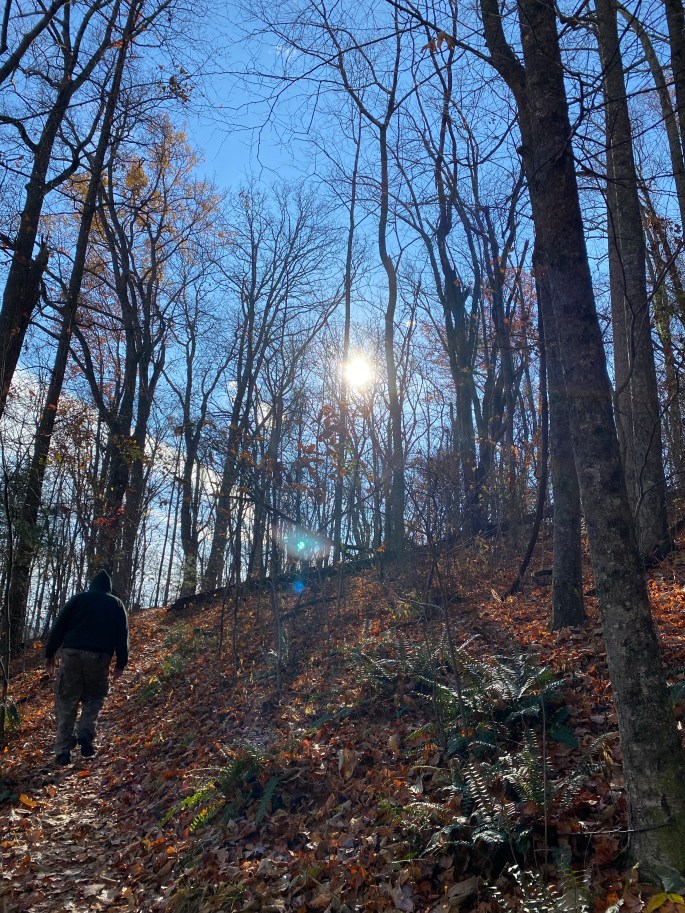
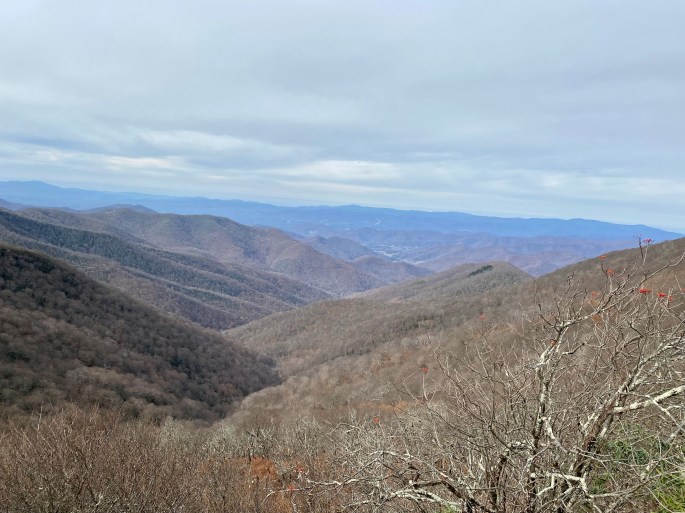
Scanning through photos of my recent trip to the Blueridge Parkway as well as past out-of-doors experiences, it is clearly evident from the large number of nature-centric images that I relish time spent outside.  From images of wispy cloud billows to leaf-scattered earthen trails; from layers of cerulean blue mountainous peaks to emerald green moss dressing up a boulder, and a great many variations in between, I have collected hundreds of images of Mother Earth. Nonetheless, my fondness of nature is so much more than taking photographs.

Time spent outside is like pouring soothing salve over my weathered soul.  One deep inhalation of fresh air, and I can instantly feel more calm and grounded.  In fact, I have an overall sense of vigor, not just in my body, but in my mind and soul when I am outside in the natural world.  It is as if my whole being comes alive.  

Therefore, it was no surprise for me to learn that numerous research bodies and scientific communities corroborate my personal experiences with nature.  As I scanned through several research pieces published by well-respected groups such as the American Psychological Association, Yale School of  the Environment, Harvard Health, and Scientific Reports, to name a few, there were some variations as to what defines “nature” and how long one needs to spend time in nature to reap the benefits; however, all pointed to the fact that spending time out-of-doors is overall beneficial to good health and mental well being.  Some of the commonly cited perks of spending time in nature include: improved mood, increased cognitive and memory function, reduced stress levels, improved mental health, boosted immune system, and overall reduction of blood pressure and heart rates.  

While I whole-heartedly appreciate and welcome ALL of those benefits, it has been my experience that there are also other, more ethereal, benefits of spending time in nature.  I find that when I bear witness to the brilliant rise of the sun, gaze upward as sunlight dapples through a canopy of leafy green, or catch sight of sunbeams streaming across dark silhouettes of towering tree trunks, naked in their winter respite, I feel a sense of awe and wonder.  The wide array of colors, lines, shapes, sizes, and the symmetry rivals great artists of our time–our world is a marvel!

The more I observe nature, the more curious and inquisitive I become.  How did all of this happen?  How do I, a person so small and insignificant in the face of all this wonder, fit into the grand scheme of the great I AM?  How am I to comprehend Divine Providence and this wondrous creation called earth?  I have no answers, nor do I feel a need for answers.  Rather I am in a state of being–being appreciative and feeling adoration for the great playground that is nature. After all, we are called human beings.

Francis Bacon, often cited as the father of science and ironically attributed to have invented the essay form, is quoted as once stating that God wrote two books: The Scripture and “a second book called creation.”  Time spent with the “second book” offers me tangible, first hand reminders of the greatness of our Creator.  Standing in the presence of a lofty range of mountains, floating across a lakeshore rippling with life, strolling through the rhythmical edge of ocean tide waters, or simply jogging alongside streams and trees on an earthen park trail, my heart and soul are at ease.  There are no timelines, no demands for my attention, no to-do lists, or looming deadlines.  Instead, there is a softness that envelops my soul, a well-worn quilt of comfort, that is available to all.

I suppose my student said it best after all. Spending time in the majesty of nature opens my heart and mind, allowing me to feel as if I have been gathered into an embrace by a loved one happy to see me once more as God’s peace settles over me.  My spirit is more serene, and I feel as if I am part of something larger than myself.  Something so large, I cannot fathom it, but it is something like a prayer.  

Becoming

“To be what we are, and to become what we are capable of becoming, is the only end of life.”–Robert Louis Stevenson

Standing on the crest of a small hill, my senses were heightened.  I could feel the weight and seemingly taste the moisture in the air. Scents of earth, rain, and floral encompassed me.  Dewy variations of pink, red, and coral stood out in contrast to the overcast dawn. Meanwhile, the unmistakable melody of creekwater rushing over rock, bed, and banks provided additional ambiance to the unfolding morning. There could be no mistaking it, this was a brief interlude before the showers once more resumed.

Down the hill I trotted, past the pristine rows of roses and on towards my companion for the next hour or so, Four Pole Creek, or “Four,” as I have come to think of it.  

“The more I run, the more I want to run, and the more I live a life conditioned and influenced and fashioned by running.  And the more I run, the more I am certain I am heading for my real goal:  to become the person I am.”–George Sheehan

Hello Friend.  My heavens, but you are swollen today, full as a tick bug, as my Papaw used to say, from the feast of overnight rain.  It’s good to see you looking lively today.  Your rhythmic song will be a welcome distraction from the noise in my mind.  

You see, a stunning new realization has recently taken root in my mind.  It whispers conspiratorially to me that I have reached a point in my life in which the years ahead are more likely to be less than the years I have lived.  What am I to do with this information, I ask you?  It is such a staggering revelation.

What’s more, my aqueous friend, the image reflected in my bathroom mirror no longer matches the image in my head.  There are these white hairs at my left temple and even more sprinkled throughout the parting of my hair.  Likewise, there are lines, especially when I smile, that run from the top of my cheekbone down towards my jaw line!   Tiny versions of those lines romp across the top of my lip, corners of my eyes, and all along my forehead.  How am I to be with this?

It seems I am not the only one changing.  I keep running across pictures from previous years in which family and friends look different.  They look incredibly young in those pictures–like unfledged, inexperienced youth.  I don’t recall that image.  In my mind, they are ever the responsible, mature, and wise people who never age, but remain frozen in time–never too young or old. 

Oh, and Four, there are all of these nagging aches and pains.  They niggle me awake during the night or flare up in the middle of work.  Sometimes, I down right hurt all over, and I can’t determine the cause.  However, I can tough out these minor hurts.  I can.  It’s the suffering of my loved ones that trouble me more.

I see my loved ones injured, battle-scarred, aging, and/or struggling.  You see, I want to help, to make them better, to help them feel whole again.  Even more than their ailing physical beings, I want to offer peace to the emotional wars waging within their minds and hearts.  I try.  I do try to help in small ways, but I am not a doctor–I don’t even play one on TV.  Thus, at times, I feel limited in what I can do to ease their burdens, pains, and sorrows.  

Still, it encourages me to see you full of vitality.  For a couple of weeks, you have been waning.  Your shallow flow lacked its usual energy and zip.  It is good to see your waters revived once more.

By the way, did you take care of the terrapin that I sent your way recently?  It was headed away from the safety of boundaries of your banks towards the traffic rolling alongside you.  I picked it up, even though it seemed offended by my action, and placed it carefully within your borders.  Hopefully, you were able to redirect its journey to safer ground.

As I was taking this picture, a couple days later, I was able to catch this image of a walnut falling into the water from the tree above.

Back to my original point, Four.  Have you any thoughts, ideas, or insight you can offer?  It seems as if your soundscape is whispering commentary.  Perhaps, if I quiet my head, I will hear it. 

“Life is a lively process of becoming.”–Douglas MacArthur

Four, I can’t help but notice that you have more riffles, rapids, and runs today. It’s nature’s way of breathing oxygen into your waters.  In return, your waters can give support to the life in, below, and around you.  

Earlier in the week, your waters were different.  They slowly glided from one pool to another. Of course, it was quite hot outside.  I couldn’t help but laugh at the number of neighborhood dogs splashing around or sitting in the cool shallows of those pools.  You remain ever the friend to the creatures in need, no matter levels and speed of your waters. 

 I have to ask though, do you ever hurt? Do pollutants irritate you?  What about those pesky people trying to reconfigure earth around you in order to build in the name of progress? Does that cause you pain as the drainage of rainwater and groundwater shift, ultimately influencing the levels and speed of your flow?  Do you mourn for your former self or for the forested neighbors that must have once lined your banks?  Regardless of those things for which you cannot control, it seems to me that you keep going, keep giving, keep supporting life to those in need of water.

Your waters are gathered from different sources. There are times, like today, when your waters are swift, becoming deep and darkened with the mud of debris, rocks, and earth.  Other times, like this past week, your waters are nearly still as you become shallow and more clear.  No matter what you are becoming, though, Dear Four, you remain ever Four Pole Creek, part of the Ohio River Watershed that feeds into the grand Mississippi River, and empties into the Gulf of Mexico flowing into the Atlantic Ocean.  Along the way, some of your water is evaporated into the air, cooled, condensed, and eventually returned to the earth–molecule by sweet molecule–a single droplet that is all part of the larger body of creation.

Four, in spite of your continuous changes, from the levels of your water, to the shapes you take; from the color of your waters, to the speed at which it flows; and from the lives that your waters support, to the beauty you offer the landscape, you are constantly evolving, ever changing, and continuously becoming.  Yet, you remain a creek, one creek in the great cycle of water.

“By being yourself, you put something wonderful into this world that was not there before.”–Edwin Elliot

Like you, Four, I am changing, and so is the life around me.  Some of my loved ones have flowed on to their heavenly shores, while many others remain bound to the earthly waters of life.  Like you, no matter my shape, my hurts, the gray at my temples, the lines of my face, or the pace at which I move . . . I am still me.  I will remain me–becoming, evolving, and adapting to the changes within and all around.

One day, I will dance among the ether of your molecules.  Together, joined by those who slipped ahead, we will become part of the Great cycle–the ever more and ever was. 

Thank you, Four.  Your song returned me to the hill of roses.  Back to where I started.  This running cycle is complete.  You were a fine companion.