Health Benefits of Oat Bran: A Nutritional Powerhouse with muffin recipe

Oat bran, a by-product of oat grain processing, is a good source of soluble fibers: β-glucans that are linked to the reduction of cholesterol and to the prevention of cardiovascular diseases.”Science Direct

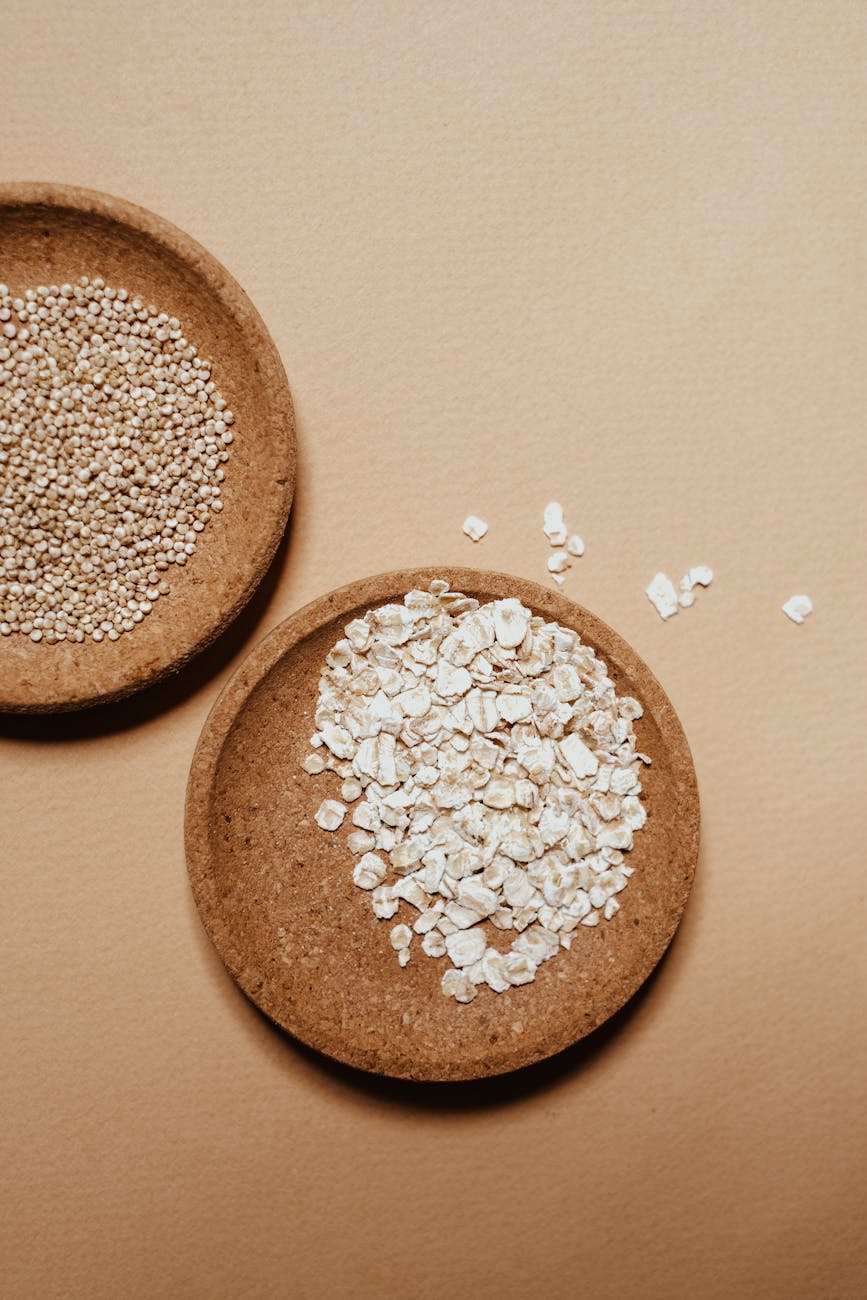
Photo by Vie Studio on Pexels.com

Oat Bran Fad 🥄

Are you old enough to remember the oat bran craze of the late 1980? A 1991 Los Angeles Times article described the oat bran-craze as a short-lived obsession, which began in 1987 when several influential U.S. medical groups, such as the American Heart Association and the American College of Cardiology, started the Know Your Cholesterol campaign. Former president Ronald Reagan would later proclaim April 1988 as National Know Your Cholesterol Month.

 I was early in my career at that time, and I can recall one of my coworker’s transformation when his doctor ordered him to lower his cholesterol after suffering a mild heart attack in his mid-40s. He decided to eschew medication, and try the “eating healthier” route, which included eating oat bran every morning for breakfast. In addition to several dietary changes, he added walking and/or bike riding for 30+ minutes four to five times a week. His results were stunning. By the end of that school year, he looked like a different person. 

Award-winning Nutrition 🏆

The oat bran craze, like other dietary fads, lost its shine by the early 1990s; however, it is still certainly worthy of regular consumption and should probably have a star placed on the Nutritional Wall of Fame if there were one. Specifically, it is high in soluble fiber. When eaten, soluble fiber soaks up water like a sponge, creating a gel-like substance that can lower blood sugar levels, holds on to cholesterol and fat, and make stool easier to pass.  

In addition to being high in soluble fiber, oat bran is lower in carbs and calories than oatmeal.  Oat bran is also higher in nutrients such as protein, fiber, iron, thiamine, and magnesium to name a few. It contains high levels of antioxidants which ward off chronic disease, inflammation, and offers other health benefits. Additionally, oat bran may also help lower both blood pressure and cholesterol.  Plus, it is naturally gluten free. 
Easy addition ➕

Making oat bran a regular part of a healthy diet is easy to do. Eat it as a creamy, comforting, warm porridge-like cereal, or mix it up as you would your favorite overnight-oats recipe for a velvety breakfast delight in the morning. Oat bran can be a nutritional addition to smoothies. It can be an excellent addition to baked goods, such as quick breads, cakes, and muffins like the recipe I share here. Stir oat bran into your favorite yogurt, or add it to your favorite casseroles, meatballs, meatloaf, or burger recipes. 

TAsty Holiday Treat That benefits your Health ✨

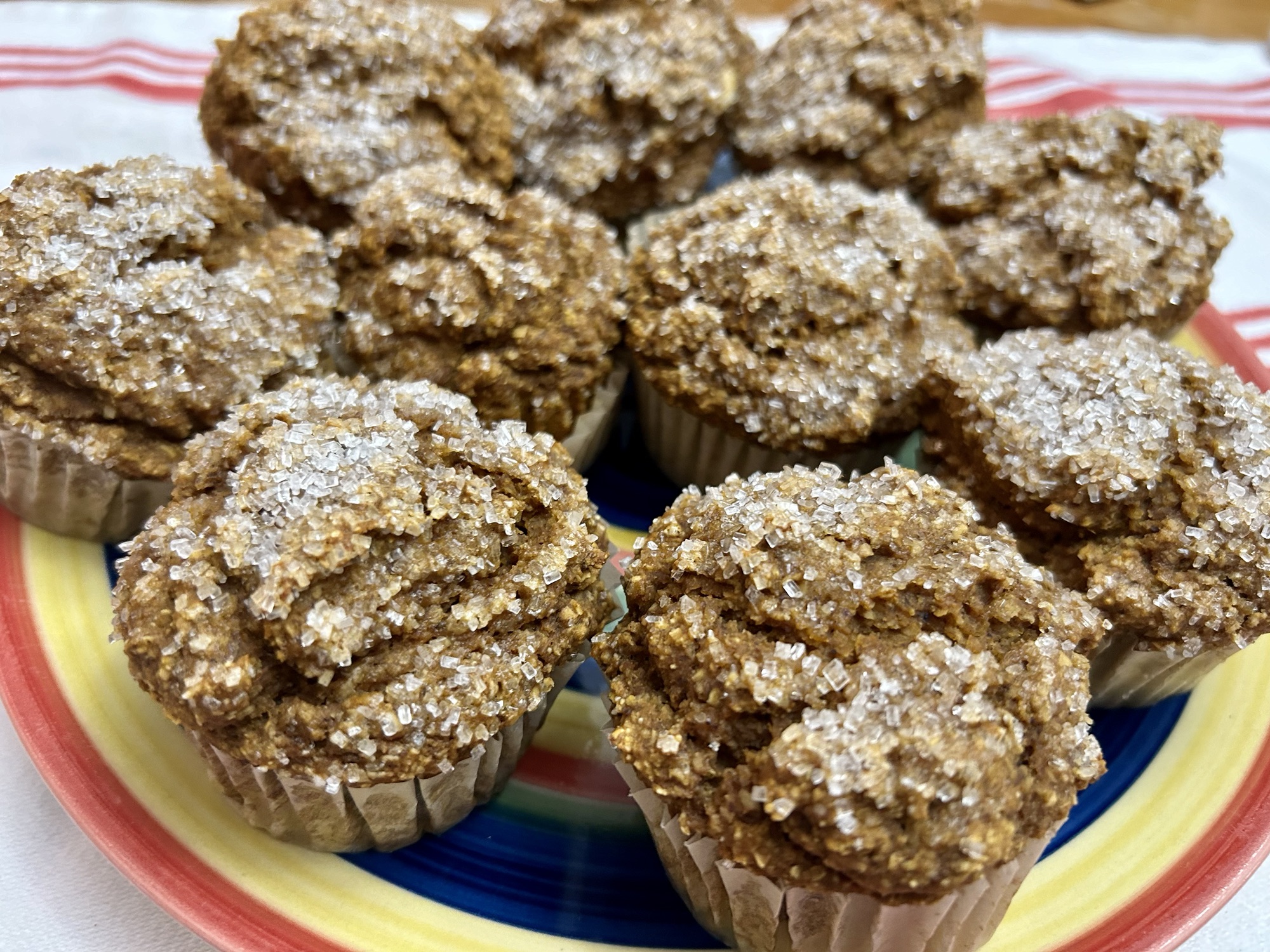
Even though it is a long way from those late 1980s, regular consumption of oat bran can go a long way to benefiting your health. The recipe below is one easy way to level up your oat bran game. The muffins are tasty on their own, and they deliciously pair with a drizzle of honey or smear of melted butter alongside a warm cup of coffee or tea. They freeze well for quick grab and go convenience, which is important over the coming Thanksgiving holiday. Plus, there’s a slew of optional stir-in ingredients listed below, so you can personalize this recipe to fit your taste preferences.

From my home to yours, I wish you a healthy, happy, and wonderful Thanksgiving full of homemade goodness. 

Personalize this recipe with your choice of stir-in ingredients to take this recipe to the next level of flavor and health!

Healthy Holiday Pumpkin Oat Bran Muffins

Ingredients:

1 ½ cup oat bran

1 ½ cup oat flour (can replace with all-purpose flour or gluten free variation)

2 teaspoons baking soda

1 teaspoon baking powder

½ teaspoon salt

4 packets of your favorite sweetener

1 ½ teaspoon cinnamon

½ teaspoon ground ginger*

½ teaspoon ground nutmeg*

¼ teaspoon ground cloves*

⅛ teaspoon all-spice* 

2 eggs or “fleggs**” 

1 tablespoon apple cider vinegar

15 ounce can pure pumpkin puree 

½ cup apple sauce

½ cup pure maple syrup 

⅓ cup milk (dairy or nondairy)

2 teaspoons pure vanilla extract

Optional stir-ins: 1 cup chopped nuts and/or ½ cup blueberries, raisins, currants, chopped dates, dried cranberries, or chocolate chips

Notes: 

*Can replace ginger, nutmeg, cloves, & all-spice with 1 ½ teaspoon pumpkin pie spice

**To make two flax “eggs” or “flegg”: Stir together 2 tablespoons ground flaxseed + 5 tablespoons water and set in fridge for 5+ minutes before adding to recipe

Directions:

Preheat oven to 375 degrees

Be sure to set out eggs, if using, and maple syrup ahead of time to come to room temperature.

If replacing eggs with flaxseed “flegg” variation, combine ground flaxseed and water, and set in fridge for five minutes to thicken 

Meanwhile, combine dry ingredients (oat bran, flour, baking soda, baking powder, salt, and all of the spices) into large mixing bowl and set aside

Next, mix together wet ingredients

Pour wet ingredients into dry ingredients, but do not overmix

Gently fold in any additional stir-in ingredients, such as blueberries, nuts, chocolate chips, and/or dried fruit, if using

Divide evenly among 12 prepared muffin tins

Sprinkle with sparkling sugar or cinnamon, if desired

Bake 18-22 minutes or until a toothpick inserted in the center comes out clean

Cool five minutes before serving

Store uneaten muffins in an airtight container in the fridge for up to five days, or freeze for up to three months.

Why Eat Apples Daily? Discover Their Surprising Benefits

“A diet rich in plant protein, fiber, and nuts lowers cholesterol and improves blood pressure.”–Chiavaroli, L, Nishi, SK, Khan, TA, et al. 

Photo by Mark Stebnicki on Pexels.com

Fall FAvorite 🍎

September brings the official start to fall, and this seasonal shift means apples are coming into season. Even though apples tend to be available year-round, the advent of fall means local apples are available, and the prices of apples at supermarkets will be their best.  Therefore, it’s a great time to take advantage of apples’ versatility and nutritional benefits.

Personally, apples are one of my favorite fruits.  I embrace the many varieties of apples for their various flavor profiles and textures, although I do tend to prefer the crisp varieties. What I especially appreciate about apples is that they can be a tasty part of any meal–breakfast, lunch, dinner–or simply as a snack.   

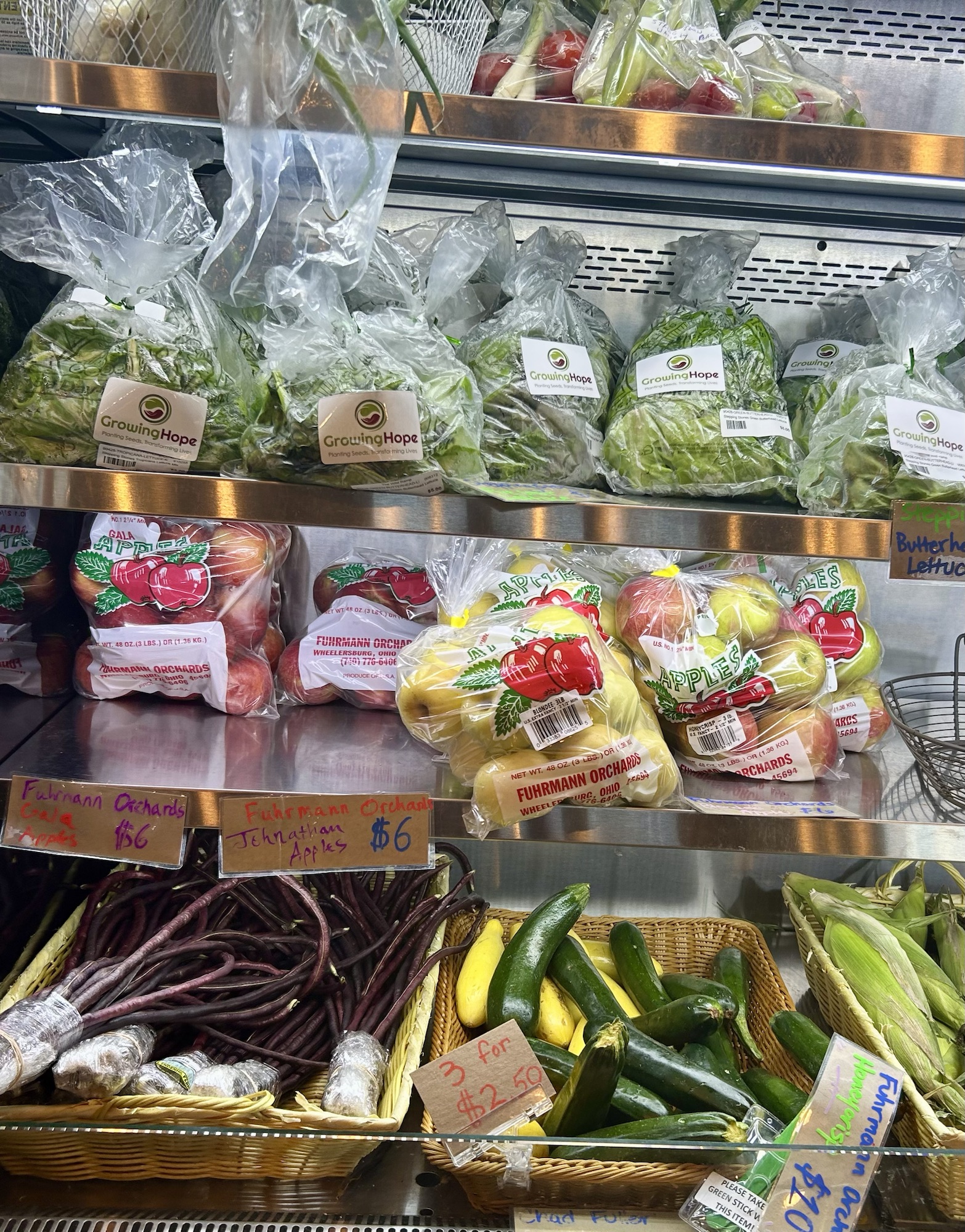
Fall is the perfect time to visit local market, such as The Wild Ramp, to pick up deals on locally grown, fresh apples.

Researched backed foods 🥦 🍓 🫑 🥕

Over the past couple of months, I have been preparing more recipes/meals based upon the latest research found in Alzheimer’s Research and Therapy. This study demonstrated that eating a plant-based diet can prevent and/or slow the progression of dementia due to Alzheimer’s Disease. Plus, eating this way can lower cholesterol and improve blood pressure. Since apples are definitely a plant, they fit right into this way of eating.

Now, for those of you who love your meat, I am not here to preach that it shouldn’t be eaten.  Personal diet preferences are not for me to decide, but I think we can all agree that fruits and vegetables benefit our health.  Therefore, why not lean into adding more plants into meals?  It doesn’t have to be an either/or thing!

Photo by Polina Tankilevitch on Pexels.com

Apple Benefits 🍏

Plus, who can argue against the humble apple? After all, there is a reason the old adage, “An apple a day keeps the doctor away,” is still around today. The Cleveland Clinic, in a post from August 2023, calls apples a “nutritional powerhouse.” The article’s author wrote that regularly consuming apples offers numerous health benefits because they are high in antioxidants–specifically quercetin–as well as fiber and water. In fact, a recent piece on Yahoo!Life stated that “Eating two apples a day may lower cholesterol.”  

Apples offer the following benefits:

  • Help meet daily fiber needs, which will stabilize blood sugar and creating a sense of fullness longer
  • Antioxidants that fight inflammation, which can lower risk for heart disease and dementia caused by Alzheimer’s
  • Help lower cholesterol and reduce blood pressure
  • Benefits the microbiome as they are full of pectin as well as both soluble and insoluble fiber
  • Promotes longevity by reducing risk for heart disease
Photo by RDNE Stock project on Pexels.com

A-peel-ing benefits 🍏🍎

Keep in mind that the skin of the apple is the most nutritionally dense part. A 2023 article on Healthline, states that the peel is the part of the apple with the most fiber.  Additionally, an apple with its skin intact has more vitamin K, vitamin, A, vitamin C, more calcium, and potassium than a peeled apple. 

So why not eat an apple or two per day?  It’s an easy and tasty way to get more plants into your diet. With all the varieties and flavor profiles, you’re sure to find one you like!  Head to your local farmer’s market or grocery store, stock up on your favorite varieties, and take advantage of their best pricing. The versatility of apples lend it to a wide range of recipes, such as the one I am sharing with you today. Then again, there’s no shame in eating at them as they are, which is my favorite way of enjoying an apple.

From my home to yours, I wish you a healthy and happy fall season!

This recipe was inspired by the following sites: Gimme Some Oven, Cait’s Plate, and Engine 2 Cookbook. Feel free to “doctor it up,” as my Grandmother Helen used to call it by adding and/or deleting ingredients that fit your tastes preferences!

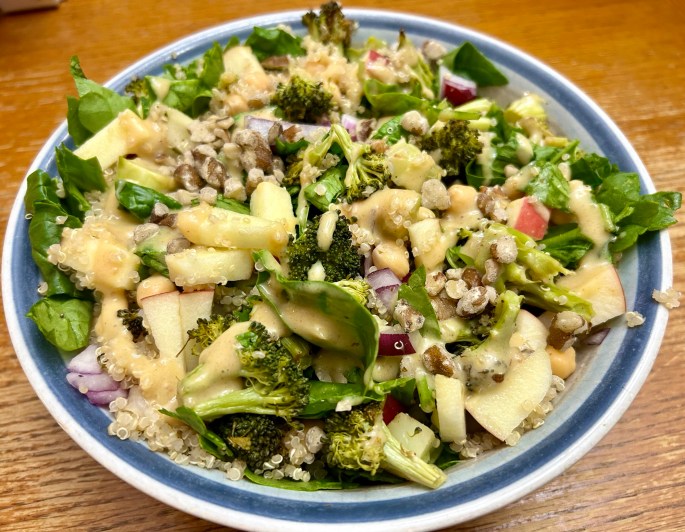
Quinoa Broccoli Apple Bowl with Sweet and Spicy Dressing

Gluten-free, dairy-free

Serves 2, but recipe can be doubled or tripled

Salad ingredients:

½ cup dry quinoa

1 cup vegetable broth

1 small head of broccoli, chopped into bite-size pieces

¼  teaspoon garlic powder

¼ teaspoon onion powder

Salt and pepper to taste

1 can (15 ounce) chickpeas, rinsed & drained

4 cups favorite salad greens, i.e. spinach, arugula, spring mix, etc

½ small red onion, chopped

1 apple, diced (favorite type)

¼ cup slivered almonds, chopped walnuts, or other favorite nut/seeds

Dressing ingredients:

½ cup unflavored, plant based milk

¼ cup Dijon mustard

¼ cup pure maple syrup

¼-½ ground red pepper (depending on level of desired heat)

⅛ teaspoon smoked paprika

⅛ teaspoon xanthan gum (a gluten-free thickener), optional

Directions:

Preheat oven 425 degrees

Coat baking dish (cookie sheet) with nonstick cooking spray or line a baking sheet with parchment paper

Clean and cut broccoli

Lightly spritz with olive oil and sprinkle seasonings (garlic powder, onion powder, salt, pepper)

Bake for 30+ minutes, stirring halfway through

Meanwhile, prepare quinoa according to package directions, using broth as the cooking liquid

While quinoa is cooking, prepare salad dressing by placing all ingredients in a glass jar and shaking well.  

Store dressing in refrigerator until ready to serve

To serve, divide salad greens and diced apple between 2 serving bowls

Divide and top salad with quinoa, broccoli, chickpeas, and onion

Drizzle with desired amount of dressing and top with nuts

Store unused dressing in sealed container in refrigerator for 2-3 weeks

Delicious and Healthy Sweet Potato Mango Bowls: A Nutrient Rich Delight

Mango, often dubbed the king of fruits, isn’t just delicious, it’s full of nutrients and health benefits.”–OhioHealth.com

Photo by Alexander Grey on Pexels.com

Nothing Like Fresh summer Produce 🌽🍅

When I was a girl, mid- to late summer, it seemed to my unfledged mind, was one of grandparents’ favorite times of year. This was because it was the time of year full of fresh garden produce! It wasn’t unusual during this season for them to eat a dinner full of nothing but fresh vegetables: salted, slices of beefsteak tomatoes, pork-flavored half-runner beans, sweet corn on the cob slathered with sweet butter, and dinner rolls spooned over with sorghum syrup.  Sometimes, they’d toss in fresh melon for dessert, with or without ice cream, or some sort of fruit cobbler! 

Oh, how intoxicatingly fragrant those kitchens were! To this day, I can’t smell a good garden tomato without being reminded of one of their kitchens. It didn’t matter which house I happened to be visiting, my maternal grandparents or my paternal grandmother–their kitchens had similar earthy aromas during the end of summer.  To be sure, they’d vary the menu with tomato, bacon, and lettuce sandwiches or wilted lettuce with bacon drippings.  Sometimes they might fry up hamburgers and top them off with a fresh slice of tomato, serve a salad with freshly picked cucumbers and chopped garden “mangoes,” and of course, have more sliced and salted tomatoes on the side.  They might even bake up a meatloaf with chopped, fresh “mangoes,” or they might stuff the freshly picked “mangoes” with a meatloaf-like mixture.

Photo by Pixabay on Pexels.com

Mangoes are a Tropical Fruit 🥭

It was years later, when I was stunned to learn that what my grandparents called “mangoes” were actually called bell peppers.  I was further surprised to learn that mango was a tropical orange fruit grown in trees!  In fact, it’s only been in the past decade that I’ve really come to embrace and regularly eat mangoes, due to their availability now in both the produce and freezer aisles in most local stores. 

Mangoes have a delicious, creamy peach-like flavor and juiciness, and they pack a nutritional punch. They are chock full of vitamin C, and they are full of soluble fiber–known for binding with fat and cholesterol in the digestive tract before they get absorbed. Mangoes are also a good source of vitamins A and E.  Overall, mangoes benefit your immune system, eyes, skin, gut health, and even have anticancer properties.  Plus, they taste great.  What’s not to like about that?

Photo by Nancy Folgmann on Pexels.com

Mangoes and Bell Peppers 🫑🥭

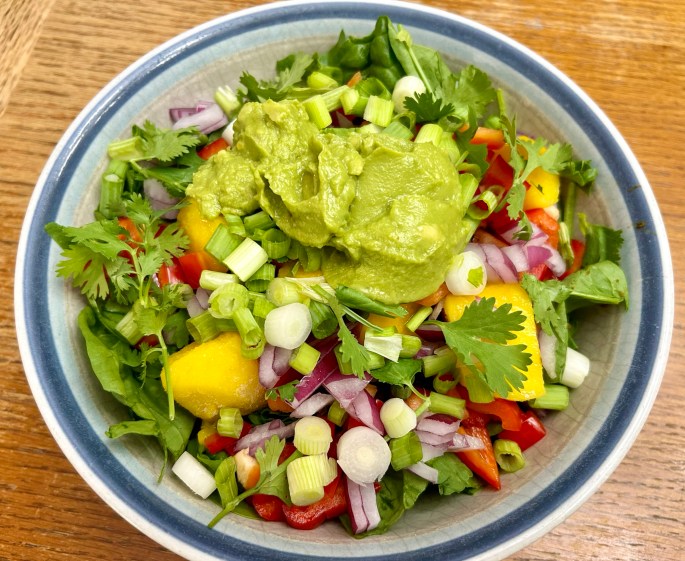
Although mangoes taste nothing like a bell pepper, they are both nutritionally beneficial and a versatile addition to a wide array of recipes, such as the one I am sharing with you today. This recipe is a super easy, quick recipe for dinner or lunch. While it is an older recipe from a plant-based cookbook, by Rip Esselstyn, you don’t have to be vegetarian to enjoy this recipe.  Plus, for those with allergies, it is gluten-, dairy-, and nut-free.

It’s bursting with nutrients and plenty of fiber to fill you up and benefit your health.  However, I know all of that doesn’t matter if the recipe doesn’t look and taste great, and this sweet and savory recipe certainly does! As my Grandmother Helen taught me to remember, “We eat first with our eyes,” and this recipe makes one vividly vibrant plate, full of colors and flavors that will lead to full tummies and clean plates around your table!  

This recipe will “Bowl” you over! 🥣

While I know my papaw would have NEVER tried this recipe, I’d like to think both of my grandmothers would have given this mango-forward dish a try. Therefore, I hope you will try this recipe out in their honor, and, of course, feel free to serve up a side of salted, sliced tomatoes, corn on the cob, and/or some rolls with sorghum syrup from the local farmer’s market!

From my home to yours, I wish you new and old recipes that are full of family connections and stories!

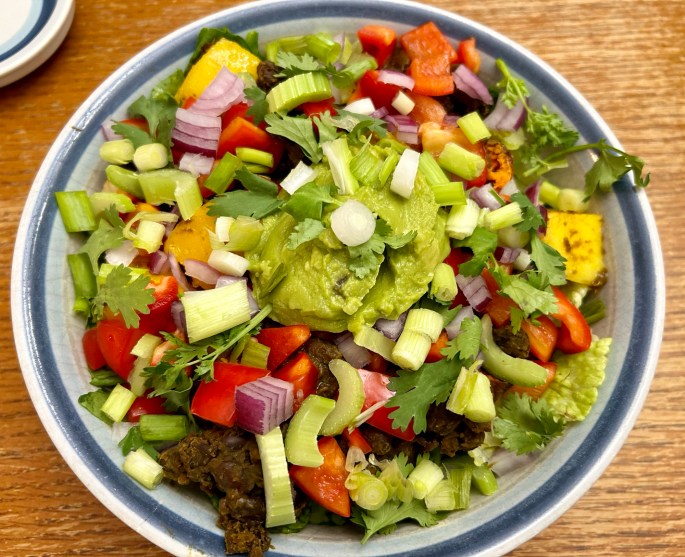
Sweet Potato and Mango Bowls

Gluten-free, nut-free, dairy-free

Serves 2, but recipe can be doubled or tripled

Ingredients:

2 large sweet potatoes

1 (15-ounce can) black beans, drained and rinsed

¼ teaspoon ground cumin

¼ teaspoon garlic powder

¼ teaspoon onion powder

¼ teaspoon chili powder

4 cups of my favorite salad greens, i. e. spinach or spring mix

4 to 6 green onions, chopped

1 fresh mango, chopped or 1 cup frozen mango chunks

1 red bell pepper, chopped

½ avocado, mashed or diced, depending upon preference

¼ cup chopped cilantro (optional)

Lime juice

Salsa

Directions:

Bake sweet potatoes (microwave or oven)

In microwave safe bowl add black beans and spices, stir and heat for 60 or so seconds in microwave (Can also mix and heat on stove top if preferred)

Divide greens between two bowls

Top with sweet potato, which can be cut in half or cubed, your preference

On top of sweet potato, add beans, green onion, mango, red pepper, avocado & cilantro, if using

Drizzle with lime juice and add desired amount of salsa

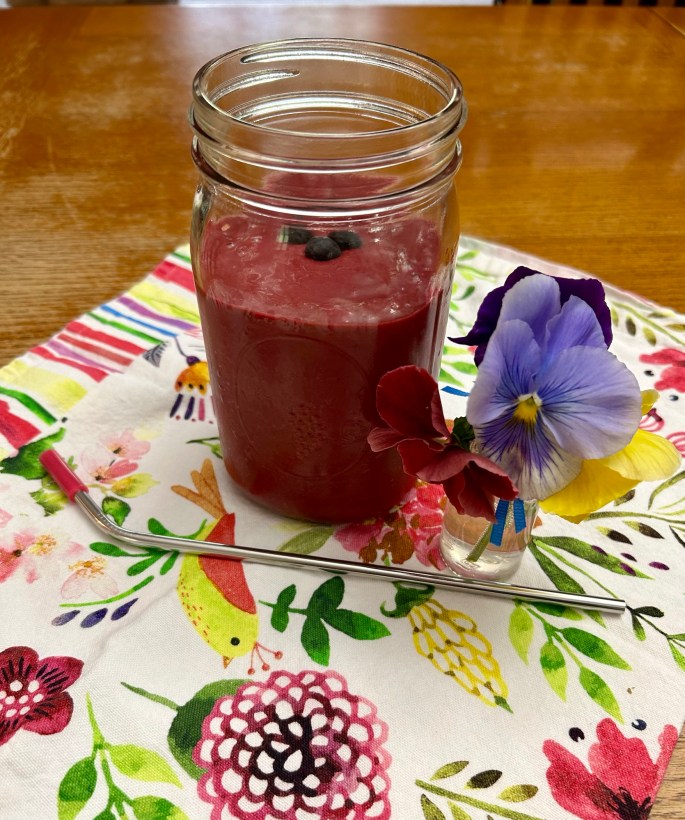
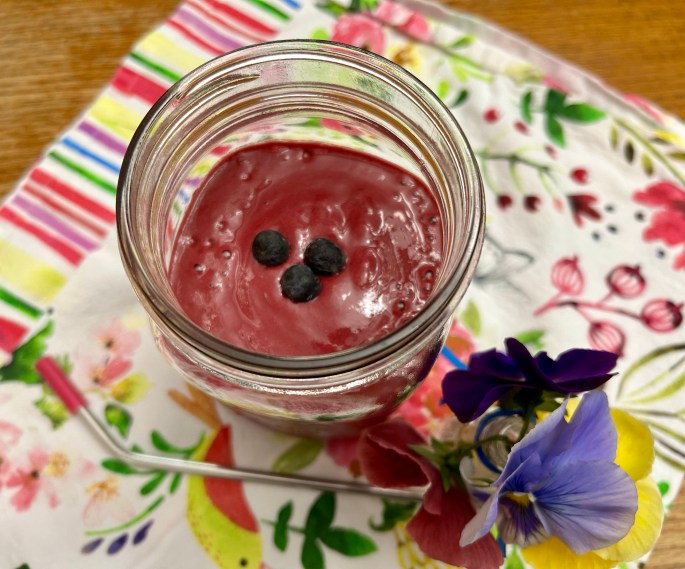
Berry Immunity Boosting Smoothie aka Stress Less Smoothie

The greatest weapon against stress is our ability to choose one thought over another.”–William James

Photo by Pedro Figueras on Pexels.com

The challenge of work-life balance⚖️

It is not uncommon to engage in conversations centering around stress.  Attempting to balance the demands of work and life can be challenging. The combination of long work hours, while also juggling the needs of family, make it difficult to have time to do the things that would otherwise relieve stress, such as regular exercise, outings with friends, or even a relaxing soak in the tub. 

When stress ramps up, there is a chain-reaction in our bodies.  According to Harvard School of Public Health, when stress is high, the body’s demand for oxygen and energy increases, which in turn increases the demand for key nutrients.  Simultaneously, stress causes the body to eliminate other vital nutrients. This can take a toll on the body’s immune system.

As the chain reaction of stress continues, hormones become affected.  If the stress is acute, the body will secrete adrenaline, which suppresses appetite.  However, when the stress becomes more chronic, cortisol levels begin to rise, instigating food cravings.  Cortisol tends to create cravings for foods that are typically considered “comfort foods,” full of sugar, salt, and fat.  Unfortunately, if cortisol stays elevated, the chain reaction continues to wreak havoc upon our bodies, and this often influences our coping strategies.

Photo by cottonbro studio on Pexels.com

The body’s stress response 😰

Chronic high stress time periods, depletes the body of energy and can often reduce time available for decompression. This can inhibit the desire to prepare healthy, nutritious meals.  Sometimes, chronic stress causes us to skip meals.  The downside to skipping meals is that, as the cortisol levels rise, once there is an opportunity to eat, we tend to reach for those comfort foods that will not replenish the body’s stores of diminished nutrients.

Therefore, how we respond to stress matters.  With some situations, we can identify upcoming stressful time periods before they begin, and thus, we can be more proactive.  However, that isn’t always the case.  Nonetheless, there are a few basic guidelines, according to The University of North Carolina at Chapel Hill that are worth remembering.

Photo by Antoni Shkraba on Pexels.com

Tips for eating during times of stress 😣

  • Keep nutrient-dense grab-and-go snacks on hand at all times.  Foods like baby carrots, celery sticks, hummus cups, guacamole cups, apples, oranges, bananas, popcorn, almonds, walnuts, pistachios, low-sugar yogurt, low-sugar granola, low-sugar oatmeal packets, whole-grain crackers and so forth.
  • Eat at regular intervals when possible.  This will keep blood sugar stable, and keep the brain, which needs glucose, working at its best.
  • Eat high-fiber foods. Foods, such as fruits, vegetables, nuts, seeds, beans, oatmeal, and other whole grains, have been shown to decrease perceived stress levels and increase alertness.
  • Focus on eating fruits and vegetables, especially leafy greens, whenever possible.  These foods are filled with the vitamins and minerals your body needs to neutralize the harmful molecules our bodies produce when under stress. 
  • Foods rich in unsaturated fat also help. Think walnuts, flax seeds, chia seeds, and fish oil to name a few. These foods are associated with increased brain function; however, deficiencies in fatty acids can result in depression and/or anxiety. 
  • Be mindful of caffeine and/or alcohol intake. Both of these can disrupt sleep, which the body desperately needs during times of stress.  Additionally, both can increase blood pressure, which can increase feelings of anxiety.
  • Ensure your body is getting enough quality sleep. Getting enough sleep allows the body to reduce cortisol levels and other stress hormones, increasing the chances of remaining calmer in the face of stress.
  • Employ constructive coping strategies. Whether it is talking to a trusted friend or therapist, journaling, meditating, asking for help, or going for a walk–developing positive coping skills is a lifetime skill set. 
Photo by Wallace Chuck on Pexels.com

The reality of stress 😩

Stress is reality at different points in our lives.  While we cannot control when it will arise, we can control our response to it.  It is easy and understandable to seek comfort during times of stress.  However, when those sources of comfort become unhealthy coping mechanisms, such as over- or undereating, drinking alcohol in excess, going without sleep, and so forth, we risk using short-sighted solutions that could lead to developing long-term problems, creating even more stress.  

Stress less smoothie 🍓

Below is my newest smoothie creation.  It is full of nutrient-rich foods that are high in fiber.  Some of the ingredients may cause you to raise an eye-brow in wonder, but I promise, it does taste great.  That said, feel free to adjust, add to, or eliminate ingredients that don’t suit your palate or dietary needs.

This recipe can be made ahead of time and frozen into individual servings.  They will stay fresh in the freezer for up to three months.  Then, whenever faced with a stressful day, take one smoothie out the night before, set it in the fridge to thaw, and then it’s grab-and-go convenience for the next workday. Sip on it through a lunch meeting, or if more time is available, pour it into a bowl and sprinkle on favorite fruit and nut/seed toppings, along with a bit of granola. 

I can’t promise that this recipe will change the stress around you. However, it does provide a powerful nutritional punch to help stave off the effects of stress, and offers one less thing to worry about.  Plus, it feels good knowing that if everything else goes wrong in the day, at least one small part of your day was stress-free.  

Cheers to one less thing to stress about!

Berry Stress Less Smoothie

Nutrient dense, stress combating meal replacement

Ingredients:

2 cup spinach, riced cauliflower, or kale (can be frozen)

½ cup strawberries, frozen

½ cup raspberries, frozen

½ cup cherries, frozen

1 apple

½ cup lentils

1 parsnips

2 tablespoon flax, chia seeds, or hemp seeds (or combination of any two)

2 tablespoons goji berries, OR 2 medjool dates, OR 2 prunes, optional

2 tablespoons cocoa or cacao powder, optional

2 scoops protein powder, optional

1 cup beet juice (can use pomegranate or cherry juice or simply use water)

1 cup milk  plant or dairy based variation)

½-1 cup of water, if too thick

Directions:

Put all ingredients in high powered blender

Blend until creamy and smooth

Makes 2 large servings 

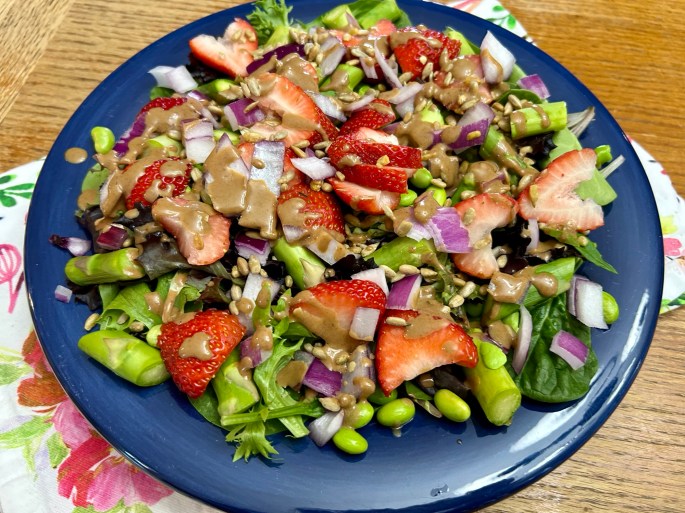
Springtime Celebration Salad with Walnut Vinaigrette

Featuring asparagus, strawberries, spring mix, and spinach

“Mother Nature’s powers cannot be stuffed into a pill.”–Dr. Micheal Gregor

Photo by Anna Shvets on Pexels.com

pill popping 💊

My husband, John, and I can’t help but giggle every time we see commercials touting the benefits of taking a certain brand of daily vitamins.  This company claims their product provides vitamins and minerals found in fruits and vegetables that we, the lowly consumer, don’t have time to eat.  It especially targets those of us who are older, espousing that by taking these pills, as many as six per day, we will infuse our frail, feeble frames with the vigor and vitality of our former, younger self. 

While there is nothing inherently wrong with taking a multivitamin and/or other key supplements, they should never replace our need for daily consumption of fruits and vegetables.  According to multiple sources, such as,  The Better Health Channel, National Institutes of Health, and Harvard’s T.H. Chan School of Public Health, regularly consuming fruits and vegetables provides the body with important vitamins, minerals, plant chemicals, and a significant source of fiber.  Furthermore, a diet rich in fruits and vegetables have been linked to “lowered blood pressure, reduced risk of heart disease and stroke, prevention of some types of cancers, lowered risk of eye and digestive problems, and have a positive effect on blood sugar . . . .”   These are benefits that can’t be bottled into a pill.

Photo by Pixabay on Pexels.com

Planted in Health 🌱

Of course, I am preaching to the choir, my dear readers.  If you are reading this, you are keenly aware of the benefits fruits and veggies offer.  And, yet, due to clever and slick marketing tactics, Americans have been spending billions in recent years on vitamins and other supplements according to Northwestern Now and Harvard Medical School.  While there are those who do need a few key supplements due to specific health issues, such as those with Crohn’s disease, celiac disease, and ulcerative colitis to name a few, the average healthy adult can get all the vitamins and minerals they need through a well-balanced diet.  Besides, there are numerous tasty and simple ways to incorporate fruit and veggies into your diet.

Photo by Michael Burrows on Pexels.com

Spring produce 🥬

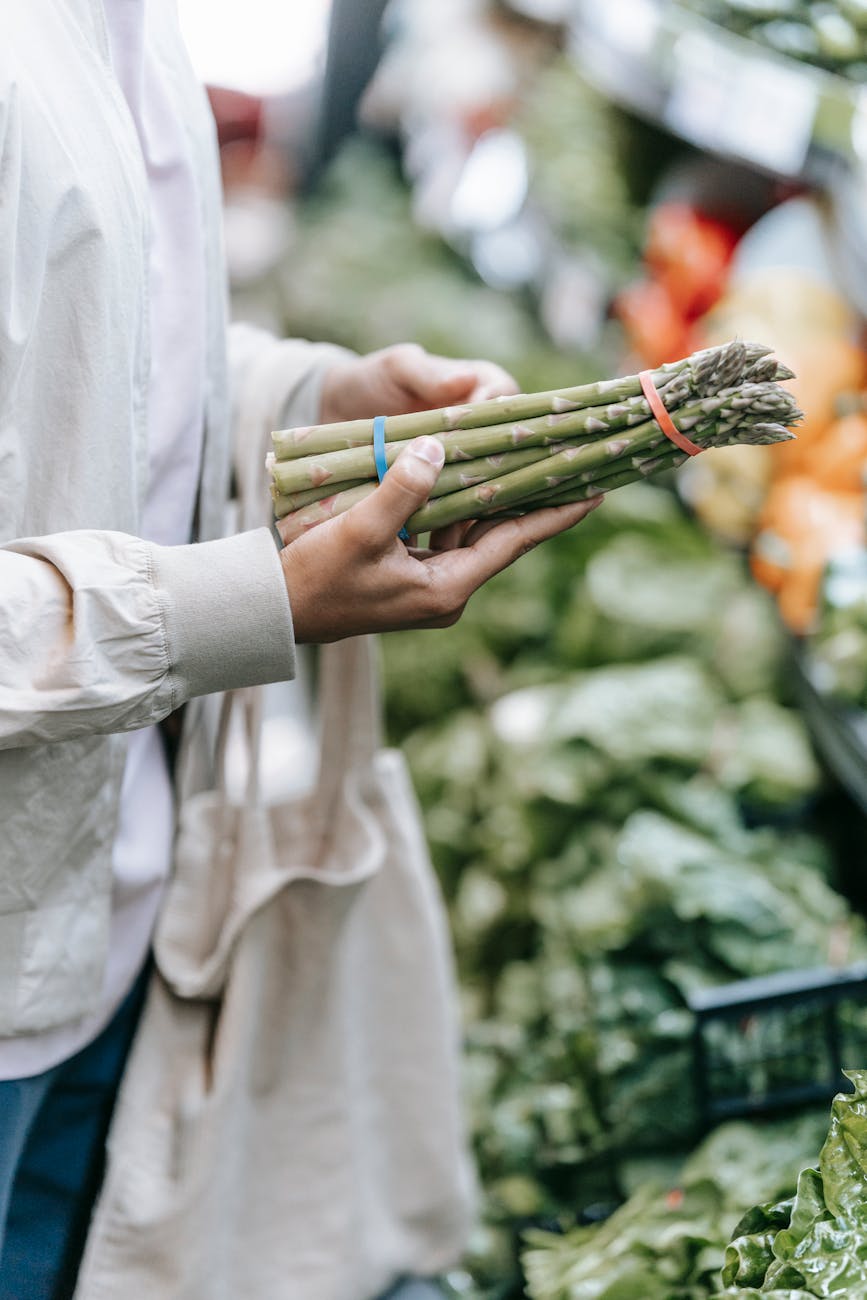
Spring is the perfect time to take advantage of the fruits and vegetables that come into season early, such as greens, asparagus, and strawberries.  Many of these items are often available at local produce stands and markets.  Plus, they can also be found, usually at discounted prices when in-season, at local grocery stores.  Either way, from now until early June, is the perfect time to grab up these produce deals.

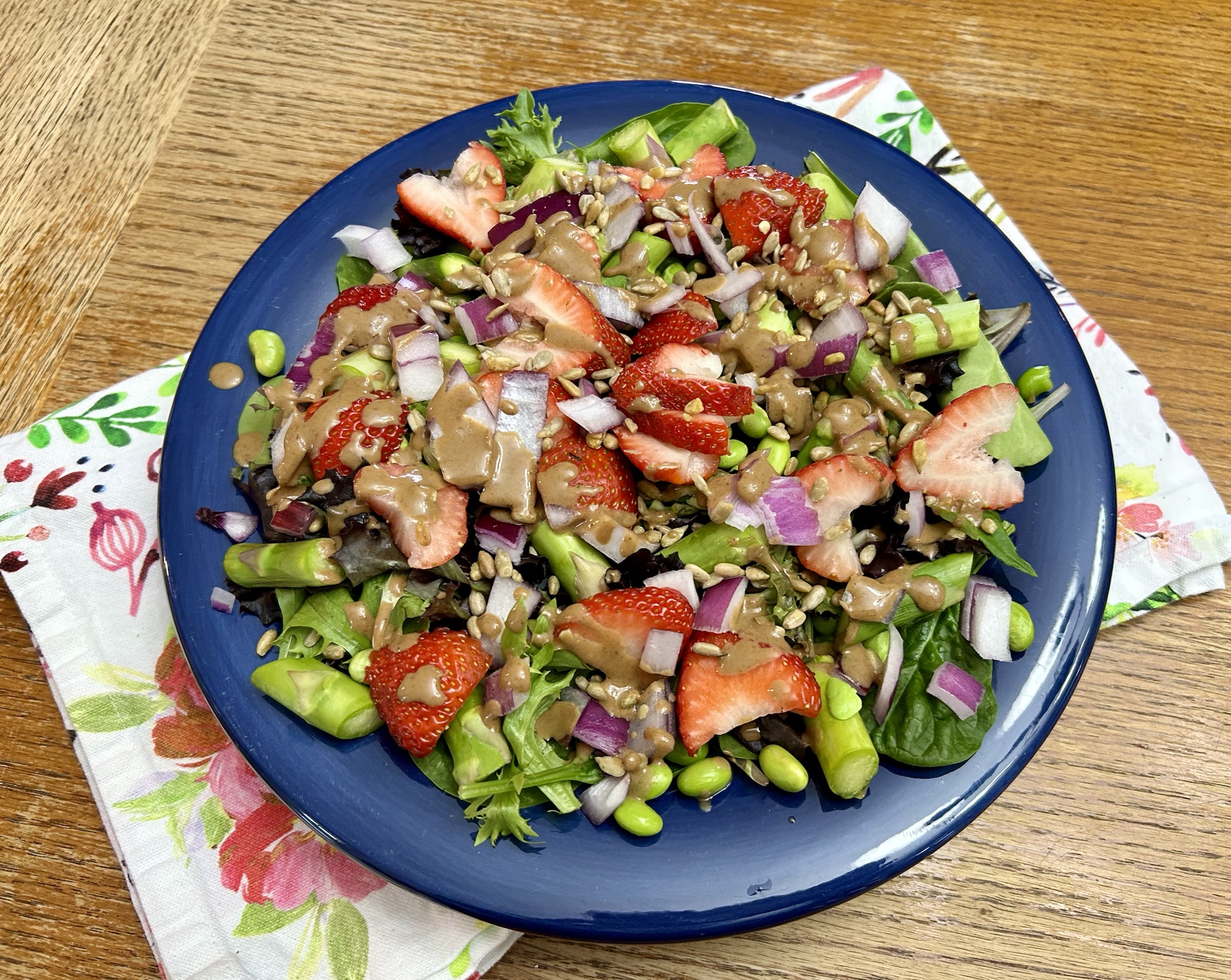
Springtime celebration salad

The salad recipe I am sharing with you is one delicious way to incorporate a variety of spring vegetables and at least one fruit into your day.  It is a bright and colorful salad, bursting with complimentary flavors and textures, and it can be made as a light main dish or a bright start to a meal.  Feel free to play with this recipe by using your favorite dressing, replacing the strawberries with another fruit, changing up the greens and vegetables, or by adding in a favorite protein, bean, or even a grain, such as quinoa.

Make it ahead of time 🥗

I made this salad recipe ahead of time without the fruit and dressing, divided it among Tupperware-type bowls, placed the fruit and poured the dressing into separate, small containers to add to the salad just before eating.  This allowed grab-and-go convenience for lunch.  In the morning, I popped open my lunch bag, filled it with salad, dressing, sliced fruit, and tossed in a handful of whole grain, gluten-free crackers. As I head out the door,  I can rest assured I have packed a nutritionally balanced lunch to fill my afternoon with energy, and I won’t need to worry about spending extra money on overpriced and over-advertised pills.

Celebrate Early Spring produce 🎉

Consider adding this salad into your weekly rotation of spring meals.  Serve it as a meal or as a side.  Toss it up ahead of time if you like– simply add in the fruit and pour on the dressing just before serving.  However and whenever you decide to make it, you are sure to reap the nutritional benefits of delicious spring produce without a pill!

Springtime Celebration Salad with Walnut Vinaigrette, 

Featuring: asparagus, strawberries, spring mix, and spinach

Make 2 large meal sized salads or 4 small dinner salads.

Ingredients for dressing:

½ cup water

½ cup balsamic vinegar

¼ cup chopped walnuts

¼ cup raisins or chopped dates

1 clove garlic or 1 teaspoon garlic powder

1 teaspoon dijon mustard

¼ teaspoon dried oregano (optional)

Salt and pepper to taste

Ingredients for salad:

10 asparagus spears, roughly cut

10 strawberries, sliced (can substitute chopped apple, blueberries, red grapes, or mandarin orange slices if preferred)

4 tablespoons chopped red onion

6 cups spring greens (I used 50/50 blend of spring mix and spinach)

½ cup (or more, depending on preference) shelled edamame beans, called mukimame or thawed frozen peas

½ cup shredded carrots (optional)

½ cup sliced celery (optional)

2-4 tablespoons raw sunflower seeds (or other favorite nut/seed)

½-1 cup feta or goat cheese (omit if vegan)

Directions for salad dressing:

Combine all ingredients in a high powered blender and blend approximately one minute or until smooth.

Store in a container until needed.  Will keep in the refrigerator for two or more weeks.

Directions for salad:

Set out shelled edamame (mukimame) beans or peas to thaw

Cut ends of asparagus, rinse, and then rough cut remaining. Lightly steam asparagus on a covered microwave dish, approximately 30-50 seconds.  (You want them bright green and crisp.)

Rinse and slice strawberries, set aside.

Chop red onion, set aside.

Arrange greens in a large salad bowl, adding in carrots and celery if using.

Top with asparagus, strawberries, and edamame or peas.

Sprinkle with chopped red onion, sunflower seeds (or nuts), and cheese, if using.

Drizzle with desired amount of dressing and serve.

Serve with whole grain baguette slices or whole grain crackers, if desired.

Cranberry Smoothie: Say “Cheers” to your health

“Packed with antioxidants, this fruit can help keep your teeth, heart, and gut healthy.”clevelandclinic.org

What a Saucy Idea💡

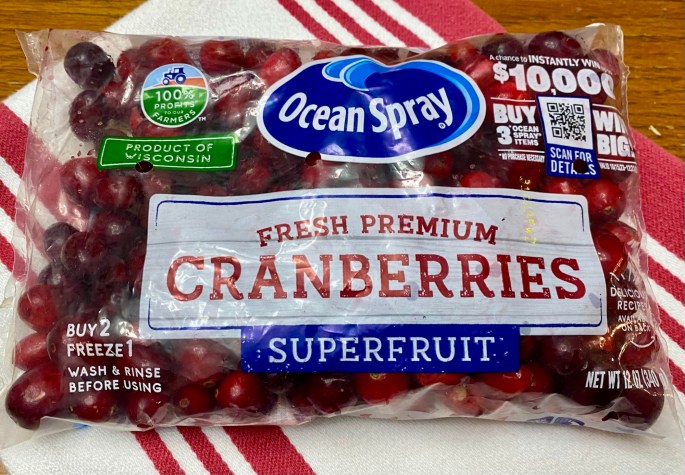
Over Thanksgiving week, I purchased fresh cranberries with the intention of cooking up some homemade cranberry sauce.  However, I never got around to making it, and I wondered if I could, instead, add them to a smoothie.  Turns out, not only could I add them to my morning smoothie, but by adding them, I could amp up my own nutrition! 

Okay, so I tried to eat them raw, and they are really tart, like suck-the-saliva-out-of-my-mouth-tart! Nonetheless, I wasn’t deterred, especially once I read numerous current articles about all their healthful benefits. In fact, cranberries are often classified as a superfood due to their high nutritional value and antioxidants properties. 

Are Cranberries a Berry?🍓🫐

Cranberries are related to blueberries, but grow on vine-like plants similar to strawberries. Like blueberries, cranberries, by definition, are not true berries.  Instead, they are what scientists call a “false berry” because their fruits grow below the flower.  Nonetheless, it appears that the food industry still tends to classify cranberries (and blueberries) in the same categories as other berries.  As a group, according to nutritionfacts.org, berries “average ten times more antioxidants than any other fruit or vegetable.” Specifically, cranberries have “the highest fresh weight concentration of polyphenols (a strong antioxidant that complements and adds to the function of antioxidants) among commonly consumed fruit in the U.S.,” according to The National Library of Medicine.

This concentration of polyphenols may be why cranberries possess beneficial properties unique to them.  Research  has shown that cranberries lower the risk of urinary tract infections (UTIs).  This may be due to their high levels of proanthocyanidins (PACs), which prevents certain types of bacteria from sticking to the walls of the urinary tract.  These same PACs may protect against a type of bacteria that causes tooth decay. Additionally, cranberries have been linked to reducing risk for certain types of cancer.  They are also known to boost the immune system, reduce inflammation, and improve blood pressure.  

Given these facts, it is clear to see why cranberries should be incorporated as part of a healthy diet.  This brings me full circle to my motivation for now incorporating them as part of the regular rotation of a variety of whole food ingredients I incorporate into my daily smoothies.  When using cranberries, I have learned to blend their tangy taste with other flavor profiles to round out their taste and also gain the most nutritional bang for the buck.   

Sippin’ up the goodness🥤

Below is a recipe I now blend up repeatedly as part of my weekly smoothie rotation–usually twice per week. It incorporates other berries too since, as a whole, berries are a solid nutritional choice.  My recipe  also incorporates the creamier and sweeter tastes of mango and banana–both of which are nutritious in their own right. I also like to add vanilla protein powder to not only round out the flavor, but to also boost my protein intake–an important consideration at my age. There are further ingredients–mostly spices–that I use for their unique and beneficial properties, but they are optional as they don’t enhance or detract from the overall taste.

Remember, most nutritionists encourage us to eat the rainbow when it comes to fruits and vegetables. Cranberries, with their dark red color, can definitely be one of those colorful choices.  Furthermore, smoothies are one easy way to contribute to your overall daily intake of that rainbow-array of fruits and vegetables as part of a well-rounded diet.  They can be made ahead of time, if desired, and refrigerated for up to three days, or frozen in tightly sealed containers for up to three months.

Manifest Good Health✨

Smoothies, like this one, are my own private health manifestation.  While I know they are not the end-all, be-all when it comes to nutrition, I do know the whole food, plant based ingredients that I put in mine are high in quality nutrition and not full of artificial ingredients or sweeteners.  They are also full of fiber to keep the digestive system operating, well, “smoothly.” Plus, they are an easy way to get a serving of both vegetables and fruit in one tasty, fell swoop.  

From my home to yours, I toast my smoothie glass to yours and wish you much health and happiness this holiday season. 

Drinking up the goodness!

The Recipe📝

Cranberry Smoothie

1 cup frozen riced cauliflower (You won’t taste it!)

1 cup frozen strawberry, mango, blueberry mix (or any other berry mix)

1 whole banana, can be frozen

½ fresh cranberries

1 whole medjool date, or other natural sweetener 

½ teaspoon cinnamon

2 scoops vanilla protein powder

2 cups water

Optional anti-inflammatory and immunity add-ins:

2 teaspoons black elderberry syrup

½  teaspoon ground ginger

½  teaspoon ground turmeric

⅛  teaspoon black pepper (only if adding tumeric)

Put everything in a high powered blender in the order listed.

Blend for one minute.

Serves 2

Aunt Patty’s overflowing-with-goodness pound cake

Pound cake is so named because its original recipe called for a pound of each of its four ingredients: sugar, eggs, flour, and butter.”–Britannica 

Pounds of Appreciation 👩‍🏫

When I was a very young child, my mom would bake pound cakes for my siblings’ and my elementary teachers during the holidays.  I honestly do not remember for how long she kept this tradition going, since there were four of us kids.  What I do recall is carrying the cake into my classroom with great pride.  It was a family favorite recipe, so I felt like I was giving a grand prize to my teachers–a whole cake. 

sweet tooth cravings 🦷

As a young adult, I asked my mom for the recipe, which is when I discovered it came from my Aunt Patty, my mom’s oldest brother’s wife.  It was one of those recipes I made a couple of times before it became relegated to my recipe basket filled with index cards of recipes seldom used.  However, strangely enough this summer, I got a hankering for pound cake, and I dug out the recipe.

As soon as I read it, I realized that the recipe was back when I was ignorant to my celiac diagnosis.  Now I know why my stomach hurt every time I ate it!  I decided to try to create a gluten-free version of it.  It was NOT easy.

overflowing with love 🥮

My first adaptation overflowed into the oven.  It was a mess!  The good news was that the remaining batter that fully baked in the pan tasted good, so I was on the right track.  After spending a good hour, and then some, cleaning the oven, I was back to the drawing board.

I did more research and visited three sites for whom I have found reliable baking information in the past.  These sites helped with adapting the ingredient amounts of Aunt Patty’s original recipe to a gluten-free version. Mama Know Gluten Free confirmed my addition of vinegar to the original recipe.  King Arthur’s website inspired the idea of making the cake more decadent by adding a glaze to the top.  Finally, Land O Lakes helped me get clear on the correct cake pan size. 

The taste of sweet success 🍰

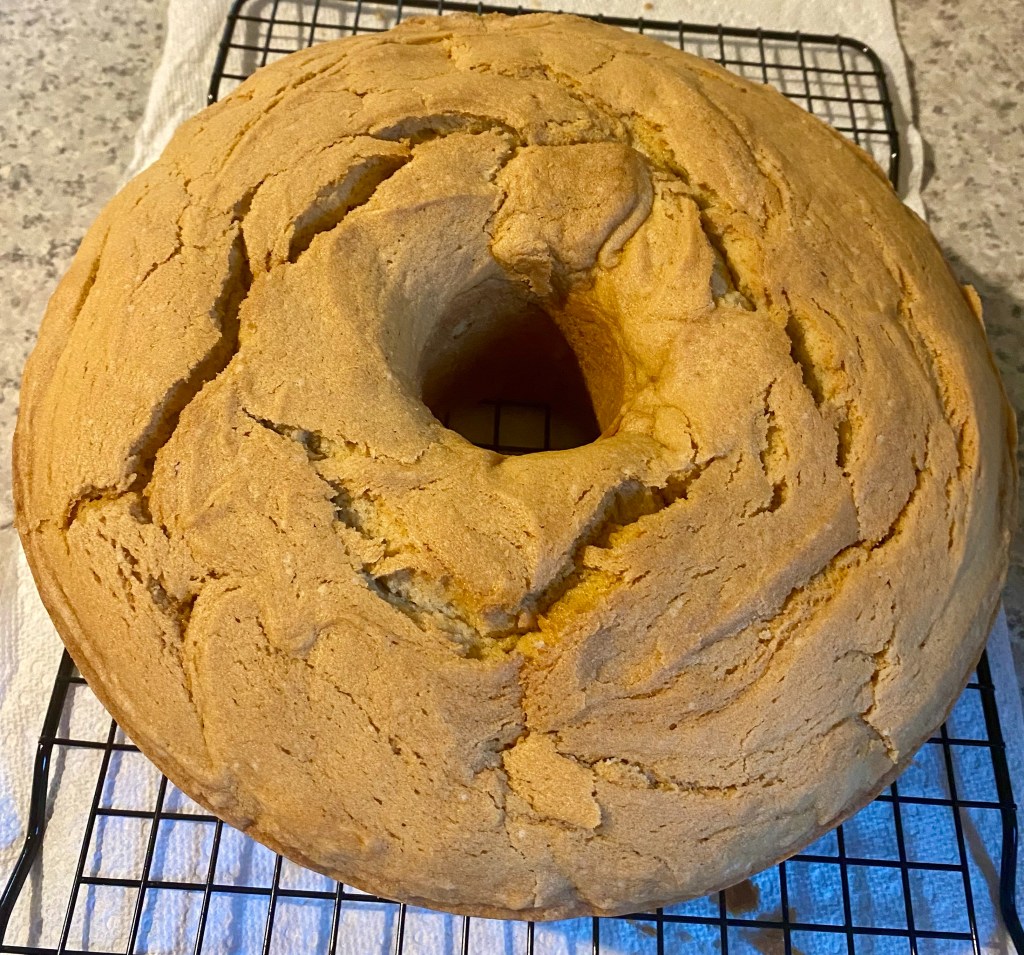
Cool on a rack first

Once success was attained, I knew I had to channel my former inner-child and share this gluten-free variation of Aunt Patty’s pound cake recipe. I’ve noted several adaptations/modifications that anyone can choose to bake a pound cake that meets dietary needs and/or taste preferences.  My mom often baked hers with cocoa powder, but for my gluten-free variation, I have not yet tried it, but I do plan to try that in the near future.

The gift of homemade goodness 👩‍🍳

Drizzle with glaze if desired.

In the meantime, as the holiday season is now upon us, give yourself, or someone special, the gift of decadent simplicity that can result when you mix and bake flour, eggs, sugar, butter, and few other simple ingredients!  From my home to yours, I wish a healthy and happy holiday season filled with “overflowing” homemade goodness from the kitchen!

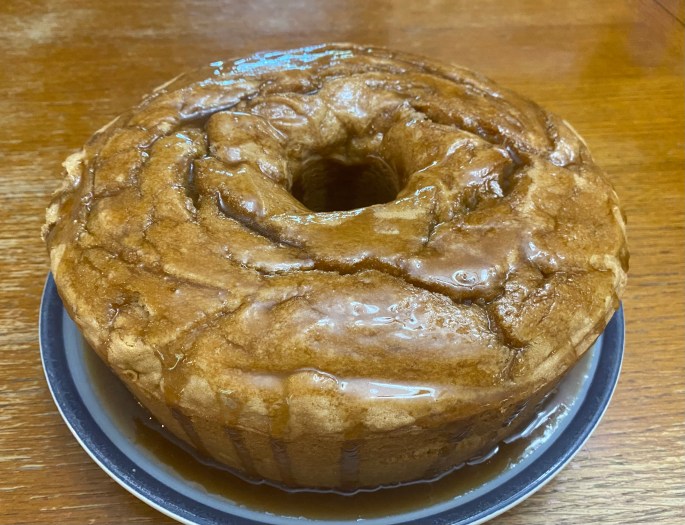
Pounds of Saucy Goodness 🍯

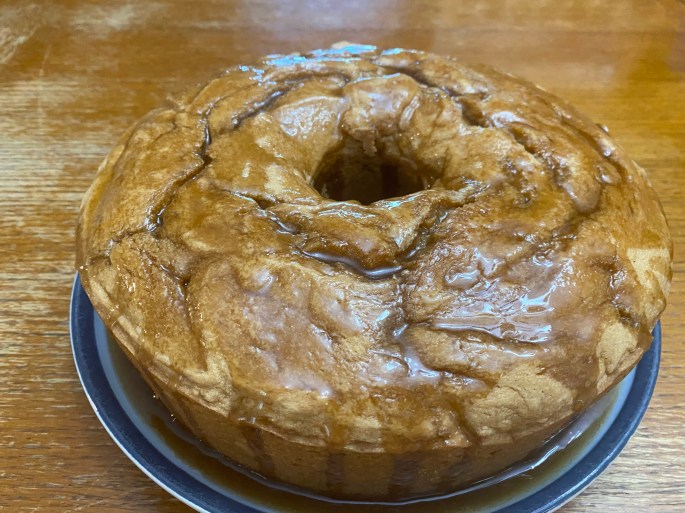
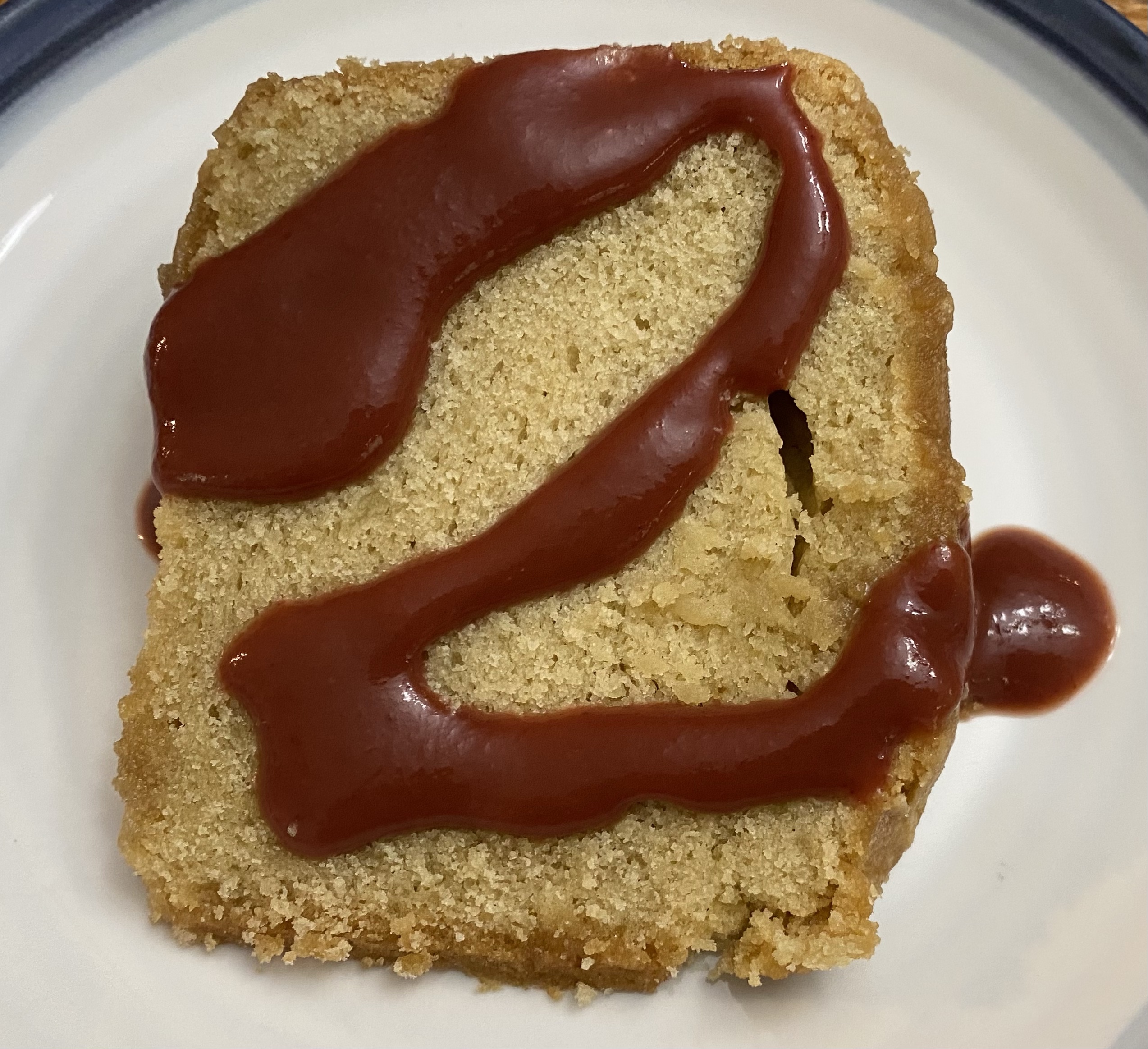
Drizzling with good taste

Serve it up! 🥮

Add some extra sauce, like this strawberry sauce.

Aunt Patty’s Pound Cake, with optional Brown Butter Glaze

gluten-free and plant-based variations included

 Ingredients

1 cup milk, or non-dairy alternative

1 tablespoon vinegar

2 sticks (1 cup) room temperature butter, or non-dairy alternative

½ cup shortening

1 ½  cups sugar 

½ cup brown sugar

5 eggs, room temperature, or egg-free replacement 

3 cups of all purpose flour, or gluten-free alternative

(⅓ cup cocoa, optional if desiring a subtle chocolate flavor)

1 teaspoon baking powder

½ teaspoon baking soda

½ teaspoon salt

1 tsp almond extract

1 tsp coconut extract 

(Can replace almond and coconut extract with 2 teaspoons vanilla extract)

Brown Butter Glaze, optional

Ingredients

4 tablespoons butter, cut into small pieces

¼ cup brown sugar

¼ cup confectioner sugar

½  teaspoons pure vanilla extract

1-2 tablespoons milk

Directions

*Note:  It takes 3-5 hours for butter and eggs to come to room temperature

Preheat oven to 350 degrees

Prepare 12” (14.5 cups) bundt or 10” (16 cups) angel cake (tube) pan

Add vinegar to milk, and set aside in fridge 

Cream together butter, shortening, and sugar until light and fluffy

Add in eggs, one at a time mixing well between each addition

Gradually add in flour, baking powder, baking soda, salt, cocoa (if using) alternately with milk

Mix in extract(s), but do not overmix batter

Pour batter into cake pan

Bake approximately 1 hour or until toothpick inserted in the center comes out clean

Allow cake to cool in pan 15 minutes before turning onto cooling rack to completely cool

Serve as is or with desired toppings such as fruit or ice cream; or top with glaze (see below)

Directions to make glaze:

Place cut up butter in pan over medium heat

Continually stir butter until you begin to see brown bits

Remove from heat and whisk in brown sugar until incorporated

Whisk in confectioner sugar and vanilla extract

Gradually whisk in milk, 1 tablespoon at a time, until glaze is smooth and sugar fully dissolves

Poke hole with toothpick in cracks and crevices of cake top, and drizzle glaze over top of cake.

Store cake at room temperature in an airtight container for 3-4 days.

Can also freeze for up to 6 months.

Each loaf makes approximately 10 slices

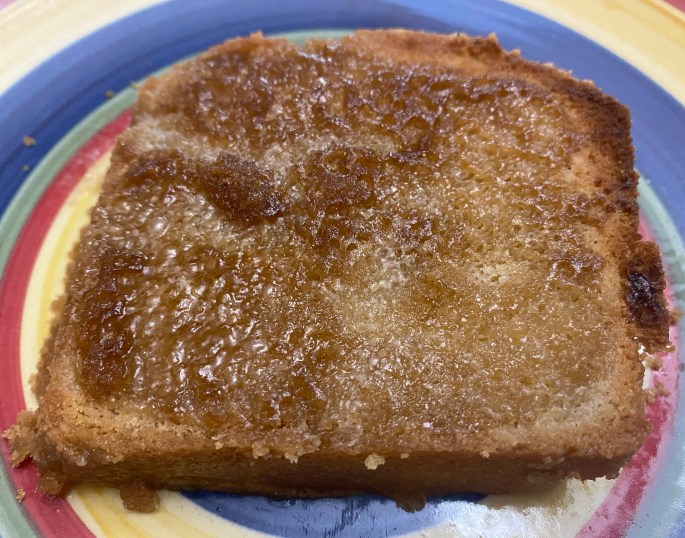
*Pound cake is great toasted in a skillet or oven with butter and sprinkled with brown sugar, cinnamon, and sugar.

*It is also excellent served warm with favorite toppings such as berries, cherries, sauces, whipped cream, and/or ice cream. 

Toast it up in oven with butter, Brown Sugar, and cinnamon

Double Dark Chocolate Muffins

with gluten free and vegan options

“All you need is love.  But a little chocolate now and then doesn’t hurt.”–Charles M. Schulz

Photo by Pixabay on Pexels.com

Dark Chocolate Love 🍫❤️

My love for dark chocolate is no secret.  Even as a kid, on the rare occasion, typically around Christmas, when those Hershey miniature chocolates were given as part of Christmas presents, I would trade my milk chocolate for the special dark bar.  Now, I know that bar is only made of about 45% dark chocolate, but at the time, it was the darkest chocolate for which I was aware.  

Back then, I didn’t eat dark chocolate because it was good for me–who knew in the 70s?  I just liked that bittersweet taste.  Plus, we rarely had candy as a kid, so eating a Hershey’s bar, even the miniature kind, was a real treat.  

As an adult, I still like the bittersweet taste of dark chocolate, but I had to learn to develop a healthy relationship with food, especially chocolate, and it wasn’t always easy.  Who doesn’t love good food, especially tasty sweets?  Over the decades, however, I have decided what our grandparents taught us was right all along.  Eat your fruits and vegetables first, but always save a little space for a sweet treat!

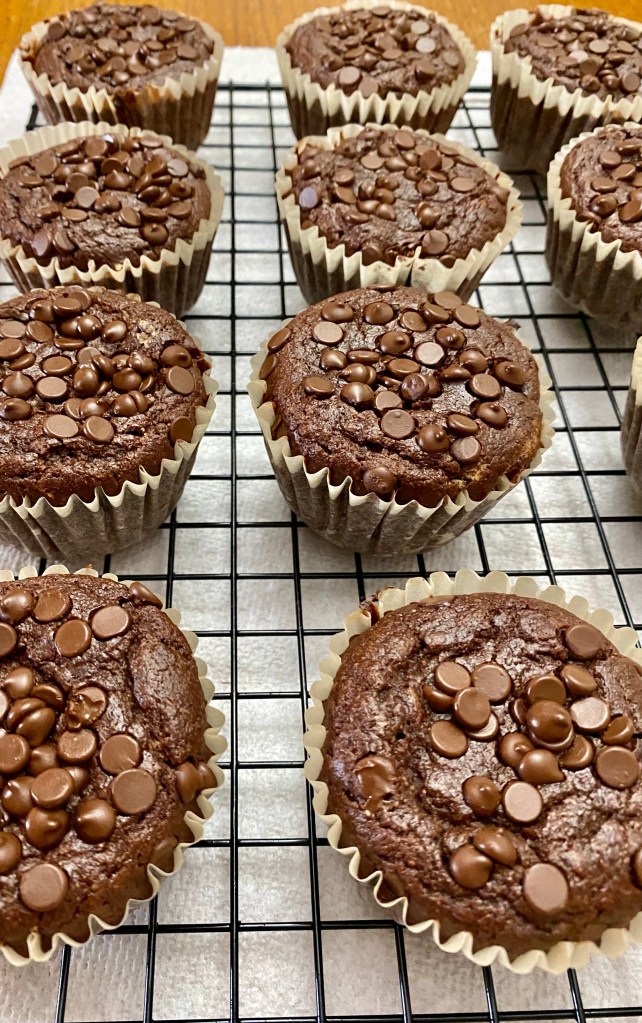
Make a batch and share the chocolate joy!

I don’t bake desserts weekly like my grandmother used to do, but I do enjoy baking when my time allows.  And, if I am baking something with dark chocolate in it, well, that’s all the more fun.
  My sister-in-law, Jacki, recently sent me a recipe she found in a Woman’s World magazine which is very similar to a variation I found on the website, It Doesn’t Taste Like Chicken. My recipe adaptation, listed below, is a hybrid of the two recipes based upon my own personal dietary needs as I have to eat gluten-free due to celiac disease, but I also choose to eat plant-based.  Therefore, feel free to adjust and tweak ingredients based upon your family’s preferences.

While I recognize, this recipe probably isn’t the most healthy choice for everyday, it does offer several benefits, making it a justifiable splurge.  First, there is oat flour, which is full of fiber, protein, vitamins, and nutrients, and it can help lower cholesterol.  Secondly, there is both cacao powder–an unprocessed version for cocoa powder, but you can always use cocoa powder–and dark chocolate chips, both of which contain magnesium, antioxidants, and flavonols.. The antioxidants can help lower cholesterol, and the flavonols offer numerous benefits such as supporting heart health, balancing the immune system, and boosting brain function to name a few of the benefits.  

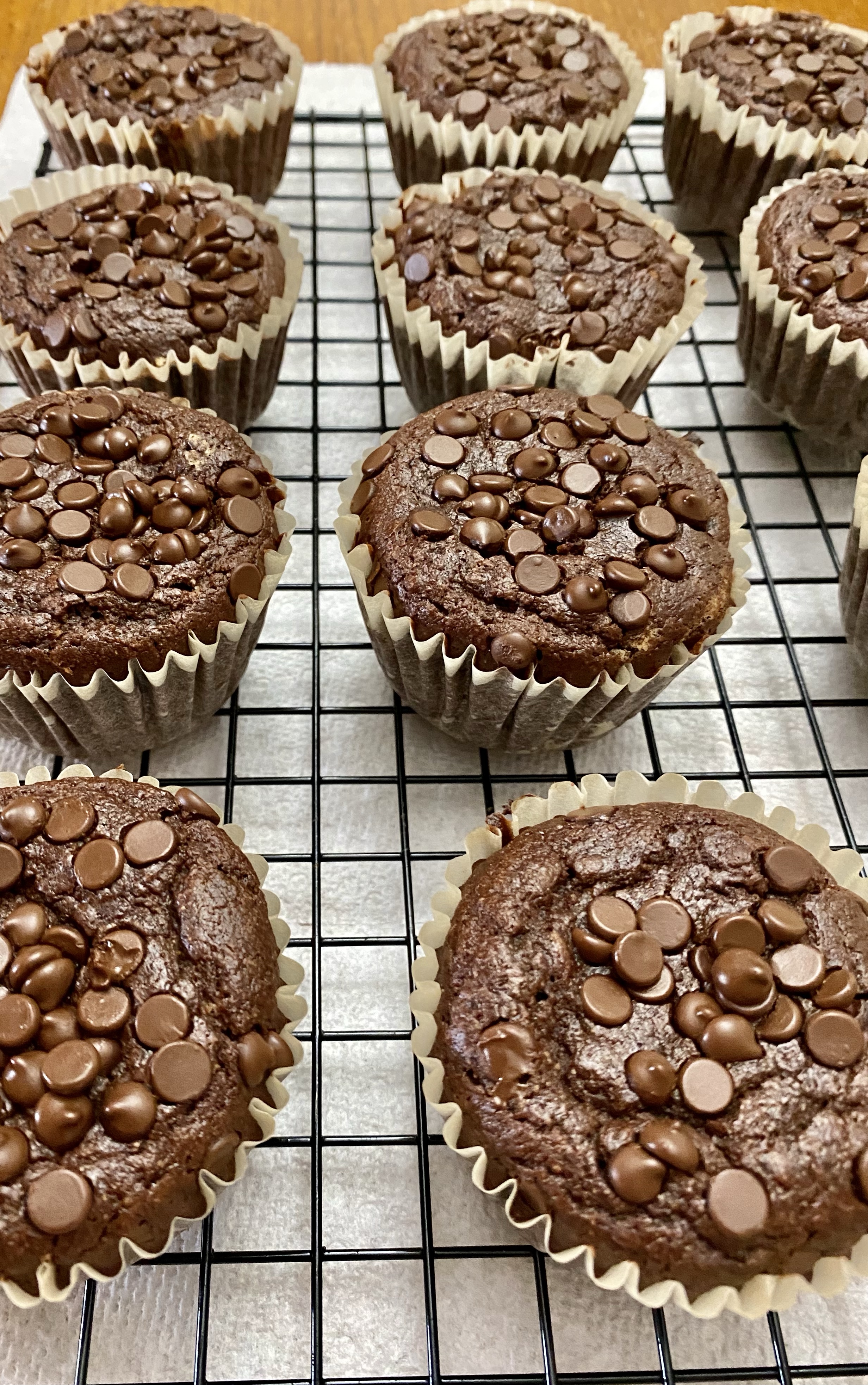
Double the chocolate; double your pleasure!

Flexible and Adaptable REcipe 💜

Lastly, I forgo eggs and oil in baking when possible due to the fact that fats cause me reflux issues–and that’s no fun!  The cider vinegar makes a great egg replacement and helps the muffins rise.  Plus, you won’t even taste it once baked!  While the apple sauce retains the muffins’ moisture content without adding saturated fat.  

Even with all of these adaptations, please do not think I am saying this is an ultra-healthy breakfast recipe because oatmeal with fresh fruit, or avocado on whole grain toast, are probably healthier choices.  However, for a special weekend or holiday treat, or even as a dessert, these muffins are full of a rich chocolatey flavor and texture that is oh-so-yummy!  Serve them warm and drizzle your favorite topping over them or eat them plain.  These muffins freeze well–for up to three months in an airtight container–for future weekend treats, so you can be sure none of your muffins go to waste. 

From my home to yours, as always, I wish you (mostly) healthy, happy, and homemade fun!  Let me know what you think of these!

Make a batch and share the chocolate joy! 💖

Double Dark Chocolate Muffins

Ingredients:

1 ¼ cup oat flour (Can substitute all-purpose flour or gluten-free all purpose flour)

¾ sugar

½ cup cacao or cocoa powder 

2 teaspoons baking powder

1 teaspoon instant espresso powder, optional

½ teaspoon salt

1 cup favorite milk (I use plant-based)

½ cup applesauce (Can use equal amount of oil, if preferred)

2 tablespoons almond or peanut butter, melted 

1 tablespoon apple cider vinegar

¾ + ¼  cup dark chocolate chips (I used plant-based and gluten-free version)

Directions:

Preheat oven to 400 degrees

Line 12 muffin tins with cupcake cups

In large bowl, whisk together flour, sugar, cacao powder, baking powder, and salt

Melt peanut butter in microwave for 20-30 seconds

Fold in milk, applesauce, peanut butter, and vinegar

Stir in ¾ cup chocolate chips

Divide batter evenly among cups

Top cupcakes with remaining chocolate chips (I like to use mini chocolate chips on top.)

Bake 18-22 minutes or until toothpick inserted in center comes out clean

Allow to cool 10 or so minutes before serving

Makes 12 muffins which can be stored at cool room temperature for up to three days, or frozen in an airtight container for quick reheated treats

Feel free to dunk!

Sweet Summer Strawberry Cake

“Every cake has a story to tell.”–unknown

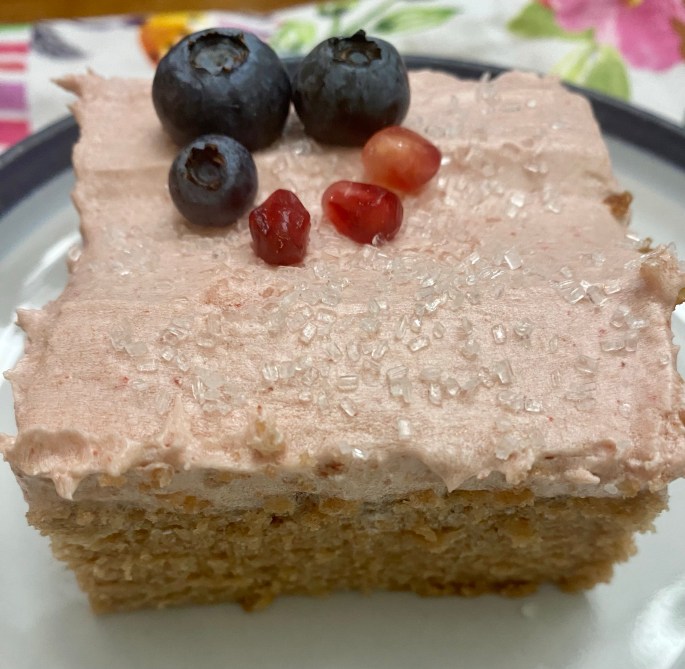
Sweet treat, strawberry cake

Family traditions🧑‍🍳

When I married into my husband’s family some thirty years ago, it was the merging of two families who enjoyed cooking, tried-and-true recipes, handed down from one generation to the next, typically accompanied by a story or two.  On my husband’s side, there were several excellent cooks, especially his mother, his sister, and her husband.  Whereas, in my own extended family, I grew up around three women–my grandmother, my mamaw, and my mom–who were great cooks in their own right.  Therefore, between the two families, there was a wealth of inspiration, ideas, and sources for recipes.  

To this day, many of those family recipes remain favorites.  However, since being diagnosed with celiac disease over ten years ago, I have been on a culinary quest to adapt many of those beloved recipes so that I can, forgive the pun, “have my cake and eat it too”! 

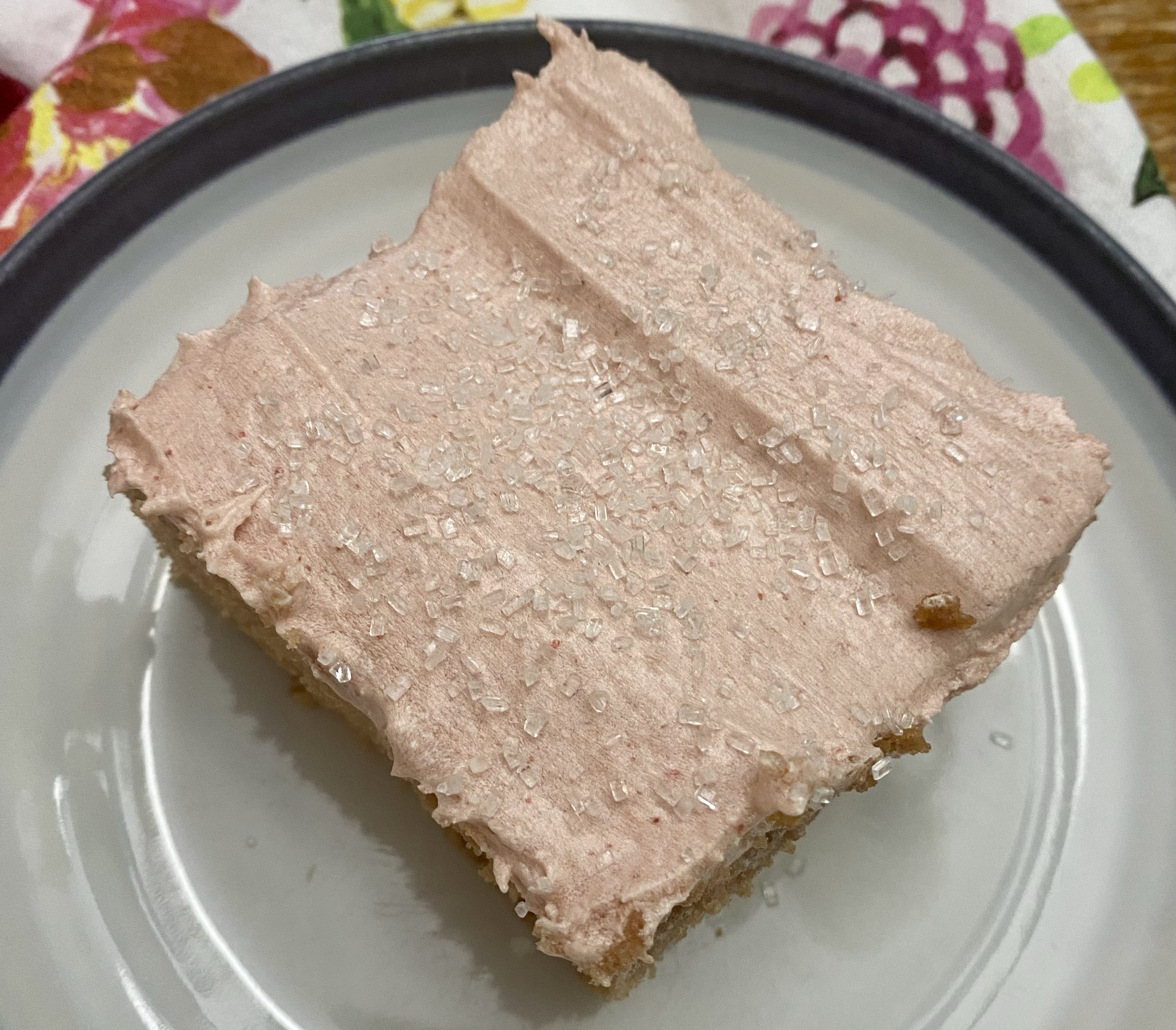
When I first saw my mother-in-law’s version of this recipe, I could help but notice the how thick and creamy the icing looked.

But First . . .🍰

The original Strawberry Cake recipe came from my mother-in-law, Colleen.  She and my grandmother were very similar when it came to their approach to cooking.  They both believed in the right to serve large portions, and both embraced the notion of going their own way instead of following recipes, step-by-step.  Therefore, when my grandmother, or Colleen, would share a written recipe, there was sure to be additional verbal directions and advice for best preparing the recipe.

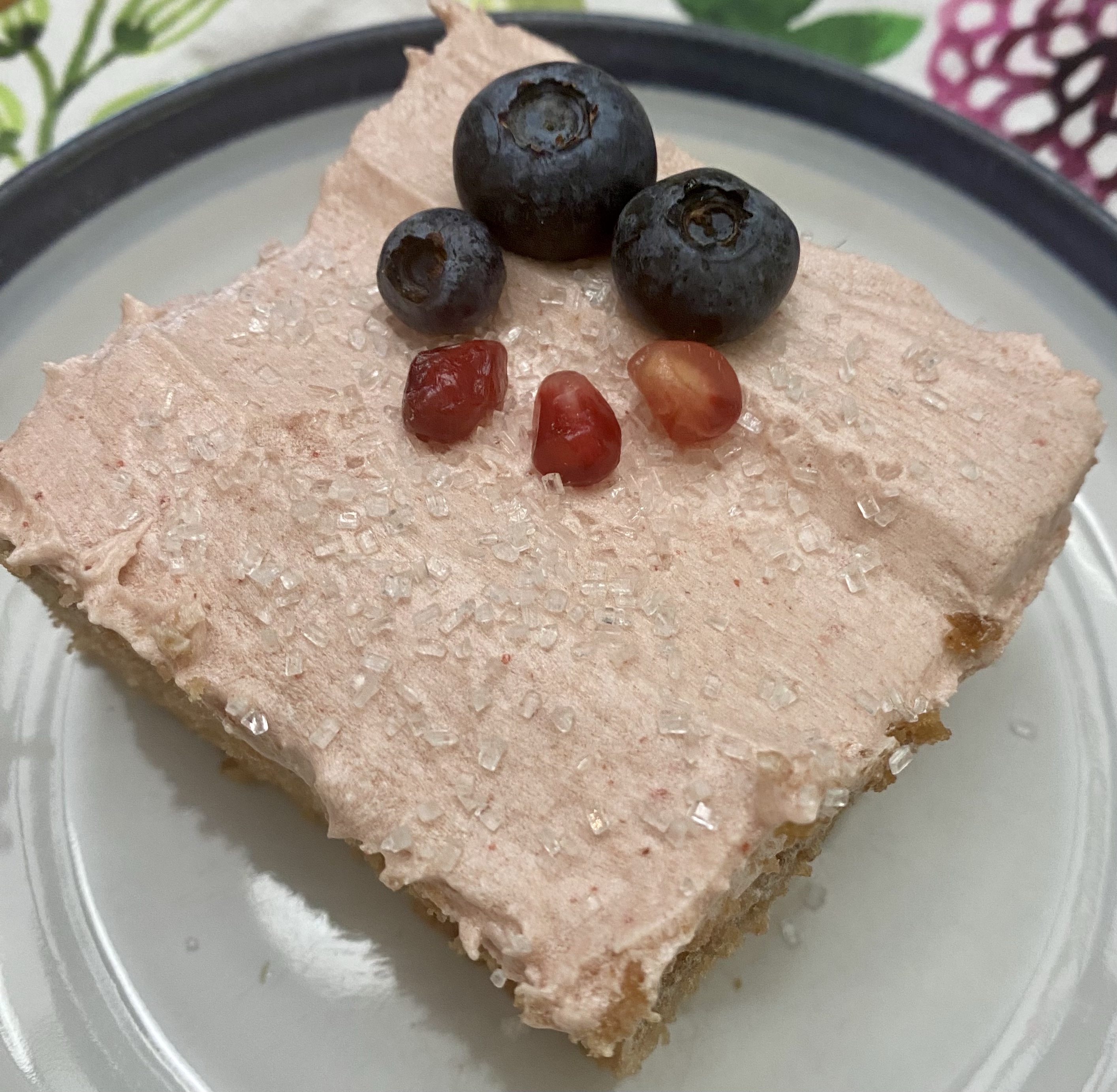
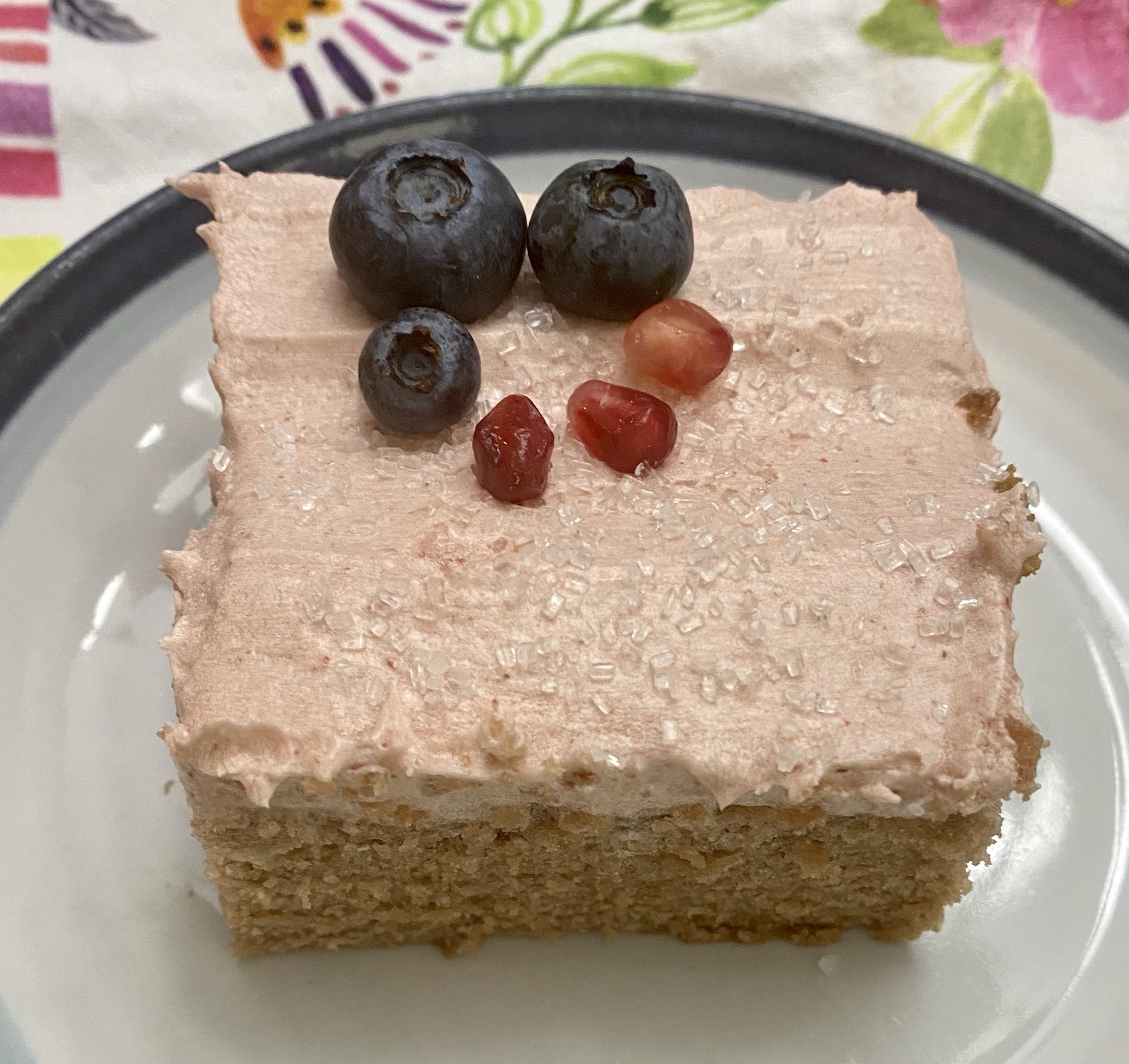
Dressing it up with sprinkles and blueberries if desired.

Never shy away from making a recipe your own🥣

It is that familial cooking spirit of never shying away from the right to make a recipe uniquely your own that continues to inspire me. Gluten-free baking wasn’t a “thing” when Grandmother and Colleen were living, so if I want to still enjoy those cooking stories from my past, I have to forge my own cooking path.  Nonetheless, I think they would have enjoyed many of my modified recipes, including this one. 

Add some pomegranate arils, for a bit more color contrast!

The eyes have it first👀

I recall the first time I ate this cake at Colleen’s house.  It was a Sunday family dinner, and I immediately noticed this beautiful, thickly frosted pink cake.  Now, my grandmother taught, “Your eyes eat things before your mouth,” and from the first look at that cake until the last bite, my eyes and mouth were in agreement: the cake was every bit the tasty confection it looked to be.  

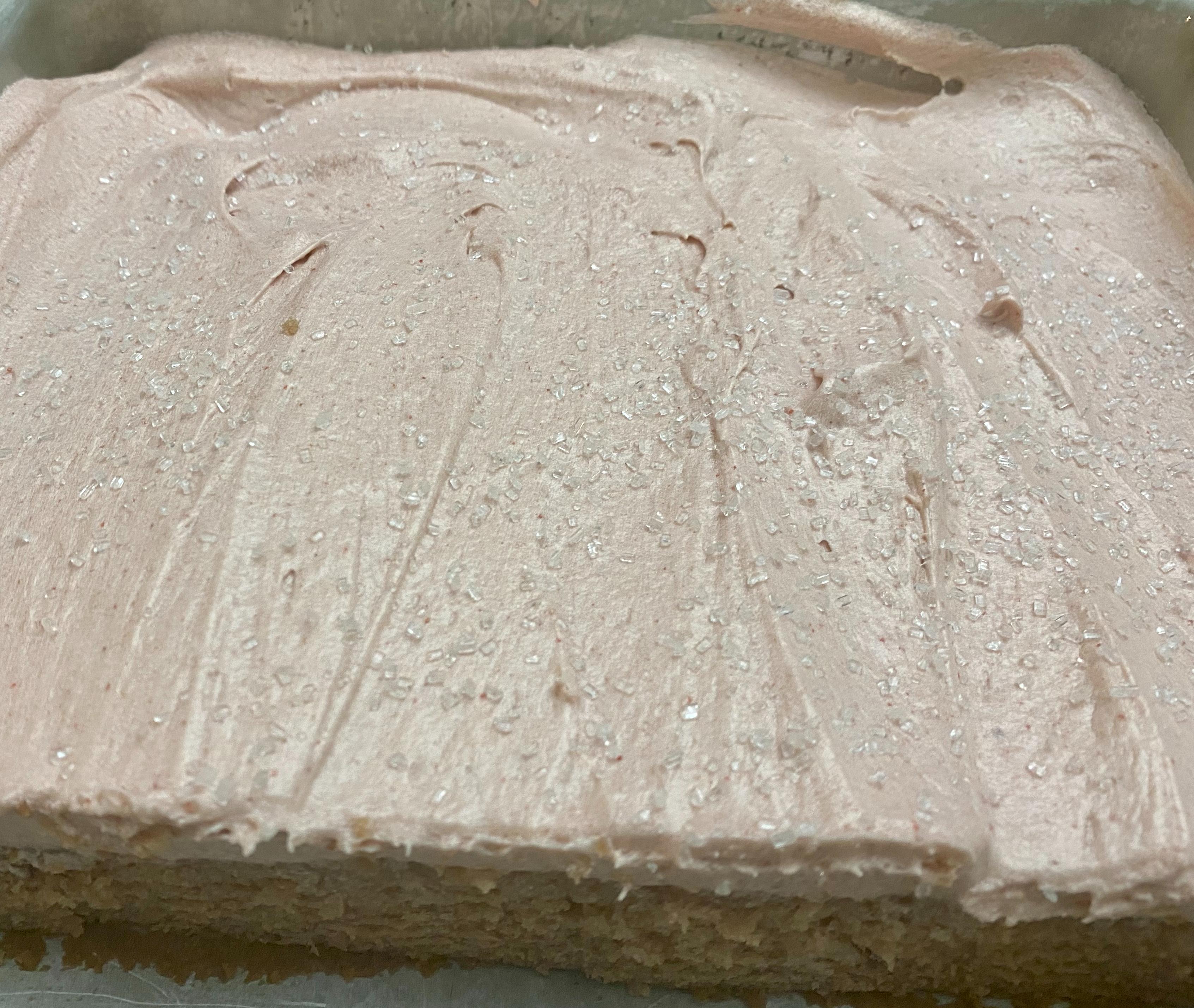
The icing is thick and rich

Make it Gluten-free if you want🥮

I am not sure if my recipe adaptation is on-par with Colleen’s, but I do know that my own family loved it.  In fact, my adult daughter, one who typically, and quickly, discerns if I have made something gluten-free, asked if the cake was really gluten-free because she could not taste the difference.  Even more telling was the fact that she told me she thought that it was my best gluten-free recipe to date, and I could “bake it for her anytime.”  

Homemade strawberry reduction takes a bit more time, but it is so worth the effort! And, the leftovers of this reduction can used as you would any other fruit sauce or jelly.

Strawberry Reduction🍓

In addition to making the recipe gluten-free, I eliminated strawberry gelatin as a main ingredient, and instead, I made a strawberry reduction with double the amount of strawberries the original recipe called for.  My variation is also dairy-free, as I used non-dairy milk and butter; however, I did use real eggs.  That said, if you need this recipe to be egg-free, there are plenty of egg-replacement products available.  

The cake is light and spongy.

Cupcake Crazy?🧁

I’ve included directions for baking cupcakes and several cake variations, so the recipe can be baked and assembled in a variety ways.  Additionally, any leftover strawberry reduction tastes terrific spread over toast, stirred into oatmeal, or added to a smoothie.  

From my Family to Yours🏠

From my home to yours, I hope this recipe allows you to create your own cake story and recipe lineage.  Who knows, maybe one day, your grandkids will make their own version of Strawberry Cake! 

Any way you slice it up, this strawberry cake is sure to please!

Strawberry Cake (or Cupcakes) 🍰

Ingredients

½  cup milk (plant-based, if desired)

2 teaspoons white or apple cider vinegar

1 package white or yellow cake mix (gluten free, if needed)

3 tablespoons all purpose flour (gluten free, if needed)

3 eggs or equivalent egg-replacement

⅓ cup oil, melted butter, or applesauce

½ water

1 teaspoon pure vanilla extract

1 ½ cup strawberry reduction, completely cooled (see below)

*Strawberry Reduction

Ingredients

2 pounds fresh or frozen strawberries (If frozen, be sure to thaw for at least 20 minutes)

4 tablespoons sugar

1 tablespoon lemon juice

Strawberry Buttercream Frosting

Ingredients

1 stick butter, softened (plant-based, if desired)

¼-½ cup strawberry reduction, depending upon how much flavor you want

1 teaspoon vanilla extract

⅛ teaspoon salt

4-6 cups confectioners sugar

Up to 4 tablespoons milk, if needed for creaminess

Directions

*Make Strawberry Reduction 12-24 hours+ in advance

Thaw and/or remove stems from strawberries, then cut in half

Puree strawberries, sugar, and lemon juice in food processor or blender

Pour into medium saucepan and bring to low boil over medium heat

Reduce heat, but continue to simmer over low heat for 30 or so minutes, stirring occasionally

Allow strawberries to reduce to texture similar to that of tomato sauce

Allow to cool, then store in an airtight container in the refrigerator until completely cooled and/or ready to use.

Make Cake or cupcakes

Add vinegar to milk, set in fridge for five minutes (making “buttermilk”)

Meanwhile, preheat oven to 350 degrees

Coat cake pan(s) with nonstick cooking spray or line muffin tins with parchment paper

In a large mixing bowl, stir together cake mix and flour

Beat in eggs, one at a time.

Then, stir in “buttermilk,” water, oil (or butter or applesauce), and vanilla extract.

Next, fold in strawberry reduction, scraping down the sides as needed

For cupcakes:  divide batter among cupcakes, using a greased ice cream scoop, if desired, filling cup ½ – ⅔  full

For cake:  pour batter into one 9 x 13 cake pan, a 10-cup bundt pan, or divide between two 8” or 9” inch round pans

Baking time:  Cupcakes = 20-25 minutes; 9 x 13 pan = 30-35 minutes; Bundt pan = 45-48 minutes; Two round pans = 30-35 minutes or until toothpick inserted in center comes out clean

Allow cake or cupcakes to cool completely before frosting (I even put mine in the refrigerator for a couple of hours before frosting.)

Make the Frosting

In a large bowl, cream butter, strawberry reduction, vanilla extract and salt

Add in confectioner sugar, one cup at a time, until icing is firm

Then, add in milk, one tablespoon at a time, whipping in between each addition until desired consistency is reached.

Pipe or spread over cake or cupcakes.

Decorate tops of cake or cupcakes with red, white, or pink sugar sprinkles or freshly sliced strawberries

Store in airtight container and refrigerate

Makes 24 cupcakes or 1 cake of your choosing

Spinach-Artichoke Dip with plant-based and gluten-free options

“Popeye was right about spinach: dark green, leafy vegetables are the healthiest food on the planet. As whole foods go, they offer the most nutrition per calorie.”–Michael Gregor

“You’re not going to believe what I ate, Mom!”

I was talking with my daughter, Madelyn, on the phone.  She is attending graduate school, and she was describing a dinner that a friend had prepared for one evening during a break from her studies.  

“Spinach and artichoke dip!  Not only that, Mom, but it was vegan, and it was surprisingly good . . . and you know how funny I am about texture and taste.”

Maddie went on to insist that I would have to make this dip when she was home for the holidays.  In fact, she had already asked her friend to share the recipe with her, so she could send it to me.  She went on to explain how her friend has lupus, and eats an anti-inflammatory diet that focuses heavily on fruits, vegetables, nuts, seeds, and a few select whole grains in order to reduce her inflammation.  

As I listened to her continue to describe the dip, my mind was already thinking about the ways I could adapt the recipe.  I was eager to, ahem, dip into reading various plant forward recipes and techniques in order to create my own version.  Not only did I want to make the dip in honor of my daughter’s request, but also because the dip is largely made up of two of my favorite vegetables: spinach and artichokes.

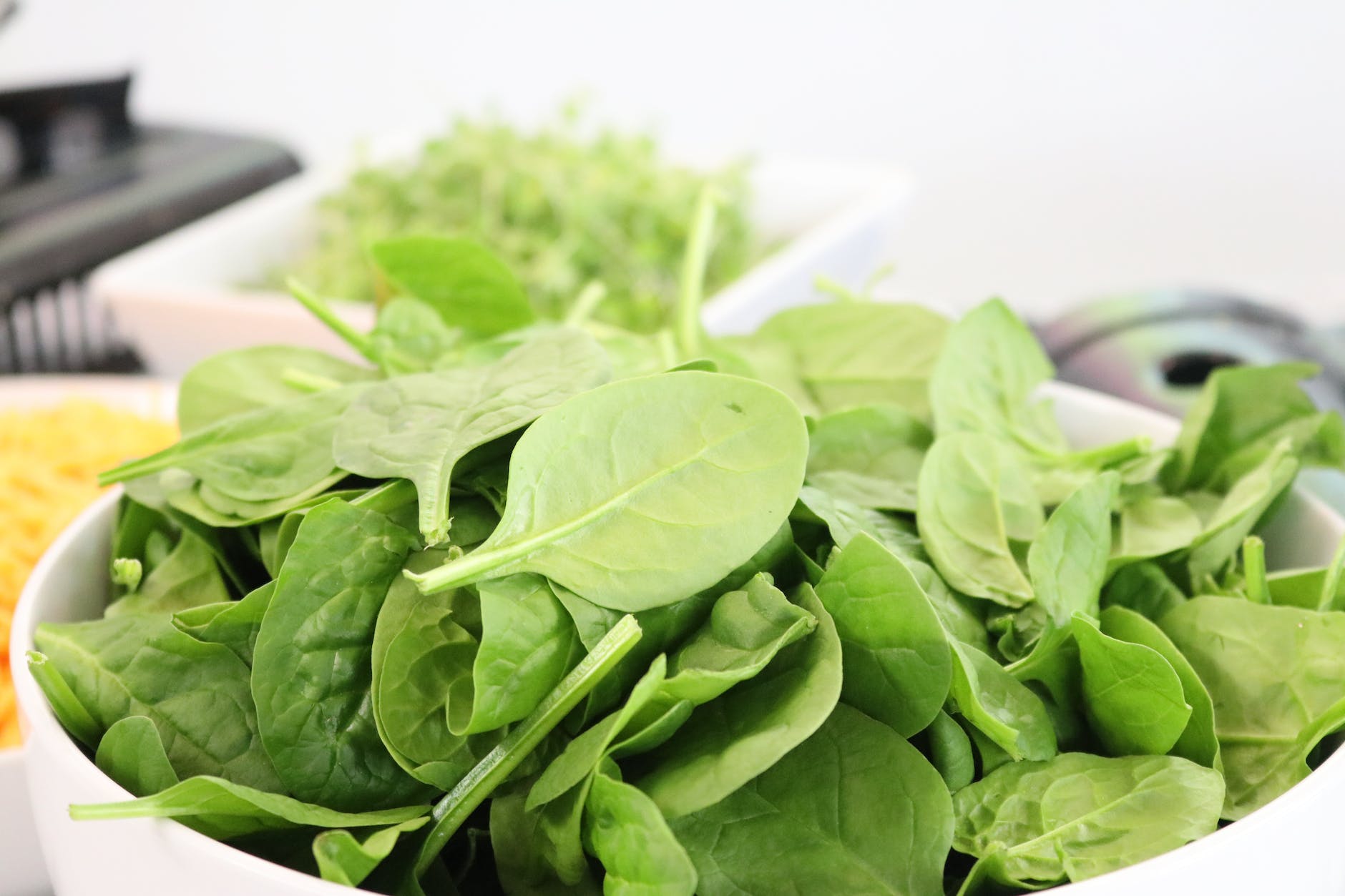
Photo by Jacqueline Howell on Pexels.com

Maddie’s friend was on to something.  Both artichokes and spinach are highly anti-inflammatory.  Spinach, specifically, is chock full of vitamins, such as A, K and C, and it also contains folate, magnesium, iron, potassium, calcium, and small amounts of other B vitamins. It is high in fiber and low in calories.  Spinach is also high in antioxidants, supports brain and eye health, has been shown to protect against certain diseases, and helps to lower blood pressure when regularly consumed.  

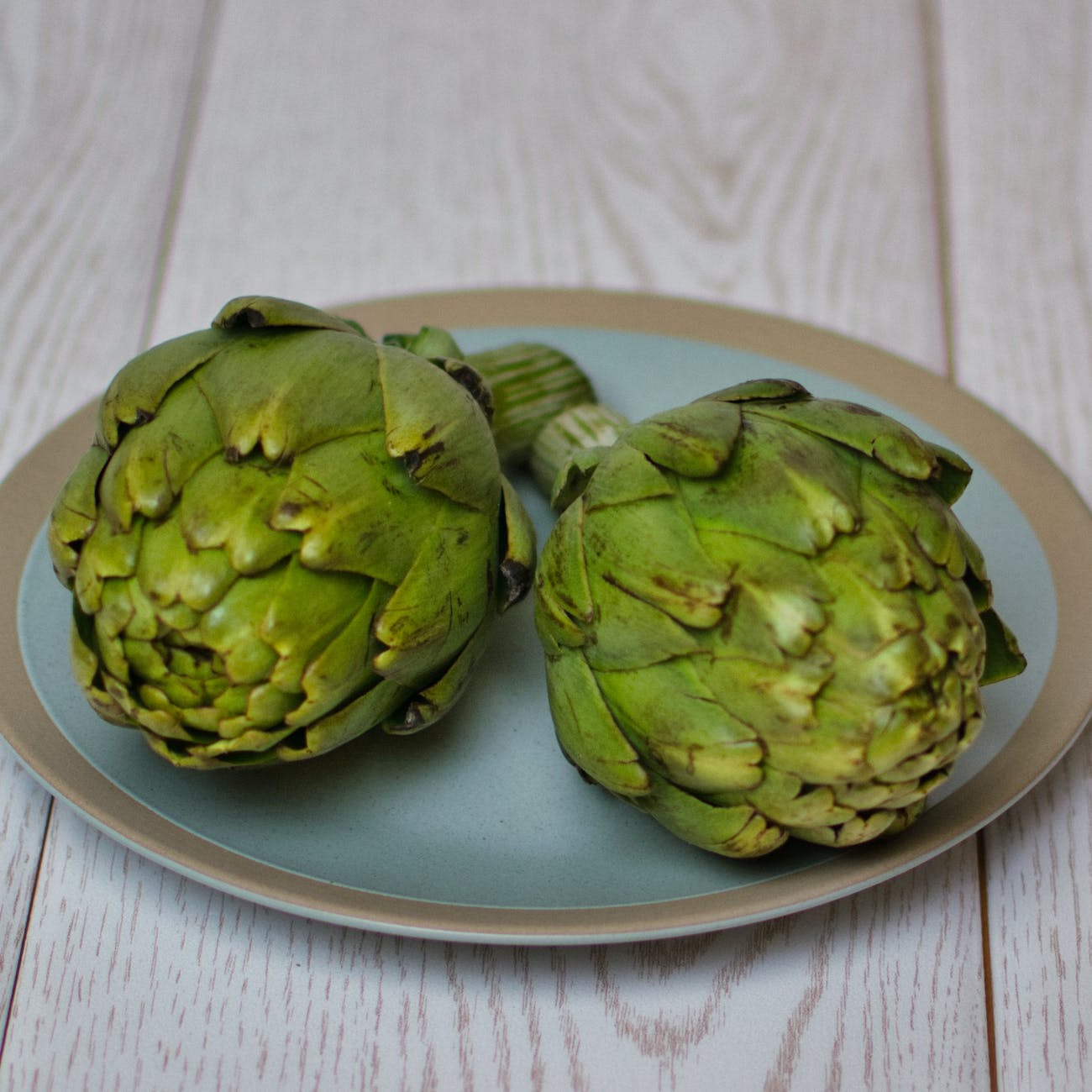
Photo by Andie on Pexels.com

Artichokes are no joke either. They, too, are full of vitamins, including folate, magnesium, manganese, potassium, as well as vitamins K and C.  Like spinach, artichokes are high in fiber, full of antioxidants, and have been shown, when consumed daily, to help regulate blood pressure. Additionally, artichokes promote liver health and are a unique source of prebiotics, which are beneficial gut bacteria that can boost immunity, assist in digestion, and benefit mood.

Of course, I can share all the benefits of these two nutritional, anti-inflammatory powerhouses, but let’s be honest, for most people, myself included, it’s all about the taste. Does this dip taste good, in addition to being made with beneficial ingredients?  Is it worthy of being shared with others?   

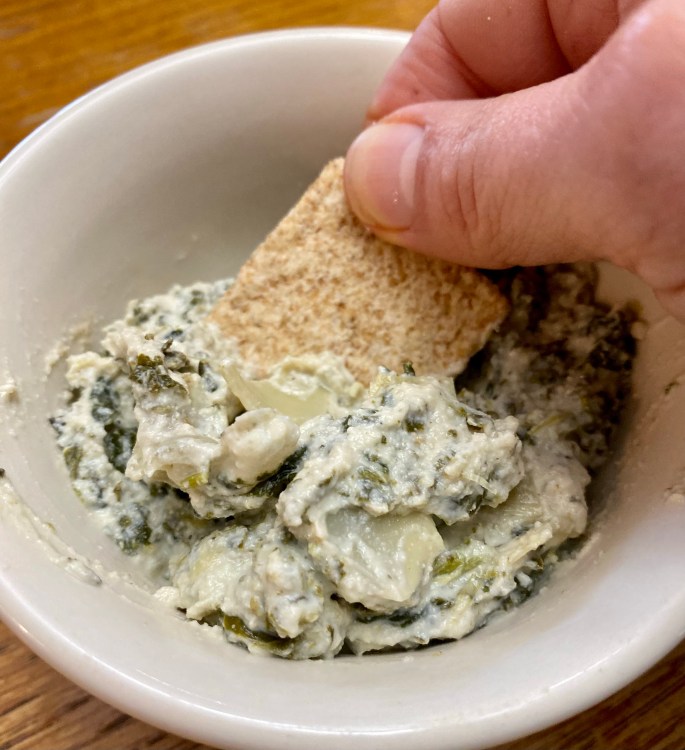
I had my favorite taste tasters, and pickiest eaters, Maddie, and my husband, John, taste the dip, and miracle of all miracles, they both liked it!  Maddie, the pickiest of the two, said she loved it just as I made it.  Her only wish was that we had baguette crackers like her friend served it with.  John, typically not as picky, filled up and ate a big soup bowl worth of dip; however, he added both parmesan and mozzarella cheese to his bowl because he, “wouldn’t want to eat too healthy over the holidays!”  Meanwhile, I served up the dip on a plain baked potato for my dinner, and let me just say that was one tasty dish!

Whether you make it with, or without dairy, you’re still packing a healthy punch of powerful, propitious plants. Serve it up for your next favorite gathering and watch it disappear.  No one ever has to know the dip benefits their health too! 

From my home to yours, may you have a prosperous and healthy 2023.

Spinach Artichoke Dip

Plant-based with dairy-free and gluten-free options

Ingredients

1 cup (raw) cashews, soaked overnight or at least 4+ hours

1 ¼  cup Greek or plant-based Greek yogurt (can substitute with mayonnaise)

¼ cup water

12-16 ounces (1 package) frozen spinach, thawed and drained

1 14 ounce can artichokes, drained and chopped

⅓ cup finely chopped onion

2 teaspoons minced garlic

1 tablespoon freshly squeezed lemon

1 teaspoon braggs liquid aminos (or soy sauce, if don’t need gluten free)

 ½ teaspoon salt, or to taste

½ teaspoon onion powder

½ teaspoon pepper

Optional additions: Mix in up to 4 ounces or ½  cup of any of the following ingredients:

cream cheese (or vegan variation), parmesan/romano/pecorino cheese, soft goat cheese, and/or mozzarella cheese, if desired

Directions

Preheat oven to 400 degrees

Coat a small casserole dish with cooking spray (2 quart size).

In a food processor or high speed blender, blend cashews, yogurt and water until creamy, about 1-2 minutes.

Add cashew mixture to a large mixing bowl and stir in the rest of the ingredients.

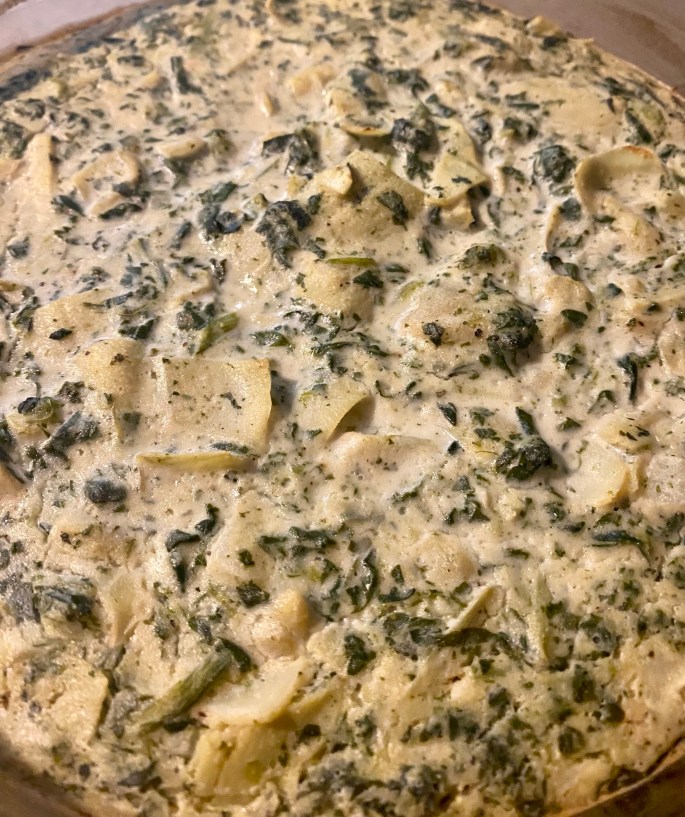
Spread dip evenly in the casserole dish.

*Bake 20-30 minutes, or until top turns golden brown

Serve warm with veggies, tortilla chips, crackers, smear over your favorite toasted bread, or even a baked potato.

Store leftovers in an airtight container and refrigerate.

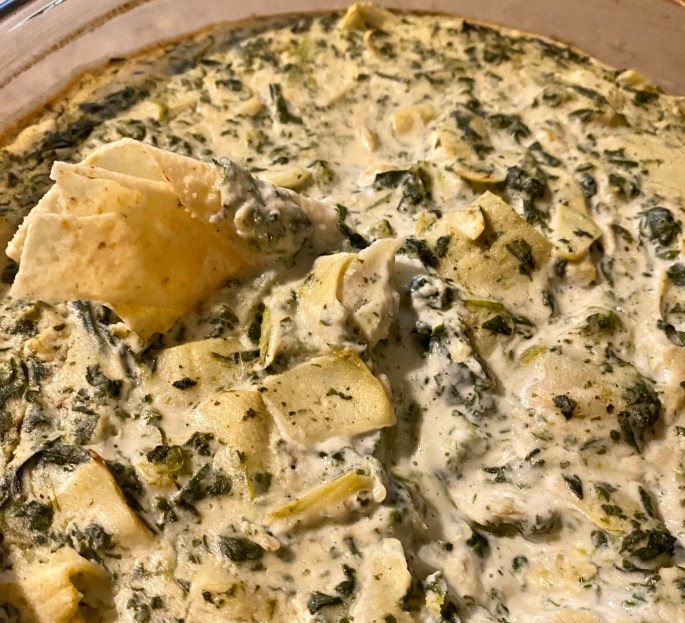
Serve warm with crackers, tortilla chips, or baguette chips

*Serves 6-10 as appetizer