Discovering Daily Delights: Boost Your Happiness Practice

Right in the difficult we must have our joys, our happiness, our dreams: there against the depth of this background, they stand out, there for the first time we see how beautiful they are.” —Rainer Maria Rilke

A night sky filled with stars, with a shooting star streaking across the horizon, silhouetted by trees and distant hills.
Photo by Erike Fusiki on Pexels.com

A Spark in the Sky 💫

I was on an early morning run. Orion and his dogs, Canis Major and Canis Minor, were hunting above me in the eastern sky. As I ran, I periodically glanced upward, marveling at the stars’ movement. Suddenly, a star appeared to shoot sparkling light through the predawn sky. Was it a satellite, the Perseid meteor shower, or another heavenly body? I am not sure, but something inside me shifted. I felt delighted. That event was my daily delight.

A doe and her fawn walking together along a sandy path, surrounded by vegetation.
Photo by Mehmet Turgut Kirkgoz on Pexels.com

How Daily Delights Began 🤔

A few weeks before that shooting star sighting, I began my ‘daily delight’ practice in August. Numerous uncontrollable negative events were filling me with worry, anxiety, and fear. Despite taking proactive steps to reduce the negativity I was exposing myself to, it still found ways to seep in—almost as if it permeated the very air I breathed. Then, at first light on a quiet Saturday morning, a doe and her fawn strolled out of the woods alongside my running path. Pausing for a moment, I watched the mother nudge the little one across the trail and toward a nearly dry creek. It felt sacred. Later, I described it to my family as my daily delight, and the concept was born.
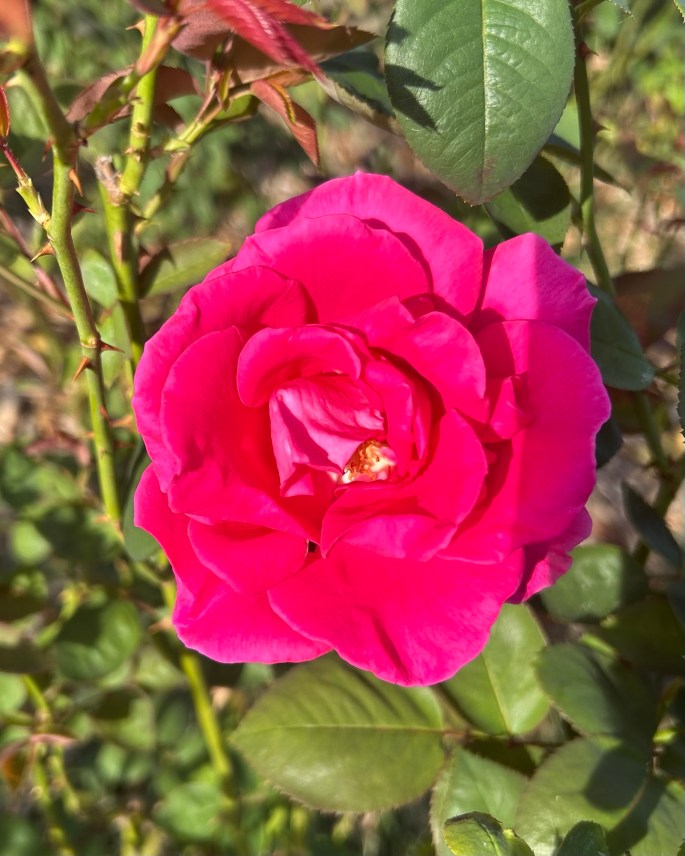
A close-up of a vibrant pink rose surrounded by green foliage, showcasing its full bloom and delicate petals.

Why This Practice Matters 😌

From that moment, I began cultivating an intentional practice of looking for at least one daily delight each day. As a result, I noticed that my mindset shifted, and my stress began to ease. More importantly, these little delights reminded me that goodness still exists—even on the darkest days.

A steaming cup of coffee rests on an open book, symbolizing a moment of warmth and reflection.
Photo by lil artsy on Pexels.com

What Counts as a Daily Delight? ☑️

To me, daily delights are moments that cost nothing, big or small, that spark joy or wonder. They might be a kind word from a stranger, the first sip of bargain coffee that tastes surprisingly better than the pricey brand you had been purchasing, the symmetry of flowers along a walking route, or the brilliant explosion of color as the sun rises over the Ohio River while driving to work. Ordinary moments are transformed and elevated simply by the act of paying attention.
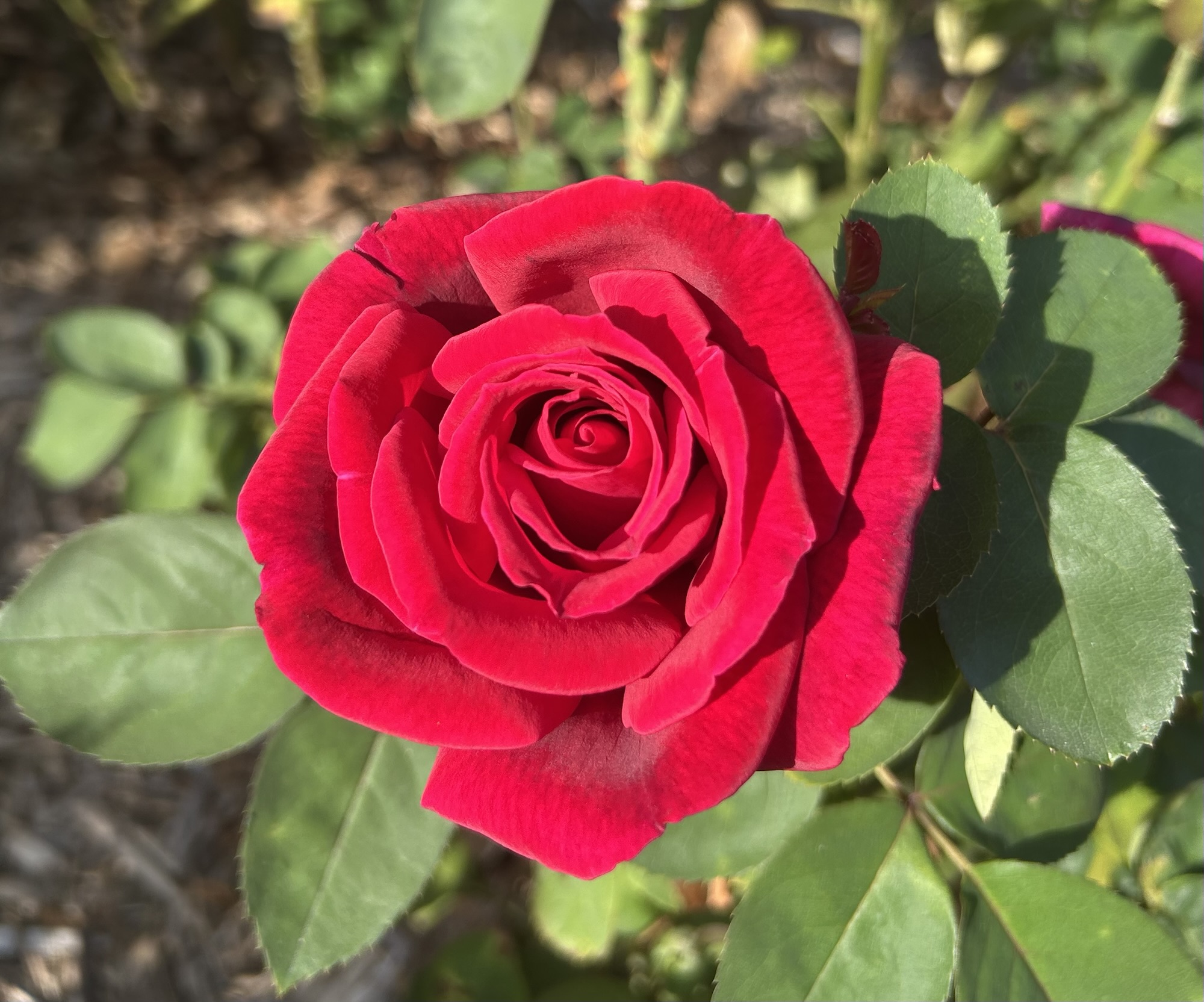
A close-up of a vibrant red rose in full bloom, surrounded by green leaves, capturing the beauty and intricate details of the petals.
Photo by lil artsy on Pexels.com

How to Find Them 🔎

The practice begins in the morning by setting an intention to look for the daily delight. As the day unfolds, I keep my mind’s eye alert—like a scavenger hunt—for hidden treasures, knowing that some days require more searching than others. The daily delight could be birdsong during my run, the sprawling sunlight lighting up the grain of my old oak desk, or a video of my daughter’s friend’s baby babbling and giggling at her new-found ability to pretend to cough. The practice is accessible, requires no extra time, and costs nothing but intention.

A close-up of a pink and white rose blossom surrounded by green leaves.

The Science Behind It 📖

Our brains, as a survival mechanism, are hardwired to notice threats. They fixate on bad events to help us avoid future peril. Unfortunately, in a 24-hour news cycle, this tendency takes a mental toll. Our brains often can’t distinguish real threats from repeated media images, leaving us anxious, restless, or fearful.

Intentionally noticing delights, however small, helps counterbalance this wiring. It reduces stress, builds resilience, and—most importantly—fosters hope. Practiced regularly, it becomes a bridge to gratitude and a more grateful outlook.

A couple sitting on a couch, wrapped in a blanket, smiling and laughing while playing with a light-colored dog.
Photo by Andres Ayrton on Pexels.com

Low-barrier Maintenance ✅

Fostering a daily delight practice is accessible to anyone, anytime, almost anywhere. It’s what I call a low-barrier activity—it doesn’t require journaling, a special setting, or money (no hidden fees or price hikes here!). You might keep a journal of delights or share them with friends or family. Personally, I enjoy sharing mine with others when appropriate because it amplifies positive feelings within. However, there are no other requirements beyond noticing and savoring the event.

A person gently touching foreheads with a cat in a sunlit room filled with plants.
Photo by Yuliya kota on Pexels.com

Even on Hard Days 😓

Of course, some days are less than stellar, especially when hardships pile up. In those times, it’s tempting to slip into cynicism. Yet even then, finding one joy—however small—can ease our uneasiness and calm our agitation. While we cannot erase challenging circumstances, we can coexist with them and still find good.

Two men laughing together outdoors, enjoying a moment of joy in a natural setting.
Photo by Ketut Subiyanto on Pexels.com

The Ripple Effects ↝

The ripple effects of this practice are profound: reduced tension, greater resilience, increased gratitude, and more positive interactions with others. Sharing a delight can spark connection, deepening bonds, and spreading positivity. Over time, this simple practice trains us to notice light even in the darkest corners of our world.

A close-up of a garden sign reading 'JUMP FOR JOY' with the word 'Floribunda' beneath it, surrounded by dried leaves and grass.

Shining Light in a Dark World 🔦

Like those hidden picture games of childhood, simple joys abound; they just need us to notice and color them in. They’re free, accessible, and powerful in shifting perspectives. Daily delights don’t excuse us from facing hard truths, but they open our eyes to possibilities—even on the hardest days.

A close-up of a pink rose flower blooming among green leaves.

Your Turn

So, what daily delight will you notice today??
Finding Service and Joy in Every Job: Lessons from a cleaner

recalling unceasingly before our God and Father your work energized by faith, and your service motivated by love and unwavering hope . . .” 1 Thessalonians 1:3 (Amplified Bible)

What a difference one person can make😃

I had a feeling when I walked into my classroom one frosty January morning and observed the unswept floor, Mr. King (name changed for privacy) had not been in my classroom over Christmas break. Not that I typically permit my students to leave trash and debris on the classroom floor; however, I noticed there were a few pieces of notebook paper, pink pencil eraser dust, and a random pen lid dropped to the floor.  

Thanks, in large part to Mr. King, my classroom floor was usually immaculate. Was he sick? When I saw him, he appeared to be fighting some sort of virus. Picking up what I could off the floor, I thought of Mr. King, and the way he approached his work. However, students had begun to arrive, and I knew I would have to set aside my current strands of thought.

Later in the week, I ran across a quote that reminded me of Mr. King: “You are always doing spiritual work. It is not necessarily the action that is important, but how you do it.” (Satchidananda) I thought of his smile, his positive attitude, and the can-do energy he brought with him to his work. 

Photo by Liliana Drew on Pexels.com

Each Job is part of a Bigger Picture 🧹

I first met Mr. King during the summer before school started. He was part of a professional cleaning crew hired by our school. We occasionally chatted while we both worked, if he happened to be completing a task in my classroom. During one of those chats, we said his cleaning job mattered because he felt he was part of the team helping the students to have a successful school year.  

“If I don’t do my job, then you have to do my job, which means you don’t have as much time to focus on your students and that means their learning suffers.  It’s all a chain, y’see?”

Photo by RDNE Stock project on Pexels.com

Working with Joy 🎶

Once the school year was under way, I would often hear Mr. King, after school hours, singing/humming in the next classroom as he swept. It was a joyful energy, his voice pitching high and low as he worked. 

Some days, after students were dismissed and I remained getting caught up on work, Mr. King would respectfully knock and ask if I minded him coming in to sweep. Never wanting to interfere with his cleaning schedule, I welcomed him in. 

No matter how busy Mr. King was, he would take time to ask about my husband and me. Then, he tended to have some sort of question or story for me to ponder. It was a delightful give and take, and he was most interested in improving himself, body, mind, and spirit.

Though our conversations were never longer than three or four minutes, I was left with the impression that Mr. King was a deeply faith-filled man who had made mistakes, knew he wasn’t perfect, but still had the desire and heart to improve.

He especially seemed to want his life to be of good service. To this end, he once said, “I am working. Am I not? But how am I doing it? That’s what’s real.” 

Photo by Antoni Shkraba on Pexels.com

OUr Work Ethic speaks for us 🤓

Later in the month of January, another coworker said Mr. King went back to Florida, from where he was originally, in order to be closer to his family

Upon hearing this, I recalled he once took a phone call from his daughter while sweeping my classroom. Returning from the hallway into which he had stepped to talk with her, he looked wistful, adding, “I worry about her.”

Photo by Ivan Samkov on Pexels.com

simple ways we can be of SErvice to others: 😃

The memory of Mr. King’s work ethic now serves as a reminder to me that no matter what job we have, we can find ways for our work to be of service to others. Here are some of the ways, Mr. King demonstrated this:

Work with joy. It doesn’t mean that we don’t have challenging or difficult days. Rather, we can still have something for which to feel joyful IN SPITE of circumstances, and that joy can become contagious. Mr. King appeared to find and share joy by singing/humming and smiling outwardly. Even on those days where I could tell something was bothering him, he still offered me a smile and a sincere greeting. 

Find the meaning in your work. Mr. King believed his work was important because he was contributing to the overall well-being and success of students, teachers, and staff. He often spoke about how much he liked the teachers and students he met and was glad he could do his part to help our school. 

Work hard, but take time to pay attention to others. Mr. King was an efficient and effective cleaner, but he still took time to greet staff members by name. If he learned something special about someone, he would ask questions about that special-something and would later refer to it in passing conversations. He was the master of personalized small talk.

Remain flexible and responsive to the needs/priorities of the day. If a worker was out, or a new worker was being trained (which was often), I would frequently overhear Mr. King fielding calls to answer questions and/or offer help. He appeared to adapt his schedule in stride to accommodate necessary changes. Even then, if he saw John, my husband, or me, he’d pause with a “Y’all doin’ ok?” or “You and Mr. John take care this evenin’.” 

Be empathetic and compassionate. Throughout the time Mr. King worked at our school, I observed several occasions when he took time to interact with students who looked frustrated, down, or who simply seemed alone. He’d ask, “You doin’ ok, buddy?” or offer another kind phrase in an attempt to bring a smile to a kid’s face. Then he went right back to work, whistling or humming as he went.  

It’s not what you do, but how you do it. Mr. King epitomized this. A radiant smile never seemed to leave his face while working. Furthermore, he demonstrated to his coworkers, and those with whom he encountered, that he cared, was interested, and desired to uplift the small piece of world his work-life encompassed.  

Photo by Ketut Subiyanto on Pexels.com

final thoughts🤔

None of Mr. King’s skills are life shattering or new ideas. However, in a world where it currently appears acceptable to be ill-mannered, ill-tempered, non-empathetic, and even outright bully others to get your way, Mr. King’s skills and attitude were a refreshing change of pace. Imagine the amount of good that could be generated if more people thought about HOW they worked, spoke, and acted–if more people would choose to be truly service-driven, energized by faith and motivated by love and hope. How much more would be accomplished . . .if only.

The Power of Kindness: Good Thoughts, Good Words, and Good Deeds

“Be kind whenever possible. It is always possible.”Dalai Lama

Photo by Alexas Fotos on Pexels.com

The shape of kindness ❤️

This past spring I viewed a documentary on various world religions, and one line  from this film really stood out. “Good thoughts, good words, and good deeds” is considered an essential teaching and practice of Zoroastrian faith. As I understand it, doing good deeds is not reward focused, but it’s more about thinking the best of others as well as doing good acts for its own sake. That maxim has remained with me all these months later.

At its core is kindness–kindness to others, and even, kindness to self. Kindness is one of those notions that gets tossed around in cutesy social media quotes and images, such as, “Spreading kindness like confetti!” or “In a world where you can be anything, be kind.”  While I love the intent around these images, it is easy to grow immune to their effects or even cynical.

Still, at the end of the day, kindness truly does matter. How many of us have been impacted by a rude, disrespectful, or all around unkind encounter?  I know I have. I walk or drive away feeling like Pig-Pen, a proverbial cloud of yuckiness clinging to me. Like lint on black pants, it seems that one act of unpleasantness appears to attract more of it. 

Photo by Craig Adderley on Pexels.com

Moods are contagious 🤧

For example, the day may begin with a car cutting you off on your drive into work. Preparing to walk into work, the lid to your new, supposedly, leak-proof coffee cup isn’t quite tight enough, and you end up entering your workplace with brown stains down that new light-colored shirt that, of course, you were wearing. 

After stopping by the restroom to try to blot off the stain as best you can, you open your computer only to find an email from that “thinks-they-are-so-special” client that sends you into another negative spiral. By the time lunchtime rolls around, and you realize you forgot your packed lunch at home that you actually took time to pack the night before, that cloud of negativity has burst open, and you feel soaked through with negative thoughts.

Photo by Christina Morillo on Pexels.com

Here to help 🤝

Kindness, however, often works the same way. What if the drive into work was eventless and traffic was light.  While the coffee still spills, a co-worker offers their Tide-pen to help make the stain less noticeable. When you open your inbox to email, you discover an email that includes words of appreciation from a hard-won client for a job well-done. 

When you discover that you left your packed lunch at home, another coworker offers to pick you up something while they are out on an errand, which gives you a bit of time to get caught up on a few other tasks you’ve been meaning to do. Meanwhile, you make a mental note to think of something nice you can do in return for that coworker later in the week. 

The same day, served up two ways.  Kindness can make a difference like that.  And the best part is that kindness does not require any special talent, money, or resources; we can cultivate it through our “thoughts, words, and deeds” as those of the Zoroastrian faith are encouraged to do.

Photo by Andrea Piacquadio on Pexels.com

Kind words and actions cost nothing but reap dividends 🤩

Offering to help others, saying or writing kind words, or simply being considerate are all ways of intentionally sharing kindness. Those simple acts can benefit others in ways that we may never be directly witnessed, but do not, nonetheless, detract from the worth of the actions. In fact, one small act of deliberate kindness, like its negative counterpart, can initiate a wave of positive events as one act leads to another and on to another.

Even if we offer a kind word or deed to others without expecting anything in return, those acts still benefit us. According to the Mayo Clinic, demonstrating kindness to others positively contributes to our sense of self-esteem, empathy, compassion, and boosts our mood. In the same 2023 article, the Mayo Clinic adds that acts of kindness lowers one’s blood pressure and levels of cortisol, a hormone directly related to stress.  Kindness can boost your mood and increase feelings of connectedness, thereby decreasing feelings of loneliness.  

Photo by Dziana Hasanbekava on Pexels.com

Benefits of Kindness 🧠

Kindness is also good for the mind.  When you do a thoughtful act, even as simple as sharing a pack of gum, offer words of encouragement, or even speak a simple compliment, you create physiological changes in your brain. With each kind act, dopamine and serotonin are released, creating feelings of well-being.  Meanwhile, the pleasure and reward centers of our brains are lit up. Additionally, kind acts and words can flood our bodies with endorphins, those “feel good” chemicals that boost mood and reduce sensations of pain and/or stress.

Kindness doesn’t have to just be focused on others; kind thoughts towards oneself is also as important and just as worthy of an endeavor.  Practicing kind self-talk that is positive and encouraging of self is worth-while, and much more beneficial than the negative loops that too easily circulate in our heads.  In addition to the practice of affirming and loving self-talk, fostering a sense of gratitude goes a long way to feeling kindness towards self and others. 

Photo by Kindel Media on Pexels.com

So many ways to offer Kindness 📝

Of course, there are the obvious kind actions such as volunteering and working/helping out with causes in which you believe.  However, there are other less overt, more subtle ways of generating kindness that are just as beneficial, if not more so!  Consider the following actions:

  • Call that friend or acquaintance that you haven’t seen in weeks 
  • Mail an old-fashioned postcard or letter to someone telling them how much they mean to you or you appreciate them
  • Write a handwritten thank you note the next time someone does something nice for you
  • Get flowers, candy, a cup of coffee, or a some other little treat for someone for no reason
  • Check in or call someone who is either sick or you know is going through a rough patch
  • Offer to take a shut-in to church, to the grocery store, or even to lunch
  • Buy a cake mix or cookie dough. Then, bake and share a treat with a neighbor or friend for no particular reason
  • Keep a gratitude journal to continue to foster good thoughts
Photo by Eva Bronzini on Pexels.com

everyone’s superpower 🦸‍♀️

The list could go on, but the point is, acts of kindness and generosity to others (and self) can be as big or small as you want.  “Good thoughts, good words, and good deeds”  put into actions, no matter the size, will always benefit others in some way.  

In the end, kindness is a big deal.  In fact, it’s a kinda superpower we all have the ability to possess. It merely takes a tad bit of thought and time. 

A Lesson on the Power of Positivity

Lift up your two hands; remember one is for helping others while the other is for helping you.”–Israelmore Ayivor

“So, what do you do?”

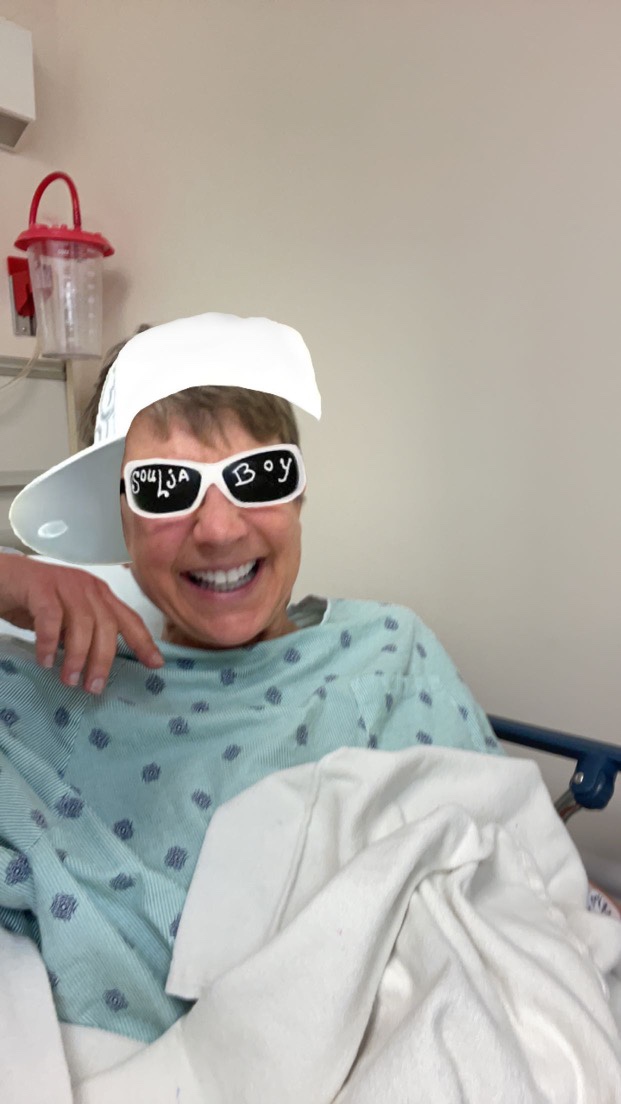
Her name was Pam.  I did not get her last name, but she was one of several nurses with whom I came into contact during my recent stay in a local hospital due to a surgical procedure.  Pam was a competent, no-nonsense, veteran nurse, and she was asking me this question on my second day when my thinking was a bit less clouded by anesthesia and pain meds. 

“I am a teacher, and I write,” was my simple response.

She asked several more polite questions regarding teaching while taking my vitals and dispensing meds; in turn, I asked about her work experience.  

Photo by RF._.studio on Pexels.com

Then, she asked what I wrote about it.  I tried to describe the various topics about which I most often wrote, and I ultimately summed it up by explaining that I tried to focus my writing on the positive topics, especially the ways in which readers can positively impact themselves and/or others.

My response really got her talking about the fact she believed there was too much negativity put out into the world.  Pam then invited John, my husband, and me to imagine what would happen if people would take time to say one nice thing to another person?  She went on to ask us to further envision those people, in turn, saying one nice thing to another person, and the way in which the chain of positivity would most likely continue.  

 Then, she looked at me and implored, “That’s what I want you to write about next.”

Photo by Binti Malu on Pexels.com

Pam made an excellent point. There is way too much negativity in the world, and I do not want to disappoint Pam.  That is because she, along with Jennifer, Natalie and Brittany took excellent care of me immediately following surgery.  However, Pam spent the longest amount of time with me over those two days, so this piece is written, not only in honor of Pam, but also in honor of all those who positively impacted my recovery.

 Based upon my interactions with Pam, her professional conduct exemplifies what she was preaching to me. Specifically, when Pam first took charge of my care, when I was transferred from the post-surgery area to a hospital room, she insisted that I walk from the stretcher to the bed in the room.  Of course, she guided and steadied me, as I was still strongly under the influence of anesthesia and pain meds, but her insistence established a positive tone for my recovery: the affirming belief that I could take ownership of my recovery.

Pam urged me to walk within the first 30 minutes of arriving on the floor.  Again, she steadied me.  When I asked how far I was supposed to go, she did not limit me.  In fact, she told me to choose my directions and go as far as I wanted to go within the confines of the floor.  Therefore, I felt compelled to go the full length of my boundaries, albeit ever-so-slowly and on wobbly legs initially.

Photo by Brett Jordan on Pexels.com

Those first walking efforts were then met with praise and encouragement.  Phrases like, “You’re doing great,” or “That’s good,,” buoyed my bruised spirit.  Furthermore, when I apologized for moving slowly, she kept encouraging me.  When I worried about being so unsteady, she instructed me to look straight ahead in the direction in which I was moving.  

Furthermore, Pam (and the rest of the nurses) insisted I do as much as I could on my own.  She did not hold onto me long, once my muscle memory of walking returned.  To be sure, her hands were at the ready each time I waivered a bit, but she always maintained a stance that facilitated as much independence as I could muster.  

Of course, I fully admit several of my memories are veiled under a haze of postoperative fog.  Nonetheless, the ones that remain, I believe, are stored there because of the positive efforts of nursing staff, family, and friends.  

In fact, several studies validate that the way in which a person reacts to specific events or situations determines, not only one’s ability to commit to memory what happened, but also affects one’s ability to recall that event/situation later.  What’s even more interesting is that memories of emotional events are more vivid and remain more accurate as time passes.

Photo by Anna Shvets on Pexels.com

This explains why, when I was first separated from John and my daughter and taken to a pre-operative area, I began to feel real tinges of fear.  I was left alone in a curtained off corner with operating staff moving all around while other patients were being wheeled by for surgery.  Furthermore, I did not have my glasses on, so my vision was not clear. Panic began to set in, and slow tears began to trickle out of my eyes. 

Two distinct and separate memories remain from that time-period.  First, there was a female who kept looking at me from across the room.  I have no idea her position, but suddenly she walked over to me with a small box of hospital-issued tissues.  I do not remember precisely what she said, but her voice was soothing, her eyes were kind, and her gentle pat with her gloved palm communicated understanding.

In contrast, several long moments later, the anesthesiologist arrived with a nonplussed look that quickly turned into a look of frustration when he heard that I had Raynaud’s disease, which could potentially affect the arterial line he needed to draw for the surgery.  While I knew it wasn’t my fault, as I had repeatedly shared this information throughout the numerous paperwork, somehow the information had missed him.  Immediately, my level of fear increased, not only because I irrationally felt he was angry with me, but also because my brain began to overthink about the two IVs, arterial line in my wrist, and a slew of other needles that would be involved during the procedure.

The unknown female in the pre-op room actions versus the aggrieved attitude of the anesthesiologist, perfectly illustrate Pam’s point.  If you spread negativity, even unintentionally, it lingers with others, and can potentially spread.  Likewise, when you offer others kindness, generosity, patience, and positivity it ripples out in waves across humanity; however, instead of stirring up little fires of fear, those positive qualities quell the fears and anxieties of troubled hearts, and perhaps, offer hope to those in need.

Thank you, for the exemplary reminder, Pam.  Wherever you are, may your day be filled with positive moments worth remembering in the same way I will remember you, and the rest of the nurses, who not only cared for me, but chose, and continue to choose, to positively impact lives.  Thank you.

Photo by alleksana on Pexels.com