Embracing Life’s Unanswered Questions

“Be patient toward all that is unsolved in your heart and try to love the questions themselves. Live the questions now. Perhaps you will then gradually, without noticing it, live along some distant day into the answer.“–Rilke 

A vibrant sunrise with deep orange and golden hues peeking through soft clouds, symbolizing new beginnings and hope.
Photo by Bradley Hook on Pexels.com

When the Mind Won’t Stop Asking 😕

Those words of Rilke, written over a century ago, remind me that some of the hardest seasons in life are the ones that offer no answers—only questions that echo back in silence.

A silhouette of a person walking towards a bright sunrise, symbolizing hope and introspection.
Photo by Dom Gould on Pexels.com

Running into the Questions ⁉️

I was driving home Saturday morning after my weekly long run with a podcast playing in the background. The previous week had been difficult, and I had hoped the run would provide a reprieve from my worries. I started running well before the sun rose under the cloak of a starry sky, which served to keep my mind calm. Then, the rich crimson of dawn edged up the horizon, deepening from vermilion to the fiery orange of full sunrise. As if on cue, the monkeys in my mind began chattering—an endless loop of questions followed by equally endless, devastating possibilities. 

I tried to redirect my thoughts: “If only this or that would happen, then everything will be fine,” I told myself. The problem with this if–then principle is that it’s meant for building new habits or personal change; I can’t magically apply it to others—or to the world at large. Even after my run, the mind monkeys continued their spirals. Then a line from the podcast caught my attention, “What I think Rilke’s words are stating is that if we can learn to live in peace alongside the questions, this may allow us to witness the unfolding of the answers in some indeterminate future.” 

A hand reaching out towards a shimmering body of water under a bright sky.
Photo by Lukas on Pexels.com

An Invitation, Not a Reprimand 🙂

Of course, I had not heard Rilke’s words, so I had to rewind the podcast in order to focus on the original quote. Those words felt like an invitation to hope, rather than a reprimand for my monkey mind. To be clear, it did not feel like a promise of a positive outcome, but rather hope for a greater understanding one day. Rilke’s words seemed to affirm my questioning, as long as I let the questions simply “be,” like one ingredient in the stew of life. 

Hands holding a small, gift-wrapped box with a ribbon against a soft, patterned background.
Photo by Kim Stiver on Pexels.com

The Unsolved Nature of Life 🧐

While I cannot speak for everyone, I think many of us live with unanswered questions—and I’m probably in the camp that has more than a few. Seasons of life bring different questions, but they often center around themes of health, purpose, relationships, concern for others, and the future. It is often uncomfortable–the unsolved nature of life. We desire, like the fairy tales of our childhood, resolutions to problems in which we “all lived happily ever after.” We like knowing what is next; we desire to wrap up answers neatly and hand them over like a present. But life, as we eventually learn, isn’t wrapped in tidy endings. 

A serene landscape shrouded in fog, featuring two swans gliding on a calm body of water, with bare trees reflecting in the misty surroundings.
Photo by Karol Wiu015bniewski on Pexels.com

When Answers Refuse to Come 🤨

If you have ever encountered a personal crisis, or that of a loved one, you know the “hurry up and wait” sense of time that often accompanies these scenarios–appointments scheduled off into the distant future, followed up by more appointments with no answers, only more maybes and/or more questions or concerns. It can feel like an autumn fog settling over a town in the early morning hours. You can see outlines of various possibilities, but still not know what the future holds. And yet, even in that fog, life quietly continues. 

A chalk-drawn question mark on a black background, symbolizing uncertainty and curiosity.
Photo by Pixabay on Pexels.com

Coexisting with Uncertainty ❓

On one hand, Rilke seems to invite us to love the questions—an improbable ask, given the weight of so many of life’s uncertainties. Perhaps, as the podcaster suggested, Rilke’s words invite us to coexist with uncertainty rather than chase quick answers. Personally, when I face challenges, my first instinct is to “fix it,” whatever “it” may be. However, most of life’s bigger questions are not, per se “fixable” in a vacuum. There are many uncontrollable variables that often fill me with an anxious energy. 

This is when I tend to lean into writing, outdoor movement (especially running and walking), as well as reading–trying to learn as much as I can about the current challenge I am facing. Additionally, I will offer help (if I can be of service) to those for whom I am concerned. In this way, I feel like I am stretching and growing in understanding and empathy, rather than grasping and silently suffering. 

A close-up image of colorful daisies, featuring hues of pink, yellow, orange, and purple, surrounded by green foliage.
Photo by Leigh Patrick on Pexels.com

The Garden Rule: Sleep, Creep, and Leap 🪻

I’ve lived long enough to know that many answers only emerge with the sweet relief of distance and time—like the three-year rule of a perennial garden: sleep, creep, and leap. A long-ago biology professor once explained that in the first year of a newly planted garden, the plants appear to grow very little because they’re focused on developing and strengthening their roots. The following year, roots are still growing and establishing, but they do have enough energy to create a bit more growth above ground. However, by the third year, the roots are fully established and the plant appears to “leap” out of the ground with growth. So it can be with the answers to life’s questions. 

Three white blocks arranged to spell 'WHY' in black uppercase letters.
Photo by Ann H on Pexels.com

Growing Through What We Don’t Yet Understand 📈

There are times in life where we cannot figure out why we keep facing one roadblock and one challenge after another. We wonder how much more we can endure, why we are faced with a certain situation, or why things are not going the way we imagined. Like that early decorative landscaped garden, we cannot see that our experiences are developing roots of strength and stability. We may not see that our ability to empathize, our talents, our emotional well-being, and even our souls, are stretching and strengthening. Later, we may look back and see that those setbacks were quietly shaping us—building the strength we’d need for what came next. 

A person kayaking on a calm body of water during sunset, with vibrant pink and orange clouds reflected in the water.
Photo by Taryn Elliott on Pexels.com

The Ineffable Beauty of Living with Questions ✨

As I further reflected on Rilke’s words and my own lived experiences, I realized that there is a certain ineffable beauty that is created by living with questions because it asks us to rely upon faith and grace, granting us a greater purpose as a seeker and a doer. 

We are not here to solve life, but to live it—with curiosity, patience, and hope.

While hope does spring eternal, it is not the same as knowing the answers. Perhaps, that’s the point–it is more about trusting that our life story is continuing to unfold in its own time and season. 

A calm, reflective body of water at sunset, with vibrant streaks of orange and blue in the sky, and a small island featuring lush greenery and palm trees.
Photo by Johannes Plenio on Pexels.com

Light, Grace, and the Unfolding of Answers 💫

Finishing the drive home, I realized that Rilke had a point. As long as I have questions, as long as I seek answers, I am not only living, but I am living with an open, loving heart and a curious, empathetic mind. I have been fortunate to live to see questions answered, but I still have more questions to go–about loved ones, about the world, and about myself. 

Like the sunrise that began my run, the light of understanding will come again—slowly, beautifully, and in its own time. Until then, I feel grateful for life’s questions. They have strengthened my life in numerous ways and provided me with unpredicted opportunities for growth. In the words of John O’Donohue, “Perhaps the beauty of not knowing is that it keeps our hearts open enough to be surprised by grace.” I welcome that grace into my life—and I hope you do too.


The Dance of Time: Snowflakes and Memories

“Like snowflakes your words fall silent, but my heart still hears your voice.”–Angie Weiland Crosby

Photo by Skyler Ewing on Pexels.com

His radiant red contrasts the rambling lines of landscape blanketed in brilliant white over which Mother Nature continues to shake clouds full of crystalized sugar. There is a muted hush, like the stillness of our lungs between the inhale and exhale, and then with a shiver, she cascades more snowy powder in a frenetic freefall. The spry cardinal skips and hops through brambling branches. Then, tilts its head, as if it just remembered an important date, and lifts in flight. 

Inhale. Lips seal in a smiled memory of long ago. 

Pause. Sense the stillness 

Exhale. Perceive the prickle of the past.

Photo by Lena Glukhova on Pexels.com

Observing the steady dance of freed flakes, my mind meanders through the rolling hills of earlier life–so many memories sift through and then meld into the collective cache of moments. Childhood. Youth. Young adult. Parenting. Empty-nesting. Hands outstretched wide.  Collect the moments. Like snowflakes landing on a mitten, I cannot clasp such things for long. 

Inhale. Eyes soften their gaze.

Pause. Brain swirling through Kodacrhome images faded with time.

Exhale. Sense the shudder of time. 

Photo by Mari Anteroinen on Pexels.com

Accumulation of moments, unique in dimension and structure, pass through the sieve of consciousness. One reminiscence overlaps another in a spiraling swirl of sensory recollections. A Chex mix of her memories stirred up with mine.

Galoshes, long underwear and frosty wet jeans.

Layers of shirts and jackets, and a big ol’ coat.  

Mummified walking. 

Snowflakes dusting shoulders and hats; red, dripping noses. 

Snowballs, snowman, snowfort

Neighbors calling

Who hit me in the back?

Inhale. Gaze remains inward

Pause. Linger in timelessness. 

Exhale. Soften into space and time.

Photo by Nguyen Hung on Pexels.com

Rolling, rolling, snowballs large and small, impressions of the past and present pinging. How marvelous, to have these individual souvenirs of time heaped into a memory bank like snowflakes plowed into mounds alongside a road. 

Sounds of barking, scent of wet dog. 

Red sled, yellow cord; here we go again! 

Fearless flights of fancy, impervious to the elements

Mittens over gloves, wet and soaked through. 

Pink cheeks, cold hands; giggles and grins galore. 

Campbell soup and grilled cheese.

Cookies with hot cocoa and a giant floating marshmallow.

Soggy clothes, drip, drip, dripping on an overburdened rack.

Child, with canine companion, reading in big cozy chair

Photo by Vlad Cheu021ban on Pexels.com

Inhale deeply as eyes return to snow. 

Pause. Flakes flicker and fly 

Exhale. Present in the moment.

Photo by Skyler Ewing on Pexels.com

Scaning frosted tree arms splayed open for welcoming feathered friends. There he is again. Handsome boy. Tufted red hair, not a feather out of place. Unflappable and composed in a wintry playground. Head cocks and black eyes glisten. He seems to see me, and I am reminded of a conversation.

Before the snow arrived, my husband and I discussed the impending weather. He had worried and watched the approaching meteorological conditions.  “It will do what it will do,” I said.  Not to be dismissive of his concerns, but to instead, remind both of us that we can only watch and wait.  Then, if/when it arrives–as it did–we will know.

Photo by Yan Krukau on Pexels.com

In that moment, it occurred to me that so will life. Just like weather, life will do with us what life will do. We are not in as much control as we think we are. 

This doesn’t mean we should not prepare, plan (to the degree possible), and be aware of future events, but many, if not most, events cannot be known until we are in the midst of a whirling outpour. Sometimes, those moments merely require that we stand like a child, head thrown back and tongue out, tasting and savoring each precious moment. Other times, life drifts in deep, and we are shoveling out as best we can, holding on for the sun’s warmth.

Through the flurries and cloudbursts of storms, there is the throughline of the present moment. Life is happening now, and what is happening now will be our future memories. 

Photo by Nicki Dick on Pexels.com

The cardinal serves as a symbol for me of past and present. I cannot see the red feathered fellow in the winter without simultaneously being in awe of his present day beauty while also reminded of my Pappaw.  He loved to feed and watch the birds, especially in the winter; cardinals were his favorite.  “Now, Stethie, look at those red birds out there.  Aren’t they something?” 

Pappaw often told me bluejays were a “mean bird,” albeit “good-looking fellows.” He did not like the way they became territorial and aggressive towards other birds, especially the cardinals at his feeder. There were several occasions in which I’d watched him dart out of the house without a coat or hat and chase the bluejays away to protect “his red birds.”

Photo by Janice Carriger on Pexels.com

Pappaw is long gone. I am not sure if I appreciated my time with him during those once present moments as I should have. And yet, outside of my window, the cardinal continues its call of snowy days present and past.

 The coming and going of time begins in the “right here, right now” moments. Inhale. Connect to the arriving moment.  Pause. Feel the presence. Exhale. Tick. Tock. Another opportunity to collect a memory before, like the snow, it melts away. 

Photo by Arina Krasnikova on Pexels.com


Finding Stillness at Charlton Lake Camp: A Reflection

“Only in quiet waters things mirror themselves undistorted. Only in a quiet mind is adequate perception of the world.”–Hans Marggolius

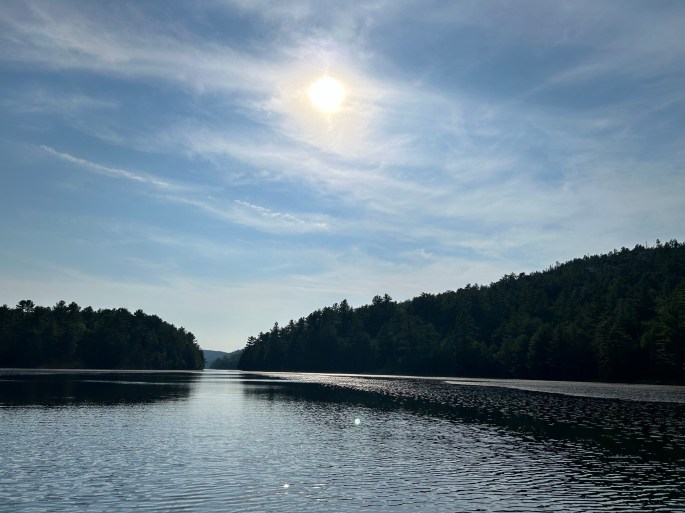
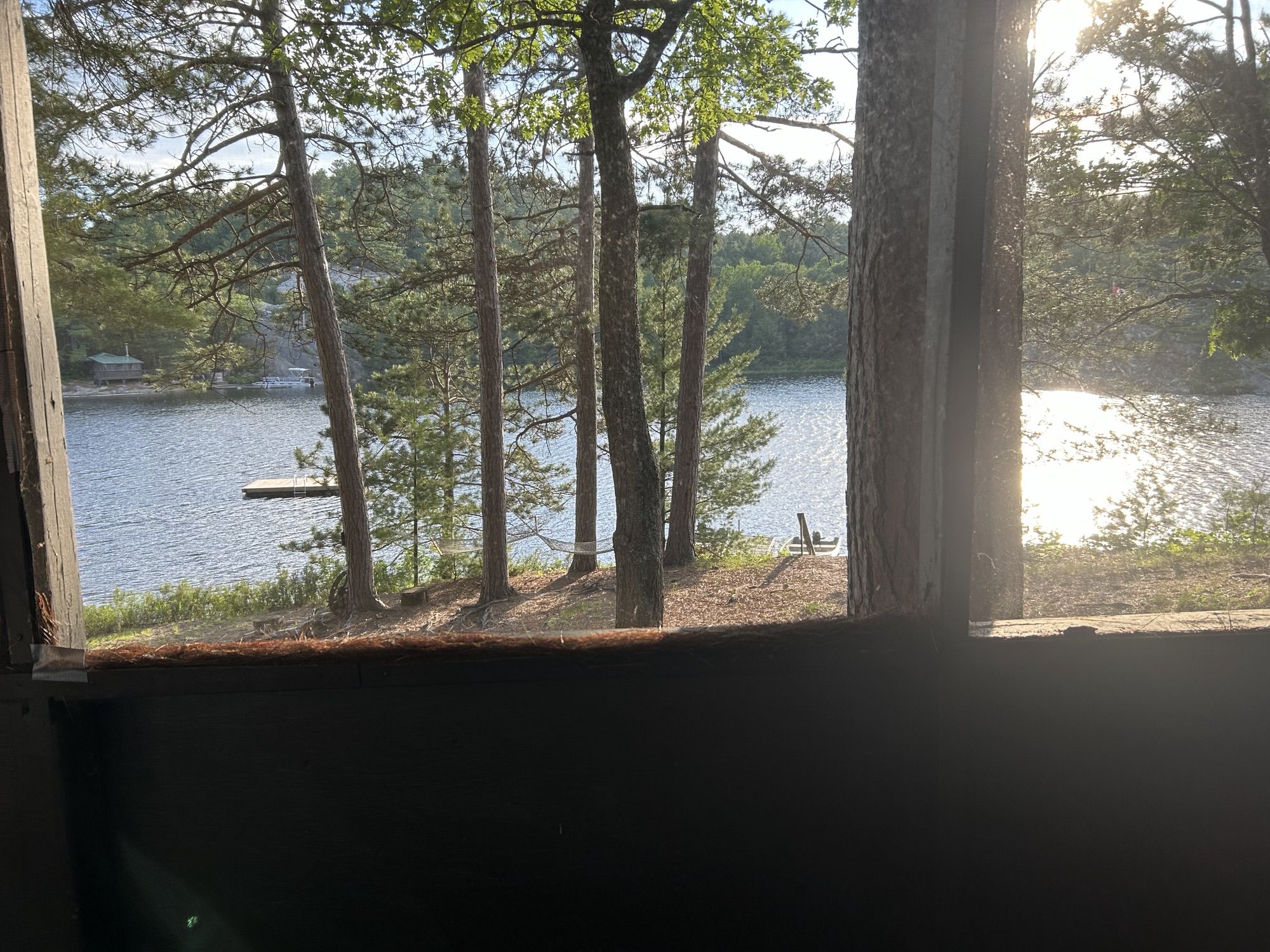
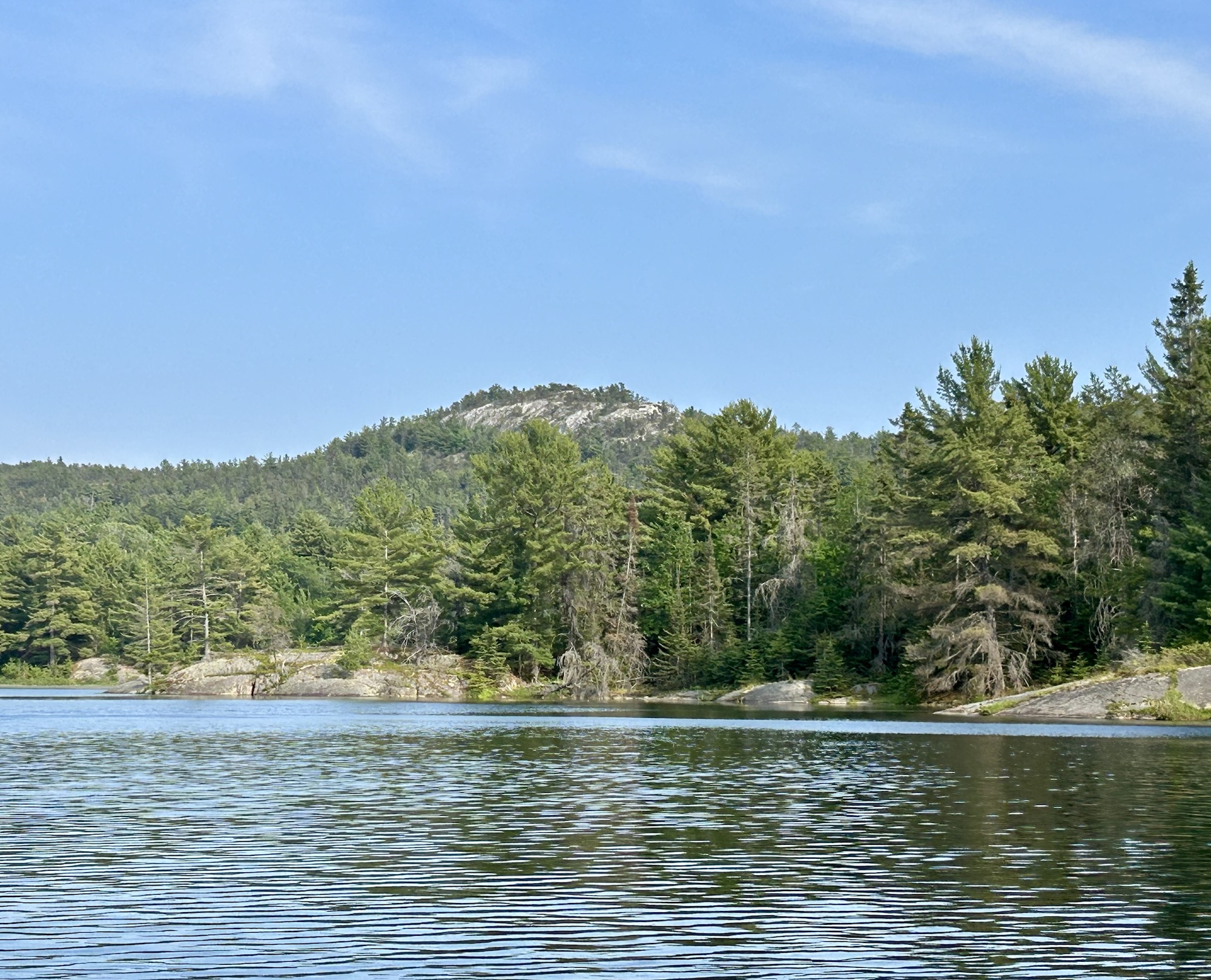
The view through the screened in porch overlooking Whitefish River a throughway to Charlton Lake, Frood Lake, and Cranberry Lake.

Still Waters 🏞️

I sat observing the waters of the Whitefish River flowing toward stillness–moving from one lake to the next, but in a relaxed state of flow that most often seemed to occur in the early morning or late evening.  Occasionally, something would break the surface, and rings would begin spreading outward from the epicenter. When this would happen, I often caught myself holding my breath in anticipation until the last ring dissipated, and the water was once more placid.  Then, with the stillness restored, I resumed my own cadence of breathing slow and steady, matching the river’s pulse.

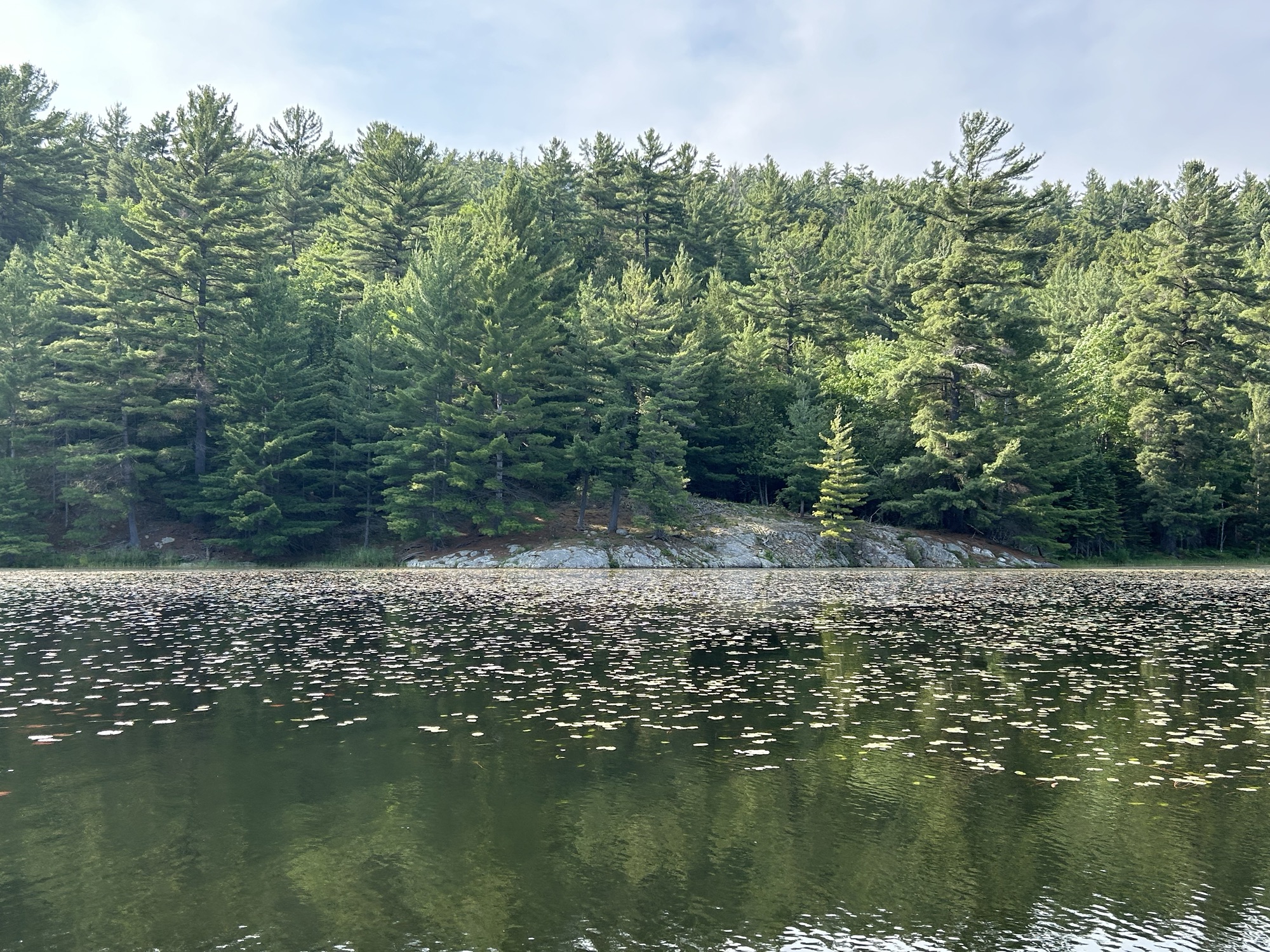
The peaceful, craggy rise of quartzite rise of the ancient La Cloche Mountains surrounding the lakes.

Lake Charlton Camp 🏕️

My husband, John, and I were staying in Charlton Lake Camp (CLC) located in Killarney Provincial Park, Willisville, Ontario. This was our second trip to CLC, situated in a natural showcase of diverse pines, surrounded by the white quartzite crests of the La Cloche Mountains and translucent, tea-stained waters of Charlton Lake, Frood Lake, and Cranberry Lake with the Whitefish River providing a throughway to the lakes. In the morning, CLC was filled with a wilderness chorus of birdsong, loon calls, bull frogs, lapping sounds of water against rocky shores, and, of course, the buzzing hum of countless varieties of insects. 

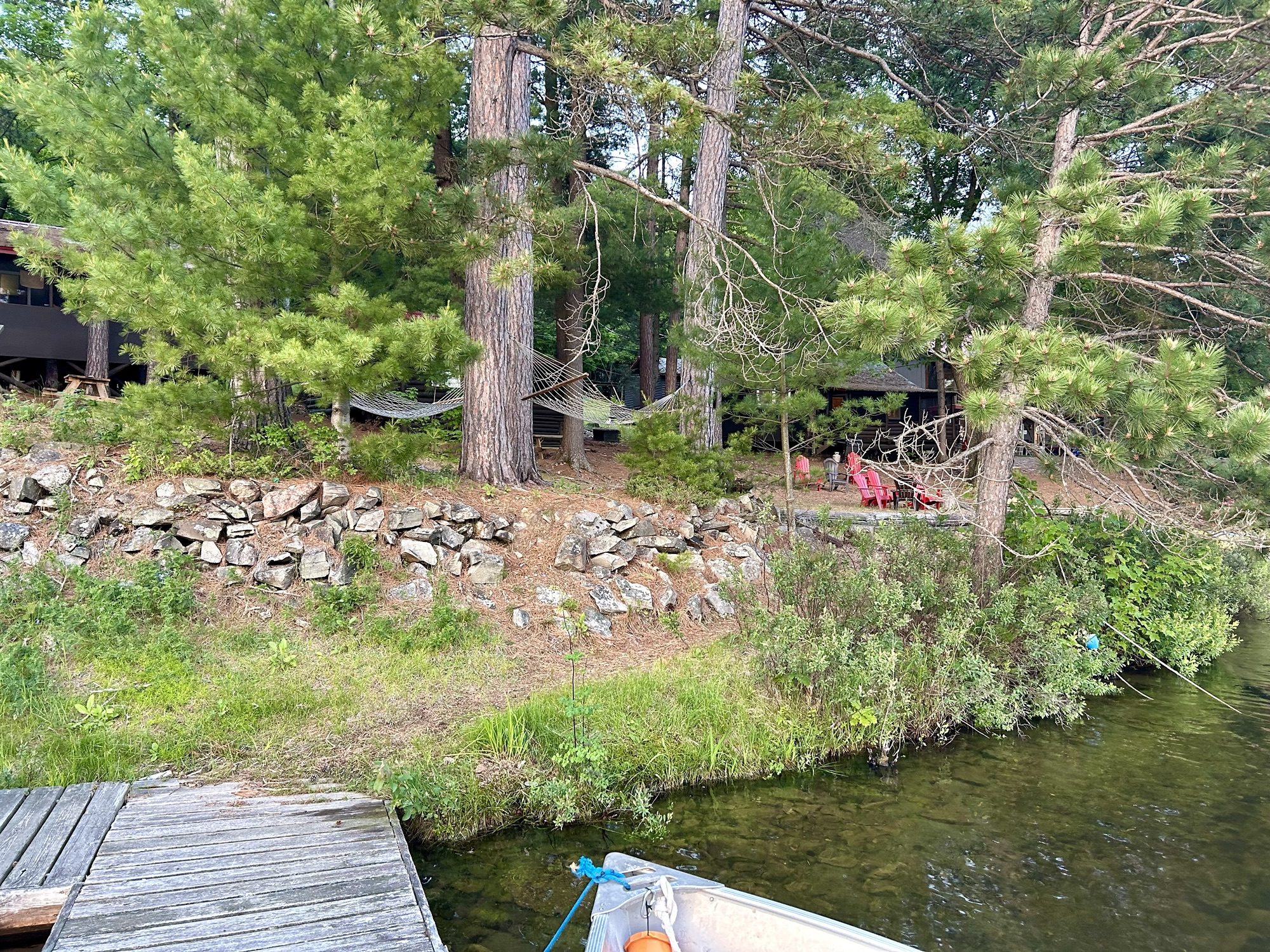
The cabin in which we stayed at Lake Charlton Camp is just beyond the steps that lead to the dock.

Settling into Quiet 🤫

Breathing in deeply, my lungs filled with the aromatic aromas of pines, damp soil, sunned rock, and a hint of morning coffee as I continued to sit and observe, communing with my surroundings. The sun would soon begin lifting above the craggy cliffs behind the cabin in which we stayed, and life would soon begin stirring with those gleaming rays. But, in that moment, hovering between the hush of night and the dawn of daybreak, there was a stillness in which my heart was soft and open–receptive to that still small voice that resides within.

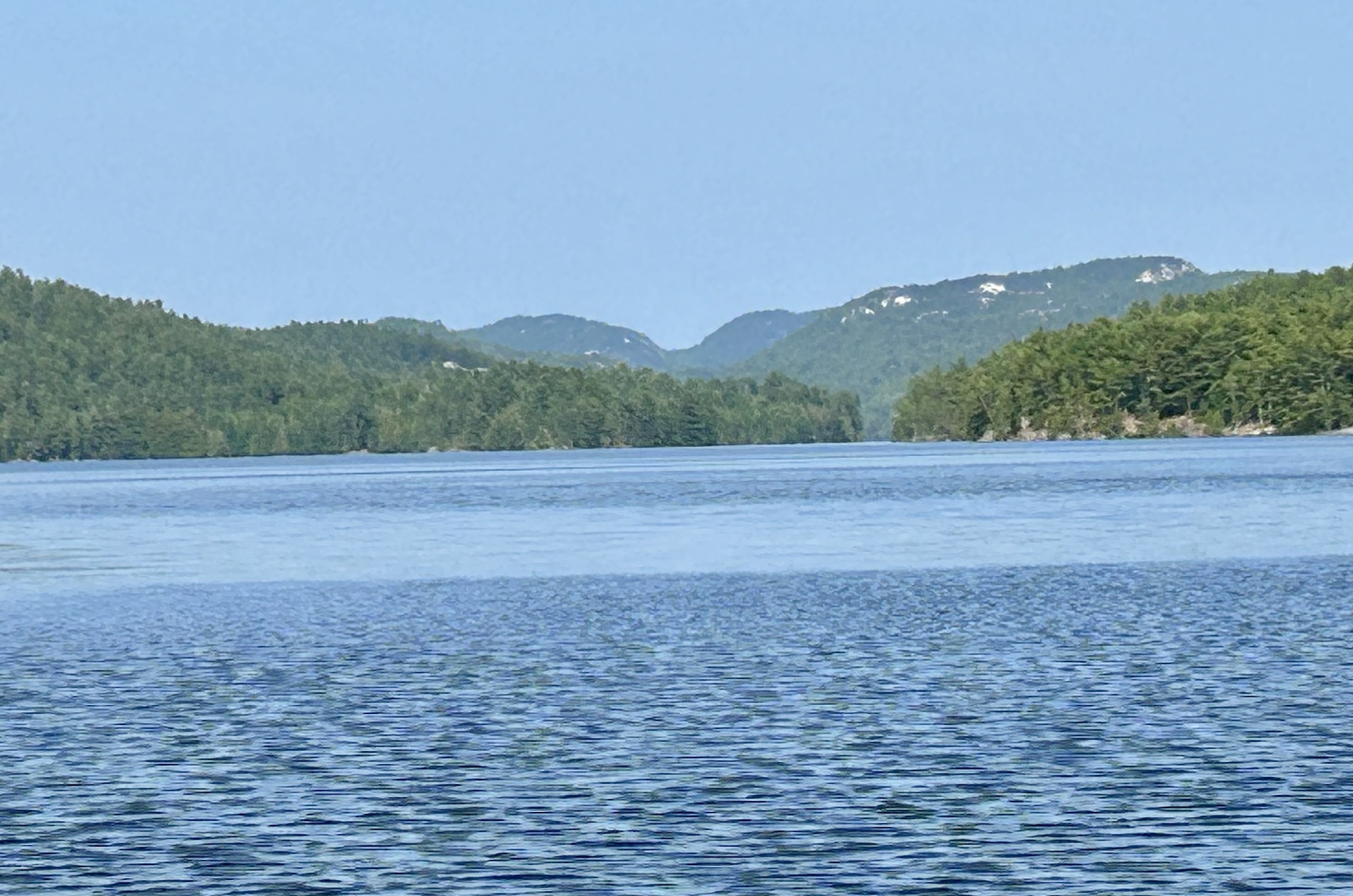
Boating through Frood Lake with the La Cloche Mountains in the foreground.

Slipping into the Gap of peacefulness 😌

I once read that praying is talking to the Divine Creator; whereas, meditation is stilling the mind for the purpose of listening.  Sitting there on that screened porch on the cusp of a new day, I was reminded of that idea.  My heart, head, and soul had relaxed enough to hear the truth–to really parse the ongoing narratives that, when left unchecked, my brain tends to repeat on an endless loop. By settling into the surrounding peacefulness, I could focus on listening, and begin to see how many of those narratives were (and are) often baseless claims forged by past experiences, trauma, anxiety, negative self-talk/criticism, and even a little fear. 

Sitting, breathing calmly, and savoring CLC’s peaceful surroundings through my senses, I found I could let my mind rest easily as if the wheel of ceaseless chatter had ground to stop, or at the very least, slowed its revolution. Taking in a deep breath of the clean, wilderness air, I softened my gaze on the water and continued listening. 

Afternoon sun glistens off the calm waters of Frood Lake.

Riding the waves of emotional influence🌊

Matching my inner calmness to the stillness of the river led me to a realization. My own mind often mirrors those waters of CLC. My mind tends to be at its calmest in the early morning or at night–just before drifting off to sleep, letting go of the day’s worries.  However, once the day fully begins, I am immersed in work and various tasks with multiple decisions being made throughout the day.  As my decision making increases, my judging brain kicks into high gear.  With that continued judgment comes an inner dialogue often influenced and affected by emotions, which rise and fall throughout the day much like the water around me did during the week.

Throughout our time fishing, resting, and relaxing in CLC, I observed how the river and surrounding lakes could quickly become stirred up, rising and falling with the winds of the day, tossed about with a changing weather front, or even fill with large waves when an occasional boat sped across the waters to the farthest end of a lake. There were additional times, when for no discernable reason, the waters would suddenly ascend and descend, jostling the boat John and I were in. 

Riding out the waves of emotions can be similar to navigating a fishing boat over wave-filled waters.

Restless emotions 😬

Fishing during those moments of restless waters and winds was challenging.  The wind would take hold of a perfectly thrown cast and carry the line and lure in a completely different direction than intended. Likewise, when the waters were lifting and dipping with waves, the view beneath the waters was clouded and murky–not allowing the eye to determine if the boat was above rocks, a weed bed, a submerged tree, or any other number of possibilities. Conversely, during the moments of calm, settled waters, navigating and fishing those waters was fairly easy and what was beneath the boat was clearly visible.  

Looking out at the peaceful waters of Whitefish River through the screened porch.

The influence of a RAcing Mind 🤯

The riverview before me, in that early morning hour, was emblematic not only of ideal fishing waters, but also a peaceful state of mind.  Unfortunately, our modern world tends to create and drive the opposite effect–a constant flurry of stirred-up waters–our minds fidgety and/or frantic, racing from one thought to another, moving through agendas of busyness, entertainment, and avoidance. Therefore, if we don’t set aside time to allow our minds an opportunity to cease its chatter and rest easy, how can we ever feel calm and think clearly?

Settle into into the stillness.

The importance of intentional Quiet 🤫

Our inner dialogue is often affected by the changing weather of our emotions.  Those emotions vacillate and shift with each decision we make and with each event we encounter.  And while I fully admit that mind chatter, and all of the emotions that come with it, cannot necessarily be avoided, in similar manner to the weather fronts we experienced during my time at CLC, our emotions can vastly change within the course of a day, much less a week. Therefore, deliberately providing pockets of time for stillness allows us to detach from the emotional narratives, and instead, fosters listening to that still, small voice of knowing, which allows us to, well, “fish” for the truth.

Listen for the whisper of our Creator, the great I AM.

LeT us Listen for the whisper 👂

Ralph Waldo Emerson once penned, “Let us be silent, that we may hear the whisper of God.” What a powerful reminder of the importance of settling the mind, like the still waters that were before me on that morning at Charlton Lake Camp. The type of quiet we choose can be a formal meditation/reflection, but it could also be achieved through walking or other forms of exercise, tending to your flowers/plants, or simply sitting on the porch sipping coffee or tea and listening to the birds. It really doesn’t matter as long as it is an intentional moment set aside to calm those mental waters of ceaselessly, flowing chatter. Prioritizing time for quiet reflection or meditation, however you define it, allows the flow of our hearts and minds to settle, soften, and encounter the “whisper of God.” 

Willisville, Ontario

Get More Grounded: The Benefits and Lesson of Tree Pose

“Be like a tree. Stay grounded. Connect with your roots.  Turn over a new leaf. Bend before you break.  Enjoy your unique natural beauty. Keep growing.”–Joanne Raptis

Photo by SHVETS production on Pexels.com

The magic of Tree Pose 🌳

“Trees sway; get more grounded,” my husband chimed along with the yoga instructor on the DVD as we attempted tree pose on a Monday morning before work, the classic yoga balancing pose that requires standing on one leg. 

I appreciate tree pose for many reasons. It strengthens feet, spine, ankles, legs, and core.  Further, it opens the hip area, stretches the inner thigh and groin muscles.  Plus, it can improve one’s concentration and focus while simultaneously improving alignment of spine and posture.  Most of all, it is a pose of balance, which can help in a multitude of ways. 

Symbolically, tree pose serves up several lessons. However, one of the more literal lessons of tree pose is that of remaining in the present moment.  It’s nearly impossible to balance in tree pose and think into the future or reflect on the past because you end up falling out of the pose. I was reminded of those lessons this past Tuesday, or as I have come to know it as, “Twister (or Tornado) Tuesday.” 

Photo by Ralph W. lambrecht on Pexels.com

Shelter in Place 🌪️

As a veteran educator, I have experienced a wide-array of events, including those that require shelter-in-place. In fact, I can still recall the first time I experienced shelter-in-place with students 30+ years ago.  I was teaching in a mobile unit at a great distance from the main brick and mortar school building. The students under my care ranged from 5-12 years of age, and they had been identified as “severe behavior handicapped.”  

There were twelve students, ten boys and two girls.  Since this was the early 1990s, computers and cell phones were not widely available in the classroom setting. This classroom had an intercom type “phone” that only connected from the school office to the classroom.  It was through this “phone” that I received the message that the entire school was sheltering in place in the hallways.  The school received a call that a tornado had touched down in another part of the county and was heading our way. I was to gather my twelve, not-always-so-compliant students, and move them to the main building as quickly as possible.

By the time I received the “call,” a heavy metal concert of rain and wind had already begun, drumming and shaking the metal building rhymically with tantruming, angry torrents of sideways rain.  Quickly, the paraprofessionals and I helped the students into their school-issued red rain parkas, and that is when the resistance began.

“I am not going out in that rain.”

“I don’t like getting wet.”

“No, I won’t!”

“I’m scared!”

Whether it was the determined, I-am-not-kidding look in my eyes, Divine intervention, or a combination of both, the paraprofessionals and I miraculously gathered all of them in a line.  Holding hands as one unit, we began fighting our way through the class door that kept trying to swallow us back inside due to the enraged winds. Once outside, raindrops pelted any exposed skin, including the students’ face and heads as their hoods were immediately blown off.  We fought our way to the safety of the school while the passion of the rain and winds seemed to increase and determinedly tried to shove us backwards. 

By the time we made it to the school, none of us were dry as the pernicious storm found a way to penetrate even the sturdiest of rain coats.  Quickly, we hustled the students to the primary wing of the school, finding a piece of wall away from windows where they could drop to their knees and cover their heads, rivulets of water streaming over all of us, while adrenalin continued to accelerate my heart rate.

Photo by monicore on Pexels.com

Twister Tuesday 🪟

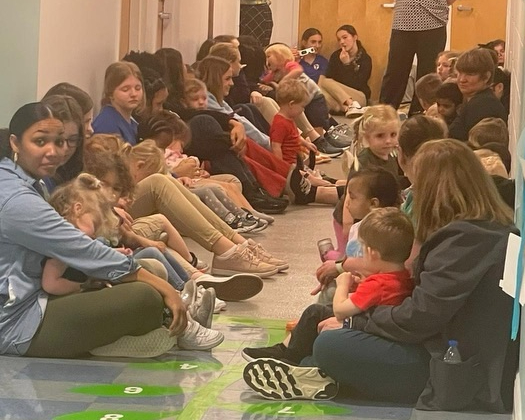
This memory bolted through my mind on “Twister Tuesday” as my classroom, and the surrounding classrooms, were filled with the strident sound of the emergency broadcast system sending an urgent message to seek shelter immediately. Our middle school classrooms are located on the top floor of our school building, and the entire middle school was directed to make their way to the first floor as quickly as possible. In order to do that, we had to run down three flights of stairs in a glass-lined stairwell. As we headed down, the irate storm quickly made its presence known.  Like Lyssa, a figure in Greek mythology who is said to drive others mad, the storm insanely clambered and clawed at the windows demanding to get inside, but meeting a wall of resistance.

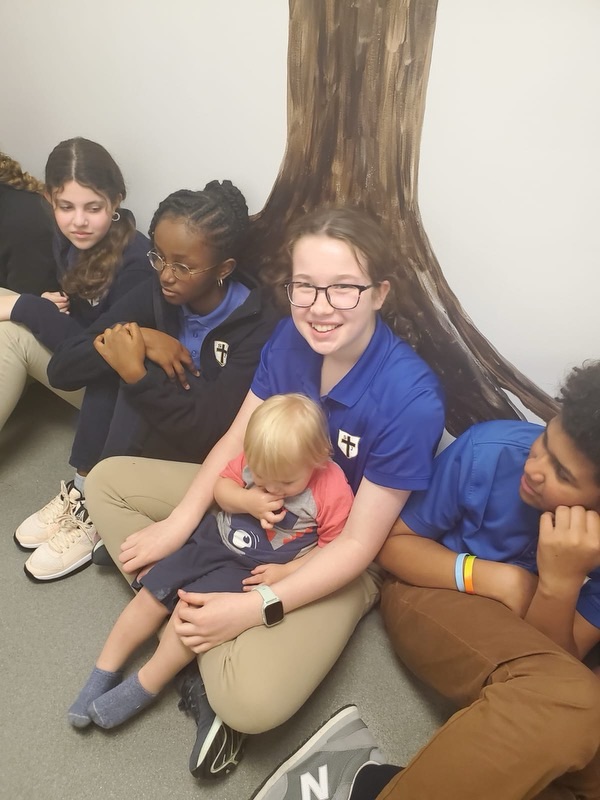
Once downstairs, it was hot, crowded, and overripe with the odor of sweaty, nervous bodies as we sheltered in place away from doors and windows alongside first and second graders as well as preschoolers from the two- and three- year old classes. At times, there were crescendos of anxious voices of students–or, in the case of some of the little ones–crying. During other moments, there were a few older students who experienced panic attacks, but there were many more who remained calm.  There were even those selfless students who chose to hold, cuddle, and comfort younger preschoolers, focusing on the needs of others, rather than themselves.

Middle school students caring for the needs of preschoolers during a shelter in place scenario.

And if you Fall . . . Pick yourself 🆙

As I walked among the students, checking on them, assuring some, answering questions of others, my mind echoed with the words from the previous day, “Trees sway; get more grounded.”  And so, I ground down into my faith.  If the students and staff of my previous school survived that former storm way back in the 90s, surely we would survive this one too.  My emotions could sway like the tree on the inside, but the more I swayed, the more I reminded myself to ground down and try to remain balanced in the present moment in order to better focus on those around me.  

It wasn’t easy, and I wasn’t perfect.  But here’s the thing about tree pose. It’s a great way to practice falling. If you fall out of tree pose, you pick yourself up, and try to return to the pose once more.  

Like my beloved tree-pose, Twister Tuesday provided another stretch and realignment personally and professionally as well as to my faith. It challenged my focus and concentration in order to remain balanced.  And when I “fell,” forgetting to remain focused on the present moment, all I had to do was “pick myself up” and try to return to it once more. Most of all, that Tuesday served as a powerful reminder of the power of the True Source dwelling within and around us, always available to keep us grounded. 

Another middle school student getting grounded in the present moment of another’s need.

The gift of single-mindedness–we tap into the present moment

“This very moment is the perfect teacher, and, lucky for us, it’s with us wherever we are.”–Pema Chödrön

REsistance is Futile🤯

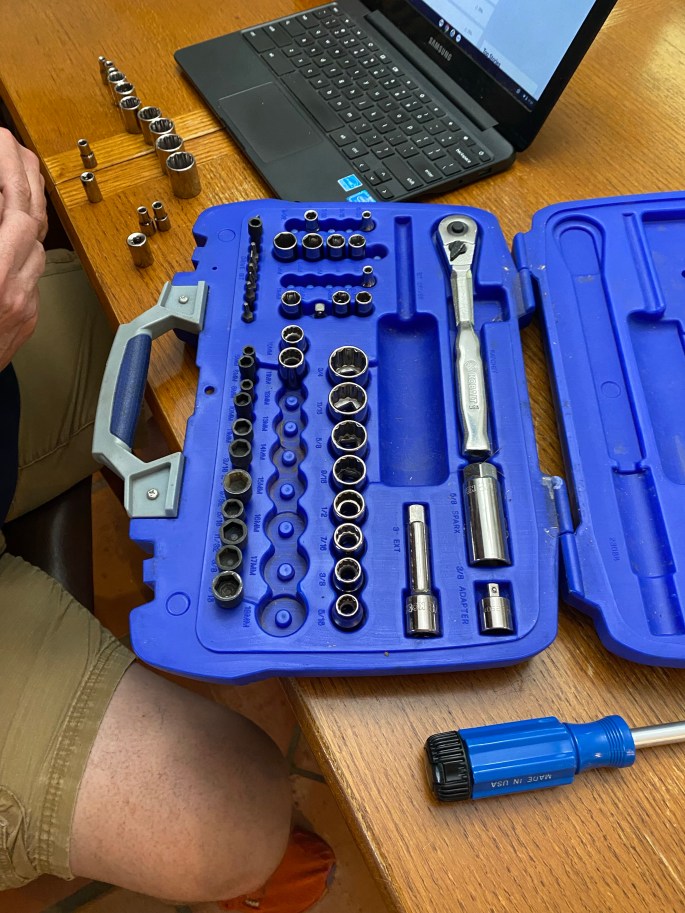
I heard the thud and subsequent scattering of parts.  Then, I heard John, my husband, enunciate a few choice words.  Since I wasn’t in the same room of the house, I wasn’t sure what had happened.  Soon enough, John walked into the kitchen-dining room area and set an open socket and driver kit on the table.  Pieces of varying sizes were scattered around the kit like a collage of autumn leaves covering a walkway.

As a few more select words were uttered, John went to work. Watching him work reminded me of those long ago hidden picture pages in Highlights magazine that would entertain me as a young child anytime I visited the pediatrician’s office.  John focused intently as he matched pieces to their corresponding recessed area for storage.  Observing his level of attentiveness to the task at hand, I was struck by the fact he was exemplifying the power of single-minded focus.

Single-minded attention is not myopic 🔎

Bringing single-minded attention to a task is different than being so myopic on one thing, you fail to see the bigger picture of life.  Rather, single-mindedness is the ability to prioritize tasks, and then focusing solely on the most important task before moving on to the next.  This level of concentration requires the self-discipline to remove distractions and remain present with the task at hand.  By removing distractions and avoiding the temptation to multitask, the brain can more easily slip into a flow-state of productivity and/or presence. 

Sure enough, I noticed that in the beginning, when John was resisting the moment, as we have all done, by giving into anger and frustration–as evidenced by the colorful language–he was unable to correctly match the parts to their corresponding depressions.  However, as he let go of the resistance, surrendered to the task at hand, he began to more easily match each part to its recess.  A few moments later, John was into a flow-type state, with each successive match, the quicker the next match came.  Soon enough, albeit probably not soon enough for John, the kit was fully assembled, all parts righted into their nesting spot.

Photo by William Fortunato on Pexels.com

There’s nothing wrong with Mutli-tasking, but . . . 🎧

Many of us multi-task, and our busy, fast-paced world tends to promote multitasking as a regular practice. Obviously, there are merits to multitasking to “kill two birds with one stone” as the old expression goes.  However, there are limits to our focus.  When we are engaged with several tasks at once, no one task gets our full attention.  This is fine in the case of listening to a podcast or book while doing something else where the stakes are low–after all you don’t need to focus on every detail of the book or podcast to glean the overall message/meaning. Thus, nothing is majorly lost if we are not fully focused, and if it is, that’s what the rewind button is for.

In life, however, we don’t always get a rewind button.  Therefore, there are times when it is important to only focus on one thing at a time.  Most of us understand this.  For example, you most likely wouldn’t take a phone call during an important meeting at work or complete work tasks while attending an important doctor’s visit. (Well, maybe in the waiting room, but definitely not when the doctor or staff is in the room with you!)  Likewise, you would be offended and feel short-changed if you encountered either of these scenarios during an important work meeting or an urgent doctor’s appointment.  Nonetheless, how many other moments do we short-change by multitasking?

Photo by Andres Ayrton on Pexels.com

Single-mindedness can be applied to any moment in life 🍏

Any moment in life can be met with single-minded attention, and I do believe there is value in also practicing it.  Eating an apple, going for a walk, talking with a spouse, child, or loved one, even washing dishes after an evening meal can be completed with single-mindedness.  When we take time to solely and fully focus on one event, we are taking time to honor its importance in our lives.  For example, when eating a green apple, as we take a bite, we notice the crunch of the apple, the juice that seeps from the tender fruit with each successive bite, the sweet and tart taste on our tongue as our own mouth begins to dance with saliva.  As we fully taste the apple we can appreciate the nuance of flavors and texture experiencing pleasure, and perhaps, gratitude.

During the act of single-mindedly washing dishes, we are more readily able to take in the scent of the detergent bubbles filling our sink.  We notice the blue and red hues that skim the surface of each bubble.  Our hands warm and turn pink as we immerse them repeatedly in the silky water of soap.  Each dirty dish frees itself from the remains of the meal under the guidance of our hands, and it is rinsed shiny clean under a stream of water from our faucet.  As your mind enters into the flow of washing dishes, there might even be a moment when it occurs to you how fortunate you are to have running water and the opportunity to own enough dishes for everyone in your family.

Obviously, not every moment can be that idyllic, but I do think that practicing single-mindedness can offer numerous benefits.  When it comes to work productivity, focusing on one task well before moving onto the next, increases both productivity and accuracy.  For those in creative fields, single-mindedness can guide the brain into a desired flow-state where ideas begin to stream with ease.  Additionally, when applied to a conversation, single-mindedness not only conveys importance and value of the other person, but it also allows both parties to hear and be heard. 

Photo by Anna Shvets on Pexels.com

sprinkle it throughout your life like spice to enhance specific moments 🧂

Our time and energy for each day is limited. Thus, there will always be a time and a place for multitasking.  However, it is also important to recognize the preciousness of life. Therefore, it is a worthwhile endeavor to consider and prioritize certain tasks and events for which we will single-mindedly focus our attention. 

When we take time to give something or someone our full attention, we are also giving it our full appreciation. Giving an event our full appreciation leaves us open to feelings of gratitude. Our ability to perceive and appreciate details increases, and the event becomes more sacred as corny as that sounds. 

Practicing single-mindedness is not an all or nothing attitude.  It is a practice we can apply to specific moments in our daily lives.  The more we practice it, the more it is possible to feel the richness of our lives.  We have been endowed with special attributes, talents, and blessings, and it is only for a length of our short life on earth. Why not occasionally and single-mindedly take time to fully immerse ourselves in those gifts?

Surrender to the challenge and be liberated

“I’m noticing the difference between surrender and resignation.  One is a true letting go, the other is believing I am powerless.”–Andrea Scher

Balancing Act ⚖️

Like numerous other professions, my job in education brings with it unique challenges each year. It is not just the day-to-day, week-to-week dilemmas, but it’s the balancing act between the demands of work and the demands of life.  Additionally, like many jobs, the demands of work cannot be met within the confines of the scheduled work day.  While the work day may officially end at 3:30, there is no way to complete all the work within those hours. 

Thus, there is that predicament daily, and on weekends, of how to accommodate it all. Work and personal life demands are a jigsaw puzzle in which the pieces don’t always fit together.  If I put a piece into the frame of work, then it seems to take away from the frame of personal life.  Inside my head there is an image of how it should all blend seamlessly into one harmonious picture, but the reality is often an abstract palette of discordant images.

Photo by Andrea Piacquadio on Pexels.com

Solving the Puzzle of Time 🧩

How often do we feel the weight of: how to put the pieces together today?  One of the keys, I’ve discovered, to balancing work and life is to take it one day at a time. To be sure, that sounds cliché.  However, by focusing solely on one day, as part of the whole of the equation, it can often allow me to discern what must be done vs what needs to eventually be done.  Then it is a matter of focusing on one unfolding moment at a time.  If we can choose to surrender to the fact that we are facing challenges that cannot all be completed in one day, we can begin to let go of the attachment to “how it should be” and the picture-perfect image of “what it should look like.” 

  Attaching to that ideal image of “this is when and how it will be” is often the source of suffering and stress.  It is only human nature–especially in the current social media world in which we live–to visualize how “perfect” it will look/feel when we complete X, Y, and Z.  However, most of the time, at least in my experience, life tosses in some sort of unpredicted bollix, and suddenly that flawless finish is unattainable–as if it was ever possible to begin with! 

Photo by Elina Fairytale on Pexels.com

The Strength of Surrender 💪

I have found that the notion of “surrender”is often associated with giving up, giving in, or acquiescing to a lower standard, but that is just our ego talking.  Furthermore, surrender is not a resignation either, which can sometimes lead to feelings of bitterness, anger, and resentment because you can’t “have it all” as popular culture and social media would have us believe. Instead, surrendering to the fact that you “can’t do it all” actually takes strength.

Nonetheless, choosing to ignore the mind’s ego can feel vulnerable and scary. It takes a real act of courage to surrender, and let go of our attachments. But, once we decide to release the ego’s messaging, we begin to allow ourselves to be led inwardly by a higher power, our True Source.

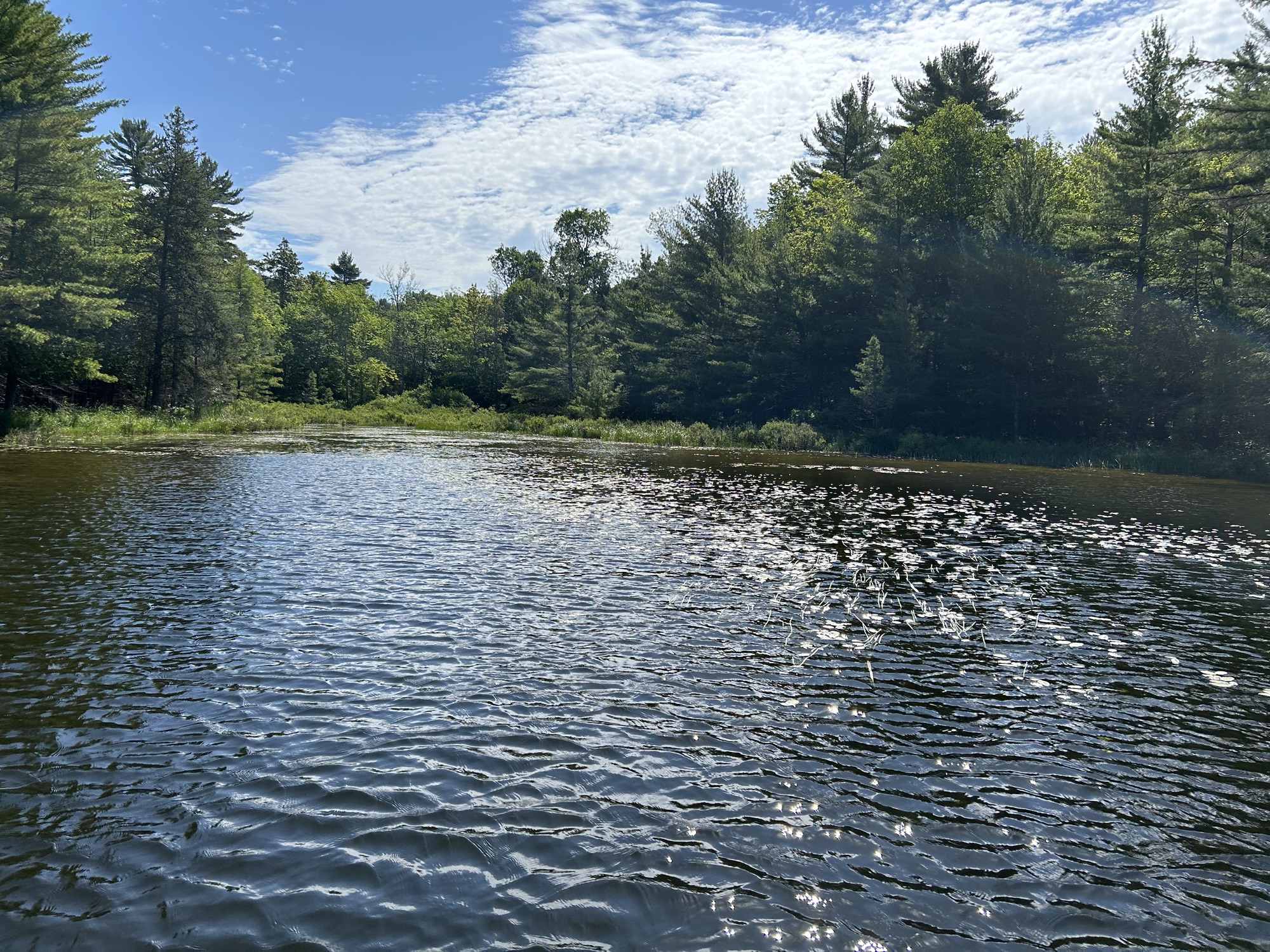
The water of this creek winds and bends over its rocky bed demonstrating the difference between ease and easy.

Ease into the challenges one by one 😌

Surrendering lightens our load and allows our day to flow with more ease and much less tension. That is not to say our day will suddenly become easy, there will still be challenges, but we can feel free from the binds of stress that come with ego-driven motivation. When we let go of the ego’s attachments, we are recognizing our true personal worth–we so much more than what we do.  

Ignoring our ego is an act of love and faith, not only in our abilities, but it is also a willingness to recognize that all those perfect images are just that–images, not the reality that social media often leads us to believe. Letting go of that attachment is an act of faith and a willingness to believe that we will be inwardly led by our intuition in harmony with our higher power.  

Surrendering gives us permission to let go of all those perfect images our ego attaches to.  We can begin to recognize that we are safe, despite the ego’s messaging that can falsely have us believing that, if we don’t achieve said-thing by said-time, we are failing.  Instead, surrendering says, we are trusting the way will be provided; and therefore, we can and will choose wisely.  Surrendering allows us the freedom to walk the path of life’s pavestone moments, step-by-step, stone-by-stone, knowing that when the time is right, all will come together as it should.

There are times of the year when even the trees quietly and gently let go of their colorful adornment, demonstrating the art of detaching from ego.

The ARt of Detaching 🍂

It’s about letting go of control. (We never had it to begin with anyway.)  It’s as simple as breathing.  Inhale. Exhale.  One moment at a time.  One step at a time.  One priority at a time. Trusting that just as each breath provides us with life, our path will ultimately be paved in its due time

The power of surrender is not weak as our ego leads us to believe.  Instead, it liberates us to stand in our strength by expelling all the tension, fear, anxiety, stress, and suffering attached to the ego’s. “This is how and when it should be.” It is the difference between closed fists trying to muscle their way through a situation, versus relaxed hands, flexibly handing each moment as it comes.

The energy of surrendering is only a breath away. Inhale energy for life’s next moment. Exhale, and release the tension attached to how it should be.  Surrendering to the moment can really be that easy. It is our ego that makes it so hard.  Inhale. Exhale. Surrender to your inner-knowing. The Breath of Life will provide.  

While you’re scrolling, your life is rolling

“Social media is an amazing tool, but it’s really the face-to-face interaction that makes a long-term impact.”–Felicia Day

Most of us have been guilty of this.  I know I have.  However, having taken a huge step back for numerous months from my own personal use of social media, I often find it a point of fascination when I observe people in public who are engaged with the ¾-time dance of media consumption.  Scroll, scroll, tap.  Scroll, scroll, tap.  Scroll, scroll, tap.

Photo by Oleksandr Pidvalnyi on Pexels.com

Case in point, recently my husband, John, and I went to a nice restaurant for dinner.  We chose to sit at the small bar area for dinner–no waiting for a table and typically better, more attentive service.  Unfortunately, we picked the wrong night to go, and the restaurant–even the bar area–was slammed only minutes after we arrived.

While we waited (and waited) for food, the area in which we were seated became more and more crowded.  John and I were often bumped, jostled, and occasionally shoved in customers’ attempts to gain the bartender’s attention.  With so much background noise around us, it grew more difficult to talk, and I found myself drifting into people-watching mode.  

John calls this behavior, “Steph, the story writer mode.” This is because I will often lean in to him to share a narrative I’ve developed based upon my observations of others–nothing bad, just some made-up plot-line for a book that I could envision.  I like to think of it as one of my more creative and endearing habits, but I am not sure that John feels that way!  

But I digress . . .

Photo by Andrea Piacquadio on Pexels.com

On this particular evening, I noticed two types of people.  Those standing, or sitting, waiting for a table without talking while ceaselessly scrolling and tapping on their phones, with the occasional lean-over-to-another-person to share an image on their phone.  Then there were those whose heads were collectively bent over a communal phone, laughing and commenting on screen images. 

One such group was close to me, and their conversation was so loud that I could not tune them out.  They were repeatedly making particularly cruel comments about what sounded to be their so-called friends’ social media feeds.  While I am not niave to the ways with which humans can be cruel and/or talk to one another, I still found this groups’ negativity and harsh judgment of friends to be exceptionally mean-spirited.  I felt as if someone in the room had purposely roused up a nest of wasps, and the insects’ anger was being unleashed upon those within hearing distance of this conversation.

Photo by fauxels on Pexels.com

Ultimately, John and I decided to get our food to go, and leave the negative environment.  Nonetheless, the moment stayed with me the next few days as I tried to process and understand what I observed.  

To begin, my instinct was to immediately think, in a self-righteous manner, “See this is what social media does.  It promotes and reinforces nothing but negative, hyper-competitive, social-comparing, cyberbullying, anxiety-driven behaviors.”  However, I know that is an unfair assessment.

Social media can offer positives.  It can allow for people miles apart to remain connected and easily facilitate communication, especially across time zones.  Furthermore, there are a wealth of sites offering support and coping mechanisms for those fighting serious physical and mental health conditions.  Additionally, there are numerous affirming informative communities for a wide array of specialized interests including physical and mental wellness, books, music, religious/philosophical pursuits, self-help/betterment, to name a mere few.

Therefore, I realized quickly my issue had more to do with the negative way in which social media can be used. For example, some of those I observed waiting for a table in a crowded entryway, may have social anxiety.  Therefore, flipping mindlessly through cute kitten and puppy videos could help ease the discomfort of being surrounded by strangers.  Perhaps, others have a tendency to become angry or rude during extended waits, so mindlessly scrolling through sports clips or silly dance moves takes the edge of their impatience, allowing them to pass the time more peacefully.

There might have been others who had had a particularly bad day, so they may have needed some positive or humorous images to settle their minds.  Others might have been using their wait time as an opportunity to get caught up on required reading, personal reading, or even the news of the day.  All of these are seemingly perfectly valid reasons.

Photo by Andrea Piacquadio on Pexels.com

But here’s my two-part concern: One, the vicious cycle of comparison (either as a point for confirming that your life is better than others, or fostering the belief that your life is lesser than others); and two, inaction–ignoring the present moment, failing to appreciate your surroundings, and/or overlooking an opportunity for real time engagement with the people who are present with you (or perhaps only a phone call away).  

In fact, the next day, as I watched what was clearly a mother and daughter in a coffee shop in which mom was doing the “scroll, scroll, tap” on her phone as the daughter looked around the coffee shop, picking at her food, a phrase came to mind, “While you’re scrolling, your life is rolling.”  

I am not sure if I made up that phrase, or if it was a phrase I had previously heard.  However, at that moment, as I waited for my own to-go order, it seemed fitting. The mom had an opportunity for real-time conversation with her daughter, but the moment was tragically passing.  One day, the daughter will no longer have time to get coffee and cake with her mom, and cherished moments, like the very one they were experiencing, will have passed.

Photo by Victor Freitas on Pexels.com

Of course, this mom could have had a very valid reason for being on her phone. After all, I was only in the shop for no more than five minutes, so I have no way of knowing.  The point is this, social media and the internet are a lot like the opening line to Star Trek, “Space–the final frontier.”  Our phones and other devices are tools, full of limitless possibilities and discoveries, but just like the Star-Trek crew, they are not replacements for real-life interactions.  

Our bodies, minds, and souls have a limited amount of energy and time.  In fact, our time and energy are precious commodities.  Therefore, what I have concluded is the importance of mindful awareness–not only of our use of social media, but also of the very pricelessness of the life that is around us.  Positive social media engagement, in strategically planned doses, can absolutely be beneficial, but it cannot replace those real-time conversations, interactions, and opportunities that surround us.  Bringing awareness to those real-time, life-connecting, and affirming relationships should be a priority in our day-to-day life over social media, before those opportunities pass us by.

Photo by Askar Abayev on Pexels.com

Combating SAD and those winter blues

Dawn is one of my favorite times of the day.  All is quiet and peaceful.  The colors of indigo, purple, and blue gently fade into shades of boldness– cantaloupe and blood orange. Ultimately, such an audacious start cannot last, and those bold colors melt into a subtle blush.  It is as if all of nature is holding its breath.  There is a hush that can be felt, rather than heard. This quiet sweetness is often intercepted by the temerity of a bird singing, “Chip-a-we, chip-a-we.”  Soon other birds echo their harmonies–little melodies of hope.

As the sun rise wipes away the darkness from the skies, yesterday is officially rinsed away.  Lifelong teacher that she is, Mother Nature, hands each of us a new canvas.  We can begin again.  

Photo by Micah Boerma on Pexels.com

But what about those days, when skies are blanketed with the clouds of fall and winter?  When the morning doesn’t possess the grandeur of the symbolic gesture of a slate cleaned.  When, instead, all those burgeoning clouds seem overflowing with all of the errors and mishaps of the previous day, and the sorrows and pains of the future appear to hang low on the horizon of inky darkness.  When the mind, like a glass bottle tossed into the sea, drifts from one fret to another.

Another winter looms larger than ever.  The past feels forever chained to the soul, and the future, oh-the-future, what more frets could it hold?  Our thoughts begin to plague us. We are held in bondage to our thoughts.  Bondaged to the what-ifs, the how will I be able to, and the weight of the unseen dangers lurking within every charcoal layer of gloominess.

Photo by Alex Conchillos on Pexels.com

It is not uncommon for many of us to fight this sort of mental tug-of-war as cozy, amber autumnal hues dissipate under winter’s drab, gray overcoat.  An affable cook with whom I worked during my long-passed college days, named Shirley, would say, “Ah, honey, that ain’t nothin’ but them winter blues.”  She’d tell me to be grateful for my life, praise God more, and, “Bundle up, git outside, girl! Go for a walk, and git ya sum fresh a’r. A little cold won’t harm ya, and it’ll chase them ol’ blues away!”   Turns out, Ms. Shirley was on to something.

Photo by Ayu015fenur on Pexels.com

According to the Cleveland Clinic, seasonal affective disorder (SAD), is a form of depression, triggered by the change in seasons, typically beginning in fall, and worsening throughout the winter months until the days begin to lengthen at some point in spring.  It more commonly occurs in young people and women, but men are by no means immune to it.  The National Institute of Mental Health estimates that about 15 million adults, or 7.1%, of the US population experience SAD, with another 10% – 20% of the population experiencing some form of the winter blues.  

With so much of the population already experiencing depression, anxiety, and/or phobias, it felt important to share a few established practices, according to several leading medical institutions, for coping with SAD and the winter blues.  

Go outside. One of the most common techniques is getting outside for a walk, even for a few minutes, like Ms. Shirley suggested all those years ago.  Even on cold and cloudy days, getting outside provides multiple benefits.  It exposes you to light, and the movement increases blood flow and oxygenation, all of which are good for producing those feel good hormones.  

Photo by Matheus Bertelli on Pexels.com

Regular exercise.  Along those same lines, according to Helpguide.org International, regular exercise–whether you are doing it inside or outside–can be as effective as medication, without the worrisome side effects. Choose a form that is rhythmic and continuous and also incorporates both arms and legs, such as weightlifting, walking, swimming, tai chi, dancing, and so forth, as this provides the most benefit to mental wellbeing.  Regular exercise and/or continuous movement boosts serotonin, endorphins, and other mood enhancing brain chemicals.  Furthermore, exercise and/or movement improves sleep and boosts self esteem. 

Light exposure. Expose yourself to as much light as possible. Open up drapes and blinds during the day.  Sit and work, if possible, near sources of natural light.  Walk outside, and if you can tolerate the temperature, sit outside, even for a few moments.  Natural light is another way to boost serotonin.  Additionally, consider bright light therapy–special lamps or daylight simulation light bulbs–to use while reading, eating, working, and so forth. 

Photo by Vincent Rivaud on Pexels.com

Be social.  Reach out to family and friends.  Volunteer your time.  Meet friends for lunch, dinner, or coffee.  Join a support group.  It doesn’t matter so much what you choose to do, rather it’s about making social connections.  Even if you don’t feel like it, being social is a mood elevator.

Eat right.  Depression causes sufferers to crave starchy carbs, which leads to lethargy, lack of motivation, and even greater mood swings.  However, choosing fresh fruits and vegetables, along with complex carbohydrates, such as whole grain bread, brown rice, oatmeal, and even bananas, can boost that ever desired serotonin, without the sugar crash. Additionally, omega rich foods, such as oily fish, soybeans, walnuts, and flaxseeds, are known mood boosters, and, if taking antidepressants, may increase their effectiveness.

Keep a regular sleep schedule and engage in stress reduction practices.  Both are beneficial to ameliorating SAD symptoms.   Avoiding naps, or limiting their length, prevents the sluggishness that can often accompany them. Managing or reducing stress through various techniques, such as yoga, prayer, meditation, gratitude journals, and other mindfulness activities may be beneficial.  Other related tips include, completing one activity/thing you love to do daily, and even watching videos, shows, and/or movies that make you laugh are beneficial to reducing symptoms associated with SAD or those winter blues.

Wint-o-green mints.  Ok, so this isn’t an established practice.  However, it is my technique for using mints to remind me that if I “wint” int-o the present mo-mint, I can stop borrowing tomorrow’s troubles.  While I can’t say it’s great practice for my teeth, those round orbs of refresh-mint offer a sweet signal for my brain to slow down my monkey mind, breathe slower, and focus on one moment/thing at time.  Mint = Mind In Now-Time.

Acknowledging that winter can make many of us feel a little sadder is important.  Not only does it allow us to feel more compassion and empathy for those experiencing SAD, but it also gives us permission to recognize those feelings within ourselves, should we begin to experience them.  I can’t say I am a fan of colder temperatures, but I still get outside most days of the week, like it or not.  In the meantime, I can’t help but think Ms. Shirley would be pleased to know science now proves her sage advice to be true.

Life Must Be a Challenge

“Life must be a challenge.”–Sri Swami Satchidananda

“Have a Happy New Year, and whatever goals you set for yourself this year, I hope you achieve them.”

The sales clerk handed me my bags as she spoke these words with a broad smile. I wished her a new year’s greeting before heading out into the swarming mall milieu.  John, my husband, and I were in Cincinnati for a couple of days of relaxation between the Christmas and New Year’s holiday.  We debated the merits of traveling as the Omicron variant seemed to be spreading like athlete’s foot in a high school locker room.  In the end, we decided to take the proper precautions–as we have been doing these past couple of years–and head out for our planned excursion.

Photo by Lena Khrupina on Pexels.com

Back home, I was later reminded of that brief encounter with a sales clerk. 

“Did you set any New Year’s resolutions for this year?” asked the young lady preparing to cut my hair on a recent January appointment .

This question led to an interesting discussion about whether or not to use the start of a new year as a reset button–a time to reflect and set new goals.  The stylist was all for it as she described the way in which her three boys, her partner, and she had shared and recorded their goals for 2022 in a journal.  She added that she wrote the goals down as points for review throughout the year, and they would serve the family as a final reflection on the eve of 2023. It seemed like such an intentional and thoughtful practice to have with her family.

Photo by Polina Kovaleva on Pexels.com

Pondering this practice, I reflected on my own goal-setting practices.  As I had explained to the stylist, my personality is such that I am constantly reviewing my own behaviors/habits.  Any perceived “mistake” I make–whether real or self-imposed–I dwell upon, running and rerunning the incidents on repeat like insurance commercials during televised football games.  I think about what I said/did wrong, or how I should have responded to a circumstance, in hopes of not repeating that behavior.  Sometimes it works, but more often than not, I fail, making the same or similar mistakes.  Ugh!  It is a broken record of imperfection.

Perhaps that is why I am drawn to setting small, achievable goals throughout the year, such as training for a half-marathon, teaching myself a new cooking technique, or even my pursuit of weekly writing deadlines.  These are typically structured goals, with steps from point A to point Z, and clearly delineated deadlines/outcomes.  Then, it’s simply a matter of following through with each step, adjusting when there is a set-back, and continuing on, one step at a time, until crossing the finish line.

In the bigger picture of life, however, things aren’t always so cut-and-dry with step-by-step progress and a clear finish line.  For example, when looking over these past two years of life with COVID, it seems one plan after another falls and one unattainable finish line falls to another.  Just as I struggle with my own fallacies, shortcomings, and humanity, science likewise seems to struggle with virus variants far more complicated than my own list of self-imposed list short-comings.  

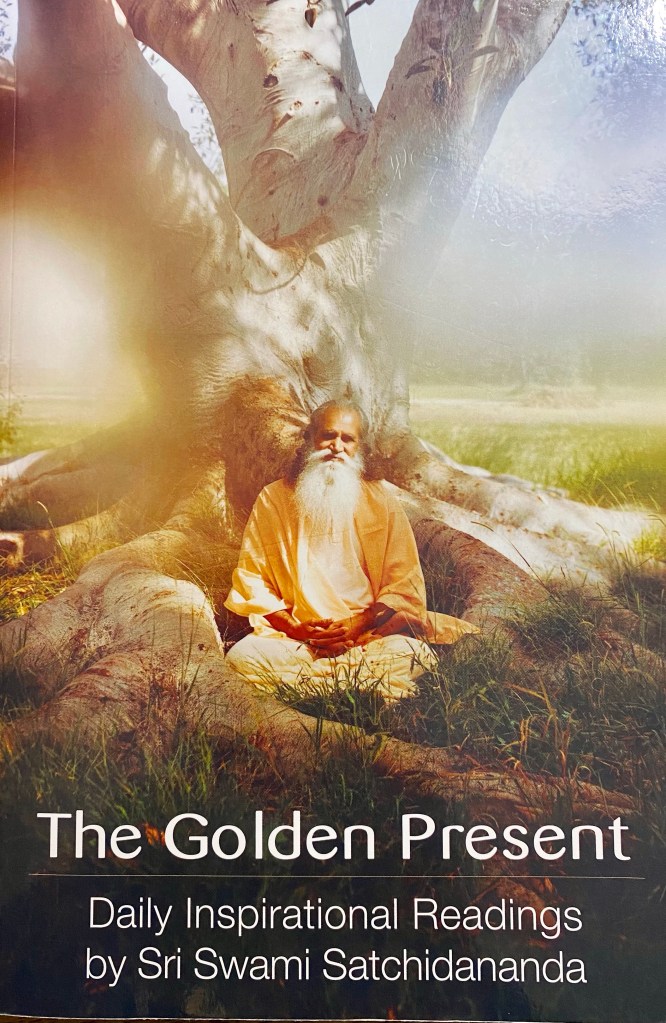
All of these seemingly diverse thoughts came together when I reread the opening line of The Golden Present, a reference book to which I have repeatedly referred over a number of years.  The author begins with the following thesis,  “Life must be a challenge.”  In those five words, I was reminded of one simple truth.  If life is to be lived fully, then its challenges, from the personal to the global (and all levels in between), must be met, faced, and dealt with in some form.  

From surviving the ice storm in 2021, that wreaked havoc on local power grids, to navigating the following days of ice melt and rain that lead to devastating flooding; and from learning to adapt, adjust, and safely navigate the “new normal” of life with COVID, to getting up way to early each morning and trying to be a better version of myself than I was the previous day, life in 2021 was certainly full of challenges.  One look back at local, state, national, and global news headlines, and we see that every day, people around the world were faced with challenges far greater than any crisis I faced this year. 

As I write, I am reminded of the wildfires that ravaged the west in the summer, the Florida condo collapse, Hurricane Ida inflicting destruction on Louisiana, social media’s documented toxic influence on youth mental health, tornados that swept through Kentucky, Illinois, Missouri, Tennessee and Arkansas.  Even now, in the early days of 2022, headlines continue to demonstrate that life is indeed full of challenges, adversities, and difficulties. Even within my own work community, a beloved employee was recently severely injured when another vehicle ran a red-light–totaling this employee’s vehicle and putting this person in the hospital for months of recovery.  

I could go on, but the point is this.  I am alive and overall healthy.  If you are reading this, you are alive–and I pray–healthy.  Therefore, as 2023 progresses and the challenges start arriving–and you know they will persist–let us resolve to bravely face adversity while acknowledging that both the good and the bad are gifts of life.  After all, as light can only be known by the presence of darkness, the exuberance of joyful moments can only be known due to struggling through time periods of frustration, and sometimes even despair.  

We are on this earth for such a short time, let us be grateful for the moments–the good times, and the not-so-good times, when obstacles of all types get thrown our way. May we endeavor to fortify our faith in Divine Providence, believe in the power of hope, and may we cultivate love, or at the very least, patience and kindness for others–even those who see things differently from our own point of view.  As the name of my reference book indicates, the present moment is golden, and it is a gift to be unwrapped daily.  

Each day of life is waiting like a present under a tree to be unwrapped!

Besides, who wants a life that is easy?  If life were simple, there’d be no stories to tell around dinner tables, much less work cooler gossip; and, there certainly would not be any fodder for writers who need the challenge of discovering a new story to tell each week in order to meet a weekly deadline!

Photo by Todd Trapani on Pexels.com

Enjoy the Golden Present Moment, but Don’t Attach

“Life is short, and time is swift; Roses fade, and shadows shift.”–Ebenezer Elliott

It’s all just a carnival.”–Sri Swami Satchidananda

Photo by Brett Sayles on Pexels.com

I can remember as a preteen, our family made its first week-long vacation with all three of my siblings and me to Wrightsville Beach, NC.  We stayed in an old family-owned Inn just a short walk to the shoreline and pier as best I can recall.  The owner, it seemed to me at the time, was an older lady who enjoyed getting to know her guests and gathering them each afternoon/evening for some sort of simple family-centered event, such as sharing freshly cut watermelon or offering an ice cream social hour.

Honestly, I do not remember many details about this trip, but I do recall making friends with another family who stayed in the same inn.  With my parents permission, I accompanied this family to a local roller skating rink.  At the time, I loved to roller skate.  It was an older sibling in the family that drove all of us in a red-orange sports car, with the windows down, and with  rock music blaring–the likes of which I had never before heard.  Once at the roller rink, the same type of music continued, bright lights of colors were flashing, and a disco ball spun and sparkled in the center of the rink.  At the time, I felt so grown up.  I was certain that I was nearly touching adulthood as I skated around blissfully, ignorant of my very real youth.

Photo by Laura Stanley on Pexels.com

In a similar vein, I can remember on another family vacation a few years later.  This time we stayed on Outer Banks of NC, which was completely different from Wrightsville Beach because we were not near typical vacation attractions.  The beach, at the Outer Banks, was the center attraction, which was fine by my family and me. My family stayed in a house that was “fourth row” back from the beach.  While we could see a bit of the beach from the deck of the house, we still had about a 5-10 minute walk to the beach.

On this trip, my siblings and I made friends with another family. Their names were the Kirtleys, (I hope I am spelling their name correctly.) and they had three kids–two boys and one girl, if I am remembering correctly.  Their family had an ocean front vacation home with a line of glass windows that ran from bottom to top with a spiral staircase visible through the panes.  It seemed so spectacular in my teenage mind.

Photo by Pixabay on Pexels.com

Once, their family invited our family over for drinks and appetizers.  While my parents did not drink much in the way of alcohol, they still accepted their invitation.  I can recall walking the length of the spiral staircase with one of the Kirtley kids and looking out at the ocean from the top of the stairs that opened up into a large main floor with abundant and unspoiled views of the ocean.  I was certain that it was one of the finest things I had ever climbed and the ocean seemed so close and vivid–like I could hear the water breathing.

These trips were like visiting a carnival or amusement park, highly anticipated events that seemed the most important thing in the world, but like the numerous sand castles I have built over the years, the tide, like time, drew up, and washed the moment away.  How many moments of life are like that?  Graduating from high school, winning some sort of special event or game, attaining a job, planning and taking part in a special ceremony, and even the simple act of going to dinner with a loved one.  The people, the moment, the time, the event . . . so special, so sacred, so anticipated . . . Then, like the snap of your fingers, time’s tide rolls in, and it is over.  Just as the ocean shore in July is smooth and pristine in the dawn of the morning with no evidence of the previous day’s beach goers, so too is the present moment.

Photo by Kevin Menajang on Pexels.com

The present moment is so golden, and yet it is so overlooked.  Magical memories are being made, and we don’t realize it.  People come and go in our lives.  Events occur and pass.  One moment, you’re on the Big Dipper roller coaster in Camden Park with a friend surrounded by strangers, and then you, your friend, the other riders, as well as the amusement park’s employees move on. 

For a time period, a child is small and dependent, but soon becomes an adolescent with thoughts of independence.  For a season, you encounter the same person at the grocery store, week in and week out, then that employee is seen no more.  You work with a person for years, but eventually, the workplace changes.  One day you’ve earned your way to the top of the work heap, the next you are no longer there.  Attaching to titles, money, things, and even moments are all temporary.  We leave this earth the way we entered it: naked and with no belongings.

Photo by Martinus on Pexels.com

What remains in between is each present moment while it lasts. The kindnesses of gentle words, the acts of warmhearted acts of compassion, the peacefulness of the calm, the resonance of laughter and joy, and the humble tears streaming quietly down the cheek.  From the cantaloupe-colored sunrise, to the gleaming midday sun dancing through amber autumn leaves; from the purples and indigoes of sunset over the Ohio River to blinking of faraway stars and planets against an inky sky, and all other moments in between, the present moment is humbly, but fleetingly, waiting for us.  It is right there, in our sight, but cannot be grasped or attained–only lived in for that one moment–then, like the footprints in the shore line sand, it is washed away.

What also remains is the earth, the sea, and the heavens above. People come and go in our lives. Words and actions can build or destroy the present moment.  Let us all use our golden present moments to find the common ground, share kindnesses, so that one day we may walk the ultimate spiral staircase to a higher ground.

“Earth sky sea and rain  . . . 

Words that build or destroy . . .

I’d like to be around

In a spiral staircase

To the higher ground . . .” –excerpt from “Promenade” as performed by U2, written by Clayton, Evans, Mullen, & Hewson