The Transformative Power of Art: A Visit to Tamarack

“Do you still feel up for going to the Tamarack?” my husband asked.

A Heavy Heart and a Planned Escape 🚘

Days earlier, we had loosely planned a day trip. The goal was to stop in Charleston for brunch on the way to Beckley, to nose around the galleries and marketplace of the Tamarack, and then return home, making a couple of quick errand stops along the way. Unfortunately, my spirit had been bruised by life, as sometimes happens, but despite feeling down, I agreed to go in the hopes it would be a pleasant distraction.

The brunch and drive along the WV Turnpike were heavy, filled with somber, clarifying conversation as my husband tried to help me clean out the closet of my cluttered heart. Tumbled, but not fully dried from an onslaught of despair, I entered the Tamarack lightened by our discussion, but still damp with distress. My intention from the outset was not to make a purchase, but instead soak up the vibrant and creative energy of the art, and by proxy the artists, who created it. 

Echoing my own feelings, Stella Adler stated, “Life beats down and crushes the soul and art reminds you that you have one.

Entering the Tamarack: A Sensory Shift

Once through the doors, I observed a crowd of people and wondered if this had been a good idea after all. Meandering to the right of the entrance, I surfed the sensory wave. Aromas of Appalachian-inspired cooking filled the air. A long line of people snaked around the fast-casual dining room as I made my way to the ladies’ room. Tamarack’s signature circular shape surrounding an open courtyard created a light and spacious feeling, even during this busy, pre-holiday time period. A multitude of glass windows, adorned with locally designed, gemstone-colored stained glass pieces, radiated an additional cheery warmth. The animated energy of visitors’ conversation added a rhythmic pulse to a popular sing-along soundtrack playing in the background. 

Letting the Atmosphere Settle the Spirit

As I allowed the wave to immerse me, I soon noticed that my breathing and pulse had slowed, tensions were eased, and the emotional flames were beginning to quell. Despite my earlier qualms, I could feel the atmosphere offering a form of calming consolation. The simple act of getting lost in the admiration and appreciation for each artist, and the art pieces they created, nourished my spirit. 

Wandering the Galleries: Beauty in Every Craft 🖼️

Allowing the natural flow of the galleries to pull me along, I took in richly detailed textiles and exquisite, delicate glass pieces. There were complex and intricate woodworks and artisanal earthen and pottery wares. Tables of WV grown and/or crafted wines, beers, ciders, soaps, candles, and one-of-kind foods/beverages were also available. 

I also stopped by the book nook, filled with locally written fictional and nonfictional books, novellas, cook books, maps, travel guides, and other artfully written materials. Additionally, there was a separate gallery, bright with ample natural light, filled with one-of-a-kind WV paintings, sculptures, prints, and photographs. 

Art as Memory: Echoes of Loved Ones 👵🏼

Allowing the current of creativity to slowly move me at will, the art grounded me into the present moment as I mindfully soaked up the vibrant energy. Different pieces evoked precious memories of loved ones: quilts of my grandmother’s attic, pieces of furniture and toys handcrafted by my husband’s grandfathers, earthen dishes that were reminiscent of family holiday casseroles, paintings and photographs of forested hills during the fall and winter months similar to those I hiked with my siblings and father as a child, and hand sewn creations that my mother once made.

The Healing Power of Art 🎨

I was further reminded of the many art therapy majors with whom I had classes all those long ago years. They often described the important role of art in therapeutic and school settings, a truth supported by research. Creating art and observing art supports mental health and well-being.  It often helps with emotional regulation by creating an outlet in which emotions can be channeled. Art is known to reduce stress and is often used as a tool for creating a greater understanding of one’s emotional atmosphere. Works of art often create a connection/conversation between the creator and viewer, which can provide an opportunity for both personal and collective healing.

Creativity as Community Storytelling

This is because art, such as the works I viewed at Tamarack, is often a reflection of the emotional landscape of a community, region, or even country. How many colorful and varied life stories, events, and personalities, past and living, were being conveyed and connected all under one circular roof? Each stitch, stroke, cut, hammer strike, click, and spin breathed life into each creation that spoke to the heart and soul of human resilience and hope.

In the Company of Strangers: Shared Wonder

As I meandered through the gallery devoted to paintings and photographs, I often lingered on works that spoke to me. Simultaneously, I overheard a pair of women, who were gazing at a section of paintings by a Mingo County artist, speaking with near reverence about their own childhood experiences in the same area. Another couple whispered with one another at nearly every piece, laughing at the memories specific images seemed to evoke. 

Spaces of Belonging: More Than a Marketplace

It occurred to me that art galleries, like the Tamarack, create centers of belonging–gathering places that celebrate the human experience. These transactional spaces aren’t just about exchanging money; they also provide an interchange of ideas and stories between artist, piece, and viewer. Investing in these community hubs is an investment in one another, supporting each other emotionally and culturally. People leave the Tamarack with a taste of what it means to be Appalachian.

A Quiet Affirmation

Standing in that gallery, soaking up all of the intriguing and thought-provoking images, an employee shook me out of my reverie by asking if I was enjoying my visit. I nodded, stating that I was feeling lighter and more grounded than when I entered. She unpretentiously declared, “Art can do that for you.”

We chatted a bit more before I moved on to look through the prints outside the gallery. I still did not have any answers to my specific concerns, but I did have a sense of peace that comes from being heard. Not that I was literally heard; rather, the struggles and joys, the sadness and celebrations, and the wonder and the awe that went into creating these pieces “heard” and spoke to my own related emotions. It was the beginning of healing and hope that often happens when surrounded by reflections of inner beauty.

Leaving with Lightness and Hope

Thomas Merton is credited with stating, “Art enables us to find ourselves and lose ourselves at the same time.” My visit to Tamarack allowed such a juxtaposition: by surrendering myself to time spent with art, my capacity for healing renewal was possible. It served as a reminder. When we immerse ourselves in the present moment, we kindle the still, small voice within, our hearts and minds steady at the sound of this whispering inner-knowing, and we can rest assured we are being held even when the heaviness of life weighs us down. Perhaps that is the gentle promise held within art: when life seems overwhelming and hopeless, the beauty of art and/or the creative process is there to offer us wings of hope for rising once more.

Pearls of Morning: Lessons from Spider Webs and Stillness

“Heavy dew this morning and every spider web in the garden is strong with pearls of moisture…. webs wherever I look, all shining things of silver beauty.–Edwin Way Teale

A close-up of a dewy spider web illuminated by streetlights in a quiet early morning setting, with blurred traffic lights in the background.

The Quiet Wonder Before Dawn 🌅

It was an early fall morning. Darkness still clung to the earth in a cool embrace. The traffic lights—green, yellow, red—continued their rhythm despite the empty streets. The air was cool and humid, and the hush before dawn rested easily upon the road. Pausing at the red light before continuing my jog, I noticed a spider web dappled with dew within the frame of the traffic light. I stopped in my tracks; upon closer inspection, I saw countless spider webs, draped with baubles of dew, hung from light poles and electric lines—even within the traffic lights themselves.

Hidden Beauty in Plain Sight🚦

I was awestruck by the beauty of the webs, looking ever-festive in the glow of lights—an unexpected wonder, shimmering high above me. After a few moments of appreciating the beauty, I jogged on through town, questions forming in my mind. How did they get so high? Why had I not previously noticed something so extraordinary hiding in plain sight? How many other marvels were hiding in plain sight, waiting for someone to notice?

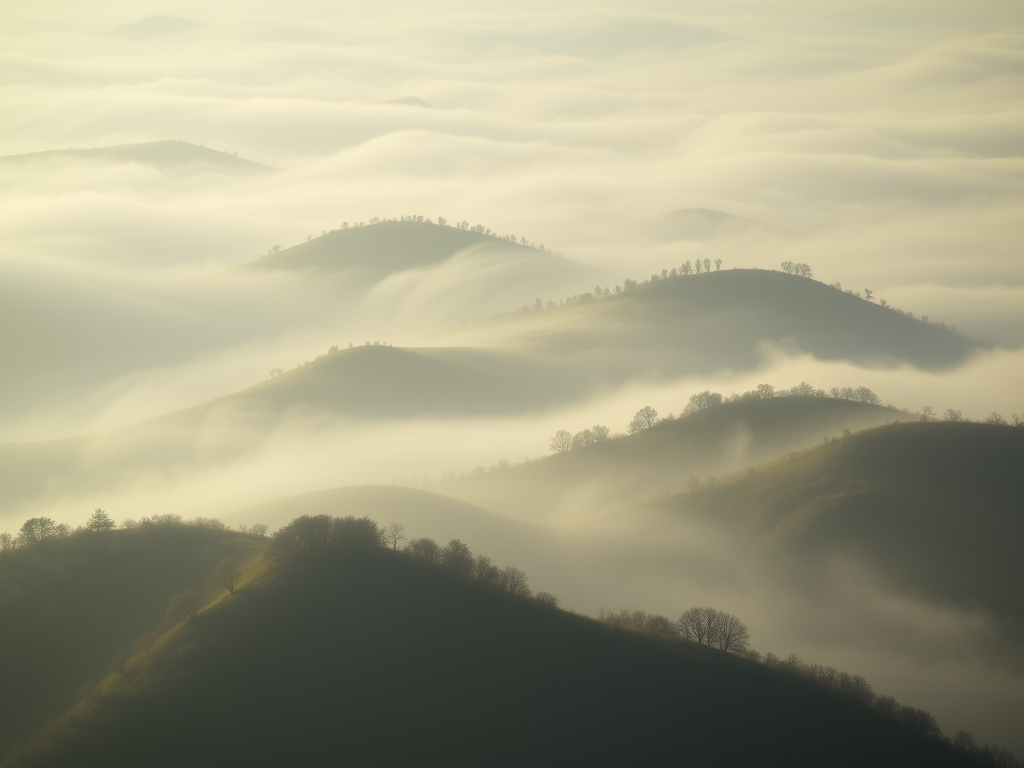
A serene landscape featuring rolling hills partially obscured by a thick layer of fog, bathed in soft, diffused light, creating an ethereal atmosphere.

When We Slow Down Enough to See 🤓

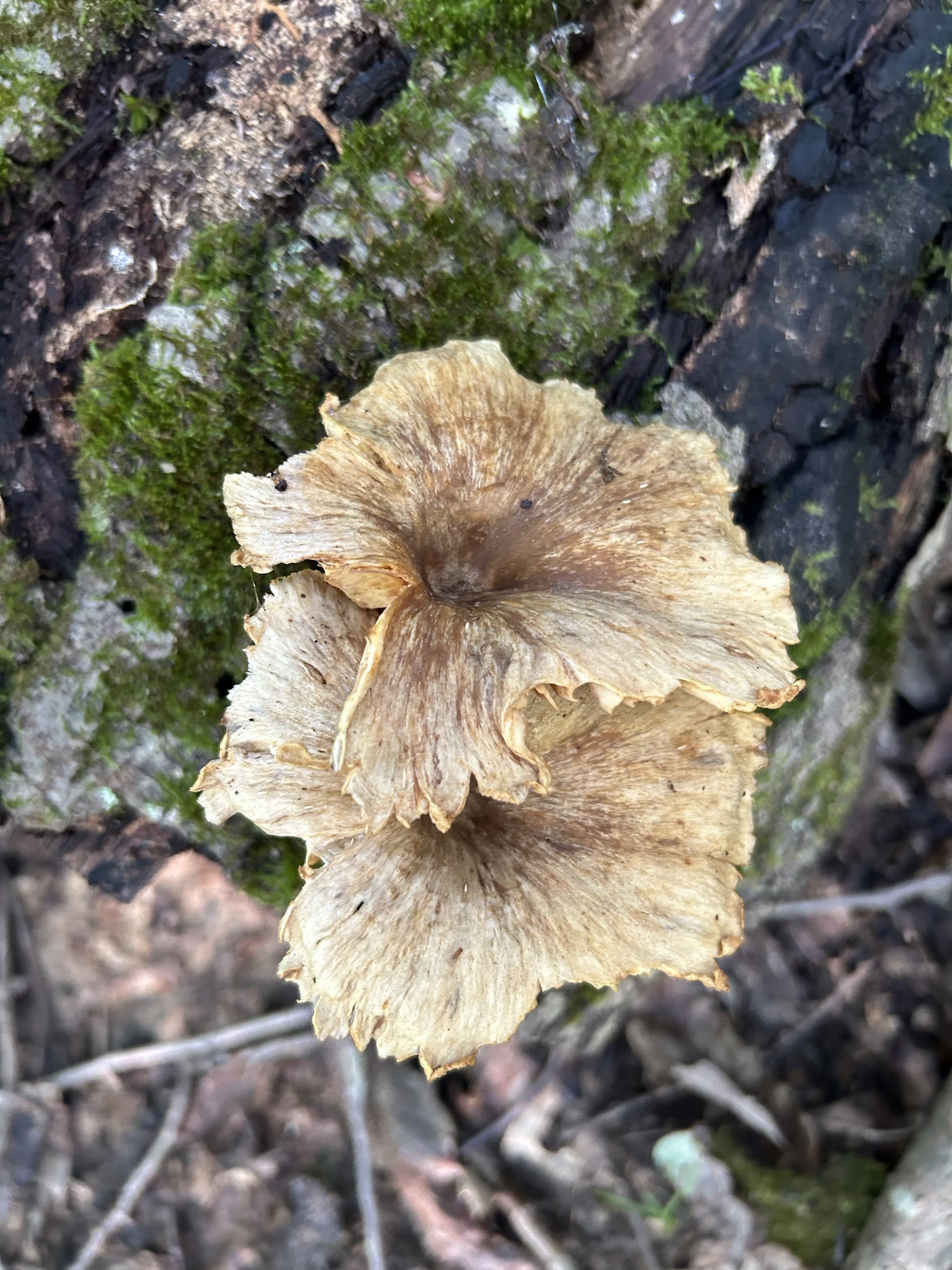
It occurred to me that more often than not, we rush through the routine of life overlooking these mini-marvels—the ballet of fall leaves chasséing from tree to stream, then pirouetting along water currents; sinuous streamers of fog tendrils meandering around hilltops; or, the multiplicity of ice crystals frosting over a car’s windshield to name a few. These wonders are woven into daily life: from the cantaloupe-colored brilliance of sunrise over the Ohio River to the glimmer of moonlight on a frost-covered lawn; from flower-like fungi blooming on fallen logs to a puppy seeing its own reflection in a puddle. Beauty surrounds us, waiting to be noticed. Like the invisible art gallery of spider webs in traffic lights on my morning jog, most go unnoticed until the light hits just right. However, when we take time to pause and pay attention, beauty will often reveal itself in unexpected yet common places, including stoplights.

A close-up image of a brownish mushroom growing on a tree trunk, highlighting its textured surface and natural surroundings.
Flower-like fungi “blossoming” from fallen tree branch

The Power of Morning Stillness 😌

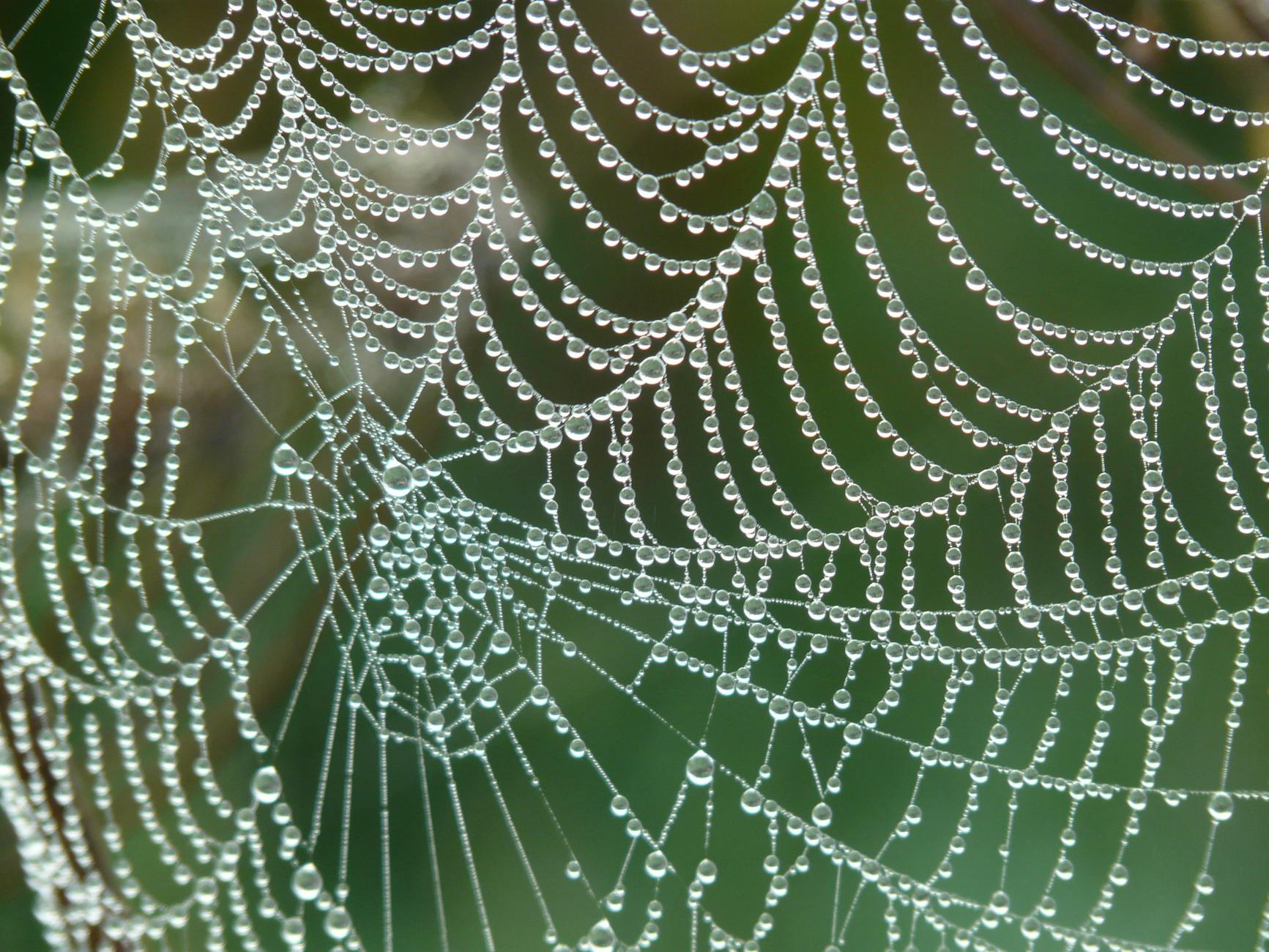
That early-morning observation turned meditation centered my day. It offered more than one lesson and served as a reminder that the morning placidity can bring a sense of calming clarity before the noise of the day. Making time for stillness in the morning, whether sipping coffee, walking a beloved pet, or sitting in prayer meditation—offers an opportunity for spaciousness at the day’s start. A moment to center, notice, reflect, and connect. Even a few minutes of stillness can offer us an opportunity to ground ourselves and recalibrate our perspective. If we grow quiet enough, we may remember that peace resides within us. That is not to say that peace is the absence of movement, purpose, or challenge, but rather it is a strong presence within us—much like the hidden strength within the delicate spider web. 

A close-up of a spider web adorned with dewdrops, creating a sparkling effect against a blurred green background.
Photo by Pixabay on Pexels.com

Lessons from the Web: Resilience and Renewal 🕸️

As I reflected on the morning jog through town, I realized that each web represented perseverance, fortitude, and tenacity–three key qualities essential for growth. Each morning, orb-weaving spiders consume their protein-rich webs to reclaim the silk for rebuilding. This ensures the new web they build in the evening is fresh, sticky, and strong enough to catch plenty of prey. Through practice, the spiders gain strength and instinctively how to rebuild after storms and strong wind.

The spiders’ resilience serves as a reminder that we, too, have the grit to rebuild after disappointments, setbacks, and loss. Like the spider, rebuilding our lives is often quiet work that begins only after we have nourished body, mind, and spirit. The spider’s persistence mirrors our own–delicate and determined–reconstructing through incremental, small steps. Life, like the spider’s web, is fragile, yet we too possess tensile strength—centered in faith—that guides us as we restore, renew, and rebuild. 

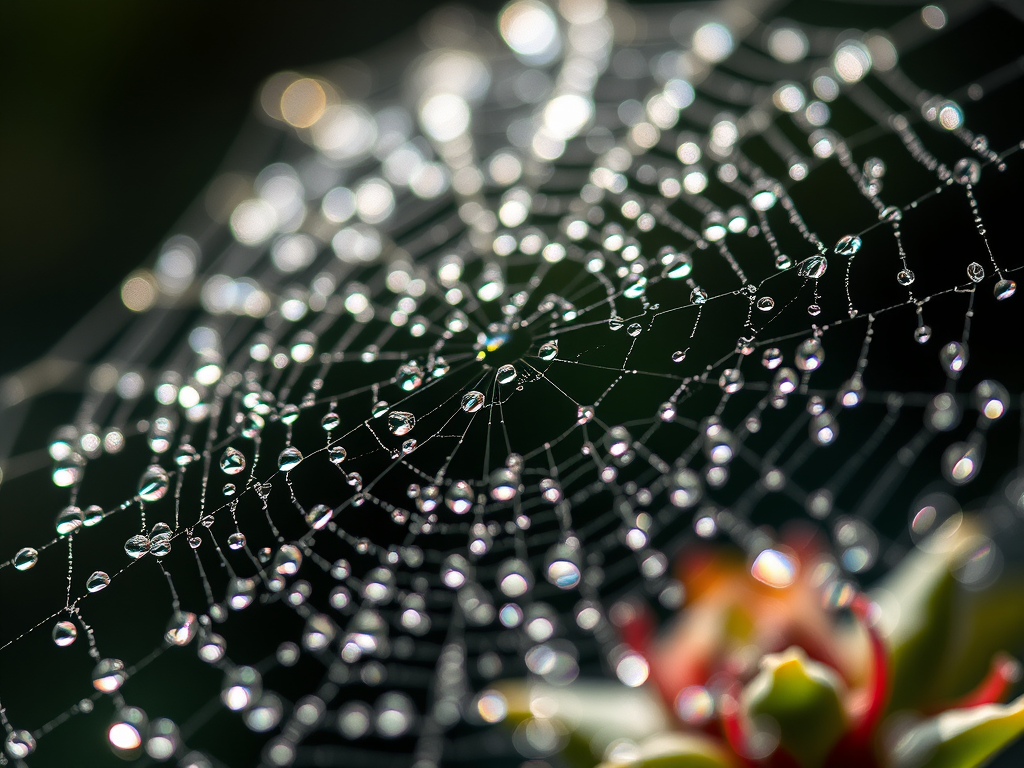
A close-up view of a spider web adorned with numerous droplets of dew, reflecting light and creating a sparkling effect against a dark background.

The Threads That Bind Us 🕷️

The spider’s web, where no thread stands alone, echoes the interconnectedness of our own lives. We are part of a collective. As the light shone through the webs, each dew drop caught the light, refracting color and seemingly creating miniature worlds. Just as the traffic/street lights played across the spider webs’ dew drops, our connected lives reflect multiple roles–friend, spouse/partner, worker, neighbor, parent, child, citizen . . . . Each strand of life possesses a quiet strength that is integral to the whole. In fact, the integrity of the web depends upon the strength and resiliency of every strand. Each facet of our lives holds and reveals meaning; together, the varied strands of our lives unite the whole, creating an array of meaningful relationships.

A close-up view of a beautifully intricate spider web adorned with dew droplets, creating a delicate display of nature's artistry in black and white.
Photo by don chowdhury on Pexels.com

Finding the Extraordinary in the Ordinary 🌃

In the end, the light changed, and I crossed the street as the sun rose, erasing the glimmer of those webs. Yet the image remains—reminding me to keep looking for the extraordinary in ordinary places. Perhaps it waits in the quietude before dawn, a pause at a red light, or the hush of nightfall. So many interlaced moments shimmer within the droplets of daily life, waiting for those willing to see. Those silky webs may vanish with daylight, but their pearls of wisdom still glimmer within me, reminding me that beauty often hides in ordinary light.  

May we all learn to look a little longer, to pause at life’s red lights, and to notice the silken threads of beauty connecting us in the quiet hours of dawn.

Finding Stillness at Charlton Lake Camp: A Reflection

“Only in quiet waters things mirror themselves undistorted. Only in a quiet mind is adequate perception of the world.”–Hans Marggolius

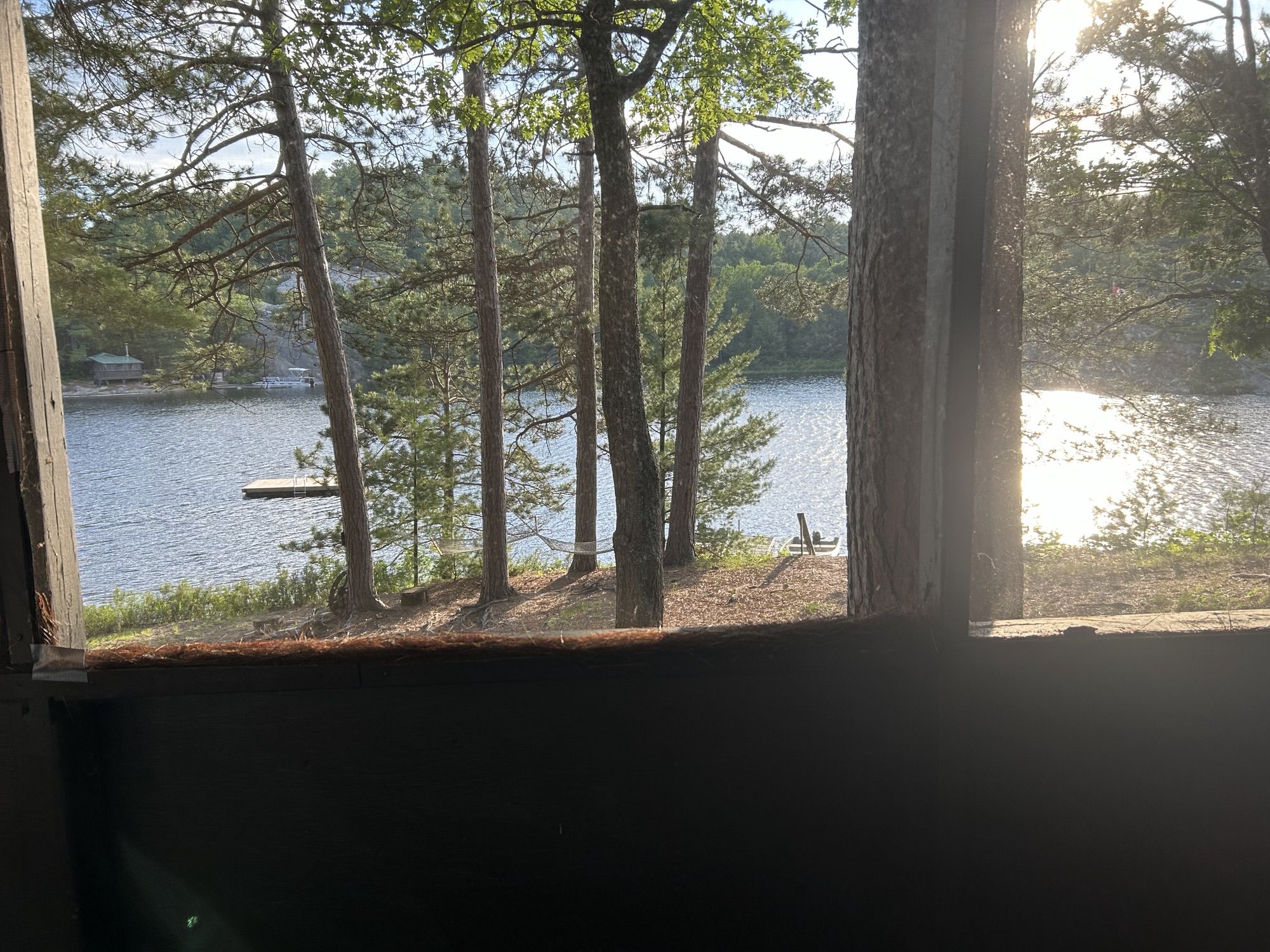
The view through the screened in porch overlooking Whitefish River a throughway to Charlton Lake, Frood Lake, and Cranberry Lake.

Still Waters 🏞️

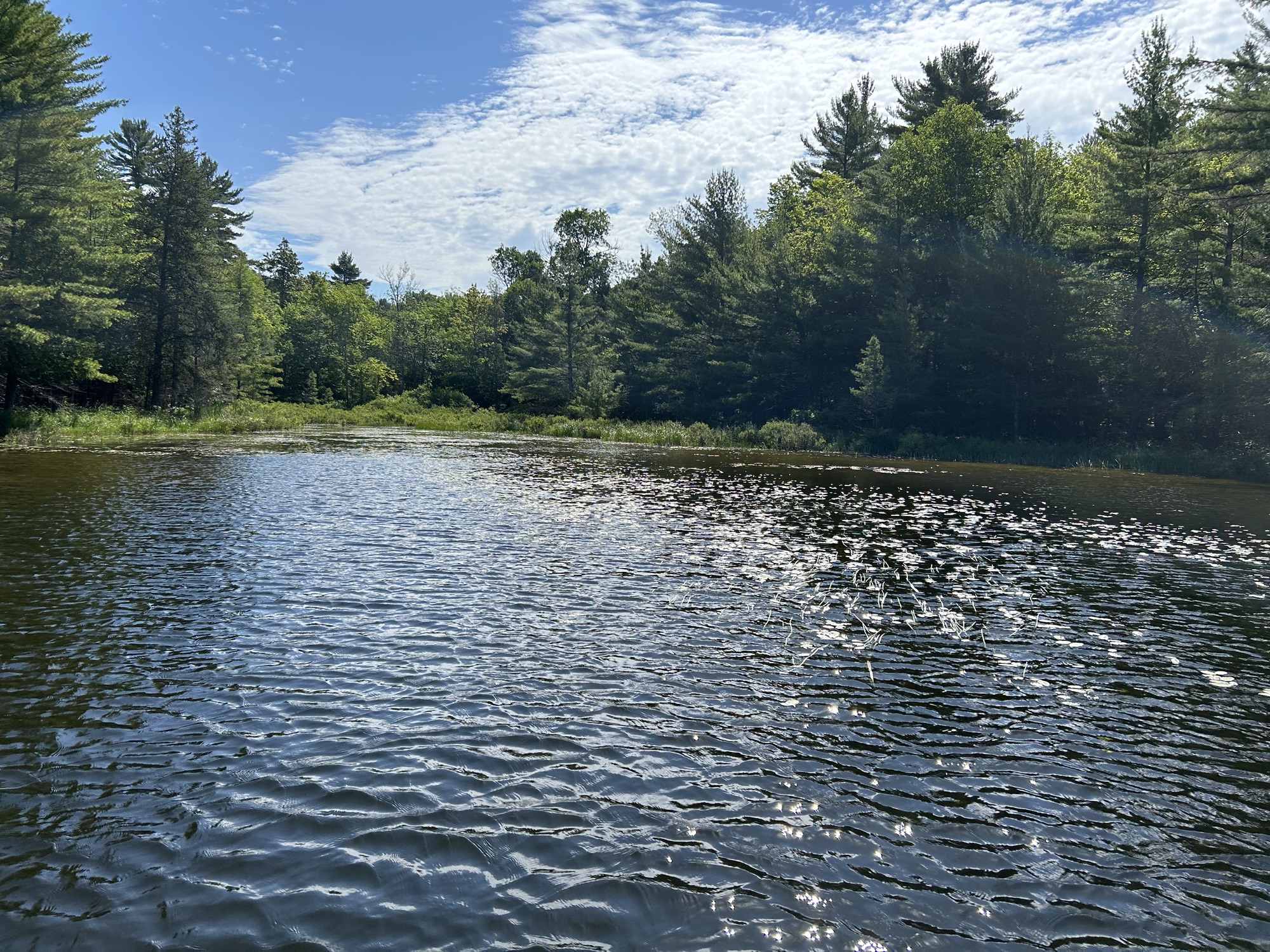
I sat observing the waters of the Whitefish River flowing toward stillness–moving from one lake to the next, but in a relaxed state of flow that most often seemed to occur in the early morning or late evening.  Occasionally, something would break the surface, and rings would begin spreading outward from the epicenter. When this would happen, I often caught myself holding my breath in anticipation until the last ring dissipated, and the water was once more placid.  Then, with the stillness restored, I resumed my own cadence of breathing slow and steady, matching the river’s pulse.

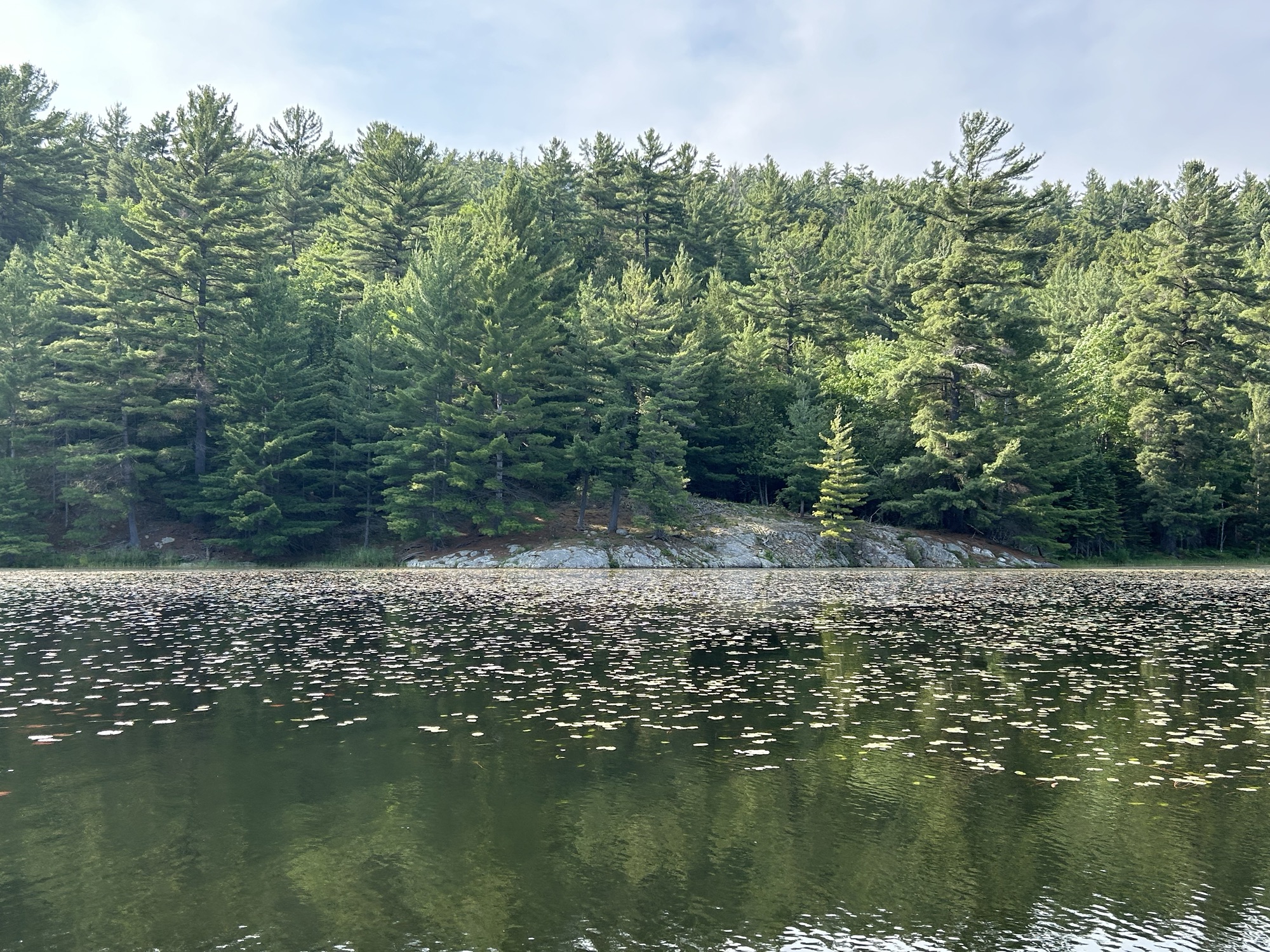
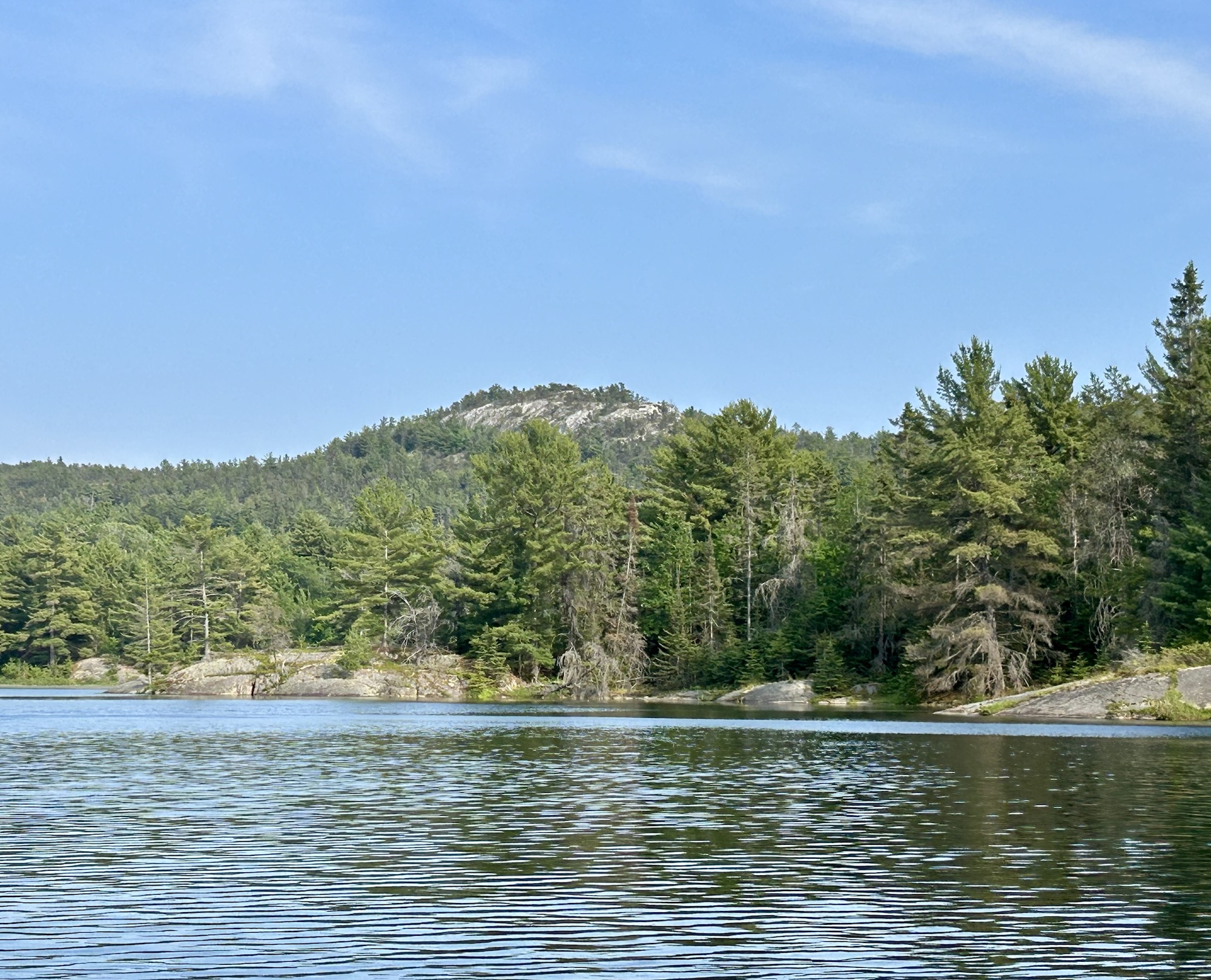
The peaceful, craggy rise of quartzite rise of the ancient La Cloche Mountains surrounding the lakes.

Lake Charlton Camp 🏕️

My husband, John, and I were staying in Charlton Lake Camp (CLC) located in Killarney Provincial Park, Willisville, Ontario. This was our second trip to CLC, situated in a natural showcase of diverse pines, surrounded by the white quartzite crests of the La Cloche Mountains and translucent, tea-stained waters of Charlton Lake, Frood Lake, and Cranberry Lake with the Whitefish River providing a throughway to the lakes. In the morning, CLC was filled with a wilderness chorus of birdsong, loon calls, bull frogs, lapping sounds of water against rocky shores, and, of course, the buzzing hum of countless varieties of insects. 

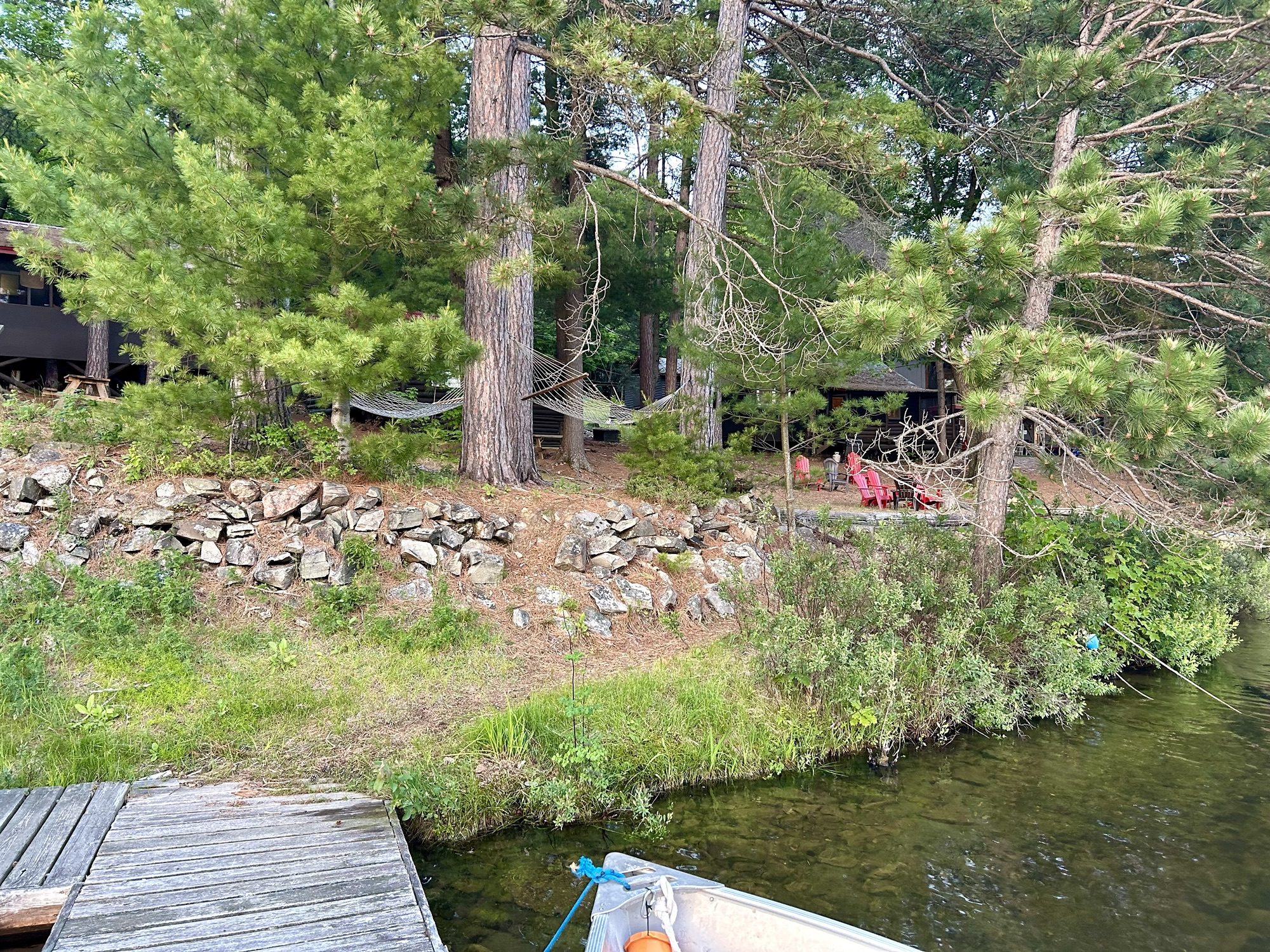
The cabin in which we stayed at Lake Charlton Camp is just beyond the steps that lead to the dock.

Settling into Quiet 🤫

Breathing in deeply, my lungs filled with the aromatic aromas of pines, damp soil, sunned rock, and a hint of morning coffee as I continued to sit and observe, communing with my surroundings. The sun would soon begin lifting above the craggy cliffs behind the cabin in which we stayed, and life would soon begin stirring with those gleaming rays. But, in that moment, hovering between the hush of night and the dawn of daybreak, there was a stillness in which my heart was soft and open–receptive to that still small voice that resides within.

Boating through Frood Lake with the La Cloche Mountains in the foreground.

Slipping into the Gap of peacefulness 😌

I once read that praying is talking to the Divine Creator; whereas, meditation is stilling the mind for the purpose of listening.  Sitting there on that screened porch on the cusp of a new day, I was reminded of that idea.  My heart, head, and soul had relaxed enough to hear the truth–to really parse the ongoing narratives that, when left unchecked, my brain tends to repeat on an endless loop. By settling into the surrounding peacefulness, I could focus on listening, and begin to see how many of those narratives were (and are) often baseless claims forged by past experiences, trauma, anxiety, negative self-talk/criticism, and even a little fear. 

Sitting, breathing calmly, and savoring CLC’s peaceful surroundings through my senses, I found I could let my mind rest easily as if the wheel of ceaseless chatter had ground to stop, or at the very least, slowed its revolution. Taking in a deep breath of the clean, wilderness air, I softened my gaze on the water and continued listening. 

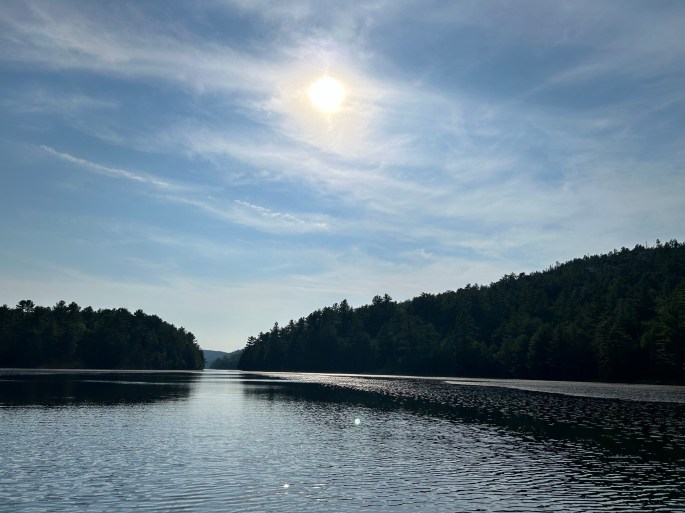
Afternoon sun glistens off the calm waters of Frood Lake.

Riding the waves of emotional influence🌊

Matching my inner calmness to the stillness of the river led me to a realization. My own mind often mirrors those waters of CLC. My mind tends to be at its calmest in the early morning or at night–just before drifting off to sleep, letting go of the day’s worries.  However, once the day fully begins, I am immersed in work and various tasks with multiple decisions being made throughout the day.  As my decision making increases, my judging brain kicks into high gear.  With that continued judgment comes an inner dialogue often influenced and affected by emotions, which rise and fall throughout the day much like the water around me did during the week.

Throughout our time fishing, resting, and relaxing in CLC, I observed how the river and surrounding lakes could quickly become stirred up, rising and falling with the winds of the day, tossed about with a changing weather front, or even fill with large waves when an occasional boat sped across the waters to the farthest end of a lake. There were additional times, when for no discernable reason, the waters would suddenly ascend and descend, jostling the boat John and I were in. 

Riding out the waves of emotions can be similar to navigating a fishing boat over wave-filled waters.

Restless emotions 😬

Fishing during those moments of restless waters and winds was challenging.  The wind would take hold of a perfectly thrown cast and carry the line and lure in a completely different direction than intended. Likewise, when the waters were lifting and dipping with waves, the view beneath the waters was clouded and murky–not allowing the eye to determine if the boat was above rocks, a weed bed, a submerged tree, or any other number of possibilities. Conversely, during the moments of calm, settled waters, navigating and fishing those waters was fairly easy and what was beneath the boat was clearly visible.  

Looking out at the peaceful waters of Whitefish River through the screened porch.

The influence of a RAcing Mind 🤯

The riverview before me, in that early morning hour, was emblematic not only of ideal fishing waters, but also a peaceful state of mind.  Unfortunately, our modern world tends to create and drive the opposite effect–a constant flurry of stirred-up waters–our minds fidgety and/or frantic, racing from one thought to another, moving through agendas of busyness, entertainment, and avoidance. Therefore, if we don’t set aside time to allow our minds an opportunity to cease its chatter and rest easy, how can we ever feel calm and think clearly?

Settle into into the stillness.

The importance of intentional Quiet 🤫

Our inner dialogue is often affected by the changing weather of our emotions.  Those emotions vacillate and shift with each decision we make and with each event we encounter.  And while I fully admit that mind chatter, and all of the emotions that come with it, cannot necessarily be avoided, in similar manner to the weather fronts we experienced during my time at CLC, our emotions can vastly change within the course of a day, much less a week. Therefore, deliberately providing pockets of time for stillness allows us to detach from the emotional narratives, and instead, fosters listening to that still, small voice of knowing, which allows us to, well, “fish” for the truth.

Listen for the whisper of our Creator, the great I AM.

LeT us Listen for the whisper 👂

Ralph Waldo Emerson once penned, “Let us be silent, that we may hear the whisper of God.” What a powerful reminder of the importance of settling the mind, like the still waters that were before me on that morning at Charlton Lake Camp. The type of quiet we choose can be a formal meditation/reflection, but it could also be achieved through walking or other forms of exercise, tending to your flowers/plants, or simply sitting on the porch sipping coffee or tea and listening to the birds. It really doesn’t matter as long as it is an intentional moment set aside to calm those mental waters of ceaselessly, flowing chatter. Prioritizing time for quiet reflection or meditation, however you define it, allows the flow of our hearts and minds to settle, soften, and encounter the “whisper of God.” 

Willisville, Ontario