Finding Stillness at Charlton Lake Camp: A Reflection

“Only in quiet waters things mirror themselves undistorted. Only in a quiet mind is adequate perception of the world.”–Hans Marggolius

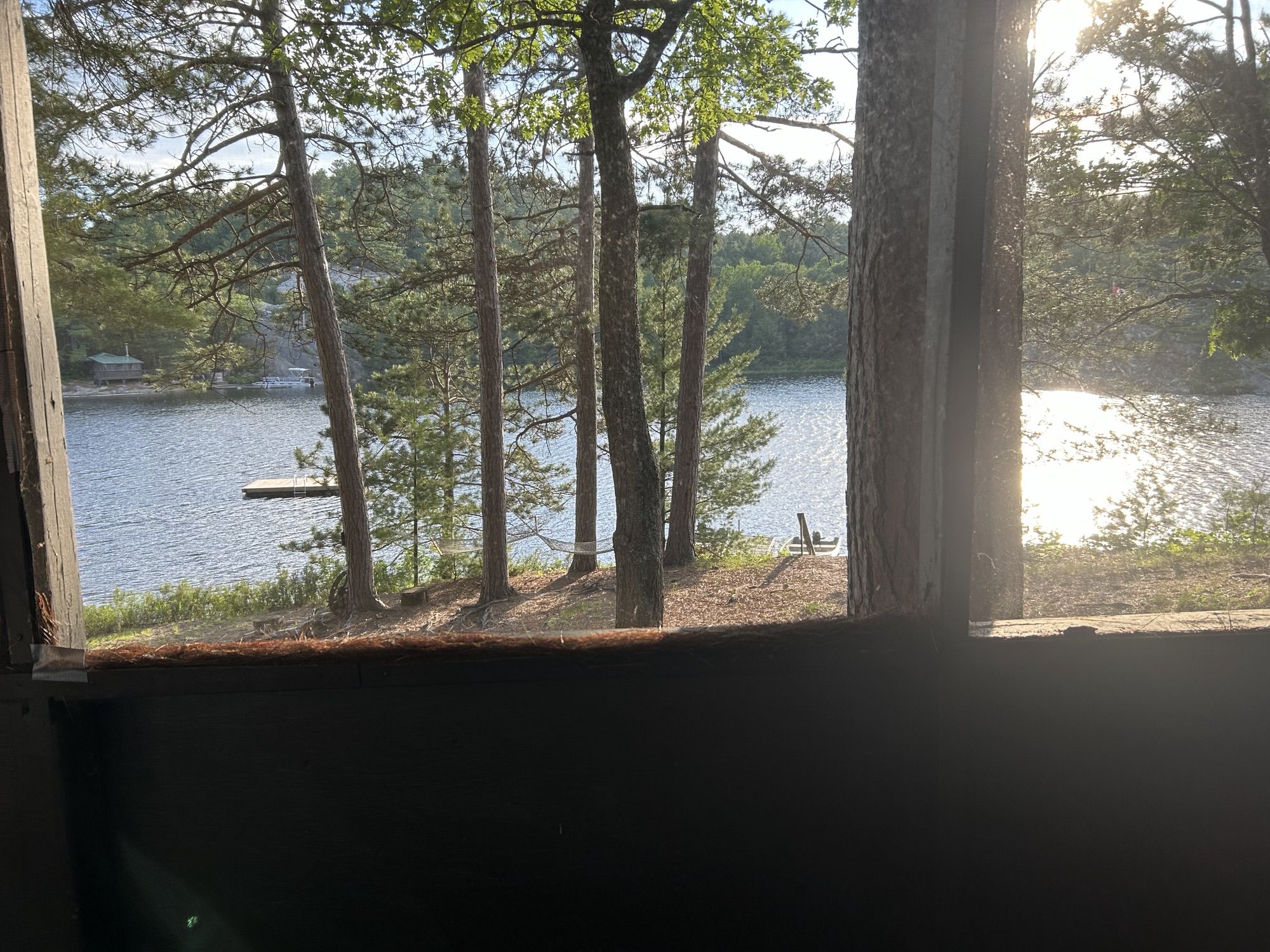
The view through the screened in porch overlooking Whitefish River a throughway to Charlton Lake, Frood Lake, and Cranberry Lake.

Still Waters 🏞️

I sat observing the waters of the Whitefish River flowing toward stillness–moving from one lake to the next, but in a relaxed state of flow that most often seemed to occur in the early morning or late evening.  Occasionally, something would break the surface, and rings would begin spreading outward from the epicenter. When this would happen, I often caught myself holding my breath in anticipation until the last ring dissipated, and the water was once more placid.  Then, with the stillness restored, I resumed my own cadence of breathing slow and steady, matching the river’s pulse.

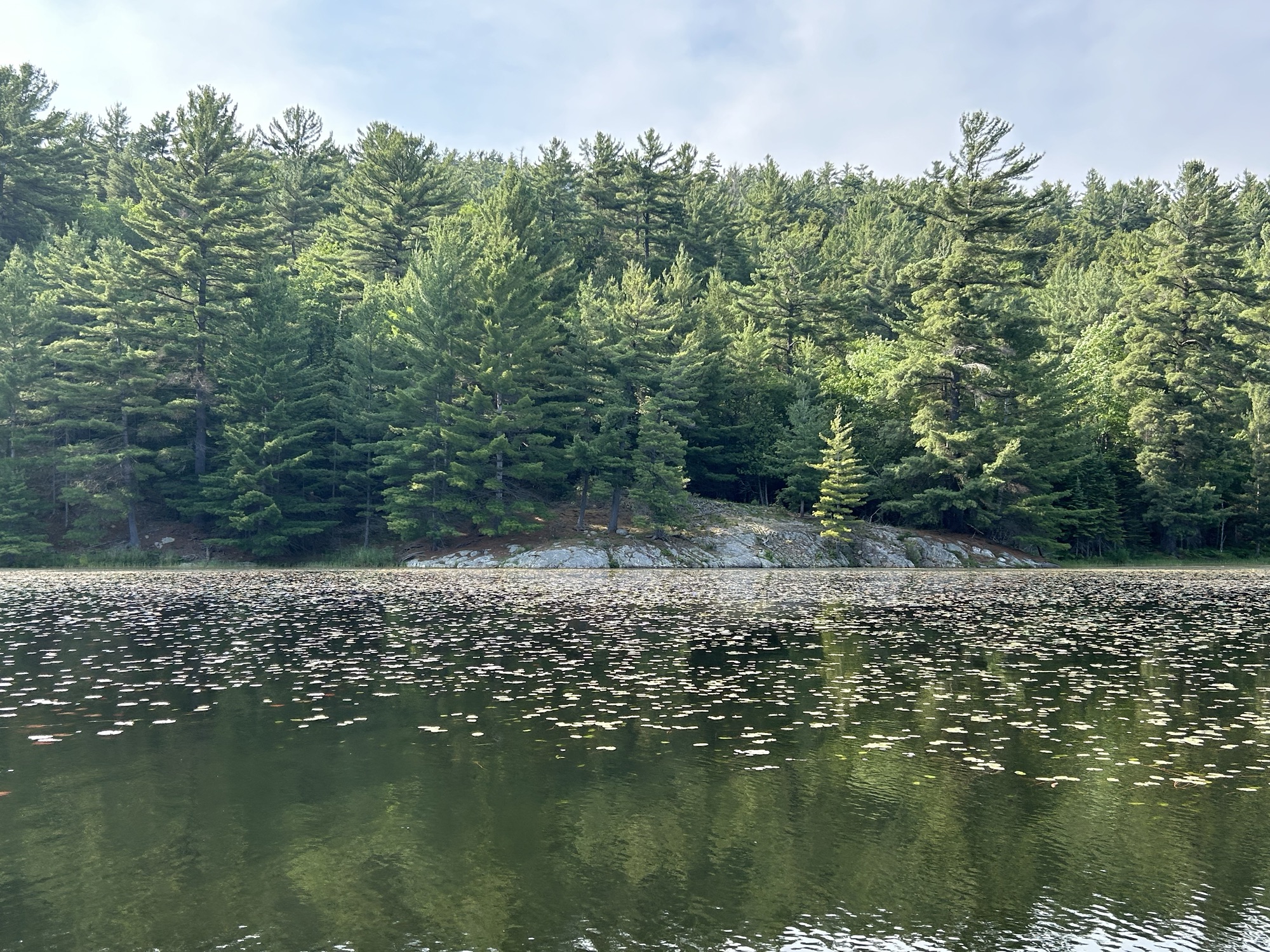
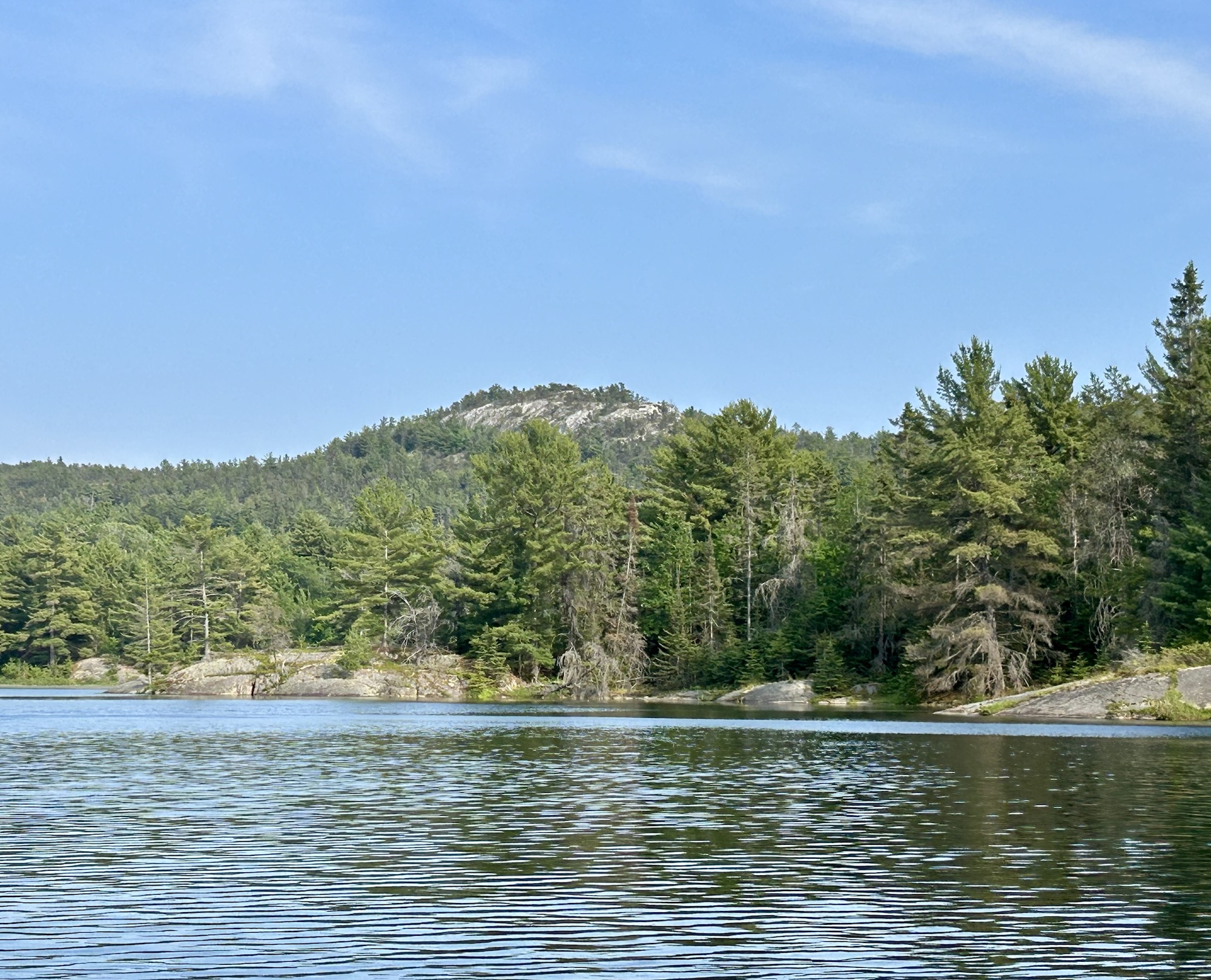
The peaceful, craggy rise of quartzite rise of the ancient La Cloche Mountains surrounding the lakes.

Lake Charlton Camp 🏕️

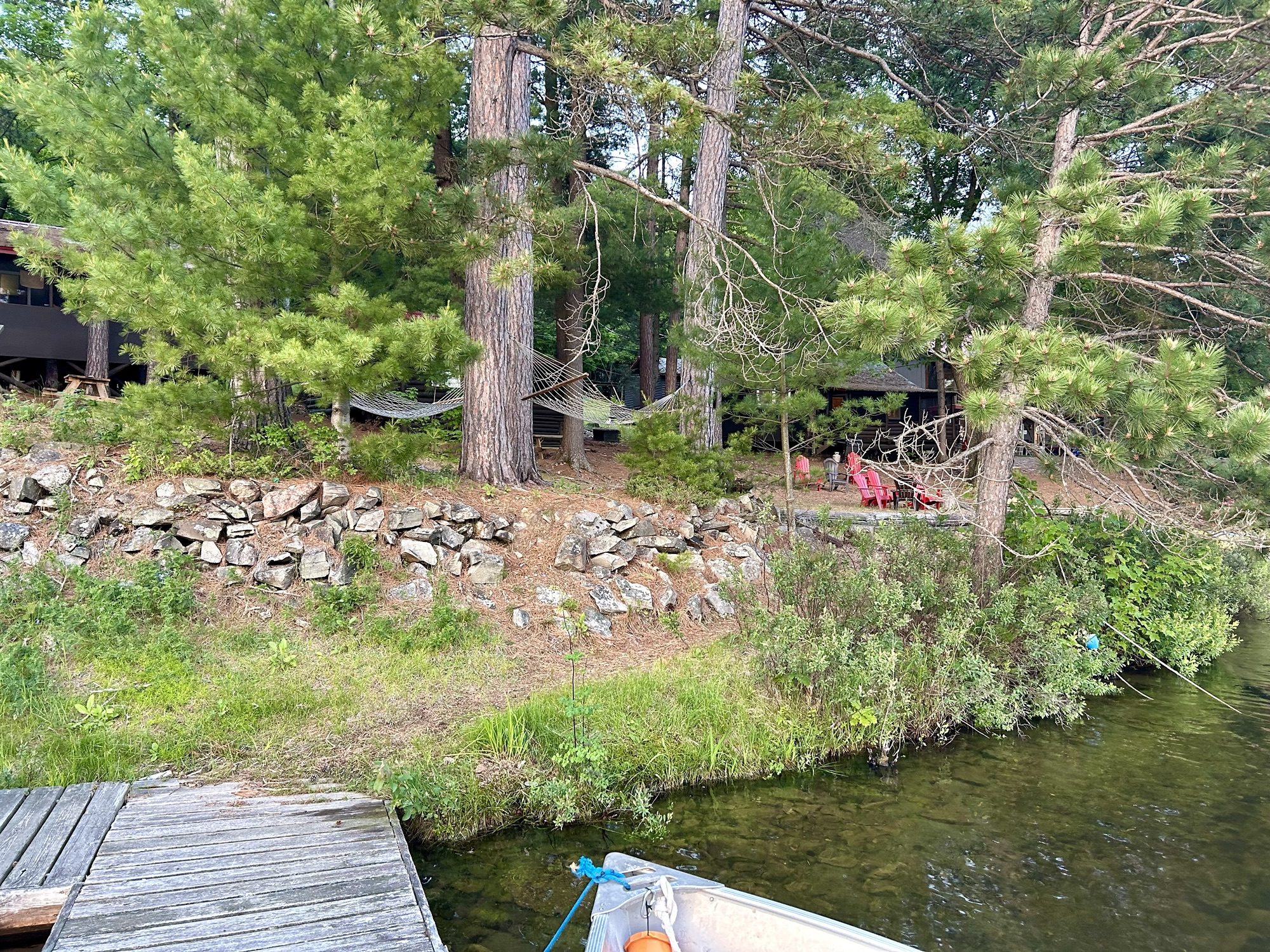
My husband, John, and I were staying in Charlton Lake Camp (CLC) located in Killarney Provincial Park, Willisville, Ontario. This was our second trip to CLC, situated in a natural showcase of diverse pines, surrounded by the white quartzite crests of the La Cloche Mountains and translucent, tea-stained waters of Charlton Lake, Frood Lake, and Cranberry Lake with the Whitefish River providing a throughway to the lakes. In the morning, CLC was filled with a wilderness chorus of birdsong, loon calls, bull frogs, lapping sounds of water against rocky shores, and, of course, the buzzing hum of countless varieties of insects. 

The cabin in which we stayed at Lake Charlton Camp is just beyond the steps that lead to the dock.

Settling into Quiet 🤫

Breathing in deeply, my lungs filled with the aromatic aromas of pines, damp soil, sunned rock, and a hint of morning coffee as I continued to sit and observe, communing with my surroundings. The sun would soon begin lifting above the craggy cliffs behind the cabin in which we stayed, and life would soon begin stirring with those gleaming rays. But, in that moment, hovering between the hush of night and the dawn of daybreak, there was a stillness in which my heart was soft and open–receptive to that still small voice that resides within.

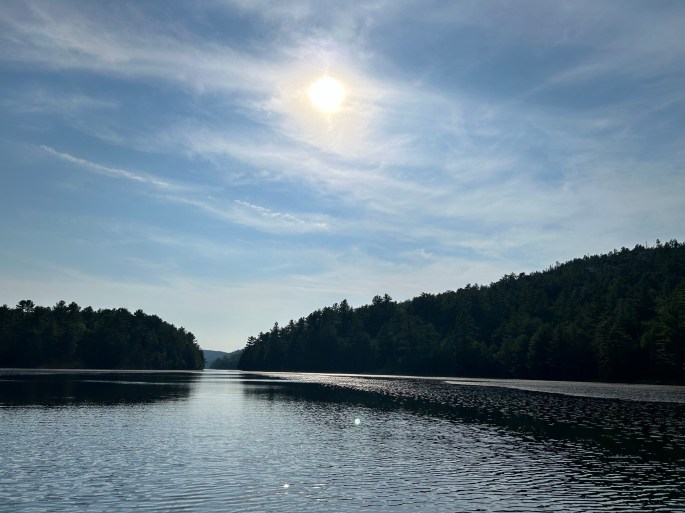
Boating through Frood Lake with the La Cloche Mountains in the foreground.

Slipping into the Gap of peacefulness 😌

I once read that praying is talking to the Divine Creator; whereas, meditation is stilling the mind for the purpose of listening.  Sitting there on that screened porch on the cusp of a new day, I was reminded of that idea.  My heart, head, and soul had relaxed enough to hear the truth–to really parse the ongoing narratives that, when left unchecked, my brain tends to repeat on an endless loop. By settling into the surrounding peacefulness, I could focus on listening, and begin to see how many of those narratives were (and are) often baseless claims forged by past experiences, trauma, anxiety, negative self-talk/criticism, and even a little fear. 

Sitting, breathing calmly, and savoring CLC’s peaceful surroundings through my senses, I found I could let my mind rest easily as if the wheel of ceaseless chatter had ground to stop, or at the very least, slowed its revolution. Taking in a deep breath of the clean, wilderness air, I softened my gaze on the water and continued listening. 

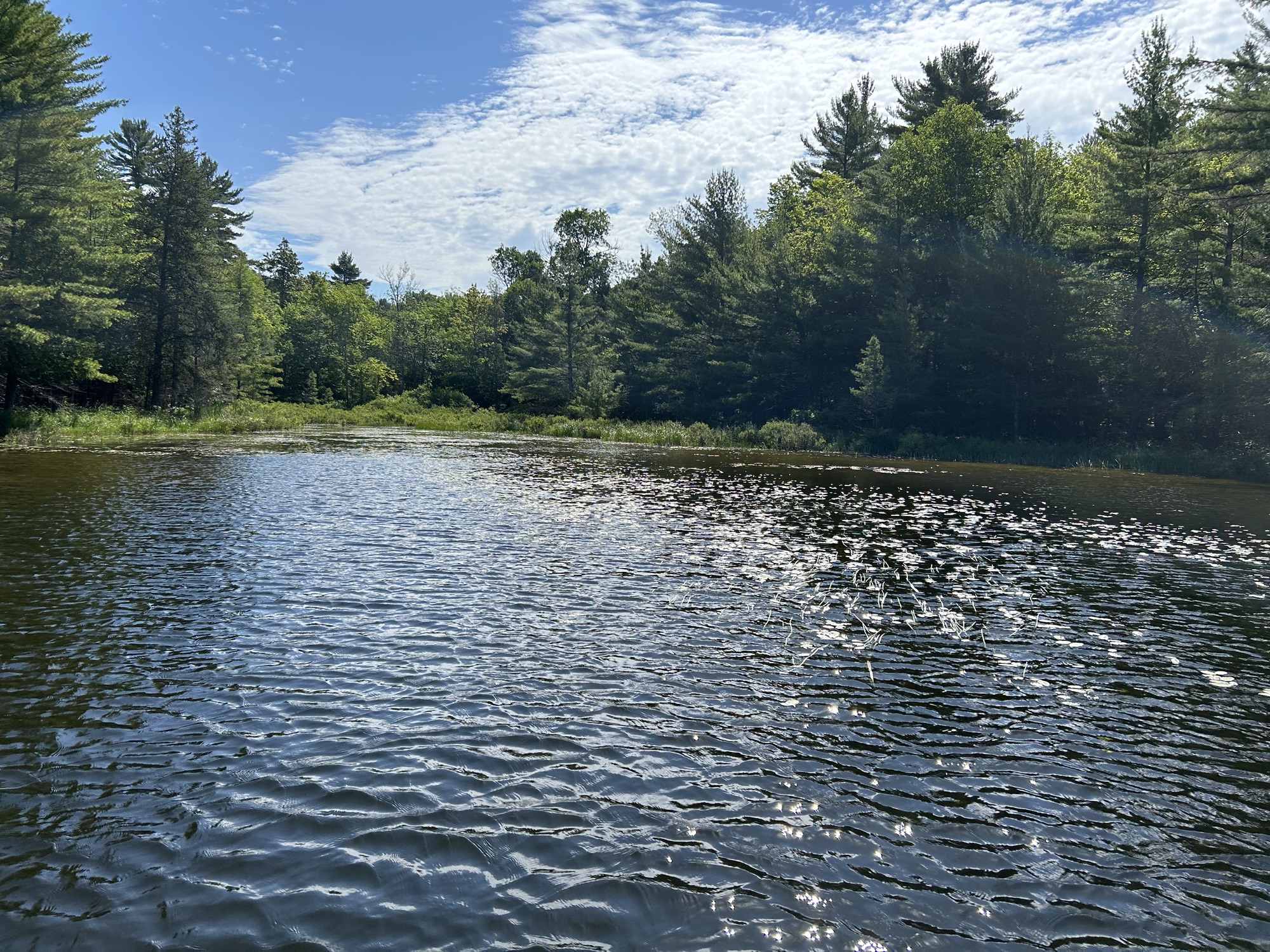
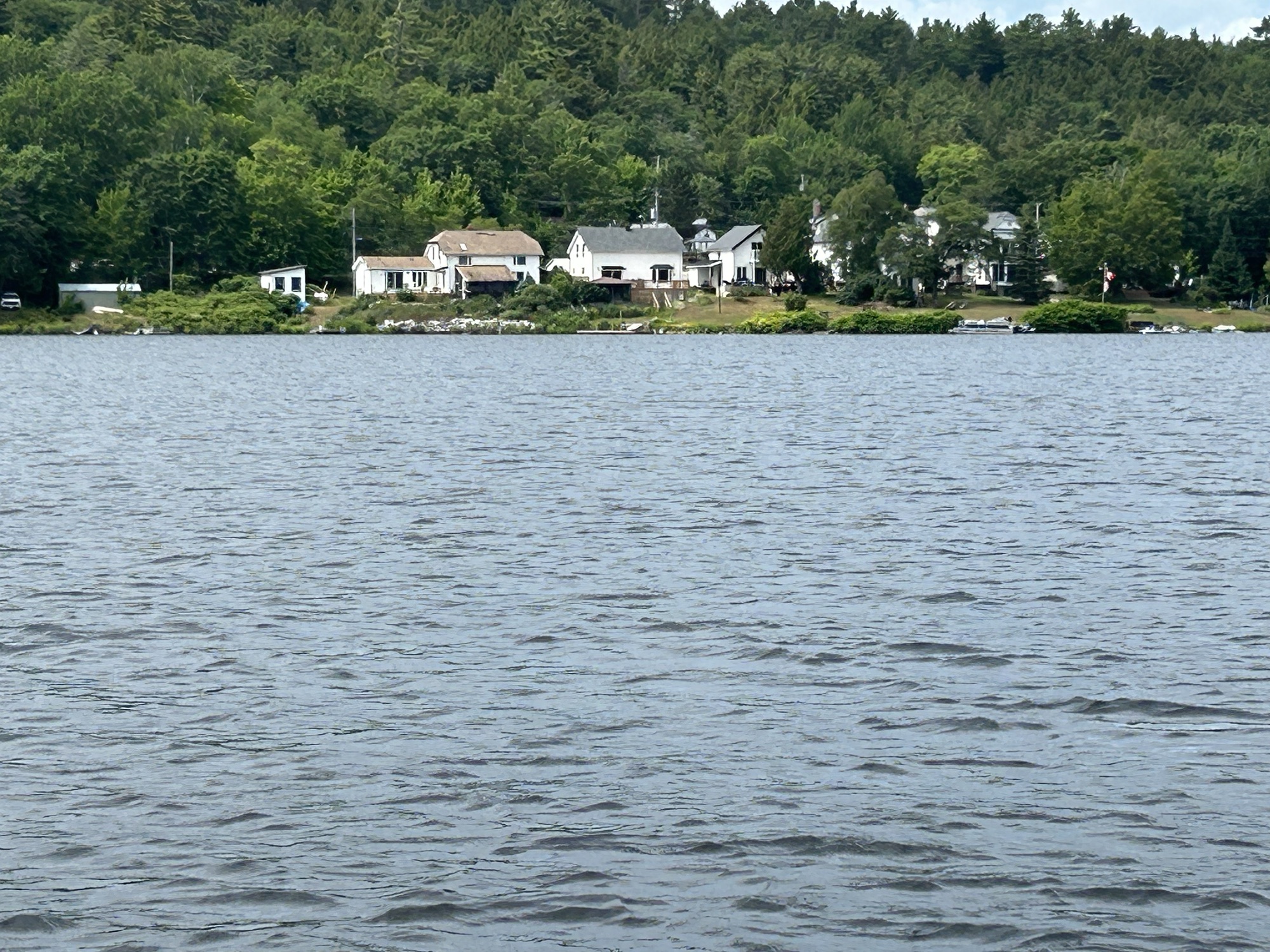
Afternoon sun glistens off the calm waters of Frood Lake.

Riding the waves of emotional influence🌊

Matching my inner calmness to the stillness of the river led me to a realization. My own mind often mirrors those waters of CLC. My mind tends to be at its calmest in the early morning or at night–just before drifting off to sleep, letting go of the day’s worries.  However, once the day fully begins, I am immersed in work and various tasks with multiple decisions being made throughout the day.  As my decision making increases, my judging brain kicks into high gear.  With that continued judgment comes an inner dialogue often influenced and affected by emotions, which rise and fall throughout the day much like the water around me did during the week.

Throughout our time fishing, resting, and relaxing in CLC, I observed how the river and surrounding lakes could quickly become stirred up, rising and falling with the winds of the day, tossed about with a changing weather front, or even fill with large waves when an occasional boat sped across the waters to the farthest end of a lake. There were additional times, when for no discernable reason, the waters would suddenly ascend and descend, jostling the boat John and I were in. 

Riding out the waves of emotions can be similar to navigating a fishing boat over wave-filled waters.

Restless emotions 😬

Fishing during those moments of restless waters and winds was challenging.  The wind would take hold of a perfectly thrown cast and carry the line and lure in a completely different direction than intended. Likewise, when the waters were lifting and dipping with waves, the view beneath the waters was clouded and murky–not allowing the eye to determine if the boat was above rocks, a weed bed, a submerged tree, or any other number of possibilities. Conversely, during the moments of calm, settled waters, navigating and fishing those waters was fairly easy and what was beneath the boat was clearly visible.  

Looking out at the peaceful waters of Whitefish River through the screened porch.

The influence of a RAcing Mind 🤯

The riverview before me, in that early morning hour, was emblematic not only of ideal fishing waters, but also a peaceful state of mind.  Unfortunately, our modern world tends to create and drive the opposite effect–a constant flurry of stirred-up waters–our minds fidgety and/or frantic, racing from one thought to another, moving through agendas of busyness, entertainment, and avoidance. Therefore, if we don’t set aside time to allow our minds an opportunity to cease its chatter and rest easy, how can we ever feel calm and think clearly?

Settle into into the stillness.

The importance of intentional Quiet 🤫

Our inner dialogue is often affected by the changing weather of our emotions.  Those emotions vacillate and shift with each decision we make and with each event we encounter.  And while I fully admit that mind chatter, and all of the emotions that come with it, cannot necessarily be avoided, in similar manner to the weather fronts we experienced during my time at CLC, our emotions can vastly change within the course of a day, much less a week. Therefore, deliberately providing pockets of time for stillness allows us to detach from the emotional narratives, and instead, fosters listening to that still, small voice of knowing, which allows us to, well, “fish” for the truth.

Listen for the whisper of our Creator, the great I AM.

LeT us Listen for the whisper 👂

Ralph Waldo Emerson once penned, “Let us be silent, that we may hear the whisper of God.” What a powerful reminder of the importance of settling the mind, like the still waters that were before me on that morning at Charlton Lake Camp. The type of quiet we choose can be a formal meditation/reflection, but it could also be achieved through walking or other forms of exercise, tending to your flowers/plants, or simply sitting on the porch sipping coffee or tea and listening to the birds. It really doesn’t matter as long as it is an intentional moment set aside to calm those mental waters of ceaselessly, flowing chatter. Prioritizing time for quiet reflection or meditation, however you define it, allows the flow of our hearts and minds to settle, soften, and encounter the “whisper of God.” 

Willisville, Ontario

Maybe it’s time to close the window: Self-care and balance includes moving away from toxic people and situations

“Only in quiet waters do things mirror themselves undistorted.  Only in a quiet mind is adequate perception of the world.”–Hans Margolius

I love to sit at my desk in the flush of morning light writing with the window above my desk open.  Even when it is cold and chilly, I will often crack the window a few inches to enjoy the predawn air. There is something about the fresh air, the stillness, and the early hymn of dawn that fills me with a sense of peace and hope. The dawn air dissipates the frights of night that may have entered my dreams and nourishes my mind with renewed resiliency for whatever the day may bring.

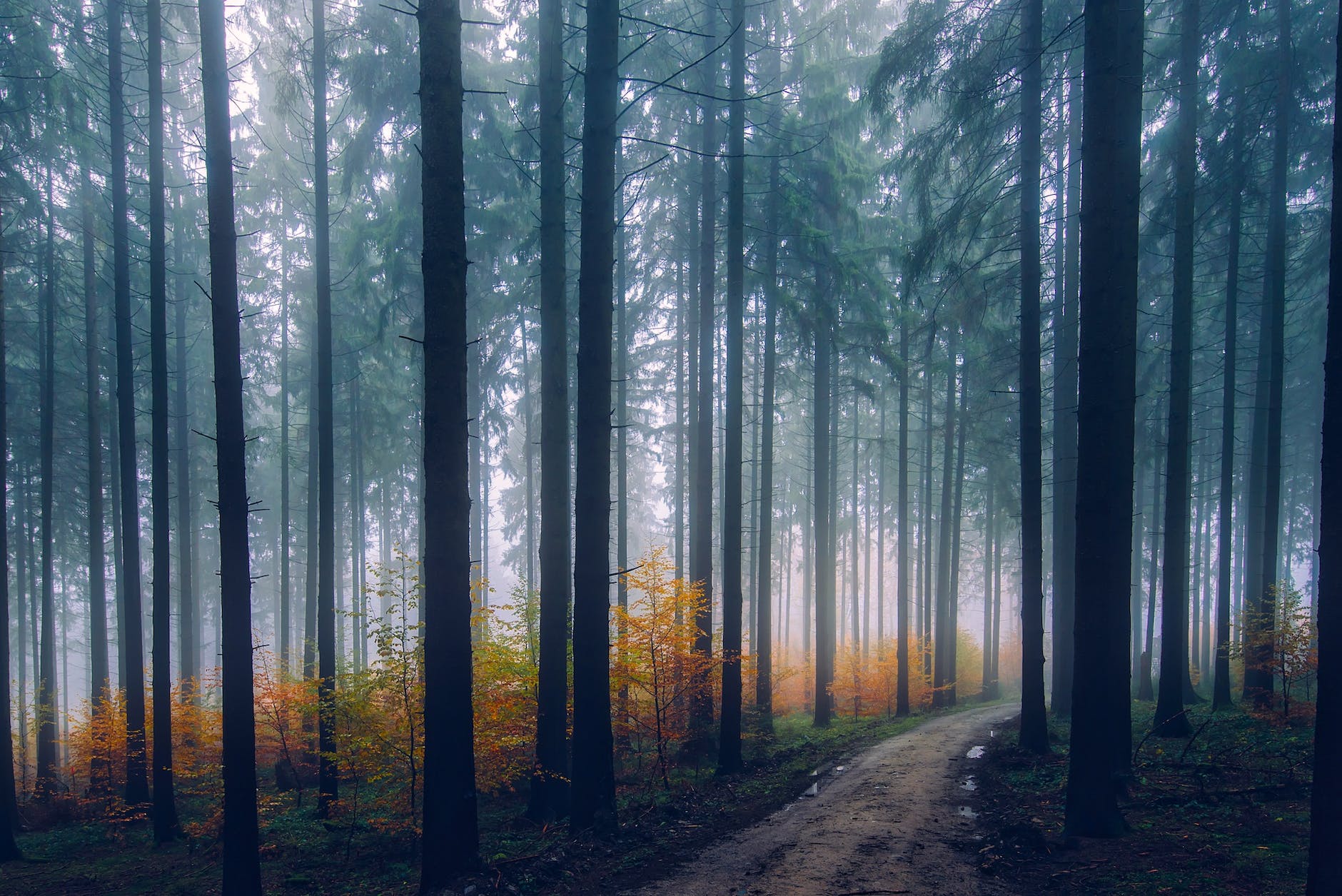
Photo by Pixabay on Pexels.com

One especially hushed, predawn Sunday morning, as I sat, savoring the caress of fall air on my cheeks and hands, I noticed smoke rising from the yard beside mine.  It was my neighbor burning something.  I returned once more to my writing as the serenity of the morning continued humming its charming ambience.

Gradually, every so subtly, the scent of the air shifted. Wafts of acrid air began to drift in through the window screen.  Still, it wasn’t enough to detract from the overall freshness of the morning, and so I left the window open, continuing my writing.  

For 30-40 minutes, I continued my typing, pausing for moments here and there to gaze out the window and clarify my thoughts.  I noticed the dullness of the green leaves, a sure sign that Mother Nature is changing into her fall wardrobe. A single bird rapidly called in a repeated series of three trills, “Hello, hello, hello,” but earned no response. 

Photo by Brett Sayles on Pexels.com

Noticing the familiar tingling in my lower half, cued me into the fact my extremities needed a walk break.  I rose and walked outside to the newspaper box.  A cacophony of Canadian geese, singing their song of seasonal change, flew overhead towards the autumnal clouds.  

It was then I realized how strong the scent was.  Whatever was being burned in my neighbor’s yard had filled the air with a noxious haze that I had not noticed while at my desk with its slightly opened window. However, when I walked back into the house and returned to my desk, the insidious odor had indeed permeated the air.  How had I not noticed previously?

Perhaps it was due to the fact my window had only been partly opened or maybe it was due to my focus.  Regardless, the scent had gradually slithered through the opening of the window, changing the air in a subtle and measured manner that I had not noticed.  I began to reflect upon how often that happens in life, for better AND for worse.

Photo by George Becker on Pexels.com

The seemingly piecemeal process of aging is but one example.  Our children gradually change. Often, we may not notice it in the day to day, but one day you will look at your child and suddenly it hits you how much they have grown and changed.  Likewise, we may not notice our own aging process until we happen to see a photograph of ourselves, and like a slap on the face, we are quickly hit with the awareness of our own aging.  This is all a normal part of the evolution of life.

However, what about other life events? For example, the progressive way in which computers evolved and changed the way I teach.  When I began nearly 36 years ago, there were no computers in my classroom.  The most technological advancement that I had was a rolling chalkboard and a box of dustless chalk!  Flashforward, and my current classroom uses Apple TVs, Google classroom, iPads, Chromebooks, and Macbooks, with all students using their own device on which they are expected to complete work.  For better or worse, that change is here to stay.

I think back through history, for example, the rise of Hitler and Nazi Germany.  It all started in a seemingly moderate way, but it progressively evolved and soon evil, incrementally, blanketed much of Europe, affecting/influencing much of the world.  This, along with countless other historical events, remains a cautionary tale of the way in which harmful developments, left unchecked, can crawl into our lives without our realization until they have fully enmeshed themselves into society.

Photo by Melike Benli on Pexels.com

Back at my work area on that particular Sunday, I decided to close the window above my desk, and leave my writing space for a while, allowing the air to clear.  As I moved into other areas of my home, I could clearly observe the difference in air.  An hour or so later, the air in and around my workspace was cleared, and all it had taken was the simple act of closing the window.

There are certain ideas, concepts, environments, and even people–personally associated to us and distantly known by us– that are likewise toxic disguised in appealing and attractive soundbites, conversational style, and images.  Like the sweet lullaby of the break of dawn, they lull us into acceptance, or at the very least, acquiescence–better to play along or ignore in order to remain focused on our own goals. The problem is that, little by little, we begin to assimilate, breathe in, if you will, the poisoned atmosphere/attitude until it has permeated our being in ways we can’t clearly sense until we step away and gain a new perspective.  Only then do we fully feel the necessity of closing the proverbial window and stepping away from the baneful environment.

Photo by Mizuno K on Pexels.com

The irony of it all, is once you close the window and move on, you begin to realize that there had been a small, still voice inside you all along telling you something wasn’t right.  For me, on that Sunday morning, my tingling legs told me to move since my sense of smell had been so gradually overcome by the slowly shifting air.  Therefore, it is important to tune in, listen for that inner guidance, to Divine Providence.  Perhaps, you may not be able to remove yourself entirely from certain situations and/or certain people, and if that is the case, determine what you can change, and then act.  Close the window. Move in another direction, and notice how much better you will feel with fresh air and a fresh perspective. 

Photo by Peggy Anke on Pexels.com