Fighting Reflections

A cardinal, a window, and a lesson in perception

🐦‍🔥The Cardinal Is Back

“Guess who’s back?”

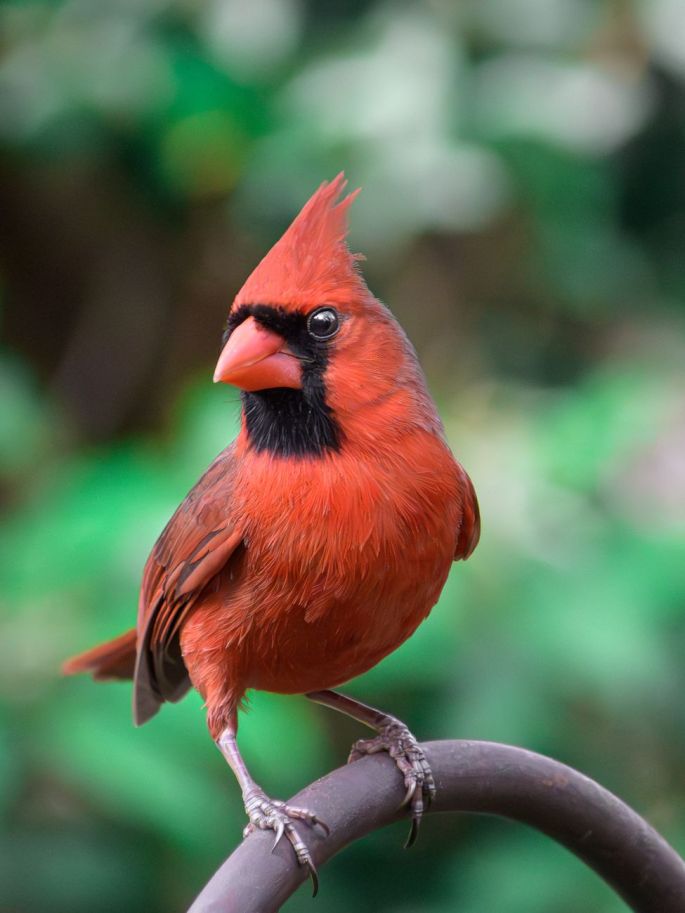
My husband’s message came through my AirPods as I ran early one Saturday morning in May. Then, in quick succession, two more messages followed. One was an image of a cardinal in mid-flight, attacking a window that I would later view on my phone. The other said, “It’s our crazy cardinal friend from last year who won’t stop banging the window. Tippi (our cat) is going CRAZY!”

Ten or so minutes later . . . “OMG! The Boy (our neighbor’s outdoor cat) just jumped as high as the window and nearly caught the bird. Feathers are flying!”

Thus began the return of our daily sound effects. Beginning at first light and continuing off and on throughout the day until full dark falls, we hear the thuds, the whams, and the kerthuds of the colorful, but crazed, cardinal attacking either the bay window or the large picture window at the front of our house. 

I added window clings “guaranteed to prevent even the most aggressive birds” from attacking the windows, but the sounds and the grotesque bird droppings that demand frequent cleaning tell a different story. Watching the cardinal attack from the outside while my 18-year-old cat keeps a vigilant watch—as though her aging joints were a force to be reckoned with—I frequently find myself shaking my head, wondering what on earth the bird thinks he is accomplishing other than a headache. 

From a biological point of view, I get the cardinal’s motivation. He’s naturally driven to fiercely protect his mating and nesting territory during this time of year. When he catches a glimpse of himself in the reflection of the window, he thinks another male is encroaching on his territory. So he attacks by charging and pecking the glass. Then, when he sees his own aggressive movements, he thinks the “intruder” is attacking back. This causes the cardinal to get even angrier and more aggressive, perpetuating the endless cycle of attacks.

The Problem Isn’t His Determination

 I admire the bird’s determination. The problem is not his determination; it is his perception. He isn’t fighting another bird. He’s fighting himself. 

🪟When We Keep Hitting the Glass

How often are we like the determined cardinal? How often do we keep mulling over and returning to the same argument, the same disappointment, the same heartache, the same resentment, and so on? How many times have we tried to change someone who is not yet ready to change? Yet our perception and determination trick our minds—and hearts—into thinking we can. 

We convince ourselves that “If I explain it this way, one more time, then they will finally respond this way.” 

“If only I try harder, then this will finally happen.”

“If only I push, pull, arrange, help . . . just a little bit more, then this will all fall into place.”

And yet, nothing changes. Like the cardinal, we keep hitting the glass. We may have warnings and interruptions that should cause us to reconsider—much like The Boy tried—but our misguided perception has convinced us otherwise.

The cardinal has lost countless feathers. His droppings, no doubt increased by his own anxiety, are piling up alongside those feathers for me to clean up. The bird spends untold energy defending itself from an enemy that isn’t there.

Humans, myself included, do a very similar thing. We spend untold amounts of emotional and mental energy, lose precious time, and sacrifice our peace trying to defeat “something” that may only exist in our minds due to our perceptions. Sometimes the “enemy” is not another person, as we may think. Sometimes the so-called battle is with ourselves, our assumptions, our fears, or even our need to be right. The toll is real. The bruises are real, even when the battle is not.

🧐Seeing More Clearly

The cardinal lacks the power to recognize his own reflection. Humans can. We have the power to pause and ask: “What if my perception is off?” or “What if my focus is fuzzy and I am not seeing correctly as a result?” 

This may mean stepping back in order to stop “banging our heads,” as it were. It may mean taking another look and examining the situation with a fresh perspective in order to identify what is really there.

I am reminded of my most recent eye exam.  “Do you prefer A or B? Is C clearer than B? What about D?” the doctor asked as she adjusted the lenses.

The doctor went from one eye to the other until finally she revealed the view with both eyes properly adjusted. What a difference in clarity that made when I was asked to read that bottom row for the third time.

Wham! I hear the cardinal as I write this. Kerthud! Ugh, that flash of red hurts my head in sympathy for this poor bird. His endless resolve to keep fighting causes me to feel tired for him. 

Every morning, since that first Saturday in late May, Mr. Cardinal is back, convinced that his rival still exists. I watch him and wonder. How many of my own battles have looked exactly the same? How many times have I mistaken my own reflection for a rival, misperceived the reality of a situation, or spent so much energy fighting glass?

The cardinal has become a daily reminder that sometimes the most important change is not changing what stands before us, but changing the lens through which we view it. 
Maybe it’s time to close the window: Self-care and balance includes moving away from toxic people and situations

“Only in quiet waters do things mirror themselves undistorted.  Only in a quiet mind is adequate perception of the world.”–Hans Margolius

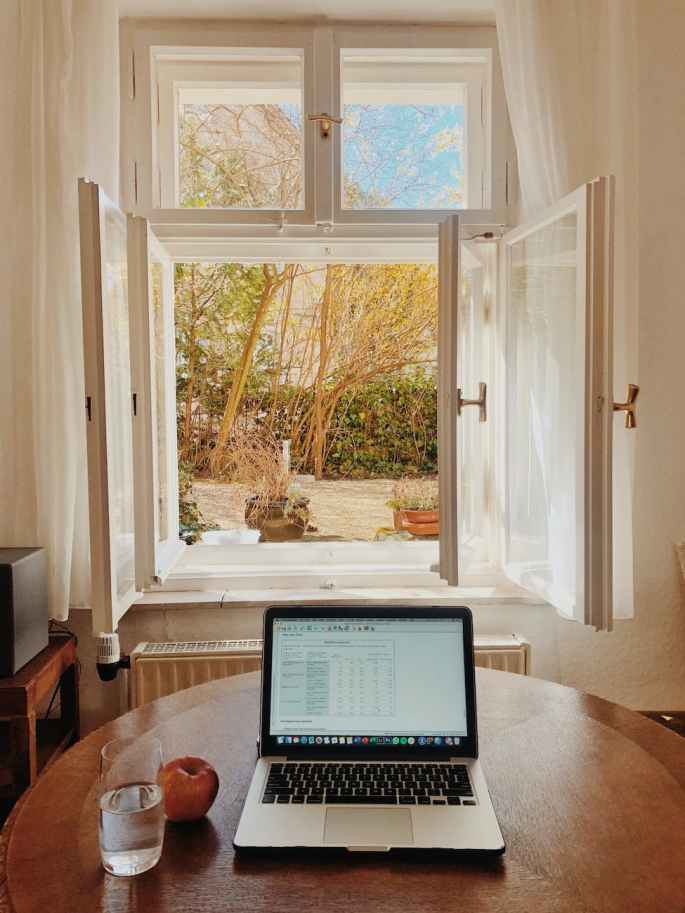
I love to sit at my desk in the flush of morning light writing with the window above my desk open.  Even when it is cold and chilly, I will often crack the window a few inches to enjoy the predawn air. There is something about the fresh air, the stillness, and the early hymn of dawn that fills me with a sense of peace and hope. The dawn air dissipates the frights of night that may have entered my dreams and nourishes my mind with renewed resiliency for whatever the day may bring.

Photo by Pixabay on Pexels.com

One especially hushed, predawn Sunday morning, as I sat, savoring the caress of fall air on my cheeks and hands, I noticed smoke rising from the yard beside mine.  It was my neighbor burning something.  I returned once more to my writing as the serenity of the morning continued humming its charming ambience.

Gradually, every so subtly, the scent of the air shifted. Wafts of acrid air began to drift in through the window screen.  Still, it wasn’t enough to detract from the overall freshness of the morning, and so I left the window open, continuing my writing.  

For 30-40 minutes, I continued my typing, pausing for moments here and there to gaze out the window and clarify my thoughts.  I noticed the dullness of the green leaves, a sure sign that Mother Nature is changing into her fall wardrobe. A single bird rapidly called in a repeated series of three trills, “Hello, hello, hello,” but earned no response. 

Photo by Brett Sayles on Pexels.com

Noticing the familiar tingling in my lower half, cued me into the fact my extremities needed a walk break.  I rose and walked outside to the newspaper box.  A cacophony of Canadian geese, singing their song of seasonal change, flew overhead towards the autumnal clouds.  

It was then I realized how strong the scent was.  Whatever was being burned in my neighbor’s yard had filled the air with a noxious haze that I had not noticed while at my desk with its slightly opened window. However, when I walked back into the house and returned to my desk, the insidious odor had indeed permeated the air.  How had I not noticed previously?

Perhaps it was due to the fact my window had only been partly opened or maybe it was due to my focus.  Regardless, the scent had gradually slithered through the opening of the window, changing the air in a subtle and measured manner that I had not noticed.  I began to reflect upon how often that happens in life, for better AND for worse.

Photo by George Becker on Pexels.com

The seemingly piecemeal process of aging is but one example.  Our children gradually change. Often, we may not notice it in the day to day, but one day you will look at your child and suddenly it hits you how much they have grown and changed.  Likewise, we may not notice our own aging process until we happen to see a photograph of ourselves, and like a slap on the face, we are quickly hit with the awareness of our own aging.  This is all a normal part of the evolution of life.

However, what about other life events? For example, the progressive way in which computers evolved and changed the way I teach.  When I began nearly 36 years ago, there were no computers in my classroom.  The most technological advancement that I had was a rolling chalkboard and a box of dustless chalk!  Flashforward, and my current classroom uses Apple TVs, Google classroom, iPads, Chromebooks, and Macbooks, with all students using their own device on which they are expected to complete work.  For better or worse, that change is here to stay.

I think back through history, for example, the rise of Hitler and Nazi Germany.  It all started in a seemingly moderate way, but it progressively evolved and soon evil, incrementally, blanketed much of Europe, affecting/influencing much of the world.  This, along with countless other historical events, remains a cautionary tale of the way in which harmful developments, left unchecked, can crawl into our lives without our realization until they have fully enmeshed themselves into society.

Photo by Melike Benli on Pexels.com

Back at my work area on that particular Sunday, I decided to close the window above my desk, and leave my writing space for a while, allowing the air to clear.  As I moved into other areas of my home, I could clearly observe the difference in air.  An hour or so later, the air in and around my workspace was cleared, and all it had taken was the simple act of closing the window.

There are certain ideas, concepts, environments, and even people–personally associated to us and distantly known by us– that are likewise toxic disguised in appealing and attractive soundbites, conversational style, and images.  Like the sweet lullaby of the break of dawn, they lull us into acceptance, or at the very least, acquiescence–better to play along or ignore in order to remain focused on our own goals. The problem is that, little by little, we begin to assimilate, breathe in, if you will, the poisoned atmosphere/attitude until it has permeated our being in ways we can’t clearly sense until we step away and gain a new perspective.  Only then do we fully feel the necessity of closing the proverbial window and stepping away from the baneful environment.

Photo by Mizuno K on Pexels.com

The irony of it all, is once you close the window and move on, you begin to realize that there had been a small, still voice inside you all along telling you something wasn’t right.  For me, on that Sunday morning, my tingling legs told me to move since my sense of smell had been so gradually overcome by the slowly shifting air.  Therefore, it is important to tune in, listen for that inner guidance, to Divine Providence.  Perhaps, you may not be able to remove yourself entirely from certain situations and/or certain people, and if that is the case, determine what you can change, and then act.  Close the window. Move in another direction, and notice how much better you will feel with fresh air and a fresh perspective. 

Photo by Peggy Anke on Pexels.com