Pearls of Morning: Lessons from Spider Webs and Stillness

“Heavy dew this morning and every spider web in the garden is strong with pearls of moisture…. webs wherever I look, all shining things of silver beauty.–Edwin Way Teale

A close-up of a dewy spider web illuminated by streetlights in a quiet early morning setting, with blurred traffic lights in the background.

The Quiet Wonder Before Dawn 🌅

It was an early fall morning. Darkness still clung to the earth in a cool embrace. The traffic lights—green, yellow, red—continued their rhythm despite the empty streets. The air was cool and humid, and the hush before dawn rested easily upon the road. Pausing at the red light before continuing my jog, I noticed a spider web dappled with dew within the frame of the traffic light. I stopped in my tracks; upon closer inspection, I saw countless spider webs, draped with baubles of dew, hung from light poles and electric lines—even within the traffic lights themselves.

Hidden Beauty in Plain Sight🚦

I was awestruck by the beauty of the webs, looking ever-festive in the glow of lights—an unexpected wonder, shimmering high above me. After a few moments of appreciating the beauty, I jogged on through town, questions forming in my mind. How did they get so high? Why had I not previously noticed something so extraordinary hiding in plain sight? How many other marvels were hiding in plain sight, waiting for someone to notice?
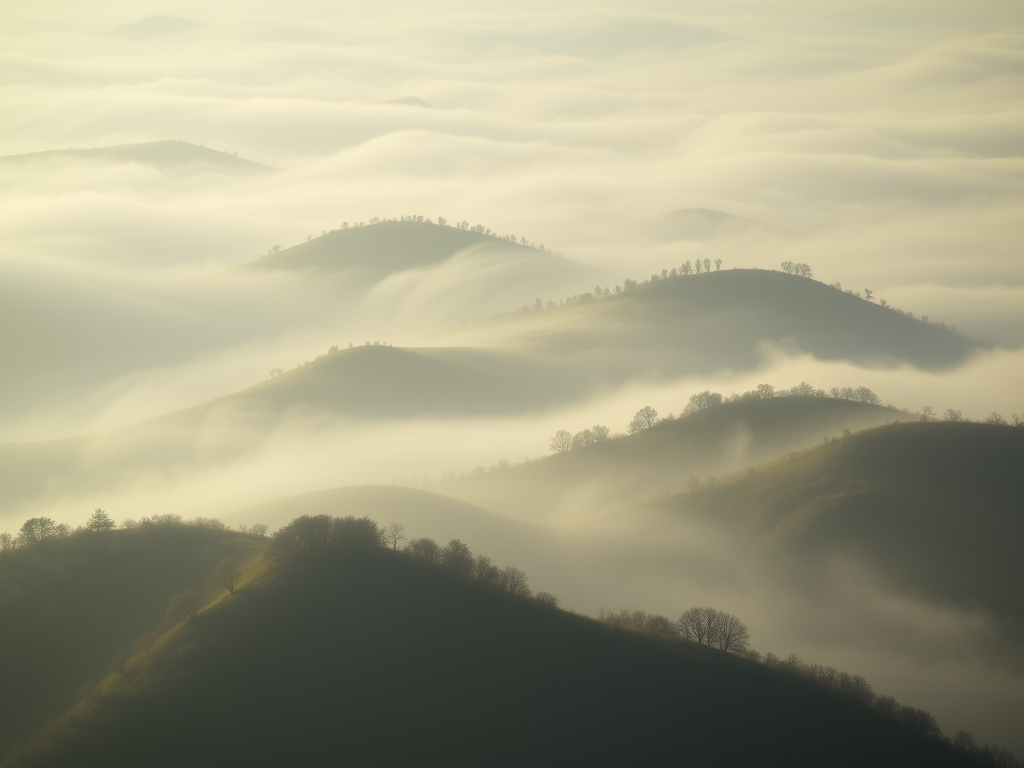
A serene landscape featuring rolling hills partially obscured by a thick layer of fog, bathed in soft, diffused light, creating an ethereal atmosphere.

When We Slow Down Enough to See 🤓

It occurred to me that more often than not, we rush through the routine of life overlooking these mini-marvels—the ballet of fall leaves chasséing from tree to stream, then pirouetting along water currents; sinuous streamers of fog tendrils meandering around hilltops; or, the multiplicity of ice crystals frosting over a car’s windshield to name a few. These wonders are woven into daily life: from the cantaloupe-colored brilliance of sunrise over the Ohio River to the glimmer of moonlight on a frost-covered lawn; from flower-like fungi blooming on fallen logs to a puppy seeing its own reflection in a puddle. Beauty surrounds us, waiting to be noticed. Like the invisible art gallery of spider webs in traffic lights on my morning jog, most go unnoticed until the light hits just right. However, when we take time to pause and pay attention, beauty will often reveal itself in unexpected yet common places, including stoplights.
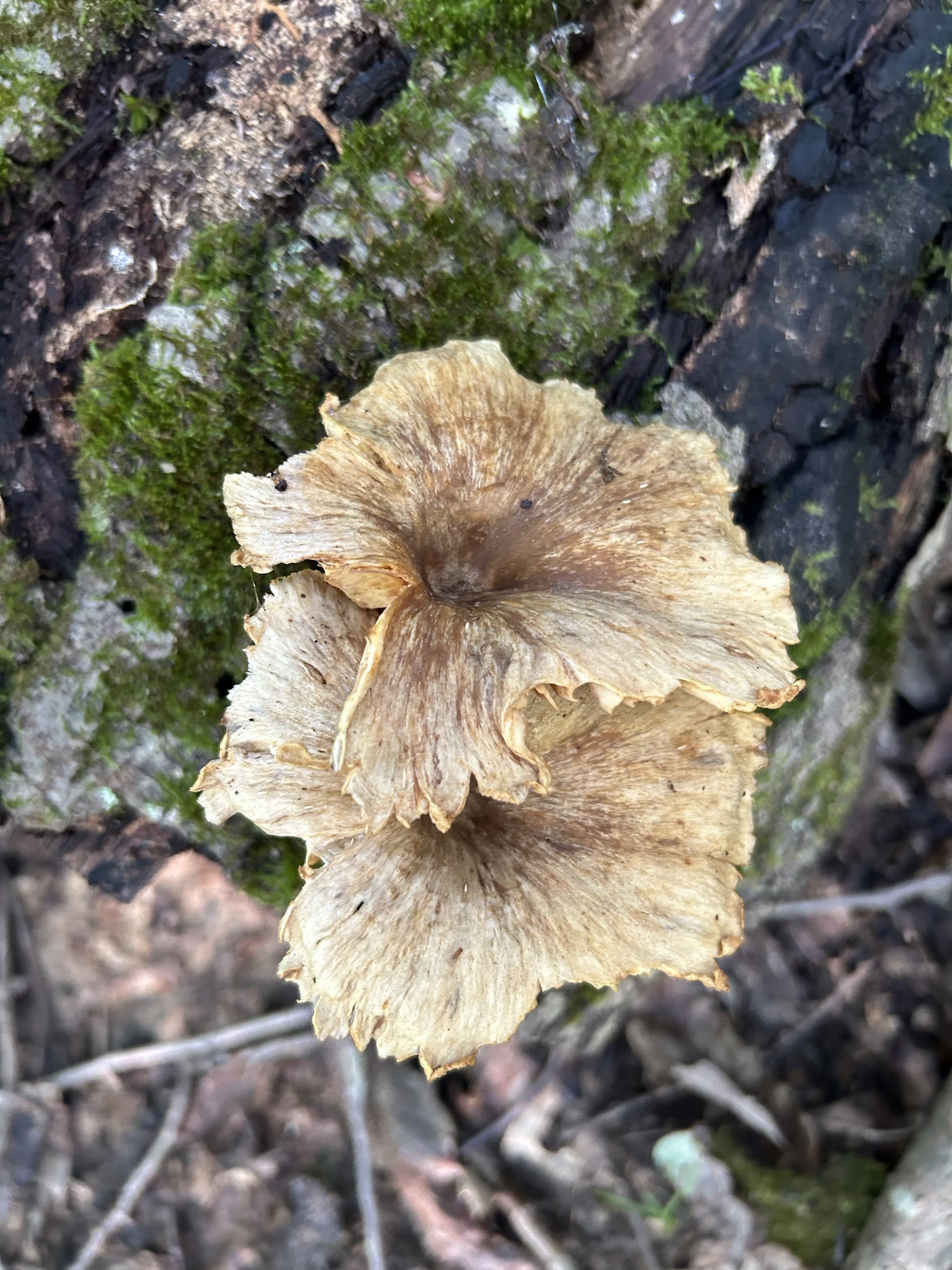
A close-up image of a brownish mushroom growing on a tree trunk, highlighting its textured surface and natural surroundings.
Flower-like fungi “blossoming” from fallen tree branch

The Power of Morning Stillness 😌

That early-morning observation turned meditation centered my day. It offered more than one lesson and served as a reminder that the morning placidity can bring a sense of calming clarity before the noise of the day. Making time for stillness in the morning, whether sipping coffee, walking a beloved pet, or sitting in prayer meditation—offers an opportunity for spaciousness at the day’s start. A moment to center, notice, reflect, and connect. Even a few minutes of stillness can offer us an opportunity to ground ourselves and recalibrate our perspective. If we grow quiet enough, we may remember that peace resides within us. That is not to say that peace is the absence of movement, purpose, or challenge, but rather it is a strong presence within us—much like the hidden strength within the delicate spider web. 

A close-up of a spider web adorned with dewdrops, creating a sparkling effect against a blurred green background.
Photo by Pixabay on Pexels.com

Lessons from the Web: Resilience and Renewal 🕸️

As I reflected on the morning jog through town, I realized that each web represented perseverance, fortitude, and tenacity–three key qualities essential for growth. Each morning, orb-weaving spiders consume their protein-rich webs to reclaim the silk for rebuilding. This ensures the new web they build in the evening is fresh, sticky, and strong enough to catch plenty of prey. Through practice, the spiders gain strength and instinctively how to rebuild after storms and strong wind.

The spiders’ resilience serves as a reminder that we, too, have the grit to rebuild after disappointments, setbacks, and loss. Like the spider, rebuilding our lives is often quiet work that begins only after we have nourished body, mind, and spirit. The spider’s persistence mirrors our own–delicate and determined–reconstructing through incremental, small steps. Life, like the spider’s web, is fragile, yet we too possess tensile strength—centered in faith—that guides us as we restore, renew, and rebuild. 

A close-up view of a spider web adorned with numerous droplets of dew, reflecting light and creating a sparkling effect against a dark background.

The Threads That Bind Us 🕷️

The spider’s web, where no thread stands alone, echoes the interconnectedness of our own lives. We are part of a collective. As the light shone through the webs, each dew drop caught the light, refracting color and seemingly creating miniature worlds. Just as the traffic/street lights played across the spider webs’ dew drops, our connected lives reflect multiple roles–friend, spouse/partner, worker, neighbor, parent, child, citizen . . . . Each strand of life possesses a quiet strength that is integral to the whole. In fact, the integrity of the web depends upon the strength and resiliency of every strand. Each facet of our lives holds and reveals meaning; together, the varied strands of our lives unite the whole, creating an array of meaningful relationships.

A close-up view of a beautifully intricate spider web adorned with dew droplets, creating a delicate display of nature's artistry in black and white.
Photo by don chowdhury on Pexels.com

Finding the Extraordinary in the Ordinary 🌃

In the end, the light changed, and I crossed the street as the sun rose, erasing the glimmer of those webs. Yet the image remains—reminding me to keep looking for the extraordinary in ordinary places. Perhaps it waits in the quietude before dawn, a pause at a red light, or the hush of nightfall. So many interlaced moments shimmer within the droplets of daily life, waiting for those willing to see. Those silky webs may vanish with daylight, but their pearls of wisdom still glimmer within me, reminding me that beauty often hides in ordinary light.  

May we all learn to look a little longer, to pause at life’s red lights, and to notice the silken threads of beauty connecting us in the quiet hours of dawn.
The Spirograph Effect: Creativity in Life Design

“Not all who wander are lost”–J.R.R. Tolkien

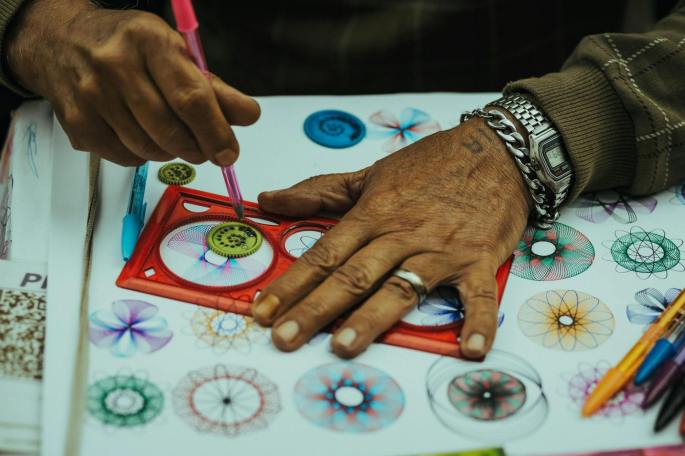
Close-up of hands using drawing tools to create a spiral geometric design on paper.

A Student’s Doodle Sparks a Memory✍️

Months ago, I observed a student drawing spiraling circles over and over on a sheet of notebook paper while participating in our class discussion. For some reason, I was reminded of an old toy my siblings and I once enjoyed: the Spirograph. I can’t remember which one of us received it, but we would sit together for what seemed like hours at the kitchen table drawing colorful, eye-popping (at least to us) geometric shapes.

Four children gathered around a table, smiling and drawing colorful patterns on a large sheet of paper using various markers.

Lessons Hidden in a Childhood Toy ꩜

Reflecting upon that long-ago childhood toy, led to the realization that the Spirograph illustrates the significance of specific concepts when it comes to creating our own life design, such as the influence of structure, patience, persistence, and the importance of celebrating our own unique individuality. It also emphasizes the value of working through natural constraints and trusting the process of learning through repetition. What’s more, the Spirograph demonstrates the relevance of trial and error–which often includes failure–as well as accepting the beauty that can be found in our so-called “imperfections”.

The Spirograph’s Ingenious Origins 👨‍🔬

To appreciate the genius of the spirograph as a toy, requires understanding a bit of its history. Denys Fisher, a British engineer, created it as a child’s play thing based upon various iterations, beginning as early as 1827. At the time of its original conception, it was used for advancing mathematical and engineering concepts. Spirograph, the toy, wasn’t available until 1965, and it went on to win “Toy of the Year” in 1967. Unbelievably, it is still available today.

This classic geometric drawing toy originally came with two transparent rings, two transparent bars, 18 clear wheels of varying sizes, two colored ink pens, pushpins, putty, and paper. Using the various tools, my siblings and I could draw precise, and quite mesmerizing, mathematical curves known as hypotrochoids, epitrochoids, and cycloids. With the switch of any one part, we could vary the size, shape, and geometry of intricate and, at the time, mind-boggling patterns. Essentially, the Spirograph is operated on a balance of limitation and creative freedom, which reflects much of the human experience.

A box of the original Spirograph design set, featuring colorful geometric designs and detailing the contents, including pieces and tools for creating intricate patterns.

Art Through Limits: Creative Freedom Within Structure 🎨

When one is drawing with the Spirograph, one has to adapt to its restrictions. The designs made by using the Spirograph are limited by the size and shape of the wheels and whether you are using the rack or the ring, as well as the color of the chosen pen(s) used to design a figure. Additionally, there are rules for creating specific outcomes as described in its guide book.  While it isn’t necessary to follow the laid-out directions, if one desires it to create a specific shape or design, one has to follow the step-by-step instructions.

This is similar to life in many ways. Influences in life vary from person to person and from family to family, often dependent upon experiences, education, and available information. Many individuals have followed very specific guidelines provided by parents, religion, schools, and even societal norms while others may have fewer influences. For many of us, following a structured timeline is how we landed in our current field/career path.  However, there are just as many, who followed a winding path of their own creation, and still produce a meaningful life experience. Like the Spirograph, following guidelines creates remarkable results for some people, while for others, grabbing the gears and turning them their own darn way works just as well.

Black and white abstract spiral pattern created with lines and arrows, resembling a geometric design.

The Power of Patience and Trusting the Process 🙏

When working with the Spirograph, my siblings and I had to have faith in the process. We had to further learn that creating something meaningful takes time. The desired design outcome emerged slowly, turn by turn, and layer upon layer. In sum, the Spirograph required us to have patience, trust the process, and stay the course. 

Similarly, our life journey takes time as we, hopefully, continuously evolve and grow. We may have times we question the process, or we may waiver in our faith, patience, and persistence. However, rushing life outcomes usually ends up backfiring. Moreover, the time required for personal growth fosters resilience, a much needed companion to patience. We only have one precious life, and as our life design unfolds, with all of its curves and angles, it is never worth rushing. 

A colorful doodle featuring spiraling circles and geometric shapes, reminiscent of designs created with a Spirograph toy.

Failure, Play, and the Magic of Repetition 🖍️

With the Spirograph, I recall that we often learned through repetition and play. We might draw the same shape over and over, sometimes changing the color, or merely changing the size. Other times, we followed the guidelines, and somehow still managed to “fail”!  And, yet, many of those so-called failures ended up being unique and pretty creations–even if they did not come out as planned. Other times, we would just “mess around” to see what we could create. Some results were not so spectacular, but other times, the creations were fairly impressive or, at the very least, provided us with a new understanding for creating specific curves and/or angles. 

Life can often be the same way. How many of us have experienced times where we “followed the rules,” doing what we were “supposed to do,” and still somehow managed to fall flat on our face. Years later, however, we may look back and realize that those “failings” led to something far greater than we could have ever imagined. Other times, a bit of experimentation leads to a new life path or experience that brings unexpected joy we might not have otherwise known. Thus, like the Spirograph, a playful and experimental mindset can lead to untold delights and adventures.

A collection of hand-drawn spirals in varying sizes, arranged artistically on a blank background.

The Beauty of Uniqueness in Design—and in Life 🖼️

Learning to welcome individual uniqueness was another life lesson the Spirograph provided. It often intrigued my young mind how my siblings and I could make the same design, but with a switch of pen color or pressure, or switch of a gear wheel, we could make each drawing unique, despite the fact we were essentially using the same tools. 

Sometimes, we would be surprised when trying to make the exact same shape, because we accidentally missed one of the required steps. Skipping one step, tended to create an irregular shape. Nonetheless, our younger selves marveled at the unique loveliness of the design. Our child-size egos told us we were pioneering artists in those moments!

Marks of Authenticity: Irregular Paths, Unique Lives

What a powerful reminder of the importance of celebrating our own–and others’– idiosyncrasies, including any so-called irregular paths. These individual characteristics and traits, as well as any “irregular paths’ traveled, are all marks of authenticity–that one-of-a-kind spice in our life serving. As humans, our genetic material is vastly similar across all humanity. Yet, this same genetic material still manages to create unique DNA characteristics, such as varying eye color, height, body shapes, and so forth. Furthermore, despite our similar genetic makeup, our lived experiences vary. In a sense, we are pioneering artists of our own lives.

A colorful collection of intricate geometric patterns resembling designs created with a Spirograph. The spirals and mandalas feature vibrant colors and diverse shapes, showcasing creativity and uniqueness.

Embracing Life’s Curves and Imperfections 🌀

Like the Spirograph of my childhood, we all deal with life constraints, no matter what path we try to create for ourselves. These life designs often, and sometimes repeatedly, require practice, patience, perseverance. Life also requires us to accept the many so-called imperfections and irregularities that come as part of the creative process. However, those “flawed” experiences give our life meaning and purpose. Therefore, it is worth remembering we have the power to play and create with the pen we have. All those curved lines and angles that make up our lives, including the missteps, are what continues to compose and create our magnificent, one-of-a-kind life design. Let’s embrace the possibilities.

Who’s ready to draw? ✍️

Craggy Life Lessons

“Yonder were the mountains:  The sunlight revealed their tiny heads and wide shoulders, craggy and purple, with small black trees, delicate as eyelashes, on their slopes.”–Paul Theroux 

It never ceases to amaze me the ways in which life can manage to not only survive, but thrive.  As an experienced educator, I have worked with countless students, including those who come from the most anemic of backgrounds–impoverished in experiences, impoverished in love/emotional support, or impoverished financially.  Miraculously, many of those disadvantaged students still manage to not only survive their hardscrabble circumstances, but also find enough sustenance outside of their own rocky homelife for growth.  These kids are like camels–able to soak up enough goodness and nutrition from one or two smaller sources, such as a church, school, sports, and so forth, that allow them to flourish through long stints of inadequate and insubstantial living situations.

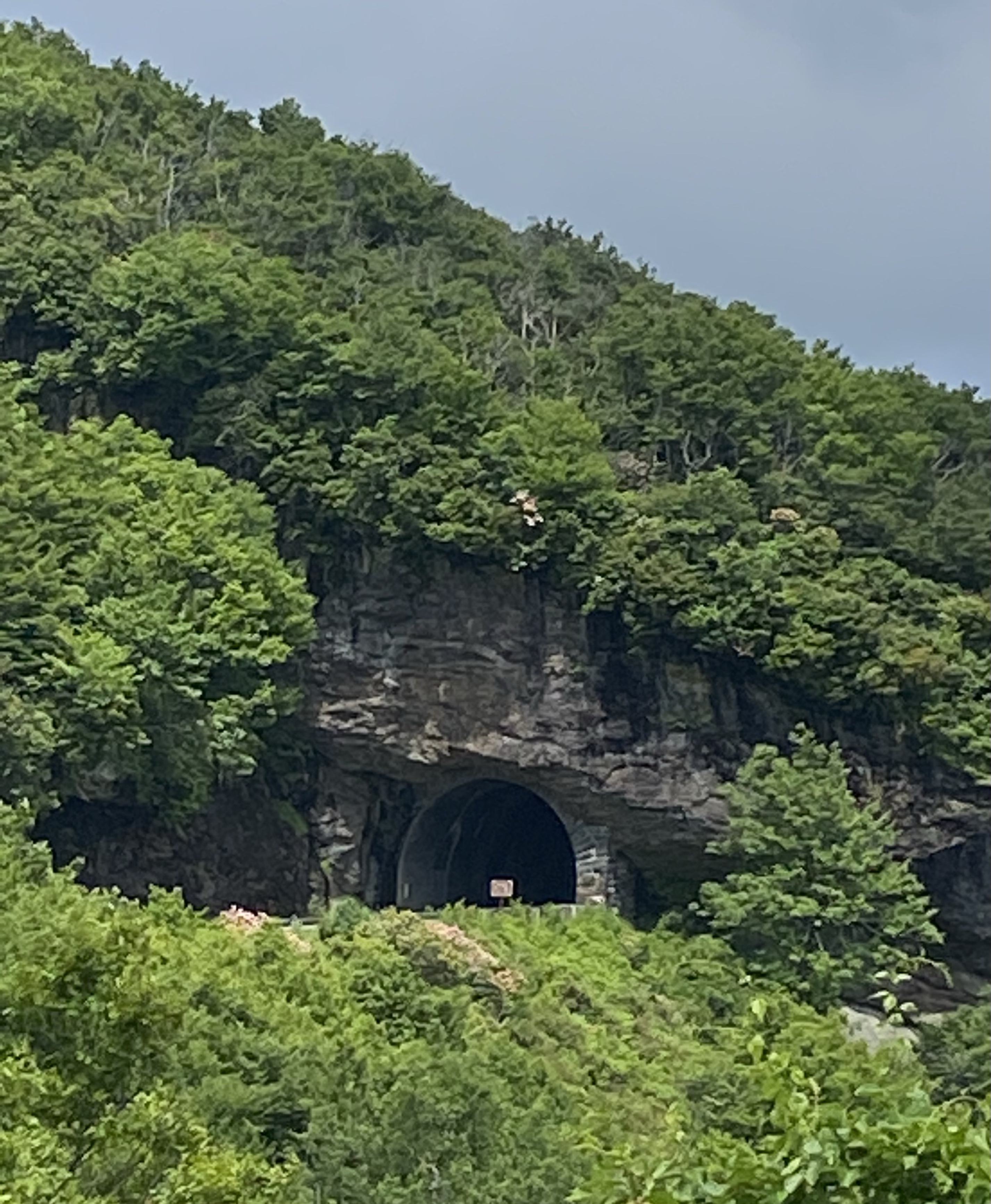
Craggy Pinnacle, elevation 5,817′, can be driven through via Blue Ridge Parkway tunnel or hiked to the top for epic 360 degree views.

Visiting Craggy Gardens, north of Asheville, NC and just off the Blue Ridge Parkway, I was reminded that not only can humans survive ramshackle environments, but also a wide array of plant life can likewise do the same. Craggy Gardens are part of the Great Craggy Mountains, or “the Craggies,” which is a rock-filled area of approximately 194 square miles in the Blue Ridge Mountains that border the Black Mountains.  The highest point of the Craggies is Craggy Dome rising at an elevation of 6,105 feet, but there are several other high peaks of interest in this unique geological and botanical habitat, including Craggy Pinnacle, through which visitors can drive and/or hike to the top along the scenic BRP. 

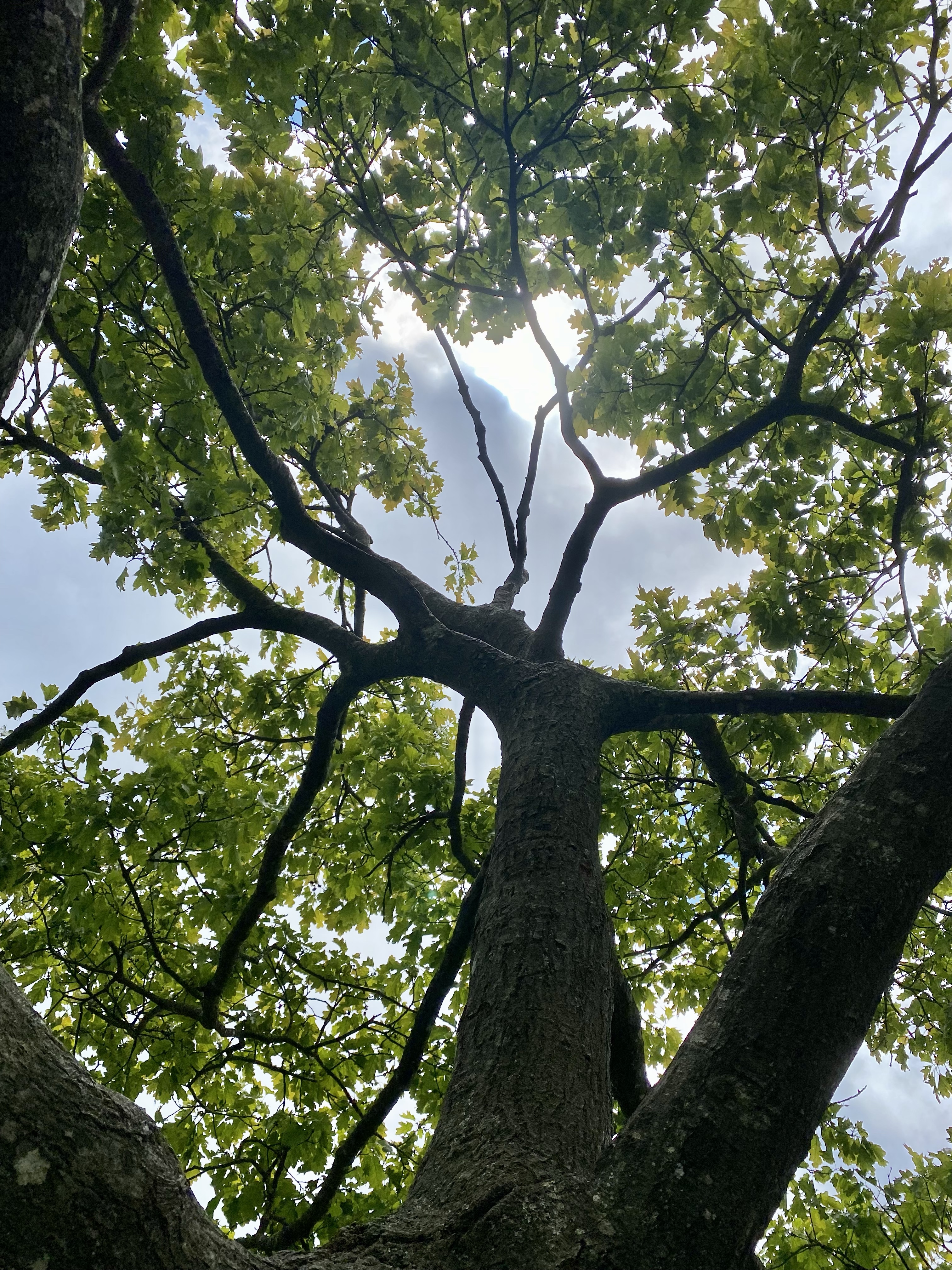
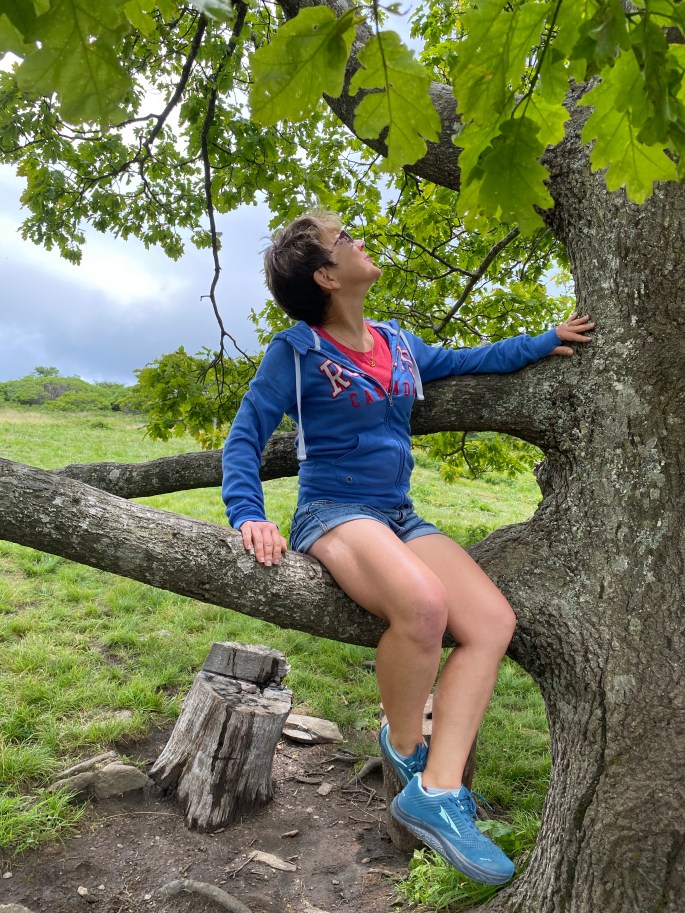
A few ancient symmetrical trees dot the bald of Craggy Flats which is mostly covered in grasses, shrubs, rocks, and few flowering plants.

The Great Craggy Mountains are known for its exposed rocky, aka “craggy,” surfaces, high altitudes with spectacular vistas, and an elevated bald known for its rhododendrons, mountain laurel, flame azalea, other colorful wildflowers, and heath.  There is both a picnic area at milepost 367.6 and the Craggy Garden Visitor’s Center at milepost 264.4; plus, there are several hiking trails for a variety of hiking skill levels. Additionally, the Craggy Mountains are known for its twisted trees, May-apple flowers, Turkscap lilies, autumnal leaf colors, the clusters of red berries that decorate the Ash trees in the fall, and its rare and endangered plant life.  In fact, according to the Blue Ridge Parkway Guide, “Craggy Gardens has been recognized by the state of North Carolina as a Natural Heritage Area and has also been recommended as a National Natural Landmark.”

During our visit to the Craggy Mountains, John, my husband, and I stopped at the Craggy Garden Visitor Center.  At an elevation of 5,497 feet, the air was significantly cooler than when we left town, hovering in the high 50s.  Inside the visitor center, a warm fire blazed in a wood burning stove in a far corner with several rocking chairs around its hearth.  Outside, posted along the front wall, was a map of the different hiking trails in the vicinity.  

The Craggy Pinnacle Tunnel as seen from the Craggy Garden Visitor Center.

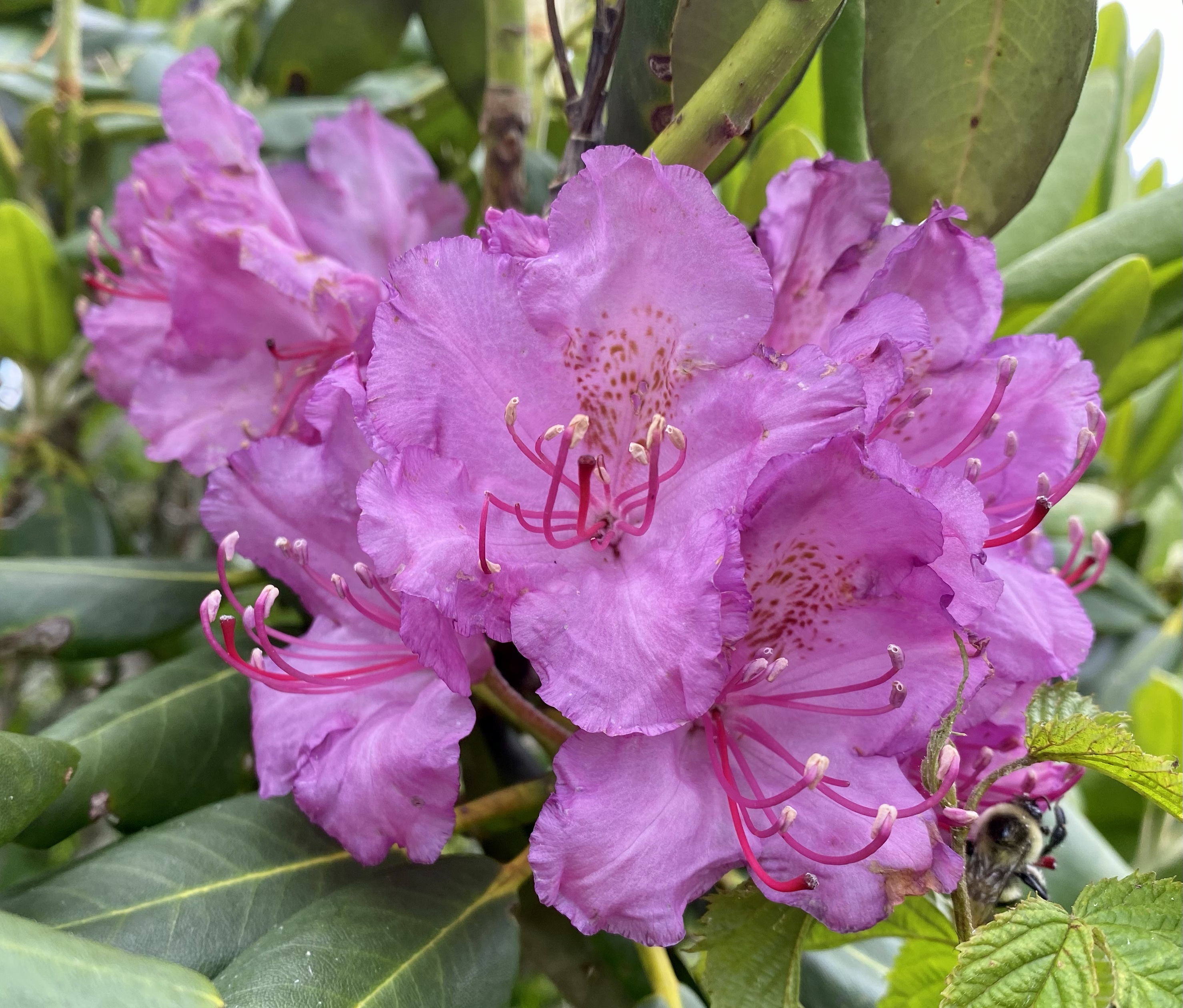
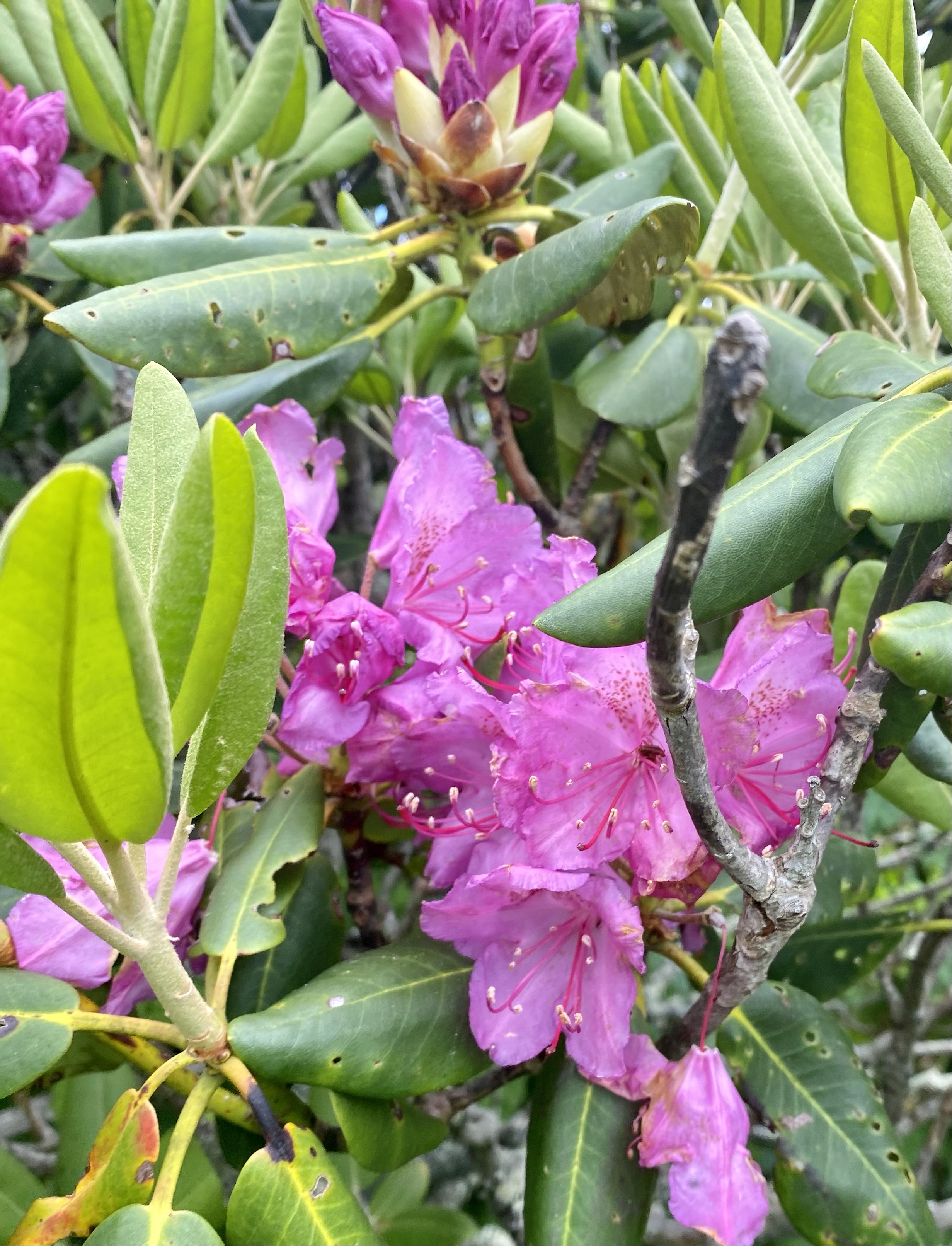
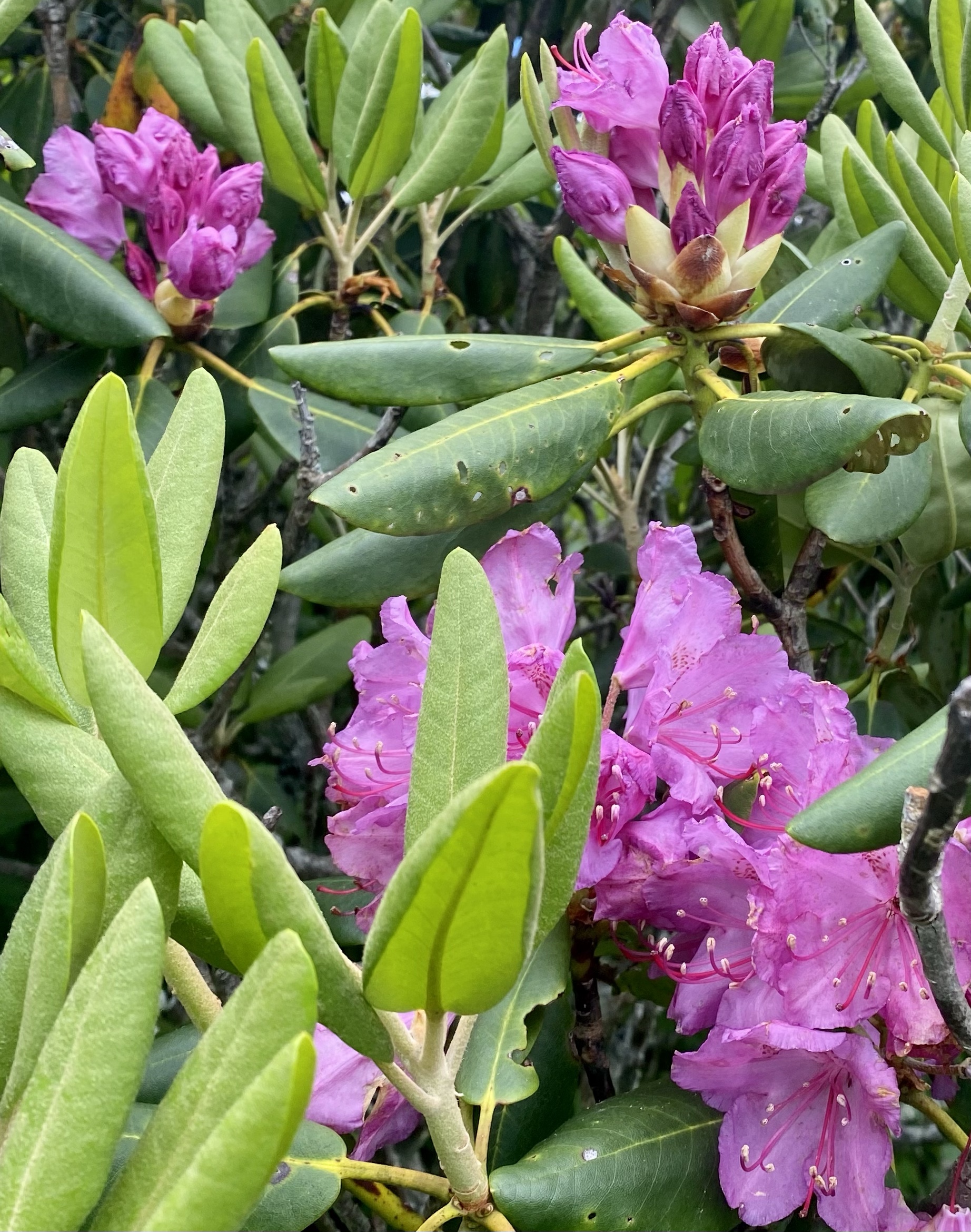
As newbies, we decided our first hiking experience in the Craggies should be uphill along Craggy Gardens Trail which led to the Craggy Flats at an elevation of 5,892 feet.  Since our visit was in late June, we were hoping to see the renowned Catawba rhododendron; however, John had already been warned that these infamous flowering pink and purple shrubs had come and gone with little fanfare.  Nonetheless, I was not to be deterred in my enthusiasm for the potential adventure that awaited along the trail.

Craggy Garden Trail

  “Nature is a book of many pages and each page tells a fascinating story to him who learns her language. Our fertile valleys and craggy mountains recite an epic poem of geologic conflicts. The starry sky reveals gigantic suns and space and time without end.”–A. E. Douglass

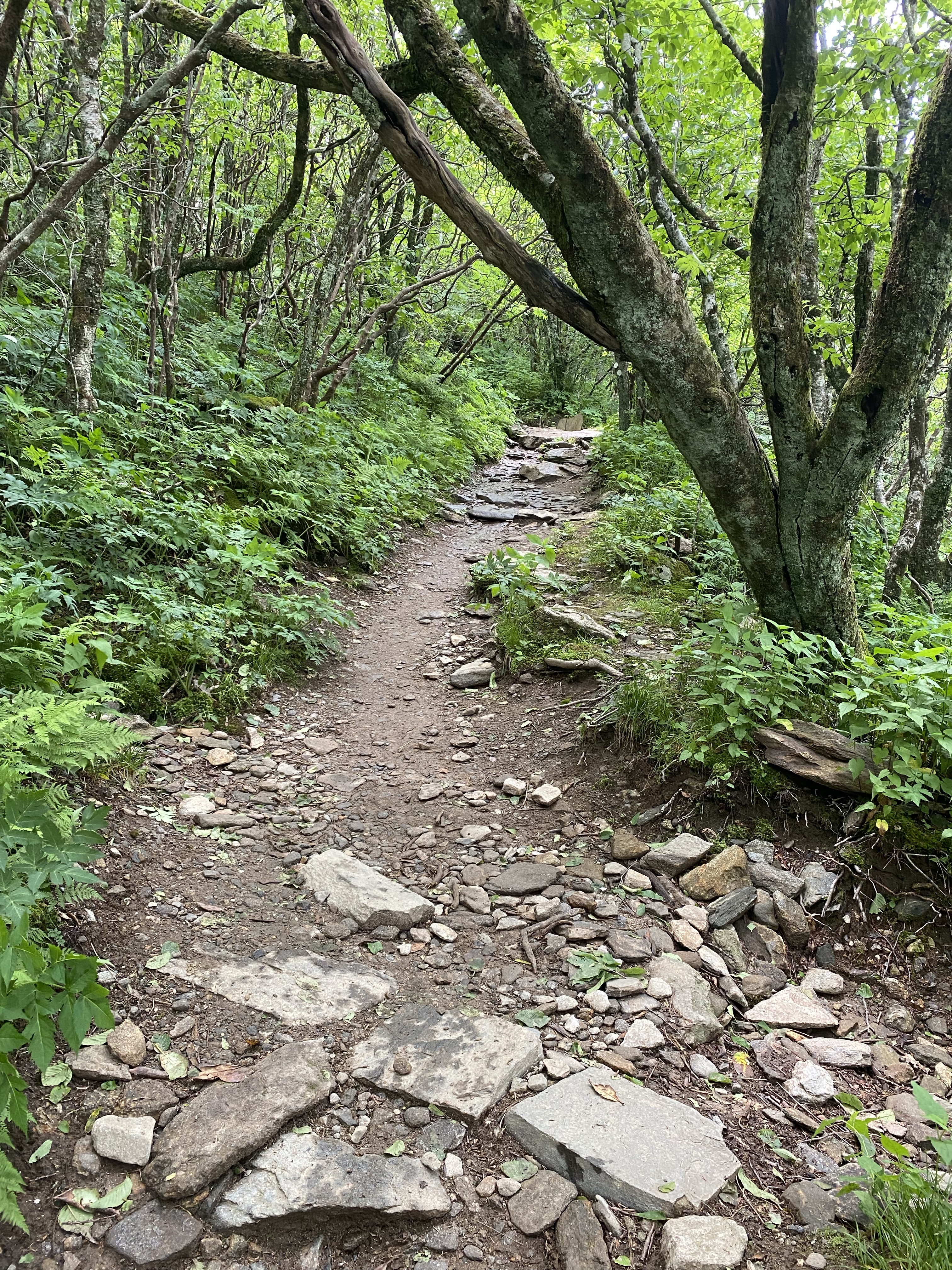
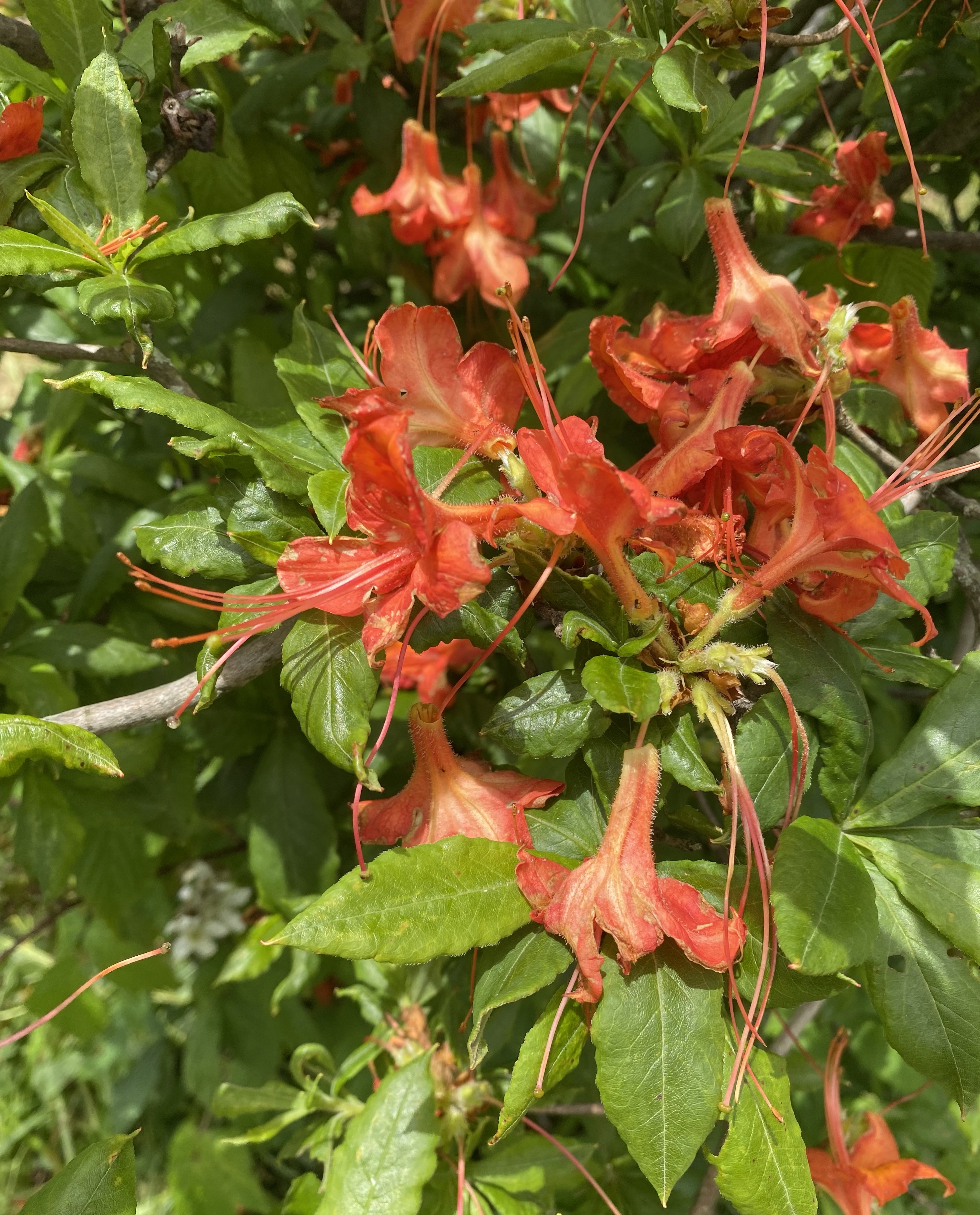
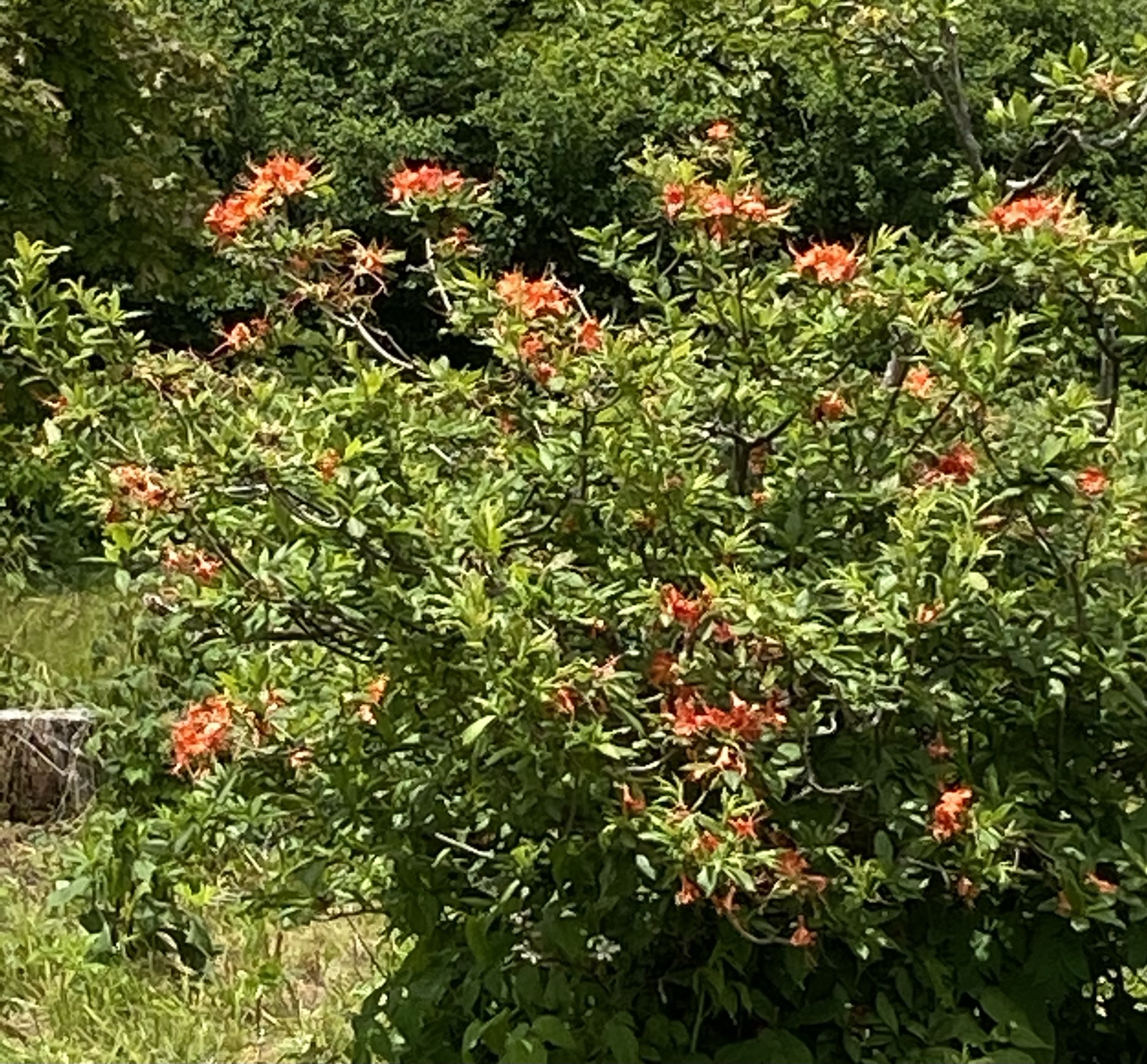
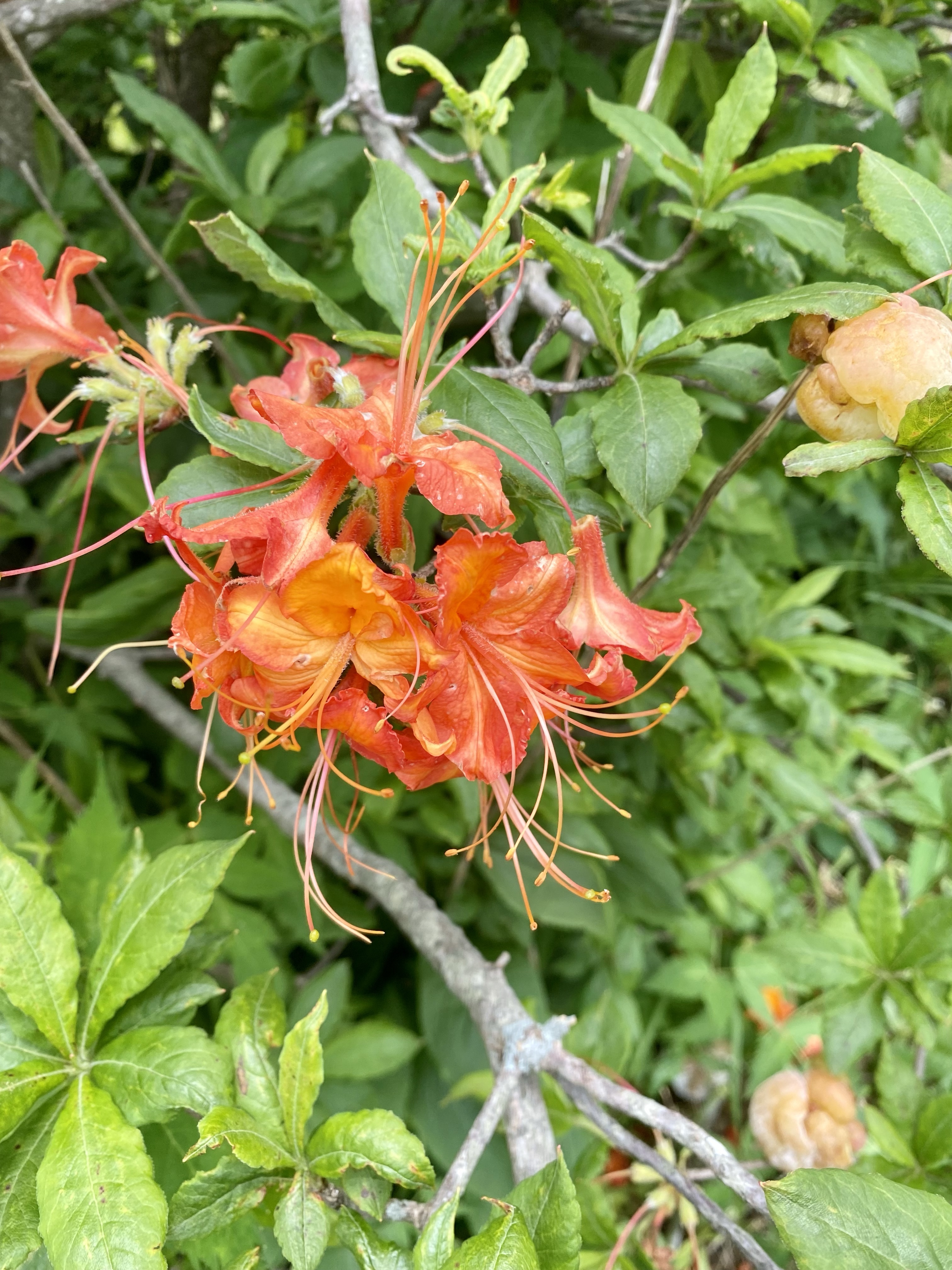
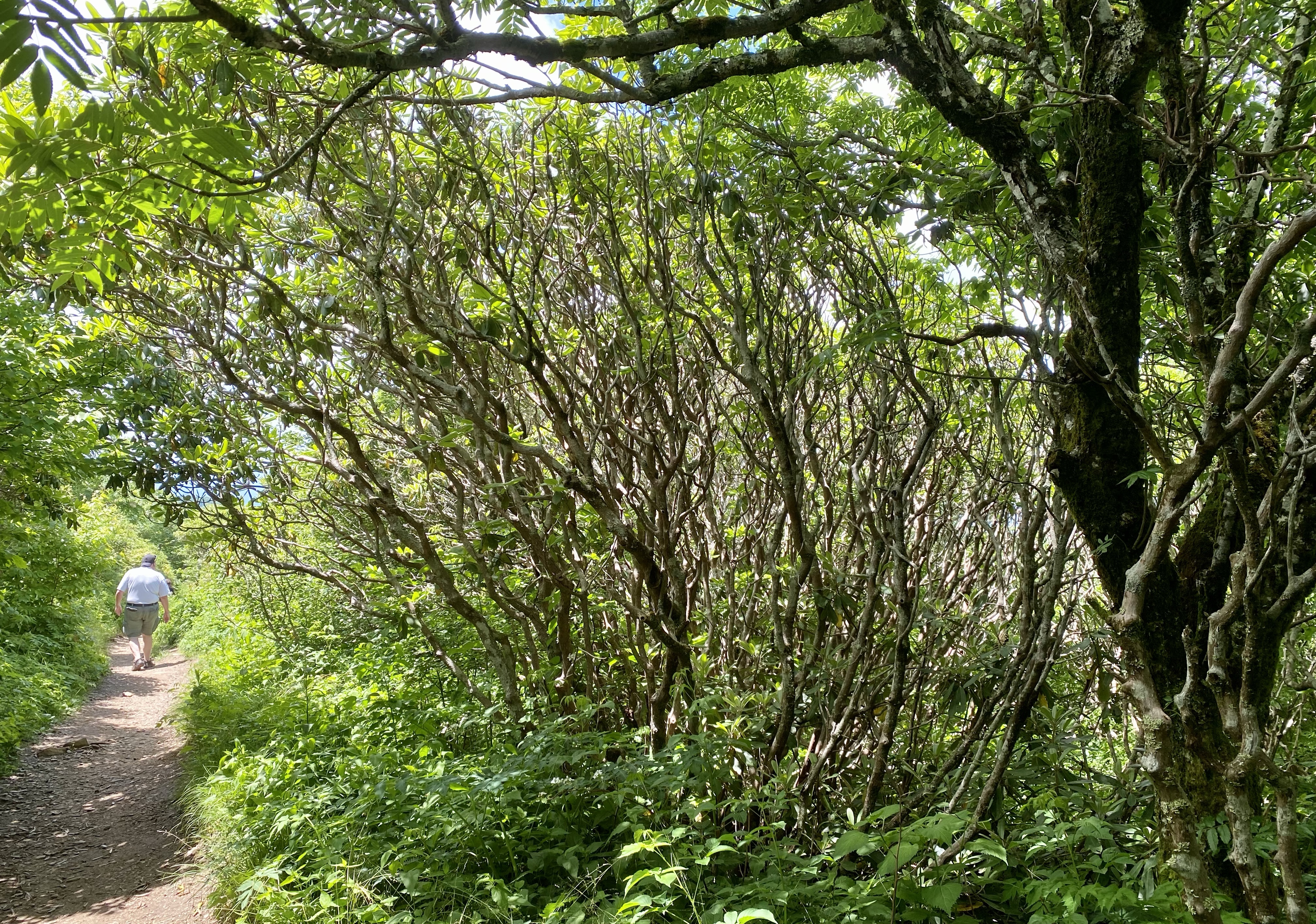
Trekking along the path, twisted trees and shrubs formed tattered tunnels through which we traversed higher into the altitude until we reached Craggy Flats.  This area is signified by a large shelter with paths going uphill to either side of the shelter.  Once at the top, the views were spectacular, allowing us to see layer upon layer of mountain line overlaid with cloud shadows.  While as a general rule, a bald is considered a treeless area, the Great Craggy Mountains’ bald was not entirely treeless as there were a few beauties with their broad limbs fanned out in perfect symmetry.  Mostly, the bald was covered with small flowers, grasses, dirt paths, and a few shrubs that were ablaze with orange flowers–a type of rodondendum called a flame azalea due to its flamboyant flowers.  

Vantage point of tree limbs

The Craggy Gardens Trail is often identified as one of the busiest trails in the area, but on the day/time John and I chose to explore it, there weren’t too many other hikers.  The hikers we did encounter were friendly and helpful, offering different pieces of advice for locating specific scenery.  In fact, one pair of sisters that I met during my exploration of the bald area remembered I was from Ohio and referred to me by shouting “Ohio!” whenever they found something of interest along the trail they thought I would want to see. 

The search for the Catawba Rhododendrone

On the way down from the bald, at the base of the flat, was a rhododendron upon whose backside (the back of the official Craggy Gardens Trail) was covered in purple Catawba rhododendron blooms!  I trotted back up the off-the-beaten-path to the top bald where the two sisters were admiring the flame azalea. I recalled they were looking for Catawba blossoms to photograph, and I wanted them to know about the hidden purple gems I had just found.  Excitedly, I led them down the hill while they readied their cameras; then I headed back to a shelter area where John was resting.

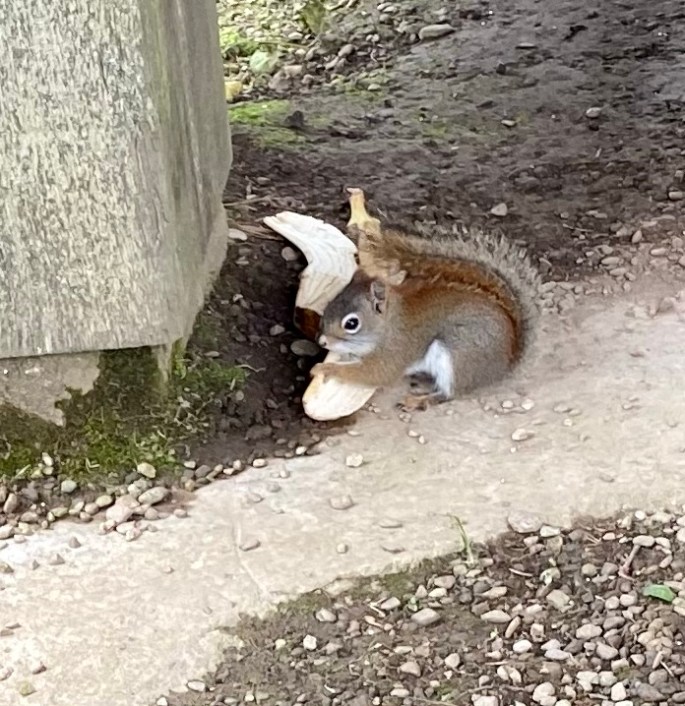
It seemed that while I was helping the sisters find rhododendron, John had made an acquaintance with a hungry squirrel that had discovered an abandoned banana peel.  It was quite the scene as John attempted to move in closer with his camera to video the squirrel. Meanwhile, the squirrel entertained John with its acrobatic attempts to eat the inside of the peel. It was certainly an “appealing” sight!

After the squirrely entertainment, John and I meandered down the hill to a gazebo overlooking the mountainside.  If we had chosen to continue further downhill, we would have traveled into the official Craggy Garden Picnic Area, but since we still wanted to visit Mount Mitchell, a bit further down the BRP, we chose to retrace our steps back to the visitor center.

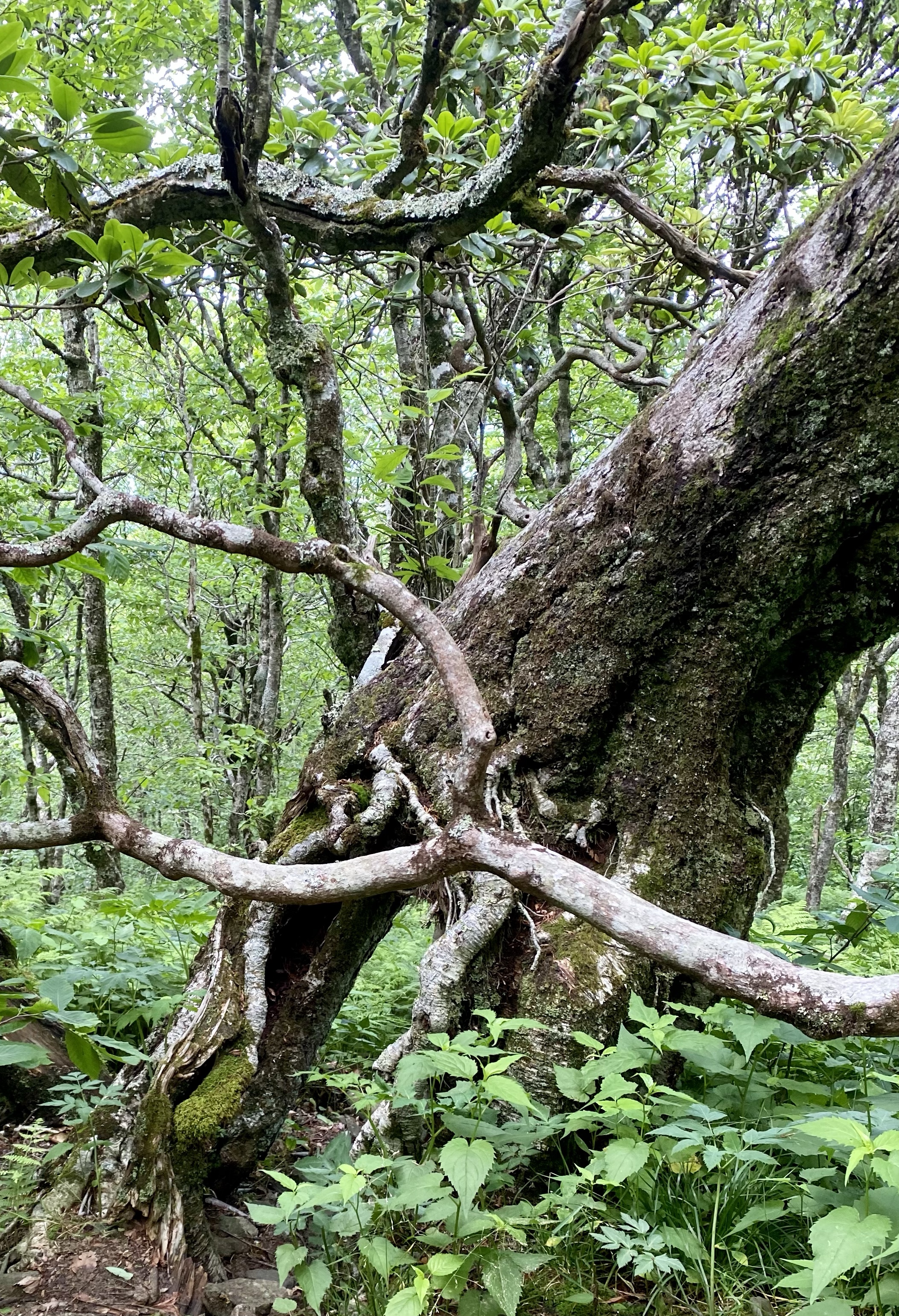
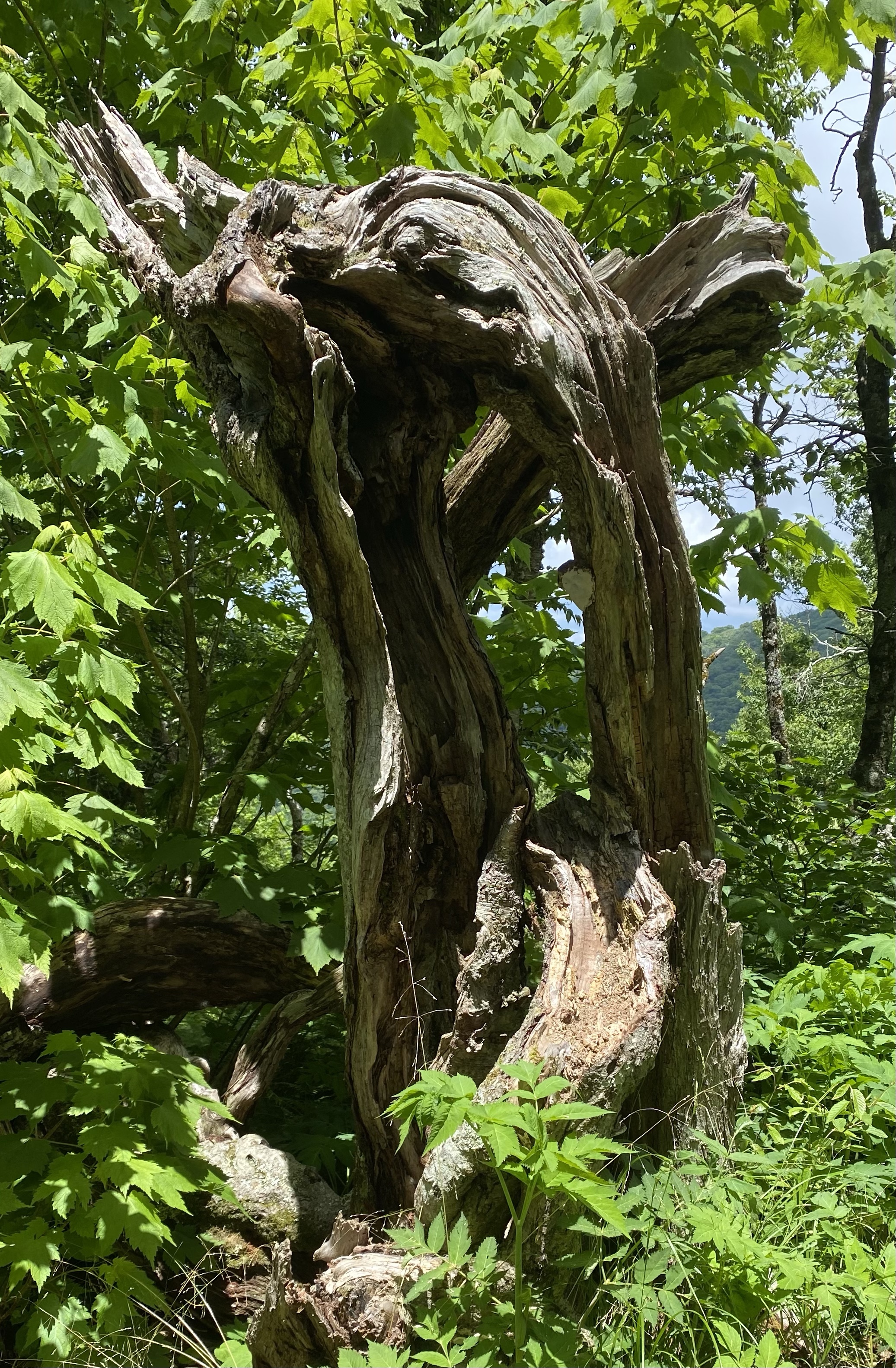
Walking back allowed me to more thoughtfully take in the gnarled trees and shrubs with roots winding over, around, and sometimes even through the rocky and rugged terrain.  Several roots appeared to have a large hole at the base of their trunks, and they still seemed to support life.  In fact, it was a marvel that any life at all could be supported in such a craggy area.

It further occurred to me that most lives–at some point in time–become rocky, rough, and even craggy, like several of my past students’ lives.  The miracle is that no matter how broken and stony life becomes for any of us, we have the ability to survive. Like the Craggy Mountain plants whose limbs twist this way and that to find the sunlight while their roots lengthen and stretch to find nourishment and water, we too, through faith and perseverance, can find ways to stretch, grow, and resiliently root into sources of life-sustaining nourishment.  Even if our roots develop a hole of loss, we can still rise up like the trees, shrubs, and other plant life of the Great Craggy Mountains.