Great Go-togethers: The Power of Habit-stacking

Coming together is a beginning, staying together is progress, and working together is success.Henry Ford

Photo by Suzy Hazelwood on Pexels.com

Great Go-togethers

Let’s talk about great go-togethers.  Think: peanut butter and jelly, salsa and chips, holidays and fireworks, summer and picnics . . .  In life, there are certain things that go together, and often, one item “triggers” the desire for the other.  For some, coffee might trigger the desire for cream, while for others, that morning cup of java triggers the desire to read the morning news.  Most of us utilize the power of pairings without realizing it due to some positive association between the two linked items or habits.

Some paired items or habits are beneficial, such as soap and water or athletic shoes and walking.  While others may be less beneficial, or possibly detrimental, such as smoking and socializing or ice cream and fudge sauce. Paradoxically, consider how hard it can be to start a new desirable behavior/habit, but how easily poor habits can creep into our lives.  For example, what was once an ‘occasional’ chocolate indulgence has now evolved into a nightly routine after dinner.

I was reminded of the power of pairings when traveling with my husband, John, recently.  We began our trip with a cooler of fresh veggies, fruit, sandwiches, dried fruit, seeds, and oatmeal, but by the end of the trip, most of this was consumed. I couldn’t help but notice how hard it was on the return trip home to find fresh vegetables–part of my mid-day meal pairing.  Travel plazas were loaded with chips, candy, sodas, and so forth, but no veggies. 

Trying to find veggie sticks, part of my mid-day meal habit-stack, was difficult when recently traveling.

Another travel observation was the larger number of people who paired smoking with social situations.  I grew up in an era when smoking was still widely accepted and promoted; however, social smoking has been dramatically reduced, or so I thought until visiting an internationally popular tourist destination in which smoking appeared an ingrained part of the social setting among certain cultural groups.

The Power of Association, aka, the trigger

I share these examples to illustrate the power of association.  Sometimes, we acquire habits, for better or worse, because one habit reinforces, or triggers, another habit.  In other words, we’ve paired, or stacked, one habit with another.   And, that to me, is the key to acquiring new desired habits.

If there is one positive habit we are trying to do more of, why not try pairing it with one habit we are already doing daily?  Habit stacking, as it is popularly known, whether it is linking a new desired habit to an old habit, adding a beneficial behavior to an already established daily sequence or routine, or pairing two habits together, is an effective way to create, reinforce, and maintain a new desired behavior.  This is because the new habit is triggered by a current habit or becomes part of an already established routine, which helps you remain consistent without feeling overwhelmed.  The key is to start small.  

Set out two pieces of fruit in the morning while drinking your morning cup of joe as a habit-stacked reminder to eat those pieces of fruit by day’s end as way to increase your fruit intake.

Choose one desired beneficial habit and determine your trigger or the anchor habit to which you want to attach it. Then, remind yourself–even if this means using a post it note–.  “Before/after/during I ________ (current habit), I will ________ (new habit).”  However, make sure it is realistic. It is important that both your anchor/triggering habit and your new desired habit fit the realities of your daily life.  For example, if you have kids who are early risers, then trying to add a new habit to your morning routine may not be advisable.  Likewise, if you’re repeatedly kept late after work, then trying to add in a new habit at this time of day is probably not the best choice.

Examples of Habit stacking

Nonetheless, for many of us, the morning routine is typically the strongest routine of our day.  Therefore, morning may be the perfect place to start.  For example, if you know you already drink coffee every morning, but want to increase your water intake, why not set a glass or water bottle in front of the coffee pot as a reminder to start drinking more water first thing in the morning before sipping your morning cup of joe. Other examples throughout the day could include:

  • Use the time that it takes for the coffee or tea to brew or steep to read a scripture, sacred writing, or inspirational quote to start your day on a positive note.
  • Likewise, use that same brew/steep time for a few morning stretches or basic exercises such as squats, heel raises, wall push-ups, etc.
  • If you desire to cultivate a more grateful heart, consider using the time it takes to shower or brush your teeth, as the trigger for thinking of one to three things for which you feel grateful 
  • Want to increase your daily steps, but have to make a lot of phone calls throughout your work day? Consider using those calls as opportunities to walk or pace.
  • Use your morning or evening commute to listen to podcasts you’ve been meaning to listen to. 
  • After dinner clean-up, take 15 or so minutes to set up for the next day (pack lunch, set out clothes, organize commute bag, fill water bottle, and so forth)
  • Not getting enough fruits and veg, but pack your lunch daily? Why not start adding one piece of fruit or fresh vegetable to your daily lunch bag?
  • Already have a daily walking/running habit, but want more time to read?  Consider listening to audiobooks while walking/running.
Set your water bottle in front of your coffee station as a reminder to start your day with water, before coffee, and continue to drink more water throughout the day.

Unleash The Power of Habit STacking

If the power of association, or go-togethers, works for slowly incorporating less desirable behaviors, then it can certainly work for incorporating beneficial new habits.  Like anything else, however, it takes time, so take that into consideration.  You may successfully incorporate your new habit for several days in a row, only to “fall off the wagon” for a few days.  Therefore, be flexible and forgiving with yourself in those moments, and try again the next day.  With a fair amount of flexibility tempered with a dose of determination, it is possible to create a few beneficial go-togethers.  

Habit-stacking can be an effective way to use existing behaviors to trigger, and hopefully establish, new beneficial habits. Remember to start small, choose a realistic anchor behavior/routine, and give it your best shot.  Then, reap the benefits of your newly formed routine!

Wishing you the best in health! 

Photo by Mikhail Nilov on Pexels.com

Baby Stepping into Growth

“Strive for progress, not perfection.”–Anonymous

During a recent conversation with a new mother, she shared with my husband, John, and me, the plight of her recent episode of sleepless nights.  The mother explained that her nearly ten month old daughter had learned the joys of pulling-up and cruising around furniture for short bursts of time.  Enamored with her newfound skill, the baby girl was now waking during the night in order to practice her newly discovered skills. While the new parent was thrilled and excited at the baby’s achievement of this new milestone, her eyes were rimmed with dark shadows due to her lack of sufficient sleep.  However, as the parent continued to share various stories of her baby’s zig-zag pattern of progression–crawling and rolling by day, pulling up and cruising by night–the mom’s eyes, nonetheless, sparkled with delight.

Initially, as many parents do, I reflected on my own daughter’s development.  She was much more interested in mastering her vocal and verbal skills at the nine-to ten month period.   Her interrupted sleep, at least at that age, was to wake and explore all the ways in which she could babble, vocalize, and soon enough, form meaningful words.  It wasn’t until the 10-11 month period that she became more interested in pulling up and cruising.  Even then, it seemed that she pulled up with the sole purpose to practice all the ways in which she could use her voice!

My daughter’s path of development was not better or worse than the parent’s child, rather it is an example of the varied and unique ways in which children’s bodies and brains develop. In fact, John and I took great amusement in the fact that our own daughter would be more interested in learning to talk before walking.  Likewise, the new mom did not criticize or compare her baby’s progress to that of a child who had mastered walking, rather she focused on her child’s progress.

Upon reflection, the next day, I realized that there was a nugget of wisdom in that story that was worthy of more contemplation.  Reflecting, not only my daughter’s unique mastery of walking, but also upon what I understand as an educator regarding child development, I recognize that learning is all about progress, not perfection.  In fact, the same is true for establishing new habits or making/adjusting to a drastic change in life.  Cultivating growth, change, and learning, in the real world, moves slowly through up and down periods of time.

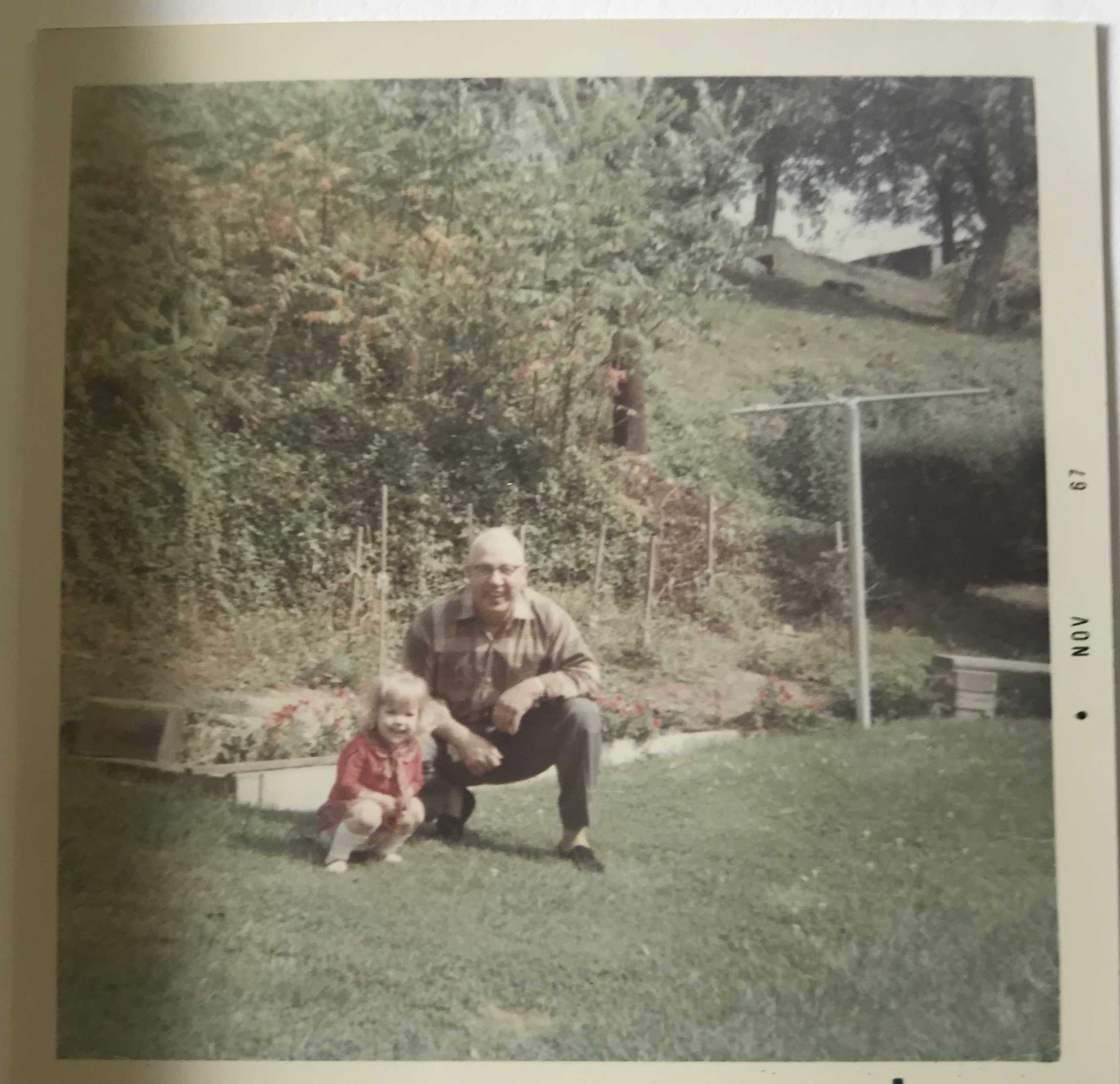
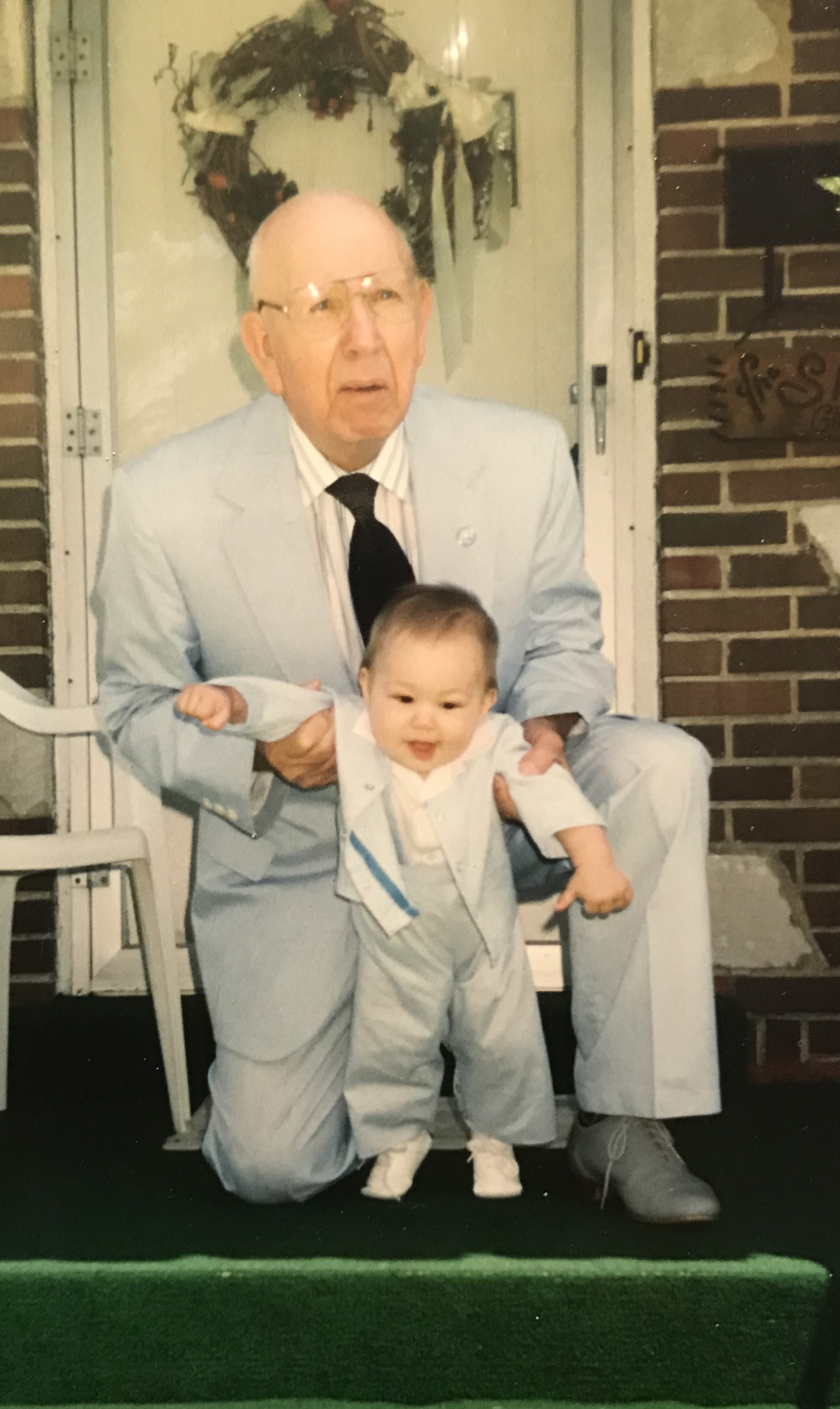
My parents did not compare my development as a toddler to that of my grandfather!

“Sometimes the smallest step in the right direction ends up being the biggest step of your life. Tiptoe if you must, but take a step.”–Naeem Callaway

Reflecting on the ways in which babies learn to walk, child development experts state there are certain milestones, such as, sitting, rolling over, crawling, pulling up, cruising, and so forth, that parents should expect. During the process, the baby will learn to balance while standing, then bounce while standing, and might revert back to rolling or crawling. Eventually, however, the child will return his or her interest to pulling up, and perhaps begin to attempt cruising, but may still go back to crawling for a while–or in the case my daughter–focus on developing verbal skills.  

The point is that while so-called experts can point to certain milestones of development, in reality all children learn to walk (and talk) at his or her own pace–some taking longer or shorter periods of time than others.  However, we never compare the child-learning-to-walk to a so-called “master-walker.” Can you imagine a parent or grandparent saying to a baby learning to walk, “Why aren’t you walking like so and so?”  Instead, we foster and encourage each, well, baby-step along the child’s unique time-line of progression.  Which led me to wonder why so many of us, myself included, don’t do that for ourselves?

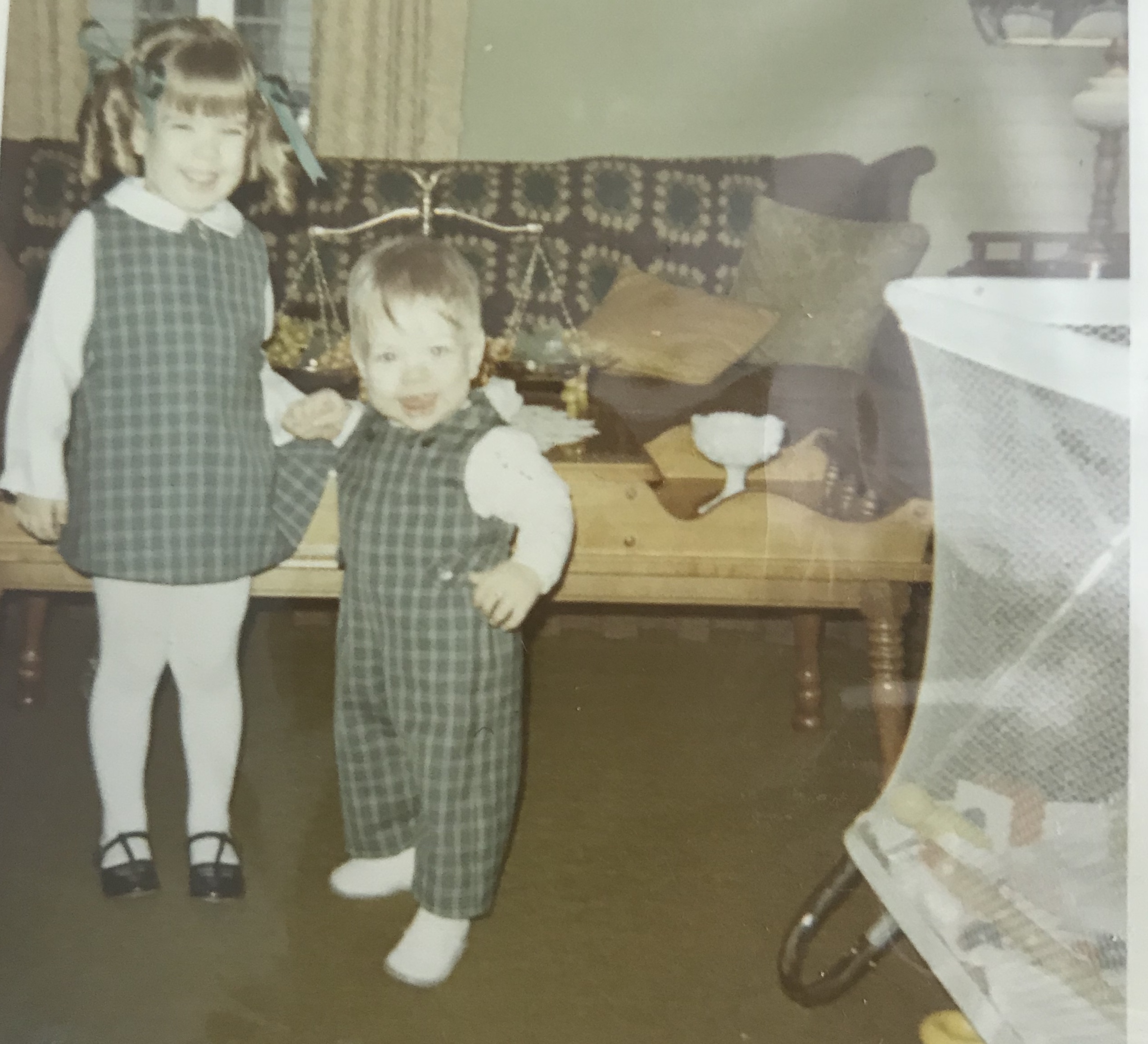
Nor did my parents compare my brother’s baby steps to his older sister (me).

Why do we, as adults, compare our own progress–or for that matter the progress of school age children–to that of a so-called, “master.”  While having a goal is absolutely worthy, as the old adage states, “Rome wasn’t built in a day,” and neither is progress.  In fact, I often have conversations with parents of students that growth often happens in fits and starts.  Each student’s brains are wired uniquely, and thus learning never occurs in a straight upward angled line.  The same is also true for adult learning. 

All progress–be learning a new skill, establishing a new habit, or changing/eliminating a bad habit–looks more like the zig-zag pattern of learning to walk.  How many times per day does a baby who is learning to walk fall down?  Are we ever disappointed in the baby when he or she does this?  No!  Instead, as loving adults, we say words to encourage, foster, and inspire the child to try again.  In fact, I would argue, it is the adult’s positive attitude that is part of the baby’s motivation to get up and try again–at least until they are too tired.  Even then, as we put the baby to bed, we know that tomorrow’s is a new day, and he or she will be right back at it again in the attempt to learn to walk.

No matter how long or meandering the path toward progress is, keep on stepping into the version of your best self!

“If you can’t fly then run, if you can’t run then walk, if you can’t walk then crawl, but whatever you do you have to keep moving forward.”–Martin Luther King Jr.

Thus, this is the type of attitude that we should offer ourselves in our attempts to instigate personal change and growth.  Start with small steps towards the desired goal.  If you “backslide” and revert back to old habits, such as when babies revert back to crawling, get back up the next day, and try again.  Don’t compare yourself to others with self-defeating thoughts or other comparative notions. Each of us has our own distinctive way of learning, changing, and/or progressing.

I would have never told my daughter that she should give up on learning to walk, much less called her a failure when her interest in walking was put on pause for several weeks as she focused on her vocalization.  That was part of her own idiosyncratic pattern of growth, and the same holds true for our own attempts at growth and change. 

We all need a little help along the way towards our goals. Don’t be afraid to accept structure and help as needed!

According to the Kaizen principle that is often applied in the business world, improvements and growth in an organization most successfully occurs through small steps.  In fact, as best as I understand it, the Kaizen principle for growth and change encourages a business to create a culture in which employees plan, implement a small steps towards growth, periodically review whether or not the plan is working, then take action–either by taking the next small step forward or by refining/adjusting the current step.  With each successive step and revision, growth begins to occur. This principle can be applied to our own lives.

Stop comparing yourself to a master-image of perfection.  In fact, I encourage you to stop striving for a so-called image of perfection–after all, this is life, with all of its ingrained messiness and fallibilities.   Instead, foster progress.  Talk kindly to yourself as you would a child learning to walk.  If you fall down, it’s okay.  Cry if you must, but get up the next day, and try again. If you need to hold onto a structure for a while, as a baby must hold onto furniture in its attempt to master walking, remember the baby is developing its leg strength, and you are likewise building strength!  The point is to keep moving forward, no matter if it seems like you’re only making baby steps. Eventually you will attain your version of success that works for you.  

Photo by Juan Pablo Serrano Arenas on Pexels.com