The Transformative Power of Art: A Visit to Tamarack

“Do you still feel up for going to the Tamarack?” my husband asked.

A Heavy Heart and a Planned Escape 🚘

Days earlier, we had loosely planned a day trip. The goal was to stop in Charleston for brunch on the way to Beckley, to nose around the galleries and marketplace of the Tamarack, and then return home, making a couple of quick errand stops along the way. Unfortunately, my spirit had been bruised by life, as sometimes happens, but despite feeling down, I agreed to go in the hopes it would be a pleasant distraction.

The brunch and drive along the WV Turnpike were heavy, filled with somber, clarifying conversation as my husband tried to help me clean out the closet of my cluttered heart. Tumbled, but not fully dried from an onslaught of despair, I entered the Tamarack lightened by our discussion, but still damp with distress. My intention from the outset was not to make a purchase, but instead soak up the vibrant and creative energy of the art, and by proxy the artists, who created it. 

Echoing my own feelings, Stella Adler stated, “Life beats down and crushes the soul and art reminds you that you have one.

Entering the Tamarack: A Sensory Shift

Once through the doors, I observed a crowd of people and wondered if this had been a good idea after all. Meandering to the right of the entrance, I surfed the sensory wave. Aromas of Appalachian-inspired cooking filled the air. A long line of people snaked around the fast-casual dining room as I made my way to the ladies’ room. Tamarack’s signature circular shape surrounding an open courtyard created a light and spacious feeling, even during this busy, pre-holiday time period. A multitude of glass windows, adorned with locally designed, gemstone-colored stained glass pieces, radiated an additional cheery warmth. The animated energy of visitors’ conversation added a rhythmic pulse to a popular sing-along soundtrack playing in the background. 

Letting the Atmosphere Settle the Spirit

As I allowed the wave to immerse me, I soon noticed that my breathing and pulse had slowed, tensions were eased, and the emotional flames were beginning to quell. Despite my earlier qualms, I could feel the atmosphere offering a form of calming consolation. The simple act of getting lost in the admiration and appreciation for each artist, and the art pieces they created, nourished my spirit. 

Wandering the Galleries: Beauty in Every Craft 🖼️

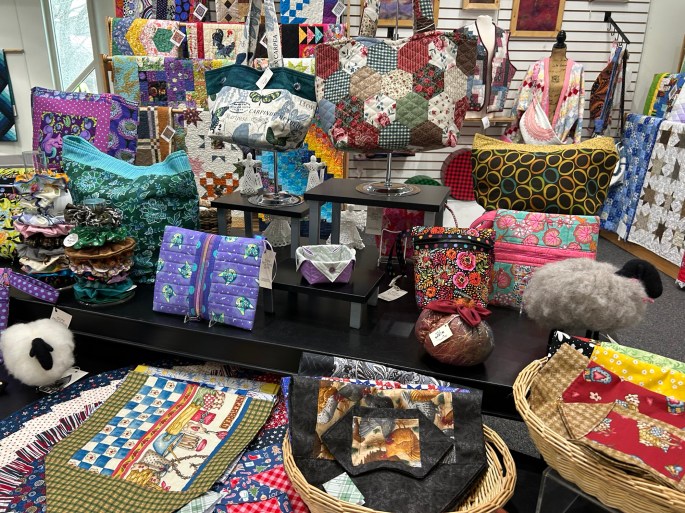
Allowing the natural flow of the galleries to pull me along, I took in richly detailed textiles and exquisite, delicate glass pieces. There were complex and intricate woodworks and artisanal earthen and pottery wares. Tables of WV grown and/or crafted wines, beers, ciders, soaps, candles, and one-of-kind foods/beverages were also available. 

I also stopped by the book nook, filled with locally written fictional and nonfictional books, novellas, cook books, maps, travel guides, and other artfully written materials. Additionally, there was a separate gallery, bright with ample natural light, filled with one-of-a-kind WV paintings, sculptures, prints, and photographs. 

Art as Memory: Echoes of Loved Ones 👵🏼

Allowing the current of creativity to slowly move me at will, the art grounded me into the present moment as I mindfully soaked up the vibrant energy. Different pieces evoked precious memories of loved ones: quilts of my grandmother’s attic, pieces of furniture and toys handcrafted by my husband’s grandfathers, earthen dishes that were reminiscent of family holiday casseroles, paintings and photographs of forested hills during the fall and winter months similar to those I hiked with my siblings and father as a child, and hand sewn creations that my mother once made.

The Healing Power of Art 🎨

I was further reminded of the many art therapy majors with whom I had classes all those long ago years. They often described the important role of art in therapeutic and school settings, a truth supported by research. Creating art and observing art supports mental health and well-being.  It often helps with emotional regulation by creating an outlet in which emotions can be channeled. Art is known to reduce stress and is often used as a tool for creating a greater understanding of one’s emotional atmosphere. Works of art often create a connection/conversation between the creator and viewer, which can provide an opportunity for both personal and collective healing.

Creativity as Community Storytelling

This is because art, such as the works I viewed at Tamarack, is often a reflection of the emotional landscape of a community, region, or even country. How many colorful and varied life stories, events, and personalities, past and living, were being conveyed and connected all under one circular roof? Each stitch, stroke, cut, hammer strike, click, and spin breathed life into each creation that spoke to the heart and soul of human resilience and hope.

In the Company of Strangers: Shared Wonder

As I meandered through the gallery devoted to paintings and photographs, I often lingered on works that spoke to me. Simultaneously, I overheard a pair of women, who were gazing at a section of paintings by a Mingo County artist, speaking with near reverence about their own childhood experiences in the same area. Another couple whispered with one another at nearly every piece, laughing at the memories specific images seemed to evoke. 

Spaces of Belonging: More Than a Marketplace

It occurred to me that art galleries, like the Tamarack, create centers of belonging–gathering places that celebrate the human experience. These transactional spaces aren’t just about exchanging money; they also provide an interchange of ideas and stories between artist, piece, and viewer. Investing in these community hubs is an investment in one another, supporting each other emotionally and culturally. People leave the Tamarack with a taste of what it means to be Appalachian.

A Quiet Affirmation

Standing in that gallery, soaking up all of the intriguing and thought-provoking images, an employee shook me out of my reverie by asking if I was enjoying my visit. I nodded, stating that I was feeling lighter and more grounded than when I entered. She unpretentiously declared, “Art can do that for you.”

We chatted a bit more before I moved on to look through the prints outside the gallery. I still did not have any answers to my specific concerns, but I did have a sense of peace that comes from being heard. Not that I was literally heard; rather, the struggles and joys, the sadness and celebrations, and the wonder and the awe that went into creating these pieces “heard” and spoke to my own related emotions. It was the beginning of healing and hope that often happens when surrounded by reflections of inner beauty.

Leaving with Lightness and Hope

Thomas Merton is credited with stating, “Art enables us to find ourselves and lose ourselves at the same time.” My visit to Tamarack allowed such a juxtaposition: by surrendering myself to time spent with art, my capacity for healing renewal was possible. It served as a reminder. When we immerse ourselves in the present moment, we kindle the still, small voice within, our hearts and minds steady at the sound of this whispering inner-knowing, and we can rest assured we are being held even when the heaviness of life weighs us down. Perhaps that is the gentle promise held within art: when life seems overwhelming and hopeless, the beauty of art and/or the creative process is there to offer us wings of hope for rising once more.


Storyin’

“Life is not a matter of creating a special name for ourselves, but of uncovering the name we have always had.”–Richard Rohr

Some of my favorite events as a child were those extended family events spent around a dinner table.  Depending upon the size of the gathering, we kids might have been interspersed among the grown-ups, or seated at our own table, but regardless of assigned seat, we often listened in on the adults’ conversations.  These beloved grown-ups were commanding narrators, needling out one anecdote after another.  The combining effect of each account felt as if a patchwork quilt of life were being stitched together before our childhood eyes.  Great guffaws of laughter flowed over and around us as each chronicler appeared to compete for the best speil.  As a child, I yearned for that ability . . .

Photo by Karolina Grabowska on Pexels.com

Perhaps it was the change of weather, the mostly cloudy days, filled with damp and chilly temperatures.  Of course, it could also have been the rising daily count of COVID cases.  Then again, it could have been the shifting job roles–depending upon those same numbers. Maybe it was the overwhelming loss of lives in 2020; the unemployment rate affecting many loved ones, friends, and acquaintances; the uncertain national, global, and political landscape; or maybe it is the fact that trying to find soft toilet paper and a safe cleaning products for home is still a never ending battle!  Whatever the cause, this past week, I personally found that sleep was often elusive, and by Thursday and Friday, I was often given to weepiness and felt down right melancholy as my mind slid into “story mode.”  

Depending upon the situation, the “Story of Steph,” if given permission to run out of control, can be quite tragic, valiant, humble, or any variation in between.  This week it was a well-rehearsed, negative narrative that began to echo around in my head. By the week’s end, the volumes of these fables were fully crescendoed.  

The week began with an appetizer of “you’re-not-good-enough,” followed up by a tossed salad of “you never-have-been” and “you never-will-be.” Next came the main-course of “you’re-a-failure,” along with sides of “you’re-never-right, not-smart, not-good, and not-worthy.”  The mental construct of poor-pitiful-me was tantruming into a full frenzy.

Photo by Andrew Beatson on Pexels.com

I suppose as an adult, I should not admit to such mental theatrics.  In fact, I suppose there is risk in sharing these stories.  However, I choose to share, partly in the hope that it will foster my own compassion and understanding of the truth, and partly with the hope that my experience may help others who may also undergo similar stories of the mind.  

Naturally, there are other stories that we all, myself included, prefer to show the world.  Stories regarding our role in our family; our careers; our perceived social, political, and economic status; our relationships, friends, and associations/affiliations; the list could go on.  The point is, the story-of-self is driven by the ego and our desire to survive, and perhaps fit-in (or not fit-in); and, 2020 has certainly made all of us feel threatened, insecure, and uncertain.  Therefore, it is even more critical that we understand that our mental constructs are not necessarily reflective of reality and often not the truth.  This is an especially important tool as we segue from one challenging year to another.

Photo by Anas Hinde on Pexels.com

Don’t laugh at a youth for his affectations; he is only trying on one face after another to find his own.” -Logan Pearsall Smith

Our self-prescribed stories change as we grow and develop depending upon influences, experiences, life-events, family status, career position and so forth.  The role of these stories are not necessarily bad. Roles and expectations of one’s personal role develop even as a baby/toddler.  If I behave this way, then a certain positive or negative thing happens, and we feel (or don’t feel) safe, secure, valued, and loved.  As we grow, and hormones kick in, we begin to try out new roles, new ways of be-ing, from the way we behave, to the ways in which we choose to appear to others, as peers begin to gain influence in our desire to feel secure, safe, and valued.  With each stage, new roles are tried on, and later tossed aside, in an attempt to find the role that brings us the greatest feelings of value, security and/or worth.  As a whole, this is a natural part of human development.

Unfortunately, as humans, we tend to attach too much to roles and to the should-das, would-das, and could-das of life roles and fulfillment.  The stories we tell ourselves often skew and mask reality. Social media adds to the distortion of who we should be, and often sends us to our proverbial closet of stories in an attempt to find the perceived right role, and soon another story is formed in an attempt to gain more self-perceived value.  The more we judge and compare our stories to that of others, the more we create discomfort by reinforcing and habituating judgement and critical patterns of thinking of what we should be do-ing and how we should be be-ing.  The compounding effect of all these stories is that we lose touch with what Fr. Richard Rohr refers to as “the face we had before we were born.”

Photo by Sunsetoned on Pexels.com

I have heard of your paintings too, well enough; God has given you one face, and you make yourselves another.” – William Shakespeare

The concept of, “the face we had before we were born,” is not original to Friar Rohr, but it was his words that reminded me of this notion in a recent reading.  In fact, Rohr likes to remind readers that if God created everything, and people were designed in God’s image, then all of us are stamped with the blueprint of God’s DNA.  Therefore, we are all infinitely and blessedly children of God.  

Unfortunately, this week, I had become so attached to the image of who I should be, how I should be, what I should be do-ing, and how others view me, that I became far removed from my so-called, “original God-given face.” I began to believe my own false-narratives, creating my own pain and suffering.  I suspect that I am not the only one who does this, especially in the year of 2020.  

If we could learn to let go of our false survival based stories, drop the self-limiting beliefs, and quit taking negative events so personally, and allow ourselves to relax, trusting that the Divine is ever-present with us, then we can begin to free ourselves from the need to be reactive, judgmental, self-critical, controlling, combative, or confrontational. Yes, I know this sounds too idealistic, but what if it really is that simple?  

Be kind to others, but always be compassionate to yourself.”–from Traditional Medicinals tea bag

My brother recently reminded me of what our Grandmother Helen would say, who often babysat us, if she thought one of my siblings or me was lying.  Her classic start to this conversation began by stating our name, followed up with her unique query.

Stethie,” (or whomever) “Are you storyin’?  Are you telling me a story?”  

At the time, my brother and I both had a good laugh at this fond remembrance.  It was only after I wrote this reflection, that Grandmother’s phrase once more returned to mind. Not only did it put a smile on my face, but it also gave me even greater insight to my own negative self-talk, and it empowered me with a new phrase to use as a reminder when I have given “stories” permission to hide my “original face.”  

Thank you, Grandmother Helen.  You always had a way of succinctly getting to the point.

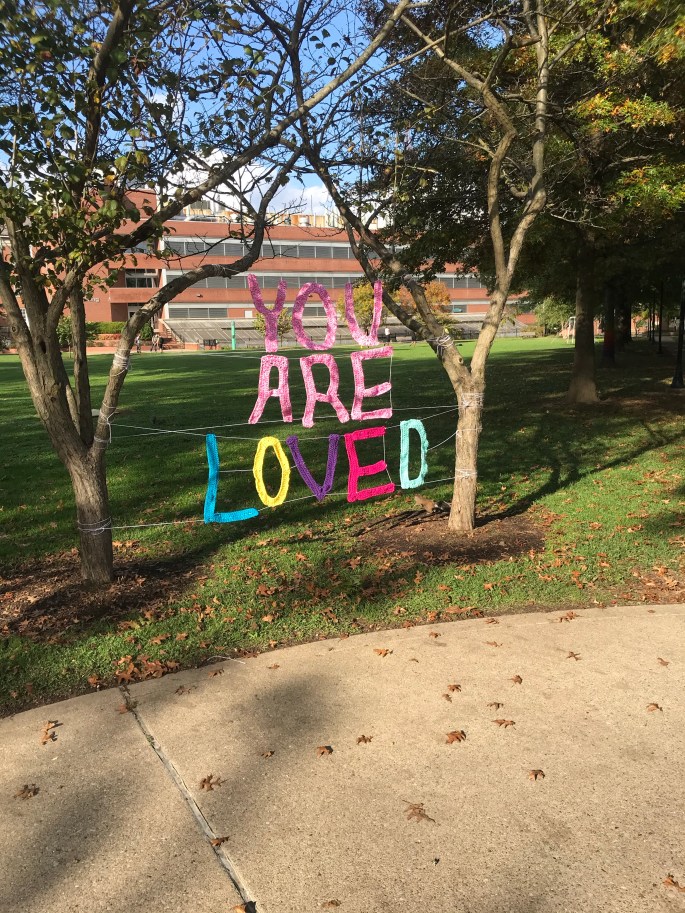
Always worth remembering: You are loved!