Building Resilience Through Emotional Awareness

“Feelings build resilience: As they teach me to let go and to become new, I become increasingly flexible in the flow of life.”–Allan Schnarr

Laughter-filled joy is one of the many emotions we can experience throughout the course of a day.

Importance of Heart RAte VAriability 🫀

In this era of fitness tracking gadgets, I have begun to be quite aware of my own heart rate variability. It’s not that I wasn’t aware of the changes in my heartbeat; those oh-so-long-ago biking adventures of my youth, as I pedaled up and down hills, provided me with that lesson.  However, my handy-dandy fitness watch frequently reminds me of my own heart rate and its variations throughout the different activities of my day.

Harvard Health Publishing states that each person’s heartbeat is unique and beats at a specific rate, but the rate can vary depending upon what you are doing. When we are active, stressed, or–heaven forbid–in danger, our heart rate quickens. On the other hand, when we are resting, relaxed, or at ease, our heart rate slows accordingly. 
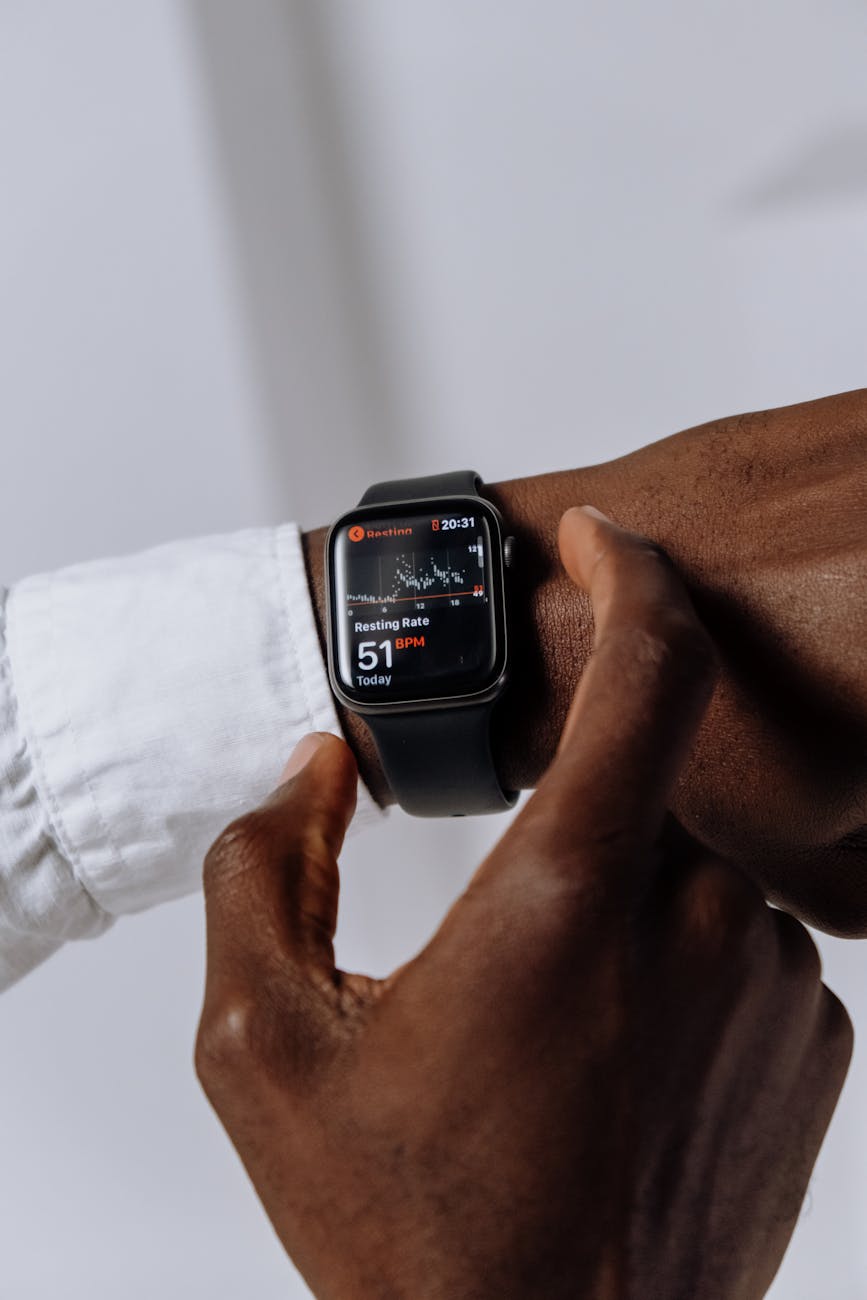
Photo by cottonbro studio on Pexels.com

Meet the Autonomic Nervous System 😬

The system responsible for regulating our heart rate–and numerous other involuntary functions–is the autonomic nervous system (ANS). It branches into two parts: the sympathetic and parasympathetic nervous system. At its most basic, the sympathetic (think: fight or flight) nervous system puts the body on alert, increasing heart rate and blood pressure; whereas, the parasympathetic (think: peace) nervous system sends calming signals to rest, digest, or relax. 

The two systems work together. For example, if we’ve experienced a highly stressful or dangerous situation, the sympathetic system is at the helm. It will signal your body to release adrenaline and increase your heart rate in case you need to physically react quickly. However, once the situation has passed, the parasympathetic takes over lowering the heart rate and signaling various systems of the body to relax.

Therefore, if the heart adapts to various conditions–from walking to running; from talking to singing; from startled/scared to calm/relaxed, and so on, shouldn’t we, likewise, acknowledge, or perhaps embrace, that our emotions also adapt to life circumstances?

Photo by Andrea Piacquadio on Pexels.com

Emotional Variability 😢 😁 🤣

Our heart rate varies for very real reasons, and so do our emotions. Emotions are often intense and/or reactionary to a specific event, thought, or situation.  They too are a product of the ANS, and they are our body’s signal to something it perceives occurring in our environment for which we may need to respond quickly. 

One way to think of emotions is to view them as clouds in the stratosphere of our brain. Some days, the sky is bluebird-clear; while other days, our emotional atmosphere may begin cloudless, but grey shadows gradually–or quite suddenly–creep in.  Sometimes we have days that start cloudy, clear up, and then go cloudy again. Then there are those dark, overcast periods that can last for days, but do eventually pass. 

Experiencing emotions, such as sadness, anger, or worry does not mean you are emotionally unfit–not at all.  Likewise, experiencing opposing types of emotions–enjoyment, happiness, or awe–does not define you as emotionally healthy. Similar to heart rate variability, it is just as healthy for our emotions to differ in response to what we are experiencing.

Photo by Antoni Shkraba on Pexels.com

embracing our varying emotions 🤗

Therefore, it is important to give ourselves permission to fully feel and accept a wide spectrum of emotions. In fact, there are valid reasons for us to adeptly switch among a wide range of emotions. According to Mindletic, our emotions can sometimes switch frequently throughout the day, and then on other days, we may experience little to no shifts in emotions. Emotional changes are often dependent upon conditions.

The key is to recognize when we do feel something because our ANS is reacting physiologically. We may not be able to name the emotion initially, but we may feel a desire to respond/act and not know why. If that is the case, stay curious and patient. Turn inward when time permits and reflect on how and/or what you feel without judging it as good or bad. Observe any sensations, noticing if they occur in certain parts of the body. 

Photo by Eric W. on Pexels.com

Self-Inquiry is Key 🔑

Given enough time and self-reflection, we may be able to name the feeling: anxiousness, worry, fear, happiness, and so on. Once the emotion can be named, it is important to next determine the trigger that caused it.  Sometimes, identifying the instigating event is easy, such as when a loud bang occurs, we may feel instantly startled.  Other times, figuring out what is causing the emotion can be more challenging.  

For example, there may be a day when you feel anxious, and you’re not sure why. If you allow yourself to remain curious and open to possibilities about the “why” without judgement, you may later have an aha moment when you connect the dots. An example of this could be feeling sad on the first day of winter-like weather. You might assume it is just due to the cloudy, cold nature of the day, which could be true. Later, however, with a bit of self-inquiry, you may recall that the last time you experienced this type of weather was the day you were in a car accident, which helps explain why you felt anxiety.  

Being comfortable with uncomfortable emotions can be challenging but worth the effort.

Holding Space for Difficult emotions 😩

Sitting with an uncomfortable feeling/emotion can be difficult, especially when we are not sure why it has occurred. By refraining from attaching judgement to the feeling, such as “I’m stupid to feel this way,” and continuing with curious contemplation, we can learn to offer all parts of ourselves, emotions included, acceptance. This reduces resistance to feeling certain emotions, fostering a deftness of accepting any number of emotions that may arise in response to life. After all, we wouldn’t resist our heart rate accelerating when jogging a couple of miles.

The more we practice self-reflection of our own emotional experiences, the better able we are to identify various emotions and corresponding triggers; thereby, increasing our ability to respond in a more adaptive manner. This continued practice allows us to cultivate greater emotional awareness, improve our emotional regulation, and develop our own personal toolboxes of self-care responses, such as exercising, journaling, meditating, reading, dancing, doodling, gardening, and so on. 

Photo by Lukas on Pexels.com

✅ Developing our own Emotional “tracker”

The ultimate goal is fostering our internal emotional “tracker”– much like my fitness tracker.  This gives us a window to our own emotional rate variability, allowing us to create adaptive strategies in order to appropriately feel, identify, respond to an emotion, and allow it to pass–much in the way clouds do in the sky. Similarly to the way a heart rate stays elevated for a longer period of time when running a marathon versus walking a short distance, some emotions are going to hang around longer. However, with compassionate and consistent practice, emotional self-inquiry can reduce the long term, adverse effects of our stronger emotions and/or lessen the arousal to the emotion(s) and/or their trigger(s). This allows us to accept and feel the full rainbow emotions while strengthening our ability to bounce back on life’s trampoline with greater awareness, resilience, flexibility, and empathy.
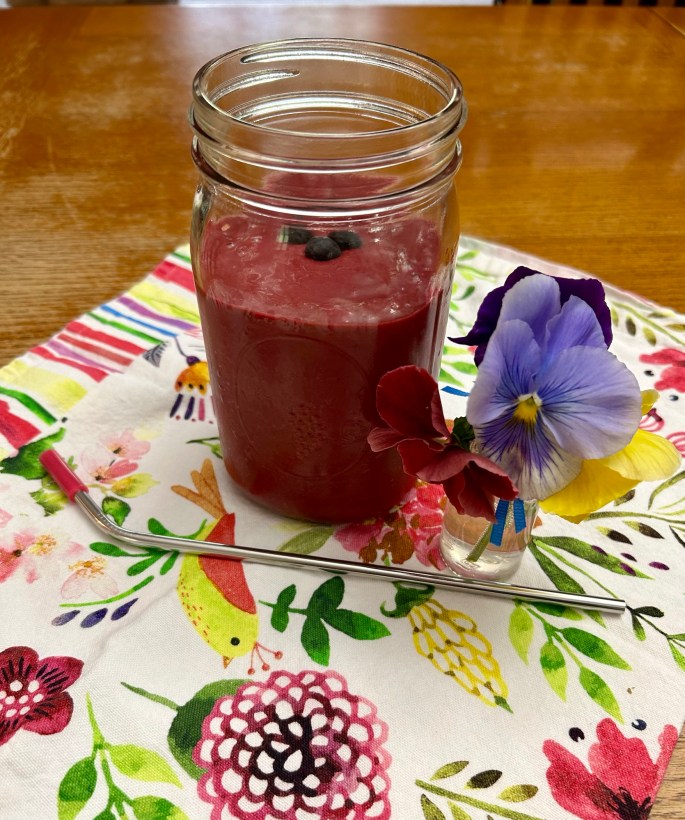
Berry Immunity Boosting Smoothie aka Stress Less Smoothie

The greatest weapon against stress is our ability to choose one thought over another.”–William James

Photo by Pedro Figueras on Pexels.com

The challenge of work-life balance⚖️

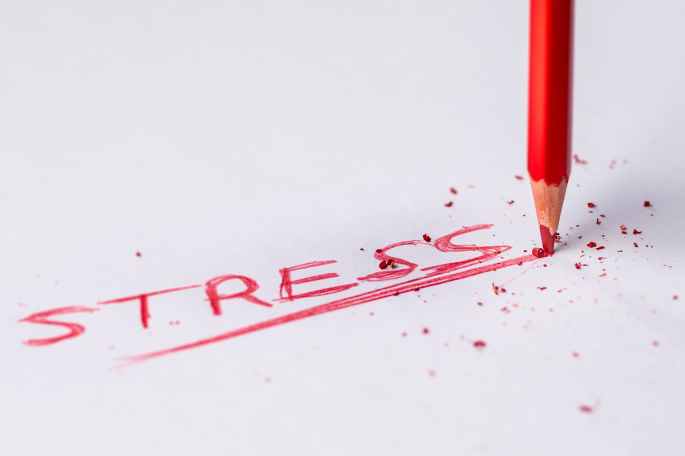
It is not uncommon to engage in conversations centering around stress.  Attempting to balance the demands of work and life can be challenging. The combination of long work hours, while also juggling the needs of family, make it difficult to have time to do the things that would otherwise relieve stress, such as regular exercise, outings with friends, or even a relaxing soak in the tub. 

When stress ramps up, there is a chain-reaction in our bodies.  According to Harvard School of Public Health, when stress is high, the body’s demand for oxygen and energy increases, which in turn increases the demand for key nutrients.  Simultaneously, stress causes the body to eliminate other vital nutrients. This can take a toll on the body’s immune system.

As the chain reaction of stress continues, hormones become affected.  If the stress is acute, the body will secrete adrenaline, which suppresses appetite.  However, when the stress becomes more chronic, cortisol levels begin to rise, instigating food cravings.  Cortisol tends to create cravings for foods that are typically considered “comfort foods,” full of sugar, salt, and fat.  Unfortunately, if cortisol stays elevated, the chain reaction continues to wreak havoc upon our bodies, and this often influences our coping strategies.

Photo by cottonbro studio on Pexels.com

The body’s stress response 😰

Chronic high stress time periods, depletes the body of energy and can often reduce time available for decompression. This can inhibit the desire to prepare healthy, nutritious meals.  Sometimes, chronic stress causes us to skip meals.  The downside to skipping meals is that, as the cortisol levels rise, once there is an opportunity to eat, we tend to reach for those comfort foods that will not replenish the body’s stores of diminished nutrients.

Therefore, how we respond to stress matters.  With some situations, we can identify upcoming stressful time periods before they begin, and thus, we can be more proactive.  However, that isn’t always the case.  Nonetheless, there are a few basic guidelines, according to The University of North Carolina at Chapel Hill that are worth remembering.

Photo by Antoni Shkraba on Pexels.com

Tips for eating during times of stress 😣

  • Keep nutrient-dense grab-and-go snacks on hand at all times.  Foods like baby carrots, celery sticks, hummus cups, guacamole cups, apples, oranges, bananas, popcorn, almonds, walnuts, pistachios, low-sugar yogurt, low-sugar granola, low-sugar oatmeal packets, whole-grain crackers and so forth.
  • Eat at regular intervals when possible.  This will keep blood sugar stable, and keep the brain, which needs glucose, working at its best.
  • Eat high-fiber foods. Foods, such as fruits, vegetables, nuts, seeds, beans, oatmeal, and other whole grains, have been shown to decrease perceived stress levels and increase alertness.
  • Focus on eating fruits and vegetables, especially leafy greens, whenever possible.  These foods are filled with the vitamins and minerals your body needs to neutralize the harmful molecules our bodies produce when under stress. 
  • Foods rich in unsaturated fat also help. Think walnuts, flax seeds, chia seeds, and fish oil to name a few. These foods are associated with increased brain function; however, deficiencies in fatty acids can result in depression and/or anxiety. 
  • Be mindful of caffeine and/or alcohol intake. Both of these can disrupt sleep, which the body desperately needs during times of stress.  Additionally, both can increase blood pressure, which can increase feelings of anxiety.
  • Ensure your body is getting enough quality sleep. Getting enough sleep allows the body to reduce cortisol levels and other stress hormones, increasing the chances of remaining calmer in the face of stress.
  • Employ constructive coping strategies. Whether it is talking to a trusted friend or therapist, journaling, meditating, asking for help, or going for a walk–developing positive coping skills is a lifetime skill set. 
Photo by Wallace Chuck on Pexels.com

The reality of stress 😩

Stress is reality at different points in our lives.  While we cannot control when it will arise, we can control our response to it.  It is easy and understandable to seek comfort during times of stress.  However, when those sources of comfort become unhealthy coping mechanisms, such as over- or undereating, drinking alcohol in excess, going without sleep, and so forth, we risk using short-sighted solutions that could lead to developing long-term problems, creating even more stress.  

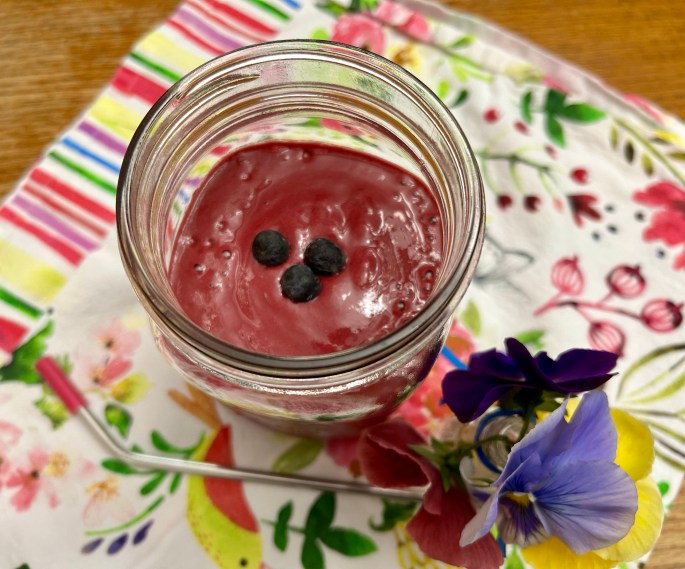
Stress less smoothie 🍓

Below is my newest smoothie creation.  It is full of nutrient-rich foods that are high in fiber.  Some of the ingredients may cause you to raise an eye-brow in wonder, but I promise, it does taste great.  That said, feel free to adjust, add to, or eliminate ingredients that don’t suit your palate or dietary needs.

This recipe can be made ahead of time and frozen into individual servings.  They will stay fresh in the freezer for up to three months.  Then, whenever faced with a stressful day, take one smoothie out the night before, set it in the fridge to thaw, and then it’s grab-and-go convenience for the next workday. Sip on it through a lunch meeting, or if more time is available, pour it into a bowl and sprinkle on favorite fruit and nut/seed toppings, along with a bit of granola. 

I can’t promise that this recipe will change the stress around you. However, it does provide a powerful nutritional punch to help stave off the effects of stress, and offers one less thing to worry about.  Plus, it feels good knowing that if everything else goes wrong in the day, at least one small part of your day was stress-free.  

Cheers to one less thing to stress about!

Berry Stress Less Smoothie

Nutrient dense, stress combating meal replacement

Ingredients:

2 cup spinach, riced cauliflower, or kale (can be frozen)

½ cup strawberries, frozen

½ cup raspberries, frozen

½ cup cherries, frozen

1 apple

½ cup lentils

1 parsnips

2 tablespoon flax, chia seeds, or hemp seeds (or combination of any two)

2 tablespoons goji berries, OR 2 medjool dates, OR 2 prunes, optional

2 tablespoons cocoa or cacao powder, optional

2 scoops protein powder, optional

1 cup beet juice (can use pomegranate or cherry juice or simply use water)

1 cup milk  plant or dairy based variation)

½-1 cup of water, if too thick

Directions:

Put all ingredients in high powered blender

Blend until creamy and smooth

Makes 2 large servings 

Under Pressure

“Pressure pushing down on me

Pressing down on you, no man ask for . . .

Splits a family in two

Puts people on streets . . .” from the lyrics of “Under Pressure” as written by members of Queen and David Bowie

Photo by Free Nature Stock on Pexels.com

 It was still dark as I drove alongside the glinting waters of the Ohio River, but I could see the sky lighting towards day.  I tried to listen to the news when I first left home, but on this particular day the stories were making me feel way too anxious.  Thus, I switched to a favorite satellite radio music channel as I made my way onto the 6th Street Bridge heading into Huntington, WV.  As I took the exit ramp and began motoring towards the school in which I am currently an educator, I heard the unmistakable beat drop for one of my favorite teen anthem songs, “Under Pressure,” written and performed by Queen and David Bowie.

As is my habit when I hear an old favorite, my hand automatically went to my heart.  It was late fall of 1981 when this song was wildly popular.  As a teen, I was attracted to socially compelling song lyrics, and the words of “Under Pressure” certainly were thought-provoking.  While I cannot pretend to recall my exact mental state in 1981, I do remember feeling the song’s lyrics resonating with me on a visceral level . . . and, boy do they ever resonate now.

“ . . .It’s the terror of knowing what this world is about

Watching some good friends screaming

‘Let me out!’

 . . .these are the days it never rains but it pours . . .”

Photo by Aleksandar Pasaric on Pexels.com

In the 80s, from my know-it-all teen perspective, I thought the world was incredibly messed up!  From the rallying cries and images of “Tear down the wall” to songs calling for us to “Feed the World,” and from the music and message of “Farm Aid” to the drama and news headlines surrounding the AIDS/HIV crisis alongside all of the other world/political problems that created newspaper headlines, it seemed in my young mind that the older generations were creating a world of chaos that the younger people would have to fix.  How ironic now!  

“ . . . Ee do ba be

Ee da ba ba ba

Um bo bo

Be lap . . .”

Shaking my head out of my 80s remembrances, I observed what once must have been a beautiful young lady, now bedraggled and disheveled in appearance, stumbling along the sidewalk next to the traffic light at which I was stopped.  Across the street, an older man, wet down the front of his pants as if he had unknowingly (or knowingly?) urinated on himself, began screaming curses at the woman.  She shouted incoherent phrases back to him as she attempted to stumble, bumble, fumble ahead at a faster pace, and I drove on, but the image still haunts my very human heart . . .

Photo by Grevin Kivi on Pexels.com

“ . . . People on streets

Ee da de da de

People on streets

Ee da de da de da de da . . .”

Images from my life flashed before me as I continued to drive.  Images from childhood, teen years, college years, early adult years, parenting images, teaching images, images from past world events through where I have lived, and images from on-going current events.  Words seemed to fly through the mental space of my brain. COVID. PANDEMIC. CHAOS. QUARANTINE. DIVIDE. HATE. DIVISION. HURT. DIVISIVENESS. PAIN. DISORDER. DEATH TOLL. VIRTUAL. MISTRUST. . .

 “ . . .Turned away from it all like a blind man

Sat on a fence but it don’t work

Keep coming up with love but it’s so slashed and torn

Why, why, why?

Love, love, love, love, love

Insanity laughs under pressure we’re breaking . . .”

Photo by cottonbro on Pexels.com

Am I the only one with a heart that is breaking?  It seems as if we often become wrapped up in minutiae of policies, partisanship, and even personal egos that we lose focus of our commonalities and the lives, the real lives of people.  Why is it now okay to speak, post, tweet, and write rudely?  Why does the concept of compromise seem unacceptable and/or unattainable.  Why is mountains of completed paperwork for health care workers, educators, law-enforcement, and all other humanity-based career fields more important than actual time focused on real people-to-people interaction?  Why is society as a whole burning bridges of connection? 

“ . . . Can’t we give ourselves one more chance?

Why can’t we give love that one more chance?

Why can’t we give love, give love, give love, give love

Give love, give love, give love, give love, give love?

As a young girl in the 80s, I was a hopeless romantic who believed that words like love, empathy, compassion, and understanding were the answer to all world problems.  My grandfather used to teach the importance of  “walking a mile in another man’s shoes.”  In fact, it was a consistent message I heard throughout my childhood from the adults in my life.   While my grandfather was far from perfect, he certainly tried to apply this expression to his own life.  He, along with my grandmother, would take food to those in need, offer rides to the elderly who could no longer drive, and were overall kind and pleasant with all those they encountered–even if they didn’t agree with their personal views.  Am I naive to think this aphorism should still be practiced today?

Photo by Ylanite Koppens on Pexels.com

“ . . . Cause love’s such an old fashioned word

And love dares you to care for

The people on the edge of the night

And love (people on streets) dares you to change our way of

Caring about ourselves . . .”

Currently, I feel “under pressure” in a number of ways, and I suspect, I am not the only one.  First, and foremost, I feel the pressure to remain healthy and behave safely for the sake of all others with whom I have contact, but even more so for my loved ones. I am not sure I could live with myself if I caused another person to become sick.  

Additionally, I feel professional pressure. Like most other careers, education has had to dramatically change and respond in the wake of a pandemic. Teaching simultaneously in-person students and virtual students, as I try to meet the needs of both groups, challenges me in ways for which I never dreamed nor was prepared.  Then, there is the additional pressure of keeping the in-person students safe, their environment sanitized, and still allow them to be kids.  It is a delicate balance of walking along a tightrope with strong crosswinds of politics, policies, and personal egos abounding.  

Finally, I feel pressure as a responsible citizen.  How do I separate the wheat from the chaff?  How do I parse out the truth from the half-truths and outright lies?  And, what, if anything, can I do about the people suffering in the streets, in the hospitals and other health care facilities, at their work-sites, or currently in their own home?  Anxiety, depression, and other mental illnesses seem at an all-time high with negative coping mechanisms providing easy and quick relief, but not solving problems long term. Meanwhile compassion, concern, and care seem harder to find.  

“ . . . This is our last dance

This is our last dance

This is ourselves under pressure

Under pressure

Pressure”

Photo by Helena Lopes on Pexels.com

My grandmother used to tell me that things had to get worse, before they could get better.  Meanwhile, my grandfather used to say that diamonds form under pressure. I have a Ninja pressure cooker in my kitchen. As the pressure builds, the food inside is cooked and transformed into a tasty treat.  In order not to overcook the food,  I must release the pressure valve, allowing the steam to rise as the temperature and pressure inside reduces.  I pray for the pressure valve to release soon.  I pray this isn’t “our last dance.”  I pray that love will dare us to care, once more, for others, and that we will soon dare to “change our ways” . . . .