Running Beyond Age: Embracing Health and Freedom in Every Step

“Running is an act of creative self expression”–Lawrence van Lingen on Extramilest podcast

A Familiar Morning Scene: Defying the Stereotype 👟👟

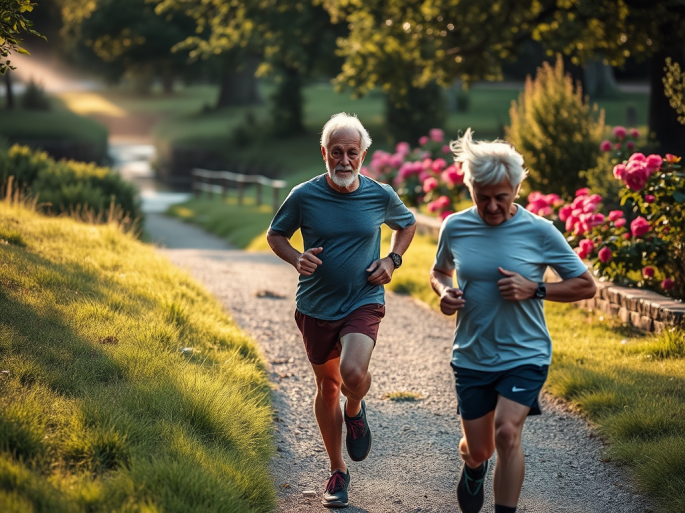
Two older runners jogging together on a path surrounded by grass and wildflowers in a park during early morning.
Photo by Anastasia Shuraeva on Pexels.com

Picture this. It’s early on a warm Saturday morning in your local park. The sun is low on the horizon, and mist is rising above the grass and a meandering stream that runs alongside a crushed gravel path. The scent of a nearby rose garden is heady as two runners descend the hill following the path. Moving at a steady clip, one runner has a full head of white hair while the other is more salt than pepper. They are relaxed and chatting as they pass by.

This is a routine sighting for me on my weekend jogs. Numerous older runners, walkers, and run/walkers defying the stereotype through exercise, that aging equals physical decline. In fact, according to AARP, beginning in 2023, the average age of runners has risen. Some of the biggest gains are those 55 years and older, with numerous runners sticking to it well into their 60s, 70s, and 80s as witnessed in the ages of Boston Marathon finishers in recent years as well as other major marathons around the world. Of course, there’s no denying aging does change the body, so why do I see numbers of people my age and older consistently outside running and/or walking?

Running as Personal Ritual and Liberation 🏃‍♀️

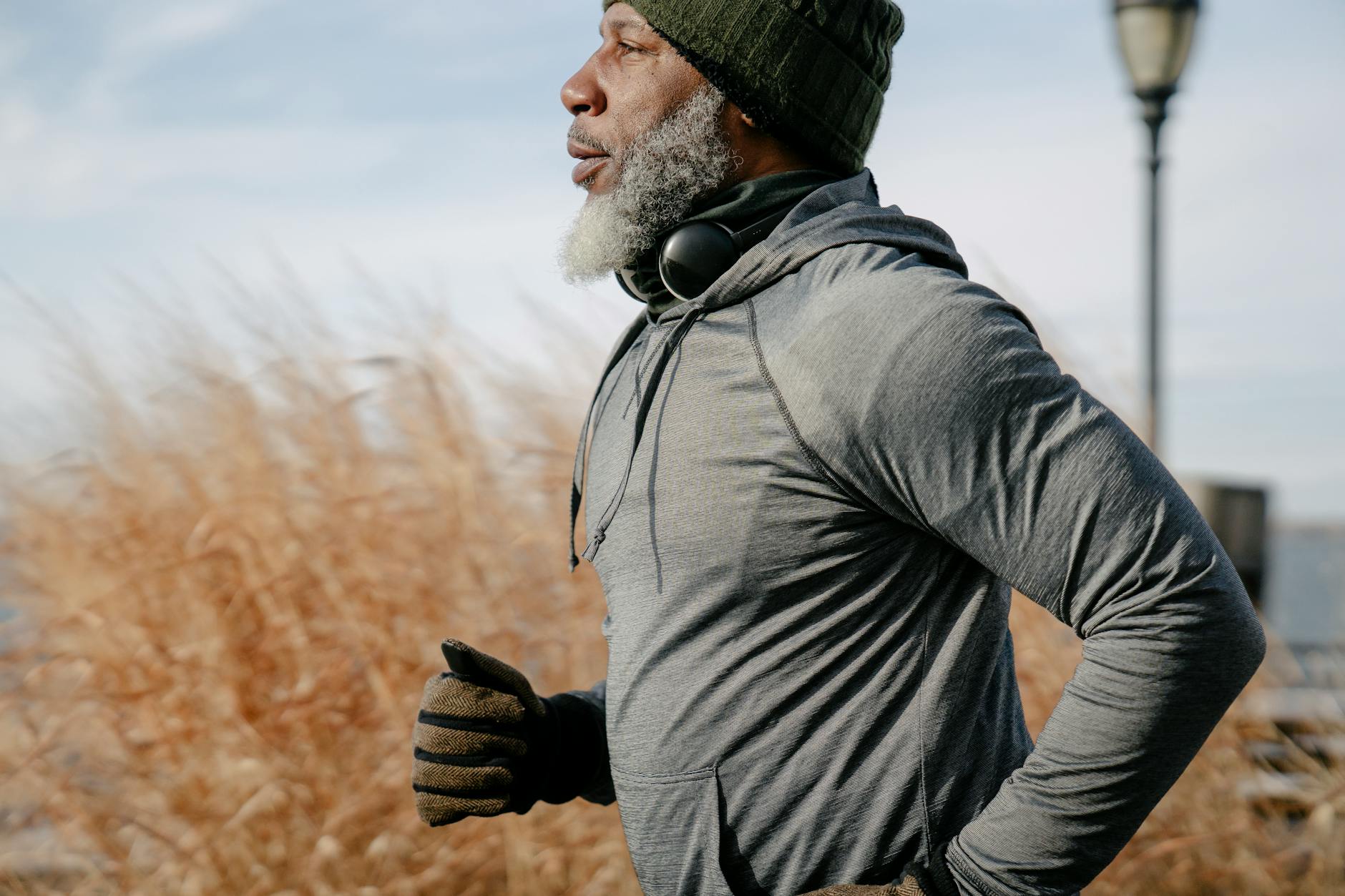
Older man jogging outdoors in a gray hoodie and gloves, surrounded by tall grass with a calm sky in the background.
Photo by Barbara Olsen on Pexels.com

For many older individuals, like myself, running or run/walking becomes a personal manifestation of life–a ritualistic form of imaginative self expression that allows us to reconnect with our inner rhythm, identity, and self-determination. It creates a sense of freedom and play that we once had as a child. Additionally, running offers numerous benefits, including improved physical health, enhanced mental well-being, social connections, and a renewed sense of personal meaning, to name a few. 

The Science-Backed Physical Benefits of Running 🏃‍♂️

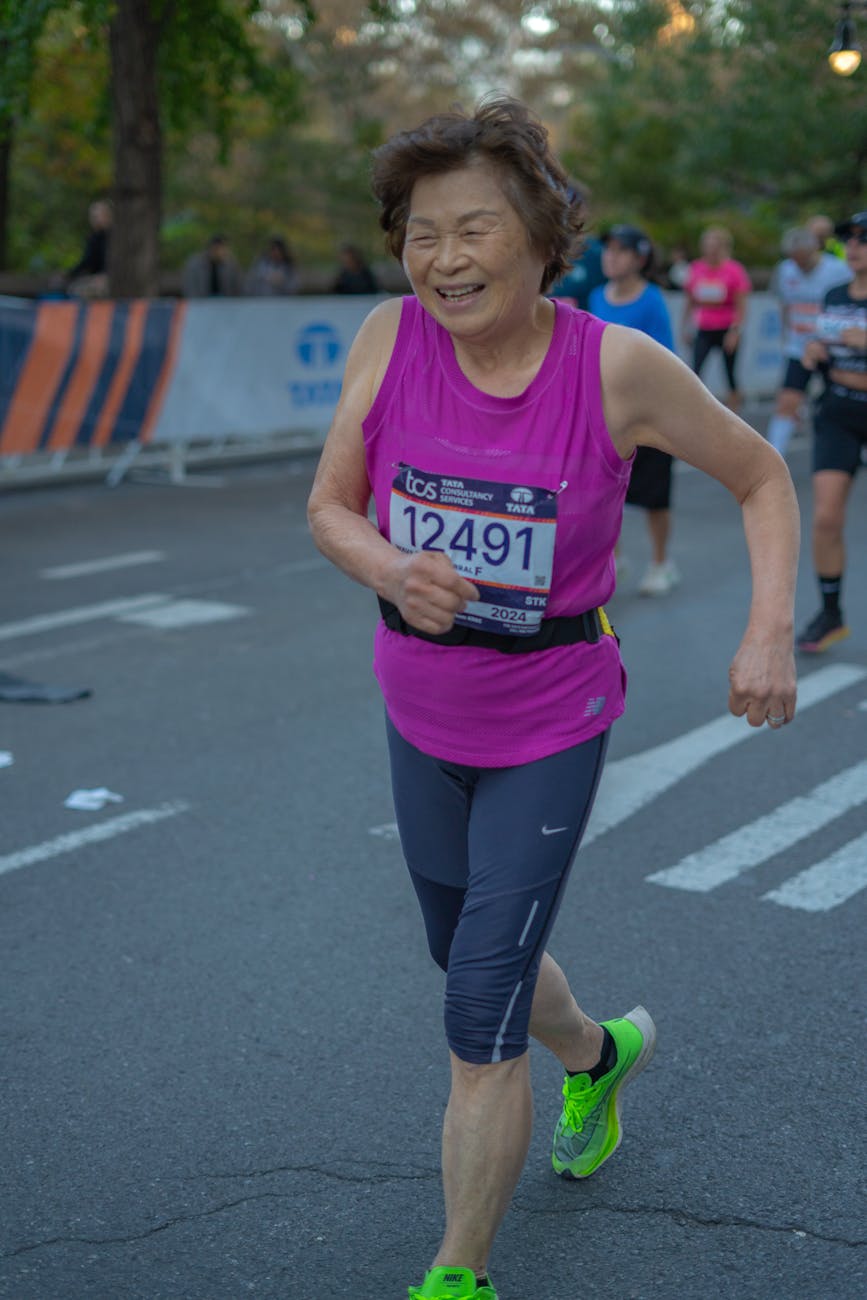
An older female runner smiling while participating in a race, wearing a bright pink tank top and bib number 12491, with greenery and other runners in the background.
Photo by khaoula Bkm on Pexels.com

I occasionally encounter critics who question the safety of running at “my age,” (a term used by my students); however, according to another 2023 AARP article, older runners just have to be “smart about it.” This is why many running groups often point beginners, including seniors, to using a run-walk-run method to establish a strong aerobic base. In fact, Cleveland Clinic, in a 2024 article, points to numerous physical health advantages to walking and/or running for all ages, but especially seniors. These advantages include:

  • Strengthens heart and improves circulation
  • Reduces risk of heart disease and stroke
  • Increases bone density, helping prevent osteoporosis 
  • Improves joint flexibility and maintains muscle function
  • Boosts metabolism and supports healthy aging
  • Improves blood sugar regulation and lowers risk for type 2 diabetes
  • Reduces risk of dementia and Alzheimer’s disease

Mental Health Gains: Silence the Inner Critic 🙉
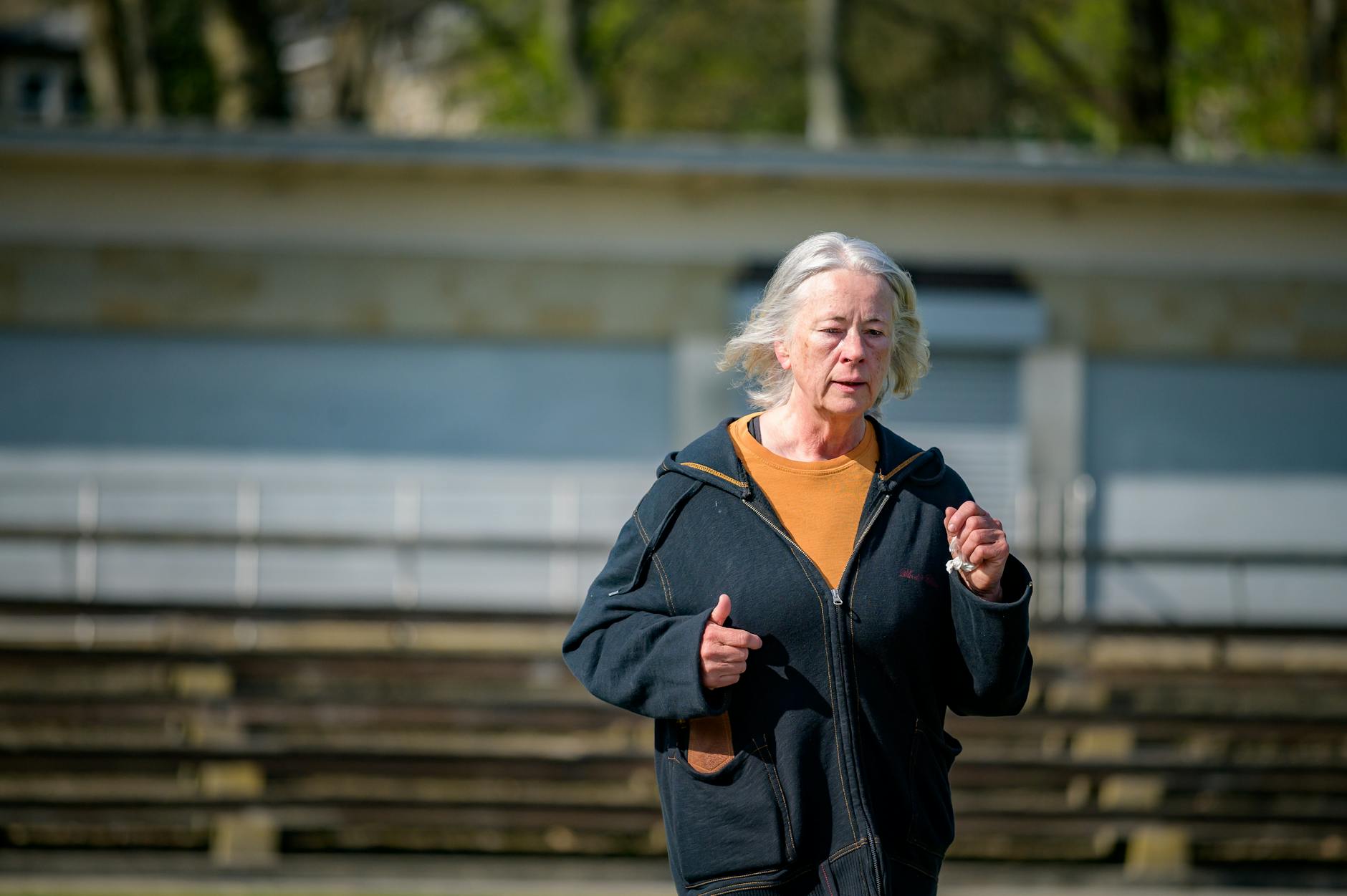
An older woman running outdoors in a black hoodie and orange shirt, focused on her exercise, with a blurred background of benches and greenery.
Photo by Centre for Ageing Better on Pexels.com

Certainly, the physical health benefits of running are important to me; however, one of the greatest advantages is the feelings of improved mental health and well-being. I often refer to monkeys living in my mind, and running allows me to rise above the swirling negative chatter that often clouds my mind. On days when it seems everything goes sideways, if I have completed my morning run, I can take solace in the fact that I completed at least one positive act, thereby helping me to keep symptoms of depression and anxiety at arm’s length. 

I also find running clears my head, improves thinking, and increases memory, which is a bonus as I age. In fact, running–and exercise in general–is like meditation in motion because it deeply connects me to my breath. Plus, it is a great source of stress reduction.

The Artistry of Movement: Running as a Creative Outlet ✍️
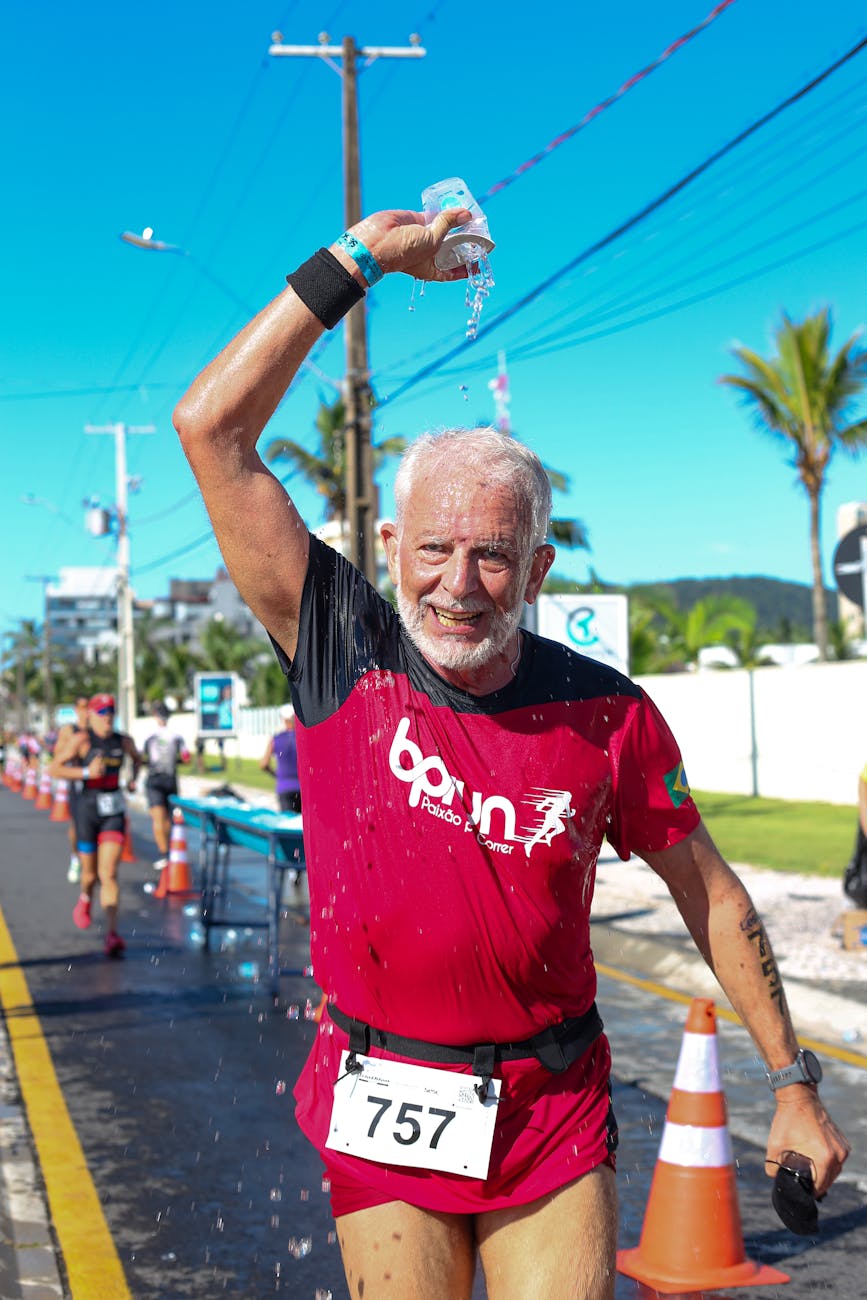
An older man with a full head of gray hair is pouring water from a cup over his head while running in a sunny outdoor setting. He wears a bright red athletic shirt and a race bib number 757. In the background, other runners can be seen along a palm tree-lined street.
Photo by Jou00e3o Godoy on Pexels.com

Running is also a form of innovative self-expression, for young and old alike. Like crafting one’s own piece of art, running showcases the beauty of a body in motion. It offers time for inspiration and reflection. Each run, like a canvas, offers the opportunity to tell a story, footstep-by-footstep. Personally, time spent running also allows me to process life as well as difficult, often buried, emotions, and it even sparks inspiration. My running, albeit slow, feels like an act of liberation, hope, and a tribute to the many obstacles I have overcome along the way. It is a symbol of inner strength, resilience, and freedom to be me–in a world that has often felt as if it boxed me in.

Spirituality, Solitude, and Social Connection 🙏

An older man running on a path surrounded by tall grass and trees on a sunny day.
Photo by Thomas Shockey on Pexels.com

For many runners, older and young, running offers an opportunity to hang out with other runners and socialize. However, some find that running solo, instead, creates a sacred space in which they can connect to their Higher Power, feeling that sense of peace and ease. Still others appreciate the opportunity to spend time in nature, soaking up fresh air and the beauty of Mother Earth.

A Healthy Routine for a Vibrant Life 🙌

Two female runners in matching orange and red jerseys sprint together, holding hands as they approach the finish line. They display expressions of determination and joy during a race.
Photo by RUN 4 FFWPU on Pexels.com

Running, for many, including myself, forms a meaningful structure to the day, a time set aside for one’s personal well-being and health.  This is important because there are numerous obligations and responsibilities that life often demands, even as we age. By setting aside regular time to run, sleep typically improves, which can be so elusive in older adults. Furthermore, those who run typically tend to eat better and don’t tend to abuse substances in order to better support their ability to run.

Staying Safe and Smart with Age 🤔

An older woman running outdoors, wearing a bright yellow tank top with a blue logo, smiling and gesturing with her hands. The background features greenery and a sunlit path.
Photo by RUN 4 FFWPU on Pexels.com

Of course, as we age, we do have to be safe about our exercise habits, which often begins with checking-in with a health-care provider. Additionally, I highly recommend finding good footwear that works for your own personal gait/foot-type; a local running store expert can help with this. Furthermore, as AARP points out, older runners should not go from “zero to 60.” Warm-ups and cool-downs are essential, and for those wanting to start running, a good walk-run program like Run Your Butt Off or the Run-walk-run training plans are two great ways to start. (I have personally used both and can attest to their gentle nature.) 

Other considerations as we age include running less on concrete and asphalt, if possible, and spending more time on softer surfaces, like the paths at local parks. Treadmills also offer a more cushioned surface, and they are a great option when weather is too hot, too cold, or otherwise uncomfortable. If you run at night or early morning, it is important to wear a headlamp and reflective vest for safety’s sake. Additionally, if you run alone, it is a good idea to let someone know where you are running and for how long. 

Every Run Is a Story: Movement as Becoming 🏃
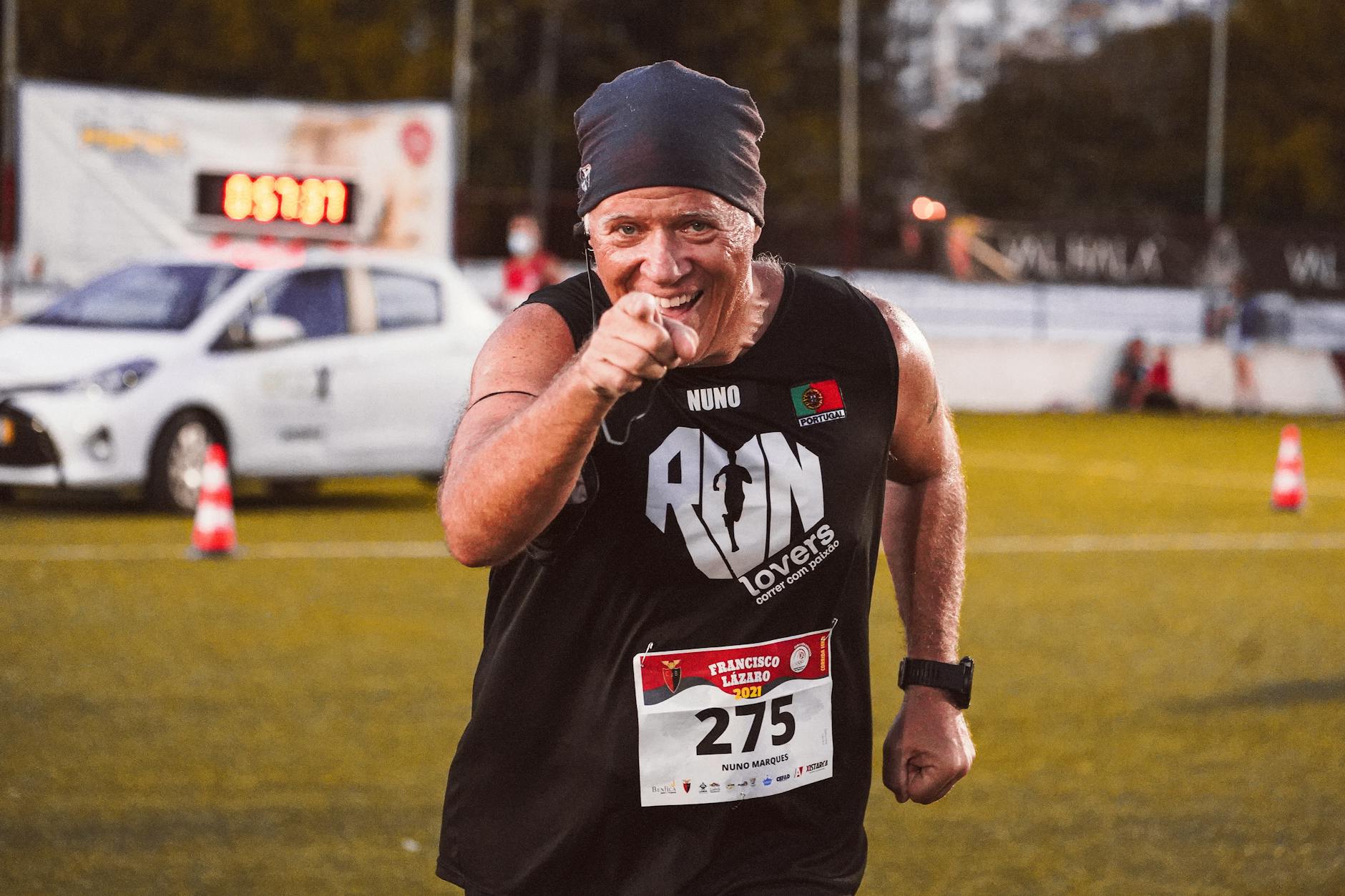
A runner with a confident expression points at the camera while sporting a black sleeveless shirt with 'RUN lovers' printed on it, a race bib, and a headband, during an event in a sporting field.
Photo by RUN 4 FFWPU on Pexels.com

Bottom line, each run or run/walk/run is an adventure. Sure, some runs are less adventurous than others, but those moments offer an opportunity to learn about ourselves if we remain open and curious. Running (and walking) is accessible and fairly low-cost, and it is an effective way for older (and even younger) adults to improve their mental, physical, emotional, and even spiritual well-being. 

Beyond these benefits, running, for me, continues to remain a quiet act of self-expression. With each step and stride I take, I am writing a story, reclaiming my space and time, and paying homage to The Creator, celebrating this gift that is life. In this way, running transcends exercise and becomes a personal journey of becoming, no matter my age. 

With the right approach and mindset, whether you run, run-walk-run, or mostly walk, moving our bodies regularly can create joy and empower older adults to age well—proving that vitality truly has no age limit!

An older man with white hair smiles while wearing a jacket and a medal, standing among a group of people in a blurred background.
Photo by Roman Biernacki on Pexels.com

An Ounce of Prevention Goes a Long Way to Preventing Dementia and Alzheimer’s Disease

Currently more than 55 million people live with dementia worldwide, and there are nearly 10 million new cases every year. . . . Alzheimer’s disease is the most common form of dementia and may contribute to 60-70% of cases. . . . Dementia is currently the seventh leading cause of death among all diseases and one of the major causes of disability and dependency among older people globally.”–World Health Organization, 2 September 2021

Photo by Nashua Volquez-Young on Pexels.com

It happens more often than I care to admit–the inability to come up with a particular word while engaged in conversation. In my mind, I can see the shape of the word lurking in the shadows of my brain.  Try as I might to shine a mental flashlight on the word, the word will continue to evade me in a cavernous pit of forgetfulness only to materialize a few hours, or even days, after the conversation has ended.

I have witnessed dementia grip one grandparent’s aging mind and Alzheimer’s disease affect another.  Then again, how many other people can say the same thing?  Therefore, why do I worry, when my brain stutters, sputters, and struggles with a word, misplacing an item, or wondering why I walked into a room?  Answer: because I do not want to be a burden to others.

Photo by Magda Ehlers on Pexels.com

That said, I dearly loved my Mamaw and my Papaw.  Even when they were in the throes of dementia and Alzhiemer’s respectively, I still adored them.  However, I was not responsible for their overall care and well-being.  That responsibility fell squarely upon the shoulders of my parents, their spouses, and their siblings. Instead, I was the grandchild who could visit, help-if asked–and leave as I pleased. I didn’t have to worry about the direct care and multitude of decisions that each diagnosis required–and those decisions, it seemed to me, grew in direct proportion with the disease’s progression.  

Mamaw had two children, and Papaw had three.  Even if one child was the legal guardian, they still had another sibling with whom they could confer regarding decisions, seeking help, or any of the other myriad of responsibilities that accompanies caring for a loved one with a form of dementia.  Whereas, I have one child.  One.  And in the words of Three Dog Night, “One is the loneliest number . . .”  I could cry thinking about putting that sort of responsibility upon her.  

My prayer is that dementia will not be my legacy to my daughter. Therefore, I have become somewhat obsessed with habits that could prevent dementia and Alzheimers. One quick recent search for, “preventing dementia and enhancing brain health,” and, according to Google, precisely, 1,500,000 results appeared in 0.56 seconds, many of which are considered “scholarly articles.”  Additionally, searching “habits that increase risk for dementia,” produced nearly as many results.  The point is that I am not alone in my desire to prevent and reduce risk for dementia.

Photo by Andrea Piacquadio on Pexels.com

Unfortunately, there is no known cure for dementia, and even the currently prescribed therapies and medicines have proven to have little efficacy. This is often due to the fact that developing any of the various types of dementia is believed to be a complex cocktail of factors including age, medical history, lifestyle factors, and genes. Consequently, numerous scholarly sources point to a number of preventative measures since most cases/types of dementia are not directly inherited. 

One of the most cited statistical links and effective measures to prevent dementia is regular participation in movement and exercise. Some sources break down the amount of time devoted to cardiovascular, strength, balance, and flexibility, with 150 minutes/week being gold standard. However, all agree that it is the consistent practice of exercise/movement that matters most.

Photo by Kindel Media on Pexels.com

Another point of agreement is the importance of consuming a healthy diet. In fact, many researchers point to the following diets: MIND, DASH, or Mediterranean as exemplary choices for prevention.  However, there are some research quibbles with regard to best diet practices.  One debate is over how much and/or what meat should, or should not, be eaten, although most seem to agree that fatty fish, such as salmon, is a solid preventative choice.  There is also some contention regarding the use, or disuse, of dairy, but the general consentment is that if you choose to consume dairy, pick low-fat products.  Most research agrees that the consumption of healthy fats–plant oils, seeds, nuts, and avocados– are an excellent choice.  However, the amount needed is not always a point of agreement.  Nonetheless, the research clearly points to an overall consumption of a high fiber diet that heavily emphasizes a wide variety of fresh vegetables, fruits, whole grains, and legumes; AND limits salt, sugar, saturated fats, and processed foods as effective and preventative practices.  

Alcohol consumption and sleep appear to have both positive and negative attributes when it comes to dementia prevention.  It appears that moderate alcohol consumption–no more than two drinks for men and one drink for women–specifically enjoyed with food, appears to be preventative.  However, drinking too much alcohol on a regular basis, seems to increase the likelihood of dementia.  Likewise, getting enough sleep, defined as 7-8 hours, on a regular basis is a preventative measure; conversely, getting too much sleep (10 or more hours), or not enough sleep (less than 6 hours), increases dementia risk. 

Photo by Max Vakhtbovych on Pexels.com

One of the more interesting bits of research centered around the practice of Kirtan Kriya (KK). It is a type of meditation, specifically 12-minutes long, that involves small hand movements, known as mudras. This ancient practice has been cited in several scientific journals as strongly linked to the prevention of dementia. In fact, several Alzheimer’s and dementia research groups offer/sponsor tutorial videos and articles on KK.

There are several other points of agreement among the scientific community for preventing and/or lowering the risk for dementia, including: 

  • Avoid, or quit, smoking
  • Stay mentally active, socially connected, and engaged in meaningful work/tasks
  • Care for mental health 
  • Manage blood pressure and/or diabetes
  • Schedule regular wellness checkups and preventative tests/screenings
  • Maintain a faith/spiritual/meditation practice(s).

While I did not discover anything ground-breaking in my recent research dive, it was clear to me that a few good habits of health go a long way.  Best of all, it’s never too late to increase a healthy habit or two.  Just as following the basic tenets of faith are important applications for spiritual well-being, implementation of basic health practices can go a long way in ensuring the vitality of life.  In the end, we may not be able to avoid dementia or other age-related illnesses, but we can make impactful choices in order to maintain a healthy, active, and balanced lifestyle for as long as possible.   

Photo by Andrea Piacquadio on Pexels.com

Shamrock Green Smoothie

“No matter when you start, a diet that is focused on plant foods will help you work toward the prevention of many illnesses and feeling better overall”–Julia Zumpano, RD, LD

Diet choices have long been debated.  From Adkins to Keto, 7-Day Rotation to Whole 30, Paleo to Low Carb, Mediterranean to Pritikin, and all variations in between, regardless of the varying diet trends, there’s no denying that fruits and vegetables are nutritionally sound food choices for promoting health. Experts may argue about which fruits and vegetables are the so-called better choices, but most will agree that eating unadulterated food from the ground is more nutritionally sound than eating chemically enhanced processed foods.

In fact, when going through the research, numerous medical clinics, cancer centers, and disease prevention sites recommend Americans increase their intake of fruits and vegetables.  It makes sense too.  All those different colors offer a wide array of vitamins, minerals, phytonutrients, and anti-inflammatory properties that cannot be found naturally in processed food.  

“Eating healthy food fills your body with energy and nutrients. Imagine your cells smiling back at you and saying: “Thank you!”.” – Karen Salmansohn

Think about it.  Fruits and vegetables don’t need a label that says, “Vitamin-D enriched” or “Fortified with 12 essential vitamins and minerals.”  They don’t need it because they naturally contain a wide array of vitamins and minerals–depending upon which plant you choose to consume.  This is why, “eating the rainbow,” is an often quoted expression.  If you eat a wide variety of colorful plants throughout your day and week, Mother Nature, thanks to the infinite wisdom of our Creator, provides all the nutrition your body needs for healthy functioning and vitality. 

Like many, since March of 2020, I have become increasingly more focused on what I eat.  Keeping my immune system running high, and my inflammation low, seems more important than ever in the era of living in a global pandemic.  While I’ve been a plant based eater for nearly ten years, I find myself more attentive to daily consuming dark leafy greens and/or cruciferous vegetables as part of my desire to remain healthy and avoid COVID.  While I recognize that eating well isn’t the only protective act I need to do when dealing with a highly contagious virus, these vegetables have long been established as possessing cancer and disease preventive properties, reducing oxidative stress, and lowering the risk of cardiovascular disease.  Additionally, they increase bone health, protect eye health, and boost the immune system.  Plus, their varying shades of green are chock full of fiber and a wide array of vitamins and minerals.  

Photo by Toni Cuenca on Pexels.com

“The doctor of the future will no longer treat the human frame with drugs, but rather will cure and prevent disease with nutrition.”–Thomas Ediso

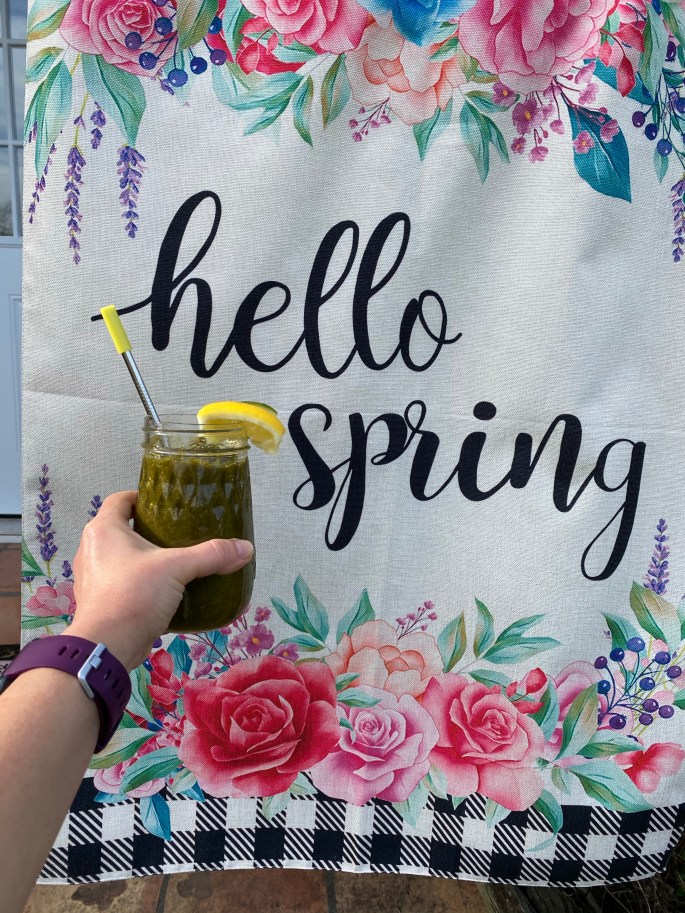
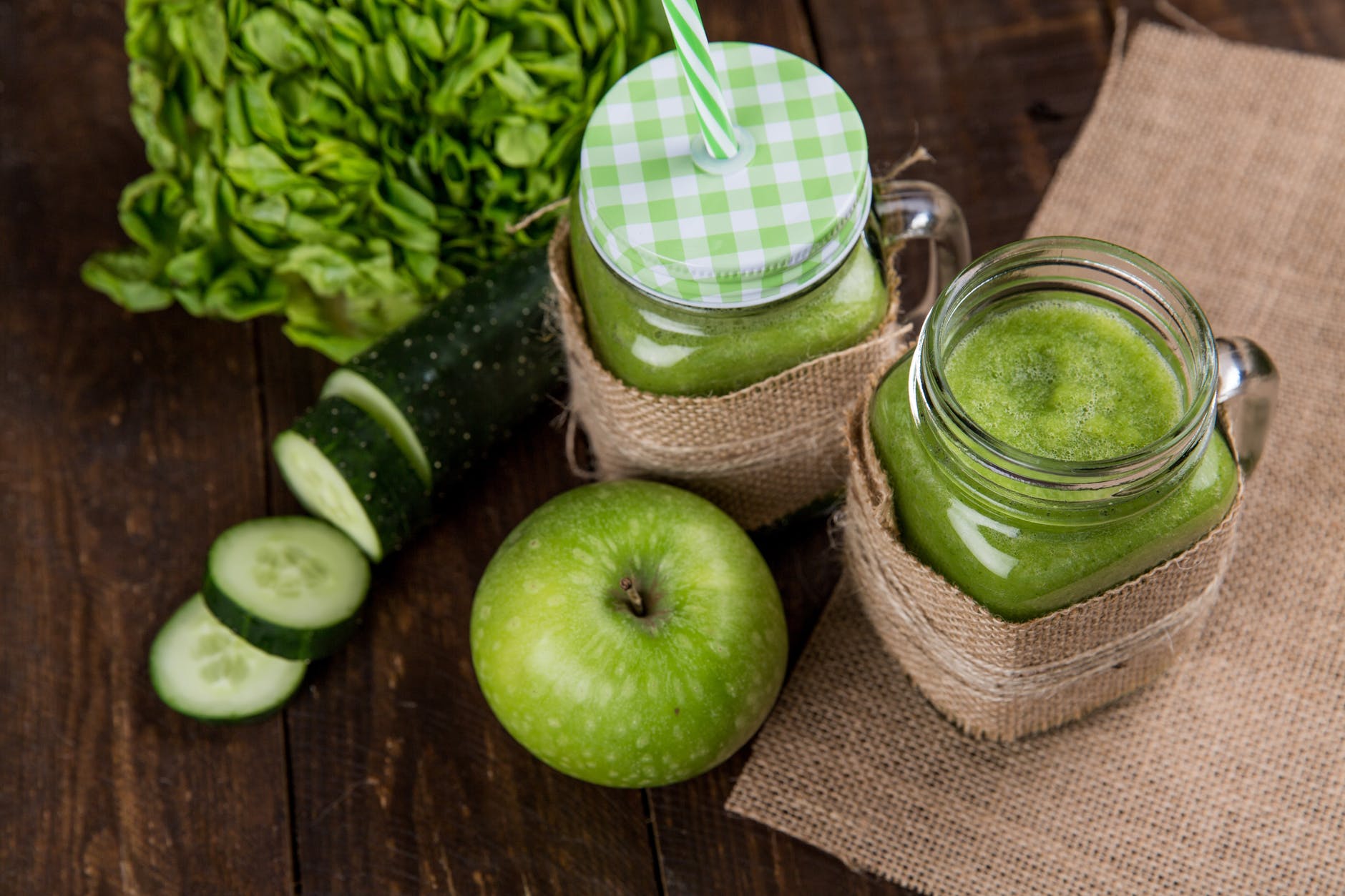
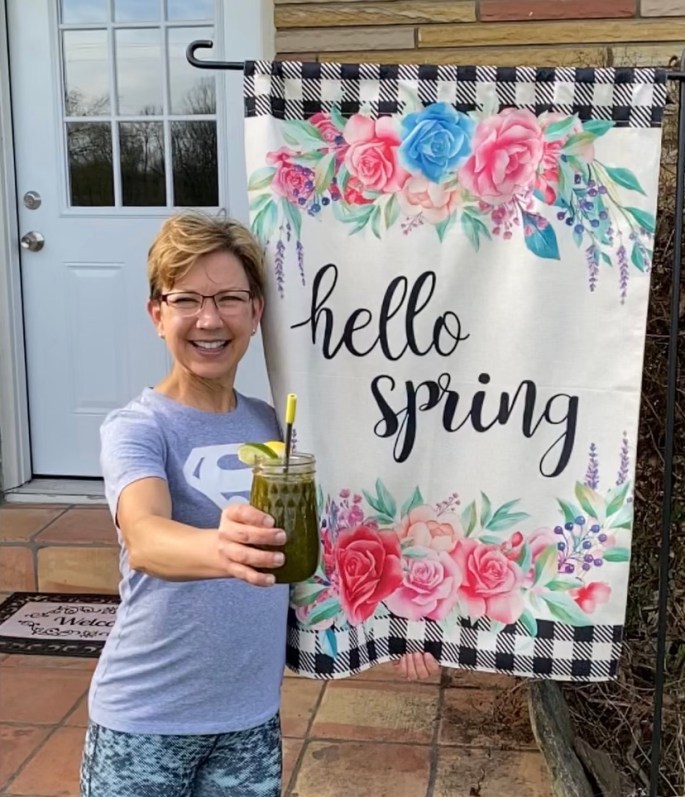
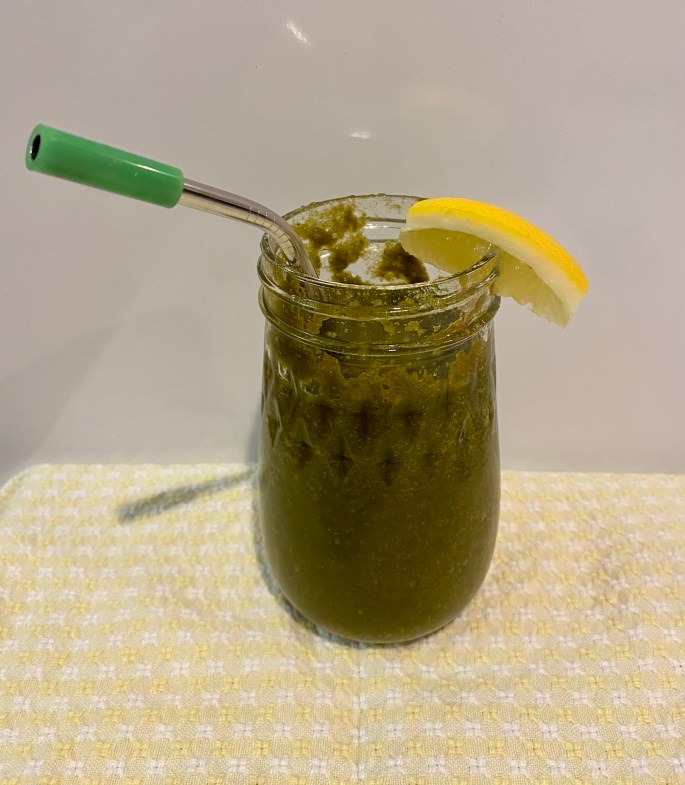
Below is a green smoothie recipe I drank throughout most of March that features leafy greens and cruciferous.  After such an extraordinary winter with snows, ice, and then flooding, drinking a bright green smoothie felt like a personal manifestation of spring. Furthermore, since March was also the month in which I was wrapping up 12-weeks of training for the Virginia Beach Shamrock Marathon, this smoothie felt like extra-nutritional insurance for remaining healthy and ready to run. 

I like to think of smoothies as a blended breakfast salad.  When made fresh at home, I am the controller of ingredients, calories, fiber, and nutrition.  I keep my smoothies whole food and plant based food based in order to start my day off on the right foot–especially since I would otherwise, at least during the work week, skip breakfast.  While I often add healthy fats in the form of nuts or seeds to smoothies, I personally do not with this one, but you could.  Instead, I tend to add a teaspoon of greens powder for an extra boost of concentrated green goodness, and sometimes matcha (ground green tea) if I feel I need a boost of energy and focus.   This smoothie fuels my morning and keeps me full until lunch.  The flavor is bright and tangy, and it’s super refreshing to drink.  

Here few other tidbits and factoids I have learned while refining my smoothies techniques:

*  Put greens and liquid in the blender first and blend well, this is especially important, if, like me, you don’t have a top-of-the-line blender.

* Spinach is always the sweetest greens, which is why I often blend it with other greens such as kale and swiss chard.

* Riced cauliflower, fresh or frozen, works well as a “green” since it’s cruciferous and makes smoothies extra smooth and creamy.

* Lightly peel/cut away any citrus fruit, leaving part of the pith (the white part).  It is high in fiber, vitamin C, flavonoids–which boost the immune system–and it is anti-inflammatory and antimicrobial.

* Ginger and turmeric are both known for their immune boosting properties, reducing inflammation, and decreasing chronic pain.  Fresh ginger and tumeric–both are roots–offer the most benefits, but ground versions are still beneficial.  Therefore, I tend to add both spices to not only nearly all of my smoothies, but also incorporate them throughout the day.

I hope you’ll give this vibrant green smoothie a try. It is an easy way to increase your fruit and vegetable intake.  Plus, you’ll start your day fueled with the power of green!

From my home to your, I wish you health, vibrancy, and vitality.  Be well, and, if you do give this, or any of my other smoothie recipes a try,  I’d love to hear your thoughts.

Shamrock Marathon Green Smoothie

Ingredients:

1 cup water

1 cup of your favorite greens, fresh or frozen, feel free to combine 2 different ones (think spinach, kale, 

½ to 1 apple, quartered (I use granny smith apple.)

1 lemon, peeled, quartered & seeds removed 

1 mini cucumber or ½ large cucumber, quartered

1 stalk celery, quartered

1 ¼ teaspoon ground ginger or 1” fresh piece

¼ teaspoon turmeric or ¼” fresh piece of turmeric 

Dash of salt

Optional add-ins: 1 teaspoon greens powder and/or matcha powder, 1 tablespoon hemp, chia, or flaxseeds, and/or 1 scoop favorite protein powder 

Makes 1 generous serving

Becoming

“To be what we are, and to become what we are capable of becoming, is the only end of life.”–Robert Louis Stevenson

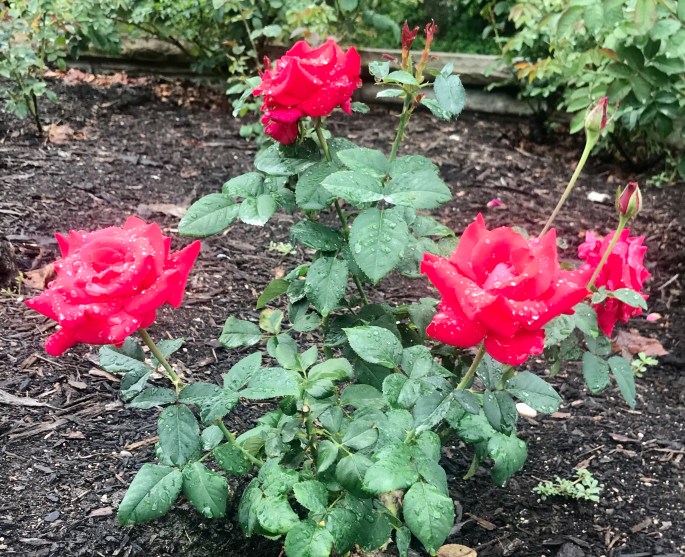
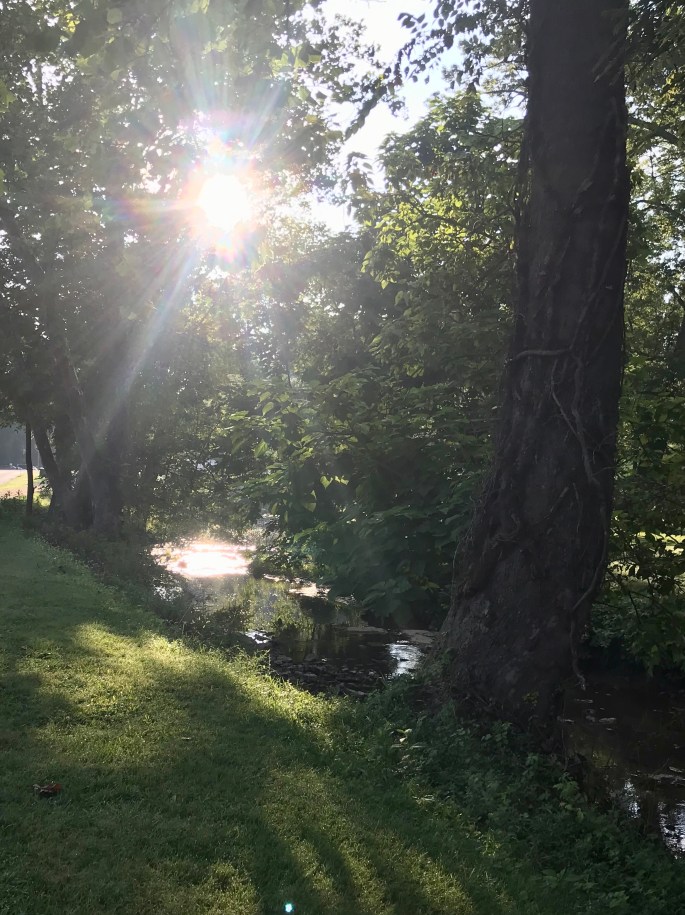
Standing on the crest of a small hill, my senses were heightened.  I could feel the weight and seemingly taste the moisture in the air. Scents of earth, rain, and floral encompassed me.  Dewy variations of pink, red, and coral stood out in contrast to the overcast dawn. Meanwhile, the unmistakable melody of creekwater rushing over rock, bed, and banks provided additional ambiance to the unfolding morning. There could be no mistaking it, this was a brief interlude before the showers once more resumed.

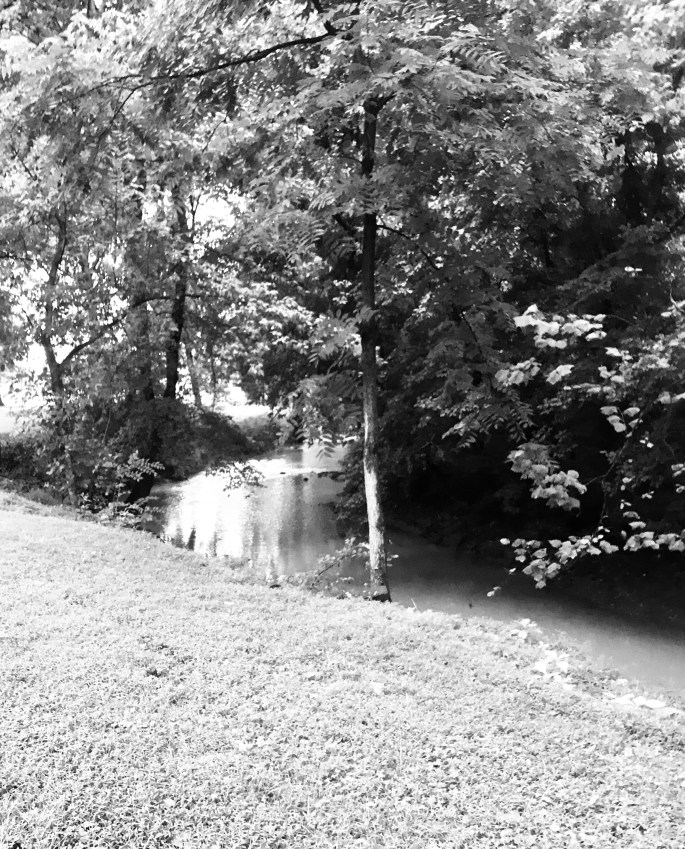
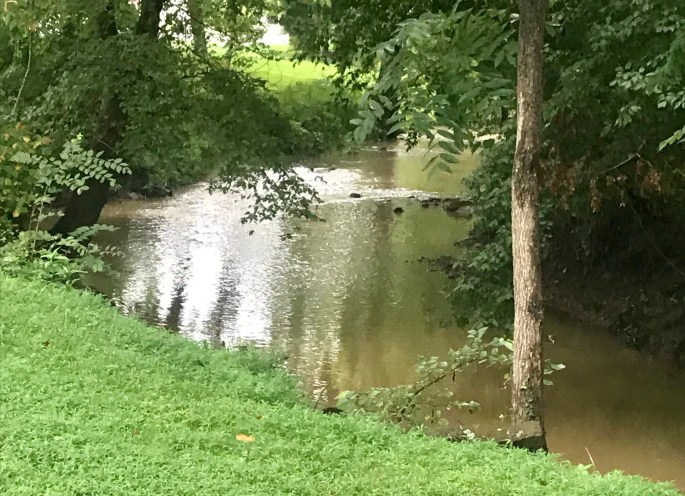
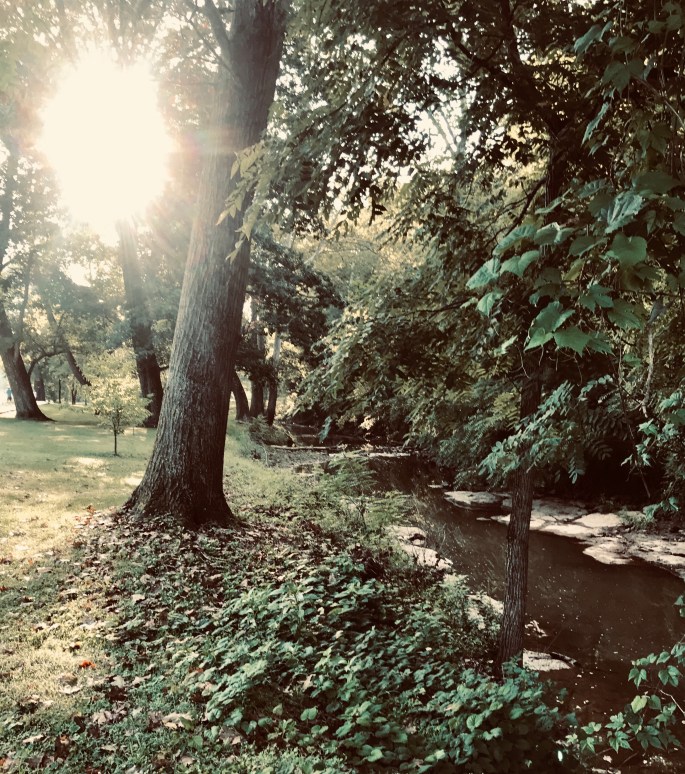
Down the hill I trotted, past the pristine rows of roses and on towards my companion for the next hour or so, Four Pole Creek, or “Four,” as I have come to think of it.  

“The more I run, the more I want to run, and the more I live a life conditioned and influenced and fashioned by running.  And the more I run, the more I am certain I am heading for my real goal:  to become the person I am.”–George Sheehan

Hello Friend.  My heavens, but you are swollen today, full as a tick bug, as my Papaw used to say, from the feast of overnight rain.  It’s good to see you looking lively today.  Your rhythmic song will be a welcome distraction from the noise in my mind.  

You see, a stunning new realization has recently taken root in my mind.  It whispers conspiratorially to me that I have reached a point in my life in which the years ahead are more likely to be less than the years I have lived.  What am I to do with this information, I ask you?  It is such a staggering revelation.

What’s more, my aqueous friend, the image reflected in my bathroom mirror no longer matches the image in my head.  There are these white hairs at my left temple and even more sprinkled throughout the parting of my hair.  Likewise, there are lines, especially when I smile, that run from the top of my cheekbone down towards my jaw line!   Tiny versions of those lines romp across the top of my lip, corners of my eyes, and all along my forehead.  How am I to be with this?

It seems I am not the only one changing.  I keep running across pictures from previous years in which family and friends look different.  They look incredibly young in those pictures–like unfledged, inexperienced youth.  I don’t recall that image.  In my mind, they are ever the responsible, mature, and wise people who never age, but remain frozen in time–never too young or old. 

Oh, and Four, there are all of these nagging aches and pains.  They niggle me awake during the night or flare up in the middle of work.  Sometimes, I down right hurt all over, and I can’t determine the cause.  However, I can tough out these minor hurts.  I can.  It’s the suffering of my loved ones that trouble me more.

I see my loved ones injured, battle-scarred, aging, and/or struggling.  You see, I want to help, to make them better, to help them feel whole again.  Even more than their ailing physical beings, I want to offer peace to the emotional wars waging within their minds and hearts.  I try.  I do try to help in small ways, but I am not a doctor–I don’t even play one on TV.  Thus, at times, I feel limited in what I can do to ease their burdens, pains, and sorrows.  

Still, it encourages me to see you full of vitality.  For a couple of weeks, you have been waning.  Your shallow flow lacked its usual energy and zip.  It is good to see your waters revived once more.

By the way, did you take care of the terrapin that I sent your way recently?  It was headed away from the safety of boundaries of your banks towards the traffic rolling alongside you.  I picked it up, even though it seemed offended by my action, and placed it carefully within your borders.  Hopefully, you were able to redirect its journey to safer ground.

As I was taking this picture, a couple days later, I was able to catch this image of a walnut falling into the water from the tree above.

Back to my original point, Four.  Have you any thoughts, ideas, or insight you can offer?  It seems as if your soundscape is whispering commentary.  Perhaps, if I quiet my head, I will hear it. 

“Life is a lively process of becoming.”–Douglas MacArthur

Four, I can’t help but notice that you have more riffles, rapids, and runs today. It’s nature’s way of breathing oxygen into your waters.  In return, your waters can give support to the life in, below, and around you.  

Earlier in the week, your waters were different.  They slowly glided from one pool to another. Of course, it was quite hot outside.  I couldn’t help but laugh at the number of neighborhood dogs splashing around or sitting in the cool shallows of those pools.  You remain ever the friend to the creatures in need, no matter levels and speed of your waters. 

 I have to ask though, do you ever hurt? Do pollutants irritate you?  What about those pesky people trying to reconfigure earth around you in order to build in the name of progress? Does that cause you pain as the drainage of rainwater and groundwater shift, ultimately influencing the levels and speed of your flow?  Do you mourn for your former self or for the forested neighbors that must have once lined your banks?  Regardless of those things for which you cannot control, it seems to me that you keep going, keep giving, keep supporting life to those in need of water.

Your waters are gathered from different sources. There are times, like today, when your waters are swift, becoming deep and darkened with the mud of debris, rocks, and earth.  Other times, like this past week, your waters are nearly still as you become shallow and more clear.  No matter what you are becoming, though, Dear Four, you remain ever Four Pole Creek, part of the Ohio River Watershed that feeds into the grand Mississippi River, and empties into the Gulf of Mexico flowing into the Atlantic Ocean.  Along the way, some of your water is evaporated into the air, cooled, condensed, and eventually returned to the earth–molecule by sweet molecule–a single droplet that is all part of the larger body of creation.

Four, in spite of your continuous changes, from the levels of your water, to the shapes you take; from the color of your waters, to the speed at which it flows; and from the lives that your waters support, to the beauty you offer the landscape, you are constantly evolving, ever changing, and continuously becoming.  Yet, you remain a creek, one creek in the great cycle of water.

“By being yourself, you put something wonderful into this world that was not there before.”–Edwin Elliot

Like you, Four, I am changing, and so is the life around me.  Some of my loved ones have flowed on to their heavenly shores, while many others remain bound to the earthly waters of life.  Like you, no matter my shape, my hurts, the gray at my temples, the lines of my face, or the pace at which I move . . . I am still me.  I will remain me–becoming, evolving, and adapting to the changes within and all around.

One day, I will dance among the ether of your molecules.  Together, joined by those who slipped ahead, we will become part of the Great cycle–the ever more and ever was. 

Thank you, Four.  Your song returned me to the hill of roses.  Back to where I started.  This running cycle is complete.  You were a fine companion.