Your Health Journey: It’s more than just taking a pill

“Take care of your body.  It’s the only place you have to live.”–Jim Rohn

Photo by nappy on Pexels.com

Listen to your Gut-Instincts🙇‍♀️

It’s been a little over a decade since I received the medical diagnosis that dramatically changed my life. I spent years battling upset stomach, gas, bloating, heartburn, and lower belly pain that only got worse with age. Pills had always been the answers.  In fact, at one point in my life, I had multiple timers set on my phone to remind me to take prescribed medications before and after eating.  

During a vacation near Boone, North Carolina, with my husband and daughter in which we had to plan our days around the timing of my medication, I finally decided I had had enough.  Call it “gut-instinct”, but I knew that whatever was going on inside my body, the prescriptions were not the answer.
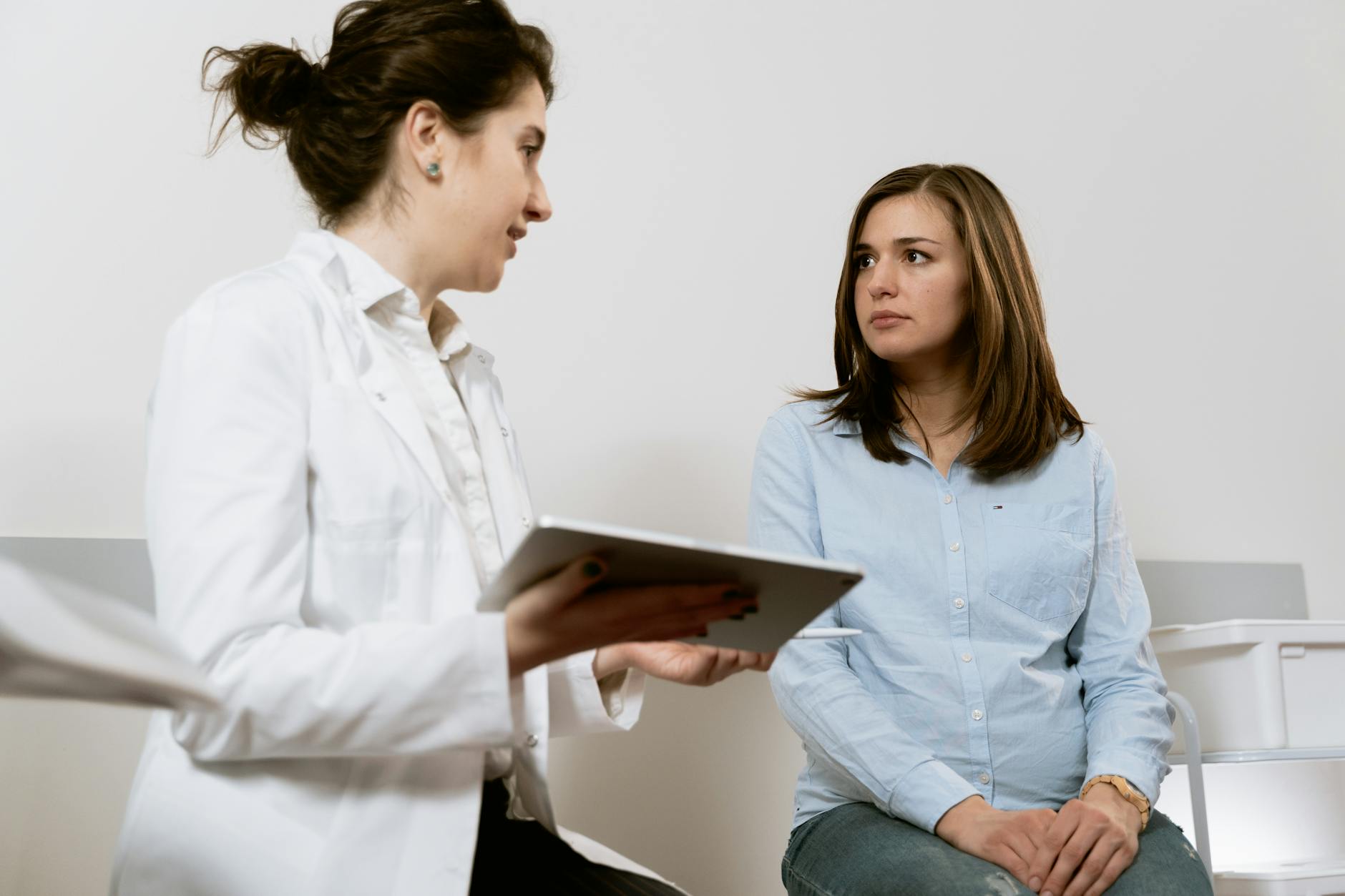
Photo by MART PRODUCTION on Pexels.com

Finding a Doctor to listen 👂

Fortunately, I had a doctor at the time who took me seriously and listened. Together, we discussed a plan of action. Still, it took several months of waiting for tests and lab work to be completed, and more time waiting for results–the “hurry-up-and-wait” shuffle–as I fondly call it.  

I am not sure what I expected the results to be. However, when the letter arrived at my house stating I needed to schedule a follow-up appointment with my doctor (which was already on the books) due to indications of celiac disease and hiatal hernia, I was initially upset due to the dramatic lifestyle changes to manage both.
Photo by Alexas Fotos on Pexels.com

Change is Not Easy 😬

To state the obvious, change is not easy, so I faced a fair amount of challenges as I adjusted my diet.  Ultimately, though, as my symptoms subsided, and, one-by-one, the medications fell by the wayside, my motivation to continue increased.  I also came to see that compared to other potential prognosis, changing my diet was a minor task compared to invasive treatments, therapies, and surgeries.  

I’ve learned much, and continue to learn, along my health journey. Therefore, I share my experience as a point of encouragement when dealing with medical issues. 

Photo by Christina Morillo on Pexels.com

Advocate for Yourself 🗣️

First, I encourage you to trust your instincts, and advocate for yourself, especially if you are a person of color, a woman, a person with a higher BMI, or a LGBTQ+ person.  Unfortunately, as with any field, there are those medical professionals with internalized biases.  While I am confident not all doctors are bad actors, my own personal experience–and that of several others I know–have certainly informed me that if you belong to one of those categories, your complaints may not be given serious and thoughtful consideration. Therefore, you MUST advocate for yourself, even if it means changing doctors or traveling out of the area in which you live.

Photo by Pixabay on Pexels.com

Not every Health Issue requires a Pill

Secondly, sometimes medication is absolutely necessary; however, prescriptions are not end-all-be-all for every situation.  While I did have a doctor who truly listened to me, it still took me advocating for myself and not settling for what he prescribed based upon the medical system in which he worked. I am fortunate that when I questioned the medicine, that this doctor did not take it personally or as an assault on his professional judgment.  Nor did he try to use shame, or blame-the-patient tactics, as I had previously experienced.  He heard me out, asked numerous questions, and based upon those answers, set up a series of diagnostic tests. 
Photo by Brett Sayles on Pexels.com

Be Gentle with yourself as you navigate lifestyle changes 😊

Thirdly, be gentle with yourself if you have to make lifestyle changes. Once I received my results, overhauling my diet was scary–do you know how many things have gluten in them and/or cause reflux? I felt a huge amount of internal resistance to those changes in the beginning because it seemed like such an overwhelming task. 

Lifestyle changes are not easy, and it takes time to make the adjustments.  There are going to be setbacks, slipups, and mistakes along the way.  I know; I experienced them.  Completely changing the way I ate was a steep learning curve, and it was an eye-opening experience. Nonetheless, at the end of the day, I wanted to feel better and not live my life on a series of timers and pills.

Photo by Jack Sparrow on Pexels.com

Find your support 👯‍♀️

Enlist support for your changes. Join Facebook communities or other support groups to help you transition and navigate through the changes. Thankfully, I had support in the form of my family and friends.  Of course, they did not have to necessarily change the way they ate, but they absolutely made, and still continue to make, accommodations for my dietary needs.  This is especially true for when we dine out.  I have a limited number of restaurants in which I can safely eat.  Therefore, if I can’t eat at a certain location, friends and family will nearly always choose another option, so I can also enjoy the meal with them.

Photo by Krivec Ales on Pexels.com

health is a constant series of adjustments along the way 🛣️

Finally, know that your health journey is a continuous process.  Because I spent over four decades without a proper diagnosis, I am still encountering health difficulties.  One of the biggest obstacles I now face is a result of undiagnosed celiac disease.  Celiac causes the villi that make up the lining of the small intestines where nutrients are absorbed to become damaged. Over time, the villi atrophy and flatten due to inflammation from eating products that contain gluten.  

Despite overall healthy eating and consistent exercise, until I cleared the gluten in order to reduce the inflammation in my body, I was not able to absorb enough nutrients, specifically calcium, Vitamin D, and Vitamin K.  Additionally, due to  acid-reflux, I took proton-pump inhibitors for several years, which are also known to deplete magnesium, calcium, and other important minerals.  

Thus, I now have osteopenia.  As a result I have already had one surgery and may later need another one. However, I am doing all I can to keep that from happening, including completing the prescribed exercises, lifestyle changes, and appropriate supplementation of key nutrients.  Additionally, of course, I continue to maintain lifestyle changes with regards to a gluten-free diet, low-acid diet, and I am now more motivated to continue consistent weight-bearing exercise to keep my bones as healthy and strong as I can. 

Our health is truly a source of personal wealth.  Therefore, learning to advocate our own health needs is critical.  To be sure, doctors are highly educated, but that doesn’t mean they are fully educated when it comes to YOUR BODY and YOUR unique HEALTH needs.  
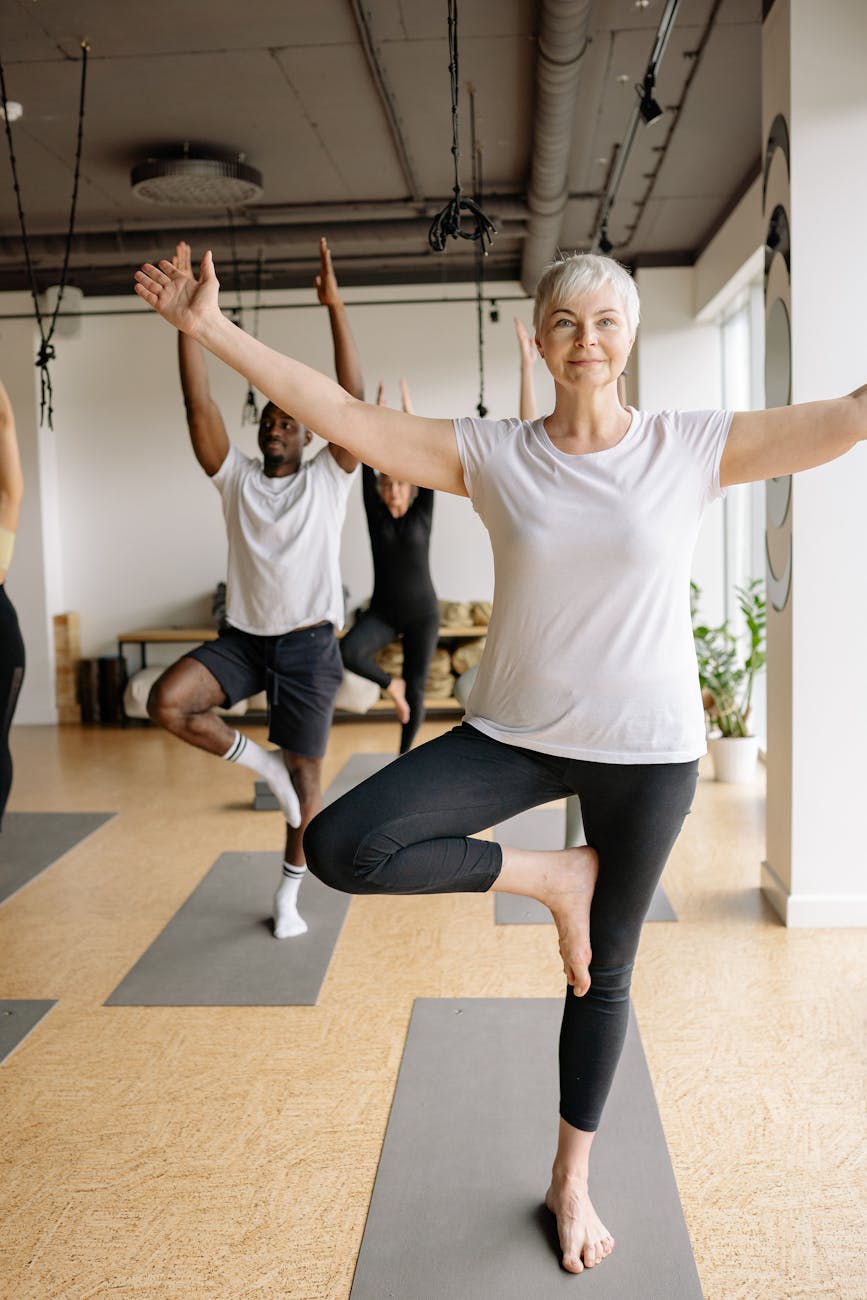
Photo by Yan Krukau on Pexels.com

IT’s your body. Treat it Well.

Speak up for yourself.  Trust your instincts.  If you need medication, take it, but don’t overlook lifestyle habits as well.  Educate yourself on lifestyle habits that can positively (and negatively) impact your health and make adjustments as needed.  Don’t be afraid to ask for support, and forgive yourself if you slip-up along your health journey.  

At the end of the day.  It is your body.  It is the only one you have.  Treat it like the sacred, precious gift that it is.

Moving into health for every body: Tips for fitting additional movement into your routine

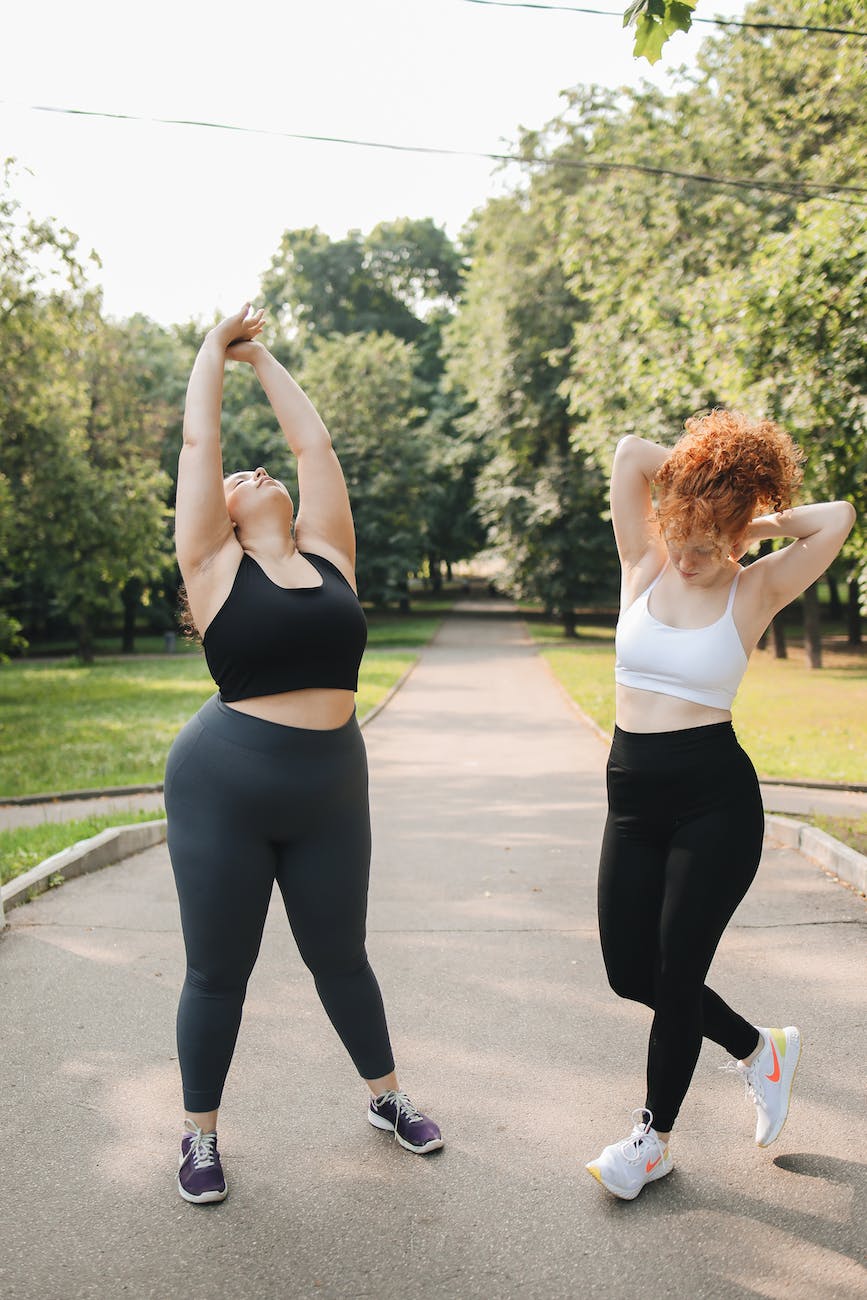
“Changing ‘exercise’ to ‘movement’ was a game changer for me . . ..” –@brittanilancaster (Tik Tok)

Last month, I wrote about the importance of rethinking exercise and the benefits of incorporating movement into your daily activity.  Nevertheless, it isn’t always easy to plan, begin, and stick with a program.  You may have the best of intentions, only to be derailed by life.  Don’t feel guilty or ashamed by this–many of us, including myself, have been there on more than one occasion. Consequently, I am not writing to preach or make you feel bad. Guilt is not, in my opinion, a sustainable motivator; however, as I have previously stated, mood does follow action.  Therefore, this month will focus on actionable steps to starting, or returning, to a routine plan of movement.  

Photo by Bich Tran on Pexels.com

 Honestly, the best form of movement is the one YOU will enjoy doing, but in case you’re not sure, here are a few considerations. 

  • Solo or buddy/group system. Personally, I think it’s important to know if you’re a solo-type of exerciser or one who would stick to a program better with a buddy or a group.  Some people prefer, and are more likely to follow through, with an exercise buddy or group.  While others tend to like more solo endeavors.  Knowing your preference may increase your chances of a more positive movement experience.
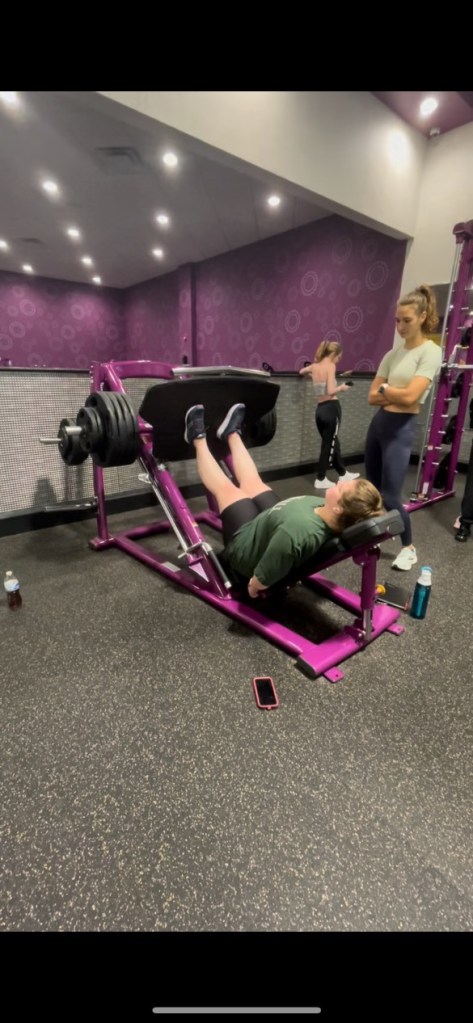
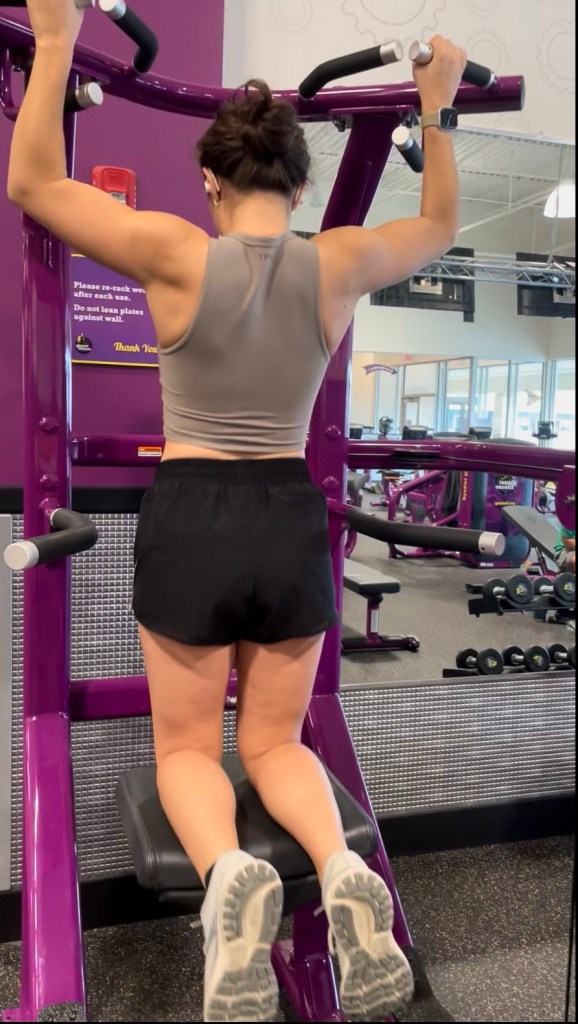
  • Choose an activity that you like.  It goes without saying, but I am going to state it again, if you dread exercise, you are probably not going to stick with it.  Ideally, find a form of exercise that makes you feel happy, empowered, and/or confident.  Do you love talking and/or sharing the latest juicy tidbits with a friend?  Then, choose an activity that allows you to do that while moving, such as walking.  Do you crave alone or quiet time?  There are many types of exercise that can lend you that much needed head-space for “me-time,” such as walking, biking, or strength training to name a few.  Are you motivated by instructors or group energy? Try one of the myriad of group fitness classes offered by gyms, fitness centers, or studios. And by all means, if you try one form of exercise, and you don’t like it, don’t throw in the proverbial sweat towel, try something else! 
  • Be realistic and start small.  In an ideal world, we would all follow the Department of Health and Human Services guidelines and exercise moderately 150 minutes per week–typically divided into five days for 30 minutes per day.  However, your schedule may only allow for three or four days and/or 15-20 minutes per day.  That’s okay.  Commit to a realistic routine and time.  Better to work within your schedule and be consistent with lesser amounts, than to do nothing at all.
  • Make it part of your weekly routine. Brainstorm ways to reduce or eliminate barriers.  Schedule exercise times into your smart calendar and set reminders, so nothing else can be scheduled during this time period. Schedule workouts with a friend in advance to build accountability, or use smart watches and/or fitness apps that allow you to link with friends, during workouts. Set out clothes, water bottles, equipment, snacks, and so forth, ahead of time. (I actually lay out all of my workout clothes for the week, set them in one stack by the bathroom, so I can grab and go quickly each morning.) 
  • Remember to reward yourself.   “If I do this, then I can do this.” Think about what really motivates you, and then set mini-goals towards that reward. It could be as simple as giving yourself permission to watch your favorite guilty-pleasure TV series for thirty minutes after completing a workout, or heading to your favorite local coffee or smoothie shop with a friend after completing a week’s worth of goal workouts. With consistency, health rewards will also naturally begin to occur, such as, sleeping better, greater sense of self-esteem, reduction of stress, lowered blood pressure, etc.
Photo by Polina Tankilevitch on Pexels.com

“Day 29 of exercising for mental health. Finally feeling like myself again.  I can’t believe I’ve gone my whole life without this.  Love watching my heart and lungs get stronger so quickly.  Getting my appetite for life back.”–@claraandherself (Tik Tok)

Barring any health issues, here are a few ideas for working around common obstacles that often occur when starting and/or maintaining an exercise program.

  • Have flexible expectations. Sure, we’d all like to look and move like a Marvel or DC superhero, but that’s not realistic, especially when first starting a new exercise routine or new form of exercise.  As the saying goes, “Rome wasn’t built in a day,” and any exercise program takes time.  However, little-by-little, improvements do occur, including moving with greater ease, less fatigue, feeling overall better/stronger, or even sleeping better.  It won’t happen overnight, but with a fair amount of consistency, improvements will occur.
  • Self-kindness and self-compassion always. Nobody is perfect. Kick ideas of perfection out of your head. Setbacks, illness, injuries, and other unplanned interruptions are going to happen.  If you miss a day here or there or if you have a time span in which your workout plan went out the window, don’t let it derail your overall goal of lifelong wellness. Offer yourself the same compassion and understanding that you would offer a friend.  Then, as soon as you can, get back to it–even if it means easing back into it or changing/adjusting your plan
  • Avoid the all or nothing attitude. You do not need to spend hours each day engaged in exercise to reap the benefits.  Even modest amounts of time will benefit your physical and mental well-being, and that could even include 5-10 minute movement breaks interspersed throughout your busy day!
  • Slide day mentality. Don’t get me wrong.  I am not giving you permission to let exercise slide.  Instead, while you may have certain days/time you prefer exercise, be willing to slide a workout to another time or day of the week in order to accommodate week to week schedule fluctuations.  Likewise, if you’re short on time, reduce your total workout time.  A short workout is still better than no workout at all!

I encourage you to banish those limiting beliefs about movement and exercise.  Ignore the toxic, guilt-inducing, body-shaming misinformation about exercise circulating on social media.  Exercise movement is all-inclusive and should be a positive experience for EVERY BODY.   

Photo by Mikhail Nilov on Pexels.com

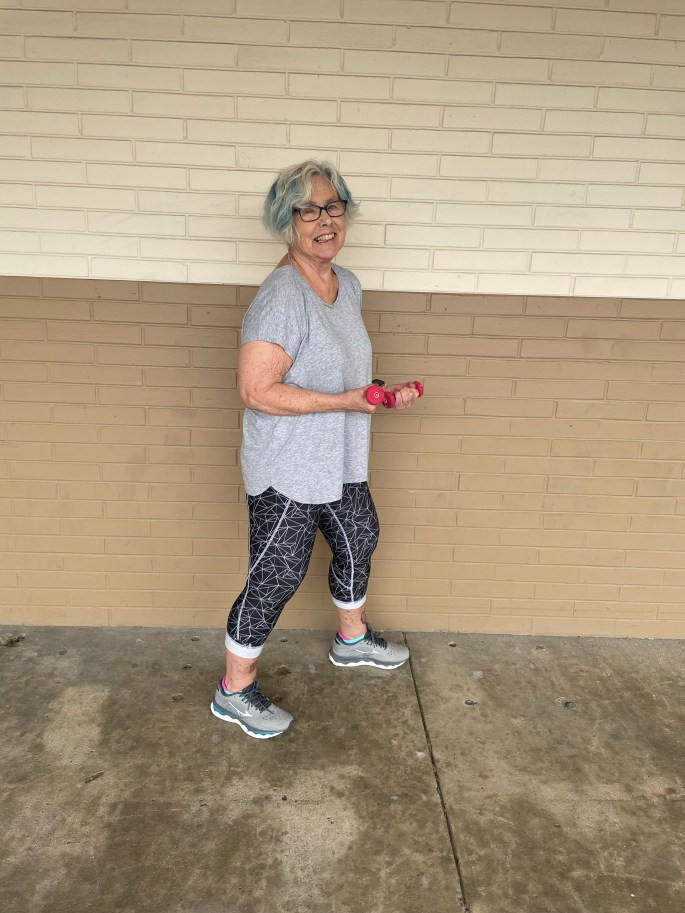
Of course, I am not a medical professional, as such, it’s always best to talk to your family health provider before beginning a new movement program.  That said, as a so-called “non-athlete,” exercise has made a huge impact on my own physical and well-being, and I’ve watched it do the same for so many other dear ones in my life.  It is my hope that if you are not currently incorporating much movement into your life, you will consider starting today.  If you  already embrace exercise, keep it up, and while you’re at it, grab a friend to move with you!

Wishing you the best health, Dear Reader!

Banish any limiting beliefs you have about exercise.  Ignore the toxic perfect perfect body images of exercise as well as misinformation.  Exercise is all-inclusive and should be a positive experience for EVERY BODY!
Photo by PNW Production on Pexels.com

Schedule your 5th decade “Festivities” and then celebrate your health

“If one has a routine colonoscopy at the age of 50 and then colonoscopies thereafter as the physician recommends, you could largely prevent colon cancer, you could detect it in its earliest stages and cure it.”–Laurie Glimcher

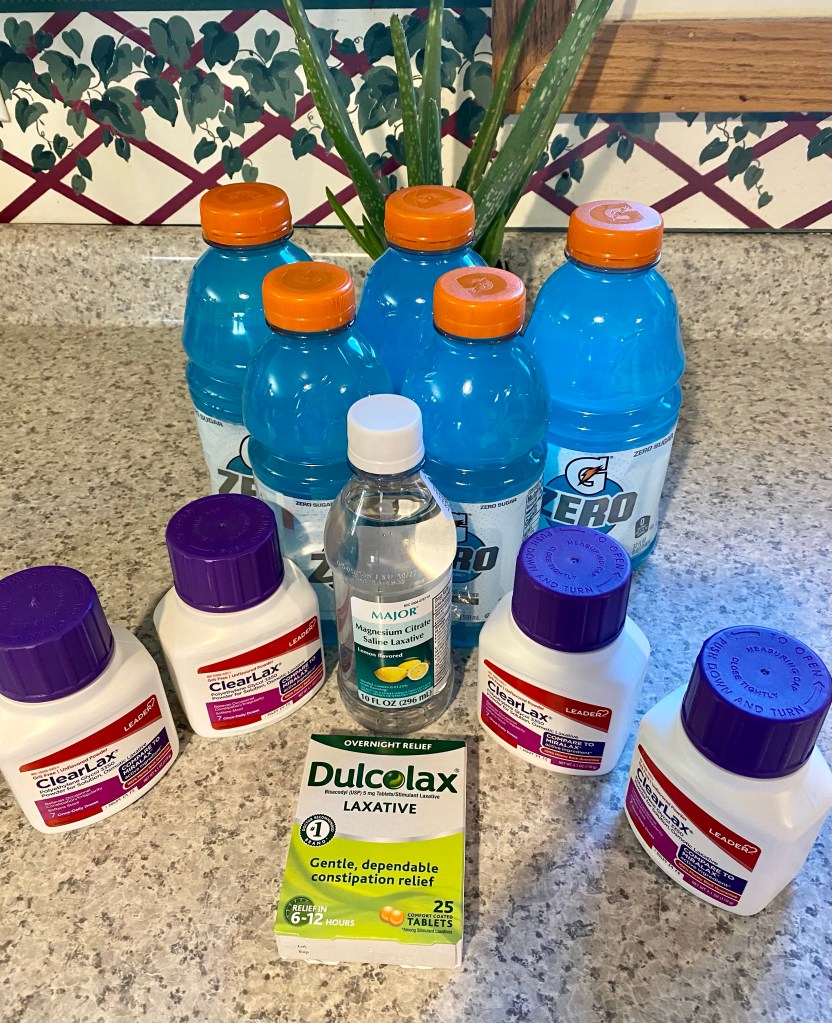
“This looks like a party in a bag!” I said to John, my husband, as I walked through the kitchen upon my return from both the pharmacy and grocery store.

“Why’s that?” he dutifully asked.

“Just take a look at all of these fine celebratory accoutrements.” 

Inside the white pharmacy bag was Dulcolax, Miralax, and Magnesium Citrate  Butt, the real fun was in the 128 ounces worth of Gatorade with which I was blessed to mix the Miralax powder.  Talk about a real party-pooper!  This was about to go down as one explosive event for sure!  

Two days worth of low-residue/low-fiber foods as specifically described in doctor’s

handout? Check.

Plenty of clear liquids stocked up for D, I mean, P-day?  Check.

Comfy clothes with elastic waist waistband?  An extra-heavy wrap or layer of clothing in which to stay warm during the fast?  Plenty of books, magazines, and/or other reading material available?  Scented candle in bathroom? Hard candies and gum to quell nausea? Check, check, check, check, and check!

On your mark, get set, go!

Let’s get the party started!

The following four days of my Christmas time-off from work were focused on the before, during, and after of a colonoscopy.  Why?  There are numerous reasons, but the number one driving factor is, while I know there is an end to all life, I’d rather not end mine early due to a genetic predisposition to colon cancer.  At the very least, I will take all the precautions and preventive steps that are available to me.

“. . . colon cancer is the second leading cause of cancer deaths in the United States.  Every four minutes someone is diagnosed, and every nine minutes someone dies.”–Kevin Richardson

You see, Dear Reader, I watched my beloved maternal grandmother and uncle both die from this horrific form of cancer.  Don’t get me wrong, all types of cancer are deplorable, but the suffering I observed in their final days tore at my soul and left an impression that I have not forgotten.  Therefore, since, “People with a family history of colon cancer,” according to LoyolaMedicine.org, “have two to five times more risk of having colon cancer,” I’d rather not take my chances.

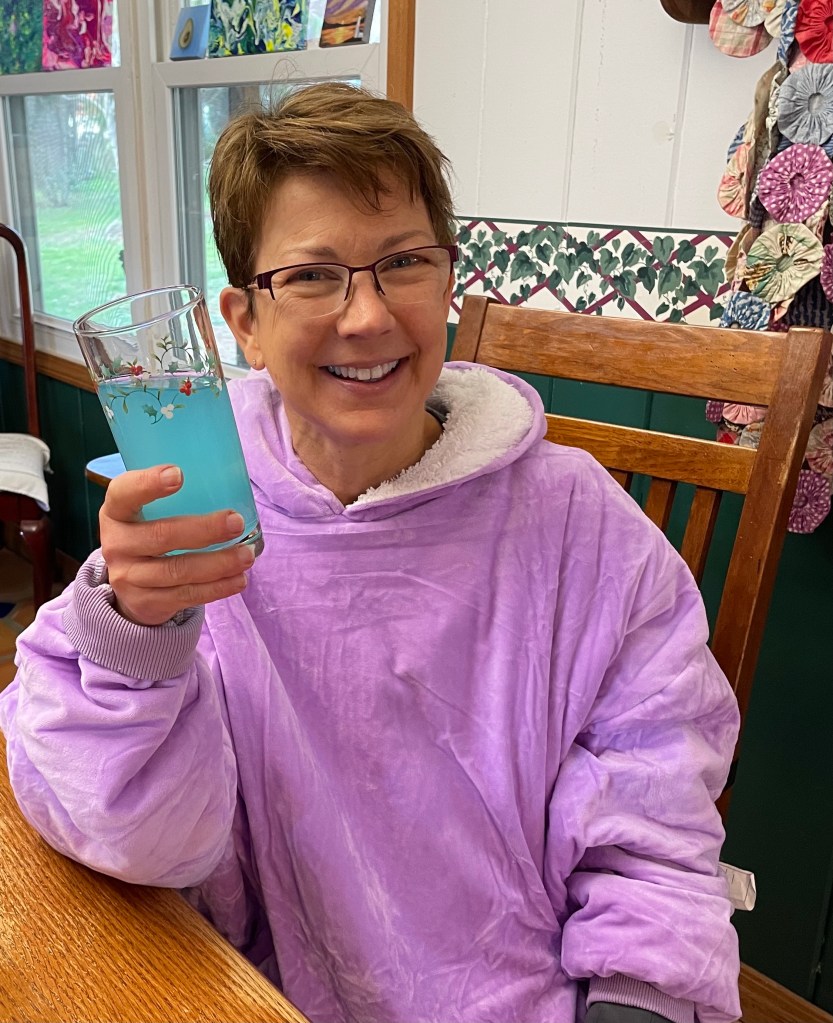
First dose, along with flavored water . . . let the party begin!

In spite of my dramatic narrative, it is NOT necessary to miss a total of four days of work.  The first two days of colonoscopy preparation consists of simply eating a low-residue/low-fiber diet which is quite manageable while at work as I have completed in the past.  I just happened to already be off work for the Christmas break period.  Although, on a personal note, I found I was exceptionally hungry for those two days.  I suspect it is because I typically eat a high-fiber diet and rarely, if ever, consume eggs, meat, or dairy.  Therefore, my food choices felt limiting and certainly not as filling as my usual high-fiber, whole-food plant-based way of eating. 

However, I do strongly advise using a sick day for the third day of the “festivities,” aka bowel prep.  In addition to the fact that you are bloated, and potentially a bit crampy and nauseated, you will most certainly spend a great deal of time in a bathroom.  Personally speaking, I’d rather spend that sort of  “quality” time in my own bathroom, thank you very much.  However, if you have the type of job that allows you to leisurely spend time in the restroom, and you can still manage work, by all means be my guest! 

First batch mixed! What a punch it has!

Most certainly though, a colonoscopy does require at least one day away from the worksite.  This is because you are put under anesthesia for the procedure; afterwards, you do not have medical permission to drive for the rest of the day.  My own experience (which each person’s experience is unique) left me feeling a bit lightheaded and nauseated, and not ready to eat, much less work, for a few hours.  However, I have known plenty of people, along with their designated driver, who go to their favorite eating establishment and plow through some serious piles of food, but I don’t recommend that for the sake of your system.

You may be wondering why do it at all–especially since there are several viable alternatives on the market.  I researched numerous websites with that same question.  Most valid medical websites point to the same conclusion:

“. . . colonoscopy is the only test in which the entire colon can be visualized using a colonoscope and pre-cancerous polyps can be removed. Cancer risk is reduced by 90% after colonoscopy and polyp removal . . .”–American College of Gastroenterology 

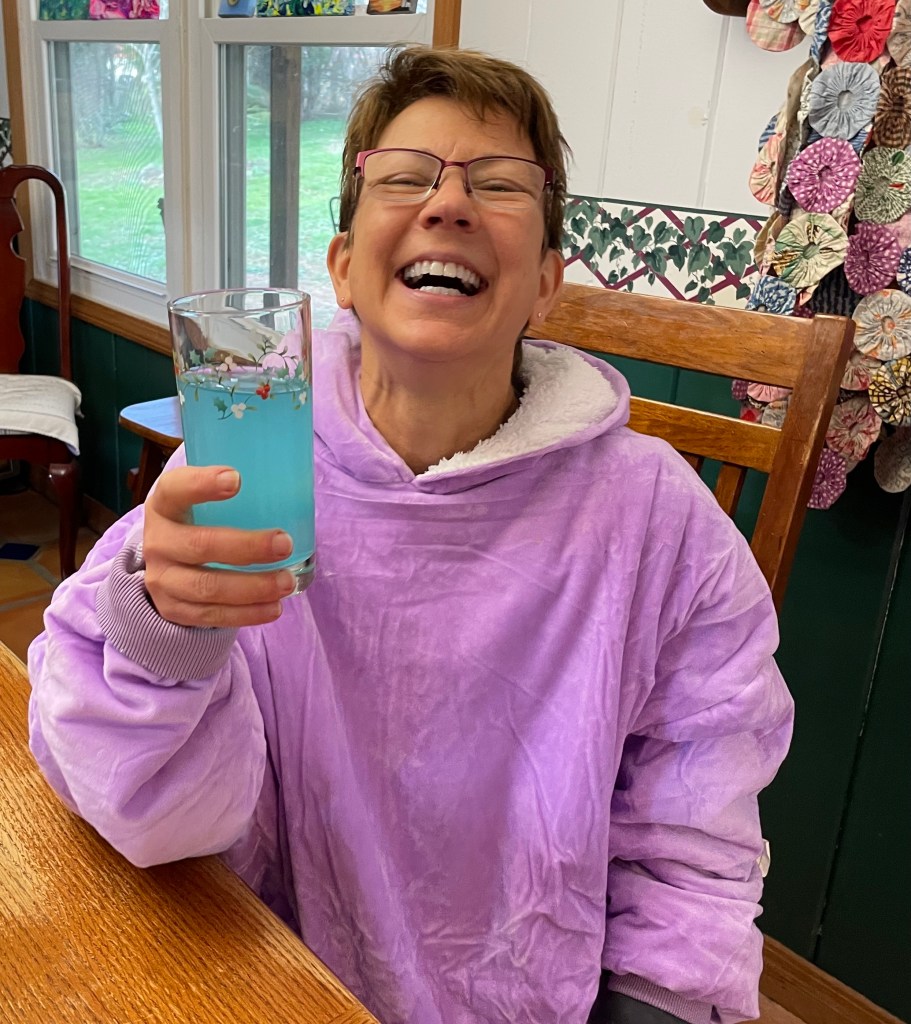
A bowlful of encourage-mints!

Nonetheless, before determining the best colon cancer preventative tool for you, it is best to talk with your healthcare provider.  In fact, it was based upon a conversation with a healthcare provider that I had both a colonoscopy and endoscopy before the recommended age of 50.  It was these initial assessments that led to the discovery that I had nothing wrong with my colon at the time (as I feared), but instead, I have a hiatal hernia and celiac disease–which are fairly easy fixes with diet. No more frequent diarrhea, painful stomach cramps/pain, and little to infrequent reflux thanks to diet adjustments–not to mention the elimination of several medicines–all due to what began with a conversation with my healthcare provider!  

With that in mind, multiple websites encourage adopting healthy habits, along with regular healthcare screenings, in order to not only prevent occurrence of colon cancer but also to lower the risk of numerous other types of cancer. One such health promoting practice is to honor what most mothers tell their children, eat plenty of fresh fruits and vegetables.  Avoid using tobacco products, and if you are currently using them, find ways to reduce, or better yet, eliminate these products from your lifestyle. Consider reducing or eliminating alcohol consumption.  Regular physical activity is also recommended.  Additionally, stress-reducing and/or mindfulness practices as well as maintaining a healthy weight are likewise considered positive steps.  

In the end, personal health and well-being often comes down to personal decisions.  I am by no means any health/well-care expert, but I do believe in personal responsibility and accountability towards one’s health–including routine, preventative health care screenings.  Afterall, if we are made in God’s image, then, as the saying goes, our body is HIS temple.  Therefore, let our habits honor our God-given skin vessel.  We only have one body, and life is a precious gift.

Cheers to your health!

Finally, I could not end this piece without saying a BIG heartfelt thank you to the staff of Cabell County Hospital, especially those on the second floor.  I was your first patient of the day, arriving at 6:30 am.  From the upbeat registration employee who checked me into the hospital when I was barely functioning without my morning coffee, and to the cheery and encouraging Lesha and Nana my pre- and post-nurses respectively; from Eric, several other nurses, and unnamed staff members whose names I did not get; to the sweetest female nurse anesthetist with kind eyes, as well as Dr. Davis and Dr. Subik; I appreciate the fact you were all working between holidays for patients like me, who did not want to miss work. And a special shout out to the spry Carlos, the speedy, affable, and efficient transporter.  Thank you for making my procedure from beginning to, well, the “end,” as comfortable as possible.  

From my heart to yours, I encourage you, Dear Reader, to keep up with all health screenings, no matter how invasive–afterall, your life may depend upon it!

Oh, yes, I agree. I look like the once famous teletubby, Tinky Winky! “Butt”, I was warm during the day of bowel prep! Cheers to your health, Dear Reader!