The Transformative Power of Art: A Visit to Tamarack

“Do you still feel up for going to the Tamarack?” my husband asked.

A Heavy Heart and a Planned Escape 🚘

Days earlier, we had loosely planned a day trip. The goal was to stop in Charleston for brunch on the way to Beckley, to nose around the galleries and marketplace of the Tamarack, and then return home, making a couple of quick errand stops along the way. Unfortunately, my spirit had been bruised by life, as sometimes happens, but despite feeling down, I agreed to go in the hopes it would be a pleasant distraction.

The brunch and drive along the WV Turnpike were heavy, filled with somber, clarifying conversation as my husband tried to help me clean out the closet of my cluttered heart. Tumbled, but not fully dried from an onslaught of despair, I entered the Tamarack lightened by our discussion, but still damp with distress. My intention from the outset was not to make a purchase, but instead soak up the vibrant and creative energy of the art, and by proxy the artists, who created it. 

Echoing my own feelings, Stella Adler stated, “Life beats down and crushes the soul and art reminds you that you have one.

Entering the Tamarack: A Sensory Shift

Once through the doors, I observed a crowd of people and wondered if this had been a good idea after all. Meandering to the right of the entrance, I surfed the sensory wave. Aromas of Appalachian-inspired cooking filled the air. A long line of people snaked around the fast-casual dining room as I made my way to the ladies’ room. Tamarack’s signature circular shape surrounding an open courtyard created a light and spacious feeling, even during this busy, pre-holiday time period. A multitude of glass windows, adorned with locally designed, gemstone-colored stained glass pieces, radiated an additional cheery warmth. The animated energy of visitors’ conversation added a rhythmic pulse to a popular sing-along soundtrack playing in the background. 

Letting the Atmosphere Settle the Spirit

As I allowed the wave to immerse me, I soon noticed that my breathing and pulse had slowed, tensions were eased, and the emotional flames were beginning to quell. Despite my earlier qualms, I could feel the atmosphere offering a form of calming consolation. The simple act of getting lost in the admiration and appreciation for each artist, and the art pieces they created, nourished my spirit. 

Wandering the Galleries: Beauty in Every Craft 🖼️

Allowing the natural flow of the galleries to pull me along, I took in richly detailed textiles and exquisite, delicate glass pieces. There were complex and intricate woodworks and artisanal earthen and pottery wares. Tables of WV grown and/or crafted wines, beers, ciders, soaps, candles, and one-of-kind foods/beverages were also available. 

I also stopped by the book nook, filled with locally written fictional and nonfictional books, novellas, cook books, maps, travel guides, and other artfully written materials. Additionally, there was a separate gallery, bright with ample natural light, filled with one-of-a-kind WV paintings, sculptures, prints, and photographs. 

Art as Memory: Echoes of Loved Ones 👵🏼

Allowing the current of creativity to slowly move me at will, the art grounded me into the present moment as I mindfully soaked up the vibrant energy. Different pieces evoked precious memories of loved ones: quilts of my grandmother’s attic, pieces of furniture and toys handcrafted by my husband’s grandfathers, earthen dishes that were reminiscent of family holiday casseroles, paintings and photographs of forested hills during the fall and winter months similar to those I hiked with my siblings and father as a child, and hand sewn creations that my mother once made.

The Healing Power of Art 🎨

I was further reminded of the many art therapy majors with whom I had classes all those long ago years. They often described the important role of art in therapeutic and school settings, a truth supported by research. Creating art and observing art supports mental health and well-being.  It often helps with emotional regulation by creating an outlet in which emotions can be channeled. Art is known to reduce stress and is often used as a tool for creating a greater understanding of one’s emotional atmosphere. Works of art often create a connection/conversation between the creator and viewer, which can provide an opportunity for both personal and collective healing.

Creativity as Community Storytelling

This is because art, such as the works I viewed at Tamarack, is often a reflection of the emotional landscape of a community, region, or even country. How many colorful and varied life stories, events, and personalities, past and living, were being conveyed and connected all under one circular roof? Each stitch, stroke, cut, hammer strike, click, and spin breathed life into each creation that spoke to the heart and soul of human resilience and hope.

In the Company of Strangers: Shared Wonder

As I meandered through the gallery devoted to paintings and photographs, I often lingered on works that spoke to me. Simultaneously, I overheard a pair of women, who were gazing at a section of paintings by a Mingo County artist, speaking with near reverence about their own childhood experiences in the same area. Another couple whispered with one another at nearly every piece, laughing at the memories specific images seemed to evoke. 

Spaces of Belonging: More Than a Marketplace

It occurred to me that art galleries, like the Tamarack, create centers of belonging–gathering places that celebrate the human experience. These transactional spaces aren’t just about exchanging money; they also provide an interchange of ideas and stories between artist, piece, and viewer. Investing in these community hubs is an investment in one another, supporting each other emotionally and culturally. People leave the Tamarack with a taste of what it means to be Appalachian.

A Quiet Affirmation

Standing in that gallery, soaking up all of the intriguing and thought-provoking images, an employee shook me out of my reverie by asking if I was enjoying my visit. I nodded, stating that I was feeling lighter and more grounded than when I entered. She unpretentiously declared, “Art can do that for you.”

We chatted a bit more before I moved on to look through the prints outside the gallery. I still did not have any answers to my specific concerns, but I did have a sense of peace that comes from being heard. Not that I was literally heard; rather, the struggles and joys, the sadness and celebrations, and the wonder and the awe that went into creating these pieces “heard” and spoke to my own related emotions. It was the beginning of healing and hope that often happens when surrounded by reflections of inner beauty.

Leaving with Lightness and Hope

Thomas Merton is credited with stating, “Art enables us to find ourselves and lose ourselves at the same time.” My visit to Tamarack allowed such a juxtaposition: by surrendering myself to time spent with art, my capacity for healing renewal was possible. It served as a reminder. When we immerse ourselves in the present moment, we kindle the still, small voice within, our hearts and minds steady at the sound of this whispering inner-knowing, and we can rest assured we are being held even when the heaviness of life weighs us down. Perhaps that is the gentle promise held within art: when life seems overwhelming and hopeless, the beauty of art and/or the creative process is there to offer us wings of hope for rising once more.

Pearls of Morning: Lessons from Spider Webs and Stillness

“Heavy dew this morning and every spider web in the garden is strong with pearls of moisture…. webs wherever I look, all shining things of silver beauty.–Edwin Way Teale

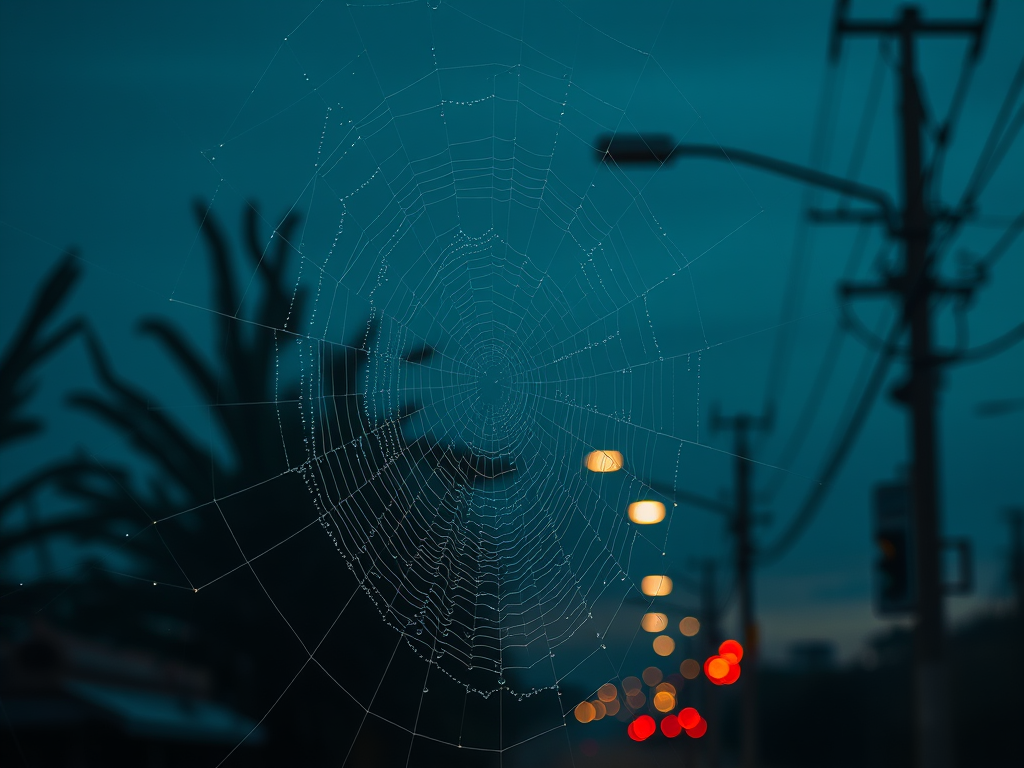
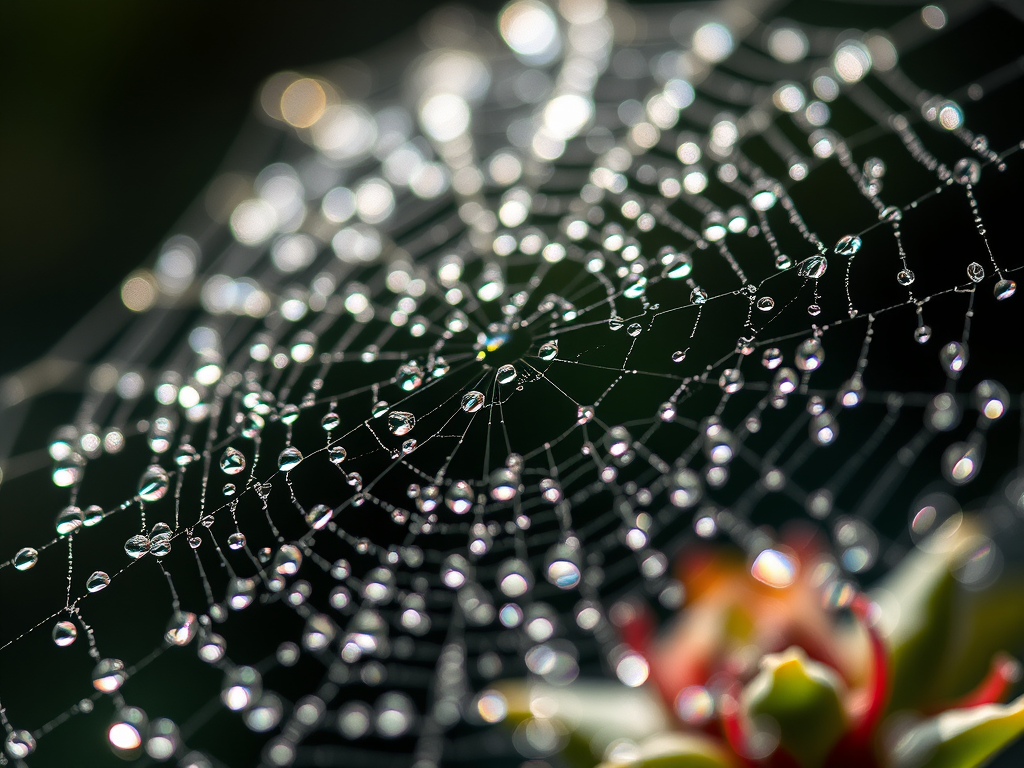
A close-up of a dewy spider web illuminated by streetlights in a quiet early morning setting, with blurred traffic lights in the background.

The Quiet Wonder Before Dawn 🌅

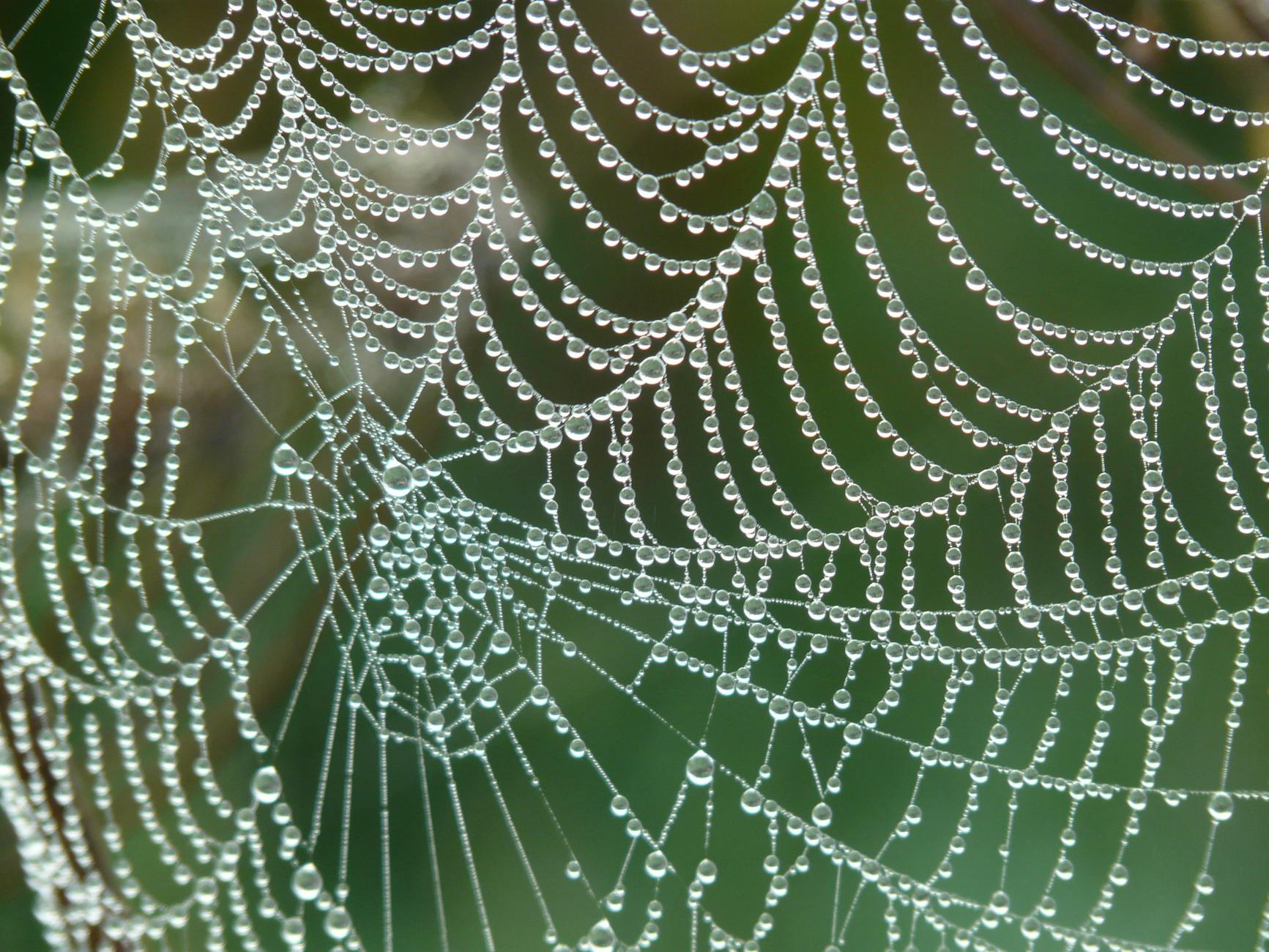
It was an early fall morning. Darkness still clung to the earth in a cool embrace. The traffic lights—green, yellow, red—continued their rhythm despite the empty streets. The air was cool and humid, and the hush before dawn rested easily upon the road. Pausing at the red light before continuing my jog, I noticed a spider web dappled with dew within the frame of the traffic light. I stopped in my tracks; upon closer inspection, I saw countless spider webs, draped with baubles of dew, hung from light poles and electric lines—even within the traffic lights themselves.

Hidden Beauty in Plain Sight🚦

I was awestruck by the beauty of the webs, looking ever-festive in the glow of lights—an unexpected wonder, shimmering high above me. After a few moments of appreciating the beauty, I jogged on through town, questions forming in my mind. How did they get so high? Why had I not previously noticed something so extraordinary hiding in plain sight? How many other marvels were hiding in plain sight, waiting for someone to notice?

A serene landscape featuring rolling hills partially obscured by a thick layer of fog, bathed in soft, diffused light, creating an ethereal atmosphere.

When We Slow Down Enough to See 🤓

It occurred to me that more often than not, we rush through the routine of life overlooking these mini-marvels—the ballet of fall leaves chasséing from tree to stream, then pirouetting along water currents; sinuous streamers of fog tendrils meandering around hilltops; or, the multiplicity of ice crystals frosting over a car’s windshield to name a few. These wonders are woven into daily life: from the cantaloupe-colored brilliance of sunrise over the Ohio River to the glimmer of moonlight on a frost-covered lawn; from flower-like fungi blooming on fallen logs to a puppy seeing its own reflection in a puddle. Beauty surrounds us, waiting to be noticed. Like the invisible art gallery of spider webs in traffic lights on my morning jog, most go unnoticed until the light hits just right. However, when we take time to pause and pay attention, beauty will often reveal itself in unexpected yet common places, including stoplights.

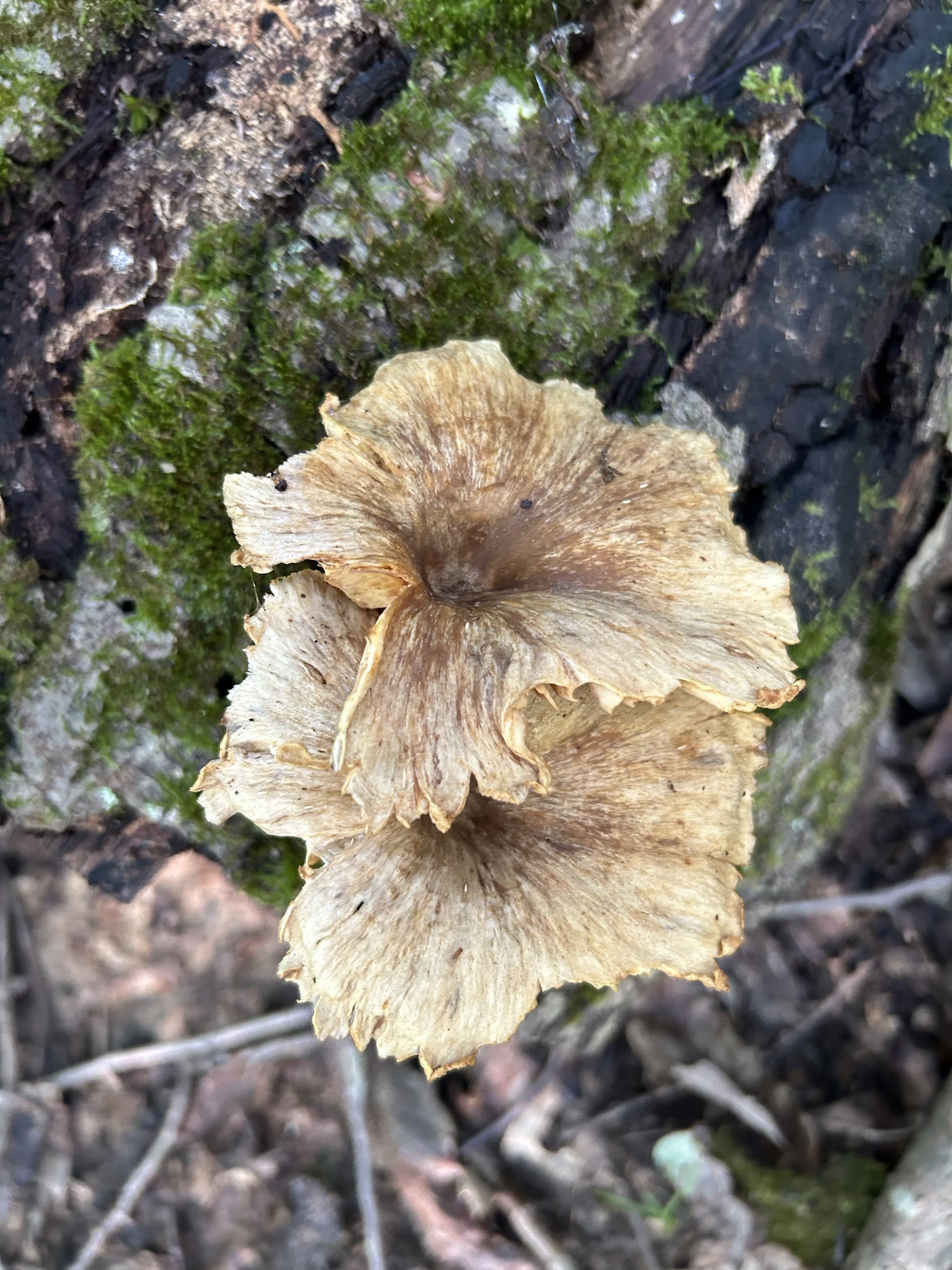
A close-up image of a brownish mushroom growing on a tree trunk, highlighting its textured surface and natural surroundings.
Flower-like fungi “blossoming” from fallen tree branch

The Power of Morning Stillness 😌

That early-morning observation turned meditation centered my day. It offered more than one lesson and served as a reminder that the morning placidity can bring a sense of calming clarity before the noise of the day. Making time for stillness in the morning, whether sipping coffee, walking a beloved pet, or sitting in prayer meditation—offers an opportunity for spaciousness at the day’s start. A moment to center, notice, reflect, and connect. Even a few minutes of stillness can offer us an opportunity to ground ourselves and recalibrate our perspective. If we grow quiet enough, we may remember that peace resides within us. That is not to say that peace is the absence of movement, purpose, or challenge, but rather it is a strong presence within us—much like the hidden strength within the delicate spider web. 

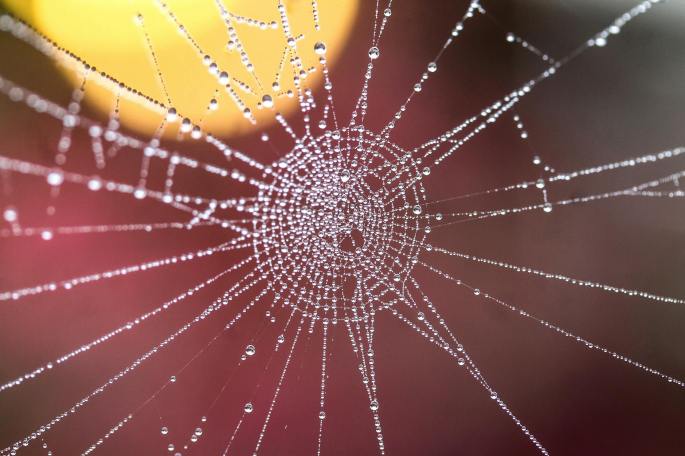
A close-up of a spider web adorned with dewdrops, creating a sparkling effect against a blurred green background.
Photo by Pixabay on Pexels.com

Lessons from the Web: Resilience and Renewal 🕸️

As I reflected on the morning jog through town, I realized that each web represented perseverance, fortitude, and tenacity–three key qualities essential for growth. Each morning, orb-weaving spiders consume their protein-rich webs to reclaim the silk for rebuilding. This ensures the new web they build in the evening is fresh, sticky, and strong enough to catch plenty of prey. Through practice, the spiders gain strength and instinctively how to rebuild after storms and strong wind.

The spiders’ resilience serves as a reminder that we, too, have the grit to rebuild after disappointments, setbacks, and loss. Like the spider, rebuilding our lives is often quiet work that begins only after we have nourished body, mind, and spirit. The spider’s persistence mirrors our own–delicate and determined–reconstructing through incremental, small steps. Life, like the spider’s web, is fragile, yet we too possess tensile strength—centered in faith—that guides us as we restore, renew, and rebuild. 

A close-up view of a spider web adorned with numerous droplets of dew, reflecting light and creating a sparkling effect against a dark background.

The Threads That Bind Us 🕷️

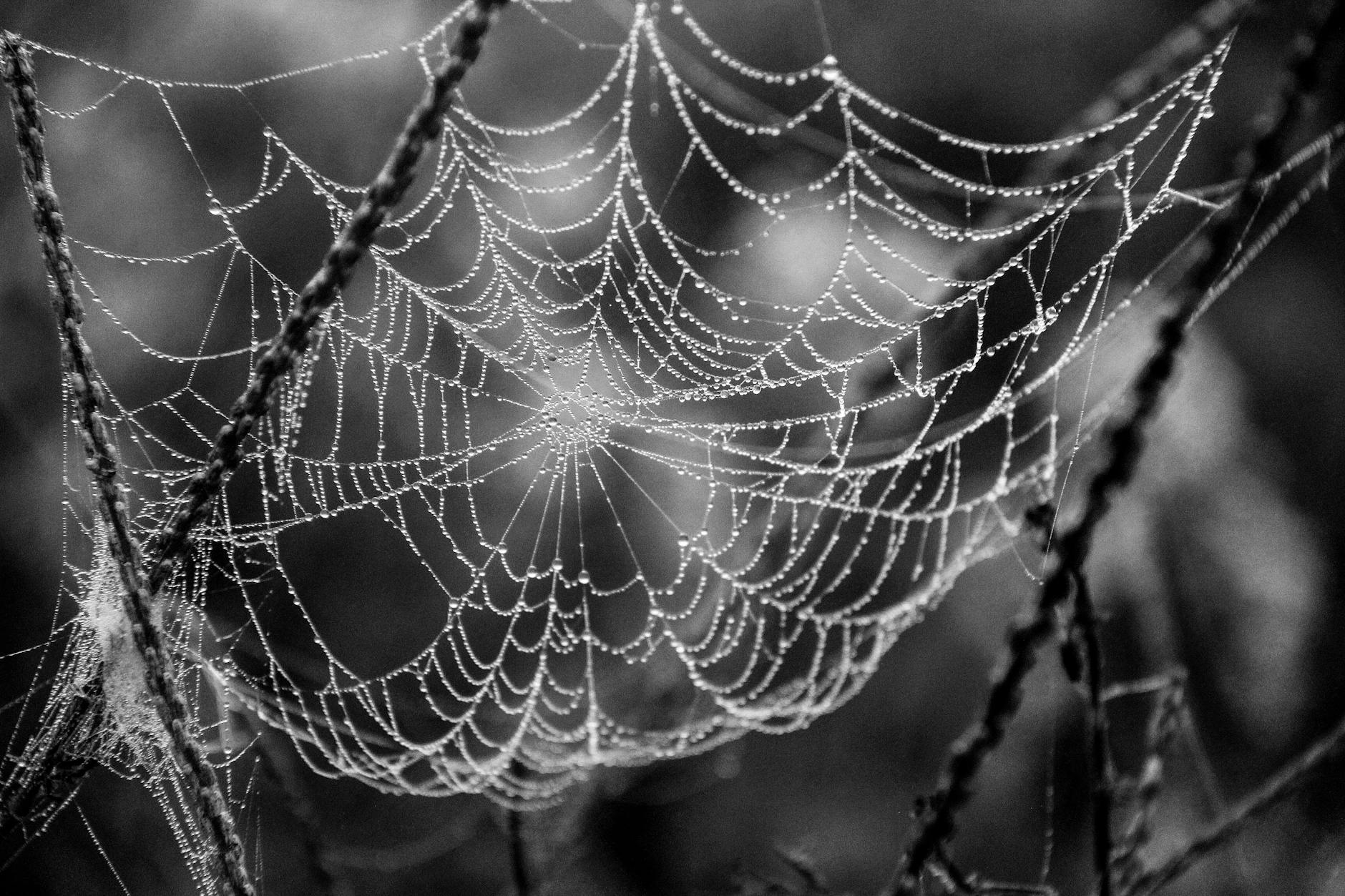
The spider’s web, where no thread stands alone, echoes the interconnectedness of our own lives. We are part of a collective. As the light shone through the webs, each dew drop caught the light, refracting color and seemingly creating miniature worlds. Just as the traffic/street lights played across the spider webs’ dew drops, our connected lives reflect multiple roles–friend, spouse/partner, worker, neighbor, parent, child, citizen . . . . Each strand of life possesses a quiet strength that is integral to the whole. In fact, the integrity of the web depends upon the strength and resiliency of every strand. Each facet of our lives holds and reveals meaning; together, the varied strands of our lives unite the whole, creating an array of meaningful relationships.

A close-up view of a beautifully intricate spider web adorned with dew droplets, creating a delicate display of nature's artistry in black and white.
Photo by don chowdhury on Pexels.com

Finding the Extraordinary in the Ordinary 🌃

In the end, the light changed, and I crossed the street as the sun rose, erasing the glimmer of those webs. Yet the image remains—reminding me to keep looking for the extraordinary in ordinary places. Perhaps it waits in the quietude before dawn, a pause at a red light, or the hush of nightfall. So many interlaced moments shimmer within the droplets of daily life, waiting for those willing to see. Those silky webs may vanish with daylight, but their pearls of wisdom still glimmer within me, reminding me that beauty often hides in ordinary light.  

May we all learn to look a little longer, to pause at life’s red lights, and to notice the silken threads of beauty connecting us in the quiet hours of dawn.

Embracing Life’s Unanswered Questions

“Be patient toward all that is unsolved in your heart and try to love the questions themselves. Live the questions now. Perhaps you will then gradually, without noticing it, live along some distant day into the answer.“–Rilke 

A vibrant sunrise with deep orange and golden hues peeking through soft clouds, symbolizing new beginnings and hope.
Photo by Bradley Hook on Pexels.com

When the Mind Won’t Stop Asking 😕

Those words of Rilke, written over a century ago, remind me that some of the hardest seasons in life are the ones that offer no answers—only questions that echo back in silence.

A silhouette of a person walking towards a bright sunrise, symbolizing hope and introspection.
Photo by Dom Gould on Pexels.com

Running into the Questions ⁉️

I was driving home Saturday morning after my weekly long run with a podcast playing in the background. The previous week had been difficult, and I had hoped the run would provide a reprieve from my worries. I started running well before the sun rose under the cloak of a starry sky, which served to keep my mind calm. Then, the rich crimson of dawn edged up the horizon, deepening from vermilion to the fiery orange of full sunrise. As if on cue, the monkeys in my mind began chattering—an endless loop of questions followed by equally endless, devastating possibilities. 

I tried to redirect my thoughts: “If only this or that would happen, then everything will be fine,” I told myself. The problem with this if–then principle is that it’s meant for building new habits or personal change; I can’t magically apply it to others—or to the world at large. Even after my run, the mind monkeys continued their spirals. Then a line from the podcast caught my attention, “What I think Rilke’s words are stating is that if we can learn to live in peace alongside the questions, this may allow us to witness the unfolding of the answers in some indeterminate future.” 

A hand reaching out towards a shimmering body of water under a bright sky.
Photo by Lukas on Pexels.com

An Invitation, Not a Reprimand 🙂

Of course, I had not heard Rilke’s words, so I had to rewind the podcast in order to focus on the original quote. Those words felt like an invitation to hope, rather than a reprimand for my monkey mind. To be clear, it did not feel like a promise of a positive outcome, but rather hope for a greater understanding one day. Rilke’s words seemed to affirm my questioning, as long as I let the questions simply “be,” like one ingredient in the stew of life. 

Hands holding a small, gift-wrapped box with a ribbon against a soft, patterned background.
Photo by Kim Stiver on Pexels.com

The Unsolved Nature of Life 🧐

While I cannot speak for everyone, I think many of us live with unanswered questions—and I’m probably in the camp that has more than a few. Seasons of life bring different questions, but they often center around themes of health, purpose, relationships, concern for others, and the future. It is often uncomfortable–the unsolved nature of life. We desire, like the fairy tales of our childhood, resolutions to problems in which we “all lived happily ever after.” We like knowing what is next; we desire to wrap up answers neatly and hand them over like a present. But life, as we eventually learn, isn’t wrapped in tidy endings. 

A serene landscape shrouded in fog, featuring two swans gliding on a calm body of water, with bare trees reflecting in the misty surroundings.
Photo by Karol Wiu015bniewski on Pexels.com

When Answers Refuse to Come 🤨

If you have ever encountered a personal crisis, or that of a loved one, you know the “hurry up and wait” sense of time that often accompanies these scenarios–appointments scheduled off into the distant future, followed up by more appointments with no answers, only more maybes and/or more questions or concerns. It can feel like an autumn fog settling over a town in the early morning hours. You can see outlines of various possibilities, but still not know what the future holds. And yet, even in that fog, life quietly continues. 

A chalk-drawn question mark on a black background, symbolizing uncertainty and curiosity.
Photo by Pixabay on Pexels.com

Coexisting with Uncertainty ❓

On one hand, Rilke seems to invite us to love the questions—an improbable ask, given the weight of so many of life’s uncertainties. Perhaps, as the podcaster suggested, Rilke’s words invite us to coexist with uncertainty rather than chase quick answers. Personally, when I face challenges, my first instinct is to “fix it,” whatever “it” may be. However, most of life’s bigger questions are not, per se “fixable” in a vacuum. There are many uncontrollable variables that often fill me with an anxious energy. 

This is when I tend to lean into writing, outdoor movement (especially running and walking), as well as reading–trying to learn as much as I can about the current challenge I am facing. Additionally, I will offer help (if I can be of service) to those for whom I am concerned. In this way, I feel like I am stretching and growing in understanding and empathy, rather than grasping and silently suffering. 

A close-up image of colorful daisies, featuring hues of pink, yellow, orange, and purple, surrounded by green foliage.
Photo by Leigh Patrick on Pexels.com

The Garden Rule: Sleep, Creep, and Leap 🪻

I’ve lived long enough to know that many answers only emerge with the sweet relief of distance and time—like the three-year rule of a perennial garden: sleep, creep, and leap. A long-ago biology professor once explained that in the first year of a newly planted garden, the plants appear to grow very little because they’re focused on developing and strengthening their roots. The following year, roots are still growing and establishing, but they do have enough energy to create a bit more growth above ground. However, by the third year, the roots are fully established and the plant appears to “leap” out of the ground with growth. So it can be with the answers to life’s questions. 

Three white blocks arranged to spell 'WHY' in black uppercase letters.
Photo by Ann H on Pexels.com

Growing Through What We Don’t Yet Understand 📈

There are times in life where we cannot figure out why we keep facing one roadblock and one challenge after another. We wonder how much more we can endure, why we are faced with a certain situation, or why things are not going the way we imagined. Like that early decorative landscaped garden, we cannot see that our experiences are developing roots of strength and stability. We may not see that our ability to empathize, our talents, our emotional well-being, and even our souls, are stretching and strengthening. Later, we may look back and see that those setbacks were quietly shaping us—building the strength we’d need for what came next. 

A person kayaking on a calm body of water during sunset, with vibrant pink and orange clouds reflected in the water.
Photo by Taryn Elliott on Pexels.com

The Ineffable Beauty of Living with Questions ✨

As I further reflected on Rilke’s words and my own lived experiences, I realized that there is a certain ineffable beauty that is created by living with questions because it asks us to rely upon faith and grace, granting us a greater purpose as a seeker and a doer. 

We are not here to solve life, but to live it—with curiosity, patience, and hope.

While hope does spring eternal, it is not the same as knowing the answers. Perhaps, that’s the point–it is more about trusting that our life story is continuing to unfold in its own time and season. 

A calm, reflective body of water at sunset, with vibrant streaks of orange and blue in the sky, and a small island featuring lush greenery and palm trees.
Photo by Johannes Plenio on Pexels.com

Light, Grace, and the Unfolding of Answers 💫

Finishing the drive home, I realized that Rilke had a point. As long as I have questions, as long as I seek answers, I am not only living, but I am living with an open, loving heart and a curious, empathetic mind. I have been fortunate to live to see questions answered, but I still have more questions to go–about loved ones, about the world, and about myself. 

Like the sunrise that began my run, the light of understanding will come again—slowly, beautifully, and in its own time. Until then, I feel grateful for life’s questions. They have strengthened my life in numerous ways and provided me with unpredicted opportunities for growth. In the words of John O’Donohue, “Perhaps the beauty of not knowing is that it keeps our hearts open enough to be surprised by grace.” I welcome that grace into my life—and I hope you do too.

Thrive Through Love: Lessons From Plants

We must cultivate our own garden.”–Voltaire 

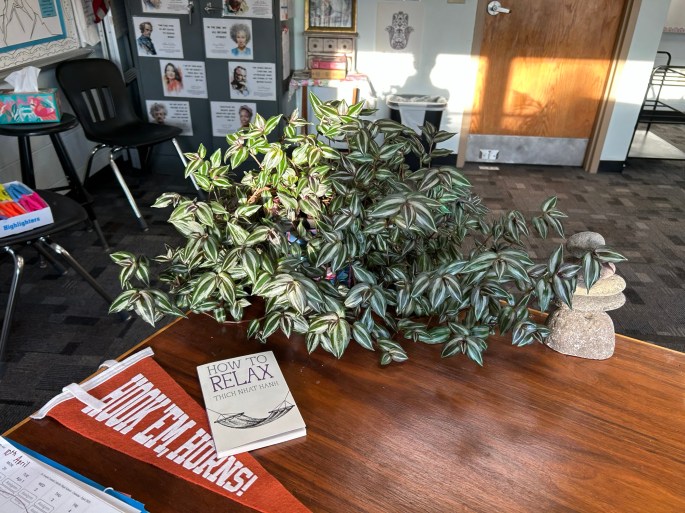
Drooping from lack of water, my mosaic plant symbolizes our soul without enough attention, love, and supportive relationships.

As I walked into my classroom after spring break, making my way behind my desk, my mosaic plant greeted me with drooping leaves as if to say, “Where have you been?” 

“You poor thing!” I spoke aloud to it–as if it would reply. “I am so sorry. Let me get you some water.” 

Oh, sure, Dear Reader, roll-your-eyes and act as if you don’t talk to your plants. I have no shame in admitting it. Besides, scientific research has established that talking to your plants can create low-level vibrations that stimulate growth. However, since that is not the thesis of this essay, I won’t wander any further down that path. 

The unwatered mosaic plant had suffered alone in the silence of my classroom for well over a week without water. This particular plant requires frequent watering and rotation. When given this, it responds with perky growth and vivid color. Therefore, it was a sad, sickly sight. 

As I carefully began to water my plant, hanging limply in the pot, it reminded me of the way in which humans also need care and attention. Regular watering of plants supports photosynthesis and the roots ability to absorb nutrients from the soil, both of which foster growth. Likewise, when humans receive adequate hydration and adequate nutrition from a healthy, well-balanced diet, our bodies have a better chance of remaining healthy and vibrant.  

Plants, like humans, thrive best when nurtured from within and without.

Continuing to gently water and mist my wilted mosaic plant–yes, I was talking to it all the while–I was reminded of the ways in which humans can wilt from neglect. Our mind, body, and spirit, like my mosaic plant, need nurturing. Without it, our inner world can wither, and we will limp along with a spiritual heart that has a difficult time beating. 

However, with regular sprinklings of love, affection, and/or supportive relationships, our souls can remain hydrated. From faith-based practices to monthly outings with friends or family, from attention/love of a pet to simple interactions with a store clerk, and from exchanging kind words/texts with a neighbor, co-worker, or organization/club member to actions of self-care/love, there are countless ways in which our souls can be watered and nurtured. Therefore, it is vital that we practice engaging with others, so we won’t wilt from lack of love and support. 

Moving around the room to water my other plants, I realized they would soon need to be repotted with fresh, fertilized soil. Some would need a bigger pot than the container in which they currently dwelled. Fresh, fertilized soil, rich in nutrients, is vital for the health and well-being of my plants. New soil will provide a wide array of ingredients uniquely combined to fortify my plants against disease to help them grow healthy and strong.

Photo by cottonbro studio on Pexels.com

Likewise, in order for us to thrive, we, too, need nourishment from a variety of sources. One way we can thrive is by establishing and maintaining a purpose-filled life. This purpose can change and evolve over time as we age and mature, but it needs to be a purpose that not only compels us out of bed each morning, but fuels our life with meaning. 

Creating and maintaining meaningful connections with others, especially when linked to our purpose, can further enrich our lives deeply. Fortification can also be found by mentoring/helping others as well as surrounding ourselves with positive, supportive influences. These types of relationships can form a reciprocal, two-way street, much like plants form with people, which can facilitate an ongoing source of nourishment in our lives. 

Once all the plants were watered, I began rotating each pot to allow all parts of each plant equal time to face and absorb the warmth of sunlight. Sunshine, like water, is needed for photosynthesis. It is only through the process of photosynthesis that plants can have the food needed for growth. When plants face the challenge of living inside a building, they overcome that challenge by growing toward a window, even if it causes the plant to grow with a lean. 

Photo by Khanh Le on Pexels.com

We, too, need to lean into sunshine. The sunshine of positive experiences can imbue us with warmth and motivate us to keep going. That motivation is especially important when we are faced with challenges, as life is never obstacle-free. However, by facing the unique challenge(s) life tends to throw our way, we can eventually discover the unique joy of overcoming difficult circumstances, or at the very least, grow stronger and more resilient from the effort put into overcoming.  

And when those life-challenges seem endless, as they often do, lasting beyond what we think is possible, it warms and strengthens the soul to find pleasure in the little things. From the sweet embrace of a loved one to the sound of birdsong in the morning, from the taste of a great cup of coffee (or whatever) with a friend to the aroma of fresh cookies baking in the oven, or perhaps reading a new book or playing an instrument–whatever you choose, these small delights can be the rays of sunshine that help get us through those dark days of difficulty. 

The object lesson provided by my mosaic plant reminded me that no living thing– humans included–benefits from neglect. When we lose sight of love, meaningful connections, purpose, and positive experiences, we will internally wither, which can manifest itself as physical ailments and/or mental health issues. Without proper care and nurturing, we can grow disheartened, disinterested, and even emotionally distressed or traumatized. 

Photo by Tristan Le on Pexels.com

However, we all have the potential to thrive. Let us strive to offer love and understanding to others and to ourselves. When we see someone hurting, let us find ways to lift them up. 

Likewise, when we recognize our own heart is hurting, let us tend to our own needs through acts of self-compassion, reaching out to others, or seeking other positive means to act as rays of sunshine to lift our spirits. Our time on this earth is short, let us seek productive methods to nourish and enrich others as well as our own lives, so that our life garden can blossom and flourish, no matter where we are planted.

The Power of Silence: Reflections on Mindfulness Retreat

In the silence of the heart, God speaks.” Mother Teresa

Photo by Ali Elfaziki on Pexels.com

Silent Retreat? 🧘‍♀️

I don’t remember exactly how the conversation went, but I was enjoying lunch with a friend on a Saturday when she told me she was attending a silent meditation retreat in two weeks, and asked if I would be interested in it. The retreat, she said, was sponsored by The Mindfulness Tree, a meditation community in Charleston, WV, and it would be led by Dr. Christine L. Blice-Baum, MDiv, DMA. Curiosity bloomed, and in a matter of days, I was also registered for the retreat.

In the days leading up to the retreat, I vacillated between feelings of excitement and thoughts of “what-have-I-got-myself-into?” The retreat required spending time in silence with complete strangers, excluding my friend, of course. I kept reminding myself that it wouldn’t be any different than going to an appointment or to the store with numerous others I don’t know. Never once, however, did it cross my mind that this retreat would provide multiple opportunities to come face-to-face with my mind’s resistance and its desire for distractibility.

Photo by Obi Onyeador on Pexels.com

Put away those devices 📲

Upon arrival, all participants in the retreat were asked to put up our phones and take off our smartwatches until the time of our departure. We had the choice to leave our devices in our car, in our own purse/bag, or stow them in a zip lock bag that was put away until the end of retreat.  I chose the latter option as a symbolic break-away from technology and, in all honesty, to reduce any temptation to peek in my bag at either device during the day. 

Not having technology was one of the first minor “discomforts” I repeatedly noticed. It began when I tried to check the outside temperature by looking at my wrist, and then did it several more times! What time is it? No smartwatch. Does the radar show my hometown receiving as much rain as here?  No phone. Blice-Baum just shared a great idea; I should type that in my notes. No phone. I should take a picture of the church’s pipe organ. No phone. Did my husband remember to  . . . . 

Participants in seated meditation.

Lessons of Stillness 🤫

This was my first a-ha moment. I was astounded to realize the amount of time my mind spends in a day consumed with thoughts of all the ways I can implement/use my smartphone and its companion watch. What’s crazy is that I am not a big user of social media, so I had this notion that giving up my devices would not be a big deal. While on one hand, it wasn’t, on the other hand, I was humbled to realize, social media consumer or not, my mind has been trained to be distracted by devices. 

The second big lesson had to do with a notion known as “custody of the eyes”–averting the gaze to avoid visual distractions in order to maintain focus. This practice was a challenge throughout the entirety of the session. 

The retreat schedule was well organized, sessions of seated meditation were interspersed with walking, movement, and standing mediations; however, my mind kept wandering and niggling me to look around at my surroundings. During walking and movement meditations, I had to keep redirecting my attention back to the meditation focus at hand because my mind had the tendency to wander off into people-watching mode. 

Participants take part in a silent walking meditation

The third lesson: I also squabbled with my mind’s habit of entering “squirrel-mode”–moments when something in the environment, or on the wall caught my attention, and my mind would launch off into associations with whatever my eyes had noticed. I knew I was distractible, but I never realized my mind was like a puppy visiting a new environment.

Another eye-opener occurred during our silent lunch. Blice-Baum, after sharing a prayer of gratitude and blessing for the food, led the participants through a short exercise of mindful eating. Then, we were directed to continue to enjoy our meal in silence, engaging all of our senses in the eating experience. This was when my mind really rebelled.  

Since I was a young girl reading the backs of cereal boxes at the breakfast table, I have always read while eating–newspapers, magazines, books–which were later replaced with digital versions. Without such distraction, I noticed my tendency to want to eat quickly and my eyes repeatedly searched around for something on which to focus other than my food. It took time for my mind to settle, slow down, and focus on taste and other sensations associated with the simple act of eating. This was a shocker because I love the taste, textures, and fragrance of food. In fact, I love to eat, but I clearly need to practice eating mindfully more often.

Group picture of participants.

Positive takeaways 🙌

In spite of all the mental obstacles and resistance I experienced throughout the retreat, I walked away feeling refreshed and renewed. Remaining fully focused and present on one’s own breath, a mantra, or an image isn’t easy, but there is something to be said about taking time to slow down and focus on one thing at a time. I felt as if I was coming home to my heart, and my own inner knowing, despite the fact I had to repeatedly redirect my mind like a toddler walking around the Tamarack Marketplace.

Would I do another silent meditation retreat? Absolutely! Many of the things that had been worrying me when I arrived at the retreat felt less weighty when I left. I experienced a recommitment to my personal practice of meditation/mindfulness and was inspired by new techniques to incorporate, not only in my own practice, but also to include with the yoga/mindfulness class I teach at school. Furthermore, in the days that have followed, there has been an overall increase in my sense of gratitude, along with a renewed sense of purpose. I have also noticed a calmer mind with a significant decrease in the power of those negative voices that love to chatter about in my head.

 Most of all, I am much more aware of how easily and quickly my mind can be distracted. These mental diversions on the surface seem as shiny and fun as a carousel ride to a young child, but they can lead to avoidance of the moment at hand–knowledge and understanding of what is going on in the here and now. Therefore, focus––especially given all the digital distractions–more than ever requires diligence, dedication, and continued redirection. And, one of the best ways to do this is the practice of meditation, mindfully completing tasks, or by simply connecting with our own breath.

Photo by Vie Studio on Pexels.com

Interested in Learning more?

If you are interested in learning more about meditation, would like more information about The Mindfulness Tree, or would like to connect with Blice-Baum, please visit www.themindfulnesstree.life

Dr. Christine L. Blice-Baum, MDiv, DMA

Building Resilience Through Emotional Awareness

“Feelings build resilience: As they teach me to let go and to become new, I become increasingly flexible in the flow of life.”–Allan Schnarr

Laughter-filled joy is one of the many emotions we can experience throughout the course of a day.

Importance of Heart RAte VAriability 🫀

In this era of fitness tracking gadgets, I have begun to be quite aware of my own heart rate variability. It’s not that I wasn’t aware of the changes in my heartbeat; those oh-so-long-ago biking adventures of my youth, as I pedaled up and down hills, provided me with that lesson.  However, my handy-dandy fitness watch frequently reminds me of my own heart rate and its variations throughout the different activities of my day.

Harvard Health Publishing states that each person’s heartbeat is unique and beats at a specific rate, but the rate can vary depending upon what you are doing. When we are active, stressed, or–heaven forbid–in danger, our heart rate quickens. On the other hand, when we are resting, relaxed, or at ease, our heart rate slows accordingly. 

Photo by cottonbro studio on Pexels.com

Meet the Autonomic Nervous System 😬

The system responsible for regulating our heart rate–and numerous other involuntary functions–is the autonomic nervous system (ANS). It branches into two parts: the sympathetic and parasympathetic nervous system. At its most basic, the sympathetic (think: fight or flight) nervous system puts the body on alert, increasing heart rate and blood pressure; whereas, the parasympathetic (think: peace) nervous system sends calming signals to rest, digest, or relax. 

The two systems work together. For example, if we’ve experienced a highly stressful or dangerous situation, the sympathetic system is at the helm. It will signal your body to release adrenaline and increase your heart rate in case you need to physically react quickly. However, once the situation has passed, the parasympathetic takes over lowering the heart rate and signaling various systems of the body to relax.

Therefore, if the heart adapts to various conditions–from walking to running; from talking to singing; from startled/scared to calm/relaxed, and so on, shouldn’t we, likewise, acknowledge, or perhaps embrace, that our emotions also adapt to life circumstances?

Photo by Andrea Piacquadio on Pexels.com

Emotional Variability 😢 😁 🤣

Our heart rate varies for very real reasons, and so do our emotions. Emotions are often intense and/or reactionary to a specific event, thought, or situation.  They too are a product of the ANS, and they are our body’s signal to something it perceives occurring in our environment for which we may need to respond quickly. 

One way to think of emotions is to view them as clouds in the stratosphere of our brain. Some days, the sky is bluebird-clear; while other days, our emotional atmosphere may begin cloudless, but grey shadows gradually–or quite suddenly–creep in.  Sometimes we have days that start cloudy, clear up, and then go cloudy again. Then there are those dark, overcast periods that can last for days, but do eventually pass. 

Experiencing emotions, such as sadness, anger, or worry does not mean you are emotionally unfit–not at all.  Likewise, experiencing opposing types of emotions–enjoyment, happiness, or awe–does not define you as emotionally healthy. Similar to heart rate variability, it is just as healthy for our emotions to differ in response to what we are experiencing.

Photo by Antoni Shkraba on Pexels.com

embracing our varying emotions 🤗

Therefore, it is important to give ourselves permission to fully feel and accept a wide spectrum of emotions. In fact, there are valid reasons for us to adeptly switch among a wide range of emotions. According to Mindletic, our emotions can sometimes switch frequently throughout the day, and then on other days, we may experience little to no shifts in emotions. Emotional changes are often dependent upon conditions.

The key is to recognize when we do feel something because our ANS is reacting physiologically. We may not be able to name the emotion initially, but we may feel a desire to respond/act and not know why. If that is the case, stay curious and patient. Turn inward when time permits and reflect on how and/or what you feel without judging it as good or bad. Observe any sensations, noticing if they occur in certain parts of the body. 

Photo by Eric W. on Pexels.com

Self-Inquiry is Key 🔑

Given enough time and self-reflection, we may be able to name the feeling: anxiousness, worry, fear, happiness, and so on. Once the emotion can be named, it is important to next determine the trigger that caused it.  Sometimes, identifying the instigating event is easy, such as when a loud bang occurs, we may feel instantly startled.  Other times, figuring out what is causing the emotion can be more challenging.  

For example, there may be a day when you feel anxious, and you’re not sure why. If you allow yourself to remain curious and open to possibilities about the “why” without judgement, you may later have an aha moment when you connect the dots. An example of this could be feeling sad on the first day of winter-like weather. You might assume it is just due to the cloudy, cold nature of the day, which could be true. Later, however, with a bit of self-inquiry, you may recall that the last time you experienced this type of weather was the day you were in a car accident, which helps explain why you felt anxiety.  

Being comfortable with uncomfortable emotions can be challenging but worth the effort.

Holding Space for Difficult emotions 😩

Sitting with an uncomfortable feeling/emotion can be difficult, especially when we are not sure why it has occurred. By refraining from attaching judgement to the feeling, such as “I’m stupid to feel this way,” and continuing with curious contemplation, we can learn to offer all parts of ourselves, emotions included, acceptance. This reduces resistance to feeling certain emotions, fostering a deftness of accepting any number of emotions that may arise in response to life. After all, we wouldn’t resist our heart rate accelerating when jogging a couple of miles.

The more we practice self-reflection of our own emotional experiences, the better able we are to identify various emotions and corresponding triggers; thereby, increasing our ability to respond in a more adaptive manner. This continued practice allows us to cultivate greater emotional awareness, improve our emotional regulation, and develop our own personal toolboxes of self-care responses, such as exercising, journaling, meditating, reading, dancing, doodling, gardening, and so on. 

Photo by Lukas on Pexels.com

✅ Developing our own Emotional “tracker”

The ultimate goal is fostering our internal emotional “tracker”– much like my fitness tracker.  This gives us a window to our own emotional rate variability, allowing us to create adaptive strategies in order to appropriately feel, identify, respond to an emotion, and allow it to pass–much in the way clouds do in the sky. Similarly to the way a heart rate stays elevated for a longer period of time when running a marathon versus walking a short distance, some emotions are going to hang around longer. However, with compassionate and consistent practice, emotional self-inquiry can reduce the long term, adverse effects of our stronger emotions and/or lessen the arousal to the emotion(s) and/or their trigger(s). This allows us to accept and feel the full rainbow emotions while strengthening our ability to bounce back on life’s trampoline with greater awareness, resilience, flexibility, and empathy.

The Power of Smiling: Benefits for Health and Happiness

“If you see someone without a smile today, give ‘em yours.”–Dolly Parton

Photo by Adenir Figueiredo Carvalho on Pexels.com

How often do you smile? 😃

I recently came across a fact that stated children smile about 400 times per day . Whereas, most adults on average tend to smile anywhere from 20 times per day to, at the most, 50 times, depending upon their level of happiness for the day. That is a stark contrast!  

Whether you are grinning, beaming, twinkling, smiling from ear to ear, all smiles, or even offering a partial smile, when you look at another person, it tends to communicate a positive feeling.  Think about what happens when you see someone else smiling, especially a baby or toddler smiling–most of us typically smile in return!  I find even writing about seeing another person smile is instigating my own smile.

Photo by Teddy Joseph on Pexels.com

REasons we may not smile often 😒

In the words of the Joker, “Why so serious?” Why don’t we smile more often? What is it about adulting that doesn’t inspire us to smile more often?  According to a 2019 Psychology Today article, there are numerous adults who are simply not prone to smiling.  Reasons vary including: feeling shy or unsure of self; feeling self-conscious of own smile, especially if in need of dental work; believing it is silly or inappropriate to smile, especially those raised to not to smile frequently due to cultural or family mores; and, some don’t smile due to state of  their mental health. Furthermore, psychologists have also noted that when people have a smartphone in their hands, most of us are less likely to smile and engage because we are so focused on our phone screen. 

Photo by Mwabonje Ringa on Pexels.com

Benefits of smiling more 😁

Believe it or not, though, there are both physical and mental health benefits to smiling. First of all, dopamine, the feel-good chemical (neurotransmitter) in our brain, is released when we smile. Smiling also releases endorphins, a mild-pain reliever, and serotonin, an antidepressant that can reduce stress.  The more we smile, the more these neurotransmitters can work together to boost our overall sense of well-being, reduce our sense of pain, and increase our sense of positivity.

Smiling, along with laughter, causes our brain to also release neuropeptides which are small proteins found in the brain. These chemicals are known for staving off illness by initiating the body’s immune-system response to increase production of antibodies to fight off disease and illness. Along with warding off illness, there is evidence that smiling–and its cousin, laughter–can also help lower our blood pressure as well as heart rate.

Science still has more research to conduct regarding the specific benefits of smiling, according to the National Library of Medicine, but the studies consistently demonstrate that smiling produces a number of health-related benefits. Smiling more can foster a longer life by positively exerting influence over the immune system during times of acute stress or illness, improving recovery, and thereby reducing illness, or its duration, over time. Now, that’s worth smiling about!

Smiling also makes us appear more attractive and likable.  When we beam at another person, we are often considered courteous and trustworthy. In fact, shining those pearly whites also makes us appear more confident, successful, and knowledgeable.  Keep that in mind the next time you have an interview or have to give a presentation. 

Plus, smiling is contagious. When we smile at another person, it is hard for the other person not to smile back. To be sure, it doesn’t work on every person, but it can certainly go a long way to lightening the mood–even if it’s just our own.  So why not try smiling more? 

Photo by Kampus Production on Pexels.com

Practical, and not-so-practical, ways to increase those grins 😆

  • Practice smiling in the mirror: It sounds silly, but the more we practice smiling, the more confident we become at doing it. 
  • Try the smile challenge: One way to practice smiling more is to look up the different types of smiles.  Depending upon the source, most experts claim there are 18-19 types of identifiable smiles, but only six are for genuine happiness. Grab a friend and a mirror and see how many you can make. This is just silly enough to bring on some laughs and joy-filled smiles.
  • Waiting challenge: Stuck in a line at your favorite fast-casual dining or coffee shop?  Waiting in a doctor’s office? Waiting in any sort of line?  Instead of scrolling through your phone, try the smile challenge. See if you can maintain a gentle smile throughout the entirety of your wait, or see how many people you can make smile by smiling at them. 
  • Smile timers: Set reminders or post-it notes throughout the day to smile, especially for those time periods for which you know you most likely won’t feel like smiling. 
  • Create list(s), picture file, journal, or write positive post-it notes of things that naturally make you smile when you see/think about them. Purposely place them, so that you will encounter them throughout the day or week and be reminded to smile.
  • Daily smile challenge:  Challenge yourself to be the reason one (or more) person smiles today.  
  • Watch something funny: Whether choosing a social media/youtube reel/short, movies, comic strip, or other source jolliness, taking time to embrace humor is an immediate mood booster.
Photo by Craig Adderley on Pexels.com

unleash the power of your smile 😃

In the words of Buddy the Elf, from Elf, “I just like smiling.  Smiling’s my favorite.” And, now we know why. Smiling is a superpower, and it is not just for elves or children. Those grins are for all of us to enjoy in our everyday life. When we smile, our health, our well-being, and the well-being of those around us, benefits. So the next time you’re feeling down, frustrated, sick, or even angry, see if you can’t sneak in a smile or two.  Even if you don’t feel like it, the overall benefits seem to point to the fact that those few extra smiles might just be worth the effort. In the words of the late Jim Begg, “Before you put on that frown, make absolutely sure there are no smiles available.”

Finding Inner Peace Amidst Chaos

“Better to keep yourself clean and bright; you are the window through which you must see the world.”–George Bernard Shaw

Photo by thevibrantmachine on Pexels.com

Anxiety provoking 😬

Over the past weeks, I find I am feeling increasingly anxious as I read or listen to the news and/or various social media platforms. There are world events with real human and environmental consequences that worry me. Children are dying from injury and/or starvation in numerous parts of the world.  Plus, the current political climate in our own country is so vitriolic and divisive, it can tie my stomach in knots if I listen or read about it for too long. 

A few days ago, I was leaving work after an especially long day.  Ready to shake off the day, I unloaded my daily work wares into the back of the vehicle, and hopped in the driver seat ready to get home and shake the dust of the day off.  I started the vehicle, and the radio automatically came on.  

Photo by Sindre Fs on Pexels.com

We have a choice 🙉

By word of explanation, I had been listening to a book on the way to school, but because the bluetooth had not yet connected, the radio, set to one of the local public radio stations, automatically defaulted on. Since it was between 5:00 and 6:00 pm, the news was on.  And while NPR is fortunately not one of the news outlets that seems to shout out every headline, it was in the middle of a story that, as my ears focused, began to make me feel worried, and I could once more feel my insides churning. 

I continued listening for a bit more as I headed out of town, but found myself increasingly feeling more anxious.  Suddenly, it occurred to me. I had a choice.  I didn’t have to listen. So, I turned not only the news off, but the entire media system in my vehicle, rolled my window slightly down, and allowed the fresh air to filter in. 

Photo by Aleksandar Andreev on Pexels.com

Connect to Your Breath 😮‍💨

Then, while I drove the rest of the way home, I took time to connect to my breath and to that still, inner voice. 

Inhale. Exhale. Release the jaw. 

Inhale. Longer exhale. Relax the shoulders down and release the grip in my gut. 

Long slow inhale, fill my lungs with fresh air flowing through the window. Pause. 

Then, a longer, relaxed exhale. Loosen the grip on the steering wheel and relax

 the lower body. 

I continued driving like this, using my breath as an aid to continue to relax other parts of my body that I had been unconsciously gripping tightly as the day progressed. I would not have noticed how tightly wound my body was if I had continued listening to the news.

Photo by cottonbro studio on Pexels.com

Connect to Gratitude 🙏

Once I felt a bit more relaxed, I tried to list, in my mind’s eye, five things for which I was grateful. Nothing could be too small, such as, feeling grateful because I had not forgotten my lunch on that day as I had forgotten it on the same day the previous week. But, even more so, I was also grateful for my health, my family, my home, and so on  . . . With each point of gratitude, I took time to pull that image up in my mind and genuinely reflect on at least one particular point of joy each one brought to my life.

Now, I will be honest, there were a few times when I lost my focus due to other drivers, deer crossing the road, or other random distractions.  If I found myself lost in thought, I brought my inner attention back to my breath first, and then back to points of gratitude.  

As I drove closer to home, I mindfully began to release concerns for which I could not control. I prayed for them, but ultimately, released my worries to God. I decided to trust and have faith that my concerns will ultimately work out for the best in ways I could not see or perhaps understand. It did not mean I was dismissing the issues that concern me–I was not.  Instead, I was releasing my stress over them because my anxiety would/will not affect their outcome.

Photo by Stanislav Kondratiev on Pexels.com

Shutting out the winds 🪟

Years ago, I read a story about a monk who had been writing a book.  This was the time period prior to computers, when one would alternate between handwriting manuscripts and typing the final drafts. This monk decided he needed to take a break from writing and went out for fresh air and a walk. 

He left open the windows of the small cottage in which he lived. And as he walked, the weather began to shift, and the wind began to pick up.  When he arrived home, an hour or so later, all of his neatly stacked papers for the book had been tossed about within the house. In order to tidy up the inside of his cottage and reorganize the manuscript, the monk had to close all of his windows to keep out the changing weather.

This story simply illustrates the point that sometimes, if we are consuming too much news, social media, family/friend drama, and so forth, our inner world suffers.  Like the monk’s cottage, the winds of life can toss our inner peace about.  Therefore, it is worth remembering we have a choice. We can choose to take time to shut out, turn off, or let go of the outside world/drama, so that we can turn inwardly, and focus on “tidying-up” the worry/concern/ anxiety inside of us.  

Photo by Alex Green on Pexels.com

It’s not always “breaking News,” so set boundaries 📰

We don’t have to read/listen/scroll through/watch the news and social media at regular intervals throughout the day.  We can take breaks from all of it. In fact, we are not of any benefit to ourselves, much less others, if we aren’t settled and at peace on the inside.  Thus, taking time to connect with your breath and that small, still inner voice can strengthen and renew you, filling you with a sense of calm/peace in order to help others and/or take on challenges.

While we don’t want to completely shut off the world and hide our light, we do have a choice as to where, when, and how much we participate.  Setting boundaries and/or taking breaks from what and how we choose to consume social media and news is within our power, and it doesn’t mean we are absconding from our civic or social responsibility to the world around us. 

Shine your Light 🕯️

If we hope to shine our light and engage in meaningful ways that can contribute to the betterment of our family, friends, community, and even world to the degree possible, we must also take time to close the proverbial outside windows and tend to our own inner world.  After all, even a candle must be protected from the wind in order to burn. 

Movement as Medicine: Staying Active in Your Older Adult Years

“Movement is medicine for creating change in a person’s physical, emotional, and mental states.”–Carol Welch

Photo by Roman Biernacki on Pexels.com

Let’s get Ready to Move! 🏃‍♀️

By the time you read this, I will be close to one week out from running (ok, jogging, “slogging”, whatever you want to call it) the Marshall University Half-Marathon. This annual community event motivates and inspires hundreds of locals and nonlocals to train, improve their current fitness level, and participate in the 5K, the half-, or the full-marathon distance.  Plus, it brings together a whole host of volunteers who support participants along the way.

Each year that I’ve participated, I hear numerous stories about those who haven’t trained for MUM, still participate, and do well.  My hats off to them; I appreciate that they can do that.  However, I find the training, and the build-up to the event, are part of the excitement and joy of the journey that includes completing the event.

Photo by RUN 4 FFWPU on Pexels.com

Giving meaning and purpose to Exercise through signing up ✍️

It typically takes weeks, or even months, of deliberation before I decide to sign up for a running event–even an annual event such as the MUM. Therefore, once I make the decision to pay the entry fee for an event, I am fully committed to a training plan. This is not because I have any desire to place or set records, but because signing up for an event is the extra motivation that gives meaning and purpose to my exercise.  Plus, it keeps me simultaneously excited and nervous in a good way.

Photo by RUN 4 FFWPU on Pexels.com

Exercise at any age! 👵🏼

Still, I have those who ask me if running is still safe for someone at “my age.” News alert! There is no milestone-age at which you should cut-off exercise.  In fact, exercise and/or movement can, and probably should, be embraced across all ages, including those of us in the AARP years, which is anyone over the age of 50. That said, you do have to manage your expectations, but movement and/or structured exercise can be a healthy part of the “golden years.”

That said, of course, if you have had an injury or have certain health conditions, you must respect your body’s limits and boundaries, but it doesn’t mean you give up on exercise and/or purposeful movement forever.  By working with a healthcare professional, you can find ways to adapt, modify, and/or create your own exercise plan that fits your body’s unique needs.  

Photo by Vincent Peters on Pexels.com

Tips for moving through those senior years 🚶🏿‍♂️

Here are some key tips and pointers I’ve learned along the way, gathered from other senior exercisers, as well as a few I researched, when thinking about exercise/movement in the, a-hem, “senior” years.

  1. Establish meaningful AND realistic goals appropriate for where your body is now that motivate and excite you.  This is why I enjoy signing up for a half-marathon.  My mantra is: “Set your own pace, and run your race.”  I don’t put pressure on myself that running has to be or look a certain way.  No time is too slow, and I can take as many walk breaks as I need.  That said, you can approach ANY form of exercise in a similar manner 
Set off in your own unique direction down the the tracks towards empowering your own health and fitness.
  1. Notice your narratives.  This is something that I have begun to notice more frequently. Reflect on how you talk/think about age with peers/friends/family AND self.  Is there often negative talk and thoughts associated with your current age and/or exercise?  Perhaps, you can begin to reframe those thoughts/chatter by leading by example.  Furthermore, look to role-models that motivate you to move more.  I personally often look at my Dad who still walks or hikes daily anywhere from 2-8 miles per day.
  1.  Find your edge. Whatever form of exercise we choose should challenge us, but not too much.  If something changes, and you sense you can do a little bit more, then do so.  But if doing a bit more causes serious discomfort, then back off, and try again another time. 
Map out your own fitness challenge.
  1. Strength train, stretch, and work on balance through practices such as yoga. The CDC in an article entitled,  “Older Adult Activity: An Overview,” states that in addition to cardiovascular exercise, such as jogging and walking, older adults also need to strength train and work on balance.  In fact, AARP offers a 10-minute, strength-training video that can be completed daily, seated or standing. 
  1. Manage your sleep and nutrition: There is a reason these two are often spoken/written about due to the fact both contribute positively, or negatively, towards your own health.  That said, one bad night’s sleep, one indulgent meal, or a day of eating very little, will not necessarily impact your overall health; however, consistently not getting enough sleep and not consuming proper nutrition will gradually, and negatively, begin to impact your physical and mental well-being. 
  1. Find your support or pave your own way.  There’s no one right fitness plan that works for everyone.  Find the type of movement/exercise that best suits your body and motivates you, which may mean exercising with a group, a friend, or at a club. That said, don’t be afraid to go it alone either and share the experience with others later.
Find your support!
  1. Exercise can be therapy. Personally, I know my mental health greatly benefits from movement. The National Institutes of Health, The Mayo Clinic, Mount Sinai, and numerous other institutions all point to the fact that exercise is a mood and mental health booster.
  1.  Tune in to your body’s needs with honesty and integrity. If you’re sick, tired, and/or run down, then maybe a day or two of rest may be what you need. If a joint, such as knee, elbow, wrist, or ankle begins to feel irritated.  Be curious about it.  Are you pushing a certain exercise too hard, too often? Or, are you not moving enough? Learning to listen to the signals our bodies send us is an important part of the exercise/movement journey.
Photo by RUN 4 FFWPU on Pexels.com

movement is medicine! 💊

When it comes to movement, no matter your age, focus on the positives of the experience–whether it is spending time with friends, benefiting your mental health, or feeling more overall strength, steadiness, and/or energy. To be sure, it is often hard to get started, but it is often that feeling of accomplishment you have afterwards that can keep you going. Finally, for those in the official AARP years, keep in mind, “older” doesn’t have to mean sitting on the sidelines. Becoming and staying active, however you define it, truly is medicine for imbuing well-being: socially, mentally, and emotionally. 

Dad and I pausing for a moment during hike this past summer at Barboursville Park.


Embracing Aging: Opportunities for Growth

“Aging is not ‘lost youth’ but a new stage for opportunity and growth,” Betty Freidan 

Another Year Celebrated 🎂

Photo by Genaro Servu00edn on Pexels.com

By the time you read this, I will have added a new score to my age.  If life were a game, I’d definitely be a winning football score, and accruing a lead score in a basketball game. You know what?  I am okay with that.  Next year, I’ll be in a new decade, but for now, I plan on savoring my last full year in this decade. 

A Chance Encounter 👩🏽‍🦳

Photo by Mauru00edcio Mascaro on Pexels.com

The night before writing this piece, my husband, John, and I chaperoned a high school homecoming dance for the school in which we teach. It was held at a local country club. Throughout the evening, guests at the club’s restaurant often exited via the hall outside of the room, where the students were dancing, and I happened to be supervising. Many of the restaurant’s patrons tended to speak as they walked by, mostly asking questions about what group was inside the buffet/ballroom.

One lady was particularly chatty, energetic, and enthusiastic.  She talked out of one side of her mouth as if everything she was telling me was a secret for my ears only.  In particular, she wanted me to note that she refused to have any surgical enhancements done to her face, including botox, “. . . and don’t I look good?”

Sound Advice 🧑‍💼

Photo by RDNE Stock project on Pexels.com

Her comment made me smile as she went on to “give me some advice.”  She explained that she used to say that she was 78 years old, “but I wised up a few years ago.”  Instead, she states her age without adding the phrase, “years old.”  In her words, this reframed her way of thinking about her “years on earth,” and allows her to focus on the fact that she has “lived experience,” with room for more. 

She wrapped-up her short, one-sided conversation by saying, with a tilt of her head towards the room with dancing and singing students, that she didn’t want to “do that again.”  

“We’re supposed to age.  You know?  It’s part of life. The real question, honey, is, are you living?  It’s the living that counts!”  With that, she winked and walked away.

Conscious Aging

Photo by RDNE Stock project on Pexels.com

The unknown women’s spunk got me thinking about attitudes towards aging. It seemed she was echoing the idea of “conscious aging,” also known as “conscious eldering.” According to the Association of Health Care Journalists, the goal of conscious aging is aimed at shifting “attitudes and thinking away from self-limitation, isolation, and fear” to viewing the senior years as the time of life for pursuing “passion, engagement, and service in the community.” 

This same woman further touched on this point by talking about her lack of medical, anti-aging intervention. As it turns out, depending upon the source, the global anti-aging market is currently valued at $37-62 billion, and it is projected to grow in value to $65-93 billion.  These estimates speak to the fact that as a whole, we culturally tend to reject the aging process.

It is unfortunate because it creates a climate that fosters a fear of aging rather than viewing it as a natural and normal part of life. Therefore, it’s important to examine where our beliefs about aging come from.  Just because a parent/grandparent/other relative had a health condition associated with a certain age, doesn’t mean we will do that same. The stories we tell ourselves matter as they tend to affect and influence our attitudes, beliefs, and even our relationship with aging according to a 2023 New York Times article. 

Identify age-appropriate Role models

Photo by Yan Krukau on Pexels.com

In order to flip our own personal narratives about aging, let’s identify role models around us who embrace or model a healthy view of aging. They don’t have to be record-breaking 95-year olds, rather seniors who are active, engaged, and living with purpose. At the same time, let’s make choices related to aging that are authentic to our own values.  We may admire our 85-year old neighbor who still plays golf, colors their gray hair, and volunteers at a dog shelter, but it doesn’t mean all of their choices are right for us. Instead, let’s use that admiration as inspiration to forge our own unique path of embracing and fully living during the senior years.

Engage across decades

Photo by Andrea Piacquadio on Pexels.com

Additionally, let’s engage across generations. Interacting and engaging with all ages across a multitude of decades is beneficial for all.  It allows us to see a broad range of perspectives, which can prevent us from becoming too narrow-minded. And, in my experience, being around those who are younger, keeps us younger.

embrace change as a natural part of Life

Photo by Wellness Gallery Catalyst Foundation on Pexels.com

Another big issue related to aging is learning to cope with and accept change associated with the aging process. Conscious aging means just that–we are conscious of the aging process, which means we are dealing with age-related changes in our bodies as they occur. What it doesn’t mean is tossing in the proverbial towel and sitting on the sidelines. We still need to take care of ourselves by exercising and eating well, but we may need to adjust our expectations according to our own bodies’ needs–which varies from person to person.  For example, there are plenty of people older than me who can run faster, but I run at the pace that is best for me. 

Embrace REality with optimism

Photo by RUN 4 FFWPU on Pexels.com

Additionally, embrace reality, including the changes, optimistically.  For example, when training for a half-marathon, I focus my training on crossing the finish line, rather than focusing on my finish time.  I am grateful for a healthy body, and I am grateful that I can train for a marathon.  However, I still work full-time, and I have plenty of other interests, so I focus on the adventure that goes along with training and the joy that comes from experiencing the event instead of a specific finish time goal. 

Live with purpose

Photo by Andrea Piacquadio on Pexels.com

This brings me to my next point, let’s live and age with purpose. While I do have plans to eventually formally retire from full-time work, as long as my body and mind are healthy, I don’t ever see myself not engaged in some form of teaching. I may one day change to a setting outside the formal constraints of a school system, or focus instead on my writing, which is, for me, is a form of teaching. However, I optimistically plan to continue teaching, in some form, because it gives me purpose, allows me to help others, and keeps me cognitively and socially engaged with others. It is my fountain of youth!

learn new things

Photo by Kampus Production on Pexels.com

 Plus, teaching also forces me to continuously learn new things, which is beneficial at any age.  Furthermore, by consciously choosing to continue to work, older adults challenge societal ageist-constructs that often purport the notion that older adults aren’t as capable as their younger counterparts.  When in reality, most workplaces often benefit from employees across a spectrum of ages and experience levels.

In the end, the woman I met summed it up well when she pointed to the fact that humans are supposed to age, but it’s “the living that counts!”  Therefore, instead of focusing on the number of our age, let’s focus on living well.  

Make a difference.  Share the joy.  Celebrate life.

Photo by Kampus Production on Pexels.com

.