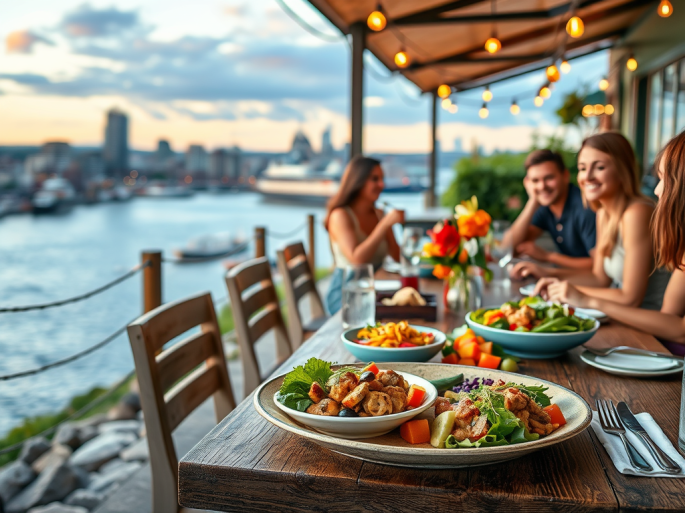
Navigating Dietary Restrictions While Traveling: Tips for Positive Food Adventures

“One of the most daunting parts of celiac or gluten sensitivity diagnosis is figuring out how to travel safely eating gluten free.”–Celiac Canada Association
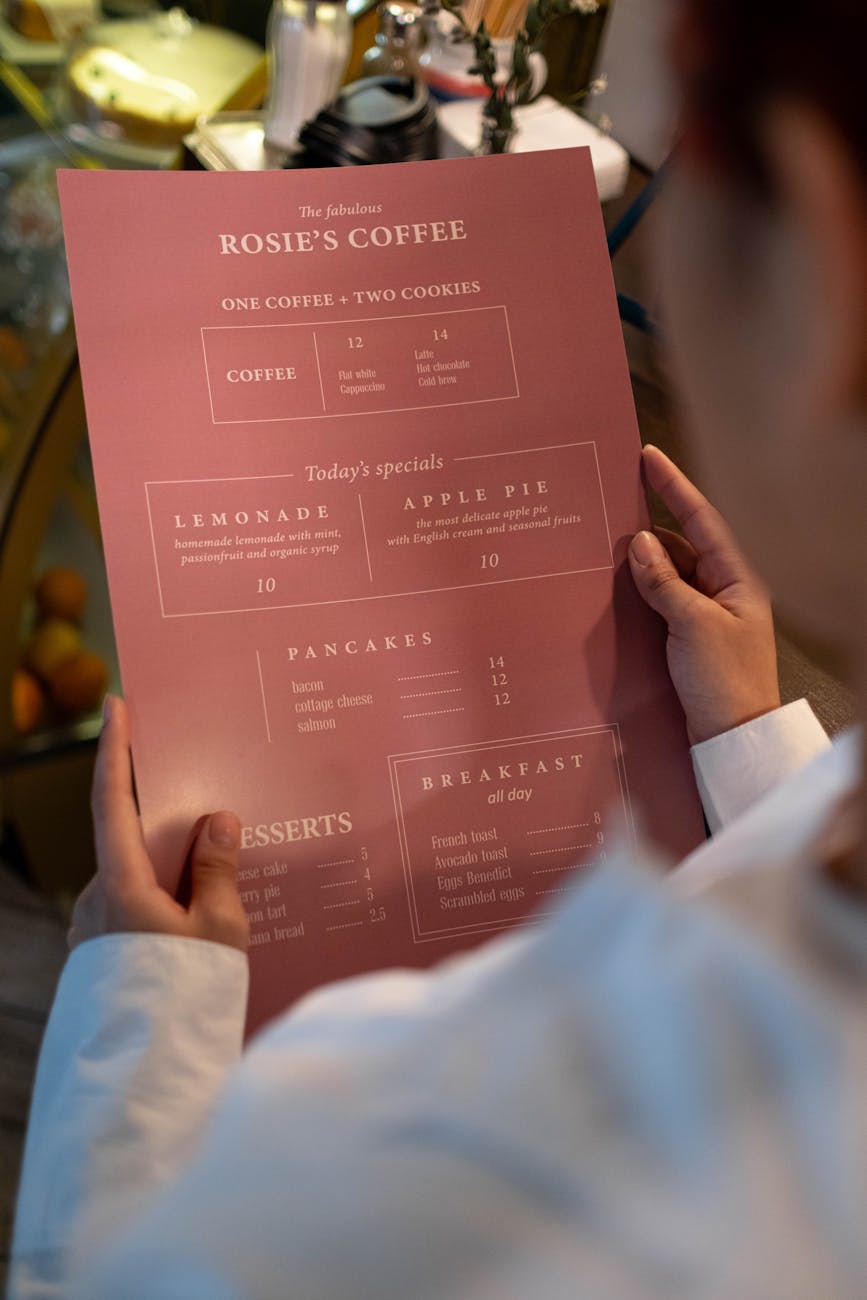
A person holding a pink menu titled 'Rosie's Coffee' displaying various food and beverage options in a cafe setting.
Photo by Ron Lach on Pexels.com

When the Menu Doesn’t Work: Dining Out Dilemmas 🍽️

“Is your veggie burger gluten free?” I asked with crossed fingers

“No—we use breadcrumbs,” she replied.

Since I don’t eat meat, and the only gluten-free option was a bun, we had to leave. It was a trendy burger spot, but like many places, it couldn’t accommodate both my plant-based and gluten-free needs.

John, my husband, and I were visiting our daughter, Maddie, and her boyfriend, Connor, in Boston where Connor was currently completing a summer internship. John and I were on our way back home after spending several days in the Bar Harbor/Acadia National Park area in Maine. And, just as it had been in Maine, and really, how it ALWAYS is when dining out, finding places where I could eat was a challenge. 
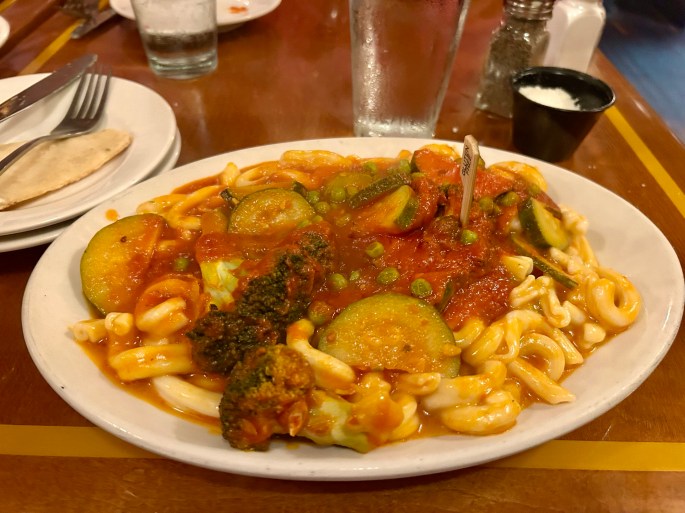
A plate of pasta topped with marinara sauce and mixed vegetables, including zucchini, broccoli, and peas, served in a restaurant setting.
Pasta is one of the hardest things to get when eating out. Fortunately, La Famiglia Giorgio’s Restaurant in Boston, MA, has an entire menu page devoted to those who need to eat gluten-free.

The Root of the Challenge: Living with Celiac Disease 🌾

The difficulty stems from the fact I have celiac disease–a chronic autoimmune disorder, as defined by Mayo Clinic, that is triggered when eating gluten, a protein found in wheat, rye, and barley. Consuming gluten significantly damages the small intestines of the person with celiac, preventing the absorption of essential nutrients, which can lead to serious health problems down the road. Additionally, the side effects of eating gluten are NOT pleasant– diarrhea, abdominal pain, nausea, reflux, fatigue as well as numerous other symptoms.

A bowl of granola topped with fresh berries and sliced apples, placed on a marble table next to a takeout coffee cup.
Eating gluten free and whole food plant based has helped my body heal and recover from decades of undiagnosed celiac disease. Tatte Bakery, Boston, MA

Why I Eat Plant-Based, Too 🍓🫐🥦🥗

I wasn’t diagnosed with celiac disease until my late 40s, after years of digestive issues and unnecessary medications. Healing began when I cut gluten and adopted a whole food, plant-based diet that excludes meat and most dairy. Eating a diet rich in plants bathes my body with the nutrients it was unable to previously absorb for most of my life.

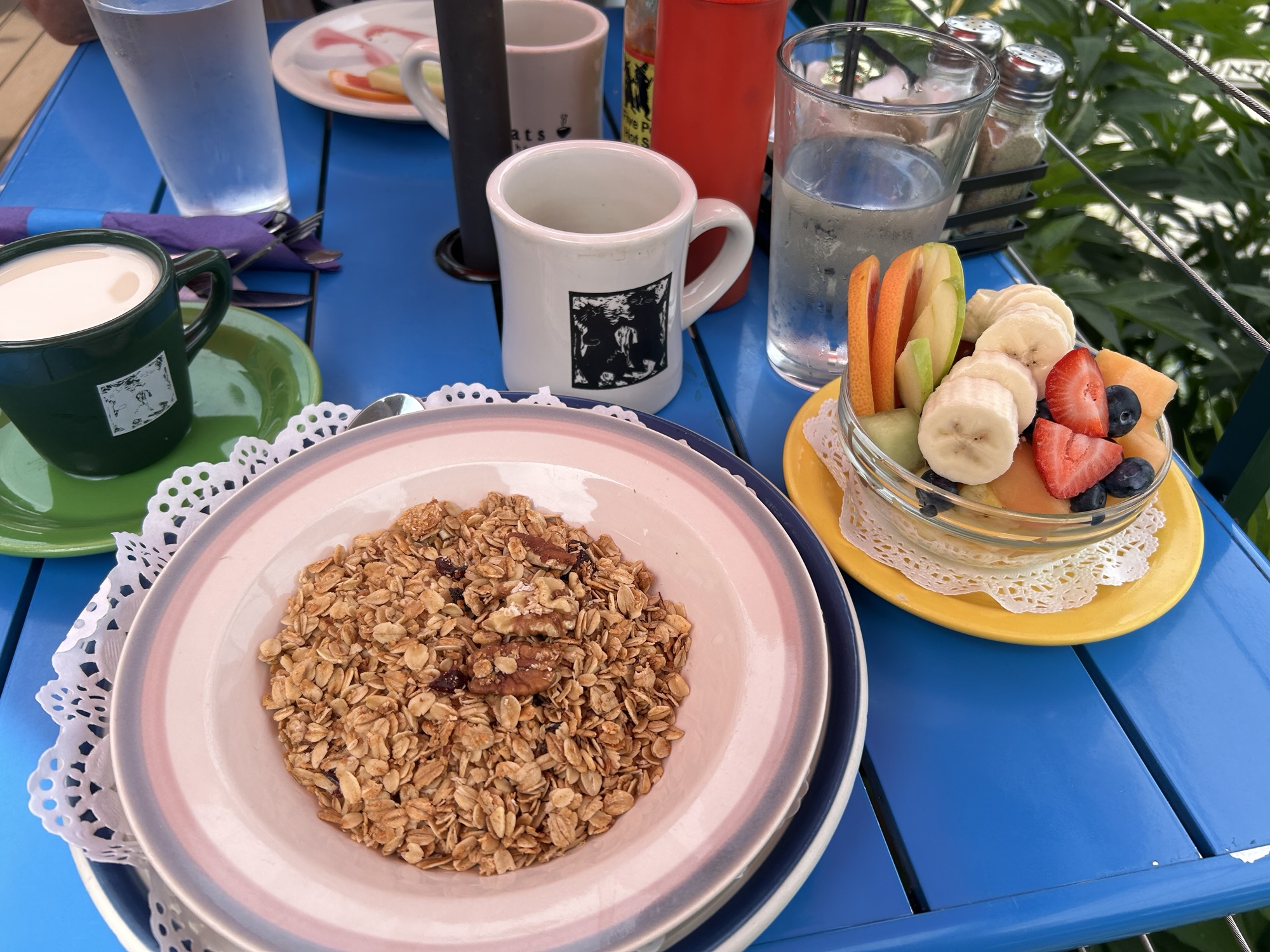
Two Cats Restaurant and Inn, Bar Harbor, ME

Travel: Inspiration and Complication 🌄

However, traveling with my dietary restrictions creates unique challenges.  On one hand, vacation sojourns are enriching, informative, and inspiring. These trips provide me with an opportunity to experience awe, wonder, and delight in the rich tapestry of life. On the other hand, travel requires deft navigation of dietary hazards. However, my trips have taught me that with a bit of planning, research, flexibility, and determination, I often discover and enjoy tasty culinary adventures as part of the travel experience.

Strict adherence to a gluten free diet is a necessity, especially when traveling. As anyone with celiac knows, it is no fun being stuck in a bathroom when you’re supposed to be out hiking, sightseeing, or experiencing a new setting. Additionally, I know that for my body, consuming meat and dairy products can also create digestive distress and discomfort. Therefore, those two dietary restrictions often limit my restaurant choices, create possibilities for cross-contamination, and can sometimes create a lack of understanding of restaurant staff.

A plate of a gluten-free pancake topped with powdered sugar, raspberry pieces, and garnished with orange and mint leaves, next to a mug of coffee labeled 'Great Maine Breakfast'.
Gluten free pancakes with plenty of fresh fruit at Jeannie’s Great Maine Breakfast, Bar Harbor, ME.

Research Is My Best Travel Companion 💻

For example, John often completes dining research in advance of any trip.  He uses Trip Advisor and refines his search to restaurants identified as good choices for gluten free, vegan, and vegetarian diets. What he has discovered is that we have to look closely at menus because eateries tagged as “gluten friendly” are often limited to meat-based dishes, and establishments labeled as “vegan or vegetarian friendly” often involve choices that include wheat (noodles/pasta, seitan, breaded vegetables, and so forth). 

A plate featuring a burger topped with cheese, served alongside a small salad of mixed greens, red peppers, and a dipping sauce, with a side of steamed broccolini.
Blaze, Bar Harbor, ME offered numerous gluten free options on their menu, including this gluten free veggie burger with gluten free bun. YUM!

The Cross-Contamination Trap 🪤

Of further issue is the concern with cross contamination. For example, Mexican food can be a good choice for me; however, if the fryer used for tortilla chips is also used for cooking flour tortillas and meat, these factors can negatively impact my digestive system. Additionally, shared food prep areas, unclear labeling of menu items, and even communication between wait staff and kitchen can lead to hazards.  For instance, if I order a gluten-free pizza crust, but it is prepared on a commonly shared counter on which wheat pizza crust is rolled out, this might upset my digestive tract.  

I’ve also had the experience of ordering a gluten-free pizza crust and still getting a pizza made with wheat due to miscommunication. And, while the only other country in which I have traveled is the English speaking parts of Canada, I can only imagine the chance for miscommunication in a country in which I don’t speak the native language.

This is why advanced research is important when traveling.  When I don’t have a game plan, or plans change, as was the case when we tried to go to the burger establishment in Boston, things can very quickly go awry. I end up feeling terrible because I feel I am limiting my loved ones from having a positive dining experience. After all, part of the fun of traveling is eating in new places.
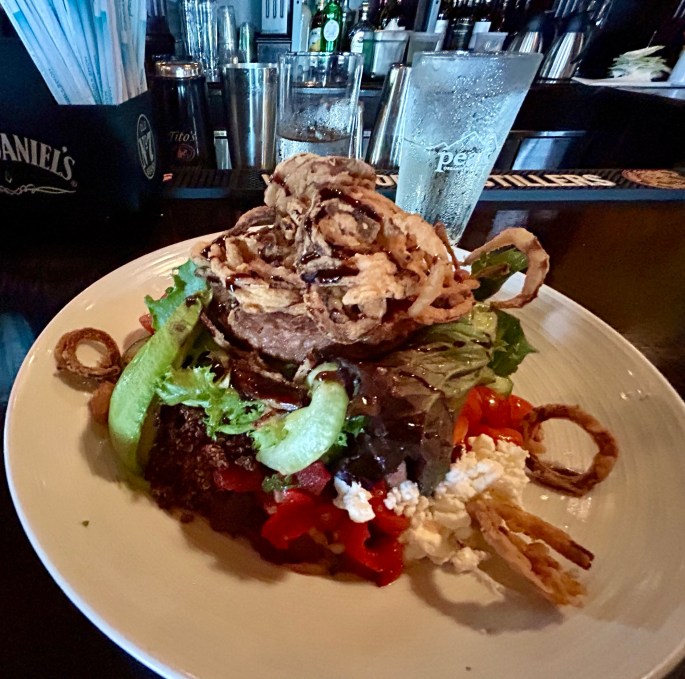
A colorful salad topped with a fried onion ring stack, featuring greens, tomatoes, and cheese, served at a bar setting.
The EARTH BOWL at Paddy’s Irish Pub & Restaurant, Bar Harbor, ME: Grilled , Gluten free, Plant-Based Burger, Tri-Color Quinoa, Roasted Pepper Salad, Heirloom Tomatoes, Garden Cucumbers, Ruby Red Beets, Avocado, Local Chevre, Sweet Balsamic Syrup.

Planning Ahead and Packing Smart 🧳

In addition to researching and using apps, such as Happy Cow, AllergyEats, and Find Me Gluten Free, John and I tend to stay in places with a microwave, refrigerator, and nearby grocery stores. I always pack food from home, and I’ve learned to bring supplemental items with me to restaurants if needed, such as gluten free bread, crackers, salad dressings, and so forth.
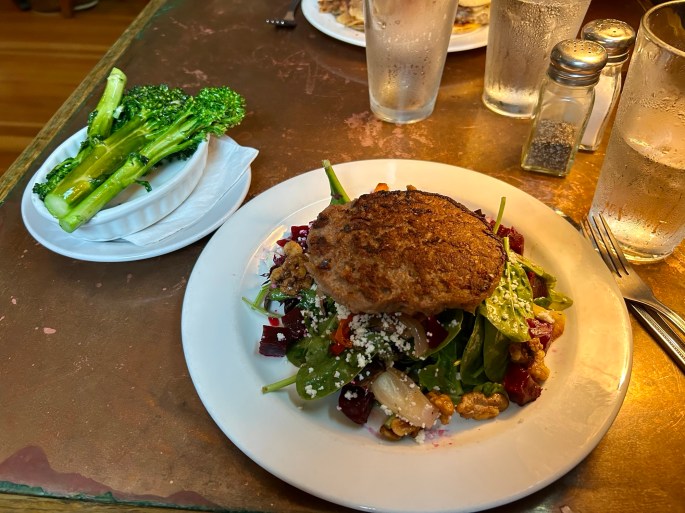
A plate of salad with mixed greens, nuts, and beets topped with a vegetable patty, accompanied by a side of steamed broccoli.
McKays Public House at Bar Harbor, ME: mixed greens tossed in maple dijon dressing, with roasted onions, carrots, and beets, feta cheese, candied walnuts topped with a gluten free veggie burger and served with a side of broccolini.

Connection and Communication: The Human Side of Dining 😊

I have also learned to befriend the wait staff.  Honestly, I try to do this anyway because I like meeting new people, and I cannot imagine how demanding it must be when working with the public, especially in popular travel destinations. When I politely explain my situation and dietary preferences to the staff without demanding it, most staff and chefs are willing to work with me. I have even had the rare chef visit my table to discuss the best way to prepare my food, which I appreciate more than words can adequately express.

A plate featuring a serving of colorful salad topped with various vegetables, accompanied by a side of grilled asparagus and a bowl of green beans. The setting appears to be a casual dining location.
Brewhouse Bowl BJ’s Restaurant and Brewhouse, Hagarstown, MD: Roasted barbacoa cauliflower; Peruvian quinoa + brown rice; black beans; corn + fire-roasted red pepper succotash; cucumbers; pickled red onions; pico de gallo; feta cheese; housemade guacamole; Greek yogurt crema; and,cilantro served with a side of broccoli and asparagus.

Flexibility and Food Choices: Finding Balance ⚖️

A plate with a waffle topped with sliced strawberries and bananas, accompanied by a small cup of peanut butter and a small container of syrup, set on a table with beverages in the background.
Gluten free, vegan Belgian waffle at Donut Villa Brunch Club and Bar, Boston, MA: topped with strawberries and banana served with sides of peanut butter and syrup.

One other thing I have learned to do is to compromise. While I prefer to eat whole food, plant based, I medically need to eat gluten free. Therefore, if it comes down to it, I will compromise somewhat on my plant based eating. For example, I don’t mind consuming a bit of goat or Parmesan cheese, yogurt, butter, or even the rare egg (think baked goods) if it allows my family to find meals they enjoy. Since I don’t regularly consume these products, I don’t think eating a bit here and there, such as during travel or other special occasions, will hurt me, and it makes the food feel like a real indulgence.
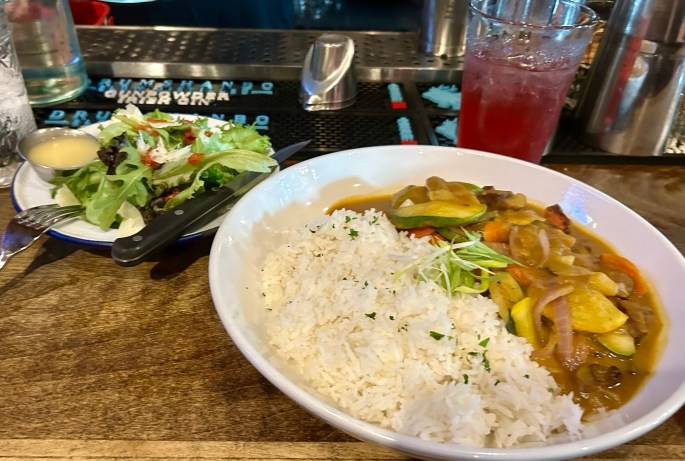
A plate of rice accompanied by a colorful vegetable curry, served with a side salad and a drink in the background.
Butternut Squash Curry at Leary’s Landing Irish Pub, Bar Harbor, ME, with roasted seasonal vegetables and jasmine rice.

A New Way to Experience the World Through Food

Traveling with celiac disease and/or other dietary restrictions is undoubtedly challenging, but I have learned over the years that it is not impossible with enough preparation, advocacy, and an adventurous spirit.  I have found that I now value and appreciate eating establishments who craft foods to appeal to a wide array of dietary desires. Additionally, I have met unique and wonderful people while doing this, and I have enriched my own knowledge of possibilities when it comes to cuisine.  It’s like, well, having your gluten free cake and eating it too! 

A bowl of chia seed pudding topped with banana slices, strawberries, and blueberries, accompanied by two slices of toasted bread with peanut butter, served in a diner setting.
“Morning Jump Start” at J’s Diner, Hagarstown, MD, with chia pudding, berries, banana, coconut flakes, and toast with almond butter.

Share your experiences

If you have tips for traveling with dietary restrictions, or if you have experiences you’d like to share regarding traveling with dietary restrictions, please share your comments!

A sizzling plate of colorful sautéed vegetables served at a restaurant, accompanied by tortilla chips, condiments, a glass of water, and a bowl of black beans.
Fajitas at Angela’s, Taste of Puebla, Mexico, Boston, MA, with sauteed onions, green and red peppers. Comes with shredded cheese, pico de gallo, guacamole, sour cream and flour tortillas. Served with rice and beans.
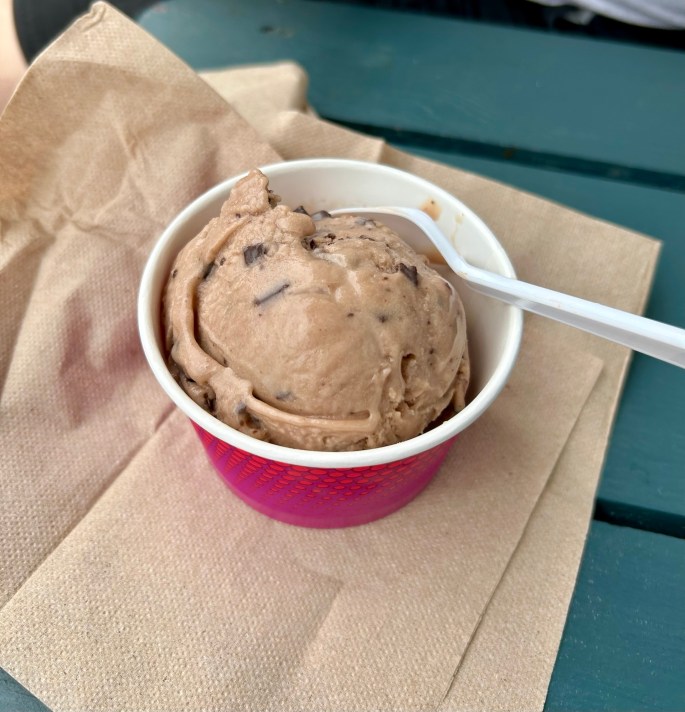
A cup of chocolate ice cream with chocolate chunks on a paper napkin.
Plant based chocolate ice cream at Salt Shop, Sweet and Savory Snack Bar, Southwest Harbor, ME.

Health Benefits of Oat Bran: A Nutritional Powerhouse with muffin recipe

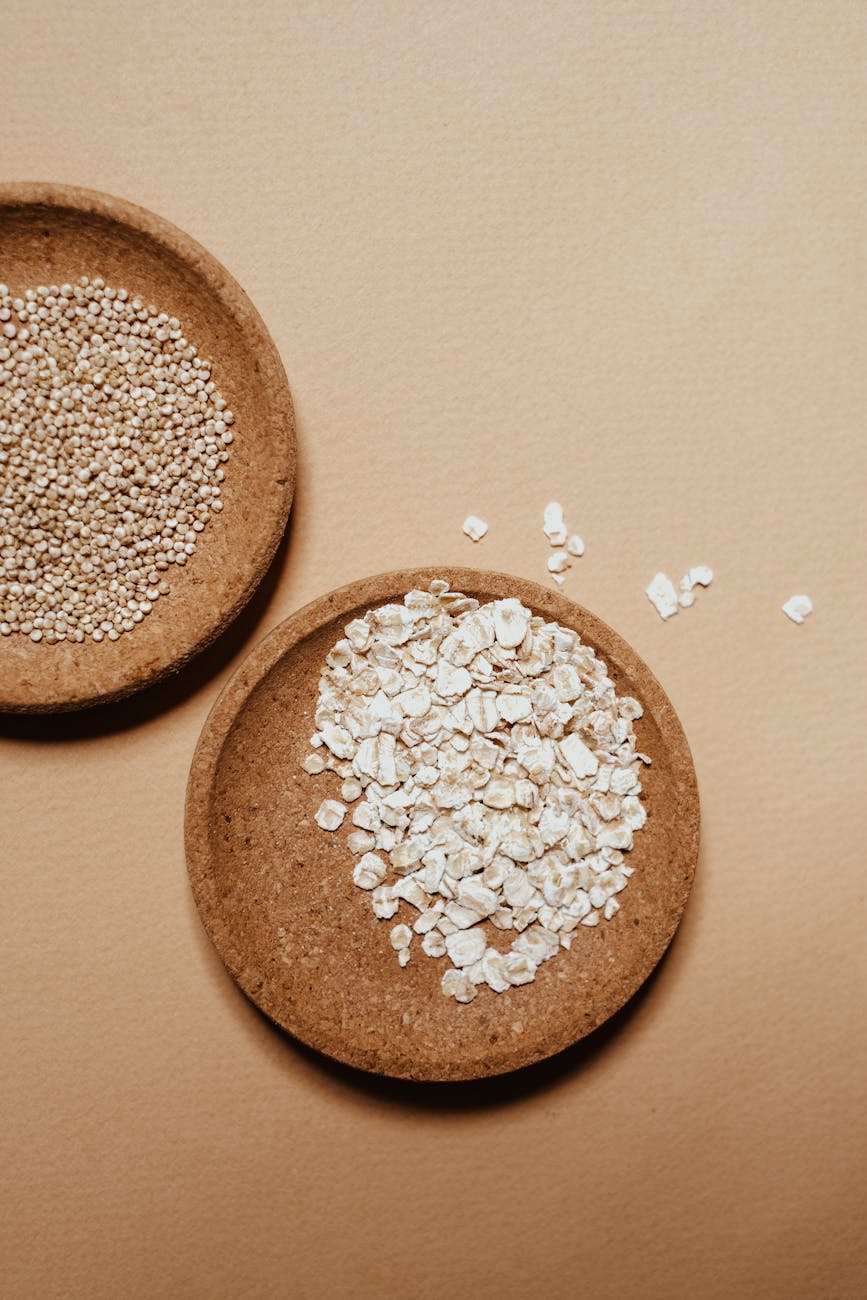
Oat bran, a by-product of oat grain processing, is a good source of soluble fibers: β-glucans that are linked to the reduction of cholesterol and to the prevention of cardiovascular diseases.”Science Direct

Photo by Vie Studio on Pexels.com

Oat Bran Fad 🥄

Are you old enough to remember the oat bran craze of the late 1980? A 1991 Los Angeles Times article described the oat bran-craze as a short-lived obsession, which began in 1987 when several influential U.S. medical groups, such as the American Heart Association and the American College of Cardiology, started the Know Your Cholesterol campaign. Former president Ronald Reagan would later proclaim April 1988 as National Know Your Cholesterol Month.

 I was early in my career at that time, and I can recall one of my coworker’s transformation when his doctor ordered him to lower his cholesterol after suffering a mild heart attack in his mid-40s. He decided to eschew medication, and try the “eating healthier” route, which included eating oat bran every morning for breakfast. In addition to several dietary changes, he added walking and/or bike riding for 30+ minutes four to five times a week. His results were stunning. By the end of that school year, he looked like a different person. 

Award-winning Nutrition 🏆

The oat bran craze, like other dietary fads, lost its shine by the early 1990s; however, it is still certainly worthy of regular consumption and should probably have a star placed on the Nutritional Wall of Fame if there were one. Specifically, it is high in soluble fiber. When eaten, soluble fiber soaks up water like a sponge, creating a gel-like substance that can lower blood sugar levels, holds on to cholesterol and fat, and make stool easier to pass.  

In addition to being high in soluble fiber, oat bran is lower in carbs and calories than oatmeal.  Oat bran is also higher in nutrients such as protein, fiber, iron, thiamine, and magnesium to name a few. It contains high levels of antioxidants which ward off chronic disease, inflammation, and offers other health benefits. Additionally, oat bran may also help lower both blood pressure and cholesterol.  Plus, it is naturally gluten free. 

Easy addition ➕

Making oat bran a regular part of a healthy diet is easy to do. Eat it as a creamy, comforting, warm porridge-like cereal, or mix it up as you would your favorite overnight-oats recipe for a velvety breakfast delight in the morning. Oat bran can be a nutritional addition to smoothies. It can be an excellent addition to baked goods, such as quick breads, cakes, and muffins like the recipe I share here. Stir oat bran into your favorite yogurt, or add it to your favorite casseroles, meatballs, meatloaf, or burger recipes. 

TAsty Holiday Treat That benefits your Health ✨

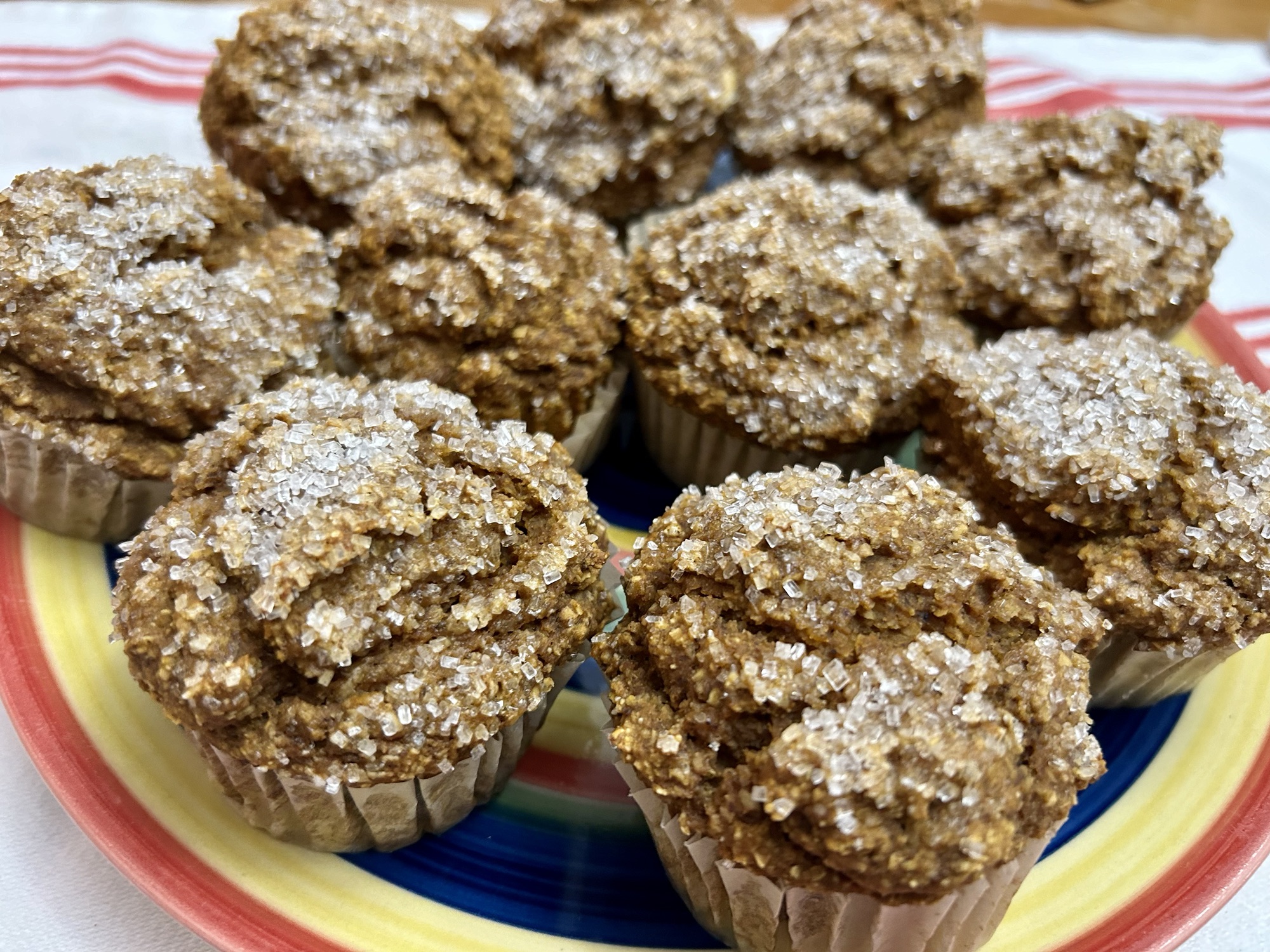
Even though it is a long way from those late 1980s, regular consumption of oat bran can go a long way to benefiting your health. The recipe below is one easy way to level up your oat bran game. The muffins are tasty on their own, and they deliciously pair with a drizzle of honey or smear of melted butter alongside a warm cup of coffee or tea. They freeze well for quick grab and go convenience, which is important over the coming Thanksgiving holiday. Plus, there’s a slew of optional stir-in ingredients listed below, so you can personalize this recipe to fit your taste preferences.

From my home to yours, I wish you a healthy, happy, and wonderful Thanksgiving full of homemade goodness. 

Personalize this recipe with your choice of stir-in ingredients to take this recipe to the next level of flavor and health!

Healthy Holiday Pumpkin Oat Bran Muffins

Ingredients:

1 ½ cup oat bran

1 ½ cup oat flour (can replace with all-purpose flour or gluten free variation)

2 teaspoons baking soda

1 teaspoon baking powder

½ teaspoon salt

4 packets of your favorite sweetener

1 ½ teaspoon cinnamon

½ teaspoon ground ginger*

½ teaspoon ground nutmeg*

¼ teaspoon ground cloves*

⅛ teaspoon all-spice* 

2 eggs or “fleggs**” 

1 tablespoon apple cider vinegar

15 ounce can pure pumpkin puree 

½ cup apple sauce

½ cup pure maple syrup 

⅓ cup milk (dairy or nondairy)

2 teaspoons pure vanilla extract

Optional stir-ins: 1 cup chopped nuts and/or ½ cup blueberries, raisins, currants, chopped dates, dried cranberries, or chocolate chips

Notes: 

*Can replace ginger, nutmeg, cloves, & all-spice with 1 ½ teaspoon pumpkin pie spice

**To make two flax “eggs” or “flegg”: Stir together 2 tablespoons ground flaxseed + 5 tablespoons water and set in fridge for 5+ minutes before adding to recipe

Directions:

Preheat oven to 375 degrees

Be sure to set out eggs, if using, and maple syrup ahead of time to come to room temperature.

If replacing eggs with flaxseed “flegg” variation, combine ground flaxseed and water, and set in fridge for five minutes to thicken 

Meanwhile, combine dry ingredients (oat bran, flour, baking soda, baking powder, salt, and all of the spices) into large mixing bowl and set aside

Next, mix together wet ingredients

Pour wet ingredients into dry ingredients, but do not overmix

Gently fold in any additional stir-in ingredients, such as blueberries, nuts, chocolate chips, and/or dried fruit, if using

Divide evenly among 12 prepared muffin tins

Sprinkle with sparkling sugar or cinnamon, if desired

Bake 18-22 minutes or until a toothpick inserted in the center comes out clean

Cool five minutes before serving

Store uneaten muffins in an airtight container in the fridge for up to five days, or freeze for up to three months.

Delicious and Healthy Sweet Potato Mango Bowls: A Nutrient Rich Delight

Mango, often dubbed the king of fruits, isn’t just delicious, it’s full of nutrients and health benefits.”–OhioHealth.com

Photo by Alexander Grey on Pexels.com

Nothing Like Fresh summer Produce 🌽🍅

When I was a girl, mid- to late summer, it seemed to my unfledged mind, was one of grandparents’ favorite times of year. This was because it was the time of year full of fresh garden produce! It wasn’t unusual during this season for them to eat a dinner full of nothing but fresh vegetables: salted, slices of beefsteak tomatoes, pork-flavored half-runner beans, sweet corn on the cob slathered with sweet butter, and dinner rolls spooned over with sorghum syrup.  Sometimes, they’d toss in fresh melon for dessert, with or without ice cream, or some sort of fruit cobbler! 

Oh, how intoxicatingly fragrant those kitchens were! To this day, I can’t smell a good garden tomato without being reminded of one of their kitchens. It didn’t matter which house I happened to be visiting, my maternal grandparents or my paternal grandmother–their kitchens had similar earthy aromas during the end of summer.  To be sure, they’d vary the menu with tomato, bacon, and lettuce sandwiches or wilted lettuce with bacon drippings.  Sometimes they might fry up hamburgers and top them off with a fresh slice of tomato, serve a salad with freshly picked cucumbers and chopped garden “mangoes,” and of course, have more sliced and salted tomatoes on the side.  They might even bake up a meatloaf with chopped, fresh “mangoes,” or they might stuff the freshly picked “mangoes” with a meatloaf-like mixture.

Photo by Pixabay on Pexels.com

Mangoes are a Tropical Fruit 🥭

It was years later, when I was stunned to learn that what my grandparents called “mangoes” were actually called bell peppers.  I was further surprised to learn that mango was a tropical orange fruit grown in trees!  In fact, it’s only been in the past decade that I’ve really come to embrace and regularly eat mangoes, due to their availability now in both the produce and freezer aisles in most local stores. 
Mangoes have a delicious, creamy peach-like flavor and juiciness, and they pack a nutritional punch. They are chock full of vitamin C, and they are full of soluble fiber–known for binding with fat and cholesterol in the digestive tract before they get absorbed. Mangoes are also a good source of vitamins A and E.  Overall, mangoes benefit your immune system, eyes, skin, gut health, and even have anticancer properties.  Plus, they taste great.  What’s not to like about that?

Photo by Nancy Folgmann on Pexels.com

Mangoes and Bell Peppers 🫑🥭

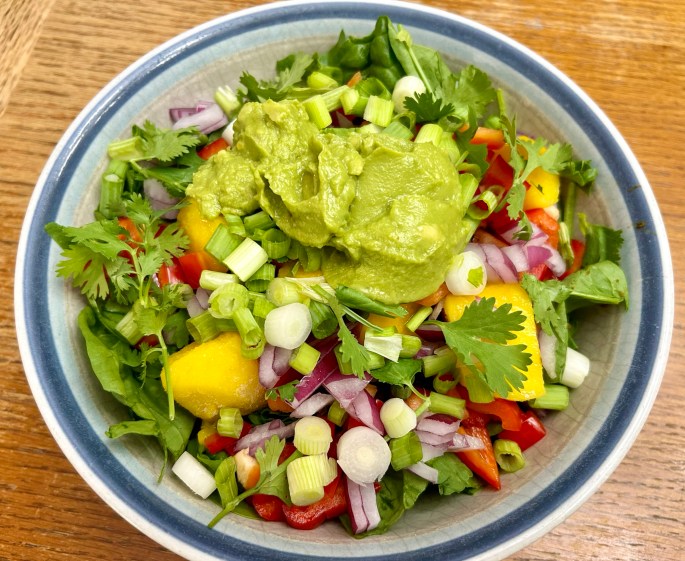
Although mangoes taste nothing like a bell pepper, they are both nutritionally beneficial and a versatile addition to a wide array of recipes, such as the one I am sharing with you today. This recipe is a super easy, quick recipe for dinner or lunch. While it is an older recipe from a plant-based cookbook, by Rip Esselstyn, you don’t have to be vegetarian to enjoy this recipe.  Plus, for those with allergies, it is gluten-, dairy-, and nut-free.

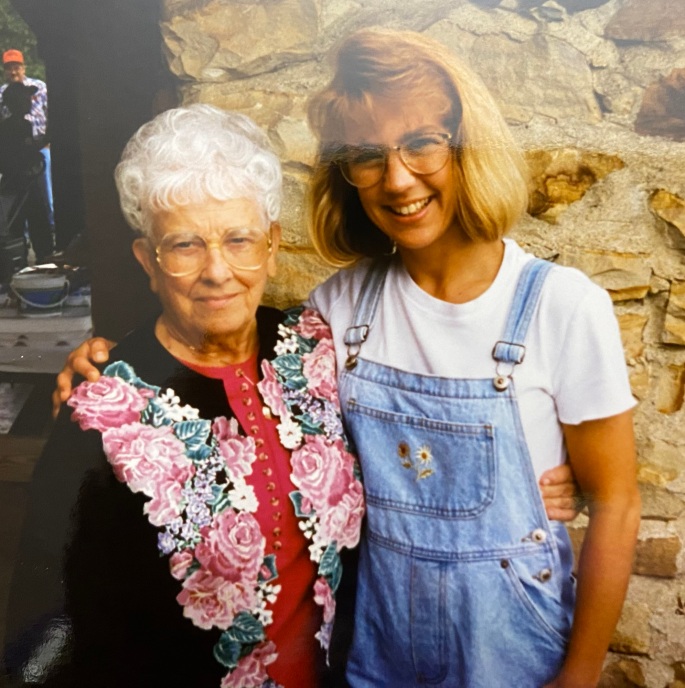
It’s bursting with nutrients and plenty of fiber to fill you up and benefit your health.  However, I know all of that doesn’t matter if the recipe doesn’t look and taste great, and this sweet and savory recipe certainly does! As my Grandmother Helen taught me to remember, “We eat first with our eyes,” and this recipe makes one vividly vibrant plate, full of colors and flavors that will lead to full tummies and clean plates around your table!  
This recipe will “Bowl” you over! 🥣

While I know my papaw would have NEVER tried this recipe, I’d like to think both of my grandmothers would have given this mango-forward dish a try. Therefore, I hope you will try this recipe out in their honor, and, of course, feel free to serve up a side of salted, sliced tomatoes, corn on the cob, and/or some rolls with sorghum syrup from the local farmer’s market!

From my home to yours, I wish you new and old recipes that are full of family connections and stories!

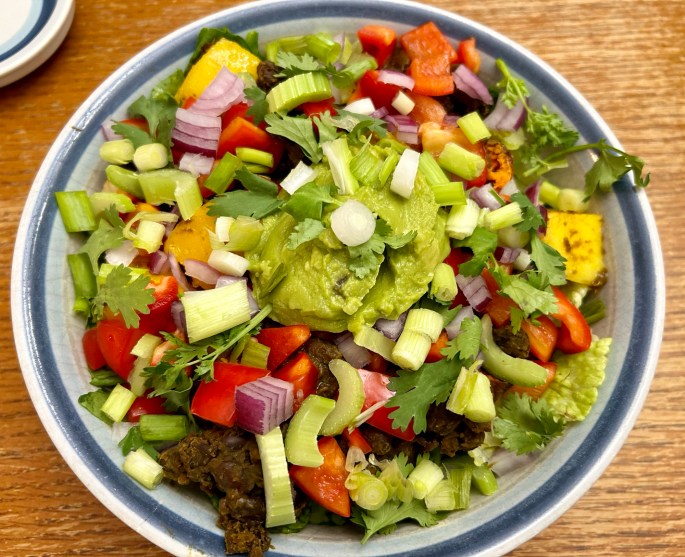
Sweet Potato and Mango Bowls

Gluten-free, nut-free, dairy-free

Serves 2, but recipe can be doubled or tripled

Ingredients:

2 large sweet potatoes

1 (15-ounce can) black beans, drained and rinsed

¼ teaspoon ground cumin

¼ teaspoon garlic powder

¼ teaspoon onion powder

¼ teaspoon chili powder

4 cups of my favorite salad greens, i. e. spinach or spring mix

4 to 6 green onions, chopped

1 fresh mango, chopped or 1 cup frozen mango chunks

1 red bell pepper, chopped

½ avocado, mashed or diced, depending upon preference

¼ cup chopped cilantro (optional)

Lime juice

Salsa

Directions:

Bake sweet potatoes (microwave or oven)

In microwave safe bowl add black beans and spices, stir and heat for 60 or so seconds in microwave (Can also mix and heat on stove top if preferred)

Divide greens between two bowls

Top with sweet potato, which can be cut in half or cubed, your preference

On top of sweet potato, add beans, green onion, mango, red pepper, avocado & cilantro, if using

Drizzle with lime juice and add desired amount of salsa

Nutritious Maple Walnut Salad Inspired by Alzheimer’s Study | Health Recipe

“I am cautiously optimistic and very encouraged by these findings, which may give many people new hope and new choices,” Dr. Dean Ornish

highly anticipated study 📈

Photo by Greta Hoffman on Pexels.com

I recently returned from a trip to Ontario, Canada. While I was there, a major study, led by Dr. Dean Ornish, was released in BioMed Central’s Alzheimer’s Research and Therapy. This highly anticipated research was widely promoted across various news outlets weeks earlier. Despite the fact I had read the earlier press releases, reading the report, one peaceful early morning in a rustic cabin along the shores of backwoods lake, provided greater understanding.

As I have previously written, Alzheimer’s disease (AD) and dementia are part of the genetic make-up on both sides of my family history.  Watching it take the minds of my beloved grandparents was heartbreaking. Ultimately, they required extensive care in large part due to AD, the burden of which fell upon their children. Therefore, I want to do all that is possible to avoid placing that type of burden upon my loved ones.

Ornish’s study is the first controlled clinical trial to demonstrate that lifestyle habits can delay the onset and progression of mild cognitive impairment (MCI) or early dementia due to AD. The study initially enrolled 51 patients and their designated partners, aged 45-90, for 20 weeks, but two withdrew. Nonetheless, the study guided the remaining 49 patients through a series of interventions, including a plant-based diet; walking 30 minutes per day; strength training three days a week; stress management including yoga, breathing exercises, and meditation, to name a few; group support via Zoom meetings, and specific supplementation, all of which is clearly spelled out. 

Excitement Incitement 💡

The excitement of this study got my recipe-creating gears grinding, especially as a major heat wave sank its talons in a large swath of the U.S. and Canada, including where I was staying with my husband. With the extreme heat we were experiencing, the last thing I wanted to do was turn on the cabin’s stove or oven, especially since there was no air conditioning. Therefore, throughout our stay, I created several dinners of seriously large salads, adding additional inspiration for this month’s recipe.  

Of further influence was the wide availability of Canadian maple syrup.  In fact, I encountered a representative of White Meadows Farms, out of St. Catherine, Ontario.  This family-owned farm, established in 1937, has been harvesting sap to make maple syrup for over three generations. After one sample, my taste buds were “stuck” on the flavor of their dark syrup. I knew I had to put their syrup to good use as part of this recipe creation. After all, sweet moderation is an important part of good health.

Nuts for health 🌰

Another point of inspiration for this recipe was the wide availability of bulk walnuts at the local market near our camp. Nut and seeds are a healthy part of the Ornish diet. In fact, according to the Cleveland Clinic, walnuts provide a good source of omega-3 fats and antioxidants for heart health, benefit gut health due to their high fiber content, help stave off inflammation, and may reduce risks for certain cancers.  Additionally, those healthy fats and antioxidants may boost brain health–perhaps that is why walnuts are shaped like a brain!

A rainbow recipe of pride 🏳️‍🌈

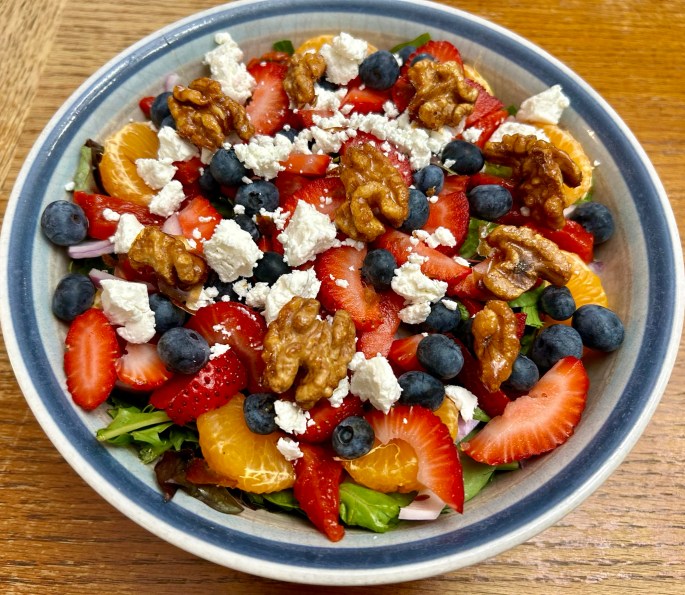
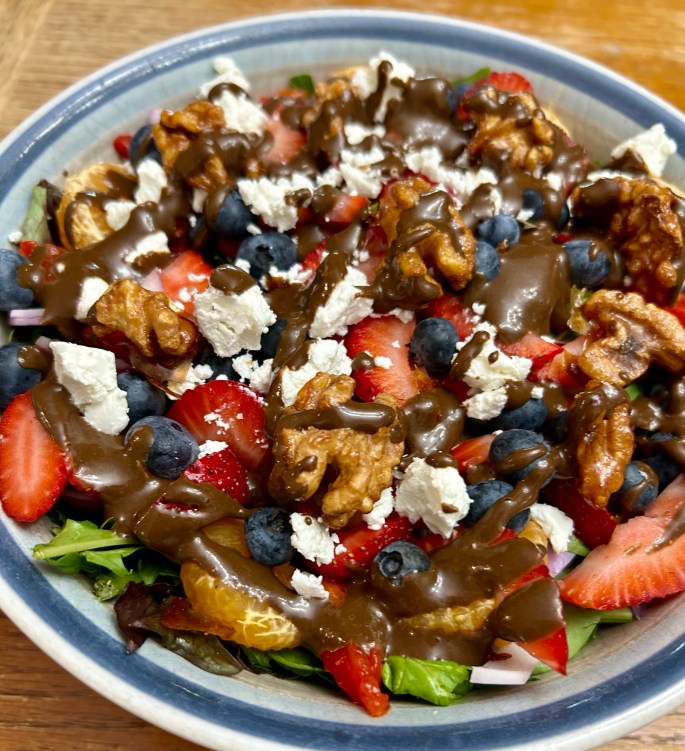
One final source of inspiration for this recipe was the fact that it was created during June, the month of Pride, dedicated to celebrating my friends and loved ones in the LGBTQ+ community, including my brother and two nieces.  It is with great, well, “pride” and celebration that this recipe will debut on June 28, International LGBTQ+ Day.  This gorgeous salad offers a RAINBOW of tasty colors and textures designed to nourish EVERY body.

From my home to yours, I wish you health, happiness, and hope for an optimistic future free from dementia and Alzheimer’s disease!

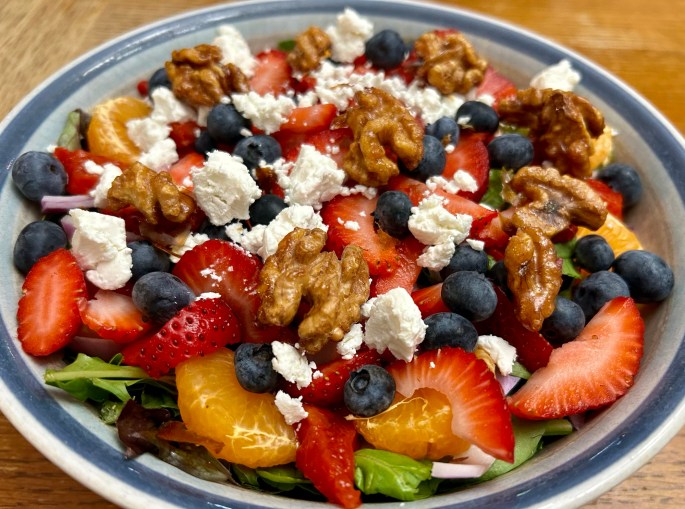
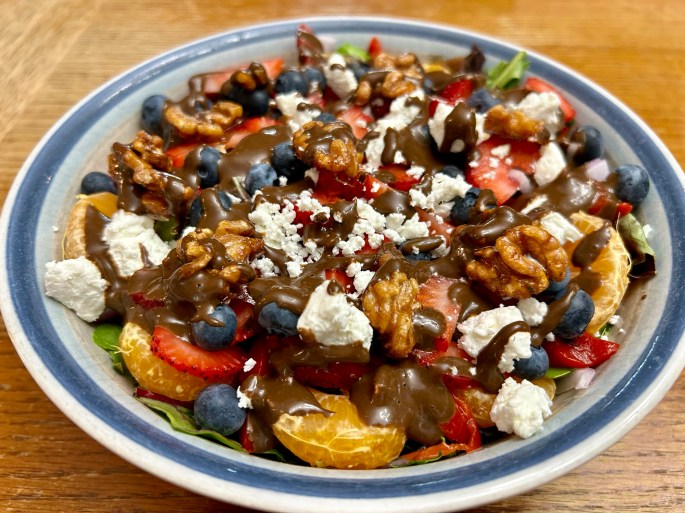
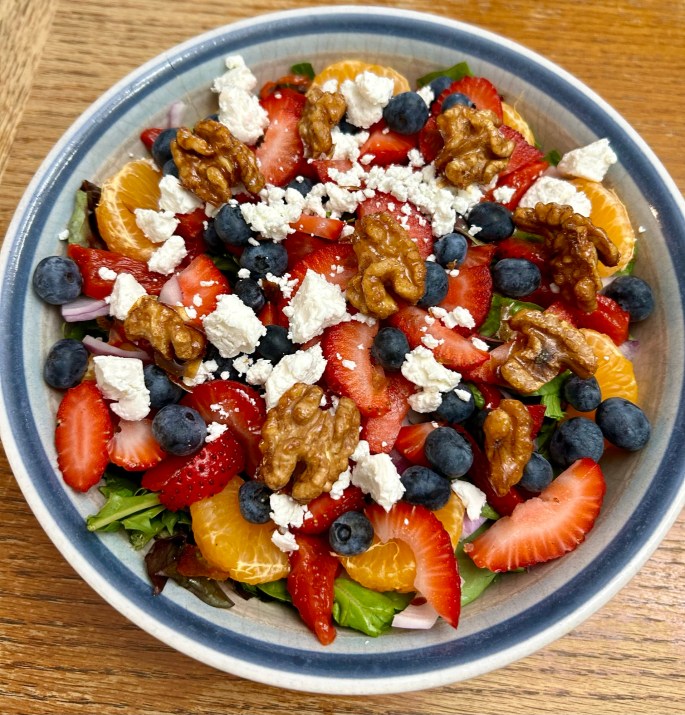
Rainbow salad with maple walnuts and vinaigrette, gluten-free with vegan options

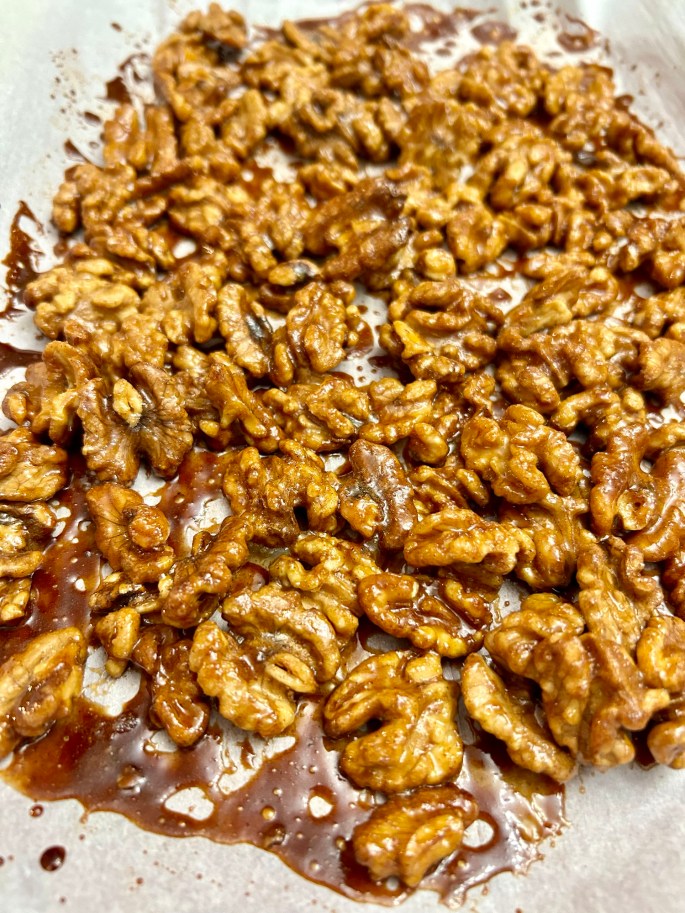
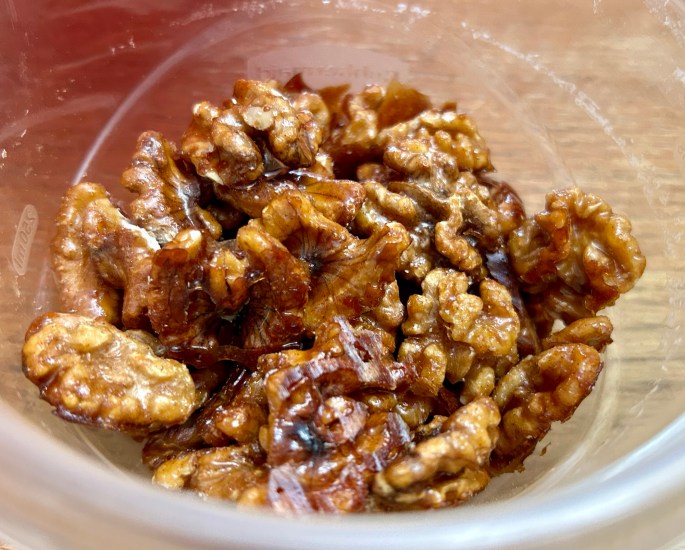
Maple walnuts ingredients:

2 cups walnuts

⅓ cup pure maple syrup

½ to 1 teaspoon vanilla 

¼ to ½ teaspoon cinnamon 

⅛  teaspoon sea salt

Salad ingredients:

5 or more ounces of favorite baby greens

1 cup sliced strawberries

¾ cup blueberries

2-3 clementines, sectioned

½ sliced large red onion

½ cup roasted red peppers and/or shredded carrots

2-4 ounces goat, or equivalent vegan, cheese or 1 cup beans, drained and rinsed

Maple walnut balsamic vinaigrette ingredients:

¼ cup walnuts

½ cup water

¼ cup balsamic vinegar

2 tablespoons maple syrup

1 tablespoons dijon mustard

½ teaspoon dried onion powder

½ teaspoon dried oregano

⅛ teaspoon salt

Pepper to taste

Maple walnut directions:

Preheat oven to 350 degrees

Line baking pan with parchment paper or lightly grease and set aside

Place maple syrup in a small, microwave safe bowl.

Heat syrup for 30-60 seconds

Stir in vanilla, cinnamon, and sea salt until thoroughly mixed

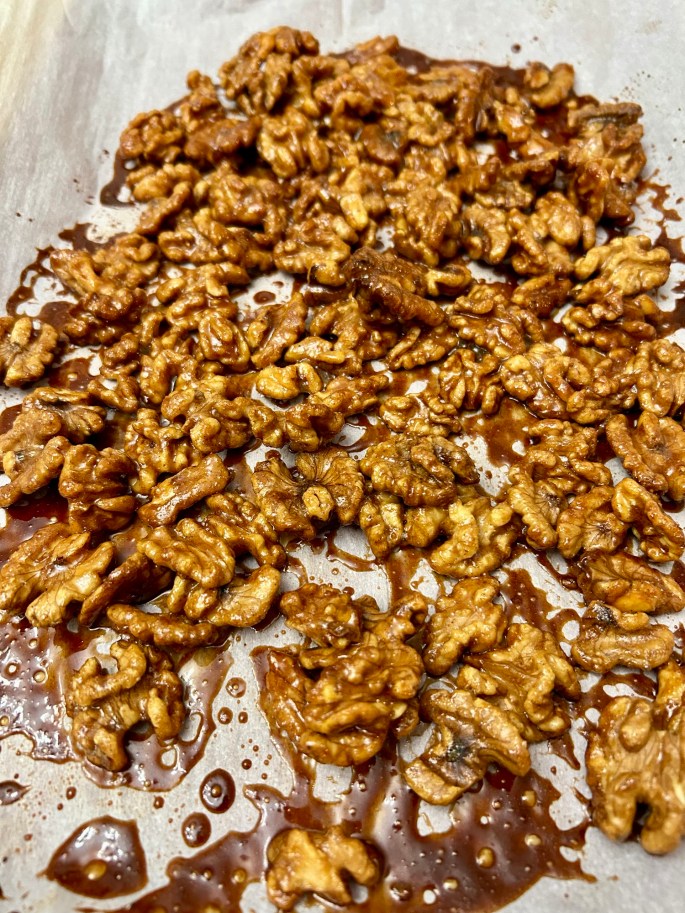
Pour syrup mixture over walnuts, and stir until well coated

Spread coated walnuts onto prepared baking sheet

Bake 5-7 minutes, then stir and rotate 

Continue baking for 3-5 minutes or until walnuts are golden brown

Remove walnuts from oven and allow to cool on baking sheet 

Break walnuts apart and store in airtight container or baggie for up to 3-4 for weeks

Enjoy these maple walnuts as a snack or sprinkle over salads, fruit bowls, oatmeal, yogurt parfaits, ice cream sundaes, etc 

Maple walnut balsamic vinaigrette directions:

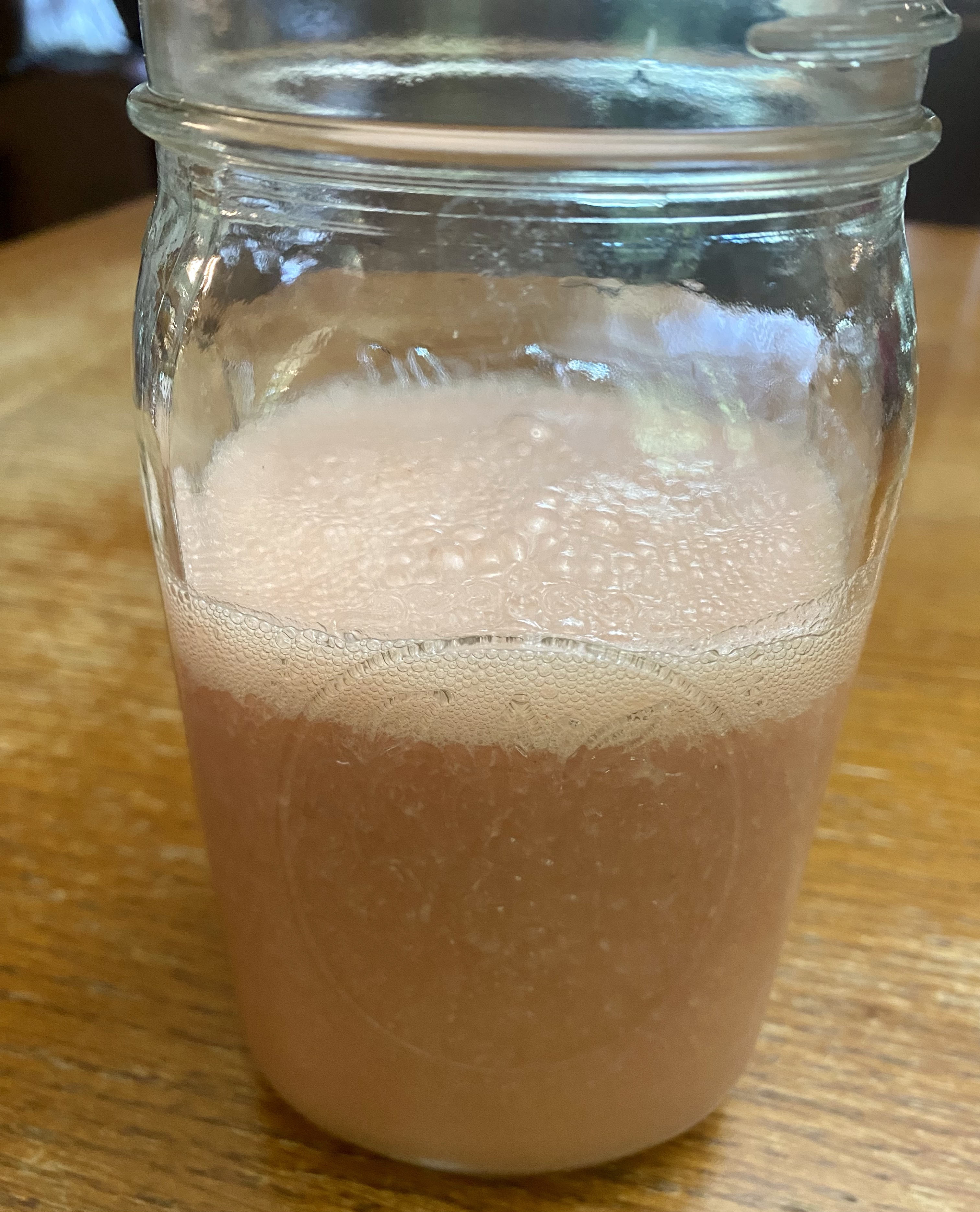
Place all ingredients in high powered blender and blend until smooth, approximately 45 seconds

Pour into glass container (I like to use canning jar)

Store in refrigerator for up to 4 weeks

Makes approximately 1 cup dressing

To assemble salad:

Add greens to large salad bowl

Add sliced strawberries, blueberries, clementines, sliced red onion, sliced red pepper, and/or shredded carrots, if using.

Toss with desired amount of dressing, divide among plates/bowls and top with goat or vegan cheese (or top with beans instead, such as roasted chickpeas)

Serves 2-4

This recipe also took inspiration from the following websites and articles: Better with Cake, The Garden Grazer, Hello Nutritarian, “Effects of intensive lifestyle changes on the progression of mild cognitive impairment or early dementia due to Alzheimer’s disease: a randomized, controlled clinical trial,” an article on BioMed Central,“‘A study to give us hope’: Lifestyle changes improve Alzheimer’s symptoms for some,” an article on CNN, and Shane and Simple.

Simple Steps to Improve Brain Health and Reduce Risk for Alzheimer’s Disease and other forms of Dementia

with Tasty Thai-style Recipe to get you started

“A healthful, whole plant–based diet appears to yield the greatest risk reduction.”The Journal of Alzheimer’s Disease (published December 2023)

Photo by Kindel Media on Pexels.com

The statistics of Dementia 🔢

According to the World Health Organization, over 55 million people globally suffer from some form of dementia, and approximately 10 million new cases are identified each year. Of these cases, 60-70% of them will be identified as having Alzheimer’s Disease.  Additionally, women are most affected by dementia either directly or indirectly as a caregiver.

Family history and genetics are one obvious risk factor for dementia, but there are other contributing factors.  These include: age, head injury, high blood pressure, high cholesterol, cardiovascular disease, diabetes, smoking, social isolation, stress, and excess alcohol intake. As a further consideration, recent research points to the fact that a person’s diet can either increase or decrease risk of developing AD, and this is exciting news, especially on a personal level.

Family History of Dementia 👵🏼 👴🏻

From a family lineage perspective, I am at high risk for developing some form of dementia, including Alzheimer’s Disease (AD).  My maternal grandfather (and his mother) suffered from AD, and my paternal grandmother lived with a form of dementia in her final years. This is of great concern to me for obvious reasons, but especially for my daughter. She is an only child, and I do not wish for my final years to be such a heavy lift for her without the support of siblings.

Therefore, I try to stay up to date on the latest developments for prevention as well as treatments. While there are dozens of promising treatments for AD currently researched around the world, at the time of writing this piece, there is still no known medical treatment to slow or stop the progression of AD.  It is considered fatal.

Dietary Habits can reduce or Increase Risk 🥦🍎🫛🍑

However, The Journal of Alzheimer’s Disease published, in December 2023, a comprehensive review of three decades worth of research that points to evidence that “dietary factors play important roles in the risk of AD.”  This review reveals that the dietary practice of reducing meat consumption, and increasing whole, plant-based food decreases one’s risk for AD.  Specific dietary approaches, such as MIND and DASH, appear to reduce one’s risk for AD  40-50%. However, the greatest reduction risk was found among those who did not include meat in their diet, and instead focused on whole grains, legumes, nuts/seeds, and plenty of fresh fruit and vegetables.

Photo by Centre for Ageing Better on Pexels.com

Lifestyle Habits that Reduce Risk of Dementia 🚶🚶🏽‍♀️

In addition to diet, there are other lifestyle habits that are also believed to reduce one’s risk for AD.  These include:

  • Not smoking
  • Daily physical activity for approximately 30 minutes per day
  • Maintaining a weight that is healthy for you
  • Consistent quality sleep, 7-8 hours worth
  • Social engagement
  • Mental/cognitive engagement
  • Limit alcohol consumption
  • Protection of head and protection from falls
Photo by Caio on Pexels.com

The Joy of a Plant-based Diet🍓🍆🫐🍠

Personally, I adopted a mostly whole food, plant-based diet nearly fifteen years ago for other health reasons. However, if eating this way also reduces my risk for AD, it is further motivation to continue.  

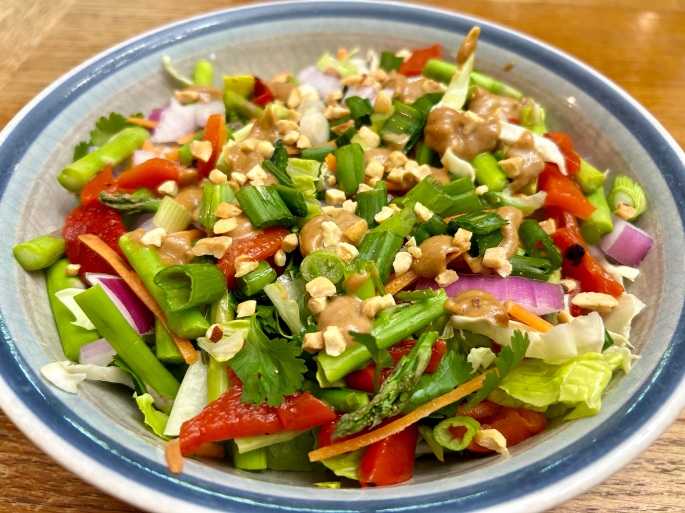
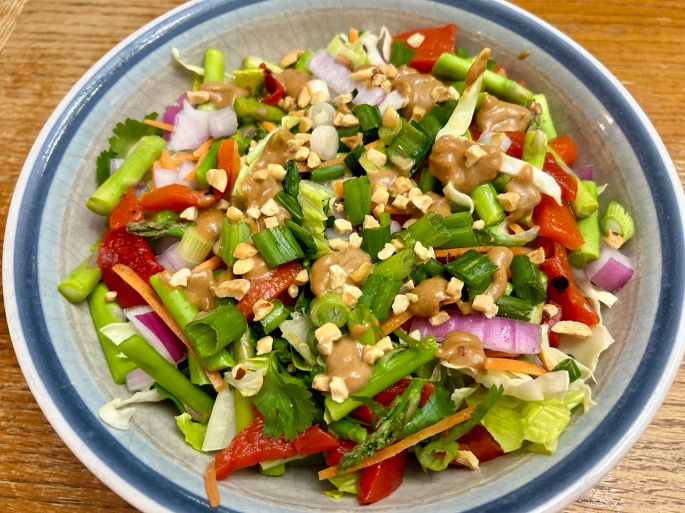
One of my greatest discoveries about a whole food, plant-based diet is that there are so many tasty ways to prepare foods.  I never feel deprived because my meals are full of an abundance of colorful, flavorful, and satiating foods.  A great example is the dip recipe below.  This peanut dressing/dip is beyond good!  It is tasty on salads (as shared here), but it is also wonderful mixed into stir-fry as a sauce, drizzled over a bowl or pasta recipes, and it makes a savory dip worthy for a crudités platter for a holiday cookout or social gathering.

Customizable REcipe🥗

The recipes below can easily be modified to suit personal taste or dietary preferences. For example, the peanut butter can be replaced with almond, cashew, or sunflower seed butter if desired.  The salad ingredients can be adapted too.  Don’t like cabbage?  Use all romaine.  Not a fan of asparagus?  Eliminate it.  Rather use red onion over scallions?  Go for it.

Anyway you prepare them, these recipes can be one tasty way to increase your consumption of healthful, whole, plant-based foods. Even if you are not willing to give up meat, research supports that consuming less meat and more plants will still provide some preventative measures against AD. Who knows? With the power of this type of research, you might even decide to try a few more recipes and incorporate even more plants into your diet! And the more you add, the more your body will benefit!

From my home to yours, here’s to your health, and especially preventing all forms of dementia to the degree possible! 

Recipes inspired by: Three Little Chickpeas, This Healthy Kitchen, and Detoxinista

Peanut Dressing/Dip (Thai style) (gluten free)

Ingredients:

½ cup natural peanut butter 

3 tablespoons tamari, liquid aminos, or soy sauce

2 tablespoons fresh lime juice

2 tablespoons maple syrup, honey, or agave

1 tablespoon rice wine vinegar

½ inch grated fresh ginger OR 1 ½ teaspoon ginger paste OR ¼ teaspoon ground ginger

1 teaspoon garlic powder

1 teaspoon onion powder

¼ teaspoon crushed red pepper or 2 teaspoon sriracha

3-5 tablespoons of water

Directions:

Either whisk together or use blender to blend all ingredients, gradually adding in water until reaching desired thickness, using less water for dip and more water for dressing 

Thai-style Salad (gluten free)

1 heart romaine lettuce, roughly chopped

3 cups slaw mix OR red & green cabbage, roughly chopped

1 red pepper, chopped

3-4 green onions, chopped

½ cup shredded carrots

½ cup fresh cilantro

5-6 stalks asparagus, chopped, optional

½ cup chopped peanuts or cashews, optional

Directions:

In a large bowl, toss together chopped lettuce, cabbage, red pepper, and green onion with shredded carrots.

Heat asparagus in microwave for 30-40 seconds and toss into salad

Drizzle with desired amount of dressing and top with chopped peanuts or cashews, if extra crunch is desired.

Makes 2 large servings or 4 small servings.

Store leftovers dressing in the refrigerator for up to two weeks.

Grapefruit Smoothie: Refreshingly, tasty nutrition on the go

“In 1993, Texas chose the red grapefruit as its state fruit. The red grapefruit was chosen because it was the first fruit ‘invented’ in Texas, and grapefruit trees have built more revenue than any other fruit tree in Texas!”–Wintersweetz.com 

Photo by Laker on Pexels.com

The forbidden Fruit🏝️

I was absolutely surprised to learn that the grapefruit was once named the “forbidden fruit” in the mid-1700s by a reverend searching for the identity of the original tree of good and evil from the Garden of Eden in the Caribbean Sea.  Years later, that same “forbidden fruit” tree was brought to Texas by Spanish missionaries in the late 1800s and given to local farmers in the southern area of the state.  Little did those Texas missionaries know that the Rio Grande Valley possessed fertile soil and subtropical weather, creating ideal growing conditions for grapefruits. Now, Texas is the third largest citrus producer in the United States, and it is especially known for its red varieties of grapefruits, such as Rio Star and Ruby Sweet. 

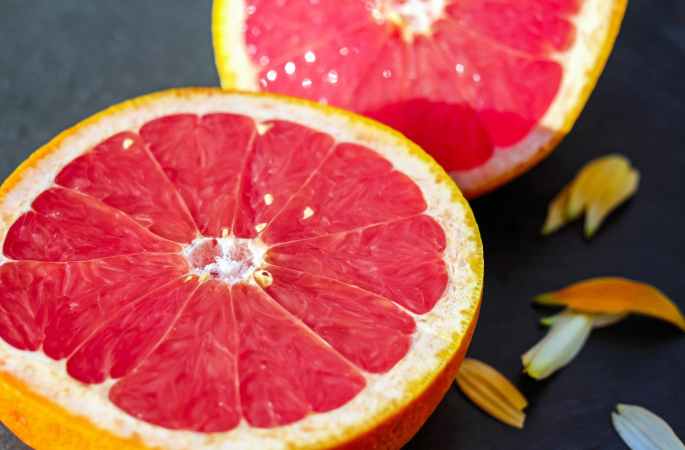
Personally, ruby red grapefruit is one of my favorite fruits.  I especially appreciate its sweet tangy flavor.  Red grapefruit seems to bring my tastebuds to life with its clean, refreshing, and light taste.  

It is that sweet tart taste that adds extra zing when combined with other flavor profiles in recipes.  For example, spread ricotta cheese over toast, add a few slices of ruby red grapefruit, then drizzle a bit of honey over that, and you’ve got a light refreshing summer breakfast.  Toss slices of grapefruit, along with walnuts, goat cheese and a few slices of roasted beets, into a salad of leafy greens with a light vinaigrette, and you’ve got a tasty lunch or light dinner. You can even make delicious light desserts and baked goods with grapefruit, such as grapefruit buttermilk muffins, grapefruit bars, or even chocolate covered grapefruit slices!  

Photo by Nicola Barts on Pexels.com

Smooth Nutrition 🍍🍌🥝

Then again, grapefruit can be added to smoothie recipes for an instant burst of flavor AND nutrition.  I created the recipe I am sharing with you today during the weeks following neck surgery this past spring.  Despite the fact I am fully recovered, this is one smoothie recipe that I still frequently make.  

During my recovery process, I was hyper-fixated on the nutritional content of the foods to enhance healing, but I was having difficulty swallowing.  Smoothies, therefore, became a go-to source of nutrition, and this recipe is uber-refreshing and jam-packed vitamin, mineral, and fiber content.  Specifically, it combine the goodness of grapefruit, which is packed with vitamin C and fiber, with strawberries and one of three fruits–frozen pineapple, banana, or kiwi–depending upon what I have on hand at home.  

One half of a grapefruit contains six grams of fiber and the total daily amount of vitamin C needed by our bodies. The grapefruit gets tossed into a blender with strawberries, which are also high in vitamin C and fiber as well as antioxidants, magnesium and phosphorus.  Then, I take my pick of pineapple, banana, or kiwi, and pitch one of those into the blender. No matter which of the three of those fruits I choose, they are all full of potassium, fiber, and a whole slew of vitamins and minerals. 

Light and refreshing, grapefruit smoothies are perfect for nutrition on the go!

Blend and Go nutrition🥛

Sometimes, for a touch of sweetness, I add in a medjool date, a bit of maple syrup, or pomegranate juice as well as a bit of ginger for its antiinflammatory properties. Depending upon what I am eating that day, I may also add vanilla protein powder, which gives the smoothie a creamy, zesty-sweet taste.  Once all desired ingredients are in the blender, I give it a whirl for about one minute and divide between wide-mouth mason jars or smoothie containers.  And in less than five minutes, I have two refreshing, nutritionally dense smoothies.  Perfect for on-the-go nutrition or a quick, healthy snack.

While grapefruit was once known as the “forbidden fruit,” there is nothing forbidden or evil about it!  Grapefruit is budget friendly, full of tangy zest, and nutritional goodness for your body.  I hope you’ll give this recipe a try!  You just might be surprised!

Zesty sweet, budget-friendly goodness, bursting with flavor AND nutrition, in less than five minutes!

Grapefruit Smoothie

Serves 2

Ingredients:

1 cup frozen riced cauliflower 

1 large ruby red grapefruit, peeled (with some pith remaining), quartered 

1 cup strawberries, fresh or frozen

1 cup pineapple, fresh or frozen (or 1 banana or 2 kiwi)

1 medjool date (or 1 teaspoon maple syrup or ¼ cup pomegranate juice) for added sweetness 

¼  teaspoon ginger powder, if desired 

2 cups water (or other favorite liquid)

Optional: 1-2 servings favorite protein powder

Combine ingredients in a high powered blender, adding water last.

Blend for one minute.

Divide between two large smoothie containers or jars.

Can be stored in the refrigerator for up to 3 days; shake well before drinking.

Can also be frozen for up to 3 months, set in the refrigerator overnight to thaw ahead of time.

Dress up your salad with a creamy BS salad dressing

“You cannot see the lettuce and the dressing without suspecting a salad.”–Arthur Conan Doyle 

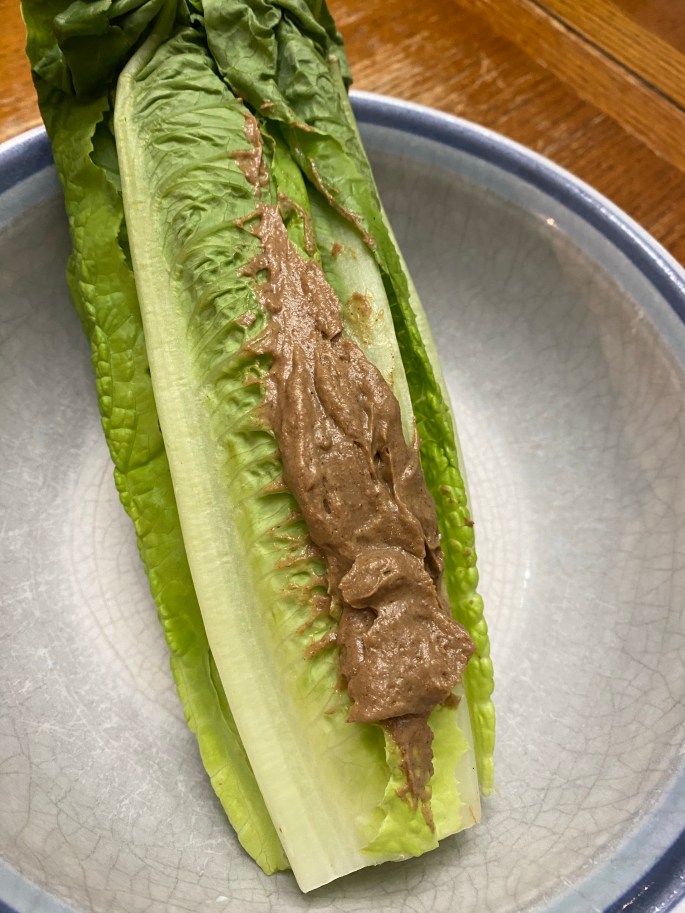
This dressing can be served as thick as a dip, as seen here, or thinned out for a more traditional, pour. Either way, it will be bursting with flavor! 🥗

‘Lettuce’ warm up to salad Greens

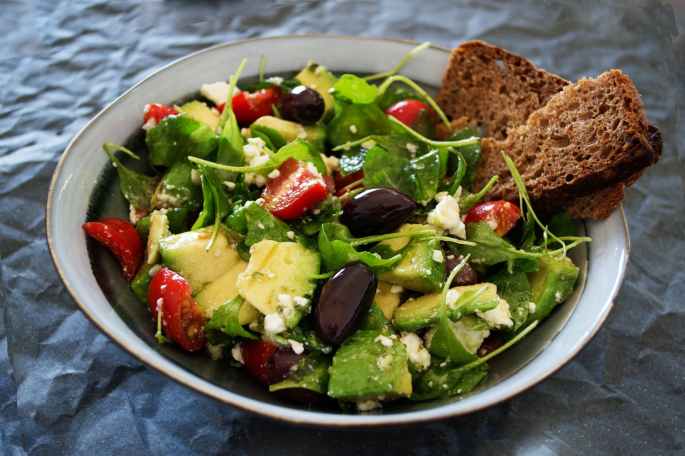
Warm weather signals that it is the time for salads filled with wonderfully nutritious greens!  Fresh made salads are great any time of the year, but they are especially delicious during spring and summer. While the word salad can encompass those made with chicken, tuna, macaroni, and so on, I am focusing on salads whose bases consist largely of greens and other plants that can either serve as an appetizer or as a meal. 

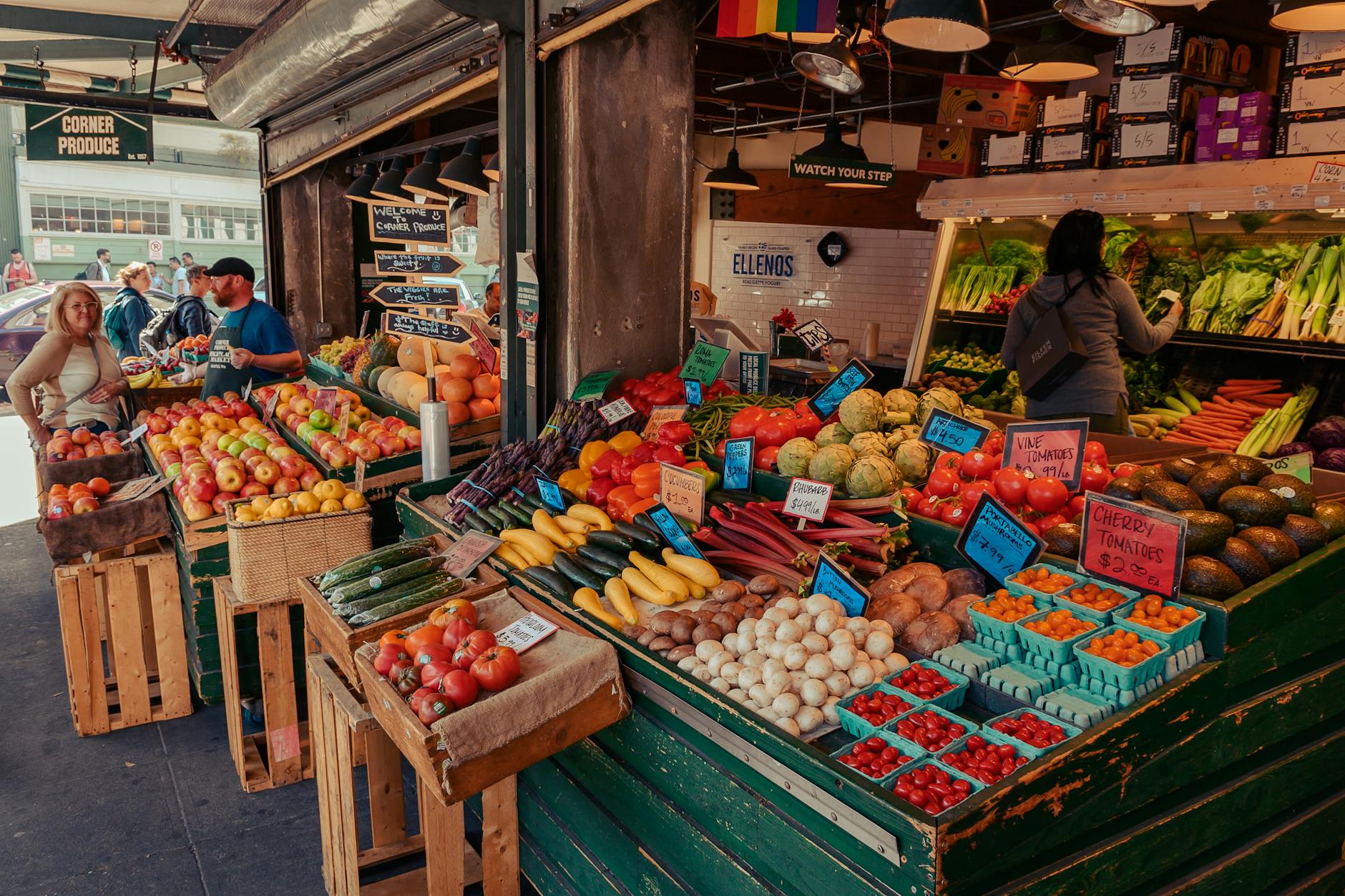
When making a fresh salad, it is easy and convenient to buy those bagged, or plastic containers of prepackaged blends.  While I often use them, it can sometimes be more cost effective to purchase a variety of leafy greens, veg, and other ingredients to make your own personalized mix.  During the warmer months, this is especially ideal when you can shop at local farmers’ markets and produce stands.  

Lettuce is a popular base for salads, and there are several main types from which to choose including colorful leaf lettuce varieties; butterhead varieties, including bibb and Boston; crisphead, popularly known as iceberg; and, romaine, king of the Caesar salad.  Kale, spinach, and arugula are also popular ingredients for salads, either as a solo base or part of a mix of greens.  Other colorful and flavorful additions worth considering include radicchio (which is fun to pronounce), escarole, Belgian endive, and frisee as well as mustard greens, watercress, and mesclun–popularly known as spring mix. 

Photo by Michael Burrows on Pexels.com

Mix those Greens

Personally, when it comes to making a salad, I enjoy mixing up textures, colors, and flavors, such as tossing leaf lettuce with some spinach and arugula, or mixing romaine lettuce with kale and radicchio.  If I am mixing a salad with stronger flavors of arugula or kale, I typically keep the rest of the ingredients simple.  In fact, I’d probably add in a fruit (tomato, chopped apple, or dried cranberries) and top it off with lighter dressing, such as a vinaigrette.

Other times, I appreciate the simplicity of filling my bowl with only one type of leafy green; then I’ll mix in a variety of color, texture, and flavor from other fruits and vegetables.  With this kind of salad, I might add chopped broccoli or cabbage, then toss in some mandarin orange sections or tomato, and top it off with a hearty, creamy nut-based dressing, such as the one below.  Then again, I’ve been known to put a large amount of one green as a base in a big bowl, such as spinach or kale, sprinkle it with some lemon juice or vinegar, then top it off with warm and savory toppings, such as brown rice, beans, and sauteed onions and peppers. 

Not only can plant-forward salad be part of a quick and easy lunch or dinner option, but they are also a great way to boost intake of vital nutrients. In fact, The U.S. Department Agriculture states that traditional salad greens, especially those dark leafy types, including kale and spinach, are rich in vitamins A, C, E, and K.  Toss in some mustard greens, chopped up broccoli, or bok choy for an excellent source of B-vitamins.  All those dark, leafy greens and vegetables contain high levels of fiber, iron, magnesium, potassium, and calcium without adding large amounts of sodium, carbohydrates, or cholesterol.  And if that’s not enough food for thought, green vegetables are chock-full of carotenoids-antioxidants that protect cells and ward off early-stages of cancer.

Photo by Pixabay on Pexels.com

Customizable Salad Dressing Fit for a King

Of course, to make a salad even more delectable, it requires a good dressing.  A quality dressing can make a salad taste next-level.  Unfortunately, so many readily available dressings are full of ingredients that are unpronounceable, and often overflowing with too much sodium, sugar, or unhealthy oil variations. Furthermore, commercial dressings often aren’t budget friendly when you consider the cost per ounce, and they aren’t customized to your personal taste preference.  Therefore, it makes sense (and cents) to make your own dressing.

I recently ran across a simple formula for making homemade salad dressings by Sergei Boutenko, a self-proclaimed health nut, that made perfect sense to me.  Boutenko suggests considering five tastes (think *BS salad dressing: 1B + 4Ss)–bitter, sweet, salty, sour, spicy–when making homemade salad dressing, which I did when creating this recipe.  This recipe is also customizable, for example you can trade out balsamic vinegar for apple cider vinegar; or, swap out the raisins for dates or even figs.

I chose not to include any oil, and instead use almond butter as a fat to create that desired creamy dressing mouth feel. Additionally, I used a few of my favorite spices/seasonings.  Again, each ingredient is customizable, including changing the spices.  Additionally, you could trade out almond butter for peanut butter or tahini, and depending on if you’re a garlic fan or not, you can use a little or a lot. Want the dressing thicker or thinner, add more or less water. You get the idea.

Customize your own salad dressing following the BS rules. 😉

The point is to take advantage of the warm weather’s harvest to create your own individualized, delicious way to enjoy the salad days of summer.  Serve up forkfuls of those dark leafy salad greens as well as any other added veg or fruit you want to toss in.  Then, dress up those delectable greens with a dressing suited perfectly to your taste preference–and pocket that extra change you saved.  Your body and your wallet will thank you.

From my home to yours, here’s to eating healthy!

Creamy (and customizable) BS Salad Dressing

Ingredients

½ – 1 cup water (depending upon how thick or thin you like dressing)

⅓ cup balsamic vinegar (sour)

¼ cup almond butter

¼ cup raisins or dates (sweet)

1 teaspoon soy sauce or liquid aminos (salty)

1-3 teaspoons minced garlic, depending upon taste preference (bitter)

1 teaspoon dried oregano

½ teaspoon dried basil

½ teaspoon onion powder

¼ teaspoon black pepper (spicy)

Directions

Blend all ingredients in a food processor or high powered blender.

Store leftovers in a tightly closed container for up to  weeks in the refrigerator.

*Notes: Remember each ingredient can be changed out for equivalent ingredient, choose your favorite flavor of vinegar, use your favorite nut butter and/or dried fruit, and change any of the seasonings as well as their amounts to make your own *BS salad dressing (see reference in article).

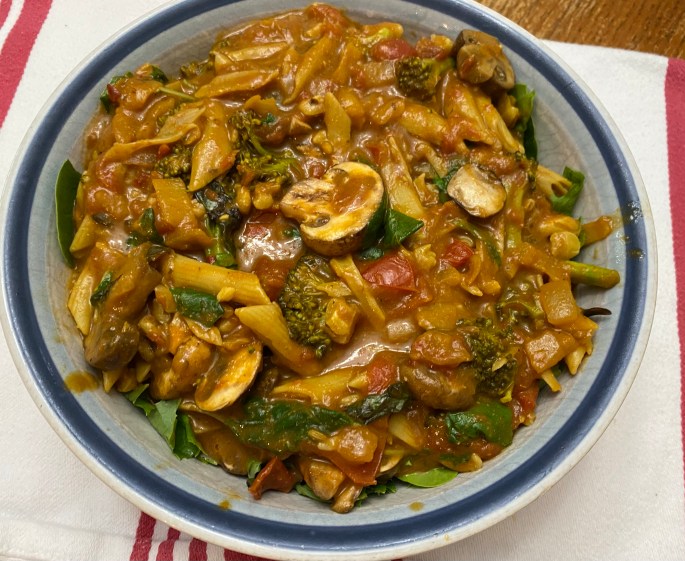
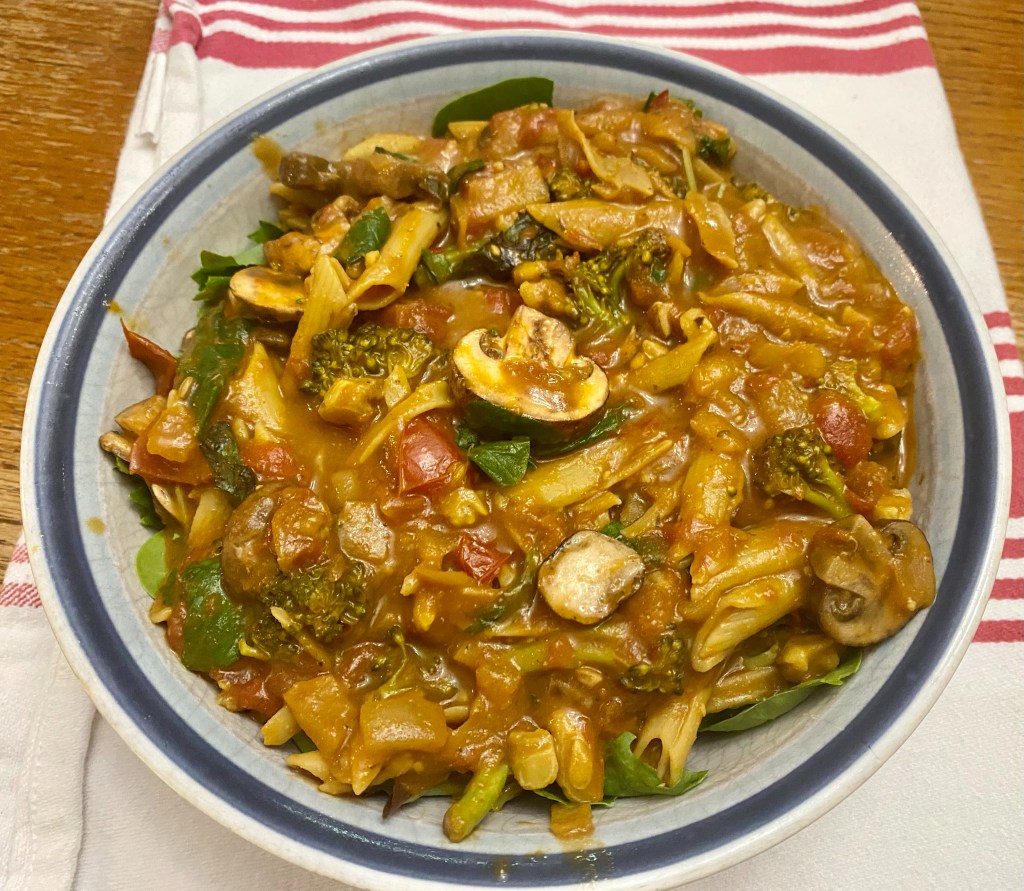
One pot walnut and mushroom penne, with gluten free option

“One pot meals make a lot of sense . . . because so much of what people hate about cooking is really the clean-up, the mess, the grease.”–Tom Douglas

Photo by Teona Swift on Pexels.com

Autoimmune diseases, according to John Hopkins University, unbelievably affect about 23.5 million Americans, 80% of which are women, of which I am one. While scientists are busy trying to understand the biological gender differences that contribute to this higher prevalence among females, one unexpected discovery is the contributions of the intestinal (gut) microbiome as a driver for these excessive numbers according to Scientific America. Furthermore, those identified with gut-centered autoimmune diseases, including irritable bowel disease (IBD), irritable bowel syndrome (IBS), ulcerative colitis, Crohn’s disease, and celiac disease, tend to have micronutrient deficiencies, in particular iron, folic acid, zinc, vitamins B6 and B12, copper, zinc, and vitamin D–which can really put the microbiome in dysbiosis.  

If left untreated, nutritional deficiencies can lead to an array of other health concerns, such as neurological complications, psychiatric symptoms, cancer, and bone health issues.  This is particularly of concern if adults have not been properly diagnosed.  For example, symptoms of celiac disease often vary from person to person; therefore, it is possible to go decades without identification as was the case with me.  I was in my late forties experiencing numerous unexplained, uncomfortable symptoms before one doctor finally suggested an endoscopy along with a blood test and a colonoscopy.  As it turned out, the endoscopy and blood work both identified celiac disease.

This dramatically changed my life, especially the way in which I eat.  In addition to eliminating gluten, the doctor advised a nutrient-rich, whole food diet, heavily emphasizing fruits, vegetables, whole grains (without wheat, barley, and rye), as well as legumes.  This is because I spent most of my life with malabsorption issues due to the damage of the lining of my small intestine as well as the inflammation and atrophying of the villi that absorb nutrients and minerals. Hence, the reason I was often sick as a young child.

Photo by Pixabay on Pexels.com

Specifically, vitamin D deficiencies are especially high with those who have celiac disease, which is crucial for growth of bones.  Chronic deficiency of vitamin D can lead to cancer, cardiovascular disease, and osteoporosis to name a few. Additionally, zinc is another nutrient often deficient in those with celiac disease. This nutrient promotes wound healing, virus recovery, growth, and development. 

Therefore, how I now choose to cook and eat is heavily influenced by this knowledge.  While, I can’t, per se, play catch up, I am aware of my need to focus on healthy eating and supplementing with a few key vitamins. The recipe below, based upon recipes by Simple Veganista and California Walnuts is reflective of this focus as it is chock full of nutritionally dense plant foods. 

In particular, this recipe emphasizes foods high in zinc, such as walnuts, mushrooms, spinach, and legumes as the pasta I use is made out of chickpea flour.  Mushrooms, especially those grown under UV light, are one of the few non-animal sources of vitamin D. Additionally, walnuts benefit gut, heart, and brain health while spinach (or other green vegetable I may use) is rich in flavonoid antioxidants and vitamins and possesses anti-inflammatory properties. 

With or without an autoimmune issue, we can all benefit from eating more healthy, homemade meals.  These meals don’t have to be complicated or time consuming and can even be completed in one pot as demonstrated in this recipe. Feel free to swap out the chopped walnuts with your favorite ground meat or meat alternative.  Don’t want spinach? Replace it with another favorite green vegetable. The point is eating healthfully doesn’t have to be hard, tasteless, or make clean-up challenging.  One pot and you’re done! 

From my home to yours, I wish you the best in health!

One pot Walnut and Mushroom Penne (with gluten free option)

Ingredients:

1 tablespoon olive oil

1 cup chopped onion

2 teaspoons minced garlic

1 pound mushrooms

1 tablespoon tomato paste

1 tablespoon balsamic vinegar

1 tablespoon dried oregano

1 tablespoon dried basil

¼ teaspoon black pepper

¼ red pepper

½ teaspoon fennel seed, options

1 28-ounce can crushed tomatoes

1 cup chopped walnuts*

1 cup chopped fresh or 14.5 ounce canned tomatoes

4 cups low sodium vegetable broth

1 pound penne pasta (I use gluten-free, chick-pea pasta.)

2 cups fresh spinach or other favorite green vegetable

Directions:

In a large pot, heat oil over medium heat. (Can also use ¼ cup water if you prefer oil-free cooking.)

Add in onion and garlic, saute until translucent. (If using water, you may need to add more water to prevent sticking.)

Stir-in mushrooms and cook until soft, stirring occasionally.

Stir-in tomato paste, balsamic vinegar, oregano, basil, black pepper, red pepper, and fennel, if using.

Add crushed tomatoes, walnuts, and chopped tomatoes and bring to a boil.

Reduce heat and stir in vegetable broth and pasta.

Allow to simmer and gently bubble for 15-20 minutes, stirring occasionally.

Remove from heat, stir in spinach or other green vegetable.

Allow to rest 3-5 minutes, then divide between 4 serving bowls.

Sprinkle with your favorite topping, such as parmesan or pecorino cheese, fresh parsley, and/or chopped scallions. 

Notes: 

*Walnuts can be swapped out with your favorite ground meat or meat alternative.

Green and White Enchilada Bake, featuring G-BOMBS, is a powerhouse of delicious nutrition

“Remember the acronym G-BOMBS, which stands for Greens, Beans, Onions, Mushrooms, Berries and Seeds. These foods fuel your body with protective micronutrients and phytochemicals that support your immune defenses and have a wide range of health-promoting effects. And here’s a bonus: They’re delicious!”–Joel Fuhrman, M.D.

Photo by Min An on Pexels.com

Beginning in December, I spent 16 weeks preparing to run, walk, or even crawl a half-marathon.  For those who are natural distance runners, completing a half-marathon is no big deal. However, for someone like me, it was a challenge, but it was an overall positive experience.

While preparing for this half marathon, I was battling an injury–one that did not affect my running, per se, but one that will ultimately require surgery.  Therefore, I knew I wanted my nutrition to solidly support the recovery of my middle-aged body.  However, for the sake of full disclosure, I still indulged my penchant for dark chocolate on a daily basis!

Photo by Pixabay on Pexels.com

I read, and continue to rely upon, the most up-to-date nutritional studies out of respected research institutes such as Harvard, Northwestern University, Cleveland Clinic, Mayo Clinic and so forth.  Additionally, I read more popularized sources of research such as Michael Pollan and National Geographic author/researcher, Dan Buettner, and his study of Blue Zones, as well as a few other noted sources.  The point is, I don’t make my food choices lightly, especially since I must also balance out these choices with my celiac disease and food sensitivities while still consuming food that looks great and tastes even better.

For a whole slew of reasons, I rely on a whole food, plant based diet 90% of the time, and this recipe–that I created during my half-marathon preparation–is an example of this.  I want my meals to be alive with color, texture, and balanced flavor, with a bit of spice thrown in.
Additionally, I try to regularly consume GBOMBS, greens, beans, onions, mushrooms, berries, and seeds, for the most nutritional bang for my buck, and this recipe has four of the six of them.  (I typically eat berries and some form of seeds–flax, chia, or hemp hearts–during an earlier meal of the day.)

Photo by Vanessa Loring on Pexels.com

If you prefer to add meat, my recipe can accommodate your preference.  You could choose to replace the beans with chicken or seafood, or keep the beans, and add in meat.  Spices are optional, and I have made a note regarding why I add them.  I typically serve these enchiladas on a bed of leafy-greens and top them with a dollop of guacamole and chopped scallions.  However, you could serve them on top of rice, quinoa, or simply as they are.  Feel free to get a little frisky with the toppings of your choice!

Personal food choices are the N = 1. Therefore, I would never presume to tell anyone what they should or should not eat.  Nonetheless, I think most of us can agree, you can’t go wrong consuming a bit more veg.

From my home to yours, I hope you enjoy this recipe!

Ready to broil a bit.
Add your favorite toppings . . .
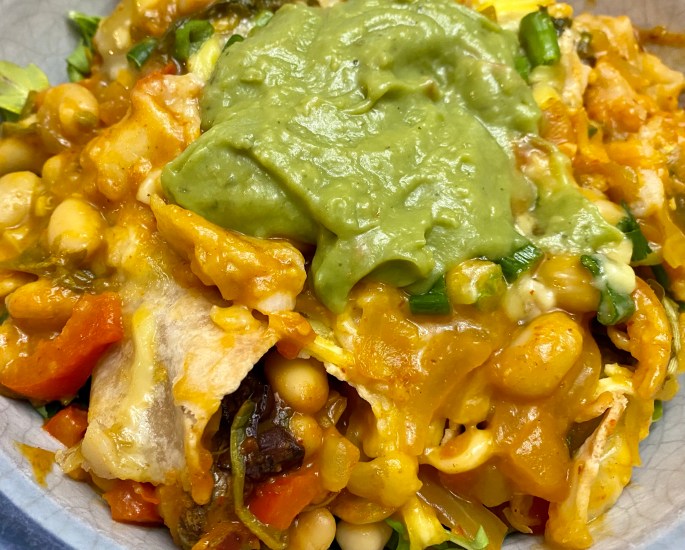
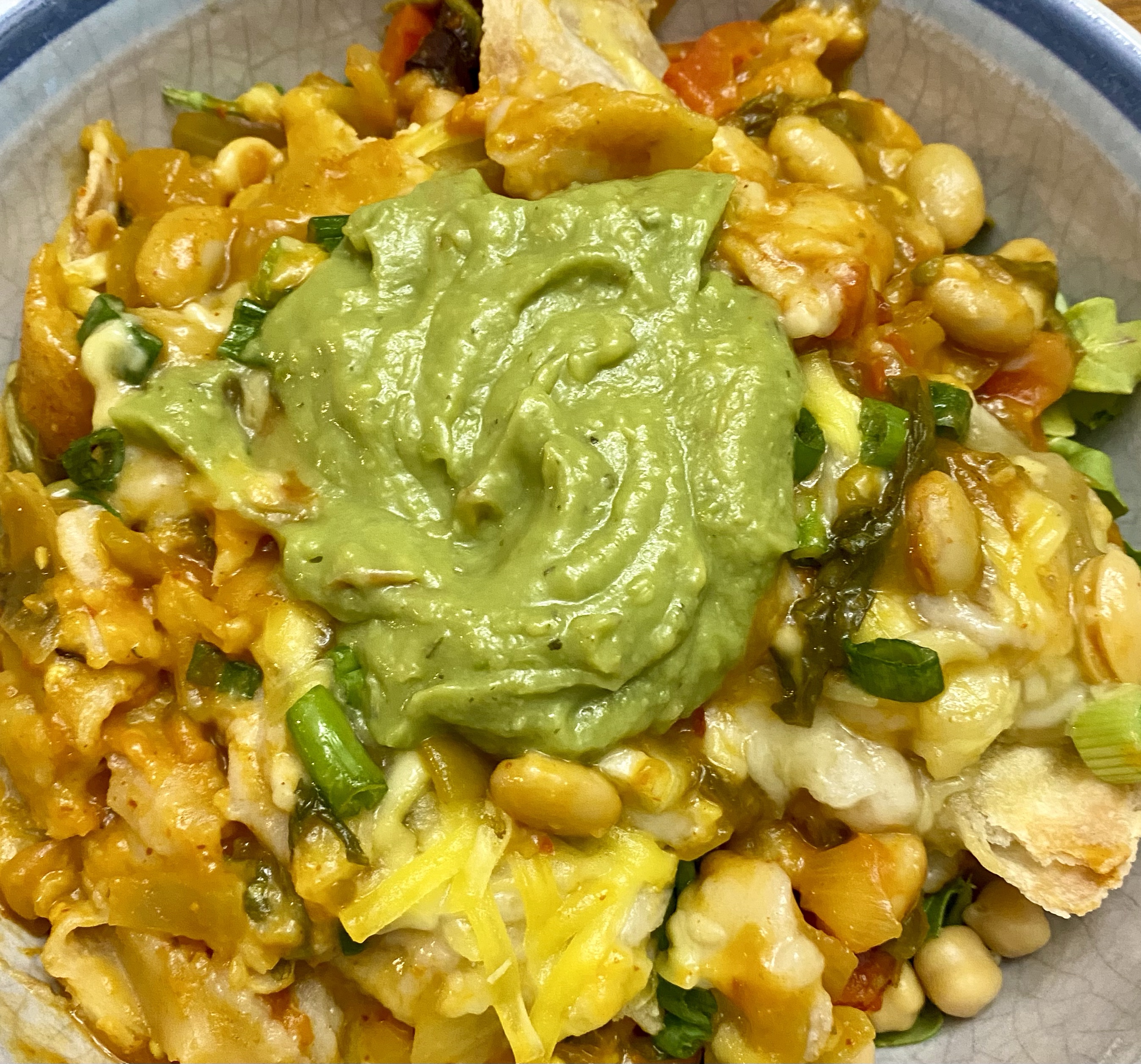
Serve it up on a bed of greens and/or grains and add more of your favorite toppings, such as guacamole.

Green and White Enchilada Bake

Ingredients:

½ cup vegetable broth or water

1 teaspoon minced garlic

1 cup chopped onion

½ cup chopped mushrooms, any type, optional 

½ cup chopped red, yellow, or orange bell pepper

2 teaspoons nutritional yeast (can substitute equal amounts of grated parmesan or chickpea flour)

½ teaspoon onion powder

¼ teaspoon crushed *red pepper, optional

¼ teaspoon *turmeric powder, optional 

Dash of *black pepper, optional

1 15 ounce can great northern beans, drained

1 4-ounce can green chiles

1 package low-sodium taco seasoning

8 ounces frozen spinach, thawed and drained

1 can green enchilada sauce

6-8 tortillas, depending upon size (I used gluten-free tortillas.)

2 cups shredded cheese, your choice (I used a vegan substitute for photos, but I’ve also gone without it.)

Directions:

Preheat the oven to 350 degrees.

Prepare a small casserole dish with nonstick cooking spray.

Chop onion and bell pepper, if using.

Heat a saucepan over medium heat.

Add minced garlic and broth, stir.

Add in onion and bell pepper, stir well.

Allow to simmer until vegetables begin to soften, about 3-5 minutes.

While vegetables are cooking, stir in nutritional yeast and onion powder 

If using crushed red pepper, turmeric powder, and dash of black pepper, stir those in as well.

Meanwhile, open, drain, and rinse the beans; stir into the simmering vegetable mixture.

Stir in green chiles and taco seasoning into the simmering vegetable and bean mixture, and allow it all to simmer for another 3-5 minutes, continuing to stir.

While the vegetable/bean mixture is simmering, stir in the spinach and allow it to simmer and wilt into the rest of the ingredients.

While vegetables are simmering, set up all tortillas, taco style, in the casserole dish.

Remove vegetables from heat; then, divide and fill tortillas with vegetable/bean mixture, folding down one side over the other, and using a toothpick, if needed, to keep closed.

If there is any remaining vegetable/bean mixture, pour over the tops of the closed tortillas.

Pour a can of green enchilada sauce over the closed tortillas.

Top with desired cheese, if using.

Bake, uncovered in the oven for approximately 25 minutes until sauce is bubbling at the edges.

Feel free to turn on the broiler for the last minute or two to brown the top of the casserole if desired.

Remove from the oven and allow to cool for 5-10 minutes before serving.

Makes 3-4 servings, two enchiladas per serving.

Top as desired.

Refrigerate any leftovers for up to 5 days.

*Note: Spices are a personal preference, so you choose if you want to add these ingredients.  Here’s why I do.

  • I use turmeric daily as an anti-inflammatory agent.  When cooking with tumeric, I pair with a dash of pepper as the pepper enhances the absorption of turmeric in the body by up to 2,000%.  Together both spices reduce inflammation and improve digestion.
  • I also regularly use crushed red pepper flakes and red pepper for its ingredient, capsaicin, which soothes stomach issues, boosts heart health, and fortifies the immune system.

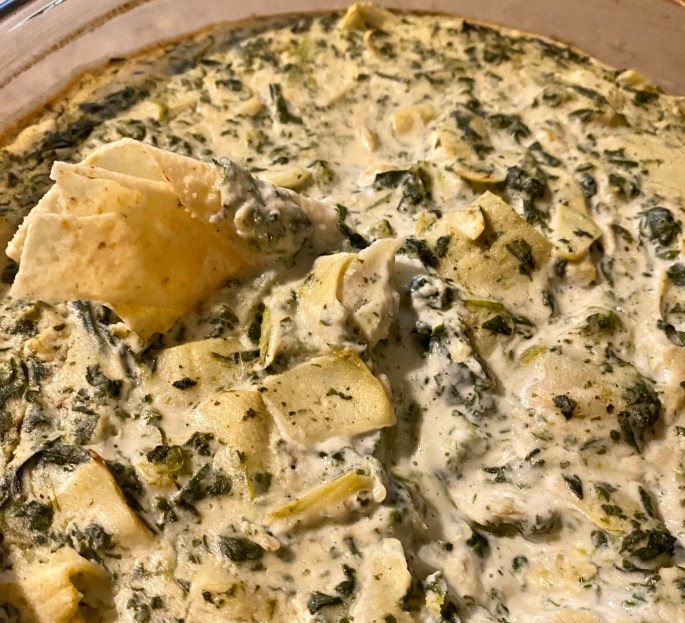
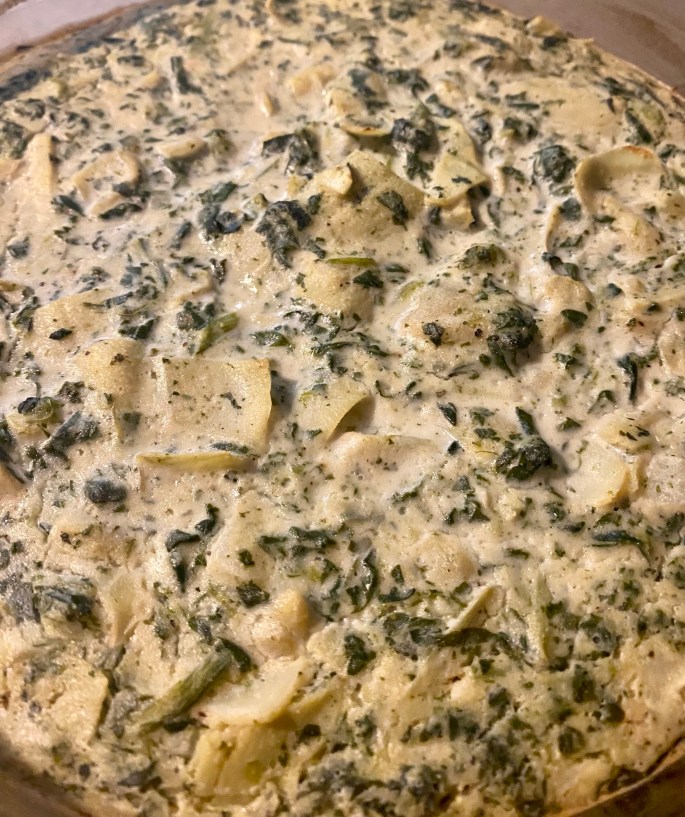
Spinach-Artichoke Dip with plant-based and gluten-free options

“Popeye was right about spinach: dark green, leafy vegetables are the healthiest food on the planet. As whole foods go, they offer the most nutrition per calorie.”–Michael Gregor

“You’re not going to believe what I ate, Mom!”

I was talking with my daughter, Madelyn, on the phone.  She is attending graduate school, and she was describing a dinner that a friend had prepared for one evening during a break from her studies.  

“Spinach and artichoke dip!  Not only that, Mom, but it was vegan, and it was surprisingly good . . . and you know how funny I am about texture and taste.”

Maddie went on to insist that I would have to make this dip when she was home for the holidays.  In fact, she had already asked her friend to share the recipe with her, so she could send it to me.  She went on to explain how her friend has lupus, and eats an anti-inflammatory diet that focuses heavily on fruits, vegetables, nuts, seeds, and a few select whole grains in order to reduce her inflammation.  

As I listened to her continue to describe the dip, my mind was already thinking about the ways I could adapt the recipe.  I was eager to, ahem, dip into reading various plant forward recipes and techniques in order to create my own version.  Not only did I want to make the dip in honor of my daughter’s request, but also because the dip is largely made up of two of my favorite vegetables: spinach and artichokes.

Photo by Jacqueline Howell on Pexels.com

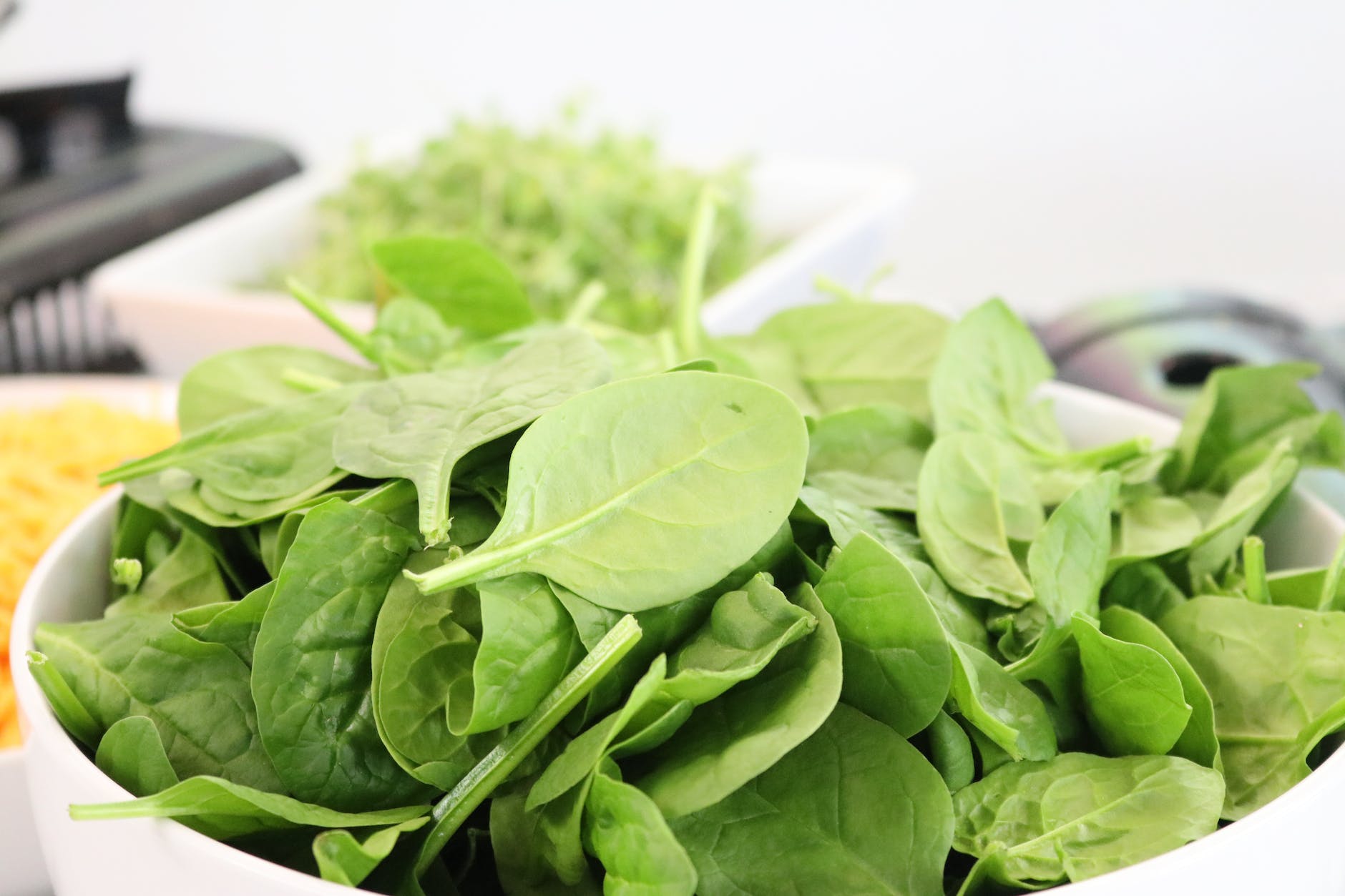
Maddie’s friend was on to something.  Both artichokes and spinach are highly anti-inflammatory.  Spinach, specifically, is chock full of vitamins, such as A, K and C, and it also contains folate, magnesium, iron, potassium, calcium, and small amounts of other B vitamins. It is high in fiber and low in calories.  Spinach is also high in antioxidants, supports brain and eye health, has been shown to protect against certain diseases, and helps to lower blood pressure when regularly consumed.  

Photo by Andie on Pexels.com

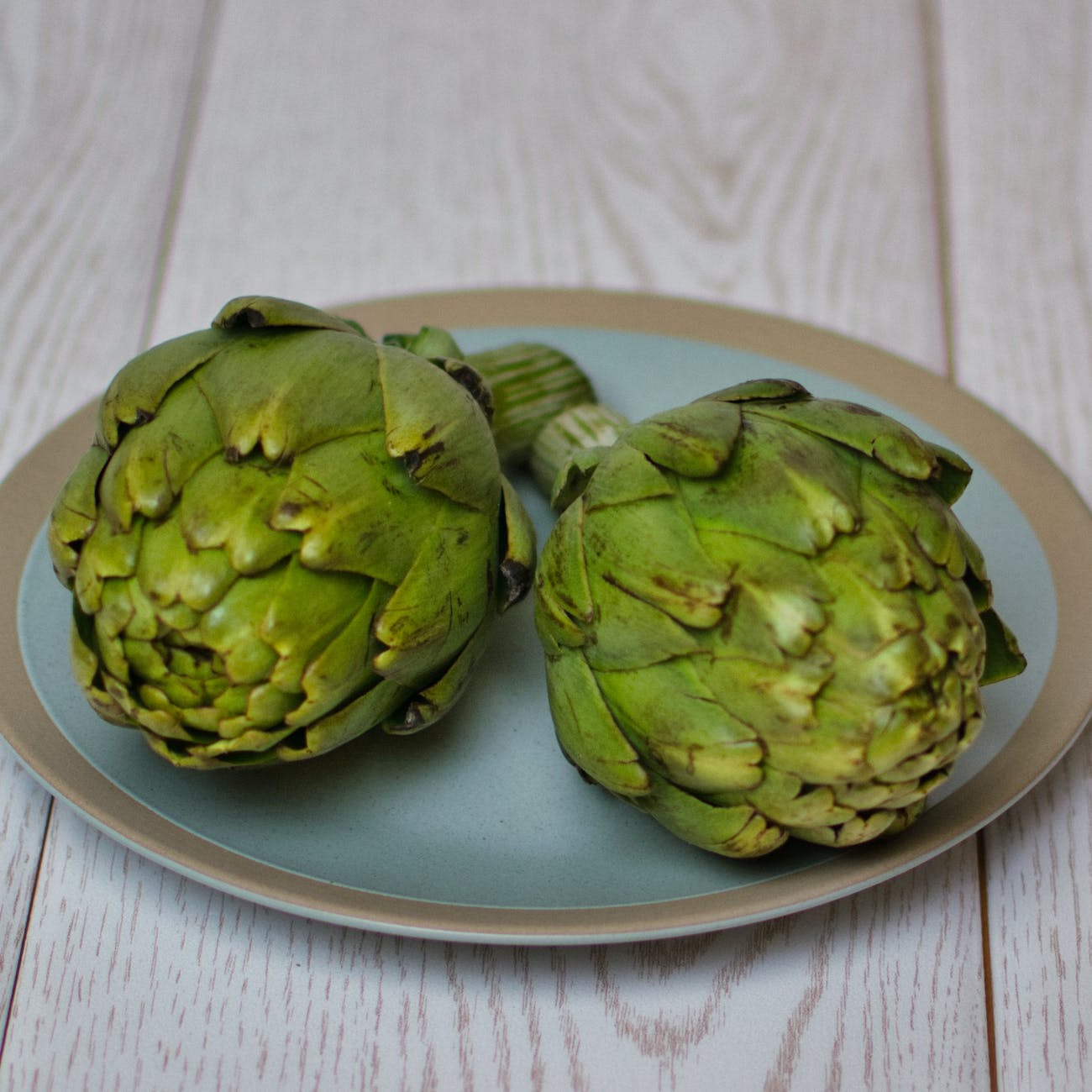
Artichokes are no joke either. They, too, are full of vitamins, including folate, magnesium, manganese, potassium, as well as vitamins K and C.  Like spinach, artichokes are high in fiber, full of antioxidants, and have been shown, when consumed daily, to help regulate blood pressure. Additionally, artichokes promote liver health and are a unique source of prebiotics, which are beneficial gut bacteria that can boost immunity, assist in digestion, and benefit mood.

Of course, I can share all the benefits of these two nutritional, anti-inflammatory powerhouses, but let’s be honest, for most people, myself included, it’s all about the taste. Does this dip taste good, in addition to being made with beneficial ingredients?  Is it worthy of being shared with others?   

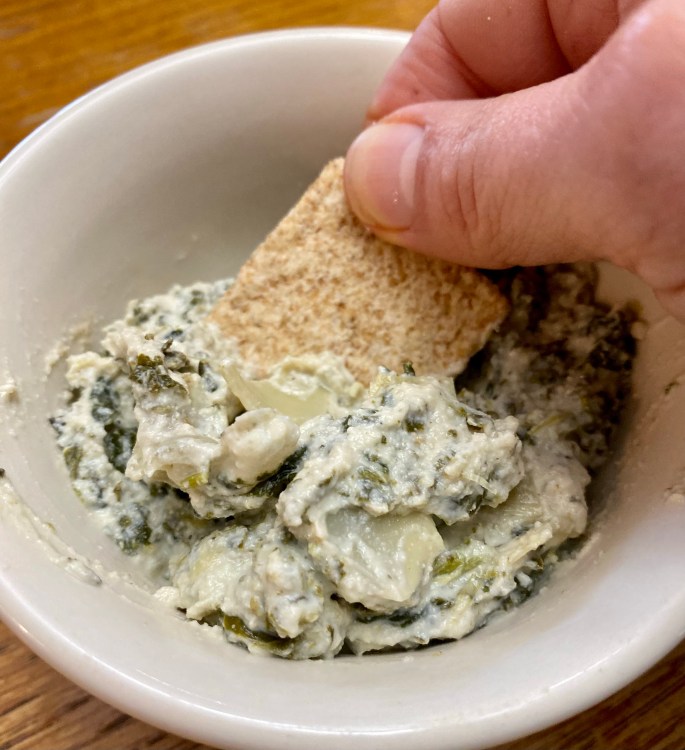
I had my favorite taste tasters, and pickiest eaters, Maddie, and my husband, John, taste the dip, and miracle of all miracles, they both liked it!  Maddie, the pickiest of the two, said she loved it just as I made it.  Her only wish was that we had baguette crackers like her friend served it with.  John, typically not as picky, filled up and ate a big soup bowl worth of dip; however, he added both parmesan and mozzarella cheese to his bowl because he, “wouldn’t want to eat too healthy over the holidays!”  Meanwhile, I served up the dip on a plain baked potato for my dinner, and let me just say that was one tasty dish!

Whether you make it with, or without dairy, you’re still packing a healthy punch of powerful, propitious plants. Serve it up for your next favorite gathering and watch it disappear.  No one ever has to know the dip benefits their health too! 

From my home to yours, may you have a prosperous and healthy 2023.

Spinach Artichoke Dip

Plant-based with dairy-free and gluten-free options

Ingredients

1 cup (raw) cashews, soaked overnight or at least 4+ hours

1 ¼  cup Greek or plant-based Greek yogurt (can substitute with mayonnaise)

¼ cup water

12-16 ounces (1 package) frozen spinach, thawed and drained

1 14 ounce can artichokes, drained and chopped

⅓ cup finely chopped onion

2 teaspoons minced garlic

1 tablespoon freshly squeezed lemon

1 teaspoon braggs liquid aminos (or soy sauce, if don’t need gluten free)

 ½ teaspoon salt, or to taste

½ teaspoon onion powder

½ teaspoon pepper

Optional additions: Mix in up to 4 ounces or ½  cup of any of the following ingredients:

cream cheese (or vegan variation), parmesan/romano/pecorino cheese, soft goat cheese, and/or mozzarella cheese, if desired

Directions

Preheat oven to 400 degrees

Coat a small casserole dish with cooking spray (2 quart size).

In a food processor or high speed blender, blend cashews, yogurt and water until creamy, about 1-2 minutes.

Add cashew mixture to a large mixing bowl and stir in the rest of the ingredients.

Spread dip evenly in the casserole dish.

*Bake 20-30 minutes, or until top turns golden brown

Serve warm with veggies, tortilla chips, crackers, smear over your favorite toasted bread, or even a baked potato.

Store leftovers in an airtight container and refrigerate.

Serve warm with crackers, tortilla chips, or baguette chips

*Serves 6-10 as appetizer