Berry Immunity Boosting Smoothie aka Stress Less Smoothie

The greatest weapon against stress is our ability to choose one thought over another.”–William James

Photo by Pedro Figueras on Pexels.com

The challenge of work-life balance⚖️

It is not uncommon to engage in conversations centering around stress.  Attempting to balance the demands of work and life can be challenging. The combination of long work hours, while also juggling the needs of family, make it difficult to have time to do the things that would otherwise relieve stress, such as regular exercise, outings with friends, or even a relaxing soak in the tub. 

When stress ramps up, there is a chain-reaction in our bodies.  According to Harvard School of Public Health, when stress is high, the body’s demand for oxygen and energy increases, which in turn increases the demand for key nutrients.  Simultaneously, stress causes the body to eliminate other vital nutrients. This can take a toll on the body’s immune system.

As the chain reaction of stress continues, hormones become affected.  If the stress is acute, the body will secrete adrenaline, which suppresses appetite.  However, when the stress becomes more chronic, cortisol levels begin to rise, instigating food cravings.  Cortisol tends to create cravings for foods that are typically considered “comfort foods,” full of sugar, salt, and fat.  Unfortunately, if cortisol stays elevated, the chain reaction continues to wreak havoc upon our bodies, and this often influences our coping strategies.

Photo by cottonbro studio on Pexels.com

The body’s stress response 😰

Chronic high stress time periods, depletes the body of energy and can often reduce time available for decompression. This can inhibit the desire to prepare healthy, nutritious meals.  Sometimes, chronic stress causes us to skip meals.  The downside to skipping meals is that, as the cortisol levels rise, once there is an opportunity to eat, we tend to reach for those comfort foods that will not replenish the body’s stores of diminished nutrients.

Therefore, how we respond to stress matters.  With some situations, we can identify upcoming stressful time periods before they begin, and thus, we can be more proactive.  However, that isn’t always the case.  Nonetheless, there are a few basic guidelines, according to The University of North Carolina at Chapel Hill that are worth remembering.

Photo by Antoni Shkraba on Pexels.com

Tips for eating during times of stress 😣

  • Keep nutrient-dense grab-and-go snacks on hand at all times.  Foods like baby carrots, celery sticks, hummus cups, guacamole cups, apples, oranges, bananas, popcorn, almonds, walnuts, pistachios, low-sugar yogurt, low-sugar granola, low-sugar oatmeal packets, whole-grain crackers and so forth.
  • Eat at regular intervals when possible.  This will keep blood sugar stable, and keep the brain, which needs glucose, working at its best.
  • Eat high-fiber foods. Foods, such as fruits, vegetables, nuts, seeds, beans, oatmeal, and other whole grains, have been shown to decrease perceived stress levels and increase alertness.
  • Focus on eating fruits and vegetables, especially leafy greens, whenever possible.  These foods are filled with the vitamins and minerals your body needs to neutralize the harmful molecules our bodies produce when under stress. 
  • Foods rich in unsaturated fat also help. Think walnuts, flax seeds, chia seeds, and fish oil to name a few. These foods are associated with increased brain function; however, deficiencies in fatty acids can result in depression and/or anxiety. 
  • Be mindful of caffeine and/or alcohol intake. Both of these can disrupt sleep, which the body desperately needs during times of stress.  Additionally, both can increase blood pressure, which can increase feelings of anxiety.
  • Ensure your body is getting enough quality sleep. Getting enough sleep allows the body to reduce cortisol levels and other stress hormones, increasing the chances of remaining calmer in the face of stress.
  • Employ constructive coping strategies. Whether it is talking to a trusted friend or therapist, journaling, meditating, asking for help, or going for a walk–developing positive coping skills is a lifetime skill set. 
Photo by Wallace Chuck on Pexels.com

The reality of stress 😩

Stress is reality at different points in our lives.  While we cannot control when it will arise, we can control our response to it.  It is easy and understandable to seek comfort during times of stress.  However, when those sources of comfort become unhealthy coping mechanisms, such as over- or undereating, drinking alcohol in excess, going without sleep, and so forth, we risk using short-sighted solutions that could lead to developing long-term problems, creating even more stress.  

Stress less smoothie 🍓

Below is my newest smoothie creation.  It is full of nutrient-rich foods that are high in fiber.  Some of the ingredients may cause you to raise an eye-brow in wonder, but I promise, it does taste great.  That said, feel free to adjust, add to, or eliminate ingredients that don’t suit your palate or dietary needs.

This recipe can be made ahead of time and frozen into individual servings.  They will stay fresh in the freezer for up to three months.  Then, whenever faced with a stressful day, take one smoothie out the night before, set it in the fridge to thaw, and then it’s grab-and-go convenience for the next workday. Sip on it through a lunch meeting, or if more time is available, pour it into a bowl and sprinkle on favorite fruit and nut/seed toppings, along with a bit of granola. 

I can’t promise that this recipe will change the stress around you. However, it does provide a powerful nutritional punch to help stave off the effects of stress, and offers one less thing to worry about.  Plus, it feels good knowing that if everything else goes wrong in the day, at least one small part of your day was stress-free.  

Cheers to one less thing to stress about!
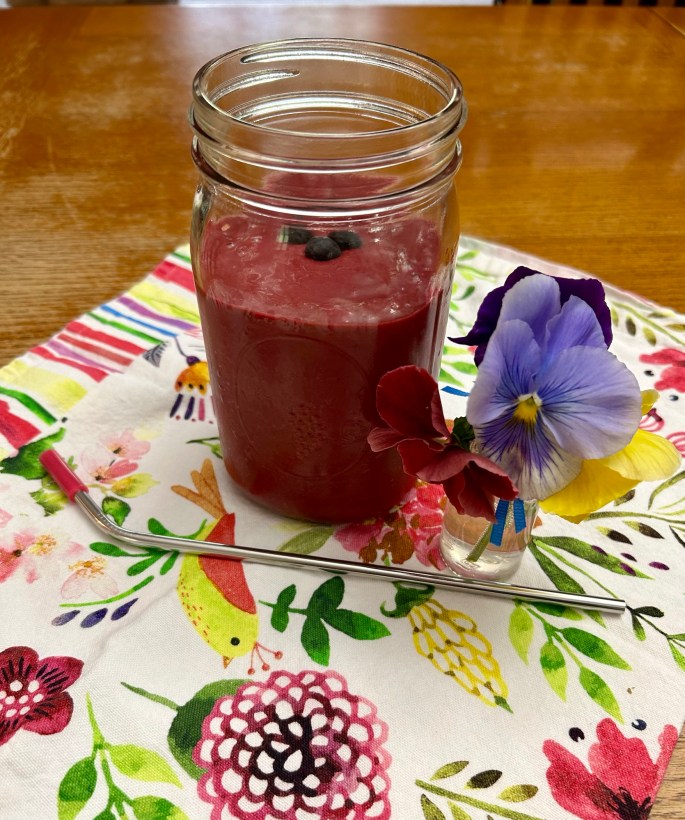
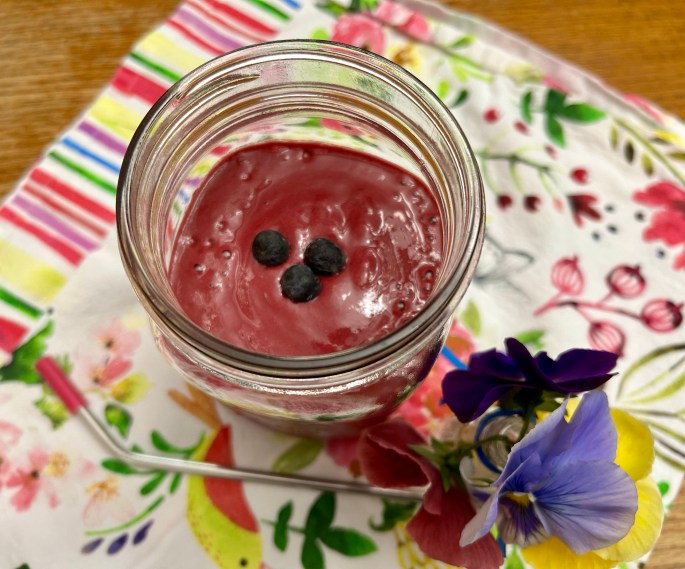
Berry Stress Less Smoothie

Nutrient dense, stress combating meal replacement

Ingredients:

2 cup spinach, riced cauliflower, or kale (can be frozen)

½ cup strawberries, frozen

½ cup raspberries, frozen

½ cup cherries, frozen

1 apple

½ cup lentils

1 parsnips

2 tablespoon flax, chia seeds, or hemp seeds (or combination of any two)

2 tablespoons goji berries, OR 2 medjool dates, OR 2 prunes, optional

2 tablespoons cocoa or cacao powder, optional

2 scoops protein powder, optional

1 cup beet juice (can use pomegranate or cherry juice or simply use water)

1 cup milk  plant or dairy based variation)

½-1 cup of water, if too thick

Directions:

Put all ingredients in high powered blender

Blend until creamy and smooth

Makes 2 large servings 
Cranberry Smoothie: Say “Cheers” to your health

“Packed with antioxidants, this fruit can help keep your teeth, heart, and gut healthy.”clevelandclinic.org

What a Saucy Idea💡

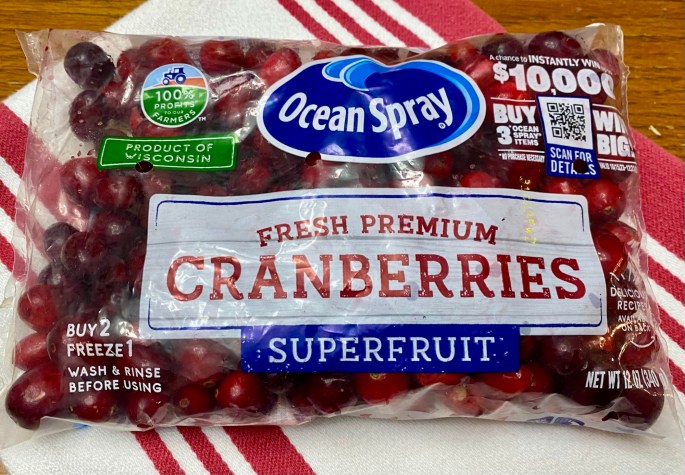
Over Thanksgiving week, I purchased fresh cranberries with the intention of cooking up some homemade cranberry sauce.  However, I never got around to making it, and I wondered if I could, instead, add them to a smoothie.  Turns out, not only could I add them to my morning smoothie, but by adding them, I could amp up my own nutrition! 

Okay, so I tried to eat them raw, and they are really tart, like suck-the-saliva-out-of-my-mouth-tart! Nonetheless, I wasn’t deterred, especially once I read numerous current articles about all their healthful benefits. In fact, cranberries are often classified as a superfood due to their high nutritional value and antioxidants properties. 

Are Cranberries a Berry?🍓🫐

Cranberries are related to blueberries, but grow on vine-like plants similar to strawberries. Like blueberries, cranberries, by definition, are not true berries.  Instead, they are what scientists call a “false berry” because their fruits grow below the flower.  Nonetheless, it appears that the food industry still tends to classify cranberries (and blueberries) in the same categories as other berries.  As a group, according to nutritionfacts.org, berries “average ten times more antioxidants than any other fruit or vegetable.” Specifically, cranberries have “the highest fresh weight concentration of polyphenols (a strong antioxidant that complements and adds to the function of antioxidants) among commonly consumed fruit in the U.S.,” according to The National Library of Medicine.

This concentration of polyphenols may be why cranberries possess beneficial properties unique to them.  Research  has shown that cranberries lower the risk of urinary tract infections (UTIs).  This may be due to their high levels of proanthocyanidins (PACs), which prevents certain types of bacteria from sticking to the walls of the urinary tract.  These same PACs may protect against a type of bacteria that causes tooth decay. Additionally, cranberries have been linked to reducing risk for certain types of cancer.  They are also known to boost the immune system, reduce inflammation, and improve blood pressure.  

Given these facts, it is clear to see why cranberries should be incorporated as part of a healthy diet.  This brings me full circle to my motivation for now incorporating them as part of the regular rotation of a variety of whole food ingredients I incorporate into my daily smoothies.  When using cranberries, I have learned to blend their tangy taste with other flavor profiles to round out their taste and also gain the most nutritional bang for the buck.   

Sippin’ up the goodness🥤

Below is a recipe I now blend up repeatedly as part of my weekly smoothie rotation–usually twice per week. It incorporates other berries too since, as a whole, berries are a solid nutritional choice.  My recipe  also incorporates the creamier and sweeter tastes of mango and banana–both of which are nutritious in their own right. I also like to add vanilla protein powder to not only round out the flavor, but to also boost my protein intake–an important consideration at my age. There are further ingredients–mostly spices–that I use for their unique and beneficial properties, but they are optional as they don’t enhance or detract from the overall taste.

Remember, most nutritionists encourage us to eat the rainbow when it comes to fruits and vegetables. Cranberries, with their dark red color, can definitely be one of those colorful choices.  Furthermore, smoothies are one easy way to contribute to your overall daily intake of that rainbow-array of fruits and vegetables as part of a well-rounded diet.  They can be made ahead of time, if desired, and refrigerated for up to three days, or frozen in tightly sealed containers for up to three months.

Manifest Good Health✨

Smoothies, like this one, are my own private health manifestation.  While I know they are not the end-all, be-all when it comes to nutrition, I do know the whole food, plant based ingredients that I put in mine are high in quality nutrition and not full of artificial ingredients or sweeteners.  They are also full of fiber to keep the digestive system operating, well, “smoothly.” Plus, they are an easy way to get a serving of both vegetables and fruit in one tasty, fell swoop.  

From my home to yours, I toast my smoothie glass to yours and wish you much health and happiness this holiday season. 

Drinking up the goodness!

The Recipe📝

Cranberry Smoothie

1 cup frozen riced cauliflower (You won’t taste it!)

1 cup frozen strawberry, mango, blueberry mix (or any other berry mix)

1 whole banana, can be frozen

½ fresh cranberries

1 whole medjool date, or other natural sweetener 

½ teaspoon cinnamon

2 scoops vanilla protein powder

2 cups water

Optional anti-inflammatory and immunity add-ins:

2 teaspoons black elderberry syrup

½  teaspoon ground ginger

½  teaspoon ground turmeric

⅛  teaspoon black pepper (only if adding tumeric)

Put everything in a high powered blender in the order listed.

Blend for one minute.

Serves 2

Grapefruit Smoothie: Refreshingly, tasty nutrition on the go

“In 1993, Texas chose the red grapefruit as its state fruit. The red grapefruit was chosen because it was the first fruit ‘invented’ in Texas, and grapefruit trees have built more revenue than any other fruit tree in Texas!”–Wintersweetz.com 

Photo by Laker on Pexels.com

The forbidden Fruit🏝️

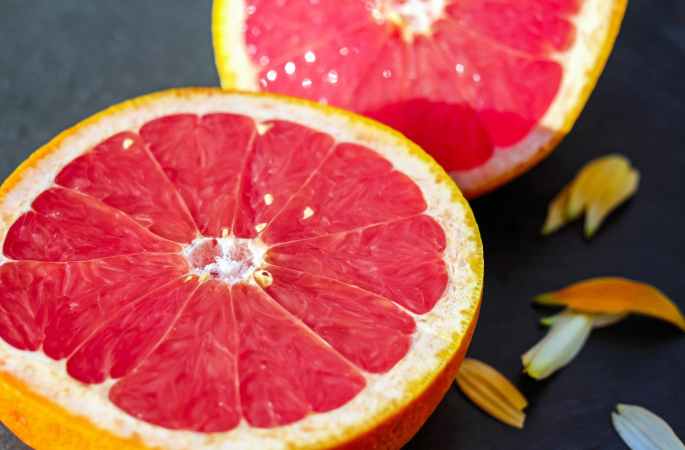
I was absolutely surprised to learn that the grapefruit was once named the “forbidden fruit” in the mid-1700s by a reverend searching for the identity of the original tree of good and evil from the Garden of Eden in the Caribbean Sea.  Years later, that same “forbidden fruit” tree was brought to Texas by Spanish missionaries in the late 1800s and given to local farmers in the southern area of the state.  Little did those Texas missionaries know that the Rio Grande Valley possessed fertile soil and subtropical weather, creating ideal growing conditions for grapefruits. Now, Texas is the third largest citrus producer in the United States, and it is especially known for its red varieties of grapefruits, such as Rio Star and Ruby Sweet. 

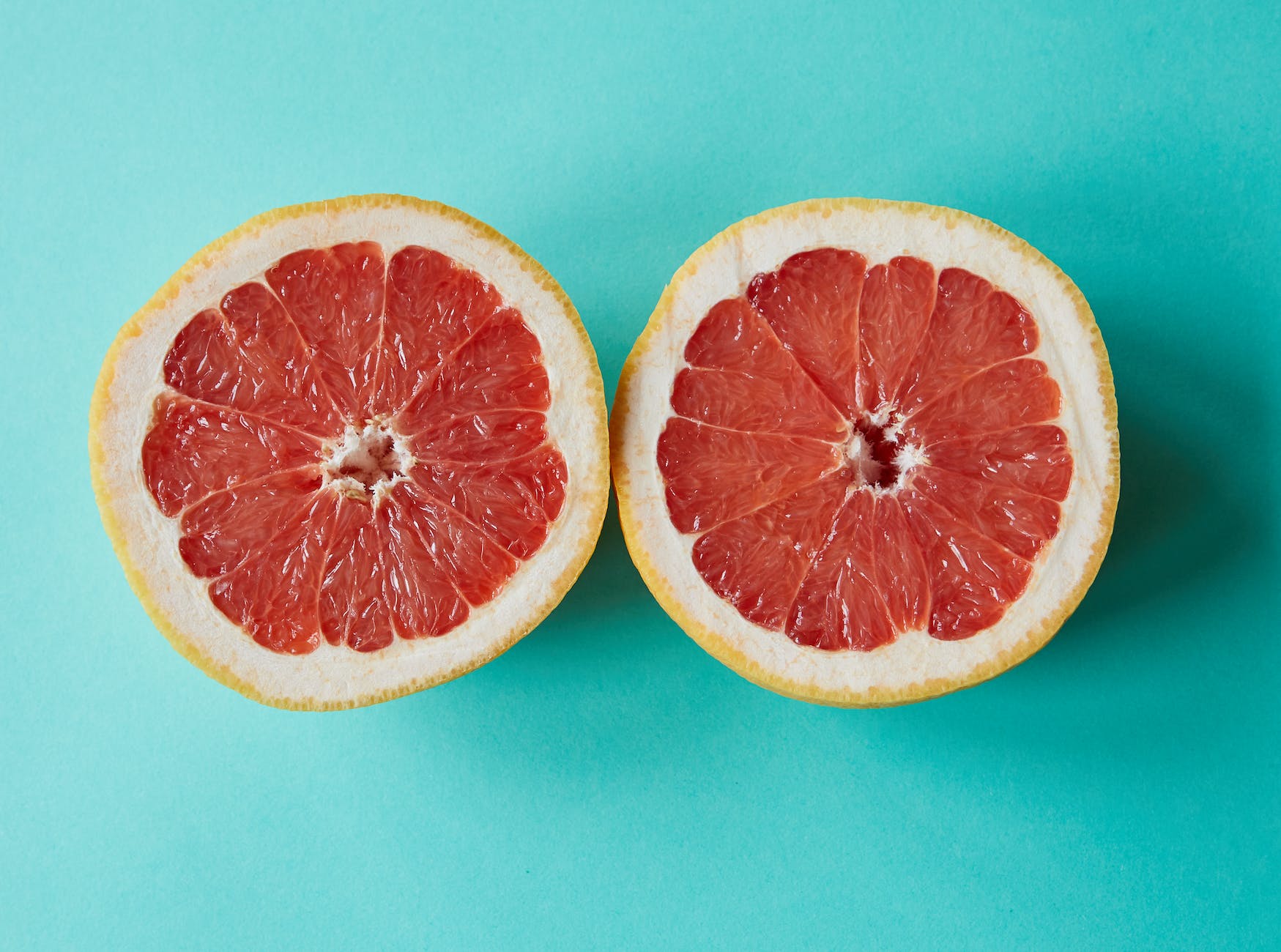
Personally, ruby red grapefruit is one of my favorite fruits.  I especially appreciate its sweet tangy flavor.  Red grapefruit seems to bring my tastebuds to life with its clean, refreshing, and light taste.  

It is that sweet tart taste that adds extra zing when combined with other flavor profiles in recipes.  For example, spread ricotta cheese over toast, add a few slices of ruby red grapefruit, then drizzle a bit of honey over that, and you’ve got a light refreshing summer breakfast.  Toss slices of grapefruit, along with walnuts, goat cheese and a few slices of roasted beets, into a salad of leafy greens with a light vinaigrette, and you’ve got a tasty lunch or light dinner. You can even make delicious light desserts and baked goods with grapefruit, such as grapefruit buttermilk muffins, grapefruit bars, or even chocolate covered grapefruit slices!  

Photo by Nicola Barts on Pexels.com

Smooth Nutrition 🍍🍌🥝

Then again, grapefruit can be added to smoothie recipes for an instant burst of flavor AND nutrition.  I created the recipe I am sharing with you today during the weeks following neck surgery this past spring.  Despite the fact I am fully recovered, this is one smoothie recipe that I still frequently make.  

During my recovery process, I was hyper-fixated on the nutritional content of the foods to enhance healing, but I was having difficulty swallowing.  Smoothies, therefore, became a go-to source of nutrition, and this recipe is uber-refreshing and jam-packed vitamin, mineral, and fiber content.  Specifically, it combine the goodness of grapefruit, which is packed with vitamin C and fiber, with strawberries and one of three fruits–frozen pineapple, banana, or kiwi–depending upon what I have on hand at home.  

One half of a grapefruit contains six grams of fiber and the total daily amount of vitamin C needed by our bodies. The grapefruit gets tossed into a blender with strawberries, which are also high in vitamin C and fiber as well as antioxidants, magnesium and phosphorus.  Then, I take my pick of pineapple, banana, or kiwi, and pitch one of those into the blender. No matter which of the three of those fruits I choose, they are all full of potassium, fiber, and a whole slew of vitamins and minerals. 

Light and refreshing, grapefruit smoothies are perfect for nutrition on the go!

Blend and Go nutrition🥛

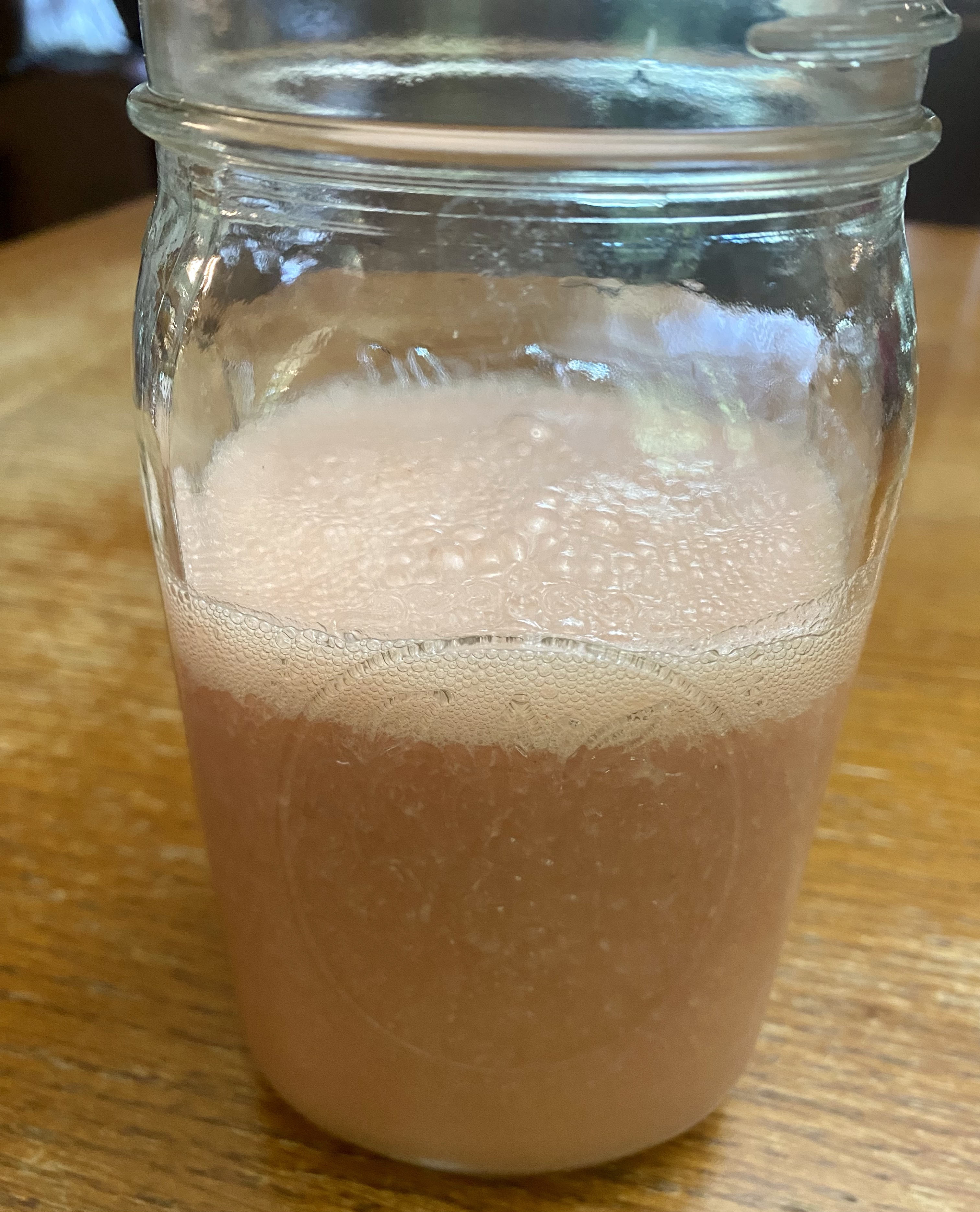
Sometimes, for a touch of sweetness, I add in a medjool date, a bit of maple syrup, or pomegranate juice as well as a bit of ginger for its antiinflammatory properties. Depending upon what I am eating that day, I may also add vanilla protein powder, which gives the smoothie a creamy, zesty-sweet taste.  Once all desired ingredients are in the blender, I give it a whirl for about one minute and divide between wide-mouth mason jars or smoothie containers.  And in less than five minutes, I have two refreshing, nutritionally dense smoothies.  Perfect for on-the-go nutrition or a quick, healthy snack.

While grapefruit was once known as the “forbidden fruit,” there is nothing forbidden or evil about it!  Grapefruit is budget friendly, full of tangy zest, and nutritional goodness for your body.  I hope you’ll give this recipe a try!  You just might be surprised!

Zesty sweet, budget-friendly goodness, bursting with flavor AND nutrition, in less than five minutes!

Grapefruit Smoothie

Serves 2

Ingredients:

1 cup frozen riced cauliflower 

1 large ruby red grapefruit, peeled (with some pith remaining), quartered 

1 cup strawberries, fresh or frozen

1 cup pineapple, fresh or frozen (or 1 banana or 2 kiwi)

1 medjool date (or 1 teaspoon maple syrup or ¼ cup pomegranate juice) for added sweetness 

¼  teaspoon ginger powder, if desired 

2 cups water (or other favorite liquid)

Optional: 1-2 servings favorite protein powder

Combine ingredients in a high powered blender, adding water last.

Blend for one minute.

Divide between two large smoothie containers or jars.

Can be stored in the refrigerator for up to 3 days; shake well before drinking.

Can also be frozen for up to 3 months, set in the refrigerator overnight to thaw ahead of time.

Berry Good Cauliflower-Berry Smoothie

“Good nutrition creates health in all areas of our existence.  All parts are interconnected.”–T. Collin Campbell

Photo by Anastasiia Petrova on Pexels.com

Summer is back!  Okay, not officially as we have not yet experienced the summer solstice, but it is strawberry season!  In fact, throughout the coming months of summer, other berries will also come into season!  Freshly picked berries are not only some of Mother Nature’s sweetest earthly treasures, but they are also some of the most nutrient rich treats.  Plus, they are just so darn versatile.  Eat ‘em plain; toss them into cereal, smoothies, or yogurt; mash them onto your toast (for real!); bake them into cake, muffin, or pie recipes; cook them down into syrup, sauces, or jams; or, can, dry, or freeze them for later use.  Honestly, what’s not to love about berries?

From a nutritional standpoint, berries are chock full of vitamins, minerals, antioxidants, and the all important fiber. Think of berries as your personal arsenal for warding off cancer, protecting the health of your heart, and fending off chronic inflammation and/or illness. They also benefit your skin, may help lower cholesterol, and can typically be enjoyed no matter the diet you follow due to the fact they are low-glycemic and low in calories as well as carbs.  Those tiny, juicy, brightly colored orbs are bursting with nothing but love and goodwill for your body and your taste buds. 

Photo by Julia Volk on Pexels.com

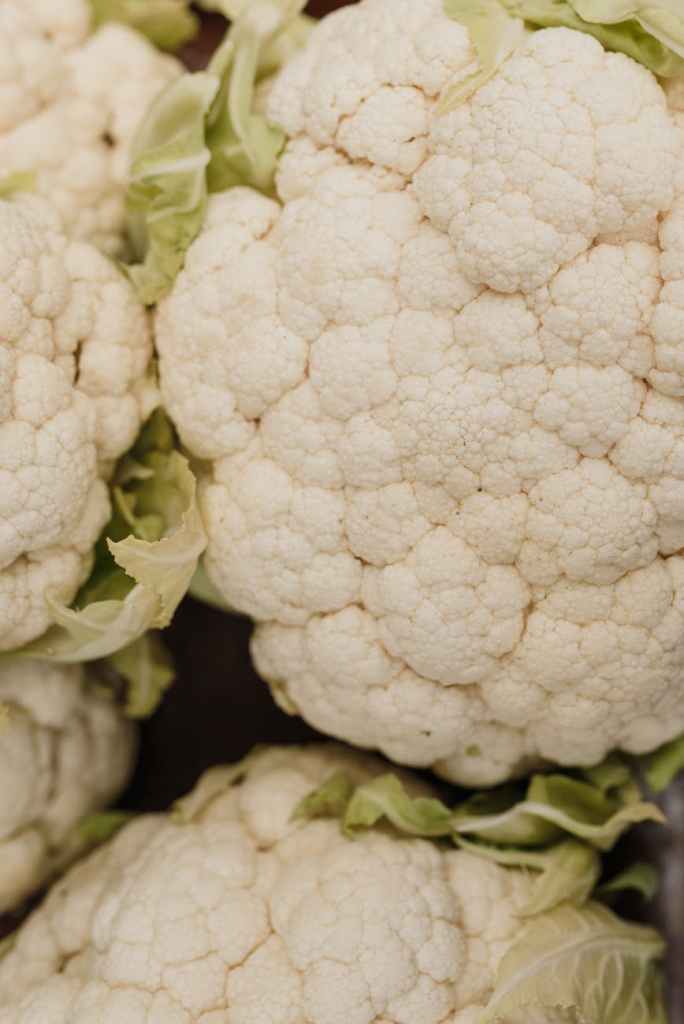
Now, contrast the vivid indigo of blueberries, the deep purple of blackberries, the candy red of strawberries, the shiny garnet of cherries and pomegranates, and the rose crimson of raspberries to the ever so homely cauliflower.  Oh sure, there are a few colorful varieties of cauliflower, but by and large, the most abundant form of cauliflower is as colorless as a canvas.  In fact, that is how I prefer to think of cauliflower: a canvas.  A canvas waiting for the strokes of color from an artist’s, or in this case, cook’s palette.

“Most flowers say, “I love you,’ but cauliflowers say, ‘I hope you live forever.’  And, that’s more intense than love.”–Unknown

Cauliflower, like the acclaimed berry, is considered a superfood.  It, too, is high in fiber, low in calories and carbohydrates, and full of vitamins and minerals.  Brimming with phytonutrients, antioxidants, and high levels of sulforaphane–an ingredient in all cruciferous vegetables–cauliflower can also wage war against cancer. Due to its high level of choline, it also supports learning and memory maintenance. (Who doesn’t need help with that?)  Additionally, cauliflower is full of bone-enhancing Vitamin K.  

Photo by Arina Krasnikova on Pexels.com

Similarly to berries, cauliflower is versatile in the kitchen.  Popularly known for creating a healthier alternative to traditional pizza crust, cauliflower can also be made into grilled “steaks,” buffalo “wings,” and stir-fried “rice.” Furthermore, it can be mashed, steamed, baked, fried, tossed into soup, salad or dip, eaten raw, its stem can be shredded and added to slaw, and it can be frozen for later use.  Plus, it can be added to smoothies! 

“If cauliflower can be pizza, you, my friend, can be anything.”–Unknown

Two simple ingredients make this smoothie naturally sweet, creamy, and a rock-solid nutritional choice to start your day of with the first positive step of the week.

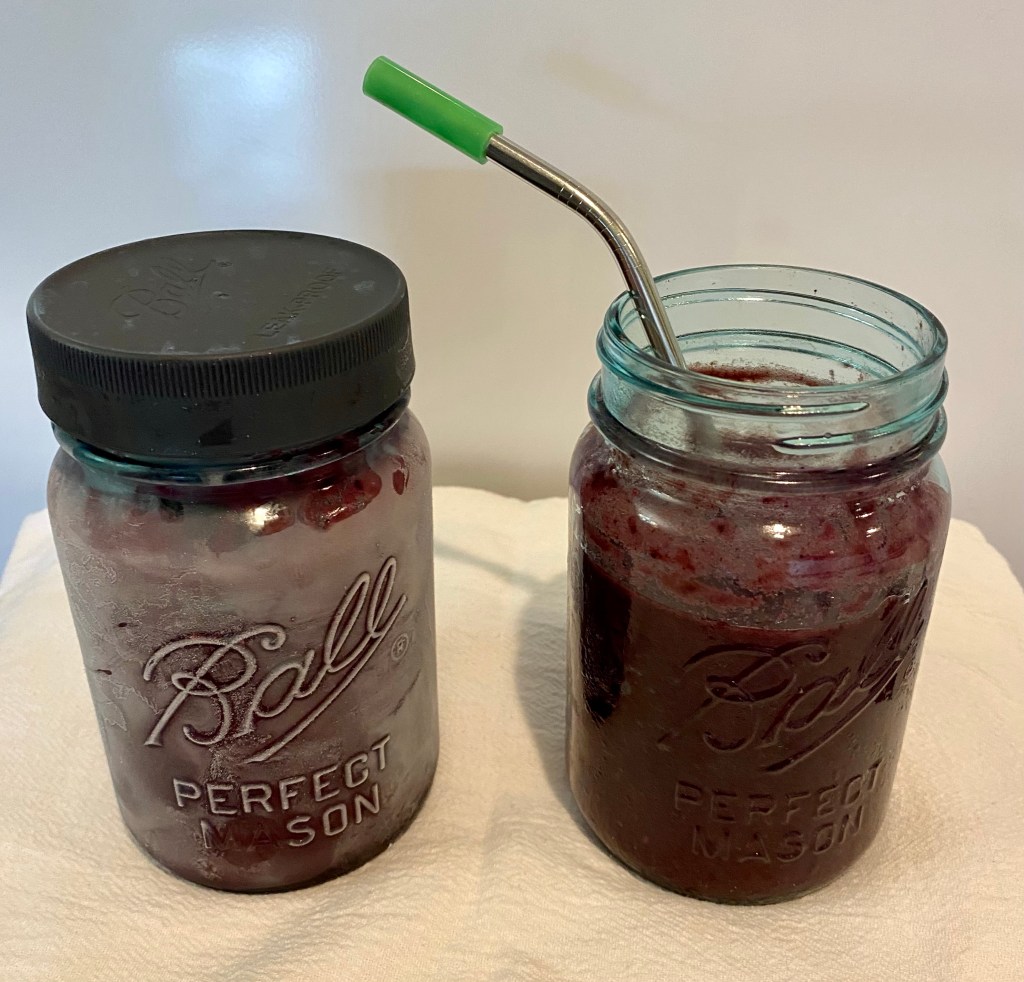
If you are familiar with my work, you know I love whole-food, plant-based smoothies.  They are convenient, portable powerhouses of nutrition that can be made ahead of time and frozen.  That’s right! Blend a whole batch of smoothies up for the week in one manageably messy hour or less, and you are setting yourself up for a nutritionally robust, go-get ‘em week!  Then, the night before–or really, just a few hours ahead of time–take one smoothie out of the freezer, and set it in the fridge. Then, in the morning, you’re ready to kick off your dynamo day with a jolt of nutritional righteousness. 

Now that the weather is warming up, nothing tastes more refreshing than a cool, creamy sweet smoothie.  The sweetness occurs naturally from the succulent berries–no added sugars here.  Full of fiber, antioxidants, vitamins, and minerals; low in calories and carbohydrates; this smoothie recipe checks all the boxes.  You won’t be able to taste the cauliflower, but instead, you will taste all of the berry deliciousness of whatever berry(ies) you choose.  Your taste buds and body will be doing the happy dance, and you will feel a peace of mind knowing you made one small choice of positivity that just may lead to multiple beneficial steps towards your health for the day.

From frozen to thawed in a matter of hours . . .make ahead smoothies make your work week more organized and, well, smooth!

“A healthy outside starts from the inside.”–Robert Urich

I encourage you to give this recipe a try. Change it up, dress it up, and make your own version of this wholesome blessedness.  Then, hit me up via email, Instagram, Facebook or on this website, stephsimplycom.  I can’t wait to see what you do with it!  

From my home to yours, I simply wish you vibrant health.  Here’s to you!

Berry Good Cauliflower Smoothie

Ingredients:

1 ½ cup riced cauliflower

1-1 ¼  cup favorite liquid or other favorite liquid 

¼-½   cup pomegranate, cherry, blueberry or combination juice (You want a total of 1 ½ cup liquid.)

½ teaspoon cinnamon

½ teaspoon vanilla extract

Dash of salt (optional)

1 inch or ½ teaspoon ginger

1 mini cucumber or ½ large

½ lime, peel removed, but leave parts of the pithe for extra flavor and Vitamin C

1 cup mixed berries (My blender can only handle 1 cup, but feel free to add in another cup!)

Optional: 1 medjool date or ½ banana for added sweetness if desired 

Go “Extra,”only if you want, with as many of these additional nutritious powerhouses as desired:

Replace ¼ cup of your favorite liquid with ¼ cup aloe

2 teaspoons amla

2 teaspoon greens powder

1-2 teaspoons acai powder

½ – 1 teaspoon matcha powder

½ -1 whole scoop of favorite protein powder 

¼-½ teaspoon of turmeric powder

Place cauliflower and all liquid ingredients into the blender and blend well.

Add-in rest of the ingredients in the order listed above.

Blend all ingredients until smooth.

Makes one large (approx 32 ounces) or two smaller (approx 16 ounce) smoothies, depending upon amounts chosen.