Movement as Medicine: Staying Active in Your Older Adult Years

“Movement is medicine for creating change in a person’s physical, emotional, and mental states.”–Carol Welch

Photo by Roman Biernacki on Pexels.com

Let’s get Ready to Move! 🏃‍♀️

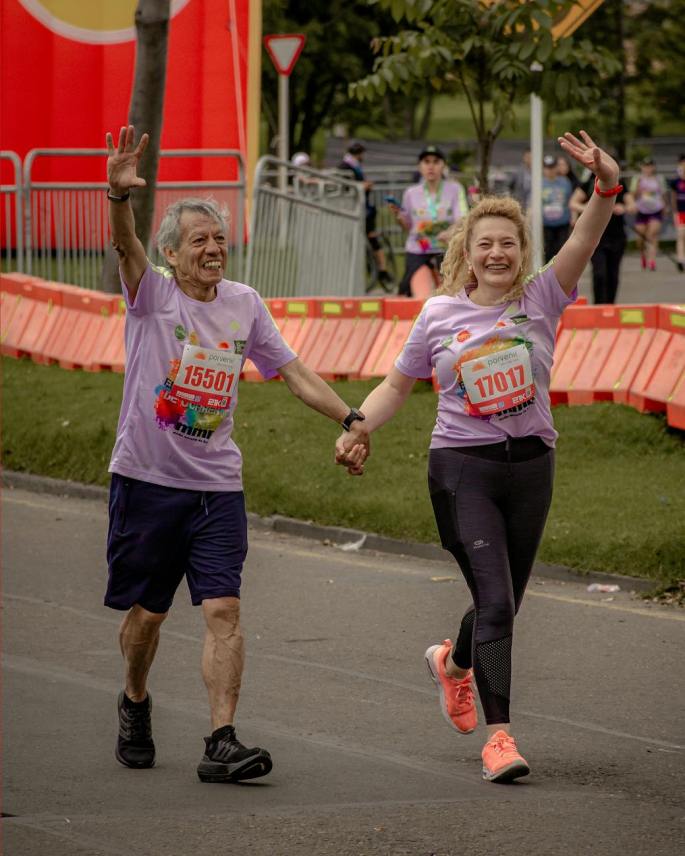
By the time you read this, I will be close to one week out from running (ok, jogging, “slogging”, whatever you want to call it) the Marshall University Half-Marathon. This annual community event motivates and inspires hundreds of locals and nonlocals to train, improve their current fitness level, and participate in the 5K, the half-, or the full-marathon distance.  Plus, it brings together a whole host of volunteers who support participants along the way.

Each year that I’ve participated, I hear numerous stories about those who haven’t trained for MUM, still participate, and do well.  My hats off to them; I appreciate that they can do that.  However, I find the training, and the build-up to the event, are part of the excitement and joy of the journey that includes completing the event.

Photo by RUN 4 FFWPU on Pexels.com

Giving meaning and purpose to Exercise through signing up ✍️

It typically takes weeks, or even months, of deliberation before I decide to sign up for a running event–even an annual event such as the MUM. Therefore, once I make the decision to pay the entry fee for an event, I am fully committed to a training plan. This is not because I have any desire to place or set records, but because signing up for an event is the extra motivation that gives meaning and purpose to my exercise.  Plus, it keeps me simultaneously excited and nervous in a good way.

Photo by RUN 4 FFWPU on Pexels.com

Exercise at any age! 👵🏼

Still, I have those who ask me if running is still safe for someone at “my age.” News alert! There is no milestone-age at which you should cut-off exercise.  In fact, exercise and/or movement can, and probably should, be embraced across all ages, including those of us in the AARP years, which is anyone over the age of 50. That said, you do have to manage your expectations, but movement and/or structured exercise can be a healthy part of the “golden years.”

That said, of course, if you have had an injury or have certain health conditions, you must respect your body’s limits and boundaries, but it doesn’t mean you give up on exercise and/or purposeful movement forever.  By working with a healthcare professional, you can find ways to adapt, modify, and/or create your own exercise plan that fits your body’s unique needs.  
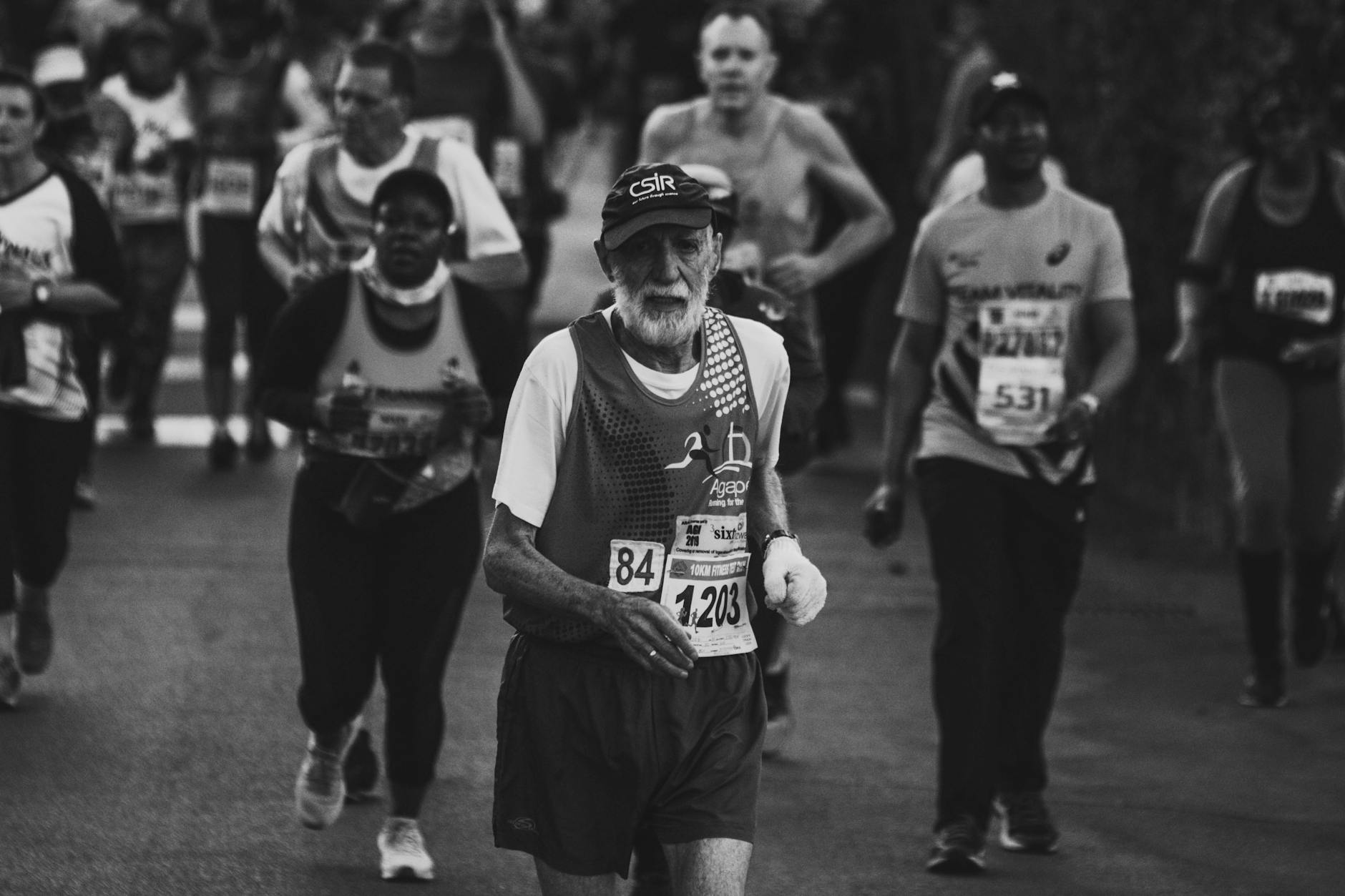
Photo by Vincent Peters on Pexels.com

Tips for moving through those senior years 🚶🏿‍♂️

Here are some key tips and pointers I’ve learned along the way, gathered from other senior exercisers, as well as a few I researched, when thinking about exercise/movement in the, a-hem, “senior” years.

  1. Establish meaningful AND realistic goals appropriate for where your body is now that motivate and excite you.  This is why I enjoy signing up for a half-marathon.  My mantra is: “Set your own pace, and run your race.”  I don’t put pressure on myself that running has to be or look a certain way.  No time is too slow, and I can take as many walk breaks as I need.  That said, you can approach ANY form of exercise in a similar manner 

Set off in your own unique direction down the the tracks towards empowering your own health and fitness.
  1. Notice your narratives.  This is something that I have begun to notice more frequently. Reflect on how you talk/think about age with peers/friends/family AND self.  Is there often negative talk and thoughts associated with your current age and/or exercise?  Perhaps, you can begin to reframe those thoughts/chatter by leading by example.  Furthermore, look to role-models that motivate you to move more.  I personally often look at my Dad who still walks or hikes daily anywhere from 2-8 miles per day.
  1.  Find your edge. Whatever form of exercise we choose should challenge us, but not too much.  If something changes, and you sense you can do a little bit more, then do so.  But if doing a bit more causes serious discomfort, then back off, and try again another time. 
Map out your own fitness challenge.
  1. Strength train, stretch, and work on balance through practices such as yoga. The CDC in an article entitled,  “Older Adult Activity: An Overview,” states that in addition to cardiovascular exercise, such as jogging and walking, older adults also need to strength train and work on balance.  In fact, AARP offers a 10-minute, strength-training video that can be completed daily, seated or standing. 
  1. Manage your sleep and nutrition: There is a reason these two are often spoken/written about due to the fact both contribute positively, or negatively, towards your own health.  That said, one bad night’s sleep, one indulgent meal, or a day of eating very little, will not necessarily impact your overall health; however, consistently not getting enough sleep and not consuming proper nutrition will gradually, and negatively, begin to impact your physical and mental well-being. 
  1. Find your support or pave your own way.  There’s no one right fitness plan that works for everyone.  Find the type of movement/exercise that best suits your body and motivates you, which may mean exercising with a group, a friend, or at a club. That said, don’t be afraid to go it alone either and share the experience with others later.

Find your support!
  1. Exercise can be therapy. Personally, I know my mental health greatly benefits from movement. The National Institutes of Health, The Mayo Clinic, Mount Sinai, and numerous other institutions all point to the fact that exercise is a mood and mental health booster.
  1.  Tune in to your body’s needs with honesty and integrity. If you’re sick, tired, and/or run down, then maybe a day or two of rest may be what you need. If a joint, such as knee, elbow, wrist, or ankle begins to feel irritated.  Be curious about it.  Are you pushing a certain exercise too hard, too often? Or, are you not moving enough? Learning to listen to the signals our bodies send us is an important part of the exercise/movement journey.

Photo by RUN 4 FFWPU on Pexels.com

movement is medicine! 💊

When it comes to movement, no matter your age, focus on the positives of the experience–whether it is spending time with friends, benefiting your mental health, or feeling more overall strength, steadiness, and/or energy. To be sure, it is often hard to get started, but it is often that feeling of accomplishment you have afterwards that can keep you going. Finally, for those in the official AARP years, keep in mind, “older” doesn’t have to mean sitting on the sidelines. Becoming and staying active, however you define it, truly is medicine for imbuing well-being: socially, mentally, and emotionally. 

Dad and I pausing for a moment during hike this past summer at Barboursville Park.


Perfect Pear-Crisp Recipe for Fall

“There are only ten minutes in the life of a pear when it is perfect to eat.”–Ralph Waldo Emmerson

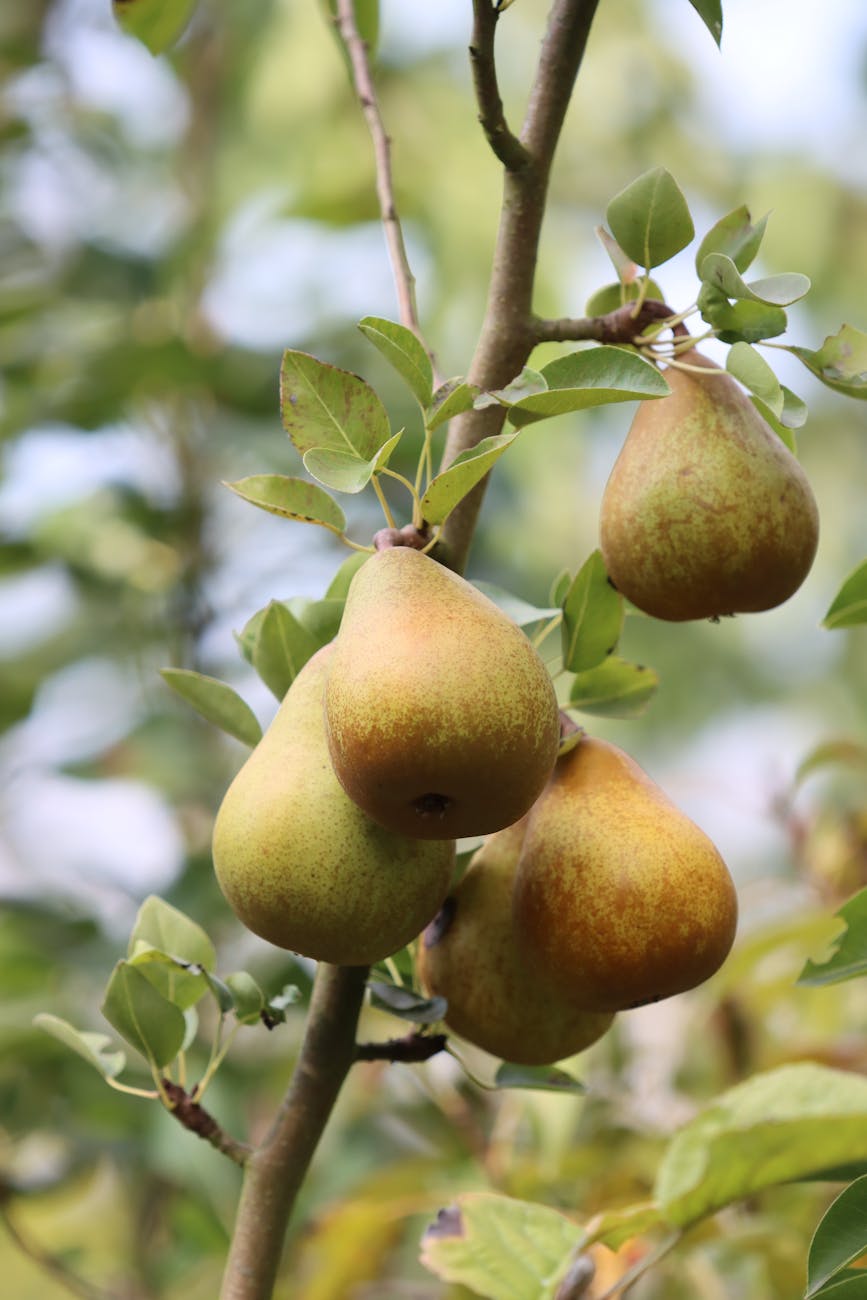
Photo by ML ARANDA on Pexels.com

The seasons of Pears 🍐

Pears are in-season locally.  For those who grow these fruit trees, this is a once a year celebration of those sweet, juicy fruits.  Ironically, for all their sweetness, pears are one fruit that do not, and should not, fully ripen on the tree. In fact, pears need to be harvested when mature, but not ripe. If left on the tree too long, pears become mealy.

Across the United States, pears come into season anywhere from August to October, depending upon what part of the country they are grown.  Most pears–about 95%–found in the stores, are grown in California, Washington, and Oregon according to Food Network. That said, it’s not too late to find home grown pears at local farmers markets and roadside stands. 

Photo by u7d20u6750u738bu56fd Footage Kingdom on Pexels.com

How to to Know when Pears are ripe 🍐

When buying pears, keep in mind that they do take a while to ripen enough for eating. In order to determine if a pear is ripe enough to eat, gently press on the neck of a pear with your thumb. If your thumb gives, the fruit is ripe, if the fruit doesn’t yield, it needs more time to ripen.  However, it is worth noting that slightly under-ripe pears can still be used for baking and recipes that require some form of cooking.  The heat allows the fruits’ sweet juices to release into your favorite recipes. 

I am fortunate enough to have a neighbor, Sandra Patterson, who is generous when her pear trees bear their fruit.  For the past several years, she has offered to share her harvested fruit with those around her, and they are always a tasty, seasonal delight.  Unfortunately, pears are so versatile, I have a hard time choosing how I want to prepare them.  From salads to main dishes, from sweet breads to delightful sauces, and from luscious desserts to slicing them up and eating them fresh, pears lend themselves to a wide array of recipes. 

Pears are versatile ✨

In the past, I have made pear butter, which is similar to apple butter.  I have made quinoa pear salad and microwavable “baked” pears.  I have sliced them up and added them to garden salads with dried cranberries and walnuts, or put them on toast with peanut butter, raisins, and a sprinkle of cinnamon.  While I don’t eat meat, I know that one of my coworkers adds freshly sliced pears to the pan when baking pork loin.  And these ideas are only the tip of the recipe-iceberg for fresh pears.

This year, however, I decided to go with one of my favorite simple treats: pear crisp.  I love any kind of bakeable fruit with a hearty, crunchy oat topping, and the ease of these types of “crumble” desserts is one I especially appreciate.  Additionally, for those with celiac disease or gluten intolerance, fruit crisps, when made with gluten-free ingredients, such as oats and oat flour, make a delightful replacement for gluten-laden fruit pies.  

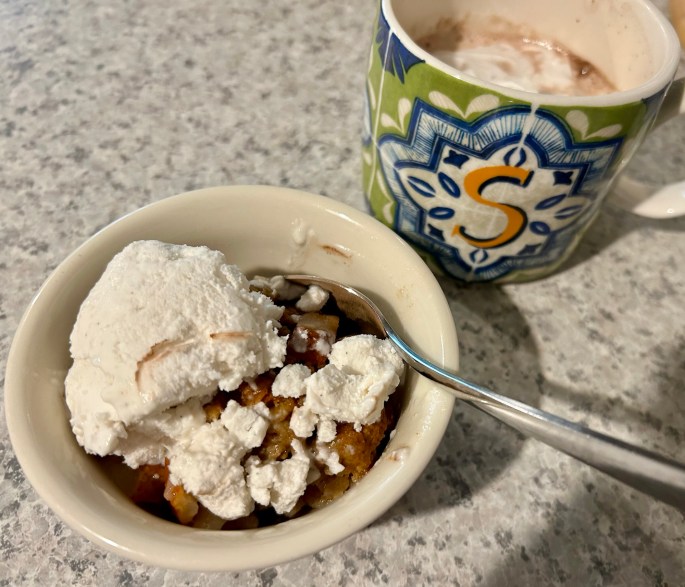
Easy to bake up, and rich in fall taste!

Pear Crisp Anyone? 🙌

I chose to use maple syrup in this recipe instead of the traditional brown sugar because it offers a comforting fall scent and flavor. When baking with maple syrup, it lends a caramel-like taste to baked goods that I believe “pears” well with traditional fall spices such as cinnamon, nutmeg, and allspice—all of which are found in the apple-pie spice that I incorporated into this recipe.

That said, you can replace the maple syrup with brown sugar as noted in the recipe. And, you can also replace the apple pie spice with cinnamon, if preferred. Other recipe modifications could include replacing the pears with an equivalent amount of apples or using half apples/half pears. Furthermore, if you like raisins or dried cranberries, sprinkle ¼ to ½ cup of those over the fruit before adding the topping.

Regardless of how you adapt this recipe to suit your taste preferences, it is my hope that it inspires you to bake up some “pear-fect” homemade goodness in your home for a fall treat. As it bakes, your house will overflow with fragrant autumnal scents sure to make your belly growl. Brew some tea or coffee and soften up your favorite ice cream variation to serve up along with this dessert, and enjoy!

From my home to yours, I wish health, happiness, and homemade eats!

Chock-full of sweet, seasonal pears and topped with a maple-rich oat-and-walnut crunchy topping, pear crisp makes for a simple, but luscious fall treat.

Easy Pear Crisp Recipe 🧑‍🍳

Easy Pear Crisp, Gluten-free and plant based 

(Thank you, Sandra, for the “pear-amount” inspiration for this recipe.)

Ingredients

6-7 ripe pears

1 teaspoon apple pie spice (Can substitute with cinnamon)

¾ cup rolled oats

¾ cup oat-flour flour (Can substitute all-purpose flour.)

½ cup chopped walnuts and/or pecans, optional

1 teaspoons of cinnamon

1 teaspoon baking powder

¼ teaspoon salt

 ⅔ cup pure maple syrup (Can substitute 1 cup brown sugar)

1 teaspoon vanilla extract

½ cup cold butter, cut into pieces (I use vegan variation.)

Directions

Preheat oven to 375 degrees

Coat square baking dish with cooking spray  (Mine was 9 x 9)

Core and deseed pears, then slice or chop fruit, depending upon preference (I left peel on, but you can peel pears)

Place fruit in prepared baking dish

Sprinkle with apple pie spice

In a large bowl, mix together oats, flour, cinnamon, nuts (if using), baking powder, and salt.

Cut in maple syrup, vanilla extract, and butter pieces using a pastry blender, forks, or large, firm spoon. (Mixture will be thick and slightly crumbly if using syrup; it will be mostly crumbly if using brown sugar.)

Sprinkle oat mixture over fruit

Bake for 30-35 minutes or until the top is golden brown.

Serve warm.  It makes 6-9 servings.  Leftovers can be stored in covered containers in the refrigerator for up to a week. It can also be frozen for up to three months. 

Conquering Perfectionism: Tips for a Balanced Life

“Perfectionists strive to never make mistakes. Excellence is striving high but offering yourself grace for mistakes made and things you don’t know yet.”–Sharon Martin

Photo by RDNE Stock project on Pexels.com

imperfect pressure 😰

I watched in horror before school began as a student began pulling at their hair so hard, strands of it landed on the table. I quietly walked over to offer help/support. The child was a known perfectionist and quickly angered if they were unable to complete their work with total accuracy. As it turned out, they were completing math homework that was due at 8:00 a.m., which was less than ten minutes away. It was homework they had procrastinated completing and were feeling the pressure of not having the time needed to complete the work “perfect.”  

As a teacher, I encounter both students–and adults–that appear to strive (either intrinsically or extrinsically), for “perfection.” However, the idea of perfectionism is a human-construct. When we look at the natural world, we can see multiple examples of this.  Think of any three-legged animal you may have encountered.  One could argue that those creatures are not “perfect” specimens, but they are still able to function “perfectly.”  Another example is the number of plants that are classified as “imperfect” because they do not have both the male and female parts needed to produce flowers.  However, through adaptation, they are able to produce flowers.

Photo by Fox on Pexels.com

Intrinsic vs. extrinsic “perfectionism” 🗂️

Perfectionistic behavior in humans can manifest itself in various ways. So-called “perfectionism,” for some, can be intrinsically-driven. These are people who hold themselves and their work/performance to higher standards. They are self-motivated and often view mistakes as setbacks from which they can learn.  Their goals are realistic and achievable. Overall, this type of “perfectionism” can be healthy unless it evolves–either from internal or external forces–to an unhealthy, maladaptive state.

An “unhealthy” state of perfectionism can often be attributed to others–cultural and/or societal cues, well-intended friends, or even family. In fact, think about how often the word “perfect” sneaks into day-to-day interactions and conversations.  Even sports’ analysis is rife with its use of “perfect”–perfect pass, perfect catch, perfect save, perfect pitch and so on.  Similarly, from many outward appearances, one could argue life rewards those who are “perfect.”

Unfortunately, perfectionism can become problematic when people begin to set standards that are extreme and often unattainable. This can lead to a sense of “failure,” a constant feeling of stress, and/or develop procrastination/avoidance habits because the tasks/work can seem so overwhelming because it can’t be completed “perfectly.”  Perfectionism can reduce feelings of joy/happiness, diminish one’s self-esteem, and often leads to burnout. It is worth further noting that perfectionism can sometimes evolve as an extension of anxiety, OCD, ADHD, and/or depression.

Photo by energepic.com on Pexels.com

Downside to perfectionism 😫

Perfectionism, when left unchecked, is beyond “trying to be your best.”  It’s more about setting standards that are so high, they are either difficult to maintain or unrealistic to achieve. Many people think that perfect work/performance is the only way to be accepted and/or valued, often because they have a fear of not being good enough or worry about how others perceive them. 

In particular, I have noticed that students (and adults) with perfectionistic tendencies place extreme amounts of pressure on themselves to perform “perfectly.”  Then, if their work/performance misses the high-mark they have established in their mind, their self-talk becomes highly critical and often leads to self-loathing that can spiral into depression and harmful coping mechanisms.  Sometimes, this need to be perfect can spill over into their relationships in which friends and acquaintances who don’t meet “perfect standards” are berated, belittled, and shamed for not having the ability to perform at a specific level.

Photo by Christina Morillo on Pexels.com

Reframing the way we talk 🗣️

What can be done about this?  One important step that any of us can take is to reframe the way we talk about performances.  Rather than being quick to say, “that was perfect,” consider focusing on acknowledging/praising the effort or the process. This is especially important for parents or anyone working with children and teens; however, it is also equally important in the work setting or within close relationships. For example, instead of saying that a presentation is “perfect,” focus on the process.  “Your presentation was so clear and to the point. Tell me about how you came up with that idea.” The point is that we bring harm to others when we foster the myth of perfectionism.  

Proactive practice and tips for 📋overcoming perfectionistic tendencies

I’ve gathered several tips from a wide array of sources as well as a few anecdotal tips I have observed students and/or adults employ to combat perfectionistic tendencies.  Even if you are not battling perfectionism, per se, some of these tips are overall proactive practices for a healthy work/life balance.

  • Become aware of perfectionist tendencies, and reduce self-imposed pressure. Sure, you could spend hours crossing every t and dotting every i, but after a certain amount of, there is a diminished return on time invested.  Sometimes, it’s okay to complete the task well (read: not “perfect”) in a reasonable amount of time
  • Break a big job into smaller tasks, and habit bundle in order to avoid procrastination. If the thought of a task is overwhelming, break it down into smaller tasks spread out over several days, and “bundle” it with something you enjoy doing while completing the task or afterwards, i.e. Instead of cleaning the entire house, commit to cleaning two rooms while listening to your favorite playlist or podcast. Then repeat the process with two more rooms at another time.
  • Celebrate small successes and praise yourself.  When completing a step of a major task/job/assignment, take time to acknowledge and feel good about each completed step. 
  • Limit your time on task(s), and focus on meaning over “perfect.”  See the big picture/goal, so that you can be less perfect about some things and focus more on the overall, most important goal.
  • Acknowledge that “perfect” is a human construct, and reframe how you talk to others about work/skills/projects. This is one that takes practice and awareness due to how easy it is to interject the word, “perfect” when acknowledging/praising one’s job.
  • Allow yourself to make mistakes, and view them as learning opportunities. This is a big step towards a more healthy mindset. We all make mistakes, and they provide important lessons that can potentially impact future work.
  • Cut out negative influences and accept/seek constructive feedback. While it may not be completely possible to avoid those who place unrealistic expectations on you or others, it is possible to ignore those messages and seek advice from mentors who truly have your best interest at heart.
Photo by fauxels on Pexels.com

Final Thoughts 🤔

Coping with perfectionism can be challenging, especially when family, friends, and/or other outside influences may be sending other messages.  While it’s good to have high standards for ourselves, those standards should not be at the expense of our mental health and well-being. Finding a more balanced approach to work/performance can increase our peace of mind, overall well-being, and give us permission to live and work with a bit more grace and kindness towards ourselves and others. 

Mastering the Art of Listening: Key Techniques

“Most people do not listen with the intent to understand; they listen with the intent to reply.”–Stephen R. Covey

Photo by Jopwell on Pexels.com

Listening is an Art 🎨

I listened to an acquaintance share a problem with me. I tried to fully listen, and then proceeded to offer my best advice.  Later, however, I reflected upon that conversation and wondered if I should have responded differently.  Was she really seeking advice, or did she just want someone to listen and empathize with her? Perhaps, I should have taken more time acknowledging her feelings, and then asked if she wanted advice, instead of assuming she wanted it.

Listening, really listening to others, is a skill and an art. I once heard a speaker say, “Hearing is uncontrollable; listening takes a special knack.” This is so true. We are constantly inundated, it seems, with an assortment of sounds, clamor, and all types of conversations.

 I was reminded of this quote in a past conversation with my daughter, Maddie. We were, ironically enough, talking about listening.  Specifically, I wondered aloud about ways to improve my own listening. She shared with me what a friend once taught her.

Photo by Andrea Piacquadio on Pexels.com

Three ways of listening 👂

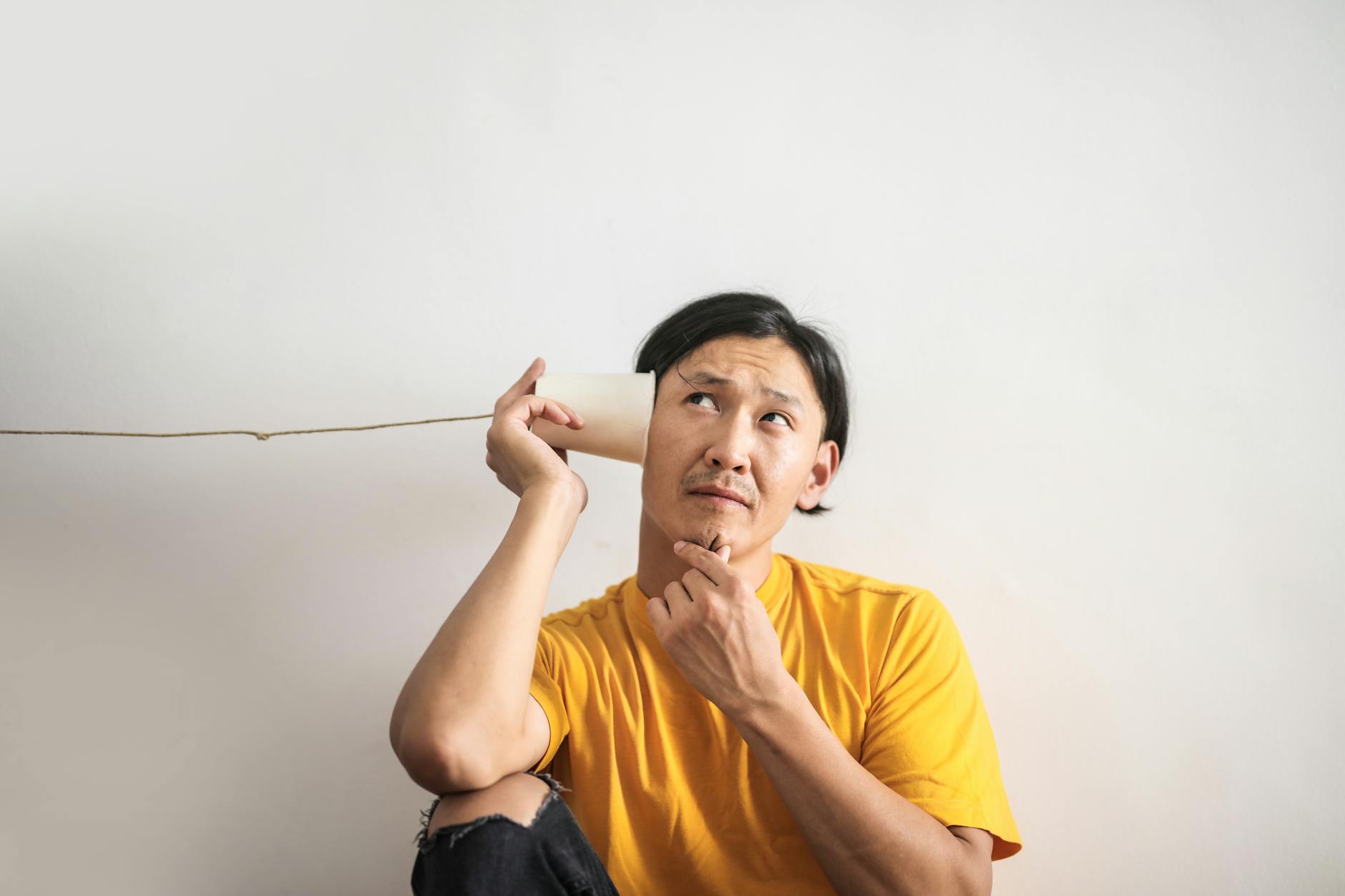
According to Maddie’s friend, there are three types of listeners: Those who listen to respond; those who listen to react or criticize; and, those who listen to understand.  This stuck with me, and I decided to do a short bit of research into this topic. 

One quick internet search on “types of listening” resulted in hundreds of articles. Some pieces were geared more towards high school or college students taking communication classes.  Others were framed around mental health. However, based upon my informal searches, business/work implications seem to make up the largest number of “ways to listen” write-ups.

While I can’t claim to have done the deepest research dive, what I did find seemed to support the overall point of what Maddie shared with me–there are different types of listeners and a number of identifiable ways of listening.  It seems the biggest point of agreement is that most of us can, and would probably benefit from, improving our own listening skills.  What mostly varies, from article to article, is the identification of how many different listening types/styles there are.  

Photo by Andrea Piacquadio on Pexels.com

Two Other types of Listening 🎧

Two types of listening that Maddie’s friend did not identify were what several articles called “pseudo listening” and “appreciative listening.” Pseudo listening are those times when we pretend to listen, but we are not really absorbing the speaker’s information.  This can occur across a wide array of situations, from the classroom to the board room, and from having the TV or radio on in the background to a person droning on and on about a topic for which you have little interest, but don’t want to be rude.

Appreciative listening is the type of listening we engage in when listening to a favorite song or piece of music.  It can also occur when listening to a presentation or speaker talking about a favorite subject.  You are not, per se, learning anything new, just appreciating the appeal of the subject matter.

Photo by nappy on Pexels.com

Listening to Respond 🗣️

To the point of “listening to respond,” there are several key points.  First of all, in day-to-day life, there are numerous situations which require listening carefully and responding quickly. From minute tasks, such as ordering food, when the staff asks how you want a certain dish served to listening to a friend or loved one ask if you could lend a hand, there are moments that require listening and responding/acting accordingly.  

However, some situations require more than just a response. There are times when we need to analyze before responding. This action-oriented form of listening, requires dialed-in focus and a timely response in order to efficiently deliver information. Doctors, teachers, pharmacists, lawyers, and numerous other types of jobs require this type of listening, which analyzes the person’s problem from a neutral point of view in order to guide the patient, student, client, and so forth to what is, hopefully, an appropriate solution.  Although the listener is still responding, the listener is responding from a point of thoughtful consideration in order to best help the person solve the problem.

Photo by August de Richelieu on Pexels.com

Listening to react 🙎‍♂️

Another action-oriented form of listening focuses on the content of the message in order to react or criticize.  This type of listening is designed to judge the content of what is being said as well as the reliability of the source or speaker. Obviously, if you are an attorney, arguing before the court for your client, this type of listening is clearly a very important skill. However, in all walks of life there are times we must listen and react defensively to a given situation. Unfortunately, this type of listening can become aggressive quickly, especially when applied to a situation in which a less-reactive approach would have better benefitted the situation. 

Photo by cottonbro studio on Pexels.com

Listening to understand 🤔

  Finally, there are times when we need to truly focus on the person, listen closely to their content in order to understand, empathize, and perhaps even build connections. This is typically the hardest style of listening to develop, but it is worth fostering in order to build and sustain relationships. Listening to understand is a skill many of us need to improve, including myself. Due to our jobs or positions in life, a large number of us spend our work days quickly analyzing, and responding to others’ problems; and therefore, this type of listening, unfortunately, tends to become our default mode of listening even in situations where it would be better to remain quiet longer in order to connect with and fully understand the speaker.

Learning to listen to the underlying emotion conveyed in a person’s message requires active and participatory listening.  This may require clarifying questions, but other times, it simply means offering space–a safe, quiet space where a person can simply share their thoughts and feelings without judgment or interruptions.  

Photo by fauxels on Pexels.com

Space for listening 🤐

Sometimes, people just want to be heard and aren’t necessarily asking for a so-called “solution.”  This is where, Maddie suggested, I might need to ask, “Do you want advice or do you just want me to listen?”  It is such a simple concept, but this clarifying question clears up any confusion on the listener’s part as to what their role is. 

Reflecting back to that initial conversation with an acquaintance made me wish I had clarified whether or not the person wanted me to listen, offer advice, or both.  Unfortunately, I cannot go back in time, but moving forward, I can ask that in future conversations. Listening well and listening appropriately to the situation does indeed take a special knack, but even more so, it requires us to think before we choose whether to respond, react, or criticize.  It requires that we slow down our thoughts, listen deeply, and if needed, take time to clarify what the person speaking needs from us.  In the end, not only will those with whom we interact benefit from our awareness, but we may find that our own relationships, work settings, family- and even community-dynamics shift and may even benefit as well.

Photo by Oleksandr P on Pexels.com