Navigating Change: Lessons from a Supertanker’s Course

“Nothing happens until something moves.”–Albert Einstein

Photo by Pixabay on Pexels.com

Why isn’t Change easy? 🤔

“ . . . and that is still my goal,” I overheard a young woman ahead of me in a grocery checkout-line respond to an inquisitive acquaintance, “but change takes time, and it’s not easy.”

My eyes were drawn to the woman who spoke of goals and change as the person with whom she spoke walked away. She had a child in a carrier on her back, and another kid was holding onto the hem of her shirt. A third child she carried on a hip, and there was a baby in a stroller. 

When all of the same young woman’s groceries had been scanned, she realized that her method of payment was in her vehicle. I observed with amazement as she traipsed back outside with four kids in tow to the vast parking lot; several long minutes later, they all marched back inside–the woman clutching a wallet. I was sincerely impressed with the young lady’s calm demeanor throughout the ordeal. 

Upon later reflection, the woman’s reply regarding change brought to mind an expression I once heard: “Making change is like turning around a supertanker.” 

Photo by RANJITH AR on Pexels.com

IN order to change, we have to understand the Problem 🧐

Whether turning around a supertanker or making a life-change, we have to first understand the problem. The problem of turning around a supertanker requires understanding some physics, which I barely recall. Therefore, I did a bit of brushing up, and I was able to learn that turning a supertanker is a problem of inertia, friction, force, and momentum. The same, I think, might also be true in life.

NASA defines Newton’s first law of motion as “every object will remain at rest or in uniform motion in a straight line unless compelled to change its state by the action of an external force.”  Resistance to change in motion is a result of inertia. The larger the mass and/or the greater the speed, the greater the inertia. Therefore, due to the supertanker’s mammoth mass, speeding up, slowing down, turning, or stopping cannot be quickly accomplished. 

Another difficulty in turning a supertanker is due to the role friction plays. According to BBC Bitesize, friction is a “force between two surfaces that are sliding, or trying to slide, across each other.” The amount of friction depends upon the makeup of the two surfaces, but regardless, friction always slows down movement. 

Along with friction, force is another factor influencing the ability of the supertanker to slow down and turn. ByJus describes force as an “external agent capable of changing a body’s state of rest or motion” Given the supertanker’s oversized mass and its momentum (how hard it is to stop an object), the friction and force of the water is relatively weak– similar to sliding on ice. This further explains why a supertanker requires a longer distance and longer time to adjust its speed, turn it around, or bring it to a complete stop in order to avoid damaging the vessel and/or its cargo. It is likewise true for life.

Understanding the role of inertia, friction, force, and Momentum when it comes to change 🤨

Photo by Pixabay on Pexels.com

Similar to moving a super tanker, the greater our inertia and momentum in one direction, the greater the challenge to turn around and/or make a change in our life. Creating life changes, major or minor, typically takes time and planning to overcome the inertia, friction, and/or force that has either stopped our progress or has kept us moving in one (perhaps wrong) direction.

Many of us have experienced some friction that caused us to sense a need for change, but we may have ignored it or lacked the momentum to change. However, as problems, difficulties, or challenges increase their force, our momentum shifts, and we begin to take small steps that can lead to a turn-around. An example of this could be taking an online course or two per semester. While it may take years, eventually a degree or certification of training can be earned, which could lead to the start of a new career and perhaps eventually, better pay and living circumstances.

Unfortunately, there are other times when a major health or life event such as a heart attack, job loss, or an estranged relationship, creates enough of a force to bring us to a full-stop and necessitate us to change course.  However, given the momentum of the life-path that led to the colossal event, there may be physical, personal or relational harm experienced as a result, similar to the damage caused to a supertanker when forced to come to a stop too quickly.

Knowing where to apply the force 😰

Photo by Bilge u015eeyma Ku00fctu00fckou011flu on Pexels.com

The irony of turning a supertanker is that it doesn’t necessarily require a lot of effort to turn it. Sure, it could be pushed and turned from behind, but the amount of force and effort required would be unbelievably great. Another option would be to apply constant pressure to the supertanker’s large rudder at the back of the vessel, which would ultimately turn it, but it would take a lot of force in the form of manpower. 

Instead, ships (and airplanes), such as a supertanker are equipped with a trim tab on their rudder.  As described in Success Engineering, trim tabs help “fine tune the ship’s steering without the need for the ship’s operator to apply constant pressure on the steering controls.”  Hence, the ship can be turned slowly, but with minimal effort and force. 

Your North Star will serves as a guide as you walk along life’s path.

REmember your North Star? 🌟

While people may not have trim tabs, they can have a “North Star.” In the same way the North Star helped sailors navigate waters years ago, having a guiding-light–aka a purpose, goal, or principle–can fine tune our life steering. Life changes and course directions will still need to occur and will also take time, especially if our North Star has been clouded over for some time. Perhaps, this was the case for the young woman at the store. 

Once we understand a problem and set a goal to change, if we follow (or realign) to our guiding light–our true North Star–it can serve as captain of our ship, applying the trim tab when needed to our life’s rudder in order to guide change and course directions as needed.  It doesn’t mean there won’t be friction or rough water ahead; it doesn’t mean we won’t encounter outside forces, such as strong, stormy winds.  And, it doesn’t guarantee that change occurs quickly.  

The point is that in order to turn things around in life, it may be a matter of learning to apply our focus on the right force that can help us overcome our inertia and better manage our friction. Then, we can allow momentum to carry us, course corrections and changes included, as long as we faithfully follow our true North Star.

Health Benefits of Oat Bran: A Nutritional Powerhouse with muffin recipe

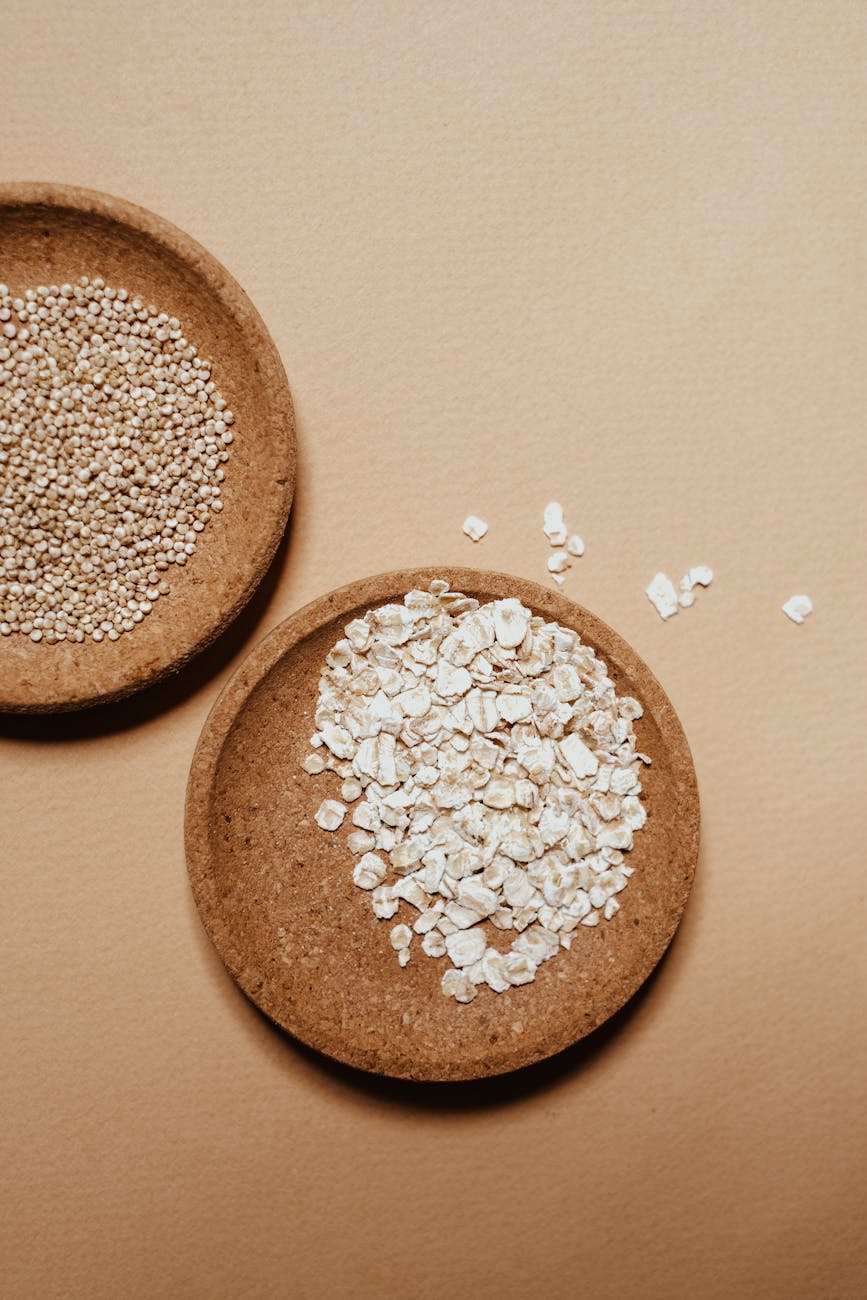
Oat bran, a by-product of oat grain processing, is a good source of soluble fibers: β-glucans that are linked to the reduction of cholesterol and to the prevention of cardiovascular diseases.”Science Direct

Photo by Vie Studio on Pexels.com

Oat Bran Fad 🥄

Are you old enough to remember the oat bran craze of the late 1980? A 1991 Los Angeles Times article described the oat bran-craze as a short-lived obsession, which began in 1987 when several influential U.S. medical groups, such as the American Heart Association and the American College of Cardiology, started the Know Your Cholesterol campaign. Former president Ronald Reagan would later proclaim April 1988 as National Know Your Cholesterol Month.

 I was early in my career at that time, and I can recall one of my coworker’s transformation when his doctor ordered him to lower his cholesterol after suffering a mild heart attack in his mid-40s. He decided to eschew medication, and try the “eating healthier” route, which included eating oat bran every morning for breakfast. In addition to several dietary changes, he added walking and/or bike riding for 30+ minutes four to five times a week. His results were stunning. By the end of that school year, he looked like a different person. 

Award-winning Nutrition 🏆

The oat bran craze, like other dietary fads, lost its shine by the early 1990s; however, it is still certainly worthy of regular consumption and should probably have a star placed on the Nutritional Wall of Fame if there were one. Specifically, it is high in soluble fiber. When eaten, soluble fiber soaks up water like a sponge, creating a gel-like substance that can lower blood sugar levels, holds on to cholesterol and fat, and make stool easier to pass.  

In addition to being high in soluble fiber, oat bran is lower in carbs and calories than oatmeal.  Oat bran is also higher in nutrients such as protein, fiber, iron, thiamine, and magnesium to name a few. It contains high levels of antioxidants which ward off chronic disease, inflammation, and offers other health benefits. Additionally, oat bran may also help lower both blood pressure and cholesterol.  Plus, it is naturally gluten free. 

Easy addition ➕

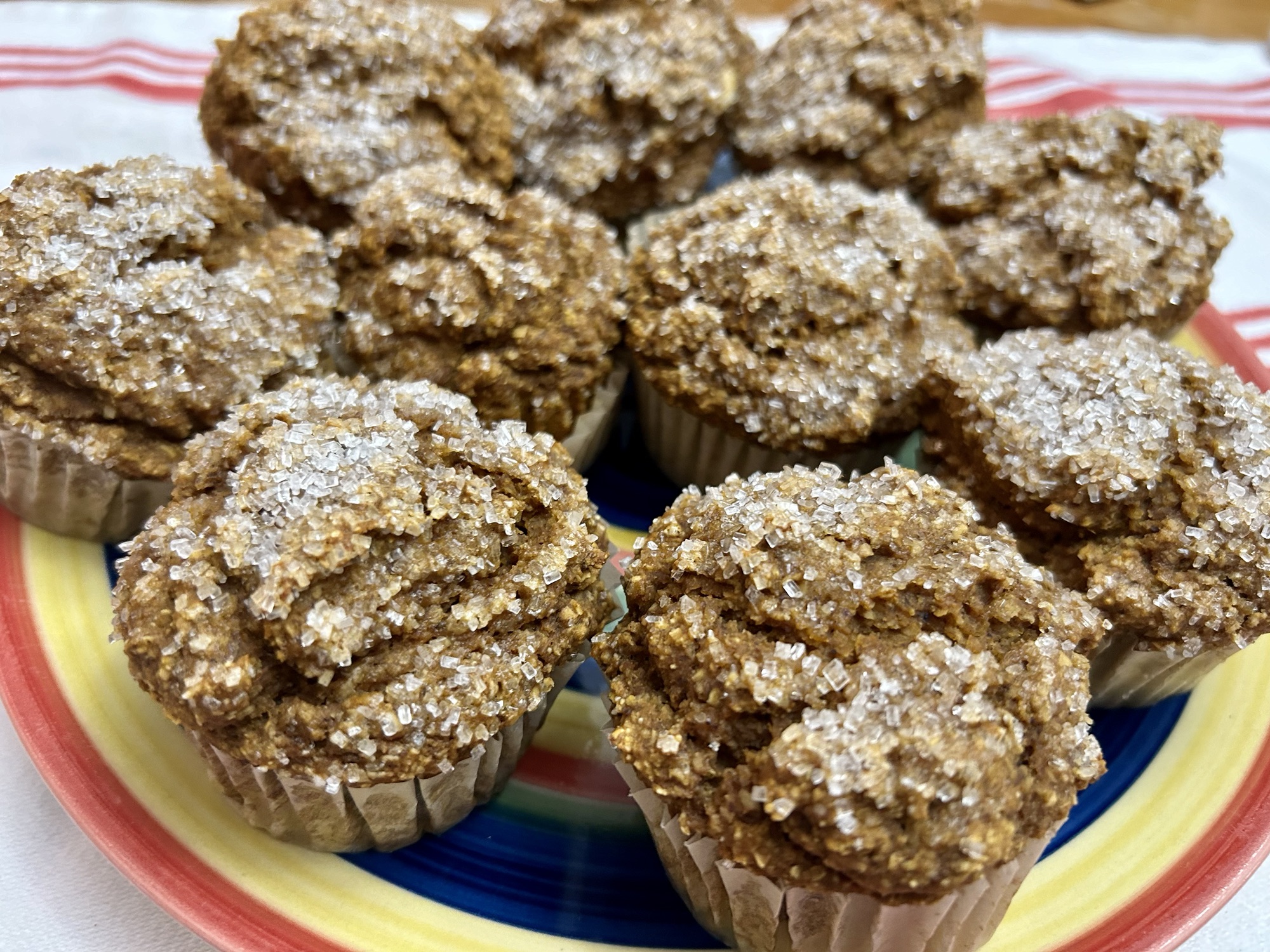
Making oat bran a regular part of a healthy diet is easy to do. Eat it as a creamy, comforting, warm porridge-like cereal, or mix it up as you would your favorite overnight-oats recipe for a velvety breakfast delight in the morning. Oat bran can be a nutritional addition to smoothies. It can be an excellent addition to baked goods, such as quick breads, cakes, and muffins like the recipe I share here. Stir oat bran into your favorite yogurt, or add it to your favorite casseroles, meatballs, meatloaf, or burger recipes. 

TAsty Holiday Treat That benefits your Health ✨

Even though it is a long way from those late 1980s, regular consumption of oat bran can go a long way to benefiting your health. The recipe below is one easy way to level up your oat bran game. The muffins are tasty on their own, and they deliciously pair with a drizzle of honey or smear of melted butter alongside a warm cup of coffee or tea. They freeze well for quick grab and go convenience, which is important over the coming Thanksgiving holiday. Plus, there’s a slew of optional stir-in ingredients listed below, so you can personalize this recipe to fit your taste preferences.

From my home to yours, I wish you a healthy, happy, and wonderful Thanksgiving full of homemade goodness. 

Personalize this recipe with your choice of stir-in ingredients to take this recipe to the next level of flavor and health!

Healthy Holiday Pumpkin Oat Bran Muffins

Ingredients:

1 ½ cup oat bran

1 ½ cup oat flour (can replace with all-purpose flour or gluten free variation)

2 teaspoons baking soda

1 teaspoon baking powder

½ teaspoon salt

4 packets of your favorite sweetener

1 ½ teaspoon cinnamon

½ teaspoon ground ginger*

½ teaspoon ground nutmeg*

¼ teaspoon ground cloves*

⅛ teaspoon all-spice* 

2 eggs or “fleggs**” 

1 tablespoon apple cider vinegar

15 ounce can pure pumpkin puree 

½ cup apple sauce

½ cup pure maple syrup 

⅓ cup milk (dairy or nondairy)

2 teaspoons pure vanilla extract

Optional stir-ins: 1 cup chopped nuts and/or ½ cup blueberries, raisins, currants, chopped dates, dried cranberries, or chocolate chips

Notes: 

*Can replace ginger, nutmeg, cloves, & all-spice with 1 ½ teaspoon pumpkin pie spice

**To make two flax “eggs” or “flegg”: Stir together 2 tablespoons ground flaxseed + 5 tablespoons water and set in fridge for 5+ minutes before adding to recipe

Directions:

Preheat oven to 375 degrees

Be sure to set out eggs, if using, and maple syrup ahead of time to come to room temperature.

If replacing eggs with flaxseed “flegg” variation, combine ground flaxseed and water, and set in fridge for five minutes to thicken 

Meanwhile, combine dry ingredients (oat bran, flour, baking soda, baking powder, salt, and all of the spices) into large mixing bowl and set aside

Next, mix together wet ingredients

Pour wet ingredients into dry ingredients, but do not overmix

Gently fold in any additional stir-in ingredients, such as blueberries, nuts, chocolate chips, and/or dried fruit, if using

Divide evenly among 12 prepared muffin tins

Sprinkle with sparkling sugar or cinnamon, if desired

Bake 18-22 minutes or until a toothpick inserted in the center comes out clean

Cool five minutes before serving

Store uneaten muffins in an airtight container in the fridge for up to five days, or freeze for up to three months.

The Power of Mindful Listening: Enhancing Understanding

“I remind myself every morning:  Nothing I say this day will teach me anything. So if I am going to learn, I must do it by listening. I never learned anything while I was talking.”–Larry King

Photo by Pixabay on Pexels.com

Focused Listening 👂

I was recently engaged in conversation with a friend, Jan, sharing about a trip she took with her husband to the United Kingdom. Her descriptions kept me spellbound. While there were many points of interest and wondrous highlights of her trip, there was one item she repeated that planted a seed: She had to actively listen. 

Jan described how she could not allow her eyes to wander to paintings on a wall, people walking past, or other points of interest. Instead, in order to best understand the people she encountered, she had to, as she said, “really focus” on the person speaking. This was due to the unique dialects and word usage that varies from one part of the UK to another, much in the same way that dialects (accents) vary across the U.S. 

This idea of focused listening sounded quite similar to mindfulness: the ability to fully focus our awareness of the moment at hand. Jan was a visitor in another country participating in multiple new sensory experiences that vied for her attention.  However, when engaged in a conversation with a local, she had to remain focused in the present–in order to understand. By repeatedly practicing mindful listening, Jan and her husband were able to glean helpful tips and advice that fostered their successful navigation of the UK via The Tube and create memories of a lifetime. 

Photo by Christina Morillo on Pexels.com

Mindful Listening 🗣️

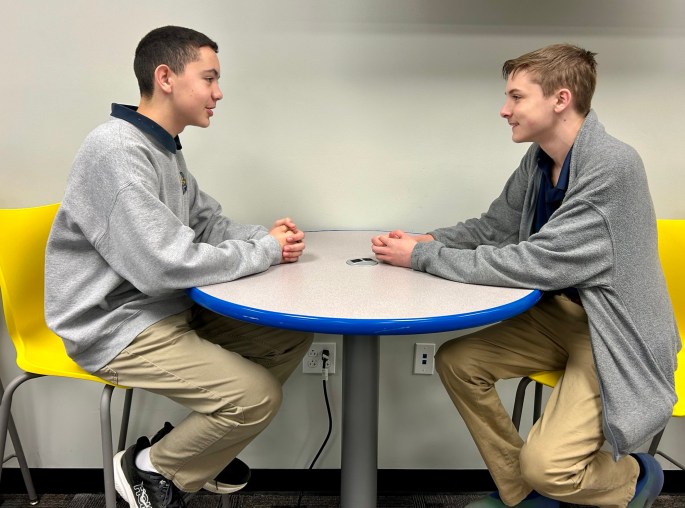
Mindful, or active, listening does not come naturally to many of us, and it is typically not taught. The good news is that we can learn to improve our listening skills. However, it does require practice, and it is often an ongoing process for which Jan’s story reminded me.

In a previous article, I explored the types of listening with emphasis on: listening to react/criticize, listening to respond, and listening to understand. Each of these types of listening can be appropriate for various situations. However, after talking with Jan, I wanted to examine the specifics of listening to understand via mindful listening, or what most business professionals call active listening.

Many of us know what it feels like to try to have a conversation, serious or otherwise, with another person who clearly isn’t listening. Likewise, we can most likely identify times in which someone was trying to have a conversation with us, but our attention was elsewhere. Both of these scenarios can be frustrating for both the listener and the speaker. Clearly, listening for understanding is often not as easy as it seems.

Photo by August de Richelieu on Pexels.com

Listening to understand 🤔

One way to increase listening skills, according to a 2023 Cleveland Clinic article, is to set an intention to listen. This may sound over-simplistic.  However, when we consider how good it can sometimes feel to talk or share entertaining tales, setting an intention to listen, rather than talk, makes sense. After all, if we want to improve our listening skills, we have to enter a conversation with the intent to listen more and talk less. 

Furthermore, when listening, it is important to focus on the speaker and set aside the phone or other distractions in order to be fully present with that person, especially when the conversation is important. My friend found that if she was going to navigate the UK successfully, she had to fully concentrate on the speaker when asking for directions or help.  When her mind wandered to the new environment around her, she had to nudge her attention back to the speaker.  

Photo by KATRIN BOLOVTSOVA on Pexels.com

Focus on speaker and the message 🔎

The same is true for us. It can be difficult to fully focus on what is being said, and this is where mindfulness comes in.  When we notice our mind has drifted, it is a matter of redirecting our attention back to the speaker. We may have to do this several times, especially for those of us with focus issues.

That said, one thing I am learning to do, when my mind wanders or becomes distracted, is to be honest.  I will tell the person if I become distracted and ask them to repeat what was just said.  Of course, I have to be careful not to do that too much because it can cause the speaker to get distracted. Nonetheless, I find, as a general rule, that asking someone to repeat what they said is overall beneficial to my focus and understanding of the speaker’s message.

An article by the British Heart Foundation, nevertheless supports the importance of listening with minimal interruptions in order to avoid distracting the speaker. The author does suggest occasionally repeating a person’s last few words or asking clarifying questions in order to increase the listener’s understanding of the message. Plus, it maintains the focus on the speaker and their message, rather than focusing on responding.

Photo by Vera Arsic on Pexels.com

“listen” to the Nonverbal cues 🙊

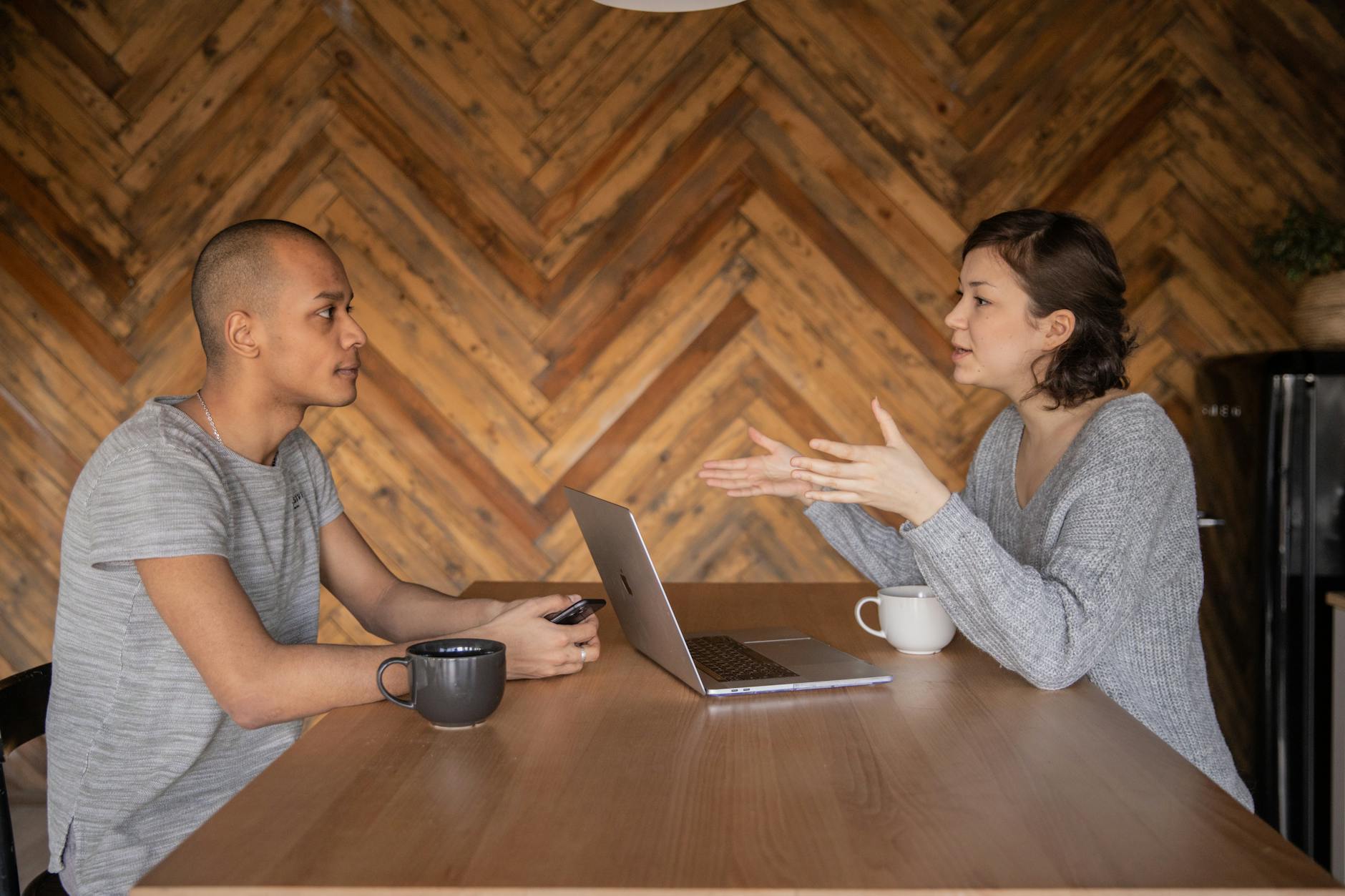
Furthermore, it is also important to “listen” to the speaker’s body language. A 2021 Harvard Business Review article suggests that those nonverbal cues can provide additional key information, especially with regard to the speaker’s emotion. 

Likewise, it is also important for the listener to be mindful of our own body language and eye contact. Making eye contact and nodding at key points, while also not crossing arms and maintaining a relaxed demeanor, can put the speaker at ease. In some situations, it may also be appropriate to ask if the speaker wants suggestions or just wants to be heard.

Photo by fauxels on Pexels.com

Connect to your breath 😮‍💨

Connecting to our breath as we listen can help us regulate our emotions, which can be vital if the conversation becomes difficult. It is easy to become dismissive, defensive, or argumentative if the topic is controversial or one with which there is disagreement.  In these situations, doing our best to take relaxing breaths can aid us in remaining non judgemental and avoid imposing our opinions or solutions. 

Ultimately, learning to be a mindful, fully engaged, active listener takes practice for many of us. And, if we walk away from a conversation thinking we could have been a better listener, it is important to practice self-compassion, learn from our mistakes, and try again in the next conversation. The key, I believe, is to stay committed.

Photo by cottonbro studio on Pexels.com

More Listening; less talking 👂

Our commitment to improving our listening benefits not only us, but those with whom we daily encounter. Learning to listen well increases empathy for others, fosters healthy relationships both at work and among family/friends, demonstrates respect, increases opportunities for understanding, which in turn can reduce, diffuse, or even avoid potential points of conflict. The more we are willing to listen mindfully, the more we can increase understanding.  And heaven knows, the world could surely benefit from the blessing of more listening and less talking!

The Power of Smiling: Benefits for Health and Happiness

“If you see someone without a smile today, give ‘em yours.”–Dolly Parton

Photo by Adenir Figueiredo Carvalho on Pexels.com

How often do you smile? 😃

I recently came across a fact that stated children smile about 400 times per day . Whereas, most adults on average tend to smile anywhere from 20 times per day to, at the most, 50 times, depending upon their level of happiness for the day. That is a stark contrast!  

Whether you are grinning, beaming, twinkling, smiling from ear to ear, all smiles, or even offering a partial smile, when you look at another person, it tends to communicate a positive feeling.  Think about what happens when you see someone else smiling, especially a baby or toddler smiling–most of us typically smile in return!  I find even writing about seeing another person smile is instigating my own smile.

Photo by Teddy Joseph on Pexels.com

REasons we may not smile often 😒

In the words of the Joker, “Why so serious?” Why don’t we smile more often? What is it about adulting that doesn’t inspire us to smile more often?  According to a 2019 Psychology Today article, there are numerous adults who are simply not prone to smiling.  Reasons vary including: feeling shy or unsure of self; feeling self-conscious of own smile, especially if in need of dental work; believing it is silly or inappropriate to smile, especially those raised to not to smile frequently due to cultural or family mores; and, some don’t smile due to state of  their mental health. Furthermore, psychologists have also noted that when people have a smartphone in their hands, most of us are less likely to smile and engage because we are so focused on our phone screen. 

Photo by Mwabonje Ringa on Pexels.com

Benefits of smiling more 😁

Believe it or not, though, there are both physical and mental health benefits to smiling. First of all, dopamine, the feel-good chemical (neurotransmitter) in our brain, is released when we smile. Smiling also releases endorphins, a mild-pain reliever, and serotonin, an antidepressant that can reduce stress.  The more we smile, the more these neurotransmitters can work together to boost our overall sense of well-being, reduce our sense of pain, and increase our sense of positivity.

Smiling, along with laughter, causes our brain to also release neuropeptides which are small proteins found in the brain. These chemicals are known for staving off illness by initiating the body’s immune-system response to increase production of antibodies to fight off disease and illness. Along with warding off illness, there is evidence that smiling–and its cousin, laughter–can also help lower our blood pressure as well as heart rate.

Science still has more research to conduct regarding the specific benefits of smiling, according to the National Library of Medicine, but the studies consistently demonstrate that smiling produces a number of health-related benefits. Smiling more can foster a longer life by positively exerting influence over the immune system during times of acute stress or illness, improving recovery, and thereby reducing illness, or its duration, over time. Now, that’s worth smiling about!

Smiling also makes us appear more attractive and likable.  When we beam at another person, we are often considered courteous and trustworthy. In fact, shining those pearly whites also makes us appear more confident, successful, and knowledgeable.  Keep that in mind the next time you have an interview or have to give a presentation. 

Plus, smiling is contagious. When we smile at another person, it is hard for the other person not to smile back. To be sure, it doesn’t work on every person, but it can certainly go a long way to lightening the mood–even if it’s just our own.  So why not try smiling more? 

Photo by Kampus Production on Pexels.com

Practical, and not-so-practical, ways to increase those grins 😆

  • Practice smiling in the mirror: It sounds silly, but the more we practice smiling, the more confident we become at doing it. 
  • Try the smile challenge: One way to practice smiling more is to look up the different types of smiles.  Depending upon the source, most experts claim there are 18-19 types of identifiable smiles, but only six are for genuine happiness. Grab a friend and a mirror and see how many you can make. This is just silly enough to bring on some laughs and joy-filled smiles.
  • Waiting challenge: Stuck in a line at your favorite fast-casual dining or coffee shop?  Waiting in a doctor’s office? Waiting in any sort of line?  Instead of scrolling through your phone, try the smile challenge. See if you can maintain a gentle smile throughout the entirety of your wait, or see how many people you can make smile by smiling at them. 
  • Smile timers: Set reminders or post-it notes throughout the day to smile, especially for those time periods for which you know you most likely won’t feel like smiling. 
  • Create list(s), picture file, journal, or write positive post-it notes of things that naturally make you smile when you see/think about them. Purposely place them, so that you will encounter them throughout the day or week and be reminded to smile.
  • Daily smile challenge:  Challenge yourself to be the reason one (or more) person smiles today.  
  • Watch something funny: Whether choosing a social media/youtube reel/short, movies, comic strip, or other source jolliness, taking time to embrace humor is an immediate mood booster.
Photo by Craig Adderley on Pexels.com

unleash the power of your smile 😃

In the words of Buddy the Elf, from Elf, “I just like smiling.  Smiling’s my favorite.” And, now we know why. Smiling is a superpower, and it is not just for elves or children. Those grins are for all of us to enjoy in our everyday life. When we smile, our health, our well-being, and the well-being of those around us, benefits. So the next time you’re feeling down, frustrated, sick, or even angry, see if you can’t sneak in a smile or two.  Even if you don’t feel like it, the overall benefits seem to point to the fact that those few extra smiles might just be worth the effort. In the words of the late Jim Begg, “Before you put on that frown, make absolutely sure there are no smiles available.”

Finding Inner Peace Amidst Chaos

“Better to keep yourself clean and bright; you are the window through which you must see the world.”–George Bernard Shaw

Photo by thevibrantmachine on Pexels.com

Anxiety provoking 😬

Over the past weeks, I find I am feeling increasingly anxious as I read or listen to the news and/or various social media platforms. There are world events with real human and environmental consequences that worry me. Children are dying from injury and/or starvation in numerous parts of the world.  Plus, the current political climate in our own country is so vitriolic and divisive, it can tie my stomach in knots if I listen or read about it for too long. 

A few days ago, I was leaving work after an especially long day.  Ready to shake off the day, I unloaded my daily work wares into the back of the vehicle, and hopped in the driver seat ready to get home and shake the dust of the day off.  I started the vehicle, and the radio automatically came on.  

Photo by Sindre Fs on Pexels.com

We have a choice 🙉

By word of explanation, I had been listening to a book on the way to school, but because the bluetooth had not yet connected, the radio, set to one of the local public radio stations, automatically defaulted on. Since it was between 5:00 and 6:00 pm, the news was on.  And while NPR is fortunately not one of the news outlets that seems to shout out every headline, it was in the middle of a story that, as my ears focused, began to make me feel worried, and I could once more feel my insides churning. 

I continued listening for a bit more as I headed out of town, but found myself increasingly feeling more anxious.  Suddenly, it occurred to me. I had a choice.  I didn’t have to listen. So, I turned not only the news off, but the entire media system in my vehicle, rolled my window slightly down, and allowed the fresh air to filter in. 

Photo by Aleksandar Andreev on Pexels.com

Connect to Your Breath 😮‍💨

Then, while I drove the rest of the way home, I took time to connect to my breath and to that still, inner voice. 

Inhale. Exhale. Release the jaw. 

Inhale. Longer exhale. Relax the shoulders down and release the grip in my gut. 

Long slow inhale, fill my lungs with fresh air flowing through the window. Pause. 

Then, a longer, relaxed exhale. Loosen the grip on the steering wheel and relax

 the lower body. 

I continued driving like this, using my breath as an aid to continue to relax other parts of my body that I had been unconsciously gripping tightly as the day progressed. I would not have noticed how tightly wound my body was if I had continued listening to the news.

Photo by cottonbro studio on Pexels.com

Connect to Gratitude 🙏

Once I felt a bit more relaxed, I tried to list, in my mind’s eye, five things for which I was grateful. Nothing could be too small, such as, feeling grateful because I had not forgotten my lunch on that day as I had forgotten it on the same day the previous week. But, even more so, I was also grateful for my health, my family, my home, and so on  . . . With each point of gratitude, I took time to pull that image up in my mind and genuinely reflect on at least one particular point of joy each one brought to my life.

Now, I will be honest, there were a few times when I lost my focus due to other drivers, deer crossing the road, or other random distractions.  If I found myself lost in thought, I brought my inner attention back to my breath first, and then back to points of gratitude.  

As I drove closer to home, I mindfully began to release concerns for which I could not control. I prayed for them, but ultimately, released my worries to God. I decided to trust and have faith that my concerns will ultimately work out for the best in ways I could not see or perhaps understand. It did not mean I was dismissing the issues that concern me–I was not.  Instead, I was releasing my stress over them because my anxiety would/will not affect their outcome.

Photo by Stanislav Kondratiev on Pexels.com

Shutting out the winds 🪟

Years ago, I read a story about a monk who had been writing a book.  This was the time period prior to computers, when one would alternate between handwriting manuscripts and typing the final drafts. This monk decided he needed to take a break from writing and went out for fresh air and a walk. 

He left open the windows of the small cottage in which he lived. And as he walked, the weather began to shift, and the wind began to pick up.  When he arrived home, an hour or so later, all of his neatly stacked papers for the book had been tossed about within the house. In order to tidy up the inside of his cottage and reorganize the manuscript, the monk had to close all of his windows to keep out the changing weather.

This story simply illustrates the point that sometimes, if we are consuming too much news, social media, family/friend drama, and so forth, our inner world suffers.  Like the monk’s cottage, the winds of life can toss our inner peace about.  Therefore, it is worth remembering we have a choice. We can choose to take time to shut out, turn off, or let go of the outside world/drama, so that we can turn inwardly, and focus on “tidying-up” the worry/concern/ anxiety inside of us.  

Photo by Alex Green on Pexels.com

It’s not always “breaking News,” so set boundaries 📰

We don’t have to read/listen/scroll through/watch the news and social media at regular intervals throughout the day.  We can take breaks from all of it. In fact, we are not of any benefit to ourselves, much less others, if we aren’t settled and at peace on the inside.  Thus, taking time to connect with your breath and that small, still inner voice can strengthen and renew you, filling you with a sense of calm/peace in order to help others and/or take on challenges.

While we don’t want to completely shut off the world and hide our light, we do have a choice as to where, when, and how much we participate.  Setting boundaries and/or taking breaks from what and how we choose to consume social media and news is within our power, and it doesn’t mean we are absconding from our civic or social responsibility to the world around us. 

Shine your Light 🕯️

If we hope to shine our light and engage in meaningful ways that can contribute to the betterment of our family, friends, community, and even world to the degree possible, we must also take time to close the proverbial outside windows and tend to our own inner world.  After all, even a candle must be protected from the wind in order to burn.