The Power of Mindful Listening: Enhancing Understanding

“I remind myself every morning:  Nothing I say this day will teach me anything. So if I am going to learn, I must do it by listening. I never learned anything while I was talking.”–Larry King

Photo by Pixabay on Pexels.com

Focused Listening 👂

I was recently engaged in conversation with a friend, Jan, sharing about a trip she took with her husband to the United Kingdom. Her descriptions kept me spellbound. While there were many points of interest and wondrous highlights of her trip, there was one item she repeated that planted a seed: She had to actively listen. 

Jan described how she could not allow her eyes to wander to paintings on a wall, people walking past, or other points of interest. Instead, in order to best understand the people she encountered, she had to, as she said, “really focus” on the person speaking. This was due to the unique dialects and word usage that varies from one part of the UK to another, much in the same way that dialects (accents) vary across the U.S. 

This idea of focused listening sounded quite similar to mindfulness: the ability to fully focus our awareness of the moment at hand. Jan was a visitor in another country participating in multiple new sensory experiences that vied for her attention.  However, when engaged in a conversation with a local, she had to remain focused in the present–in order to understand. By repeatedly practicing mindful listening, Jan and her husband were able to glean helpful tips and advice that fostered their successful navigation of the UK via The Tube and create memories of a lifetime. 

Photo by Christina Morillo on Pexels.com

Mindful Listening 🗣️

Mindful, or active, listening does not come naturally to many of us, and it is typically not taught. The good news is that we can learn to improve our listening skills. However, it does require practice, and it is often an ongoing process for which Jan’s story reminded me.

In a previous article, I explored the types of listening with emphasis on: listening to react/criticize, listening to respond, and listening to understand. Each of these types of listening can be appropriate for various situations. However, after talking with Jan, I wanted to examine the specifics of listening to understand via mindful listening, or what most business professionals call active listening.

Many of us know what it feels like to try to have a conversation, serious or otherwise, with another person who clearly isn’t listening. Likewise, we can most likely identify times in which someone was trying to have a conversation with us, but our attention was elsewhere. Both of these scenarios can be frustrating for both the listener and the speaker. Clearly, listening for understanding is often not as easy as it seems.

Photo by August de Richelieu on Pexels.com

Listening to understand 🤔

One way to increase listening skills, according to a 2023 Cleveland Clinic article, is to set an intention to listen. This may sound over-simplistic.  However, when we consider how good it can sometimes feel to talk or share entertaining tales, setting an intention to listen, rather than talk, makes sense. After all, if we want to improve our listening skills, we have to enter a conversation with the intent to listen more and talk less. 

Furthermore, when listening, it is important to focus on the speaker and set aside the phone or other distractions in order to be fully present with that person, especially when the conversation is important. My friend found that if she was going to navigate the UK successfully, she had to fully concentrate on the speaker when asking for directions or help.  When her mind wandered to the new environment around her, she had to nudge her attention back to the speaker.  

Photo by KATRIN BOLOVTSOVA on Pexels.com

Focus on speaker and the message 🔎

The same is true for us. It can be difficult to fully focus on what is being said, and this is where mindfulness comes in.  When we notice our mind has drifted, it is a matter of redirecting our attention back to the speaker. We may have to do this several times, especially for those of us with focus issues.

That said, one thing I am learning to do, when my mind wanders or becomes distracted, is to be honest.  I will tell the person if I become distracted and ask them to repeat what was just said.  Of course, I have to be careful not to do that too much because it can cause the speaker to get distracted. Nonetheless, I find, as a general rule, that asking someone to repeat what they said is overall beneficial to my focus and understanding of the speaker’s message.

An article by the British Heart Foundation, nevertheless supports the importance of listening with minimal interruptions in order to avoid distracting the speaker. The author does suggest occasionally repeating a person’s last few words or asking clarifying questions in order to increase the listener’s understanding of the message. Plus, it maintains the focus on the speaker and their message, rather than focusing on responding.

Photo by Vera Arsic on Pexels.com

“listen” to the Nonverbal cues 🙊

Furthermore, it is also important to “listen” to the speaker’s body language. A 2021 Harvard Business Review article suggests that those nonverbal cues can provide additional key information, especially with regard to the speaker’s emotion. 

Likewise, it is also important for the listener to be mindful of our own body language and eye contact. Making eye contact and nodding at key points, while also not crossing arms and maintaining a relaxed demeanor, can put the speaker at ease. In some situations, it may also be appropriate to ask if the speaker wants suggestions or just wants to be heard.

Photo by fauxels on Pexels.com

Connect to your breath 😮‍💨

Connecting to our breath as we listen can help us regulate our emotions, which can be vital if the conversation becomes difficult. It is easy to become dismissive, defensive, or argumentative if the topic is controversial or one with which there is disagreement.  In these situations, doing our best to take relaxing breaths can aid us in remaining non judgemental and avoid imposing our opinions or solutions. 

Ultimately, learning to be a mindful, fully engaged, active listener takes practice for many of us. And, if we walk away from a conversation thinking we could have been a better listener, it is important to practice self-compassion, learn from our mistakes, and try again in the next conversation. The key, I believe, is to stay committed.

Photo by cottonbro studio on Pexels.com

More Listening; less talking 👂

Our commitment to improving our listening benefits not only us, but those with whom we daily encounter. Learning to listen well increases empathy for others, fosters healthy relationships both at work and among family/friends, demonstrates respect, increases opportunities for understanding, which in turn can reduce, diffuse, or even avoid potential points of conflict. The more we are willing to listen mindfully, the more we can increase understanding.  And heaven knows, the world could surely benefit from the blessing of more listening and less talking!

The Power of Smiling: Benefits for Health and Happiness

“If you see someone without a smile today, give ‘em yours.”–Dolly Parton

Photo by Adenir Figueiredo Carvalho on Pexels.com

How often do you smile? 😃

I recently came across a fact that stated children smile about 400 times per day . Whereas, most adults on average tend to smile anywhere from 20 times per day to, at the most, 50 times, depending upon their level of happiness for the day. That is a stark contrast!  

Whether you are grinning, beaming, twinkling, smiling from ear to ear, all smiles, or even offering a partial smile, when you look at another person, it tends to communicate a positive feeling.  Think about what happens when you see someone else smiling, especially a baby or toddler smiling–most of us typically smile in return!  I find even writing about seeing another person smile is instigating my own smile.

Photo by Teddy Joseph on Pexels.com

REasons we may not smile often 😒

In the words of the Joker, “Why so serious?” Why don’t we smile more often? What is it about adulting that doesn’t inspire us to smile more often?  According to a 2019 Psychology Today article, there are numerous adults who are simply not prone to smiling.  Reasons vary including: feeling shy or unsure of self; feeling self-conscious of own smile, especially if in need of dental work; believing it is silly or inappropriate to smile, especially those raised to not to smile frequently due to cultural or family mores; and, some don’t smile due to state of  their mental health. Furthermore, psychologists have also noted that when people have a smartphone in their hands, most of us are less likely to smile and engage because we are so focused on our phone screen. 

Photo by Mwabonje Ringa on Pexels.com

Benefits of smiling more 😁

Believe it or not, though, there are both physical and mental health benefits to smiling. First of all, dopamine, the feel-good chemical (neurotransmitter) in our brain, is released when we smile. Smiling also releases endorphins, a mild-pain reliever, and serotonin, an antidepressant that can reduce stress.  The more we smile, the more these neurotransmitters can work together to boost our overall sense of well-being, reduce our sense of pain, and increase our sense of positivity.

Smiling, along with laughter, causes our brain to also release neuropeptides which are small proteins found in the brain. These chemicals are known for staving off illness by initiating the body’s immune-system response to increase production of antibodies to fight off disease and illness. Along with warding off illness, there is evidence that smiling–and its cousin, laughter–can also help lower our blood pressure as well as heart rate.

Science still has more research to conduct regarding the specific benefits of smiling, according to the National Library of Medicine, but the studies consistently demonstrate that smiling produces a number of health-related benefits. Smiling more can foster a longer life by positively exerting influence over the immune system during times of acute stress or illness, improving recovery, and thereby reducing illness, or its duration, over time. Now, that’s worth smiling about!

Smiling also makes us appear more attractive and likable.  When we beam at another person, we are often considered courteous and trustworthy. In fact, shining those pearly whites also makes us appear more confident, successful, and knowledgeable.  Keep that in mind the next time you have an interview or have to give a presentation. 

Plus, smiling is contagious. When we smile at another person, it is hard for the other person not to smile back. To be sure, it doesn’t work on every person, but it can certainly go a long way to lightening the mood–even if it’s just our own.  So why not try smiling more? 

Photo by Kampus Production on Pexels.com

Practical, and not-so-practical, ways to increase those grins 😆

  • Practice smiling in the mirror: It sounds silly, but the more we practice smiling, the more confident we become at doing it. 
  • Try the smile challenge: One way to practice smiling more is to look up the different types of smiles.  Depending upon the source, most experts claim there are 18-19 types of identifiable smiles, but only six are for genuine happiness. Grab a friend and a mirror and see how many you can make. This is just silly enough to bring on some laughs and joy-filled smiles.
  • Waiting challenge: Stuck in a line at your favorite fast-casual dining or coffee shop?  Waiting in a doctor’s office? Waiting in any sort of line?  Instead of scrolling through your phone, try the smile challenge. See if you can maintain a gentle smile throughout the entirety of your wait, or see how many people you can make smile by smiling at them. 
  • Smile timers: Set reminders or post-it notes throughout the day to smile, especially for those time periods for which you know you most likely won’t feel like smiling. 
  • Create list(s), picture file, journal, or write positive post-it notes of things that naturally make you smile when you see/think about them. Purposely place them, so that you will encounter them throughout the day or week and be reminded to smile.
  • Daily smile challenge:  Challenge yourself to be the reason one (or more) person smiles today.  
  • Watch something funny: Whether choosing a social media/youtube reel/short, movies, comic strip, or other source jolliness, taking time to embrace humor is an immediate mood booster.
Photo by Craig Adderley on Pexels.com

unleash the power of your smile 😃

In the words of Buddy the Elf, from Elf, “I just like smiling.  Smiling’s my favorite.” And, now we know why. Smiling is a superpower, and it is not just for elves or children. Those grins are for all of us to enjoy in our everyday life. When we smile, our health, our well-being, and the well-being of those around us, benefits. So the next time you’re feeling down, frustrated, sick, or even angry, see if you can’t sneak in a smile or two.  Even if you don’t feel like it, the overall benefits seem to point to the fact that those few extra smiles might just be worth the effort. In the words of the late Jim Begg, “Before you put on that frown, make absolutely sure there are no smiles available.”

Finding Inner Peace Amidst Chaos

“Better to keep yourself clean and bright; you are the window through which you must see the world.”–George Bernard Shaw

Photo by thevibrantmachine on Pexels.com

Anxiety provoking 😬

Over the past weeks, I find I am feeling increasingly anxious as I read or listen to the news and/or various social media platforms. There are world events with real human and environmental consequences that worry me. Children are dying from injury and/or starvation in numerous parts of the world.  Plus, the current political climate in our own country is so vitriolic and divisive, it can tie my stomach in knots if I listen or read about it for too long. 

A few days ago, I was leaving work after an especially long day.  Ready to shake off the day, I unloaded my daily work wares into the back of the vehicle, and hopped in the driver seat ready to get home and shake the dust of the day off.  I started the vehicle, and the radio automatically came on.  

Photo by Sindre Fs on Pexels.com

We have a choice 🙉

By word of explanation, I had been listening to a book on the way to school, but because the bluetooth had not yet connected, the radio, set to one of the local public radio stations, automatically defaulted on. Since it was between 5:00 and 6:00 pm, the news was on.  And while NPR is fortunately not one of the news outlets that seems to shout out every headline, it was in the middle of a story that, as my ears focused, began to make me feel worried, and I could once more feel my insides churning. 

I continued listening for a bit more as I headed out of town, but found myself increasingly feeling more anxious.  Suddenly, it occurred to me. I had a choice.  I didn’t have to listen. So, I turned not only the news off, but the entire media system in my vehicle, rolled my window slightly down, and allowed the fresh air to filter in. 

Photo by Aleksandar Andreev on Pexels.com

Connect to Your Breath 😮‍💨

Then, while I drove the rest of the way home, I took time to connect to my breath and to that still, inner voice. 

Inhale. Exhale. Release the jaw. 

Inhale. Longer exhale. Relax the shoulders down and release the grip in my gut. 

Long slow inhale, fill my lungs with fresh air flowing through the window. Pause. 

Then, a longer, relaxed exhale. Loosen the grip on the steering wheel and relax

 the lower body. 

I continued driving like this, using my breath as an aid to continue to relax other parts of my body that I had been unconsciously gripping tightly as the day progressed. I would not have noticed how tightly wound my body was if I had continued listening to the news.

Photo by cottonbro studio on Pexels.com

Connect to Gratitude 🙏

Once I felt a bit more relaxed, I tried to list, in my mind’s eye, five things for which I was grateful. Nothing could be too small, such as, feeling grateful because I had not forgotten my lunch on that day as I had forgotten it on the same day the previous week. But, even more so, I was also grateful for my health, my family, my home, and so on  . . . With each point of gratitude, I took time to pull that image up in my mind and genuinely reflect on at least one particular point of joy each one brought to my life.

Now, I will be honest, there were a few times when I lost my focus due to other drivers, deer crossing the road, or other random distractions.  If I found myself lost in thought, I brought my inner attention back to my breath first, and then back to points of gratitude.  

As I drove closer to home, I mindfully began to release concerns for which I could not control. I prayed for them, but ultimately, released my worries to God. I decided to trust and have faith that my concerns will ultimately work out for the best in ways I could not see or perhaps understand. It did not mean I was dismissing the issues that concern me–I was not.  Instead, I was releasing my stress over them because my anxiety would/will not affect their outcome.

Photo by Stanislav Kondratiev on Pexels.com

Shutting out the winds 🪟

Years ago, I read a story about a monk who had been writing a book.  This was the time period prior to computers, when one would alternate between handwriting manuscripts and typing the final drafts. This monk decided he needed to take a break from writing and went out for fresh air and a walk. 

He left open the windows of the small cottage in which he lived. And as he walked, the weather began to shift, and the wind began to pick up.  When he arrived home, an hour or so later, all of his neatly stacked papers for the book had been tossed about within the house. In order to tidy up the inside of his cottage and reorganize the manuscript, the monk had to close all of his windows to keep out the changing weather.

This story simply illustrates the point that sometimes, if we are consuming too much news, social media, family/friend drama, and so forth, our inner world suffers.  Like the monk’s cottage, the winds of life can toss our inner peace about.  Therefore, it is worth remembering we have a choice. We can choose to take time to shut out, turn off, or let go of the outside world/drama, so that we can turn inwardly, and focus on “tidying-up” the worry/concern/ anxiety inside of us.  

Photo by Alex Green on Pexels.com

It’s not always “breaking News,” so set boundaries 📰

We don’t have to read/listen/scroll through/watch the news and social media at regular intervals throughout the day.  We can take breaks from all of it. In fact, we are not of any benefit to ourselves, much less others, if we aren’t settled and at peace on the inside.  Thus, taking time to connect with your breath and that small, still inner voice can strengthen and renew you, filling you with a sense of calm/peace in order to help others and/or take on challenges.

While we don’t want to completely shut off the world and hide our light, we do have a choice as to where, when, and how much we participate.  Setting boundaries and/or taking breaks from what and how we choose to consume social media and news is within our power, and it doesn’t mean we are absconding from our civic or social responsibility to the world around us. 

Shine your Light 🕯️

If we hope to shine our light and engage in meaningful ways that can contribute to the betterment of our family, friends, community, and even world to the degree possible, we must also take time to close the proverbial outside windows and tend to our own inner world.  After all, even a candle must be protected from the wind in order to burn. 

Movement as Medicine: Staying Active in Your Older Adult Years

“Movement is medicine for creating change in a person’s physical, emotional, and mental states.”–Carol Welch

Photo by Roman Biernacki on Pexels.com

Let’s get Ready to Move! 🏃‍♀️

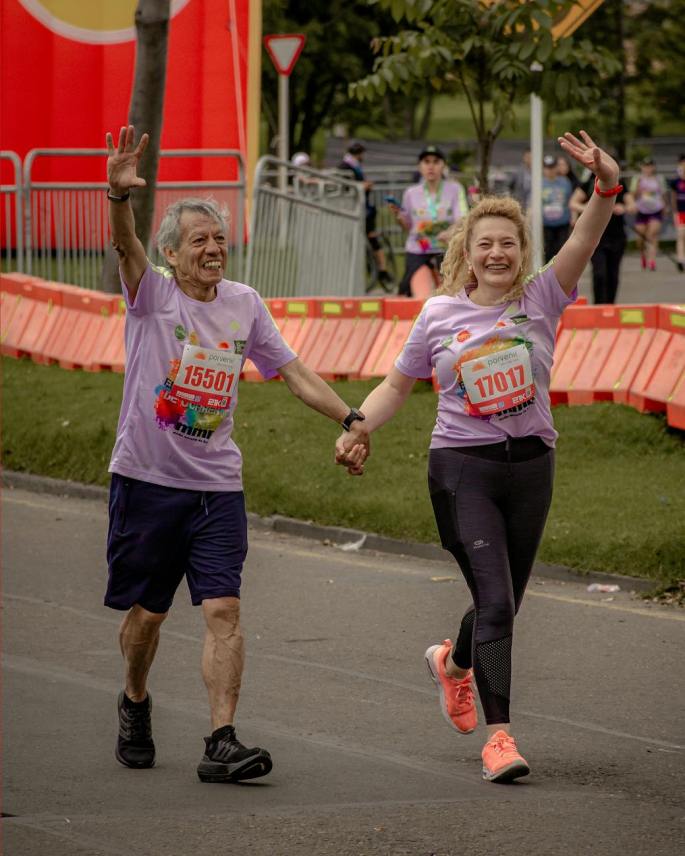
By the time you read this, I will be close to one week out from running (ok, jogging, “slogging”, whatever you want to call it) the Marshall University Half-Marathon. This annual community event motivates and inspires hundreds of locals and nonlocals to train, improve their current fitness level, and participate in the 5K, the half-, or the full-marathon distance.  Plus, it brings together a whole host of volunteers who support participants along the way.

Each year that I’ve participated, I hear numerous stories about those who haven’t trained for MUM, still participate, and do well.  My hats off to them; I appreciate that they can do that.  However, I find the training, and the build-up to the event, are part of the excitement and joy of the journey that includes completing the event.

Photo by RUN 4 FFWPU on Pexels.com

Giving meaning and purpose to Exercise through signing up ✍️

It typically takes weeks, or even months, of deliberation before I decide to sign up for a running event–even an annual event such as the MUM. Therefore, once I make the decision to pay the entry fee for an event, I am fully committed to a training plan. This is not because I have any desire to place or set records, but because signing up for an event is the extra motivation that gives meaning and purpose to my exercise.  Plus, it keeps me simultaneously excited and nervous in a good way.

Photo by RUN 4 FFWPU on Pexels.com

Exercise at any age! 👵🏼

Still, I have those who ask me if running is still safe for someone at “my age.” News alert! There is no milestone-age at which you should cut-off exercise.  In fact, exercise and/or movement can, and probably should, be embraced across all ages, including those of us in the AARP years, which is anyone over the age of 50. That said, you do have to manage your expectations, but movement and/or structured exercise can be a healthy part of the “golden years.”

That said, of course, if you have had an injury or have certain health conditions, you must respect your body’s limits and boundaries, but it doesn’t mean you give up on exercise and/or purposeful movement forever.  By working with a healthcare professional, you can find ways to adapt, modify, and/or create your own exercise plan that fits your body’s unique needs.  

Photo by Vincent Peters on Pexels.com

Tips for moving through those senior years 🚶🏿‍♂️

Here are some key tips and pointers I’ve learned along the way, gathered from other senior exercisers, as well as a few I researched, when thinking about exercise/movement in the, a-hem, “senior” years.

  1. Establish meaningful AND realistic goals appropriate for where your body is now that motivate and excite you.  This is why I enjoy signing up for a half-marathon.  My mantra is: “Set your own pace, and run your race.”  I don’t put pressure on myself that running has to be or look a certain way.  No time is too slow, and I can take as many walk breaks as I need.  That said, you can approach ANY form of exercise in a similar manner 
Set off in your own unique direction down the the tracks towards empowering your own health and fitness.
  1. Notice your narratives.  This is something that I have begun to notice more frequently. Reflect on how you talk/think about age with peers/friends/family AND self.  Is there often negative talk and thoughts associated with your current age and/or exercise?  Perhaps, you can begin to reframe those thoughts/chatter by leading by example.  Furthermore, look to role-models that motivate you to move more.  I personally often look at my Dad who still walks or hikes daily anywhere from 2-8 miles per day.
  1.  Find your edge. Whatever form of exercise we choose should challenge us, but not too much.  If something changes, and you sense you can do a little bit more, then do so.  But if doing a bit more causes serious discomfort, then back off, and try again another time. 
Map out your own fitness challenge.
  1. Strength train, stretch, and work on balance through practices such as yoga. The CDC in an article entitled,  “Older Adult Activity: An Overview,” states that in addition to cardiovascular exercise, such as jogging and walking, older adults also need to strength train and work on balance.  In fact, AARP offers a 10-minute, strength-training video that can be completed daily, seated or standing. 
  1. Manage your sleep and nutrition: There is a reason these two are often spoken/written about due to the fact both contribute positively, or negatively, towards your own health.  That said, one bad night’s sleep, one indulgent meal, or a day of eating very little, will not necessarily impact your overall health; however, consistently not getting enough sleep and not consuming proper nutrition will gradually, and negatively, begin to impact your physical and mental well-being. 
  1. Find your support or pave your own way.  There’s no one right fitness plan that works for everyone.  Find the type of movement/exercise that best suits your body and motivates you, which may mean exercising with a group, a friend, or at a club. That said, don’t be afraid to go it alone either and share the experience with others later.
Find your support!
  1. Exercise can be therapy. Personally, I know my mental health greatly benefits from movement. The National Institutes of Health, The Mayo Clinic, Mount Sinai, and numerous other institutions all point to the fact that exercise is a mood and mental health booster.
  1.  Tune in to your body’s needs with honesty and integrity. If you’re sick, tired, and/or run down, then maybe a day or two of rest may be what you need. If a joint, such as knee, elbow, wrist, or ankle begins to feel irritated.  Be curious about it.  Are you pushing a certain exercise too hard, too often? Or, are you not moving enough? Learning to listen to the signals our bodies send us is an important part of the exercise/movement journey.
Photo by RUN 4 FFWPU on Pexels.com

movement is medicine! 💊

When it comes to movement, no matter your age, focus on the positives of the experience–whether it is spending time with friends, benefiting your mental health, or feeling more overall strength, steadiness, and/or energy. To be sure, it is often hard to get started, but it is often that feeling of accomplishment you have afterwards that can keep you going. Finally, for those in the official AARP years, keep in mind, “older” doesn’t have to mean sitting on the sidelines. Becoming and staying active, however you define it, truly is medicine for imbuing well-being: socially, mentally, and emotionally. 

Dad and I pausing for a moment during hike this past summer at Barboursville Park.


Conquering Perfectionism: Tips for a Balanced Life

“Perfectionists strive to never make mistakes. Excellence is striving high but offering yourself grace for mistakes made and things you don’t know yet.”–Sharon Martin

Photo by RDNE Stock project on Pexels.com

imperfect pressure 😰

I watched in horror before school began as a student began pulling at their hair so hard, strands of it landed on the table. I quietly walked over to offer help/support. The child was a known perfectionist and quickly angered if they were unable to complete their work with total accuracy. As it turned out, they were completing math homework that was due at 8:00 a.m., which was less than ten minutes away. It was homework they had procrastinated completing and were feeling the pressure of not having the time needed to complete the work “perfect.”  

As a teacher, I encounter both students–and adults–that appear to strive (either intrinsically or extrinsically), for “perfection.” However, the idea of perfectionism is a human-construct. When we look at the natural world, we can see multiple examples of this.  Think of any three-legged animal you may have encountered.  One could argue that those creatures are not “perfect” specimens, but they are still able to function “perfectly.”  Another example is the number of plants that are classified as “imperfect” because they do not have both the male and female parts needed to produce flowers.  However, through adaptation, they are able to produce flowers.

Photo by Fox on Pexels.com

Intrinsic vs. extrinsic “perfectionism” 🗂️

Perfectionistic behavior in humans can manifest itself in various ways. So-called “perfectionism,” for some, can be intrinsically-driven. These are people who hold themselves and their work/performance to higher standards. They are self-motivated and often view mistakes as setbacks from which they can learn.  Their goals are realistic and achievable. Overall, this type of “perfectionism” can be healthy unless it evolves–either from internal or external forces–to an unhealthy, maladaptive state.

An “unhealthy” state of perfectionism can often be attributed to others–cultural and/or societal cues, well-intended friends, or even family. In fact, think about how often the word “perfect” sneaks into day-to-day interactions and conversations.  Even sports’ analysis is rife with its use of “perfect”–perfect pass, perfect catch, perfect save, perfect pitch and so on.  Similarly, from many outward appearances, one could argue life rewards those who are “perfect.”

Unfortunately, perfectionism can become problematic when people begin to set standards that are extreme and often unattainable. This can lead to a sense of “failure,” a constant feeling of stress, and/or develop procrastination/avoidance habits because the tasks/work can seem so overwhelming because it can’t be completed “perfectly.”  Perfectionism can reduce feelings of joy/happiness, diminish one’s self-esteem, and often leads to burnout. It is worth further noting that perfectionism can sometimes evolve as an extension of anxiety, OCD, ADHD, and/or depression.

Photo by energepic.com on Pexels.com

Downside to perfectionism 😫

Perfectionism, when left unchecked, is beyond “trying to be your best.”  It’s more about setting standards that are so high, they are either difficult to maintain or unrealistic to achieve. Many people think that perfect work/performance is the only way to be accepted and/or valued, often because they have a fear of not being good enough or worry about how others perceive them. 

In particular, I have noticed that students (and adults) with perfectionistic tendencies place extreme amounts of pressure on themselves to perform “perfectly.”  Then, if their work/performance misses the high-mark they have established in their mind, their self-talk becomes highly critical and often leads to self-loathing that can spiral into depression and harmful coping mechanisms.  Sometimes, this need to be perfect can spill over into their relationships in which friends and acquaintances who don’t meet “perfect standards” are berated, belittled, and shamed for not having the ability to perform at a specific level.

Photo by Christina Morillo on Pexels.com

Reframing the way we talk 🗣️

What can be done about this?  One important step that any of us can take is to reframe the way we talk about performances.  Rather than being quick to say, “that was perfect,” consider focusing on acknowledging/praising the effort or the process. This is especially important for parents or anyone working with children and teens; however, it is also equally important in the work setting or within close relationships. For example, instead of saying that a presentation is “perfect,” focus on the process.  “Your presentation was so clear and to the point. Tell me about how you came up with that idea.” The point is that we bring harm to others when we foster the myth of perfectionism.  

Proactive practice and tips for 📋overcoming perfectionistic tendencies

I’ve gathered several tips from a wide array of sources as well as a few anecdotal tips I have observed students and/or adults employ to combat perfectionistic tendencies.  Even if you are not battling perfectionism, per se, some of these tips are overall proactive practices for a healthy work/life balance.

  • Become aware of perfectionist tendencies, and reduce self-imposed pressure. Sure, you could spend hours crossing every t and dotting every i, but after a certain amount of, there is a diminished return on time invested.  Sometimes, it’s okay to complete the task well (read: not “perfect”) in a reasonable amount of time
  • Break a big job into smaller tasks, and habit bundle in order to avoid procrastination. If the thought of a task is overwhelming, break it down into smaller tasks spread out over several days, and “bundle” it with something you enjoy doing while completing the task or afterwards, i.e. Instead of cleaning the entire house, commit to cleaning two rooms while listening to your favorite playlist or podcast. Then repeat the process with two more rooms at another time.
  • Celebrate small successes and praise yourself.  When completing a step of a major task/job/assignment, take time to acknowledge and feel good about each completed step. 
  • Limit your time on task(s), and focus on meaning over “perfect.”  See the big picture/goal, so that you can be less perfect about some things and focus more on the overall, most important goal.
  • Acknowledge that “perfect” is a human construct, and reframe how you talk to others about work/skills/projects. This is one that takes practice and awareness due to how easy it is to interject the word, “perfect” when acknowledging/praising one’s job.
  • Allow yourself to make mistakes, and view them as learning opportunities. This is a big step towards a more healthy mindset. We all make mistakes, and they provide important lessons that can potentially impact future work.
  • Cut out negative influences and accept/seek constructive feedback. While it may not be completely possible to avoid those who place unrealistic expectations on you or others, it is possible to ignore those messages and seek advice from mentors who truly have your best interest at heart.
Photo by fauxels on Pexels.com

Final Thoughts 🤔

Coping with perfectionism can be challenging, especially when family, friends, and/or other outside influences may be sending other messages.  While it’s good to have high standards for ourselves, those standards should not be at the expense of our mental health and well-being. Finding a more balanced approach to work/performance can increase our peace of mind, overall well-being, and give us permission to live and work with a bit more grace and kindness towards ourselves and others. 

Mastering the Art of Listening: Key Techniques

“Most people do not listen with the intent to understand; they listen with the intent to reply.”–Stephen R. Covey

Photo by Jopwell on Pexels.com

Listening is an Art 🎨

I listened to an acquaintance share a problem with me. I tried to fully listen, and then proceeded to offer my best advice.  Later, however, I reflected upon that conversation and wondered if I should have responded differently.  Was she really seeking advice, or did she just want someone to listen and empathize with her? Perhaps, I should have taken more time acknowledging her feelings, and then asked if she wanted advice, instead of assuming she wanted it.

Listening, really listening to others, is a skill and an art. I once heard a speaker say, “Hearing is uncontrollable; listening takes a special knack.” This is so true. We are constantly inundated, it seems, with an assortment of sounds, clamor, and all types of conversations.

 I was reminded of this quote in a past conversation with my daughter, Maddie. We were, ironically enough, talking about listening.  Specifically, I wondered aloud about ways to improve my own listening. She shared with me what a friend once taught her.

Photo by Andrea Piacquadio on Pexels.com

Three ways of listening 👂

According to Maddie’s friend, there are three types of listeners: Those who listen to respond; those who listen to react or criticize; and, those who listen to understand.  This stuck with me, and I decided to do a short bit of research into this topic. 

One quick internet search on “types of listening” resulted in hundreds of articles. Some pieces were geared more towards high school or college students taking communication classes.  Others were framed around mental health. However, based upon my informal searches, business/work implications seem to make up the largest number of “ways to listen” write-ups.

While I can’t claim to have done the deepest research dive, what I did find seemed to support the overall point of what Maddie shared with me–there are different types of listeners and a number of identifiable ways of listening.  It seems the biggest point of agreement is that most of us can, and would probably benefit from, improving our own listening skills.  What mostly varies, from article to article, is the identification of how many different listening types/styles there are.  

Photo by Andrea Piacquadio on Pexels.com

Two Other types of Listening 🎧

Two types of listening that Maddie’s friend did not identify were what several articles called “pseudo listening” and “appreciative listening.” Pseudo listening are those times when we pretend to listen, but we are not really absorbing the speaker’s information.  This can occur across a wide array of situations, from the classroom to the board room, and from having the TV or radio on in the background to a person droning on and on about a topic for which you have little interest, but don’t want to be rude.

Appreciative listening is the type of listening we engage in when listening to a favorite song or piece of music.  It can also occur when listening to a presentation or speaker talking about a favorite subject.  You are not, per se, learning anything new, just appreciating the appeal of the subject matter.

Photo by nappy on Pexels.com

Listening to Respond 🗣️

To the point of “listening to respond,” there are several key points.  First of all, in day-to-day life, there are numerous situations which require listening carefully and responding quickly. From minute tasks, such as ordering food, when the staff asks how you want a certain dish served to listening to a friend or loved one ask if you could lend a hand, there are moments that require listening and responding/acting accordingly.  

However, some situations require more than just a response. There are times when we need to analyze before responding. This action-oriented form of listening, requires dialed-in focus and a timely response in order to efficiently deliver information. Doctors, teachers, pharmacists, lawyers, and numerous other types of jobs require this type of listening, which analyzes the person’s problem from a neutral point of view in order to guide the patient, student, client, and so forth to what is, hopefully, an appropriate solution.  Although the listener is still responding, the listener is responding from a point of thoughtful consideration in order to best help the person solve the problem.

Photo by August de Richelieu on Pexels.com

Listening to react 🙎‍♂️

Another action-oriented form of listening focuses on the content of the message in order to react or criticize.  This type of listening is designed to judge the content of what is being said as well as the reliability of the source or speaker. Obviously, if you are an attorney, arguing before the court for your client, this type of listening is clearly a very important skill. However, in all walks of life there are times we must listen and react defensively to a given situation. Unfortunately, this type of listening can become aggressive quickly, especially when applied to a situation in which a less-reactive approach would have better benefitted the situation. 

Photo by cottonbro studio on Pexels.com

Listening to understand 🤔

  Finally, there are times when we need to truly focus on the person, listen closely to their content in order to understand, empathize, and perhaps even build connections. This is typically the hardest style of listening to develop, but it is worth fostering in order to build and sustain relationships. Listening to understand is a skill many of us need to improve, including myself. Due to our jobs or positions in life, a large number of us spend our work days quickly analyzing, and responding to others’ problems; and therefore, this type of listening, unfortunately, tends to become our default mode of listening even in situations where it would be better to remain quiet longer in order to connect with and fully understand the speaker.

Learning to listen to the underlying emotion conveyed in a person’s message requires active and participatory listening.  This may require clarifying questions, but other times, it simply means offering space–a safe, quiet space where a person can simply share their thoughts and feelings without judgment or interruptions.  

Photo by fauxels on Pexels.com

Space for listening 🤐

Sometimes, people just want to be heard and aren’t necessarily asking for a so-called “solution.”  This is where, Maddie suggested, I might need to ask, “Do you want advice or do you just want me to listen?”  It is such a simple concept, but this clarifying question clears up any confusion on the listener’s part as to what their role is. 

Reflecting back to that initial conversation with an acquaintance made me wish I had clarified whether or not the person wanted me to listen, offer advice, or both.  Unfortunately, I cannot go back in time, but moving forward, I can ask that in future conversations. Listening well and listening appropriately to the situation does indeed take a special knack, but even more so, it requires us to think before we choose whether to respond, react, or criticize.  It requires that we slow down our thoughts, listen deeply, and if needed, take time to clarify what the person speaking needs from us.  In the end, not only will those with whom we interact benefit from our awareness, but we may find that our own relationships, work settings, family- and even community-dynamics shift and may even benefit as well.

Photo by Oleksandr P on Pexels.com

Embracing Aging: Opportunities for Growth

“Aging is not ‘lost youth’ but a new stage for opportunity and growth,” Betty Freidan 

Another Year Celebrated 🎂

Photo by Genaro Servu00edn on Pexels.com

By the time you read this, I will have added a new score to my age.  If life were a game, I’d definitely be a winning football score, and accruing a lead score in a basketball game. You know what?  I am okay with that.  Next year, I’ll be in a new decade, but for now, I plan on savoring my last full year in this decade. 

A Chance Encounter 👩🏽‍🦳

Photo by Mauru00edcio Mascaro on Pexels.com

The night before writing this piece, my husband, John, and I chaperoned a high school homecoming dance for the school in which we teach. It was held at a local country club. Throughout the evening, guests at the club’s restaurant often exited via the hall outside of the room, where the students were dancing, and I happened to be supervising. Many of the restaurant’s patrons tended to speak as they walked by, mostly asking questions about what group was inside the buffet/ballroom.

One lady was particularly chatty, energetic, and enthusiastic.  She talked out of one side of her mouth as if everything she was telling me was a secret for my ears only.  In particular, she wanted me to note that she refused to have any surgical enhancements done to her face, including botox, “. . . and don’t I look good?”

Sound Advice 🧑‍💼

Photo by RDNE Stock project on Pexels.com

Her comment made me smile as she went on to “give me some advice.”  She explained that she used to say that she was 78 years old, “but I wised up a few years ago.”  Instead, she states her age without adding the phrase, “years old.”  In her words, this reframed her way of thinking about her “years on earth,” and allows her to focus on the fact that she has “lived experience,” with room for more. 

She wrapped-up her short, one-sided conversation by saying, with a tilt of her head towards the room with dancing and singing students, that she didn’t want to “do that again.”  

“We’re supposed to age.  You know?  It’s part of life. The real question, honey, is, are you living?  It’s the living that counts!”  With that, she winked and walked away.

Conscious Aging

Photo by RDNE Stock project on Pexels.com

The unknown women’s spunk got me thinking about attitudes towards aging. It seemed she was echoing the idea of “conscious aging,” also known as “conscious eldering.” According to the Association of Health Care Journalists, the goal of conscious aging is aimed at shifting “attitudes and thinking away from self-limitation, isolation, and fear” to viewing the senior years as the time of life for pursuing “passion, engagement, and service in the community.” 

This same woman further touched on this point by talking about her lack of medical, anti-aging intervention. As it turns out, depending upon the source, the global anti-aging market is currently valued at $37-62 billion, and it is projected to grow in value to $65-93 billion.  These estimates speak to the fact that as a whole, we culturally tend to reject the aging process.

It is unfortunate because it creates a climate that fosters a fear of aging rather than viewing it as a natural and normal part of life. Therefore, it’s important to examine where our beliefs about aging come from.  Just because a parent/grandparent/other relative had a health condition associated with a certain age, doesn’t mean we will do that same. The stories we tell ourselves matter as they tend to affect and influence our attitudes, beliefs, and even our relationship with aging according to a 2023 New York Times article. 

Identify age-appropriate Role models

Photo by Yan Krukau on Pexels.com

In order to flip our own personal narratives about aging, let’s identify role models around us who embrace or model a healthy view of aging. They don’t have to be record-breaking 95-year olds, rather seniors who are active, engaged, and living with purpose. At the same time, let’s make choices related to aging that are authentic to our own values.  We may admire our 85-year old neighbor who still plays golf, colors their gray hair, and volunteers at a dog shelter, but it doesn’t mean all of their choices are right for us. Instead, let’s use that admiration as inspiration to forge our own unique path of embracing and fully living during the senior years.

Engage across decades

Photo by Andrea Piacquadio on Pexels.com

Additionally, let’s engage across generations. Interacting and engaging with all ages across a multitude of decades is beneficial for all.  It allows us to see a broad range of perspectives, which can prevent us from becoming too narrow-minded. And, in my experience, being around those who are younger, keeps us younger.

embrace change as a natural part of Life

Photo by Wellness Gallery Catalyst Foundation on Pexels.com

Another big issue related to aging is learning to cope with and accept change associated with the aging process. Conscious aging means just that–we are conscious of the aging process, which means we are dealing with age-related changes in our bodies as they occur. What it doesn’t mean is tossing in the proverbial towel and sitting on the sidelines. We still need to take care of ourselves by exercising and eating well, but we may need to adjust our expectations according to our own bodies’ needs–which varies from person to person.  For example, there are plenty of people older than me who can run faster, but I run at the pace that is best for me. 

Embrace REality with optimism

Photo by RUN 4 FFWPU on Pexels.com

Additionally, embrace reality, including the changes, optimistically.  For example, when training for a half-marathon, I focus my training on crossing the finish line, rather than focusing on my finish time.  I am grateful for a healthy body, and I am grateful that I can train for a marathon.  However, I still work full-time, and I have plenty of other interests, so I focus on the adventure that goes along with training and the joy that comes from experiencing the event instead of a specific finish time goal. 

Live with purpose

Photo by Andrea Piacquadio on Pexels.com

This brings me to my next point, let’s live and age with purpose. While I do have plans to eventually formally retire from full-time work, as long as my body and mind are healthy, I don’t ever see myself not engaged in some form of teaching. I may one day change to a setting outside the formal constraints of a school system, or focus instead on my writing, which is, for me, is a form of teaching. However, I optimistically plan to continue teaching, in some form, because it gives me purpose, allows me to help others, and keeps me cognitively and socially engaged with others. It is my fountain of youth!

learn new things

Photo by Kampus Production on Pexels.com

 Plus, teaching also forces me to continuously learn new things, which is beneficial at any age.  Furthermore, by consciously choosing to continue to work, older adults challenge societal ageist-constructs that often purport the notion that older adults aren’t as capable as their younger counterparts.  When in reality, most workplaces often benefit from employees across a spectrum of ages and experience levels.

In the end, the woman I met summed it up well when she pointed to the fact that humans are supposed to age, but it’s “the living that counts!”  Therefore, instead of focusing on the number of our age, let’s focus on living well.  

Make a difference.  Share the joy.  Celebrate life.

Photo by Kampus Production on Pexels.com

.

The Power of Kindness: Good Thoughts, Good Words, and Good Deeds

“Be kind whenever possible. It is always possible.”Dalai Lama

Photo by Alexas Fotos on Pexels.com

The shape of kindness ❤️

This past spring I viewed a documentary on various world religions, and one line  from this film really stood out. “Good thoughts, good words, and good deeds” is considered an essential teaching and practice of Zoroastrian faith. As I understand it, doing good deeds is not reward focused, but it’s more about thinking the best of others as well as doing good acts for its own sake. That maxim has remained with me all these months later.

At its core is kindness–kindness to others, and even, kindness to self. Kindness is one of those notions that gets tossed around in cutesy social media quotes and images, such as, “Spreading kindness like confetti!” or “In a world where you can be anything, be kind.”  While I love the intent around these images, it is easy to grow immune to their effects or even cynical.

Still, at the end of the day, kindness truly does matter. How many of us have been impacted by a rude, disrespectful, or all around unkind encounter?  I know I have. I walk or drive away feeling like Pig-Pen, a proverbial cloud of yuckiness clinging to me. Like lint on black pants, it seems that one act of unpleasantness appears to attract more of it. 

Photo by Craig Adderley on Pexels.com

Moods are contagious 🤧

For example, the day may begin with a car cutting you off on your drive into work. Preparing to walk into work, the lid to your new, supposedly, leak-proof coffee cup isn’t quite tight enough, and you end up entering your workplace with brown stains down that new light-colored shirt that, of course, you were wearing. 

After stopping by the restroom to try to blot off the stain as best you can, you open your computer only to find an email from that “thinks-they-are-so-special” client that sends you into another negative spiral. By the time lunchtime rolls around, and you realize you forgot your packed lunch at home that you actually took time to pack the night before, that cloud of negativity has burst open, and you feel soaked through with negative thoughts.

Photo by Christina Morillo on Pexels.com

Here to help 🤝

Kindness, however, often works the same way. What if the drive into work was eventless and traffic was light.  While the coffee still spills, a co-worker offers their Tide-pen to help make the stain less noticeable. When you open your inbox to email, you discover an email that includes words of appreciation from a hard-won client for a job well-done. 

When you discover that you left your packed lunch at home, another coworker offers to pick you up something while they are out on an errand, which gives you a bit of time to get caught up on a few other tasks you’ve been meaning to do. Meanwhile, you make a mental note to think of something nice you can do in return for that coworker later in the week. 

The same day, served up two ways.  Kindness can make a difference like that.  And the best part is that kindness does not require any special talent, money, or resources; we can cultivate it through our “thoughts, words, and deeds” as those of the Zoroastrian faith are encouraged to do.

Photo by Andrea Piacquadio on Pexels.com

Kind words and actions cost nothing but reap dividends 🤩

Offering to help others, saying or writing kind words, or simply being considerate are all ways of intentionally sharing kindness. Those simple acts can benefit others in ways that we may never be directly witnessed, but do not, nonetheless, detract from the worth of the actions. In fact, one small act of deliberate kindness, like its negative counterpart, can initiate a wave of positive events as one act leads to another and on to another.

Even if we offer a kind word or deed to others without expecting anything in return, those acts still benefit us. According to the Mayo Clinic, demonstrating kindness to others positively contributes to our sense of self-esteem, empathy, compassion, and boosts our mood. In the same 2023 article, the Mayo Clinic adds that acts of kindness lowers one’s blood pressure and levels of cortisol, a hormone directly related to stress.  Kindness can boost your mood and increase feelings of connectedness, thereby decreasing feelings of loneliness.  

Photo by Dziana Hasanbekava on Pexels.com

Benefits of Kindness 🧠

Kindness is also good for the mind.  When you do a thoughtful act, even as simple as sharing a pack of gum, offer words of encouragement, or even speak a simple compliment, you create physiological changes in your brain. With each kind act, dopamine and serotonin are released, creating feelings of well-being.  Meanwhile, the pleasure and reward centers of our brains are lit up. Additionally, kind acts and words can flood our bodies with endorphins, those “feel good” chemicals that boost mood and reduce sensations of pain and/or stress.

Kindness doesn’t have to just be focused on others; kind thoughts towards oneself is also as important and just as worthy of an endeavor.  Practicing kind self-talk that is positive and encouraging of self is worth-while, and much more beneficial than the negative loops that too easily circulate in our heads.  In addition to the practice of affirming and loving self-talk, fostering a sense of gratitude goes a long way to feeling kindness towards self and others. 

Photo by Kindel Media on Pexels.com

So many ways to offer Kindness 📝

Of course, there are the obvious kind actions such as volunteering and working/helping out with causes in which you believe.  However, there are other less overt, more subtle ways of generating kindness that are just as beneficial, if not more so!  Consider the following actions:

  • Call that friend or acquaintance that you haven’t seen in weeks 
  • Mail an old-fashioned postcard or letter to someone telling them how much they mean to you or you appreciate them
  • Write a handwritten thank you note the next time someone does something nice for you
  • Get flowers, candy, a cup of coffee, or a some other little treat for someone for no reason
  • Check in or call someone who is either sick or you know is going through a rough patch
  • Offer to take a shut-in to church, to the grocery store, or even to lunch
  • Buy a cake mix or cookie dough. Then, bake and share a treat with a neighbor or friend for no particular reason
  • Keep a gratitude journal to continue to foster good thoughts
Photo by Eva Bronzini on Pexels.com

everyone’s superpower 🦸‍♀️

The list could go on, but the point is, acts of kindness and generosity to others (and self) can be as big or small as you want.  “Good thoughts, good words, and good deeds”  put into actions, no matter the size, will always benefit others in some way.  

In the end, kindness is a big deal.  In fact, it’s a kinda superpower we all have the ability to possess. It merely takes a tad bit of thought and time. 

Embracing Darkness: The Lotus Flower’s Lesson of Hope and Resilience

“Most people are afraid of suffering. But suffering is a kind of mud to help the lotus flower of happiness grow.  There can be no lotus flower without mud.”–Thích Nhất Hạnh

FAcing Difficult Days 😟

How many of us have endured through difficult and murky situations?  How many more of us have observed/supported a loved one undergoing a dark and/or dire situation?  Whether it is personal suffering or suffering of a loved one, we have all either experienced or observed painfully dark days; I know I have. 

Sometimes the difficulty can create so much suffering, it feels as if a pack of wolves have hunted us down, snipped and yipped at our heels, and are now chewing away at our insides.  Sleep may no longer feel like an escape, and even if part of the difficulty causes physical pain, it is often the pain caused by our own minds and heart that can hurt the most. 

Photo by Pixabay on Pexels.com

Quotes to Get you Through 📝

There are a couple of quotes and an image I have come to appreciate over the years. They tend to come to mind when I feel knocked down by life. I think of them as a mental antidote for counteracting my fear when facing down a difficult situation.

Keep getting up no matter how many times you fall.

One quote is a Japanese proverb: “Fall down seven times, stand up eight.” This saying is hope-centric, and it means a great deal to me.  It serves as a reminder that no matter how many times we make a mistake or life events knock us down, we must still find a way to get back up.  This doesn’t mean it’s easy.  Sometimes, all we can do is claw, crawl, and clatter until we find the resolve and strength to stand once more.

Rise like the sun

Another inspiring quote by Maya Angelou: “Still I rise.”  While the author writes of her oppressive and challenging experiences as a black woman, the phrase’s universal theme of resilience in the face of struggles can speak to all of us. Those three words are filled with a bold defiance in the face of suffering.

Photo by Celeste 2305 on Pexels.com

Lotus are Adaptable 🪷

Both of those quotes culminate in the symbol of the lotus, the ultimate emblem of perseverance and tenacity. This aquatic flowering plant has been admired and a part of lore for centuries.  The more colorful lotus are tropical in nature and are most notably found in Asian countries.  However, the lotus plant is quite adaptable, and an American variation can be found along the east coast in waters ranging from Ontario, Canada to Florida. 

Lotus Persist 🌱

Because the lotus plant grows in a variety of environments, it has developed a method of ensuring its continuation. Once pollinated, the lotus releases large quantities of seeds into the environment. Many of these seeds will be eaten by aquatic life; however, the seeds, as I understand it, are quite durable.  Some lotus’ seeds can get up to 1.5 inches in size, surviving for several years, long past the life of the flower.  In fact, the seeds can persist in conditions that would prevent many other types of seeds from germinating. 

Lotus Aren’t AFraid of The Dark 🌑

Once germinated, the seeds begin sprouting in the mud, sending roots down even deeper into the muck.  Depending upon the plant and the depth of water, it can take from two weeks to two months for the plant to grow up to six feet tall through the murky water. As the round leaves reach the top of the water they can fan out in width up to 36+ inches wide. Once the plant has fully surfaced, the flower will begin to grow and ultimately bloom. 

Short life, Deeply rooted 🙏

Each American Lotus flower, with its butter yellow petals and fragrant aroma, will only last a few days, opening its petals during the day and closing the petals at night. The blossom appears to be free floating, but it remains rooted in the mud. During its short duration, the flower will bear seed pods that resemble the end of a watering can or shower head, ensuring multiple seeds from each flower will be dispersed back into its environment.

Lotuses ShaRe 🫱 🫲

Both the seeds and roots can be eaten, and parts of the plant can be used for medicinal purposes. Seeds pods can be dried and used in flower arrangement.  Additionally, due to the fact that lotus flourish easily in a variety of areas, even in the murkiest of waters, these plants provide shelter, habitat, and food for a variety of aquatic wildlife.  Each fall, however, the plants die away.

Gifts can arise from dark places

Therefore, the lotus is a prime example of the way in which gifts can rise from the darkest of places. Despite the fact the lotus is born in the mud, it rises to stand victoriously every spring.  Upon rising, its blossoms bear seeds to ensure it has a way to stand back up.

Seeds of hope, help, and healing

Beyond the fact the lotus has planned for its inevitable fall, it also offers seeds of hope and nourishment for others. Each flower produces an overabundance of seeds, many of which will settle into the mud for rebirth, but many more of those seeds will provide food for other living creatures. Additionally, those mud-buried lotus roots also provide nourishment not only to the plant itself, but can also nourish others.  Not to mention that the plant has medicinal qualities, offers shelter to others within its aquatic community, and beautifies a variety of environments.

Photo by Hiu1ebfu Hou00e0ng on Pexels.com

Lotus Life 𑁍

Let us live like the lotus flower. When we experience those dark and difficult times in our life, let us root down into the loam of our soul and allow faith to germinate a seed of hope. By rooting through the muck and into the nourishment of our faith, we can rise. It may take weeks, months, or even years, but we can rise and blossom once more.

Once on the surface, it is our job to produce good seeds of hope and help for others.  Even if our calm waters fade away and we find ourselves sinking into the inky dark once more, still we can rise.  We have done it before; we can do it again.  And with each new revival, our blooms can continue to offer more gifts to the world.  No matter how darkly rooted our past or present was/is, no matter the number of times it occurs, we can stand up, we can rise, we can bloom, and we can embody the lotus, offering shelter, nourishment, and healing hope to others. 

Mindful Breathing for Inner Peace: Embracing the Wisdom of Native American Tradition

“We are what our thoughts have made us; so take care about what you think. Words are secondary. Thoughts live; they travel far.”–Swami Vivekananda 

Author note: A reader requested I write another meditation.  I hope this benefits not only that reader, but anyone else who may be in need of a quiet mind, even if only for a few moments.  

Photo by Rachel Claire on Pexels.com

Wakeful Worries 😏

As I rose early on a recent morning, thoughts were bouncing around on the trampoline of my mind.  I had a to-do list that was growing and several creative ideas sprouting.  Overriding all of this, however, were stresses and worries springing about like jackrabbits in the desert. In fact, those negative thoughts, I realized with a sudden clarity, had been vying for residency in my mind for several weeks to the point they were disrupting my sleep.

Feeling the inner war, I opened a window, sat down in a chair near it–cup of coffee in hand–and welcomed nature’s morning muzak.  I took in a deep inhale, and slowly let it out. 

Inhaling, I felt the expanse of my ribs. Exhaling, I sensed bits of tension releasing. Focusing on my breath, I gently closed my eyes in an attempt to relax my body and release the mind noise.  Inhale, soften. Exhale, dissolve.

Photo by Anete Lusina on Pexels.com

Focused Breathing 😮‍💨

I am unsure how long I remained in this focused state of breathing, but soon, my mind drifted–as it tends to do–back into thoughts.  Thoughts of past events, worries of future events, and pressing concerns for the day ahead kept popping up. I had to keep redirecting my mind back to my breath and gently pushed aside those niggling thoughts.  It wasn’t easy.  Like a curious toddler trying to tempt fate, my mind kept circling back to those all-consuming worries and concerns.  

Inhale, redirect the mind back to the breath.  Exhale.  Let go of the negative thoughts jostling for attention. 

As my mind engaged in this game of ping-pong, I was reminded of a story I heard years ago during my yoga teacher training.  

Inhale, notice how easily the body can breathe.  Exhale, notice how naturally the body releases. 

Photo by Shelby Waltz on Pexels.com

The Parable of the two Wolves 🐺

The story, as I recall, is based on a Native American parable.  An old tribal leader was teaching his grandson about life. The grandfather tells his grandson that there is a fight going on inside of him. He describes it as a terrible fight between two wolves.  

Inhale, notice the ease of breath.

One wolf is evil, the story goes. He is filled with anger, envy, superiority, regret, greed, arrogance, self-pity, guilt, resentment, inferiority, lies, false-pride, and ego.  

Exhale, let go more.

The other wolf is good. He is filled with joy, peace, love, hope, serenity, humility, kindness, benevolence, empathy, generosity, truth, and compassion.  

Inhale, lungs fill.

The grandson thought about it for a minute, and then asked his grandfather, “Which wolf will win?” 

Exhale, lungs release.

The old tribal leader smiled and replied, “The wolf you feed will win.”

Inhale truth; exhale falsities. 

Photo by Polina Tankilevitch on Pexels.com

our Thoughts can be shackling ⛓️

I sat with the story, returning to the ebb and flow of my breath. The nourishment of the inhale continued to fill me with a sense of peace.  The long, slow exhale showered the soul, washing away worries, fears, and anxieties.

Many of us have experienced moments when we feel shackled by memories and traumas of past events. For some of us, those past occurrences created deeply-rooted fears, planted in our minds like cancerous tumors. Those seeds of fear from long-ago have a tendency to create clouds of self-doubt, blocking rays of hope and joy that can be found in the present moment.

Inhale, strength.  Exhale, dread.

However, there are times when all the present can offer you is a stem full of thorny events as if the sweet blossoms of life have been stolen. Illness, disease, work-day stressors, financial struggles, and numerous other difficulties prickle and needle our days with seemingly no balm for the soul. At these times, it can be easy to dip into the waters of sorrow, the woe-is-me story.

Inhale, perseverance. Exhale, detachment from the story.

Photo by Gary Barnes on Pexels.com

mindful connections 😌

However, even when we are surrounded by the chaos of life, there is a place of peace and ease. All it takes is a moment to reconnect with our breath, the river of calm and life-giving force within us. By giving up the struggle for one moment, we can let go of the bubbles of tension held within our depths, and allow them to rise and release with each exhale.  With each inhalation, we strengthen our connection to our True Source, our Infinite Creator.  With each exhalation, we can surrender our illusion of control and trust that all is as it should be.  

Inhale, fortitude. Exhale, liberate the mind.

By watching the ebb and flow of each inhale and exhale, we can lay down our burdens of our fear, doubt, and pain for the time being, and allow the Universe to carry the load for us. We can inhale the peace, and with the exhale, perceive the lightness of nothing is weighing us down in the moment. We can allow ourselves to feel the Divine creations that we are, and have faith in the process.  All is well in this moment as we breathe.

Inhale, trust.  Exhale, believe.

Photo by Arthur Brognoli on Pexels.com

breathe. connect. have faith. 😌

  In the same way that we trust our lungs to breathe for us–even when we are not focused on them–so too must we put our trust in our Creator and the flow of our life.  It doesn’t mean all will be perfect, for life is not simple. However, when life, and/or those around you, choose to feed the bad wolf, take a breath, and remind yourself that you have the power to choose to feed the good wolf, simply by pausing and taking a few deep breaths. 

Inhale, faith. Exhale, peace.