Surrender to the challenge and be liberated

“I’m noticing the difference between surrender and resignation.  One is a true letting go, the other is believing I am powerless.”–Andrea Scher

Balancing Act ⚖️

Like numerous other professions, my job in education brings with it unique challenges each year. It is not just the day-to-day, week-to-week dilemmas, but it’s the balancing act between the demands of work and the demands of life.  Additionally, like many jobs, the demands of work cannot be met within the confines of the scheduled work day.  While the work day may officially end at 3:30, there is no way to complete all the work within those hours. 

Thus, there is that predicament daily, and on weekends, of how to accommodate it all. Work and personal life demands are a jigsaw puzzle in which the pieces don’t always fit together.  If I put a piece into the frame of work, then it seems to take away from the frame of personal life.  Inside my head there is an image of how it should all blend seamlessly into one harmonious picture, but the reality is often an abstract palette of discordant images.

Photo by Andrea Piacquadio on Pexels.com

Solving the Puzzle of Time 🧩

How often do we feel the weight of: how to put the pieces together today?  One of the keys, I’ve discovered, to balancing work and life is to take it one day at a time. To be sure, that sounds cliché.  However, by focusing solely on one day, as part of the whole of the equation, it can often allow me to discern what must be done vs what needs to eventually be done.  Then it is a matter of focusing on one unfolding moment at a time.  If we can choose to surrender to the fact that we are facing challenges that cannot all be completed in one day, we can begin to let go of the attachment to “how it should be” and the picture-perfect image of “what it should look like.” 

  Attaching to that ideal image of “this is when and how it will be” is often the source of suffering and stress.  It is only human nature–especially in the current social media world in which we live–to visualize how “perfect” it will look/feel when we complete X, Y, and Z.  However, most of the time, at least in my experience, life tosses in some sort of unpredicted bollix, and suddenly that flawless finish is unattainable–as if it was ever possible to begin with! 

Photo by Elina Fairytale on Pexels.com

The Strength of Surrender 💪

I have found that the notion of “surrender”is often associated with giving up, giving in, or acquiescing to a lower standard, but that is just our ego talking.  Furthermore, surrender is not a resignation either, which can sometimes lead to feelings of bitterness, anger, and resentment because you can’t “have it all” as popular culture and social media would have us believe. Instead, surrendering to the fact that you “can’t do it all” actually takes strength.

Nonetheless, choosing to ignore the mind’s ego can feel vulnerable and scary. It takes a real act of courage to surrender, and let go of our attachments. But, once we decide to release the ego’s messaging, we begin to allow ourselves to be led inwardly by a higher power, our True Source.

The water of this creek winds and bends over its rocky bed demonstrating the difference between ease and easy.

Ease into the challenges one by one 😌

Surrendering lightens our load and allows our day to flow with more ease and much less tension. That is not to say our day will suddenly become easy, there will still be challenges, but we can feel free from the binds of stress that come with ego-driven motivation. When we let go of the ego’s attachments, we are recognizing our true personal worth–we so much more than what we do.  

Ignoring our ego is an act of love and faith, not only in our abilities, but it is also a willingness to recognize that all those perfect images are just that–images, not the reality that social media often leads us to believe. Letting go of that attachment is an act of faith and a willingness to believe that we will be inwardly led by our intuition in harmony with our higher power.  

Surrendering gives us permission to let go of all those perfect images our ego attaches to.  We can begin to recognize that we are safe, despite the ego’s messaging that can falsely have us believing that, if we don’t achieve said-thing by said-time, we are failing.  Instead, surrendering says, we are trusting the way will be provided; and therefore, we can and will choose wisely.  Surrendering allows us the freedom to walk the path of life’s pavestone moments, step-by-step, stone-by-stone, knowing that when the time is right, all will come together as it should.

There are times of the year when even the trees quietly and gently let go of their colorful adornment, demonstrating the art of detaching from ego.

The ARt of Detaching 🍂

It’s about letting go of control. (We never had it to begin with anyway.)  It’s as simple as breathing.  Inhale. Exhale.  One moment at a time.  One step at a time.  One priority at a time. Trusting that just as each breath provides us with life, our path will ultimately be paved in its due time

The power of surrender is not weak as our ego leads us to believe.  Instead, it liberates us to stand in our strength by expelling all the tension, fear, anxiety, stress, and suffering attached to the ego’s. “This is how and when it should be.” It is the difference between closed fists trying to muscle their way through a situation, versus relaxed hands, flexibly handing each moment as it comes.

The energy of surrendering is only a breath away. Inhale energy for life’s next moment. Exhale, and release the tension attached to how it should be.  Surrendering to the moment can really be that easy. It is our ego that makes it so hard.  Inhale. Exhale. Surrender to your inner-knowing. The Breath of Life will provide.  

Always wanting more? Try looking inward instead

Photo by Jensen R on Pexels.com

“Things are just that–things.  They don’t make us who we are.  They make us look better on the outside, even when we’re hollow on the inside.  They’re an illusion–the shiny objects that distract us from the really important things.”–Chelle Bliss 

Trapped in the Wax 🕯️

  The day had been cool and cloudy, and I had come home with a bit of fresh produce, including a variety of fruit.  Given the weather, I thought it seemed like the perfect time to light the fragrant candle, a gift from a student.  I did not think about the fact that fresh fruit, during certain times of the year, is often accompanied by tiny little flying insects.

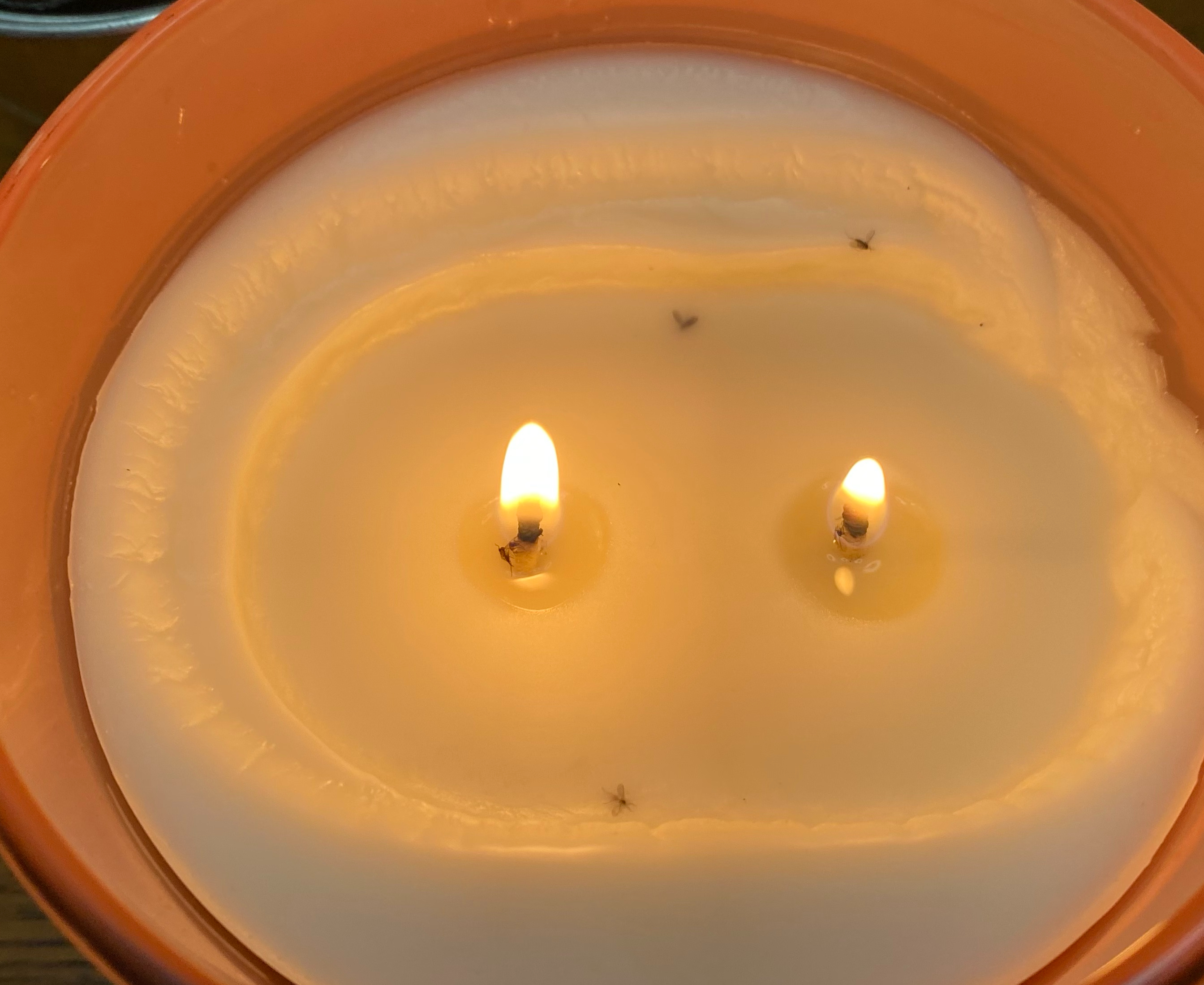
There they were, though, tiny bugs trapped in the melted wax because they had been drawn to the light of the candle.  Their attraction to shiny things had caused their demise in the end.  I wonder what they sensed the candle light could offer them–if they felt the candle’s sparkling flame would somehow improve their lives.  

Did those bugs confuse the candlelight with sunlight or moonlight?  Did they think it would help them navigate through the otherwise overcast day?  Perhaps, those pests confused the candlelight with bright flowers that nourish insects with nectar?  Were they trying to escape some unseen predator and sense that the bright light would blind their predator from seeing them.  Then again, maybe they were the predators looking for a meal, or were they looking for a suitable mate?  

They were so attracted to the flames, they lost their way and became stuck in the melted wax.

Attracted to the Brilliance ✨

Even science doesn’t seem to know the exact reasons bugs are drawn to light, and it made me wonder why humans, likewise, are drawn to shiny things?  Big vehicles, the bigger and shinier the better.  Large homes filled with sparkling appliances, a multitude of large screens, and a variety of other collections, depending upon a person’s interests and means. Closets gorged on a feast of clothes and shoes. Not to mention the cultural attitude about prosperity: those with means have been “blessed.” (I’m not sure what that means for the rest of us.) 

Then there is the shininess of beauty, youth, and attractiveness, especially since our culture tends to place more value on the looks of youth over the experience and wisdom that comes with aging. Cosmetic injections, surgeries, and implants to change looks and/or stave off aging, no matter your gender.  Your face should be blemish-free–no saggy eyes, no droopy chin, and while a few laugh lines are acceptable on men, wrinkles are not so appealing on women. 

Photo by Jack Sparrow on Pexels.com

Window shopping 🛍️

We are attracted to the nectar of status, wealth, and beauty, and yet we are often as trapped as those insects, feeling as if what we have of it is not enough.  This drives us into a perpetual cycle of needing more things, needing more investments, needing more dressings to make us look shiny to others. We are window shopping the lives of others to see if our own shop window is as appealing and competitive-looking as our peers.

Do we, like insects, confuse the brilliance of status and/or youthful beauty with the light of inner peace that can help shine a path through life?  Do we sense that when times get overcast, the more things we have, the better able we will be to find our way through dark times?  Could our obsession with window dressings come from our own insatiable, ego-driven hunger?  Perhaps, we have an unspoken belief that we can protect ourselves from bad things happening to us if we attain a certain income status.  Then again, maybe these objects make us feel/seem more attractive to others, in the hope of luring some attention.

Photo by Pixabay on Pexels.com

Is it enough? 🤔

While I recognize that the words I write sound hyper-critical, please know that I am asking these same questions of myself.  Should I do more to “improve” my looks? Is my career enough at this point in my life? Afterall, I am choosing to remain an educator, rather than administrator, because I still find intrinsic value in what I do, even though it doesn’t have the same monetary value? 

My husband and I have a home, and it may not be the best.  But, it is dry, safe, and warm.  We have food on the table, and we certainly have clothes–albeit not necessarily the most up-to-date styles. At the end of my life, I often remind myself, I can’t take any of it with me.  Nonetheless, I also know I must save for those end-of-life years, for which I hope/think we are doing enough, but is it?  

Why do I sometimes feel I am not doing enough? Why do I feel like I should do more? Am I trapped in the wax of envy?  Am I trapped in the wax of our cultural beliefs of worth and value? Am I the only one with these questions/feelings? I don’t think so.

Photo by Arthur Brognoli on Pexels.com

Self-Reflection 🙏

I’ve concluded that it is only through self-reflection, contemplation, and meditative prayer that the answers are found.  What is right for me, may not be right for others.  By examining our attachments, we can begin to ask ourselves what things/what part of our lives are bringing us true fulfillment, and which are merely fueling our ego?  When we look deeply, we see that many, if not most of our things, paint an illusion of happiness for us.  

Much of what we have externally is impermanent.  Even our relationships, as much as we value them–have a limited time.  Therefore, through introspection, we can perhaps see the importance of living more fully in the present moment, completing our responsibilities without attaching to specific outcomes (because we really aren’t in as much control as we think we are) and surrendering the outcomes of our efforts to a higher power. 

By shifting our focus more frequently to our internal world, we can begin to detach more from our external trappings. Then, we can learn to dampen the sounds of our ego’s attachments to societal values, and discover richness and fulfillment that comes from fostering our own spiritual growth and the expanding sense of peace that comes with it. The more we shift to an internal focus, the less trapped we feel, and the more we can enjoy and appreciate this gift of living. 

Photo by James Wheeler on Pexels.com

Loneliness is a major health problem, and we can be part of the cure

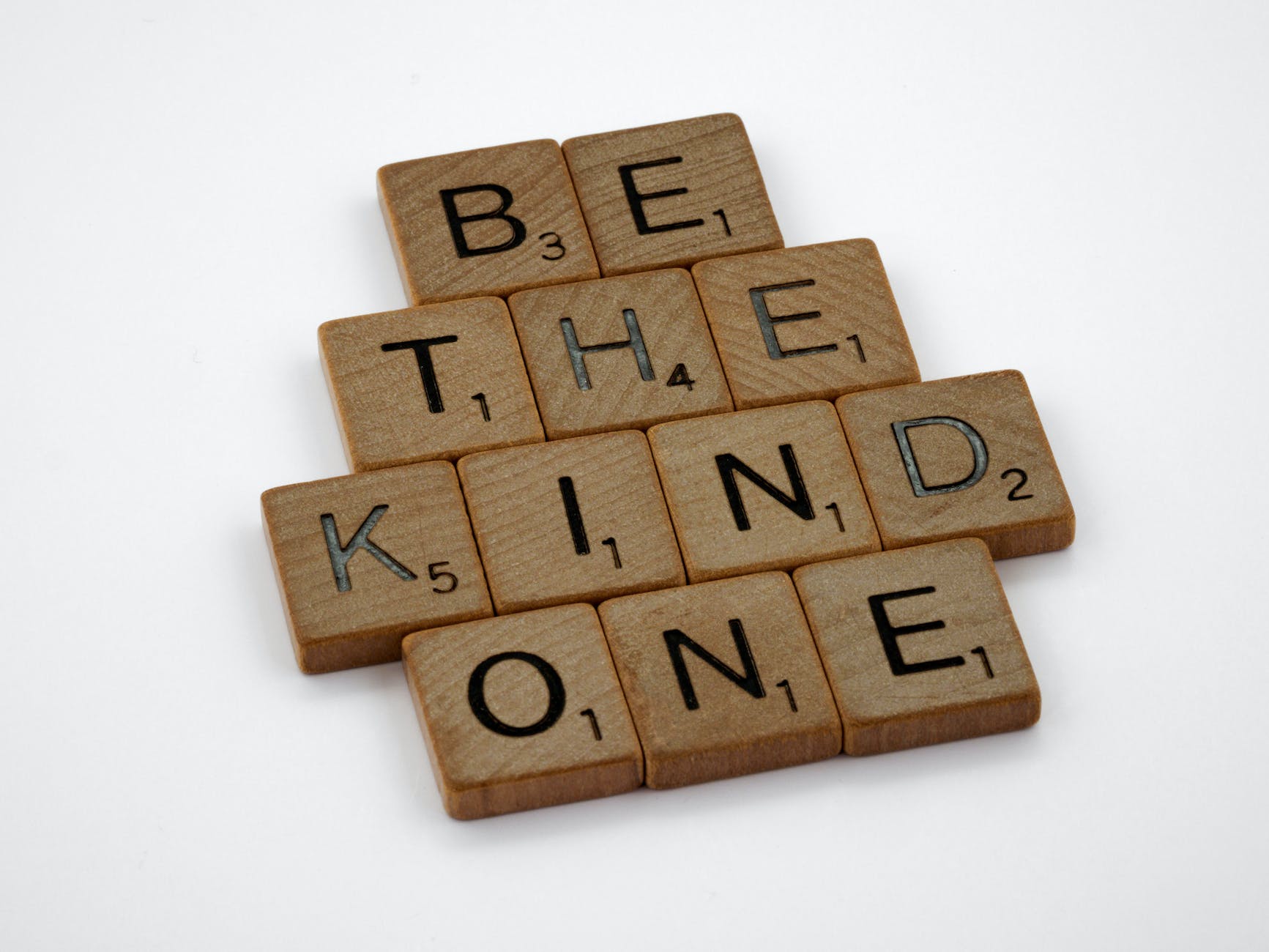
“Be somebody who makes everyone feel like somebody.”–unknown

Photo by Bob Price on Pexels.com

The Write Stuff ✏️

It was supposed to be a creative writing piece.  A visual writing prompt given for the sole purpose of working with new vocabulary words.  On the white board, I projected a picture of a fully clothed person, leaning against the wall of what appeared to be a school, but the physical person was invisible.  The clothes the person was wearing were gender neutral.  I assigned no gender, race, religion, etc. to this person.  My directions were for the freshmen students to use their current vocabulary words to write this person’s story.  

Most of the time, when I assign such a piece, only a handful of students really get jazzed about the chosen topic/challenge of the week.  I am a realistic teacher and writer, so I get it. Not every topic can be inspiring.  

However, this past week was different.  Nearly every student was engaged, focused, and wanted more time to write.  This was unusual since I did not assign a required length to this writing assignment.  Rather, I required the correct use of all of the vocabulary words and that students fully write to the prompt. 

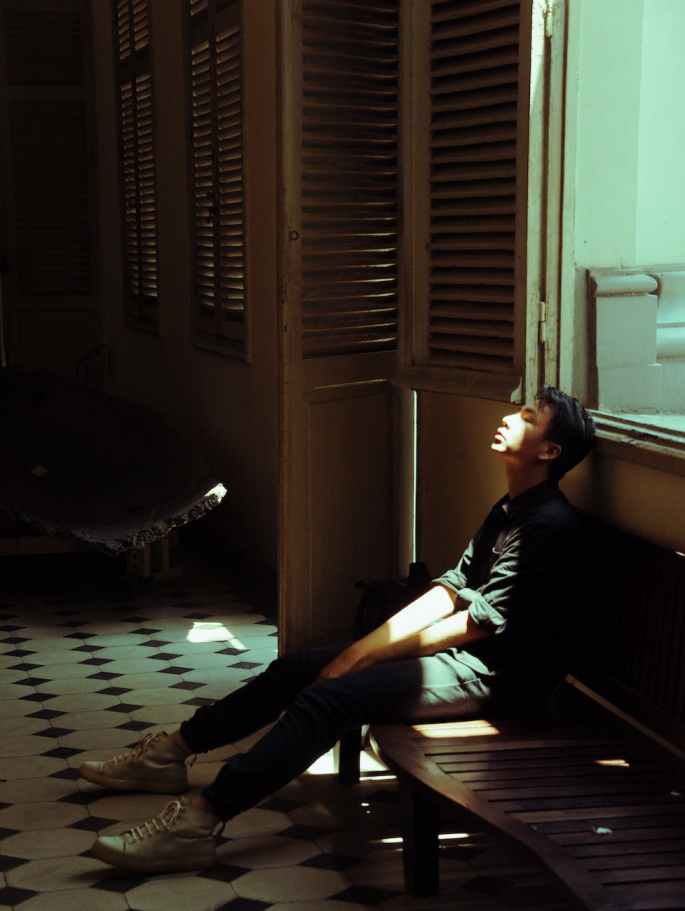
This picture of a student, Madeline Garcia, was taken with permission to demonstrate students’ feeling of loneliness. While she was not one who wrote that she felt invisible, she was happy to help out with the photo illustration.

Invisible Ink ✒️

Given the nature of my job and the number of students/grade levels I teach, it took me a couple of days before I read those creative writing responses. What surprised me the most was the repeated theme of feeling “invisible” to others.  Depending upon the student’s situation/perception, this included friends, social groups, family, and other important adults in their life such as teachers, pastors, and coaches. It was clear to me that social isolation and loneliness is a very real phenomena amongst an age group known for their social connectivity. 

To be sure, there were those students who wrote fantastical, fictional stories, and there were those who did the bare minimum with little creativity in order to complete the task.  However, a large number of students wrote heart-wrenching stories of feeling overlooked, disregarded, or ignored by people they consider to be important in their lives.  Many students spoke of possessing good qualities that went unnoticed or unappreciated by others.  They described the utter loneliness they felt inside, even when surrounded by others.

Photo by Anna Tarazevich on Pexels.com

Public Health Warning ⚠️

I was reminded of a couple of podcasts interviews I have listened to with the current U.S. Surgeon General, Vivek Murthy, in which he discussed an advisory he released this past spring (2023) proclaiming loneliness and social isolation a public health epidemic in the United States.  According to his findings, as seen in a release from the U.S. Department of Health and Human Services, loneliness is as bad as smoking on our health.  When we experience long-term loneliness and social isolation, it can put us at risk for heart disease, stroke, and dementia. 

However, for teens, this feeling of extreme loneliness, according to Murthy, predates COVID, despite all of the social media connections.  Murthy warns that loneliness and social isolation negatively affects the mental health of all who experience it, but he states that it is especially troubling for teens. In fact, Murthy went on to issue another advisory this past June (2023) regarding youth and their use of social media, warning that extreme exposure, defined as more than three hours per day, is a major contributor to the uptick of teen anxiety and depression.

Photo by cottonbro studio on Pexels.com

Face-to-face, heart-to-heart💖

Reflecting on my own student’s writing, it is clear, at least anecdotally, that loneliness is a very real feeling among teens. Of course, I do not want to totally dismiss the use of social media among teens as I know there are numerous benefits that can be found. However, it was interesting to note that when talking with all of my students, at all three grade levels (7, 8, 9), most stated they would rather spend time in person with their friends than text or connect with them via a social media platform.  Of course, there were a few outliers, but by and large, most spoke of the fact that since COVID, they place greater value on spending time with their friends and family face-to-face.

As it turns out, my students’ stories reinforce the fact that we all have the basic need to love and be loved.  We want to know that someone sees us, respects us, and truly “gets” us.  Knowing that we matter to someone, that we make a difference, is paramount to our mental health. 

When we engage with others face-to-face, we experience the nuances of communication–tone, facial expression, body language and so forth.  Eye contact can communicate so much without words, and it can be an even more powerful tool when combined with meaningful words. I imagine that our most successful earliest ancestors survived by staying with their pack–not venturing out on their own to face the dangers and predators of the world.  The same is true now, only our dangers and predators are more subtle and cunning.

Photo by Andrea Piacquadio on Pexels.com

Our problem; Our Solution

Of course, it’s easy to dismiss my students’ writing as the grievances of angsty youth.  In fact, Dear Reader, you could tell me, “It’s your problem, Stephanie.  I didn’t choose education as a career.”   However, have you ever noticed that when you peel the “y” off of the word your, you are left with the word our.  

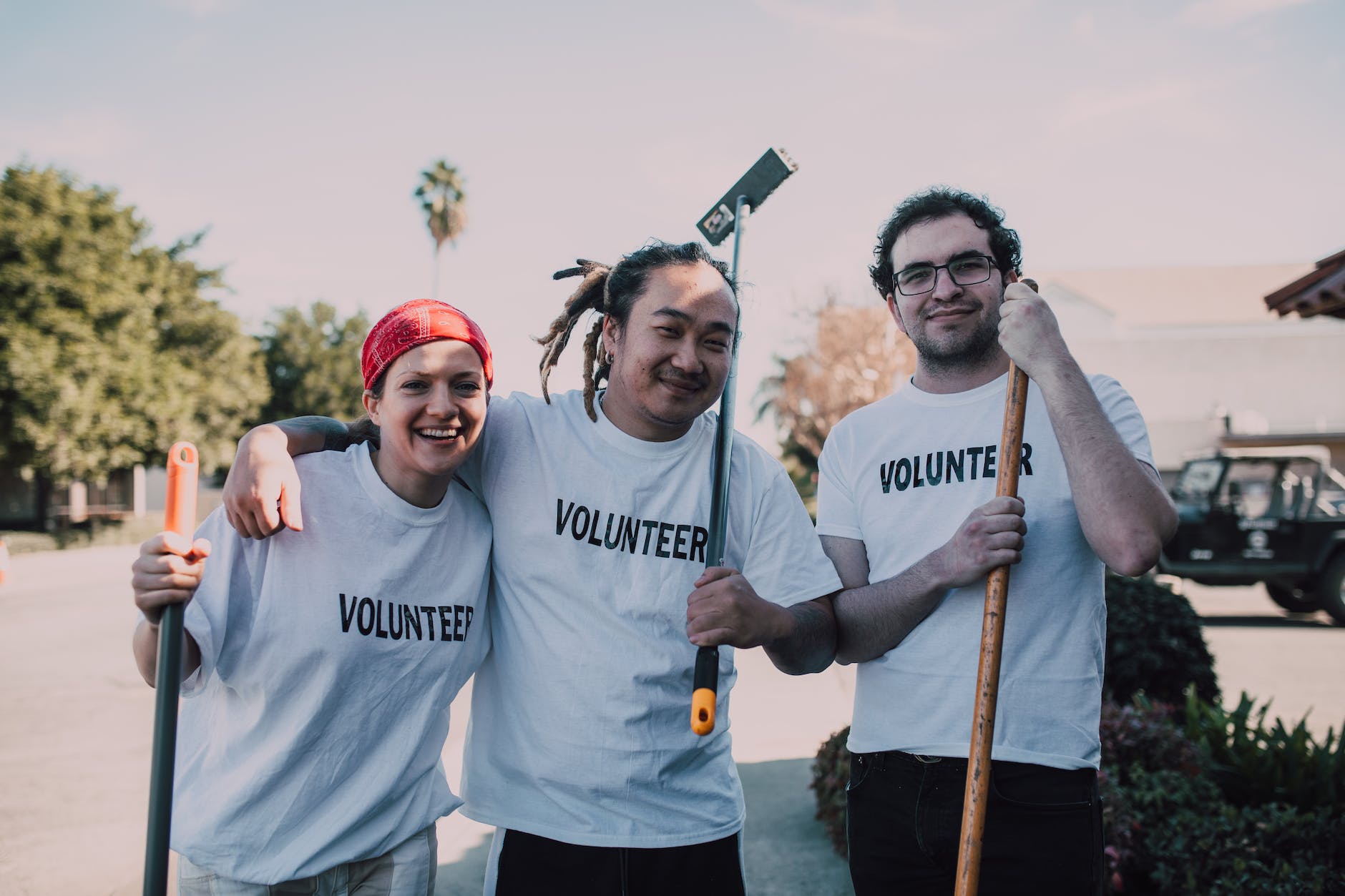
This is our problem, and while I cannot pretend I have the answers for such a far-reaching issue, I do believe in the power of small acts of kindness.  We can look for ways to help others, and I don’t just mean the traditional “Give money to the City Mission” or “Work at the Salvation Army” serving Thanksgiving dinner.  Not that I am putting either of those down–they are worthwhile deeds.  Instead, I am referring to our day-to-day real-life interactions and encounters.  How can we make a difference daily?

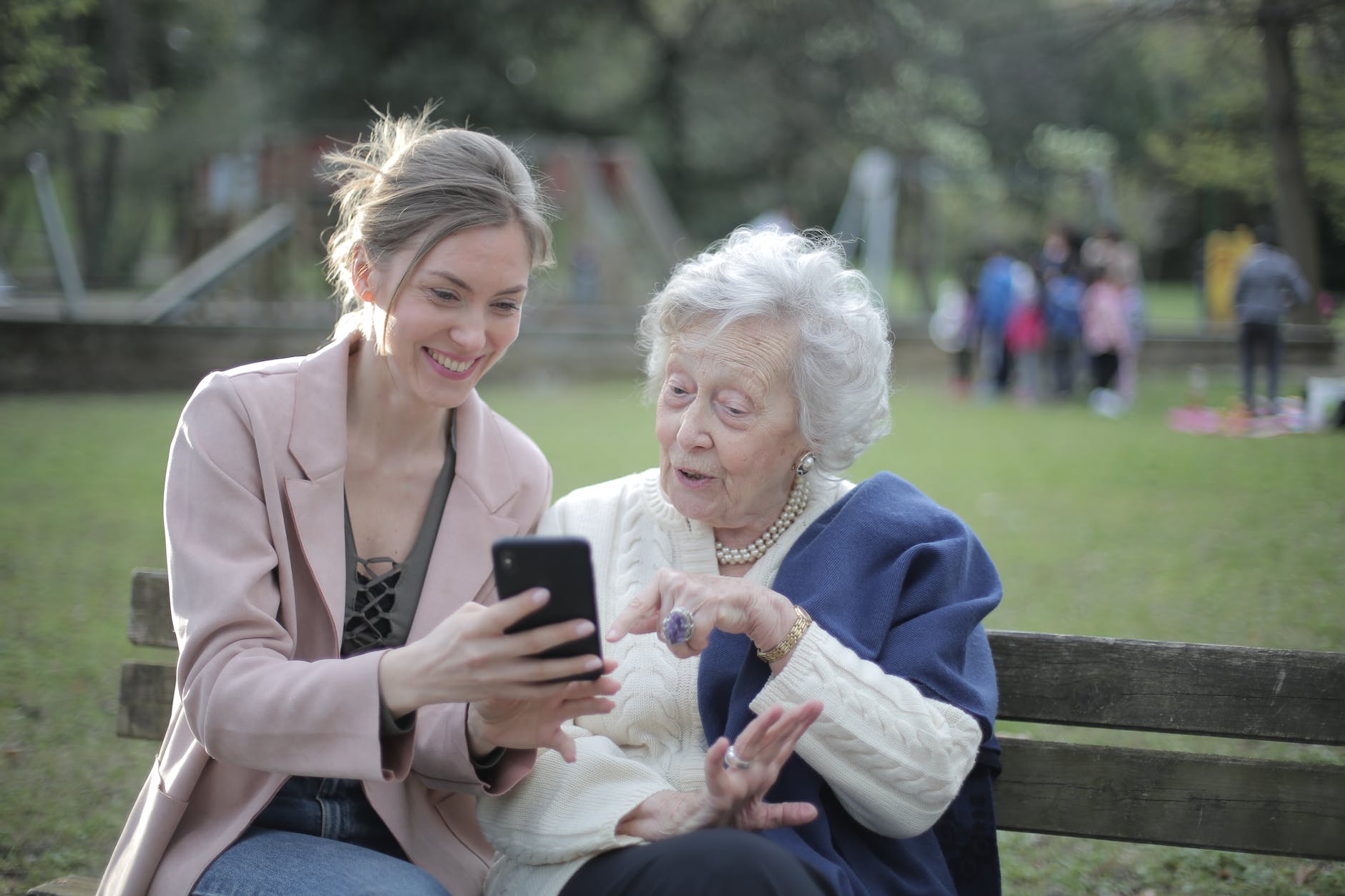
Can we give our loved ones, including friends and family, more of our undivided attention for a few minutes with the cell phone put away?  Can we make more eye contact and speak a few kind words with the person who serves your coffee, lunch, or an employee at your favorite grocery store?  Can we take time to help another person with the door, or be more patient with that co-worker that honestly gets on your nerves?  

Photo by RDNE Stock project on Pexels.com

kindness matters😎

The list could go on, but my point is this. Small acts of service communicate to others that they matter and that they are not invisible to you. I know it is easier said than done, given the fast pace of life.  Believe me, I struggle with it too!  What I do know is that little acts of service or kindness makes us feel good, and more importantly, can also impact another person’s life.  At the very least, it allows us to feel our own agency in addressing the problem of loneliness.

I conclude, with a small prayer of hope.  May we begin to lead more people-centered lives, so we can truly see one another’s need to matter. 🙏

Stuck On Flat Ground

“What you do makes a difference.  And you have to decide what kind of difference you want to make.”–Jane Goodall

Photo by Christina Morillo on Pexels.com

Sweeping ArounD 🧹

During the pandemic, I purchased a Roomba, an iRobot vacuum for which I could set a schedule for regular sweepings of the house.  There were three of us at the time, working from home and interacting a whole lot more with our two cats.  Thus, there was more than the normal amount of traffic in the main areas of our house, so the Roomba seemed like a good investment. 

It was great fun watching that little disc, affectionately named “Spot,” zip around the house whisking away the hair and dust while we worked.  At first, it seemed to move throughout the house in no certain order.  However, once its internal navigating system became familiar with the layout of our house, it didn’t take long for it to begin trekking over the carpet in precise patterns. We watched it move with intention, seemingly knowing where it was, where it wanted to go, and where it wanted to end before the battery needed to be recharged.

Photo by Kindel Media on Pexels.com

Stuck AGain 🤔

Lately, however, it’s been sending me messages that it ended its job, “stuck.”  At first, I wondered how it was possible for Roomba to be stuck on a flat surface? I supposed its battery simply didn’t have the strength it once had. Now, the problem has grown even bigger, not only is it still sending me messages that it is “stuck,”  but it is also no longer functioning properly, pushing the cat hair into multiple mini-piles all over the carpet.  Now, we come home to find the Roomba, at a stand still in the middle of an open, flat area of our house.  It’s as if it is so focused on getting finished before its battery dies that it’s not taking to properly execute its job–sweep the dust and cat hair.

 This reminded me that sometime in life, it’s not necessarily the challenges that get us,  but instead, it’s the everyday routine that can cause us to get stuck in a rut.  Our own internal navigation system focuses so much on the destination–be it the end of the day, the end of the work-week, the number of days until a holiday/vacation, the number of years to retirement, and so forth–that we forget to pay attention to the road over which we travel. Navigation systems require two things: Knowing where you are, and where you want to be? However, if you don’t pay attention to the route, you won’t get to your destination.

No Stopping until We Reach our Destination ✈️

Too often we are so focused on our self-defined destination that we forget where we are and overlook not only the pothole in the road or traffic jam ahead, but we also ignore the beautiful scenery that lines the route. Our eyes become so fixated on “the end” that we will blunder and stumble through the motions of life, forgetting that we have a purpose in the here and now, not just once we reach our destination. In the same way that part of traveling is paying attention to the route in order to arrive safely, we too cannot fully and satisfactorily arrive at any self-determined destination without fully focusing on the route in between.

Photo by JESHOOTS.com on Pexels.com

Agency over Urgency🚘

As a young teenage driver, my parents often advised me to,  “Give yourself enough time to arrive safely at your destination.”  This is a great reminder for moving through life.  It reduces urgency, so that we can have agency.  Remembering that we have a certain level of agency in situations, no matter what our jobs/roles/responsibilities are, serves as a reminder that we have a certain level of choice as to where we put our attention and how we choose to react to the proverbial potholes in the road of life.

When we were new drivers, we needed to master small tasks, such as, navigating traffic, how/when to turn at a stop sign, how to safely pass another driver, and so forth. Working on these skills over time was part of the process to becoming a successful driver.  Likewise, as young adults, we approached life and our newly found adult role with the trepidation of a newly licensed driver.  Over time, just like with driving, the more we participate in our new roles, the more our knowledge increases.  It’s only natural that we begin to modify and adapt our navigational skills as we gain a better understanding of where we are and the direction our life is taking.

Photo by Anna Tarazevich on Pexels.com

Inner Tune Up 🔧

However, it is easy to get stuck in the routine and lose sight of the actual route over which we travel.  We go through the motions, driving through life, but not really engaging with it. That’s when, like my iRobot, we need to reach out for “I-support” and perhaps do some trouble shooting.  We can do this through meditation, self-examination/reflection and also by connecting with the faith-based community of our choice, a trusted friend, family-member, or fellow mentor.  Through the process of self-reflection and reaching out to a trusted group or person, we can tune-up our inner-GPS, ensuring we are focused on our values and traveling, aka working, in alignment with them.

People-Centered Living 😃

Photo by Andrea Piacquadio on Pexels.com

When we focus more on our values, it helps us adhere to our destination’s route, but with less emphasis on the journey’s end and more emphasis on what is in front of us in the here and now. By observing who, or what, is in our day-to-day encounters, we might begin to see that we are more than our work.  Instead, we begin to live a more people-centered life, and not just work-centered lives.

Additionally, when we truly take the time to refocus on our values, we are taking time to also tune-up and adjust our own inner world, our internal navigation system. In the same way a fully functioning navigation system gets our cars to our ultimate destination, our internal pilot will wander all over the place without a robust, healthy internal world.  When our internal navigating system is off, we, too, become stuck on flat ground like my Roomba.

There’s nothing wrong with a daily routine.  They are necessary to complete life tasks.  However, let us not allow their regularity to cause us to overlook the very things that can feed our souls and enrich our life.  Let us take time to remember our core values, so that we are mindful of the destination without urgency, and use our agency to engage with the opportunities along the way. 

The Stardust of Grandparents Twinkles like their eyes

Papaw, in the backyard of my childhood home, with my hand resting on his shoulder. I am not sure what the moment or occasion was, but this photo captured a moment between the two of us.

A Light from the tunnel of times past 💡

My mom found and gave to me a picture of her dad, Papaw, as I called him.  In the photo, he is in the foreground, sitting at a table on the patio of my childhood.  In the background of that picture are several small details of my childhood home.  Gazing for some time at that picture transported me backwards through a tunnel of times past.

To begin, I noticed the infamous backdoor that we weren’t supposed to slam as children heading out to play.  Then, there’s the wooden fence my dad built, which reminded me that he also designed and poured the concrete for that patio. Additionally, I can see part of our clothes line with its bag of clothespins.  I recall my mom teaching me the proper way to hang clothes, sheets, and towels to minimize wrinkles and shorten the drying time. 

He ultimately sold his grocery store business and worked for C & O Railroad.

Papaw 👴🏻

Once the surge of those background memories drifted down the stream of remembrances, another torrent of emotions began swelling–Papaw.  In the photo he sits in one of his classic jumpsuits that he wore nearly every day of his life except for yard work and church events. His smile is tender in this photo, and despite the not-so-great quality of the camera, the picture still manages to capture that twinkle in his eyes.

 I adored that man. Now, as an aging adult, I am certain that Papaw was full of flaws.  Family rumors of the daredevil antics of his youth, his hobo days after marrying my grandmother– leaving her for weeks at a time to raise two young boys and manage an independent grocery store with its own lunch counter by herself– his issues with depression, and perhaps even some philandering, were whispered stories among the family adults.  As kids, we gathered bits and pieces of these stories, as one does a torn up letter, but we were simply too young to put the pieces together.  He was simply our Papaw.

Papaw and me in his backyard.

Traveling Backwards through the Tunnel of time 🔙

Staring at the photo of this complicated man that I am only now beginning to see in a realistic light, I assess the other person in the photo.  She is a college student with her hand on Papaw’s shoulder–a habit I recognize because it is me.  I tend to place my hand on the shoulders of people who are seated at tables, or even desks in a classroom.  I suppose it is my way of saying I care about you; how can I help; or, can I get you anything?  It took my breath away upon first seeing it.  So much is captured in that frozen image of time.

Papaw often called me a Kewpie-doll or China-doll. I am sure this was because of my size.  I was small for my age for many of my younger years.  I was also often sick during this time period, and I recall being hospitalized at least twice.  Both memories are blurs of oxygen tents, IVs in my thighs, dimly lit hospital rooms, and Papaw’s worried face when I would wake with bleary eyes from sickness induced sleep.  

Papaw and me. I am sure I just “helped” him wash his car.

Purple Hazy memories 💜

I remember during one of these stays, he gave me a purple popsicle.  Purple was my favorite color–a color he hated because he associated it with Christ’s crucifixion–but when faced with two granddaughters (my cousin and I) who both loved purple, he came to terms with that color. But, I digress. 

Anyway, he gave me that half popsicle.  (Remember how adults would break those double-stick popsicles into two?)  I was lying on my side, with the hospital bed rail up, trying to lick the popsicle for him.  He said it would make me better, but I couldn’t keep my eyes open.  The popsicle melted, and I remember waking enough to experience a short burst of fear that I would get spanked for making a mess.  (Not that Papaw would have ever laid a hand on me, but I was sick, and logic eluded me.) 

There was another time I woke up in a hospital bed crying because there were needles in my legs (IVs) and I was scared.  Papaw patted my hand and told me not to be afraid as he wiped away his own tears. 

During one of those hospital stays he gave me a bouquet of pink plastic flowers that my grandmother sprayed with perfume.  Once home, I kept it in my bedroom for years, and I would sniff it countless times to see if I could still catch a whiff of that perfume.

Runaway Story 🏃‍♀️

Another time, Grandmother and Papaw came to stay at our childhood home while my parents were out of town.  I became mad at my grandmother for some reason–that part eludes me–but I decided to run away.  I lived on a small cul-de-sac in the country, surrounded by hills, so I am not sure where I thought I would go.  Nonetheless, I took off running in my headstrong way down the street until I got to the main road with fast moving cars and no real safe space to walk.

Tail tucked between my legs, I slowly trudged back to my house, and I slumped against one side of it, arms crossed, still mad, but losing steam.  Out of the house came Papaw. I don’t know how he knew I was there, but there he was.  I am not sure precisely what he said, but he did tell me a story about a time he ran away. He added, with great solemnity, that running away never solved problems.

Looking back on that now, I wonder if there was more he was confessing, but I would not have been old enough to catch the symbolism of his words.  I do recall Papaw encouraging me to be more understanding of my grandmother.  He further added that as the oldest child, he counted on me to be her biggest helper.  He wanted me to apologize to Grandmother and be “his girl” by being her helper from then on.

Even in high school, I still adored my Papaw.

A Grandfather’s Love 💖

And that is what it came down to.  When I studied that picture, I was reminded of being “Papaw’s girl,” something he probably also told all the other grandchildren.  Nevertheless, I believed he loved me most of all, and that made me feel special.  It now seems naive and silly, but that is how he could make me feel.  A feeling that has never left me, even now as I look at that image.

Young, handsome, and daring . . .

The Abundance of his legacy ✨

 Wiping away my reminiscing tears, I gaze at this man who was complex in ways I never knew. He only had a 5th grade education, but he still managed to educate himself through his endless curiosity. Papaw was complicated, and yet simple. He managed to ultimately live an abundant life. 

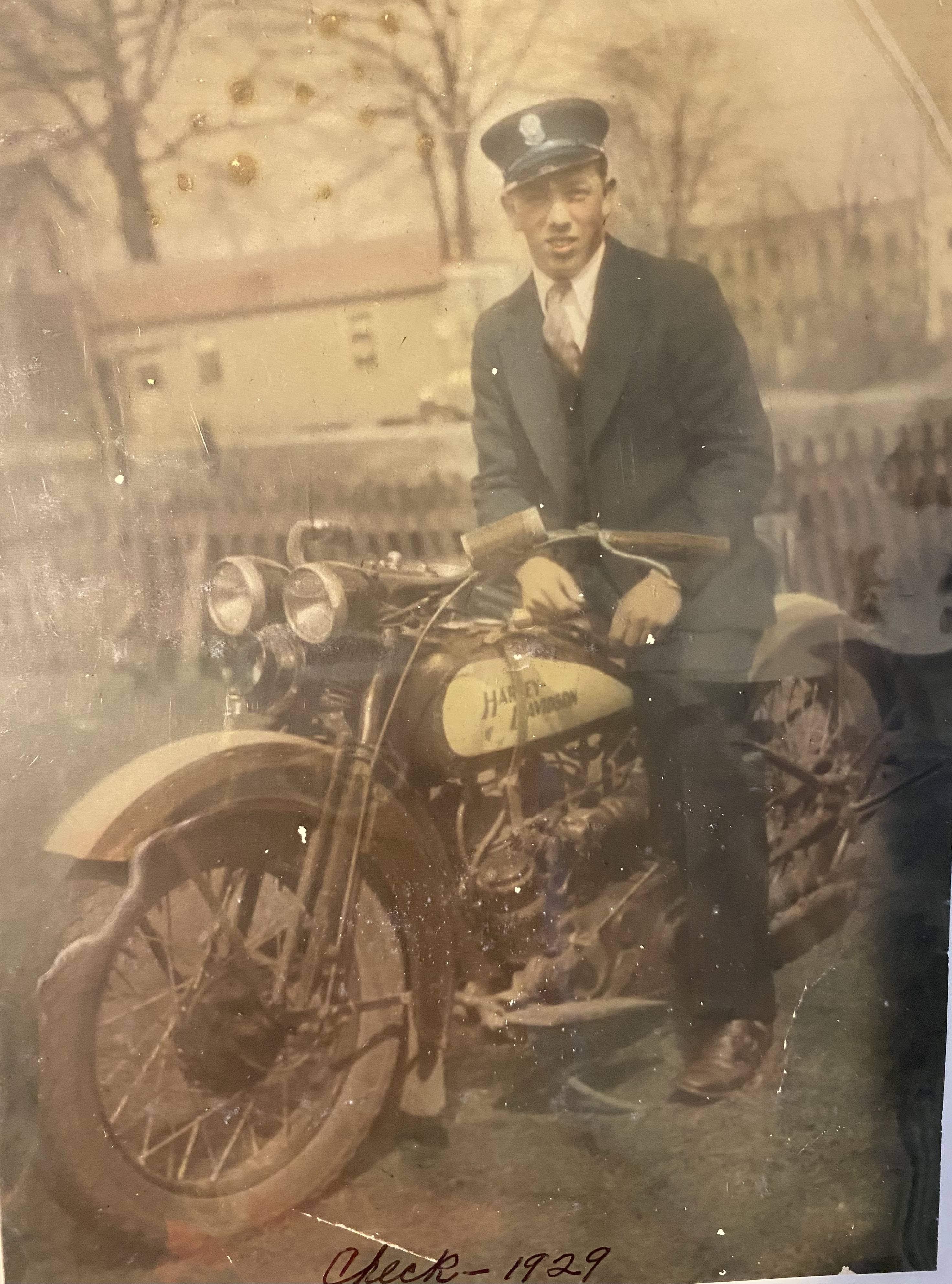
Papaw traveled all over the world with my grandmother visiting and staying with missionaries, and he also traveled through his hometown as a teen standing on his circa 1920s motorcycle. He was the trusted treasurer of his church for as long as I can remember.  Papaw played football before there was all the protective clothing, and he loved the game until Alzhiemer’s disease took his mind. He retired from C & O railroad, and he once owned a grocery store that was flooded twice by the Ohio River. It was the ‘37 flood that ended those retail days and inspired him to build a house on a hill.  Yet, this same man once swam across the Ohio River from South Shore, KY to somewhere near Portsmouth. 

He had three children, my mom being a late-in-life surprise, and he had nine grandchildren.  He loved us all. 

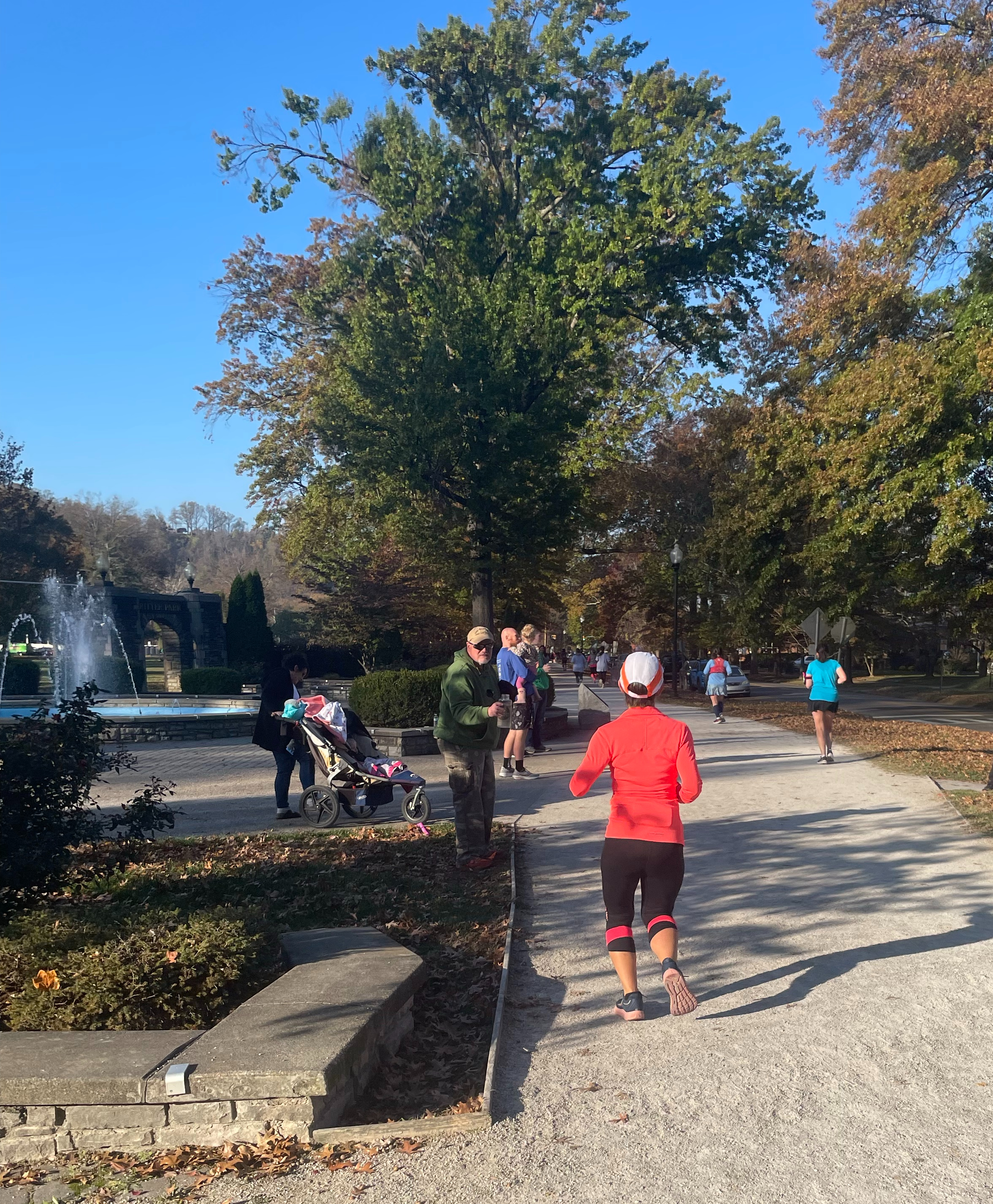
There are stars which I regard in the mornings when I walk or run.  They line heaven’s boulevard.  They twinkle their good mornings to me like Papaw’s eyes once twinkled his love.  I’d like to think he is part of their stardust. 

I wish I could give every child a grandfather like mine.

Pushing through limiting beliefs: the case for contemplative practice

“When I was a child, I spoke like a child, I thought like a child, I reasoned like a child; when I became an adult, I put an end to childish ways.”–Corinthians 13:11 NRSV

Photo by Pavel Danilyuk on Pexels.com

Push or pull 🚪

Years ago, when I first started dating my husband, we traveled to a local town center and parked in its parking garage.  In order to access the stairwell from the garage, you had to go through a set of glass doors, but we encountered a problem.  

The doors would not push open for us.  John tried.  I tried.  For the life of us, we could not get those doors to open.  We nervously stood there wondering if we would spend the entirety of our second date standing in a parking garage.  Finally, one of us, and by now, I do not remember who, read the sign on the door, “pull here.”  It was really that easy.  The doors opened as if by magic.

Sometimes we are focusing our energy on continuing to open doors that keep our beliefs limited.

This past week, I was reminded of that memory.  Throughout my workweek as an educator, I travel between the high school and the middle school, in order to teach classes.  Structurally, the two buildings are designed quite differently based upon the era in which they build.  Therefore, their doors are designed differently as well.

While I don’t have an issue, as you may have predicted, between pushing and pulling the doors open for either building, instead, it is remembering, on the high school side, which of the double doors leading to each floor is the correct door to pull to open.  Exiting any floor, both doors push open, but when entering the floor, only one door pulls open, and you guessed it, I tend to grab the wrong door and try to pull it open.  You’d think by now, I’d have it down.

When I once more tried to pull the wrong door open again this past Friday, I thought back to that second date with John, and I began to reflect on all the ways life can be like those doors.  How often do we continue to push through something in life, when really we only need to gently pull.  Or, how many times have we reached for the wrong door to open, when the “right” door was there all along?

How many times do we continue pull ourselves through the same doors in life, when all really need to do is pull open a new door.

Those unidentified LImiting Beliefs 🤔

Many of us, at one time or another, have allowed limiting beliefs to influence our choices and actions in life.  These beliefs could have been established in our childhood, steeped in the culture of our local environment, or even part of time-specific attitudes of a specific decade.  For example, you may have been raised in one set of faith practices and remained faithful to that belief system because it seemed like the “only one.”  Another example might be that you were raised in a community with a limited mindset, and therefore, that influenced a large portion of your choices in early adult years.  Then, again, due the decade or family situation in which you were raised, you may have only felt as if you could only pursue specific career paths.

None of the scenarios, or any of the other hundreds of examples, are inherently bad or wrong.  In fact, for many people, it works out just fine until one day it doesn’t.  Specifically, I recall a young lady I once knew. Throughout her young life, she was pushed by parents and their social group to focus on her looks, and she was encouraged to have boyfriends from a young age.  This young lady was beautiful, but she was also bright and kind hearted.  Still, the message she received was that her purpose was to finish high school, marry, and be a mother.

Again, there is nothing wrong with beauty, dating, marriage, and motherhood.  It was the fact that these ideas were valued and encouraged at a young, impressionable age, and indeed, she did what was expected of her. However, when she became pregnant by her senior year of high school and dropped out of school, she was suddenly the object of gossip and rumors.  Her parents were furious with her, unable to see their role in this situation.

Photo by Rafael Henrique on Pexels.com

Coming face to face with limited Beliefs 🧐

In one fell swoop, the young lady appeared to lose her support system, and her shift suddenly shifted from what she had been taught her whole life to the well-being of herself and her child. Eventually, she went to live with a friend and her family. 

It took her years of struggling, but eventually, I am told, the young woman moved out of the area, worked numerous part time jobs in an attempt to support herself and her child.  As her child grew, she began to take online classes.  First, she earned her GED, and later, she earned her associates degree in business.  Some years later, I learned this tenacious woman married and worked for a fairly large business firm.  She never had another child, and she rarely sees her family.  Her child, at last count, was in graduate school.

What I do remember about this young woman was that she once shared with me, early in her pregnancy, how she felt pushed to meet what she thought were the expectations of her.  She reflected that she had spent most of her teen years starving herself to maintain a certain size.  Her education was not prioritized, but rather her social life, specifically dating.  She was pushing through her youth to meet what she thought was her family and community expectation.

Photo by Ivan Bertolazzi on Pexels.com

Recognizing internalized beliefs 🤨

This is only one example. When we only know one way to push, that’s how we open doors in life.  Racism, sexism, bias against other religions or religious bias, prejudice, limiting beliefs about gender roles, and the list could continue, can be restrictive, and even detrimental, ideas that we may not realize we have internalized. These types of belief systems typically occur due to the way in which we were raised, the groups with whom we socialize, the community in which we live, or, the social media platforms we choose to follow.  

Many of us don’t recognize that we may have these internalized limited belief systems until something changes.  All of the sudden, we come face-to-face with a situation in which our beliefs will no longer open the proverbial life door.  For example, years after the young lady moved away, I ran into her mother.  Her mom was divorced, living in a different community, and added she was attending a completely different type of church.  

The mom openly shared with me her regrets about the way she raised and treated her daughter.  Hindsight–and a perspective shift–caused her to see life differently.  At that last encounter, she said she was trying to re-establish a relationship with her daughter, son-in-law, and grandchild.  I hope it worked out for her.

Photo by Matthias Zomer on Pexels.com

The case for Contemplative Practice 🙏

This is where having contemplative practice is important. Whether you do this through meditation, praying, formal scripture study with a trusted mentor, or simply set aside time to be with your own thoughts.  Self-examination and reflection of our actions and attitudes is critical for our personal growth as well as our spiritual growth. This includes taking time to identify areas in which we may still exhibit childish or limited beliefs, attitudes, and actions.  Once identified, the key is to consider the ways in which we can work to replace them with more mature, open-minded, and loving ways.

 In the end, we can keep moving through life pushing through doors based upon untested assumptions, or we can pause when we begin to feel resistance and ask ourselves if it’s time to pull, or at the very least, push open another door.  

Wounded Light: How our wounds, injuries, and hurts illuminate us

“The wound is the place where the light enters you.” Rumi, Sufi poet

Photo by Anastasiia Chaikovska on Pexels.com

Pain-handler 🔥

My daughter once made an off-hand remark about the way I handle pain. She said something to the effect that my legs could be broken, my hair on-fire, and I’d still claim to be fine because my arms were still working. Of course, she was exaggerating because I am definitely not immune to pain.

Photo by Andrea Piacquadio on Pexels.com

I do, however, possess the ability to distract and/or redirect my focus away from discomfort.  On first glance, this can seem like a good thing, and I suppose, at times, it is.  Tolerating pain and challenges is what allows humans to get through tough times.  And while I could offer plenty of examples of the benefits for “shouldering through the pain/trauma/difficulty,” I think it is important to also recognize that by “shouldering through,” not only is it possible to create a bigger issue, but we are also missing an opportunity to see the Light within.

Photo by Wallace Chuck on Pexels.com

Accepting Limits 🛑

There are times when it is necessary to acknowledge and accept our wounds/injuries.  The pain is signaling that, at least for the time being, we need to accept new limits and boundaries in order to enhance the healing process.  This is true not only for physical pain, but also true for mental health trauma.

However, for many of us, myself included, sitting with and accepting pain is often difficult. Whether it is genetics, environment, or society, many of us would much rather suffer through our pain with a smile painted on our faces, than truly feel and acknowledge that we are hurting.  For some, this is a matter of pride, for others, it may mean admitting defeat and/or imperfections–while for others it is simply an extension of their stoic nature.  

Then, there are those who know that to feel the pain would mean to feel their own brokenness, quite possibly forcing them to name their suffering.  This is often a result of the connotation society has attached to specific words associated with pain.  Words such as, injury, hurt, pain, broken, surgery, depression, anxiety, recovery, often have a negative association attached to them causing many to recoil in fear and resistance at such an identification.  For others, there is an association with weakness if identified as having one of those.

Photo by Kindel Media on Pexels.com

Self-Compassion ❣️

It is with that understanding, I encourage all of us, myself included, to take time to acknowledge our wounds, our injuries, and our mental anguishes, past or present. Additionally, it is important to acknowledge the limitations and/or pain those hurts created.  Finally, it is most important to do these while offering ourselves compassion.  If a loved one was suffering with an injury, we would want to help them in any way we can, so let us begin to treat our own pains with the same level of tender-heartedness.  Taking time for our own healing is not a selfish act, but an act of seeing the Divine Light working within us.

I came across a line in a poem that said, “We are wounded healers,” and it really gave me a moment of pause.  The poet had a point, we have all been injured in some way, from scraped knees and elbows when we were children, to broken bones, illnesses, or a mental health crisis as we moved through our teens years and continuing into our present adulthood. It is important to note that each hurtful event informed and shaped us, whether we realized it or not. Unfortunately, there are many of us who have and/or continue to suffer silently through multiple painful experiences and traumas, past and present. 

 Our bodies and mental health have limits. When pushed past our natural boundaries, our injury or trauma signals us with pain in an attempt to get us to take time to allow the body and/or mind to heal. Given certain situations, there are times, events, and circumstances in which we lack the power to grant time for healing. This is often the case in childhood trauma and abusive relationships.  

Other times, however, we prefer the quick-fix route–give me a pill and make it stop method–so I can move on with my life. However, quick-fixes don’t always create an optimal environment for healing. Instead, they tend to mask the underlying issue, allowing the injury/pain to fester in silence. 

Photo by JESHOOTS.com on Pexels.com

Wounded Healers ❤️‍🩹

This is regrettable because in those moments of injury, when we allow our bodies or minds time to heal and recover; we begin to bear witness to the miraculous creations that we are.  The same Source that created us is the same Source that can help heal us, in tangent with a healthy dose of prescribed treatment.  Our bodies and minds have been uniquely fashioned with astonishing proportions of resilience, strength, and fortitude.  We can be wounded, but we can be healed.  We are all, in the words of the poet, wounded healers.

Numerous writers and poets have written that our wounds and injuries allow the Light to enter us.  This Light enlightens us.  In fact, the more we have been scared by life’s injuries, the greater our understanding of the fragility and preciousness of life.  Further, our capacity for empathy with those who are suffering also increases, thereby granting us the added insight to words and actions that may provide comfort to those experiencing similar injuries and wounds.

Photo by Pixabay on Pexels.com

The Light within 🕯️

Our many wounds and scars offer us greater illumination from within. Our True Source of strength resides in those areas. Those old wounds serve as reminders of our survival, growth, and our own knowing.  The knowing of how it feels to truly hurt, and the full joy of knowing what it means to heal and recover.  There is the additional  knowing that healing can sometimes hurt as tissue and mental faculties are fashioned together in a new, often more durable manner.  And there is the ultimate knowing that nothing, not injury, not pain, and not even us, lasts forever.

Therefore, the next time injury, pain, or suffering comes calling, can we challenge ourselves to allow it?  Can we learn the lesson it may be offering us? To be sure, the process is not easy, and it requires patience as well as a heaping portion of trust, especially when the other side of healing may not mean a pain free life. However, in the same way sunlight can illuminate even the smallest of cracks, we too can hold tightly to the faith that the Light, our True Source, can heal and shine through our wounded selves. 

Photo by EKATERINA BOLOVTSOVA on Pexels.com

How Gratitude Can Help Us Face Adversity with a bit more Grace

“Gratitude is the antidote to fear.  When we focus on what we are grateful for, fear loses its grip on us.”–Michael J. Fox

Photo by Inzmam Khan on Pexels.com

Curse those unexpected events 🤬

I can’t help but feel the irony that my most recent piece of writing centered on the topic of unexpected, terrible events that seem to break our lives’ direction, only to find myself once more experiencing another one of those frustrating events. Perhaps, Divine Providence feels I still haven’t learned enough.  Then again, maybe it is all part of life’s continuous process of change and learning.  Regardless, I am once more a humbled student of life.

Photo by Element5 Digital on Pexels.com

My husband, John, and I, had just completed our first day of professional development for the 2023-2024 school year in Charleston, WV.  It had been a long day, and we still needed to go vote in the Ohio special election before heading home.  Facing over an hour’s drive to get to the polling location, which was not our normal precinct due to this unusual nature of this election, John and I navigated congested Charleston roads, making our way towards Interstate 64.  

We stopped at a red light on WV 119 with three cars in front of us.  John had just commented on the amount of traffic when, BANG! CRUNCH! SCREECH! Only seconds passed, and as the shock of suddenly being whipped quickly forward and backward began, several thoughts flashed through my head in staccato fashion.

Photo by Pixabay on Pexels.com

You know from the sound, it can’t be good 🚦

What is happening? What was that sound? Is John ok? Did we just get hit?  We just got our car fully repaired from a February incident when a spooked deer collided into the rear bumper and passenger side door.  This. Can’t. Be. Happening.

“Are you okay?” My husband asked as the reality of his voice slapped my thoughts back to my surroundings.  

I was okay. He was okay.  We were both buckled, and seemingly uninjured.  First point of gratitude.

There’s no Choice But surrender 😩

Sometimes there’s nothing to do but surrender.

I could go on, but many of us have been there–that sickening moment when you have no choice but to surrender to the bad event that is happening and let go of any future thoughts and planning.  There is nothing to do, but remain present in the moment at hand.  It sounds simple, but it is incredibly difficult.  My mind kept racing to future events, such as the evening ahead, the impact this would have on the coming days and weeks as well as the amount of time and money that would be lost as a result of this incident. 

However, none of those racing thoughts would help me at that moment. Instead, I had to focus on the needs of the moment.  Call 911. Check on the person who hit us.  Call insurance.  Retrieve our registration and insurance information.   

Gratitude in the midst of chaos ✨

Photo by Brett Jordan on Pexels.com

In the midst of the din of traffic and my galloping thoughts, I began assessing and readjusting to reality as a moment of clarity occurred.  We were at the bottom of a hill.  There had been three cars ahead of us at that red light.  If the person who hit us had been speeding down that hill, the impact, and the numbers affected, would have been so much worse.  Second point of gratitude.

The person who hit us appeared uninjured, but they were confused.  This person honestly spoke to John and I as well as the police officers at the scene.  They did not remember hitting us. Specifically, they did not know if they had, “fallen asleep or zoned out or what.”  They were profusely confused and also sorry.  This person could have lied, but they did not.  Third point of gratefulness.

Traffic, along this corridor of multiple lanes and exit lanes, was heavy throughout the time our two cars (the person who hit us and ours) were pulled off to the side of the road.  The August sun beat down on the blacktop; and yet, it was an unusually cool day for the time of year.  While no one stopped to offer help, neither did any vehicles collide into our cars, despite the fact that the berm, onto which we were pulled over, was narrow. Fourth and fifth points of gratitude. 

Emotional Rescue 🚑

Photo by Aleks BM on Pexels.com

Don’t get me wrong.  I wasn’t a saint at that moment, cheerily ticking off happy, grateful thoughts like petals of a daisy–not by a long shot!  I wanted to cry, or even scream at the heavens, “Why us, again?”  My emotions were vying to rise to the surface, but I managed to keep them in-check. 

 But, really, those emotions were nothing but fear.  Fear of the impact on John. Fear of the unknown costs. Fear of the unknown impact on my body as I recently had surgery.  Fear of losing our family car once again. Fear of the change this would cause. Even the fear of inconveniencing others to pick us up and help us get home since our car was no longer driveable.  

Grace and Gratitude 🙏

Photo by Liu Moon on Pexels.com

However, the grace of the moment was that gratitude kept nagging me like a persistent toddler pulling on the hem of my shirt.  It could have been so much worse.  So many other people could have been impacted by this.  We were safe and alive, how could I not be grateful?

My car was broken, but not my body.  My car was taken away on a flatbed tow truck, but neither John, nor the person who hit us, or me, had to be taken away on the flatbed gurney of an ambulance.  The police officers who attended to the scene were professional, courteous, and efficient.  Indeed, one officer shared that our accident was their sixth car accident of the day on that stretch of road. Miraculously, not one person had been hurt in any of those fender benders. More points of gratitude.

I was able to text my daughter, Maddie, who is now a co-worker, and happened to have carpooled with a couple of other teachers to the same professional development as John and me. The three of them were able to turn around and safely pick us up.  Once at Maddie’s apartment, she was able to drive John and me directly to the polling center before it closed, and then take us home, where we have two other old vehicles that we can use in a pinch.  More points of gratitude.

Gratitude is a practice 😊

Photo by Magda Ehlers on Pexels.com

The rest of the day, and the days that followed, were not, nor will not, be all rainbows, kittens, and puppies.  I still struggle with change.  However, this real life experience offered a reminder that bad days will happen, life can change in an instant, change is ever present, and it is an illusion to think we are in control.  But we can choose to practice gratitude.  Practicing gratitude can help us put bad days into perspective, appreciate what we already have, quell our fears, and remind us that even though we cannot control events in our lives, we can control our attitude and find things for which to feel grateful. 

Like the broken pieces of a chocolate bar

“ It was a terrible, horrible, no good, very bad day.”–Judith Voirst

Photo by Oladimeji Ajegbile on Pexels.com

“It was a terrible, horrible, no good, very bad day” 😥

Years ago, when I taught Kindergarten students, I used to read to them a book entitled, “Alexander and the Terrible, Horrible, No Good, Very Bad Day,” by Judith Viorst.  It is the story of a boy, Alexander, who is really having a lousy day.  He wakes up with gum in his hair, slips on his skateboard, is corrected by his teacher at school, discovers he is only someone’s third best friend, and has no dessert in his lunch–to name only a few of the bad events of Alexander’s day.  As Alexander’s day worsens, he quips, “I think I’ll move to Australia.”

For my young students, the book provided a springboard for rich conversations centering around two concepts. First, students shared/compared their own bad day experiences. Through the process of hearing each other’s bad day examples, they discovered and affirmed that everyone has bad days. Secondly, it allowed students the opportunities to discuss strategies for handling, or at the very least, surviving terrible days.

This is not what you expect to see your chocolate bar when you slip the foil wrapper open.

Broken pieces💔

I am sometimes reminded of this story when I am having one of those “terrible, horrible” days.  This was the case, in fact, on an evening of a very long and disheartening day. By the time I arrived at home, I couldn’t wait to console myself with a few pieces of dark chocolate from a bar I kept squirreled away in a kitchen cabinet.  

The bar is typically divided into six rows of five pieces each.  I typically break off a row and put the rest of the bar away.  Then, I snap one piece off at a time, savoring each piece, allowing it to slowly melt in my mouth before moving on to the next.  It is a silly ritualistic habit, but one in which I take great comfort, especially at the end of a tough day.

Only on this particular evening, I slid my finger down the back side of the wrapper to remove the adhesive, folded back the paper and inner foil, only to discover that my beloved bar was shattered.  It was not symmetrically broken along the lines produced by the manufacturer.  Instead, the bar was broken in a random spider web of lines that could never be put back together–certainly not into the neat symmetrical rows to which my methodical habit was accustomed. 

I stood there for a stunned minute or two wondering if I could even eat such a mess, much less enjoy it. How would I know how much to eat?  What if I ate more (or less) than I normally would? Did I even want to eat it if I couldn’t break it into perfect little pieces?  I know, it sounds so silly and irrational, but at that moment, things were not going as I had hoped and expected.  Even my chocolate bar could not be relied upon on this day! Maybe, like Alexander, I should move to Australia!

Photo by Andrea Piacquadio on Pexels.com

Going for Broke🚦

After debating my dilemma, I took a leap of faith and decided to, ahem, go for broke! I grabbed a paper towel, folded it in half, and gently placed upon it a few oddly shaped pieces, all the while feeling conflicted if I still had the “right” amount.  Pushing the rest of the pieces together enough to refold the paper and foil, I stowed the remaining chocolate bar away for another time.  Then, I sat down with my herbal tea, sighed, and placed one of those broken, unsymmetrical pieces of chocolate in my mouth.

Much to my surprise, an alarm did not sound.  The couch, upon which I sat, did not collapse. A sinkhole did not open within my family room and send me, and the room’s furniture, spiraling down a black hole towards an alternate universe.  The world, in fact, kept spinning on its axis. Most surprising of all, the chocolate still tasted heavenly!

While this is all good dramatized fun, sometimes “no good very bad days” are not so silly. Life’s pieces can sometimes get broken like my chocolate bar with breaks that don’t seem to make any sense. These events feel like seismic jagged lines that you know from the onset will never be put back together. We rail against the unhappy change, resisting and pulling as if engaged in our own personal tug-of-war with life.  Often, we create so much strain, we physically, mentally, and/or emotionally hurt to the point of breaking ourselves.  We simply can’t see beyond the broken pieces.

Photo by Vie Studio on Pexels.com

Nudged in a new direction🔄

These are the times that force us to look at life with new eyes. We are nudged, not so gently, to rely upon our faith and listen to that inner voice urging us on. Life is still before us.  Only now,  it is now arranged differently than we had hoped and expected, but life remains nonetheless.

It is only when we release our grip and accept there is nothing to do–the pieces are broken and will not be reassembled.  This acceptance doesn’t mean we are powerless, it simply means we are moving forward, in faith, in a newly arranged direction that isn’t as straight as we had hoped, but travel-worthy nonetheless.  Gradually, one step, or one piece, at a time, we begin to see the pieces of life can still be assembled.

 It doesn’t happen overnight, but over time, a new way of being emerges that somehow begins to make a new kind of sense, one that had not been imagined, but can work. When the tug-of-war-with life rope is dropped and acceptance moves in, we begin to see that somehow the collection of the broken pieces can still taste sweet, perhaps not the same, but still sweet.  It is then that our hearts begin to mend, we find newfound strength in our new life-shape–even if we were to move to Australia.

Photo by Catarina Sousa on Pexels.com

Great Go-togethers: The Power of Habit-stacking

Coming together is a beginning, staying together is progress, and working together is success.Henry Ford

Photo by Suzy Hazelwood on Pexels.com

Great Go-togethers

Let’s talk about great go-togethers.  Think: peanut butter and jelly, salsa and chips, holidays and fireworks, summer and picnics . . .  In life, there are certain things that go together, and often, one item “triggers” the desire for the other.  For some, coffee might trigger the desire for cream, while for others, that morning cup of java triggers the desire to read the morning news.  Most of us utilize the power of pairings without realizing it due to some positive association between the two linked items or habits.

Some paired items or habits are beneficial, such as soap and water or athletic shoes and walking.  While others may be less beneficial, or possibly detrimental, such as smoking and socializing or ice cream and fudge sauce. Paradoxically, consider how hard it can be to start a new desirable behavior/habit, but how easily poor habits can creep into our lives.  For example, what was once an ‘occasional’ chocolate indulgence has now evolved into a nightly routine after dinner.

I was reminded of the power of pairings when traveling with my husband, John, recently.  We began our trip with a cooler of fresh veggies, fruit, sandwiches, dried fruit, seeds, and oatmeal, but by the end of the trip, most of this was consumed. I couldn’t help but notice how hard it was on the return trip home to find fresh vegetables–part of my mid-day meal pairing.  Travel plazas were loaded with chips, candy, sodas, and so forth, but no veggies. 

Trying to find veggie sticks, part of my mid-day meal habit-stack, was difficult when recently traveling.

Another travel observation was the larger number of people who paired smoking with social situations.  I grew up in an era when smoking was still widely accepted and promoted; however, social smoking has been dramatically reduced, or so I thought until visiting an internationally popular tourist destination in which smoking appeared an ingrained part of the social setting among certain cultural groups.

The Power of Association, aka, the trigger

I share these examples to illustrate the power of association.  Sometimes, we acquire habits, for better or worse, because one habit reinforces, or triggers, another habit.  In other words, we’ve paired, or stacked, one habit with another.   And, that to me, is the key to acquiring new desired habits.

If there is one positive habit we are trying to do more of, why not try pairing it with one habit we are already doing daily?  Habit stacking, as it is popularly known, whether it is linking a new desired habit to an old habit, adding a beneficial behavior to an already established daily sequence or routine, or pairing two habits together, is an effective way to create, reinforce, and maintain a new desired behavior.  This is because the new habit is triggered by a current habit or becomes part of an already established routine, which helps you remain consistent without feeling overwhelmed.  The key is to start small.  

Set out two pieces of fruit in the morning while drinking your morning cup of joe as a habit-stacked reminder to eat those pieces of fruit by day’s end as way to increase your fruit intake.

Choose one desired beneficial habit and determine your trigger or the anchor habit to which you want to attach it. Then, remind yourself–even if this means using a post it note–.  “Before/after/during I ________ (current habit), I will ________ (new habit).”  However, make sure it is realistic. It is important that both your anchor/triggering habit and your new desired habit fit the realities of your daily life.  For example, if you have kids who are early risers, then trying to add a new habit to your morning routine may not be advisable.  Likewise, if you’re repeatedly kept late after work, then trying to add in a new habit at this time of day is probably not the best choice.

Examples of Habit stacking

Nonetheless, for many of us, the morning routine is typically the strongest routine of our day.  Therefore, morning may be the perfect place to start.  For example, if you know you already drink coffee every morning, but want to increase your water intake, why not set a glass or water bottle in front of the coffee pot as a reminder to start drinking more water first thing in the morning before sipping your morning cup of joe. Other examples throughout the day could include:

  • Use the time that it takes for the coffee or tea to brew or steep to read a scripture, sacred writing, or inspirational quote to start your day on a positive note.
  • Likewise, use that same brew/steep time for a few morning stretches or basic exercises such as squats, heel raises, wall push-ups, etc.
  • If you desire to cultivate a more grateful heart, consider using the time it takes to shower or brush your teeth, as the trigger for thinking of one to three things for which you feel grateful 
  • Want to increase your daily steps, but have to make a lot of phone calls throughout your work day? Consider using those calls as opportunities to walk or pace.
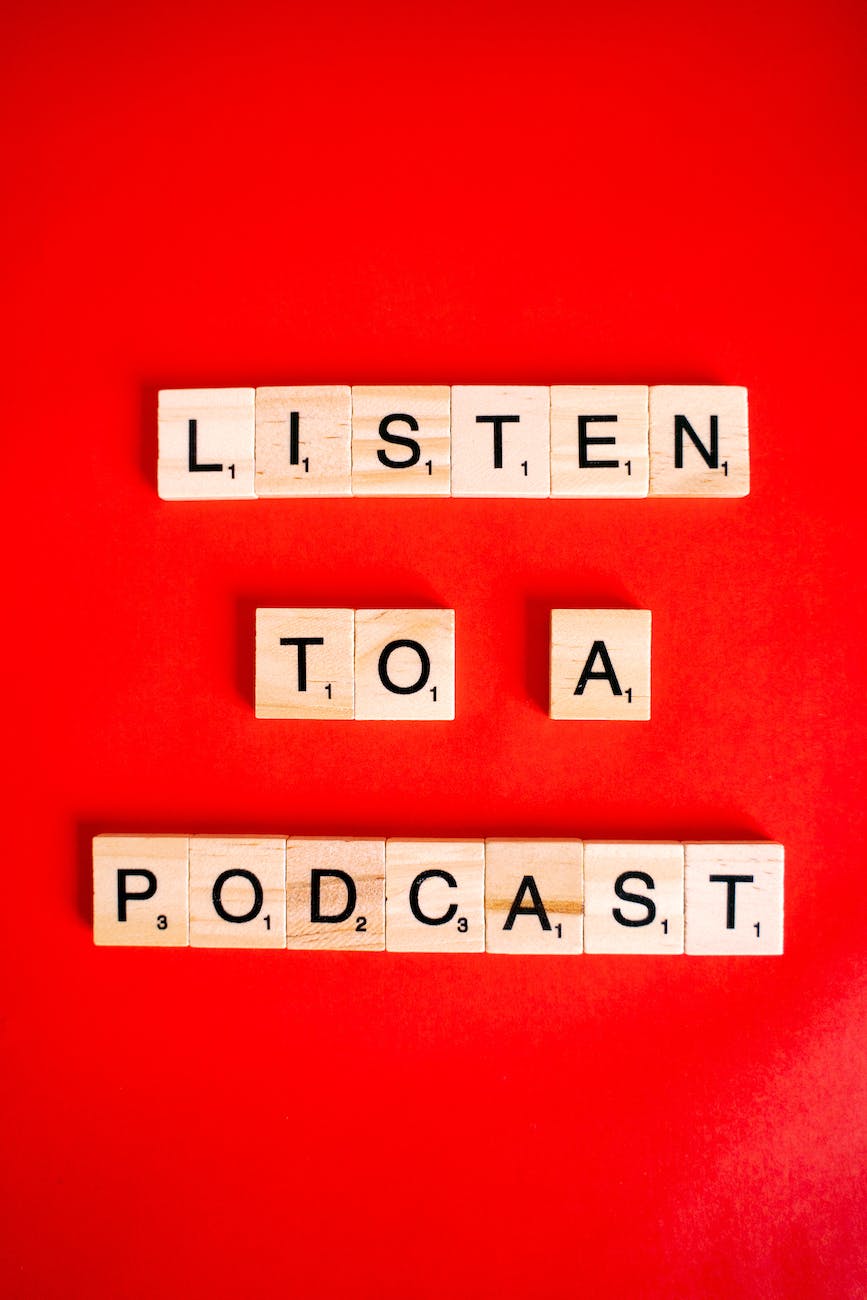
  • Use your morning or evening commute to listen to podcasts you’ve been meaning to listen to. 
  • After dinner clean-up, take 15 or so minutes to set up for the next day (pack lunch, set out clothes, organize commute bag, fill water bottle, and so forth)
  • Not getting enough fruits and veg, but pack your lunch daily? Why not start adding one piece of fruit or fresh vegetable to your daily lunch bag?
  • Already have a daily walking/running habit, but want more time to read?  Consider listening to audiobooks while walking/running.
Set your water bottle in front of your coffee station as a reminder to start your day with water, before coffee, and continue to drink more water throughout the day.

Unleash The Power of Habit STacking

If the power of association, or go-togethers, works for slowly incorporating less desirable behaviors, then it can certainly work for incorporating beneficial new habits.  Like anything else, however, it takes time, so take that into consideration.  You may successfully incorporate your new habit for several days in a row, only to “fall off the wagon” for a few days.  Therefore, be flexible and forgiving with yourself in those moments, and try again the next day.  With a fair amount of flexibility tempered with a dose of determination, it is possible to create a few beneficial go-togethers.  

Habit-stacking can be an effective way to use existing behaviors to trigger, and hopefully establish, new beneficial habits. Remember to start small, choose a realistic anchor behavior/routine, and give it your best shot.  Then, reap the benefits of your newly formed routine!

Wishing you the best in health! 

Photo by Mikhail Nilov on Pexels.com