The importance of fostering self-efficacy at any age

“Believe in yourself! Have faith in your abilities! Without a humble but reasonable confidence in your own powers you cannot be successful or happy.” –Norman Vincent Peale

Photo by William Fortunato on Pexels.com

Early in my career as an educator, I decided to complete a program that would increase my level of certification.  As part of this program, there was an expectation to complete a semester of student-teaching, however, I was already a full-time educator.  Therefore, the university “powers-that-be” decided that as an alternative, I would spend two days in a classroom and school outside of my own teaching district where I would be evaluated by a university representative and the cooperating classroom teacher.

It was established that on the first full day, I would observe the teacher and students.  Then, on the second full day, I would be in charge of all instruction while the university representative and the classroom teacher evaluated my performance. 

At first, I celebrated this plan.  I had been successfully teaching for over ten years.  My career, up to that point, had been exclusively completed in challenging classroom settings with students of multiple grade levels and various identities, such as ADHD, intellectual disabilities, as well as emotional and behavioral disability.  How hard could the evaluation be? Then, I read the fine print.

Photo by Pavel Danilyuk on Pexels.com

 This two-day evaluation period would occur mid-May. (You don’t have to be an educator to imagine what a May classroom is like.)  And, if I did not receive high marks on this evaluation, I would have to forgo my teacher salary fall semester in order to student-teach in another district.

The closer the evaluation date, the more my inner critic’s voice grew.  What if you and the unknown classroom teacher have diametrically opposed philosophies of teaching? What if the teacher doesn’t welcome/like you?  What if the students don’t like you? You know how students tend to behave with a substitute teacher. 

 On the day of the evaluation, my heart pounded, my stomach churned, and my nerves were tightly wound.  I soaked my clothes with sweat, not only because there was no air conditioning in this school, but also due to the immense pressure I felt.  By the end of the second day, I was physically exhausted from the stress.  Fortunately, I passed with flying colors, but what if I failed?  Where would I be now, and how would it have affected my future trajectory?

Photo by cottonbro studio on Pexels.com

Life is full of challenges similar, if not greater, to this experience.  I can’t help but wonder about the importance of self-esteem, self-confidence, and self-efficacy in determining the outcomes of such events.  While each term represents different concepts of “self,” the interplay of the three is one of the keys to personal growth throughout our adult years.

Specifically, self-esteem is more about personal feelings of value and worth. Self-confidence, in contrast, is a person’s overall belief in self across a wide-array of settings; whereas, self-efficacy is more context-specific. For example, a person can have a high degree of self-confidence in their role as a student, professional, or athlete, but have much lower levels of self-confidence when it comes to social situations or other areas of life.  Nonetheless, this same person could still overall have a fairly high level of self-esteem.  Why is that?

Photo by Alexander Suhorucov on Pexels.com

What is self-efficacy?

Research indicates that those with an overall higher sense of self-efficacy tend to have higher self-esteem, but what is self-efficacy? Self-efficacy, as defined by Abert Bandura, “is the belief in one’s capabilities to organize and execute the courses of action required to manage prospective situations.”  This belief in an individual’s own abilities plays a significant role in how one thinks, behaves, and feels about their place in the world.

A person with a high sense of self-efficacy:

  • Views challenges as something to be mastered rather than feared
  • Recovers faster from failure 
  • Believes they can control threatening situations   
  • Develops deep interests and stronger sense of commitment to their interests/activities
  • Are less likely to experience depression and typically have lower levels of stress.

Whereas, a person with a low sense of self-efficacy:

  • Views difficult tasks as threats, increasing their desire to avoid them  
  • Sees challenges as tasks that demonstrate their deficiencies rather than their strengths 
  • Lose faith in their own abilities after a perceived failure
  • Experience higher levels of depression, anxiety, and stress
Photo by Ketut Subiyanto on Pexels.com

Four Ways Self-Efficacy Develops


Therefore, it is important to find ways to boost self-efficacy, especially during those formative teen and young adult years.  Bandura identified four ways this can be accomplished:

  • Mastery experiences: Successfully completing challenging tasks.  While it is important to experience and learn from failure, successes boost self-confidence.
  • Vicarious experiences or social modeling: Watching another person, similar to you, complete a challenging task, increases a person’s belief that they can accomplish the same task modeling after that person
  • Social/verbal persuasion: Receiving sincere verbal encouragement raises a person’s belief that they can accomplish a challenge
  • Psychological and emotional responses: Negative emotions, physical responses, emotional state, mood, stress can all impact a person’s abilities to complete new tasks.  However, it is more how the responses are interpreted and perceived that can be a determining factor in successfully completing a difficult task.
Photo by Vlada Karpovich on Pexels.com

How to Strengthen Self-efficacy at Any age

For educators and parents, these are important considerations when interacting with children, teens, and young adults.  However, it is still important to strengthen one’s self-efficacy, even as we age, in order to better deal with new life challenges as they arise. 

Here are some suggested ways to foster self-efficacy at any age:

  •  Celebrate Successes no matter how small. Work on setting goals that force you to stretch, but are realistically achievable.  With each goal achieved, a stronger belief in your abilities is forged. 
  • Observe and connect with others. Seeing, engaging with, and modeling others who are either working towards similar goals as you, or who have completed similar goals, increases your belief that you can accomplish similar results.
  • Monitor mental health, thoughts, and emotions. Some people may need to work with a professional to manage positive mental health, while others simply need to hone a few mindfulness skills to manage thoughts and emotions. Determine tools and techniques that help manage feelings of anxiety and stress that arise during difficult tasks in order to feel more confident to achieve desired outcomes.
  • In a similar vein, practice self-compassion and positive self-talk. Words matter, even the ones silently spoken in our heads. Work on quieting the inner critic when it rears its ugly head with words, phrases, and mantras that promote self-belief.
  • Surround yourself with a solid support system who will offer genuine positive affirmations.  This can be tricky as you don’t want insincerity, flattery, and words spoken out of a sense of obligation.  Instead, connect with a few key mentors, friends, and allies who are reliable, know you, and will offer authentic feedback and affirmations.
Photo by Rebrand Cities on Pexels.com

Final Thoughts on Self-Efficacy

Traversing life’s ups and downs isn’t always easy, and it’s made more difficult for those with lower levels of self-efficacy.  By continuously developing a stronger sense of self-efficacy, the more we are able to handle life’s proverbial curve balls.  In fact, it might allow us to handle them with a bit more grace and equanimity. 

Photo by Andrea Piacquadio on Pexels.com

One pot walnut and mushroom penne, with gluten free option

“One pot meals make a lot of sense . . . because so much of what people hate about cooking is really the clean-up, the mess, the grease.”–Tom Douglas

Photo by Teona Swift on Pexels.com

Autoimmune diseases, according to John Hopkins University, unbelievably affect about 23.5 million Americans, 80% of which are women, of which I am one. While scientists are busy trying to understand the biological gender differences that contribute to this higher prevalence among females, one unexpected discovery is the contributions of the intestinal (gut) microbiome as a driver for these excessive numbers according to Scientific America. Furthermore, those identified with gut-centered autoimmune diseases, including irritable bowel disease (IBD), irritable bowel syndrome (IBS), ulcerative colitis, Crohn’s disease, and celiac disease, tend to have micronutrient deficiencies, in particular iron, folic acid, zinc, vitamins B6 and B12, copper, zinc, and vitamin D–which can really put the microbiome in dysbiosis.  

If left untreated, nutritional deficiencies can lead to an array of other health concerns, such as neurological complications, psychiatric symptoms, cancer, and bone health issues.  This is particularly of concern if adults have not been properly diagnosed.  For example, symptoms of celiac disease often vary from person to person; therefore, it is possible to go decades without identification as was the case with me.  I was in my late forties experiencing numerous unexplained, uncomfortable symptoms before one doctor finally suggested an endoscopy along with a blood test and a colonoscopy.  As it turned out, the endoscopy and blood work both identified celiac disease.

This dramatically changed my life, especially the way in which I eat.  In addition to eliminating gluten, the doctor advised a nutrient-rich, whole food diet, heavily emphasizing fruits, vegetables, whole grains (without wheat, barley, and rye), as well as legumes.  This is because I spent most of my life with malabsorption issues due to the damage of the lining of my small intestine as well as the inflammation and atrophying of the villi that absorb nutrients and minerals. Hence, the reason I was often sick as a young child.

Photo by Pixabay on Pexels.com

Specifically, vitamin D deficiencies are especially high with those who have celiac disease, which is crucial for growth of bones.  Chronic deficiency of vitamin D can lead to cancer, cardiovascular disease, and osteoporosis to name a few. Additionally, zinc is another nutrient often deficient in those with celiac disease. This nutrient promotes wound healing, virus recovery, growth, and development. 

Therefore, how I now choose to cook and eat is heavily influenced by this knowledge.  While, I can’t, per se, play catch up, I am aware of my need to focus on healthy eating and supplementing with a few key vitamins. The recipe below, based upon recipes by Simple Veganista and California Walnuts is reflective of this focus as it is chock full of nutritionally dense plant foods. 

In particular, this recipe emphasizes foods high in zinc, such as walnuts, mushrooms, spinach, and legumes as the pasta I use is made out of chickpea flour.  Mushrooms, especially those grown under UV light, are one of the few non-animal sources of vitamin D. Additionally, walnuts benefit gut, heart, and brain health while spinach (or other green vegetable I may use) is rich in flavonoid antioxidants and vitamins and possesses anti-inflammatory properties. 

With or without an autoimmune issue, we can all benefit from eating more healthy, homemade meals.  These meals don’t have to be complicated or time consuming and can even be completed in one pot as demonstrated in this recipe. Feel free to swap out the chopped walnuts with your favorite ground meat or meat alternative.  Don’t want spinach? Replace it with another favorite green vegetable. The point is eating healthfully doesn’t have to be hard, tasteless, or make clean-up challenging.  One pot and you’re done! 

From my home to yours, I wish you the best in health!

One pot Walnut and Mushroom Penne (with gluten free option)

Ingredients:

1 tablespoon olive oil

1 cup chopped onion

2 teaspoons minced garlic

1 pound mushrooms

1 tablespoon tomato paste

1 tablespoon balsamic vinegar

1 tablespoon dried oregano

1 tablespoon dried basil

¼ teaspoon black pepper

¼ red pepper

½ teaspoon fennel seed, options

1 28-ounce can crushed tomatoes

1 cup chopped walnuts*

1 cup chopped fresh or 14.5 ounce canned tomatoes

4 cups low sodium vegetable broth

1 pound penne pasta (I use gluten-free, chick-pea pasta.)

2 cups fresh spinach or other favorite green vegetable

Directions:

In a large pot, heat oil over medium heat. (Can also use ¼ cup water if you prefer oil-free cooking.)

Add in onion and garlic, saute until translucent. (If using water, you may need to add more water to prevent sticking.)

Stir-in mushrooms and cook until soft, stirring occasionally.

Stir-in tomato paste, balsamic vinegar, oregano, basil, black pepper, red pepper, and fennel, if using.

Add crushed tomatoes, walnuts, and chopped tomatoes and bring to a boil.

Reduce heat and stir in vegetable broth and pasta.

Allow to simmer and gently bubble for 15-20 minutes, stirring occasionally.

Remove from heat, stir in spinach or other green vegetable.

Allow to rest 3-5 minutes, then divide between 4 serving bowls.

Sprinkle with your favorite topping, such as parmesan or pecorino cheese, fresh parsley, and/or chopped scallions. 

Notes: 

*Walnuts can be swapped out with your favorite ground meat or meat alternative.

Surrender and Accept Change

“And when the night is cloudy, there is still a light that shines on me, shine until tomorrow, let it be.”–Paul McCartney

Photo by Zeeshaan Shabbir on Pexels.com

During the height of the pandemic, I cultivated the habit of a daily meditation practice.  In particular, I often used an app that was free of charge for those in the service careers, including educators.  In addition to offering guided meditations, it also offered short (3-5 minute) video clips designed to bolster spirits, inspire courage, and calm feelings of anxiousness.

While I can’t say I was a regular viewer of those videos, I did enjoy, and often learn, from the ones I did watch.  One video in particular, used time-lapse photography to demonstrate the ways in which light changes throughout the day.  It was one of my favorites, so much so, that I saved the link to my laptop to rewatch from time-to-time

During this video, the narrator explains the way our experience of color changes over the course of a day and the science behind it. Beyond the obvious point of light brightening at the beginning of the day and darkening at the end of the day, there is a daily light progression that we may not perceive.  It allows us to experience every color of the light spectrum within one 24 hour period.  Much of this progression has to do with the nitrogen and oxygen in the atmosphere scattering the light waves coming from the sun and making the sky appear blue.

Photo by Skitterphoto on Pexels.com

At sunrise, we see more reds and oranges, while other colors, like greens, blues, and purples, appear darker and more muted.  Then, as the morning progresses, yellow light becomes the dominant color we tend to associate with sunlight. Meanwhile, the “yellow” sunlight reflected upon the so-called blue of the sky intensifies the color of anything that is green up until noon.  Then this same light/color progression begins to reverse itself throughout the remainder of the day until the sun sets.  As the sun returns to its lowest point on the horizon, the light returns to a red-orange hue, and then gradually fades into the blues and violets associated with night, illuminated by what we perceive as the white light of the moon. 

And so it is with life. Change happens daily, from moment to moment, and life never stays the same.  Like the changing of light rays throughout the day, many of these changes are so subtle, they are often not observed in the moment, such as the growth of our children, or our own aging process.  For example, a parent may not clearly see the day-to-day growth occurring within the physical development of their own child, until one day, they happen to notice the child’s clothes are suddenly too short/small.   Likewise, we may not discern our own aging process until we see a picture of ourself from as few as five years prior, and suddenly we are face-to-face with our own change.  

As an educator, I sometimes measure life in terms of an August to July school year, rather than the typical January to December calendar year, depending upon what is being measured.  Nonetheless, I recognize, now more than ever, that time is fluid, and it matters not how I measure time because it continues to flow and stream like the daily progression of light.

That being said, these past 12 months have been full of joys, changes, and of course, challenges. Many of these changes were immediately as visible as a bright sunrise over the Ohio River. While others shifts were less visible, but nonetheless impactful. Then there were those challenging dull hue moments that accompany the colors of night that felt as long as evening shadows.  In fact, there were moments when it felt like I was riding life’s carousel, returning, again and again, to the same point as if progress was at a standstill.

And yet, now I can look back and see that, indeed, even if I wasn’t directly observing it, change was occurring.  While my eyes may not directly witness every sunrise, nor catch sight of all of  night’s blues and violets, these events still occur–without or without my direct detection. An invisible force, a guiding hand, if you will, greater than you and I can comprehend, maintains this on-going, ever-moving cycle of change.  It is ever present, even during those darkest, bluest nights when we often feel alone with the shadow-side of life and wonder if the darkness will ever abate.  

Ultimately, the darkness ebbs, and the light does begin to flow, but precisely as the light/colors of the day must go through their unique progression, so too must the solutions and resolutions to those dark and lonely life challenges.  Life, like light, will go on and will continue, along with the Source, the maker of light and life.  Therefore, we must surrender to this knowledge.  Surrender to the what is, and to what will be; surrender to the notion that we are not in-control.

The lesson for me this 2022-2023 year, and it is a tough morsel to swallow, is that the only guarantee of life, like the light progression of our day, is change.  While I can try to control certain factors, such as schedule and routine, the choices I make, or even how I measure time, for the most part, what will be, will be. 

Thus, as long as I wake up, whether I rise with the cool dark blue of the predawn hours, or I get up with the bright orange and red light of sunrise, there is a Source shining, not only within me, but throughout all of life.  Therefore, as the light surrenders, rather than falls, to its daily course of change, it is likewise my job to see the illuminated gift of each day as I ride the ups and downs of this carousel called life.  

Teachers Matter: Welcome to the Next Generation of Educators

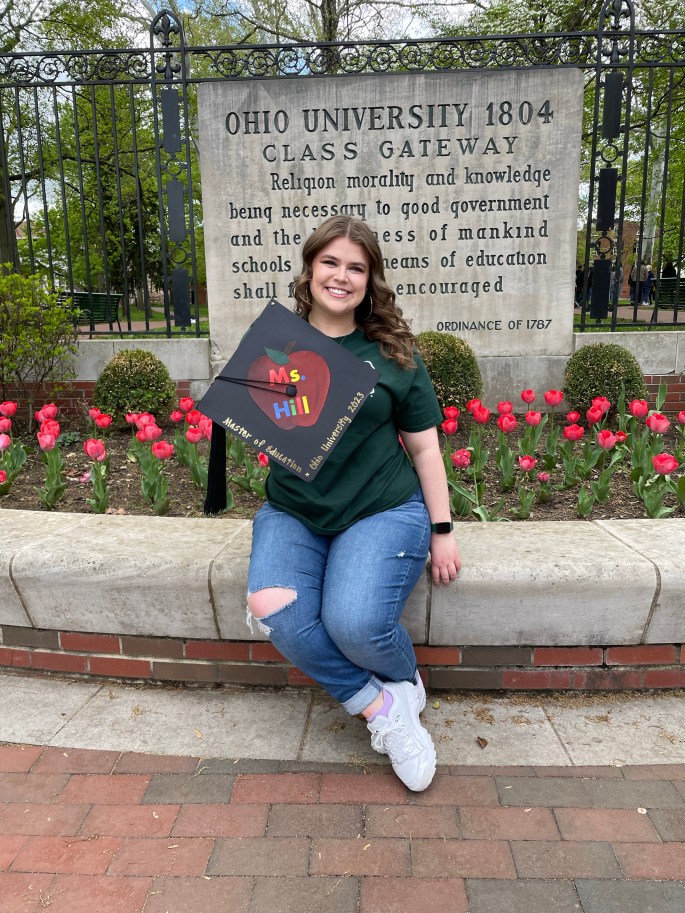
“So enter that daily thou mayest grow in knowledge, wisdom, and love.” –Alumni Gateway, Ohio University, entrance view.

May 2017.  Upon high school graduation, like many, my daughter, Madelyn (Maddie), thought she had an idea regarding the direction of her adult path.  However, once immersed in the pursuit of this path, biochemistry/chemistry, despite excelling at it, she was miserable. Midway through her undergraduate studies, after much reflection, discussion, and contemplation, Maddie bravely decided to pivot.

Her decision to change course was not a simple one.  And while I do not want to speak for Maddie’s experience during this process, I do recall her stating that the one class that truly brought her joy during her first two years of undergraduate work was an art course.  Art was her minor, but in the decision to switch, art became her major, and biochemistry/chemistry became her minor.  

Like all change, there was some catching up to do and several adjustments, especially since she switched locations of study. Then COVID, and the ensuing pandemic, hit, impeding progress as the railways of education greatly slowed in an attempt to switch tracks.  This meant virtually navigating coursework meant to be completed in an art studio.

As the pandemic’s impact grew, the staggering blow of life-interrupted affected all, especially those between 18-25 years.  Daily living went upside down and sideways for this age group as the so-called normal way of interacting and connecting with friends, family, and mentors was often lost during times of isolation.  Even as restrictions gradually eased, those last two years of undergraduate study, while simultaneously working part-time, were not the typical college-age experiences for Maddie and her peers.

In the shadow of the COVID cloud, Maddie was also reflecting, examining, and embracing a greater understanding of herself to best determine what her next steps into adulthood would look like.  Again, I cannot speak to her internal experience, but from the outside, her contemplation process appeared deep, honest, and, at times, painful.  I wanted to help ease the discomfort of this transitional process, but as with any metamorphosis, only the person within the cocoon can undergo the change.

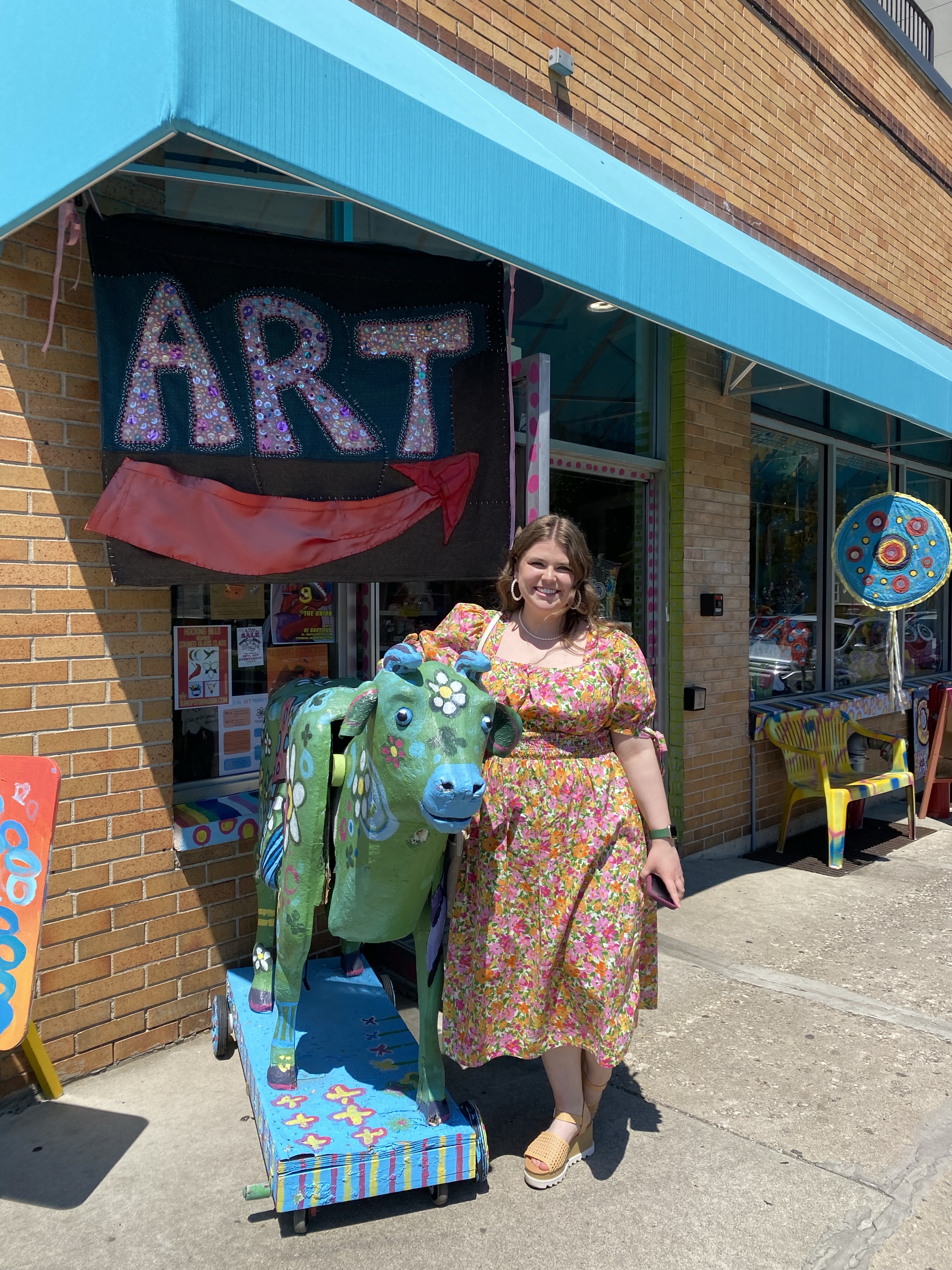
Beside a bright green cap, you will see Madelyn looking up at us with a glowing face of pride.

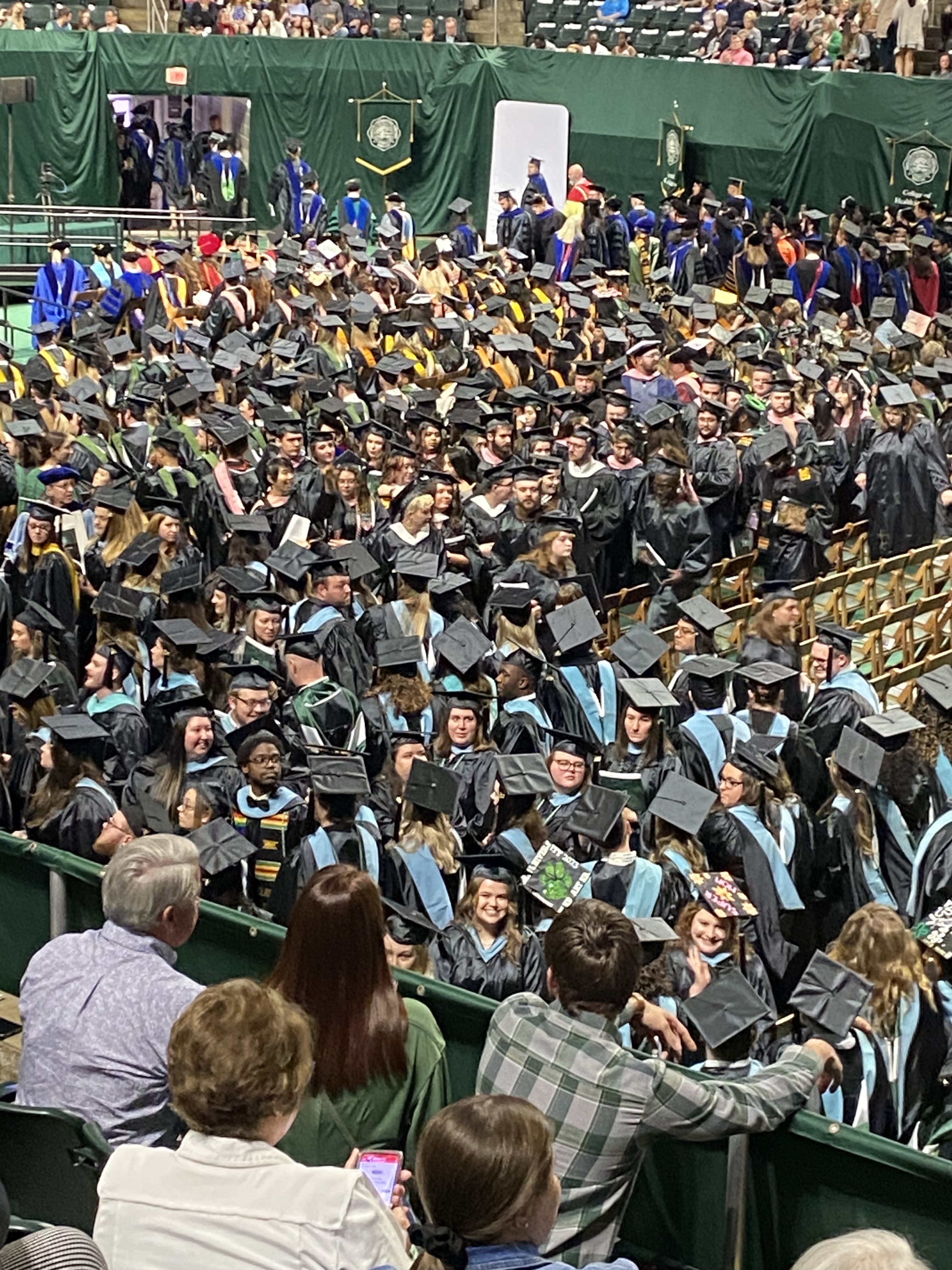
May 2023. John, my husband, and I waited as the candidates for Doctoral and Master’s degrees from Ohio University, our alma mater, made their way into the Convocation Center.  It was a long procession with Patton College of Education entering as the next-to-last school of candidates. Finally, we spied Maddie with a smile for miles, waving at us, face glowing with pride.  She had not only emerged victorious from the cocoon of young adult transition, but also, she had successfully earned a Master of Education degree during this transformation and appeared ready to take flight.  I hoped that like a sponge, she soaked up all the joy, hope, and satisfaction relegated to such a momentous occasion.

Celebratory milestone moments of life are few and far between.  These cherished junctures of life mark a moment in time when one can say, “I did it.  I put in the work.”  Or, as Maddie likes to say, “Nevertheless, she persisted.”  And persist, she did.

And so, as John and I sat there, tears frequently slipping out of our eyes, I reflected over the ways in which this moment could potentially impact her life.  You see, our daughter is now a fourth generation educator, the ninth teacher of our collective families.  Education is not an easy career, and often the rewards are not, per se, tangible–at least if you measure monetarily.  Instead, the rewards are more intrinsic.  It is a calling to go forth and make a difference in the lives of others.

It struck John and me that these hundreds of candidates, no matter their field, present in full regalia, were there, in part due to their past teachers.  In fact, though teachers are often at the bottom of the pay scale, there isn’t a single adult, or child over the age of five, whose lives have not been impacted by a teacher.  As with any field, there are always going to be some bad apples, but the dynamic teacher, the teacher who cares, who is passionate about his or her students and subject matter can truly make a difference, and, in some cases, be transformational.  Call me biased, but there is not a doubt in my mind that Maddie will be the latter.

I have often shared a story about my Papaw.  He once pulled me aside and said, “Stethie,” (that is how he said Stephie), “Your ol’ Papaw only got a 5th grade education.”  

Papaw then spoke proudly of his sister who had gone to college, earned her degree, and went on to become a teacher. 

“Don’t be dumb like your ol’ Papaw.  Get your education.  Go as far as you can with it.” 

He went on to encourage me to be a teacher, like his sister, and later, his daughter, my mother.  

“There’s no greater job.”

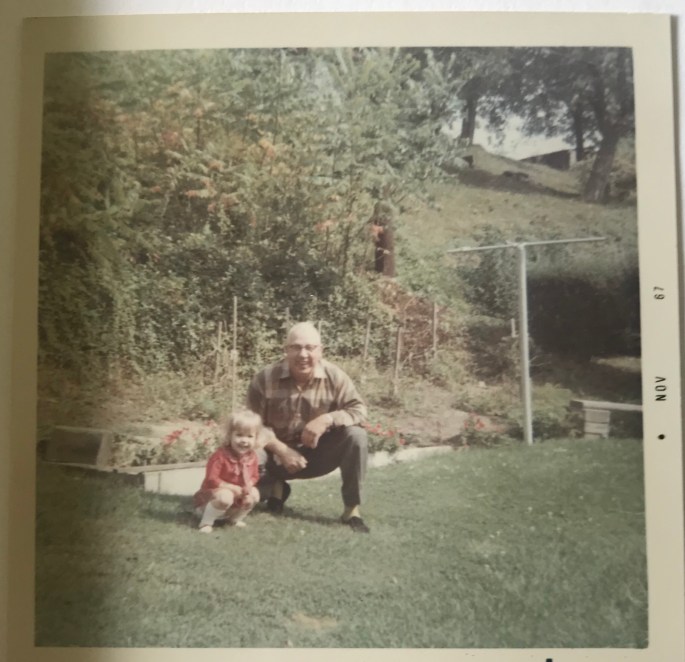
Papaw and me when I was around two years old in his backyard in front of his garden.

Little did he know that I would not only go on to become a teacher, but also marry an educator who was from a family of teachers.  Therefore, I can only imagine the smile on Papaw’s heavenly face, knowing his belief about education still inspires and motivates today.

This story will be published in May on the final day of National Teacher Appreciation Week. Numerous colleges and universities will be graduating more educators around this same time period, but the fact remains that the long-standing shortage of teachers that has been increasing since before the pandemic, will continue to grow. In fact, according to the Economic Policy Institute, this is not a result of the number of qualified candidates as much as it is the working conditions and lack of compensation.  

I am hopeful this will change for my daughter and her educational peers, but I am often discouraged by current political culture and societal trends, especially with regards to the importance of education.  Nonetheless, Madelyn comes from a long line of people who knew, know, and believe(d) in the merit of quality education and the impact of a positive teacher. My prayer is that she, along with the newest class of teachers entering the field, will proudly stand on the shoulders of those who came before them, and bless this world and its children, with their many gifts in even greater and more innovative ways than their predecessors could have ever dreamed.

“So depart that daily thou mayest better serve thy fellow man, thy country, and thy God.”–Alumni Gateway, Ohio University, exit view.

Sawubona: How this one word could change the world

“Every individual matters. Every individual has a role to play. Every individual makes a difference.”–Jane Goodall

Photo by Savvas Stavrinos on Pexels.com

Listening to a podcast recently, a word piqued my curiosity.  Sawubona.  The speaker stated that this term had a moment of notoriety in the 1990s in the business world based upon a book written to encourage companies to solve group problems through various systems of learning.  This may explain why I never heard of it up until now as I was, and still am, in the field of education as opposed to business.

As I understand it, at its most basic level, it is a Zulu expression of greeting, another way of saying “hello.”  However, as heard in the podcast, and confirmed in later reading, its meaning is far from a common greeting.

Depending upon the source read, Sawubona, means “I see you,” or “We see you.”  In response–again, depending upon the source–the other person greets, “Yebo, Sawubona,” (Yes, I/we see you too), or “Shiboka” (I exist for you).  Regardless, it is the seeing of the other person and acknowledgement of existing to help the other, that most stood out to me. 

Photo by Sora Shimazaki on Pexels.com

Quite often, in our morning rush, our greetings and responses are typically short, polite, and given with a smile as we promptly move on to our work and/or day at hand.  Certainly, there are occasions when we pause long enough to ask about a specific event or person, but as our schedule often demands, we listen, long enough to be polite before moving quickly on, without really looking.  

I know I do this, and I feel fairly certain that I am not the only one.  Therefore, I do not want the thesis of this piece to be interpreted as finger wagging or shaming.  Instead, I hope to provoke some thought regarding the importance of seeing our shared humanity in one another and existing in a state of respect –even if we don’t see eye-to-eye with everyone with whom we meet.

Photo by Yan Krukau on Pexels.com

Respect, according to Merriam-Webster, is derived from the Latin root, respectus, which means, looking back (at), refuge, regard, and consideration. The beauty, to me, of Sawubona is in the underlying message of regard for the other person. I SEE you is such a powerful acknowledgement. It is a way of communicating that I SEE (regard/consider) your uniqueness, your talents, and your gifts, no matter the differences we may have.

I once heard a story of a farmer who espoused hate towards a certain political figure.  As it turned out, the politician asked to visit the farmer for a conversation.  The farmer told the politician’s team that he felt reluctant for the politician’s visit because the farmer espoused a certain faith, and given the public servant’s political status, the farmer assumed the politician could not possibly have a faith affiliation.  Nevertheless, a meeting was arranged, and the two men of opposing sides walked the farmer’s land together as the farmer talked and shared his concerns about his way of living.  The political figure looked and listened. 

Later, as the conversation progressed, the two men ended up in the farmer’s house, drinking coffee and learning more about one another.  When the farmer realized that he, indeed, shared the same faith practices as the politician, he called a few of his friends to join in the conversation.  As the story goes, upon the politician’s departure, the two men shook hands, but the farmer made it clear that he still would not vote for this political figure.  However, he added that he was surprised to learn the two of them had more in common than he realized.  He further invited the politician to return to his home at a later date, so that they could continue their conversation.

Photo by Kamaji Ogino on Pexels.com

Some might ask what is the point of the story if the farmer was not convinced to vote for the politician. Instead, I think it makes a case for the idea of Sawubona. Two men, on opposite sides of the political fence, spending time with one another, asking questions, listening, learning, and finding some common ground in their shared human experience is a way of conveying consideration or regard for one another. They didn’t have to agree on all points in order to respectfully get along.  In fact, as it turned out, the politician would later reach out to the same farmer when certain legislation was being considered that would have affected the farmer and his community in order to gain a greater understanding of the potential impact.

Reflecting on Sawubona is a lesson of seeing others and being seen by others. It is understanding that we do exist together for one another.  We may have our differences, but it is those collective differences that can create a community of support.  Each individual has their own gifts and talents that we bring to the proverbial community table.  And, thank heavens, because there are so many skill sets of others upon which I rely in order to live, work, and participate in many other daily activities. 

When we truly take time to see others, we can see the common struggles, celebrations, and life experiences. We can feel compassion for another’s suffering, and we can feel the joy of their milestone celebrations. Furthermore, we can appreciate the gifts and talents of others, even those with whom we may disagree on certain subjects. 

Photo by fauxels on Pexels.com

In the end, I am not suggesting that the idea behind Sawubona is easy. Instead, I encourage us to think of Sawubona as a practice. A practice in which we take time to look others in the eye more frequently when greeting in order to make others feel seen.  Additionally, it is a practice for when we find ourselves feeling angry or incensed by an opinion different from our own, to challenge us to pause, and look more closely for the common human thread shared with that person of opposition.  

One word cannot solve all problems, but if we begin to look for more Sawubona moments, it might allow for more opportunities–like the farmer and the politician–for listening, learning, and finding common ground.  When we feel seen/heard by another person, it makes us feel respected, and that feels good.  Therefore, imagine the positive reverberations that could be created within our own local communities if we began to offer that same Sawubona feeling to even one person per day.  It is certainly worth considering. 

Photo by Pixabay on Pexels.com

Move into Health, Part 10: Create a fitness plan that meets you where you are

Photo by MART PRODUCTION on Pexels.com

I came across a quote only days after my recent ACDF surgery by Oprah Winfrey that read, “Challenges are gifts that force us to search for a new center of gravity. Don’t fight them. Just find a new way to stand.” It accurately summed up what I have been trying to do as I recover.  Find new ways to stand, sit, sleep, work, walk, etc. . . Of course, I am blessed that my surgery did not require more than one night’s stay in the hospital, and wasn’t more serious.  Nonetheless, surgery is no joke and recovery is for real.

My movement was limited for days following surgery.  I had to learn to turn at the waist, rather than use my neck. Additionally, I had to focus on using my stomach muscles to get in and out of bed to avoid straining my neck. And, all forms of exercise, except for walking, was eliminated per staunch medical advice that my family took to heart with frequent reminders. (They didn’t need to worry, I truly wasn’t feeling like doing much during those first few days.)

Photo by SHVETS production on Pexels.com

Walking, I was told by the release nurse, was to be completed every hour, even if it meant only completing one lap around the dining room table before I sat back down.  However, I was encouraged, once I got past what the nurse called the “recliner days”–days when swelling and inflammation (aka pain) was at the highest level–to try to walk 10-15 minutes each hour.  I had just completed a half-marathon, albeit slowly, only weeks earlier, and now this was my new fitness plan. What a shift!

So why was walking so important, even on those days when I didn’t feel like moving?  Well, it turns out there are numerous valid reasons according to my doctor and as described in countless studies out of the Mayo Clinic, University of Wisconsin, and in a 2020 US News and World Report article. Here are a few of the reasons cited:

  • Prevention of post-surgery complications
  • Enhances blood flow throughout the body
  • Increases the flow of oxygen throughout the body
  • Accelerates wound healing
  • Strengthens muscles and bones
  • Improves digestion (aka ability to poop) and the function of urinary tract while reducing bloating and gas
  • Reduces risk for blood clots, infections, and lung issues, such as pneumonia
  • Boosts mood and self-esteem  

Why do I share all of this?  To make the point that my old fitness plan was, and currently is, no longer appropriate for me.  I had to adopt a fitness plan that meets my body’s needs where it is.  Therefore, my current movement plan consists of short segments of walking completed throughout the day as I remain home recovering, which complies with medical advice from my doctor and best meets the needs of my body.  

Gentle walking on my driveway or in my house is part of the slow and steady recovery plan.

At the time of writing this, I am entering my third week of recovery. After my two-week, post-operative appointment, I now have permission to begin to gently explore a few  strengthening exercises and stretches that can be completed without forward bending.  Additionally, I can begin to explore my neck range of motion with a few doctor approved neck stretches and strengthening exercises, but nothing more.  Slow and steady helps me find my new center of gravity.

Due to this experience, I want to continue to encourage you, Dear Reader, to carefully plan how you will enter, or reenter, your own exercise/movement plan this spring.  Create a plan that meets your needs, and commit to doing it–even if you don’t “feel like it.”  Personally speaking, I could feel angry and convince myself that if I can’t exercise the way I once did, then I won’t do anything at all. After all, it would be easy for me to sit around all day and use my surgery as an excuse to do nothing.  Conversely, I could try to push too hard with the delusion that, “The staff doesn’t really know ME,” and begin overdoing it with images of former, younger me dancing in my head

Instead, I have accepted the reality of my situation, rather than reject the medical advice I have been given.  They are the professionals, not me.  I have to meet my body where it’s at when it comes to fitness.  Sure, I have dreams of hiking again, walking (or jogging) the entire bike path of Ritter Park, and even practicing yoga with regularity, but none of those will ever happen if I don’t recover first.  And my first step in recovery is walking, so my body can focus on the miraculous work of healing.

Welcome walking into your life! You might be surprised by the benefits!

Therefore, no matter where you are, what shape you are in, or any other personal obstacles that you may be facing unbeknownst to me, I still encourage you to never give up on regularly incorporating movement into your day. Avoid the temptation to make excuses for yourself, but at the same time, don’t start off with a complicated plan.  Talk to your health care provider, and then start.

Start where you are.  If you don’t regularly move, then begin, like me, with short walks around your home, or up and down your driveway or sidewalk.  Do that 3-4 times per week.  The following week, add one more lap, or add five more minutes to your walk, and complete it 3-4 times per week.  Gradually, you will build up your time and the distance covered.  By keeping this up over several weeks, you will create the habit of moving.  Your body, lungs, and heart will be stronger, and I wouldn’t be surprised if you find you are reaping other unexpected benefits!

Think about this, my friends, if walking is scientifically established as one of the best tools for recovery after surgery, what can it do for you?  Don’t beat yourself up because you are no longer what you once were, you didn’t exercise over winter due to the cold weather, you’ve never really tried to exercise previously, or you’re somewhere in between, like me.  Start where you are at, and move one step at a time.  Rome wasn’t built in a day, and neither is fitness, but you have to take the first step, and spring is a great time to start.  

Here we go my friend, take my hand, let’s find that new center of gravity, and cross this bridge together, one healing step at a time.

Open the door to spring, and find your new center of gravity one small step at a time!

A Lesson on the Power of Positivity

Lift up your two hands; remember one is for helping others while the other is for helping you.”–Israelmore Ayivor

“So, what do you do?”

Her name was Pam.  I did not get her last name, but she was one of several nurses with whom I came into contact during my recent stay in a local hospital due to a surgical procedure.  Pam was a competent, no-nonsense, veteran nurse, and she was asking me this question on my second day when my thinking was a bit less clouded by anesthesia and pain meds. 

“I am a teacher, and I write,” was my simple response.

She asked several more polite questions regarding teaching while taking my vitals and dispensing meds; in turn, I asked about her work experience.  

Photo by RF._.studio on Pexels.com

Then, she asked what I wrote about it.  I tried to describe the various topics about which I most often wrote, and I ultimately summed it up by explaining that I tried to focus my writing on the positive topics, especially the ways in which readers can positively impact themselves and/or others.

My response really got her talking about the fact she believed there was too much negativity put out into the world.  Pam then invited John, my husband, and me to imagine what would happen if people would take time to say one nice thing to another person?  She went on to ask us to further envision those people, in turn, saying one nice thing to another person, and the way in which the chain of positivity would most likely continue.  

 Then, she looked at me and implored, “That’s what I want you to write about next.”

Photo by Binti Malu on Pexels.com

Pam made an excellent point. There is way too much negativity in the world, and I do not want to disappoint Pam.  That is because she, along with Jennifer, Natalie and Brittany took excellent care of me immediately following surgery.  However, Pam spent the longest amount of time with me over those two days, so this piece is written, not only in honor of Pam, but also in honor of all those who positively impacted my recovery.

 Based upon my interactions with Pam, her professional conduct exemplifies what she was preaching to me. Specifically, when Pam first took charge of my care, when I was transferred from the post-surgery area to a hospital room, she insisted that I walk from the stretcher to the bed in the room.  Of course, she guided and steadied me, as I was still strongly under the influence of anesthesia and pain meds, but her insistence established a positive tone for my recovery: the affirming belief that I could take ownership of my recovery.

Pam urged me to walk within the first 30 minutes of arriving on the floor.  Again, she steadied me.  When I asked how far I was supposed to go, she did not limit me.  In fact, she told me to choose my directions and go as far as I wanted to go within the confines of the floor.  Therefore, I felt compelled to go the full length of my boundaries, albeit ever-so-slowly and on wobbly legs initially.

Photo by Brett Jordan on Pexels.com

Those first walking efforts were then met with praise and encouragement.  Phrases like, “You’re doing great,” or “That’s good,,” buoyed my bruised spirit.  Furthermore, when I apologized for moving slowly, she kept encouraging me.  When I worried about being so unsteady, she instructed me to look straight ahead in the direction in which I was moving.  

Furthermore, Pam (and the rest of the nurses) insisted I do as much as I could on my own.  She did not hold onto me long, once my muscle memory of walking returned.  To be sure, her hands were at the ready each time I waivered a bit, but she always maintained a stance that facilitated as much independence as I could muster.  

Of course, I fully admit several of my memories are veiled under a haze of postoperative fog.  Nonetheless, the ones that remain, I believe, are stored there because of the positive efforts of nursing staff, family, and friends.  

In fact, several studies validate that the way in which a person reacts to specific events or situations determines, not only one’s ability to commit to memory what happened, but also affects one’s ability to recall that event/situation later.  What’s even more interesting is that memories of emotional events are more vivid and remain more accurate as time passes.

Photo by Anna Shvets on Pexels.com

This explains why, when I was first separated from John and my daughter and taken to a pre-operative area, I began to feel real tinges of fear.  I was left alone in a curtained off corner with operating staff moving all around while other patients were being wheeled by for surgery.  Furthermore, I did not have my glasses on, so my vision was not clear. Panic began to set in, and slow tears began to trickle out of my eyes. 

Two distinct and separate memories remain from that time-period.  First, there was a female who kept looking at me from across the room.  I have no idea her position, but suddenly she walked over to me with a small box of hospital-issued tissues.  I do not remember precisely what she said, but her voice was soothing, her eyes were kind, and her gentle pat with her gloved palm communicated understanding.

In contrast, several long moments later, the anesthesiologist arrived with a nonplussed look that quickly turned into a look of frustration when he heard that I had Raynaud’s disease, which could potentially affect the arterial line he needed to draw for the surgery.  While I knew it wasn’t my fault, as I had repeatedly shared this information throughout the numerous paperwork, somehow the information had missed him.  Immediately, my level of fear increased, not only because I irrationally felt he was angry with me, but also because my brain began to overthink about the two IVs, arterial line in my wrist, and a slew of other needles that would be involved during the procedure.

The unknown female in the pre-op room actions versus the aggrieved attitude of the anesthesiologist, perfectly illustrate Pam’s point.  If you spread negativity, even unintentionally, it lingers with others, and can potentially spread.  Likewise, when you offer others kindness, generosity, patience, and positivity it ripples out in waves across humanity; however, instead of stirring up little fires of fear, those positive qualities quell the fears and anxieties of troubled hearts, and perhaps, offer hope to those in need.

Thank you, for the exemplary reminder, Pam.  Wherever you are, may your day be filled with positive moments worth remembering in the same way I will remember you, and the rest of the nurses, who not only cared for me, but chose, and continue to choose, to positively impact lives.  Thank you.

Photo by alleksana on Pexels.com

Trusting before a surgery

Photo by Jonathan Borba on Pexels.com

A quote attributed to voice actor, Billy West, states, “Life is for living.  I was a little scared before surgery ‘cause of the release you sign that says there’s always a very small percent chance that you’ll die during the operation.”  This quote pretty much sums up how I feel as I write this piece the morning before I have a fairly common neck surgery.  I am a little scared, but I am going to trust.  Trust my surgeon; trust that Divine Providence will guide his hands, eyes, and mind; trust the surgical team that will be in there with me; and be at ease knowing I am loved and supported by a community of family and friends.

As fate would have it, I was recently listening to a guided meditation designed to focus on my breathing in order to reduce anxiety. The meditation teacher ended the session by explaining that if you mix up the letters of TRUST, you can create the word, strut.  Therefore, by trusting in the Divine, you can “strut” into the future in the confidence that you are held and beloved.  Needless to say, I love word-play, so that idea grabbed my attention, leading me down a further path of thought . . . 

Photo by Sharefaith on Pexels.com

It led me to reflect on a popular acronym for the word, FEAR: false evidence appearing real.  The closer to the date of my surgery, the more real the fear has felt, which seems so silly to the logical part of my mind.  Honestly, I think a large part of it has had to do with the overwhelming task of preparing to be out of commission for at least four weeks.  This is due to the fact that I am not naturally organized, so to try to think through all the different details that needed to be addressed, especially with regards to my classroom as well as several other items, seemed daunting.

Another reason I think the feelings of fear increased was because well-intentioned friends and family members began asking, the week before my procedure, how I felt.  Up until they started asking, I hadn’t really felt/thought too much about the procedure.  I mean, after all, if you don’t think about it, it can’t hurt you, right?!?!

Photo by Pixabay on Pexels.com

Seriously, I knew that those who asked were sincerely trying to connect with me, or let me know they cared and/or were interested in my well-being.  For that, I am eternally grateful.  Which led me to create my own word-play-acronym for FEAR:  friendly embrace affecting (my) resistance. 

For weeks, I had resisted thinking/dwelling upon the impending procedure.  Heart-felt questions expressed by loved ones allowed me to face my resistance to the surgery, express my feelings (fairly) openly and honest, and offered me a metaphorical embrace of support, care, and/or love–which is often hard to accept when you are used to being the one who gives it to others.

In fact, this FEAR–friendly embrace affecting (my) resistance–has allowed me to see that if I am going to give to others, I have to humbly accept when others give to me, even if it feels uncomfortable.  For example, I had a student stop me after class and ask me to not worry about them while I was gone.  She offered me a note, along with a beautifully handwritten prayer from her Baháʼí faith.

 “Let us pray for you now,” she said.  I was moved to tears.

A beautiful prayer from the Bahá’í faith written by a student for me.

Our school and church priest stopped me to say that he would be praying for me.  I didn’t even know he knew!

A parent filled a paper box to the brim with individually wrapped items for my post-surgery care, complete with four night shirts with buttons up the front, so as to avoid having to pull clothes over my neck incision.  There were teas, chocolates, books, a coloring meditation book created by her son’s uncle, colored pencils, a massaging tool, cold/hot pack, and several other considerate touches that I would not have thought of.  Plus, she showered me with messages of encouragement.  This was yet another example of a friendly embrace affecting (my) resistance.

A very thoughtful care package.

My daughter asked the university in which she is enrolled in a 12-month, fast-track graduate program, for permission to be absent for a couple days to help me out.  John, my husband of nearly 34 years, took the entire week off work, something he would never do under normal circumstances.  My parents have been praying, my siblings have been texting/sending funny memes, friends have been reaching out and sending both text and video messages.  All friendly embraces affecting (my) resistance.

So about the fear . . . yes, it is present as I write these words.  Yes, I feel it in my gut and in my slightly elevated heart rate.  However, by the time you have read this, Dear Reader, I will have TRUST(ed) the Divine and the many guided, well-trained hands of the surgical room, and I will have STRUT(ed) into my recovery phase.  It will not be an easy process, most likely; however, any kind of healing process is slow and full of challenges.  Nonetheless, “I will FEAR no evil,” and I will continue to try my best to allow those friendly embraces to affect (my likely) resistance along the recovery route. 

Photo by Andres Ayrton on Pexels.com

Detaching from the illusions our attachments create

“Time is an illusion.  Lunchtime doubly so.–Douglas Adams

A coworker and I were talking after school one day about plans for the work week, the schedule, and what we were planning.  It was a brief exchange as he was preparing to leave for the day, and I was settling into grading papers. 

 I jokingly said, as he headed out of the door, “You know it’s all an illusion.  We can plan all we want, but who knows how it will really unfold.”  

Photo by energepic.com on Pexels.com

This made us both laugh and shake our heads because we both know as teachers no matter how much thought, effort, and time we put into planning for our students, things rarely go as predicted.  Schedules can change and/or students’ level of attention, understanding, or even behavior can completely alter our well–intended plans, creating the need to pivot quickly, adapt and modify plans.

Sure enough, the very next day, plans for the week had changed.  We rethought and restructured our plans.  The next day arrived with another change.  Before long, how the week actually turned out was very different from how it was originally conceived.

Photo by Kobe – on Pexels.com

I share this, not as a point of negativity, but rather as a point of reality.  Rarely does life unfold as we plan for it. Nonetheless, I still tend to cling to schedules and routines since I am not naturally organized.  However, I have learned to embrace the word “flux” over the years. In fact, I am realizing that my attachment to “how things should be” is all just one big illusion.

Furthermore, my illusion is due to my attachment to “control,” which, in fact, is also an illusion.  The desire for control is a gripping cycle for many of us.  Our attachment to ______ (how things were, how they should be, or how they could be) reflects our wish for control.  It also helps to create the illusion that we will be happy if everything “goes according to plans.”  However, when things don’t go as we had hoped, we can feel downhearted or disappointed. 

Photo by Ketut Subiyanto on Pexels.com

However, it’s not just schedules and outcomes to which we attach ourselves.  We can attach ourselves to friends, family, groups, teams, circumstances, positions, things and so forth.  We begin to identify with those people, those groups, those situations, and so forth.  Even our address becomes a point of attachment.  

Unfortunately, these attachments can sometimes allow stress to enter our lives when/if we lose one of these identifiers, things, or when circumstances change.  Sometimes a change can become nearly debilitating due to our grief and sense of loss.  Other times, our anxiety spirals out of control from the pressure we feel as a result of expectations caused by our attachments.

Photo by Suzy Hazelwood on Pexels.com

Again, none of this is inherently bad.  We are all human beings, experiencing the very human need for belonging, validation, and contribution.  However, it might be helpful to also allow for some amount of detachment as we move through life.  This is because when we attempt to only hold on to what feels familiar and comfortable, we can sometimes prevent ourselves from experiencing a newfound way to experience joy and happiness.  Therefore, it is worth remembering the importance of letting go, or at the very least, holding loosely, in order to allow for new, unimagined life experiences.
I was thinking more about this attachment-control-illusion cycle as I went for my weekly long run one morning along the tree lined paths of Ritter park. Jogging alongside those noble limbed sentinels, I realized that trees are not attached to one another.  Instead, they function independently, even though they are part of a collective landscape.  

Photo by Artur Roman on Pexels.com

Numerous dogs, people, and other creatures move in all directions under the shelter of the branches.  Chunky squirrels and round robins flit up, down, and all around outstretched tree arms. All the while, neither do the trees attach their identity to or make plans for any of this, nor do they try to control it.

The trees did not seek my attention, and yet I couldn’t help but notice them.  Neither did the trees seem to need my praise or approval.  Nonetheless, my mind kept marveling at the way their leaves were beginning to bud while at the same time birds were creating neighborhoods of  nestled nests. Likewise, without being attached to a certain group, I could still identify the various types of trees. 

The park trees, like all trees, are independently rooted in the soil and work with the circumstances in which they find themselves planted.  They do not, per se, have expectations or plans for how their growing season should unfold.  In fact, they can’t even count on predictable circumstances from year to year, so changeable is the weather.  

Photo by Mauriciooliveira109 on Pexels.com

No matter their situation, and without any attachments or attempts to control, trees still manage to contribute. They act as a refuge for food and shelter for birds and other animals/insects.  During warmer months, their well-dressed branches provide cooling shade for people and creatures alike. Trees even offer opportunities for raucous fun as squirrels chase one another all around their trunks and branches while birds play hide and seek, singing songs of tidings.

Near the end of my jog, the sun began to burn through the tapestry of clouds.  As the glistening light gradually emerged, the overcast dullness gave way.  Instantly, I felt less encumbered by tired legs, and a renewed vigor filled my heart and lungs.  

Photo by Adam Kontor on Pexels.com

I was then reminded of how cloudy our thinking can become when we fall prey to our self-inflicted illusions. Furthermore, I began to see that there is no pushing through attachments and the illusions our attachments create.  Rather, it is a practice we must intentionally pursue through patience, perseverance, and most of all gentleness, which is not easy. However, the more we can recognize when we are attaching, the more often we may be better able to lightly detach. 

Personally, I still like predictable plans as well as my coworker.  Nonetheless, similarly to the way the sunlight lifted my spirits as I jogged, I know that the more we can detach or grasp less to our so-called illusory plans/attachments, the more we can experience unexpected, and dare I say, unplanned, moments of joy! 

Photo by Sebastian Arie Voortman on Pexels.com

Use the RAINDROP technique to weather life’s emotional storms

“Peace is this moment without thinking that it should be some other way, that you should feel some other thing, that your life should unfold according to your plans.”–Dorothy Hunt

Several months ago, during the fall of the year, I was walking on a local, circular path.  Suddenly, I heard the loud rev of an engine.  VROOM!  I saw a large SUV type vehicle, careening, plowing, and then swerving off the road, straight towards the path over which I walked.   

My heart began to race, and my thoughts quickened, trying to process what I was witnessing.  The SUV drove along the slope that forms a ditch line surrounding the path.  KREECH! The sound of metal collapsing was ear-splitting as the vehicle crashed into a heavily staked, metal line, thick and entwined like a rope, that supported a power line pole.  Fear raced through my veins as I ran towards the vehicle to see if the person inside was ok while grabbing my phone to call 911.

Photo by Mike B on Pexels.com

I find this event to be an excellent illustration of what it means to witness.  I was the bystander.  My senses heard, saw, and even felt this scene as it unfolded in a surreal manner.  This same skill of witnessing as a bystander is a tool we can use to help navigate difficult emotions/feelings when they come crashing into our life path.  And, let’s be honest, difficult emotions can be a regular occurrence at all stages of life.

From anxiety to depression to life event stressors and work stressors, I daresay none of us are immune to challenging emotions such as anger, insecurity, sadness, fear, and numerous other less-than-kind emotions.  This is where tapping into the bystander part of the brain can help us navigate through the mental storm clouds with a technique called RAIN and its counterpart DROP, acronyms first coined by Michele McDonald, a mindfulness teacher.

Photo by Ron Lach on Pexels.com

There are times when we may not initially recognize that our emotions/feelings are impacting our thinking, but with a bit of practice, we can begin to recognize that they are.  Actions such as, lack of focus/feeling distracted; binge eating/drinking/scrolling/watching; avoidance/procrastination, and so forth can be indicators that something is awry.  Even seemingly positive actions can be a side effect of not-so-great feelings trying to bubble to the surface, such as busyness; continuously working; over-exercising; frequent napping, and so on.

This is when the RAIN technique can be effective.  RAIN gently asks us to become a bystander in our minds to determine what we are feeling or perhaps trying to avoid feeling.  Then, it takes us through a process of reflection to bring us to a point of compassionate self-awareness.  Like all techniques, however, it takes practice, and it is not a one-stop-fix-all solution. However, it can be one more tool in life’s toolkit for managing difficulties and suffering.

Here are the steps, based upon my interpretation and personal application of the technique. However, it is worth noting that there are numerous free apps, videos, books, and websites that offer guided versions of this technique that can be quite helpful, especially in the beginning.

Recognize what is going on and name it. “I’m feeling angry, hurt, lonely, sad . . . .”  Then you might also notice if you’re judging those feelings or feeling guilty for having the feelings in the first place.

Acknowledge and Allow. Once you’ve named it, begin to witness your feelings as a bystander would at the scene of an accident. If thoughts pop up that tell you that “shouldn’t feel this way,” gently tell yourself that it is ok to have this feeling.  

Investigate your emotion/feeling with curiosity and interest minus judgment or blaming self or others. What are you feeling and where are you feeling? Similarly to the way I experienced the accident–first in my heart, next in my mind, and finally in my body–where in your body do you feel this emotion? How is it affecting you?  Do you want to cry, eat, move, hide, nap, and so on?

Natural Awareness, Non-identification and Nurture.  This is where you can tell yourself that just because you feel it, doesn’t mean it defines who you are.  Instead, use this as a lesson for how ________ (name the emotion) feels like, similar to the way you feel symptoms of a cold, the flu and so on. Then, take time to offer yourself compassion just as you do when experiencing a cold or flu. You could even place a hand on your heart center or gently pat your cheek as an act of self-compassion.

Contrastly, each stage (letter) of DROP to a corresponding, often knee-jerk, reaction to each step (letter) of the RAIN process.  It creates a greater understanding of those monkey mind tendencies that want to interrupt or impede the RAIN process in order to confuse the bystander role of our brain. 

Distraction and Delusion. Our brains would often rather distract or delude us from the truth of the matter instead of allowing us to recognize and name what we are really experiencing. 

Resistance. Sometimes, this means, we have to push past our mind’s initial resistance in order to allow and accept the emotion we are experiencing.

Obliviousness. When you take time to honestly investigate a so-called negative feeling, you are overcoming the self-obliviousness, the “I lie to myself all the time, but I never believe me” habit, so many of us unwittingly practice.

Personalization. Your feelings do not have to be the narrative of your life.  You might feel angry, but it doesn’t mean you’re an angry person. You might cry when you feel insecure, but it doesn’t mean you’re unworthy.  In other words, don’t make the emotion/feeling personal, it just is.

Raindrops are going to come and go in life, and some time periods are cloudier than others. There are times when it seems those rain-filled clouds will not leave.  And so it can be with our emotions.  We cannot always control the stormy feelings and thoughts that we encounter throughout life’s ups and downs, but we can choose to change our relationship to them. With the RAIN practice, we can tap into our brain’s ability to witness the impending storm clouds and offer ourselves an umbrella of self-compassion and understanding to help us weather the storms of life with a greater sense of resilient grace.  

Rain and Umbrella by Fu00e9lix Hilaire Buhot (French, 1847u20131898) is licensed under CC-CC0 1.0