Navigating Dietary Restrictions While Traveling: Tips for Positive Food Adventures

“One of the most daunting parts of celiac or gluten sensitivity diagnosis is figuring out how to travel safely eating gluten free.”–Celiac Canada Association
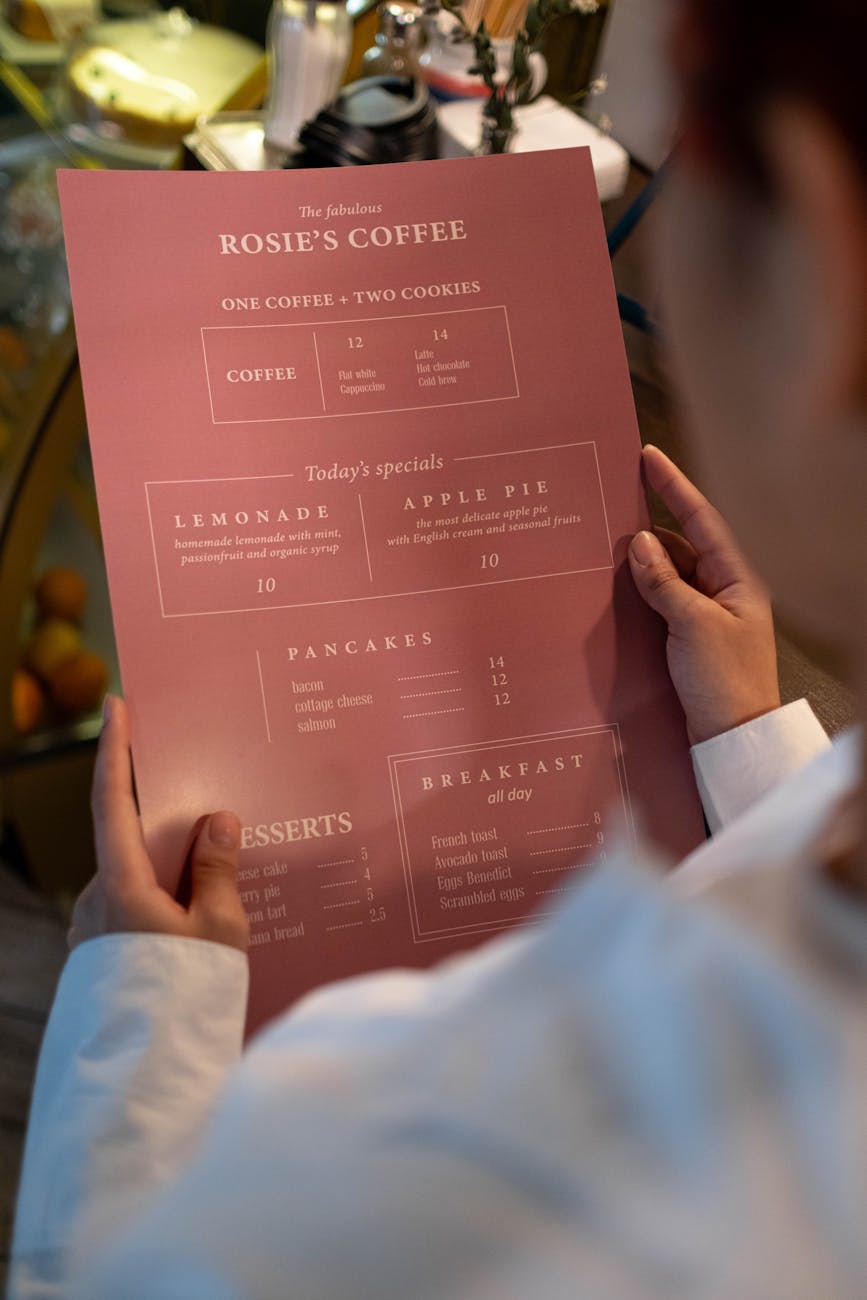
A person holding a pink menu titled 'Rosie's Coffee' displaying various food and beverage options in a cafe setting.
Photo by Ron Lach on Pexels.com

When the Menu Doesn’t Work: Dining Out Dilemmas 🍽️

“Is your veggie burger gluten free?” I asked with crossed fingers

“No—we use breadcrumbs,” she replied.

Since I don’t eat meat, and the only gluten-free option was a bun, we had to leave. It was a trendy burger spot, but like many places, it couldn’t accommodate both my plant-based and gluten-free needs.

John, my husband, and I were visiting our daughter, Maddie, and her boyfriend, Connor, in Boston where Connor was currently completing a summer internship. John and I were on our way back home after spending several days in the Bar Harbor/Acadia National Park area in Maine. And, just as it had been in Maine, and really, how it ALWAYS is when dining out, finding places where I could eat was a challenge. 
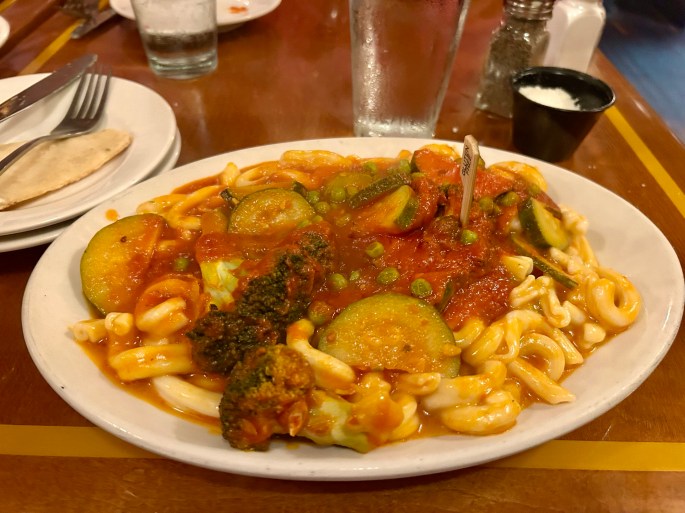
A plate of pasta topped with marinara sauce and mixed vegetables, including zucchini, broccoli, and peas, served in a restaurant setting.
Pasta is one of the hardest things to get when eating out. Fortunately, La Famiglia Giorgio’s Restaurant in Boston, MA, has an entire menu page devoted to those who need to eat gluten-free.

The Root of the Challenge: Living with Celiac Disease 🌾

The difficulty stems from the fact I have celiac disease–a chronic autoimmune disorder, as defined by Mayo Clinic, that is triggered when eating gluten, a protein found in wheat, rye, and barley. Consuming gluten significantly damages the small intestines of the person with celiac, preventing the absorption of essential nutrients, which can lead to serious health problems down the road. Additionally, the side effects of eating gluten are NOT pleasant– diarrhea, abdominal pain, nausea, reflux, fatigue as well as numerous other symptoms.

A bowl of granola topped with fresh berries and sliced apples, placed on a marble table next to a takeout coffee cup.
Eating gluten free and whole food plant based has helped my body heal and recover from decades of undiagnosed celiac disease. Tatte Bakery, Boston, MA

Why I Eat Plant-Based, Too 🍓🫐🥦🥗

I wasn’t diagnosed with celiac disease until my late 40s, after years of digestive issues and unnecessary medications. Healing began when I cut gluten and adopted a whole food, plant-based diet that excludes meat and most dairy. Eating a diet rich in plants bathes my body with the nutrients it was unable to previously absorb for most of my life.

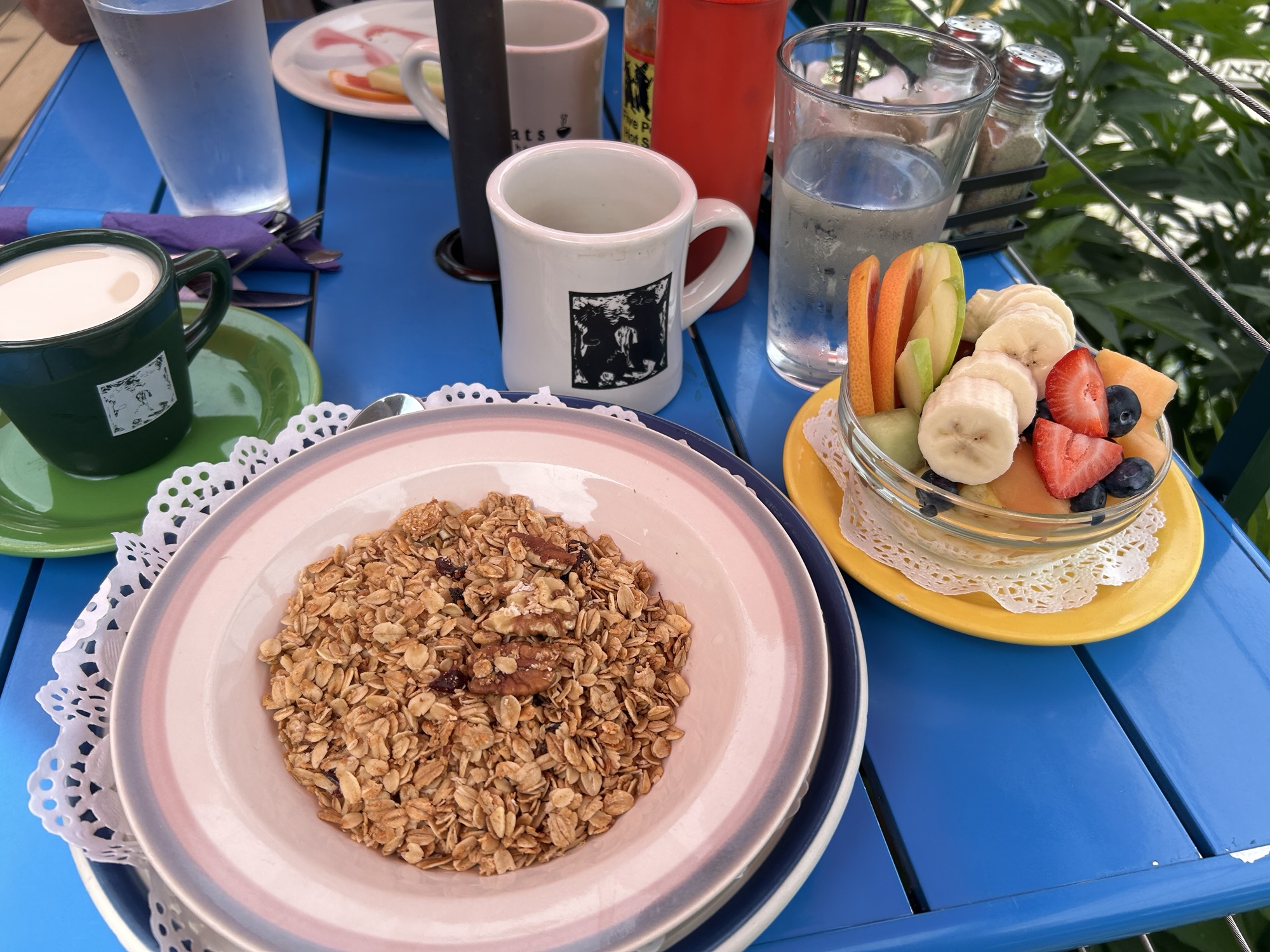
Two Cats Restaurant and Inn, Bar Harbor, ME

Travel: Inspiration and Complication 🌄

However, traveling with my dietary restrictions creates unique challenges.  On one hand, vacation sojourns are enriching, informative, and inspiring. These trips provide me with an opportunity to experience awe, wonder, and delight in the rich tapestry of life. On the other hand, travel requires deft navigation of dietary hazards. However, my trips have taught me that with a bit of planning, research, flexibility, and determination, I often discover and enjoy tasty culinary adventures as part of the travel experience.

Strict adherence to a gluten free diet is a necessity, especially when traveling. As anyone with celiac knows, it is no fun being stuck in a bathroom when you’re supposed to be out hiking, sightseeing, or experiencing a new setting. Additionally, I know that for my body, consuming meat and dairy products can also create digestive distress and discomfort. Therefore, those two dietary restrictions often limit my restaurant choices, create possibilities for cross-contamination, and can sometimes create a lack of understanding of restaurant staff.

A plate of a gluten-free pancake topped with powdered sugar, raspberry pieces, and garnished with orange and mint leaves, next to a mug of coffee labeled 'Great Maine Breakfast'.
Gluten free pancakes with plenty of fresh fruit at Jeannie’s Great Maine Breakfast, Bar Harbor, ME.

Research Is My Best Travel Companion 💻

For example, John often completes dining research in advance of any trip.  He uses Trip Advisor and refines his search to restaurants identified as good choices for gluten free, vegan, and vegetarian diets. What he has discovered is that we have to look closely at menus because eateries tagged as “gluten friendly” are often limited to meat-based dishes, and establishments labeled as “vegan or vegetarian friendly” often involve choices that include wheat (noodles/pasta, seitan, breaded vegetables, and so forth). 

A plate featuring a burger topped with cheese, served alongside a small salad of mixed greens, red peppers, and a dipping sauce, with a side of steamed broccolini.
Blaze, Bar Harbor, ME offered numerous gluten free options on their menu, including this gluten free veggie burger with gluten free bun. YUM!

The Cross-Contamination Trap 🪤

Of further issue is the concern with cross contamination. For example, Mexican food can be a good choice for me; however, if the fryer used for tortilla chips is also used for cooking flour tortillas and meat, these factors can negatively impact my digestive system. Additionally, shared food prep areas, unclear labeling of menu items, and even communication between wait staff and kitchen can lead to hazards.  For instance, if I order a gluten-free pizza crust, but it is prepared on a commonly shared counter on which wheat pizza crust is rolled out, this might upset my digestive tract.  

I’ve also had the experience of ordering a gluten-free pizza crust and still getting a pizza made with wheat due to miscommunication. And, while the only other country in which I have traveled is the English speaking parts of Canada, I can only imagine the chance for miscommunication in a country in which I don’t speak the native language.

This is why advanced research is important when traveling.  When I don’t have a game plan, or plans change, as was the case when we tried to go to the burger establishment in Boston, things can very quickly go awry. I end up feeling terrible because I feel I am limiting my loved ones from having a positive dining experience. After all, part of the fun of traveling is eating in new places.
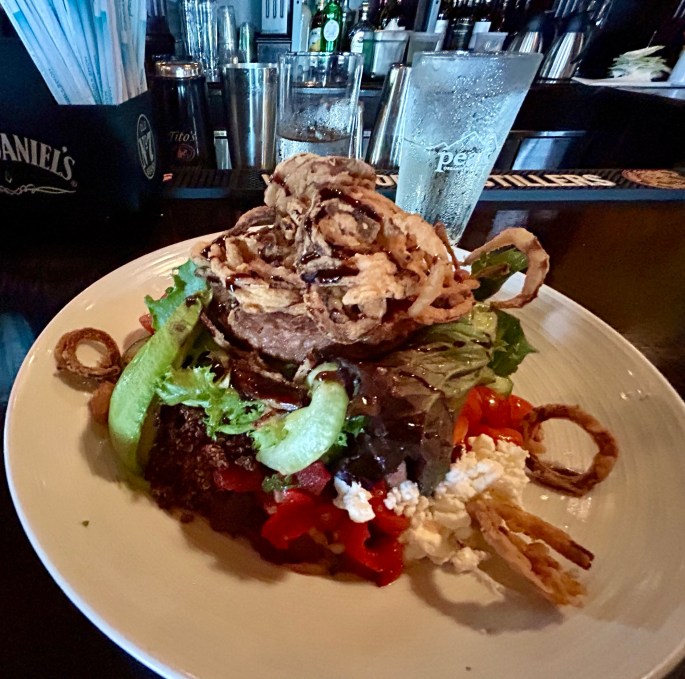
A colorful salad topped with a fried onion ring stack, featuring greens, tomatoes, and cheese, served at a bar setting.
The EARTH BOWL at Paddy’s Irish Pub & Restaurant, Bar Harbor, ME: Grilled , Gluten free, Plant-Based Burger, Tri-Color Quinoa, Roasted Pepper Salad, Heirloom Tomatoes, Garden Cucumbers, Ruby Red Beets, Avocado, Local Chevre, Sweet Balsamic Syrup.

Planning Ahead and Packing Smart 🧳

In addition to researching and using apps, such as Happy Cow, AllergyEats, and Find Me Gluten Free, John and I tend to stay in places with a microwave, refrigerator, and nearby grocery stores. I always pack food from home, and I’ve learned to bring supplemental items with me to restaurants if needed, such as gluten free bread, crackers, salad dressings, and so forth.
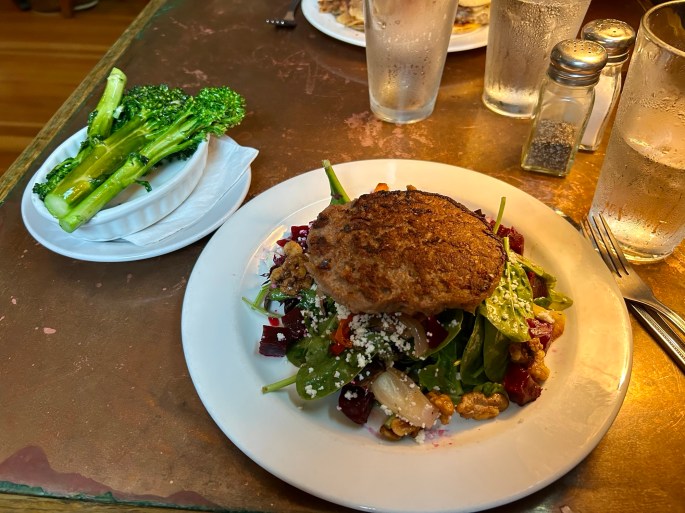
A plate of salad with mixed greens, nuts, and beets topped with a vegetable patty, accompanied by a side of steamed broccoli.
McKays Public House at Bar Harbor, ME: mixed greens tossed in maple dijon dressing, with roasted onions, carrots, and beets, feta cheese, candied walnuts topped with a gluten free veggie burger and served with a side of broccolini.

Connection and Communication: The Human Side of Dining 😊

I have also learned to befriend the wait staff.  Honestly, I try to do this anyway because I like meeting new people, and I cannot imagine how demanding it must be when working with the public, especially in popular travel destinations. When I politely explain my situation and dietary preferences to the staff without demanding it, most staff and chefs are willing to work with me. I have even had the rare chef visit my table to discuss the best way to prepare my food, which I appreciate more than words can adequately express.

A plate featuring a serving of colorful salad topped with various vegetables, accompanied by a side of grilled asparagus and a bowl of green beans. The setting appears to be a casual dining location.
Brewhouse Bowl BJ’s Restaurant and Brewhouse, Hagarstown, MD: Roasted barbacoa cauliflower; Peruvian quinoa + brown rice; black beans; corn + fire-roasted red pepper succotash; cucumbers; pickled red onions; pico de gallo; feta cheese; housemade guacamole; Greek yogurt crema; and,cilantro served with a side of broccoli and asparagus.

Flexibility and Food Choices: Finding Balance ⚖️
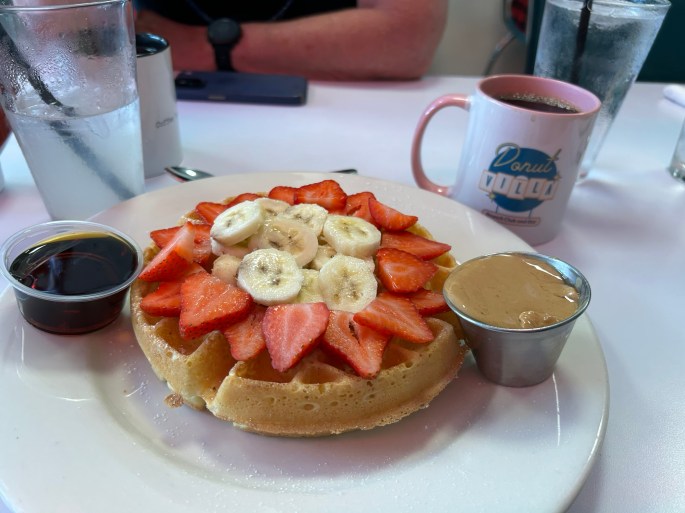
A plate with a waffle topped with sliced strawberries and bananas, accompanied by a small cup of peanut butter and a small container of syrup, set on a table with beverages in the background.
Gluten free, vegan Belgian waffle at Donut Villa Brunch Club and Bar, Boston, MA: topped with strawberries and banana served with sides of peanut butter and syrup.

One other thing I have learned to do is to compromise. While I prefer to eat whole food, plant based, I medically need to eat gluten free. Therefore, if it comes down to it, I will compromise somewhat on my plant based eating. For example, I don’t mind consuming a bit of goat or Parmesan cheese, yogurt, butter, or even the rare egg (think baked goods) if it allows my family to find meals they enjoy. Since I don’t regularly consume these products, I don’t think eating a bit here and there, such as during travel or other special occasions, will hurt me, and it makes the food feel like a real indulgence.
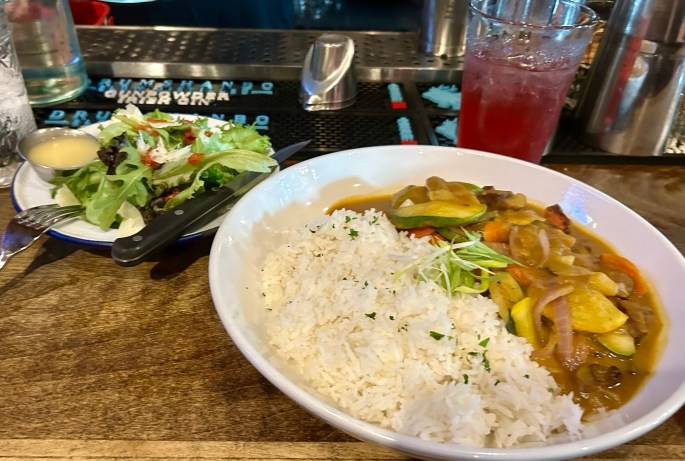
A plate of rice accompanied by a colorful vegetable curry, served with a side salad and a drink in the background.
Butternut Squash Curry at Leary’s Landing Irish Pub, Bar Harbor, ME, with roasted seasonal vegetables and jasmine rice.

A New Way to Experience the World Through Food

Traveling with celiac disease and/or other dietary restrictions is undoubtedly challenging, but I have learned over the years that it is not impossible with enough preparation, advocacy, and an adventurous spirit.  I have found that I now value and appreciate eating establishments who craft foods to appeal to a wide array of dietary desires. Additionally, I have met unique and wonderful people while doing this, and I have enriched my own knowledge of possibilities when it comes to cuisine.  It’s like, well, having your gluten free cake and eating it too! 

A bowl of chia seed pudding topped with banana slices, strawberries, and blueberries, accompanied by two slices of toasted bread with peanut butter, served in a diner setting.
“Morning Jump Start” at J’s Diner, Hagarstown, MD, with chia pudding, berries, banana, coconut flakes, and toast with almond butter.

Share your experiences

If you have tips for traveling with dietary restrictions, or if you have experiences you’d like to share regarding traveling with dietary restrictions, please share your comments!

A sizzling plate of colorful sautéed vegetables served at a restaurant, accompanied by tortilla chips, condiments, a glass of water, and a bowl of black beans.
Fajitas at Angela’s, Taste of Puebla, Mexico, Boston, MA, with sauteed onions, green and red peppers. Comes with shredded cheese, pico de gallo, guacamole, sour cream and flour tortillas. Served with rice and beans.
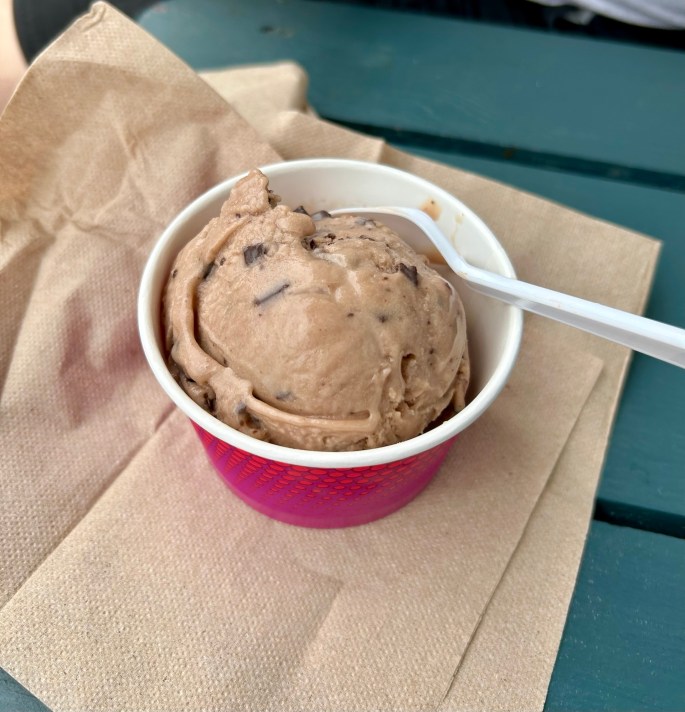
A cup of chocolate ice cream with chocolate chunks on a paper napkin.
Plant based chocolate ice cream at Salt Shop, Sweet and Savory Snack Bar, Southwest Harbor, ME.

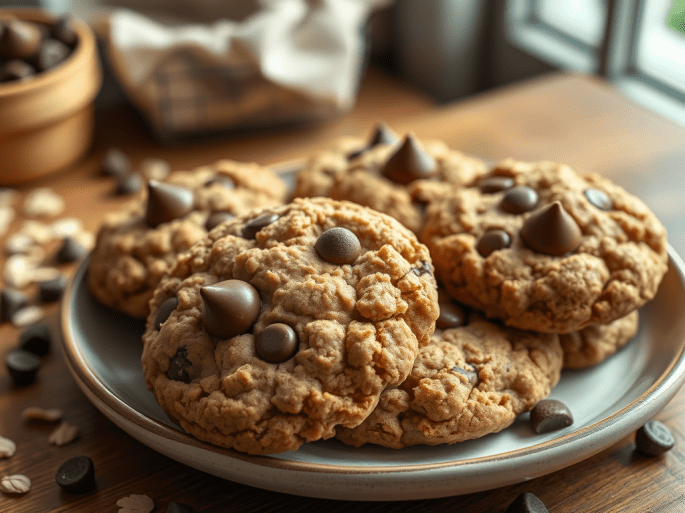
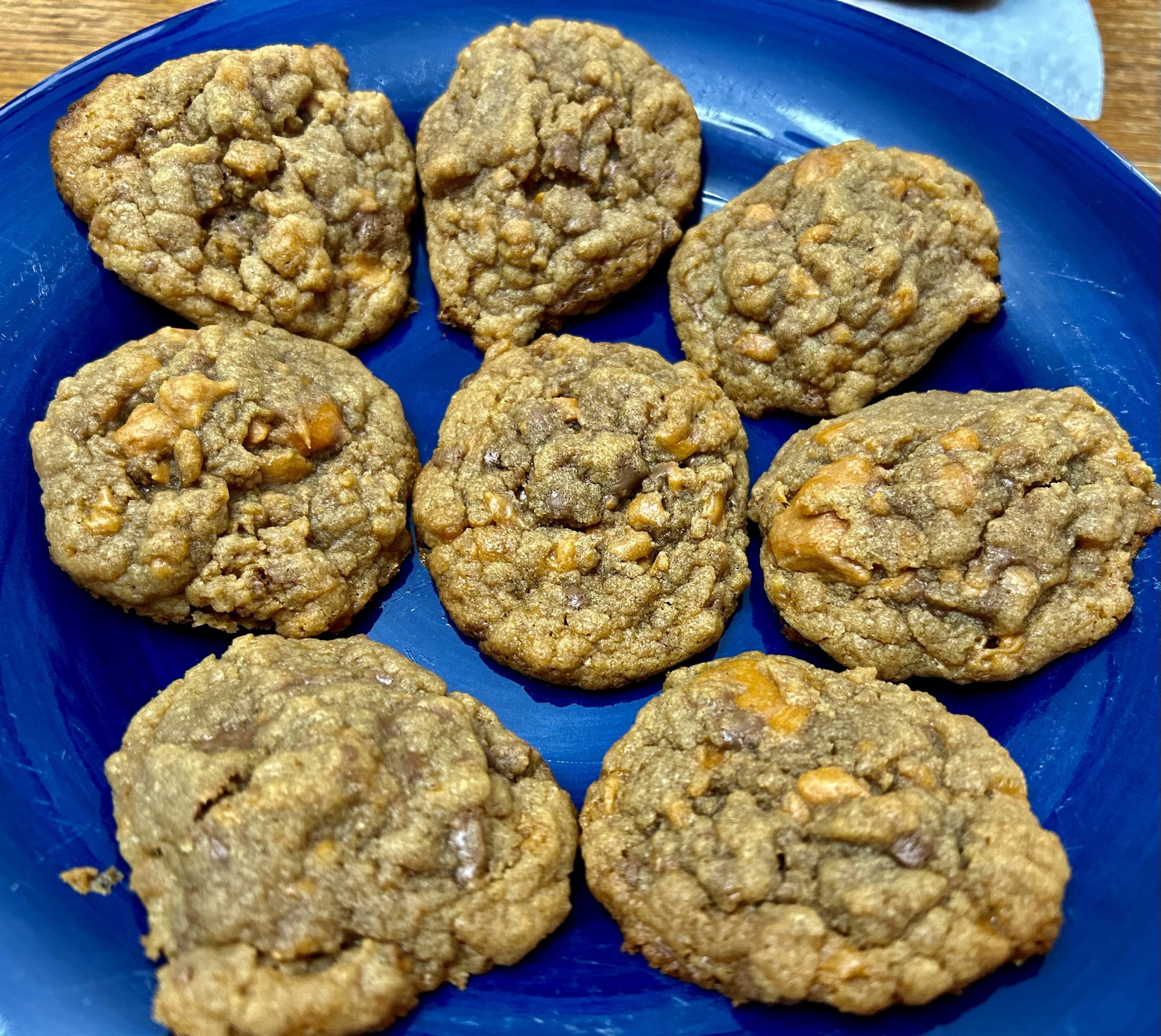
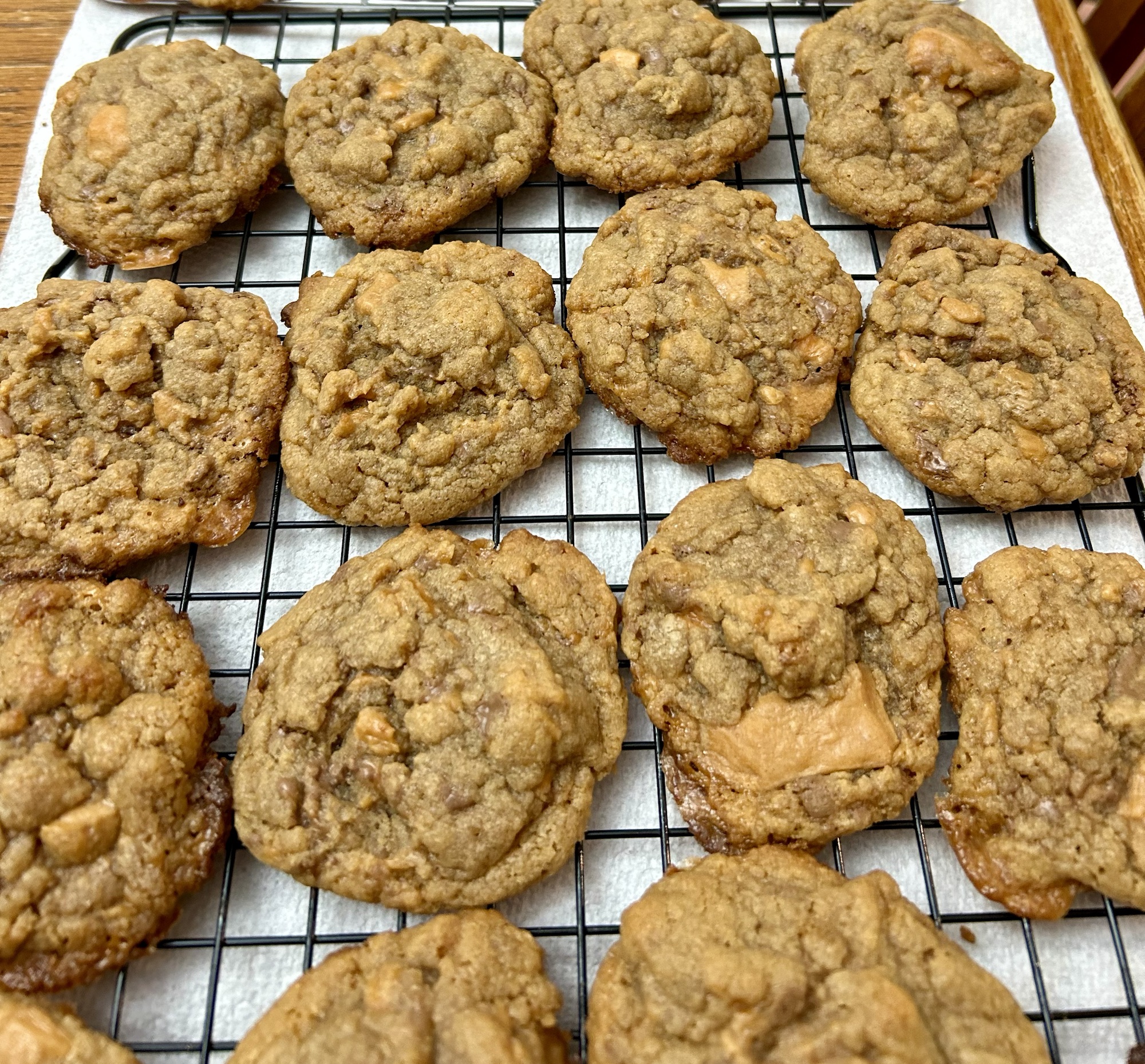
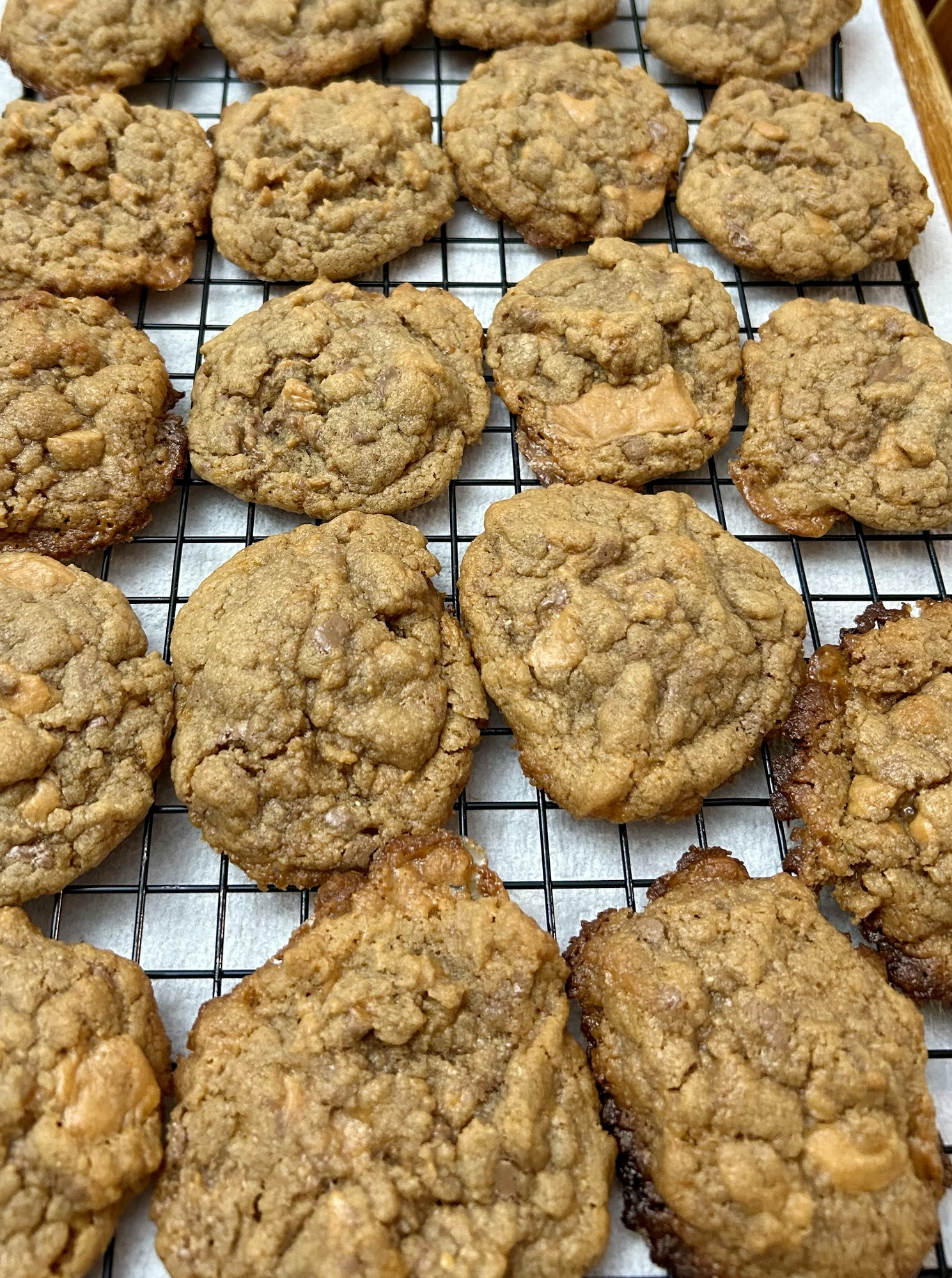
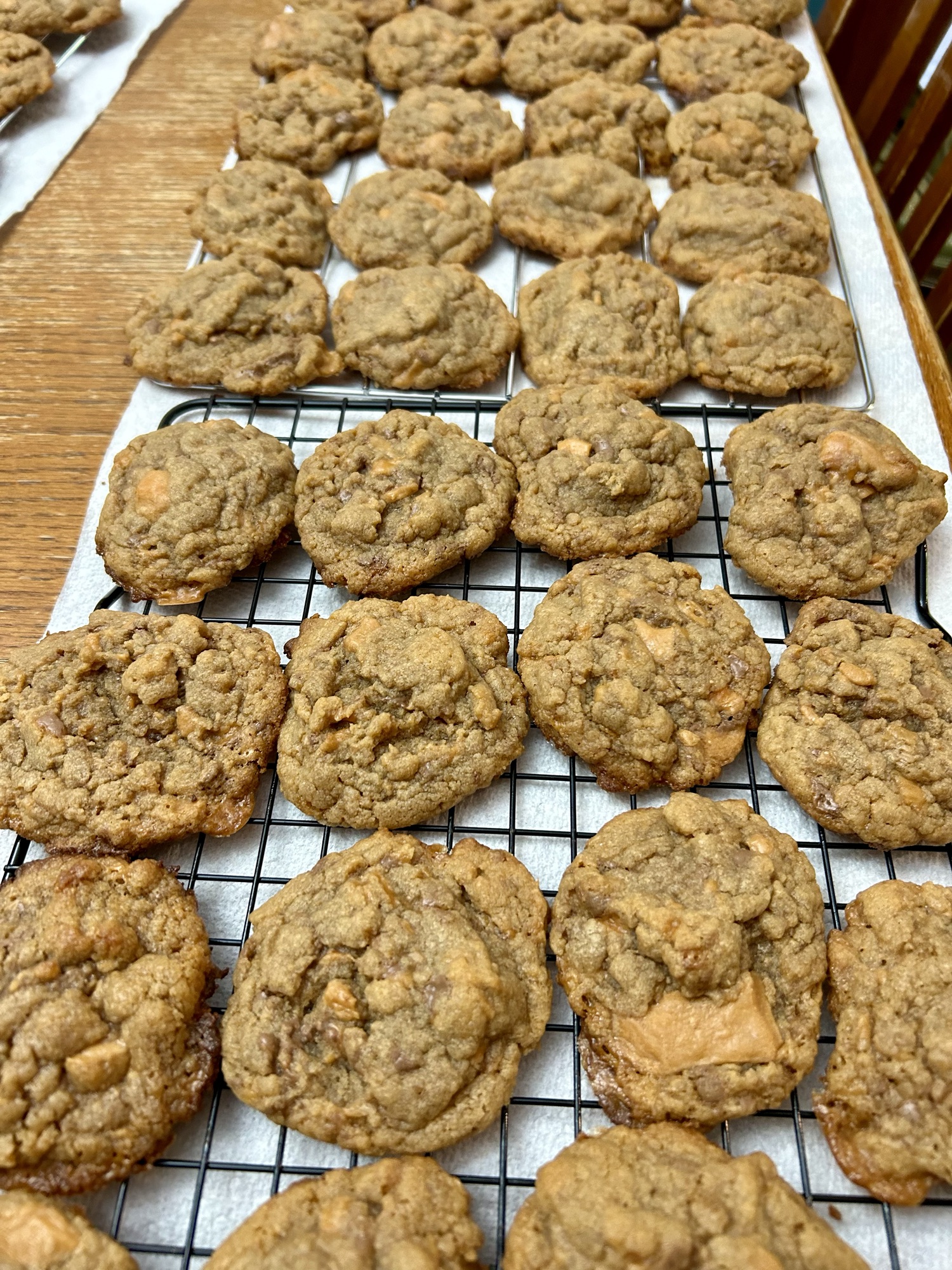
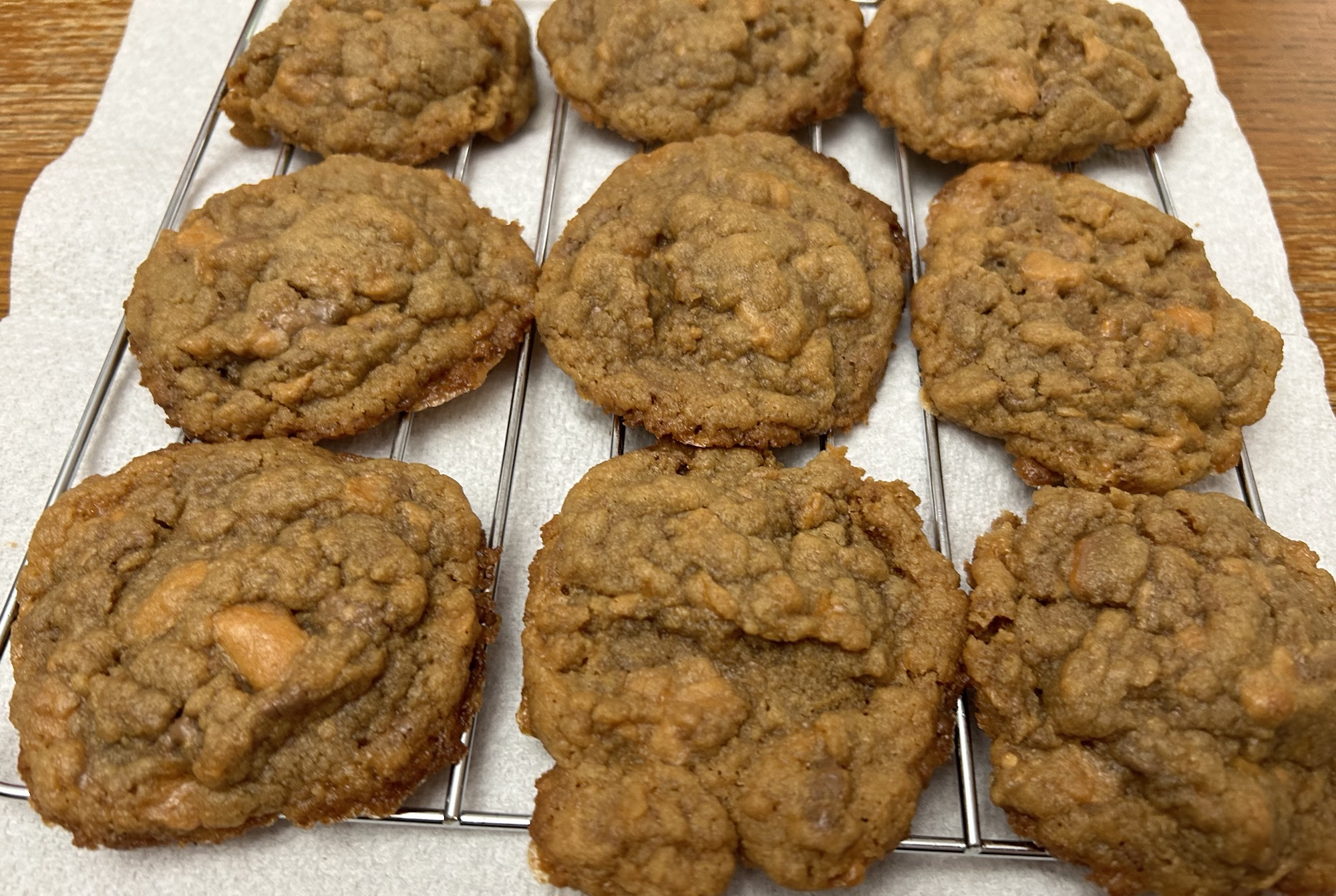
Easy Oatmeal Peanut Butter Chocolate Chip Cookies

“A balanced diet is a cookie in each hand.”–Barbara Johnson

Coaching cookies? 🏃‍♀️

During my first year of teaching at a large rural high school in Kentucky, I helped coach the women’s cross country and track teams. The young ladies were an enthusiastic group who wholeheartedly supported each other while managing to be individually competitive. 

 The head coach worked from a philosophy of three “hard-work” practices with active recovery workouts in between. Active recovery days meant running slower, but for longer distances and periods of time. Therefore, those girls burned calories. 

On the day of track meets, which could last upwards of four or more hours, depending upon how many teams were participating, the head coach and a few parents provided fruit, granola bars, little boxes of raisins, and packages of peanut butter crackers, alongside coolers of gatorade and water for the team. It wasn’t unusual for the young ladies to snack throughout the meet, especially once their main event was completed.  

I was young, single, and had extra time on my hands, so I started baking cookies for their meets. The first time I did this, I baked chocolate chip cookies and peanut butter cookies.

An Idea is Born 🤔

The ladies, in the way only teenagers do, started goofing off with the cookies. One of the girls gained her teammates’ attention and put a peanut butter cookie in one hand and a chocolate chip cookie in the other. Then, she dramatically took a bite off one cookie and a bite off the other, and she chewed the two “bites” together. 

“Mmmm,” she raved

Inspired by her friend, another teammate stacked three cookies together, like a sandwich, and bit into the stack. 

“Yummy,” she said with theatrical flair as crumbs sprayed out of her mouth.

A third young lady, giggling hysterically, managed to put a peanut butter cookie on her bottom lip/mouth area and somehow managed to get the chocolate chip cookie to momentarily stick to her top lip.  She tried to talk, and the two cookies, predictably, crumbled out of her mouth, raining onto the other girls and the metal bleachers. 

 She dramatically chewed the pieces of the cookies that remained in her mouth, sing-songing, “Soooo gooooood!” 

Snorts of laughter–and crumbs–erupted.

The girls, slap-happy from such a long-evening on a spring school night, continued eating and entertaining one another with the cookies and silly stories. One girl turned to me. 

“Hey, Ms. Musick, why don’t you make a peanut butter and chocolate chip cookie?” 

“But add oatmeal because it’s good for our cholesterol,” added another girl, arousing fits of raging laughter from her friends. 

The reference was to the head coach–also the head cross country coach–who had, in all seriousness, had a mild cardiac event before the start of school. Throughout that school year, he lost quite a bit of weight and lowered his cholesterol through diet and exercise. It was no secret among the girls that he ate some form of oatmeal and/or oat bran twice daily.

Introducing the Goop-N-Chip Cookie 🍪

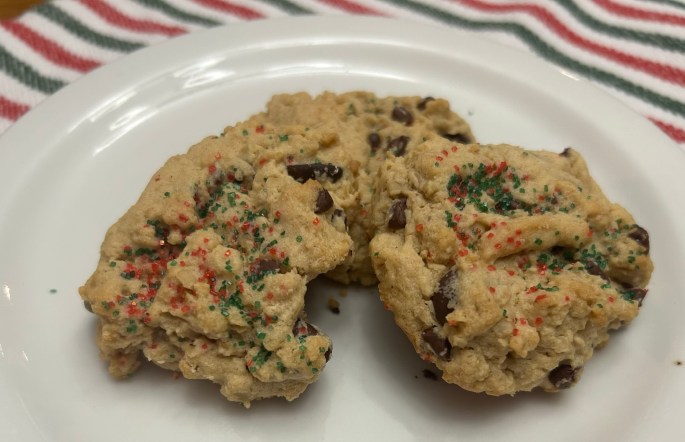
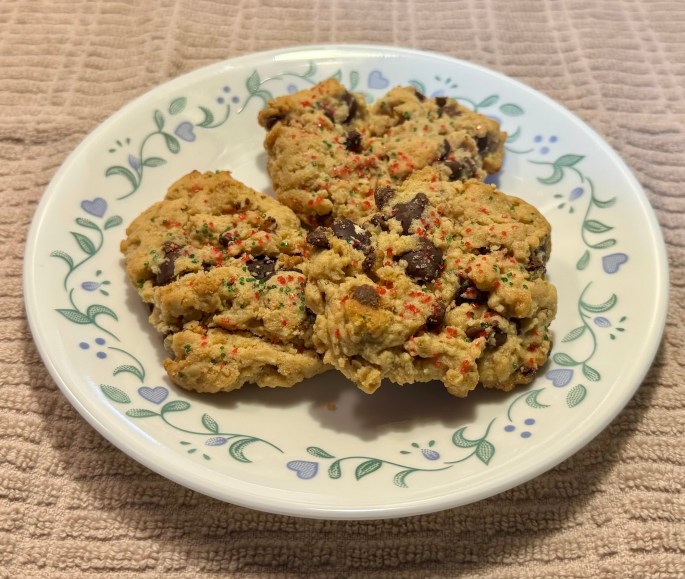
Thus, a new cookie recipe was formed by the next track meet. If the cookies contained raisins, they were called “GORP-N-Chip” cookies, and if the cookies did not have raisins, the girls called them “GOOP-N-Chip,” mostly because it rhymed with poop, which made the girls hoot and holler. 

Since that long-ago era, I haven’t made this recipe, and my notes for how to make them slipped into pages of the past, never to be found. (It was based on an idea found on an oatmeal container back in the late 80s during the oatmeal/oat bran craze.) Therefore, this current version takes inspiration from my own butterfinger cookie recipe as well as recipes found on Southern eats and goodies and Sally’s baking addiction. Perhaps, you can share these cookies with your favorite home team, however you define it.

The REcipe ⬇️

GOOP-N-Chip

(Good Old-Fashioned Oatmeal Peanut butter cookies with Chocolate chips)

With gluten-free options 

Ingredients

1 ½ cup all purpose flour (I use gluten free)

1 teaspoon baking powder

1 teaspoon baking soda

1 teaspoon salt

½ cup butter, room temperature

½ cup shortening

1 cup creamy or crunchy (your preference) peanut butter

¾  cup granulated sugar

¾  cup brown sugar

2 large eggs, room temperature 

1 tablespoon vinegar

2 teaspoons vanilla extract

2 cups oats (I used gluten free, old-fashioned rolled oats)

2 cups total of chocolate, peanut butter, or other candy chips (I used a variety of different types of chocolate chips)

½ cup raisins or nuts, optional

Directions

An hour or two before baking, set out eggs and butter to come to room temperature

When ready to bake, preheat oven 350 degrees

Line baking sheet with parchment paper & set out cooling racks

In a large bowl, blend together flour, baking powder, baking soda and salt, then set aside

In a large mixing bowl, cream together butter, shortening, and peanut butter until well blended

Beat in sugar for 2-3 minutes, scraping down sides of bowl as needed

Add in eggs–one at a time–vinegar, and vanilla until well blended, 1-3 more minutes

Stir in flour mixture until blended

Gradually add in oats and chocolate chips

Drop by rounded spoonfuls onto parchment paper, leaving at least one inch between.

Bake 8-12 minutes, less time if you prefer softer cookie, more time if you prefer crunchier cookie

Lift by parchment paper onto a cooling rack and allow to cool.

Store in an airtight container for up to one week or so. 

Tastes especially good with a short reheat in the microwave before eating, and also tastes good with a scoop of ice cream on top!

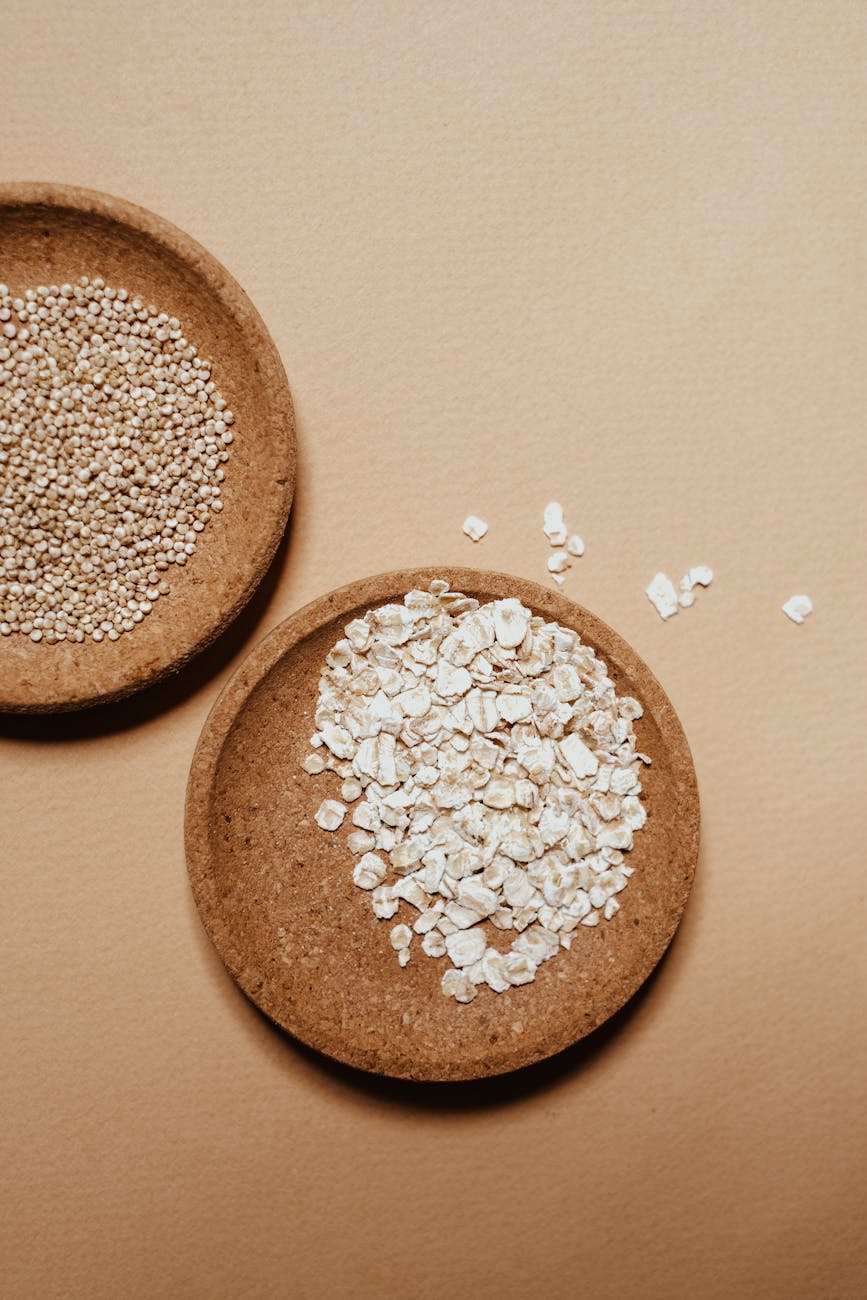
Health Benefits of Oat Bran: A Nutritional Powerhouse with muffin recipe

Oat bran, a by-product of oat grain processing, is a good source of soluble fibers: β-glucans that are linked to the reduction of cholesterol and to the prevention of cardiovascular diseases.”Science Direct

Photo by Vie Studio on Pexels.com

Oat Bran Fad 🥄

Are you old enough to remember the oat bran craze of the late 1980? A 1991 Los Angeles Times article described the oat bran-craze as a short-lived obsession, which began in 1987 when several influential U.S. medical groups, such as the American Heart Association and the American College of Cardiology, started the Know Your Cholesterol campaign. Former president Ronald Reagan would later proclaim April 1988 as National Know Your Cholesterol Month.

 I was early in my career at that time, and I can recall one of my coworker’s transformation when his doctor ordered him to lower his cholesterol after suffering a mild heart attack in his mid-40s. He decided to eschew medication, and try the “eating healthier” route, which included eating oat bran every morning for breakfast. In addition to several dietary changes, he added walking and/or bike riding for 30+ minutes four to five times a week. His results were stunning. By the end of that school year, he looked like a different person. 

Award-winning Nutrition 🏆

The oat bran craze, like other dietary fads, lost its shine by the early 1990s; however, it is still certainly worthy of regular consumption and should probably have a star placed on the Nutritional Wall of Fame if there were one. Specifically, it is high in soluble fiber. When eaten, soluble fiber soaks up water like a sponge, creating a gel-like substance that can lower blood sugar levels, holds on to cholesterol and fat, and make stool easier to pass.  

In addition to being high in soluble fiber, oat bran is lower in carbs and calories than oatmeal.  Oat bran is also higher in nutrients such as protein, fiber, iron, thiamine, and magnesium to name a few. It contains high levels of antioxidants which ward off chronic disease, inflammation, and offers other health benefits. Additionally, oat bran may also help lower both blood pressure and cholesterol.  Plus, it is naturally gluten free. 

Easy addition ➕

Making oat bran a regular part of a healthy diet is easy to do. Eat it as a creamy, comforting, warm porridge-like cereal, or mix it up as you would your favorite overnight-oats recipe for a velvety breakfast delight in the morning. Oat bran can be a nutritional addition to smoothies. It can be an excellent addition to baked goods, such as quick breads, cakes, and muffins like the recipe I share here. Stir oat bran into your favorite yogurt, or add it to your favorite casseroles, meatballs, meatloaf, or burger recipes. 

TAsty Holiday Treat That benefits your Health ✨

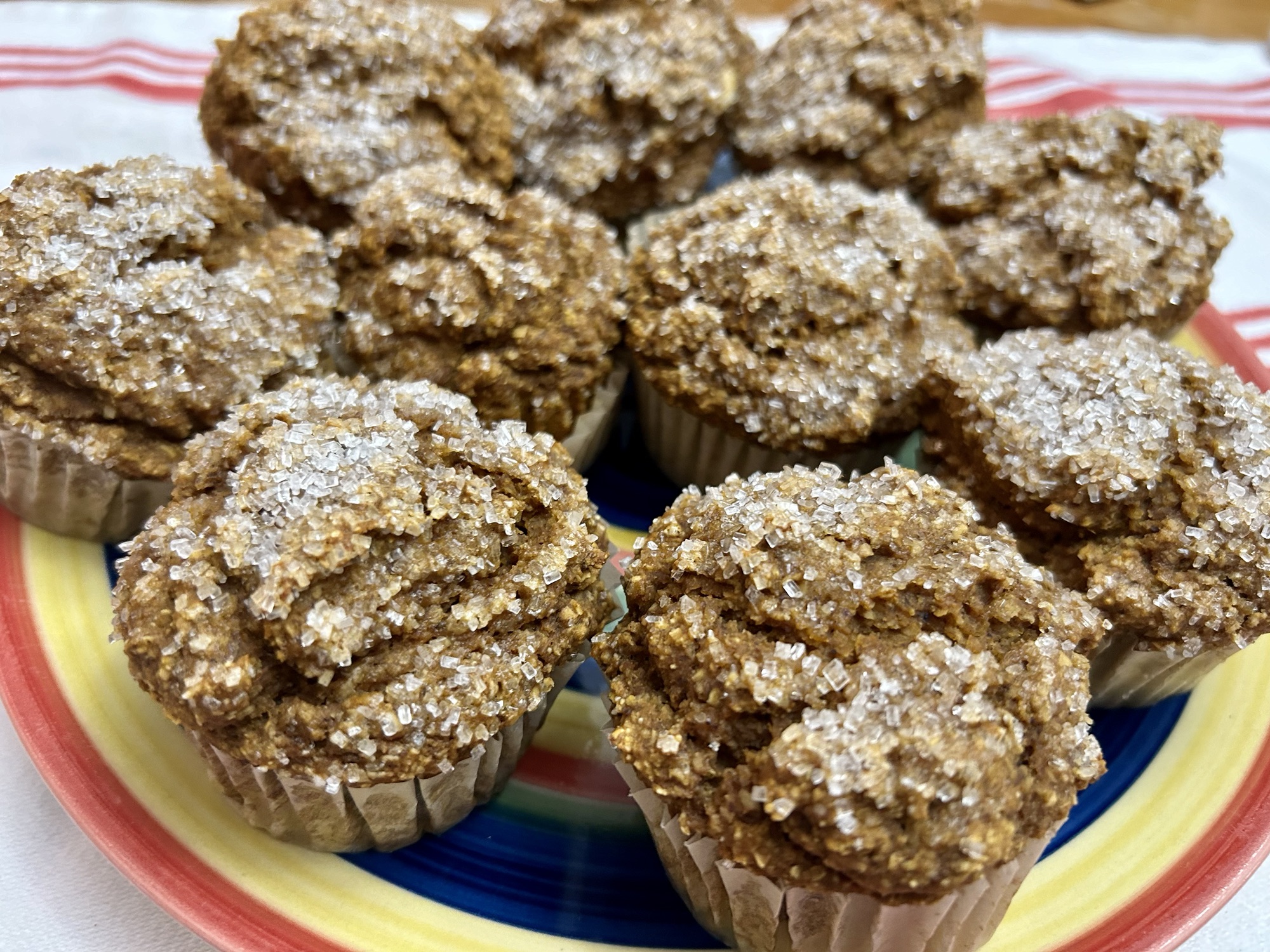
Even though it is a long way from those late 1980s, regular consumption of oat bran can go a long way to benefiting your health. The recipe below is one easy way to level up your oat bran game. The muffins are tasty on their own, and they deliciously pair with a drizzle of honey or smear of melted butter alongside a warm cup of coffee or tea. They freeze well for quick grab and go convenience, which is important over the coming Thanksgiving holiday. Plus, there’s a slew of optional stir-in ingredients listed below, so you can personalize this recipe to fit your taste preferences.

From my home to yours, I wish you a healthy, happy, and wonderful Thanksgiving full of homemade goodness. 

Personalize this recipe with your choice of stir-in ingredients to take this recipe to the next level of flavor and health!

Healthy Holiday Pumpkin Oat Bran Muffins

Ingredients:

1 ½ cup oat bran

1 ½ cup oat flour (can replace with all-purpose flour or gluten free variation)

2 teaspoons baking soda

1 teaspoon baking powder

½ teaspoon salt

4 packets of your favorite sweetener

1 ½ teaspoon cinnamon

½ teaspoon ground ginger*

½ teaspoon ground nutmeg*

¼ teaspoon ground cloves*

⅛ teaspoon all-spice* 

2 eggs or “fleggs**” 

1 tablespoon apple cider vinegar

15 ounce can pure pumpkin puree 

½ cup apple sauce

½ cup pure maple syrup 

⅓ cup milk (dairy or nondairy)

2 teaspoons pure vanilla extract

Optional stir-ins: 1 cup chopped nuts and/or ½ cup blueberries, raisins, currants, chopped dates, dried cranberries, or chocolate chips

Notes: 

*Can replace ginger, nutmeg, cloves, & all-spice with 1 ½ teaspoon pumpkin pie spice

**To make two flax “eggs” or “flegg”: Stir together 2 tablespoons ground flaxseed + 5 tablespoons water and set in fridge for 5+ minutes before adding to recipe

Directions:

Preheat oven to 375 degrees

Be sure to set out eggs, if using, and maple syrup ahead of time to come to room temperature.

If replacing eggs with flaxseed “flegg” variation, combine ground flaxseed and water, and set in fridge for five minutes to thicken 

Meanwhile, combine dry ingredients (oat bran, flour, baking soda, baking powder, salt, and all of the spices) into large mixing bowl and set aside

Next, mix together wet ingredients

Pour wet ingredients into dry ingredients, but do not overmix

Gently fold in any additional stir-in ingredients, such as blueberries, nuts, chocolate chips, and/or dried fruit, if using

Divide evenly among 12 prepared muffin tins

Sprinkle with sparkling sugar or cinnamon, if desired

Bake 18-22 minutes or until a toothpick inserted in the center comes out clean

Cool five minutes before serving

Store uneaten muffins in an airtight container in the fridge for up to five days, or freeze for up to three months.

Delicious and Healthy Sweet Potato Mango Bowls: A Nutrient Rich Delight

Mango, often dubbed the king of fruits, isn’t just delicious, it’s full of nutrients and health benefits.”–OhioHealth.com

Photo by Alexander Grey on Pexels.com

Nothing Like Fresh summer Produce 🌽🍅

When I was a girl, mid- to late summer, it seemed to my unfledged mind, was one of grandparents’ favorite times of year. This was because it was the time of year full of fresh garden produce! It wasn’t unusual during this season for them to eat a dinner full of nothing but fresh vegetables: salted, slices of beefsteak tomatoes, pork-flavored half-runner beans, sweet corn on the cob slathered with sweet butter, and dinner rolls spooned over with sorghum syrup.  Sometimes, they’d toss in fresh melon for dessert, with or without ice cream, or some sort of fruit cobbler! 

Oh, how intoxicatingly fragrant those kitchens were! To this day, I can’t smell a good garden tomato without being reminded of one of their kitchens. It didn’t matter which house I happened to be visiting, my maternal grandparents or my paternal grandmother–their kitchens had similar earthy aromas during the end of summer.  To be sure, they’d vary the menu with tomato, bacon, and lettuce sandwiches or wilted lettuce with bacon drippings.  Sometimes they might fry up hamburgers and top them off with a fresh slice of tomato, serve a salad with freshly picked cucumbers and chopped garden “mangoes,” and of course, have more sliced and salted tomatoes on the side.  They might even bake up a meatloaf with chopped, fresh “mangoes,” or they might stuff the freshly picked “mangoes” with a meatloaf-like mixture.

Photo by Pixabay on Pexels.com

Mangoes are a Tropical Fruit 🥭

It was years later, when I was stunned to learn that what my grandparents called “mangoes” were actually called bell peppers.  I was further surprised to learn that mango was a tropical orange fruit grown in trees!  In fact, it’s only been in the past decade that I’ve really come to embrace and regularly eat mangoes, due to their availability now in both the produce and freezer aisles in most local stores. 

Mangoes have a delicious, creamy peach-like flavor and juiciness, and they pack a nutritional punch. They are chock full of vitamin C, and they are full of soluble fiber–known for binding with fat and cholesterol in the digestive tract before they get absorbed. Mangoes are also a good source of vitamins A and E.  Overall, mangoes benefit your immune system, eyes, skin, gut health, and even have anticancer properties.  Plus, they taste great.  What’s not to like about that?

Photo by Nancy Folgmann on Pexels.com

Mangoes and Bell Peppers 🫑🥭

Although mangoes taste nothing like a bell pepper, they are both nutritionally beneficial and a versatile addition to a wide array of recipes, such as the one I am sharing with you today. This recipe is a super easy, quick recipe for dinner or lunch. While it is an older recipe from a plant-based cookbook, by Rip Esselstyn, you don’t have to be vegetarian to enjoy this recipe.  Plus, for those with allergies, it is gluten-, dairy-, and nut-free.

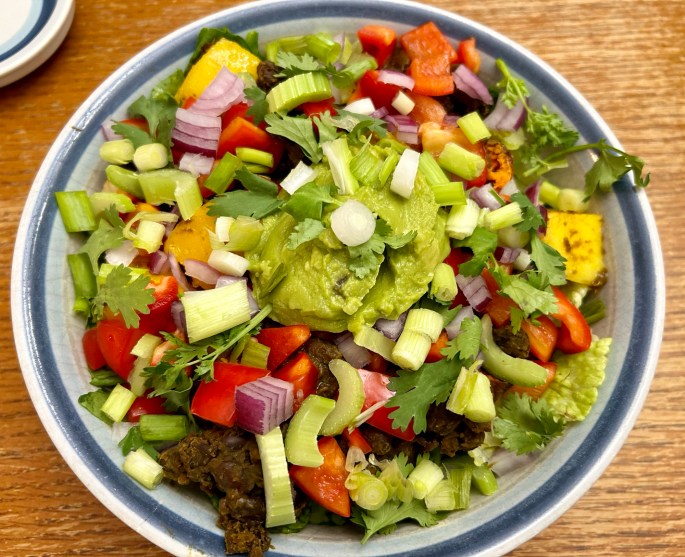
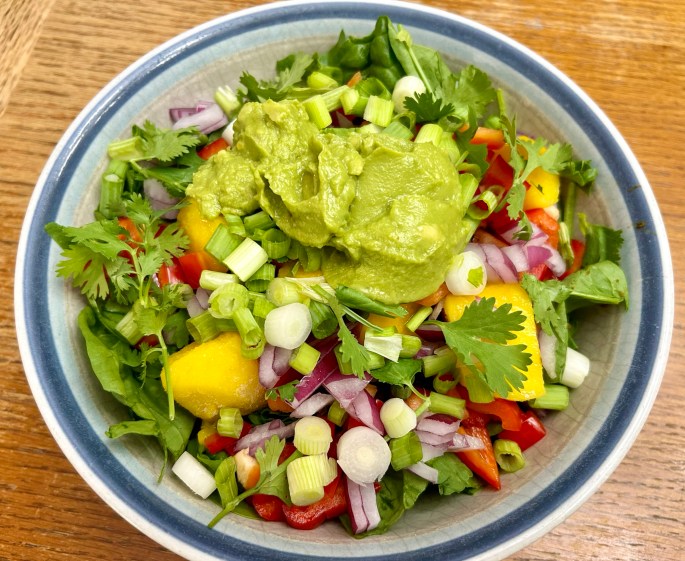
It’s bursting with nutrients and plenty of fiber to fill you up and benefit your health.  However, I know all of that doesn’t matter if the recipe doesn’t look and taste great, and this sweet and savory recipe certainly does! As my Grandmother Helen taught me to remember, “We eat first with our eyes,” and this recipe makes one vividly vibrant plate, full of colors and flavors that will lead to full tummies and clean plates around your table!  

This recipe will “Bowl” you over! 🥣

While I know my papaw would have NEVER tried this recipe, I’d like to think both of my grandmothers would have given this mango-forward dish a try. Therefore, I hope you will try this recipe out in their honor, and, of course, feel free to serve up a side of salted, sliced tomatoes, corn on the cob, and/or some rolls with sorghum syrup from the local farmer’s market!

From my home to yours, I wish you new and old recipes that are full of family connections and stories!

Sweet Potato and Mango Bowls

Gluten-free, nut-free, dairy-free

Serves 2, but recipe can be doubled or tripled

Ingredients:

2 large sweet potatoes

1 (15-ounce can) black beans, drained and rinsed

¼ teaspoon ground cumin

¼ teaspoon garlic powder

¼ teaspoon onion powder

¼ teaspoon chili powder

4 cups of my favorite salad greens, i. e. spinach or spring mix

4 to 6 green onions, chopped

1 fresh mango, chopped or 1 cup frozen mango chunks

1 red bell pepper, chopped

½ avocado, mashed or diced, depending upon preference

¼ cup chopped cilantro (optional)

Lime juice

Salsa

Directions:

Bake sweet potatoes (microwave or oven)

In microwave safe bowl add black beans and spices, stir and heat for 60 or so seconds in microwave (Can also mix and heat on stove top if preferred)

Divide greens between two bowls

Top with sweet potato, which can be cut in half or cubed, your preference

On top of sweet potato, add beans, green onion, mango, red pepper, avocado & cilantro, if using

Drizzle with lime juice and add desired amount of salsa

Butterfinger Cookies Recipe: A Royal Treat from the Sweet Potato Queens with gluten-free options

“Turns out chocolate is O-fficially good for you.  Some of us didn’t need years of expensive science to tell us that.”–Jill Conner Browne

Photo by John Ray Ebora on Pexels.com

Queenly Reading 📖

I remember when The Sweet Potato Queens’ Book of Love (and subsequent series) was all the rage in the late 90s/early 2000s. It seemed as if most of the women with whom I worked and interacted at that time period were reading, cooking, or buying products related to the book written by Jill Conner Browne. There were “queenly” gatherings in which each person who attended brought with them a prepared dish based upon one of Browne’s recipes.  Attending these get-togethers often included donning a tiara, sparkling clothes, perhaps a colorful boa, or some outrageous jewelry. Some even carried a scepter, usually a child’s version that made noise and lit up–after all, it wasn’t serious. 

Ultimately, those dinners were centered around laughing and enjoying life. Even though life grew busier as kids became older, careers shifted, and life pulled in different directions, those “royal times” made for good memories.  Not to mention, the book became a resource of tasty recipes, and my daughter’s dress-up box benefitted with all the fun accouterments from that time period. 

Photo by Arturo EG on Pexels.com

Basic Food Groups 🥧🍟🥓🧈

Many years later, I look back on those recipes and that time period with fondness.  I was young, and my metabolism was still revving compared to now.  Plus, I was ignorant of the fact I had celiac disease and acid reflux.  All those recipes tasted soooo good, but . . . no wonder I had such digestive upheaval afterwards! 

That’s because Browne believes all good recipes should be centered around four food groups: “sweet, salty, fried, and au gratin”! Her Mississippi roots shine through the foods she featured in her books, official website, and social media.  She unabashedly still proclaims her love of eating for any and all reasons. Her enthusiasm for southern food is contagious when you read the way in which she describes food and the various life scenarios that “require” comfort food.

Photo by RDNE Stock project on Pexels.com

Fandom 👸

To this day, Browne, and her Sweet Potato Queens, have legions of followers.  There is a play about the Sweet Potato Queens, and there is an annual SPQ’s weekend event each year around St. Patrick’s day. Plus, chapters of Sweet Potato Queens remain throughout the U.S., and there are several Facebook groups dedicated to the “queenly” cause. 

While I don’t, per se, follow Browne and her fans, I do appreciate her literary and culinary contributions, and I appreciate the way she doesn’t appear to take herself, or her love of food, too seriously. She uplifts women and makes food, and the gatherings/traditions around food, a social celebration.

Photo by RDNE Stock project on Pexels.com

Family Favorite 🍪

At one time, I had a handful of SPQ recipes I regularly prepared. Now, however, there remains one recipe I still make, and it is a family favorite, Butterfinger cookies.  As it turns out, original Butterfinger candy bars (not any of the other iterations) are gluten-free. However, back “in-the-day,” pre-celiac diagnosis, I would not have known, much less noticed.  All I knew is that Browne had me with a recipe whose main ingredient is peanut butter.  Toss in candy bars with chocolate and peanut butter? What could be tastier?

That said, these are not cookies I often make, saving them for special events. This is mostly because breaking and/or cutting up all of those candy bars and mixing them into the thick cookie dough takes time and a hefty dose of elbow grease.  However, all the effort is worth it in the end because this recipe bakes up over 60 cookies that are a balanced mixture of sweet, salty, and rich–perfect for sharing with others.

In fact, this is a recipe I make for my husband’s annual fishing trip to the north woods of Canada with his buddies.  In their younger years, he would share that the cookies were often all eaten before they arrived at their destination. I will note, however, when I bake these cookies for their fishing trip, I do not make them gluten-free.  However, if I am going to bake them for a family event, and I want to enjoy a few, I will then use an all-purpose, 1:1 gluten-free flour. 

Photo by Adrianna CA on Pexels.com

REcipe Adaptations 🧑‍🍳

While the original recipe does call for chunky peanut butter, I have always made it with creamy peanut butter, and the cookies turn out fine. The cookies are chewy and hold up to being dipped in milk, tea, or coffee.  They are also nice slightly heated in the microwave.

There are two other adaptations I have made to the original recipe.  First, Browne’s recipe calls for one stick of butter.  However, my grandmother taught me that when baking, you should use equal amounts of butter and shortening.  This gives your baking the rich, buttery flavor, but also gives recipes both lift and tenderness. Hence, you will notice my adaptation has ½ cup butter and ½ cup shortening. 

The other adaptation I made is to add a tablespoon of apple cider vinegar. This is a recipe trick I learned from gluten-free baking. The ACV not only acts as an additional leavening agent to the baking soda, but it also enhances the depth of the flavor of baked goods.

I hope you’ll give this recipe your best “royal” effort!  It is not only a tasty treat, but worthy of sharing with those in your monarchy and at all royal, or not-so-royal, events.  

Butterfinger Cookies

Ingredients:

1 ½ cup sugar

1 ⅓ cup dark brown sugar

½ stick of butter

½ cup shortening

4 eggs

1 tablespoon apple cider vinegar

3 teaspoons vanilla extract

2 ½ cups peanut butter, preferably chunky, but I’ve never used chunky and they taste great to me

2 cups flour, gluten free variation if needed, either an all purpose 1:1 flour or oat flour works best

1 teaspoon baking soda

½ teaspoon salt

20 or so ounces’ worth of butterfinger bars, crunched, crushed, or cut up

Directions:

Preheat the oven to 350 degrees

Cream together sugars, butter, shortening, eggs, cider, and vanilla extract.

Blend in peanut butter

In a separate bowl, blend together flour, baking soda and salt.

Mix into cookie dough

Mix in candy bars

Drop by heaping teaspoons onto ungreased cookie sheets

Bake for 7-9 minutes or until golden brown

Allow to cool on cookie sheet for at least 2 minutes

Then, move cookies to cooling rack to completely cool

Store in airtight container

Keeps for 7+ days, if they last that long

Makes 60 plus cookies

Berry Immunity Boosting Smoothie aka Stress Less Smoothie

The greatest weapon against stress is our ability to choose one thought over another.”–William James

Photo by Pedro Figueras on Pexels.com

The challenge of work-life balance⚖️

It is not uncommon to engage in conversations centering around stress.  Attempting to balance the demands of work and life can be challenging. The combination of long work hours, while also juggling the needs of family, make it difficult to have time to do the things that would otherwise relieve stress, such as regular exercise, outings with friends, or even a relaxing soak in the tub. 

When stress ramps up, there is a chain-reaction in our bodies.  According to Harvard School of Public Health, when stress is high, the body’s demand for oxygen and energy increases, which in turn increases the demand for key nutrients.  Simultaneously, stress causes the body to eliminate other vital nutrients. This can take a toll on the body’s immune system.

As the chain reaction of stress continues, hormones become affected.  If the stress is acute, the body will secrete adrenaline, which suppresses appetite.  However, when the stress becomes more chronic, cortisol levels begin to rise, instigating food cravings.  Cortisol tends to create cravings for foods that are typically considered “comfort foods,” full of sugar, salt, and fat.  Unfortunately, if cortisol stays elevated, the chain reaction continues to wreak havoc upon our bodies, and this often influences our coping strategies.

Photo by cottonbro studio on Pexels.com

The body’s stress response 😰

Chronic high stress time periods, depletes the body of energy and can often reduce time available for decompression. This can inhibit the desire to prepare healthy, nutritious meals.  Sometimes, chronic stress causes us to skip meals.  The downside to skipping meals is that, as the cortisol levels rise, once there is an opportunity to eat, we tend to reach for those comfort foods that will not replenish the body’s stores of diminished nutrients.

Therefore, how we respond to stress matters.  With some situations, we can identify upcoming stressful time periods before they begin, and thus, we can be more proactive.  However, that isn’t always the case.  Nonetheless, there are a few basic guidelines, according to The University of North Carolina at Chapel Hill that are worth remembering.

Photo by Antoni Shkraba on Pexels.com

Tips for eating during times of stress 😣

  • Keep nutrient-dense grab-and-go snacks on hand at all times.  Foods like baby carrots, celery sticks, hummus cups, guacamole cups, apples, oranges, bananas, popcorn, almonds, walnuts, pistachios, low-sugar yogurt, low-sugar granola, low-sugar oatmeal packets, whole-grain crackers and so forth.
  • Eat at regular intervals when possible.  This will keep blood sugar stable, and keep the brain, which needs glucose, working at its best.
  • Eat high-fiber foods. Foods, such as fruits, vegetables, nuts, seeds, beans, oatmeal, and other whole grains, have been shown to decrease perceived stress levels and increase alertness.
  • Focus on eating fruits and vegetables, especially leafy greens, whenever possible.  These foods are filled with the vitamins and minerals your body needs to neutralize the harmful molecules our bodies produce when under stress. 
  • Foods rich in unsaturated fat also help. Think walnuts, flax seeds, chia seeds, and fish oil to name a few. These foods are associated with increased brain function; however, deficiencies in fatty acids can result in depression and/or anxiety. 
  • Be mindful of caffeine and/or alcohol intake. Both of these can disrupt sleep, which the body desperately needs during times of stress.  Additionally, both can increase blood pressure, which can increase feelings of anxiety.
  • Ensure your body is getting enough quality sleep. Getting enough sleep allows the body to reduce cortisol levels and other stress hormones, increasing the chances of remaining calmer in the face of stress.
  • Employ constructive coping strategies. Whether it is talking to a trusted friend or therapist, journaling, meditating, asking for help, or going for a walk–developing positive coping skills is a lifetime skill set. 
Photo by Wallace Chuck on Pexels.com

The reality of stress 😩

Stress is reality at different points in our lives.  While we cannot control when it will arise, we can control our response to it.  It is easy and understandable to seek comfort during times of stress.  However, when those sources of comfort become unhealthy coping mechanisms, such as over- or undereating, drinking alcohol in excess, going without sleep, and so forth, we risk using short-sighted solutions that could lead to developing long-term problems, creating even more stress.  

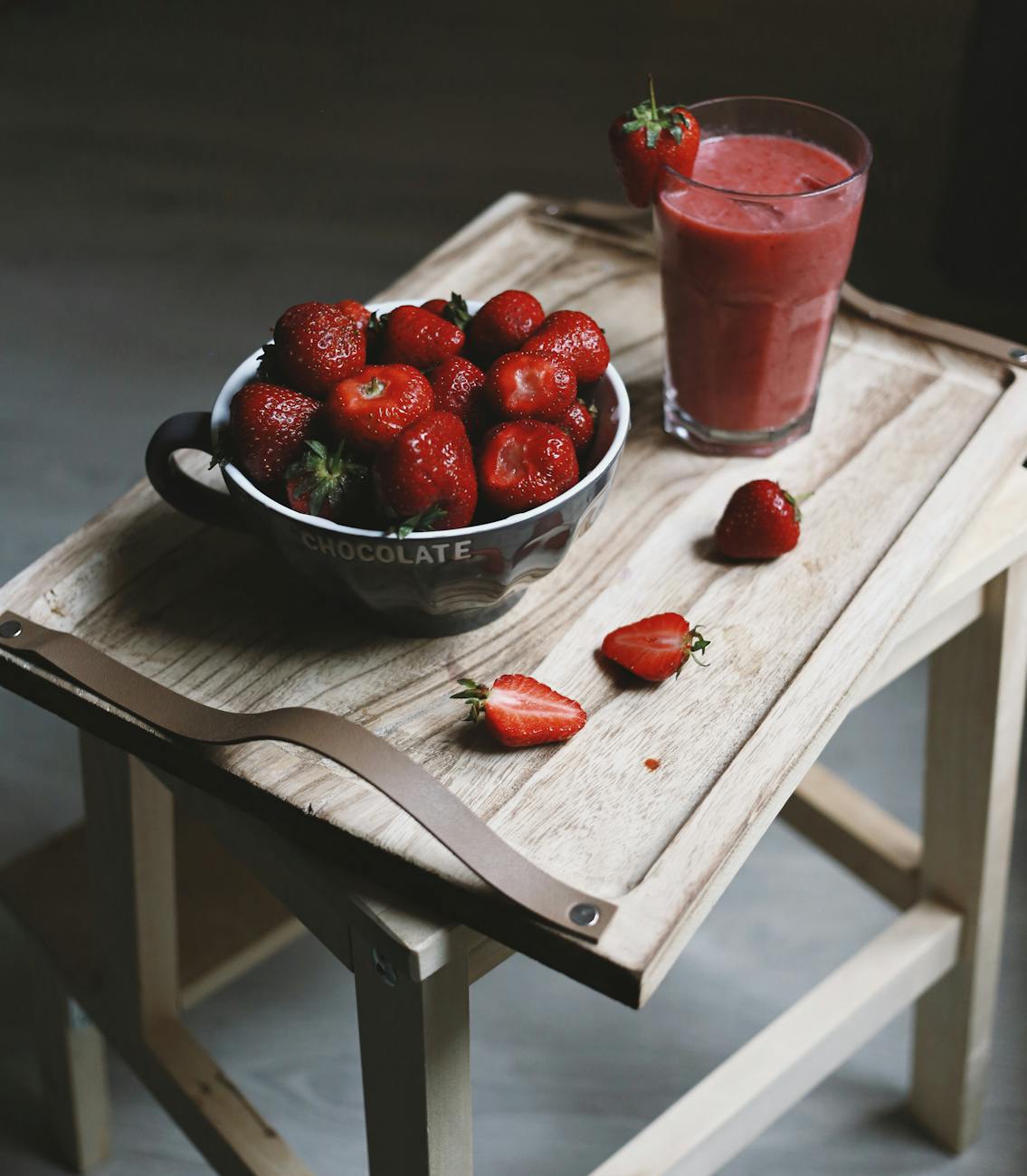
Stress less smoothie 🍓

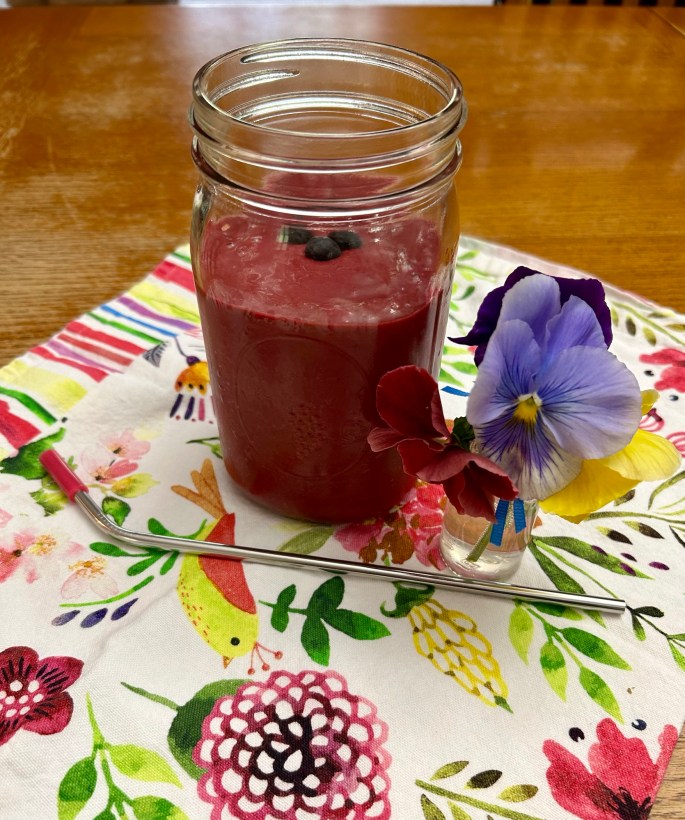
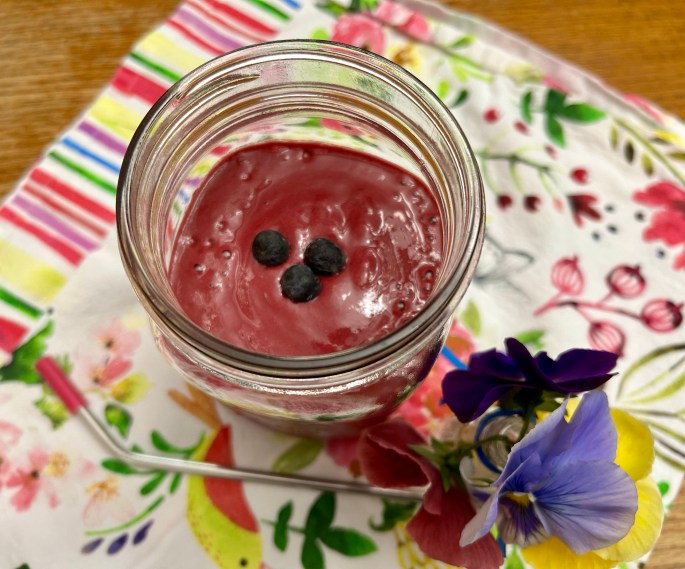
Below is my newest smoothie creation.  It is full of nutrient-rich foods that are high in fiber.  Some of the ingredients may cause you to raise an eye-brow in wonder, but I promise, it does taste great.  That said, feel free to adjust, add to, or eliminate ingredients that don’t suit your palate or dietary needs.

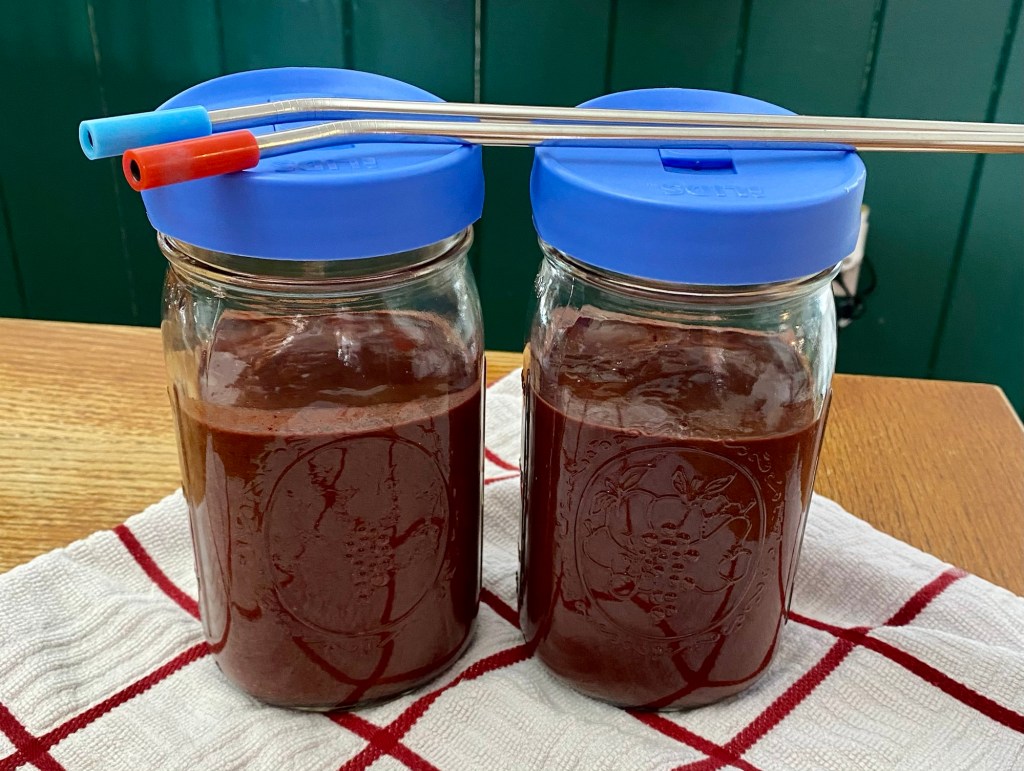
This recipe can be made ahead of time and frozen into individual servings.  They will stay fresh in the freezer for up to three months.  Then, whenever faced with a stressful day, take one smoothie out the night before, set it in the fridge to thaw, and then it’s grab-and-go convenience for the next workday. Sip on it through a lunch meeting, or if more time is available, pour it into a bowl and sprinkle on favorite fruit and nut/seed toppings, along with a bit of granola. 

I can’t promise that this recipe will change the stress around you. However, it does provide a powerful nutritional punch to help stave off the effects of stress, and offers one less thing to worry about.  Plus, it feels good knowing that if everything else goes wrong in the day, at least one small part of your day was stress-free.  

Cheers to one less thing to stress about!

Berry Stress Less Smoothie

Nutrient dense, stress combating meal replacement

Ingredients:

2 cup spinach, riced cauliflower, or kale (can be frozen)

½ cup strawberries, frozen

½ cup raspberries, frozen

½ cup cherries, frozen

1 apple

½ cup lentils

1 parsnips

2 tablespoon flax, chia seeds, or hemp seeds (or combination of any two)

2 tablespoons goji berries, OR 2 medjool dates, OR 2 prunes, optional

2 tablespoons cocoa or cacao powder, optional

2 scoops protein powder, optional

1 cup beet juice (can use pomegranate or cherry juice or simply use water)

1 cup milk  plant or dairy based variation)

½-1 cup of water, if too thick

Directions:

Put all ingredients in high powered blender

Blend until creamy and smooth

Makes 2 large servings 

Chocolate Cherry Berry Smoothie

“If you’re one of the many people who struggle to eat enough fruits and vegetables each day, adding smoothies to your diet may help.”–WebMD

Photo by PNW Production on Pexels.com

Why Make a smoothie? 🍓🍒🫐🥬

I love a good smoothie, but I am often questioned about why make a smoothie when I could eat the same foods for your breakfast or lunch? It’s a fair question. Personally, I enjoy eating a good meal.  However, if, like me, your morning is busy, the day’s schedule is packed, and even your lunch time is a working lunch, a smoothie might be one way to ensure a healthy dose of nutrition for at least one meal.

The key to a balanced and nourishing smoothie is whole food ingredients, with heavy emphasis on fruits and vegetables, in order to get a healthy mix of carbohydrates, protein, and fats.  This ensures your smoothie is full of fiber, has a wide variety of vitamins, minerals, antioxidants, and other beneficial nutrients. This is why I advocate for making your own smoothie, rather than buying it, so that you can control the ingredients.

customize your own creation 🍎🥭🍌

Photo by T Leish on Pexels.com

Smoothies are customizable; therefore, even though I am sharing my latest smoothie recipe, you can feel free to swap out one whole food ingredient for another.  For example, if you need to avoid seeds in your diet, but you want to maintain a dose of healthy fats, swap the seeds for an avocado. (Some grocery stores sell frozen bags of avocado cubes.)  If you don’t have one of the fruits on hand the recipe calls for, use what you have on hand. (I do this all of the time.) 

Sure, switching one ingredient for another, may somewhat vary the taste, texture, or nutritional content.  However, as long as you’re swapping out one fruit for another, one vegetable for another, and so forth, you are still overall increasing the consumption of fruits, vegetables, and other healthy nutrients–which is the goal. 

Smoothie benefits✨

Photo by Milada Vigerova on Pexels.com

Here are the benefits (the pixie dust) of the ingredients in this recipe:

Spinach or cauliflower:  These cruciferous vegetables are chock full of essential nutrients that are associated with lowering risk of chronic disease, such as cancer and heart disease.

Cherries: This fruit is full of polyphenol antioxidants which can protect our heart from cell damage and may reduce inflammation.

Blueberries: Full of flavonoids, especially anthocyanins which gives the fruit its gorgeous hue, blueberries are associated with reducing oxidative stress that can lead to inflammation among numerous other benefits. 

Banana: In addition to being an excellent source of potassium, bananas, especially when frozen, lend a creamy texture to smoothies.

Prunes: These luscious orbs are full of fiber, potassium, vitamin K, and boron.  The latter two ingredients are key to bone building health.

Cinnamon: The National Institutes of Health describes cinnamon as a “multifaceted medicinal plant that is “an antioxidant, anti-inflammatory, antidiabetic, antimicrobial, anticancer, lipid-lowering, and cardiovascular-disease-lowering compound, cinnamon has also been reported to have activities against neurological disorders, such as Parkinson’s and Alzheimer’s diseases.”

Cocoa powder:  This much beloved ingredient is also full of flavonoids, which have been shown to lower blood pressure and increase blood flow to heart and brain.

Protein powder: Obviously, this ingredient increases the protein content of your smoothie, but it affects texture by making it creamier.

Seeds: These tiny, but mighty ingredients, contain alpha linolenic acid (omega-3 fatty acid) which may increase brain function and boost the immune system.  In addition, they are full of fiber, protein, and a variety of minerals. 

Beet juice: Beets are rich in nitrates that the body converts to nitric oxide which helps with blood flow and lowers blood pressure.  Additionally, beets are full of other beneficial nutrients as they are also part of the cruciferous family. ( I rarely include juice in my smoothie recipes, but this is one juice I will add.)

Whole Food ingredients that can even be made ahead of time! 🍍🥝🍑

Photo by Lisa Fotios on Pexels.com

As you can see from the nutritional deconstruction of this recipe, smoothies made with whole food ingredients can be a healthy part of your daily dietary intake. They can be easily made from frozen fruits and vegetables, so you don’t have to waste what you don’t use. 

Furthermore, smoothies can be made ahead of time, such as the night before.  They can even be made several days ahead of time and frozen, which is what I often do.  Then, it’s simply a matter of removing one from the freezer the night before and placing it in the refrigerator.  The next morning, grab the container and go. It can either be sipped on the way to work or saved for later time in the day.   All that is required is to give the smoothie container a good shake, and you have a perfectly chilled, thick, and creamy delight that is not only tasty but is also contributing to the body’s overall health and well being.

High Quality Blenders can’t be beat 🍐🍇🍊

Photo by Mikhail Nilov on Pexels.com

One caveat I will mention is that it is worth investing in a quality, high powered blender if you are one who frequently makes smoothies as I do.  I actually purchased a certified reconditioned model, directly from the factory.  It automatically came with a five-year warranty, and the company’s customer service has been outstanding.  This is not only a cost-effective way to get a quality, high-powered blender, but it also promotes sustainability. Win. Win.  

From my home to yours, I wish you health, happiness, and peace.

Blend two at a time. Drink one, share one, or freeze for another day!

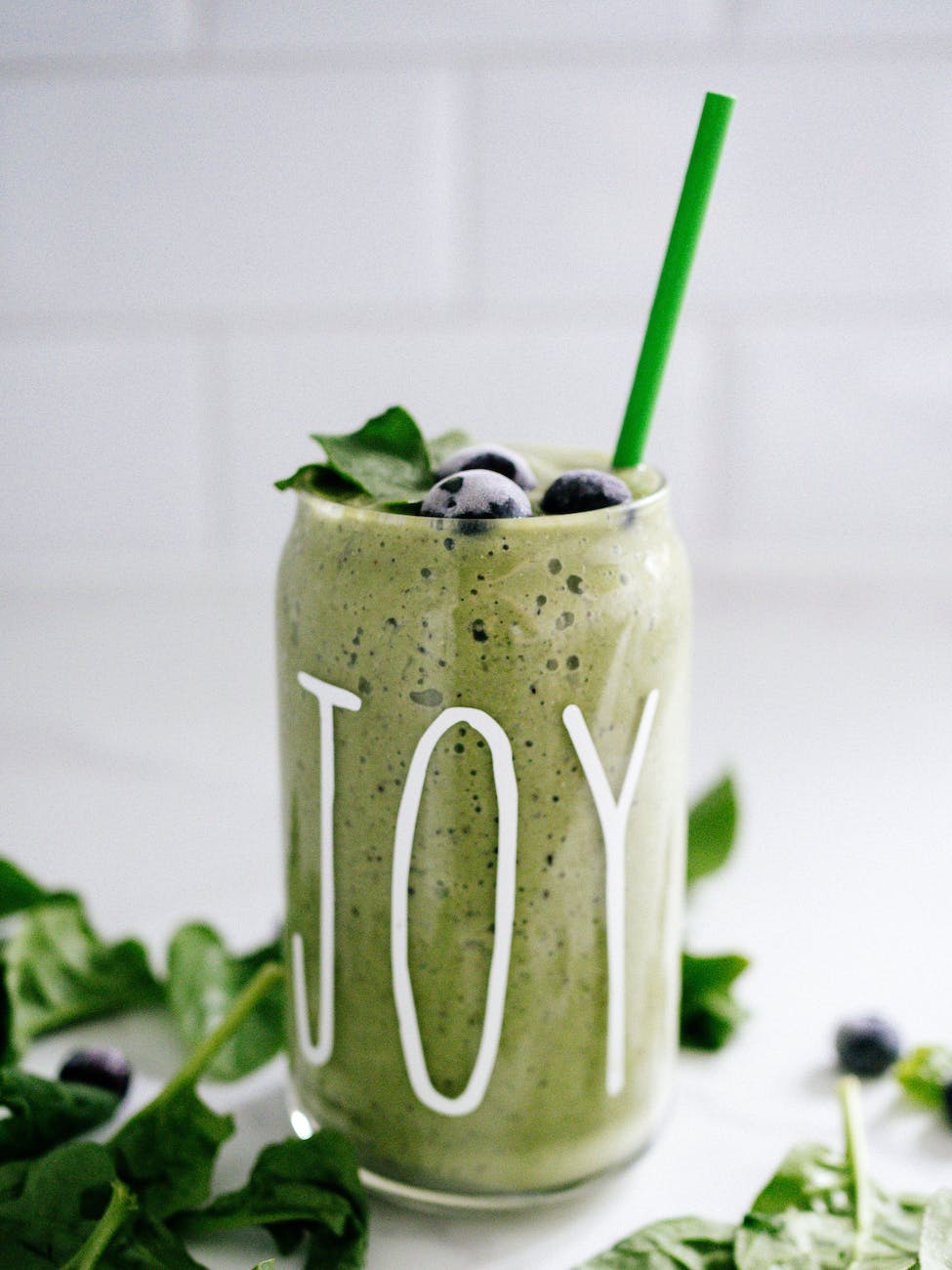
Chocolate Cherry Berry Smoothie

Ingredients:

2 cups frozen spinach or riced cauliflower 

1 cup frozen cherries

1 cup blueberries

1 ripe banana, frozen if possible

¼  lemon with its peel (remove seeds)

 2-4 prunes (can substitute medjool dates)

2 tablespoons cocoa powder

1 teaspoon cinnamon

vanilla protein powder

2-4 tablespoons flax, hemp, or chia seeds

2 cups water OR 1 cup beet juice + 1 cup water (Can substitute pomegranate juice for beet juice.)

Directions:

Place all ingredients in the order listed in a high powered blender and blend from one minute or until smooth and creamy.

Serves 2

Aunt Patty’s overflowing-with-goodness pound cake

Pound cake is so named because its original recipe called for a pound of each of its four ingredients: sugar, eggs, flour, and butter.”–Britannica 

Pounds of Appreciation 👩‍🏫

When I was a very young child, my mom would bake pound cakes for my siblings’ and my elementary teachers during the holidays.  I honestly do not remember for how long she kept this tradition going, since there were four of us kids.  What I do recall is carrying the cake into my classroom with great pride.  It was a family favorite recipe, so I felt like I was giving a grand prize to my teachers–a whole cake. 

sweet tooth cravings 🦷

As a young adult, I asked my mom for the recipe, which is when I discovered it came from my Aunt Patty, my mom’s oldest brother’s wife.  It was one of those recipes I made a couple of times before it became relegated to my recipe basket filled with index cards of recipes seldom used.  However, strangely enough this summer, I got a hankering for pound cake, and I dug out the recipe.

As soon as I read it, I realized that the recipe was back when I was ignorant to my celiac diagnosis.  Now I know why my stomach hurt every time I ate it!  I decided to try to create a gluten-free version of it.  It was NOT easy.

overflowing with love 🥮

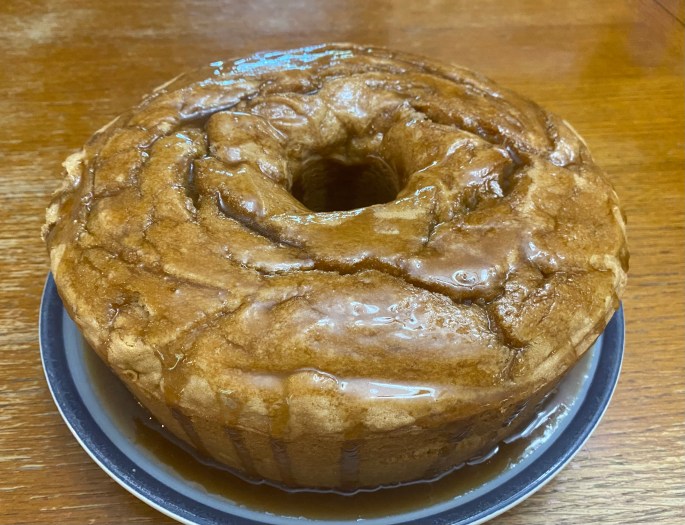
My first adaptation overflowed into the oven.  It was a mess!  The good news was that the remaining batter that fully baked in the pan tasted good, so I was on the right track.  After spending a good hour, and then some, cleaning the oven, I was back to the drawing board.

I did more research and visited three sites for whom I have found reliable baking information in the past.  These sites helped with adapting the ingredient amounts of Aunt Patty’s original recipe to a gluten-free version. Mama Know Gluten Free confirmed my addition of vinegar to the original recipe.  King Arthur’s website inspired the idea of making the cake more decadent by adding a glaze to the top.  Finally, Land O Lakes helped me get clear on the correct cake pan size. 

The taste of sweet success 🍰

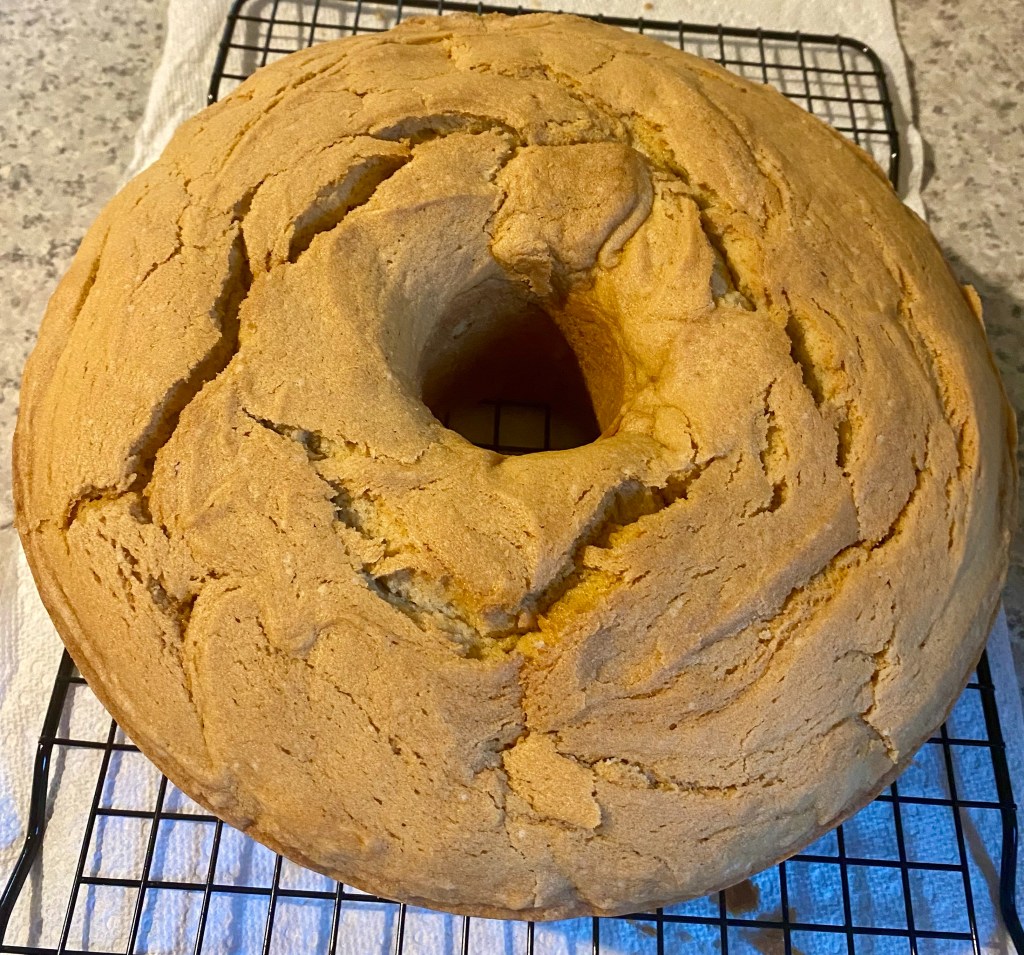
Cool on a rack first

Once success was attained, I knew I had to channel my former inner-child and share this gluten-free variation of Aunt Patty’s pound cake recipe. I’ve noted several adaptations/modifications that anyone can choose to bake a pound cake that meets dietary needs and/or taste preferences.  My mom often baked hers with cocoa powder, but for my gluten-free variation, I have not yet tried it, but I do plan to try that in the near future.

The gift of homemade goodness 👩‍🍳

Drizzle with glaze if desired.

In the meantime, as the holiday season is now upon us, give yourself, or someone special, the gift of decadent simplicity that can result when you mix and bake flour, eggs, sugar, butter, and few other simple ingredients!  From my home to yours, I wish a healthy and happy holiday season filled with “overflowing” homemade goodness from the kitchen!

Pounds of Saucy Goodness 🍯

Drizzling with good taste

Serve it up! 🥮

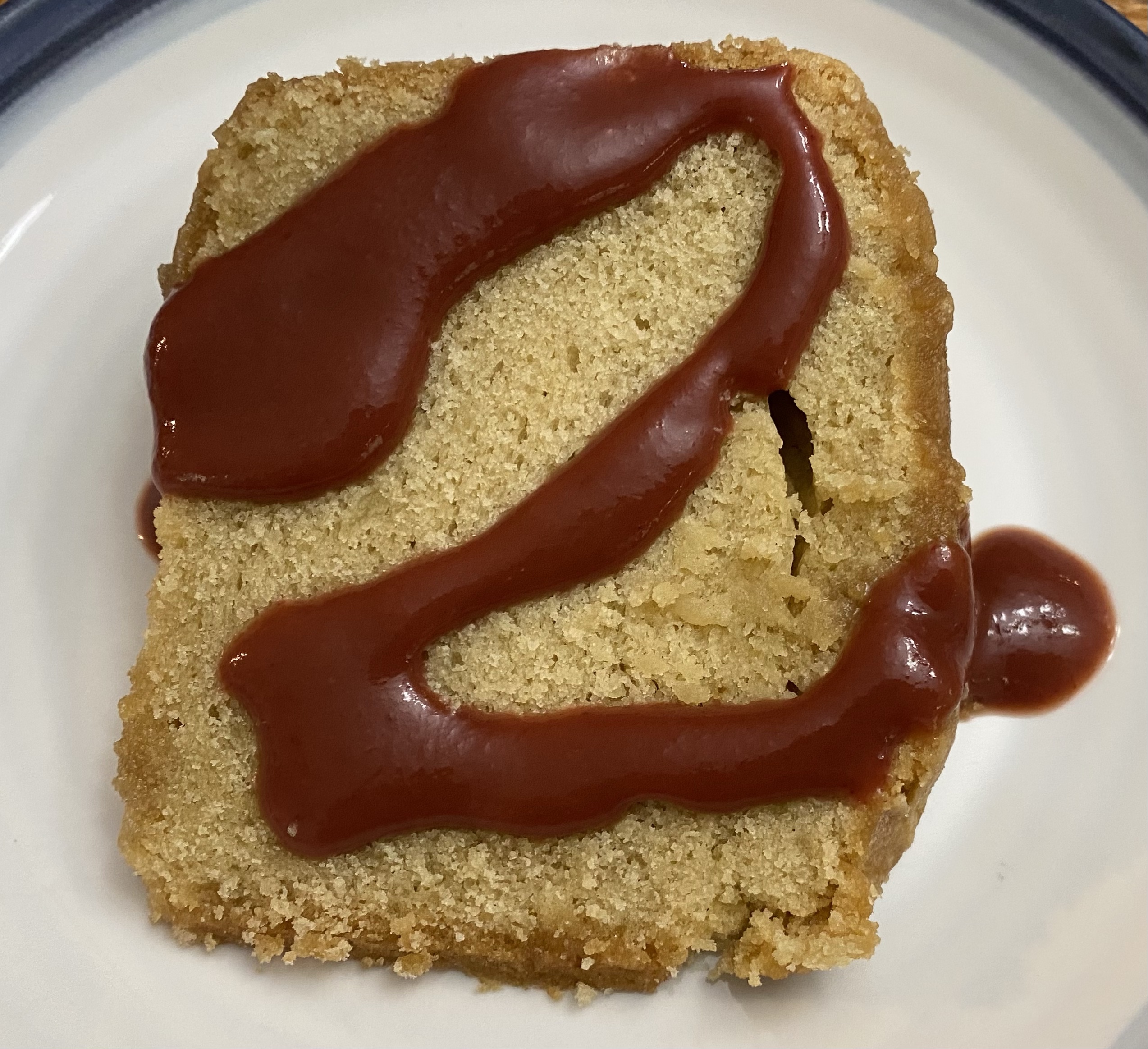
Add some extra sauce, like this strawberry sauce.

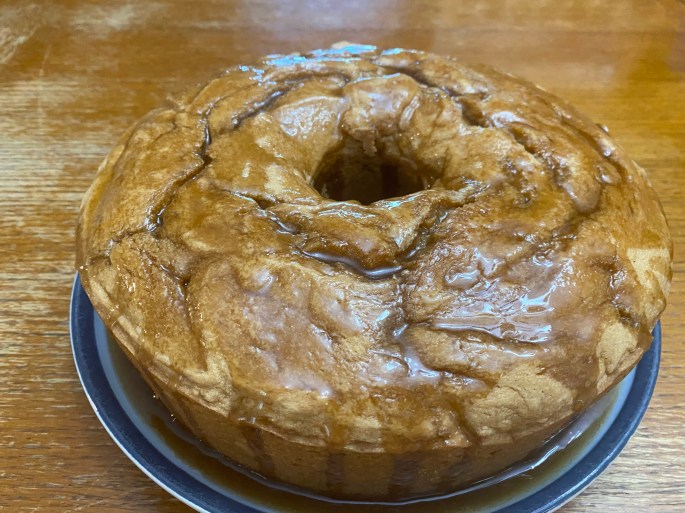
Aunt Patty’s Pound Cake, with optional Brown Butter Glaze

gluten-free and plant-based variations included

 Ingredients

1 cup milk, or non-dairy alternative

1 tablespoon vinegar

2 sticks (1 cup) room temperature butter, or non-dairy alternative

½ cup shortening

1 ½  cups sugar 

½ cup brown sugar

5 eggs, room temperature, or egg-free replacement 

3 cups of all purpose flour, or gluten-free alternative

(⅓ cup cocoa, optional if desiring a subtle chocolate flavor)

1 teaspoon baking powder

½ teaspoon baking soda

½ teaspoon salt

1 tsp almond extract

1 tsp coconut extract 

(Can replace almond and coconut extract with 2 teaspoons vanilla extract)

Brown Butter Glaze, optional

Ingredients

4 tablespoons butter, cut into small pieces

¼ cup brown sugar

¼ cup confectioner sugar

½  teaspoons pure vanilla extract

1-2 tablespoons milk

Directions

*Note:  It takes 3-5 hours for butter and eggs to come to room temperature

Preheat oven to 350 degrees

Prepare 12” (14.5 cups) bundt or 10” (16 cups) angel cake (tube) pan

Add vinegar to milk, and set aside in fridge 

Cream together butter, shortening, and sugar until light and fluffy

Add in eggs, one at a time mixing well between each addition

Gradually add in flour, baking powder, baking soda, salt, cocoa (if using) alternately with milk

Mix in extract(s), but do not overmix batter

Pour batter into cake pan

Bake approximately 1 hour or until toothpick inserted in the center comes out clean

Allow cake to cool in pan 15 minutes before turning onto cooling rack to completely cool

Serve as is or with desired toppings such as fruit or ice cream; or top with glaze (see below)

Directions to make glaze:

Place cut up butter in pan over medium heat

Continually stir butter until you begin to see brown bits

Remove from heat and whisk in brown sugar until incorporated

Whisk in confectioner sugar and vanilla extract

Gradually whisk in milk, 1 tablespoon at a time, until glaze is smooth and sugar fully dissolves

Poke hole with toothpick in cracks and crevices of cake top, and drizzle glaze over top of cake.

Store cake at room temperature in an airtight container for 3-4 days.

Can also freeze for up to 6 months.

Each loaf makes approximately 10 slices

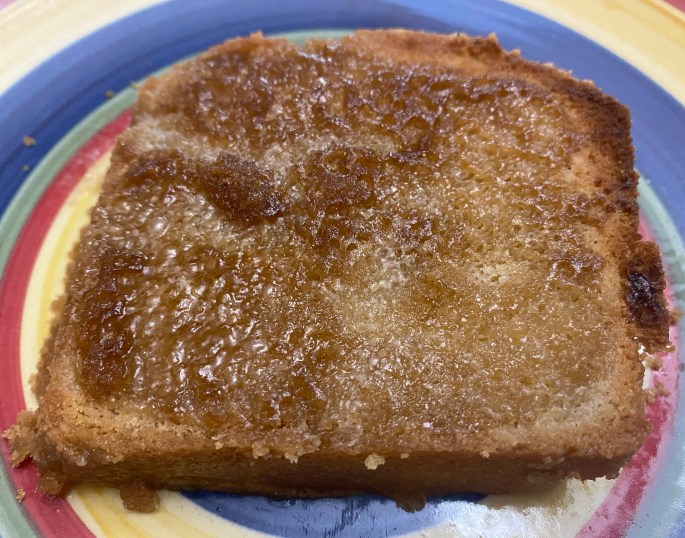
*Pound cake is great toasted in a skillet or oven with butter and sprinkled with brown sugar, cinnamon, and sugar.

*It is also excellent served warm with favorite toppings such as berries, cherries, sauces, whipped cream, and/or ice cream. 

Toast it up in oven with butter, Brown Sugar, and cinnamon

Double Dark Chocolate Muffins

with gluten free and vegan options

“All you need is love.  But a little chocolate now and then doesn’t hurt.”–Charles M. Schulz

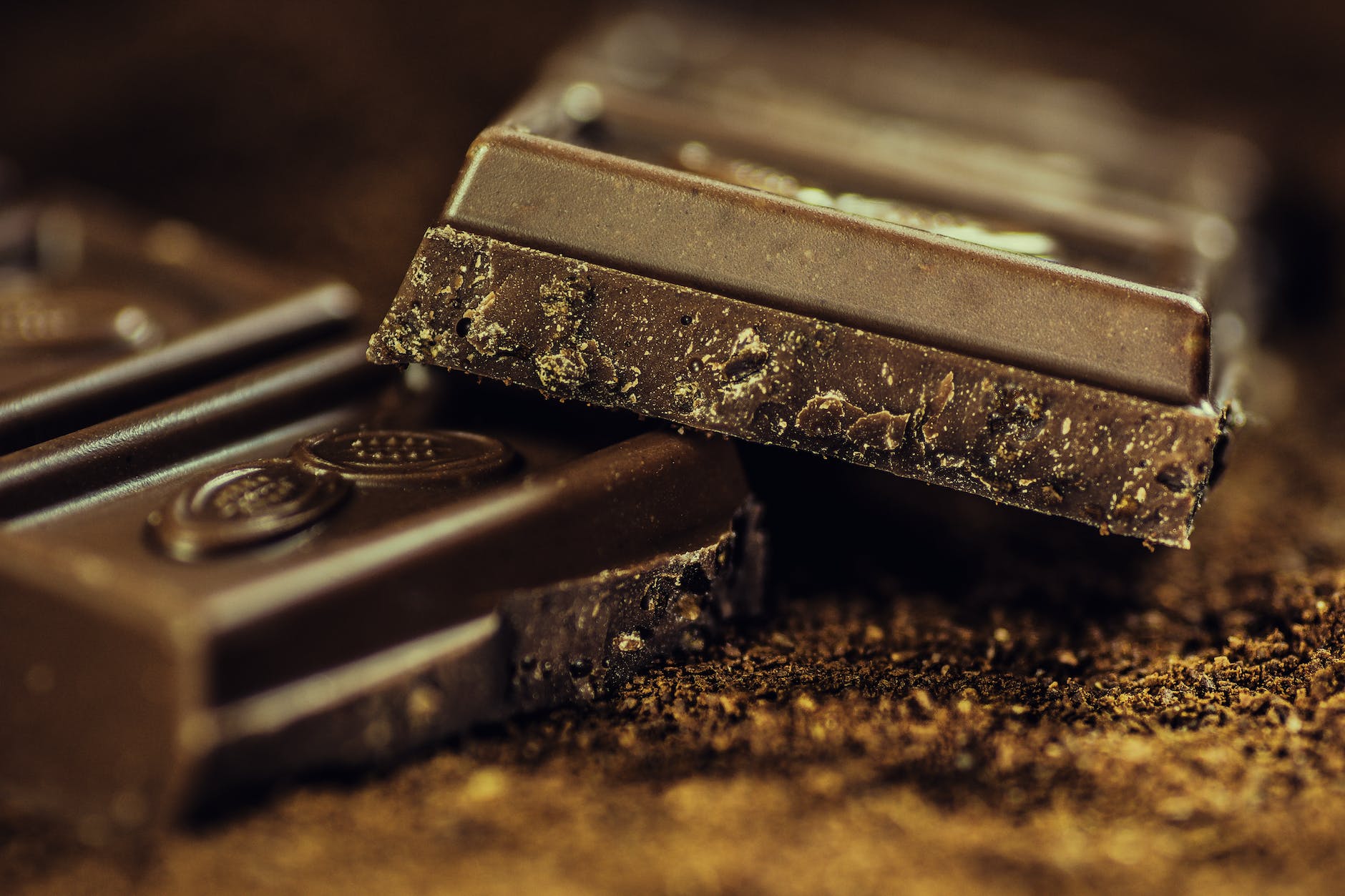
Photo by Pixabay on Pexels.com

Dark Chocolate Love 🍫❤️

My love for dark chocolate is no secret.  Even as a kid, on the rare occasion, typically around Christmas, when those Hershey miniature chocolates were given as part of Christmas presents, I would trade my milk chocolate for the special dark bar.  Now, I know that bar is only made of about 45% dark chocolate, but at the time, it was the darkest chocolate for which I was aware.  

Back then, I didn’t eat dark chocolate because it was good for me–who knew in the 70s?  I just liked that bittersweet taste.  Plus, we rarely had candy as a kid, so eating a Hershey’s bar, even the miniature kind, was a real treat.  

As an adult, I still like the bittersweet taste of dark chocolate, but I had to learn to develop a healthy relationship with food, especially chocolate, and it wasn’t always easy.  Who doesn’t love good food, especially tasty sweets?  Over the decades, however, I have decided what our grandparents taught us was right all along.  Eat your fruits and vegetables first, but always save a little space for a sweet treat!

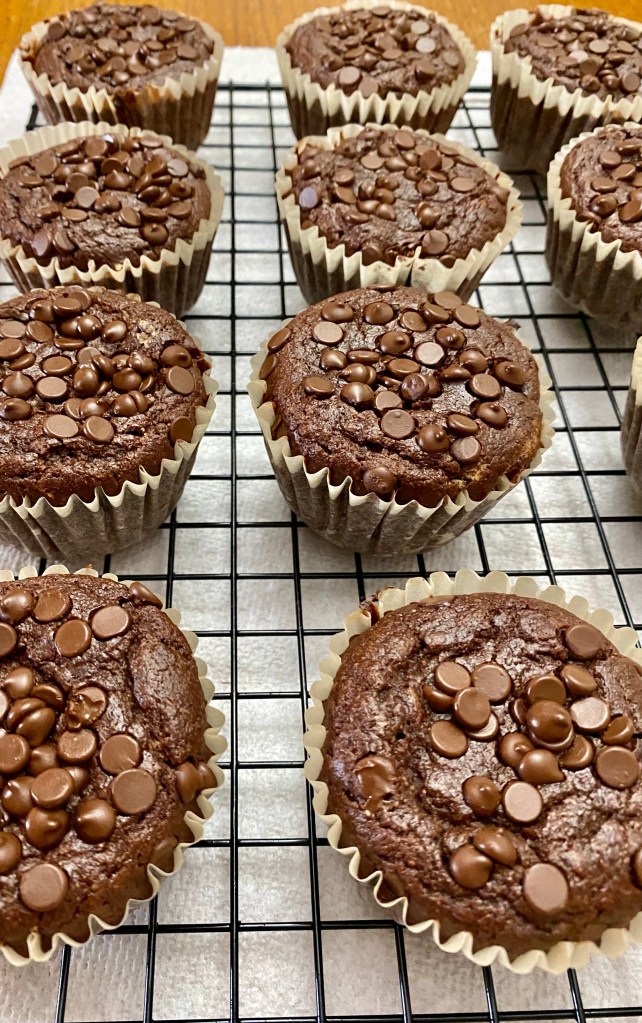
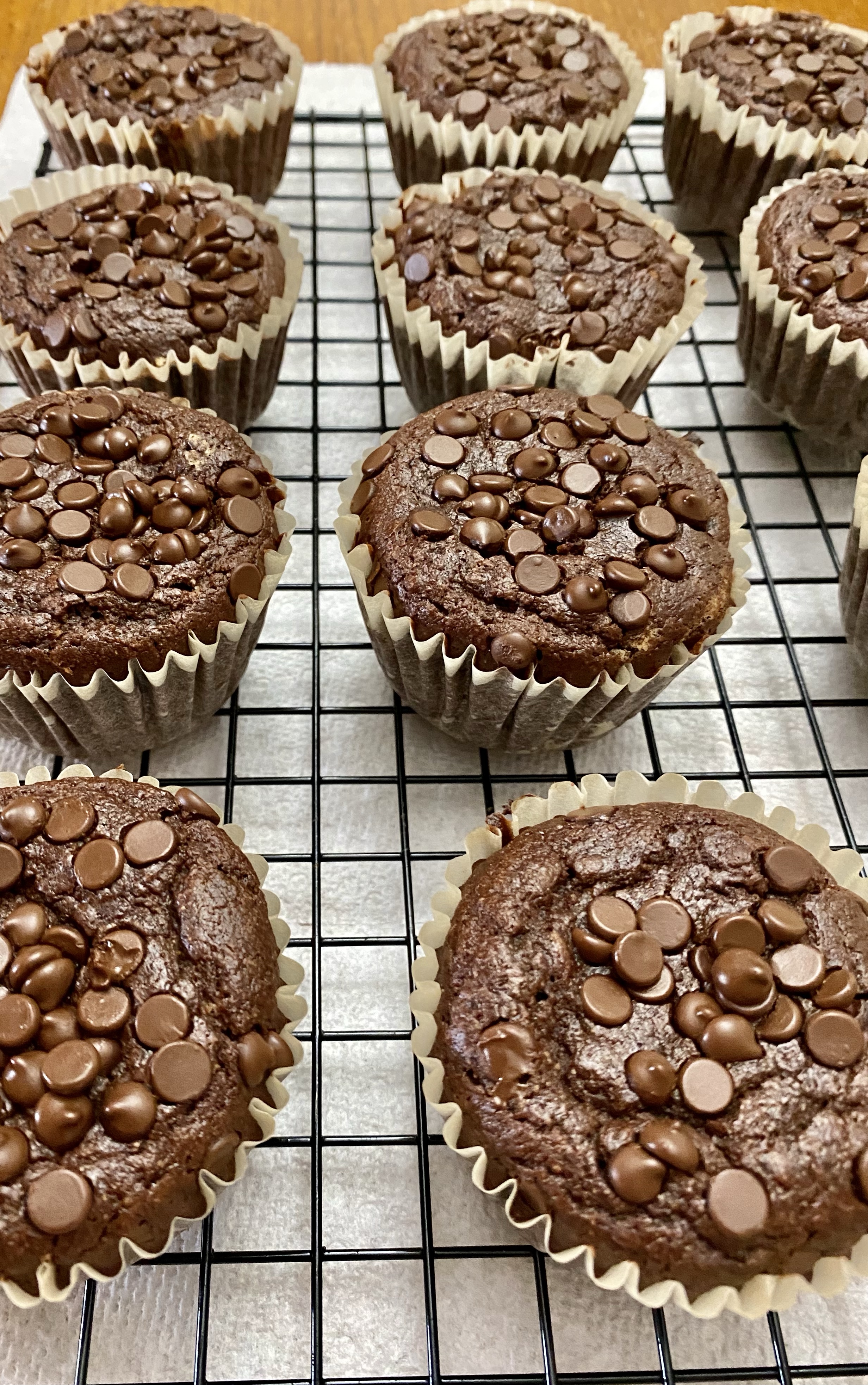
Make a batch and share the chocolate joy!

I don’t bake desserts weekly like my grandmother used to do, but I do enjoy baking when my time allows.  And, if I am baking something with dark chocolate in it, well, that’s all the more fun.

  My sister-in-law, Jacki, recently sent me a recipe she found in a Woman’s World magazine which is very similar to a variation I found on the website, It Doesn’t Taste Like Chicken. My recipe adaptation, listed below, is a hybrid of the two recipes based upon my own personal dietary needs as I have to eat gluten-free due to celiac disease, but I also choose to eat plant-based.  Therefore, feel free to adjust and tweak ingredients based upon your family’s preferences.

While I recognize, this recipe probably isn’t the most healthy choice for everyday, it does offer several benefits, making it a justifiable splurge.  First, there is oat flour, which is full of fiber, protein, vitamins, and nutrients, and it can help lower cholesterol.  Secondly, there is both cacao powder–an unprocessed version for cocoa powder, but you can always use cocoa powder–and dark chocolate chips, both of which contain magnesium, antioxidants, and flavonols.. The antioxidants can help lower cholesterol, and the flavonols offer numerous benefits such as supporting heart health, balancing the immune system, and boosting brain function to name a few of the benefits.  

Double the chocolate; double your pleasure!

Flexible and Adaptable REcipe 💜

Lastly, I forgo eggs and oil in baking when possible due to the fact that fats cause me reflux issues–and that’s no fun!  The cider vinegar makes a great egg replacement and helps the muffins rise.  Plus, you won’t even taste it once baked!  While the apple sauce retains the muffins’ moisture content without adding saturated fat.  

Even with all of these adaptations, please do not think I am saying this is an ultra-healthy breakfast recipe because oatmeal with fresh fruit, or avocado on whole grain toast, are probably healthier choices.  However, for a special weekend or holiday treat, or even as a dessert, these muffins are full of a rich chocolatey flavor and texture that is oh-so-yummy!  Serve them warm and drizzle your favorite topping over them or eat them plain.  These muffins freeze well–for up to three months in an airtight container–for future weekend treats, so you can be sure none of your muffins go to waste. 

From my home to yours, as always, I wish you (mostly) healthy, happy, and homemade fun!  Let me know what you think of these!

Make a batch and share the chocolate joy! 💖

Double Dark Chocolate Muffins

Ingredients:

1 ¼ cup oat flour (Can substitute all-purpose flour or gluten-free all purpose flour)

¾ sugar

½ cup cacao or cocoa powder 

2 teaspoons baking powder

1 teaspoon instant espresso powder, optional

½ teaspoon salt

1 cup favorite milk (I use plant-based)

½ cup applesauce (Can use equal amount of oil, if preferred)

2 tablespoons almond or peanut butter, melted 

1 tablespoon apple cider vinegar

¾ + ¼  cup dark chocolate chips (I used plant-based and gluten-free version)

Directions:

Preheat oven to 400 degrees

Line 12 muffin tins with cupcake cups

In large bowl, whisk together flour, sugar, cacao powder, baking powder, and salt

Melt peanut butter in microwave for 20-30 seconds

Fold in milk, applesauce, peanut butter, and vinegar

Stir in ¾ cup chocolate chips

Divide batter evenly among cups

Top cupcakes with remaining chocolate chips (I like to use mini chocolate chips on top.)

Bake 18-22 minutes or until toothpick inserted in center comes out clean

Allow to cool 10 or so minutes before serving

Makes 12 muffins which can be stored at cool room temperature for up to three days, or frozen in an airtight container for quick reheated treats

Feel free to dunk!

Cottage Pudding with Vanilla Sauce with gluten-free options

“At home, my food is just sort of comfort food. It’s not super fancy, but it’s certainly tasty.”–Anne Burrell

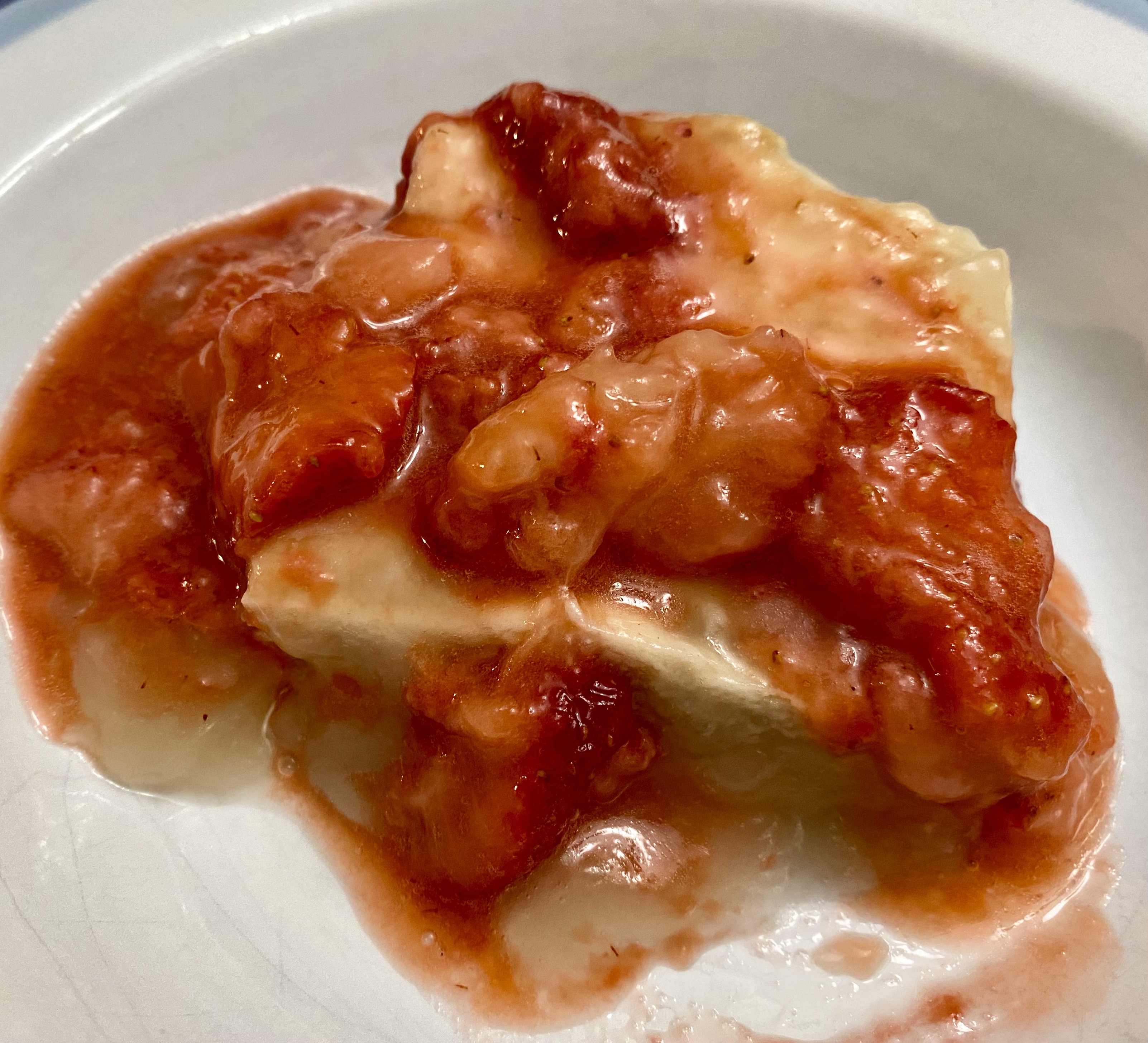
Serve it up with strawberry sauce or any other fruit sauce.

When I read the above quote by TV celebrity chef Anne Burrell, I realized I do not know much about who she is or the type of foods she likes; her words simply resonated with me. Therefore, I am not sure if my idea of comfort food is the same as hers, but most of my favorite comfort foods are budget-friendly, including the recipe from my childhood I am sharing with you today.  I think this recipe is especially comforting on cool evenings like the ones we experience during the fall time of the year.

I grew up surrounded by women who knew how to cook, what I considered comfort food, and it was definitely low-cost.  Two of these women, my grandmothers, came of age during the depression and the World War 2 era that followed, so you know they had to learn to manage with few resources. And though my own mom did not grow up during such challenging circumstances, as the mother of four children, she definitely had to learn to cook as inexpensively as possible.

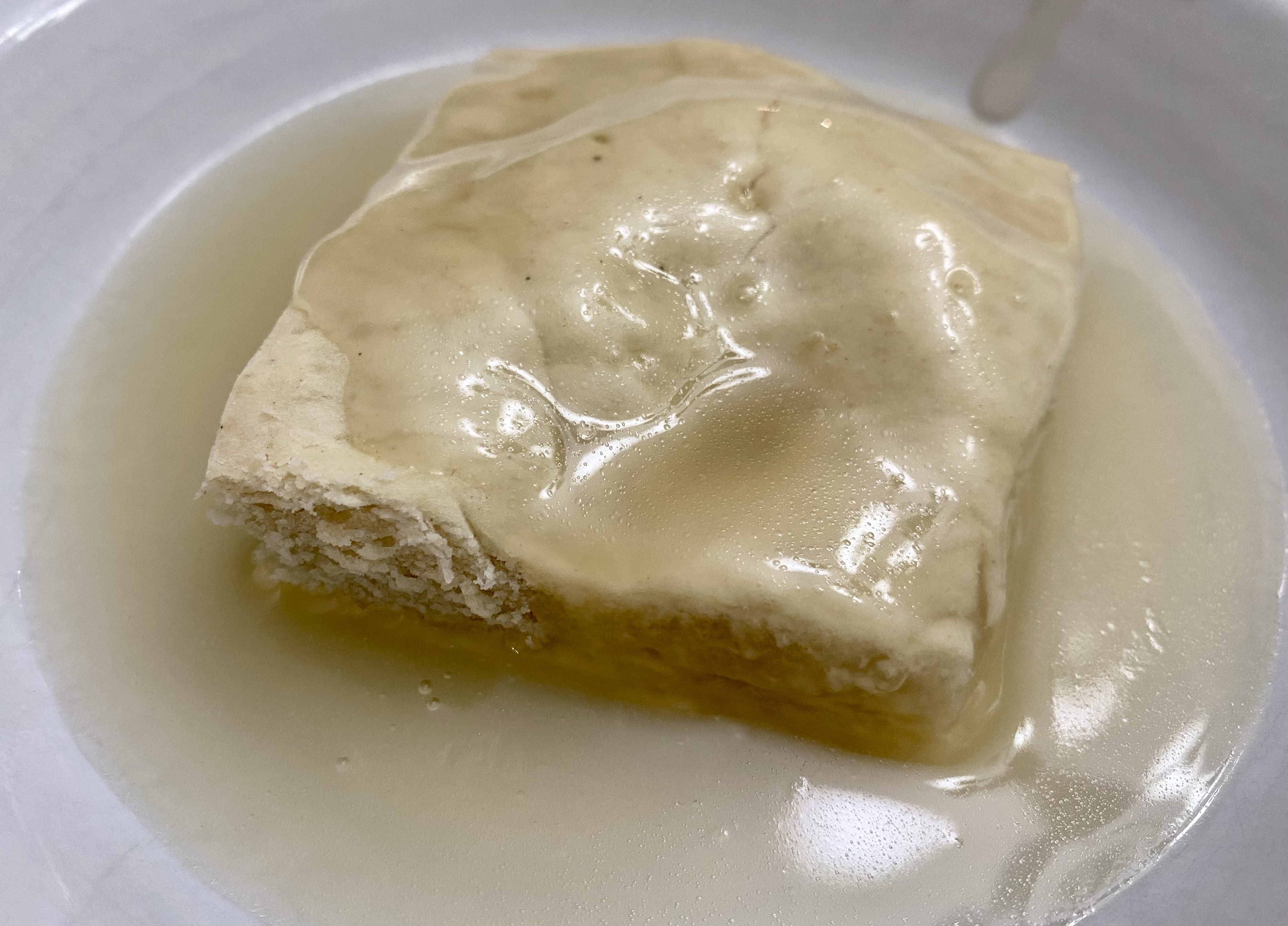
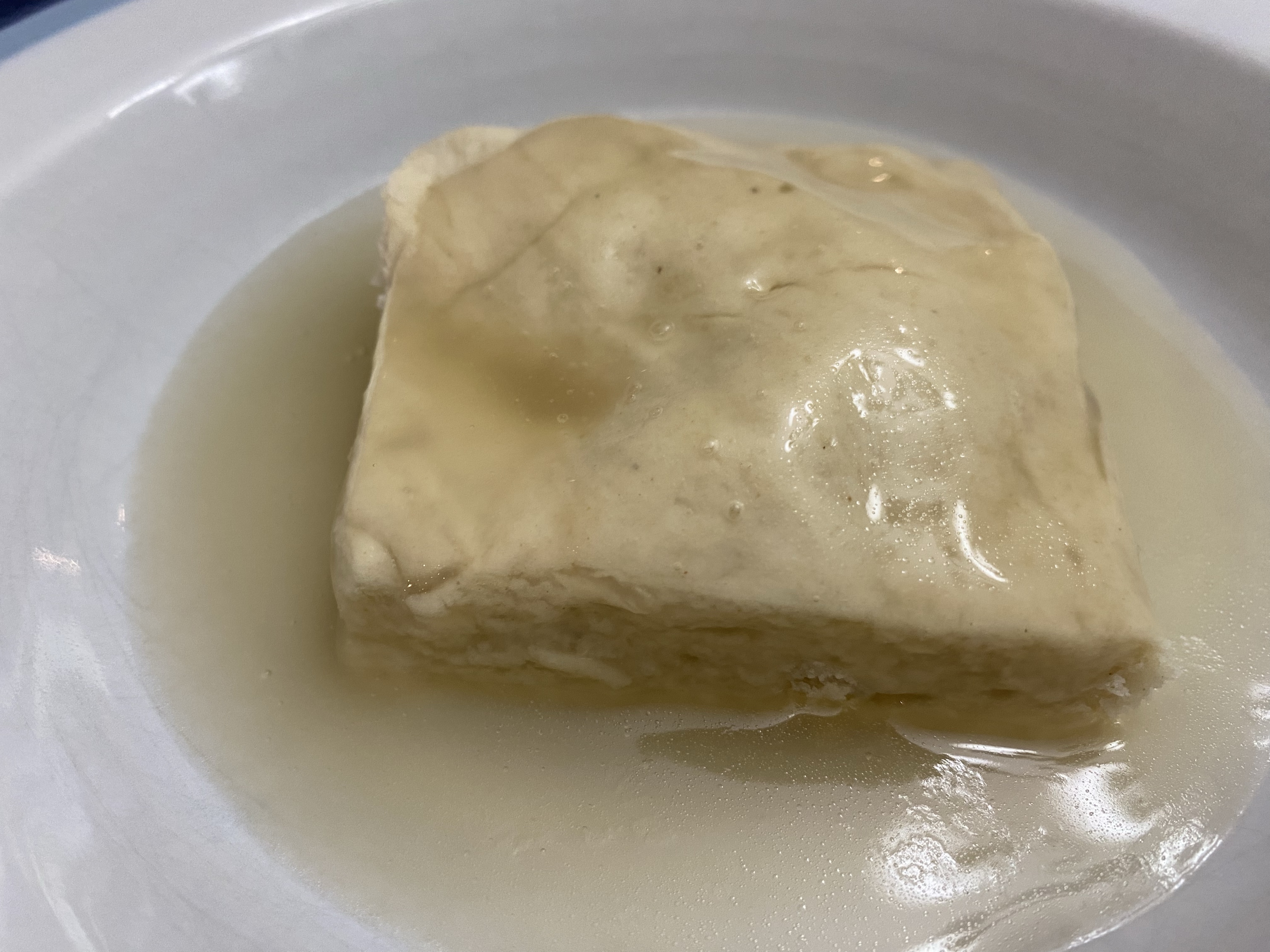
Don’t let the plain canvas fool you, the vanilla sauce is rich and thick!

Cooking on a budget does not have to equate with not eating well.  Some of the best and healthiest foods are quite often budget friendly–although I know this recipe is an exception with regards to “healthy.”.  In fact, this recipe uses common ingredients most of us have on hand if we bake with any regularity.  

As best as I can tell, based upon my limited research, this recipe originated in the mid-1800s in North America. “Cottage,” refers to the fact that the recipe was considered simple and affordable for common farmers and laborers of the time period.  “Pudding” is a word that dates back to England, and it was, and still sometimes is, used to refer to any dessert.  However, given this cake is served with a sauce, lending it somewhat mushy, perhaps the word pudding was intentional.

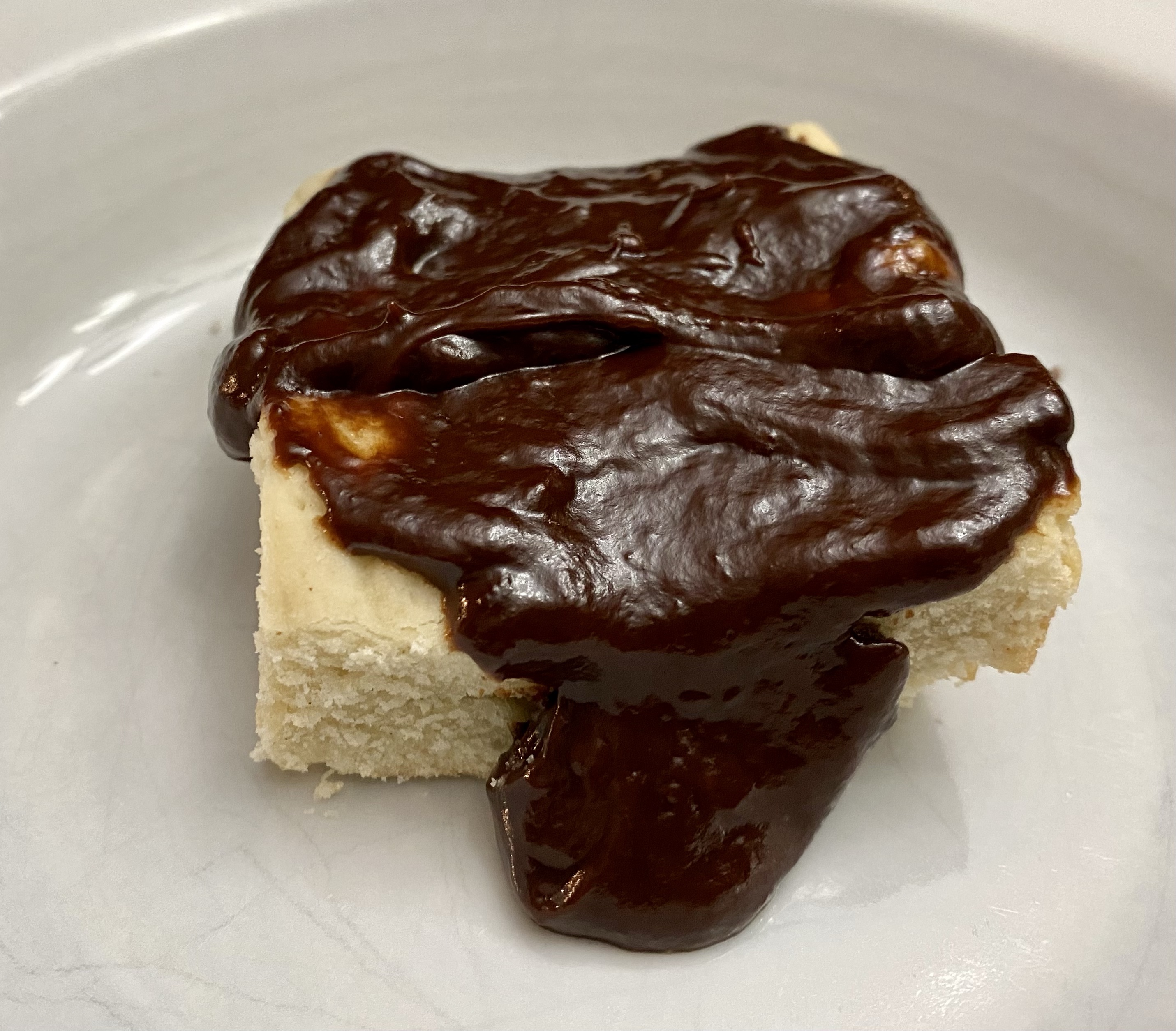
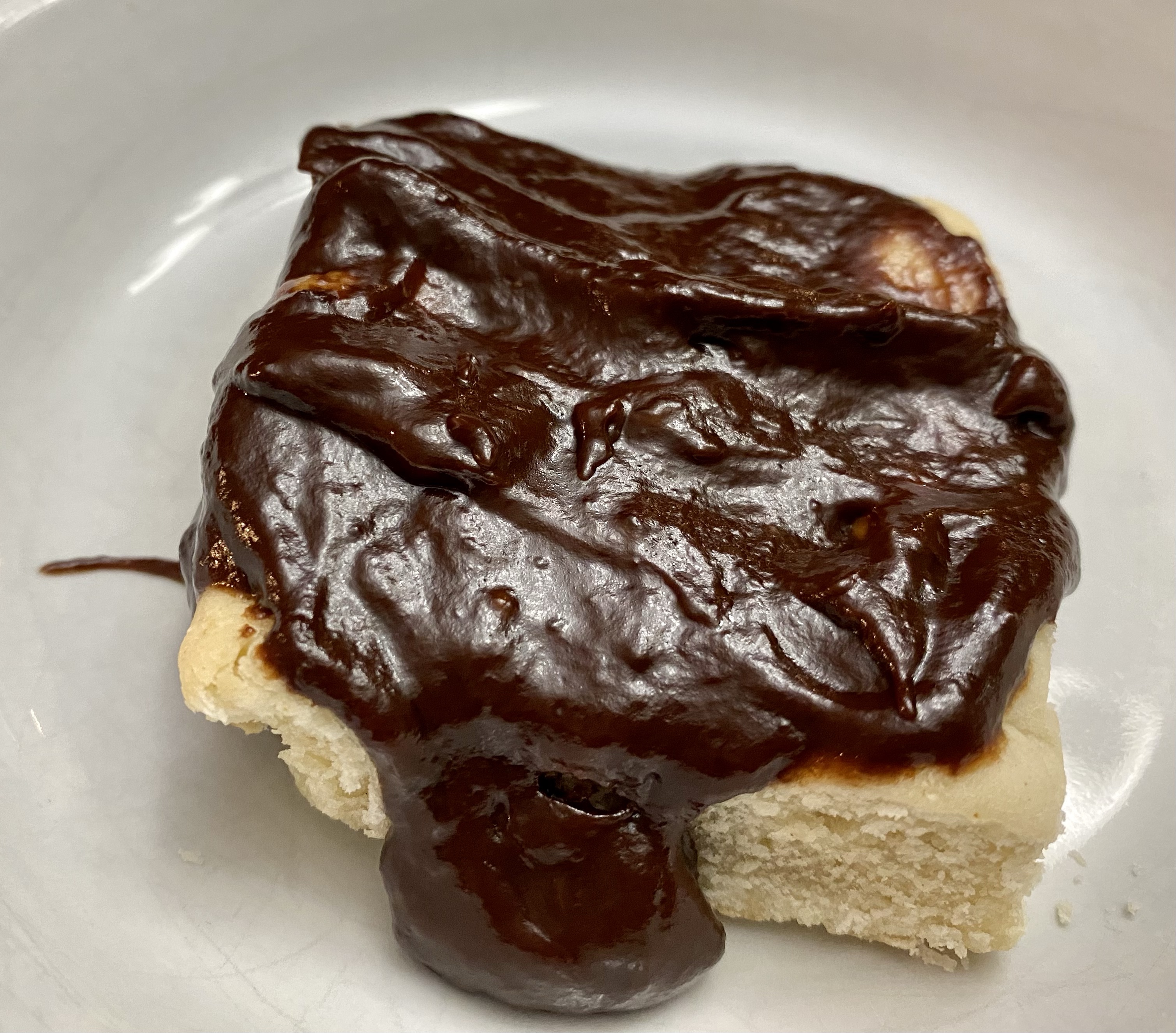
This shortbread-like cake lends itself to a wide-array of toppings, such as chocolate sauce.

Regardless of its history, I believe there is a time and place for celebratory, comfort food, and it doesn’t have to cost an arm and a leg to make it.  This simple dessert is one my mom used to make on rare, but special occasions for the family when I was younger.  In fact, it was often made in honor of birthdays or other special events.  

I remember feeling excited as a youth when this was served.  Perhaps, it was the warm syrup served on top of it that made it feel special as if we were eating a thick, dense pancake for dessert.  Then, again, maybe because with six of us eating–four of which were kids, and only nine servings–I knew I had better enjoy and savor the dessert on the day it was made. (There certainly weren’t any leftovers that I can recall.) Plus, there was that simple vanilla flavor that was warm, comforting, and oh-so-tasty.

Load this cake up with your favorite fruit; it can hold up to it because it has more of a shortbread consistency.

I was reflecting on my impending birthday when this recipe came to mind.  I rooted around my old recipe box and dug this oldie-but-goodie recipe card. Since I had not baked it since well before my diagnosis of celiac disease, it occurred to me that I should create a gluten-free variation to celebrate my birthday. 

(My celiac disease went undiagnosed until my late 40s, so my mom would not have known I needed a gluten-free variation.  Besides, celiac disease was not really well-known/understood in the era in which I was raised.)   

I hope you will give this simple recipe a try.  The cake is quite similar to shortbread, or an old-fashioned biscuit–so it lends itself to a wide-array of toppings.  It’s traditionally served with a glaze or custard sauce, but you could certainly use any fruit toppings, or other traditional sauces, such as brown butter, caramel, lemon, or chocolate.  I certainly came across several recipe variations for sauces.   

The cake is a versatile canvas–welcoming all flavors and types of sauces.

Cut this cake into nine pieces.  Serve the cake warm and then drizzle plenty of sauce over it. Feel free to poke holes in the top of each piece before drizzling with syrup, as we used to do as kids, to soak up the maximum amount of syrup. It’s perfect with a cup of hot coffee, tea, hot cocoa, or even milk–if that’s your thing. 

From my home to yours, I wish you stories and memories filled with comfort food.

The original recipe written down for me by my mom. Notice there are three difference variations for the sauce.

Cottage Pudding with Vanilla Sauce

Ingredients:

1 ¾ cups flour, gluten free if needed

2 teaspoons baking powder

½ teaspoon salt

¼ cup soft shortening

¾ cup sugar

1 egg or plant–based egg substitute

1 tablespoon vinegar

¾ cup milk

1 teaspoon vanilla extract 

Sauce:

Ingredients:

1 cup sugar

2 tablespoons cornstarch (ensure it’s from a gluten free facility it needed)

2 cups water

2 teaspoon vanilla 

¼ cup butter, can be vegan 

Directions:

Preheat oven to 350 degrees

Prepare 9×9 baking with nonstick cooking spray

Stir together flour, baking powder, and salt in a bowl

In a mixing bowl, cream together shortening and sugar until light and fluffy

Beat in egg and vinegar until mixture is creamed together

Measure milk into cup and stir vanilla extract into it

Mixing slowly, add in about ⅓ flour mixture and ½ milk mixture

Once incorporated, add in another ⅓ flour mixture and rest of milk mixture

Add in remaining flour mixture until batter is smooth and well blended

Spread into prepared pan

Bake 25-30 minutes or until toothpick inserted in center comes out clean

Allow to cool 10 minutes before serving with warm sauce

Makes 9 servings

To make the sauce:

Meanwhile, mix sugar and cornstarch together in a pan over medium heat

Gradually stir in water

Bring to a rolling boil for one minute, stirring constantly

Stir in butter and vanilla extract

Once butter has melted and all ingredients are blended, sauce is ready to serve

Save leftover in airtight container in refrigerator

Warm sauce to serve over cake whenever eating leftovers

This sauce makes great syrup for pancake, waffle, or french toast