Running Toward Hope: A Marathon of Movement and Love

Every run is a work of art, a drawing on each day’s canvas. Some runs are shouts and some runs are whispers. Some runs are eulogies and others celebrations.”—Dagny Scott Barrios
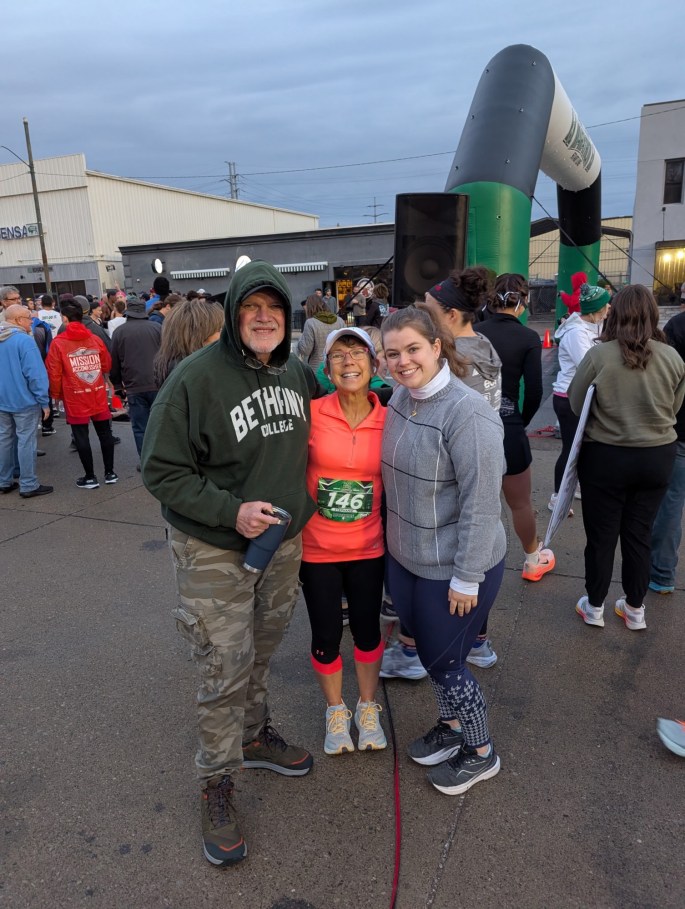
A group of three people, including a man in a green hoodie, a woman in a bright orange top with a running bib, and a woman in a gray sweater, gather smiling at a running event in an outdoor setting with other runners in the background.
Just before the start of the marathon I took time to get a hug from my two biggest supporters throughout the training process: my husband, L, and my daughter, R.

A Morning of Reflection and Gratitude 🌅

A light mist fell as an overcast gray morning began to chase away the night. I stood quietly in a throng of animated runners, taking deep breaths as reflection and gratitude washed over me. Months of preparation had led to this moment, and I felt thankful not only for my health but for the loving support that carried me here—to this celebration of movement, resilience, and connection.

Running as an Act of Hope ✨

It had been ten years since I last pinned on a bib for this distance, and my body hummed with anticipation, hope, and belief—the belief that movement is for everyone at every age, and that it is, in itself, an act of hope. I was about to embark on an emotional 26.2-mile trail of faith that became more about the people who supported me than the miles themselves.

Discovering Joy in Gentle Movement 😄

I came to running later in life, and it wasn’t easy at first. Only when I learned to approach running gently—to let go of preconceived (and societal) notions of what running “should” be—did I discover paths full of freedom, clarity, and renewal. Movement, whether running, walking, dancing, or stretching, benefits body, mind, and spirit. It brings a sense of structure to an often chaotic world and offers a feeling of accomplishment—if nothing else goes right in a day, at least I moved my body. Movement brings us alive to ourselves, our spirit, and, in turn, to the world around us.

The joy, I’ve learned, is in the doing—not in attaching to a pace, distance, or goal. Those things can be part of the experience, but they aren’t required.

A man and a woman embrace warmly in a crowded setting, both smiling in a moment of connection before a marathon.
Maddie’s, my daughter, boyfriend, Connor, flew all the way from Austin, TX to be part of this event. Together, with Maddie, he helped plan the marathon surprise of a lifetime!

Redefining What It Means to Age 🧓

As I neared my 60th birthday, I began to notice messaging that framed this decade as one of limitation. I decided instead to flip the narrative and celebrate the 60s as a decade of possibilities. Why not run into this new decade the way I ran into my 50s—with eyes and arms wide to adventure?

Training with Gentleness and Grace 😌

Since I was already running regularly, I committed to training for a marathon, but this time with gentleness. Instead of a traditional four-month build-up, I created a ten-month plan that encouraged patience, routine, and presence. Twice-weekly strength training and yoga joined the schedule, as did listening to my body and using the run-walk-run method as needed. I also focused on proper hydration and fueling before, during, and after runs. Most of all, my husband and daughter supported me from the very beginning—their quiet, everyday encouragement becoming a steady foundation of strength.

A woman running on a street wearing a bright pink long-sleeve top, black leggings, and a cap, displaying a race number on her waist.
Gentleness was a large part of the 10-month training block that led to this moment of hope and celebration.

Adapting Through Life’s Curveballs 😰

Training for a marathon brings rhythm and structure to daily life—the early morning runs, the long weekend miles that lengthen gradually, and the sweet evening stretches after dinner. But life, of course, has its curveballs: weather shifts, fatigue, scheduling conflicts, unexpected events, and bouts of self-doubt. With age, though, I’ve learned to adapt rather than resist these realities, co-creating a practical, flexible approach to progress.

As my weekend long runs grew longer, my husband and daughter often appeared—driving by, stopping to cheer, or jogging beside me for a short distance. These small bursts of love in action fueled my heart and kept me going. Training, I realized, was less about mileage and more about cultivating fortitude, flexibility, and gratitude—along with a dash of fierceness—all essential life skills carried from the road.

A group of enthusiastic spectators cheer on runners during a marathon, surrounded by autumn foliage and a partly cloudy sky.
Maddie, and my husband, John, often showed up during the last few miles of my Saturday long runs to cheer me on as Maddie is seen here doing during the actual event itself.

Race Day: A Celebration of Love 💖

As the marathon began, the city of Huntington vibrant in energy, rebelling against the lackluster sky. Rhythmic footfalls and nervous chatter surrounded me as runners jostled for position. Warmly dressed spectators cheered, waving handmade signs against a backdrop of burnished orange, crimson, and yellow autumn trees. Little did I know that my daughter had turned this event into an outpouring of love.

Surprises Along the Course 🫢

At the start, my husband, daughter, and her boyfriend—who had flown in from Texas to surprise me—stood cheering. But that was only the beginning. Every few miles along the route, my daughter had arranged for friends, family, and coworkers to appear, waving signs and calling my name. I didn’t realize the scope of her plan until near the end, but each familiar face filled me with renewed energy, gratitude, and joy.
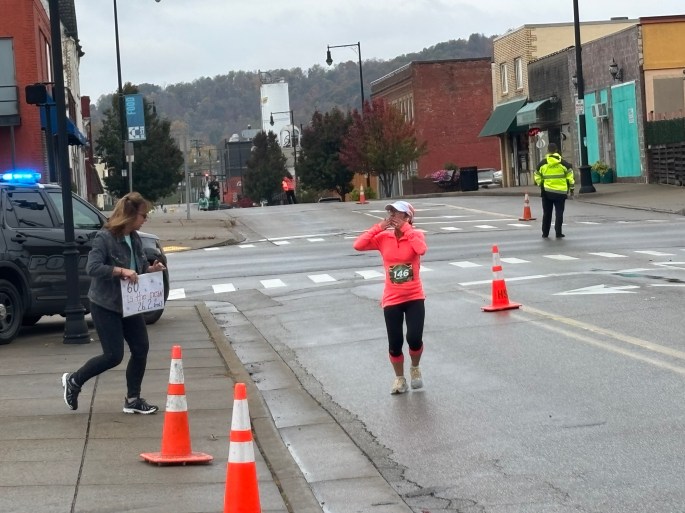
A female runner in a bright pink shirt crosses a street marked by traffic cones, while a supporter holds a sign nearby in a lively downtown setting.
The look of complete surprise when I see my sister, Traci, and her husband, David, around the 19-20 mile mark of the marathon. I had no idea they would show up along the route!
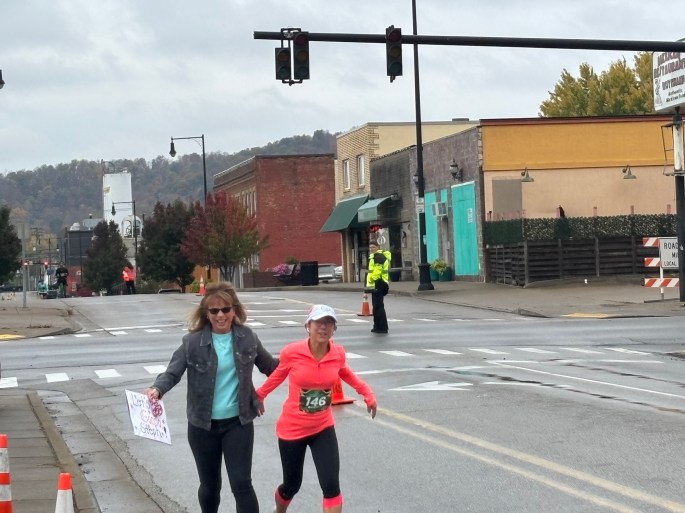
Two women running together on a city street during a marathon, with one holding a sign. They are surrounded by a lively atmosphere and shops in the background.
Of course, I had to veer off the path to give her hug, which helped uplift me over the next few miles.

Crossing the Finish Line 🏁

As I turned toward the final quarter mile, a group of race volunteers began singing “Happy Birthday” while my daughter’s boyfriend joined for a short burst of encouragement. My husband stood outside the stadium offering final words of encouragement, and my daughter met me at the bottom of the stadium ramp to run beside me as I approached the finish line. I wasn’t just completing a marathon; I was receiving the best birthday gift—a living reminder of love: a convergence of community, family, and friendship. It was a story of hope, purpose, generosity, and perseverance—the joy and power of a shared journey.

Two volunteers wearing bright reflective vests stand by a crosswalk in a park-like setting with blooming flowers and trees. In the background, a pathway leads towards a building under a cloudy sky.
This was the point, less than a quarter mile to go, when a group of race volunteers, led by an unknown female spectator and Conner, joined in to sing “Happy Birthday” to me as approached and rounded the corner to the finish line.

The Marathon as a Metaphor for Life 🪞

This journey mirrors life: we move forward by faith and grace, one step at a time, through both joy and challenge, supported by others who believe in us. That’s the power of movement—it connects us to our bodies, to others, and to something larger than ourselves. Choosing to move, to train, to keep going even when the path feels long, is an affirmation that with faith, growth and renewal are always possible—at any age.

Movement as a Lifelong Invitation 💌

Movement can take many forms: walking, stretching, dancing, or choosing to train for something big. The point is to move with intention and persistence, to embrace your own journey, and not attach to societal and social media messaging. Just move—and let movement open the door to new possibilities, both inner and outer.
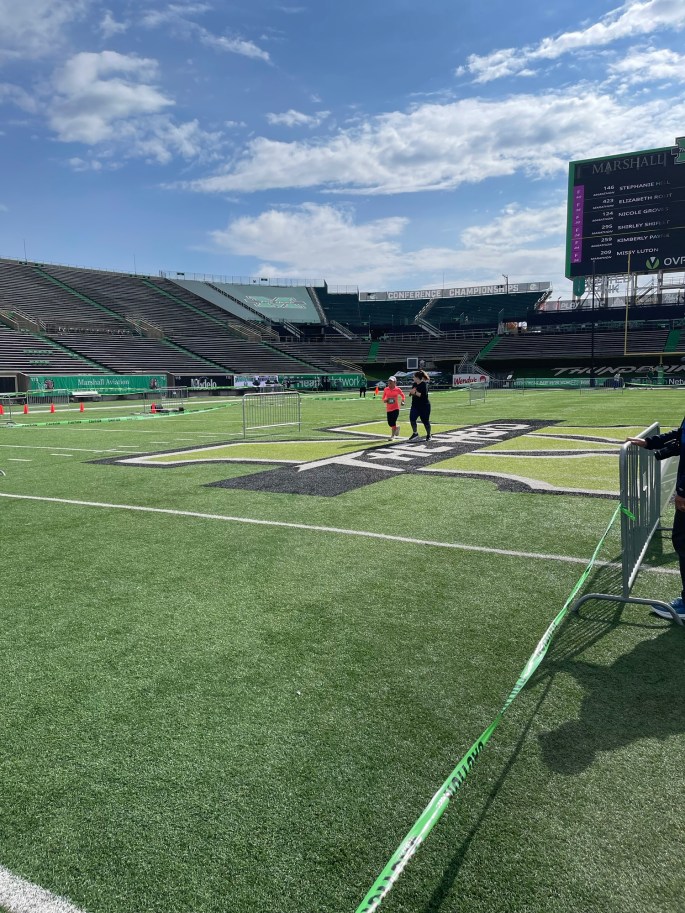
A runner crosses the finish line at a sports stadium, with spectators in the stands and a clear blue sky overhead.
Maddie runs alongside me for the last few feet, just as she did in 2015, to encourage across the finish line. Once I was close to the finish line, she dropped back behind the rope to let me finish alone. However, I really wasn’t alone. I was surrounded by a giant embrace of joy, hope, and love of family, friends, and community!!

The Joy Continues ☺️

The rhythm of footsteps, the smiles for miles, and the faces of loved ones along the route are forever imprinted in my heart—all reminders that every step matters. The marathon finish line was crossed, but the renewed sense of possibility and joy continues. Whatever your pace or path, keep moving forward—heart, mind, and spirit. You never know what acts of hope and love may be waiting for you along life’s path.
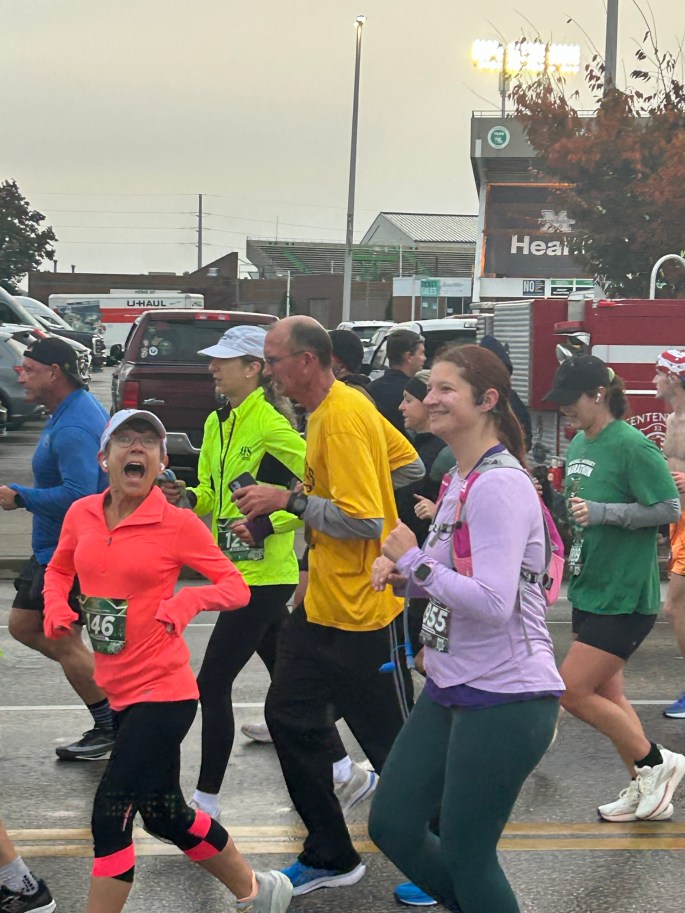
A group of runners participating in a marathon on an overcast morning, with diverse individuals wearing colorful athletic clothing and cheerful expressions.
The joy, and the journey of love and hope, continues . . .

A Grateful Heart 💜

P.S. Thank you to the countless and nameless MUM volunteers who invested hours of time to ensure the safety and success of runners, walkers, and those beloved spectators. And, an extra special heartfelt thank you to my friends and family who celebrated this milestone with me. And to Maddie and John, I love you to the moon and back.

A group of three smiling individuals taking a selfie on a subway or train, with a map visible in the background.
I wonder where the next path of adventure will lead?
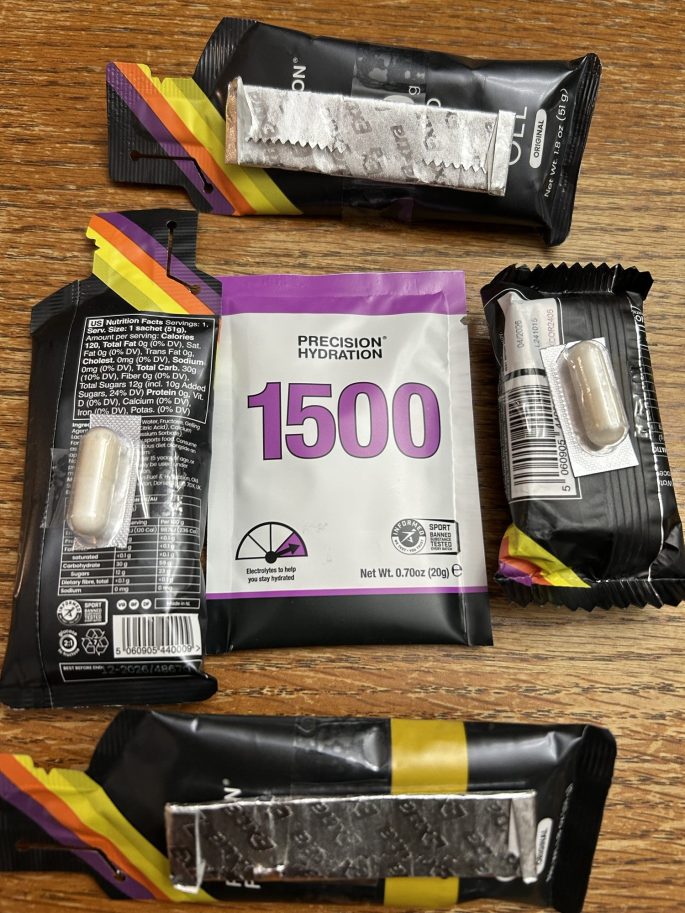
An assortment of hydration and energy products for runners, including electrolyte tablets and energy gels, arranged on a wooden surface.
Shout out to Precision Fuel and Hydration for the support during this training journey! I learned a lot from your team.

Embracing Life’s Unanswered Questions

“Be patient toward all that is unsolved in your heart and try to love the questions themselves. Live the questions now. Perhaps you will then gradually, without noticing it, live along some distant day into the answer.“–Rilke 

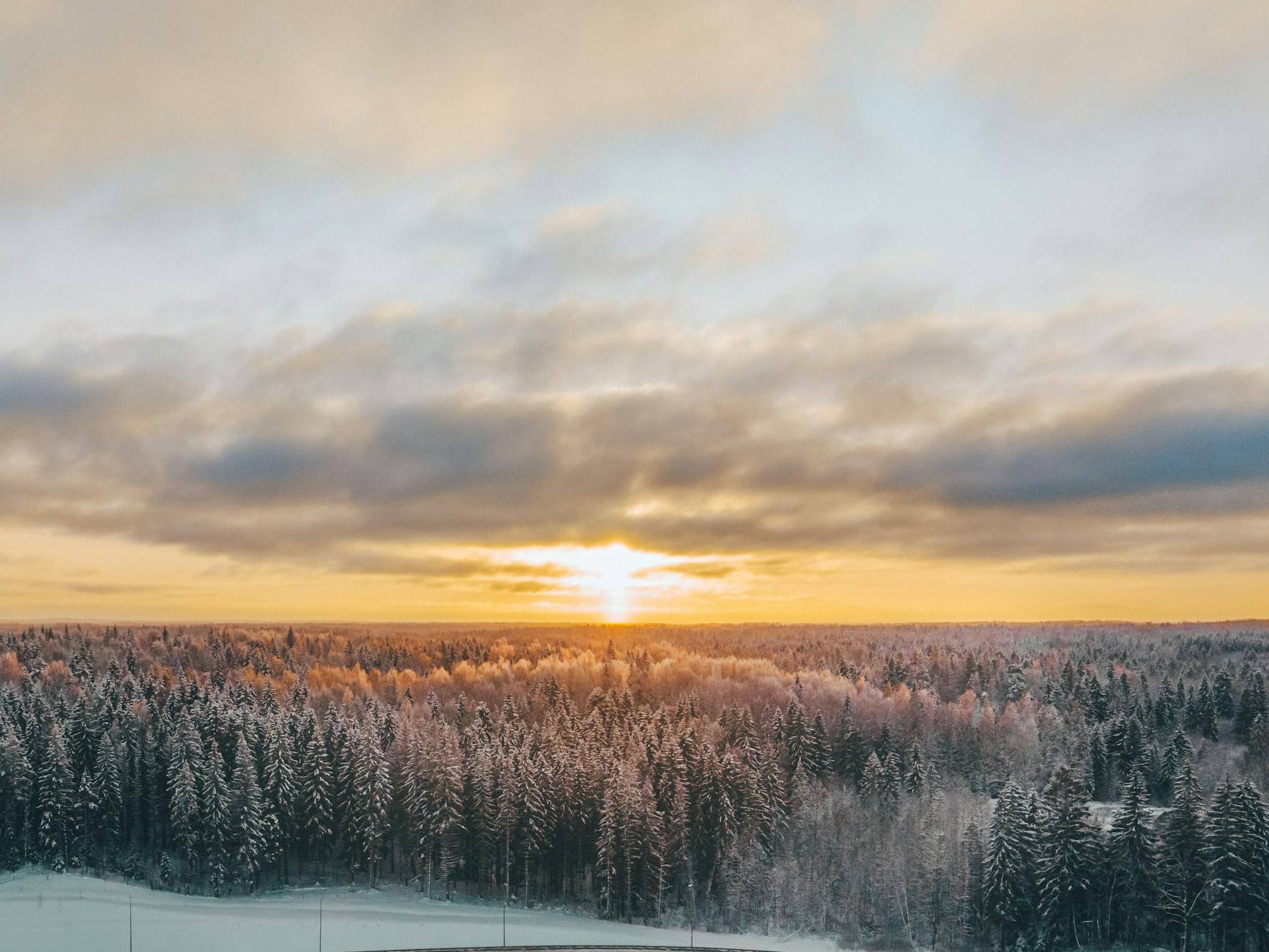
A vibrant sunrise with deep orange and golden hues peeking through soft clouds, symbolizing new beginnings and hope.
Photo by Bradley Hook on Pexels.com

When the Mind Won’t Stop Asking 😕

Those words of Rilke, written over a century ago, remind me that some of the hardest seasons in life are the ones that offer no answers—only questions that echo back in silence.

A silhouette of a person walking towards a bright sunrise, symbolizing hope and introspection.
Photo by Dom Gould on Pexels.com

Running into the Questions ⁉️

I was driving home Saturday morning after my weekly long run with a podcast playing in the background. The previous week had been difficult, and I had hoped the run would provide a reprieve from my worries. I started running well before the sun rose under the cloak of a starry sky, which served to keep my mind calm. Then, the rich crimson of dawn edged up the horizon, deepening from vermilion to the fiery orange of full sunrise. As if on cue, the monkeys in my mind began chattering—an endless loop of questions followed by equally endless, devastating possibilities. 

I tried to redirect my thoughts: “If only this or that would happen, then everything will be fine,” I told myself. The problem with this if–then principle is that it’s meant for building new habits or personal change; I can’t magically apply it to others—or to the world at large. Even after my run, the mind monkeys continued their spirals. Then a line from the podcast caught my attention, “What I think Rilke’s words are stating is that if we can learn to live in peace alongside the questions, this may allow us to witness the unfolding of the answers in some indeterminate future.” 

A hand reaching out towards a shimmering body of water under a bright sky.
Photo by Lukas on Pexels.com

An Invitation, Not a Reprimand 🙂

Of course, I had not heard Rilke’s words, so I had to rewind the podcast in order to focus on the original quote. Those words felt like an invitation to hope, rather than a reprimand for my monkey mind. To be clear, it did not feel like a promise of a positive outcome, but rather hope for a greater understanding one day. Rilke’s words seemed to affirm my questioning, as long as I let the questions simply “be,” like one ingredient in the stew of life. 

Hands holding a small, gift-wrapped box with a ribbon against a soft, patterned background.
Photo by Kim Stiver on Pexels.com

The Unsolved Nature of Life 🧐

While I cannot speak for everyone, I think many of us live with unanswered questions—and I’m probably in the camp that has more than a few. Seasons of life bring different questions, but they often center around themes of health, purpose, relationships, concern for others, and the future. It is often uncomfortable–the unsolved nature of life. We desire, like the fairy tales of our childhood, resolutions to problems in which we “all lived happily ever after.” We like knowing what is next; we desire to wrap up answers neatly and hand them over like a present. But life, as we eventually learn, isn’t wrapped in tidy endings. 

A serene landscape shrouded in fog, featuring two swans gliding on a calm body of water, with bare trees reflecting in the misty surroundings.
Photo by Karol Wiu015bniewski on Pexels.com

When Answers Refuse to Come 🤨

If you have ever encountered a personal crisis, or that of a loved one, you know the “hurry up and wait” sense of time that often accompanies these scenarios–appointments scheduled off into the distant future, followed up by more appointments with no answers, only more maybes and/or more questions or concerns. It can feel like an autumn fog settling over a town in the early morning hours. You can see outlines of various possibilities, but still not know what the future holds. And yet, even in that fog, life quietly continues. 

A chalk-drawn question mark on a black background, symbolizing uncertainty and curiosity.
Photo by Pixabay on Pexels.com

Coexisting with Uncertainty ❓

On one hand, Rilke seems to invite us to love the questions—an improbable ask, given the weight of so many of life’s uncertainties. Perhaps, as the podcaster suggested, Rilke’s words invite us to coexist with uncertainty rather than chase quick answers. Personally, when I face challenges, my first instinct is to “fix it,” whatever “it” may be. However, most of life’s bigger questions are not, per se “fixable” in a vacuum. There are many uncontrollable variables that often fill me with an anxious energy. 

This is when I tend to lean into writing, outdoor movement (especially running and walking), as well as reading–trying to learn as much as I can about the current challenge I am facing. Additionally, I will offer help (if I can be of service) to those for whom I am concerned. In this way, I feel like I am stretching and growing in understanding and empathy, rather than grasping and silently suffering. 

A close-up image of colorful daisies, featuring hues of pink, yellow, orange, and purple, surrounded by green foliage.
Photo by Leigh Patrick on Pexels.com

The Garden Rule: Sleep, Creep, and Leap 🪻

I’ve lived long enough to know that many answers only emerge with the sweet relief of distance and time—like the three-year rule of a perennial garden: sleep, creep, and leap. A long-ago biology professor once explained that in the first year of a newly planted garden, the plants appear to grow very little because they’re focused on developing and strengthening their roots. The following year, roots are still growing and establishing, but they do have enough energy to create a bit more growth above ground. However, by the third year, the roots are fully established and the plant appears to “leap” out of the ground with growth. So it can be with the answers to life’s questions. 

Three white blocks arranged to spell 'WHY' in black uppercase letters.
Photo by Ann H on Pexels.com

Growing Through What We Don’t Yet Understand 📈

There are times in life where we cannot figure out why we keep facing one roadblock and one challenge after another. We wonder how much more we can endure, why we are faced with a certain situation, or why things are not going the way we imagined. Like that early decorative landscaped garden, we cannot see that our experiences are developing roots of strength and stability. We may not see that our ability to empathize, our talents, our emotional well-being, and even our souls, are stretching and strengthening. Later, we may look back and see that those setbacks were quietly shaping us—building the strength we’d need for what came next. 

A person kayaking on a calm body of water during sunset, with vibrant pink and orange clouds reflected in the water.
Photo by Taryn Elliott on Pexels.com

The Ineffable Beauty of Living with Questions ✨

As I further reflected on Rilke’s words and my own lived experiences, I realized that there is a certain ineffable beauty that is created by living with questions because it asks us to rely upon faith and grace, granting us a greater purpose as a seeker and a doer. 

We are not here to solve life, but to live it—with curiosity, patience, and hope.

While hope does spring eternal, it is not the same as knowing the answers. Perhaps, that’s the point–it is more about trusting that our life story is continuing to unfold in its own time and season. 

A calm, reflective body of water at sunset, with vibrant streaks of orange and blue in the sky, and a small island featuring lush greenery and palm trees.
Photo by Johannes Plenio on Pexels.com

Light, Grace, and the Unfolding of Answers 💫

Finishing the drive home, I realized that Rilke had a point. As long as I have questions, as long as I seek answers, I am not only living, but I am living with an open, loving heart and a curious, empathetic mind. I have been fortunate to live to see questions answered, but I still have more questions to go–about loved ones, about the world, and about myself. 

Like the sunrise that began my run, the light of understanding will come again—slowly, beautifully, and in its own time. Until then, I feel grateful for life’s questions. They have strengthened my life in numerous ways and provided me with unpredicted opportunities for growth. In the words of John O’Donohue, “Perhaps the beauty of not knowing is that it keeps our hearts open enough to be surprised by grace.” I welcome that grace into my life—and I hope you do too.

Embracing Limitations: Lessons from the Asheville Half Marathon

God, grant me the serenity to accept the things I can not change, the courage to change the things I can, and the wisdom to know the difference.”–Prayer for serenity

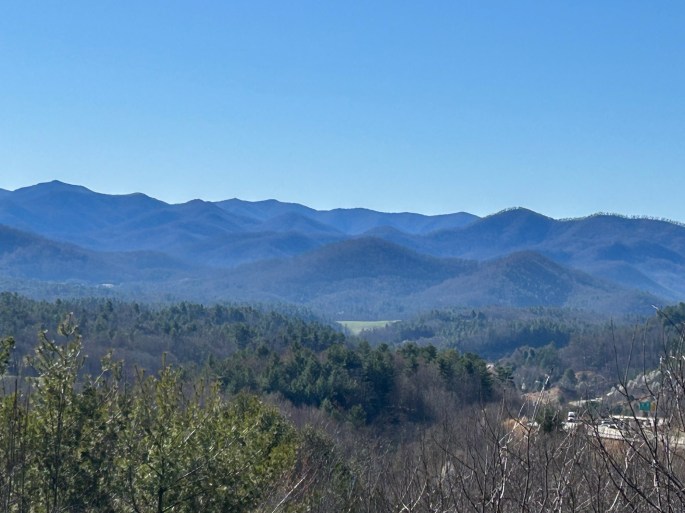
The Blue Ridge Mountains outside of Asheville, NC.

“the mountains are Calling . . .” ⛰️

I had been training for months, despite the challenges winter threw at me. Cold? I can handle it. Snow? I can run in it. Gusty wind? I can run that too. However, after my husband, John, and I crested hill after hill making our way into Asheville, North Carolina, I knew the town’s half marathon would offer a whole new level of challenge. 

To be clear, participating in the Asheville Half Marathon was an insignificant hurdle compared to what the people in Asheville, and all of the other residents of the surrounding areas/towns along US 23, have been facing as they deal with the aftermath of Hurricane Helene.

Driving along US 23, John, and I were able to witness that six months after Hurricane Helene angrily chewed through a large portion of the western Appalachian region, the recovery is still ongoing. However, the willful, and not-to-be-deterred, spirit of the residents was unmistakable. 

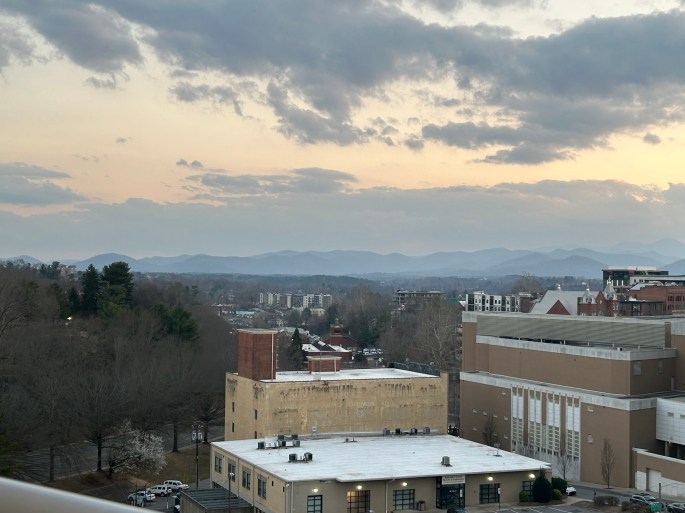
Rooftop view from Asheville of surrounding Blue Ridge Mountains.

A Tale of Two Sisters 👧 👧

This past fall, not long after Helene hit, the high school in which John and I work, welcomed two sisters into the student body.  They were from the Asheville area and were staying with relatives while their parents and older brother dealt with the devastation and destruction back home.

The girls were engaging and well-poised, especially considering their circumstances. Over the course of a couple months, I got to know them–not well due to the short duration of their stay–but well enough to swap personal stories from time to time. 

When they learned that like their dad, I often trained for half marathons, they immediately invited me to run the Asheville Half Marathon in March. They explained that by the time spring rolled around, the community would not be fully recovered, but the local economy would need the boost that runners and the accompanying spectators could bring. 

“You should definitely come, Ms. Hill.  You’d like the people of Asheville, especially the running community.” 

Once Asheville High School opened, the girls returned back home. And though I haven’t heard from them since, they planted a seed that grew into a shoot of curiosity. 

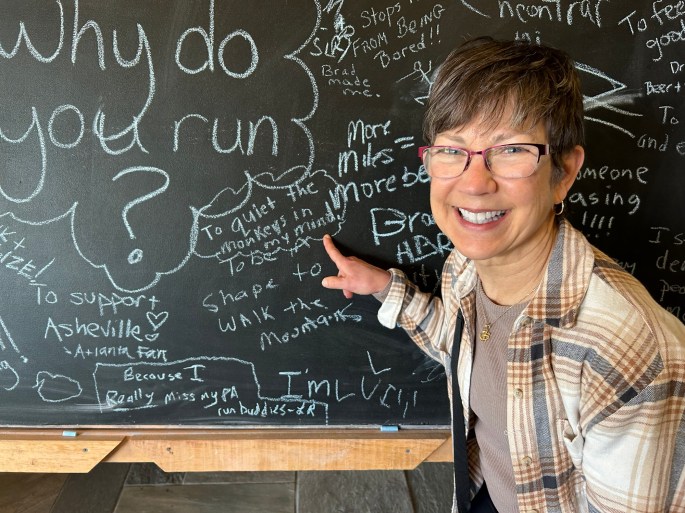
Runners were asked to sign the board stating why they ran.

Sign me up! 📝

Around Christmas, I checked the Asheville Marathon/Half Marathon website, and the powerful and persuasive prose describing the event increased my interest. The website’s editors artfully articulated the community’s belief in the significance of the annual running event. They stated the course’s route would not be “pristine or predictable.” Therefore, the event was for those who “thrive on resilience.” However, the line that sealed the deal stated, “If you’re ready to run in the face of adversity and be a part of Asheville’s comeback story, we can’t wait to see you on the start line!” 

John and I at gathering with other runners and spectators at the starting line before the race began.

Ready, set, Go! 🏁

Soon enough, on a chilly, dark March morning, I waited at the starting line with approximately 2,200 runners from 40 states and three countries who also heeded the call to help support Asheville, according to The Weather Channel. The positive vibe was palpable as runners mingled with spectators. Nonetheless, I was feeling a bit nervous as I recalled the half-marathon route’s elevation gain was nearly 800 feet, and its elevation loss was over 900.  

And, it was hilly.  From start to finish, there were no flat stretches. In the beginning, I read spectator signs claiming, “It’s all downhill from here,” with hope. It didn’t take long to realize those signs lied!  Even the finish line required running uphill, but I am “running” ahead of myself.

Running is a metaphor for living life, and it is always whispering (or sometimes shouting, as this event seemed to do) lessons to those of us willing to listen. Accepting limitations–was the lesson those relentless hills of Asheville taught me. Which makes sense since this is what many of the residents of Asheville and the western Appalachian area had to do during, and now after, the storm–accept and deal with limitations. 

Whether literal or metaphorical, storms of life cause us to suffer. As I repeatedly tried to power through those uphills during the first half, my ego kept telling me to push harder, creating suffering. However, as a late-in-life runner lacking inherent running talent, the reality is that race events for me are more about creating motivation and structure to consistently get me out the door to exercise. At the end of the day, I am not about to set any records; I am not even close to winning my age group, so why was I pushing so hard?

And so, it was on a hill, not long after milepost seven, that I decided to accept my limitations. Sure, I had trained on hills at home, but nothing like this. Why not power walk up the rest of the hills, and then run the downhill portions?

Asheville taught me to accept my limitations.

There is a newfound freedom in accepting one’s limitations 🏃‍♀️

Once I accepted my limitations, there was freedom. I had a new way of being present with the race challenges as they unfolded. This acceptance gave me permission to slow down, take in the sites, and feel a sense of gratitude for my health and ability to make this trip. 

Additionally, by walking the hills, I had more energy to offer encouragement to fellow runners I encountered who also seemed to be struggling. (After all, I run at the back of the pack, where we could all benefit from a little encouragement.) Furthermore, I was also able to offer thanks to the spectators who manned drink stations, rang cowbells, or waved motivating signs with clever phrases such as, “Touch here for power,” “You’re stronger than any storm,” or “You’re running better than our government.” 

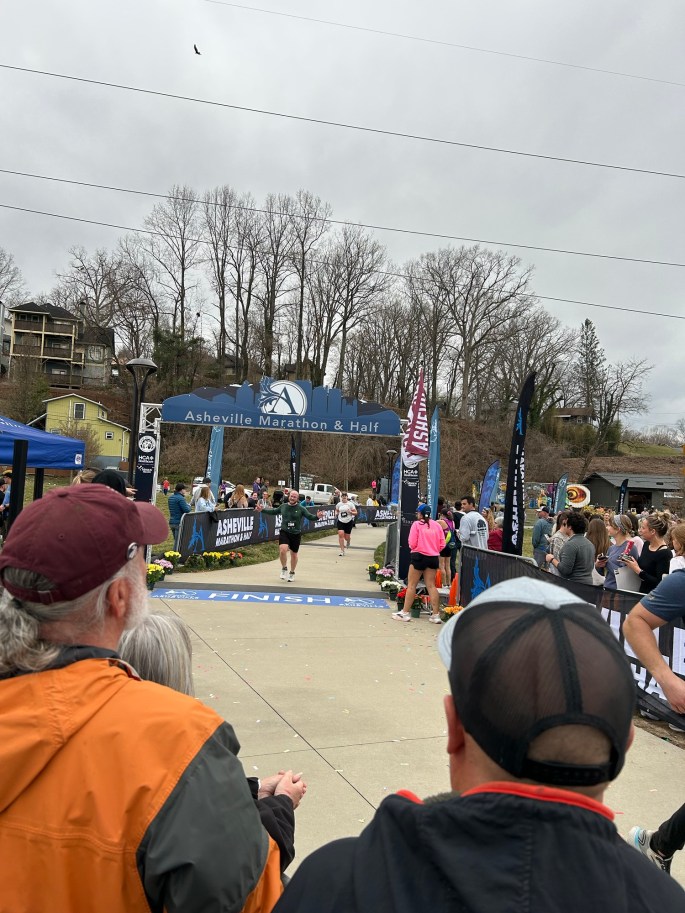
By the time I crossed the uphill finish line, tears filled my eyes as I raised my hands in the air.  No, I wasn’t celebrating a personal record, but instead, I was able to celebrate that I crossed the finish line with grace, humility, and a lesson learned. 

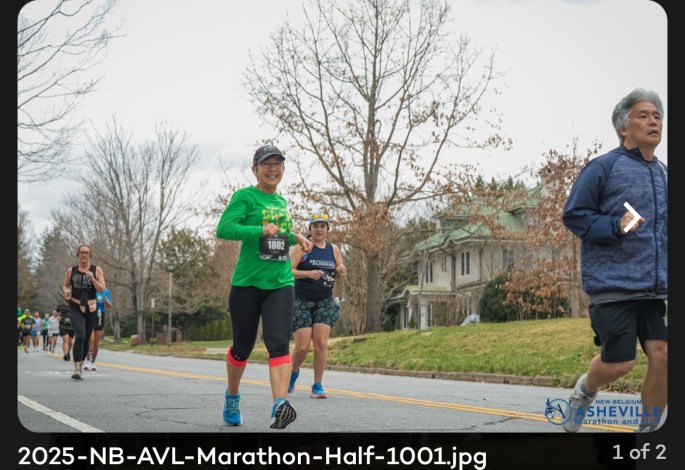
The AVL finish line of through which I would later cross humbled, and grateful, by another lesson running once more provided me.

The lesson? Transforming suffering can only occur if we are willing to be with it and accept the limitations it creates. Accepting limitations can be transformatively freeing, allowing us to lean into newly created possibilities we may not have been able to previously envision. I am not saying that accepting our limitations is not easy. However, once we let go of ego and embrace humility, it is possible to embrace the freedom that comes with focusing on what we CAN do.

Thank you , Asheville! I walk away from the finish line with grateful heart and a lesson learned. Furthermore, thank you, Hannah and Allison! I wish your family the best! 💜

Navigating Life’s Uncertainties One Moment at a Time

Take one moment at a time and do the next right thing.”–Eleanor Amerman Sutphen

Photo by Pixabay on Pexels.com

What Did I hear? 👂

My ears perked up when I heard the guest on a podcast share the above phrase based upon  a poem by Sutphen, but made popular by both Elisabeth Elliot and Carl Jung. I had just arrived home with several bags filled with groceries to put away. Setting down the bags, I typed the phrase into my phone’s reminder app in order to remember it. Then, ironically enough, I returned to the next moment: putting away the groceries.

Like a persistent earworm, that phrase kept looping through my brain. Maybe it was Divine Providence, or maybe my subconscious niggled me to recognize the words I needed to hear. Regardless, the universe had offered me a nugget of wisdom to the question I had been asking, but had not yet been able to fully articulate: What can I do in the face of the difficult and uncertain life moment in which I found myself?  

Photo by Sergey Guk on Pexels.com

Snowy Days can lead to Sluggish Ways 😏

The month of January was a slippery, and less than stellar, start to the new year.  All around me, icy roads, alleys, and sidewalks served as a reminder that I was struggling to find my footing. As one who is not naturally organized and often has no sense of time, I function optimally with a routine/schedule.  It’s not that I can’t “go with the flow.”  I can do that quite brilliantly, but I don’t accomplish nearly as much, nor do I make as many–if any–inroads towards goals.

It is as if I have been dropped deep into a dark and menacing forest filled with a multitude of statuesque tree shadows and brambling thorny briers. Meanwhile, a multitude of strands in life’s web are criss-crossing in ways that make it feel less integrous, as if at any moment, the winds will shift and blow a hole in the tenuous gossamer nexus of life. I sense time sliding sideways, and I am trying to find my footing, so I don’t fall into the thin ice at the center of the mostly frozen pond. Arms flapping this way and that way, steps shortening, stumbling, and struggling to remain upright because I need to find my stride once more. 

Photo by Christina & Peter on Pexels.com

The Struggle Can be Real 😞

I am not the first, nor am I alone, I suspect, in feeling “something” akin to a crisis–a time in life when I find myself deeply questioning my purpose, my identity, and my role in all that is occurring. It is a time where I feel helpless to help others who need it but won’t accept it; a time with still unachieved goals and dreams, but I struggle to see, much less find, the path forward; and, a time in which I frequently ask myself: Am I doing the best I can with this one precious life I have been given?

Personally speaking, it feels as if the to-do list grows longer by the day, but few items are getting marked off.  While all around me, events, completely out of my control, dictate more chaos. Pixelated ideas frequent my mind, but my brain resists zooming in and focusing on any one thought as if the identity of each idea has been hidden like a person being interviewed for an investigative, undercover documentary. Overthinking, second-guessing, and a feeling of dormancy have entered my mental home and overstayed their welcome. 

Photo by Todd Trapani on Pexels.com

The Sweet Lesson of Winter Trees ❄️

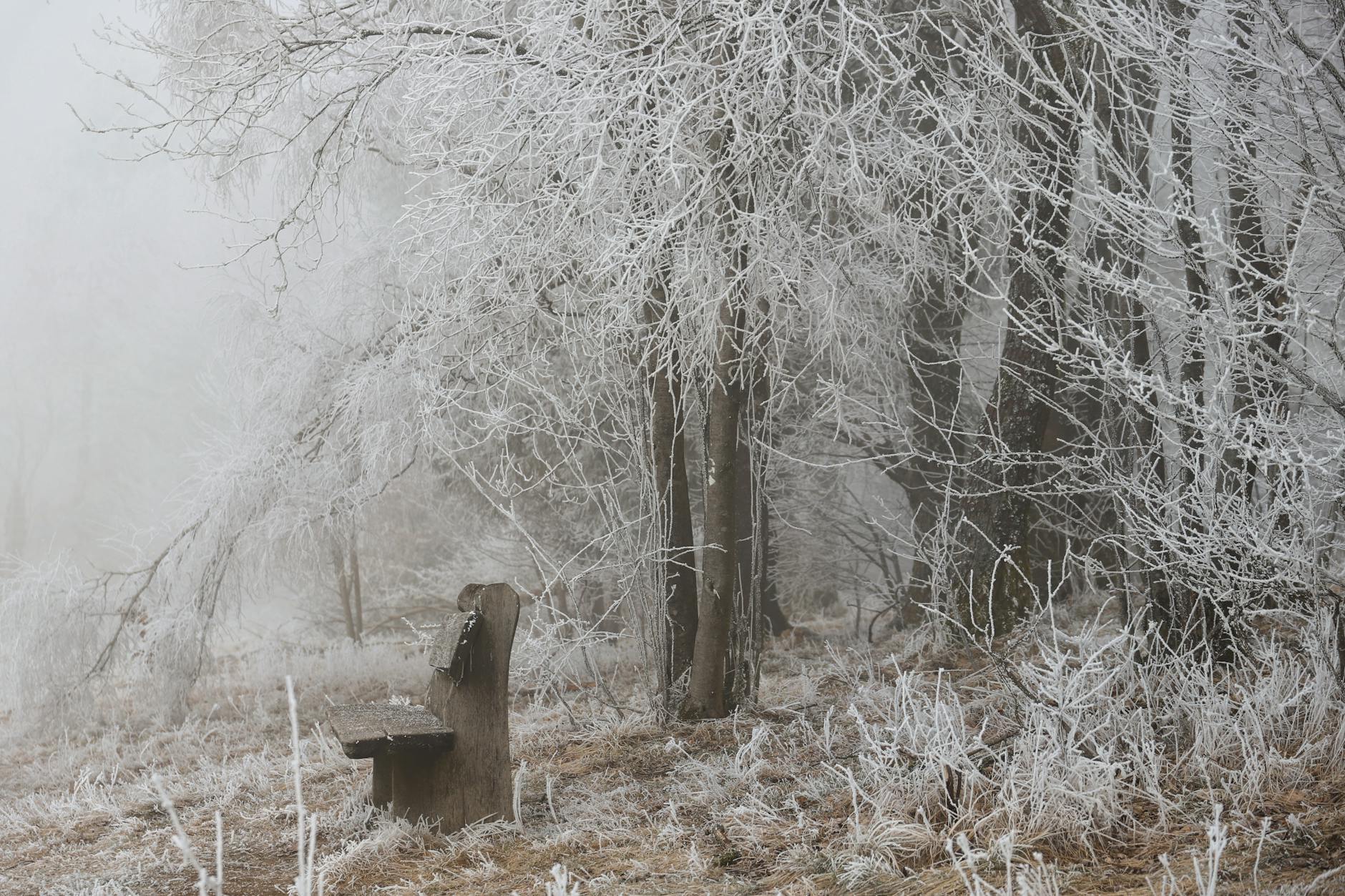
As I write these words, I pause to gaze out at the trees in my backyard. They too are experiencing dormancy. Deciduous trees have slowed their internal processes and metabolism, halting their own growth in order to conserve energy. Inside the trees, cells have hardened and shrunk. Additionally, the water between the cells has frozen, and the water inside cells is becoming more dense and syrupy. Some trees even grow thicker bark in the winter to create a sheath of preservation until warmer temperatures arrive when growth and leaf production can once more occur.

I take a deep breath and feel the rise of my belly. Dawn’s light has gifted another overcast winter morning. The birds have also risen–chirp, chirp, chirping the gossip of a new day. The rise and fall of their flight, along with their up and down hip-hops along tree branches make me smile. I sigh out the exhale I had been holding, noticing the fall of my belly. With each breath I take, as I continue to ponder the nature beyond my window, I can’t help but notice the rising and falling of my stomach.

Photo by Aleksandr Sochnev on Pexels.com

The Rising and the Falling 🌅🌄

The sunrise, the trees, the birds, and even my breath remind me that everything is subject to rising and falling. Our pain and sadness, our joys and happiness, and even current events are all impermanent, rising and falling with the various seasons of life. This season of personal dormancy that has banked to new heights in my mind will eventually thaw like the melting of the once-deep snow. This is the nature of impermanence–the rising and the falling–nothing can last forever. 

Thus, these dark doldrums of winter housed in my mental guest room might be offering me an opportunity to do less, perhaps allowing my creative juices and energy to fully concentrate and thicken, much like the trees in my backyard, into the sweet syrup of forward progress. It will just take the sweet essence of time. And the only way to get there from the dark passages of here is to take one breath, one moment at a time and keep choosing to do the next right thing.

Embracing Darkness: The Lotus Flower’s Lesson of Hope and Resilience

“Most people are afraid of suffering. But suffering is a kind of mud to help the lotus flower of happiness grow.  There can be no lotus flower without mud.”–Thích Nhất Hạnh

FAcing Difficult Days 😟

How many of us have endured through difficult and murky situations?  How many more of us have observed/supported a loved one undergoing a dark and/or dire situation?  Whether it is personal suffering or suffering of a loved one, we have all either experienced or observed painfully dark days; I know I have. 

Sometimes the difficulty can create so much suffering, it feels as if a pack of wolves have hunted us down, snipped and yipped at our heels, and are now chewing away at our insides.  Sleep may no longer feel like an escape, and even if part of the difficulty causes physical pain, it is often the pain caused by our own minds and heart that can hurt the most. 

Photo by Pixabay on Pexels.com

Quotes to Get you Through 📝

There are a couple of quotes and an image I have come to appreciate over the years. They tend to come to mind when I feel knocked down by life. I think of them as a mental antidote for counteracting my fear when facing down a difficult situation.

Keep getting up no matter how many times you fall.

One quote is a Japanese proverb: “Fall down seven times, stand up eight.” This saying is hope-centric, and it means a great deal to me.  It serves as a reminder that no matter how many times we make a mistake or life events knock us down, we must still find a way to get back up.  This doesn’t mean it’s easy.  Sometimes, all we can do is claw, crawl, and clatter until we find the resolve and strength to stand once more.

Rise like the sun

Another inspiring quote by Maya Angelou: “Still I rise.”  While the author writes of her oppressive and challenging experiences as a black woman, the phrase’s universal theme of resilience in the face of struggles can speak to all of us. Those three words are filled with a bold defiance in the face of suffering.

Photo by Celeste 2305 on Pexels.com

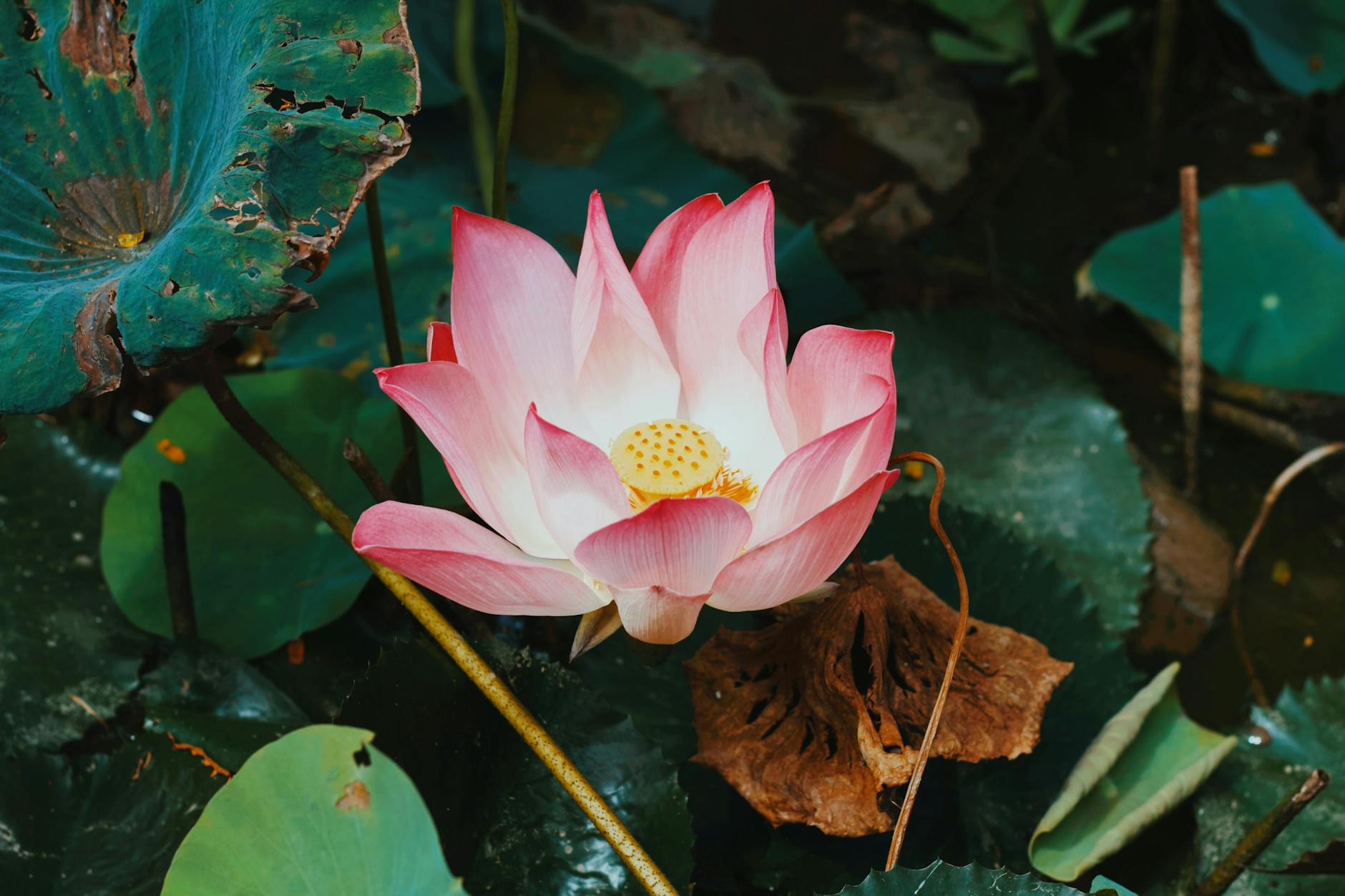
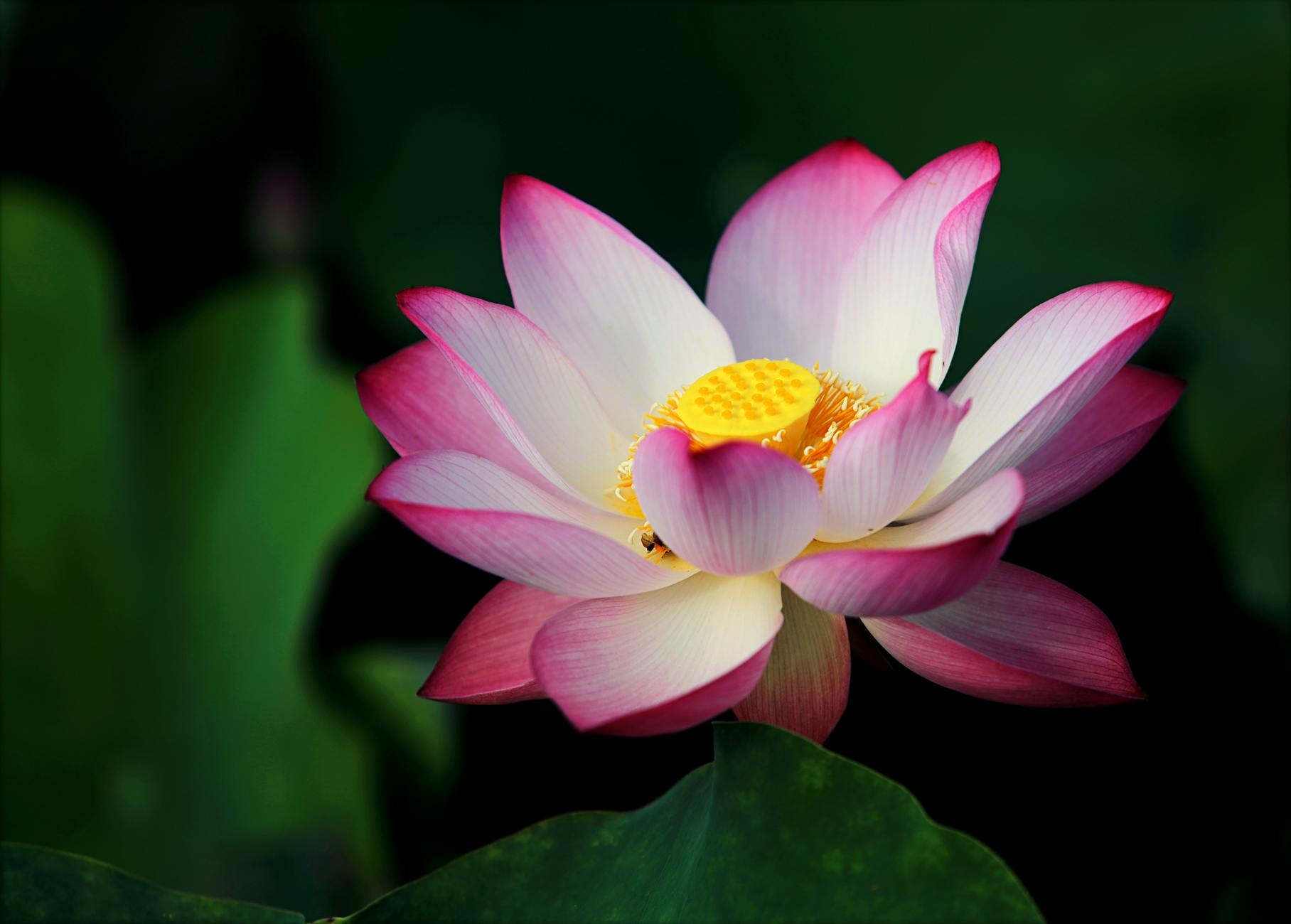
Lotus are Adaptable 🪷

Both of those quotes culminate in the symbol of the lotus, the ultimate emblem of perseverance and tenacity. This aquatic flowering plant has been admired and a part of lore for centuries.  The more colorful lotus are tropical in nature and are most notably found in Asian countries.  However, the lotus plant is quite adaptable, and an American variation can be found along the east coast in waters ranging from Ontario, Canada to Florida. 

Lotus Persist 🌱

Because the lotus plant grows in a variety of environments, it has developed a method of ensuring its continuation. Once pollinated, the lotus releases large quantities of seeds into the environment. Many of these seeds will be eaten by aquatic life; however, the seeds, as I understand it, are quite durable.  Some lotus’ seeds can get up to 1.5 inches in size, surviving for several years, long past the life of the flower.  In fact, the seeds can persist in conditions that would prevent many other types of seeds from germinating. 

Lotus Aren’t AFraid of The Dark 🌑

Once germinated, the seeds begin sprouting in the mud, sending roots down even deeper into the muck.  Depending upon the plant and the depth of water, it can take from two weeks to two months for the plant to grow up to six feet tall through the murky water. As the round leaves reach the top of the water they can fan out in width up to 36+ inches wide. Once the plant has fully surfaced, the flower will begin to grow and ultimately bloom. 

Short life, Deeply rooted 🙏

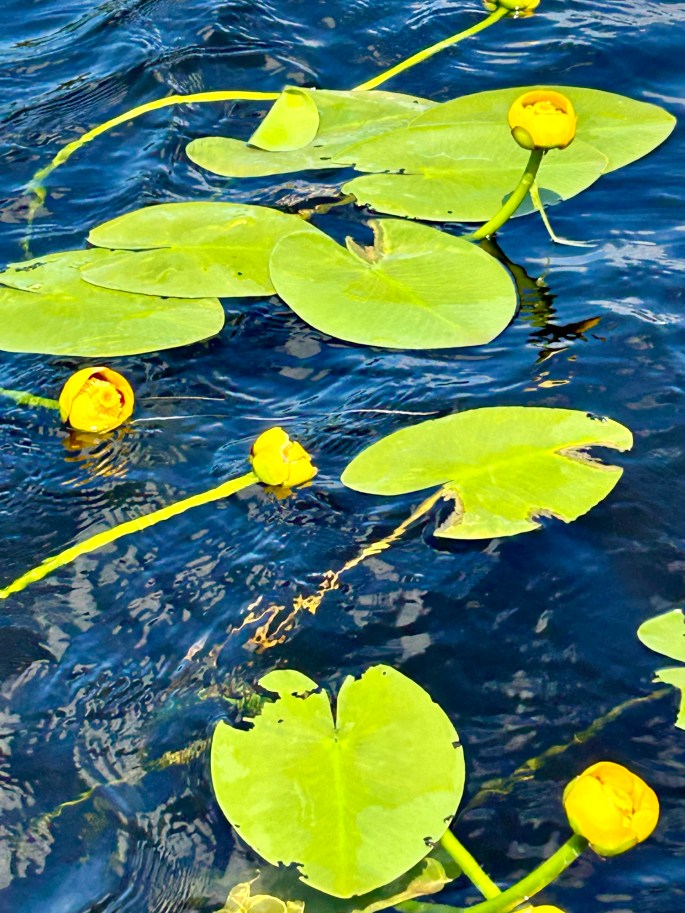
Each American Lotus flower, with its butter yellow petals and fragrant aroma, will only last a few days, opening its petals during the day and closing the petals at night. The blossom appears to be free floating, but it remains rooted in the mud. During its short duration, the flower will bear seed pods that resemble the end of a watering can or shower head, ensuring multiple seeds from each flower will be dispersed back into its environment.

Lotuses ShaRe 🫱 🫲

Both the seeds and roots can be eaten, and parts of the plant can be used for medicinal purposes. Seeds pods can be dried and used in flower arrangement.  Additionally, due to the fact that lotus flourish easily in a variety of areas, even in the murkiest of waters, these plants provide shelter, habitat, and food for a variety of aquatic wildlife.  Each fall, however, the plants die away.

Gifts can arise from dark places

Therefore, the lotus is a prime example of the way in which gifts can rise from the darkest of places. Despite the fact the lotus is born in the mud, it rises to stand victoriously every spring.  Upon rising, its blossoms bear seeds to ensure it has a way to stand back up.

Seeds of hope, help, and healing

Beyond the fact the lotus has planned for its inevitable fall, it also offers seeds of hope and nourishment for others. Each flower produces an overabundance of seeds, many of which will settle into the mud for rebirth, but many more of those seeds will provide food for other living creatures. Additionally, those mud-buried lotus roots also provide nourishment not only to the plant itself, but can also nourish others.  Not to mention that the plant has medicinal qualities, offers shelter to others within its aquatic community, and beautifies a variety of environments.

Photo by Hiu1ebfu Hou00e0ng on Pexels.com

Lotus Life 𑁍

Let us live like the lotus flower. When we experience those dark and difficult times in our life, let us root down into the loam of our soul and allow faith to germinate a seed of hope. By rooting through the muck and into the nourishment of our faith, we can rise. It may take weeks, months, or even years, but we can rise and blossom once more.

Once on the surface, it is our job to produce good seeds of hope and help for others.  Even if our calm waters fade away and we find ourselves sinking into the inky dark once more, still we can rise.  We have done it before; we can do it again.  And with each new revival, our blooms can continue to offer more gifts to the world.  No matter how darkly rooted our past or present was/is, no matter the number of times it occurs, we can stand up, we can rise, we can bloom, and we can embody the lotus, offering shelter, nourishment, and healing hope to others. 

Grief and Love–one story of surviving the loss

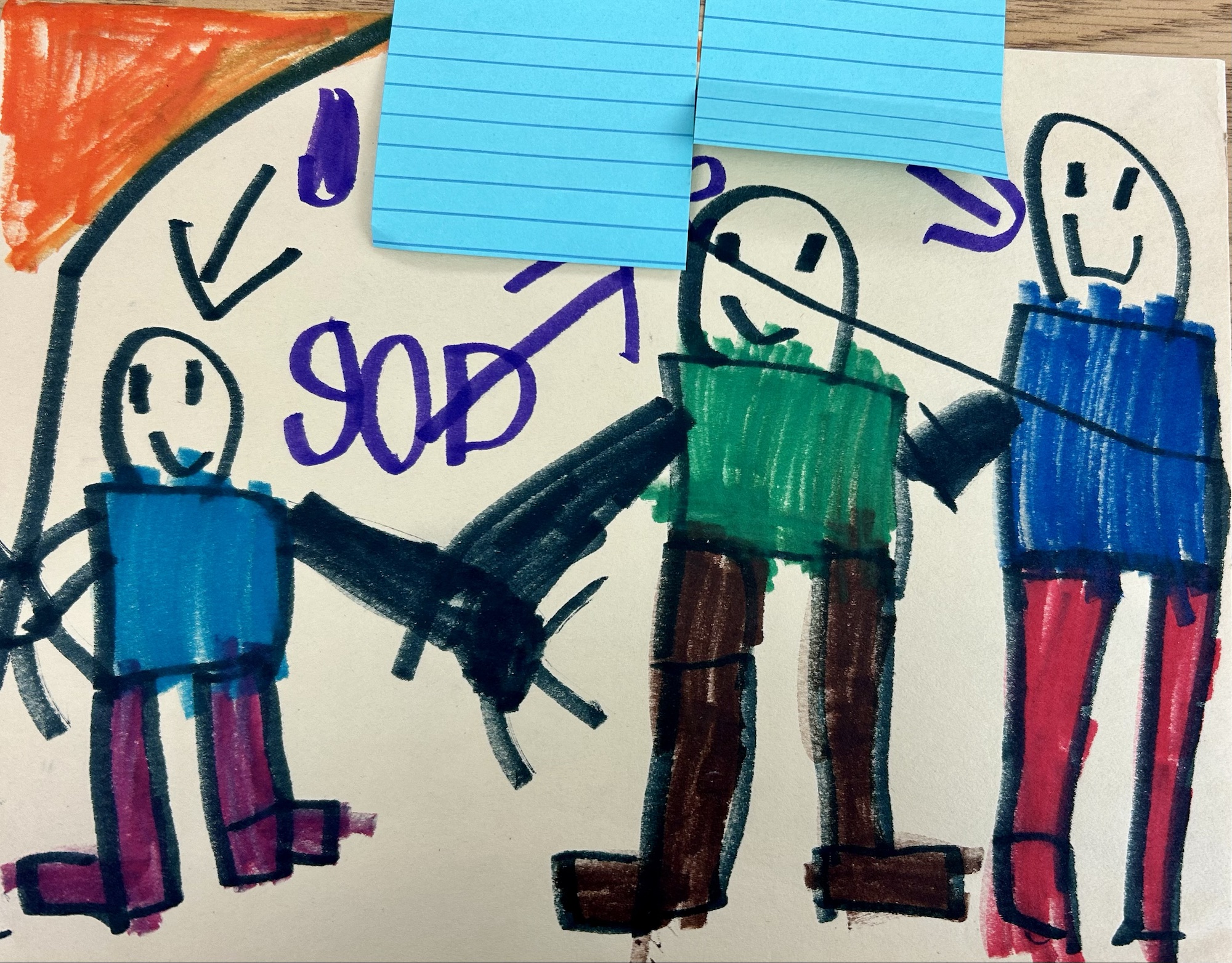
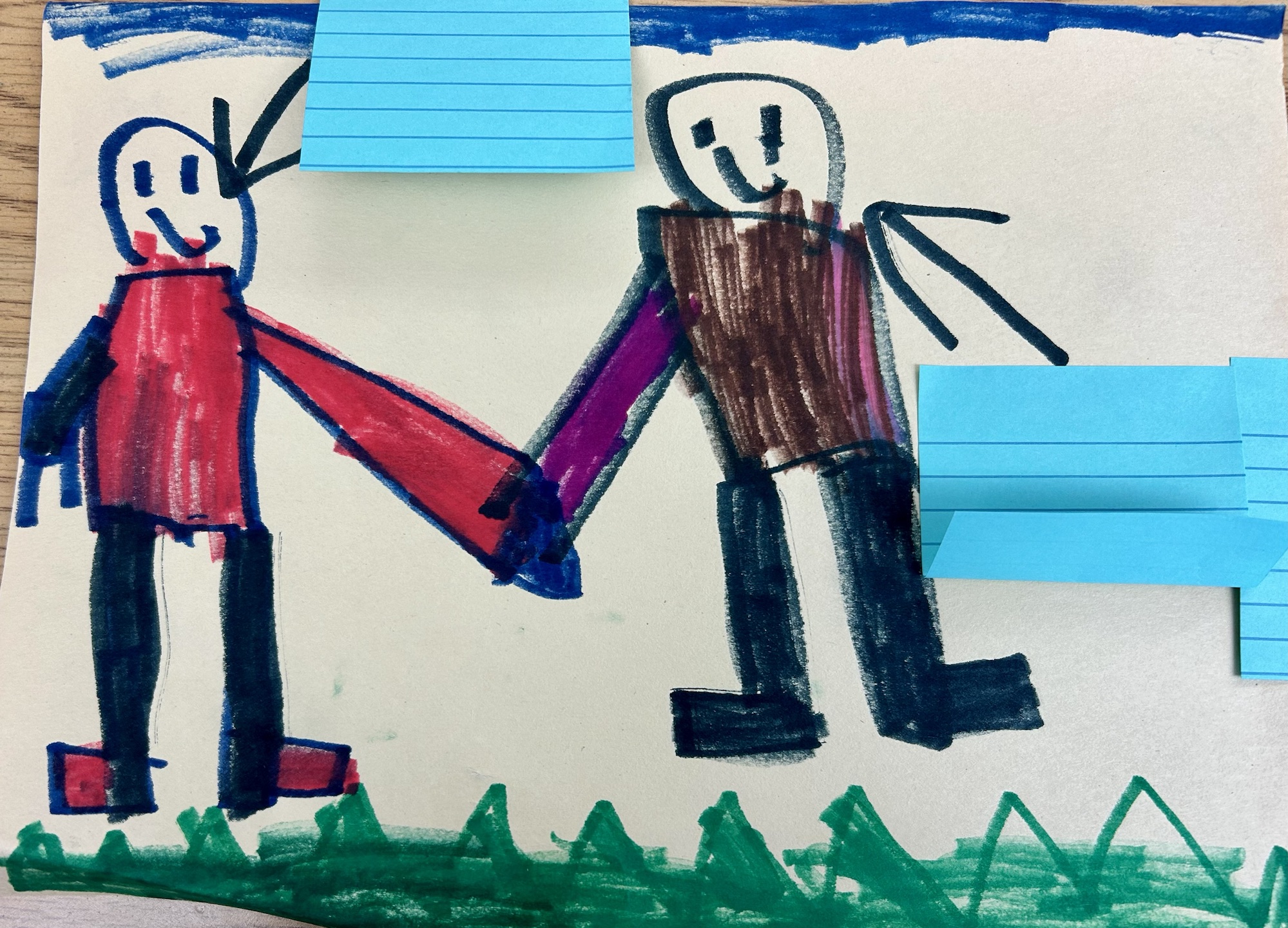
A picture created by one of my former Kindergarten students depicting what they believed was their former classmate’s ascent into heaven. The rainbow is what the heavenly friend is sending back to the friend still who is still alive. (Post-it notes are covering names.)

A story revisited 🥺

It was a spring day with wide cerulean skies and clouds of cotton puffs as I stepped out of my vehicle, as per usual, when I saw the employee approaching with my curbside grocery order.  I am a regular customer, so I tend to know the names and faces of the usual employees, but she was new to me.  Therefore, I was surprised when she asked if I was a teacher. I smiled, and said that I was. I could have never predicted what she would next say.

As she talked, there it was.  The wound, which I thought had healed, was painfully stabbed open. It is an unfortunate story, centering on a young family, a classroom of five-year-olds, their parents, and me–bound together by a loss too surreal to be true– yet it was. 

 She said she attended the funeral and saw me, and she added that she related to the family. Additionally, she added that all her kids attended that same school in which I once taught, now nearly 20 years later. As what appeared to be an after-thought she added, “You was a good teacher.” 

I asked about the surviving family and the sibling, who was only a baby at the time of the event.  The sibling, she reported, was now studying at a university.  This bit of information buoyed my spirit.  

Another picture drawn by another student depicting their deceased friend, holding hands with God and Jesus.

An event that forever changed me 😨

With over three and half decades in education, I can look back at certain points in my career and identify pivotal moments that forever changed me.  This loss of a five-year-old student was probably one of the most defining moments in my career. It sent me spiraling into a deep darkness for which I believed I should keep hidden from the world because it was my face those cherished students and their parents looked to for strength and stability–or at least that is how I perceived the situation at the time.  

On the inside, I was crumbling, questioning everything my faith had taught me.  Angry at that the Universe would allow such a senseless death, and angry at myself for what felt like was my “butterfly-effect” that seemingly set the wheels in motion for this tragedy.  Emotions, which I now know, can override logic during unexpected loss.

Outwardly for the world, I did the best I could, but none of my training had prepared me. While there were times, I felt led from within by a Source greater than myself. Other times, I felt I was driving a car without headlights after a severe storm, stumbling and bumping up against one roadblock after another.  

Another drawing depicting a student holding hands with the deceased classmate, adding that they missed their friend. (Names are covered with post-it notes.)

Days of Mourning 😢

There were countless days when my students would just cry, and so I let them, allowing their tears to express what they could not put into words.  I hugged them often, and permitted/encouraged them to express their feelings in a safe and productive ways.  They drew pictures, decorated their former classmates’ seat, and took turns holding and talking to a bear that had been built for them to help process their grief.

Some students, who weren’t as verbal as others, became noticeably aggressive as they moved through stages of grief.  This required much patience and tolerance.  While I understood they needed to get out their anger as they were not developmentally old enough to understand death, I could not let them harm other students.  Therefore, I had to come up with creative outlets for their feelings, such as allowing them to be the official “wrecking ball” if someone wanted their block creation knocked over or the official “paper shredder” of messed-up papers.

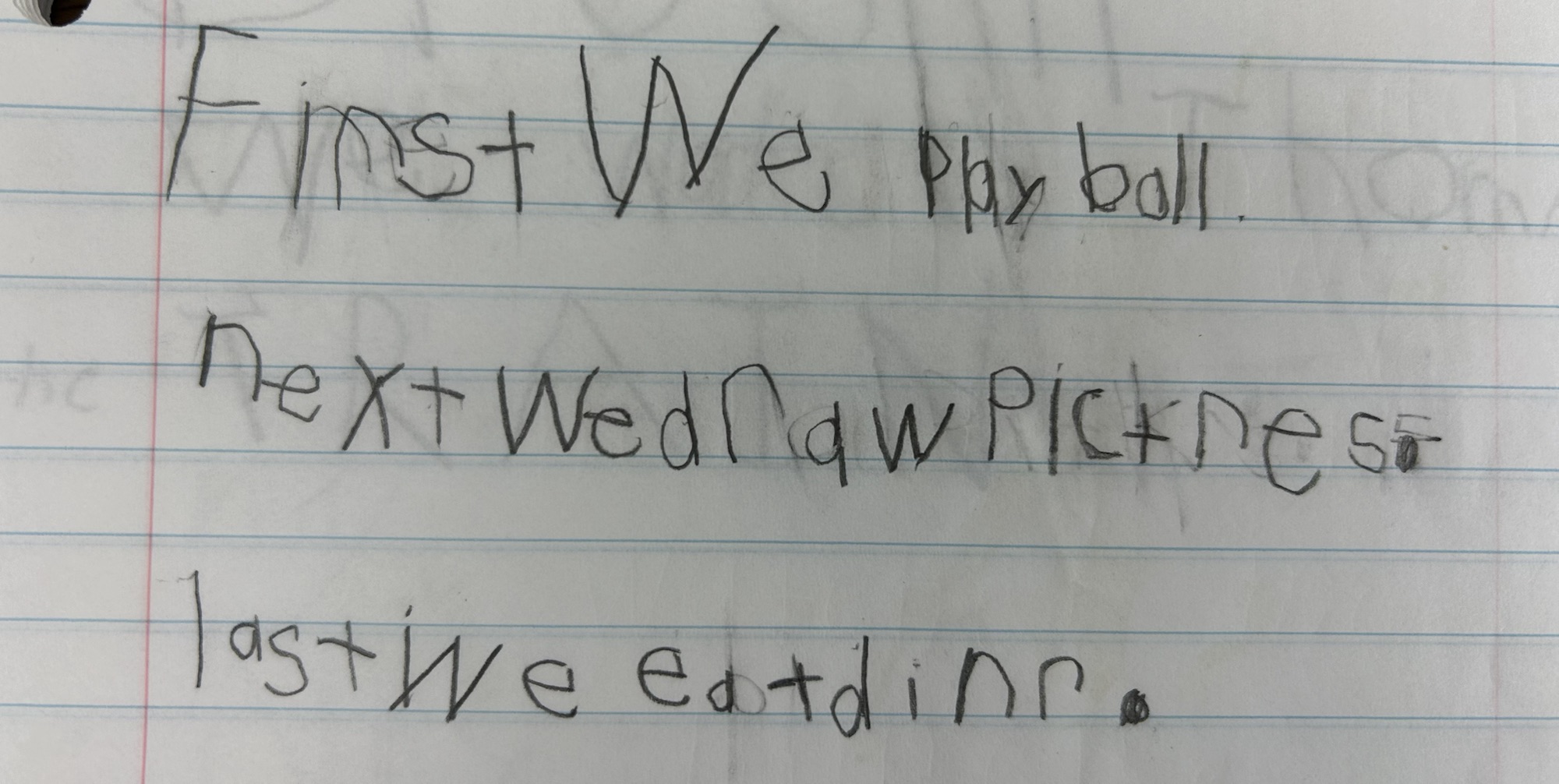
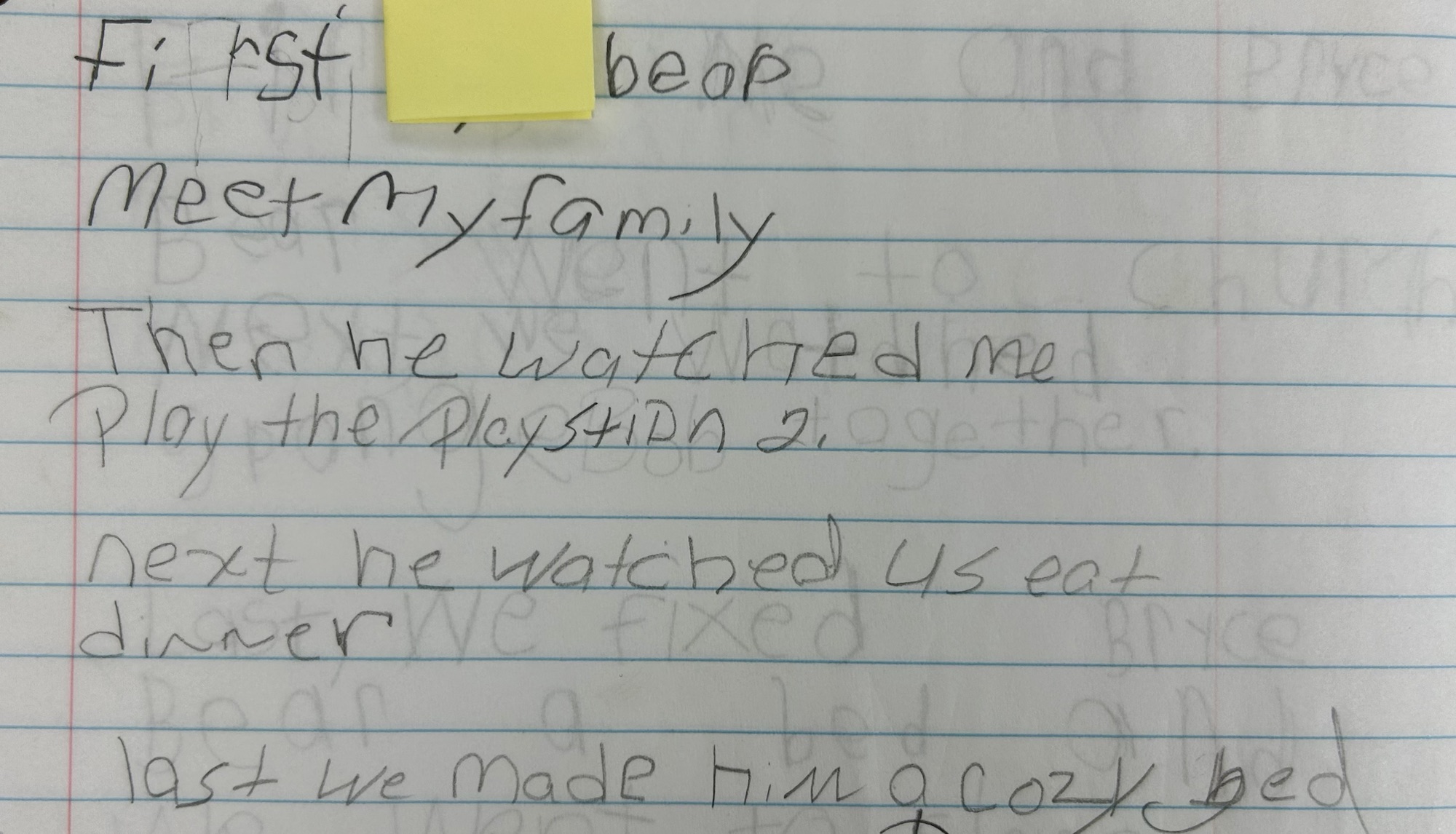
A “story” written by a student describing what happened when the student took home the grief therapy bear.

Sometimes, Life isn’t fair 😩

Thinking back to that tragedy, I wish I could go back to my younger self and say, “You’re doing ok,” in the same way I would have said to my students at the time.  Instead, I spent much time questioning what more I should be doing.  And, each night, when I went home to my own beloved daughter the exact same age, I felt simultaneously grateful and guilty.  Why did I get to keep my child, but someone else didn’t?  It wasn’t fair.

Another student’s experience with the grief therapy bear.

Nearly 20 years later . . .⏳

Now, nearly 20 years later, life continues to march on at a breathtaking pace. Those students are now in their 25th year of life.  They are all, I hope, making their way into their independence, exploring the edges of the kind of responsible adult they want to evolve into.  I pray they will each find their own version of success, however they define it. 

I especially hope the child’s family is well.  They were dealt a tragic blow for which I have no explanation.  I am certain it has not been easy for them, but I pray their hearts continue to mend to the degree possible. Most of all, I wish them peace.

Another drawing of expressing their feelings about their departed friend. (Name is covered by post-it notes.)

Does time Really heal? ❤️‍🩹

They say time heals all wounds, but I am not sure.  The wounds may heal, but the scar still remains.  Like all scars, they fade with the passing of time, but those scars remain as a reminder of who we once were.

 Once there was a young family of four, until suddenly there were three.  Once I was a kindergarten teacher with 15 students, and, in the blink of an eye, there were 14.  I wish I knew why, but that is not for me to understand.  Instead, I will forever be haunted by what more I could have done. 

Another student’s experience with the grief therapy bear.

Looking back on the love 💜

Nonetheless, looking back now, what I most recall is the love.  Love for the departed student, love for the other students of that class, and deep abiding appreciation for those students’ parents who unconditionally supported me and guided their children tirelessly through what had to be one of the darkest periods in their young and tender lives.

Their is beauty in life, even if short lived 🌸

On the day of writing this, I went for a run in a park.  It was early spring, and the air held the promise of warmer days.  All around me the wind blew off the white petals of flowering trees, and the petals danced around me like snowflakes, graceful on the currents of air.  I realized, the flowers will soon be replaced by the green leaves, and the cycle of life will continue through the seasons.  However, in that moment, I could not help but feel those petals were a heavenly reminder of the beauty that is possible in life–even if for only a short time.

Musician and writer, Nick Cave, is said to have written in a letter, “Grief and love are forever intertwined. Grief is the terrible reminder of the depths of our love and, like love, grief is non-negotiable.”  I couldn’t agree more.  

Another piece of artwork expressing the joy of friendship in spite of the loss. (Names covered with post-it notes.)
Another student’s experience with the bear.

May There Always Be a June

“Even the prettiest flower will die one day. It’s nature’s way of teaching us that nothing lasts forever.”–unknown

“Hmm . . .” I think, more than say, with a deep inhale as I yawned awake.  It was a rare, cool morning–a break from the typical heat and humidity of early July.  The bedroom windows were open, and I breathed in the fragrance of dewy grass, damp earth, and flowers. It was the lingering sweet floral scent that began a series of reflections regarding the significance of June and its likeness to the human life cycle.

At the time I am writing this, it is the July 4 weekend–marking, in my mind, the midpoint of summer.  Once July 4 begins, it feels like the rest of summer swiftly sails by.  Ah, but June.  June is sanguine–full of enough bright cheer to hold old-man winter at bay.  The early spring blossoms such as daffodils, crocus, and tulips have long passed.  Aromatic honeysuckle begins its fading away as the summer perennials and annuals begin blooming brightly in rapid succession.  July may be full of celebrations, explosive displays–all red, white, and blue–but, I adore June–modest, optimistic, June, and the colorful, unique flowers that blossom and thrive with its invitation to summer.

Photo by Suvan Chowdhury on Pexels.com

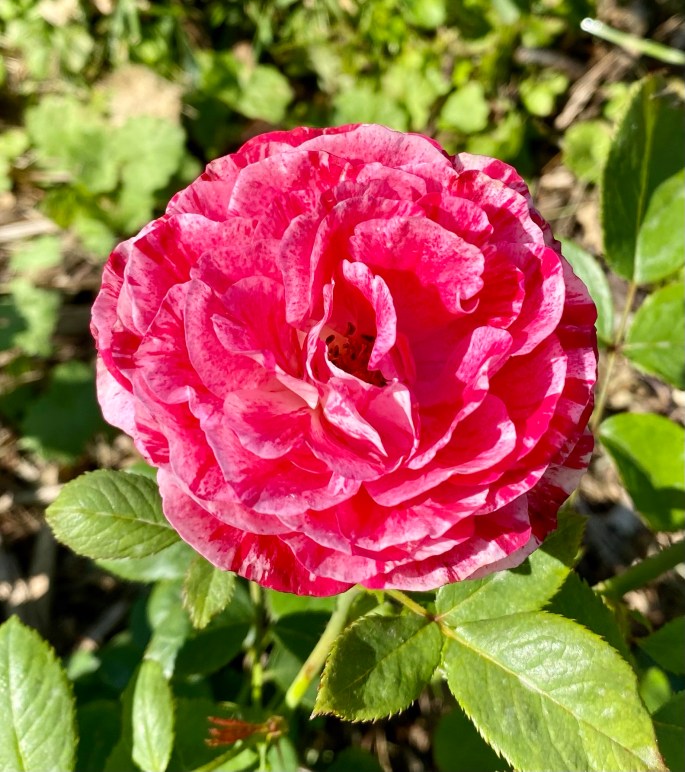
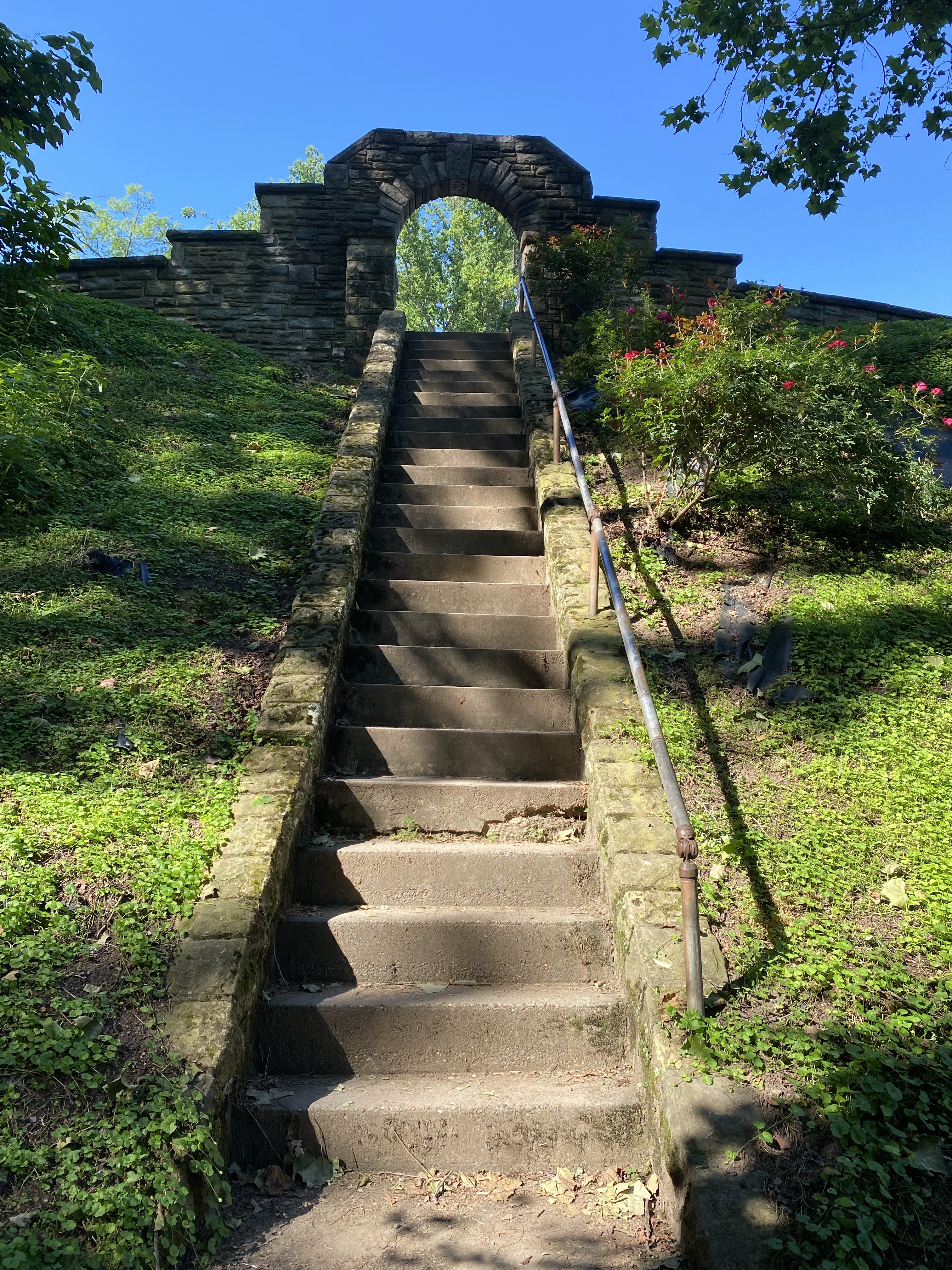
One morning, this past June, I was in Ritter Park to meet a friend for a walk.  However, the friend was running late, so I decided to meander up the old stone steps to the rose garden.  Sunshine, brilliantly glowed in its mid-morning slant, created a kaleidoscope of vivid colors, varying in texture, size, and shape. With no purpose other than to enjoy the moment, I wandered around the garden, drifting from one rose bush to the next, fascinated with all the minute differences not only among the varieties of rose bushes, but also among the flowers within the same bush.  Meanwhile, a gardener attentively tended the blooms.

Examining more closely, I noticed the various insects drawn to the roses. Bees, ants, beetles, moths and butterflies, flies, and even a few mosquitoes crawled, hovered, dove, and darted–busily buzzing about the roses with purposeful missions.  In one of the more isolated sections, closer to the wooded area of the park, I also observed a hummingbird dipping and diving among the various blossoms in a delightful, whirring dance of flight. As I let my gaze wander, my mind relaxed and began to make correlations with June, its flowers, and life.

“A rose can never be a sunflower, and a sunflower can never be a rose. All flowers are beautiful in their own way . . .”–Miranda Kerr

Each flower–from the number of petals to the size of each petal, from the varying life stages of each flower to the variances of color in each blossom–whether it be a rose in the Ritter Park garden or any one of the wide variety of flowers found in resident yards and public spaces–was, and is, a unique creation.  This is similar to the way each person, within the same family, or outside familial ties, is likewise a one-of-a-kind individual.  Flowers go through a dormant and a growing season of varying lengths, but all bloom seasonally, until they come to an end–whatever the life end may be. So it is with June and human life. 

The season of summer officially begins in June.  The air is sweet and heady with the fragrance of flowers. Winds and sunshine warm the air, and rain falls with purpose. Many plants are rooting and establishing while early spring greenery and blossoms are fading away into their dormancy. Daylight reaches its apex in June, while nighttime descends to its lowest point.  

Likewise, several key life events occurred and are honored in my own life each June.  I graduated from Ohio University in June.  Within that same month, I signed my first teaching contract, thus beginning the start of my career as an educator. Two year later, in June, I married my husband, an anniversary we have celebrated for 32 years.  Ten years later, our daughter was born in June.  As educators, my husband and I experience the arrival of each June as the beginning of a dormant period–an opportunity for reflection and renewal before a new school year begins in August.  Births and weddings, ebbs and flows, the highs and lows, and even celebrated endings.  It’s all there in June.

“All the flowers of tomorrow are in the seeds of today.”–Indian Proverb

I am but one person in the garden of many: my family, my work site, my community, and so forth.  All around me, younger lives are taking root, growing, and blossoming into their own personal expressions–making our collective garden more colorful and vibrant–buzzing with energy.  Meanwhile, I can’t help but notice that just as the flowers of June replace spring’s early blossoms, July has taken June’s place.  

Of course, one could argue that like the flowers, humans seem to be planted in dirt and threatened by weeds and all varieties of pestilence. However, when I was visiting the rose garden in June, it was the array of blossoms, in a rainbow of colors, that caught my eye, and made my heart smile.  They too were planted in dirt, confronted by pests and disease, but a gardener was there watching over them just as we have the Ultimate Gardener attending to our needs. 

The flowers offer their seeds and pollen to insects and birds to eat and disperse, ensuring more and different blooms for the future. Likewise, I pray that until my last petal drops, I am offering seeds of hope for others as June does for me.  One day, my memories of past Junes will fade away into permanent dormancy. In the meantime, I will savor the memories made this past June, find nourishment in the full blossoming of the July summer, and, in the weeks to come, accept August as the petals of summer begin to fall away, one by one.  

May there always be a June.

Fearlessly Moving Forward into 2021 with Hope

It is because of hope that you suffer. It is through hope that you’ll change things.”– Maxime Lagacé

“Mrs. Hill, I hope you have a good Christmas,” the child stated in a formal voice unique to this person. “And, I hope that 2021 is better than 2020 because 2020 was really, really bad.”

Photo by Olya Kobruseva on Pexels.com

 I could not have summed up the sentiment any better, and yet those words clung to me like a sweaty t-shirt in the summer, clinging and bunching in ways that make me want to be shed of its weight.  As I pondered those words throughout the weekend, I realized that they weighed on me beyond the obvious.  Later, it occurred to me that reflected in those words were two seemingly opposing concepts: hope and control.

As a Reading/Language Arts teacher and writer, I rely on precise word meaning.  I teach students to not only use the Merriam-Webster online dictionary and thesaurus as a tool to begin to understand word meaning, but to also look at the parts of speech a word may possess because how a word is used is just as important as its definition.  Therefore, when I looked up the definition of hope, I immediately noticed that hope, according to Merriam-Webster, is most often used as a verb–an action.   However, its second most popular definition identifies hope as a noun–an idea.  Likewise, the same can be said for the functioning of the word control–verb first, noun second. 

The more you try to control something, the more it controls you. Free yourself, and let things take their own natural course.”–Leon Brown

Part of our collective suffering during 2020 is our desire for control.  We have wished, as the definition of control states, to “directly influence,” or “have power over,” numerous events of this past calendar year.  Whether we were desiring to influence others’ behavior, or wishing to exert power over the virus, vaccine, and/or authorities, in order for, “things to get back to normal,” most of us have looked, and maybe even continue to look, for ways to gain control and, “get our lives back.”  The thing is though, that very act of living means that we do have our lives, and we can only exert control over our own life behaviors, thoughts, actions, and reactions.  However, we can hope for a different way of interacting and living; and, that is the rub.  How do we hope, while attempting to not try to control others, situations, and outcomes? 

Photo by Ketut Subiyanto on Pexels.com

Most of us, including myself, want to control things that frighten us. 

I want my friend to stop smoking because I’m afraid she’s going to die of lung cancer, and I don’t want to lose her.

I want my parent(s) to be well because I am afraid of life without them in it.

I want my job to pay well because I am afraid I won’t be able to pay the bills and live the way I want to live.

I want my child to be successful because I am afraid they won’t be able to care of themselves.

On and on the examples could go, but the bottom line is our desire to control stems from our worry, but I would argue that, also from our hope.  Looking at the above examples, let me rephrase them.

I hope my friend is always around because I value her friendship and companionship.

I hope my parent(s) live(s) as long as I do because I love them so very much.

I hope my job’s salary continues to increase with the cost of living because I value living a certain way.

I hope my child is gainfully employed because I will not be their safety net forever.

Merriam-Webster’s definition of hope includes, to cherish a desire with anticipation.” 

To. Cherish. A. Desire.   

As a society, we had no idea how very much we cherished our so-called “normal” way of living–the freedom to gather where, when, and how we wanted without the confines of masks, distance, and limited numbers. We desired and relished in the freedom of dining out surrounded by the hubbub and energy that comes with a restaurant enlivened and energized with sounds of overlapping conversations and laughter.  Arenas, stadiums, or theaters filled with fans of a particular sport, performer, or other forms of entertainment were also treasured and long-established society traditions.  Gathering in groups with loved and/or friends in one another’s homes, churches, or social halls–the list could go on–was another cherished activity.  Nonetheless, we cannot control the outcomes of when/if any or all of these items will return.  Certainly, we can hope, as a child hopes for a prized present at Christmas, but we cannot control what/when (it) will happen.

Photo by Cliford Mervil on Pexels.com

What can we do?  We can start by taking cues from nature.  Nature naturally cycles through seasons; and, by the time this piece of writing is published, the winter solstice will have occurred at 5:02 am ET on December 21–the shortest day of the year.  With the coming of winter, the increased darkness and colder temperatures allow plants to go dormant in order to rest and gather strength for the upcoming growing season.  Additionally, the frost, and other cold weather events, act as a force to help plants grow stronger and produce more roots, leaves, branches, fruits, and flowers.  Insect populations are reduced. The nights are the longest and darkest of the year allowing the stars to seemingly shine at their brightest.  And, that, Dear Friend, was my lesson to learn.

Like the stars in the winter sky, hope is twinkling in the darkened, but distant future.  Starlight may take light years to reach our eyes on Earth, but it does span the distance.  We cannot control the brightness of the stars any more than we control “the little virus that could” in 2020, but we can rest in the knowledge that we can control our reactions, our thoughts, our choices; and, we can let “it” go–let go our desires to influence or have power over things for which we cannot control.  Instead, let us, as the dictionary offers as a secondary definition for hope, “expect with confidence” that we can fearlessly move forward through our current darkness, and brightly focus on what we can do to make each day better for ourselves and others. 

Photo by Lukas on Pexels.com

Psychologists know that simply envisioning, aka hoping for, a better future, can make even the darkest of situations feel more bearable.  In fact, hope serves as a link from our past to our present day situation.  Envisioning returning to our former life habits can make the current negative changes and consequences of life during a pandemic more bearable.

With the coming of the winter solstice, each day grows one minute longer in the amount of light provided. Likewise, our future is growing brighter, bit by little bit. Soon enough, we will emerge into the spring of a new era.  We will forge ahead, creating a more positive future . . . . 

Let us infinitely hope. 

“We must accept finite disappointment, but never lose infinite hope.”— Martin Luther King Jr

Photo by Thirdman on Pexels.com


Have Faith Like an Artist

“Now faith is the assurance of things hoped for, the conviction of things not seen.”–Hebrew 11:1

“Art begins with resistance – at the point where resistance is overcome. No human masterpiece has ever been created without great labor.”–Andre Gide

Photo by Markus Spiske on Pexels.com

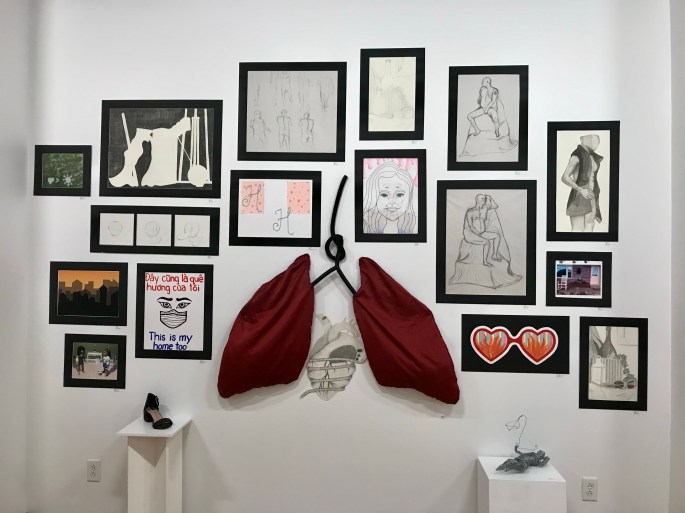
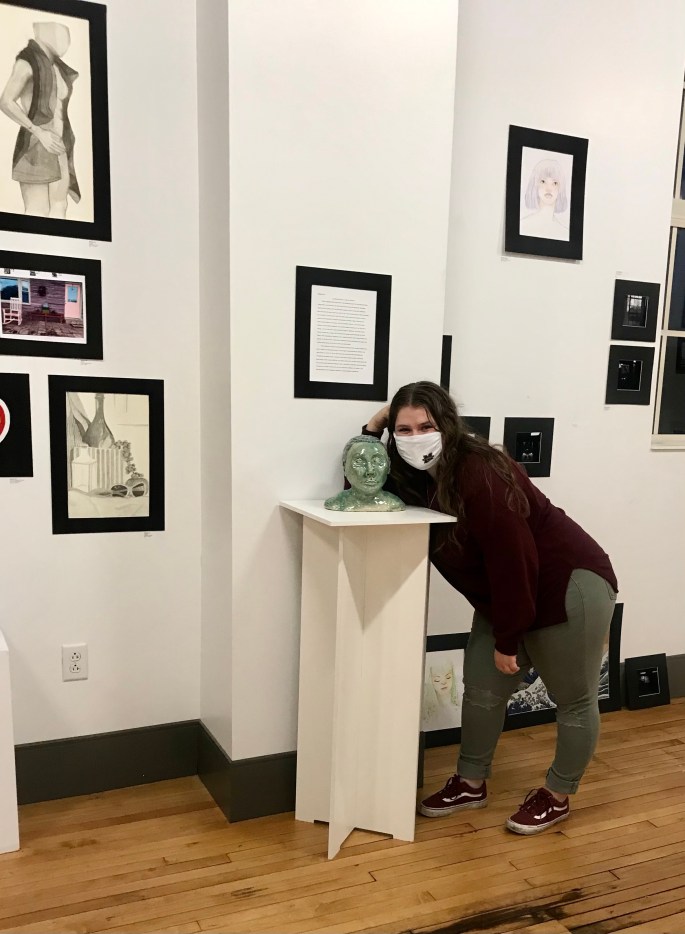
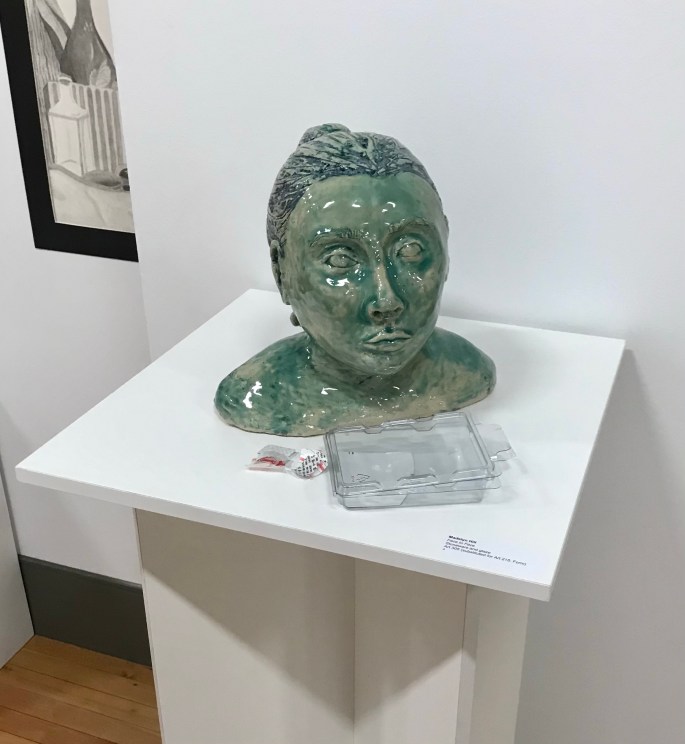
After two years of studying the black and white hard facts of science at the university level where she was doing quite well, my daughter, Madelyn, switched gears and decided to study art at a different university.  Nearly one and a half years later, she is thriving with the challenge of the creative process.  At this point in her art journey, she has worked with clay, ceramics, water colors, photography, printmaking, fabrics, charcoal, pen/ink, and several other mediums. I can’t help but feel a sense of wonder, as I watch her transform seemingly nondescript materials into works of art, at the level of her faith throughout each the process.  

It is her example of faith in action that got me thinking about my own faith and the faith of the world around me.  Personally, I catch myself repeatedly clasping and grasping for the way-it-should-be, the if-only-things-were-like-this, and the when-it’s-normal-again, rather than, like my daughter, trusting the process and allowing Divine Providence to work through her.  Instead, I keep resisting change and focusing on the down-side of 2020: negative attitudes possessed by so-called “others,” negative outcomes, negative requirements, negative situations, and on-and-on the list can go.  And, guess what, 2021 is just around the corner, and from the looks of things, the new year will continue with much of the same so-called obstacles of 2020.

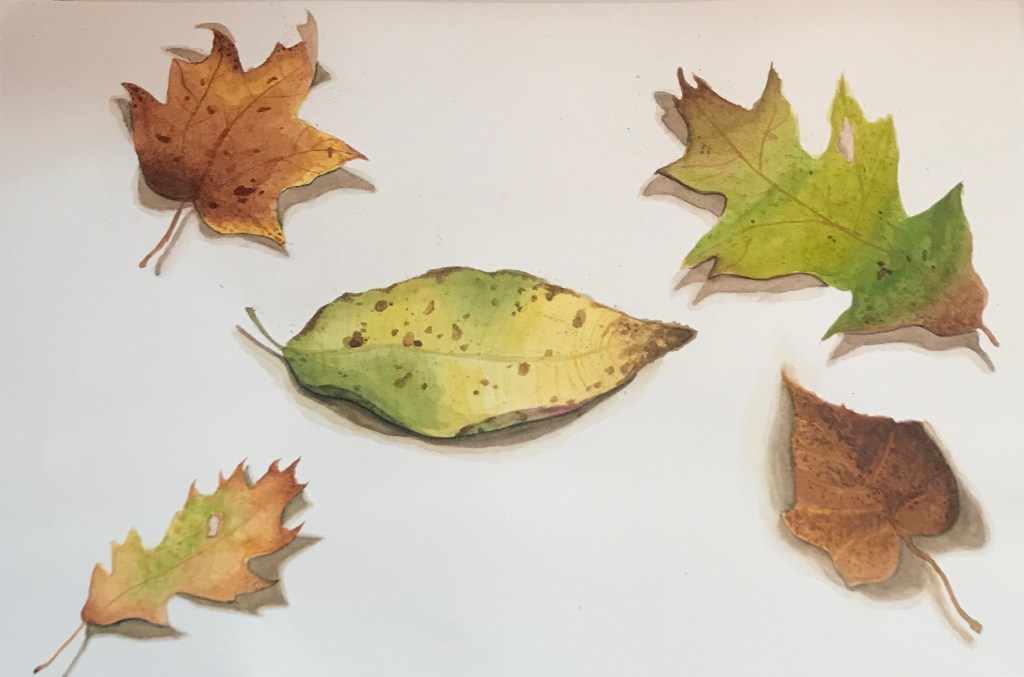
This beautiful watercolor painting study of leaves took much effort, adaptation, and was an opportunity to learn a new skill that Maddie may not have otherwise learned.

When Madelyn first started in the art program, I witnessed her very real resistance to the process. Gone were the structures, rules, and methods of the scientific process on which she had relied for years. Instead, she was now being asked to create, out of a wide variety of materials, unique creations that adhere to the rules demanded by each requisite medium, course, and/or instructor(s).  While at the same time,  she is likewise expected to “break the rules” in order to avoid creating pieces that are commonplace, cliched, or conventional .

During these early months of her transition, Madelyn would make statements such as, “I don’t like ______;” “I don’t know how I’m supposed to create _______ with ________;”  “I don’t know why I have to ________;” and so on. The first few times this happened, I began to wonder if the field of art was the correct call on her part.  She seemed so opposed to the various requirements and loosely formed experimentations/expectations.  Nonetheless, by the end of each of those early projects and classes, she exited the other side having mastered a new skill and with tangible evidence as seen in each of the pieces.  

It is because of Madelyn’s example that I now understand that resistance is part of the process of faith. It is through the act of resistance, as counterintuitive as it may seem, that her faith is ignited.  Then, as she wrestles with each new style, material, and/or expectation, the embers of her creativity are fed, allowing the heat of the process to lead her through to the other side.  Thus, by acting in faith, Madelyn is able to push through the growing pains of each project and is ultimately able to create something new.

Like Madelyn’s initial struggles with art, I too have been rather contrary with the changes around me.  I have felt the opposition to things-not being-the way-they-used-to-be.   Like an indulged child, my mind has thrown numerous tantrums and protestations. I have mentally muttered countless grumblings and asked numerous questions as to why and how I am supposed to do ______.  Nevertheless, I am now realizing that it is this very resistance that continues to spark, not only me, but all of humanity into adapting, evolving, and creating a new way of living, being, and interacting with one another.  

Faith, I am learning, isn’t blind acceptance that encourages the wave of our Maker’s hand, and, boom, we get our heart’s desires.  Faith is work; it is a labor of love, devotion, AND effort.  It is having the ability to believe in the unseen/unformed and to see that there is something new and original that can be formed through the very real friction of the struggle. Step-by-step, through set-backs, changes, and adaptation, faith is fortified.  Through perseverance, sweat, and belief, the faith process continues to grow and burgeon.  Embracing belief throughout the struggle, The One greater than us is inspiring change and challenging us with new situations and demands in order to foster growth in the same matter as Maddie’s art teachers force exploration of new materials and tools in order to push her capacity for creativity as well as her skill level.

When Madelyn starts a new art project, she typically starts with an idea.  However, I have noticed that she cannot cling to one way strict vision of the concept.  Sometimes, certain materials aren’t available.  Other times, what she originally envisioned would work, does not work in the way in which it was initially conceived, plans get altered, materials and tools are changed, outcomes or time-lines change, and sometimes even temperature fluctuations alter her outcomes/production.  It seems as if there are hundreds of tiny little changes and adaptations that contribute and influence her endeavors as well as the final product.  However, in the end, through the humility of her strivings, a new product is created, and a new skill set has evolved.

That, to me, is 2020.  The canvas that we had at the beginning of 2020 was blank.  Individual and collective visions for the final outcome of the year varied, but we all relied upon a certain amount of consistently available materials, timelines, and predictable outcomes.  Then like the multitude of art projects I’ve observed Madelyn begin, things began to go off-plan. We have been asked to follow some of the same rules, but not all rules, use this material, but not that material; likewise, we are asked to improvise as needed, and, in-the-end, we are now developing a new way of living, being, and interacting. 

Therefore, like an artist, we must overcome our own resistance.  We must continue to work through the process, adapting and improvising when needed.  The end product may continue to evolve and change, but through our collective endeavors, energies, and faith in the unseen, we must trust that Divine Providence is inspiring us to create a new work of life-art. We are but tools in The Creator’s hands.  Have faith.

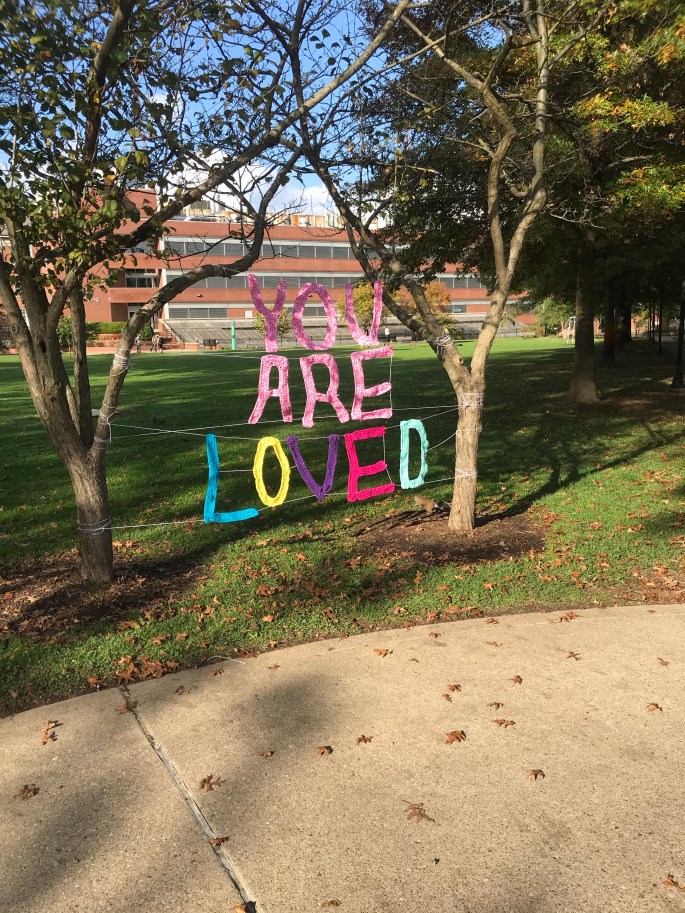
A reminder for all of us from Maddie.