The Spirograph Effect: Creativity in Life Design

“Not all who wander are lost”–J.R.R. Tolkien

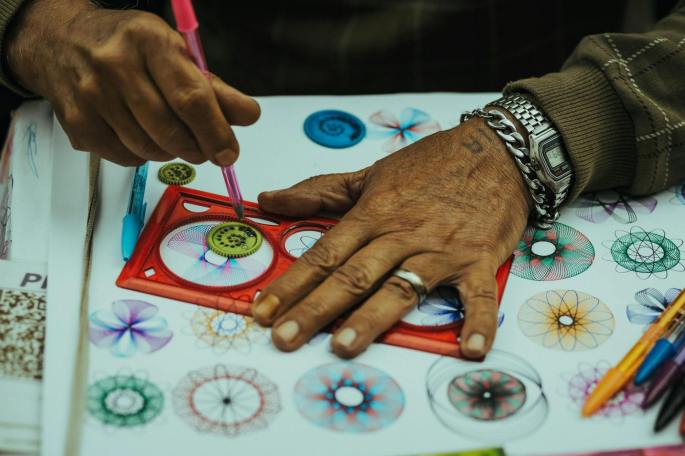
Close-up of hands using drawing tools to create a spiral geometric design on paper.

A Student’s Doodle Sparks a Memory✍️

Months ago, I observed a student drawing spiraling circles over and over on a sheet of notebook paper while participating in our class discussion. For some reason, I was reminded of an old toy my siblings and I once enjoyed: the Spirograph. I can’t remember which one of us received it, but we would sit together for what seemed like hours at the kitchen table drawing colorful, eye-popping (at least to us) geometric shapes.

Four children gathered around a table, smiling and drawing colorful patterns on a large sheet of paper using various markers.

Lessons Hidden in a Childhood Toy ꩜

Reflecting upon that long-ago childhood toy, led to the realization that the Spirograph illustrates the significance of specific concepts when it comes to creating our own life design, such as the influence of structure, patience, persistence, and the importance of celebrating our own unique individuality. It also emphasizes the value of working through natural constraints and trusting the process of learning through repetition. What’s more, the Spirograph demonstrates the relevance of trial and error–which often includes failure–as well as accepting the beauty that can be found in our so-called “imperfections”.

The Spirograph’s Ingenious Origins 👨‍🔬

To appreciate the genius of the spirograph as a toy, requires understanding a bit of its history. Denys Fisher, a British engineer, created it as a child’s play thing based upon various iterations, beginning as early as 1827. At the time of its original conception, it was used for advancing mathematical and engineering concepts. Spirograph, the toy, wasn’t available until 1965, and it went on to win “Toy of the Year” in 1967. Unbelievably, it is still available today.

This classic geometric drawing toy originally came with two transparent rings, two transparent bars, 18 clear wheels of varying sizes, two colored ink pens, pushpins, putty, and paper. Using the various tools, my siblings and I could draw precise, and quite mesmerizing, mathematical curves known as hypotrochoids, epitrochoids, and cycloids. With the switch of any one part, we could vary the size, shape, and geometry of intricate and, at the time, mind-boggling patterns. Essentially, the Spirograph is operated on a balance of limitation and creative freedom, which reflects much of the human experience.

A box of the original Spirograph design set, featuring colorful geometric designs and detailing the contents, including pieces and tools for creating intricate patterns.

Art Through Limits: Creative Freedom Within Structure 🎨

When one is drawing with the Spirograph, one has to adapt to its restrictions. The designs made by using the Spirograph are limited by the size and shape of the wheels and whether you are using the rack or the ring, as well as the color of the chosen pen(s) used to design a figure. Additionally, there are rules for creating specific outcomes as described in its guide book.  While it isn’t necessary to follow the laid-out directions, if one desires it to create a specific shape or design, one has to follow the step-by-step instructions.

This is similar to life in many ways. Influences in life vary from person to person and from family to family, often dependent upon experiences, education, and available information. Many individuals have followed very specific guidelines provided by parents, religion, schools, and even societal norms while others may have fewer influences. For many of us, following a structured timeline is how we landed in our current field/career path.  However, there are just as many, who followed a winding path of their own creation, and still produce a meaningful life experience. Like the Spirograph, following guidelines creates remarkable results for some people, while for others, grabbing the gears and turning them their own darn way works just as well.

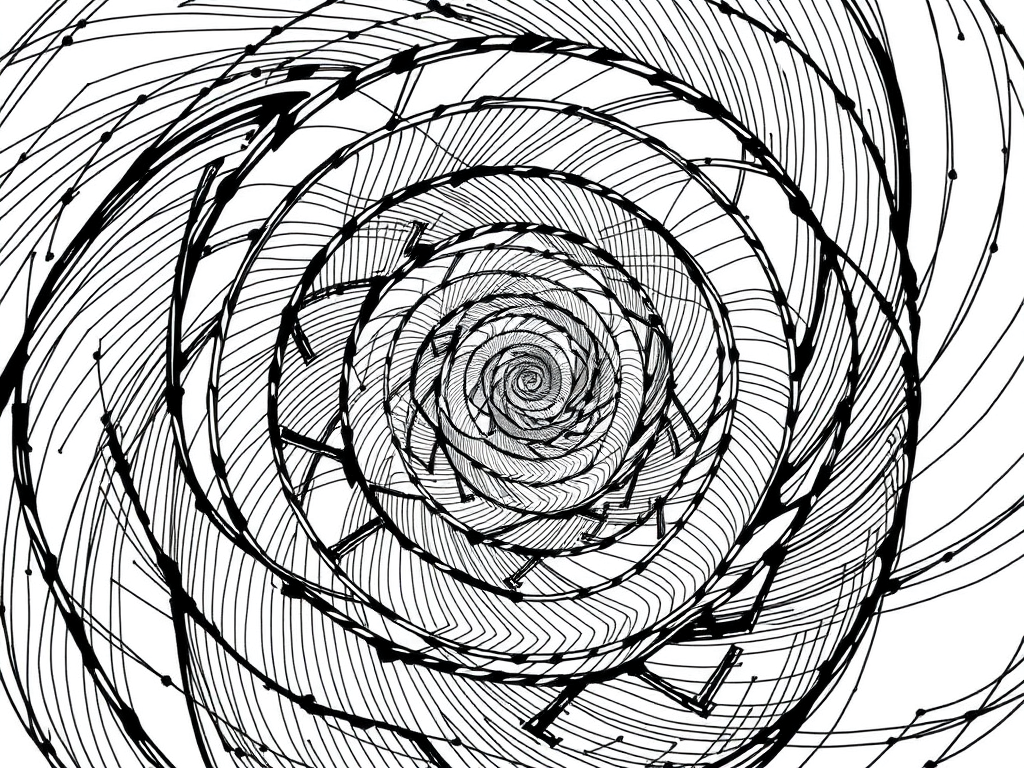
Black and white abstract spiral pattern created with lines and arrows, resembling a geometric design.

The Power of Patience and Trusting the Process 🙏

When working with the Spirograph, my siblings and I had to have faith in the process. We had to further learn that creating something meaningful takes time. The desired design outcome emerged slowly, turn by turn, and layer upon layer. In sum, the Spirograph required us to have patience, trust the process, and stay the course. 

Similarly, our life journey takes time as we, hopefully, continuously evolve and grow. We may have times we question the process, or we may waiver in our faith, patience, and persistence. However, rushing life outcomes usually ends up backfiring. Moreover, the time required for personal growth fosters resilience, a much needed companion to patience. We only have one precious life, and as our life design unfolds, with all of its curves and angles, it is never worth rushing. 

A colorful doodle featuring spiraling circles and geometric shapes, reminiscent of designs created with a Spirograph toy.

Failure, Play, and the Magic of Repetition 🖍️

With the Spirograph, I recall that we often learned through repetition and play. We might draw the same shape over and over, sometimes changing the color, or merely changing the size. Other times, we followed the guidelines, and somehow still managed to “fail”!  And, yet, many of those so-called failures ended up being unique and pretty creations–even if they did not come out as planned. Other times, we would just “mess around” to see what we could create. Some results were not so spectacular, but other times, the creations were fairly impressive or, at the very least, provided us with a new understanding for creating specific curves and/or angles. 

Life can often be the same way. How many of us have experienced times where we “followed the rules,” doing what we were “supposed to do,” and still somehow managed to fall flat on our face. Years later, however, we may look back and realize that those “failings” led to something far greater than we could have ever imagined. Other times, a bit of experimentation leads to a new life path or experience that brings unexpected joy we might not have otherwise known. Thus, like the Spirograph, a playful and experimental mindset can lead to untold delights and adventures.

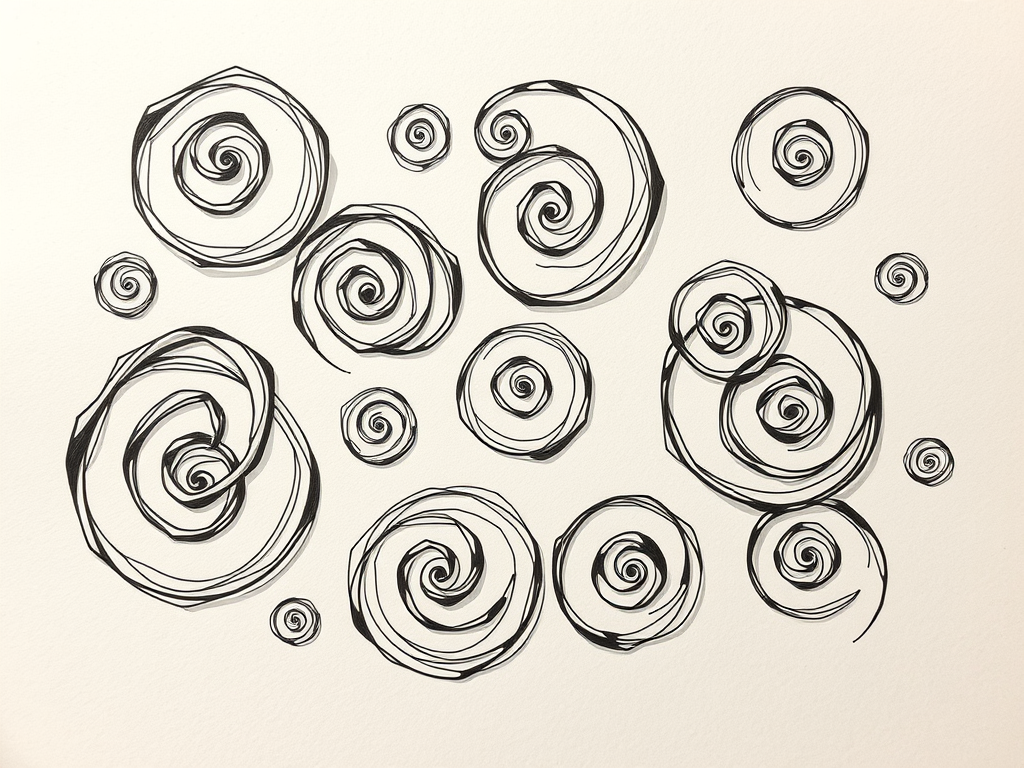
A collection of hand-drawn spirals in varying sizes, arranged artistically on a blank background.

The Beauty of Uniqueness in Design—and in Life 🖼️

Learning to welcome individual uniqueness was another life lesson the Spirograph provided. It often intrigued my young mind how my siblings and I could make the same design, but with a switch of pen color or pressure, or switch of a gear wheel, we could make each drawing unique, despite the fact we were essentially using the same tools. 

Sometimes, we would be surprised when trying to make the exact same shape, because we accidentally missed one of the required steps. Skipping one step, tended to create an irregular shape. Nonetheless, our younger selves marveled at the unique loveliness of the design. Our child-size egos told us we were pioneering artists in those moments!

Marks of Authenticity: Irregular Paths, Unique Lives

What a powerful reminder of the importance of celebrating our own–and others’– idiosyncrasies, including any so-called irregular paths. These individual characteristics and traits, as well as any “irregular paths’ traveled, are all marks of authenticity–that one-of-a-kind spice in our life serving. As humans, our genetic material is vastly similar across all humanity. Yet, this same genetic material still manages to create unique DNA characteristics, such as varying eye color, height, body shapes, and so forth. Furthermore, despite our similar genetic makeup, our lived experiences vary. In a sense, we are pioneering artists of our own lives.

A colorful collection of intricate geometric patterns resembling designs created with a Spirograph. The spirals and mandalas feature vibrant colors and diverse shapes, showcasing creativity and uniqueness.

Embracing Life’s Curves and Imperfections 🌀

Like the Spirograph of my childhood, we all deal with life constraints, no matter what path we try to create for ourselves. These life designs often, and sometimes repeatedly, require practice, patience, perseverance. Life also requires us to accept the many so-called imperfections and irregularities that come as part of the creative process. However, those “flawed” experiences give our life meaning and purpose. Therefore, it is worth remembering we have the power to play and create with the pen we have. All those curved lines and angles that make up our lives, including the missteps, are what continues to compose and create our magnificent, one-of-a-kind life design. Let’s embrace the possibilities.

Who’s ready to draw? ✍️

Transform Your Mindset: Embrace New Experiences

“Your perspective is always limited by how much you know. Expand your knowledge and you will transform your mind.”–Bruce H. Lipton

A black background with the words 'open to new OPPORTUNITIES.' written in white chalk-like font.
Photo by Anna Tarazevich on Pexels.com

Dreams That Spark Reflection and awaken the Mind 🎆

Recently, I have been experiencing an active dream life. While I do go through periods when I don’t recall my dreams, lately my nights have been filled with vivid, frightful nightmares. In my dreamlike state, I try to “change the channel,” but my mind keeps slipping right back into the same harrowing scenario. These restless nights inspired me to think about how in life, similar to TV (or any current media platform for that matter) without deliberately changing the channel, our point of view can become limited.

From Antennas to Awareness: Early Lessons in Limits 📺

As a child, there were no cable or streaming platforms.  Our family, like the families around us, relied on a TV antenna on top of the house in order to watch local stations.  Theoretically, we should have been able to watch three to four local stations–ABC, CBS, NBC, and PBS.  However, we were surrounded by hills, and as a result, most days, NBC was the only  station we could clearly view. I’d hear classmates talk about shows on other networks, but unless we visited my grandparents, who had better reception, our viewing options were limited.

Books: Windows to the world 📚

A woman reading a book while sitting by a window, illuminated by warm natural light.
Photo by Rahul Shah on Pexels.com

Fortunately, we did not rely on TV as we had access to a wide array of books and magazines through school, the bookmobile, at the house of my grandparents as well as in  my own home.  Therefore, my viewpoint expanded beyond my small-town bubble through reading.

College as a Catalyst for Perspective 🤔

Later, when I attended Ohio University, in Athens, OH, my worldview was dramatically shifted. Though Athens is no metropolis, the diversity of students, professors, and wide-array of sources of information was striking compared to what I had known in the Tri-State area. This was especially true since I lived in an international dorm with students from around the world. Conversations in these halls opened my eyes to new ways of living, thinking, and even eating.

Cultural Conversations and Culinary Discoveries

Water droplets cascading from a fountain, surrounded by a blurred green background.
Photo by CocaKolaLips on Pexels.com

My roommate from Singapore opened my eyes to the water shortages her country was experiencing at the time. In her home apartment complex, water was available only during scheduled times—long showers were out of the question. Her story stuck with me as a concrete example of the finiteness of water.

 Meanwhile, students from Denmark and Sweden introduced me to cheeses that I never before heard of, much less tasted.  A French student was the first person to introduce me to espresso, while students from Vietnam and Korea introduced me to a wide array of spices that would not have been locally available at that time.

Voices from Different Lives 😃

I had a classmate named Annette, the daughter of a military family, who’d lived all over the world. Her life experiences, and the breadth of cultural understanding, was remarkable. She was heads and shoulders above the rest of us in global knowledge and awareness.

In contrast, another classmate, Jerry, grew up on a nearby family farm on the outskirts of campus. He illustrated, first-hand, the struggles of family-farming, the weight of the financial hardship often felt by these families, and the deep faith it takes to persevere.

Spiritual Exploration Through Diverse Worship 🙏

Also, while attending OU, I visited churches of different denominations around campus. This provided direct experience with other forms of worship different from my own upbringing. Each service challenged and broadened my appreciation of varying faith communities.

Travel: Expanding the Map of Understanding 🗺️

As an adult, my perspective has continued to unfold through travel. My husband, daughter, and I have explored various parts of the U.S. from coast to coast and visited several Canadian provinces. During these trips we meet people from all walks of life. These encounters demonstrate the common threads of living as well as the unique–and some not so unique–struggles all humans face. These conversations continue to deepen my empathy and allow me to see cultural events, governmental policies, and life experiences through the eyes of others.

The Environment: Witnessing Earth’s Fragility 🌲

Since most of our travels center around natural and historic sites, my perspective has been further stretched in two important ways. First, traveling reinforces my profound respect for the limited nature of Earth’s resources. Over the years I have witnessed firsthand miles of forests decimated by logging or (most recently) flooding/storms, walked along shores of a fragile coastline in a constant state of erosion, and visited places in which the air quality was at near unbreathable levels due to drought-related dust storms or fires. These expeditions serve as tangible reminders that our environment is not infinite, and it is urgent that we protect/care for it.

History: Lessons in Perspective and Relevance 🧑‍🏫

Second, by visiting historical landmarks, walking historical streets, or exploring museums, it helps me recognize the values, struggles, and limitations of the times in which people once lived and how relevant the past is to today’s world. These excursions (along with reading historical and historical fiction books) demonstrate that history is not just a collection of dates and events; rather, it’s an expansive, unlimited lens–filled with countless lessons–through which we can understand human behavior, social progress (or lack thereof), and cultural identity. 

Most of all, visiting natural and historic attractions repeatedly instructs that what we take for granted—whether a forest or a freedom—can disappear without an ever-expanding viewpoint.

Perspective Lost and Perspective Gained

Without an intentional commitment to varied life experiences, our perspective is restricted and narrowed. We may not see the value of managing natural resources. Likewise, we might not be empathetic to those with cultural differences, and we might have little-to-no context of history and its importance. Without going beyond our comfort zone, we may not see the vastness and inclusiveness of a God so great, we cannot possibly pretend to understand.

Intentional Curiosity: How to Keep Changing the Channel

Therefore, it is important to seek out new experiences that challenge our assumptions and broaden our horizons. There is indisputable value in engaging with people whose lives are different from our own.  By engaging and listening more, judging less, and asking more questions, we are less likely to jump to conclusions while also allowing our assumptions to be tested. Visiting a worship service different from our own current practice or simply visiting a new place–even if it’s just across town–can offer further insight to the world around us. Even reading books, fiction or nonfiction, can also offer unique and salient views of others.

Shift Your View, Shape the World 🌎

In closing, I challenge all of us to avoid getting stuck in life as if in a dream. Instead, let’s keep changing the channel. With each click out of our comfort zone, we gain a more nuanced understanding, broaden our perspective, and foster greater compassion for the world and humanity itself. In fact, by doing so, we might not only expand our viewpoint, but we may also alter the viewpoint of someone else we meet along the way.

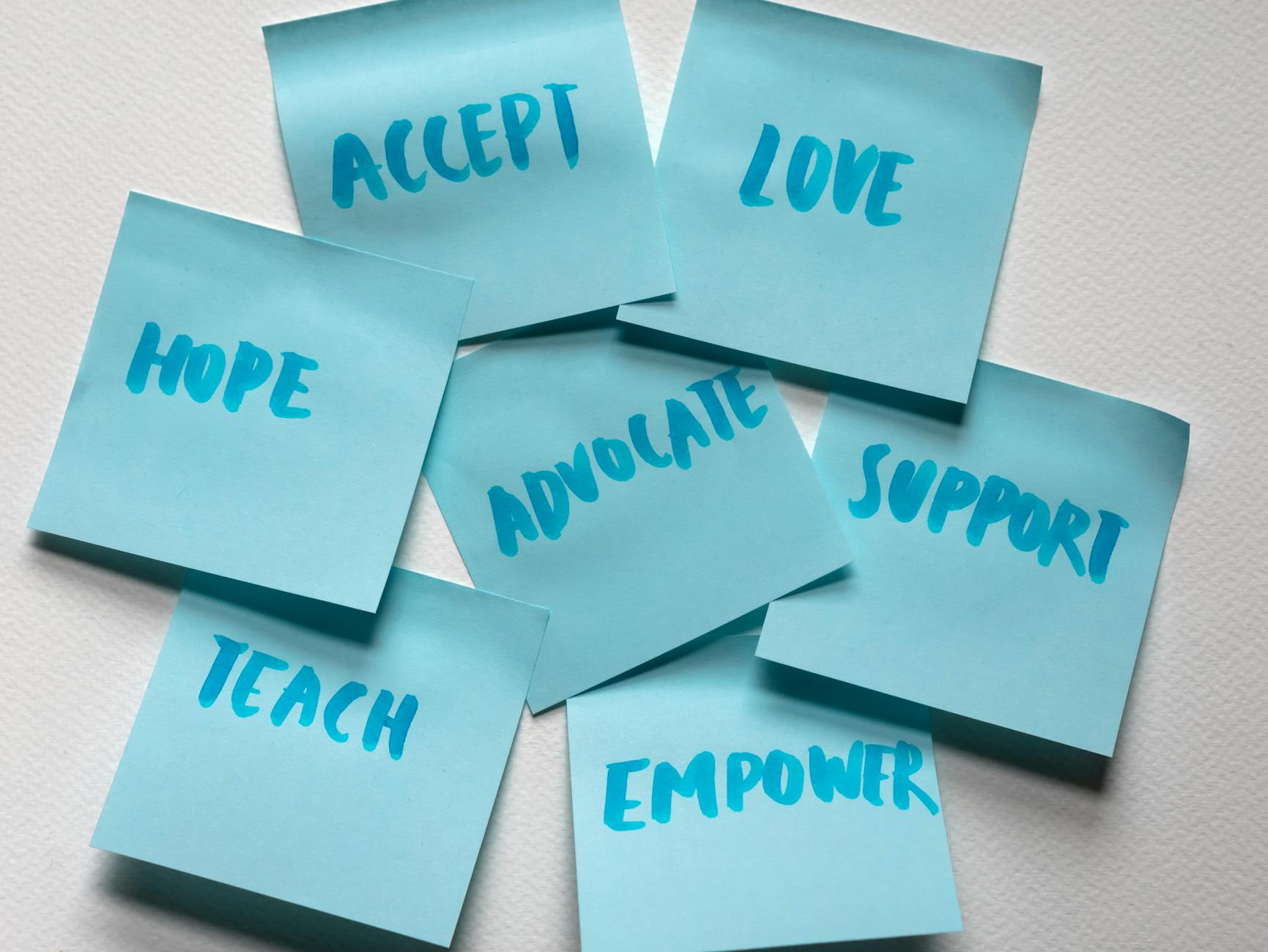
A collection of blue sticky notes with handwritten motivational words: 'ACCEPT', 'LOVE', 'SUPPORT', 'ADVOCATE', 'EMPOWER', 'TEACH', 'HOPE'.
Photo by Polina u2800 on Pexels.com

Conquering Perfectionism: Tips for a Balanced Life

“Perfectionists strive to never make mistakes. Excellence is striving high but offering yourself grace for mistakes made and things you don’t know yet.”–Sharon Martin

Photo by RDNE Stock project on Pexels.com

imperfect pressure 😰

I watched in horror before school began as a student began pulling at their hair so hard, strands of it landed on the table. I quietly walked over to offer help/support. The child was a known perfectionist and quickly angered if they were unable to complete their work with total accuracy. As it turned out, they were completing math homework that was due at 8:00 a.m., which was less than ten minutes away. It was homework they had procrastinated completing and were feeling the pressure of not having the time needed to complete the work “perfect.”  

As a teacher, I encounter both students–and adults–that appear to strive (either intrinsically or extrinsically), for “perfection.” However, the idea of perfectionism is a human-construct. When we look at the natural world, we can see multiple examples of this.  Think of any three-legged animal you may have encountered.  One could argue that those creatures are not “perfect” specimens, but they are still able to function “perfectly.”  Another example is the number of plants that are classified as “imperfect” because they do not have both the male and female parts needed to produce flowers.  However, through adaptation, they are able to produce flowers.

Photo by Fox on Pexels.com

Intrinsic vs. extrinsic “perfectionism” 🗂️

Perfectionistic behavior in humans can manifest itself in various ways. So-called “perfectionism,” for some, can be intrinsically-driven. These are people who hold themselves and their work/performance to higher standards. They are self-motivated and often view mistakes as setbacks from which they can learn.  Their goals are realistic and achievable. Overall, this type of “perfectionism” can be healthy unless it evolves–either from internal or external forces–to an unhealthy, maladaptive state.

An “unhealthy” state of perfectionism can often be attributed to others–cultural and/or societal cues, well-intended friends, or even family. In fact, think about how often the word “perfect” sneaks into day-to-day interactions and conversations.  Even sports’ analysis is rife with its use of “perfect”–perfect pass, perfect catch, perfect save, perfect pitch and so on.  Similarly, from many outward appearances, one could argue life rewards those who are “perfect.”

Unfortunately, perfectionism can become problematic when people begin to set standards that are extreme and often unattainable. This can lead to a sense of “failure,” a constant feeling of stress, and/or develop procrastination/avoidance habits because the tasks/work can seem so overwhelming because it can’t be completed “perfectly.”  Perfectionism can reduce feelings of joy/happiness, diminish one’s self-esteem, and often leads to burnout. It is worth further noting that perfectionism can sometimes evolve as an extension of anxiety, OCD, ADHD, and/or depression.

Photo by energepic.com on Pexels.com

Downside to perfectionism 😫

Perfectionism, when left unchecked, is beyond “trying to be your best.”  It’s more about setting standards that are so high, they are either difficult to maintain or unrealistic to achieve. Many people think that perfect work/performance is the only way to be accepted and/or valued, often because they have a fear of not being good enough or worry about how others perceive them. 

In particular, I have noticed that students (and adults) with perfectionistic tendencies place extreme amounts of pressure on themselves to perform “perfectly.”  Then, if their work/performance misses the high-mark they have established in their mind, their self-talk becomes highly critical and often leads to self-loathing that can spiral into depression and harmful coping mechanisms.  Sometimes, this need to be perfect can spill over into their relationships in which friends and acquaintances who don’t meet “perfect standards” are berated, belittled, and shamed for not having the ability to perform at a specific level.

Photo by Christina Morillo on Pexels.com

Reframing the way we talk 🗣️

What can be done about this?  One important step that any of us can take is to reframe the way we talk about performances.  Rather than being quick to say, “that was perfect,” consider focusing on acknowledging/praising the effort or the process. This is especially important for parents or anyone working with children and teens; however, it is also equally important in the work setting or within close relationships. For example, instead of saying that a presentation is “perfect,” focus on the process.  “Your presentation was so clear and to the point. Tell me about how you came up with that idea.” The point is that we bring harm to others when we foster the myth of perfectionism.  

Proactive practice and tips for 📋overcoming perfectionistic tendencies

I’ve gathered several tips from a wide array of sources as well as a few anecdotal tips I have observed students and/or adults employ to combat perfectionistic tendencies.  Even if you are not battling perfectionism, per se, some of these tips are overall proactive practices for a healthy work/life balance.

  • Become aware of perfectionist tendencies, and reduce self-imposed pressure. Sure, you could spend hours crossing every t and dotting every i, but after a certain amount of, there is a diminished return on time invested.  Sometimes, it’s okay to complete the task well (read: not “perfect”) in a reasonable amount of time
  • Break a big job into smaller tasks, and habit bundle in order to avoid procrastination. If the thought of a task is overwhelming, break it down into smaller tasks spread out over several days, and “bundle” it with something you enjoy doing while completing the task or afterwards, i.e. Instead of cleaning the entire house, commit to cleaning two rooms while listening to your favorite playlist or podcast. Then repeat the process with two more rooms at another time.
  • Celebrate small successes and praise yourself.  When completing a step of a major task/job/assignment, take time to acknowledge and feel good about each completed step. 
  • Limit your time on task(s), and focus on meaning over “perfect.”  See the big picture/goal, so that you can be less perfect about some things and focus more on the overall, most important goal.
  • Acknowledge that “perfect” is a human construct, and reframe how you talk to others about work/skills/projects. This is one that takes practice and awareness due to how easy it is to interject the word, “perfect” when acknowledging/praising one’s job.
  • Allow yourself to make mistakes, and view them as learning opportunities. This is a big step towards a more healthy mindset. We all make mistakes, and they provide important lessons that can potentially impact future work.
  • Cut out negative influences and accept/seek constructive feedback. While it may not be completely possible to avoid those who place unrealistic expectations on you or others, it is possible to ignore those messages and seek advice from mentors who truly have your best interest at heart.
Photo by fauxels on Pexels.com

Final Thoughts 🤔

Coping with perfectionism can be challenging, especially when family, friends, and/or other outside influences may be sending other messages.  While it’s good to have high standards for ourselves, those standards should not be at the expense of our mental health and well-being. Finding a more balanced approach to work/performance can increase our peace of mind, overall well-being, and give us permission to live and work with a bit more grace and kindness towards ourselves and others. 

Mind Over Matter: Mental Strategies to Push Towards Your Movement Goals

“Put all excuses aside and remember this:  You are capable.”–Zig Ziglar

During my Saturday morning run this past week, there were numerous times I wanted to quit. It had taken me nearly two hours to complete, and it had not felt nearly as good as my last run at the exact same distance.  Nonetheless, I kept employing different mental strategies I’ve learned over the years and, ultimately, completed my goal.

Photo by Volker Meyer on Pexels.com

That run got me thinking about the importance of mindset and the mental strategies/techniques we sometimes need to employ to incorporate more movement and exercise into our lives.  Therefore, in this 8th installment of my “Move into Health” series, I will share several research based mental strategies for exercise/movement for those days when we “aren’t feeling it.”  Moreover, many of these tips can be applied to other areas of life, such as tackling difficult tasks.

The mind-body connection is powerful. Whether discussing exercise, or tackling a difficult/challenging project, it is important to recognize the influence of the mind-body connection.  From having a churning stomach in response to an upside routine change, such as shift workers, to coming down with a cold after prolonged exposure to a stressful event, our bodies respond to the changes in our mind.  Therefore, by understanding this connection, we can unleash its potential to positively influence our attitudes and choices, especially with regards to movement goals.

Photo by SHVETS production on Pexels.com

Be patient; remember the long game, and avoid comparison: As my decades continue to stack, the long-game is most often at the forefront of my thoughts.  By prioritizing the fact that I want to remain injury free, healthy, mentally engaged, and purpose-driven for years to come, I’ve had to slow down, make moderation a priority, and avoid comparisons to my past self, previous workouts, and definitely not to others.  It’s important to be clear on long-term life goals and determine how movement/exercise can benefit that plan.  When we see how exercise and movement can contribute to and enhance our bigger life picture, it provides a bit more motivation to get out there, even when we don’t “feel like it.”

  Let go of attachments, especially to perfection and the all or nothing mindset: Our mind can be a bit of a trickster and convince us that exercise and movement should feel, be, or look a certain way. That’s all nonsense. Sometimes, it doesn’t feel great, but if nothing is hurt or injured, we have to keep going.  Other times, we may have little in the tank or reduced time. Rather than throw in the towel, try another workout or shorten your workout time.  Some form of added movement is always better than nothing!

Photo by SHVETS production on Pexels.com

Embrace the unknown, including discomfort: Along with letting go of attachments to how exercise/movement should be, it is important to embrace the unknown.  Whether it is going to a new gym, a new exercise class, or walking in a new area, accept that it will feel uncomfortable and new for the first few times.  Likewise, it is important to understand that with muscle growth comes some discomfort, including sore muscles.  This is where it is important to discern the good pain from the “I-might-be injured” pain.  Most of our pain is the good kind, but we do need to pay attention to unusual or persistent pain.

Muscle has memory:  The more we exercise/move, the fitter we become, and the “easier” it is for the body to move.  This is important for those of us who are not “naturally” gifted athletes, or no longer spring chicks for that matter!  As our fitness levels increase, our likewise energy increases, making even everyday movement tasks feel easier.  Now that’s motivating!

Photo by Timothy on Pexels.com

Break “large” workouts into smaller tasks and start easy: When I am faced with a long run, I think about it in chunks, and I start slowly with a walk to build success.  With each successfully completed chunk, I mentally celebrate, “One-third down, only two-thirds left to go!”  I continue in this manner until I attain my goal mileage.  Additionally, I’ve applied this mindset across a multitude of workouts and projects unrelated to exercise.  

Visualize the feeling of success that comes with finishing, and don’t underestimate the potency of a smile:  This is a tool I employ before and during a workout.  I think about how good it will feel to know I accomplished whatever it is I set out to do.  By focusing on that feeling, I automatically smile.  Smiling starts a chain reaction of positive feelings coursing throughout my body, but especially my brain.  It is those good vibes that keep me going, and they can keep you going too!

Photo by Pixabay on Pexels.com

Adapt a “no-fail” mindset.  Since we do have that mind-body connection, we can harness the power of words to move our bodies. Create a mantra, or saying, for when your workout or movement gets tough.  I often talk to myself during, especially hard workouts.  I’ll use phrases like, “You can do this, Steph.”  “You’ve got this, Steph.” Other times, I use one word, such as, “Fortitude,” “Perseverance,” and “Tenacity,” which are a few of my favorites.  The key is finding the motivating word(s) that strengthen your resolve.

Power up with music and songs: Music doesn’t motivate everyone, but it certainly does a large number of us.  The right playlist can motivate and move you into action.  

Photo by Ketut Subiyanto on Pexels.com

Create a reward system: I call it the if-then principal.  If you do this, then you get to do this. Have some sort of reward system in place for yourself, and focus on it during those challenging workouts.

Have a purpose for your run:  I often have a prayer/meditation that I repeatedly say.  Other times, I run in honor of a veteran (Team Red White & Blue and Wear Blue) by writing the name of a veteran on my hand, or creating a list of several vets and tucking the list into a tiny pocket in my tights.  The point is that by adding a higher purpose to my workout, I attach greater meaning to a workout that increases my motivation.

Everyday may not offer ideal situations for movement; therefore, having a toolkit of mental “hacks” can help us push past our own resistance and/or excuses.  Exercise not only works only our muscles, but also our mental strength and, ultimately, our overall well-being. Combining the power of the mind-body connection, especially over time, improves both our physical well being and creates a more disciplined and determined mind.  So grab your toolbelt, and learn to attach and switch out any of these various tools to motivate you to move into health, so you never have a reason to give up.

Photo by RUN 4 FFWPU on Pexels.com

Choose Joy

Participate joyfully in the sorrows of the world.  We cannot cure the world of sorrow, but we can choose to live in joy.–Joseph Campbell

Photo by Archie Binamira on Pexels.com

There is a documentary about a Holocaust survivor named Gerda Weissmann Klein that I have watched on several occasions with students.  Her story is, like many Holocaust survivor stories, one of inspiration, hope, and even joy.  One of the lines that often comes back to me is when Weissmann Klein specifically addresses how she survived a death march towards the end of World War II.  Despite the fact this march occurred during the height of a brutally harsh winter, Wiessmann Klein was able to survive for a number of reasons, one of which included her ability to “occupy her mind.”

In simple terms, Weissmann Klein was able to take her mind’s focus off the cruel conditions around her.  Rather than brood over the extreme cold, her hunger, her fatigue or any other legitimate complaint, she colorfully described her intentional deliberations that could last all day, such as spending an entire day planning out her next birthday party, even though she had not been able to have one since the Nazi occupation.  However, it wasn’t so much the what of her thoughts, but the fact that she was able to focus/distract her mind away from the pain/discomfort that naturally accompanied her situation.  Instead she intentionally directed her attention towards ideas/notions/thoughts that safely allowed her to “escape” and feel some sense of happiness if only cerebrally.  It is this human ability to occupy one’s mind, or shift the mind’s attention/perspective, that is a powerful take-away from Weissmannn Klein’s story, and I believe is transferable to other, much less brutal situations.   

Photo by cottonbro on Pexels.com

Given the news, the pandemic, the  major weather events, and all of the sobering occurrences from the past few years, it is easy to allow our mind to focus on the what-is-wrong-in-the-world, whether you are looking at the big picture or sometimes even your own personal circumstances. I know I can easily get wrapped up in the negative and get a full-steam-on gripe session with the best of them.  On one hand, I know it can be beneficial to get the negativity off-your-chest; on the other hand, I also know that there is danger in dwelling or focusing on it for too long–at least for me.

In a similar manner, I’ve noticed that both positivity and negativity are contagious within myself and among others. If I enter work feeling grumpy, put-off, or focused on some negative happening, I tend to attract and may even catch myself seeking out negativity.  It’s not per se always a conscious choice, it just seems to happen that way.  As soon as I recognize it, I feel badly for having given that gray cloud permission to come along for a ride.  The real danger, it seems to me, is when negativity is left unaddressed.

Negative mindsets have a tendency to spiral out of control.  It may start with something as simple as an accidental spill or mess that throws off the morning routine, followed up by that s-l-o-w driver on the morning commute while listening to frustrating news on the radio.  This may then turn into a later than planned arrival at work, followed by unhappy/unpleasant conversation, followed by a work-related problem in need of addressing for uptenth time, and by the time lunch arrives–which is often a working lunch–negativity can feel as if it is bursting at the seams.  

I think Ms. Weissmann Klein was onto something when it comes to not defaulting to the negative. We must actively and intentionally teach our mind to choose joy.  No, it’s not easy, and yes, it sounds cliché.  However, I do believe that we have a choice of how we respond to our circumstances, but like all skills, it takes practice and thought.

Photo by David Orsborne on Pexels.com

I think the lyrics to a King and Country song entitled, “Joy,” best encapsulates this thought.  It is oh-so-easy to focus on all of those nightly news headlines that vie for our attention.  Easier still, is to become wrapped up in our personal headlines: illness, death, divorce, finances, job loss/stress, future uncertainties and so forth.  I can’t tell you how many times I’ve caught myself in the woe-is-me mind story; it’s so darn easy to do.  Here is what I am learning when I catch myself having fallen prey to pessimism.

Sometimes your joy is the source of your smile, but sometimes your smile can be the source of your joy. –Thich Nhat Hanh

Believe it or not, the simple act of smiling can be a lightswitch for our mindset.  I first discovered this through running, but I find it just as helpful in most other situations.  Whether it’s my legs and calves aching from the exertion of exercise, or it’s my shoulders and neck tightening in reaction to stress, as soon as I catch myself responding negatively to stress–to the degree possible–I focus on deeper breathing, relaxing the tightened areas, and adding a smile.  I smile at the sense of accomplishment I will feel once I have completed the goal; smile at the fact I am proud of myself for having caught myself slipping into negativity; smile at the fact that my body still has the ability to exercise, work, read–whatever. All of which leads to more smiling because, well, I am smiling–which leads to the release of feel-good hormones.

Photo by Pixabay on Pexels.com

I was talking to a sister recently about how we wake up with the best intentions to remain sunny and positive, and then one thing might set off the day, and BOOM, there goes the mindset.  My husband says, however, that is part of living in faith.  He reminds me that it’s not about perfection, but recognizing your imperfections–your humanity–and then trying again. 

In the words of King and Country, “. . . Oh, hear my prayer tonight, I’m singing to the sky/ Give me strength to raise my voice, let me testify . . . The time has come to make a choice

And I choose joy!

I can’t pretend to choose joy in every moment, nor am I not acknowledging the very realness of life, headlines, personal crises and all.  Nevertheless, even in the bad times, sorrows, and heartbreak and loss, I can choose my response, and I can choose to find at least one reason to smile.  

Photo by Pixabay on Pexels.com