The Transformative Power of Art: A Visit to Tamarack

“Do you still feel up for going to the Tamarack?” my husband asked.

A Heavy Heart and a Planned Escape 🚘

Days earlier, we had loosely planned a day trip. The goal was to stop in Charleston for brunch on the way to Beckley, to nose around the galleries and marketplace of the Tamarack, and then return home, making a couple of quick errand stops along the way. Unfortunately, my spirit had been bruised by life, as sometimes happens, but despite feeling down, I agreed to go in the hopes it would be a pleasant distraction.

The brunch and drive along the WV Turnpike were heavy, filled with somber, clarifying conversation as my husband tried to help me clean out the closet of my cluttered heart. Tumbled, but not fully dried from an onslaught of despair, I entered the Tamarack lightened by our discussion, but still damp with distress. My intention from the outset was not to make a purchase, but instead soak up the vibrant and creative energy of the art, and by proxy the artists, who created it. 

Echoing my own feelings, Stella Adler stated, “Life beats down and crushes the soul and art reminds you that you have one.

Entering the Tamarack: A Sensory Shift

Once through the doors, I observed a crowd of people and wondered if this had been a good idea after all. Meandering to the right of the entrance, I surfed the sensory wave. Aromas of Appalachian-inspired cooking filled the air. A long line of people snaked around the fast-casual dining room as I made my way to the ladies’ room. Tamarack’s signature circular shape surrounding an open courtyard created a light and spacious feeling, even during this busy, pre-holiday time period. A multitude of glass windows, adorned with locally designed, gemstone-colored stained glass pieces, radiated an additional cheery warmth. The animated energy of visitors’ conversation added a rhythmic pulse to a popular sing-along soundtrack playing in the background. 

Letting the Atmosphere Settle the Spirit

As I allowed the wave to immerse me, I soon noticed that my breathing and pulse had slowed, tensions were eased, and the emotional flames were beginning to quell. Despite my earlier qualms, I could feel the atmosphere offering a form of calming consolation. The simple act of getting lost in the admiration and appreciation for each artist, and the art pieces they created, nourished my spirit. 

Wandering the Galleries: Beauty in Every Craft 🖼️

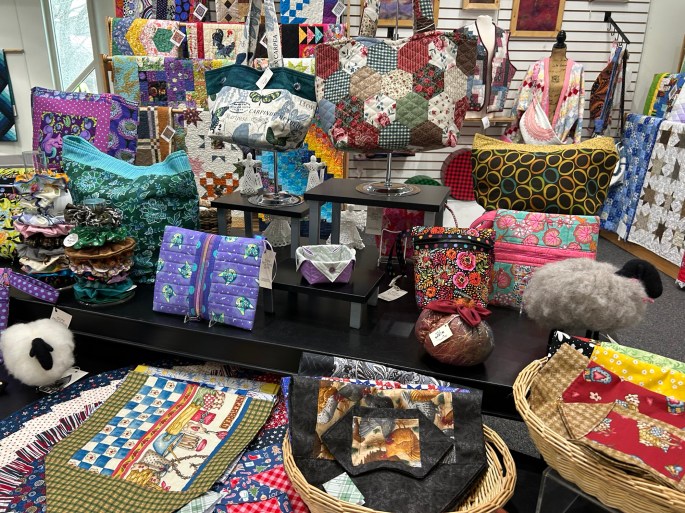
Allowing the natural flow of the galleries to pull me along, I took in richly detailed textiles and exquisite, delicate glass pieces. There were complex and intricate woodworks and artisanal earthen and pottery wares. Tables of WV grown and/or crafted wines, beers, ciders, soaps, candles, and one-of-kind foods/beverages were also available. 

I also stopped by the book nook, filled with locally written fictional and nonfictional books, novellas, cook books, maps, travel guides, and other artfully written materials. Additionally, there was a separate gallery, bright with ample natural light, filled with one-of-a-kind WV paintings, sculptures, prints, and photographs. 

Art as Memory: Echoes of Loved Ones 👵🏼

Allowing the current of creativity to slowly move me at will, the art grounded me into the present moment as I mindfully soaked up the vibrant energy. Different pieces evoked precious memories of loved ones: quilts of my grandmother’s attic, pieces of furniture and toys handcrafted by my husband’s grandfathers, earthen dishes that were reminiscent of family holiday casseroles, paintings and photographs of forested hills during the fall and winter months similar to those I hiked with my siblings and father as a child, and hand sewn creations that my mother once made.

The Healing Power of Art 🎨

I was further reminded of the many art therapy majors with whom I had classes all those long ago years. They often described the important role of art in therapeutic and school settings, a truth supported by research. Creating art and observing art supports mental health and well-being.  It often helps with emotional regulation by creating an outlet in which emotions can be channeled. Art is known to reduce stress and is often used as a tool for creating a greater understanding of one’s emotional atmosphere. Works of art often create a connection/conversation between the creator and viewer, which can provide an opportunity for both personal and collective healing.

Creativity as Community Storytelling

This is because art, such as the works I viewed at Tamarack, is often a reflection of the emotional landscape of a community, region, or even country. How many colorful and varied life stories, events, and personalities, past and living, were being conveyed and connected all under one circular roof? Each stitch, stroke, cut, hammer strike, click, and spin breathed life into each creation that spoke to the heart and soul of human resilience and hope.

In the Company of Strangers: Shared Wonder

As I meandered through the gallery devoted to paintings and photographs, I often lingered on works that spoke to me. Simultaneously, I overheard a pair of women, who were gazing at a section of paintings by a Mingo County artist, speaking with near reverence about their own childhood experiences in the same area. Another couple whispered with one another at nearly every piece, laughing at the memories specific images seemed to evoke. 

Spaces of Belonging: More Than a Marketplace

It occurred to me that art galleries, like the Tamarack, create centers of belonging–gathering places that celebrate the human experience. These transactional spaces aren’t just about exchanging money; they also provide an interchange of ideas and stories between artist, piece, and viewer. Investing in these community hubs is an investment in one another, supporting each other emotionally and culturally. People leave the Tamarack with a taste of what it means to be Appalachian.

A Quiet Affirmation

Standing in that gallery, soaking up all of the intriguing and thought-provoking images, an employee shook me out of my reverie by asking if I was enjoying my visit. I nodded, stating that I was feeling lighter and more grounded than when I entered. She unpretentiously declared, “Art can do that for you.”

We chatted a bit more before I moved on to look through the prints outside the gallery. I still did not have any answers to my specific concerns, but I did have a sense of peace that comes from being heard. Not that I was literally heard; rather, the struggles and joys, the sadness and celebrations, and the wonder and the awe that went into creating these pieces “heard” and spoke to my own related emotions. It was the beginning of healing and hope that often happens when surrounded by reflections of inner beauty.

Leaving with Lightness and Hope

Thomas Merton is credited with stating, “Art enables us to find ourselves and lose ourselves at the same time.” My visit to Tamarack allowed such a juxtaposition: by surrendering myself to time spent with art, my capacity for healing renewal was possible. It served as a reminder. When we immerse ourselves in the present moment, we kindle the still, small voice within, our hearts and minds steady at the sound of this whispering inner-knowing, and we can rest assured we are being held even when the heaviness of life weighs us down. Perhaps that is the gentle promise held within art: when life seems overwhelming and hopeless, the beauty of art and/or the creative process is there to offer us wings of hope for rising once more.
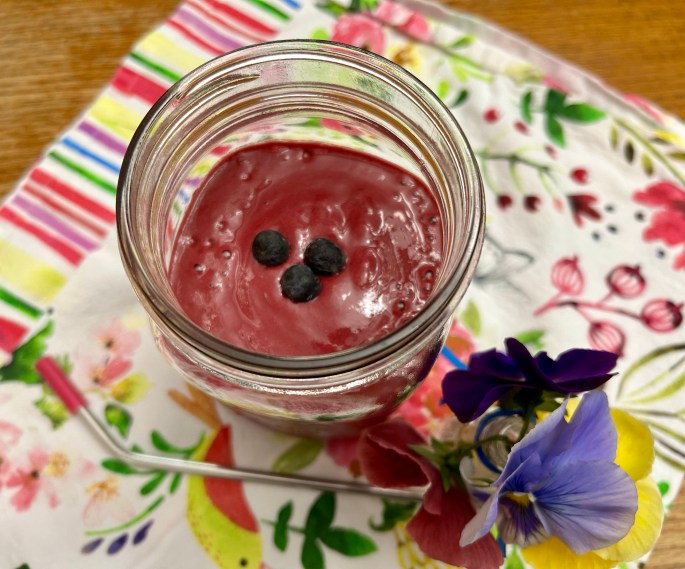
Berry Immunity Boosting Smoothie aka Stress Less Smoothie

The greatest weapon against stress is our ability to choose one thought over another.”–William James

Photo by Pedro Figueras on Pexels.com

The challenge of work-life balance⚖️

It is not uncommon to engage in conversations centering around stress.  Attempting to balance the demands of work and life can be challenging. The combination of long work hours, while also juggling the needs of family, make it difficult to have time to do the things that would otherwise relieve stress, such as regular exercise, outings with friends, or even a relaxing soak in the tub. 

When stress ramps up, there is a chain-reaction in our bodies.  According to Harvard School of Public Health, when stress is high, the body’s demand for oxygen and energy increases, which in turn increases the demand for key nutrients.  Simultaneously, stress causes the body to eliminate other vital nutrients. This can take a toll on the body’s immune system.

As the chain reaction of stress continues, hormones become affected.  If the stress is acute, the body will secrete adrenaline, which suppresses appetite.  However, when the stress becomes more chronic, cortisol levels begin to rise, instigating food cravings.  Cortisol tends to create cravings for foods that are typically considered “comfort foods,” full of sugar, salt, and fat.  Unfortunately, if cortisol stays elevated, the chain reaction continues to wreak havoc upon our bodies, and this often influences our coping strategies.

Photo by cottonbro studio on Pexels.com

The body’s stress response 😰

Chronic high stress time periods, depletes the body of energy and can often reduce time available for decompression. This can inhibit the desire to prepare healthy, nutritious meals.  Sometimes, chronic stress causes us to skip meals.  The downside to skipping meals is that, as the cortisol levels rise, once there is an opportunity to eat, we tend to reach for those comfort foods that will not replenish the body’s stores of diminished nutrients.

Therefore, how we respond to stress matters.  With some situations, we can identify upcoming stressful time periods before they begin, and thus, we can be more proactive.  However, that isn’t always the case.  Nonetheless, there are a few basic guidelines, according to The University of North Carolina at Chapel Hill that are worth remembering.

Photo by Antoni Shkraba on Pexels.com

Tips for eating during times of stress 😣

  • Keep nutrient-dense grab-and-go snacks on hand at all times.  Foods like baby carrots, celery sticks, hummus cups, guacamole cups, apples, oranges, bananas, popcorn, almonds, walnuts, pistachios, low-sugar yogurt, low-sugar granola, low-sugar oatmeal packets, whole-grain crackers and so forth.
  • Eat at regular intervals when possible.  This will keep blood sugar stable, and keep the brain, which needs glucose, working at its best.
  • Eat high-fiber foods. Foods, such as fruits, vegetables, nuts, seeds, beans, oatmeal, and other whole grains, have been shown to decrease perceived stress levels and increase alertness.
  • Focus on eating fruits and vegetables, especially leafy greens, whenever possible.  These foods are filled with the vitamins and minerals your body needs to neutralize the harmful molecules our bodies produce when under stress. 
  • Foods rich in unsaturated fat also help. Think walnuts, flax seeds, chia seeds, and fish oil to name a few. These foods are associated with increased brain function; however, deficiencies in fatty acids can result in depression and/or anxiety. 
  • Be mindful of caffeine and/or alcohol intake. Both of these can disrupt sleep, which the body desperately needs during times of stress.  Additionally, both can increase blood pressure, which can increase feelings of anxiety.
  • Ensure your body is getting enough quality sleep. Getting enough sleep allows the body to reduce cortisol levels and other stress hormones, increasing the chances of remaining calmer in the face of stress.
  • Employ constructive coping strategies. Whether it is talking to a trusted friend or therapist, journaling, meditating, asking for help, or going for a walk–developing positive coping skills is a lifetime skill set. 
Photo by Wallace Chuck on Pexels.com

The reality of stress 😩

Stress is reality at different points in our lives.  While we cannot control when it will arise, we can control our response to it.  It is easy and understandable to seek comfort during times of stress.  However, when those sources of comfort become unhealthy coping mechanisms, such as over- or undereating, drinking alcohol in excess, going without sleep, and so forth, we risk using short-sighted solutions that could lead to developing long-term problems, creating even more stress.  

Stress less smoothie 🍓

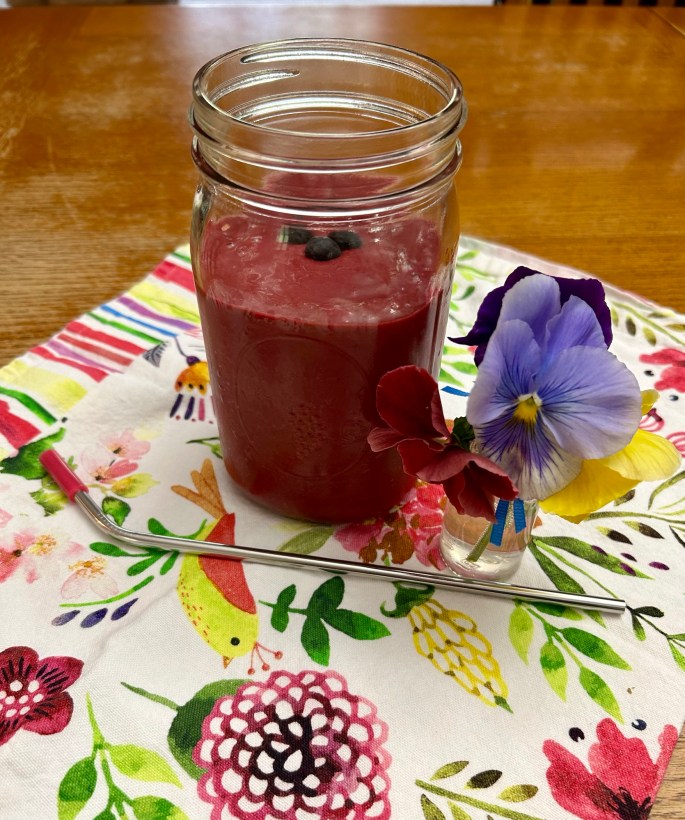
Below is my newest smoothie creation.  It is full of nutrient-rich foods that are high in fiber.  Some of the ingredients may cause you to raise an eye-brow in wonder, but I promise, it does taste great.  That said, feel free to adjust, add to, or eliminate ingredients that don’t suit your palate or dietary needs.

This recipe can be made ahead of time and frozen into individual servings.  They will stay fresh in the freezer for up to three months.  Then, whenever faced with a stressful day, take one smoothie out the night before, set it in the fridge to thaw, and then it’s grab-and-go convenience for the next workday. Sip on it through a lunch meeting, or if more time is available, pour it into a bowl and sprinkle on favorite fruit and nut/seed toppings, along with a bit of granola. 

I can’t promise that this recipe will change the stress around you. However, it does provide a powerful nutritional punch to help stave off the effects of stress, and offers one less thing to worry about.  Plus, it feels good knowing that if everything else goes wrong in the day, at least one small part of your day was stress-free.  

Cheers to one less thing to stress about!

Berry Stress Less Smoothie

Nutrient dense, stress combating meal replacement

Ingredients:

2 cup spinach, riced cauliflower, or kale (can be frozen)

½ cup strawberries, frozen

½ cup raspberries, frozen

½ cup cherries, frozen

1 apple

½ cup lentils

1 parsnips

2 tablespoon flax, chia seeds, or hemp seeds (or combination of any two)

2 tablespoons goji berries, OR 2 medjool dates, OR 2 prunes, optional

2 tablespoons cocoa or cacao powder, optional

2 scoops protein powder, optional

1 cup beet juice (can use pomegranate or cherry juice or simply use water)

1 cup milk  plant or dairy based variation)

½-1 cup of water, if too thick

Directions:

Put all ingredients in high powered blender

Blend until creamy and smooth

Makes 2 large servings 

Unwrap your best holiday health: Ways to keep moving from Thanksgiving through those New Year’s Celebration

“Take care of your body. It’s the one place you have to live.”–Jim Rohn

This is my fifth installment of celebrating and encouraging movement for everyone.  If you’ve read my previous pieces, you already know that my goal is fairly simple.  I want to encourage everyone to move more in whatever manner works best for you, your body, and your schedule.  I do not believe in one-size fits all when it comes to fitness and health goals.  Instead, I am writing to explore techniques, habits, and motivations for incorporating more movement into life, even during the upcoming holiday season.

Why should you consider maintaining your movement/exercise routine during the weeks of Thanksgiving through the New Year celebration?  There are many possible reasons, but only you can decide your why(s).  Personally, it allows me to feel as if I have accomplished one positive thing for the day.  If everything else derails throughout the day, at least I exercised–even if it had to be for a reduced amount of time.  However, there are so many more valid reasons.

Photo by Julia Larson on Pexels.com

Increased movement and exercise is one positive way to combat the stress that often accompanies this season.  Although stress isn’t a disease, per se, it is the body’s physical, mental, and emotional responses to external events, especially change, which often occur from Thanksgiving through the New Year celebrations. High levels of holiday stress can detrimentally impact mental health.  However, being physically active throughout the holidays is a proven technique to significantly reduce stress levels.

Along the same lines, exercise during the holiday season can provide structure to your schedule. If you have already committed to moving more throughout your day/week, and you have already been consistently applying it, then continuing to follow through with that plan builds at least a sense of familiarity and comfort.  Even if you have to reduce your time and/or days for physical activity, there is at least that semblance of reassurance that you are choosing to still take care of yourself, which can increase the likelihood of making another healthier choice throughout your day/week.

Photo by Barbara Olsen on Pexels.com

As counterintuitive as it may seem, exercise gives you more energy during the holidays.  Harvard Health explains it this way. Increased movement and exercise increases oxygen circulation, which in turn, allows your body to energy more efficiently and therefore function better.  Furthermore, exercise increases cellular level changes, including augmenting the production of mitochondria inside your muscle cells. Having more mitochondria translates to your body possessing an adequate energy supply.  Plus, exercise boosts the production of the feel-good hormones that likewise make you feel more energetic.

Exercise and increased movement is a proven way to combat anxiety and depression, often associated with the holiday season. Let’s be honest, for many people, the holidays often serve as a reminder of loved ones and traditions lost to the past.  For others, the increased requirements for more socialization, or so-called holiday-expectations, can trigger the desire to curl up in a fetal position and hide until the season is over.  Furthermore, increased levels of darkness often precipitate seasonal affective disorders (SAD), a form of depression that affects approximately 10 million people annually. Physical activity is a proven method for reducing symptoms by releasing endorphins that increase positive feelings.  

Physical activity can reduce increased sedentary behavior associated with late fall and winter months. Colder and/or inclement weather can reduce motivation to get outside and move. It’s only natural to want to stay in and watch sporting events, stream series, or watch old movies while noshing your way through comfort food snacks and often calorie laden beverages.  While there’s nothing inherently wrong with these behaviors, too much inactivity is not beneficial to the body, mind, and even spirit.  A commitment to physical activity, even if it is laps around your house on commercial breaks during sporting events or between streaming episodes will go a long way promoting your overall well-being.

Photo by Andres Ayrton on Pexels.com

In spite of all of these benefits, it can still feel challenging to maintain that fitness plan or movement goals you have established for yourself in previous months.  However, there are ways that can help you overcome obstacles.  The key is finding the ones that work for you as no one method/approach works for everyone.

Walk, march, or even jog around the neighborhood, if weather permits, or inside your house.  Even walking, marching, or jogging in place is beneficial!  If you don’t have time for your usual amount of time, such as 20 or 30 minutes, break it up into smaller time periods spread throughout the day.  If that isn’t possible, even one shorter burst of activity is better than none!

Consider exercising with an app, DVD, or streaming platform.  There are numerous apps and platforms that are free or reasonably priced.  In fact, you can even look up “holiday themed workouts” on Youtube lasting anywhere from 10-30+ minutes!

Inexpensive, portable exercise equipment are the perfect solution when traveling.

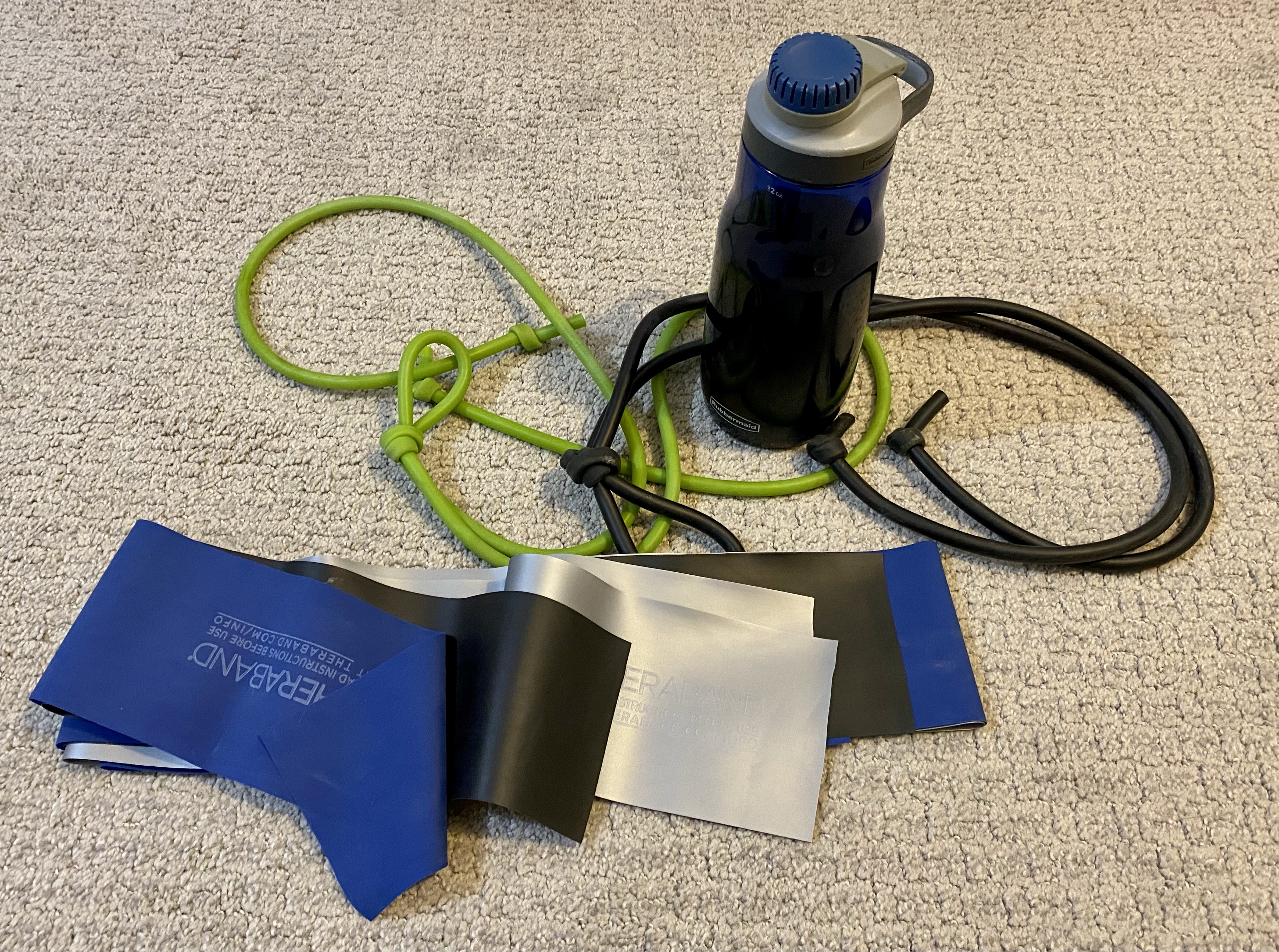
Invest in personal, home exercise equipment for use during inclement weather, traveling, or when short on time. Resistance bands and tubing, jump ropes, and exercise mats  are inexpensive, and easy to transport when traveling and/or visiting family/friends. The bands/tubing come in different sizes and resistant levels and require little training.  In fact, most come with a workout plan or can be found online.

Think outside the box, but keep it simple: 

  • Wake up 15-20 minutes earlier for a short movement period.  
  • Be mindful of the number of steps you take throughout the day, and challenge yourself to complete more than the day before.  
  • Wear exercise shoes when shopping and add power walk breaks in between stores or consider more frequent walks to your parked car after a store visit to stow away bags. 
  • Rethink your lunchtime, if your job allows, and use it as an opportunity for a short walk.
  • Challenge a fitness buddy to hold each other accountable to a realistic daily or weekly goal.
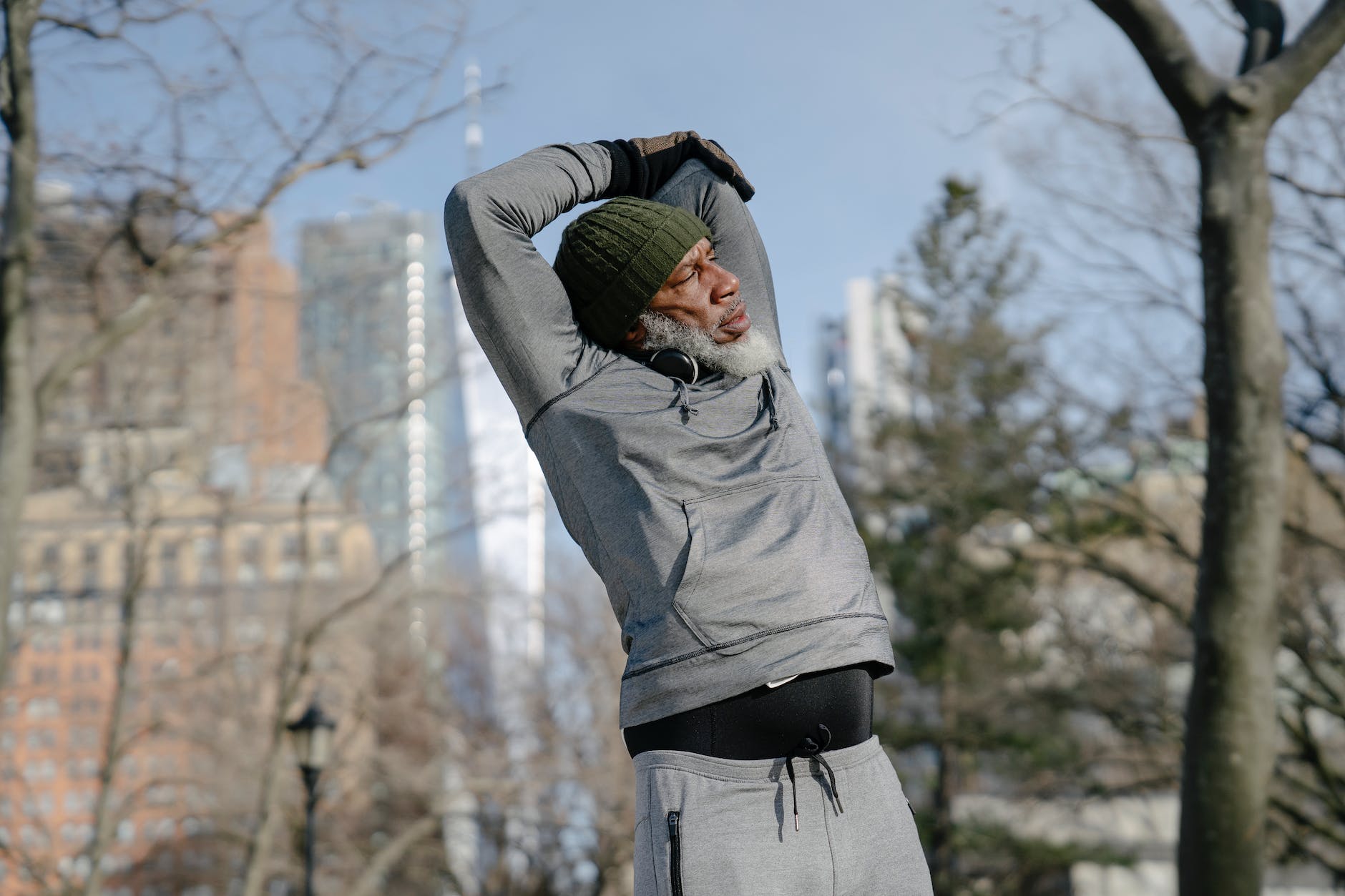
  • Complete bodyweight exercises throughout the day, such as push-ups against desk, body weight squats and lunges, chair tricep dips, twists, stretch, and so forth.  You might get a whole body workout by the day’s end!
  • Set realistic expectations and plan accordingly.  Consider reducing time/numbers of days per week, and then make a commitment to those.
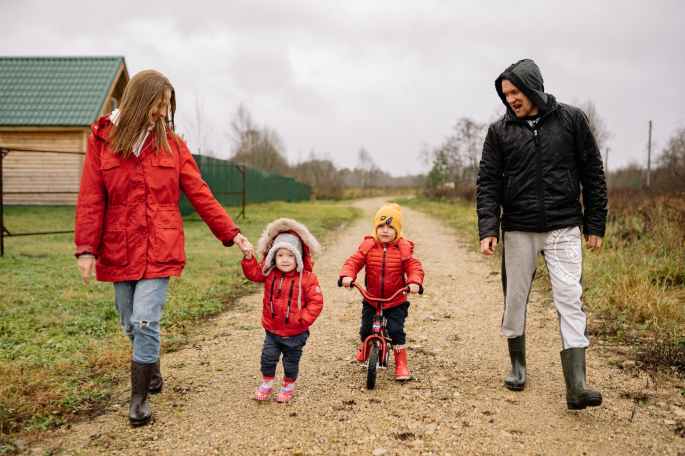
  • Make movement part of the family/friend traditions if possible.  A family walk or dance session after a big holiday meal can not only improve digestion, but take the edge of any accumulated stress.
  • Make a holiday playlist.  It doesn’t have to be holiday music.  Instead, create a special playlist that motivates you when your energy is low.
  • Make sleep a priority too.  A well rested body moves with greater ease.
  • Hydrate consistently.  (Think of all the added sodium in those holiday treats.)

The holidays do not have to derail your exercise/movement routine.  There’s only one you and one body in which you live.  Therefore, think of physical activity during the holidays as the one gift you can give to yourself.  With a bit of flexibility, creative thinking, and determined mindset, you can continue to unwrap better health, one step, or choice of movement, at a time. 

Photo by Pavel Danilyuk on Pexels.com