The Spirograph Effect: Creativity in Life Design

“Not all who wander are lost”–J.R.R. Tolkien

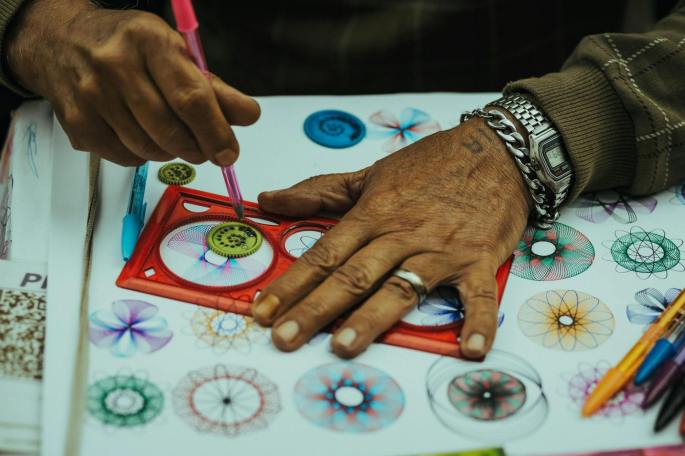
Close-up of hands using drawing tools to create a spiral geometric design on paper.

A Student’s Doodle Sparks a Memory✍️

Months ago, I observed a student drawing spiraling circles over and over on a sheet of notebook paper while participating in our class discussion. For some reason, I was reminded of an old toy my siblings and I once enjoyed: the Spirograph. I can’t remember which one of us received it, but we would sit together for what seemed like hours at the kitchen table drawing colorful, eye-popping (at least to us) geometric shapes.

Four children gathered around a table, smiling and drawing colorful patterns on a large sheet of paper using various markers.

Lessons Hidden in a Childhood Toy ꩜

Reflecting upon that long-ago childhood toy, led to the realization that the Spirograph illustrates the significance of specific concepts when it comes to creating our own life design, such as the influence of structure, patience, persistence, and the importance of celebrating our own unique individuality. It also emphasizes the value of working through natural constraints and trusting the process of learning through repetition. What’s more, the Spirograph demonstrates the relevance of trial and error–which often includes failure–as well as accepting the beauty that can be found in our so-called “imperfections”.

The Spirograph’s Ingenious Origins 👨‍🔬

To appreciate the genius of the spirograph as a toy, requires understanding a bit of its history. Denys Fisher, a British engineer, created it as a child’s play thing based upon various iterations, beginning as early as 1827. At the time of its original conception, it was used for advancing mathematical and engineering concepts. Spirograph, the toy, wasn’t available until 1965, and it went on to win “Toy of the Year” in 1967. Unbelievably, it is still available today.

This classic geometric drawing toy originally came with two transparent rings, two transparent bars, 18 clear wheels of varying sizes, two colored ink pens, pushpins, putty, and paper. Using the various tools, my siblings and I could draw precise, and quite mesmerizing, mathematical curves known as hypotrochoids, epitrochoids, and cycloids. With the switch of any one part, we could vary the size, shape, and geometry of intricate and, at the time, mind-boggling patterns. Essentially, the Spirograph is operated on a balance of limitation and creative freedom, which reflects much of the human experience.

A box of the original Spirograph design set, featuring colorful geometric designs and detailing the contents, including pieces and tools for creating intricate patterns.

Art Through Limits: Creative Freedom Within Structure 🎨

When one is drawing with the Spirograph, one has to adapt to its restrictions. The designs made by using the Spirograph are limited by the size and shape of the wheels and whether you are using the rack or the ring, as well as the color of the chosen pen(s) used to design a figure. Additionally, there are rules for creating specific outcomes as described in its guide book.  While it isn’t necessary to follow the laid-out directions, if one desires it to create a specific shape or design, one has to follow the step-by-step instructions.

This is similar to life in many ways. Influences in life vary from person to person and from family to family, often dependent upon experiences, education, and available information. Many individuals have followed very specific guidelines provided by parents, religion, schools, and even societal norms while others may have fewer influences. For many of us, following a structured timeline is how we landed in our current field/career path.  However, there are just as many, who followed a winding path of their own creation, and still produce a meaningful life experience. Like the Spirograph, following guidelines creates remarkable results for some people, while for others, grabbing the gears and turning them their own darn way works just as well.

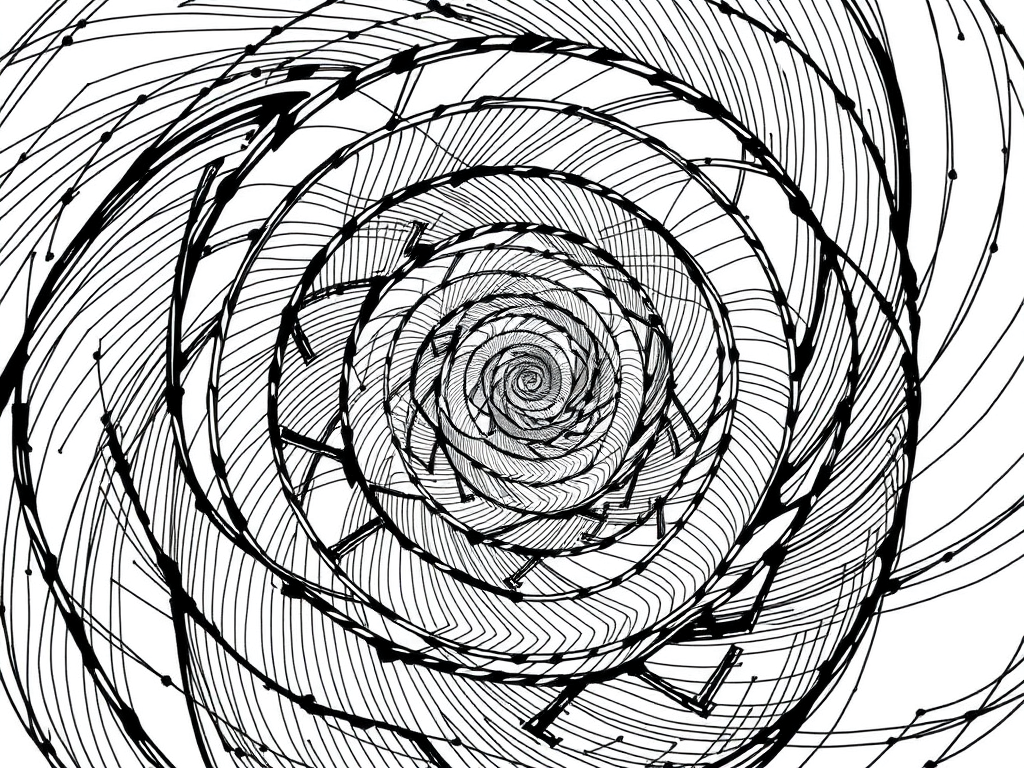
Black and white abstract spiral pattern created with lines and arrows, resembling a geometric design.

The Power of Patience and Trusting the Process 🙏

When working with the Spirograph, my siblings and I had to have faith in the process. We had to further learn that creating something meaningful takes time. The desired design outcome emerged slowly, turn by turn, and layer upon layer. In sum, the Spirograph required us to have patience, trust the process, and stay the course. 

Similarly, our life journey takes time as we, hopefully, continuously evolve and grow. We may have times we question the process, or we may waiver in our faith, patience, and persistence. However, rushing life outcomes usually ends up backfiring. Moreover, the time required for personal growth fosters resilience, a much needed companion to patience. We only have one precious life, and as our life design unfolds, with all of its curves and angles, it is never worth rushing. 

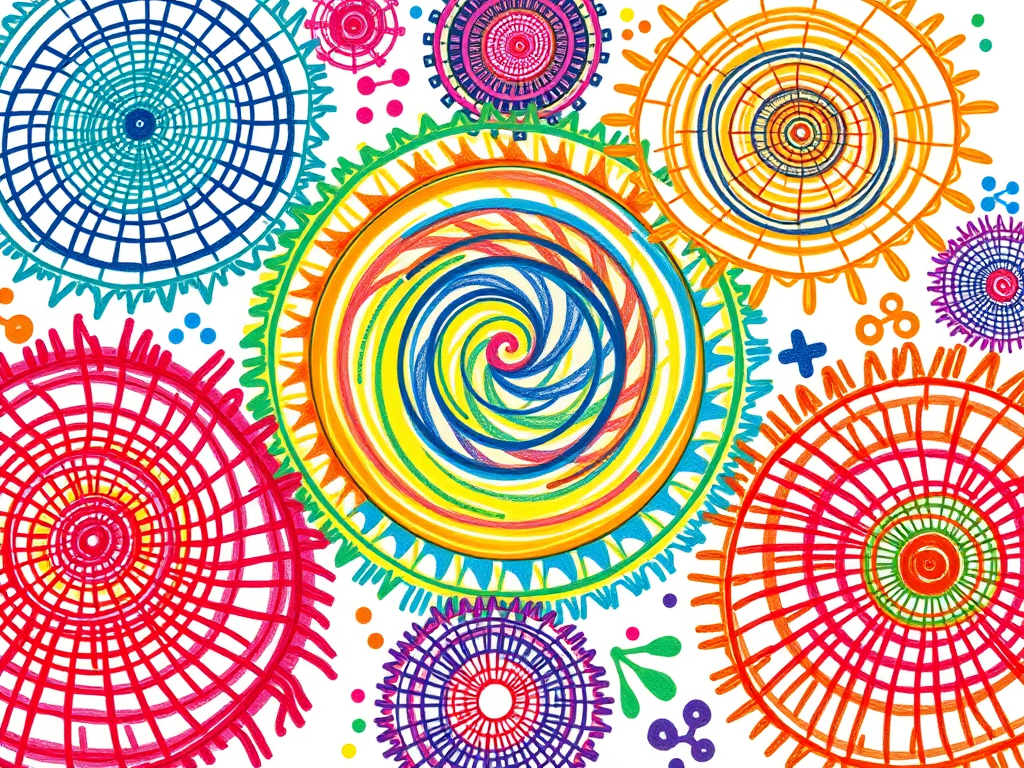
A colorful doodle featuring spiraling circles and geometric shapes, reminiscent of designs created with a Spirograph toy.

Failure, Play, and the Magic of Repetition 🖍️

With the Spirograph, I recall that we often learned through repetition and play. We might draw the same shape over and over, sometimes changing the color, or merely changing the size. Other times, we followed the guidelines, and somehow still managed to “fail”!  And, yet, many of those so-called failures ended up being unique and pretty creations–even if they did not come out as planned. Other times, we would just “mess around” to see what we could create. Some results were not so spectacular, but other times, the creations were fairly impressive or, at the very least, provided us with a new understanding for creating specific curves and/or angles. 

Life can often be the same way. How many of us have experienced times where we “followed the rules,” doing what we were “supposed to do,” and still somehow managed to fall flat on our face. Years later, however, we may look back and realize that those “failings” led to something far greater than we could have ever imagined. Other times, a bit of experimentation leads to a new life path or experience that brings unexpected joy we might not have otherwise known. Thus, like the Spirograph, a playful and experimental mindset can lead to untold delights and adventures.

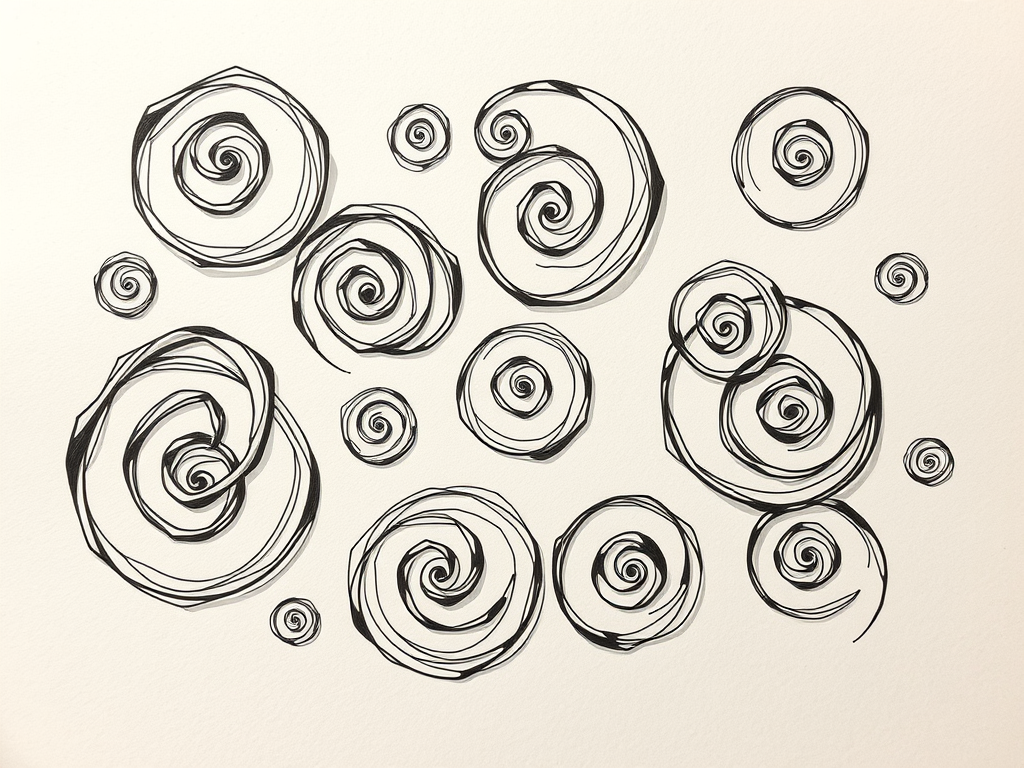
A collection of hand-drawn spirals in varying sizes, arranged artistically on a blank background.

The Beauty of Uniqueness in Design—and in Life 🖼️

Learning to welcome individual uniqueness was another life lesson the Spirograph provided. It often intrigued my young mind how my siblings and I could make the same design, but with a switch of pen color or pressure, or switch of a gear wheel, we could make each drawing unique, despite the fact we were essentially using the same tools. 

Sometimes, we would be surprised when trying to make the exact same shape, because we accidentally missed one of the required steps. Skipping one step, tended to create an irregular shape. Nonetheless, our younger selves marveled at the unique loveliness of the design. Our child-size egos told us we were pioneering artists in those moments!

Marks of Authenticity: Irregular Paths, Unique Lives

What a powerful reminder of the importance of celebrating our own–and others’– idiosyncrasies, including any so-called irregular paths. These individual characteristics and traits, as well as any “irregular paths’ traveled, are all marks of authenticity–that one-of-a-kind spice in our life serving. As humans, our genetic material is vastly similar across all humanity. Yet, this same genetic material still manages to create unique DNA characteristics, such as varying eye color, height, body shapes, and so forth. Furthermore, despite our similar genetic makeup, our lived experiences vary. In a sense, we are pioneering artists of our own lives.

A colorful collection of intricate geometric patterns resembling designs created with a Spirograph. The spirals and mandalas feature vibrant colors and diverse shapes, showcasing creativity and uniqueness.

Embracing Life’s Curves and Imperfections 🌀

Like the Spirograph of my childhood, we all deal with life constraints, no matter what path we try to create for ourselves. These life designs often, and sometimes repeatedly, require practice, patience, perseverance. Life also requires us to accept the many so-called imperfections and irregularities that come as part of the creative process. However, those “flawed” experiences give our life meaning and purpose. Therefore, it is worth remembering we have the power to play and create with the pen we have. All those curved lines and angles that make up our lives, including the missteps, are what continues to compose and create our magnificent, one-of-a-kind life design. Let’s embrace the possibilities.

Who’s ready to draw? ✍️

Building Resilience Through Emotional Awareness

“Feelings build resilience: As they teach me to let go and to become new, I become increasingly flexible in the flow of life.”–Allan Schnarr

Laughter-filled joy is one of the many emotions we can experience throughout the course of a day.

Importance of Heart RAte VAriability 🫀

In this era of fitness tracking gadgets, I have begun to be quite aware of my own heart rate variability. It’s not that I wasn’t aware of the changes in my heartbeat; those oh-so-long-ago biking adventures of my youth, as I pedaled up and down hills, provided me with that lesson.  However, my handy-dandy fitness watch frequently reminds me of my own heart rate and its variations throughout the different activities of my day.

Harvard Health Publishing states that each person’s heartbeat is unique and beats at a specific rate, but the rate can vary depending upon what you are doing. When we are active, stressed, or–heaven forbid–in danger, our heart rate quickens. On the other hand, when we are resting, relaxed, or at ease, our heart rate slows accordingly. 

Photo by cottonbro studio on Pexels.com

Meet the Autonomic Nervous System 😬

The system responsible for regulating our heart rate–and numerous other involuntary functions–is the autonomic nervous system (ANS). It branches into two parts: the sympathetic and parasympathetic nervous system. At its most basic, the sympathetic (think: fight or flight) nervous system puts the body on alert, increasing heart rate and blood pressure; whereas, the parasympathetic (think: peace) nervous system sends calming signals to rest, digest, or relax. 

The two systems work together. For example, if we’ve experienced a highly stressful or dangerous situation, the sympathetic system is at the helm. It will signal your body to release adrenaline and increase your heart rate in case you need to physically react quickly. However, once the situation has passed, the parasympathetic takes over lowering the heart rate and signaling various systems of the body to relax.

Therefore, if the heart adapts to various conditions–from walking to running; from talking to singing; from startled/scared to calm/relaxed, and so on, shouldn’t we, likewise, acknowledge, or perhaps embrace, that our emotions also adapt to life circumstances?

Photo by Andrea Piacquadio on Pexels.com

Emotional Variability 😢 😁 🤣

Our heart rate varies for very real reasons, and so do our emotions. Emotions are often intense and/or reactionary to a specific event, thought, or situation.  They too are a product of the ANS, and they are our body’s signal to something it perceives occurring in our environment for which we may need to respond quickly. 

One way to think of emotions is to view them as clouds in the stratosphere of our brain. Some days, the sky is bluebird-clear; while other days, our emotional atmosphere may begin cloudless, but grey shadows gradually–or quite suddenly–creep in.  Sometimes we have days that start cloudy, clear up, and then go cloudy again. Then there are those dark, overcast periods that can last for days, but do eventually pass. 

Experiencing emotions, such as sadness, anger, or worry does not mean you are emotionally unfit–not at all.  Likewise, experiencing opposing types of emotions–enjoyment, happiness, or awe–does not define you as emotionally healthy. Similar to heart rate variability, it is just as healthy for our emotions to differ in response to what we are experiencing.

Photo by Antoni Shkraba on Pexels.com

embracing our varying emotions 🤗

Therefore, it is important to give ourselves permission to fully feel and accept a wide spectrum of emotions. In fact, there are valid reasons for us to adeptly switch among a wide range of emotions. According to Mindletic, our emotions can sometimes switch frequently throughout the day, and then on other days, we may experience little to no shifts in emotions. Emotional changes are often dependent upon conditions.

The key is to recognize when we do feel something because our ANS is reacting physiologically. We may not be able to name the emotion initially, but we may feel a desire to respond/act and not know why. If that is the case, stay curious and patient. Turn inward when time permits and reflect on how and/or what you feel without judging it as good or bad. Observe any sensations, noticing if they occur in certain parts of the body. 

Photo by Eric W. on Pexels.com

Self-Inquiry is Key 🔑

Given enough time and self-reflection, we may be able to name the feeling: anxiousness, worry, fear, happiness, and so on. Once the emotion can be named, it is important to next determine the trigger that caused it.  Sometimes, identifying the instigating event is easy, such as when a loud bang occurs, we may feel instantly startled.  Other times, figuring out what is causing the emotion can be more challenging.  

For example, there may be a day when you feel anxious, and you’re not sure why. If you allow yourself to remain curious and open to possibilities about the “why” without judgement, you may later have an aha moment when you connect the dots. An example of this could be feeling sad on the first day of winter-like weather. You might assume it is just due to the cloudy, cold nature of the day, which could be true. Later, however, with a bit of self-inquiry, you may recall that the last time you experienced this type of weather was the day you were in a car accident, which helps explain why you felt anxiety.  

Being comfortable with uncomfortable emotions can be challenging but worth the effort.

Holding Space for Difficult emotions 😩

Sitting with an uncomfortable feeling/emotion can be difficult, especially when we are not sure why it has occurred. By refraining from attaching judgement to the feeling, such as “I’m stupid to feel this way,” and continuing with curious contemplation, we can learn to offer all parts of ourselves, emotions included, acceptance. This reduces resistance to feeling certain emotions, fostering a deftness of accepting any number of emotions that may arise in response to life. After all, we wouldn’t resist our heart rate accelerating when jogging a couple of miles.

The more we practice self-reflection of our own emotional experiences, the better able we are to identify various emotions and corresponding triggers; thereby, increasing our ability to respond in a more adaptive manner. This continued practice allows us to cultivate greater emotional awareness, improve our emotional regulation, and develop our own personal toolboxes of self-care responses, such as exercising, journaling, meditating, reading, dancing, doodling, gardening, and so on. 

Photo by Lukas on Pexels.com

✅ Developing our own Emotional “tracker”

The ultimate goal is fostering our internal emotional “tracker”– much like my fitness tracker.  This gives us a window to our own emotional rate variability, allowing us to create adaptive strategies in order to appropriately feel, identify, respond to an emotion, and allow it to pass–much in the way clouds do in the sky. Similarly to the way a heart rate stays elevated for a longer period of time when running a marathon versus walking a short distance, some emotions are going to hang around longer. However, with compassionate and consistent practice, emotional self-inquiry can reduce the long term, adverse effects of our stronger emotions and/or lessen the arousal to the emotion(s) and/or their trigger(s). This allows us to accept and feel the full rainbow emotions while strengthening our ability to bounce back on life’s trampoline with greater awareness, resilience, flexibility, and empathy.