Embracing Aging: Opportunities for Growth

“Aging is not ‘lost youth’ but a new stage for opportunity and growth,” Betty Freidan 

Another Year Celebrated 🎂

Photo by Genaro Servu00edn on Pexels.com

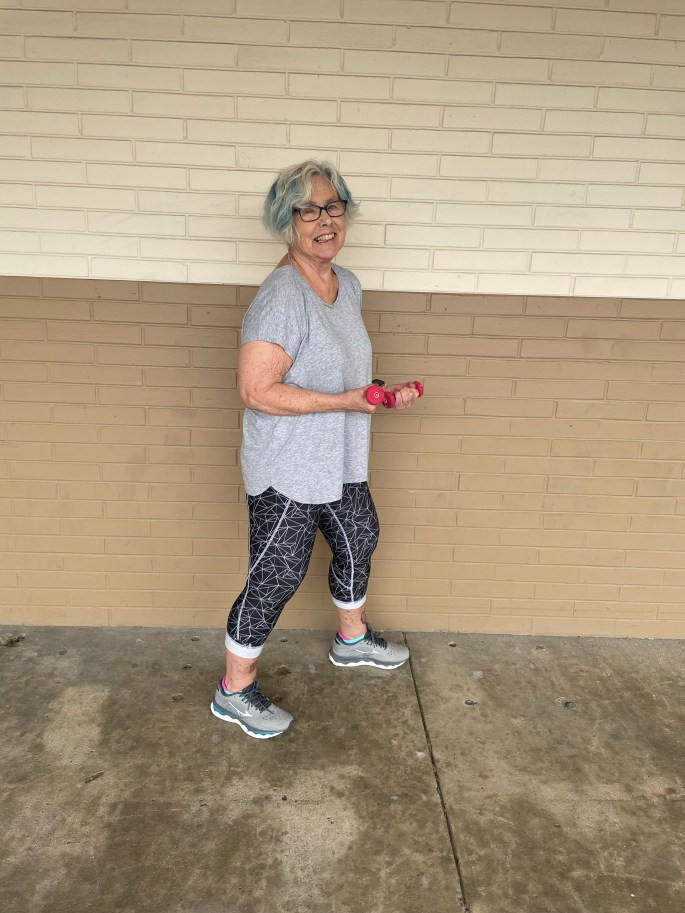
By the time you read this, I will have added a new score to my age.  If life were a game, I’d definitely be a winning football score, and accruing a lead score in a basketball game. You know what?  I am okay with that.  Next year, I’ll be in a new decade, but for now, I plan on savoring my last full year in this decade. 

A Chance Encounter 👩🏽‍🦳

Photo by Mauru00edcio Mascaro on Pexels.com

The night before writing this piece, my husband, John, and I chaperoned a high school homecoming dance for the school in which we teach. It was held at a local country club. Throughout the evening, guests at the club’s restaurant often exited via the hall outside of the room, where the students were dancing, and I happened to be supervising. Many of the restaurant’s patrons tended to speak as they walked by, mostly asking questions about what group was inside the buffet/ballroom.

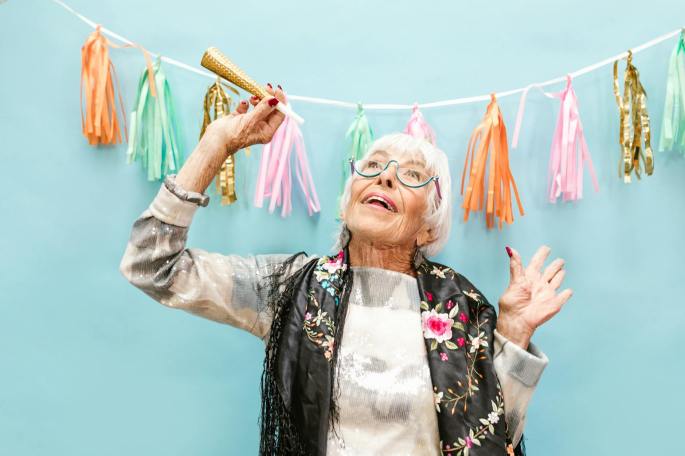
One lady was particularly chatty, energetic, and enthusiastic.  She talked out of one side of her mouth as if everything she was telling me was a secret for my ears only.  In particular, she wanted me to note that she refused to have any surgical enhancements done to her face, including botox, “. . . and don’t I look good?”

Sound Advice 🧑‍💼

Photo by RDNE Stock project on Pexels.com

Her comment made me smile as she went on to “give me some advice.”  She explained that she used to say that she was 78 years old, “but I wised up a few years ago.”  Instead, she states her age without adding the phrase, “years old.”  In her words, this reframed her way of thinking about her “years on earth,” and allows her to focus on the fact that she has “lived experience,” with room for more. 

She wrapped-up her short, one-sided conversation by saying, with a tilt of her head towards the room with dancing and singing students, that she didn’t want to “do that again.”  

“We’re supposed to age.  You know?  It’s part of life. The real question, honey, is, are you living?  It’s the living that counts!”  With that, she winked and walked away.

Conscious Aging

Photo by RDNE Stock project on Pexels.com

The unknown women’s spunk got me thinking about attitudes towards aging. It seemed she was echoing the idea of “conscious aging,” also known as “conscious eldering.” According to the Association of Health Care Journalists, the goal of conscious aging is aimed at shifting “attitudes and thinking away from self-limitation, isolation, and fear” to viewing the senior years as the time of life for pursuing “passion, engagement, and service in the community.” 

This same woman further touched on this point by talking about her lack of medical, anti-aging intervention. As it turns out, depending upon the source, the global anti-aging market is currently valued at $37-62 billion, and it is projected to grow in value to $65-93 billion.  These estimates speak to the fact that as a whole, we culturally tend to reject the aging process.

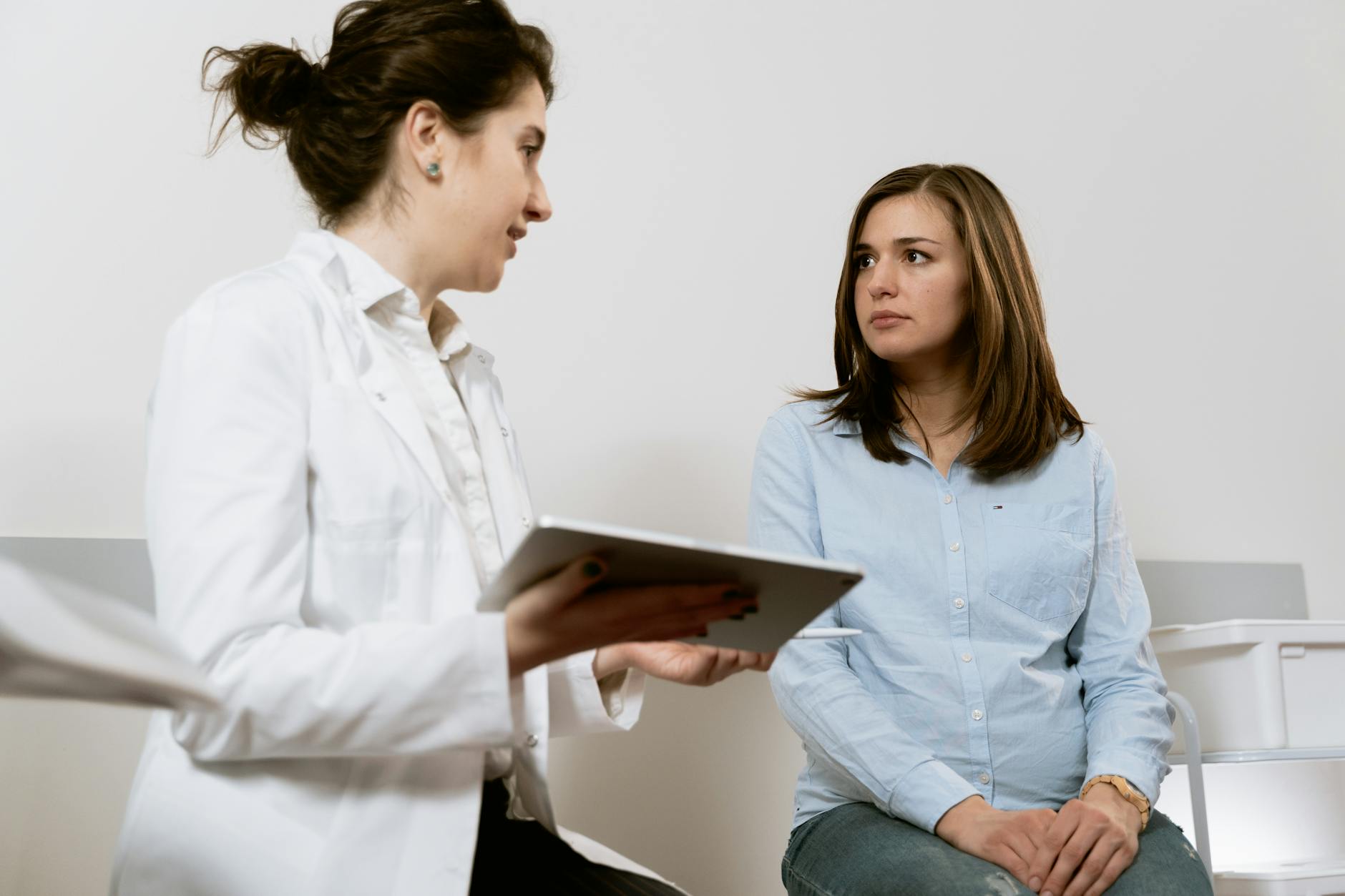
It is unfortunate because it creates a climate that fosters a fear of aging rather than viewing it as a natural and normal part of life. Therefore, it’s important to examine where our beliefs about aging come from.  Just because a parent/grandparent/other relative had a health condition associated with a certain age, doesn’t mean we will do that same. The stories we tell ourselves matter as they tend to affect and influence our attitudes, beliefs, and even our relationship with aging according to a 2023 New York Times article. 

Identify age-appropriate Role models

Photo by Yan Krukau on Pexels.com

In order to flip our own personal narratives about aging, let’s identify role models around us who embrace or model a healthy view of aging. They don’t have to be record-breaking 95-year olds, rather seniors who are active, engaged, and living with purpose. At the same time, let’s make choices related to aging that are authentic to our own values.  We may admire our 85-year old neighbor who still plays golf, colors their gray hair, and volunteers at a dog shelter, but it doesn’t mean all of their choices are right for us. Instead, let’s use that admiration as inspiration to forge our own unique path of embracing and fully living during the senior years.

Engage across decades

Photo by Andrea Piacquadio on Pexels.com

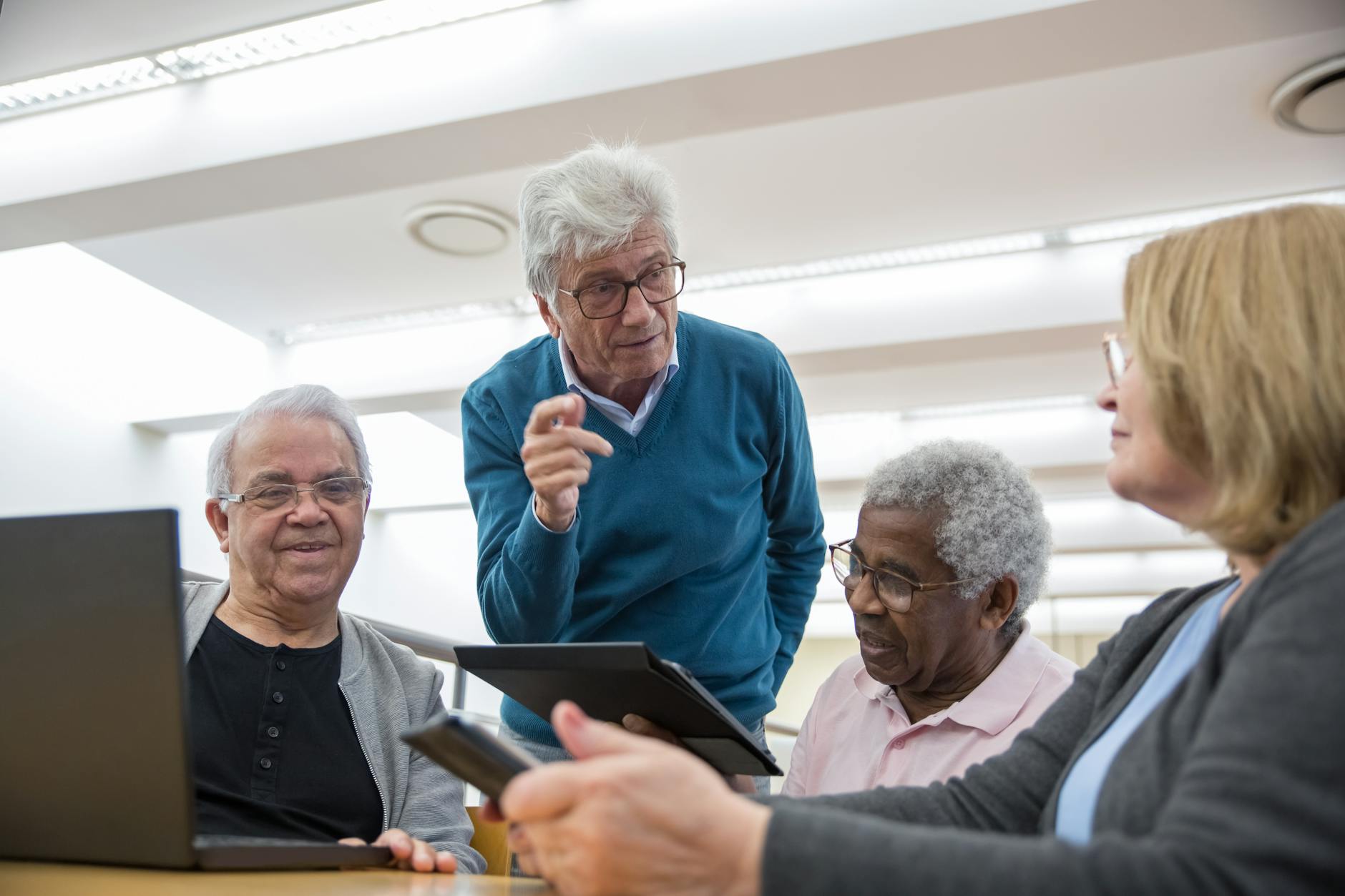
Additionally, let’s engage across generations. Interacting and engaging with all ages across a multitude of decades is beneficial for all.  It allows us to see a broad range of perspectives, which can prevent us from becoming too narrow-minded. And, in my experience, being around those who are younger, keeps us younger.

embrace change as a natural part of Life

Photo by Wellness Gallery Catalyst Foundation on Pexels.com

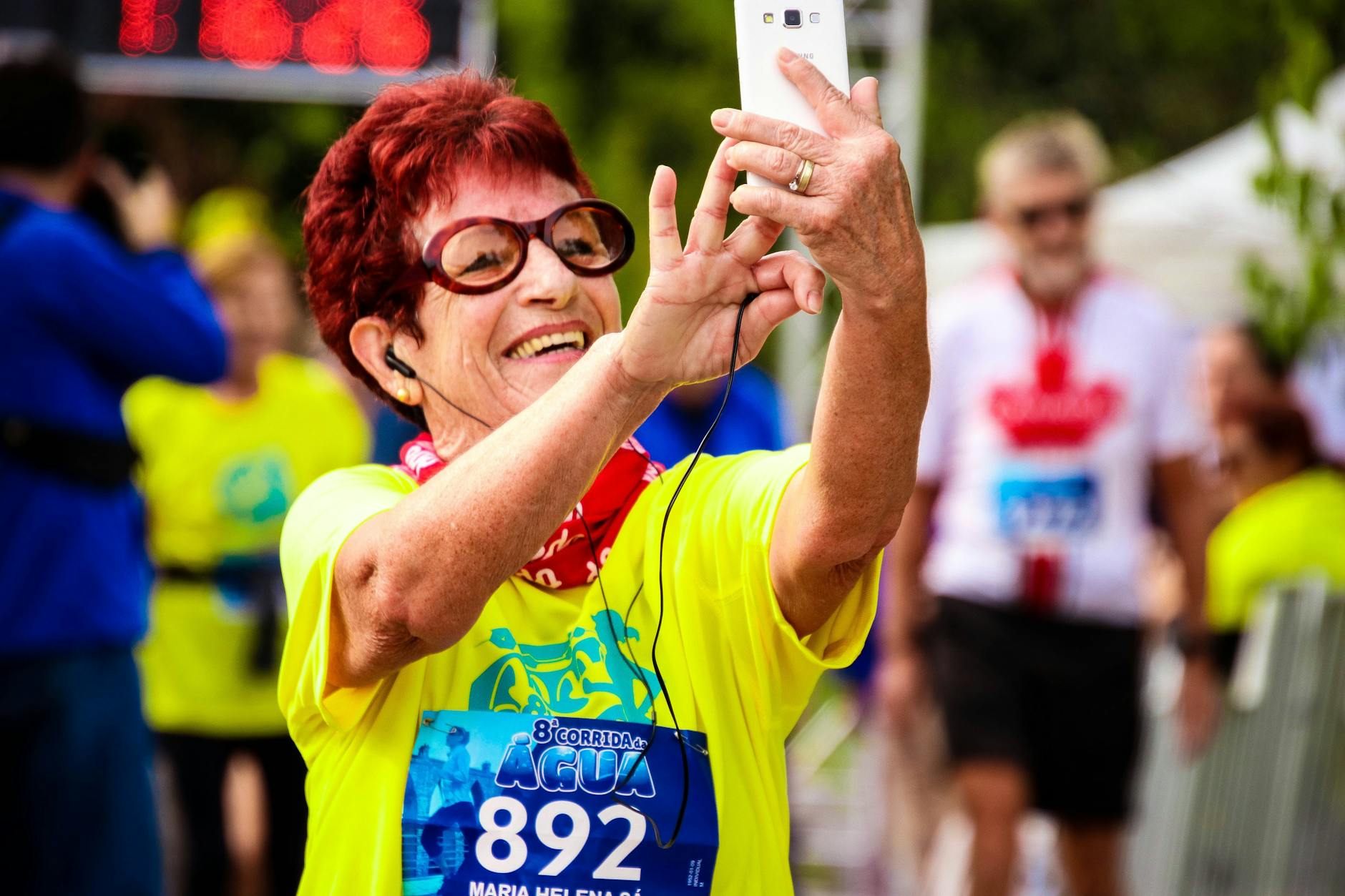
Another big issue related to aging is learning to cope with and accept change associated with the aging process. Conscious aging means just that–we are conscious of the aging process, which means we are dealing with age-related changes in our bodies as they occur. What it doesn’t mean is tossing in the proverbial towel and sitting on the sidelines. We still need to take care of ourselves by exercising and eating well, but we may need to adjust our expectations according to our own bodies’ needs–which varies from person to person.  For example, there are plenty of people older than me who can run faster, but I run at the pace that is best for me. 

Embrace REality with optimism

Photo by RUN 4 FFWPU on Pexels.com

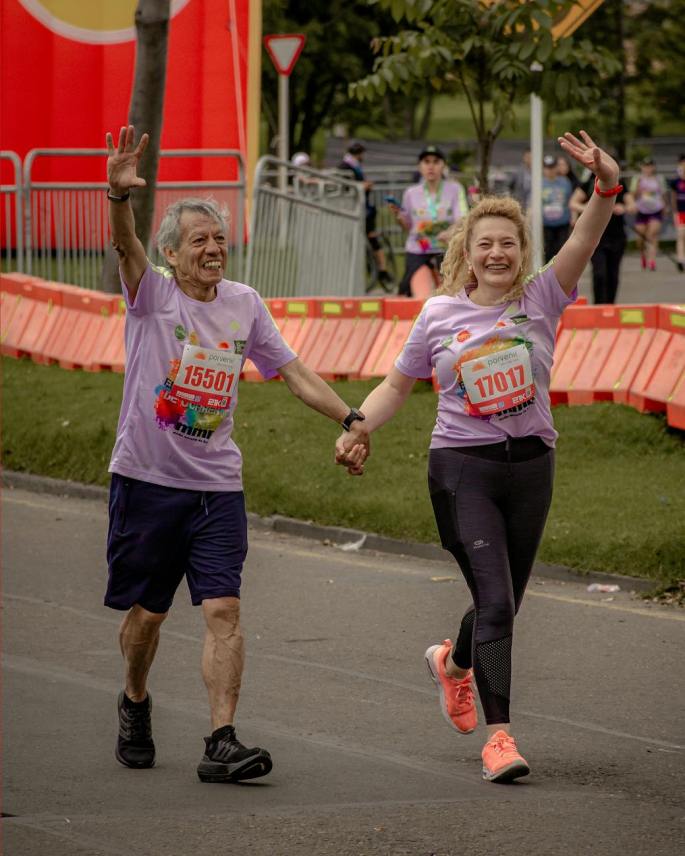
Additionally, embrace reality, including the changes, optimistically.  For example, when training for a half-marathon, I focus my training on crossing the finish line, rather than focusing on my finish time.  I am grateful for a healthy body, and I am grateful that I can train for a marathon.  However, I still work full-time, and I have plenty of other interests, so I focus on the adventure that goes along with training and the joy that comes from experiencing the event instead of a specific finish time goal. 

Live with purpose

Photo by Andrea Piacquadio on Pexels.com

This brings me to my next point, let’s live and age with purpose. While I do have plans to eventually formally retire from full-time work, as long as my body and mind are healthy, I don’t ever see myself not engaged in some form of teaching. I may one day change to a setting outside the formal constraints of a school system, or focus instead on my writing, which is, for me, is a form of teaching. However, I optimistically plan to continue teaching, in some form, because it gives me purpose, allows me to help others, and keeps me cognitively and socially engaged with others. It is my fountain of youth!

learn new things

Photo by Kampus Production on Pexels.com

 Plus, teaching also forces me to continuously learn new things, which is beneficial at any age.  Furthermore, by consciously choosing to continue to work, older adults challenge societal ageist-constructs that often purport the notion that older adults aren’t as capable as their younger counterparts.  When in reality, most workplaces often benefit from employees across a spectrum of ages and experience levels.

In the end, the woman I met summed it up well when she pointed to the fact that humans are supposed to age, but it’s “the living that counts!”  Therefore, instead of focusing on the number of our age, let’s focus on living well.  

Make a difference.  Share the joy.  Celebrate life.

Photo by Kampus Production on Pexels.com

.

Why Eat Apples Daily? Discover Their Surprising Benefits

“A diet rich in plant protein, fiber, and nuts lowers cholesterol and improves blood pressure.”–Chiavaroli, L, Nishi, SK, Khan, TA, et al. 

Photo by Mark Stebnicki on Pexels.com

Fall FAvorite 🍎

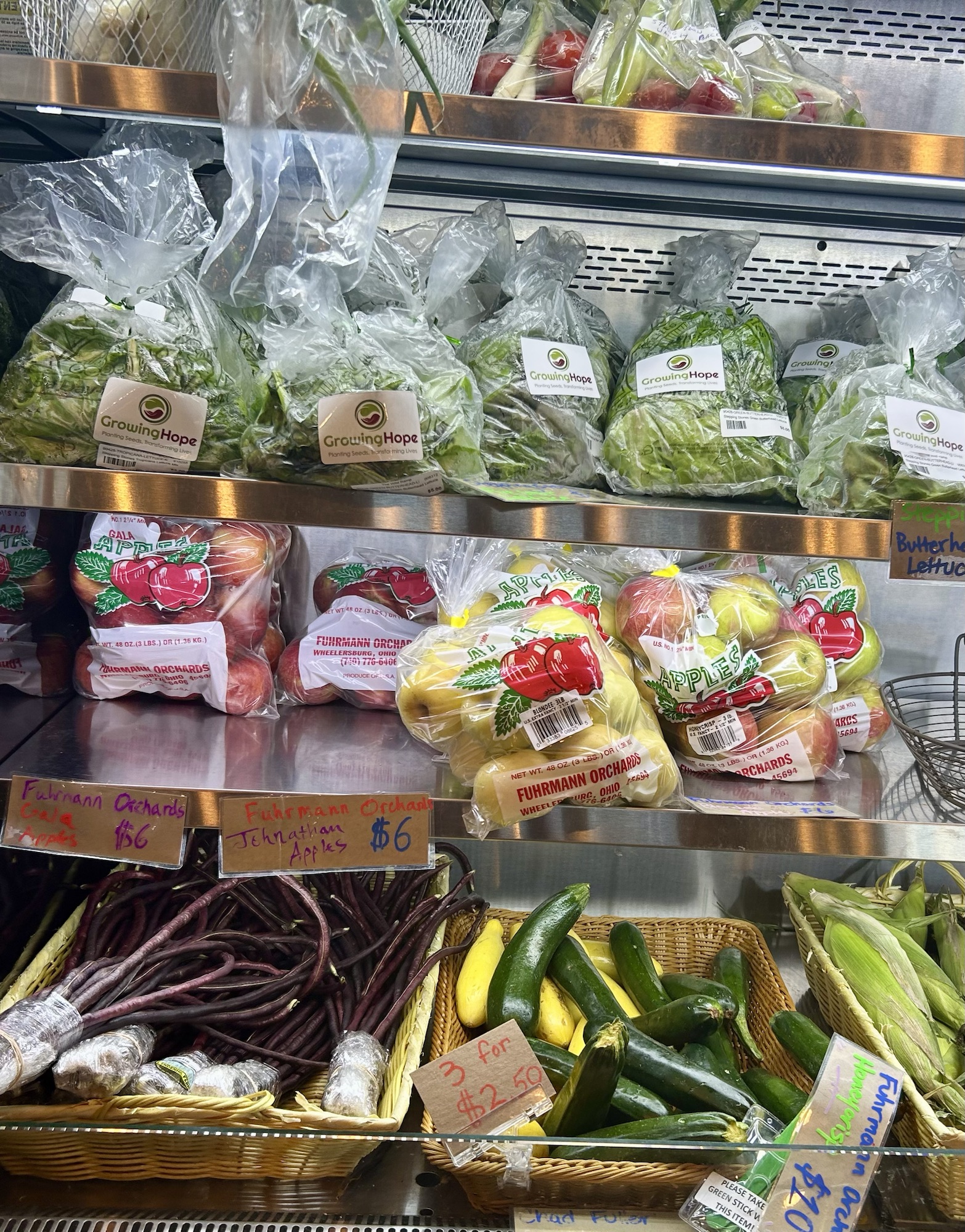
September brings the official start to fall, and this seasonal shift means apples are coming into season. Even though apples tend to be available year-round, the advent of fall means local apples are available, and the prices of apples at supermarkets will be their best.  Therefore, it’s a great time to take advantage of apples’ versatility and nutritional benefits.

Personally, apples are one of my favorite fruits.  I embrace the many varieties of apples for their various flavor profiles and textures, although I do tend to prefer the crisp varieties. What I especially appreciate about apples is that they can be a tasty part of any meal–breakfast, lunch, dinner–or simply as a snack.   

Fall is the perfect time to visit local market, such as The Wild Ramp, to pick up deals on locally grown, fresh apples.

Researched backed foods 🥦 🍓 🫑 🥕

Over the past couple of months, I have been preparing more recipes/meals based upon the latest research found in Alzheimer’s Research and Therapy. This study demonstrated that eating a plant-based diet can prevent and/or slow the progression of dementia due to Alzheimer’s Disease. Plus, eating this way can lower cholesterol and improve blood pressure. Since apples are definitely a plant, they fit right into this way of eating.

Now, for those of you who love your meat, I am not here to preach that it shouldn’t be eaten.  Personal diet preferences are not for me to decide, but I think we can all agree that fruits and vegetables benefit our health.  Therefore, why not lean into adding more plants into meals?  It doesn’t have to be an either/or thing!

Photo by Polina Tankilevitch on Pexels.com

Apple Benefits 🍏

Plus, who can argue against the humble apple? After all, there is a reason the old adage, “An apple a day keeps the doctor away,” is still around today. The Cleveland Clinic, in a post from August 2023, calls apples a “nutritional powerhouse.” The article’s author wrote that regularly consuming apples offers numerous health benefits because they are high in antioxidants–specifically quercetin–as well as fiber and water. In fact, a recent piece on Yahoo!Life stated that “Eating two apples a day may lower cholesterol.”  

Apples offer the following benefits:

  • Help meet daily fiber needs, which will stabilize blood sugar and creating a sense of fullness longer
  • Antioxidants that fight inflammation, which can lower risk for heart disease and dementia caused by Alzheimer’s
  • Help lower cholesterol and reduce blood pressure
  • Benefits the microbiome as they are full of pectin as well as both soluble and insoluble fiber
  • Promotes longevity by reducing risk for heart disease
Photo by RDNE Stock project on Pexels.com

A-peel-ing benefits 🍏🍎

Keep in mind that the skin of the apple is the most nutritionally dense part. A 2023 article on Healthline, states that the peel is the part of the apple with the most fiber.  Additionally, an apple with its skin intact has more vitamin K, vitamin, A, vitamin C, more calcium, and potassium than a peeled apple. 

So why not eat an apple or two per day?  It’s an easy and tasty way to get more plants into your diet. With all the varieties and flavor profiles, you’re sure to find one you like!  Head to your local farmer’s market or grocery store, stock up on your favorite varieties, and take advantage of their best pricing. The versatility of apples lend it to a wide range of recipes, such as the one I am sharing with you today. Then again, there’s no shame in eating at them as they are, which is my favorite way of enjoying an apple.

From my home to yours, I wish you a healthy and happy fall season!

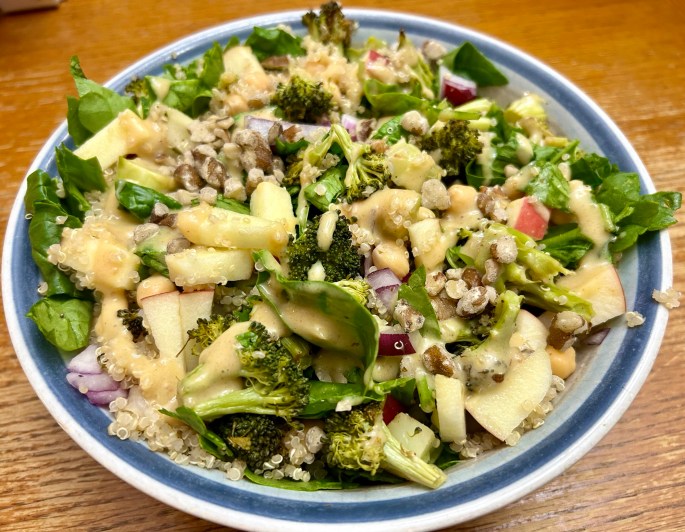
This recipe was inspired by the following sites: Gimme Some Oven, Cait’s Plate, and Engine 2 Cookbook. Feel free to “doctor it up,” as my Grandmother Helen used to call it by adding and/or deleting ingredients that fit your tastes preferences!

Quinoa Broccoli Apple Bowl with Sweet and Spicy Dressing

Gluten-free, dairy-free

Serves 2, but recipe can be doubled or tripled

Salad ingredients:

½ cup dry quinoa

1 cup vegetable broth

1 small head of broccoli, chopped into bite-size pieces

¼  teaspoon garlic powder

¼ teaspoon onion powder

Salt and pepper to taste

1 can (15 ounce) chickpeas, rinsed & drained

4 cups favorite salad greens, i.e. spinach, arugula, spring mix, etc

½ small red onion, chopped

1 apple, diced (favorite type)

¼ cup slivered almonds, chopped walnuts, or other favorite nut/seeds

Dressing ingredients:

½ cup unflavored, plant based milk

¼ cup Dijon mustard

¼ cup pure maple syrup

¼-½ ground red pepper (depending on level of desired heat)

⅛ teaspoon smoked paprika

⅛ teaspoon xanthan gum (a gluten-free thickener), optional

Directions:

Preheat oven 425 degrees

Coat baking dish (cookie sheet) with nonstick cooking spray or line a baking sheet with parchment paper

Clean and cut broccoli

Lightly spritz with olive oil and sprinkle seasonings (garlic powder, onion powder, salt, pepper)

Bake for 30+ minutes, stirring halfway through

Meanwhile, prepare quinoa according to package directions, using broth as the cooking liquid

While quinoa is cooking, prepare salad dressing by placing all ingredients in a glass jar and shaking well.  

Store dressing in refrigerator until ready to serve

To serve, divide salad greens and diced apple between 2 serving bowls

Divide and top salad with quinoa, broccoli, chickpeas, and onion

Drizzle with desired amount of dressing and top with nuts

Store unused dressing in sealed container in refrigerator for 2-3 weeks

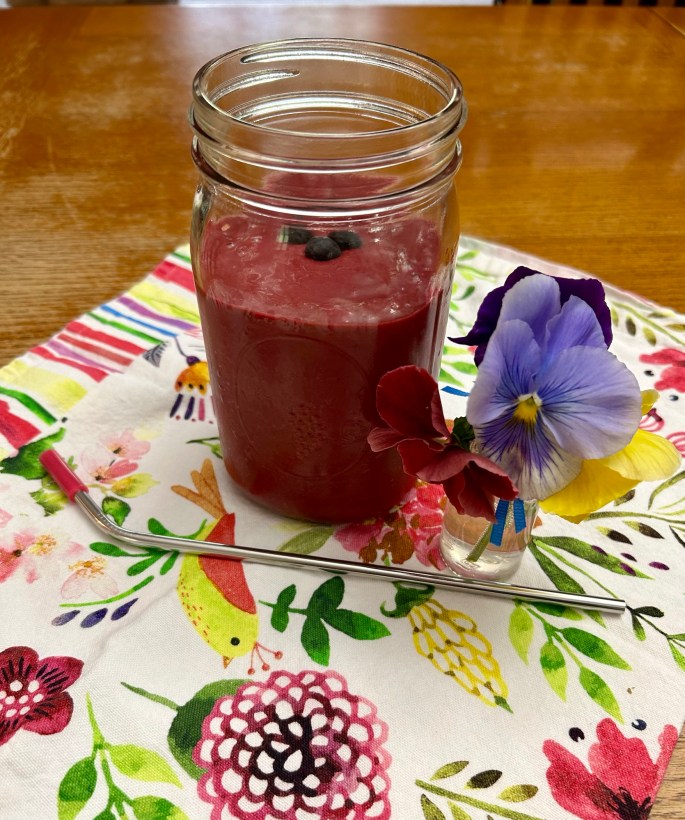
Berry Immunity Boosting Smoothie aka Stress Less Smoothie

The greatest weapon against stress is our ability to choose one thought over another.”–William James

Photo by Pedro Figueras on Pexels.com

The challenge of work-life balance⚖️

It is not uncommon to engage in conversations centering around stress.  Attempting to balance the demands of work and life can be challenging. The combination of long work hours, while also juggling the needs of family, make it difficult to have time to do the things that would otherwise relieve stress, such as regular exercise, outings with friends, or even a relaxing soak in the tub. 

When stress ramps up, there is a chain-reaction in our bodies.  According to Harvard School of Public Health, when stress is high, the body’s demand for oxygen and energy increases, which in turn increases the demand for key nutrients.  Simultaneously, stress causes the body to eliminate other vital nutrients. This can take a toll on the body’s immune system.

As the chain reaction of stress continues, hormones become affected.  If the stress is acute, the body will secrete adrenaline, which suppresses appetite.  However, when the stress becomes more chronic, cortisol levels begin to rise, instigating food cravings.  Cortisol tends to create cravings for foods that are typically considered “comfort foods,” full of sugar, salt, and fat.  Unfortunately, if cortisol stays elevated, the chain reaction continues to wreak havoc upon our bodies, and this often influences our coping strategies.

Photo by cottonbro studio on Pexels.com

The body’s stress response 😰

Chronic high stress time periods, depletes the body of energy and can often reduce time available for decompression. This can inhibit the desire to prepare healthy, nutritious meals.  Sometimes, chronic stress causes us to skip meals.  The downside to skipping meals is that, as the cortisol levels rise, once there is an opportunity to eat, we tend to reach for those comfort foods that will not replenish the body’s stores of diminished nutrients.

Therefore, how we respond to stress matters.  With some situations, we can identify upcoming stressful time periods before they begin, and thus, we can be more proactive.  However, that isn’t always the case.  Nonetheless, there are a few basic guidelines, according to The University of North Carolina at Chapel Hill that are worth remembering.

Photo by Antoni Shkraba on Pexels.com

Tips for eating during times of stress 😣

  • Keep nutrient-dense grab-and-go snacks on hand at all times.  Foods like baby carrots, celery sticks, hummus cups, guacamole cups, apples, oranges, bananas, popcorn, almonds, walnuts, pistachios, low-sugar yogurt, low-sugar granola, low-sugar oatmeal packets, whole-grain crackers and so forth.
  • Eat at regular intervals when possible.  This will keep blood sugar stable, and keep the brain, which needs glucose, working at its best.
  • Eat high-fiber foods. Foods, such as fruits, vegetables, nuts, seeds, beans, oatmeal, and other whole grains, have been shown to decrease perceived stress levels and increase alertness.
  • Focus on eating fruits and vegetables, especially leafy greens, whenever possible.  These foods are filled with the vitamins and minerals your body needs to neutralize the harmful molecules our bodies produce when under stress. 
  • Foods rich in unsaturated fat also help. Think walnuts, flax seeds, chia seeds, and fish oil to name a few. These foods are associated with increased brain function; however, deficiencies in fatty acids can result in depression and/or anxiety. 
  • Be mindful of caffeine and/or alcohol intake. Both of these can disrupt sleep, which the body desperately needs during times of stress.  Additionally, both can increase blood pressure, which can increase feelings of anxiety.
  • Ensure your body is getting enough quality sleep. Getting enough sleep allows the body to reduce cortisol levels and other stress hormones, increasing the chances of remaining calmer in the face of stress.
  • Employ constructive coping strategies. Whether it is talking to a trusted friend or therapist, journaling, meditating, asking for help, or going for a walk–developing positive coping skills is a lifetime skill set. 
Photo by Wallace Chuck on Pexels.com

The reality of stress 😩

Stress is reality at different points in our lives.  While we cannot control when it will arise, we can control our response to it.  It is easy and understandable to seek comfort during times of stress.  However, when those sources of comfort become unhealthy coping mechanisms, such as over- or undereating, drinking alcohol in excess, going without sleep, and so forth, we risk using short-sighted solutions that could lead to developing long-term problems, creating even more stress.  

Stress less smoothie 🍓

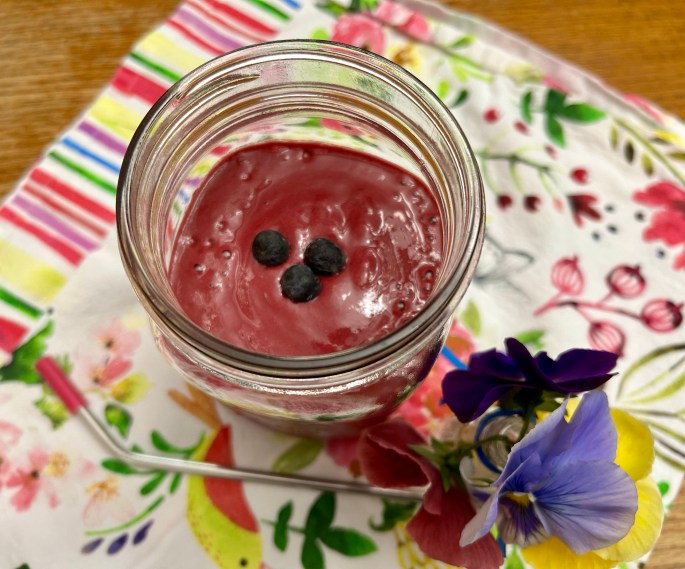
Below is my newest smoothie creation.  It is full of nutrient-rich foods that are high in fiber.  Some of the ingredients may cause you to raise an eye-brow in wonder, but I promise, it does taste great.  That said, feel free to adjust, add to, or eliminate ingredients that don’t suit your palate or dietary needs.

This recipe can be made ahead of time and frozen into individual servings.  They will stay fresh in the freezer for up to three months.  Then, whenever faced with a stressful day, take one smoothie out the night before, set it in the fridge to thaw, and then it’s grab-and-go convenience for the next workday. Sip on it through a lunch meeting, or if more time is available, pour it into a bowl and sprinkle on favorite fruit and nut/seed toppings, along with a bit of granola. 

I can’t promise that this recipe will change the stress around you. However, it does provide a powerful nutritional punch to help stave off the effects of stress, and offers one less thing to worry about.  Plus, it feels good knowing that if everything else goes wrong in the day, at least one small part of your day was stress-free.  

Cheers to one less thing to stress about!

Berry Stress Less Smoothie

Nutrient dense, stress combating meal replacement

Ingredients:

2 cup spinach, riced cauliflower, or kale (can be frozen)

½ cup strawberries, frozen

½ cup raspberries, frozen

½ cup cherries, frozen

1 apple

½ cup lentils

1 parsnips

2 tablespoon flax, chia seeds, or hemp seeds (or combination of any two)

2 tablespoons goji berries, OR 2 medjool dates, OR 2 prunes, optional

2 tablespoons cocoa or cacao powder, optional

2 scoops protein powder, optional

1 cup beet juice (can use pomegranate or cherry juice or simply use water)

1 cup milk  plant or dairy based variation)

½-1 cup of water, if too thick

Directions:

Put all ingredients in high powered blender

Blend until creamy and smooth

Makes 2 large servings 

Your Health Journey: It’s more than just taking a pill

“Take care of your body.  It’s the only place you have to live.”–Jim Rohn

Photo by nappy on Pexels.com

Listen to your Gut-Instincts🙇‍♀️

It’s been a little over a decade since I received the medical diagnosis that dramatically changed my life. I spent years battling upset stomach, gas, bloating, heartburn, and lower belly pain that only got worse with age. Pills had always been the answers.  In fact, at one point in my life, I had multiple timers set on my phone to remind me to take prescribed medications before and after eating.  

During a vacation near Boone, North Carolina, with my husband and daughter in which we had to plan our days around the timing of my medication, I finally decided I had had enough.  Call it “gut-instinct”, but I knew that whatever was going on inside my body, the prescriptions were not the answer.

Photo by MART PRODUCTION on Pexels.com

Finding a Doctor to listen 👂

Fortunately, I had a doctor at the time who took me seriously and listened. Together, we discussed a plan of action. Still, it took several months of waiting for tests and lab work to be completed, and more time waiting for results–the “hurry-up-and-wait” shuffle–as I fondly call it.  

I am not sure what I expected the results to be. However, when the letter arrived at my house stating I needed to schedule a follow-up appointment with my doctor (which was already on the books) due to indications of celiac disease and hiatal hernia, I was initially upset due to the dramatic lifestyle changes to manage both.

Photo by Alexas Fotos on Pexels.com

Change is Not Easy 😬

To state the obvious, change is not easy, so I faced a fair amount of challenges as I adjusted my diet.  Ultimately, though, as my symptoms subsided, and, one-by-one, the medications fell by the wayside, my motivation to continue increased.  I also came to see that compared to other potential prognosis, changing my diet was a minor task compared to invasive treatments, therapies, and surgeries.  

I’ve learned much, and continue to learn, along my health journey. Therefore, I share my experience as a point of encouragement when dealing with medical issues. 

Photo by Christina Morillo on Pexels.com

Advocate for Yourself 🗣️

First, I encourage you to trust your instincts, and advocate for yourself, especially if you are a person of color, a woman, a person with a higher BMI, or a LGBTQ+ person.  Unfortunately, as with any field, there are those medical professionals with internalized biases.  While I am confident not all doctors are bad actors, my own personal experience–and that of several others I know–have certainly informed me that if you belong to one of those categories, your complaints may not be given serious and thoughtful consideration. Therefore, you MUST advocate for yourself, even if it means changing doctors or traveling out of the area in which you live.

Photo by Pixabay on Pexels.com

Not every Health Issue requires a Pill

Secondly, sometimes medication is absolutely necessary; however, prescriptions are not end-all-be-all for every situation.  While I did have a doctor who truly listened to me, it still took me advocating for myself and not settling for what he prescribed based upon the medical system in which he worked. I am fortunate that when I questioned the medicine, that this doctor did not take it personally or as an assault on his professional judgment.  Nor did he try to use shame, or blame-the-patient tactics, as I had previously experienced.  He heard me out, asked numerous questions, and based upon those answers, set up a series of diagnostic tests. 

Photo by Brett Sayles on Pexels.com

Be Gentle with yourself as you navigate lifestyle changes 😊

Thirdly, be gentle with yourself if you have to make lifestyle changes. Once I received my results, overhauling my diet was scary–do you know how many things have gluten in them and/or cause reflux? I felt a huge amount of internal resistance to those changes in the beginning because it seemed like such an overwhelming task. 

Lifestyle changes are not easy, and it takes time to make the adjustments.  There are going to be setbacks, slipups, and mistakes along the way.  I know; I experienced them.  Completely changing the way I ate was a steep learning curve, and it was an eye-opening experience. Nonetheless, at the end of the day, I wanted to feel better and not live my life on a series of timers and pills.

Photo by Jack Sparrow on Pexels.com

Find your support 👯‍♀️

Enlist support for your changes. Join Facebook communities or other support groups to help you transition and navigate through the changes. Thankfully, I had support in the form of my family and friends.  Of course, they did not have to necessarily change the way they ate, but they absolutely made, and still continue to make, accommodations for my dietary needs.  This is especially true for when we dine out.  I have a limited number of restaurants in which I can safely eat.  Therefore, if I can’t eat at a certain location, friends and family will nearly always choose another option, so I can also enjoy the meal with them.

Photo by Krivec Ales on Pexels.com

health is a constant series of adjustments along the way 🛣️

Finally, know that your health journey is a continuous process.  Because I spent over four decades without a proper diagnosis, I am still encountering health difficulties.  One of the biggest obstacles I now face is a result of undiagnosed celiac disease.  Celiac causes the villi that make up the lining of the small intestines where nutrients are absorbed to become damaged. Over time, the villi atrophy and flatten due to inflammation from eating products that contain gluten.  

Despite overall healthy eating and consistent exercise, until I cleared the gluten in order to reduce the inflammation in my body, I was not able to absorb enough nutrients, specifically calcium, Vitamin D, and Vitamin K.  Additionally, due to  acid-reflux, I took proton-pump inhibitors for several years, which are also known to deplete magnesium, calcium, and other important minerals.  

Thus, I now have osteopenia.  As a result I have already had one surgery and may later need another one. However, I am doing all I can to keep that from happening, including completing the prescribed exercises, lifestyle changes, and appropriate supplementation of key nutrients.  Additionally, of course, I continue to maintain lifestyle changes with regards to a gluten-free diet, low-acid diet, and I am now more motivated to continue consistent weight-bearing exercise to keep my bones as healthy and strong as I can. 

Our health is truly a source of personal wealth.  Therefore, learning to advocate our own health needs is critical.  To be sure, doctors are highly educated, but that doesn’t mean they are fully educated when it comes to YOUR BODY and YOUR unique HEALTH needs.  

Photo by Yan Krukau on Pexels.com

IT’s your body. Treat it Well.

Speak up for yourself.  Trust your instincts.  If you need medication, take it, but don’t overlook lifestyle habits as well.  Educate yourself on lifestyle habits that can positively (and negatively) impact your health and make adjustments as needed.  Don’t be afraid to ask for support, and forgive yourself if you slip-up along your health journey.  

At the end of the day.  It is your body.  It is the only one you have.  Treat it like the sacred, precious gift that it is.

Get More Grounded: The Benefits and Lesson of Tree Pose

“Be like a tree. Stay grounded. Connect with your roots.  Turn over a new leaf. Bend before you break.  Enjoy your unique natural beauty. Keep growing.”–Joanne Raptis

Photo by SHVETS production on Pexels.com

The magic of Tree Pose 🌳

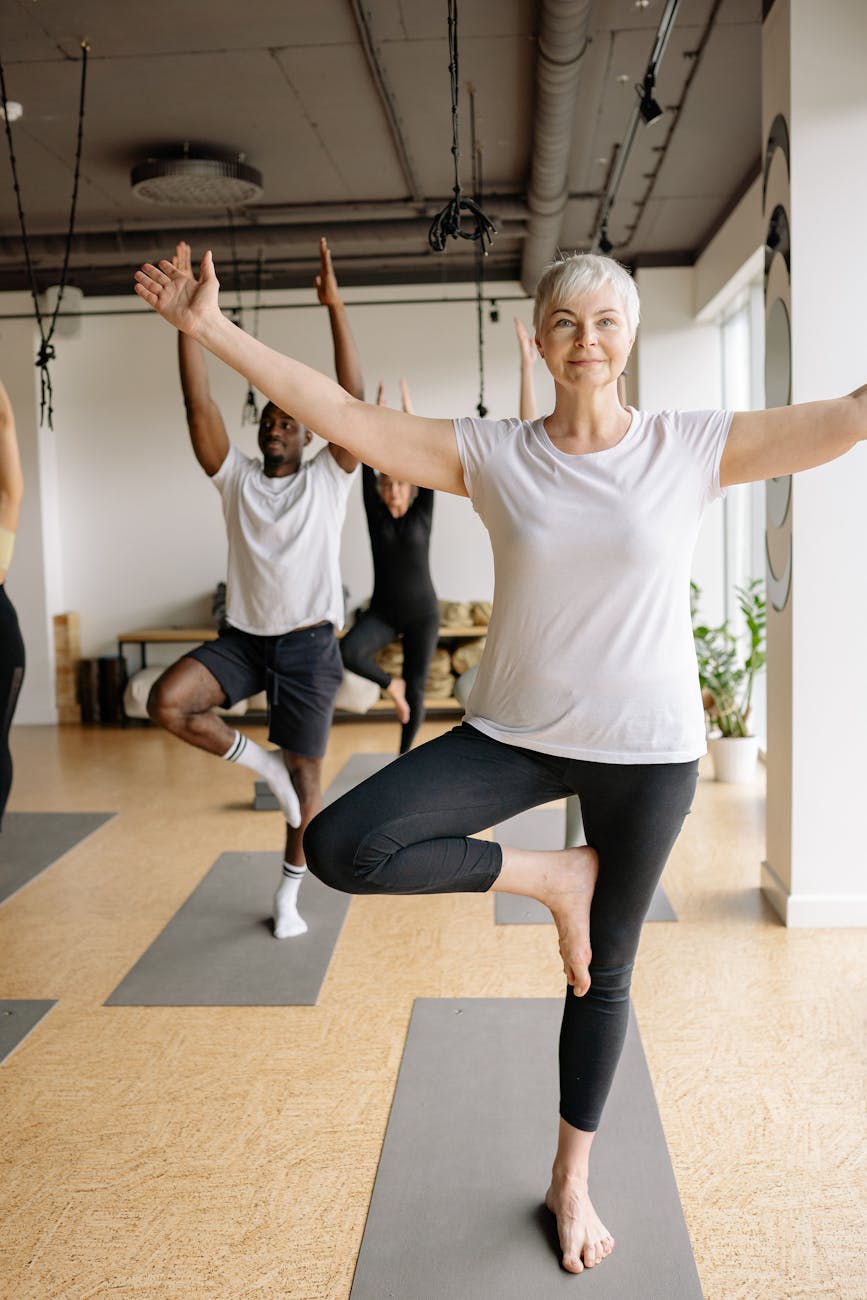
“Trees sway; get more grounded,” my husband chimed along with the yoga instructor on the DVD as we attempted tree pose on a Monday morning before work, the classic yoga balancing pose that requires standing on one leg. 

I appreciate tree pose for many reasons. It strengthens feet, spine, ankles, legs, and core.  Further, it opens the hip area, stretches the inner thigh and groin muscles.  Plus, it can improve one’s concentration and focus while simultaneously improving alignment of spine and posture.  Most of all, it is a pose of balance, which can help in a multitude of ways. 

Symbolically, tree pose serves up several lessons. However, one of the more literal lessons of tree pose is that of remaining in the present moment.  It’s nearly impossible to balance in tree pose and think into the future or reflect on the past because you end up falling out of the pose. I was reminded of those lessons this past Tuesday, or as I have come to know it as, “Twister (or Tornado) Tuesday.” 

Photo by Ralph W. lambrecht on Pexels.com

Shelter in Place 🌪️

As a veteran educator, I have experienced a wide-array of events, including those that require shelter-in-place. In fact, I can still recall the first time I experienced shelter-in-place with students 30+ years ago.  I was teaching in a mobile unit at a great distance from the main brick and mortar school building. The students under my care ranged from 5-12 years of age, and they had been identified as “severe behavior handicapped.”  

There were twelve students, ten boys and two girls.  Since this was the early 1990s, computers and cell phones were not widely available in the classroom setting. This classroom had an intercom type “phone” that only connected from the school office to the classroom.  It was through this “phone” that I received the message that the entire school was sheltering in place in the hallways.  The school received a call that a tornado had touched down in another part of the county and was heading our way. I was to gather my twelve, not-always-so-compliant students, and move them to the main building as quickly as possible.

By the time I received the “call,” a heavy metal concert of rain and wind had already begun, drumming and shaking the metal building rhymically with tantruming, angry torrents of sideways rain.  Quickly, the paraprofessionals and I helped the students into their school-issued red rain parkas, and that is when the resistance began.

“I am not going out in that rain.”

“I don’t like getting wet.”

“No, I won’t!”

“I’m scared!”

Whether it was the determined, I-am-not-kidding look in my eyes, Divine intervention, or a combination of both, the paraprofessionals and I miraculously gathered all of them in a line.  Holding hands as one unit, we began fighting our way through the class door that kept trying to swallow us back inside due to the enraged winds. Once outside, raindrops pelted any exposed skin, including the students’ face and heads as their hoods were immediately blown off.  We fought our way to the safety of the school while the passion of the rain and winds seemed to increase and determinedly tried to shove us backwards. 

By the time we made it to the school, none of us were dry as the pernicious storm found a way to penetrate even the sturdiest of rain coats.  Quickly, we hustled the students to the primary wing of the school, finding a piece of wall away from windows where they could drop to their knees and cover their heads, rivulets of water streaming over all of us, while adrenalin continued to accelerate my heart rate.

Photo by monicore on Pexels.com

Twister Tuesday 🪟

This memory bolted through my mind on “Twister Tuesday” as my classroom, and the surrounding classrooms, were filled with the strident sound of the emergency broadcast system sending an urgent message to seek shelter immediately. Our middle school classrooms are located on the top floor of our school building, and the entire middle school was directed to make their way to the first floor as quickly as possible. In order to do that, we had to run down three flights of stairs in a glass-lined stairwell. As we headed down, the irate storm quickly made its presence known.  Like Lyssa, a figure in Greek mythology who is said to drive others mad, the storm insanely clambered and clawed at the windows demanding to get inside, but meeting a wall of resistance.

Once downstairs, it was hot, crowded, and overripe with the odor of sweaty, nervous bodies as we sheltered in place away from doors and windows alongside first and second graders as well as preschoolers from the two- and three- year old classes. At times, there were crescendos of anxious voices of students–or, in the case of some of the little ones–crying. During other moments, there were a few older students who experienced panic attacks, but there were many more who remained calm.  There were even those selfless students who chose to hold, cuddle, and comfort younger preschoolers, focusing on the needs of others, rather than themselves.

Middle school students caring for the needs of preschoolers during a shelter in place scenario.

And if you Fall . . . Pick yourself 🆙

As I walked among the students, checking on them, assuring some, answering questions of others, my mind echoed with the words from the previous day, “Trees sway; get more grounded.”  And so, I ground down into my faith.  If the students and staff of my previous school survived that former storm way back in the 90s, surely we would survive this one too.  My emotions could sway like the tree on the inside, but the more I swayed, the more I reminded myself to ground down and try to remain balanced in the present moment in order to better focus on those around me.  

It wasn’t easy, and I wasn’t perfect.  But here’s the thing about tree pose. It’s a great way to practice falling. If you fall out of tree pose, you pick yourself up, and try to return to the pose once more.  

Like my beloved tree-pose, Twister Tuesday provided another stretch and realignment personally and professionally as well as to my faith. It challenged my focus and concentration in order to remain balanced.  And when I “fell,” forgetting to remain focused on the present moment, all I had to do was “pick myself up” and try to return to it once more. Most of all, that Tuesday served as a powerful reminder of the power of the True Source dwelling within and around us, always available to keep us grounded. 

Another middle school student getting grounded in the present moment of another’s need.

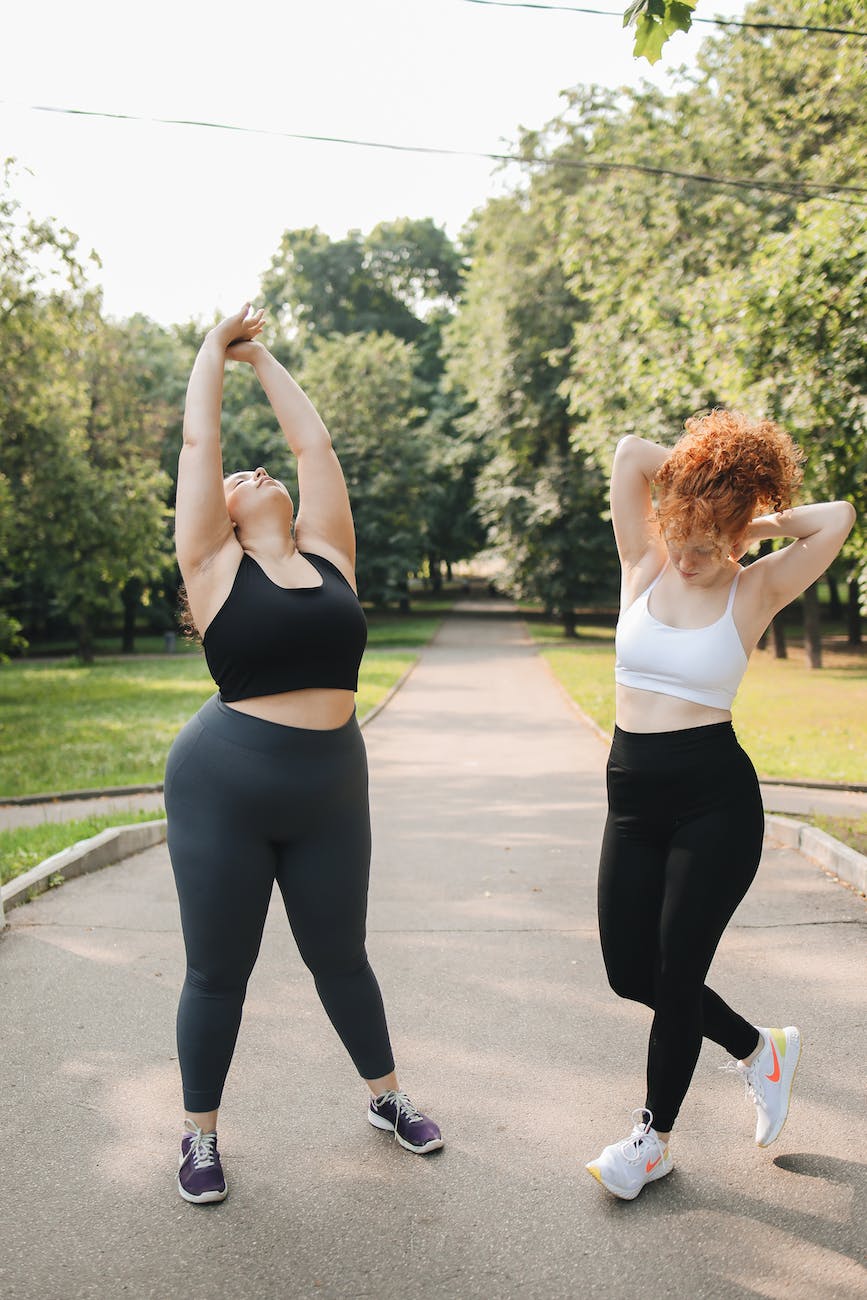
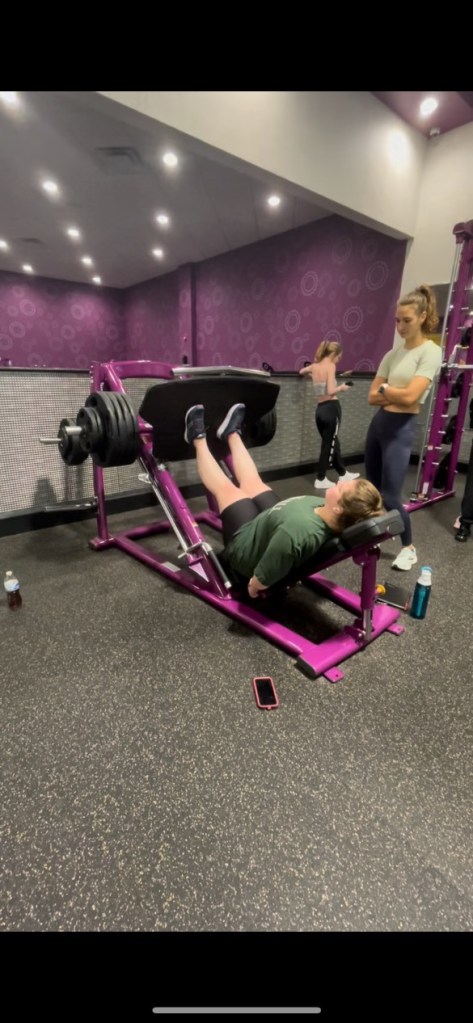
Moving into health for every body: Tips for fitting additional movement into your routine

“Changing ‘exercise’ to ‘movement’ was a game changer for me . . ..” –@brittanilancaster (Tik Tok)

Last month, I wrote about the importance of rethinking exercise and the benefits of incorporating movement into your daily activity.  Nevertheless, it isn’t always easy to plan, begin, and stick with a program.  You may have the best of intentions, only to be derailed by life.  Don’t feel guilty or ashamed by this–many of us, including myself, have been there on more than one occasion. Consequently, I am not writing to preach or make you feel bad. Guilt is not, in my opinion, a sustainable motivator; however, as I have previously stated, mood does follow action.  Therefore, this month will focus on actionable steps to starting, or returning, to a routine plan of movement.  

Photo by Bich Tran on Pexels.com

 Honestly, the best form of movement is the one YOU will enjoy doing, but in case you’re not sure, here are a few considerations. 

  • Solo or buddy/group system. Personally, I think it’s important to know if you’re a solo-type of exerciser or one who would stick to a program better with a buddy or a group.  Some people prefer, and are more likely to follow through, with an exercise buddy or group.  While others tend to like more solo endeavors.  Knowing your preference may increase your chances of a more positive movement experience.
  • Choose an activity that you like.  It goes without saying, but I am going to state it again, if you dread exercise, you are probably not going to stick with it.  Ideally, find a form of exercise that makes you feel happy, empowered, and/or confident.  Do you love talking and/or sharing the latest juicy tidbits with a friend?  Then, choose an activity that allows you to do that while moving, such as walking.  Do you crave alone or quiet time?  There are many types of exercise that can lend you that much needed head-space for “me-time,” such as walking, biking, or strength training to name a few.  Are you motivated by instructors or group energy? Try one of the myriad of group fitness classes offered by gyms, fitness centers, or studios. And by all means, if you try one form of exercise, and you don’t like it, don’t throw in the proverbial sweat towel, try something else! 
  • Be realistic and start small.  In an ideal world, we would all follow the Department of Health and Human Services guidelines and exercise moderately 150 minutes per week–typically divided into five days for 30 minutes per day.  However, your schedule may only allow for three or four days and/or 15-20 minutes per day.  That’s okay.  Commit to a realistic routine and time.  Better to work within your schedule and be consistent with lesser amounts, than to do nothing at all.
  • Make it part of your weekly routine. Brainstorm ways to reduce or eliminate barriers.  Schedule exercise times into your smart calendar and set reminders, so nothing else can be scheduled during this time period. Schedule workouts with a friend in advance to build accountability, or use smart watches and/or fitness apps that allow you to link with friends, during workouts. Set out clothes, water bottles, equipment, snacks, and so forth, ahead of time. (I actually lay out all of my workout clothes for the week, set them in one stack by the bathroom, so I can grab and go quickly each morning.) 
  • Remember to reward yourself.   “If I do this, then I can do this.” Think about what really motivates you, and then set mini-goals towards that reward. It could be as simple as giving yourself permission to watch your favorite guilty-pleasure TV series for thirty minutes after completing a workout, or heading to your favorite local coffee or smoothie shop with a friend after completing a week’s worth of goal workouts. With consistency, health rewards will also naturally begin to occur, such as, sleeping better, greater sense of self-esteem, reduction of stress, lowered blood pressure, etc.
Photo by Polina Tankilevitch on Pexels.com

“Day 29 of exercising for mental health. Finally feeling like myself again.  I can’t believe I’ve gone my whole life without this.  Love watching my heart and lungs get stronger so quickly.  Getting my appetite for life back.”–@claraandherself (Tik Tok)

Barring any health issues, here are a few ideas for working around common obstacles that often occur when starting and/or maintaining an exercise program.

  • Have flexible expectations. Sure, we’d all like to look and move like a Marvel or DC superhero, but that’s not realistic, especially when first starting a new exercise routine or new form of exercise.  As the saying goes, “Rome wasn’t built in a day,” and any exercise program takes time.  However, little-by-little, improvements do occur, including moving with greater ease, less fatigue, feeling overall better/stronger, or even sleeping better.  It won’t happen overnight, but with a fair amount of consistency, improvements will occur.
  • Self-kindness and self-compassion always. Nobody is perfect. Kick ideas of perfection out of your head. Setbacks, illness, injuries, and other unplanned interruptions are going to happen.  If you miss a day here or there or if you have a time span in which your workout plan went out the window, don’t let it derail your overall goal of lifelong wellness. Offer yourself the same compassion and understanding that you would offer a friend.  Then, as soon as you can, get back to it–even if it means easing back into it or changing/adjusting your plan
  • Avoid the all or nothing attitude. You do not need to spend hours each day engaged in exercise to reap the benefits.  Even modest amounts of time will benefit your physical and mental well-being, and that could even include 5-10 minute movement breaks interspersed throughout your busy day!
  • Slide day mentality. Don’t get me wrong.  I am not giving you permission to let exercise slide.  Instead, while you may have certain days/time you prefer exercise, be willing to slide a workout to another time or day of the week in order to accommodate week to week schedule fluctuations.  Likewise, if you’re short on time, reduce your total workout time.  A short workout is still better than no workout at all!

I encourage you to banish those limiting beliefs about movement and exercise.  Ignore the toxic, guilt-inducing, body-shaming misinformation about exercise circulating on social media.  Exercise movement is all-inclusive and should be a positive experience for EVERY BODY.   

Photo by Mikhail Nilov on Pexels.com

Of course, I am not a medical professional, as such, it’s always best to talk to your family health provider before beginning a new movement program.  That said, as a so-called “non-athlete,” exercise has made a huge impact on my own physical and well-being, and I’ve watched it do the same for so many other dear ones in my life.  It is my hope that if you are not currently incorporating much movement into your life, you will consider starting today.  If you  already embrace exercise, keep it up, and while you’re at it, grab a friend to move with you!

Wishing you the best health, Dear Reader!

Banish any limiting beliefs you have about exercise.  Ignore the toxic perfect perfect body images of exercise as well as misinformation.  Exercise is all-inclusive and should be a positive experience for EVERY BODY!
Photo by PNW Production on Pexels.com

Berry Good Cauliflower-Berry Smoothie

“Good nutrition creates health in all areas of our existence.  All parts are interconnected.”–T. Collin Campbell

Photo by Anastasiia Petrova on Pexels.com

Summer is back!  Okay, not officially as we have not yet experienced the summer solstice, but it is strawberry season!  In fact, throughout the coming months of summer, other berries will also come into season!  Freshly picked berries are not only some of Mother Nature’s sweetest earthly treasures, but they are also some of the most nutrient rich treats.  Plus, they are just so darn versatile.  Eat ‘em plain; toss them into cereal, smoothies, or yogurt; mash them onto your toast (for real!); bake them into cake, muffin, or pie recipes; cook them down into syrup, sauces, or jams; or, can, dry, or freeze them for later use.  Honestly, what’s not to love about berries?

From a nutritional standpoint, berries are chock full of vitamins, minerals, antioxidants, and the all important fiber. Think of berries as your personal arsenal for warding off cancer, protecting the health of your heart, and fending off chronic inflammation and/or illness. They also benefit your skin, may help lower cholesterol, and can typically be enjoyed no matter the diet you follow due to the fact they are low-glycemic and low in calories as well as carbs.  Those tiny, juicy, brightly colored orbs are bursting with nothing but love and goodwill for your body and your taste buds. 

Photo by Julia Volk on Pexels.com

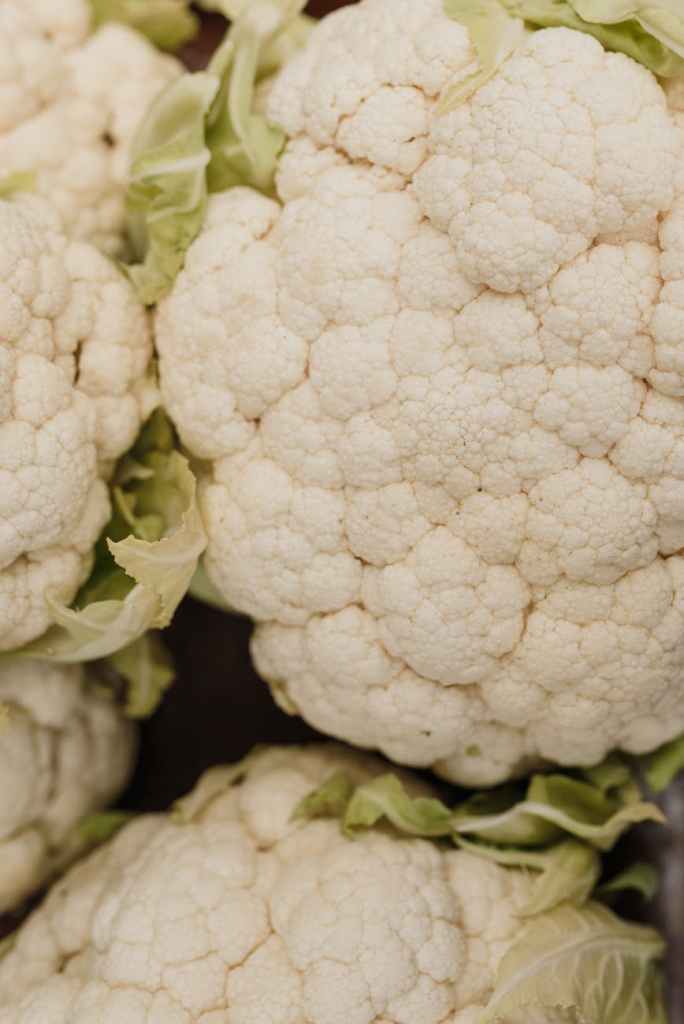
Now, contrast the vivid indigo of blueberries, the deep purple of blackberries, the candy red of strawberries, the shiny garnet of cherries and pomegranates, and the rose crimson of raspberries to the ever so homely cauliflower.  Oh sure, there are a few colorful varieties of cauliflower, but by and large, the most abundant form of cauliflower is as colorless as a canvas.  In fact, that is how I prefer to think of cauliflower: a canvas.  A canvas waiting for the strokes of color from an artist’s, or in this case, cook’s palette.

“Most flowers say, “I love you,’ but cauliflowers say, ‘I hope you live forever.’  And, that’s more intense than love.”–Unknown

Cauliflower, like the acclaimed berry, is considered a superfood.  It, too, is high in fiber, low in calories and carbohydrates, and full of vitamins and minerals.  Brimming with phytonutrients, antioxidants, and high levels of sulforaphane–an ingredient in all cruciferous vegetables–cauliflower can also wage war against cancer. Due to its high level of choline, it also supports learning and memory maintenance. (Who doesn’t need help with that?)  Additionally, cauliflower is full of bone-enhancing Vitamin K.  

Photo by Arina Krasnikova on Pexels.com

Similarly to berries, cauliflower is versatile in the kitchen.  Popularly known for creating a healthier alternative to traditional pizza crust, cauliflower can also be made into grilled “steaks,” buffalo “wings,” and stir-fried “rice.” Furthermore, it can be mashed, steamed, baked, fried, tossed into soup, salad or dip, eaten raw, its stem can be shredded and added to slaw, and it can be frozen for later use.  Plus, it can be added to smoothies! 

“If cauliflower can be pizza, you, my friend, can be anything.”–Unknown

Two simple ingredients make this smoothie naturally sweet, creamy, and a rock-solid nutritional choice to start your day of with the first positive step of the week.

If you are familiar with my work, you know I love whole-food, plant-based smoothies.  They are convenient, portable powerhouses of nutrition that can be made ahead of time and frozen.  That’s right! Blend a whole batch of smoothies up for the week in one manageably messy hour or less, and you are setting yourself up for a nutritionally robust, go-get ‘em week!  Then, the night before–or really, just a few hours ahead of time–take one smoothie out of the freezer, and set it in the fridge. Then, in the morning, you’re ready to kick off your dynamo day with a jolt of nutritional righteousness. 

Now that the weather is warming up, nothing tastes more refreshing than a cool, creamy sweet smoothie.  The sweetness occurs naturally from the succulent berries–no added sugars here.  Full of fiber, antioxidants, vitamins, and minerals; low in calories and carbohydrates; this smoothie recipe checks all the boxes.  You won’t be able to taste the cauliflower, but instead, you will taste all of the berry deliciousness of whatever berry(ies) you choose.  Your taste buds and body will be doing the happy dance, and you will feel a peace of mind knowing you made one small choice of positivity that just may lead to multiple beneficial steps towards your health for the day.

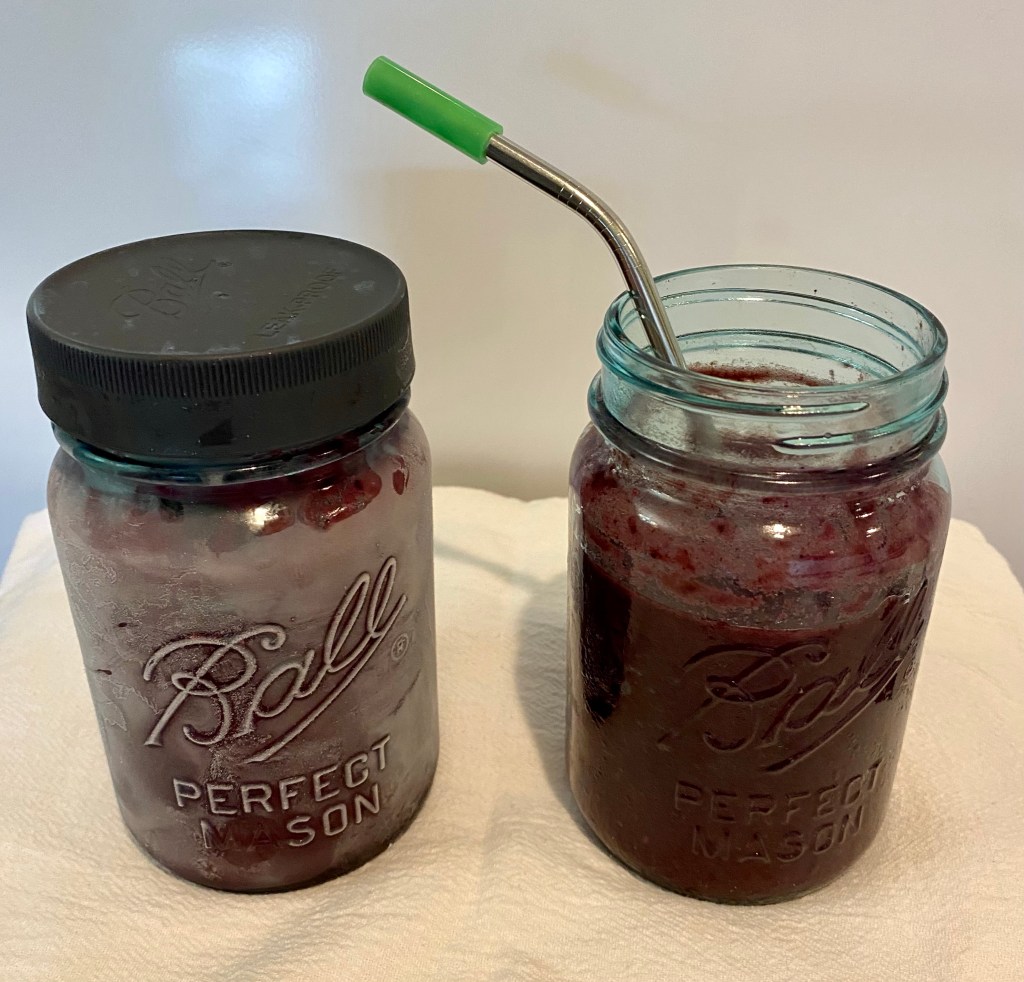
From frozen to thawed in a matter of hours . . .make ahead smoothies make your work week more organized and, well, smooth!

“A healthy outside starts from the inside.”–Robert Urich

I encourage you to give this recipe a try. Change it up, dress it up, and make your own version of this wholesome blessedness.  Then, hit me up via email, Instagram, Facebook or on this website, stephsimplycom.  I can’t wait to see what you do with it!  

From my home to yours, I simply wish you vibrant health.  Here’s to you!

Berry Good Cauliflower Smoothie

Ingredients:

1 ½ cup riced cauliflower

1-1 ¼  cup favorite liquid or other favorite liquid 

¼-½   cup pomegranate, cherry, blueberry or combination juice (You want a total of 1 ½ cup liquid.)

½ teaspoon cinnamon

½ teaspoon vanilla extract

Dash of salt (optional)

1 inch or ½ teaspoon ginger

1 mini cucumber or ½ large

½ lime, peel removed, but leave parts of the pithe for extra flavor and Vitamin C

1 cup mixed berries (My blender can only handle 1 cup, but feel free to add in another cup!)

Optional: 1 medjool date or ½ banana for added sweetness if desired 

Go “Extra,”only if you want, with as many of these additional nutritious powerhouses as desired:

Replace ¼ cup of your favorite liquid with ¼ cup aloe

2 teaspoons amla

2 teaspoon greens powder

1-2 teaspoons acai powder

½ – 1 teaspoon matcha powder

½ -1 whole scoop of favorite protein powder 

¼-½ teaspoon of turmeric powder

Place cauliflower and all liquid ingredients into the blender and blend well.

Add-in rest of the ingredients in the order listed above.

Blend all ingredients until smooth.

Makes one large (approx 32 ounces) or two smaller (approx 16 ounce) smoothies, depending upon amounts chosen.

Schedule your 5th decade “Festivities” and then celebrate your health

“If one has a routine colonoscopy at the age of 50 and then colonoscopies thereafter as the physician recommends, you could largely prevent colon cancer, you could detect it in its earliest stages and cure it.”–Laurie Glimcher

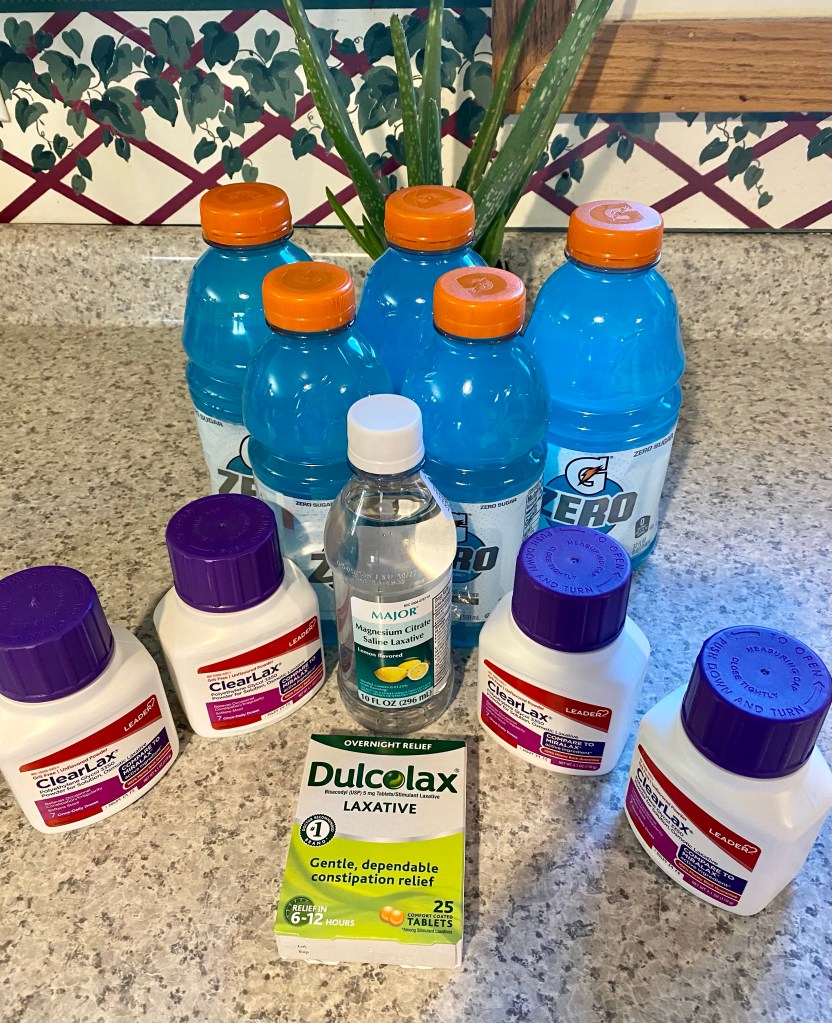
“This looks like a party in a bag!” I said to John, my husband, as I walked through the kitchen upon my return from both the pharmacy and grocery store.

“Why’s that?” he dutifully asked.

“Just take a look at all of these fine celebratory accoutrements.” 

Inside the white pharmacy bag was Dulcolax, Miralax, and Magnesium Citrate  Butt, the real fun was in the 128 ounces worth of Gatorade with which I was blessed to mix the Miralax powder.  Talk about a real party-pooper!  This was about to go down as one explosive event for sure!  

Two days worth of low-residue/low-fiber foods as specifically described in doctor’s

handout? Check.

Plenty of clear liquids stocked up for D, I mean, P-day?  Check.

Comfy clothes with elastic waist waistband?  An extra-heavy wrap or layer of clothing in which to stay warm during the fast?  Plenty of books, magazines, and/or other reading material available?  Scented candle in bathroom? Hard candies and gum to quell nausea? Check, check, check, check, and check!

On your mark, get set, go!

Let’s get the party started!

The following four days of my Christmas time-off from work were focused on the before, during, and after of a colonoscopy.  Why?  There are numerous reasons, but the number one driving factor is, while I know there is an end to all life, I’d rather not end mine early due to a genetic predisposition to colon cancer.  At the very least, I will take all the precautions and preventive steps that are available to me.

“. . . colon cancer is the second leading cause of cancer deaths in the United States.  Every four minutes someone is diagnosed, and every nine minutes someone dies.”–Kevin Richardson

You see, Dear Reader, I watched my beloved maternal grandmother and uncle both die from this horrific form of cancer.  Don’t get me wrong, all types of cancer are deplorable, but the suffering I observed in their final days tore at my soul and left an impression that I have not forgotten.  Therefore, since, “People with a family history of colon cancer,” according to LoyolaMedicine.org, “have two to five times more risk of having colon cancer,” I’d rather not take my chances.

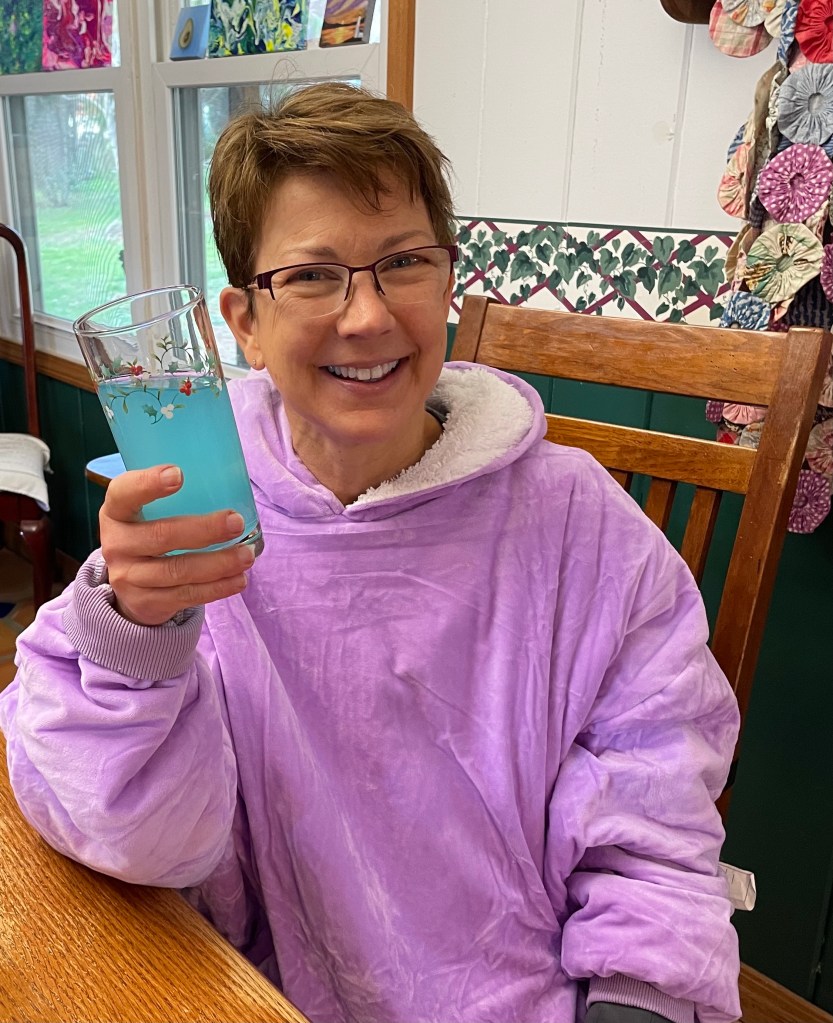
First dose, along with flavored water . . . let the party begin!

In spite of my dramatic narrative, it is NOT necessary to miss a total of four days of work.  The first two days of colonoscopy preparation consists of simply eating a low-residue/low-fiber diet which is quite manageable while at work as I have completed in the past.  I just happened to already be off work for the Christmas break period.  Although, on a personal note, I found I was exceptionally hungry for those two days.  I suspect it is because I typically eat a high-fiber diet and rarely, if ever, consume eggs, meat, or dairy.  Therefore, my food choices felt limiting and certainly not as filling as my usual high-fiber, whole-food plant-based way of eating. 

However, I do strongly advise using a sick day for the third day of the “festivities,” aka bowel prep.  In addition to the fact that you are bloated, and potentially a bit crampy and nauseated, you will most certainly spend a great deal of time in a bathroom.  Personally speaking, I’d rather spend that sort of  “quality” time in my own bathroom, thank you very much.  However, if you have the type of job that allows you to leisurely spend time in the restroom, and you can still manage work, by all means be my guest! 

First batch mixed! What a punch it has!

Most certainly though, a colonoscopy does require at least one day away from the worksite.  This is because you are put under anesthesia for the procedure; afterwards, you do not have medical permission to drive for the rest of the day.  My own experience (which each person’s experience is unique) left me feeling a bit lightheaded and nauseated, and not ready to eat, much less work, for a few hours.  However, I have known plenty of people, along with their designated driver, who go to their favorite eating establishment and plow through some serious piles of food, but I don’t recommend that for the sake of your system.

You may be wondering why do it at all–especially since there are several viable alternatives on the market.  I researched numerous websites with that same question.  Most valid medical websites point to the same conclusion:

“. . . colonoscopy is the only test in which the entire colon can be visualized using a colonoscope and pre-cancerous polyps can be removed. Cancer risk is reduced by 90% after colonoscopy and polyp removal . . .”–American College of Gastroenterology 

A bowlful of encourage-mints!

Nonetheless, before determining the best colon cancer preventative tool for you, it is best to talk with your healthcare provider.  In fact, it was based upon a conversation with a healthcare provider that I had both a colonoscopy and endoscopy before the recommended age of 50.  It was these initial assessments that led to the discovery that I had nothing wrong with my colon at the time (as I feared), but instead, I have a hiatal hernia and celiac disease–which are fairly easy fixes with diet. No more frequent diarrhea, painful stomach cramps/pain, and little to infrequent reflux thanks to diet adjustments–not to mention the elimination of several medicines–all due to what began with a conversation with my healthcare provider!  

With that in mind, multiple websites encourage adopting healthy habits, along with regular healthcare screenings, in order to not only prevent occurrence of colon cancer but also to lower the risk of numerous other types of cancer. One such health promoting practice is to honor what most mothers tell their children, eat plenty of fresh fruits and vegetables.  Avoid using tobacco products, and if you are currently using them, find ways to reduce, or better yet, eliminate these products from your lifestyle. Consider reducing or eliminating alcohol consumption.  Regular physical activity is also recommended.  Additionally, stress-reducing and/or mindfulness practices as well as maintaining a healthy weight are likewise considered positive steps.  

In the end, personal health and well-being often comes down to personal decisions.  I am by no means any health/well-care expert, but I do believe in personal responsibility and accountability towards one’s health–including routine, preventative health care screenings.  Afterall, if we are made in God’s image, then, as the saying goes, our body is HIS temple.  Therefore, let our habits honor our God-given skin vessel.  We only have one body, and life is a precious gift.

Cheers to your health!

Finally, I could not end this piece without saying a BIG heartfelt thank you to the staff of Cabell County Hospital, especially those on the second floor.  I was your first patient of the day, arriving at 6:30 am.  From the upbeat registration employee who checked me into the hospital when I was barely functioning without my morning coffee, and to the cheery and encouraging Lesha and Nana my pre- and post-nurses respectively; from Eric, several other nurses, and unnamed staff members whose names I did not get; to the sweetest female nurse anesthetist with kind eyes, as well as Dr. Davis and Dr. Subik; I appreciate the fact you were all working between holidays for patients like me, who did not want to miss work. And a special shout out to the spry Carlos, the speedy, affable, and efficient transporter.  Thank you for making my procedure from beginning to, well, the “end,” as comfortable as possible.  

From my heart to yours, I encourage you, Dear Reader, to keep up with all health screenings, no matter how invasive–afterall, your life may depend upon it!

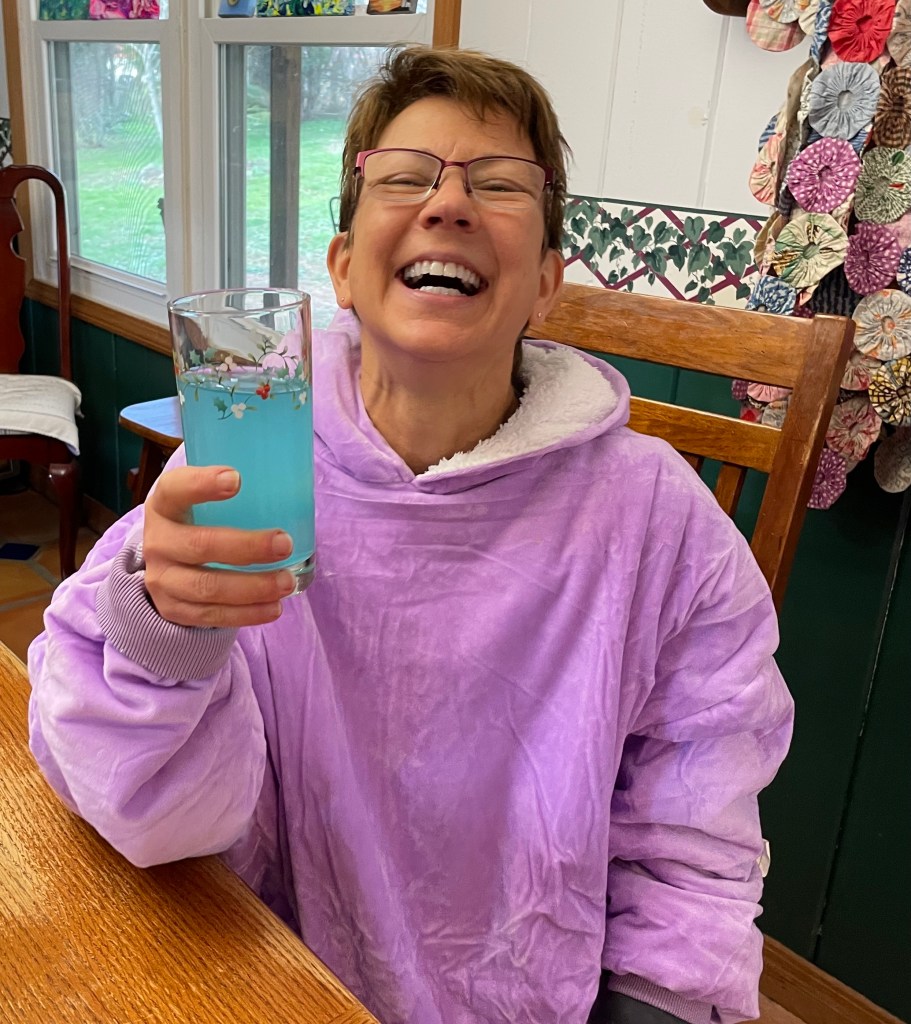
Oh, yes, I agree. I look like the once famous teletubby, Tinky Winky! “Butt”, I was warm during the day of bowel prep! Cheers to your health, Dear Reader!