Enjoy the Golden Present Moment, but Don’t Attach

“Life is short, and time is swift; Roses fade, and shadows shift.”–Ebenezer Elliott

It’s all just a carnival.”–Sri Swami Satchidananda

Photo by Brett Sayles on Pexels.com

I can remember as a preteen, our family made its first week-long vacation with all three of my siblings and me to Wrightsville Beach, NC.  We stayed in an old family-owned Inn just a short walk to the shoreline and pier as best I can recall.  The owner, it seemed to me at the time, was an older lady who enjoyed getting to know her guests and gathering them each afternoon/evening for some sort of simple family-centered event, such as sharing freshly cut watermelon or offering an ice cream social hour.

Honestly, I do not remember many details about this trip, but I do recall making friends with another family who stayed in the same inn.  With my parents permission, I accompanied this family to a local roller skating rink.  At the time, I loved to roller skate.  It was an older sibling in the family that drove all of us in a red-orange sports car, with the windows down, and with  rock music blaring–the likes of which I had never before heard.  Once at the roller rink, the same type of music continued, bright lights of colors were flashing, and a disco ball spun and sparkled in the center of the rink.  At the time, I felt so grown up.  I was certain that I was nearly touching adulthood as I skated around blissfully, ignorant of my very real youth.

Photo by Laura Stanley on Pexels.com

In a similar vein, I can remember on another family vacation a few years later.  This time we stayed on Outer Banks of NC, which was completely different from Wrightsville Beach because we were not near typical vacation attractions.  The beach, at the Outer Banks, was the center attraction, which was fine by my family and me. My family stayed in a house that was “fourth row” back from the beach.  While we could see a bit of the beach from the deck of the house, we still had about a 5-10 minute walk to the beach.

On this trip, my siblings and I made friends with another family. Their names were the Kirtleys, (I hope I am spelling their name correctly.) and they had three kids–two boys and one girl, if I am remembering correctly.  Their family had an ocean front vacation home with a line of glass windows that ran from bottom to top with a spiral staircase visible through the panes.  It seemed so spectacular in my teenage mind.

Photo by Pixabay on Pexels.com

Once, their family invited our family over for drinks and appetizers.  While my parents did not drink much in the way of alcohol, they still accepted their invitation.  I can recall walking the length of the spiral staircase with one of the Kirtley kids and looking out at the ocean from the top of the stairs that opened up into a large main floor with abundant and unspoiled views of the ocean.  I was certain that it was one of the finest things I had ever climbed and the ocean seemed so close and vivid–like I could hear the water breathing.

These trips were like visiting a carnival or amusement park, highly anticipated events that seemed the most important thing in the world, but like the numerous sand castles I have built over the years, the tide, like time, drew up, and washed the moment away.  How many moments of life are like that?  Graduating from high school, winning some sort of special event or game, attaining a job, planning and taking part in a special ceremony, and even the simple act of going to dinner with a loved one.  The people, the moment, the time, the event . . . so special, so sacred, so anticipated . . . Then, like the snap of your fingers, time’s tide rolls in, and it is over.  Just as the ocean shore in July is smooth and pristine in the dawn of the morning with no evidence of the previous day’s beach goers, so too is the present moment.

Photo by Kevin Menajang on Pexels.com

The present moment is so golden, and yet it is so overlooked.  Magical memories are being made, and we don’t realize it.  People come and go in our lives.  Events occur and pass.  One moment, you’re on the Big Dipper roller coaster in Camden Park with a friend surrounded by strangers, and then you, your friend, the other riders, as well as the amusement park’s employees move on. 

For a time period, a child is small and dependent, but soon becomes an adolescent with thoughts of independence.  For a season, you encounter the same person at the grocery store, week in and week out, then that employee is seen no more.  You work with a person for years, but eventually, the workplace changes.  One day you’ve earned your way to the top of the work heap, the next you are no longer there.  Attaching to titles, money, things, and even moments are all temporary.  We leave this earth the way we entered it: naked and with no belongings.

Photo by Martinus on Pexels.com

What remains in between is each present moment while it lasts. The kindnesses of gentle words, the acts of warmhearted acts of compassion, the peacefulness of the calm, the resonance of laughter and joy, and the humble tears streaming quietly down the cheek.  From the cantaloupe-colored sunrise, to the gleaming midday sun dancing through amber autumn leaves; from the purples and indigoes of sunset over the Ohio River to blinking of faraway stars and planets against an inky sky, and all other moments in between, the present moment is humbly, but fleetingly, waiting for us.  It is right there, in our sight, but cannot be grasped or attained–only lived in for that one moment–then, like the footprints in the shore line sand, it is washed away.

What also remains is the earth, the sea, and the heavens above. People come and go in our lives. Words and actions can build or destroy the present moment.  Let us all use our golden present moments to find the common ground, share kindnesses, so that one day we may walk the ultimate spiral staircase to a higher ground.

“Earth sky sea and rain  . . . 

Words that build or destroy . . .

I’d like to be around

In a spiral staircase

To the higher ground . . .” –excerpt from “Promenade” as performed by U2, written by Clayton, Evans, Mullen, & Hewson

Job: Pain is temporary, suffering is optional

“Therefore I will not keep silent; I will speak out in the anguish of my spirit, I will complain in the bitterness of my soul.”–Job 7:11

“Do your daily work, deal with everyone, move with everybody.  Be in the ocean, but learn to surf well.”–Sri Swami Satchidananda

Photo by Guy Kawasaki on Pexels.com

I had not read, or really, even thought much about the story of Job from the Bible in quite a while. Therefore, when I encountered it recently in a reading, I was reminded of my childhood days of flannel board Sunday School stories.  The large board covered with blue flannel cloth standing on a wooden tri-fold easel was used to temporarily, and seemingly, magically, attach characters, and other figures, from the Bible to help students visualize the lesson of the day.

My Aunt Janet was one of a handful of Sunday School teachers I had during my first 12 years of life, and I can still semi-remember our upstairs classroom in which she shared Bible stories with other children and me.  For some reason, as I reread parts of the story of Job, it was her flannel board lesson that filtered into my mind like the autumn fog slipping into the dark hours of morning only to fade with the light of sun.  That Sunday School memory slithered and slipped around the edges of my recollections, but no matter how hard I tried to fully summon it up, all that I could grasp was the memory of the flannel image of Job, covered with sores, on his knees, looking skyward in great anguish.  Still, that was more than I had had before reading this story.

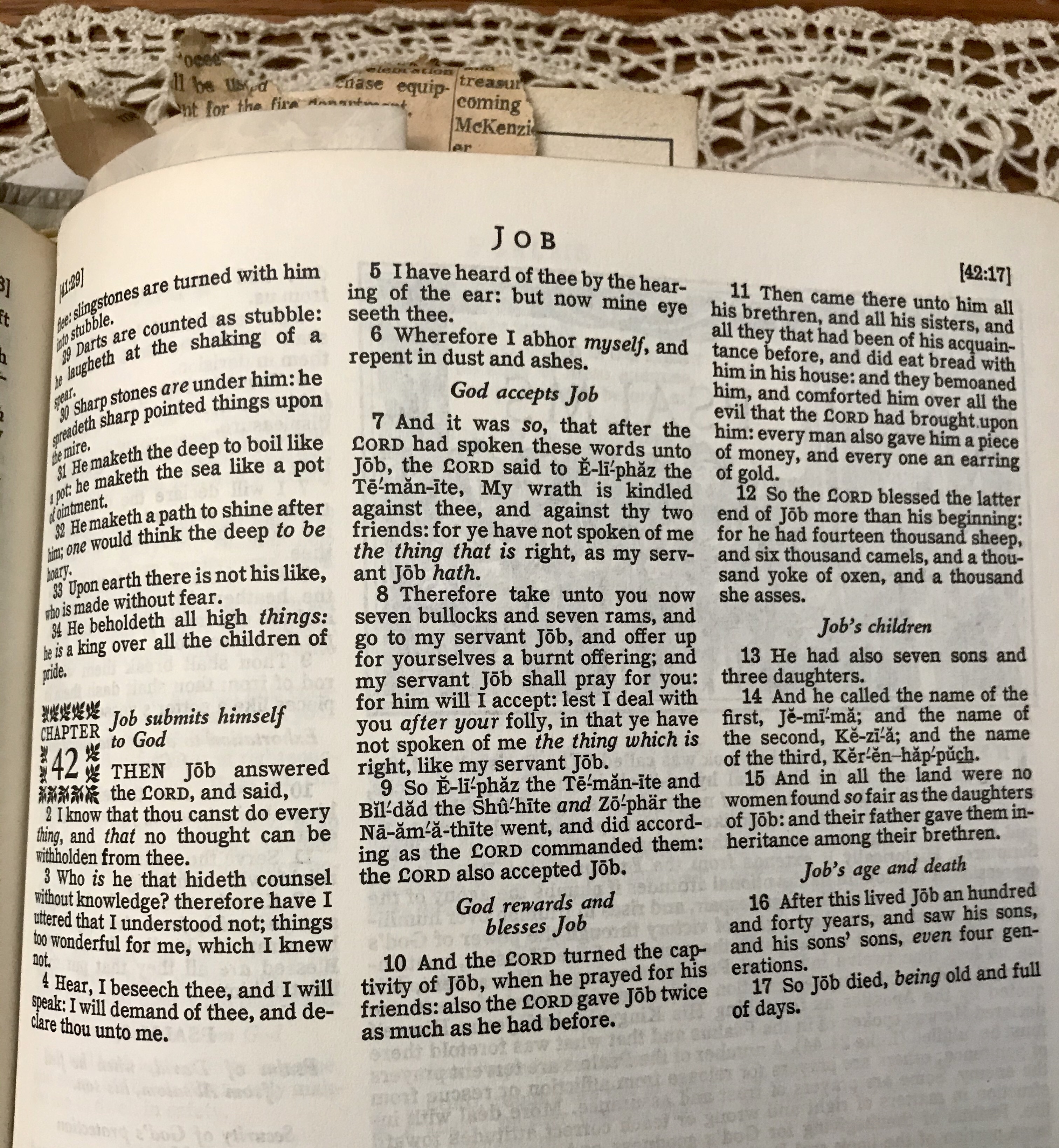
Image is from my grandmother’s family Bible. She had a bookmark at this book and the book of Isaiah.

It was because of this memory that I began to read more from the book of Job.  Now, I do not want to lead anyone astray into thinking that I read the entire book of Job, I did not.  Nor do I want to imply that I am by any means a Bible expert, I am not. Nonetheless, as I started reading these passages, I began to see themes and parallels to present day life were held within this old book.  In fact, I found quite a few points of interest.  

Additionally, on the very same day, I encountered another story that I had previously read, but I had forgotten.  I was bowled over by the way in which it connected to the story of Job.  In this story, the writer suggests that while it is one thing to find peace by developing and fostering the habit of daily prayer and meditation, it is a completely different skill to maintain one’s inner peace when injured/sick, overwhelmed, or when feeling insulted by the actions or words of another. 

Photo by Ian Panelo on Pexels.com

Reflecting on the two stories, I realized both stories are of particular relevance in our current climate.  In fact, with each story, I was confronted by powerful truths.  One of the themes of Job, is that regardless of his suffering, he remained faithful to God. At the height of Job’s suffering and loss, he basically stated that if he was to accept the good things in life that God had given him, should he not accept the troubles from God as well?   Whereas, in the other story, the author essentially teaches the importance of living in the world, allowing for both the ups and downs of life, while maintaining a sense of equanimity.  Neither are easy truths. 

2020 though has certainly challenged me to learn to adjust, adapt, and accommodate all of the drastic waves of change it has brought.  From learning to stay at home for long periods of time, to teaching remotely from home; from adapting to a new normal of living and working at home, to returning to my work place in order to simultaneously teach students virtually and in-person; from thinking the discord and dissension would be temporary, to bearing witness to ever-increasing and supposedly acceptable levels of vitriol that seems to have to end in site; from viewing COVID as an illness that doesn’t affect me, to observing its lingering effects on my own mother; and from seeing others suffer with illnesses unrelated to the current pandemic, to observing and experiencing ever increasing levels of anxiety within myself and so many of my co-workers, family and friends; it all leaves me to ask, how much more injury and insult must we all accommodate, adjust, and adapt to?  

Image is from my grandmother’s family Bible.

As I read through the early chapters of Job, I did something I normally never do, I skipped over a large portion of the story, and went straight to the last chapter to see how the narrative concluded. Job’s story ended with the universal theme that good will ultimately triumph over evil, but it did not occur without some ranting and complaining by Job, it appears.  In fact, in the last chapter one can read Job admitting he was wrong and offering a humble apology to God. That is when it hit me.  The even bigger lesson of Job is that in life there will be pain, there will be suffering, there will be discord and illness, but it is our individual response that determines our level of personal suffering.  

 Job could not control events of his life any more than I can, or you can, for that matter.  Like Job, I am quick to grumble and protest things that I cannot understand.  It is easy to complain and demand answers.  It is far more challenging to choose to remain calm and ride the waves of uncertainty when life’s waters get choppy.  

I cannot pretend that I have lived a faultness life like Job any more than I can pretend to have his level of faith.  All I can humbly do is apply the lesson of his story by becoming more aware of my own petty, reactive complaints, learn to better surf the waves by adapting and accommodating to all of the changes, rather than resisting, and take heart from the words of Job towards the end of the story, “ . . . Surely I spoke of things I did not understand, things too wonderful for me to know.”  Job 42: 3  Lastly, I must put my faith that these current life-pains that we are all experiencing, like the waves of any storm, are only temporary.  Calmer waters are coming soon.

Photo by Kevin Menajang on Pexels.com
Image is from my grandmother’s family Bible.

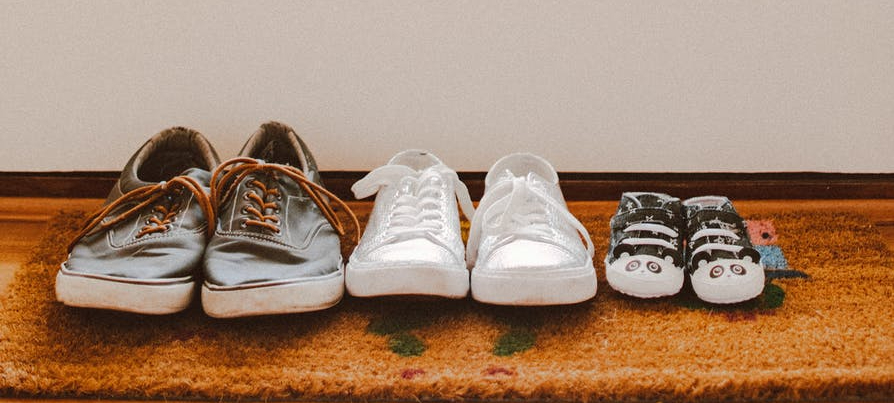
Let’s Walk in Another’s Shoes

“Walk a little in my shoes; see what I see, hear what I hear, feel what I feel, then maybe you will understand why I am the way I am.”–Jerose

“If God sends us on strong paths, we are provided strong shoes.”–Corrie ten Boom

Photo by Artem Saranin on Pexels.com

Two emails found at the end of a full Saturday.  A day in which I tried to balance the needs of others and the mundane chores of life we all face.  The fading sunlight kissed the western sky with a melon-colored glow that felt warm on my neck as I completed the last little task for a dear one.  By the time I made it home, the dust remained in writable levels on all of my furniture, but I had managed to somehow be of small service to loved ones. After a quick shower, I started dinner.  It was already full-on dark, but I felt a good-kind of tiredness swathe me like a robe.  

In the kitchen, I scurried about like a mouse being chased by a cat throwing together a gluten-free pizza for myself, and salads for John, my husband, and me.  Our daughter was with friends for the evening, and John had already purchased a pizza for himself as he doesn’t require a gluten-free option.  Pouring myself a glass of golden wine, I sipped slowly as I relaxed in the rhythm and routine of the kitchen, my life-long source of comfort and creativity.   John would be back home soon, so could we eat, share conversation, and watch a bit of college football.  

An hour or so after dinner, John walked over to a neighbor’s house to visit with a couple of buddies.  I remained home, relaxing in the quiet.  What made me decide to do it, I don’t know, but I picked up my phone and began scrolling through emails.  I immediately began deleting all the junk and buy-me emails that so many companies send once they get your email address, and was about to close the app . . .

Photo by Torsten Dettlaff on Pexels.com

Wait, what? Who is this person?  Is this spam?  Hmmm . . .  Should I even click it open?  It seems real enough though.  Huh?  Oh my goodness!  Wow!

My heart began to race and pound as if I were running from a knife-wielding maniac in one of those B-level slasher movies. Instead, however, I was mentally attempting to run away from the words of an email sent by a person with a name that I did not recognize, but this person sure did seem to think he or she knew me.  While there was nothing life-threatening in the email, the unknown sender certainly meant for his or her words to cut, and I was definitely feeling the intended slashes.

Instead of closing the email app, I clicked over to my work email.  WHY????  Scrolling through, I began to make mental notes of things to complete tomorrow afternoon and delete spam.  That was when I ran across yet another negative note from a different person.  Why did I open my email?  Why didn’t I just leave the phone alone and focus solely on the book I had planned on reading or continue watching the football game?  Why did I pick up that blasted phone?

Immediately, I was reminded of a documentary that both a friend and my dad had recommended entitled, The Social Dilemma.  John and I had watched most of it.  While some of the acting and storyline felt a tad over-dramaticized, the gist of the documentary was not lost on us.  The internet, computers, and smartphones were all created, originally, to be used as tools–streamlining information, improving efficiency, easing communication, and so forth.  However, as competition and the market grew, the tech companies began to figure out ways to create consumer-driven platforms designed to be addictive, track behavior, and target ads/influence.   By picking up my phone without thinking and mindlessly scrolling through email, I had fallen prey to the attraction of the screen as this documentary pointed out. 

Ugh, I had allowed my phone to control me. There was positively no need to pick up the phone in order to relax.  Now, I was far from a relaxed mental state!  So, what did I do?  What any normal person would do, of course, reread both emails again!  After a second reading, the words of the emails still struck the same negative chord, and I thankfully decided it was time to put away the phone and focus my attention elsewhere.  

Photo by Pixabay on Pexels.com

In the wake of those two emails, I fell asleep that night pondering why people make assumptions, especially negative assumptions, about others?  Which then begged the question, why do I?  After all, I can’t be self-righteous and not include my own behavior.  As with so many big picture questions, I had to offer it up to Divine Providence and keep my heart and mind open to answer.  It came later in the form of a novel for youth. 

As I was reading a book my 6th grade students are currently reading, an elderly male character offers a long stick to a character who is a boy with severe anger issues.  The elder asks the boy to break off the left side of the stick, and the boy does this.  The man responds that the left side is still there, and he asks the boy to break it off.  

This is again repeated until the exasperated youth finally says, “This is stupid.  There will always be a left side.”  

The older man retorts, “There will always be a left and right side to life.”  The gentleman went on to explain that the young man will always have his anger and something for which to be angry, but likewise there will always be something for which to be happy or thankful.  The choice was his, focus on the left side or the right of the stick–the choice was his every day and every moment.

Photo by Pixabay on Pexels.com

Clearly, the writers of those letters were angry.  Both had made assumptions and implications about my life or my behavior that were viewed through their own personal lens without spending a day, much less a week, walking in my shoes.  Additionally, I had initially done the same thing–passing judgement on the senders of those emails.  

However, in the light of a new day, I chose to focus on the right side of the stick.  The first email, I decided not to answer because there was no sense in trying to defend my life and choices in a singular email to a person who doesn’t know me, much less live my life.  If the person needs to have someone with which to focus his or her anger, I can be that left side of the stick for this unknown reader.   I did, however, take time to respond thoughtfully and truthfully to the second, work-related email as I thought it was merely a misunderstanding. 

Bottom line, I don’t live in the shoes of the senders of the email.  I don’t know what life experiences have framed their thinking, much less what had happened within their life on the day they sent their emails.  Perhaps they were simply having a bad day and only able to see the left side of the stick when they chose to write to me.  I get it.  I’ve been there, and if I am to be fully honest, I have focused on the left side of the stick quite often in my own life.  

Photo by Lisa Fotios on Pexels.com

Just as screens have practically hardwired us to seek out their company with great frequency, humans also seem to be hardwired from an early age to seek out and focus on the negative.  It takes work, effort, and energy to focus on the positive, to feel gratitude, and to feel happy just as it takes focused choices to put down, or step away, from screens.

 I can’t always choose the path my shoes walk, as life is often full of curvy roads and unexpected hills and valleys, but I can choose to take care of my shoes, aka, my life, and regularly remind myself that there are, indeed, two sides to a stick.  Thus, when I find myself focusing on the fact I can’t break off one side of the stick, I can choose to redirect my thoughts to focus on the other side, trusting that, when others try to cloud my way, I’ll put my faith in the fact that the shoes God gave me will lead me to the light.

Photo by Nikolett Emmert on Pexels.com

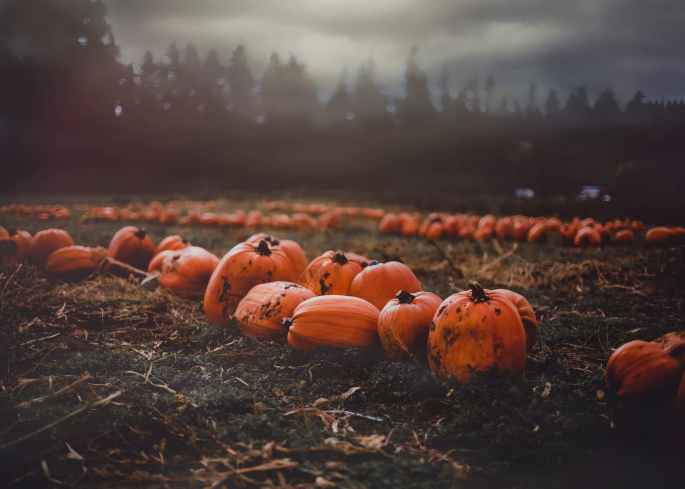
(Almost) One-bowl Gluten pumpkin muffins with optional add-ins

“Oh my gourdness, it autumn!”–as seen on Country Living 

“Let’s give them pumpkin to talk about!” as seen on Elite Daily

Photo by cottonbro on Pexels.com

On October sixth, I wrote about when life hands you bad tasting, bitter ingredients turn them into a sweet slice of cake.  In response to that piece, a reader named Bonnie, sent me an email asking for the made-from-scratch pumpkin cake recipe to which I referred in the article.  When I read her email, I was touched by the fact, someone beside my parents and husband read my column!  Furthermore, I felt fortunate that she would take time out of her busy schedule to send me an email.  Then, I was gourd-smacked.  I didn’t have a recipe to share with her. Oh my gourdness! 

I didn’t have the guts (gourd it?) to tell her that when I wrote the original piece, I based my so-called recipe on my knowledge of ingredients of recipes for other cakes, muffins, as well as pumpkin pie.  The closest I ever came to baking a pumpkin cake was actually pumpkin muffins for Maddie, my daughter.  It soon became one of her favorite fall recipes which was made from a spice cake mix and blueberries.  Still, I couldn’t go(urd) breaking Bonnie’s heart.  She asked for a recipe.  I had to harvest something.

Photo by James Wheeler on Pexels.com

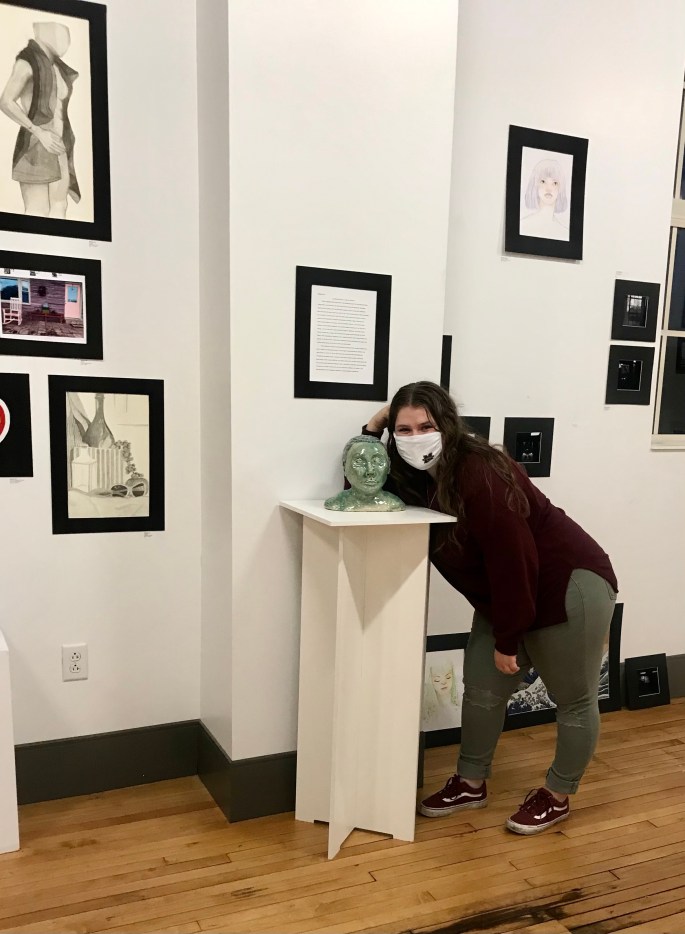
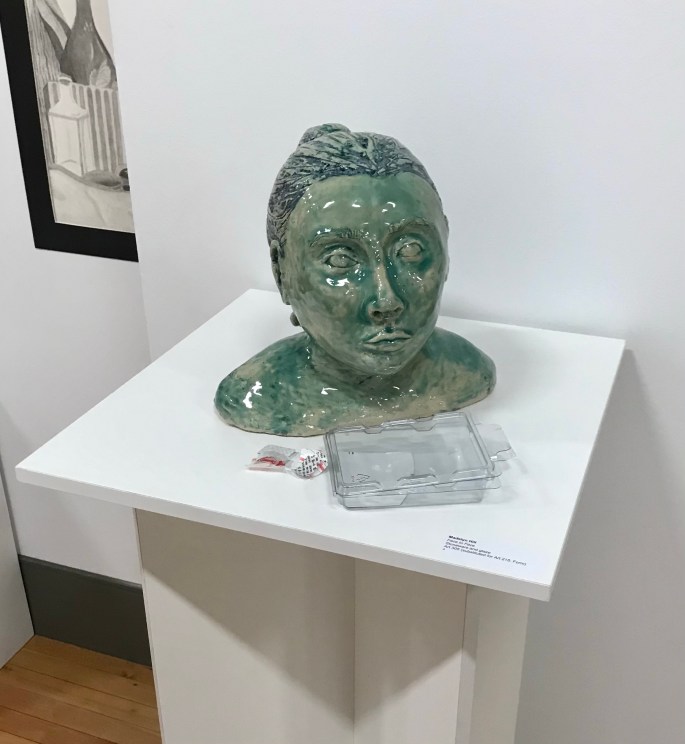
In the meantime, Maddie, who now lives at home, attends Marshall University as an art major, and works at La Famiglia at the MU student center, was showing me photos of the latest chalk art she had completed promoting the restaurant’s pumpkin cannoli’s.  In fact, her store manager had recently made one for Maddie to taste, and Maddie described in great detail how gourd the pumpkin cannoli tasted.  Maddie further added that she told her manager that the manager should try my pumpkin blueberry muffins. 

Maddie’s chalkboard art for La Famiglia at Marshall University Student Center

Hmm. . . I needed to patch some Zs on this thought.  After a good night’s rest, a new idea vined through my mind.  Why not create my own made-from-patch recipe for pumpkin blueberry muffins that could also double as a 9 x 13 cake if one desired?  I patched together some gourd research and soon enough, a new recipe was born, or should I say, carved.

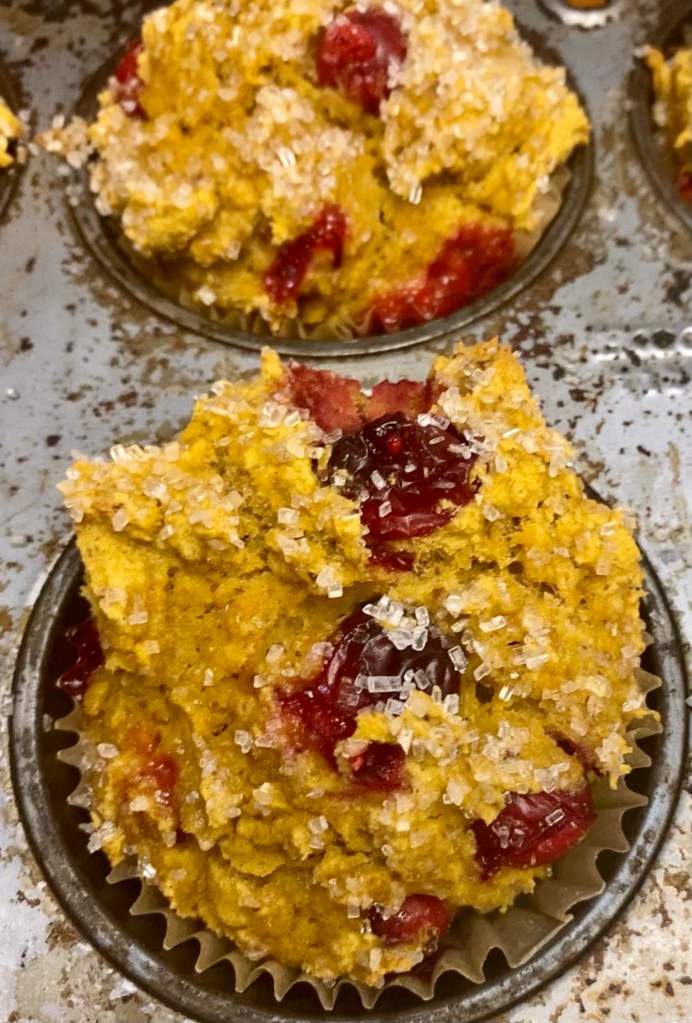
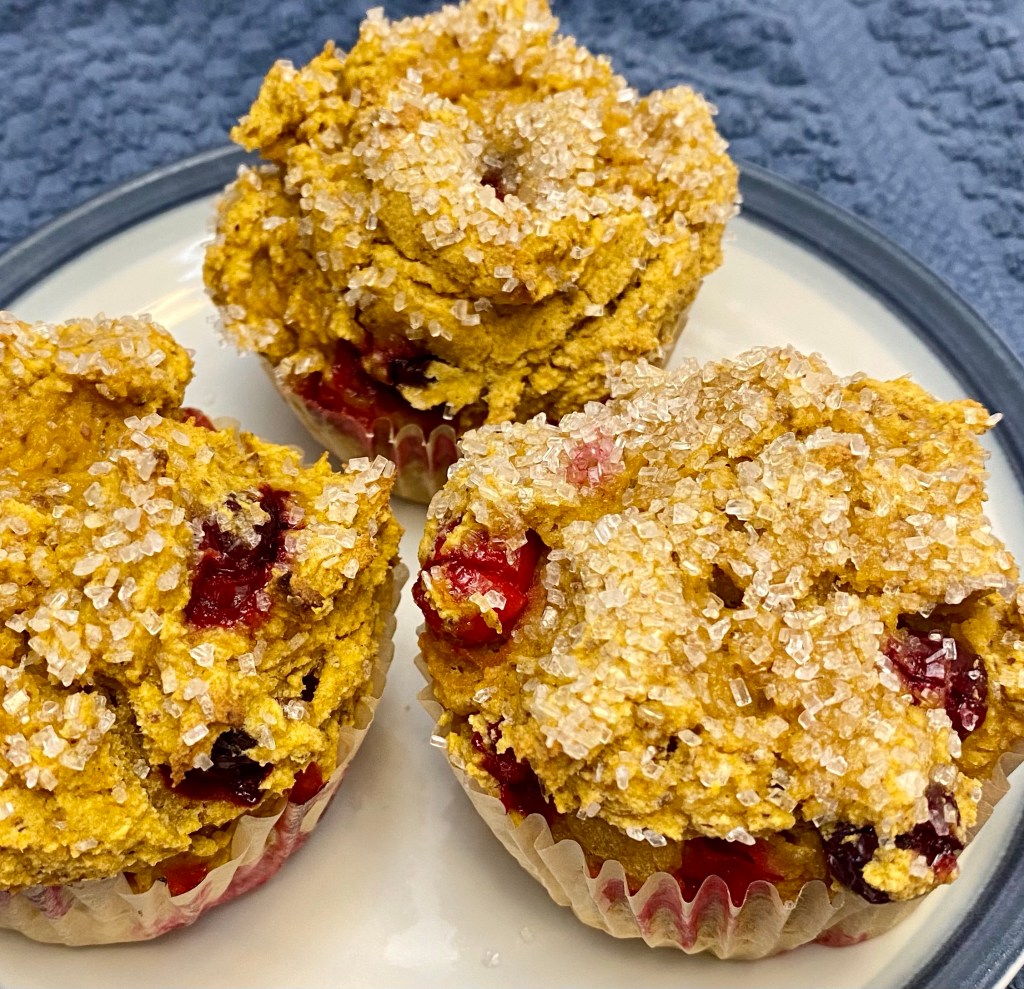
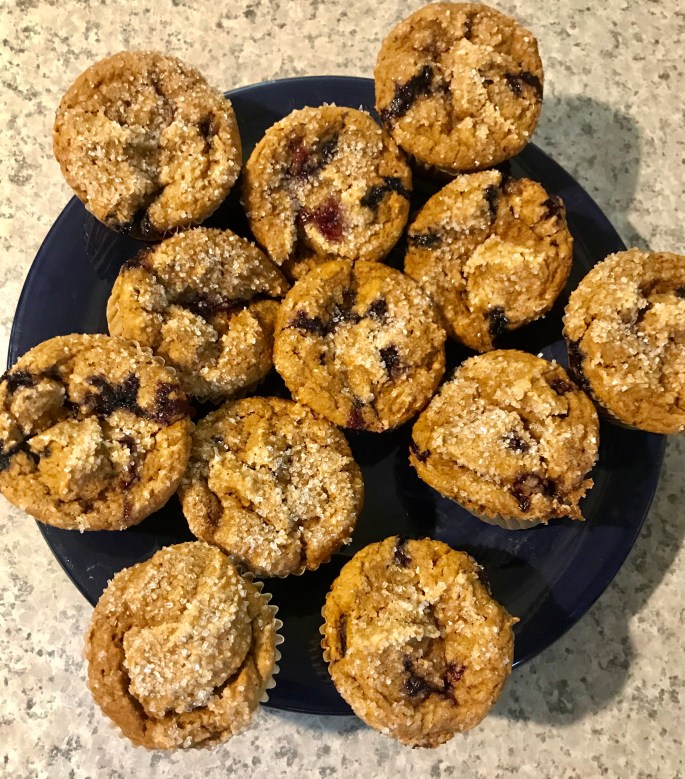
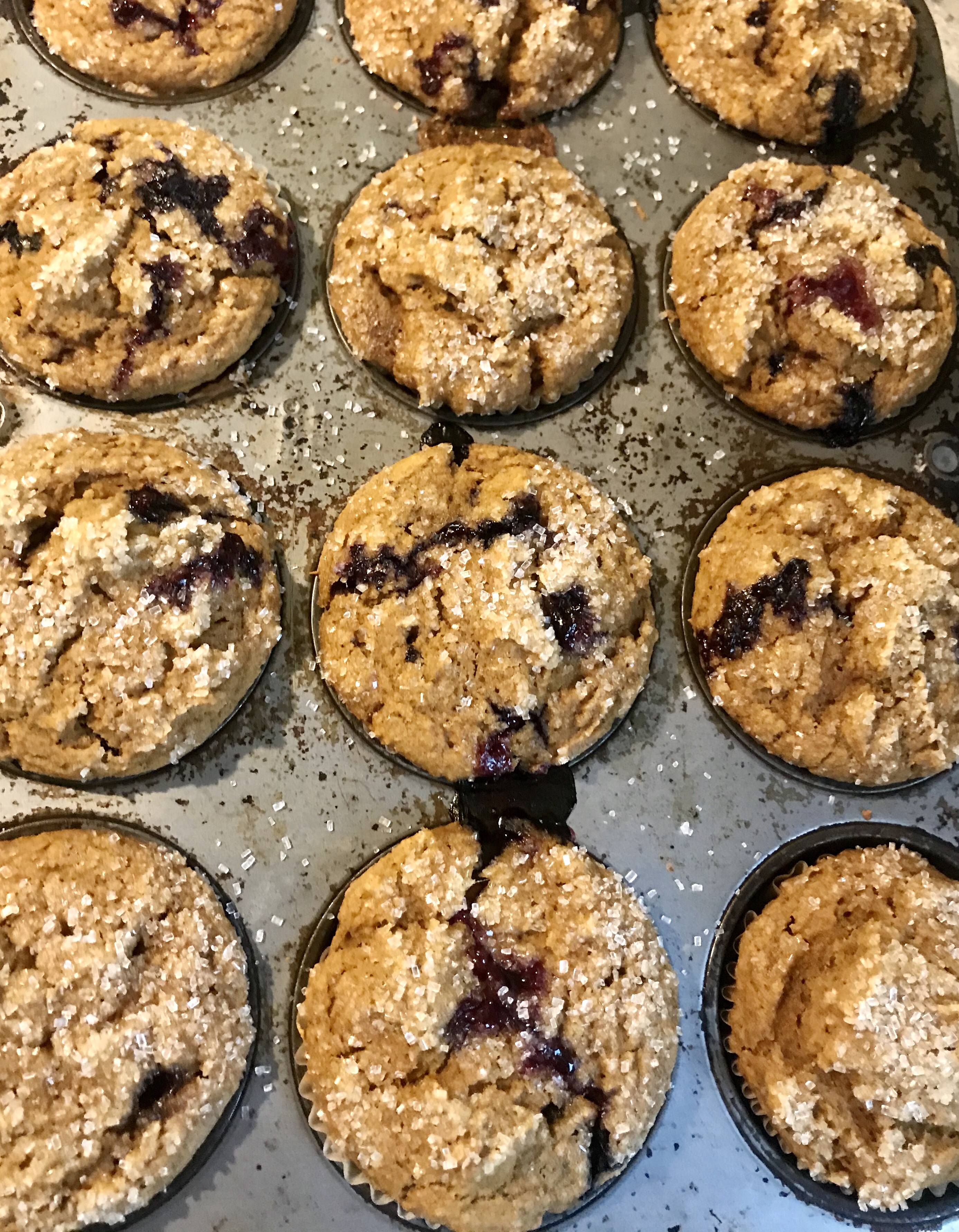
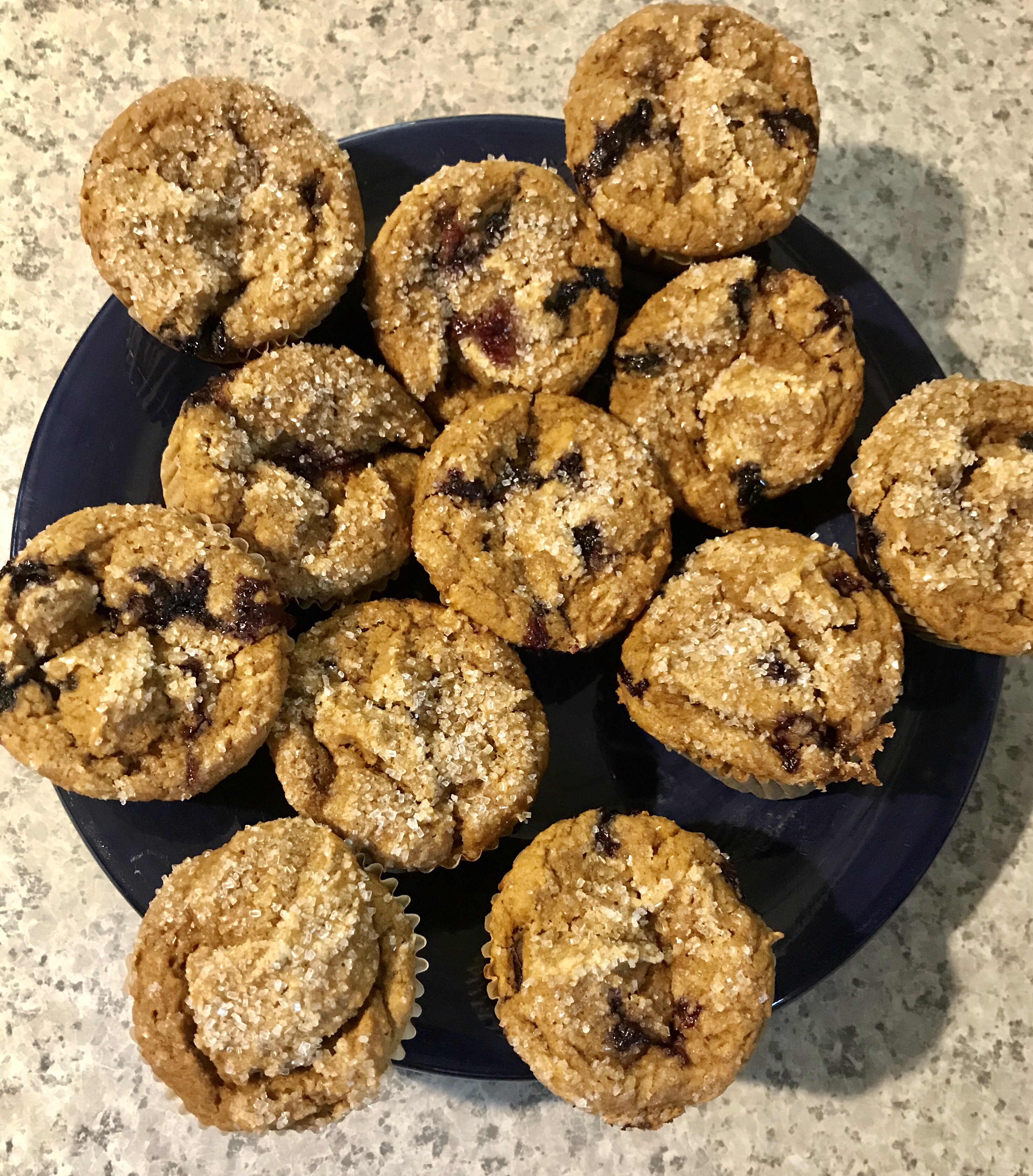
Of course, I had to bake up a trail patch to taste.  Since I have celiac disease and should not eat wheat, I went with a gluten-free variation.  However, it should be noted that any all-purpose flour will work here just as well.  Additionally, I am not big on using a lot of oil in my food, mostly because it tends to create reflux which I prefer to avoid.   That said, you can always replace the applesauce with oil or melted butter if you prefer baking with a bit of fat.  Plus, with a variety of potential stir-ins, this recipe serves as a Jack-of- all-lanterns as there are many ways in which you could carve it up. 

This is the Jack-of-all-lanterns cake/muffin recipe. Pick your additions and stir up some gourdness!

Whether you are craving something a little sweet, or someone has asked you, “What’s cooking gourd-looking?”  Your answer can come straight from the vine!  Scoop out a bit of time to bake, and let the gourd times roll! Wishing you all of the pumpkin gourdness of fall!  

From my pumpkin patch to yours, I wish you happy, homemade, and hauntingly gourd pumpkin treats!  

P.S. Thank you, Bonnie, for your gourd inspiration.  Your email was the pumpkin of my pie, and it added spice to my life!

(Almost) One bowl Gluten-Free Pumpkin Muffins (or cake) with optional add-ins

Ingredients:

1egg or “flegg” (1 tablespoons ground flaxseed + 2 ½ tablespoons of water stir together and allow to sit for 15 minutes)

2 cups all purpose flour or oat flour  (I used oat flour to keep it gluten-free, but you could also use any gluten-free all-purpose flour)

1 cup brown sugar (Can substitute with other sugar or sugar replacement.)

1 teaspoon cinnamon

1 teaspoon pumpkin pie spice

1 tablespoon baking powder

¼ teaspoon salt

1 can (15 ounce) pure pumpkin 

½ cup unsweetened applesauce (Can also use oil or melted butter if preferred.)

½  cup milk (I like to use plant based, but any milk is fine.)

1 teaspoon vanilla extract or powder (I love vanilla powder for a more rich, vanilla taste.)

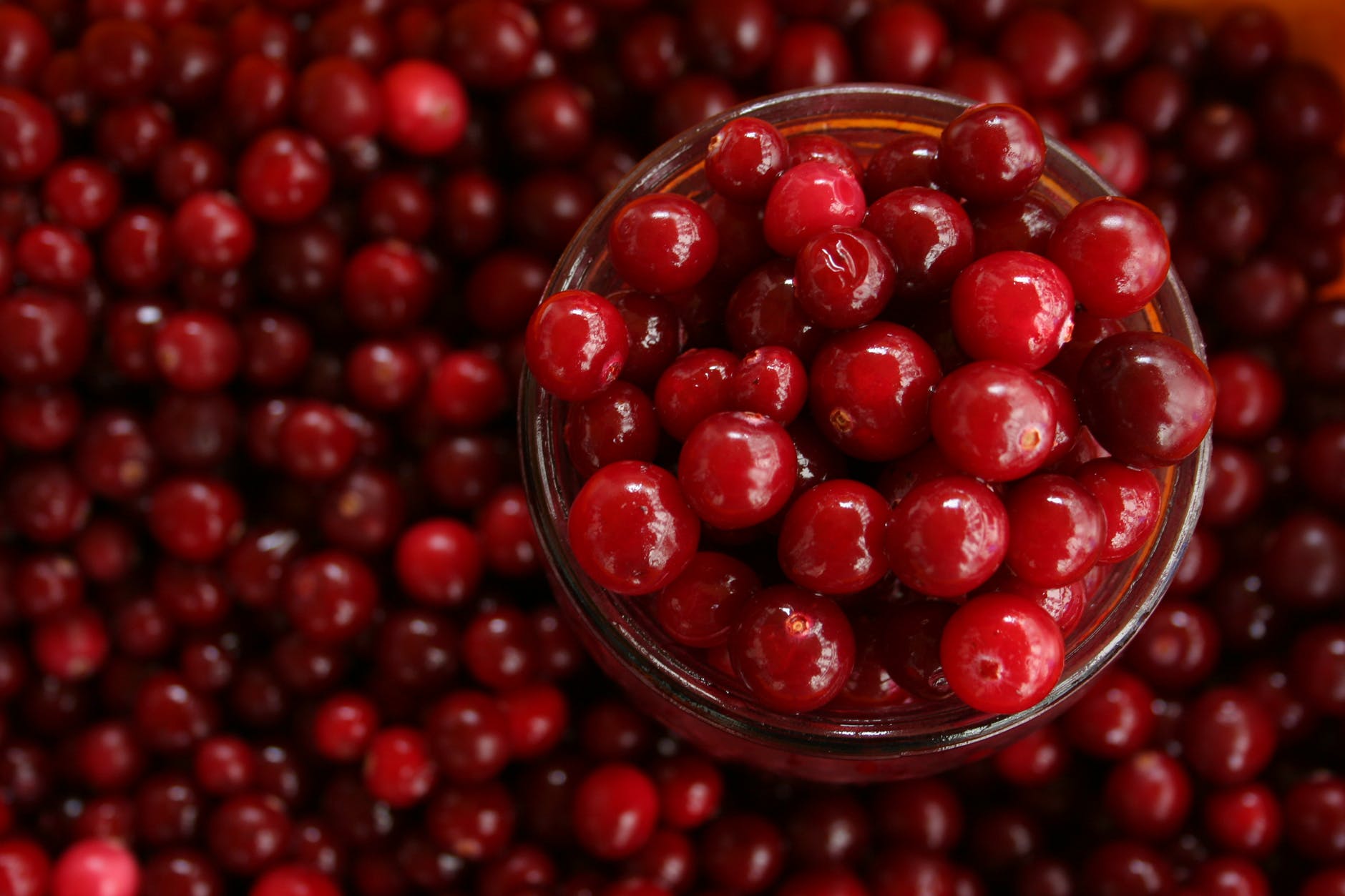
Optional stir ins: blueberries, cranberries, raisins, craisins, walnuts, even chocolate or white-chocolate chips

White sparkling sugar or cinnamon-sugar

Directions:

If  making a “flegg,” mix first and set aside.

Preheat the oven to 375 degrees.

Prepare 12 muffin tins by lining with paper, oil, or nonstick cooking spray.

In a large bowl, mix together dry ingredients until flour and spices are well blended.

Stir in egg (or flegg), pumpkin, applesauce, milk and vanilla until just combined without over-mixing.

If using an add-in, gently fold into batter.

Divide batter evenly among prepared muffin cups.

Sprinkle muffin tops with white sparkling sugar or cinnamon sugar.

Bake for 25-30 minutes or until a toothpick inserted in the center comes out clean.

Allow muffins to cool on wire racks before serving

Can also pour batter into a prepared  9 x 13 pan and bake for 30-35 minutes or until a toothpick inserted in the center comes out clean.  If choosing this variation, allow the cake to cool, and then frost if desired.

Store leftovers in the refrigerator or can freeze for up to a month.

Foggy Morning Leads to Sunshine Breakthrough

The fog comes on little cat feet.  It sits looking over the harbor and city on silent haunches and then moves on.” –Carl Sandburg

Photo by Tomu00e1u0161 Malu00edk on Pexels.com

Not only is it dark when I leave for work now, it is often foggy.  This common autumnal weather occurrence, slows my drive along the twisty, valley roads in the hills of southeastern Ohio.  In the chiffon covering of predawn, my surroundings are hidden, my future path is concealed, and all that I can see is the road directly before me, illuminated through the low-beam lights of my vehicle.  Runners sometimes appear as if they are ghosts.  Other times, deer dart, scampering across the road with the grace of a ballerina.  There are other nocturnal creatures, stray dogs, cats, opossums, raccoons, and even skunks, that amble alongside or across the roads over which I traverse.  Sometimes, there are inanimate objects, unknowingly or knowingly, fallen or dropped from an unseen vehicle.  All of these obstacles offer potential threats and hazards since they only come into view when the headlights illuminate their presence.

As the current situation unfolds, I feel as if I am often moving through my days in a fog. Life seems to be demanding as work days are now longer, and there are unseen perils abounding around every life curve and news headline.  Often, especially at the beginning of each day, all I can see is the day’s workload before me.  As the day progresses, my view becomes more widespread, and I feel tossed, pell-mell, in a sea of waves engulfed by a completely revised way of living and engaging at work and in the public realm.
Photo by fauxels on Pexels.com

Recently, my mother contracted the COVID virus, moving this shrouded illness directly into my own personal vision.  Mom’s COVID emerged after attending a family funeral event.  At first, she thought it was seasonal allergies that developed into a cold, but one thing led to another, and soon enough, testing confirmed what we suspected–COVID.  She became yet another statistic for the local county to track, but this number had a name, Mom.

Although she was in relative good health upon contracting the virus, she kept feeling worse.  While I will not belabor her unique symptoms, it soon became apparent that she was not recovering as she should.  Furthermore, there was no Walter Reed Hospital to rescue her health.  Her own children could not go around her to help.  She was left to rely on our phone calls and a very unreliable social media to help her.

Photo by Edward Jenner on Pexels.com

Despite daily phone calls from her children/grandchildren, offering this bit of advice and that, she did not improve.  Eventually, a decision was reached that she must, once more, call her doctor’s office because, of course, she could not go in-person.  It wasn’t until her 8th day with COVID, I believe, that her doctor recommended she go to a local 24/7 medical campus with its own emergency staff and decontamination room.  Unfortunately, there was no advice as to how she was to get there, and no waiting helicopter, paid by tax dollars, waiting to whisk her away.

Instead, my sister and I, the two of her four children who live here locally, were left to figure out how to safely transport her to the medical facility.  Of course, we could have called an ambulance, but that would further punish my mother with an exorbitant medical bill that she could not afford to pay.  Under normal circumstances, one of us would drive her there, but these are not normal times.  Driving her there meant exposing ourselves and our own families and requiring all of us to quarantine afterwards. 

Quarantining is like the curvy lines of dominoes I used to create as a child on my grandparent’s glass dining room table.  One quarantine means another domino falls and another and another.  Since my sister and I are educators, quarantining would mean putting more work on our co-workers and exposing our spouses–meaning more work sites comprised/short-staffed.  For my work site, I would be doing double damage to the staff because my husband teaches at the same school as me.  Plus, it would also mean that our daughter, an art major at the local university who is taking three studio classes that require in-person participation, would not be able to create her requisite studio projects. Meanwhile, my poor mom still needed medical care. Clink, clink, clink, I could hear the dominoes tipping as we tried to problem-solve.

Photo by Jonathan Campos on Pexels.com

In the end, a compromise decision was made.  Mom drove herself to the medical campus, and I followed behind in my own car.  She was dizzy, lightheaded, and weak.  To say we were filled with worry was an understatement, and my sister and I talked on the phone nearly the entire drive.  Once there, I followed behind her illness-imposed shuffling gait. As she made her way inside, I stood outside the double glass sliding doors feeling both helpless and angry–helpless in the face of an illness gone wild and angry that I felt forced to make such a decision between my own mother’s health and work.  What kind of choice is that?  What kind, indeed?

Ultimately, not only did my mom have COVID, but she was also suffering from a UTI and pneumonia in one of her lungs.  While her care was more than adequate, it was still routine–steroid injection and prescriptions for more steroids for the following days, anti-nausea pills to stave off constant queasiness, and an antibiotic for the pneumonia.  There were no therapeutics, no experimental meds, and 24/7 care around the clock care.  Instead, she was sent home that same evening. Once more I humbly followed her vehicle home knowing she was weakened even more from the exertion, and I watched with tears in my eyes as she slowly made her way into her empty house.  There were no medical follow up visits, no medical personnel to check on her throughout the night, and no one there with her when she awoke in the morning, groggy and exhausted the previous night’s efforts.

One of the things that has recently struck me, and believe me, so many current events are cutting me to the bone, is the fact not only am I feeling overwhelmed by COVID, work, and life as we now know it, but I feel undervalued.  It is expected that, like a good soldier, all of us, including me, should simply fall in line, willingly do more at my work site, work longer and longer hours–including weekends–with no extra pay, and just accept that I cannot help my mom, or any other family member for that matter, when needed. Who or what is to blame for this feels covered by a fog of political bluster and self-righteousness alongside the winds of disheartening news and current events.  Meanwhile, many of us remain transfixed by the persistent distractions that media platforms of all types offer turning a blind eye to the events of the real world affecting real people.  If it’s not affecting you, why worry, lulls social media and entertainment platforms.   

Photo by Pixabay on Pexels.com

There is a type of fog called “pea-souper.”  It is a type of thick fog of various shades of black, brown, green, and yellow reducing visibility even greater than organically occurring fog.  Pea-souper fog is caused by air pollution.  This highly toxic fog contains soot particles and the poisonous gas, sulphur dioxide.  The only way to remediate this type of persistent fog, historically speaking, has been through clean air acts.   Therefore, I am left to wonder what will clean our own current poison-filled air of living?

Sadly, I do not have answers.  Perhaps, all of this chaos is working towards a greater good that I cannot see, but will one day be revealed.  I am unsure.  Instead, I must rely on my faith to light my path forward. 

May we, as a collective, offer up prayers for compassion, prayers for healing, and prayers for a clearer vision.  Finally, Dear Reader, it’s high time we clean up the air by not only praying, but also by researching the issues on less-biased news outlets/platforms and then voting your conscious, by engaging in meaningful dialogue, and by having the courage to speak out.  We must put our faith and our convictions into action.  

The fog is lifting. I refuse to be another domino falling into line.  What about you?

Faith is like radar that sees through the fog — the reality of things at a distance that the human eye cannot see.” –Corrie Ten Boom

Cake: The bittersweet recipe for life

Take the broken pieces of your life, bake a master cake out of it.–Israelmore Ayivore

Life is a cake and love is the icing on top of it.  Without love, it becomes difficult to swallow life.–Mehek Bassi

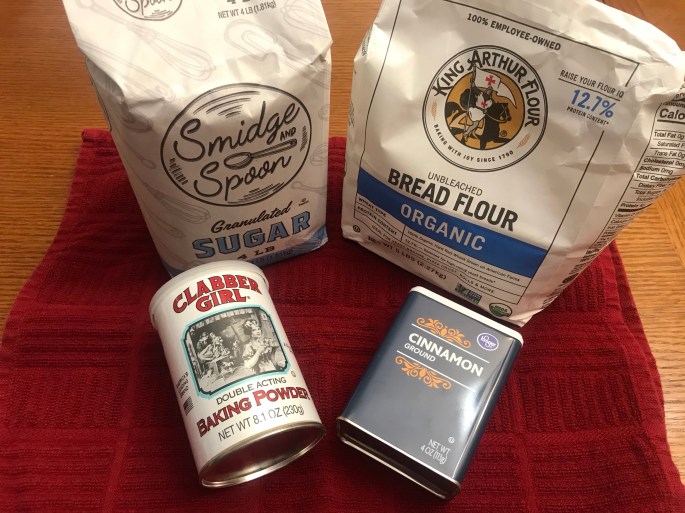
Have you ever tasted flour or baking powder?  What about vanilla extract, unsweetened canned pumpkin, cinnamon, salt or even a raw egg, how would each item taste on its own?  Personally, I even find sugar, by itself, isn’t really that tasty, but certainly more preferred than the previously mentioned ingredients.  However, if all of these ingredients are baked together with some oil or applesauce, and perhaps some milk, you have the makings of a pumpkin spice cake, a perineal fall favorite.

My sixth grade students are required to read a novel in which a caring adult challenges the rebellious, teenage main character to try the individual ingredients of a spice cake.  Accepting the dare, the main character boldly tries each item, determined to hide how badly most, if not all, of the ingredients taste separately. 

When asked how it all tasted, the character snarked, “Gross . . . .What did you expect?”

Of course, the caring adult is providing an object lesson for the malcontent teen, and while I’ve read this book countless times, this scene really struck a chord with me this past week. 

There can be no doubt that 2020 has been full of harsh ingredients. From the bitter taste of a pandemic worthy virus causing the senseless deaths of hundreds of thousands of people to acidic rhetoric and social media posts.  From the salty feeling left from closures, unemployment, and economic fall-out to the bittersweet taste of quarantining at home, increasing feelings of isolation, anxiety, depression, and fanning the flames of fear.  Jobs have been lost, and those that remain have been drastically impacted, and many are forever changed.  People are hurting, struggling, striving, and worst of all, dying.  At times, it feels as if it is just too much, especially if we dwell upon all those negatives.

Likewise, I am certain there are many readers in which even before the life-altering events of 2020 for whom life hasn’t always seemed fair.  There are those whose experience as a child was far from ideal.  Others may have experienced the way-to-soon death of a parent or care-giver.  Some have experienced wars abroad in which morib, horrific, and violent scenes were a frequent occurrence.  While others have battled severe illness such as cancer, brain or nervous system disorders, disformed/disfigured bodies, heart/blood issues, lung/breathing issues, and, well, the list could go on . . . . There are those who have been a victim of trauma, severe accident, or other life changing occurrence.  The list of negative life events can go on, seemingly to infinity.   Additionally, others may experience the negative feelings associated with the lack of progress, the feeling of stagnation, entrapment, or and so on.  Frankly, there are numerous events that can leave us with a bitter taste in our mouths, and unfortunately it’s just so darn easy to focus and dwell upon all of the bad in the world and/or within our own lives.

Photo by Kat Jayne on Pexels.com

This is where the lesson of the cake began to reveal a few frosted edges of hope.  While I am not denying the bitterness, dryness, and acrid taste of this year, nor am I denying the very realness of life-altering, horrible events. I, too, have visited and dwelled in the valley of woe–and, I find, wallowing around in my own misery isn’t really that beneficial.  Therefore, I am challenging myself, and you too, Dear Reader, to reflect if it is possible to take these negative individual ingredients and create a bite of sweet hope.  

I sincerely believe in the old adage that hope springs eternal.  Additionally, I put my trust in my faith and love.  That is why I started out as a special education teacher, and even now why I continue to teach as well as write. I still believe in a world in which faith, hope, and love can make a difference.  This belief, to which I have clung for the entirety of my life, has waned and worn at times.  And yet, I am reminded of an old hymn my Grandmother used to hum, and sometimes sing in her off-key voice, around her house that was based on one of her favorite Bible passages.

. . . “They that wait upon the Lord shall renew their strength

 They shall mount up with wings as eagles

They shall run and not be weary

They shall walk and not faint

Teach me Lord, teach me Lord, to wait. . .”–Bill and Gloria Gaither

Photo by John-Mark Smith on Pexels.com

When I bake a cake, especially one from scratch, it takes time.  First of all, I have to gather all of the ingredients–including stopping at the store if need be.  Then, I have to preheat the oven and prepare the pan.  Next, the dry ingredients are blended together, while in another bowl, the wet ingredients are likewise mixed.  Wet ingredients are folded into the dry ingredients, and any additional fruits, nuts, or candy chips are added before all the ingredients, now one massive lump of gooey-looking gunk, gets dumped in a heap in the cake pan, spread into a thinner viscous substance, and placed into a scalding hot oven for a set time period that is never quick.  Time passes slowly as the kitchen is gradually filled with the scents–hope of what is to come.  Even once removed, one still has to wait for the cake to cool before it can be frosted.  This, of course, takes more time.

Meanwhile, whipping up frosting does not happen with the snap of fingers. It takes the sweetness of confectioners sugar combined with the acrid taste of vanilla, the brineyness of salt, and the over-rich taste of melted butter in order to create a creamy, but oh-so-sugary, frosting.

Eventually, all of the waiting, the working, the wondering, the wishing, and the hoping all come together as a fork delves from cake to mouth, and soon the taste buds are dancing, the brain is singing a song of praise, and all tastes dreamy sweet in that one moment in time.  Sure, the cake doesn’t last forever, and neither do good times.  Thus, if we want more cake, we have to endure the bitter with acid, the bland with spice, the heating with the cooling period and all the in-between moments.  And, yet, it is the cake that is remembered, not the bitter taste of all the individual ingredients.  

Photo by Vojtech Okenka on Pexels.com

2020 has certainly been rancorous at times.  What’s more is that life, on the whole, can be as challenging, and run as hot as a 350 degree oven.  Waiting can be hard.  Therefore, as I put my faith in the baking process, so too, must I put my faith in Divine Providence, and humbly ask, as my grandmother used to sing, “Teach me, Lord, teach me, Lord, to wait.”  Cake is coming soon. 

Photo by Ric Rodrigues on Pexels.com

Under Pressure

“Pressure pushing down on me

Pressing down on you, no man ask for . . .

Splits a family in two

Puts people on streets . . .” from the lyrics of “Under Pressure” as written by members of Queen and David Bowie

Photo by Free Nature Stock on Pexels.com

 It was still dark as I drove alongside the glinting waters of the Ohio River, but I could see the sky lighting towards day.  I tried to listen to the news when I first left home, but on this particular day the stories were making me feel way too anxious.  Thus, I switched to a favorite satellite radio music channel as I made my way onto the 6th Street Bridge heading into Huntington, WV.  As I took the exit ramp and began motoring towards the school in which I am currently an educator, I heard the unmistakable beat drop for one of my favorite teen anthem songs, “Under Pressure,” written and performed by Queen and David Bowie.

As is my habit when I hear an old favorite, my hand automatically went to my heart.  It was late fall of 1981 when this song was wildly popular.  As a teen, I was attracted to socially compelling song lyrics, and the words of “Under Pressure” certainly were thought-provoking.  While I cannot pretend to recall my exact mental state in 1981, I do remember feeling the song’s lyrics resonating with me on a visceral level . . . and, boy do they ever resonate now.

“ . . .It’s the terror of knowing what this world is about

Watching some good friends screaming

‘Let me out!’

 . . .these are the days it never rains but it pours . . .”

Photo by Aleksandar Pasaric on Pexels.com

In the 80s, from my know-it-all teen perspective, I thought the world was incredibly messed up!  From the rallying cries and images of “Tear down the wall” to songs calling for us to “Feed the World,” and from the music and message of “Farm Aid” to the drama and news headlines surrounding the AIDS/HIV crisis alongside all of the other world/political problems that created newspaper headlines, it seemed in my young mind that the older generations were creating a world of chaos that the younger people would have to fix.  How ironic now!  

“ . . . Ee do ba be

Ee da ba ba ba

Um bo bo

Be lap . . .”

Shaking my head out of my 80s remembrances, I observed what once must have been a beautiful young lady, now bedraggled and disheveled in appearance, stumbling along the sidewalk next to the traffic light at which I was stopped.  Across the street, an older man, wet down the front of his pants as if he had unknowingly (or knowingly?) urinated on himself, began screaming curses at the woman.  She shouted incoherent phrases back to him as she attempted to stumble, bumble, fumble ahead at a faster pace, and I drove on, but the image still haunts my very human heart . . .

Photo by Grevin Kivi on Pexels.com

“ . . . People on streets

Ee da de da de

People on streets

Ee da de da de da de da . . .”

Images from my life flashed before me as I continued to drive.  Images from childhood, teen years, college years, early adult years, parenting images, teaching images, images from past world events through where I have lived, and images from on-going current events.  Words seemed to fly through the mental space of my brain. COVID. PANDEMIC. CHAOS. QUARANTINE. DIVIDE. HATE. DIVISION. HURT. DIVISIVENESS. PAIN. DISORDER. DEATH TOLL. VIRTUAL. MISTRUST. . .

 “ . . .Turned away from it all like a blind man

Sat on a fence but it don’t work

Keep coming up with love but it’s so slashed and torn

Why, why, why?

Love, love, love, love, love

Insanity laughs under pressure we’re breaking . . .”

Photo by cottonbro on Pexels.com

Am I the only one with a heart that is breaking?  It seems as if we often become wrapped up in minutiae of policies, partisanship, and even personal egos that we lose focus of our commonalities and the lives, the real lives of people.  Why is it now okay to speak, post, tweet, and write rudely?  Why does the concept of compromise seem unacceptable and/or unattainable.  Why is mountains of completed paperwork for health care workers, educators, law-enforcement, and all other humanity-based career fields more important than actual time focused on real people-to-people interaction?  Why is society as a whole burning bridges of connection? 

“ . . . Can’t we give ourselves one more chance?

Why can’t we give love that one more chance?

Why can’t we give love, give love, give love, give love

Give love, give love, give love, give love, give love?

As a young girl in the 80s, I was a hopeless romantic who believed that words like love, empathy, compassion, and understanding were the answer to all world problems.  My grandfather used to teach the importance of  “walking a mile in another man’s shoes.”  In fact, it was a consistent message I heard throughout my childhood from the adults in my life.   While my grandfather was far from perfect, he certainly tried to apply this expression to his own life.  He, along with my grandmother, would take food to those in need, offer rides to the elderly who could no longer drive, and were overall kind and pleasant with all those they encountered–even if they didn’t agree with their personal views.  Am I naive to think this aphorism should still be practiced today?

Photo by Ylanite Koppens on Pexels.com

“ . . . Cause love’s such an old fashioned word

And love dares you to care for

The people on the edge of the night

And love (people on streets) dares you to change our way of

Caring about ourselves . . .”

Currently, I feel “under pressure” in a number of ways, and I suspect, I am not the only one.  First, and foremost, I feel the pressure to remain healthy and behave safely for the sake of all others with whom I have contact, but even more so for my loved ones. I am not sure I could live with myself if I caused another person to become sick.  

Additionally, I feel professional pressure. Like most other careers, education has had to dramatically change and respond in the wake of a pandemic. Teaching simultaneously in-person students and virtual students, as I try to meet the needs of both groups, challenges me in ways for which I never dreamed nor was prepared.  Then, there is the additional pressure of keeping the in-person students safe, their environment sanitized, and still allow them to be kids.  It is a delicate balance of walking along a tightrope with strong crosswinds of politics, policies, and personal egos abounding.  

Finally, I feel pressure as a responsible citizen.  How do I separate the wheat from the chaff?  How do I parse out the truth from the half-truths and outright lies?  And, what, if anything, can I do about the people suffering in the streets, in the hospitals and other health care facilities, at their work-sites, or currently in their own home?  Anxiety, depression, and other mental illnesses seem at an all-time high with negative coping mechanisms providing easy and quick relief, but not solving problems long term. Meanwhile compassion, concern, and care seem harder to find.  

“ . . . This is our last dance

This is our last dance

This is ourselves under pressure

Under pressure

Pressure”

Photo by Helena Lopes on Pexels.com

My grandmother used to tell me that things had to get worse, before they could get better.  Meanwhile, my grandfather used to say that diamonds form under pressure. I have a Ninja pressure cooker in my kitchen. As the pressure builds, the food inside is cooked and transformed into a tasty treat.  In order not to overcook the food,  I must release the pressure valve, allowing the steam to rise as the temperature and pressure inside reduces.  I pray for the pressure valve to release soon.  I pray this isn’t “our last dance.”  I pray that love will dare us to care, once more, for others, and that we will soon dare to “change our ways” . . . .

Chocolate Cake Mix Cookie Birthday Bars

“When there is cake, there is hope.  And there is always cake.”–Dean Koontz

“My idea of baking is buying a ready made cake mix and throwing in an egg.”–Cilla Black

By the time you read this, Dear Reader, I will be celebrating another year of life.  Honestly, the way 2020 is going, I am almost afraid to celebrate, but I am throwing caution to the wind.  By golly, in spite of everything that is upside down in this world, I am going to celebrate another year of life.  I am going to smile, eat a ridiculously calorie laden meal or two, drink a bit of good wine, and dang it, I am eating cake!  Of course, it has to be gluten-free due to my celiac disease, but I will eat cake–chocolate cake to be precise because chocolate is my favorite!

Sure, 2020 has been a train-wreck of a year in many ways, but fall is in the air.  Even though winter is around the corner, there is something about autumn weather that makes me feel hopeful–hopeful for better days ahead.  Call me crazy, but I gotta believe that life has to take a turn for the better . . .at least that is my birthday wish.

In addition to feeling hopeful, I feel grateful–grateful for my health, my family, my friends and loved ones, my home–flaws and all–and my job.  I wake up every day in a warm bed, and as I step out of it, I am able to turn on hot water for a shower.  Food is stored in both my refrigerator and cabinets–not to mention the fact our water is drinkable.  My job, with all of its challenges, is still providing a paycheck that allows me to celebrate my birthday in the manner in which previously I described.  Therefore, in spite of all the negatives 2020 has to offer, there are still numerous things for which to be grateful this year.

To add to my list of items for which I am grateful, I would have to include an unexpected email that I received from registered dietitian nutritionist, Stephanie Ferrari, with Fresh Communications.  Thanks to Stephanie, and the kind (or should I say, sweet) people at Swerve, I was thrown a “swerve” ball during the summer months when the Swerve team sent a care package of products to my house.  Thanks to their generosity, I have been blessed with the opportunity to play and create with a few of their products including their chocolate cake mix, which is featured in this month’s recipe.  

As previously mentioned, I do have celiac disease, so I cannot eat products containing wheat, rye, or barley.  Furthermore, birthday celebration aside, I do try to eat in a fairly healthy manner that works best for me.  Due to an incredibly sensitive stomach/digestive system, it’s taken me years to figure out how to best eat for my body. However, I also recognize that what works for me may not work for others.  Thus, when I create recipes, I try to create choices in order to adapt to a variety of tastes/needs/preferences.  Personally, I prefer to eat plant-based, forgoing dairy, eggs, and meat products most of the time.  Therefore, you will see that reflected in this recipe, but I also list other options if that’s not your cup of tea, or slice of cake, as the case may be.  

I based this recipe upon one I found on the Swerve website.  This is because since it wasn’t my official birthday, I wanted to keep the recipe fairly “clean,” and save the calorie-laden splurge for the actual big day.  This is where Swerve products check all the boxes for me.  Therefore, the recipe is not only gluten and grain free, but it is also a fairly low carb treat.  In fact, there isn’t one ingredient that leads me to feel guilty or over-indulgent.  The leftovers store well, and it is my experience that they tend to become more moist and chewy after being stored in an airtight container for a day or two.  Therefore, I can have my cake and eat it too–for several days in a row if I want–rather than saving cake for a once per year special eating occasion!

Whether you’re looking for a way to brighten a bad day, wanting to indulge without completely blowing your calories, or simply in the mood for chocolate, give this recipe a try. Within less than an hour, your house will be redolent with the aroma of chocolate cake baking, and your taste buds will be dancing with the delightful taste of warm, gooey chocolate.  Think of it as a small manifestation of making lemonade, or in this case, cake, out of the lemon of a year.

From my home to yours, I wish you healthy, happy, and homemade treats.

Chocolate Cake Mix Cookie Birthday Bars

Ingredients:

1 box chocolate cake mix (I use Swerve brand.  Also, feel free to use Vanilla cake mix if preferred.)

½ cup applesauce or melted butter at room temperature (I use applesauce to keep it plant-based.)

1 large egg, or “flegg”, at room temperature (Recipe for flegg is below.)

1 teaspoon vanilla extract or powder

½ cup oats or your favorite chopped nuts (I use Nature’s Path organic gluten-free oats.)

½ cup chocolate chips or other candy bits, i.e. peanut butter, white chocolate, and so forth (I use Enjoy Life allergy-free brand.)

Optional: White sparkling sugar

Directions:

Set out egg to come to room temperature, or if replacing egg, make your “flegg” before beginning any other steps. (Recipe below)

Likewise, if using melted butter instead of applesauce, melt first and allow it to come to room temperature.

Preheat oven to 350 degrees

Prepare a square baking pan with nonstick cooking spray, coconut oil, or line with parchment paper.

In large bowl, add cake mix and using fork gently break up any clumps

Stir in applesauce (or butter), egg (or flegg), and vanilla extract until well combined.

Gently fold in oats and chocolate chips until well combined.

Press mixture into pan.

If desired, sprinkle with white sparkling sugar.

Bake for 20-25 minutes or until the edges are golden, and the top is puffy.

Allow to cool before cutting into 16 squares.

Store any uneaten bars in an airtight container.

Leftover bars are especially tasty when warmed slightly in the microwave topped off with a dollop of whipped topping, if desired.

*“Flegg” egg replacement recipe:

1 tablespoons flaxseed (Chia seed works too.) 

3 tablespoons of water. 

Mix well and allow to sit for 20 minutes before mixing batter.

We all need a little patience

“In a time of drastic change, it is the learners who inherit the future.”–Eric Hoffer

“Change is only felt when it is drastic.”–Lailah Gifty Akita

Dedicated to the teachers with whom I work, and all the other educators, near and far.

As I step into the warm shower, pulsating water beats down on my tight neck, my low back is still dully throbbing from the previous day’s efforts, and my feet, my heavens, my feet, they are pulsating from the constant pounding of walking on concrete.  

It’s Friday.  You can do this.  Everyone is feeling similar aches–it’s not just you.  Yes, but most others are a heckuva lot younger!  You can do this; you’ve done this before–albeit, not so drastic . . . or was it?

Students working at school in the age of COVID and an era of paperless (as close to it as possible) education.

I remember following the Special Education Coordinator of the county school district in which I had first been hired fresh out of college.  I felt proud, excited, and eager.  The clipped, rhythmic pace of her heels as they click-clacked across the tiled floor resounded–even more so when she continued on into the gym.  At the time I couldn’t understand why we were in the gym when she was supposed to be taking me to my classroom.  

Tables cleaned and sanitized well before 7:30 am when the students begin arriving to homeroom.

Eventually we made our way to the opposite side from which we entered, walked up some steps, and began walking under one side of the gym’s bleachers.  Clickety-clack, clackety-click, past what looked like one semi-formed classroom through another vaguely formed classroom until we reached the end.  This was to be my so-called classroom with not a single window.  No textbooks.  No materials.  Broken desks.  Dirty teacher desk.  Not even real walls for two sides–just the underside of bleachers, a rolling chalkboard, one concrete wall, and metal, padded locked door with Junior ROTC weapons stowed away behind it.  All 4’11’’ of me would be serving 15-25, 9-12 grades students in this space, the majority of which were lanky, long males who did not want to be there.

Gone were those meticulous lesson plans and the abundant, never ending resources of Ohio University.  The colorful, bright, window-lined classrooms arranged, organized, and utilized based upon the current, best educational practices were nowhere to be seen.  It was 1987, so there was no internet, certainly no cell phones, and those education journals to which I had been advised by academia to subscribe were certainly not going to be of help in this unbelievable setting.  This was a drastic change, and yet, I somehow found a way to make it work for two years before facing my next challenge . . . 

Moving on to another district, I was assigned to teach twelve, K-5 grade level students with severe behavior and emotional issues that often required restraint, in a metal portable classroom isolated from the rest of the school.  I was young and foolish enough to think this was a good idea–a good move for my career.  Certainly, it was financially speaking, but after one day of passive restraint training, I began to wonder.  

Although this classroom had four walls, it was empty and bare, save for a few tables and desks.  Then, there was the challenge of all those different age ranges.  Developmentally, a kindergartener is miles apart from a fifth grader.  The challenges and changes I faced over the next seven years, the unbelievable behaviors I witnessed, and the most heart-wrenching stories–seriously, seriously horrible–still haunt me to this day.  No child should undergo what those children went through.  Baby bottles filled with beer, children sexually abused, parents addicted to drugs and/or alcohol, older children responsible for numerous younger siblings while mom did tricks for drugs . . . the gut wrenching stories never seemed to have an end.  On top of all of this depravity, it was the early 90s, autism was not clearly understood and accurately identified as it is now.  Therefore, I also had several autistic students, mistakenly identified as “behavior disordered” alongside students who were often prone to violent outbursts.  Given the combination of all of these factors, I honestly do not know how I made it work–and yet, somehow Divine Providence helped me through it all.

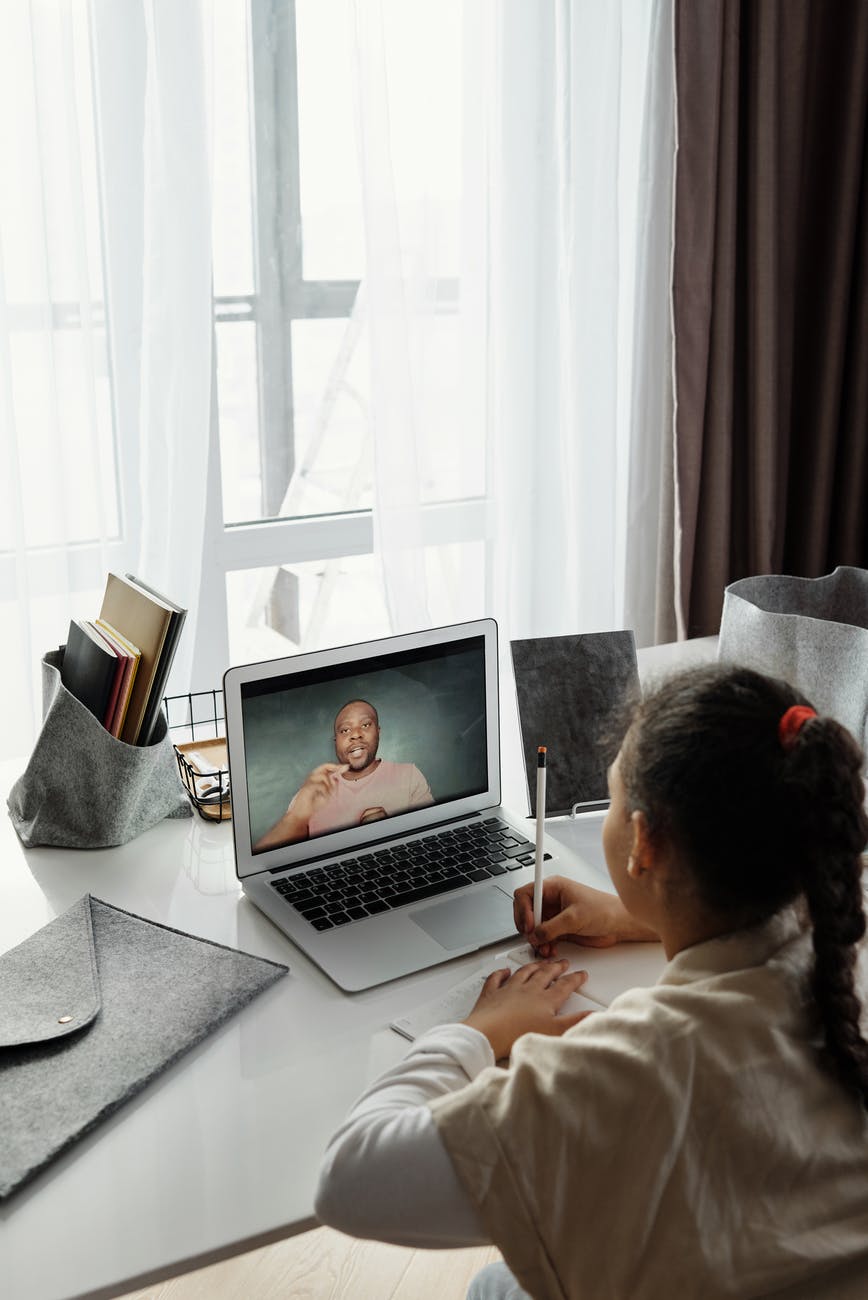
I have experienced numerous changes in education since those first nine years of my careers, many of which were drastic, and all created unique circumstances for which I was ill-prepared, but none can compare to the combination of educating in the midst of COVID while simultaneously teaching both in-person and virtual students at the exact same time.  As an educator, my colleagues and I are tasked with keeping kids safe from a pandemic-worthy virus, care for their emotional well-being, and educate them in the socially distanced manner of their parents’ choosing–at school or from home–attending a regular schedule of classes through the technological wonders of the imperfect internet.

Each morning begins well before sunrise, in order to begin planning, organizing, and posting from home.  Arrival at school for teachers starts well before 7:00, as each teacher must mix fresh bottles of both disinfectant and sanitizer that is used before and after every class change.  Students begin arriving in our classrooms by 7:30 after going through a routine check of health questions, temperature check, and hand sanitizing procedures.  Classes officially begin by 8:10 after morning announcements, prayer, and pledge.  As students enter my classroom, they must wait until all tables are sanitized.  Then, I must quickly log in and connect my chromebook with my virtual students for that class period.  While I am doing this, in-person students set up their tri-fold, clear plastic dividers and log onto Google Classroom.  We are all masked, and by the end of the day, my voice, and those of my peers, are hoarse from projecting through the barrier of the material covering our mouths and noses.

The day begins mixing fresh batches of both disinfectant and sanitizer. Tables, light switches, door handles, class counters, and sink area all clean well before the 7:30 arrival of students.

While offering instruction, I am simultaneously monitoring, engaging, and facilitating with students within my classroom and those at home.  This also means I must work hard to be as paperless as possible for the benefit of all students, but especially those who are participating virtually.  Then, there are the technological glitches that can cause delays, interruptions, and malfunctions with both groups of students.  Additionally, I am trying to learn, assemble, and implement a multitude of on-line educational platforms to enhance, streamline, and engage all levels of students.  By the day’s end, my Fitbit watch consistently reveals that I have taken anywhere from 15,000-20,000 steps with minimum time spent outside of my classroom walls.  

If the first week is any indication, my work day will consist of a constant stream of decisions, sanitizing, and juggling–juggling in my mind to best meet the needs of both in-person and virtual learners–as I work to redefine the art of facilitating instruction.  Never in my previous educational training did I ever receive training on how to engage and instruct students in a meaningful way during a pandemic.  Nor have I ever seen so many of my fellow teachers experience such high levels of anxiety, stress, and discomfort as I have in one week of school.  The emails from students and parents never end, and it feels as if there is not enough time, nor enough of each teacher to go around. 

And yet, that experience of my early years tells me that we will all adapt, grow, and learn from this.  Educators are a formidable, flexible force driven by the passion to educate and care for all of those entrusted into our care.  However, educators, parents, and students all need extra doses of patience with one another, the ever-evolving educational technological tools, and with ourselves.  The type of drastic change we are undergoing requires much patience, tolerance, and a new level of understanding. Educators and educational institutions are all trying to rapidly respond to a situation for which there has been no previous experience.  There are bound to be countless bumps along this new educational trail which we are currently blazing.

Personally speaking, I am stepping out of my comfort zone, stepping up my game, and stepping into a new role that feels very uncomfortable.  I have never been the most technologically savvy person, but I am learning—some of it on my own through trial and error, but most of it from my professional peers as well as my students  Therefore, I implore parents of students, far and wide, please be patient with teachers and schools.  We want to educate and care for your child as badly as you do, but cutting remarks, critical emails, and sensationalized social media posts only undermine our efforts and morale.  Instead, kind words, thoughtful notes, and genuine appreciation for our efforts can go a long way in supporting our new role within your child’s life. We understand this isn’t easy for you as many of us are parents too.  We understand that you are your child’s number one advocate, and you want what is best for them, but so do we.  We want to keep everyone safe and healthy, both emotionally and physically, including ourselves.

In conclusion, let us focus on what connects us–the well-being and education of children.  Let us, as a community, be supportive of one another as we forge together through this brave new educational world; so that, one day, we can look back on this, as I do on my early years in education, and proudly declare, “We did it; we really did it.  Look how far we’ve come!”

“Fear: False Evidence Appearing Real

“We are often more frightened than hurt; and we suffer more from imagination than reality.”–Seneca 

“Of all the liars in the world, sometimes the worst are our own fears.”–Rudyard Kipling

Photo by Kat Jayne on Pexels.com

FEAR:  False Evidence Appearing Real.  But is it really false?  Does the body truly know what is real versus perceived? 

Panic, anxiety, stress, depression, lethargy, mania . . . this is the vocabulary that describes very real reactions to F. E. A. R. 

Fight. Flight. Freeze.  Three words that seem perfectly harmless . . .until linked with the word, fear.

There are other words too:  cancer, stroke, heart disease, COVID, Rheumatoid arthritis, muscular dystrophy, aging, dying, murder, divorce, accident, fire, flood, hurricane . . .  and even the word, change–when viewed in isolation–not attached to oneself or a loved one–are words that can seem likewise benign, or at the very least, distant.

What do all of these words have in common?  They all have the potential to strike fear in both the recipient(s) and/or the supporting loved one(s) often triggering the fight, flight, or freeze response.  

Fear is a four-letter word that is often the king or queen of many minds, including my own, if left unchecked.  It can often be the source of increased heart rate, elevated blood pressure, racing thoughts, sleepless nights, shortness of breath, tightness in chest or other parts of the body, excessive worry, loss or increase of appetite, fatigue, headaches, and the list goes on.  None of us are immune.  Sometimes the fear is real and valid, other times, while it is still valid, it is often exacerbated by one’s mind.

Lack. Of. Control.  Fear creates a threat, and when the body/mind feels threatened, our nervous systems (sympathetic and parasympathetic) respond automatically in one of three ways:  fight, flight, or freeze. Fight-flight-or-freeze is not a conscious decision.  It is an automatic reaction for which you have little to no control. 

Photo by Suzy Hazelwood on Pexels.com

Recently, I viewed the documentary, Robin’s Wish.  This short film, a little over an hour long, alternates scenes of honoring/remembering Williams the actor and friend, as well as reflections/responses to his decline.  Ultimately, it wraps up with events from his tragic death, and the discovery that what was initially diagnosed as Parkinson’s disease was actually Lewy body dementia, the third most common type of dementia according to the Alzheimer’s Association, shedding new light and greater understanding for William’s untimely death.  It concludes with a note of hope:  Robin’s wish . . .

“I want to help people be less afraid,”–Robin Williams

As the film revealed, Williams battled various forms of fear his entire life.  Thus, learning that he wanted to help others be less afraid struck a heart note within me.  Williams brought laughter, joy, and mirth to audiences throughout the entirety of his prodigious career.  Through his comedic words and actions, Williams helped many feel less fearful–even if only for a short moment.

Personally, I understand battling fears as I am often filled with many sundry fears.  It is hard for me to recall being without them–although I have been told that I was fearless as a youngster.  Perhaps, it is my overactive imagination, my sensitive nature, or the unique hard-wiring of my brain, but feeling fearful has been a large part of my life.  

Most days, I “fake it ‘til I make it,” moving throughout life as if I don’t possess one single shred of fearfulness; and, it usually works.  I am able to take the fearful part of myself, box it, bound it up tightly, and store it far away in the attic of my inner world in hopes that it won’t escape.  Days, weeks, sometimes, months can go by, and not a tremor of fear is felt.  Then, like unexpected heavy rains in the middle of the night, the drip, drip, drip of fear begins to leak into my life.

It is those very fears that inspired me to write.  Beginning in those angsty middle school years, when I was fearful or did not understand something, I wrote.  Over those young years of my life, pages of journals and notebooks were filled; and then, I stopped.  My writing began to feel meaningless, trite, and purposeless; and therefore, not worth the effort. 

Photo by Dom J on Pexels.com

Decades later, my fears grew heavy once more, threatening to consume me if I didn’t do something.  I attempted to keep boxing them, rewrapping them, and shelving them here and there within the messy recesses of my being, but they kept slipping their binds.  Ironically, I could not give them a voice–I could not articulate them–just felt them in my body:  deep belly aches/flutters, pounding heart, accelerated thoughts, and worries–constant, constant worries.

Then, at the gentle, but dogged, nudging of a friend, I began writing again.  I wrote for no one in particular–just to work out the kinks, find my voice, and learn to once more articulate–at least through the written word. Sure enough, the fears began to loosen–not per se, leave, but at least they were becoming more tame–most days!

Reading Williams’ succinctly summed up quote, I realized that my own drive to not only write, but to share my words with others, is because I, too, want to help people feel less afraid and more focused on the positive.  In fact, I realize that was an underlying factor for likewise becoming an educator–to help children feel less afraid.  I am not sure if I have achieved either of these goals, and I know for certain that I have not, nor will not achieve to the level of Williams’ success.  Still, I can try to make a difference.  Even if I am only able to help one reader, or one student, feel they are not alone–reassure someone that they can “do hard things,” they can persevere, and they can live with fear without it ruling their life–then, I have achieved my goal.  While my writing, or teaching, will not earn an academy award, nor lead to fame or fortune, if it leaves a small mark within a life or two, then that is enough reward.

Photo by Mark Neal on Pexels.com

Recently, I was making my way down the Ritter Park path.  It was riddled with puddles after days of rain.  Unless you like mud-soaked shoes and ankles, you had to work with others to navigate through and around the numerous soggy patches of earth.  That is what life is about, working with others to get through the sloppy times.  Some of us do that on a large-scale, such as Robin Williams, and the rest of us have opportunities and moments in life in which we can help one another navigate through and around rough patches, using whatever gifts God has given us. 

Don’t ever think you are alone in your fears, Dear Reader.  You are not, and you can persist in spite of them. 

Photo by eberhard grossgasteiger on Pexels.com