Shepherdstown, WV: More than meets the eye

A charming historic town, an unexpected sense of belonging, and the priceless gift of family time

“Make assumptions if you must, but make not the mistake of assuming that your assumption is always right.”

—Abhijit Naskar

It’s interesting how our minds make assumptions about a place before our feet ever arrive. That certainly happened to me when my husband, John, suggested we visit Shepherdstown this past July. Having spent considerable time traveling through West Virginia, I thought I already knew what to expect. I expected we would find a quiet town nestled among the scenic mountains of West Virginia, with perhaps a couple of quaint shops, a restaurant or two, and a bit of history tossed in for good measure. While all of that proved to be true, Shepherdstown exceeded every expectation I had constructed.

🗺️ Beyond First Impressions

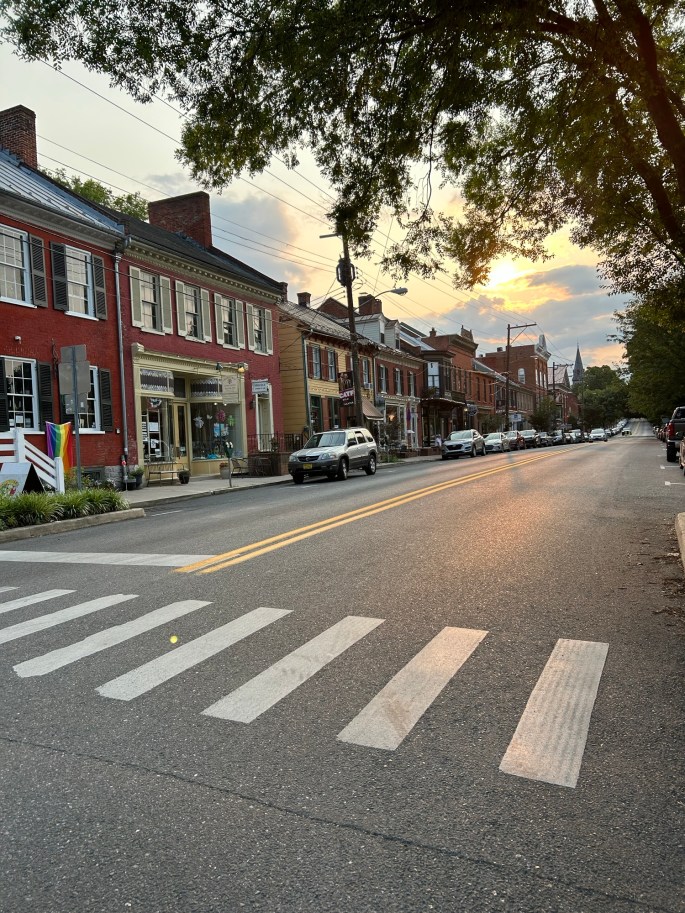
The surprise began before we even reached town. Much of the drive carried us through Pennsylvania and Maryland before finally returning to West Virginia. Entering Shepherdstown, we were pleasantly surprised to see how the town embraces its historic roots while celebrating a vibrant community that warmly welcomes visitors. From flower-lined streets with signage supporting the local theater production and Shepherd University to the restored and well-maintained historic homes and old brick sidewalks, Shepherdstown radiated local pride.
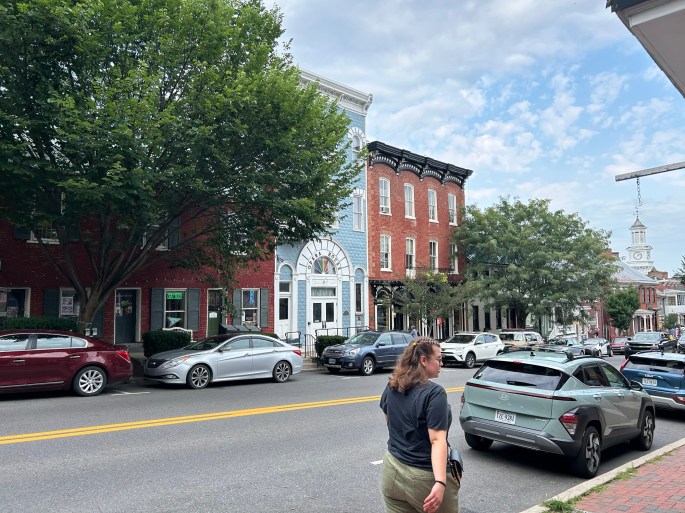
A street scene featuring a woman walking alongside parked cars and historic buildings with varying architectural styles under a partly cloudy sky.
German Street Shepherdstown, WV

Once unpacked and settled into the Airbnb, we headed out to explore West Virginia’s oldest town (a distinction it shares with Romney). Naturally we made our way to German Street, lined with dozens of 18th- and 19th- century colonial homes and buildings. It did not take long for German Street to reveal itself as the historical and commercial heartbeat of the town. While all this history was enough to hold our interest and challenge my assumptions, it was the hospitable warmth of the people that really won my heart.

🏘️ A Community That Welcomes You In

Everywhere we looked, people from different walks of life seemed genuinely comfortable there. It felt like a town where everyone had been invited to the table. The pace was a bit slower, but the businesses seemed intentionally woven into the fabric of  community life rather than existing to attract tourists. By the end of our first evening, after dinner at Blue Moon Cafe, I realized my assumptions had quietly disappeared.

🛍️ The Best Souvenirs Aren’t Things

Another unexpected gift of the trip was having our adult daughter join us while her boyfriend was tied up with taking the bar exam in Massachusetts. Watching her climb into the backseat with her pillow, blanket, and what I used to call a “busy-bag” instantly carried me back to family vacations years ago. We laughed until we cried more than once during the trip.  “Hill Road Trip 2026” became our defining rallying cry as we made our way around the town each day and traveled to the nearby historic sites of Antietam and Harper’s Ferry.

For a few days, we slipped back into the rhythm of family vacations from years ago. We compared ice cream at the two local ice cream shops—yes, both shops had gluten free cones for me! We discovered a hidden gem of a sandwich shop within walking distance of the apartment that looked more like a neighborhood market—another unexpected gluten-free find! We also discovered our daughter still loved to collect rocks as she once did as a little girl—only this time, she did not ask her Dad to carry her “treasures” in his pockets for hours on end as she used to. More than anything, the trip reminded me that the greatest gift of travel isn’t simply discovering new places. It’s discovering new ways to enjoy the people you love.

🏞️ Finding Quiet Along the River

A calm river reflecting the surrounding trees and an old railway bridge in the background, with small rocky outcrops emerging from the water.
Potomac River along the C & O Canal.

One personal appreciation I had for the town was its close proximity to the C & O Canal Trail, a historic 184.5-mile-long trail that stretches from Washington, D.C. to Cumberland, Maryland. Each morning of our stay, I was able to head out to run along the quiet, hilly sidewalks of the town before the start of the business day and then cruise along the flat, crushed limestone trail, enjoying the natural beauty of the Potomac River. There is something magical about beginning the day surrounded by birdsong, rushing water, and deer and squirrels scurrying into the woods upon my approach.

☕️ Where Everyone Has a Place at the Table

On our final morning in town, my daughter and I visited the Shepherdstown Sweet Shop and Bakery for sandwiches, hot beverages, and a few treats for the road. As we waited, I found myself smiling. My daughter struck up a conversation with another customer about the art of cross stitching. The owner of a nearby shop stopped in to pick up coffee for herself and coworkers. A small group of women animatedly discussed a book they were reading. One man quietly worked on his laptop. Four employees—each different from the rest—greeted customers with the same friendliness. It struck me that this wasn’t simply a bakery. It was a gathering place. Each unique person seemed stitched into the same community quilt, different patches held together by threads of kindness and belonging.
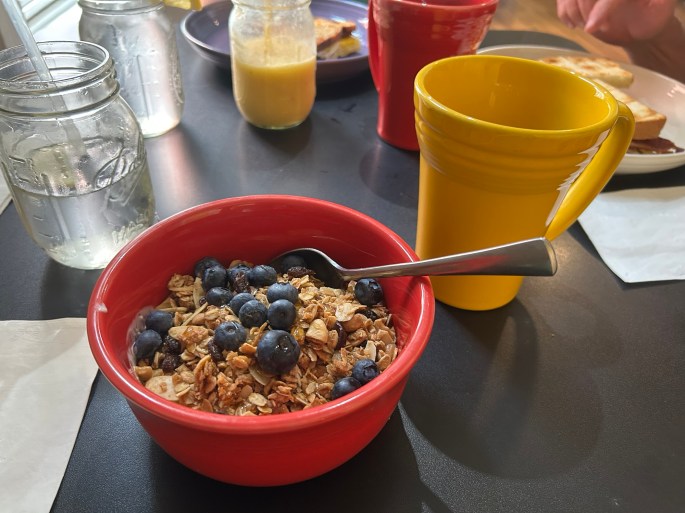
A red bowl filled with granola and fresh blueberries, accompanied by a yellow mug, glass of water, and other breakfast items in the background.
Everyone deserves a seat at the table.

Driving home afterwards, I couldn’t help but reflect that quite often the best souvenirs aren’t purchased in gift shops. They are the things we carry home instead: shared laughter, a deeper appreciation for places that still know how to build community, and the quiet dismantling of one more stereotype. Shepherdstown gently reminded me that the world is almost always more welcoming, kinder, richer, and far more complicated than a simple stereotype.
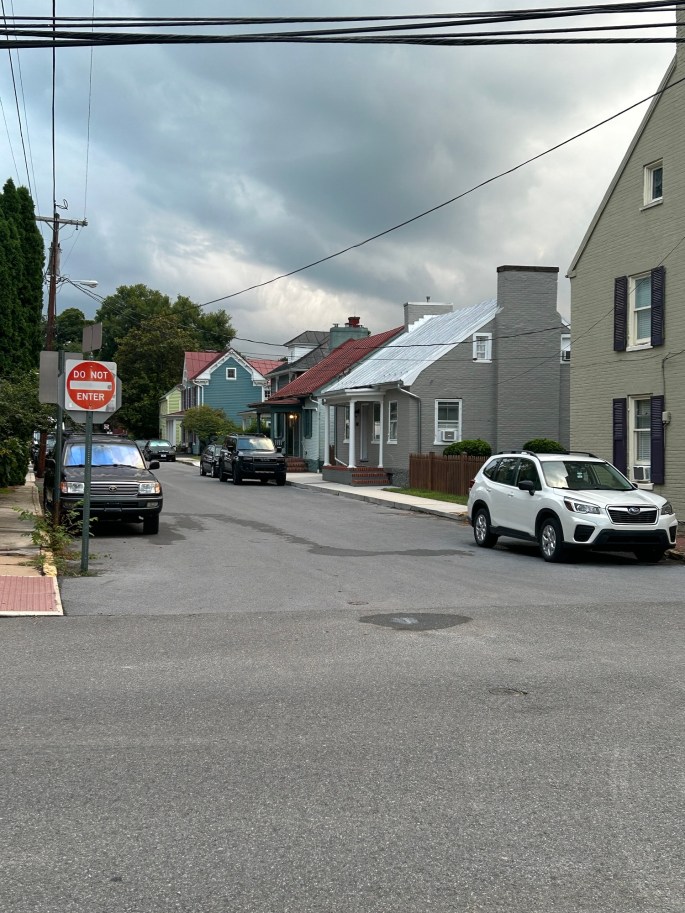
A quiet street scene with several houses on either side, featuring a mix of architectural styles. Parked cars line the road, and a 'Do Not Enter' sign is visible in the foreground. The sky is cloudy, suggesting overcast weather.
A residential street in Shepherdstown, WV

I hope to return to Shepherdstown someday. Some places quietly stitch themselves into the fabric of our own lives, and Shepherdstown has certainly become one of them. If I am fortunate, there will be more “Hill Roadtrips” in the years ahead. No matter how old our children become, the gift of their time remains one of life’s greatest treasures.

Sparkling Sugar and Clouds

“When you do things from your soul, you feel a river moving in you, a joy.”—Rumi

✨ When Hope Begins with a Thimbleful of Light

For days, we had lived beneath clouds, rain, and oppressive humidity. As I stepped out of the car early one weekend morning, everything felt heavy—what I imagined it being like to try to move through swampy waters, only without the alligators. Something caught my eye. I looked up. Directly within my line of sight was a thimbleful of light parting the clouds. It was not enough to brighten the sky or change the weather. It was just enough sunlight to remind me that the sun was still there. It made me think that sometimes hope begins with no more than a thimbleful of light.

Too often, we expect the feeling of hope to have a dramatic entrance, like a scene from a sweeping epic. However, hope often arrives in a quiet, almost understated manner. One encouraging moment: a phone call or text message, a kind word, a small answer to prayer, perhaps even a small patch of blue overhead.

When I later opened my car door to drive home, the overcast weather had not changed, but neither had the sun. It was there, somewhere, above all those clouds. It occurred to me that sometimes our circumstances haven’t changed—only our awareness. That tiny patch of sunlight stayed with me the rest of the day, though I didn’t realize just how much until lunchtime.

🥣 A Little Pizzazz for an Ordinary Day

Later, as I made fresh coffee and prepared my lunch—a mix of vegetable sticks, oatmeal, and yogurt with fruit—I decided to add some pizzazz to my meal. I reached for a bottle of sparkling sugar and added a pinch across my oatmeal and yogurt. For an extra bonus of fun, I also sprinkled a few chocolate sprinkles. It’s not that I wanted my lunch to be dessert, but rather I wanted a symbolic reminder.

That sprinkling of sugar and chocolate did not solve anything. The weather remained gloomy, and the humidity was stifling. Yet it allowed me to transform an ordinary meal into something playful—something that brought a smile to my face and my heart. I was reminded that sometimes joy begins the same way hope does—in small, almost unnoticed ways. 

🔎 Searching for the Hidden Picture

As a child, I spent a great deal of time in doctor’s offices. I remember the yellow Highlights magazines that always seemed to be waiting in those offices. One of my favorite features of Highlights was the “Hidden Picture” page. I’d search that page in earnest, not seeing anything at first glance. However, once I found one “hidden” item, my excitement and confidence would soar, even if I was really sick, and I quickly began finding one hidden object after another.

Life, too, can work that way. When we focus on what we are missing, that is what we see. When we begin to search for small gifts, we suddenly discover they were scattered across life’s pages all along: a sliver of sunlight, sparkling sugar and sprinkles, a fresh cup of coffee, a cool breeze, birdsong, a shared laugh, a thoughtful text, or even the peace of a house settled in quiet. None of those remove the clouds. But they do remind us that we aren’t living only in darkness. 

⛅️ The Sun Is Still There

The hidden sun, those long ago hidden pictures, that sparkling sugar—the weather never changed that day. What changed was the picture I was looking at. Gratitude is not about pretending. Joy isn’t denial, and hope isn’t ignoring reality. They remind us of what is equally true–that clouds are real, but so is the sun. Hardships also exist, but so too does grace. 

To be sure, there will be more cloudy mornings. I hope that when I next encounter gray skies, I’ll remember two things. Somewhere above those clouds, the sun is still shining. And if I examine carefully enough—or perhaps add a pinch of sparkle myself—I may discover that joy is also hidden in the picture all along, waiting to be found. Sometimes all it takes is a thimbleful of light.

Recipes Rarely Followed Exactly

“But perhaps the most precious heirlooms are family recipes. …they remind us from whom and where we came and give others, in a bite, the story of another people from another place and another time.”—Stanley Tucci

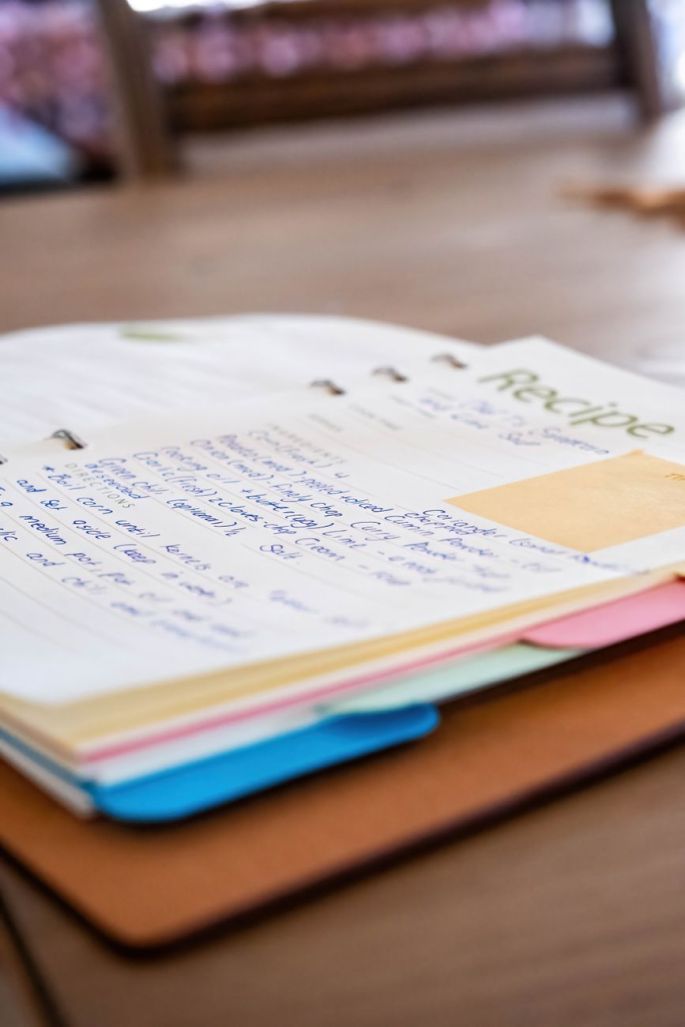
Over the July 4 weekend, I was reading Demon Copperhead, by Barbara Kingsolver. It’s an Appalachian reimagining of Charles Dickens’ classic, David Copperfield. While the book is deeply harrowing at times, I often found myself lingering over family food scenes. The meals weren’t fancy in any way, but they reflected the simple, traditional recipes I grew up with—food that tasted of love and legacy. It made me think of the kitchens in which I learned that recipes were rarely followed exactly.

🧬 The Things We Inherit

Like Kingsolver’s novel, our recipes came with their own scaffolding. Each generation inherited the structure, then quietly rebuilt it to fit new lives. My maternal and paternal grandmothers cooked similar foods, but with their own personal stamp. Their frugal cooking was shaped by living through the Great Depression, but it was also influenced by changing food trends, double-coupon days, and seasonality of certain foods. My mother-in-law’s cooking reflected those Depression-era habits along with food trends she encountered through her work. Similarly, my own mother had four of us kids to feed on a budget, but her own mother’s influence could still be felt in her cooking.

Today, I take those beloved recipes and modify them to fit dietary needs and family preferences. My brother and sisters do the same thing.  It’s not that we’re disrespecting the tradition; we are keeping it alive. Case in point: Grandmother Helen’s beloved-by-all brownie recipe, a vintage 1950s Betty Crocker cookbook original.

🍫 A Little More Chocolate

This was a quintessential dessert for special occasions and holidays. My siblings and cousins loved this rich, velvety chocolate treat—made even better in the summer with Papaw’s hand-cranked frozen custard. 

The original recipe, for an 8 x 8  or 9 x 9 pan, called for two one-ounce squares of unsweetened chocolate, and the frosting used one ounce. Since grandmother always doubled the recipe, this meant double the chocolate, which can be expensive. Grandmother learned, and taught my mom, who shared this tip with me, that “in a pinch” you could get away with one or two fewer squares of chocolate to save money—or another trip to the store.

 She also taught me the importance of using half butter and half shortening when baking brownies, or any other baked goods for that matter, as another money-saving method. Years later, I learned that combination wasn’t just economical. Butter contributes flavor, while shortening creates a softer, chewier brownie.

She made 1950s Betty Crocker brownies one way, and my mom made them her way—sometimes with all the chocolate, sometimes not. My brother and I now bake this treasured recipe, each with our own variations. To my knowledge, he makes his frosting out of cocoa powder, rather than melted unsweetened chocolate. I make my brownies gluten-free due to my celiac disease, but stick to the original frosting recipe. 

🍰 Recipes for the People We Love

In a similar fashion, my mother-in-law once baked, and later shared the recipe, a strawberry cake that I was just wild about when my husband and I were first married. She knew I loved strawberries and wanted to make something she thought I would like. It was one of those recipes popularized in the 1970s made with strawberry gelatin and fresh strawberries in both the cake and the frosting. 

Years later, when my daughter was quite young, she loved strawberries as much as I did, so I decided to dig up that long-ago recipe once made for me, and make it for one of my daughter’s birthday sleepover. The girls loved it, and lapped it up. However, later that night, my daughter became very sick because of the recipe’s rich ingredients: one cup oil plus four whole eggs in the cake, plus one cup butter in frosting. 

I hadn’t made it since, but earlier in May, my daughter began reminiscing about it. This summer, I’ve made it for her a couple of times, including over the July Fourth weekend. I used my mother-in-law’s original recipe, but I made it gluten-free and found a way to dramatically reduce the eggs and oil without affecting the taste or texture of the cake. 

I adapted the cake to fit the people I loved while still honoring the woman who first made it for me. Different times. Different needs. Same heart. Every generation may edit a recipe, but the love remains intact. 

There are so many wonderful recipes that I have inherited from the women before me. Each recipe is filled with a memory, a history, and the hands that worked out of love, necessity, and grace. Simple recipes such as hot dog sauce that sometimes becomes spaghetti sauce; green beans and corn—half-runners from my family, pole beans from my husband’s; creamy, made-from-scratch macaroni and cheese; homemade bread; far too many desserts to count; and even the simple relish tray—an ever-present plate of pickled, salted, and stuffed morsels reserved for special occasions. 

They all taste of laughter, good-natured teasing, hugs, kisses, and even tears of the past. And now I pass these gifts on to my daughter. She may barely remember some of them and never really knew others, but every time she eats these foods, she receives something they once gave me. Not genetically. Not historically. Personally. It is the tie that binds.

🍽️ What Still Tastes Like Home

Kingsolver inherited Dickens’ framework and made it unmistakably Appalachian. I inherited the recipes of both sides of my family.  Neither remained unchanged. Both became richer because they were adapted rather than rigidly preserved. Maybe the best recipes were never meant to be followed exactly. They were meant to be shared, adapted, and passed on. And isn’t that the point? 

Perhaps that is the great inheritance of recipes. They don’t simply feed those of us gathered around a table, but they connect us to those who came before us and to those who will come after. 

Every family has recipes. The fortunate ones realize they are heirlooms—structures quietly rebuilt by each generation, yet always tasting of home.   

Fighting Reflections

A cardinal, a window, and a lesson in perception

🐦‍🔥The Cardinal Is Back

“Guess who’s back?”

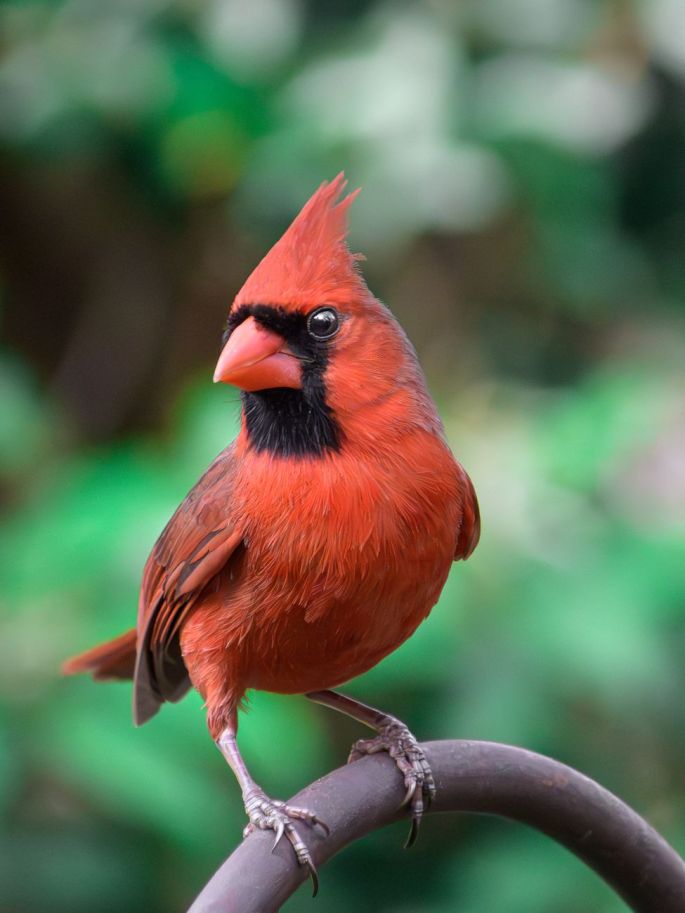
My husband’s message came through my AirPods as I ran early one Saturday morning in May. Then, in quick succession, two more messages followed. One was an image of a cardinal in mid-flight, attacking a window that I would later view on my phone. The other said, “It’s our crazy cardinal friend from last year who won’t stop banging the window. Tippi (our cat) is going CRAZY!”

Ten or so minutes later . . . “OMG! The Boy (our neighbor’s outdoor cat) just jumped as high as the window and nearly caught the bird. Feathers are flying!”

Thus began the return of our daily sound effects. Beginning at first light and continuing off and on throughout the day until full dark falls, we hear the thuds, the whams, and the kerthuds of the colorful, but crazed, cardinal attacking either the bay window or the large picture window at the front of our house. 

I added window clings “guaranteed to prevent even the most aggressive birds” from attacking the windows, but the sounds and the grotesque bird droppings that demand frequent cleaning tell a different story. Watching the cardinal attack from the outside while my 18-year-old cat keeps a vigilant watch—as though her aging joints were a force to be reckoned with—I frequently find myself shaking my head, wondering what on earth the bird thinks he is accomplishing other than a headache. 

From a biological point of view, I get the cardinal’s motivation. He’s naturally driven to fiercely protect his mating and nesting territory during this time of year. When he catches a glimpse of himself in the reflection of the window, he thinks another male is encroaching on his territory. So he attacks by charging and pecking the glass. Then, when he sees his own aggressive movements, he thinks the “intruder” is attacking back. This causes the cardinal to get even angrier and more aggressive, perpetuating the endless cycle of attacks.

The Problem Isn’t His Determination

 I admire the bird’s determination. The problem is not his determination; it is his perception. He isn’t fighting another bird. He’s fighting himself. 

🪟When We Keep Hitting the Glass

How often are we like the determined cardinal? How often do we keep mulling over and returning to the same argument, the same disappointment, the same heartache, the same resentment, and so on? How many times have we tried to change someone who is not yet ready to change? Yet our perception and determination trick our minds—and hearts—into thinking we can. 

We convince ourselves that “If I explain it this way, one more time, then they will finally respond this way.” 

“If only I try harder, then this will finally happen.”

“If only I push, pull, arrange, help . . . just a little bit more, then this will all fall into place.”

And yet, nothing changes. Like the cardinal, we keep hitting the glass. We may have warnings and interruptions that should cause us to reconsider—much like The Boy tried—but our misguided perception has convinced us otherwise.

The cardinal has lost countless feathers. His droppings, no doubt increased by his own anxiety, are piling up alongside those feathers for me to clean up. The bird spends untold energy defending itself from an enemy that isn’t there.

Humans, myself included, do a very similar thing. We spend untold amounts of emotional and mental energy, lose precious time, and sacrifice our peace trying to defeat “something” that may only exist in our minds due to our perceptions. Sometimes the “enemy” is not another person, as we may think. Sometimes the so-called battle is with ourselves, our assumptions, our fears, or even our need to be right. The toll is real. The bruises are real, even when the battle is not.

🧐Seeing More Clearly

The cardinal lacks the power to recognize his own reflection. Humans can. We have the power to pause and ask: “What if my perception is off?” or “What if my focus is fuzzy and I am not seeing correctly as a result?” 

This may mean stepping back in order to stop “banging our heads,” as it were. It may mean taking another look and examining the situation with a fresh perspective in order to identify what is really there.

I am reminded of my most recent eye exam.  “Do you prefer A or B? Is C clearer than B? What about D?” the doctor asked as she adjusted the lenses.

The doctor went from one eye to the other until finally she revealed the view with both eyes properly adjusted. What a difference in clarity that made when I was asked to read that bottom row for the third time.

Wham! I hear the cardinal as I write this. Kerthud! Ugh, that flash of red hurts my head in sympathy for this poor bird. His endless resolve to keep fighting causes me to feel tired for him. 

Every morning, since that first Saturday in late May, Mr. Cardinal is back, convinced that his rival still exists. I watch him and wonder. How many of my own battles have looked exactly the same? How many times have I mistaken my own reflection for a rival, misperceived the reality of a situation, or spent so much energy fighting glass?

The cardinal has become a daily reminder that sometimes the most important change is not changing what stands before us, but changing the lens through which we view it.