Embracing Silence: The Owl’s Call to Mindful Listening

A wise old owl sat on an oak;
The more he saw the less he spoke;
The less he spoke the more he heard.” —old proverb

A wise-looking owl perched on a branch in a dark, wooded area, illuminated softly by moonlight.
Photo by Erik Karits on Pexels.com

Listening in the Dark 🌌

I am an early riser, typically awake before the sun. A few weeks ago, my ears perked at the haunting, penetrating call of an owl. Its “Hoo-hoo-hoo, hoo-hoo” echoed around our yard as I looked out into the murky dark. Since then, I intentionally listen for its steadfast call. It has become both a comfort and a mystery—an invitation to listen, reflect, and learn something new.

The owl’s call continues, I am certain, even when I am not listening; yet it requires my full attention in those predawn hours if I hope to notice it regularly. Its presence illustrates the importance of listening and discerning with care and purpose.

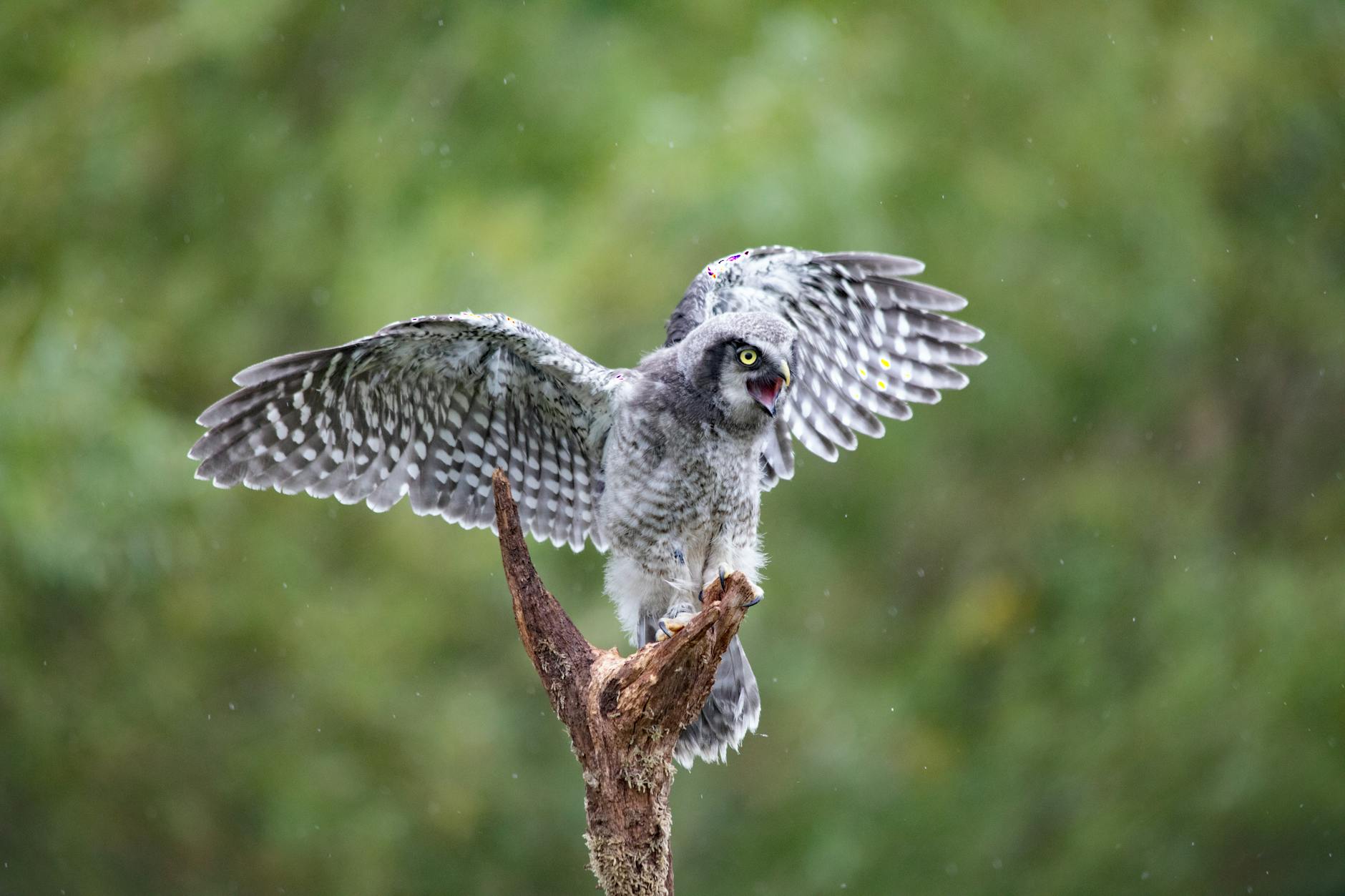
A grey and white owl perched on a branch with wings partially spread, showcasing its feathers and an alert expression against a green blurry background.
Photo by Petra Ryan on Pexels.com

What Owls Teach Us About Voice 🗣️

The autumnal hoots I hear, I learned after a bit of research, are used mostly to communicate territory and to call to potential mates. (It is worth noting that many owl species mate for life, finding another only if a partner dies or becomes separated.) Owls also use distinct calls to warn a mate, their nestlings, or even neighboring owls when danger is near. Only when the threat is imminent do they screech, hiss, or snap their beaks in defense of their young. Like the owl, we, too, can carefully choose when to use our voices amid the noise of the world, saving our own form of “screeching” for the rarest and most necessary moments.

Three barn owls perched on a branch in low light, showcasing their distinctive features against a dark background.
Photo by throughmylife_in_ INDIA on Pexels.com

Signals of Respect and Coexistence 🦉

As I read more, I couldn’t help admiring how owls communicate—practically, respectfully, almost as if to say, “I am here. You are there. Let us coexist with our shared resources and help ward off danger.” To be certain, I am personifying and simplifying their communication, but perhaps there is a lesson for us. In a world that often isn’t equitable in its distribution of resources, space, or power, maybe we can learn the art of signaling like owls—communicating truthfully and transparently without silencing others. What if we approached our conversations with presence, restraint, respect, and a shared awareness of the landscape we inhabit?

Holding Our Ground with Grace 🙏

Hearing the owl’s early morning “Hoo-hoo-hoo, hoo-hoo” reinforces the importance of holding our own ground—our principles, values, beliefs, and even compassions—without becoming loud or defensive. The owl does not insist on being seen; rather, it asserts its message with a reserved dignity. We, too, can claim our “territory” through composed conviction and fairness, standing firm without demeaning others. Faith in our tenets, like my unseen morning owl, calls us to trust what cannot be seen but can be discerned only in stillness.

A tall tree with orange leaves against a clear blue sky, surrounded by a grassy area and a house in the background.
Fall is a time of release and renewal.

Autumn’s Invitation to Adapt 🍂

Autumn is a season of release and preparation. Light softens, signaling leaves to fall as trees ready themselves for winter’s quiet work. Many creatures follow this rhythm, including the owl in my backyard adapting to the shifting season. We, too, are invited to adapt—to let go of what is no longer needed, recalibrate our priorities, and listen more deeply. The natural world thrives on balance, which is different from our human desire for “fairness.” It exists in a subtle harmony in which every being plays a role. I wonder what might happen if we focused more on harmony—the give-and-take of shared ecosystems and resources—paired with the wisdom of knowing when to listen and when to speak.

A woman in a pink hijab interacts playfully with a barn owl perched on her arm, pointing towards its face, with another owl visible in the background.
Photo by Rangga Aditya Armien on Pexels.com

The Harmony of Coexistence 🕊️

The autumn owl’s voice in my backyard is solitary, and yet it reflects community. It marks its presence while acknowledging the presence of others, including us. Coexistence, the owl teaches, requires more than hearing what others say; it requires listening to the silences. Of course, human coexistence is complicated, and life often isn’t what we would call fair.

Therefore, it becomes incumbent upon us to listen, act kindly, and withhold judgment—offering small or not-so-small acts of goodness to help restore balance. This may mean choosing gentleness, or even silence, over the need to be “right,” especially when a loved one, friend, or coworker says or posts something unkind or expresses an opinion we strongly oppose. Likewise, offering compassion instead of judgment when someone is rude or ill-behaved can shift a moment for the better, even if only because we have refused to be pulled into energy-sapping negativity.

A serene forest scene with tall trees bathed in soft rays of sunlight filtering through the branches, creating an ethereal atmosphere.
Photo by Atlantic Ambience on Pexels.com

Before the Light Returns 🌅

The owl still calls unseen in the dark predawn hours, reminding us that communication, connection, and hope often begin before the light returns. The owl does not question whether the sun will rise; it simply continues its call, trusting the rhythm of creation. Like my unseen neighbor, I pray we find the courage to speak fairly, listen deeply, and have faith in the unseen process—knowing that every voice lifted in love and fairness echoes far beyond what we can see.

Perhaps that is the heart of the owl’s lesson: when we listen more deeply, we create the conditions for fairness to grow. As I recently read, “Life isn’t fair. It isn’t, which is why people should endeavor to be more fair to one another, not less.” —Kate Quinn.

Running Toward Hope: A Marathon of Movement and Love

Every run is a work of art, a drawing on each day’s canvas. Some runs are shouts and some runs are whispers. Some runs are eulogies and others celebrations.”—Dagny Scott Barrios

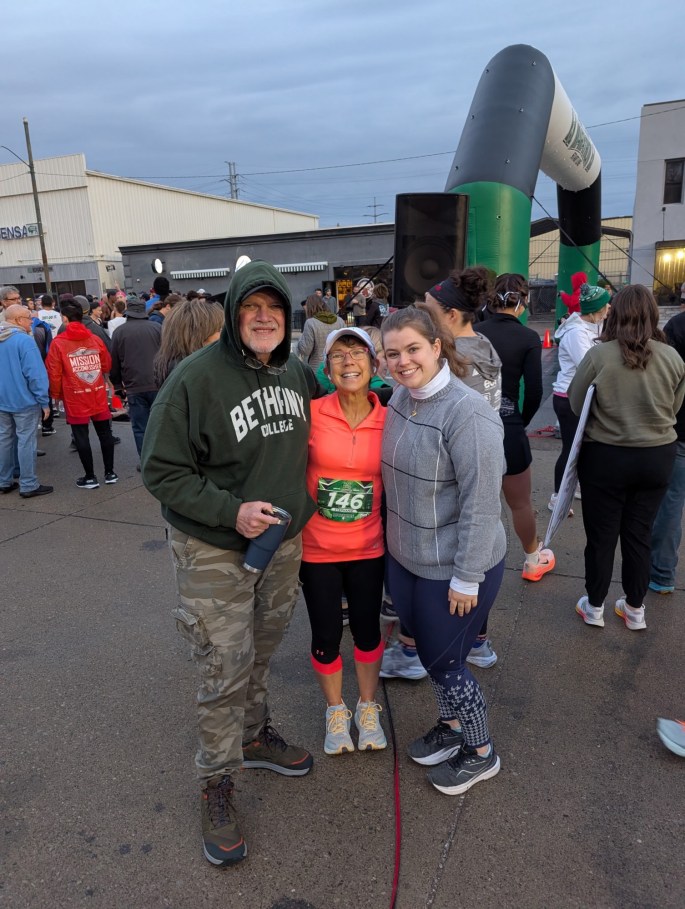
A group of three people, including a man in a green hoodie, a woman in a bright orange top with a running bib, and a woman in a gray sweater, gather smiling at a running event in an outdoor setting with other runners in the background.
Just before the start of the marathon I took time to get a hug from my two biggest supporters throughout the training process: my husband, L, and my daughter, R.

A Morning of Reflection and Gratitude 🌅

A light mist fell as an overcast gray morning began to chase away the night. I stood quietly in a throng of animated runners, taking deep breaths as reflection and gratitude washed over me. Months of preparation had led to this moment, and I felt thankful not only for my health but for the loving support that carried me here—to this celebration of movement, resilience, and connection.

Running as an Act of Hope ✨

It had been ten years since I last pinned on a bib for this distance, and my body hummed with anticipation, hope, and belief—the belief that movement is for everyone at every age, and that it is, in itself, an act of hope. I was about to embark on an emotional 26.2-mile trail of faith that became more about the people who supported me than the miles themselves.

Discovering Joy in Gentle Movement 😄

I came to running later in life, and it wasn’t easy at first. Only when I learned to approach running gently—to let go of preconceived (and societal) notions of what running “should” be—did I discover paths full of freedom, clarity, and renewal. Movement, whether running, walking, dancing, or stretching, benefits body, mind, and spirit. It brings a sense of structure to an often chaotic world and offers a feeling of accomplishment—if nothing else goes right in a day, at least I moved my body. Movement brings us alive to ourselves, our spirit, and, in turn, to the world around us.

The joy, I’ve learned, is in the doing—not in attaching to a pace, distance, or goal. Those things can be part of the experience, but they aren’t required.

A man and a woman embrace warmly in a crowded setting, both smiling in a moment of connection before a marathon.
Maddie’s, my daughter, boyfriend, Connor, flew all the way from Austin, TX to be part of this event. Together, with Maddie, he helped plan the marathon surprise of a lifetime!

Redefining What It Means to Age 🧓

As I neared my 60th birthday, I began to notice messaging that framed this decade as one of limitation. I decided instead to flip the narrative and celebrate the 60s as a decade of possibilities. Why not run into this new decade the way I ran into my 50s—with eyes and arms wide to adventure?

Training with Gentleness and Grace 😌

Since I was already running regularly, I committed to training for a marathon, but this time with gentleness. Instead of a traditional four-month build-up, I created a ten-month plan that encouraged patience, routine, and presence. Twice-weekly strength training and yoga joined the schedule, as did listening to my body and using the run-walk-run method as needed. I also focused on proper hydration and fueling before, during, and after runs. Most of all, my husband and daughter supported me from the very beginning—their quiet, everyday encouragement becoming a steady foundation of strength.

A woman running on a street wearing a bright pink long-sleeve top, black leggings, and a cap, displaying a race number on her waist.
Gentleness was a large part of the 10-month training block that led to this moment of hope and celebration.

Adapting Through Life’s Curveballs 😰

Training for a marathon brings rhythm and structure to daily life—the early morning runs, the long weekend miles that lengthen gradually, and the sweet evening stretches after dinner. But life, of course, has its curveballs: weather shifts, fatigue, scheduling conflicts, unexpected events, and bouts of self-doubt. With age, though, I’ve learned to adapt rather than resist these realities, co-creating a practical, flexible approach to progress.

As my weekend long runs grew longer, my husband and daughter often appeared—driving by, stopping to cheer, or jogging beside me for a short distance. These small bursts of love in action fueled my heart and kept me going. Training, I realized, was less about mileage and more about cultivating fortitude, flexibility, and gratitude—along with a dash of fierceness—all essential life skills carried from the road.

A group of enthusiastic spectators cheer on runners during a marathon, surrounded by autumn foliage and a partly cloudy sky.
Maddie, and my husband, John, often showed up during the last few miles of my Saturday long runs to cheer me on as Maddie is seen here doing during the actual event itself.

Race Day: A Celebration of Love 💖

As the marathon began, the city of Huntington vibrant in energy, rebelling against the lackluster sky. Rhythmic footfalls and nervous chatter surrounded me as runners jostled for position. Warmly dressed spectators cheered, waving handmade signs against a backdrop of burnished orange, crimson, and yellow autumn trees. Little did I know that my daughter had turned this event into an outpouring of love.

Surprises Along the Course 🫢

At the start, my husband, daughter, and her boyfriend—who had flown in from Texas to surprise me—stood cheering. But that was only the beginning. Every few miles along the route, my daughter had arranged for friends, family, and coworkers to appear, waving signs and calling my name. I didn’t realize the scope of her plan until near the end, but each familiar face filled me with renewed energy, gratitude, and joy.

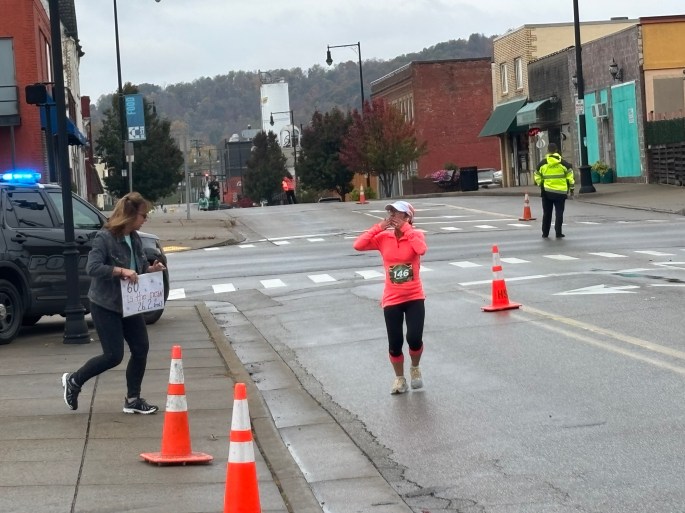
A female runner in a bright pink shirt crosses a street marked by traffic cones, while a supporter holds a sign nearby in a lively downtown setting.
The look of complete surprise when I see my sister, Traci, and her husband, David, around the 19-20 mile mark of the marathon. I had no idea they would show up along the route!
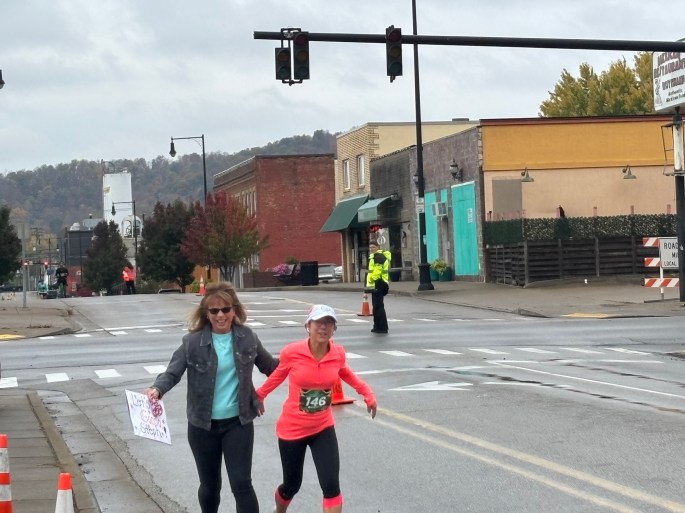
Two women running together on a city street during a marathon, with one holding a sign. They are surrounded by a lively atmosphere and shops in the background.
Of course, I had to veer off the path to give her hug, which helped uplift me over the next few miles.

Crossing the Finish Line 🏁

As I turned toward the final quarter mile, a group of race volunteers began singing “Happy Birthday” while my daughter’s boyfriend joined for a short burst of encouragement. My husband stood outside the stadium offering final words of encouragement, and my daughter met me at the bottom of the stadium ramp to run beside me as I approached the finish line. I wasn’t just completing a marathon; I was receiving the best birthday gift—a living reminder of love: a convergence of community, family, and friendship. It was a story of hope, purpose, generosity, and perseverance—the joy and power of a shared journey.

Two volunteers wearing bright reflective vests stand by a crosswalk in a park-like setting with blooming flowers and trees. In the background, a pathway leads towards a building under a cloudy sky.
This was the point, less than a quarter mile to go, when a group of race volunteers, led by an unknown female spectator and Conner, joined in to sing “Happy Birthday” to me as approached and rounded the corner to the finish line.

The Marathon as a Metaphor for Life 🪞

This journey mirrors life: we move forward by faith and grace, one step at a time, through both joy and challenge, supported by others who believe in us. That’s the power of movement—it connects us to our bodies, to others, and to something larger than ourselves. Choosing to move, to train, to keep going even when the path feels long, is an affirmation that with faith, growth and renewal are always possible—at any age.

Movement as a Lifelong Invitation 💌

Movement can take many forms: walking, stretching, dancing, or choosing to train for something big. The point is to move with intention and persistence, to embrace your own journey, and not attach to societal and social media messaging. Just move—and let movement open the door to new possibilities, both inner and outer.

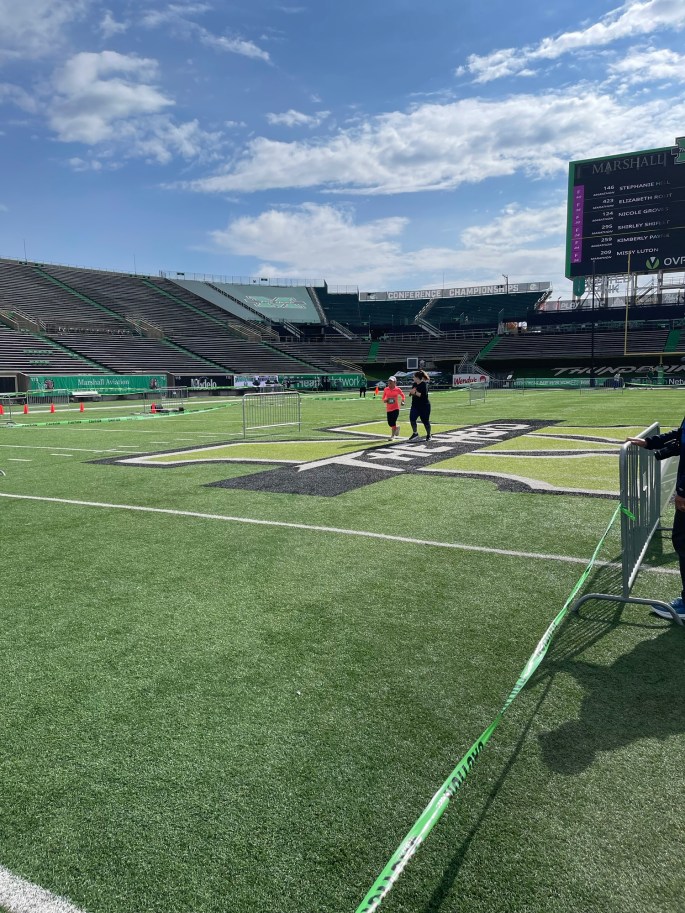
A runner crosses the finish line at a sports stadium, with spectators in the stands and a clear blue sky overhead.
Maddie runs alongside me for the last few feet, just as she did in 2015, to encourage across the finish line. Once I was close to the finish line, she dropped back behind the rope to let me finish alone. However, I really wasn’t alone. I was surrounded by a giant embrace of joy, hope, and love of family, friends, and community!!

The Joy Continues ☺️

The rhythm of footsteps, the smiles for miles, and the faces of loved ones along the route are forever imprinted in my heart—all reminders that every step matters. The marathon finish line was crossed, but the renewed sense of possibility and joy continues. Whatever your pace or path, keep moving forward—heart, mind, and spirit. You never know what acts of hope and love may be waiting for you along life’s path.

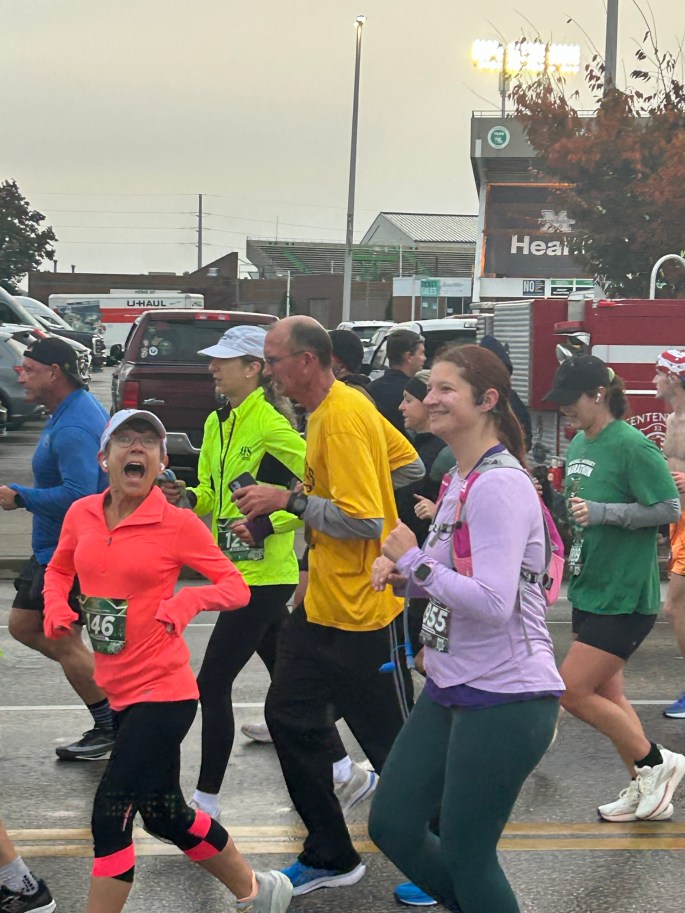
A group of runners participating in a marathon on an overcast morning, with diverse individuals wearing colorful athletic clothing and cheerful expressions.
The joy, and the journey of love and hope, continues . . .

A Grateful Heart 💜

P.S. Thank you to the countless and nameless MUM volunteers who invested hours of time to ensure the safety and success of runners, walkers, and those beloved spectators. And, an extra special heartfelt thank you to my friends and family who celebrated this milestone with me. And to Maddie and John, I love you to the moon and back.

A group of three smiling individuals taking a selfie on a subway or train, with a map visible in the background.
I wonder where the next path of adventure will lead?
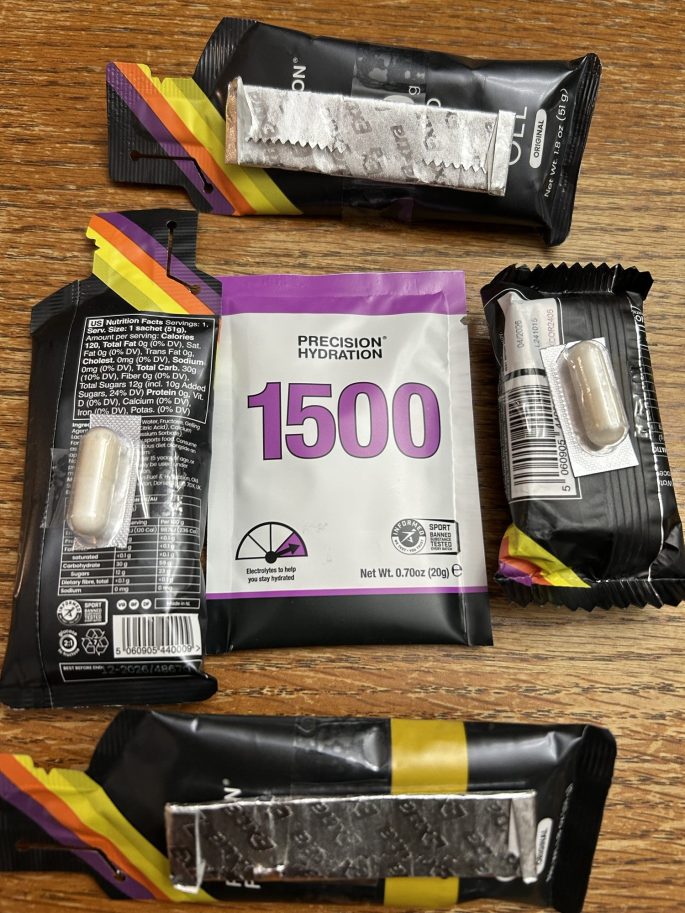
An assortment of hydration and energy products for runners, including electrolyte tablets and energy gels, arranged on a wooden surface.
Shout out to Precision Fuel and Hydration for the support during this training journey! I learned a lot from your team.

Pearls of Morning: Lessons from Spider Webs and Stillness

“Heavy dew this morning and every spider web in the garden is strong with pearls of moisture…. webs wherever I look, all shining things of silver beauty.–Edwin Way Teale

A close-up of a dewy spider web illuminated by streetlights in a quiet early morning setting, with blurred traffic lights in the background.

The Quiet Wonder Before Dawn 🌅

It was an early fall morning. Darkness still clung to the earth in a cool embrace. The traffic lights—green, yellow, red—continued their rhythm despite the empty streets. The air was cool and humid, and the hush before dawn rested easily upon the road. Pausing at the red light before continuing my jog, I noticed a spider web dappled with dew within the frame of the traffic light. I stopped in my tracks; upon closer inspection, I saw countless spider webs, draped with baubles of dew, hung from light poles and electric lines—even within the traffic lights themselves.

Hidden Beauty in Plain Sight🚦

I was awestruck by the beauty of the webs, looking ever-festive in the glow of lights—an unexpected wonder, shimmering high above me. After a few moments of appreciating the beauty, I jogged on through town, questions forming in my mind. How did they get so high? Why had I not previously noticed something so extraordinary hiding in plain sight? How many other marvels were hiding in plain sight, waiting for someone to notice?

A serene landscape featuring rolling hills partially obscured by a thick layer of fog, bathed in soft, diffused light, creating an ethereal atmosphere.

When We Slow Down Enough to See 🤓

It occurred to me that more often than not, we rush through the routine of life overlooking these mini-marvels—the ballet of fall leaves chasséing from tree to stream, then pirouetting along water currents; sinuous streamers of fog tendrils meandering around hilltops; or, the multiplicity of ice crystals frosting over a car’s windshield to name a few. These wonders are woven into daily life: from the cantaloupe-colored brilliance of sunrise over the Ohio River to the glimmer of moonlight on a frost-covered lawn; from flower-like fungi blooming on fallen logs to a puppy seeing its own reflection in a puddle. Beauty surrounds us, waiting to be noticed. Like the invisible art gallery of spider webs in traffic lights on my morning jog, most go unnoticed until the light hits just right. However, when we take time to pause and pay attention, beauty will often reveal itself in unexpected yet common places, including stoplights.

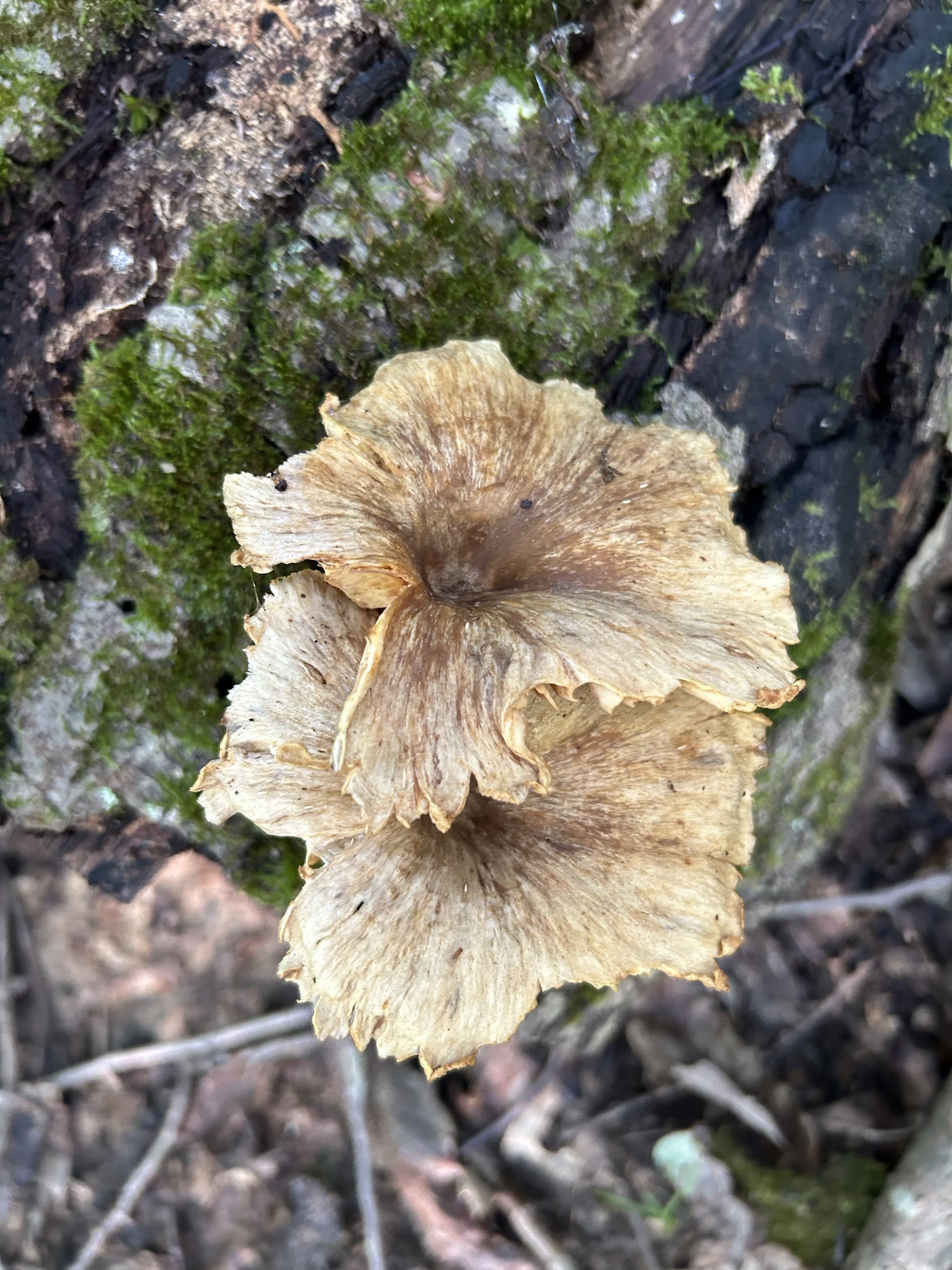
A close-up image of a brownish mushroom growing on a tree trunk, highlighting its textured surface and natural surroundings.
Flower-like fungi “blossoming” from fallen tree branch

The Power of Morning Stillness 😌

That early-morning observation turned meditation centered my day. It offered more than one lesson and served as a reminder that the morning placidity can bring a sense of calming clarity before the noise of the day. Making time for stillness in the morning, whether sipping coffee, walking a beloved pet, or sitting in prayer meditation—offers an opportunity for spaciousness at the day’s start. A moment to center, notice, reflect, and connect. Even a few minutes of stillness can offer us an opportunity to ground ourselves and recalibrate our perspective. If we grow quiet enough, we may remember that peace resides within us. That is not to say that peace is the absence of movement, purpose, or challenge, but rather it is a strong presence within us—much like the hidden strength within the delicate spider web. 

A close-up of a spider web adorned with dewdrops, creating a sparkling effect against a blurred green background.
Photo by Pixabay on Pexels.com

Lessons from the Web: Resilience and Renewal 🕸️

As I reflected on the morning jog through town, I realized that each web represented perseverance, fortitude, and tenacity–three key qualities essential for growth. Each morning, orb-weaving spiders consume their protein-rich webs to reclaim the silk for rebuilding. This ensures the new web they build in the evening is fresh, sticky, and strong enough to catch plenty of prey. Through practice, the spiders gain strength and instinctively how to rebuild after storms and strong wind.

The spiders’ resilience serves as a reminder that we, too, have the grit to rebuild after disappointments, setbacks, and loss. Like the spider, rebuilding our lives is often quiet work that begins only after we have nourished body, mind, and spirit. The spider’s persistence mirrors our own–delicate and determined–reconstructing through incremental, small steps. Life, like the spider’s web, is fragile, yet we too possess tensile strength—centered in faith—that guides us as we restore, renew, and rebuild. 

A close-up view of a spider web adorned with numerous droplets of dew, reflecting light and creating a sparkling effect against a dark background.

The Threads That Bind Us 🕷️

The spider’s web, where no thread stands alone, echoes the interconnectedness of our own lives. We are part of a collective. As the light shone through the webs, each dew drop caught the light, refracting color and seemingly creating miniature worlds. Just as the traffic/street lights played across the spider webs’ dew drops, our connected lives reflect multiple roles–friend, spouse/partner, worker, neighbor, parent, child, citizen . . . . Each strand of life possesses a quiet strength that is integral to the whole. In fact, the integrity of the web depends upon the strength and resiliency of every strand. Each facet of our lives holds and reveals meaning; together, the varied strands of our lives unite the whole, creating an array of meaningful relationships.

A close-up view of a beautifully intricate spider web adorned with dew droplets, creating a delicate display of nature's artistry in black and white.
Photo by don chowdhury on Pexels.com

Finding the Extraordinary in the Ordinary 🌃

In the end, the light changed, and I crossed the street as the sun rose, erasing the glimmer of those webs. Yet the image remains—reminding me to keep looking for the extraordinary in ordinary places. Perhaps it waits in the quietude before dawn, a pause at a red light, or the hush of nightfall. So many interlaced moments shimmer within the droplets of daily life, waiting for those willing to see. Those silky webs may vanish with daylight, but their pearls of wisdom still glimmer within me, reminding me that beauty often hides in ordinary light.  

May we all learn to look a little longer, to pause at life’s red lights, and to notice the silken threads of beauty connecting us in the quiet hours of dawn.

Embracing Life’s Unanswered Questions

“Be patient toward all that is unsolved in your heart and try to love the questions themselves. Live the questions now. Perhaps you will then gradually, without noticing it, live along some distant day into the answer.“–Rilke 

A vibrant sunrise with deep orange and golden hues peeking through soft clouds, symbolizing new beginnings and hope.
Photo by Bradley Hook on Pexels.com

When the Mind Won’t Stop Asking 😕

Those words of Rilke, written over a century ago, remind me that some of the hardest seasons in life are the ones that offer no answers—only questions that echo back in silence.

A silhouette of a person walking towards a bright sunrise, symbolizing hope and introspection.
Photo by Dom Gould on Pexels.com

Running into the Questions ⁉️

I was driving home Saturday morning after my weekly long run with a podcast playing in the background. The previous week had been difficult, and I had hoped the run would provide a reprieve from my worries. I started running well before the sun rose under the cloak of a starry sky, which served to keep my mind calm. Then, the rich crimson of dawn edged up the horizon, deepening from vermilion to the fiery orange of full sunrise. As if on cue, the monkeys in my mind began chattering—an endless loop of questions followed by equally endless, devastating possibilities. 

I tried to redirect my thoughts: “If only this or that would happen, then everything will be fine,” I told myself. The problem with this if–then principle is that it’s meant for building new habits or personal change; I can’t magically apply it to others—or to the world at large. Even after my run, the mind monkeys continued their spirals. Then a line from the podcast caught my attention, “What I think Rilke’s words are stating is that if we can learn to live in peace alongside the questions, this may allow us to witness the unfolding of the answers in some indeterminate future.” 

A hand reaching out towards a shimmering body of water under a bright sky.
Photo by Lukas on Pexels.com

An Invitation, Not a Reprimand 🙂

Of course, I had not heard Rilke’s words, so I had to rewind the podcast in order to focus on the original quote. Those words felt like an invitation to hope, rather than a reprimand for my monkey mind. To be clear, it did not feel like a promise of a positive outcome, but rather hope for a greater understanding one day. Rilke’s words seemed to affirm my questioning, as long as I let the questions simply “be,” like one ingredient in the stew of life. 

Hands holding a small, gift-wrapped box with a ribbon against a soft, patterned background.
Photo by Kim Stiver on Pexels.com

The Unsolved Nature of Life 🧐

While I cannot speak for everyone, I think many of us live with unanswered questions—and I’m probably in the camp that has more than a few. Seasons of life bring different questions, but they often center around themes of health, purpose, relationships, concern for others, and the future. It is often uncomfortable–the unsolved nature of life. We desire, like the fairy tales of our childhood, resolutions to problems in which we “all lived happily ever after.” We like knowing what is next; we desire to wrap up answers neatly and hand them over like a present. But life, as we eventually learn, isn’t wrapped in tidy endings. 

A serene landscape shrouded in fog, featuring two swans gliding on a calm body of water, with bare trees reflecting in the misty surroundings.
Photo by Karol Wiu015bniewski on Pexels.com

When Answers Refuse to Come 🤨

If you have ever encountered a personal crisis, or that of a loved one, you know the “hurry up and wait” sense of time that often accompanies these scenarios–appointments scheduled off into the distant future, followed up by more appointments with no answers, only more maybes and/or more questions or concerns. It can feel like an autumn fog settling over a town in the early morning hours. You can see outlines of various possibilities, but still not know what the future holds. And yet, even in that fog, life quietly continues. 

A chalk-drawn question mark on a black background, symbolizing uncertainty and curiosity.
Photo by Pixabay on Pexels.com

Coexisting with Uncertainty ❓

On one hand, Rilke seems to invite us to love the questions—an improbable ask, given the weight of so many of life’s uncertainties. Perhaps, as the podcaster suggested, Rilke’s words invite us to coexist with uncertainty rather than chase quick answers. Personally, when I face challenges, my first instinct is to “fix it,” whatever “it” may be. However, most of life’s bigger questions are not, per se “fixable” in a vacuum. There are many uncontrollable variables that often fill me with an anxious energy. 

This is when I tend to lean into writing, outdoor movement (especially running and walking), as well as reading–trying to learn as much as I can about the current challenge I am facing. Additionally, I will offer help (if I can be of service) to those for whom I am concerned. In this way, I feel like I am stretching and growing in understanding and empathy, rather than grasping and silently suffering. 

A close-up image of colorful daisies, featuring hues of pink, yellow, orange, and purple, surrounded by green foliage.
Photo by Leigh Patrick on Pexels.com

The Garden Rule: Sleep, Creep, and Leap 🪻

I’ve lived long enough to know that many answers only emerge with the sweet relief of distance and time—like the three-year rule of a perennial garden: sleep, creep, and leap. A long-ago biology professor once explained that in the first year of a newly planted garden, the plants appear to grow very little because they’re focused on developing and strengthening their roots. The following year, roots are still growing and establishing, but they do have enough energy to create a bit more growth above ground. However, by the third year, the roots are fully established and the plant appears to “leap” out of the ground with growth. So it can be with the answers to life’s questions. 

Three white blocks arranged to spell 'WHY' in black uppercase letters.
Photo by Ann H on Pexels.com

Growing Through What We Don’t Yet Understand 📈

There are times in life where we cannot figure out why we keep facing one roadblock and one challenge after another. We wonder how much more we can endure, why we are faced with a certain situation, or why things are not going the way we imagined. Like that early decorative landscaped garden, we cannot see that our experiences are developing roots of strength and stability. We may not see that our ability to empathize, our talents, our emotional well-being, and even our souls, are stretching and strengthening. Later, we may look back and see that those setbacks were quietly shaping us—building the strength we’d need for what came next. 

A person kayaking on a calm body of water during sunset, with vibrant pink and orange clouds reflected in the water.
Photo by Taryn Elliott on Pexels.com

The Ineffable Beauty of Living with Questions ✨

As I further reflected on Rilke’s words and my own lived experiences, I realized that there is a certain ineffable beauty that is created by living with questions because it asks us to rely upon faith and grace, granting us a greater purpose as a seeker and a doer. 

We are not here to solve life, but to live it—with curiosity, patience, and hope.

While hope does spring eternal, it is not the same as knowing the answers. Perhaps, that’s the point–it is more about trusting that our life story is continuing to unfold in its own time and season. 

A calm, reflective body of water at sunset, with vibrant streaks of orange and blue in the sky, and a small island featuring lush greenery and palm trees.
Photo by Johannes Plenio on Pexels.com

Light, Grace, and the Unfolding of Answers 💫

Finishing the drive home, I realized that Rilke had a point. As long as I have questions, as long as I seek answers, I am not only living, but I am living with an open, loving heart and a curious, empathetic mind. I have been fortunate to live to see questions answered, but I still have more questions to go–about loved ones, about the world, and about myself. 

Like the sunrise that began my run, the light of understanding will come again—slowly, beautifully, and in its own time. Until then, I feel grateful for life’s questions. They have strengthened my life in numerous ways and provided me with unpredicted opportunities for growth. In the words of John O’Donohue, “Perhaps the beauty of not knowing is that it keeps our hearts open enough to be surprised by grace.” I welcome that grace into my life—and I hope you do too.

Navigating Life’s Construction Zones: A Path to Self-Improvement

Construction is a matter of optimism; it’s a matter of facing the future with optimism.”–Cesar Pelli

A construction site on a road featuring orange traffic barrels, traffic lights indicating a red signal, and a view of green hills in the background.
Photo by Robert So on Pexels.com

Summer Roads and Slowdowns: A Familiar Frustration 🚧

It’s the height of the summer travel season. This year, AAA projected that 61.6 million Americans will travel by car between June 28 and July 6. That’s a lot of drivers on the roads! And more likely than not, most of those drivers will encounter some sort of delays or rerouting due to construction. 

Those orange barrels, detour signs, and dusty, smoke-filled roads can wreak havoc on estimated times of arrival, impeding drivers’ progress. Traversing a construction-filled route recently, it occurred to me that just as roads need maintenance, upkeep, and improvement, our lives can also benefit from similar attention. In fact, summer road construction serves as an excellent reminder for how we, too, must assess, repair, and improve our own lives.

Like it or not, road repairs are a necessary part of travel. Winter and spring often ravage roads due to ice, snow, freeze, thaw, excessive rain and so forth.  Potholes, cracked pavement, faded lines, and broken shoulders or guardrails can reduce safety and severely damage tires, rims, alignment, suspension, and so forth. Thus, in order to function properly, roads require regular repair and upkeep. 

A woman in a pink blazer sitting at a table, looking stressed or overwhelmed while using a laptop.
Photo by Edward Jenner on Pexels.com

The Wear and Tear We Can’t Always See 😓

The same is true for our own lives; we, too, experience wear and tear, but it is expressed differently in each of us. Signs may include physical and/or mental fatigue, burn out, and/or incremental increase of poor habits.  Other signs might include unresolved conflict, a sense of drifting or lack of purpose; and/or for others, it could be increased feelings of anxiety, sadness, or indifference. Like potholes on a road, it is important to not ignore these symptoms and instead cultivate a sense of caring curiosity as if we were concerned for a child–only it is concern for ourself–and it begins with an honest self-assessment of our emotional, mental, physical, and even relational well-being.

A woman with red hair looks stressed while working on a laptop, resting her forehead on her hand, in a bright interior setting.
Photo by Alexander Dummer on Pexels.com

Reading the Signs: Time for a Personal Detour ↪️

As with construction, upon reflection we might discover that many of our difficulties and discomforts created ruts, broken shoulders and cracks in our own personal life. These impediments signal that we may need to reroute our own life in order to make internal repairs. In the same way construction zones temporarily create detours, rerouted traffic, and lane shifts, personal redirection can likewise be thought of as a temporary, but necessary setback for long-term improvement. 

A person sitting on a couch, resting their chin on their hand, looking thoughtfully at a laptop with papers and a pen on the table.
Photo by Keira Burton on Pexels.com

Detours with Purpose: Reframing Setbacks as Redirection ↩️

These life detours, be they physical-health and/or mental well-being crisis, a death, divorce, and so on, typically create obstacles–a change in what we think is “the plan.”  However, just as construction zones are there to repair the road, our healing, growth, and ability to move towards wholeness often begins as we experience these hurdles. Therefore, it is helpful to reframe our thinking around these life detours and obstacles as opportunities for not only healing, but also reflection, intervention, or a necessary challenge to a long-held personal perspective.

A woman sitting in a chair, looking contemplative and holding a pen near a notebook, with her hand resting on her forehead in a thoughtful manner.
Photo by cottonbro studio on Pexels.com

Grit, Heat, and Hard Work: The Labor of Self-Growth 🥵

Another important point to consider with regards to road construction is that the work crew must endure a wide array of weather conditions, including extreme heat and humidity that accompanies summer. A return to safe and smooth roads cannot occur without their effort, perseverance, sweat, and labor. Likewise, personal growth and/or physical healing often requires a similar level of grit. 

Whether we participate in therapy, work to improve or create beneficial habits, set clear–and perhaps new–boundaries, work to forgive, and/or learn a new skill or life lesson (or both), personal construction demands that we put in the work. Discomfort, like construction, is a necessity.  Growth and healing are not easy and rarely occur without challenge and effort.

Two women engaged in a conversation at a table in a modern office setting, with one woman wearing glasses and a blue dress, and the other facing away.
Photo by Christina Morillo on Pexels.com

Preventive Maintenance: Investing in Long-Term Well-Being 😃

Another important consideration to effective road repair is that maintenance should be ongoing, rather than deferred, as this can lead to greater road damage and travel hazard. By taking care of ongoing small issues as they arise, bigger problems can be prevented in the future. 

Similarly, our own “self-maintenance” is also a worthwhile investment in order to reduce the likelihood of a major life-repair. Taking time to invest in our own daily health through quality sleep, good nutrition, stress management, physical exercise, fostering healthy relationships, and even learning new things–can be thought of as small personal investments that pay dividends towards our own long term “infrastructure.”  

A woman and a man sitting on a couch engaged in a conversation, with a woman taking notes in the foreground. The room features plants and wall art.

Photo by Antoni Shkraba Studio on Pexels.com

Building a Support Crew: Don’t Travel Alone 😁

That said, sometimes personal maintenance can sometimes feel like “one more thing to do” especially when we’re in the midst of a life-storm. Therefore, it can be helpful to cultivate a “crew,” a few good people who can share our times of smooth sailing, encourage our development and/or maintenance of positive habits, and also support us during those bumpy passage days. Ultimately, with regular self-care maintenance and a good support crew, we can cultivate a strong inner foundation that is better able to withstand life’s pressures and storms.

Black and white image of a close embrace between a woman and a child, capturing a moment of warmth and connection.
Photo by Nataliya Vaitkevich on Pexels.com

Freshly Paved Paths: Signs of Inner Progress 🥹

One of the best parts of road construction occurs when it is finally completed. Routes are once more open, and the ease and smoothness of traveling these roads signals tangible progress. In fact, driving effortlessly over a direct route without detours, potholes, or bumps can be a liberating feeling. 

A smiling man with curly hair, laughing joyfully against a wooden background.
Photo by Pixabay on Pexels.com

Progress, Not Perfection: Life Is Always Under Construction 🦺

Unfortunately, it never lasts for long. Rainy season, freeze-thaw season, excessive travel, or 1,000 other scenarios means construction will once again occur, if not specifically on the newly refurbished route. It’s all part of the process of progress–one never attains perfection when it comes to infrastructure–there’s always room for improvement.

Equally, on the other side of our own personal repairs, detours, and/or maintenance, we gradually return to a sense of homeostasis.  Our rerouted life may possess a greater sense of clarity, restored confidence, better decision making skills, and perhaps even a deeper sense of joy. We, too, may feel the momentum to move forward in a renewed direction and embrace the possibilities that come with an unexpected, but freshly paved path.

Smiling woman wearing a cozy sweater, expressing joy and warmth.
Photo by Dellon Thomas on Pexels.com

Final Thoughts: Be the Engineer of Your Own Journey 👷

To be sure, summer construction can seem like a real drag on travel; however, it ultimately leads to new routes, expanded systems of travel that are safer and more efficient. However, even when the summer construction season comes to an end, the maintenance of these roads does not end, and that is worth remembering.

Likewise, summer construction reminds us that we are the engineers of our own lives. No, we cannot control everything that happens to us, but we can control our reactions AND we can also make repairs as needed as well as prevent some issues from arising. Therefore, let’s be as proactive as possible through regular sustainment of our own life-construction, so that when life’s storms create a pothole–or five–we are fortified with the strength our regular maintenance and upkeep provides us. In life, as in roads, it’s about progress, not perfection. 

I’ll see you out there on the road of life!

.

The Spirograph Effect: Creativity in Life Design

“Not all who wander are lost”–J.R.R. Tolkien

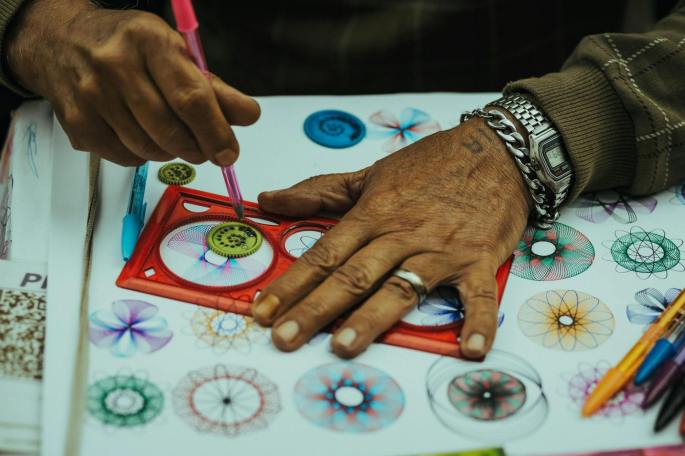
Close-up of hands using drawing tools to create a spiral geometric design on paper.

A Student’s Doodle Sparks a Memory✍️

Months ago, I observed a student drawing spiraling circles over and over on a sheet of notebook paper while participating in our class discussion. For some reason, I was reminded of an old toy my siblings and I once enjoyed: the Spirograph. I can’t remember which one of us received it, but we would sit together for what seemed like hours at the kitchen table drawing colorful, eye-popping (at least to us) geometric shapes.

Four children gathered around a table, smiling and drawing colorful patterns on a large sheet of paper using various markers.

Lessons Hidden in a Childhood Toy ꩜

Reflecting upon that long-ago childhood toy, led to the realization that the Spirograph illustrates the significance of specific concepts when it comes to creating our own life design, such as the influence of structure, patience, persistence, and the importance of celebrating our own unique individuality. It also emphasizes the value of working through natural constraints and trusting the process of learning through repetition. What’s more, the Spirograph demonstrates the relevance of trial and error–which often includes failure–as well as accepting the beauty that can be found in our so-called “imperfections”.

The Spirograph’s Ingenious Origins 👨‍🔬

To appreciate the genius of the spirograph as a toy, requires understanding a bit of its history. Denys Fisher, a British engineer, created it as a child’s play thing based upon various iterations, beginning as early as 1827. At the time of its original conception, it was used for advancing mathematical and engineering concepts. Spirograph, the toy, wasn’t available until 1965, and it went on to win “Toy of the Year” in 1967. Unbelievably, it is still available today.

This classic geometric drawing toy originally came with two transparent rings, two transparent bars, 18 clear wheels of varying sizes, two colored ink pens, pushpins, putty, and paper. Using the various tools, my siblings and I could draw precise, and quite mesmerizing, mathematical curves known as hypotrochoids, epitrochoids, and cycloids. With the switch of any one part, we could vary the size, shape, and geometry of intricate and, at the time, mind-boggling patterns. Essentially, the Spirograph is operated on a balance of limitation and creative freedom, which reflects much of the human experience.

A box of the original Spirograph design set, featuring colorful geometric designs and detailing the contents, including pieces and tools for creating intricate patterns.

Art Through Limits: Creative Freedom Within Structure 🎨

When one is drawing with the Spirograph, one has to adapt to its restrictions. The designs made by using the Spirograph are limited by the size and shape of the wheels and whether you are using the rack or the ring, as well as the color of the chosen pen(s) used to design a figure. Additionally, there are rules for creating specific outcomes as described in its guide book.  While it isn’t necessary to follow the laid-out directions, if one desires it to create a specific shape or design, one has to follow the step-by-step instructions.

This is similar to life in many ways. Influences in life vary from person to person and from family to family, often dependent upon experiences, education, and available information. Many individuals have followed very specific guidelines provided by parents, religion, schools, and even societal norms while others may have fewer influences. For many of us, following a structured timeline is how we landed in our current field/career path.  However, there are just as many, who followed a winding path of their own creation, and still produce a meaningful life experience. Like the Spirograph, following guidelines creates remarkable results for some people, while for others, grabbing the gears and turning them their own darn way works just as well.

Black and white abstract spiral pattern created with lines and arrows, resembling a geometric design.

The Power of Patience and Trusting the Process 🙏

When working with the Spirograph, my siblings and I had to have faith in the process. We had to further learn that creating something meaningful takes time. The desired design outcome emerged slowly, turn by turn, and layer upon layer. In sum, the Spirograph required us to have patience, trust the process, and stay the course. 

Similarly, our life journey takes time as we, hopefully, continuously evolve and grow. We may have times we question the process, or we may waiver in our faith, patience, and persistence. However, rushing life outcomes usually ends up backfiring. Moreover, the time required for personal growth fosters resilience, a much needed companion to patience. We only have one precious life, and as our life design unfolds, with all of its curves and angles, it is never worth rushing. 

A colorful doodle featuring spiraling circles and geometric shapes, reminiscent of designs created with a Spirograph toy.

Failure, Play, and the Magic of Repetition 🖍️

With the Spirograph, I recall that we often learned through repetition and play. We might draw the same shape over and over, sometimes changing the color, or merely changing the size. Other times, we followed the guidelines, and somehow still managed to “fail”!  And, yet, many of those so-called failures ended up being unique and pretty creations–even if they did not come out as planned. Other times, we would just “mess around” to see what we could create. Some results were not so spectacular, but other times, the creations were fairly impressive or, at the very least, provided us with a new understanding for creating specific curves and/or angles. 

Life can often be the same way. How many of us have experienced times where we “followed the rules,” doing what we were “supposed to do,” and still somehow managed to fall flat on our face. Years later, however, we may look back and realize that those “failings” led to something far greater than we could have ever imagined. Other times, a bit of experimentation leads to a new life path or experience that brings unexpected joy we might not have otherwise known. Thus, like the Spirograph, a playful and experimental mindset can lead to untold delights and adventures.

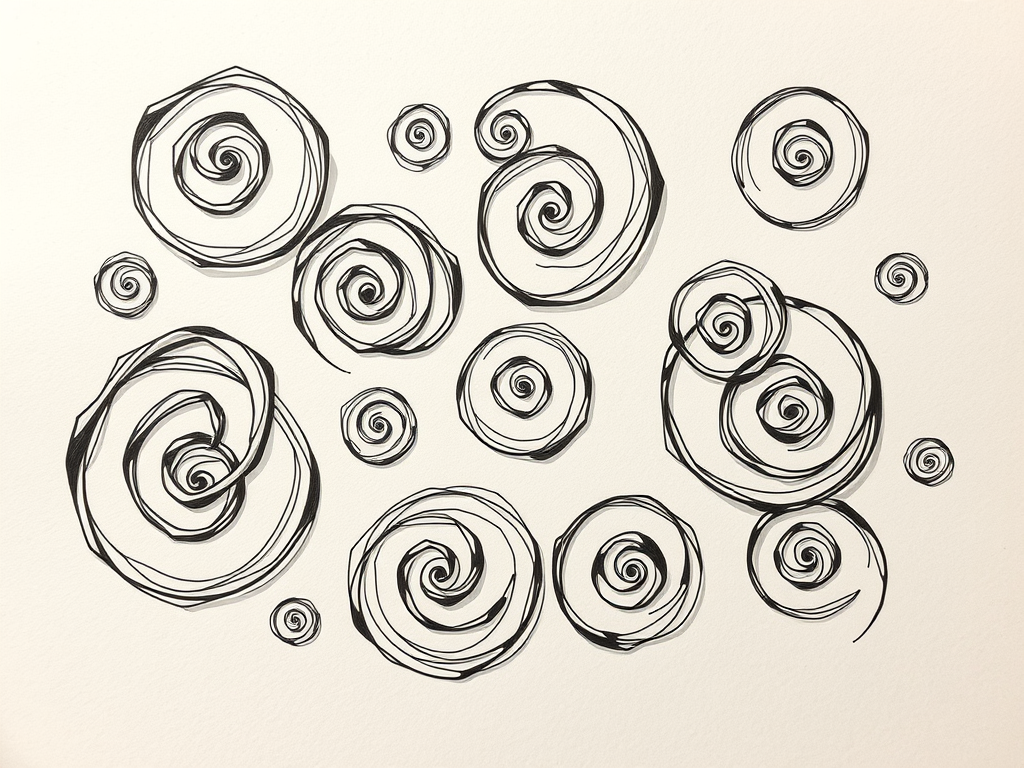
A collection of hand-drawn spirals in varying sizes, arranged artistically on a blank background.

The Beauty of Uniqueness in Design—and in Life 🖼️

Learning to welcome individual uniqueness was another life lesson the Spirograph provided. It often intrigued my young mind how my siblings and I could make the same design, but with a switch of pen color or pressure, or switch of a gear wheel, we could make each drawing unique, despite the fact we were essentially using the same tools. 

Sometimes, we would be surprised when trying to make the exact same shape, because we accidentally missed one of the required steps. Skipping one step, tended to create an irregular shape. Nonetheless, our younger selves marveled at the unique loveliness of the design. Our child-size egos told us we were pioneering artists in those moments!

Marks of Authenticity: Irregular Paths, Unique Lives

What a powerful reminder of the importance of celebrating our own–and others’– idiosyncrasies, including any so-called irregular paths. These individual characteristics and traits, as well as any “irregular paths’ traveled, are all marks of authenticity–that one-of-a-kind spice in our life serving. As humans, our genetic material is vastly similar across all humanity. Yet, this same genetic material still manages to create unique DNA characteristics, such as varying eye color, height, body shapes, and so forth. Furthermore, despite our similar genetic makeup, our lived experiences vary. In a sense, we are pioneering artists of our own lives.

A colorful collection of intricate geometric patterns resembling designs created with a Spirograph. The spirals and mandalas feature vibrant colors and diverse shapes, showcasing creativity and uniqueness.

Embracing Life’s Curves and Imperfections 🌀

Like the Spirograph of my childhood, we all deal with life constraints, no matter what path we try to create for ourselves. These life designs often, and sometimes repeatedly, require practice, patience, perseverance. Life also requires us to accept the many so-called imperfections and irregularities that come as part of the creative process. However, those “flawed” experiences give our life meaning and purpose. Therefore, it is worth remembering we have the power to play and create with the pen we have. All those curved lines and angles that make up our lives, including the missteps, are what continues to compose and create our magnificent, one-of-a-kind life design. Let’s embrace the possibilities.

Who’s ready to draw? ✍️

Cultivating Compassion in a Clamorous World

Your work is not to drag the world kicking and screaming into a new awareness.  Your job is to simply do your work . . .sacredly, secretly, silently . . .and those with ‘eyes to see and ears to hear’ will respond.”–Unknown

A row of shopping carts with red seats lined up in a parking area, creating a visual of retail readiness.
Photo by Ulrick Trappschuh on Pexels.com

A Quiet Act of Compassion 🤫

I was recently in a local dollar store. There was a person checking out that was $5.00 short of the total amount needed to pay their bill.  The clerk patiently waited while the person checking out asked their companion if they had cash on them. When the companion did have any cash, the clerk quietly offered to give the person the $5.00 stating, “I know what it’s like to come up short when it comes to money.”

This act of unpretentious compassion remained with me for days. The clerk was not doing it for recognition, she spoke too discreetly for that. If I had not been nearby when she offered the money, no one would have witnessed her act of generosity.  

In stark contrast to this sales clerk, however, we are enmeshed in a clamorous, overstimulating, attention-seeking era. Loud-speaking voices vye for our attention as do flashy images, catchy phrases, and repeated catch phrases–all playing the game of who can garner the most attention, especially on social media platforms, news outlets, and marketing campaigns. In fact, it often seems to me that bullying, arrogance, and even superficiality are now considered acceptable, if not desired, traits. While characteristics such as humility, deep listening, and thoughtful consideration are undervalued or overlooked. 

A man in a suit appears to be angrily shouting or expressing frustration while leaning over a wooden table.
Photo by Andrea Piacquadio on Pexels.com

The Clamor of Modern Society 📢

Furthermore, the use of repetitive, often vitriolic, messaging can undermine our own belief systems if we are not careful and purposeful with our daily habits. In fact, popular messaging and marketing, if exposed to it often enough, can even degrade the way we choose to comport ourselves on a daily basis. Our ability to remain authentically aligned to our core beliefs and values can be further degraded with continued exposure.

How do we remain steadfast in our core values, much less act as an agent of civility, courtesy, and even compassion with others, like that store clerk, in the midst of a popularized contrarianism?  Do we completely avoid social media, news outlets, and other outside sources of information and entertainment?  Do we cut ourselves off from the outside world and live as hermit?  Certainly not. 

Scrabble tiles arranged to spell 'WE RISE BY LIFTING OTHERS' against a plain white background.
Photo by Brett Jordan on Pexels.com

Cultivating Grounding Practices 🙏

I do believe it is possible to stay true and aligned to a path of decency and decorum. It does, however, require acting with a certain level of discipline, such as limiting time spent on social media, watching/reading news, streaming services, and so forth.  Additionally, it further requires creating habits/regular practices that support and deepen our foundational beliefs, such as prayer/meditation, regularly reading scriptures or sacred texts, and/or connecting with like-minded people that enhance, strengthen, and support our values. These deliberate habits of personal energy keeps us grounded and moving forward along a path of integrity.

A smiling woman in a black sleeveless top seated in a modern setting with green plants in the background.
Photo by Alexander Suhorucov on Pexels.com

Leading through authenticity 😃

By living authentically and intentionally, we don’t need a megaphone or platform to share our message.  Instead, we can focus on our primary responsibility, which is to cultivate our own work and/or calling in order to positively contribute to the world around us.  It is not necessary to proselytize and strive for attention in order to do this; our actions can speak for themselves.

If we choose to live and work from a place of inner strength, we can foster the power of a quiet presence, leading by example rather than boasting and posting all of the ways others should live/act/work. This doesn’t mean that we don’t set expectations for ourselves, or for others, if we happen to be in a leadership position, it just means we don’t publicly berate others who don’t meet those standards, nor do we boast about our own accomplishments. Rather, we can strive to strike a balance between leading by example and fostering an attitude of support in order to lift up others, so that they, too, can reach their potential. Helping others reach expectations can be achieved without a bully-pulpit.

A family walking by a lake, with an adult female holding a camera and interacting with a young child on a balance bike, while another adult male walks alongside them.
Photo by RDNE Stock project on Pexels.com

Trust the process

Of course, there will always be times of resistance and discouragement, both personally and when working with others. However, forcing or attempting to control often leads to more resistance.  I know as a teacher, and on a personal level, when asking a child–or myself for that matter–to learn a new and difficult task, the more I push the child, or myself, the more resistance I often encounter. 

Sometimes, we have to step back and trust the natural unfolding of awareness, which isn’t easy.  It often takes time, space, and many attempts that end in failure before the a-ha moment arrives. However, by allowing others, or ourselves, to awaken at their (our) own pace, we create a more sustainable and respectful relationship with others and/or with our own work

Two hands engaged in a handshake, symbolizing connection and support, with a group of people in the background.
Photo by RDNE Stock project on Pexels.com

Be a catalyst for change

The power to be a catalyst for change resides within ourselves and within others, but it doesn’t require force or brash tactics. Instead of being rude, loud, or stridently trying to convince or control others, we can choose instead to live with consistent habits that foster our integrity, allowing us to lead by example, and work for change through our actions, choosing to empower, encourage, and uplift those around us. By quietly setting an example, embodying our core values, faith, and beliefs, our presence can inspire and affect the world around us.

Generosity Ripples

Witnessing that one small act, served as a reminder that our energy and intentions have the power to make an impact. It further illustrates the importance of humble generosity–doing the right and/or kind thing quietly and habitually, without fanfare or need for attention, can still have a positive influence that spreads. Just as a spring petal falls from its tree and gently floats on currents of air until it lands on the waters of a nearby stream, creating ripples from the center of the stream to its banks, so do deeds of goodness and mercy continue on.

A quote encouraging kindness in a simple, elegant font on a light background.

Thrive Through Love: Lessons From Plants

We must cultivate our own garden.”–Voltaire 

Drooping from lack of water, my mosaic plant symbolizes our soul without enough attention, love, and supportive relationships.

As I walked into my classroom after spring break, making my way behind my desk, my mosaic plant greeted me with drooping leaves as if to say, “Where have you been?” 

“You poor thing!” I spoke aloud to it–as if it would reply. “I am so sorry. Let me get you some water.” 

Oh, sure, Dear Reader, roll-your-eyes and act as if you don’t talk to your plants. I have no shame in admitting it. Besides, scientific research has established that talking to your plants can create low-level vibrations that stimulate growth. However, since that is not the thesis of this essay, I won’t wander any further down that path. 

The unwatered mosaic plant had suffered alone in the silence of my classroom for well over a week without water. This particular plant requires frequent watering and rotation. When given this, it responds with perky growth and vivid color. Therefore, it was a sad, sickly sight. 

As I carefully began to water my plant, hanging limply in the pot, it reminded me of the way in which humans also need care and attention. Regular watering of plants supports photosynthesis and the roots ability to absorb nutrients from the soil, both of which foster growth. Likewise, when humans receive adequate hydration and adequate nutrition from a healthy, well-balanced diet, our bodies have a better chance of remaining healthy and vibrant.  

Plants, like humans, thrive best when nurtured from within and without.

Continuing to gently water and mist my wilted mosaic plant–yes, I was talking to it all the while–I was reminded of the ways in which humans can wilt from neglect. Our mind, body, and spirit, like my mosaic plant, need nurturing. Without it, our inner world can wither, and we will limp along with a spiritual heart that has a difficult time beating. 

However, with regular sprinklings of love, affection, and/or supportive relationships, our souls can remain hydrated. From faith-based practices to monthly outings with friends or family, from attention/love of a pet to simple interactions with a store clerk, and from exchanging kind words/texts with a neighbor, co-worker, or organization/club member to actions of self-care/love, there are countless ways in which our souls can be watered and nurtured. Therefore, it is vital that we practice engaging with others, so we won’t wilt from lack of love and support. 

Moving around the room to water my other plants, I realized they would soon need to be repotted with fresh, fertilized soil. Some would need a bigger pot than the container in which they currently dwelled. Fresh, fertilized soil, rich in nutrients, is vital for the health and well-being of my plants. New soil will provide a wide array of ingredients uniquely combined to fortify my plants against disease to help them grow healthy and strong.

Photo by cottonbro studio on Pexels.com

Likewise, in order for us to thrive, we, too, need nourishment from a variety of sources. One way we can thrive is by establishing and maintaining a purpose-filled life. This purpose can change and evolve over time as we age and mature, but it needs to be a purpose that not only compels us out of bed each morning, but fuels our life with meaning. 

Creating and maintaining meaningful connections with others, especially when linked to our purpose, can further enrich our lives deeply. Fortification can also be found by mentoring/helping others as well as surrounding ourselves with positive, supportive influences. These types of relationships can form a reciprocal, two-way street, much like plants form with people, which can facilitate an ongoing source of nourishment in our lives. 

Once all the plants were watered, I began rotating each pot to allow all parts of each plant equal time to face and absorb the warmth of sunlight. Sunshine, like water, is needed for photosynthesis. It is only through the process of photosynthesis that plants can have the food needed for growth. When plants face the challenge of living inside a building, they overcome that challenge by growing toward a window, even if it causes the plant to grow with a lean. 

Photo by Khanh Le on Pexels.com

We, too, need to lean into sunshine. The sunshine of positive experiences can imbue us with warmth and motivate us to keep going. That motivation is especially important when we are faced with challenges, as life is never obstacle-free. However, by facing the unique challenge(s) life tends to throw our way, we can eventually discover the unique joy of overcoming difficult circumstances, or at the very least, grow stronger and more resilient from the effort put into overcoming.  

And when those life-challenges seem endless, as they often do, lasting beyond what we think is possible, it warms and strengthens the soul to find pleasure in the little things. From the sweet embrace of a loved one to the sound of birdsong in the morning, from the taste of a great cup of coffee (or whatever) with a friend to the aroma of fresh cookies baking in the oven, or perhaps reading a new book or playing an instrument–whatever you choose, these small delights can be the rays of sunshine that help get us through those dark days of difficulty. 

The object lesson provided by my mosaic plant reminded me that no living thing– humans included–benefits from neglect. When we lose sight of love, meaningful connections, purpose, and positive experiences, we will internally wither, which can manifest itself as physical ailments and/or mental health issues. Without proper care and nurturing, we can grow disheartened, disinterested, and even emotionally distressed or traumatized. 

Photo by Tristan Le on Pexels.com

However, we all have the potential to thrive. Let us strive to offer love and understanding to others and to ourselves. When we see someone hurting, let us find ways to lift them up. 

Likewise, when we recognize our own heart is hurting, let us tend to our own needs through acts of self-compassion, reaching out to others, or seeking other positive means to act as rays of sunshine to lift our spirits. Our time on this earth is short, let us seek productive methods to nourish and enrich others as well as our own lives, so that our life garden can blossom and flourish, no matter where we are planted.

Embracing Limitations: Lessons from the Asheville Half Marathon

God, grant me the serenity to accept the things I can not change, the courage to change the things I can, and the wisdom to know the difference.”–Prayer for serenity

The Blue Ridge Mountains outside of Asheville, NC.

“the mountains are Calling . . .” ⛰️

I had been training for months, despite the challenges winter threw at me. Cold? I can handle it. Snow? I can run in it. Gusty wind? I can run that too. However, after my husband, John, and I crested hill after hill making our way into Asheville, North Carolina, I knew the town’s half marathon would offer a whole new level of challenge. 

To be clear, participating in the Asheville Half Marathon was an insignificant hurdle compared to what the people in Asheville, and all of the other residents of the surrounding areas/towns along US 23, have been facing as they deal with the aftermath of Hurricane Helene.

Driving along US 23, John, and I were able to witness that six months after Hurricane Helene angrily chewed through a large portion of the western Appalachian region, the recovery is still ongoing. However, the willful, and not-to-be-deterred, spirit of the residents was unmistakable. 

Rooftop view from Asheville of surrounding Blue Ridge Mountains.

A Tale of Two Sisters 👧 👧

This past fall, not long after Helene hit, the high school in which John and I work, welcomed two sisters into the student body.  They were from the Asheville area and were staying with relatives while their parents and older brother dealt with the devastation and destruction back home.

The girls were engaging and well-poised, especially considering their circumstances. Over the course of a couple months, I got to know them–not well due to the short duration of their stay–but well enough to swap personal stories from time to time. 

When they learned that like their dad, I often trained for half marathons, they immediately invited me to run the Asheville Half Marathon in March. They explained that by the time spring rolled around, the community would not be fully recovered, but the local economy would need the boost that runners and the accompanying spectators could bring. 

“You should definitely come, Ms. Hill.  You’d like the people of Asheville, especially the running community.” 

Once Asheville High School opened, the girls returned back home. And though I haven’t heard from them since, they planted a seed that grew into a shoot of curiosity. 

Runners were asked to sign the board stating why they ran.

Sign me up! 📝

Around Christmas, I checked the Asheville Marathon/Half Marathon website, and the powerful and persuasive prose describing the event increased my interest. The website’s editors artfully articulated the community’s belief in the significance of the annual running event. They stated the course’s route would not be “pristine or predictable.” Therefore, the event was for those who “thrive on resilience.” However, the line that sealed the deal stated, “If you’re ready to run in the face of adversity and be a part of Asheville’s comeback story, we can’t wait to see you on the start line!” 

John and I at gathering with other runners and spectators at the starting line before the race began.

Ready, set, Go! 🏁

Soon enough, on a chilly, dark March morning, I waited at the starting line with approximately 2,200 runners from 40 states and three countries who also heeded the call to help support Asheville, according to The Weather Channel. The positive vibe was palpable as runners mingled with spectators. Nonetheless, I was feeling a bit nervous as I recalled the half-marathon route’s elevation gain was nearly 800 feet, and its elevation loss was over 900.  

And, it was hilly.  From start to finish, there were no flat stretches. In the beginning, I read spectator signs claiming, “It’s all downhill from here,” with hope. It didn’t take long to realize those signs lied!  Even the finish line required running uphill, but I am “running” ahead of myself.

Running is a metaphor for living life, and it is always whispering (or sometimes shouting, as this event seemed to do) lessons to those of us willing to listen. Accepting limitations–was the lesson those relentless hills of Asheville taught me. Which makes sense since this is what many of the residents of Asheville and the western Appalachian area had to do during, and now after, the storm–accept and deal with limitations. 

Whether literal or metaphorical, storms of life cause us to suffer. As I repeatedly tried to power through those uphills during the first half, my ego kept telling me to push harder, creating suffering. However, as a late-in-life runner lacking inherent running talent, the reality is that race events for me are more about creating motivation and structure to consistently get me out the door to exercise. At the end of the day, I am not about to set any records; I am not even close to winning my age group, so why was I pushing so hard?

And so, it was on a hill, not long after milepost seven, that I decided to accept my limitations. Sure, I had trained on hills at home, but nothing like this. Why not power walk up the rest of the hills, and then run the downhill portions?

Asheville taught me to accept my limitations.

There is a newfound freedom in accepting one’s limitations 🏃‍♀️

Once I accepted my limitations, there was freedom. I had a new way of being present with the race challenges as they unfolded. This acceptance gave me permission to slow down, take in the sites, and feel a sense of gratitude for my health and ability to make this trip. 

Additionally, by walking the hills, I had more energy to offer encouragement to fellow runners I encountered who also seemed to be struggling. (After all, I run at the back of the pack, where we could all benefit from a little encouragement.) Furthermore, I was also able to offer thanks to the spectators who manned drink stations, rang cowbells, or waved motivating signs with clever phrases such as, “Touch here for power,” “You’re stronger than any storm,” or “You’re running better than our government.” 

By the time I crossed the uphill finish line, tears filled my eyes as I raised my hands in the air.  No, I wasn’t celebrating a personal record, but instead, I was able to celebrate that I crossed the finish line with grace, humility, and a lesson learned. 

The AVL finish line of through which I would later cross humbled, and grateful, by another lesson running once more provided me.

The lesson? Transforming suffering can only occur if we are willing to be with it and accept the limitations it creates. Accepting limitations can be transformatively freeing, allowing us to lean into newly created possibilities we may not have been able to previously envision. I am not saying that accepting our limitations is not easy. However, once we let go of ego and embrace humility, it is possible to embrace the freedom that comes with focusing on what we CAN do.

Thank you , Asheville! I walk away from the finish line with grateful heart and a lesson learned. Furthermore, thank you, Hannah and Allison! I wish your family the best! 💜

Finding Peace Amid Life’s Storms

Incredible change happens in your life when you decide to take control of what you do have power over instead of craving control over what you don’t.”–Steve Maraboli

Photo by Pixabay on Pexels.com

WArning: Shifting Life weather ⛈️

My husband, John, and his sister, Jacki, have birthdays during the last days of February. This year, we celebrated both birthdays on the day in between their two respective birth dates. As John and I drove towards Jacki’s house, we revelled in the warm-ish, slanted sunlight of late February. However, a stiff, cold breeze hinted of a dramatic weather shift.

Soon enough, we observed layers of dark gray and black clouds encroaching from the northwest as if ready to aggressively lash out in a fit of rage.

By the time we arrived at Jacki’s house, the wind gathered more intensity. Layers of clouds silently slinked closer, blanketing the sunlight. Warning rain drops, heavy with intention, randomly fell at intermittent intervals. 

Our daughter met us in the parking lot of a restaurant as a menacing mass of mayhem loomed above us. The winds forcibly fought against our efforts to walk into the establishment. The restaurant door resisted opening against the wind and then likewise fought to be closed. Seconds after John struggled to shut the door, a hostile bolt of lightning loudly landed nearby, shaking the building.

After being seated, torrents of truculent rain burst forth from swirling chaotic clouds soaking the next few guests who entered through the front doors. 

Photo by Dan Prado on Pexels.com

Change The focus 🎁

Soon enough, however, we diverted our attention away from the storm, talking and swapping stories. John and Jacki opened gifts, and we spent the next hour and a half engrossed in one another’s company with little focus on the discord of the storm unfolding around us. The storm was there, lashing and railing against the walls and windows, but it no longer disturbed our peace of mind as we focused on the unfolding celebration.

Yet, how many times in life do we allow surrounding storms and worries to shake and distract us from the moment at hand?

Photo by Jo Kassis on Pexels.com

Rough Waters Ahead 🌊

Many years ago, our family visited the shores of the Outer Banks in North Carolina when our daughter was quite young. It was a last minute trip during the first week of August, just before the start of school. The three of us made daily trips to the shoreline with books, umbrella, cooler, and boogie boards in tow. 

Unfortunately, the temperatures were incredibly hot, even in the early morning. Therefore, we spent most of our time in the cool water on our boogie boards. We would wade out until our daughter was knee deep, then plop ourselves, belly down, on our boards. Next, we would paddle and kick to where the waves were breaking. When we saw what we thought was a “good wave,” we’d point our boogie boards back to the beach, start paddling and kicking, catch the wave, and ride it in towards the shore.

Each time we rode the wave in, we were taken a little further up the shoreline from where we had set up “camp” due to the strong undertow. Eventually, we would be taken so far north that we could no longer see our belongings, and we would lumber out of the water, walking back to our starting point. This would occur repeatedly as we had no control of the undertow.

Photo by Maria Orlova on Pexels.com

Possible strong Undertow 😵‍💫

The other thing that would happen is that one, or all, of us would get flipped off our boards by a rogue wave. The rough waters hurled us to the sandy, shell-covered bottom, and we would come up sputtering and coughing, completely disheveled–banged up and sand abraded. This often forced us to take a break in order to catch our breath. Nevertheless, it wouldn’t be long until we were right back out there again, trying to catch a wave in the wild surf, despite the fact we knew we would ultimately get dumped again.  

Yet, despite the extreme August heat, strong undertow, and often rough surf, we focused more on our laughter and the joy of being together, creating memories that still make my heart smile.

Photo by Tyler Lastovich on Pexels.com

You can choose your Response 🤔

Like the birthday storm and those long ago OBX waves, life has times when it rages with rough rains of hurt, blows wild winds of change, drifts us along an undertow of misleading information, or chucks us under waves to the bottom of mental anguish. If we choose to focus on the suffering, we will inevitably suffer more.  

We can, however, choose to direct our attention away from the storm and other difficulties. It doesn’t mean we’re not aware of the situation–or completely ignore it. Instead, we can focus on what we can control. The challenge will still be there, but we can choose to live with it, and in the meantime, redirect our attention like we would a toddler in a seaside gift shop drawn to the glass figurines. 

In the end, the chaos of life storms are often not controllable, but our responses and/or level of reactivity can be. Our minds, with practice, can be trained to ride those waves. By focusing on what we can do, such as stepping out of the fray, walking along the shores of self-care, choosing an alternate, renewing activity, and/or turning inward for reflection/prayer, we can redirect our mind in a more positive/productive manner until either when the stormy wave passes, or we are ready to begin kicking and paddling in the waters of life once more.