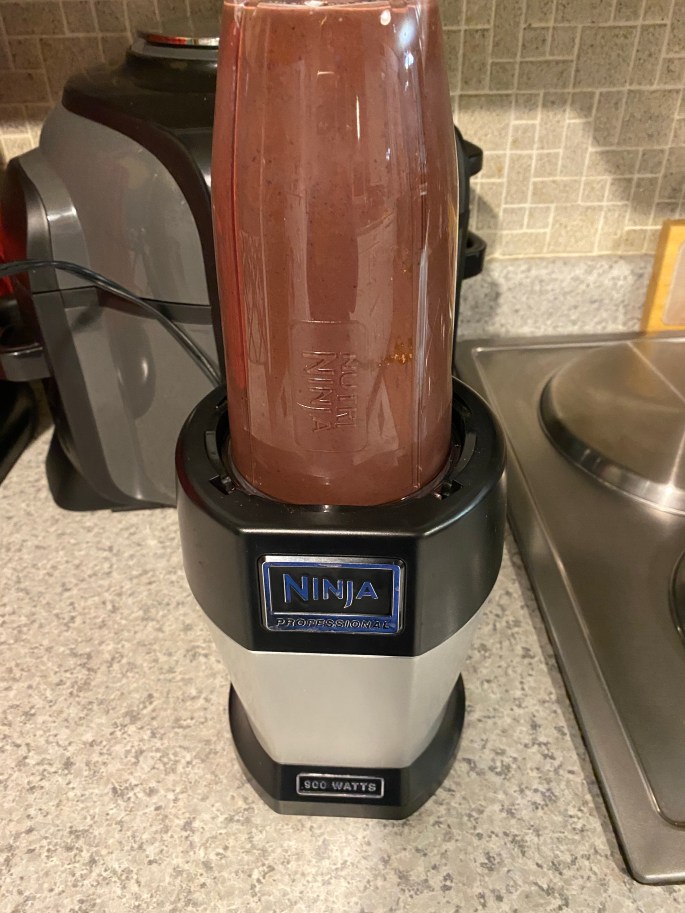
Berry Immunity Boosting Smoothie aka Stress Less Smoothie

The greatest weapon against stress is our ability to choose one thought over another.”–William James

Photo by Pedro Figueras on Pexels.com

The challenge of work-life balance⚖️

It is not uncommon to engage in conversations centering around stress.  Attempting to balance the demands of work and life can be challenging. The combination of long work hours, while also juggling the needs of family, make it difficult to have time to do the things that would otherwise relieve stress, such as regular exercise, outings with friends, or even a relaxing soak in the tub. 

When stress ramps up, there is a chain-reaction in our bodies.  According to Harvard School of Public Health, when stress is high, the body’s demand for oxygen and energy increases, which in turn increases the demand for key nutrients.  Simultaneously, stress causes the body to eliminate other vital nutrients. This can take a toll on the body’s immune system.

As the chain reaction of stress continues, hormones become affected.  If the stress is acute, the body will secrete adrenaline, which suppresses appetite.  However, when the stress becomes more chronic, cortisol levels begin to rise, instigating food cravings.  Cortisol tends to create cravings for foods that are typically considered “comfort foods,” full of sugar, salt, and fat.  Unfortunately, if cortisol stays elevated, the chain reaction continues to wreak havoc upon our bodies, and this often influences our coping strategies.

Photo by cottonbro studio on Pexels.com

The body’s stress response 😰

Chronic high stress time periods, depletes the body of energy and can often reduce time available for decompression. This can inhibit the desire to prepare healthy, nutritious meals.  Sometimes, chronic stress causes us to skip meals.  The downside to skipping meals is that, as the cortisol levels rise, once there is an opportunity to eat, we tend to reach for those comfort foods that will not replenish the body’s stores of diminished nutrients.

Therefore, how we respond to stress matters.  With some situations, we can identify upcoming stressful time periods before they begin, and thus, we can be more proactive.  However, that isn’t always the case.  Nonetheless, there are a few basic guidelines, according to The University of North Carolina at Chapel Hill that are worth remembering.

Photo by Antoni Shkraba on Pexels.com

Tips for eating during times of stress 😣

  • Keep nutrient-dense grab-and-go snacks on hand at all times.  Foods like baby carrots, celery sticks, hummus cups, guacamole cups, apples, oranges, bananas, popcorn, almonds, walnuts, pistachios, low-sugar yogurt, low-sugar granola, low-sugar oatmeal packets, whole-grain crackers and so forth.
  • Eat at regular intervals when possible.  This will keep blood sugar stable, and keep the brain, which needs glucose, working at its best.
  • Eat high-fiber foods. Foods, such as fruits, vegetables, nuts, seeds, beans, oatmeal, and other whole grains, have been shown to decrease perceived stress levels and increase alertness.
  • Focus on eating fruits and vegetables, especially leafy greens, whenever possible.  These foods are filled with the vitamins and minerals your body needs to neutralize the harmful molecules our bodies produce when under stress. 
  • Foods rich in unsaturated fat also help. Think walnuts, flax seeds, chia seeds, and fish oil to name a few. These foods are associated with increased brain function; however, deficiencies in fatty acids can result in depression and/or anxiety. 
  • Be mindful of caffeine and/or alcohol intake. Both of these can disrupt sleep, which the body desperately needs during times of stress.  Additionally, both can increase blood pressure, which can increase feelings of anxiety.
  • Ensure your body is getting enough quality sleep. Getting enough sleep allows the body to reduce cortisol levels and other stress hormones, increasing the chances of remaining calmer in the face of stress.
  • Employ constructive coping strategies. Whether it is talking to a trusted friend or therapist, journaling, meditating, asking for help, or going for a walk–developing positive coping skills is a lifetime skill set. 
Photo by Wallace Chuck on Pexels.com

The reality of stress 😩

Stress is reality at different points in our lives.  While we cannot control when it will arise, we can control our response to it.  It is easy and understandable to seek comfort during times of stress.  However, when those sources of comfort become unhealthy coping mechanisms, such as over- or undereating, drinking alcohol in excess, going without sleep, and so forth, we risk using short-sighted solutions that could lead to developing long-term problems, creating even more stress.  

Stress less smoothie 🍓

Below is my newest smoothie creation.  It is full of nutrient-rich foods that are high in fiber.  Some of the ingredients may cause you to raise an eye-brow in wonder, but I promise, it does taste great.  That said, feel free to adjust, add to, or eliminate ingredients that don’t suit your palate or dietary needs.

This recipe can be made ahead of time and frozen into individual servings.  They will stay fresh in the freezer for up to three months.  Then, whenever faced with a stressful day, take one smoothie out the night before, set it in the fridge to thaw, and then it’s grab-and-go convenience for the next workday. Sip on it through a lunch meeting, or if more time is available, pour it into a bowl and sprinkle on favorite fruit and nut/seed toppings, along with a bit of granola. 

I can’t promise that this recipe will change the stress around you. However, it does provide a powerful nutritional punch to help stave off the effects of stress, and offers one less thing to worry about.  Plus, it feels good knowing that if everything else goes wrong in the day, at least one small part of your day was stress-free.  

Cheers to one less thing to stress about!
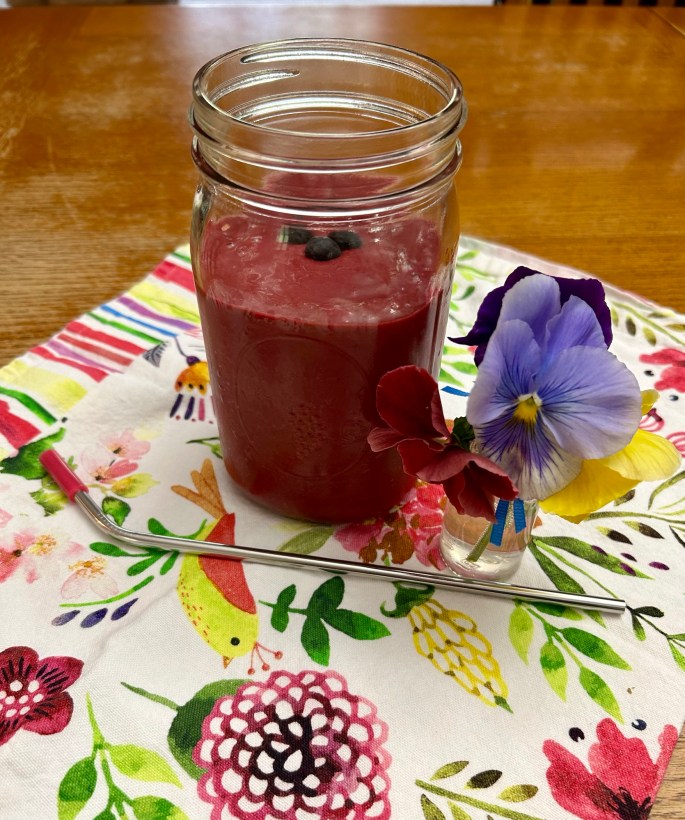
Berry Stress Less Smoothie

Nutrient dense, stress combating meal replacement

Ingredients:

2 cup spinach, riced cauliflower, or kale (can be frozen)

½ cup strawberries, frozen

½ cup raspberries, frozen

½ cup cherries, frozen

1 apple

½ cup lentils

1 parsnips

2 tablespoon flax, chia seeds, or hemp seeds (or combination of any two)

2 tablespoons goji berries, OR 2 medjool dates, OR 2 prunes, optional

2 tablespoons cocoa or cacao powder, optional

2 scoops protein powder, optional

1 cup beet juice (can use pomegranate or cherry juice or simply use water)

1 cup milk  plant or dairy based variation)

½-1 cup of water, if too thick

Directions:

Put all ingredients in high powered blender

Blend until creamy and smooth

Makes 2 large servings 
Grapefruit Smoothie: Refreshingly, tasty nutrition on the go

“In 1993, Texas chose the red grapefruit as its state fruit. The red grapefruit was chosen because it was the first fruit ‘invented’ in Texas, and grapefruit trees have built more revenue than any other fruit tree in Texas!”–Wintersweetz.com 

Photo by Laker on Pexels.com

The forbidden Fruit🏝️

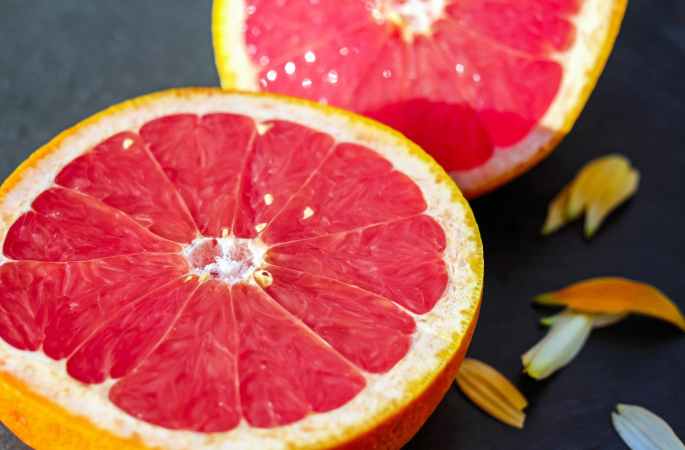
I was absolutely surprised to learn that the grapefruit was once named the “forbidden fruit” in the mid-1700s by a reverend searching for the identity of the original tree of good and evil from the Garden of Eden in the Caribbean Sea.  Years later, that same “forbidden fruit” tree was brought to Texas by Spanish missionaries in the late 1800s and given to local farmers in the southern area of the state.  Little did those Texas missionaries know that the Rio Grande Valley possessed fertile soil and subtropical weather, creating ideal growing conditions for grapefruits. Now, Texas is the third largest citrus producer in the United States, and it is especially known for its red varieties of grapefruits, such as Rio Star and Ruby Sweet. 

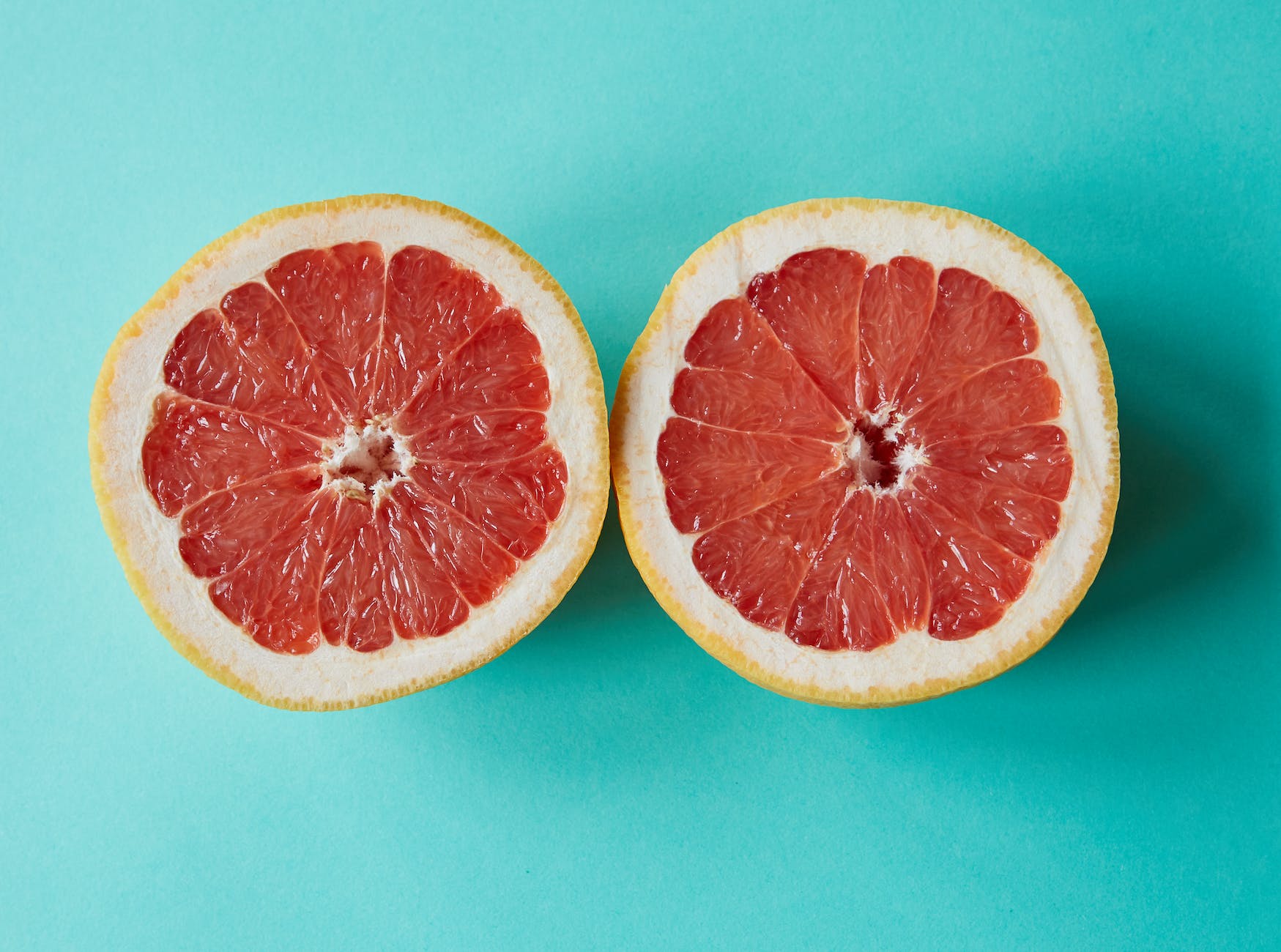
Personally, ruby red grapefruit is one of my favorite fruits.  I especially appreciate its sweet tangy flavor.  Red grapefruit seems to bring my tastebuds to life with its clean, refreshing, and light taste.  

It is that sweet tart taste that adds extra zing when combined with other flavor profiles in recipes.  For example, spread ricotta cheese over toast, add a few slices of ruby red grapefruit, then drizzle a bit of honey over that, and you’ve got a light refreshing summer breakfast.  Toss slices of grapefruit, along with walnuts, goat cheese and a few slices of roasted beets, into a salad of leafy greens with a light vinaigrette, and you’ve got a tasty lunch or light dinner. You can even make delicious light desserts and baked goods with grapefruit, such as grapefruit buttermilk muffins, grapefruit bars, or even chocolate covered grapefruit slices!  

Photo by Nicola Barts on Pexels.com

Smooth Nutrition 🍍🍌🥝

Then again, grapefruit can be added to smoothie recipes for an instant burst of flavor AND nutrition.  I created the recipe I am sharing with you today during the weeks following neck surgery this past spring.  Despite the fact I am fully recovered, this is one smoothie recipe that I still frequently make.  

During my recovery process, I was hyper-fixated on the nutritional content of the foods to enhance healing, but I was having difficulty swallowing.  Smoothies, therefore, became a go-to source of nutrition, and this recipe is uber-refreshing and jam-packed vitamin, mineral, and fiber content.  Specifically, it combine the goodness of grapefruit, which is packed with vitamin C and fiber, with strawberries and one of three fruits–frozen pineapple, banana, or kiwi–depending upon what I have on hand at home.  

One half of a grapefruit contains six grams of fiber and the total daily amount of vitamin C needed by our bodies. The grapefruit gets tossed into a blender with strawberries, which are also high in vitamin C and fiber as well as antioxidants, magnesium and phosphorus.  Then, I take my pick of pineapple, banana, or kiwi, and pitch one of those into the blender. No matter which of the three of those fruits I choose, they are all full of potassium, fiber, and a whole slew of vitamins and minerals. 

Light and refreshing, grapefruit smoothies are perfect for nutrition on the go!

Blend and Go nutrition🥛

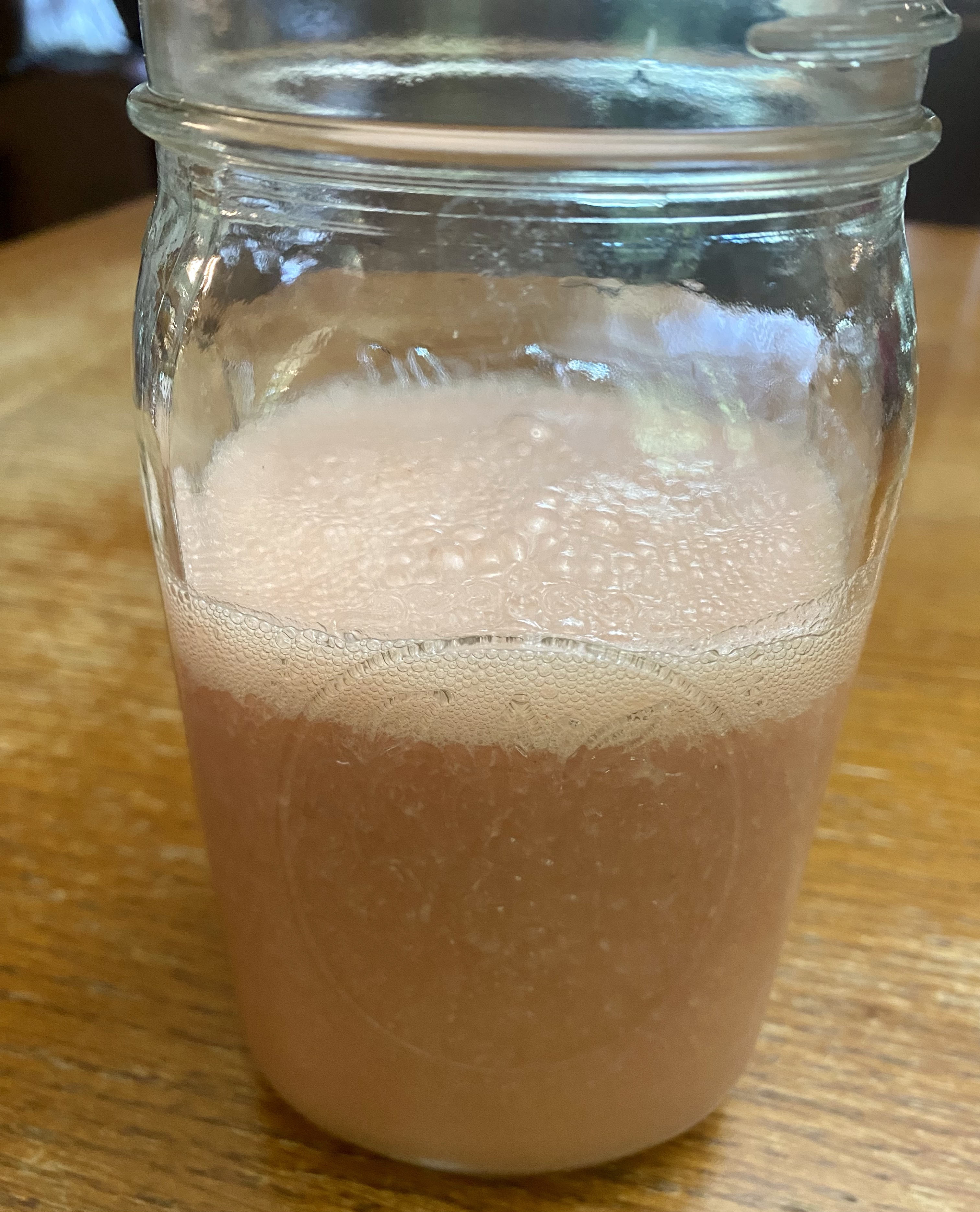
Sometimes, for a touch of sweetness, I add in a medjool date, a bit of maple syrup, or pomegranate juice as well as a bit of ginger for its antiinflammatory properties. Depending upon what I am eating that day, I may also add vanilla protein powder, which gives the smoothie a creamy, zesty-sweet taste.  Once all desired ingredients are in the blender, I give it a whirl for about one minute and divide between wide-mouth mason jars or smoothie containers.  And in less than five minutes, I have two refreshing, nutritionally dense smoothies.  Perfect for on-the-go nutrition or a quick, healthy snack.

While grapefruit was once known as the “forbidden fruit,” there is nothing forbidden or evil about it!  Grapefruit is budget friendly, full of tangy zest, and nutritional goodness for your body.  I hope you’ll give this recipe a try!  You just might be surprised!

Zesty sweet, budget-friendly goodness, bursting with flavor AND nutrition, in less than five minutes!

Grapefruit Smoothie

Serves 2

Ingredients:

1 cup frozen riced cauliflower 

1 large ruby red grapefruit, peeled (with some pith remaining), quartered 

1 cup strawberries, fresh or frozen

1 cup pineapple, fresh or frozen (or 1 banana or 2 kiwi)

1 medjool date (or 1 teaspoon maple syrup or ¼ cup pomegranate juice) for added sweetness 

¼  teaspoon ginger powder, if desired 

2 cups water (or other favorite liquid)

Optional: 1-2 servings favorite protein powder

Combine ingredients in a high powered blender, adding water last.

Blend for one minute.

Divide between two large smoothie containers or jars.

Can be stored in the refrigerator for up to 3 days; shake well before drinking.

Can also be frozen for up to 3 months, set in the refrigerator overnight to thaw ahead of time.

Shamrock Green Smoothie

“No matter when you start, a diet that is focused on plant foods will help you work toward the prevention of many illnesses and feeling better overall”–Julia Zumpano, RD, LD

Diet choices have long been debated.  From Adkins to Keto, 7-Day Rotation to Whole 30, Paleo to Low Carb, Mediterranean to Pritikin, and all variations in between, regardless of the varying diet trends, there’s no denying that fruits and vegetables are nutritionally sound food choices for promoting health. Experts may argue about which fruits and vegetables are the so-called better choices, but most will agree that eating unadulterated food from the ground is more nutritionally sound than eating chemically enhanced processed foods.

In fact, when going through the research, numerous medical clinics, cancer centers, and disease prevention sites recommend Americans increase their intake of fruits and vegetables.  It makes sense too.  All those different colors offer a wide array of vitamins, minerals, phytonutrients, and anti-inflammatory properties that cannot be found naturally in processed food.  

“Eating healthy food fills your body with energy and nutrients. Imagine your cells smiling back at you and saying: “Thank you!”.” – Karen Salmansohn

Think about it.  Fruits and vegetables don’t need a label that says, “Vitamin-D enriched” or “Fortified with 12 essential vitamins and minerals.”  They don’t need it because they naturally contain a wide array of vitamins and minerals–depending upon which plant you choose to consume.  This is why, “eating the rainbow,” is an often quoted expression.  If you eat a wide variety of colorful plants throughout your day and week, Mother Nature, thanks to the infinite wisdom of our Creator, provides all the nutrition your body needs for healthy functioning and vitality. 

Like many, since March of 2020, I have become increasingly more focused on what I eat.  Keeping my immune system running high, and my inflammation low, seems more important than ever in the era of living in a global pandemic.  While I’ve been a plant based eater for nearly ten years, I find myself more attentive to daily consuming dark leafy greens and/or cruciferous vegetables as part of my desire to remain healthy and avoid COVID.  While I recognize that eating well isn’t the only protective act I need to do when dealing with a highly contagious virus, these vegetables have long been established as possessing cancer and disease preventive properties, reducing oxidative stress, and lowering the risk of cardiovascular disease.  Additionally, they increase bone health, protect eye health, and boost the immune system.  Plus, their varying shades of green are chock full of fiber and a wide array of vitamins and minerals.  

Photo by Toni Cuenca on Pexels.com

“The doctor of the future will no longer treat the human frame with drugs, but rather will cure and prevent disease with nutrition.”–Thomas Ediso

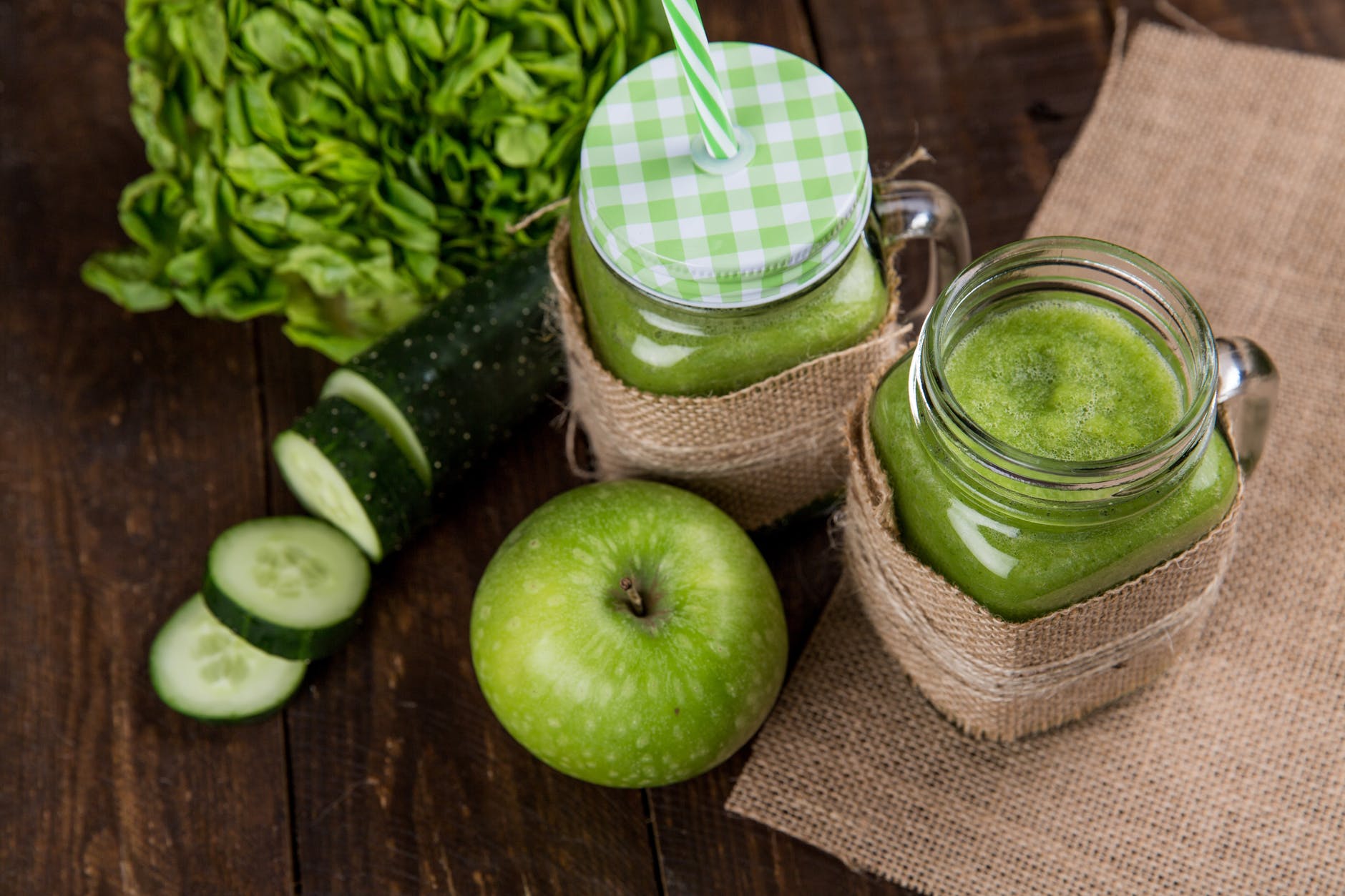
Below is a green smoothie recipe I drank throughout most of March that features leafy greens and cruciferous.  After such an extraordinary winter with snows, ice, and then flooding, drinking a bright green smoothie felt like a personal manifestation of spring. Furthermore, since March was also the month in which I was wrapping up 12-weeks of training for the Virginia Beach Shamrock Marathon, this smoothie felt like extra-nutritional insurance for remaining healthy and ready to run. 

I like to think of smoothies as a blended breakfast salad.  When made fresh at home, I am the controller of ingredients, calories, fiber, and nutrition.  I keep my smoothies whole food and plant based food based in order to start my day off on the right foot–especially since I would otherwise, at least during the work week, skip breakfast.  While I often add healthy fats in the form of nuts or seeds to smoothies, I personally do not with this one, but you could.  Instead, I tend to add a teaspoon of greens powder for an extra boost of concentrated green goodness, and sometimes matcha (ground green tea) if I feel I need a boost of energy and focus.   This smoothie fuels my morning and keeps me full until lunch.  The flavor is bright and tangy, and it’s super refreshing to drink.  

Here few other tidbits and factoids I have learned while refining my smoothies techniques:

*  Put greens and liquid in the blender first and blend well, this is especially important, if, like me, you don’t have a top-of-the-line blender.

* Spinach is always the sweetest greens, which is why I often blend it with other greens such as kale and swiss chard.

* Riced cauliflower, fresh or frozen, works well as a “green” since it’s cruciferous and makes smoothies extra smooth and creamy.

* Lightly peel/cut away any citrus fruit, leaving part of the pith (the white part).  It is high in fiber, vitamin C, flavonoids–which boost the immune system–and it is anti-inflammatory and antimicrobial.

* Ginger and turmeric are both known for their immune boosting properties, reducing inflammation, and decreasing chronic pain.  Fresh ginger and tumeric–both are roots–offer the most benefits, but ground versions are still beneficial.  Therefore, I tend to add both spices to not only nearly all of my smoothies, but also incorporate them throughout the day.

I hope you’ll give this vibrant green smoothie a try. It is an easy way to increase your fruit and vegetable intake.  Plus, you’ll start your day fueled with the power of green!

From my home to your, I wish you health, vibrancy, and vitality.  Be well, and, if you do give this, or any of my other smoothie recipes a try,  I’d love to hear your thoughts.

Shamrock Marathon Green Smoothie

Ingredients:

1 cup water

1 cup of your favorite greens, fresh or frozen, feel free to combine 2 different ones (think spinach, kale, 

½ to 1 apple, quartered (I use granny smith apple.)

1 lemon, peeled, quartered & seeds removed 

1 mini cucumber or ½ large cucumber, quartered

1 stalk celery, quartered

1 ¼ teaspoon ground ginger or 1” fresh piece

¼ teaspoon turmeric or ¼” fresh piece of turmeric 

Dash of salt

Optional add-ins: 1 teaspoon greens powder and/or matcha powder, 1 tablespoon hemp, chia, or flaxseeds, and/or 1 scoop favorite protein powder 

Makes 1 generous serving

Steph’s Blues Busting Chocolate Green Smoothie

“If you have a chronic disease — such as heart disease, diabetes, asthma, (arthritis, cancer, dementia) or back or joint pain — exercise can have important health benefits.”— “Exercise and chronic disease: Get the Facts,” Mayo Clinic Staff

Photo by Yaroslav Danylchenko on Pexels.com

COVID has taken away many so-called practices and habits that were once societal norms.  I think it is fair to say that many of us, from time to time, have felt weighed down, a bit angry, and even bereaved over the loss of the “way things used to be.”  In fact, now that we’ve begun traveling down this new road of living, I suspect there may be many things that will never return.  However, on the positive side, there are a few things that have evolved from this swift shifting of life.

One such personal benefit began during the quarantine period of 2020 as I reflected on my own health.  As I recently shared in other pieces, I have a genetic predisposition to colon cancer and heart disease.  Therefore, in an attempt to boost my immune system against these two inherited threats as well as COVID, I began to dial in my focus on the benefits of cardiovascular exercise and plant based eating, while still continuing some strength/flexibility/mindfulness practices.  None of these attempts have been perfect, but they do provide a sense of personal empowerment–a worthwhile feeling in a world that often feels out of control.

Photo by Karolina Grabowska on Pexels.com

Of particular focus for me was a renewed desire for out-of-doors exercise; however, the ever-present battle with two bulging discs and an extra vertebrae was/is a never-ending reality.  Therefore, towards the middle of May 2020, I began researching ways to strengthen my back and core muscles while simultaneously gradually working my way from walking to running in order to increase my cardiovascular fitness level. While there is nothing wrong with walking–in fact, I love it, and I honestly believe it is one of the safest and best forms of exercise–there is something about the heart pumping vigor of running that leaves me, well, breathless!

All kidding aside, I do not want to give the illusion that I run fast.  Speed is not, per se, part of my goal; instead, I focus on increased endurance.  In particular, I put greater emphasis on my resting heart rate.  The lower my resting heart rate, the better I sleep, and the less stress affects me–especially at bed time.  

Photo by Ketut Subiyanto on Pexels.com

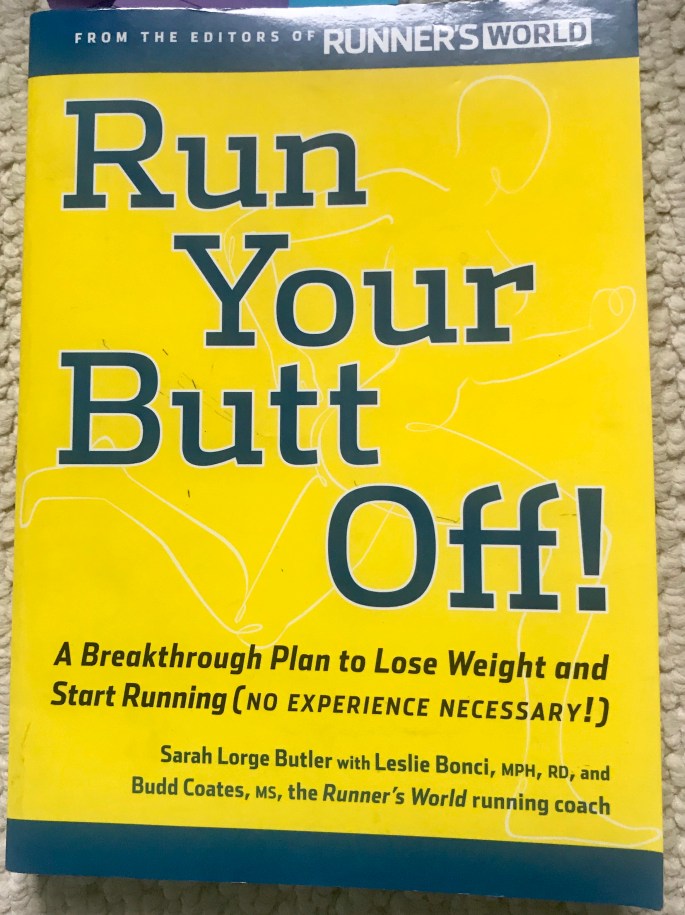
Therefore, without belaboring the point, I found a program for strengthening the back and core called, the Mckenzie Method.  Using some of the exercises from this back method and combining them with exercises from my time spent in physical therapy and practicing yoga, I cobbled together my own DIY daily back/core care routine.  Additionally, while researching this method, I ran across (See what I did there?) a book/training entitled, Run Your Butt Off, about which I have previously written.  This running program offers a plan to help a walker go from walking for 30 minutes, to running for the same length of time in 12 weeks (or however many weeks you decide to take it).  

Since completing the Run Your Butt Off plan, I have continued running 3-4 times per week. On the days that I run, I sleep much better–even if I don’t have the time to sleep long.  Even more exciting is that I have signed up to run a virtual half marathon.  Due to this, I have put greater emphasis on personal nutrition for the purposes of reducing inflammation and fostering recovery as the running mileage increases each week.

“Choosing plants will help all your body’s systems work the best they can.”–Heather Alexander, The University of Texas, MD Anderson Cancer Center

One way I am doing this is by continuing to eat plant-based.  While plant based eating does not have to mean that you will completely forgo meat and dairy, it does mean that those foods are dramatically reduced.  However, my personal choice, other than my occasional indulgence of black bean nachos, I choose not to consume meat and dairy products.  Additionally, I have (once again) committed to breakfast smoothies during this time period rather than skipping breakfast.  These smoothies are whole food, plant based powerhouses with no added sugar.  Every ingredient contained within them is full of fiber and a solid source of nutrition.  

I know that many people are opposed to drinking calories, and I understand abiding by that rule. However, I simply do not have time to commit to a sit-down breakfast, plus my stomach is often a queasy mess in the mornings.  A premade smoothie that I make ahead of time is a portable package of sound nutrition that my stomach can tolerate a couple of hours after rising.  They fuel me through my morning, and by lunch, I find I am not, per se, ravenously hungry.  

Additionally, by the time I head for my after-work runs, even if I am mentally exhausted, once I force myself to my running destination, I have plenty of fuel in the tank to complete the run.  Afterwards, I ALWAYS feel better, and even if everything else about the day seemed like it went wrong, at least I did two positive things for myself: fed my body good nutrition and exercised.  In my book, that’s a win. COVID changes be danged.

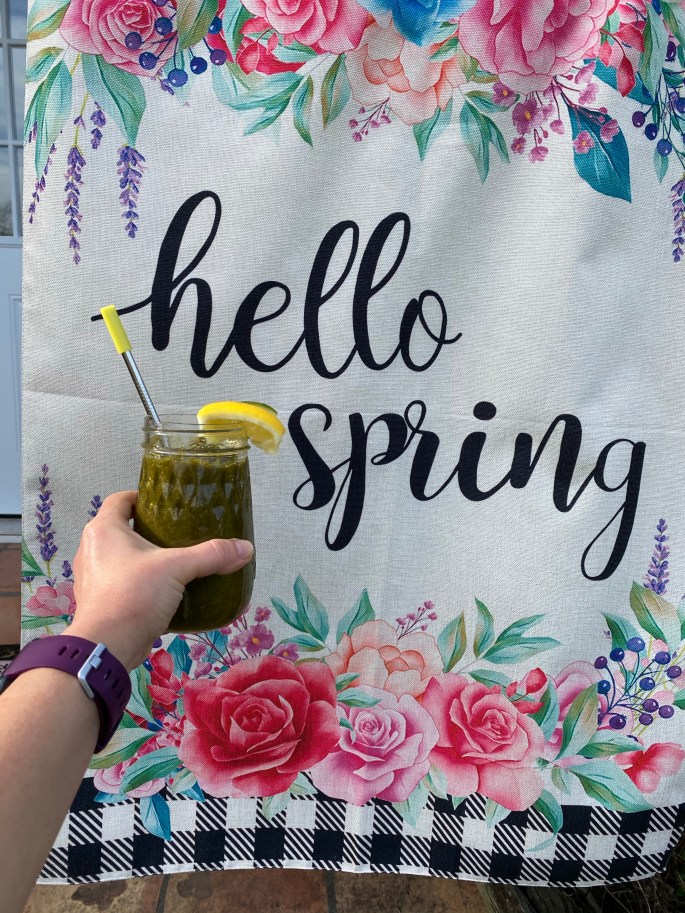
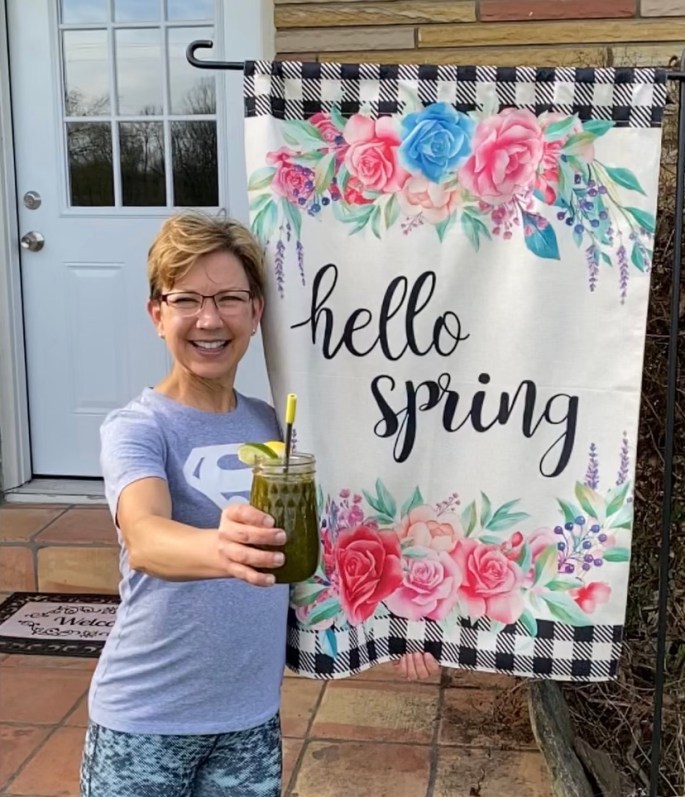
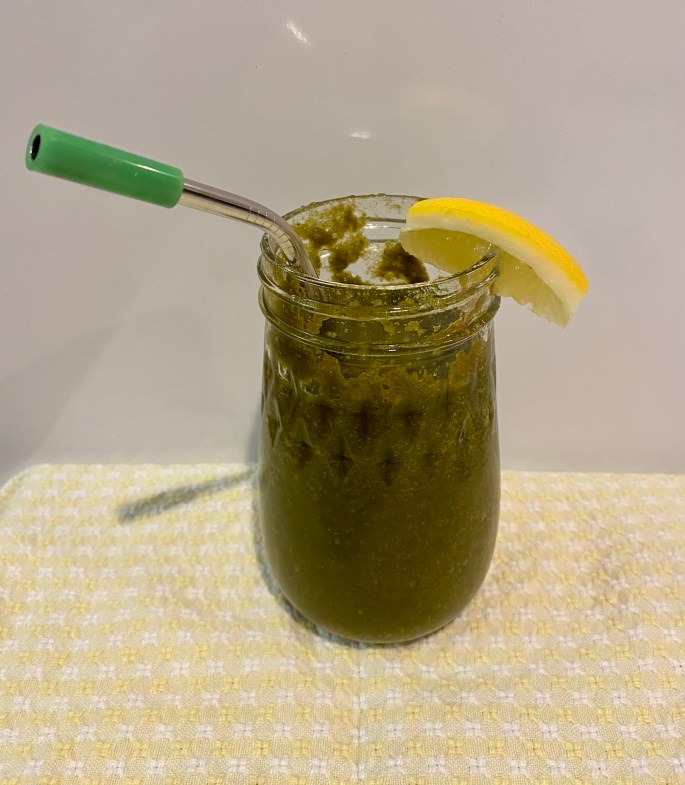
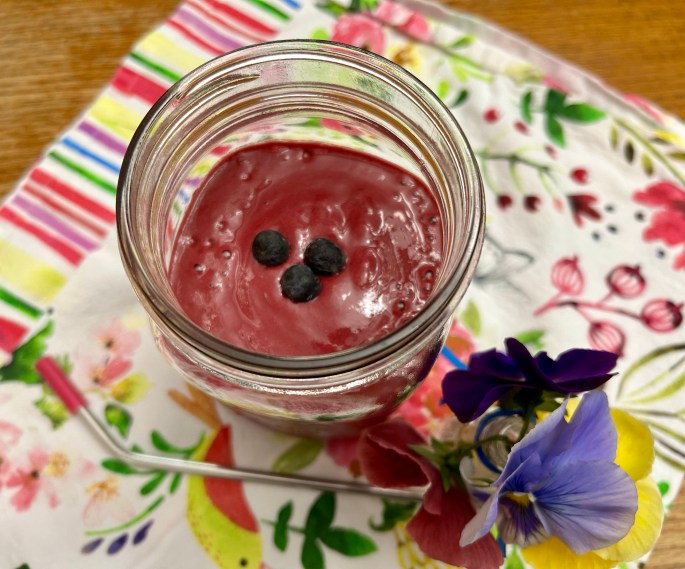
What follows below is one of my newest smoothie creations. (I’ve got a few more recipes I’m refining!)  No matter how frazzled, frustrated, or dissatisfied I may feel with external situations, this recipe has a way of mentally picking me up with its bright flavors and hint of chocolatey goodness.  Feel free to play around with and/or change the ingredients and/or the amounts to meet your personal dietary needs and taste preference.  Additionally, serve it up in a nice glass or even canning jar, and don’t be ashamed if using a straw (I use metal, reusable straw.) to slurp up all of the goodness at the bottom of the glass!  

From my home to yours, I wish you much happiness, health, and harmony even during these challenging times.  

Steph’s Blues Busting Chocolate Green Smoothie

Ingredients:

½ cup favorite milk or water (I use plant based milk.)

1 cup (75 grams) chopped romaine lettuce

1/2 ripe banana (I buy them ahead of time and freeze once ripe.)

2 tablespoons flax seed (Can use hemp or chia seeds.)

**2-4 tablespoons of Dutched cocoa powder, depending upon how chocolatey you want it.

1 teaspoon pure vanilla extract or vanilla bean powder

1 ½  cup (45 grams frozen; 85 grams fresh) chopped spinach 

1  cup blueberries (Can use frozen.)

½ cup cherry, pomegranate, or pomegranate/cherry juice

Dash of salt (I use a twist of ground pink himalyan.)

Optional: Add 1-2 teaspoons of favorite sweetener if desired, such as pure maple syrup, molasses, or honey (I do NOT add any sweetener, but I know others prefer a sweeter smoothie.)

Place in a blender in the order listed and blend until smooth.

Divide between two glasses.

Can be served immediately or stored for later use in the fridge.

Makes 2 servings.

**If you are not a fan of chocolate, you can skip the cocoa powder altogether.  However, you may want to consider adding, at the very least, 1 tablespoons of it.  Cocoa powder has numerous health and nutritional benefits.