Enthusiasm for Life in the Present Moment

“Discipline is not the enemy of enthusiasm.”–Joe Clark

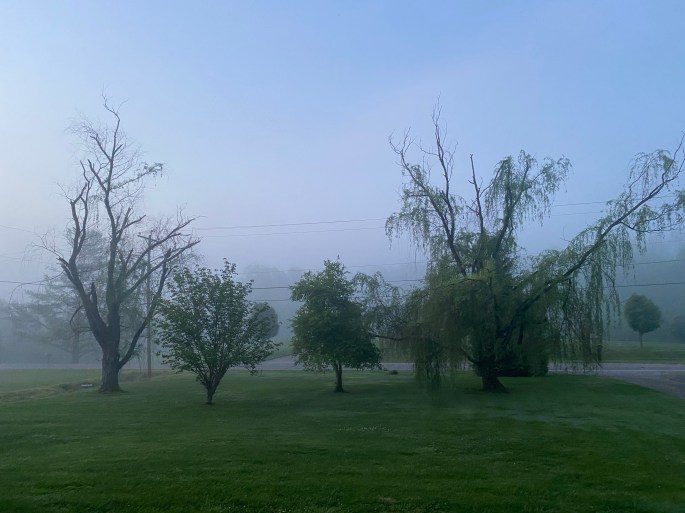
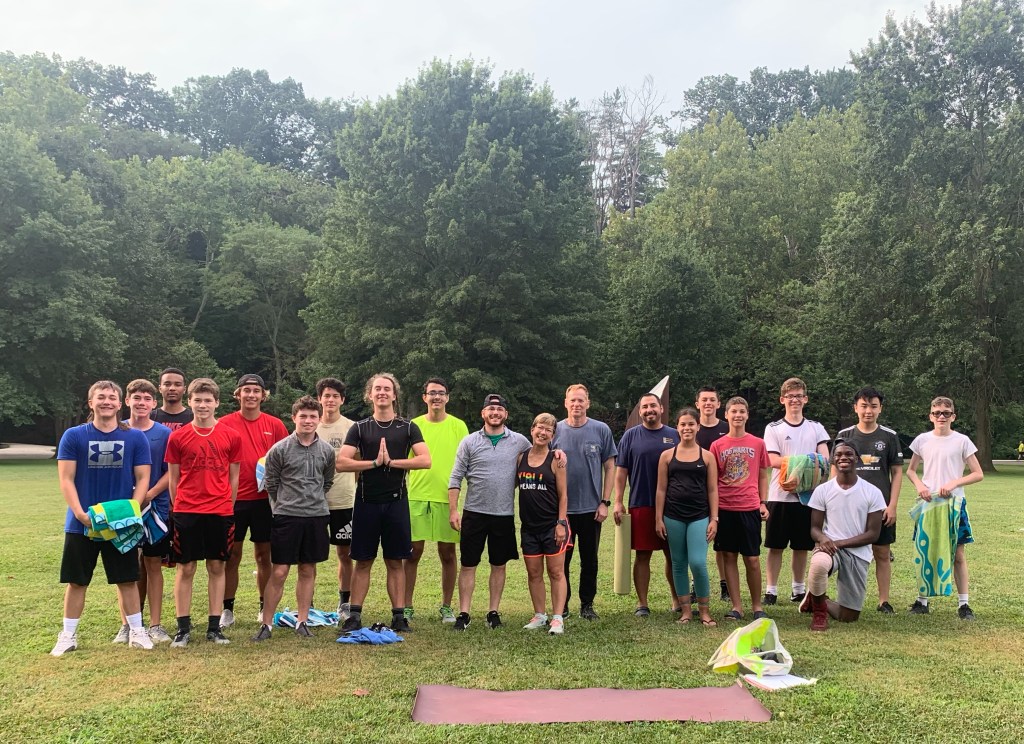
There they were. Athletically built and full of swagger, I listened to their coach who asked them to circle up around me in the dewy grass.  The fog was rising, but the sunlight remained hidden on this humid August Saturday morning.  They were quiet and rather fatigued-looking after a week of two-a-day practices; nonetheless, they were respectful as I began to talk to each of them, my eyes moving from athlete to athlete.  

The task before me was to provide a recovery yoga practice for the St. Joseph Central Catholic High School boy’s soccer team, the sibling school to the middle (and elementary) school for which I am a 6-8 educator.  I began our morning practice by setting an intention. Mid-way through my opening statements, the thought occurred to me that I might also be talking to myself.
I began the practice with the following quote by Julia Cameron, “Over an extended period of time, being an artist requires enthusiasm more than discipline.” However, I replaced “artist” with “athlete.”  Enthusiasm comes from the Greek word, enthousiasmos, enthous, or entheos–which essentially means to be possessed or inspired by God.  Other translations include: filled by God’s essence; or, inspiration or possession of God.  When looking at synonyms for enthusiasm–passion, ardor, zeal, fervor–one begins to truly feel the emotional strength and power of the word.

The purpose of selecting this intention for the team’s yoga practice was two-fold. First, I  wanted them to walk away from practice with the thought that in order to have a successful soccer season, it would not only require disciplined practices, thinking, actions, and reactions, but also their discipline must be infused with enthusiasm–for one another and for the game.  Additionally, I hoped they would sense the Creator’s guiding presence in their life, the One who divinely and individually created each one, as they moved into and through their coming season and school year.  

As seen on Instagram @ postiveenergyalways

Discipline and enthusiasm, I believe, go hand-in-hand, especially when reflecting upon this past year and half of living with COVID. Like many, I had maintained the discipline of preventative COVID measures throughout the summer, fall and winter of last year, but by the end of February of 2021, I was beginning to lose my enthusiasm. I was ready, more than ready, to give up.  In fact, I was ready to run away from life. It seemed to me that there had been far too many deaths, distractions, changes, illnesses, storms, flooding, and other torments of life.  Like so many around me, I felt I was, like the old southern, metaphorical expression made popular by the band, REM, “losing my religion,” and barely holding on. 

Thankfully, I did not give up.  Instead, I kept showing up, moving, one foot in front of the other, one day–sometimes even one moment–at a time.  By the time summer arrived, I decided to create a disciplined morning practice devoted to inner, spiritual work in an attempt to find that lost enthusiasm.  And guess what I discovered?  The Divine Creator was still there, and at a snail’s pace, I began to once more feel the True Source of inspiration.  I began to find enthusiasm once more.  
Photo by Dom J on Pexels.com

“Write this down:  My life is full of unlimited possibilities.”–Pablo

I woke early every morning and committed myself to the practice of writing–not for publication, but for me.  Each morning, before the sun had risen, I sat and wrote for nearly an hour following a formatted plan. It didn’t matter how much my inner-self tantrumed about the early hour, time commitment, or the work, I kept up the practice and believed in the process. I filled pages of journals–words that I ultimately shredded!  

In fact, hours of work were ultimately sent through a shredder because, in the end, the words I wrote did not need to be saved.  They had served their purpose by allowing my mind to process and recover.  It took weeks, but my mindset gradually shifted. Instead of thinking, “Oh, I have to get up and write,” I actually began to look forward to my writing practice.  I was finding my joy.

Photo by Gareth Willey on Pexels.com

As I worked with those high school boys, they found their muscles tight from the pounding and compacting of twice daily running and drills.  Their bodies were not easily given over to poses (stretching positions) through which I guided them. It was as if their bodies were saying, “No! I won’t!”  I encouraged the young men to breathe through the resistance, release the tension, and relax.  The more they took deep breaths, the more they were able to relax those tight muscles.  The more they relaxed, the more their bodies allowed them to stretch. 

At the end of nearly an hour, they entered their final pose, “savasana,” final relaxation pose.  Savasana is also known as corpse pose–as there is a dying away of the body and mind to all of its busyness.  Savasana is similar to powering down your computer or phone–it gives the body a chance to assimilate all that has happened within that hour of practice, reboot, and return to homeostasis.
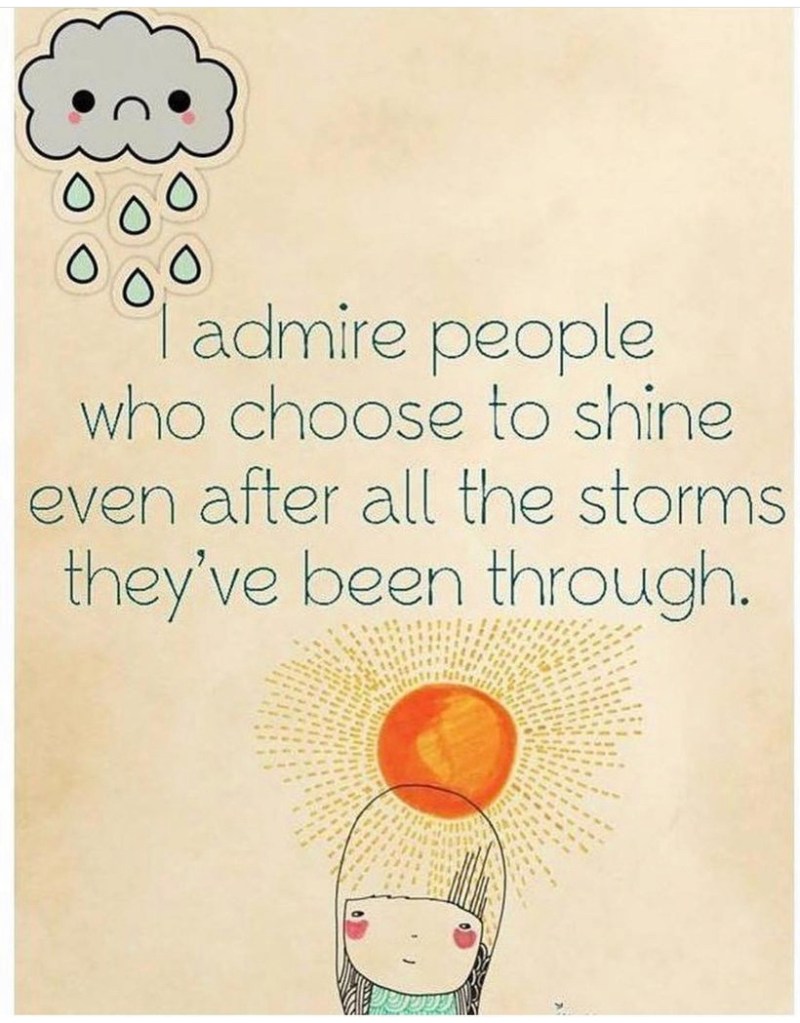
As seen on Instagram @ spiritualist_within

Likewise, my summer practice of writing served a similar function.  I had to learn how to loosen my rigid and restricted way of thinking.  Instead of remaining in my isolated, ego-driven “No-brain,” I had relearn how to tap into my “Yes-brain.”   Through my disciplined morning practice of writing, prayer, and affirmations, it was as if my brain was metaphorically breathing deeply, learning to relax, and eventually relearned to say, “Yes,” even to things for which I cannot control.  My brain had to die away from the busyness of my ego–the poor, pitiful me side, and tap into the True Source

Making my way around the circle of kids relaxed in savasana, I sprayed each of their feet and ankles with peppermint spray as an act of soothing refreshment. I could not help but notice all of their blisters, calluses, and chafed skin.  It reminded me of how many of us feel as we deal with this new variant(s) of COVID.
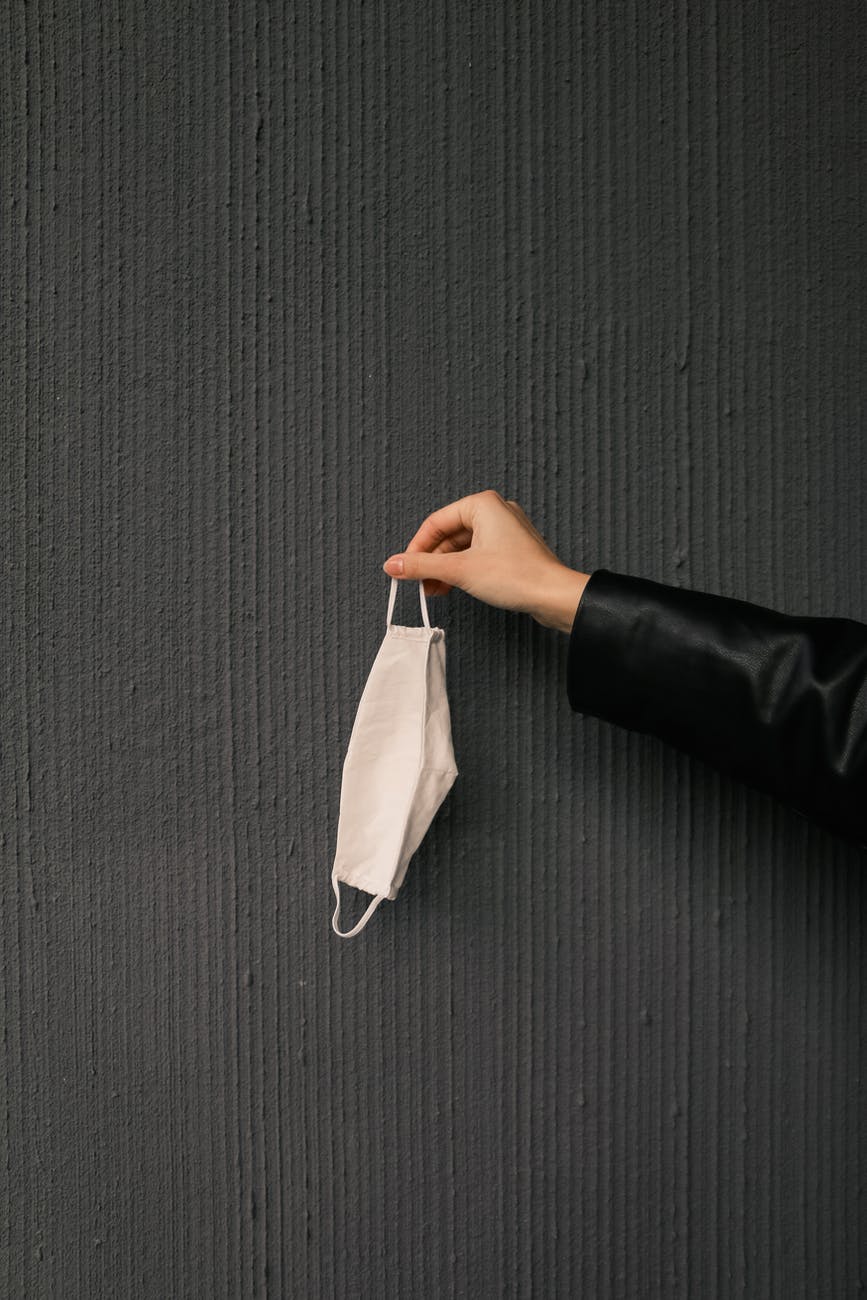
Photo by Maksim Goncharenok on Pexels.com

“Always remember to take your Vitamins:  Take your Vitamin A for ACTION, Vitamin B for Belief, Vitamin C for Confidence, Vitamin D for Discipline, Vitamin E for Enthusiasm!!”–Pablo

Many may feel chafed, not only by the notion of wearing masks again, but also by the fact that we still can’t return to a so-called, “normal,” or the sense of homeostasis. We are asked to remain vigilant and disciplined regarding not only our health, but the well-being of others, and yet our souls are begging for soothing like the peppermint oil sprayed on the soccer player’s bedraggled feet.  It is worth remembering how far we have come, and if we made it through last year, we can make it again.

I will argue that Cameron’s words can be applied to this extended period of time as we continue to live with COVID.  We need a large dose of enthusiasm, more than discipline, in order to continue to embrace life as it is and keep going.  Enthusiasm is our God-given, on-going source of inspiration and energy.  When enthusiasm is combined with taking action and believing in our Higher Power, we can continue with confidence to remain disciplined and still experience joy.  Life may not be like it was, and frankly, it may never return to what we once knew, but life in the present moment–no matter the status–is continuing; and that, my friend, is worth a mask-covered smile.  

Miss Ollie Ray is all sunshine and smiles no matter the changes around her as seen in this picture from last school year.

Rocks in Your Head?

“It isn’t the mountains ahead to climb that wears you out; it’s the pebble in your shoe.”–Muhammad Ali

Have you ever been walking along and discovered a rock in your shoe?  It doesn’t seem to matter how small it is, suddenly, it is all that you can think about.  This is especially true if you are on a solo walk or run.  With each step, that multi-faceted, miniscule rock pokes and prods your foot until it becomes your sole focus. Likewise, if you are walking or running with another person, try as you might to ignore the aggravating rock, it remains in the periphery niggling away at your attention in spite of your best effort to focus on the unfolding conversation. 

Have you ever noticed how much more free and spacious your mind becomes if you pause long enough to take the rock out of your shoe?  If you’re with a friend, your concentration easily returns, and if you’re exercising alone, your mind relaxes and resumes its free-flow thought.  When this happens to me, I often ask myself, why did I take so long to shake that rock out of my shoe?  Why did I allow myself to be tormented by such a small thing?  

Photo by Matheus Natan on Pexels.com

Oddly enough, there are times that I will go an entire run or walk, and complete an errand or two, before I take time to slip off my shoe. Once home, I’ll sit down on the front stoop of my porch, take off my shoe and shake out scanty pebbles and/or debris. Slipping the shoe back on, it’s like putting on new footwear–all because I had been too stubborn, lazy, or petulant to take off my shoes and toss out the rocks.

After a recent moment of emptying the rocks out of my shoes, it occurred to me that those crushed rocks were quite a bit like thoughts that can sometimes run through my head.  These are often circular notions of self-doubt, self-criticism, or self-reproach.  Depending upon the day, situation, and/or context, the narrative can vary, but the ongoing, well-rehearsed mental skirmish between Naysayer Nellie and Wetblanket Wanda certainly know how to prick and needle my grey matter like the crushed detritus poking and prodding my foot when trapped in my shoe.

These pessimistic pests tend to most often join forces during times of stress, change, and/or increase in workload.  Sometimes, all it takes is one moment of so-called failure, frustration, or new challenge to inspire those two negative allies to vie for my attention as they quickly assemble a barrage of heated messages designed.  Then, like a challenging adolescent, they turn up the volume, in case I didn’t hear their propaganda the first hundred times!  

Ironically, I know their stories aren’t true. I recognize the disinformation for what it is; and yet, like the proverbial pebble in the shoe, I don’t quickly empty the shoe, or in this case, the prodding thoughts.  Instead, I allow those irksome ideas to create a foothold in consciousness, and repeatedly nettle away. It’s as if these defeatist messages have hijacked my brain.  

Photo by Kindel Media on Pexels.com

If I allow those obstructive thoughts to remain around long enough, like the shoe-bound pea gravel chafing my skin until blisters form, the negative mental chatter can create so much inflammation that my brain will begin its not-so-subtle messages of flight, fight, or freeze.  My head and heart will begin to pound, I will hold my breath, tighten parts of my body, such as my belly, back, or neck, and sleep becomes elusive or filled with nightmares.

What can I do?  Duh! Take off the proverbial shoe and shake out the rocks.  Not that it is easy, but I have to remind myself that thoughts are like clouds.  Even on the most overcast day, when all is gray and cloud-covered, the blue sky and the bright sun are still there–they have merely been hidden.  The sky is not the clouds, and I am not my thoughts–and neither are you, Dear Reader!  In fact, we are so much more than any negative messages sticking around in our heads. 

Photo by NEOSiAM 2021 on Pexels.com

 As I understand it, the emotional center of our brain is housed in the part of the area that evolved quite early in order to determine important life saving decisions such as, “Is this food poisonous or not?” or “Will this animal eat me?”  Once this area of the brain perceives something as dangerous–even if created by our own thoughts–this part of the brain won’t shut off until it feels safe.  (It is also worth noting that the same is true when this area of the brain experiences pleasure–it wants more and more.) 

However, we have another, more advanced part of the brain that allows humans to think, reason, make decisions, and plan.  Therefore, with practice, we can be aware of when the emotional center of the brain launches into its overwhelming fear-mongering.  We further have the capacity to choose whether or not we believe those negative stories, and we can also plan how to treat those thoughts when they do occur.  Furthermore, we can take daily actions to further reduce the rumbling rocky voices which are most often a product of fear . . . fear of failure, fear of success, fear of change, and fear of the unknown

“Remove the rock from your shoe rather than learn to limp comfortably.”–Stephen C. Paul

One of the best pieces of advice an acquaintance once shared with me:  “Stop yelling at yourself.”  She went on to ask if I would yell at my own daughter the way I think about myself.  When I said, no, she simply encouraged me to “play nice,” call fear by its rightful name, and then take steps to calm it down as you would with your own child.  

Many of the actions that can be taken to reduce negative/anxious thinking are not new suggestions.  Deep breathing, exercise, or simply walking away from a stressful situation for a specific time period are all actually quite helpful.  Other suggestions include: 

*Remind yourself of your past successes.

*Take small steps towards learning a new task. 

*Be willing to ask for help to reduce or understand new/heavy workloads.

*Talk to a trusted friend or family member–sometimes just naming your fears begins to tame them. 

*Write your problem on a piece of paper–dump it all, like you’re emptying your brain of pea gravel. The act of writing slows down the thoughts, relaxes your brains, and allows you to see things differently.  I’ve literally taken that written problem, slipped it under my pillow at night, and literally slept on it.  It never fails to surprise me how a little faith and trust that a solution will be found allows it to gradually unfold.  

Photo by Lisa on Pexels.com

*Learn to nurture and protect your thoughts. 

*Cultivate affirmative thoughts.

*Take preemptive action if you know certain situations trigger a strong emotional reaction. 

*Be gentle and kind with yourself. 

If you begin to notice your brain is launching into story mode, each time a thought attempts to pop into your head, try to mentally swipe it away like a fly at a picnic before it can grow.

The point is, just because you think something, doesn’t mean it’s true.  Sometimes the solution is as simple as shaking out rocks.  I’m not saying it’s easy; it’s not.  Nonetheless, it is worth remembering that emotions come and go, like ever changing weather, but they don’t have to permanently hijack your brain.  

Photo by Kelvin Valerio on Pexels.com


May There Always Be a June

“Even the prettiest flower will die one day. It’s nature’s way of teaching us that nothing lasts forever.”–unknown

“Hmm . . .” I think, more than say, with a deep inhale as I yawned awake.  It was a rare, cool morning–a break from the typical heat and humidity of early July.  The bedroom windows were open, and I breathed in the fragrance of dewy grass, damp earth, and flowers. It was the lingering sweet floral scent that began a series of reflections regarding the significance of June and its likeness to the human life cycle.

At the time I am writing this, it is the July 4 weekend–marking, in my mind, the midpoint of summer.  Once July 4 begins, it feels like the rest of summer swiftly sails by.  Ah, but June.  June is sanguine–full of enough bright cheer to hold old-man winter at bay.  The early spring blossoms such as daffodils, crocus, and tulips have long passed.  Aromatic honeysuckle begins its fading away as the summer perennials and annuals begin blooming brightly in rapid succession.  July may be full of celebrations, explosive displays–all red, white, and blue–but, I adore June–modest, optimistic, June, and the colorful, unique flowers that blossom and thrive with its invitation to summer.

Photo by Suvan Chowdhury on Pexels.com

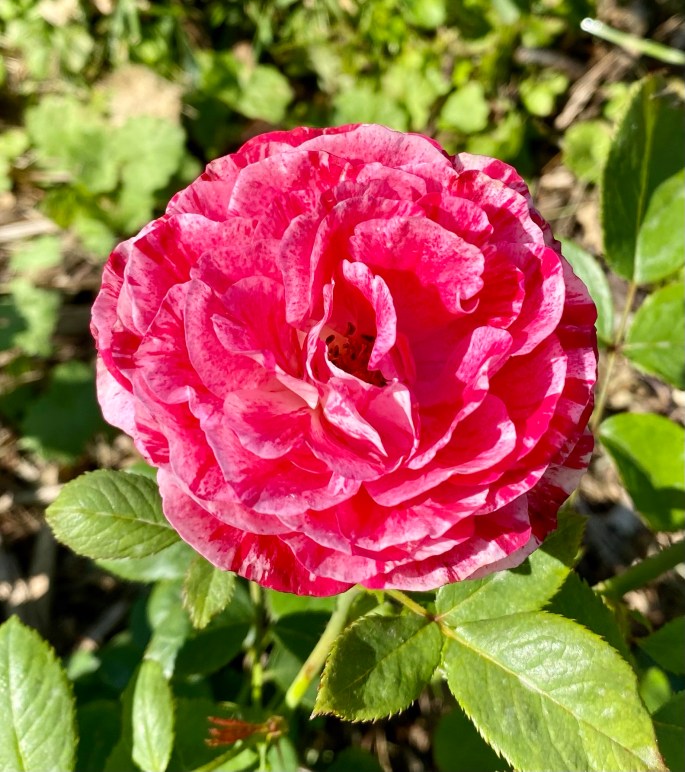
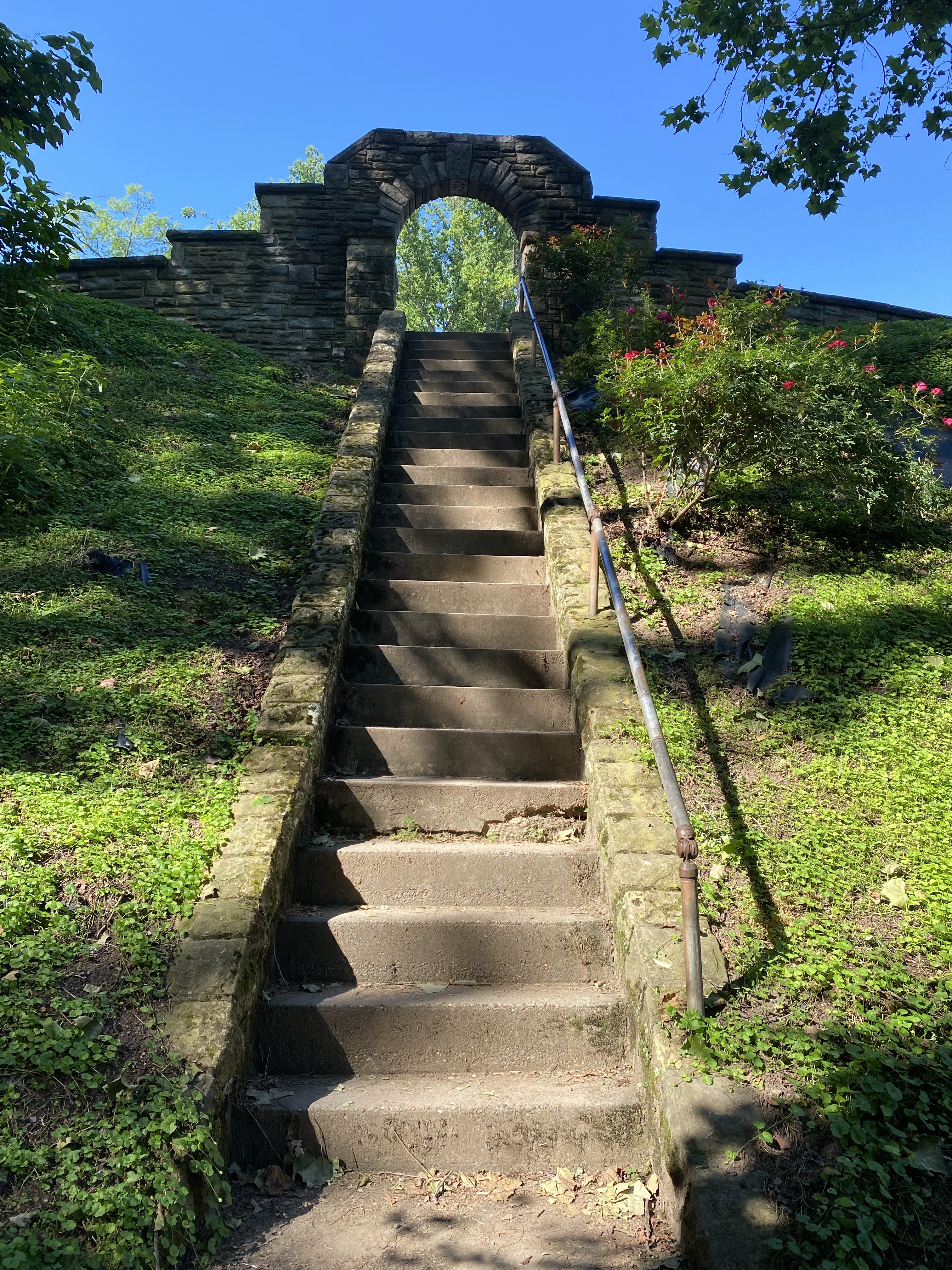
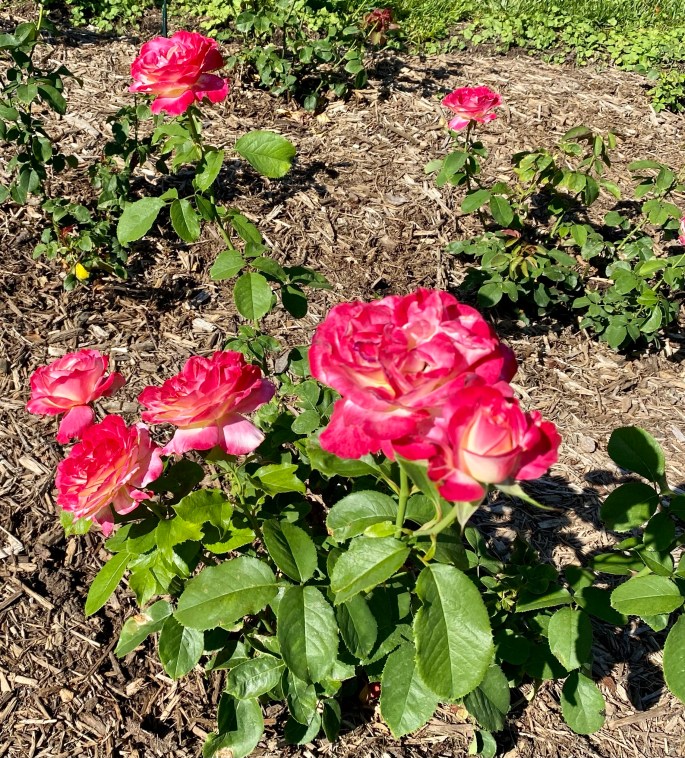
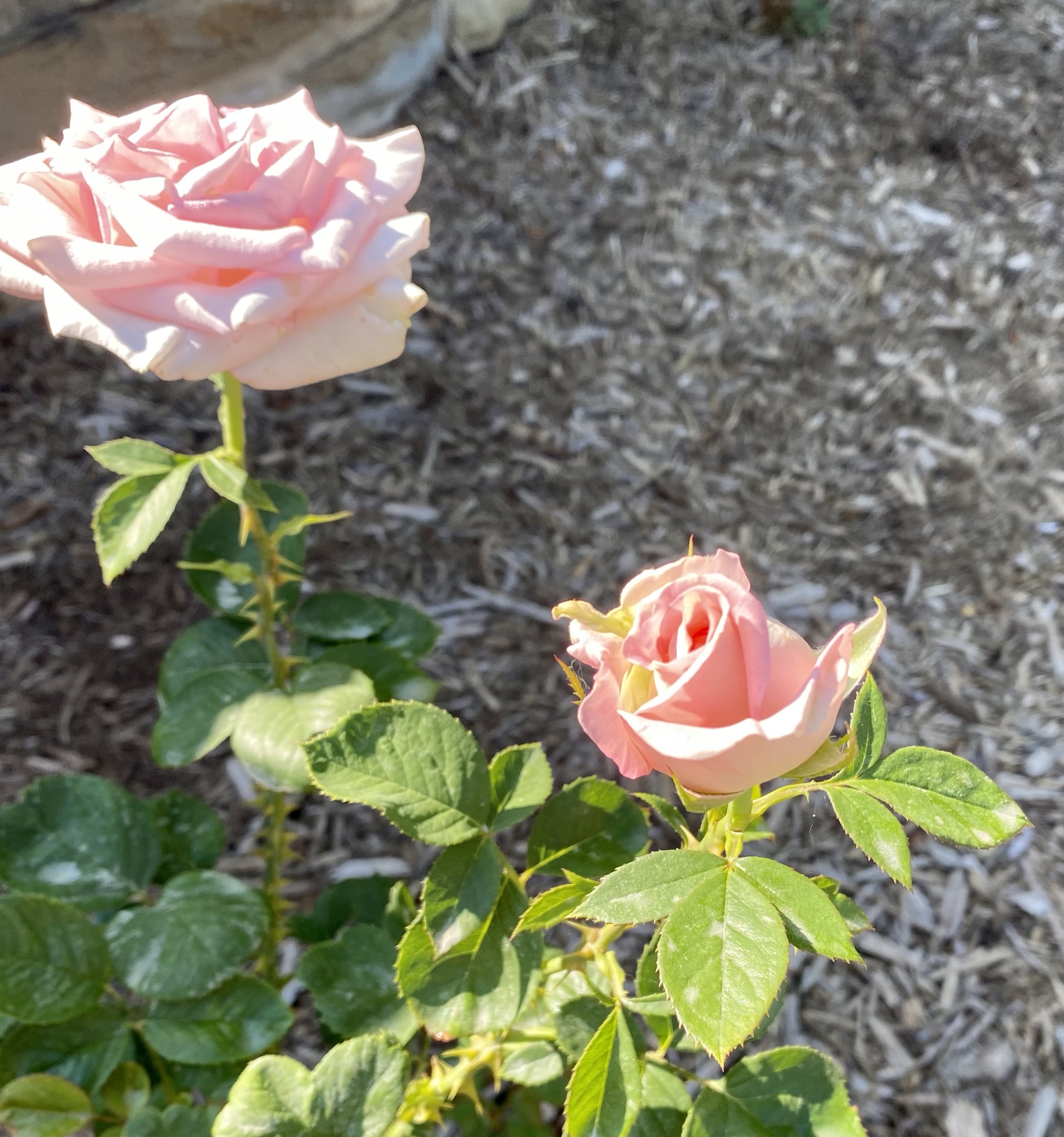
One morning, this past June, I was in Ritter Park to meet a friend for a walk.  However, the friend was running late, so I decided to meander up the old stone steps to the rose garden.  Sunshine, brilliantly glowed in its mid-morning slant, created a kaleidoscope of vivid colors, varying in texture, size, and shape. With no purpose other than to enjoy the moment, I wandered around the garden, drifting from one rose bush to the next, fascinated with all the minute differences not only among the varieties of rose bushes, but also among the flowers within the same bush.  Meanwhile, a gardener attentively tended the blooms.

Examining more closely, I noticed the various insects drawn to the roses. Bees, ants, beetles, moths and butterflies, flies, and even a few mosquitoes crawled, hovered, dove, and darted–busily buzzing about the roses with purposeful missions.  In one of the more isolated sections, closer to the wooded area of the park, I also observed a hummingbird dipping and diving among the various blossoms in a delightful, whirring dance of flight. As I let my gaze wander, my mind relaxed and began to make correlations with June, its flowers, and life.

“A rose can never be a sunflower, and a sunflower can never be a rose. All flowers are beautiful in their own way . . .”–Miranda Kerr

Each flower–from the number of petals to the size of each petal, from the varying life stages of each flower to the variances of color in each blossom–whether it be a rose in the Ritter Park garden or any one of the wide variety of flowers found in resident yards and public spaces–was, and is, a unique creation.  This is similar to the way each person, within the same family, or outside familial ties, is likewise a one-of-a-kind individual.  Flowers go through a dormant and a growing season of varying lengths, but all bloom seasonally, until they come to an end–whatever the life end may be. So it is with June and human life. 

The season of summer officially begins in June.  The air is sweet and heady with the fragrance of flowers. Winds and sunshine warm the air, and rain falls with purpose. Many plants are rooting and establishing while early spring greenery and blossoms are fading away into their dormancy. Daylight reaches its apex in June, while nighttime descends to its lowest point.  

Likewise, several key life events occurred and are honored in my own life each June.  I graduated from Ohio University in June.  Within that same month, I signed my first teaching contract, thus beginning the start of my career as an educator. Two year later, in June, I married my husband, an anniversary we have celebrated for 32 years.  Ten years later, our daughter was born in June.  As educators, my husband and I experience the arrival of each June as the beginning of a dormant period–an opportunity for reflection and renewal before a new school year begins in August.  Births and weddings, ebbs and flows, the highs and lows, and even celebrated endings.  It’s all there in June.

“All the flowers of tomorrow are in the seeds of today.”–Indian Proverb

I am but one person in the garden of many: my family, my work site, my community, and so forth.  All around me, younger lives are taking root, growing, and blossoming into their own personal expressions–making our collective garden more colorful and vibrant–buzzing with energy.  Meanwhile, I can’t help but notice that just as the flowers of June replace spring’s early blossoms, July has taken June’s place.  

Of course, one could argue that like the flowers, humans seem to be planted in dirt and threatened by weeds and all varieties of pestilence. However, when I was visiting the rose garden in June, it was the array of blossoms, in a rainbow of colors, that caught my eye, and made my heart smile.  They too were planted in dirt, confronted by pests and disease, but a gardener was there watching over them just as we have the Ultimate Gardener attending to our needs. 

The flowers offer their seeds and pollen to insects and birds to eat and disperse, ensuring more and different blooms for the future. Likewise, I pray that until my last petal drops, I am offering seeds of hope for others as June does for me.  One day, my memories of past Junes will fade away into permanent dormancy. In the meantime, I will savor the memories made this past June, find nourishment in the full blossoming of the July summer, and, in the weeks to come, accept August as the petals of summer begin to fall away, one by one.  

May there always be a June.

Scent-ual Memories of Mamaw

“The sense of smell can be extraordinarily evocative, bringing back pictures as sharp as photographs of scenes that had left the conscious mind.”–Thalassa Cruso

The tall 8th grader nodded his head slightly as he handed me a basket.  

“This is from my mom,” he added and ambled away on legs leaner and longer than I am tall. 

Filled with several items of self-care, I slowly admired each item in the basket. Noticing a tiny tin of Nivea hand cream, I twisted off its lid. Since my hands were dry from sanitizing students’ tables, I dipped a finger into the rich, velvety cream and gently massaged it into the skin of my hands and fingers.  Working the cream into my hands, I proceeded across the room and thanked the student for his–and his mom’s–thoughtful gift. Then, beginning class in my usual manner, I promptly began moving about the room as I coaxed the 8th grade students into a didactic conversation, and suddenly noticed a familiar aroma . . . Mamaw?

Mamaw and me at her house in the rarely used living room during the Christmas of 1967.

“Nothing revives the past so completely as a smell that was once associated with it.”— Vladimir Nabokov

Mamaw, whose actual name was Maxi Musick, was my paternal grandmother.  Standing 4’10” at her tallest, she became a widow not too much longer after I was born during the mid-1960s.  She lived in the same small craftsman style home in which she raised my dad and his younger brother for most of their lives. (They moved into the home when my dad was around nine years old.) 

Mamaw’s home was of great fascination to me, and it possessed a certain scent. This unique aroma seemed to mostly emanate from the bathroom and seep into the rest of the house as the one and only bathroom was situated right next to what she called the TV room. In particular, this same fragrance seemed to emanate from Mamaw’s skin.  In fact, I considered this Mamaw’s signature scent.

Where was this scent coming from? Surely, it wasn’t coming from one of the students? No, that was an absurd thought.  I’m tired and simply imagining Mammaw’s fragrance. 

Mamaw is sitting behind me in this picture from Christmas 1967. Beside me opening a Christmas gift is my Uncle Gary Musick, Dad’s brother.

Making my way around the room, discussing the topic of the day with the students, the lingering odor of Mamaw remained with me no matter in which part of the room I stood. Gesticulating in order to make a particular emphasis, a strong wave of fragrance wafted through the air.  A student began to talk, and I brought my palms towards my face.  Then rubbing my palms together and quickly inhaling, the warm scent filled my nostrils.  There she was again.  Mamaw.

Trying to force my mind back towards the speaking student, memories of Mamaw crashed to the surface of my consciousness, as if suddenly, hundreds of sticky note memories began covering my brain. Oh, I didn’t want to lose those remembrances, but I needed professional concentration. Nonetheless, winds of recollection continued to dance, lift, and float just below the surface of my focus like watching autumn leaves drifting to earth outside my classroom window.  Oh, but could I catch each one if only I weren’t inside the confines of the setting, focusing on the job at hand.

My mind drifted to summer nights spent at Mamaw’s house  . . .

Mamaw, with her thinning salt and pepper hair, topped with a wiglet, quietly swaying in rhythm, with me beside her, as we sat on a glider that gently twanged and screeched.  Not many words were spoken. The sensory thrill of summer was enough.

 Heading into the TV room once night was fully settled.  We would take turns bathing.  Mamw would emerge freshly cleaned, pink nightgown and robe swathing her tiny body;  wiglet wrapped in tissue paper so that it wouldn’t be mussed during the night, and that warm fragrance, like misty fog surrounding her being, emanating out each pore of her body. 

Together we watched The Rockford Files (or other such popular shows).  Before the episode began, Mamaw briskly entered her darkened kitchen, and using only the small light above her sink, she would prepare for us a snack. Using her cheese slicer, she deftly carved perfect slices of cheese, added a few Ritz crackers, poured a glass of water for herself, and fixed a cup of Tang for me–the drink of astronauts! 

Mamaw, Maxi, Musick is seated at the head of the table in her kitchen in 1967. Her kitchen would mostly remain the same throughout my childhood. It is interesting to note the way Mamaw tilts her head for pictures as I only now recognized that I have a tendency to do the same thing when photographed.

We were now ready to help Jim Rockford solve his current mystery. If Jim said or did something funny, Mamaw laughed with her whole body, her soft belly jiggling with delight. When he’d act romantically with his sometimes girlfriend, Mamaw would joke that she wished James Garner would date her.  Throughout the show, she and I would debate the merits of the case in our attempt to solve the crime.

By 11:00 pm, I would snuggle down in a twin bed that once belonged to my dad as Mamaw, a heavy-footed, purposeful walker for such a small person, would walk through “boys’ bedroom” to enter her own bedroom. I would fall asleep to the sounds of the C & O train cars moving around in the nearby rail yard.  Safe and snuggled in the blankets, if I listened closely, I could also hear the soft tick, tick, tick of the second hand of the square electric clock in her bedroom clicking off the passing seconds.

Rising early in the morning, Mamaw would make oatmeal for us with extra sugar for me, Sweet’N Low for her.  She boiled water to make herself a cup of instant coffee, and she poured me a cup of orange juice, or if I was really fortunate, grape juice.  Then, we might go to the local high school track for a walk, work around the house, work around the yard tending to her flowers or hanging laundry to dry on the line, or she might quilt, asking me to hand her pieces of material, thread, or find her thimble.

If I remember correctly, Mamaw drove a Toyota Corona for most, if not all, of my childhood. It did not have air conditioning, and so we traveled with the windows down in the summer. She required pillows on her seat to assist her reaching the pedals and seeing out of the window. Both hands were on the steering wheel–10 and 2 o’clock. Those hands never strayed from their designated positions, and her eyes were locked straight ahead. Therefore, she let me adjust the dial on the AM radio to WGNT, rather than WTCR, the home of the country music she preferred.

Mamaw was tight with her budget. She adhered to a schedule and routine with breakfast by 7:00 am, lunch at noon, and dinner at 5:00 pm. Her house was simple, but always neat and tidy. While she belonged to a Regular Baptist church that rotated services from one rural location to another, she talked about it only if asked, and I never heard her criticize other denominations and beliefs.

Meanwhile, back in my classroom, I felt the sticky notes of memories loosening as I required more and more focus to keep my part of the student conversation going.  

Papaw Musick and Mamaw Musick with my Dad, Larry. I just love this photo of all three as it conveys so many emotions–especially when you look at the eyes.

“We do not remember days, we remember moments.”–Cesare Pavese

Mamaw, I hope you knew, and somehow still know, how special you were/are to me.  You taught me to keep my head held high and to walk purposefully with firm steps grounded in simple truths. You further taught me to live simply and not wastefully; laugh abundantly and with your whole body; don’t proselytize your faith, but instead, live by example; eat your oatmeal and take walks; plant flowers; go to bed at a regular time, and get up early; be kind and loving; and, always remember that James Garner was one of the greats.

 I’ve decided to keep that tin of cream in my desk drawer at school in order to remind me to live by Mamaw’s simple truths as I work and teach the next generation of kids.  

Hmm . . . I wonder if I could find a way to work The Rockford Files into my curriculum?

The End of an Educational Experiment . . .for now

“What a long strange trip it’s been.”–Jerry Garcia

“Dear Ms. Hill,  Thank you for all of your hard work and patience.”

This was a one-sentence thank you note I received from a student in advance of the end of the academic school. I appreciated his sentiment and reflected over what I now think of as the “pandemic years of education”.  These past two academic school years have certainly tested teachers’, students’, and parents’ abilities to practice patience–both within ourselves and with one another in the educational community.  It forced all of the involved stakeholders to work in ways for which we were not prepared, and it stretched us to new limits.

As a middle school, 6-8 Reading Language Arts teacher, I have read countless student journals expressing their feelings of fear and uncertainty when the pandemic first began, their high levels of anxiety as well their feelings of isolation during their time in quarantine, their feelings of frustration during day-upon-day of virtual learning, and their exaperastion when dealing with glitchy/malfunctioning wifi or frozen devices.  Despite all of the pandemic educational vexations, students also wrote of their newfound appreciation for the value of the in-person community that schools foster.  Nonetheless, the scars of this experience, I fear, will remain with many of our students for years to come. 

“Reduced learning time has likely impeded student learning and also affected the development of the whole child.”–Economic Policy Institute

Meanwhile, when reflecting upon this pandemic experience with colleagues, both in the public and private school setting, many reflect upon the multiplicity of issues and/or frustrations, depending upon their unique school community.  Pedagogical adaptations seem to have been one of the major challenges often stated by the educators due to virtual learning, shortened school year, and/or hybrid learning.  Then, there were forced adjustments to instructional delivery in order to balance the engagement of virtual students while simultaneously instructing and attending to the needs of in-person students. This demanded that teachers refine and adapt instructional plans–often on-the-fly if there were wifi issues–in order to best facilitate student learning. Additionally, curriculum was often gleaned to the most essential learning objectives and standards also due to a shortened calendar year and/or class time and, in some cases, to allow for additional time to address the social/emotional needs of the students. Meanwhile, administrative tasks seemed to double with an endless supply of emails, on-line grading, and a multitude of spreadsheets and documentation monitoring student attendance, progress, or lack thereof.

Looking back over this experience, I feel as if I am standing on top of one mountain peak, but I can clearly see there are more summits to climb in the coming academic years.  From my current apex, I can tell you this.  Teachers and students should not judge themselves too harshly as this school year winds down.  Virtual teaching and learning during a pandemic was hard–plain and simple.  Students and teachers alike, across the country, were asked to exit their respective schools on March 13, 2020 with all of their personal/professional supplies and no preparation.  Then, on Monday, March 16, we were exhorted to embark on what would, at this point in my 30-plus years as an educator, be the most dramatic educational paradigm shift I have experienced that continued throughout the summer months of 2020 and on into the 2020-2021 school year for which we are now wrapping up.

One thing is for certain, the pandemic compelled teachers and students alike to establish a strong foundation in the employment of technology for educational purposes. The downside of this is that we also learned that technology is dependent upon access to wifi, devices that work, and equal access for all students to reliable devices and internet access.  While I was blessed to work in a school that offers equal access to devices (although our local wifi provider had MUCH to be desired), that was not the case for all schools.  Additionally, even with working devices, the importance of reliable internet service came to the forefront of the educational world as I witnessed in my own school.  As a teacher who committed to operating paperless during this school year, due to virtual learning, my students and I, very quickly, had to learn how to be incredibly patient when there was no service, certain platforms crashed, or devices simply froze. Which leads me to another lesson.

The last day of school for 1st period, 8th grade, Reading Language Arts students, for 2020-2021, whether in-person or virtual. Eventually, all but one student, returned to the classroom.

“It’s (COVID) taught us that technology can be wonderful, but it will never replace the value of people in safe but rigorous learning spaces talking, playing, and working together.”–Brad Olsen, Senior Fellow in the Center for Universal Education

The importance of local communities, administrators, teachers, students, and parents valuing and supporting one another cannot be overstated. Communities witnessed, very quickly, that not only do schools provide an education for their children, but they are also a reliable source of childcare that keeps children safe, fosters their social development, and supports their emotional and physical well-being.  Meanwhile, administrators, teachers, and students discovered the importance of the synergistic experience that happens with in-person classroom learning. While the remote learning model worked–and will probably continue in certain circumstances–there are real educational, social, and emotional benefits from interacting on-site with one another within the structured periphery of a school setting. 

The last day of school for my 8th grade, second period, Reading Language Arts class for 2020-2021, at times, many were virtual, and by the end of the year, all were in-person

“COVID-19 highlighted the essential role of child care for children, families, and the economy, and our serious underinvestment in the care sector.”–Daphna Bassok, Nonresident Senior Fellow in the Brown Center on Education Policy

While I have no doubt, next year will bring the educational system continued challenges from the lingering effects of this pandemic, I believe, overall, we have the ability to face them with an even greater capacity of compassion and empathy if we heed its many lessons.  The pandemic, it seems to me, has reinforced why it is crucial for the community at large to listen to the needs of educators, parents, and students.  It has given local leaders an opportunity to reflect upon the critical role of childcare and its contribution to the fiscal wellbeing of its community.  Likewise, the educational system must continue to rethink and adapt instruction in order to better facilitate student learning while continuing to cultivate ways to meet the emotional and physical needs of children, caregivers, and educators.  One-size does not fit all when it comes to technology, education, and childcare, but all affect and influence the successful functioning of the communities at large.  

In the end, I circle back to what my student simply wrote.  Thank you to the many who extended me patience through what has been one, if not the most, challenging 15 months of my career.  Many have granted me grace in moments of extreme stress and emotional duress, and for those unnamed moments, I am eternally grateful.  Here’s to summer break, and a fresh start on the coming school year.  May schools blessedly remain open.

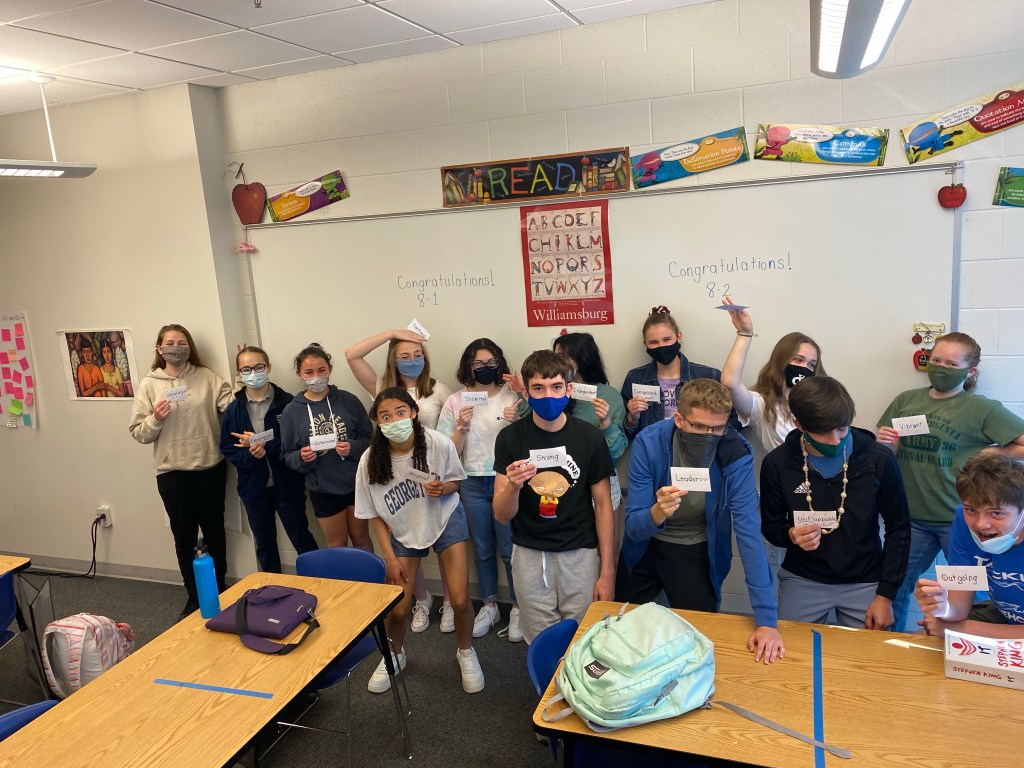
First period class clowning around on their last day of school which was also a dress down day for their last day of 8th grade.
Second period, 8th grade, striking a pose on their last day of 8th grade which was also a dress down day.

Birdsong: A Harbinger of Hope

“Faith is the bird that feels the light and sings when the dawn is still dark.” –Rabindranath Tagore

It is typically during the seventh hour of the day at some point in February, when there is a noticeable shift in the time the sun rises, that I become aware of their return.  Upon first hearing their growing morning melodies, while walking into the school in which I am an educator, their sweet sounds encourage me that winter will not last forever. With the arrival of March, there is a gradual shift in the start of their chorus as it begins earlier like the daylight.  As March melts into April, and April fades into May, their symphonious soundings continue to advance, in sync with the brightening of the sky.  Softly their voices appear, as darkness begins lifting its veil, until the cacophony of their songs reaches full crescendo with the rising of the sun.

“Birdsong brings relief

to my longing.

I am just as ecstatic as they are,

but with nothing to say!

Please, universal soul, practice

some song, or something, through me!”–Rumi

As one who rises well before dawn, but does not necessarily enjoy such premature risings, I do, nonetheless, appreciate the moments before the brightening of the sky:  birdsong.  These hopeful melodies, it seems to me, offer praise and thanksgiving for the arrival of the new day.  Birds sing regardless of the temperatures, whether there is frost or dew on the ground, or whether there is a bitter bite of the wind or the air is utter stillness.  Their animated voices echo among and around the hills of our area, playing a sort of hide and seek with the give and take of the various songs of each species.

I once read that because King Solomon understood what the birds were saying in their chirpings, they often remained near him.  Supposedly, St. Francis’ presence was so calm and reassuring that songbirds frequently alighted upon his shoulders.  While I am not sure that either of these accounts are much more than lore, they are certainly lovely images to contemplate in the midst of a morning birdsong performance.

Photo by Jess Vide on Pexels.com

This year, it seems to me that the birdsong of sunrises is a metaphor not only signifying the arrival of spring, but also life after the pandemic–at least for those of us fortunate enough to live where those affected by COVID seem to be decreasing.  Like a great collective exhalation, the birds’ songs reflect the hope and freedom that is life after quarantine.  The freedom for humans to flit, flutter, and fly from place to place, as if riding on the wings of these birds, seems as welcome as the spring weather.  Of course, I would not yet throw caution to the wind, but it does seem, at least for now, the worst is behind us.

This weekend, for the first time in months, I met a friend, and we walked together on a local walking path.  In spite of the early morning chill, the give and take of conversation while exercising felt as victorious as the first blossom of crocus emerging through a crust of white snow in late February or early March. As we walked and talked, birds offered a euphonious soundtrack, better than any store muzak, as they chattered, called, and chirped from limbs, lines, and landscape, tilting their small heads this way and that; our great guardians of the walk.

As the birds awakened my later weekend slumberings on the morning of this writing, I couldn’t help but wonder, as I wiped the sleep out of my eyes, at the birds’ optimism.  Even in the darkest days of quarantine, those harmonious fowls kept up their song.  In fact, they never ceased, not for one day.  No matter the restrictions, the overwhelm, the confusion, and the fear that existed among the human population, especially in the early stages of the pandemic, the birds held fast to their habit of daily, lyrical praise.

There is a scientific theory loosely held by a few scientists that the songs of birds, especially in the early dawn hours, vibrate at an ideal frequency to promote plant growth and yield.  It is theorized that when exposed to bird song, the stomata–the mouth-like opening found on the bottoms of leaves–open wider.  This widening allows for a greater exchange of air–expelling more oxygen–and also permits greater absorption of water and nutrients.  

Photo by Dariusz Grosa on Pexels.com

I can’t help but wonder if that is what the birds are likewise trying to do for humans.  In an act of Divine Instrumentation, a bird’s song is not only to aid in the growth of plants, but likewise in the swelling of the human soul.  Perhaps, those songs occur, in the birth of the day, when all is fresh and renewed from a night of rest, at an optimal time to widen the human heart, providing a greater opening for an exchange and absorption of optimism and aspiration from these winged creatures.  

In fact, one could think of each lifted note sung by feathered friends as a harbinger of the positive possibilities each gift of sunrise brings us–if only we allow our souls to remain open to them.  Working symbiotically with the oxygen expelled from the stomata of a plant, we too, can increase our own personal growth and yield by remaining unrestricted to the promising potential each day offers.  Even though the sky is still dark, the birds faithfully start their singing.  We can choose to do the same. 

 “ . . . . Birds make great sky-circles of their freedom.

How do they learn it?

They fall, and falling,

They’re given wings.–Rumi

Photo by Jou00e3o Jesus on Pexels.com

75 years of Regeneration

“Regeneration takes a lot of energy.”My Octopus Teacher 

My mom, to the far left, with two of her relatives, Charles Paul and Jimmy Clarke.

My husband, John, and I were watching a popular documentary entitled, My Octopus Teacher.  While I could see where this movie would not be for everyone, as self-proclaimed nature lovers, John and I enjoyed it.  At one point during the movie, the octopus goes into long term hiding after one of its arms is torn off by a predator. The narrator explains, “Regeneration takes a lot of energy,” and I knew, upon hearing those words, there was a lesson for me.  

Regeneration is a word used in both biology and theology.  In its most basic definition, it means, according to Merriam-Webster, “to become formed again.”  It can also be described as a process of renewal and restoration.  Upon reflection throughout the following week, the concept of regeneration became more nuanced.  In fact, I began to contemplate the way in which I have observed forms of regeneration.

My mom, bottom row, second from left, with her older brothers; Leo, bottom row, second from left; Ralph, top row, third from left, their wives/kids; and her parents, top row, far left.

Mentally shuffling through life’s deck of cards, I began to notice all the ways in which various relations and friends have gone through numerous cycles of “forming again.”  My siblings, my parents, members of John’s family, and even John and I have experienced several crippling and/or painful stages that felt as if a limb were cut away only to witness the miraculous resilience of the human spirit once more begin to help each person renew and restore.

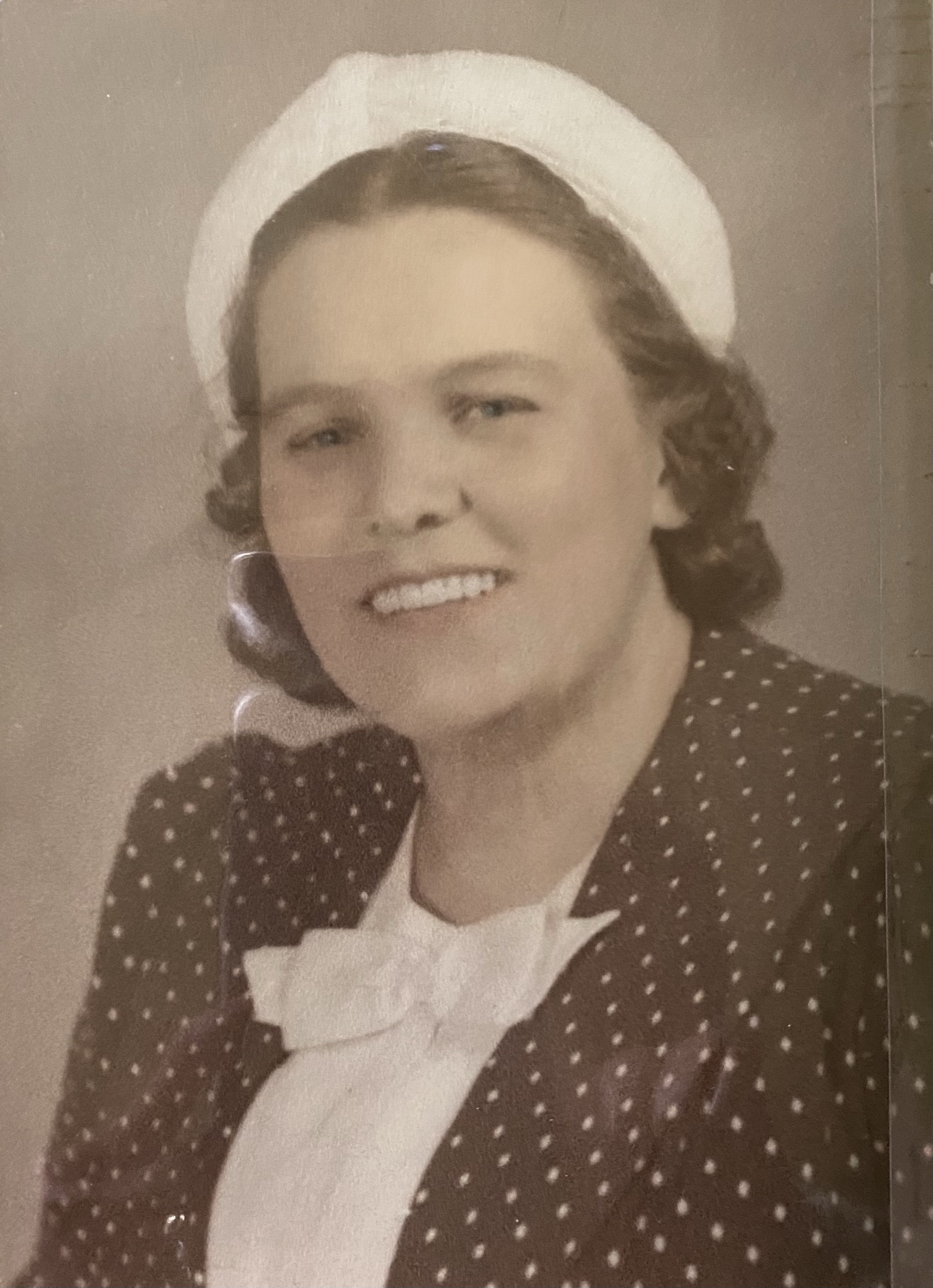
In fact, by the time you read this, Dear Reader, I will have, along with my three siblings and other family members and friends, created ways to help my mother celebrate her 75th birthday on May 7, two days before Mother’s Day.  Mom’s birthday was also her mother’s birthday, and I can’t help but notice, as part of the natural aging process, Mom not only looks similar to Grandmother, but also possesses many of Grandmother’s mannerisms.  

Mom’s mother, my Grandmother. They both shared May 7 as a birthday. Throughout her life, she experienced several life-altering events for which she had to regenerate.

“Sometimes the strength of motherhood is greater than natural laws.”–Barbara Kingsolver

Like Grandmother, Mom has had to go through numerous stages of regeneration that I am only now beginning to appreciate in order to achieve 75 years of life.  Like all humans, Mom went through the obvious metamorphosis that is the infant through teen years, then into the young adult years, and the mid-life adult years. Now, she is fully immersed in those golden senior years for which Mom assures me aren’t always so golden!  

As her oldest daughter who entered her life before she began her second decade of life, I have been a partial witness to moments of time when Mom has been forced to restoration phases.  While it would be easy for me to offer commentary on these significant moments, I haven’t lived in Mom’s skin.  Therefore, I cannot pretend to know the level of upheaval or turbulence that certain events must have generated for her.  All I know is that if there is one thing Mom is good at doing, and thus modeling to all of her children, is the power of regeneration.

From left to right, Mom’s parents, Mom, my Dad (her first husband), and his parents. All of these beloved family member has/had to experience multiple times of regeneration.

“A mother is she who can take the place of all others but whose place no one else can take.”–Cardinal Meymillod

On Mom’s birthday, I did something I had only done one other time this school year (and that was due to John having surgery), I took a day off work to help her celebrate her mid-septuagenarian birthday.  A few weeks prior, Mom invited me to attend her Friday morning Jazzercise class in Ironton, Ohio.  The music playlist of Meghan Trainor, as per Mom’s request, would be choreographed by instructor, Rita Isaac.  

“After all, I only turn 75 once,” my mom said to me with only a hint of heavy-handed inducement.  

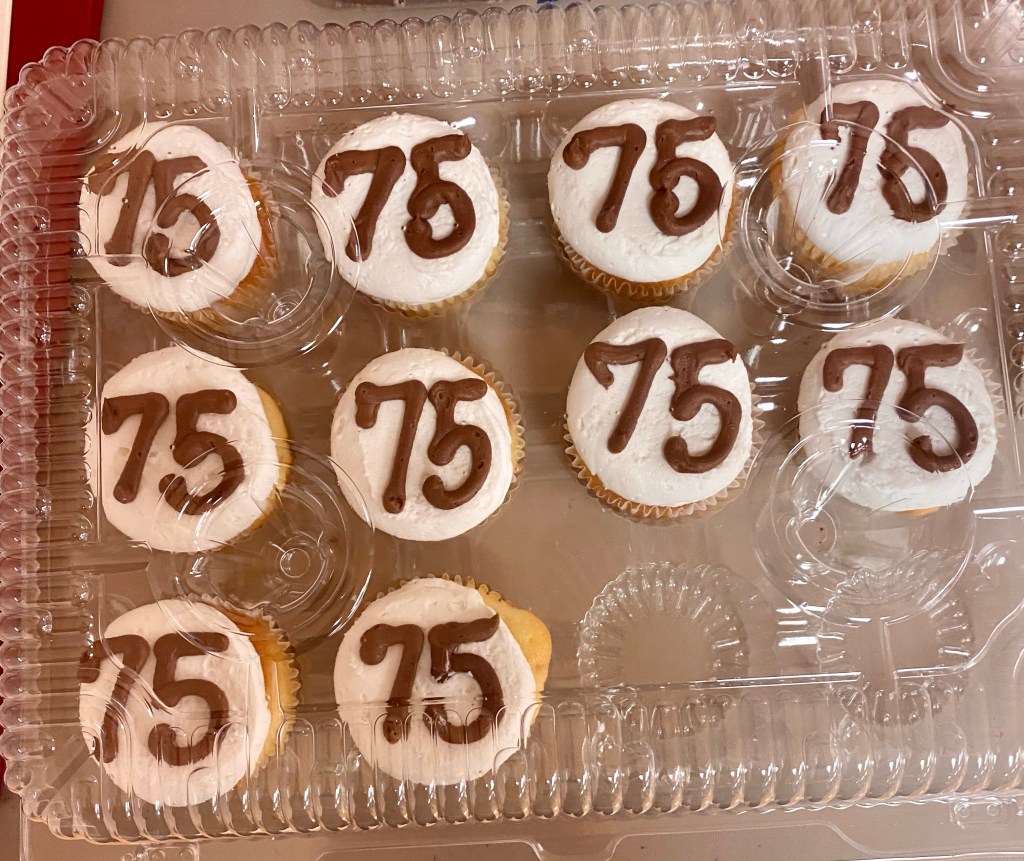
To celebrate her milestone, Mom purchased cupcakes for her fellow Jazzercizers!

As I pondered my decision, I considered the past 17 months or so of Mom’s life.  Her husband, Jim, was diagnosed with Lewy Body Dementia, and due to the rapid progression of this disease, Mom was forced to make the painful decision to place him into an assisted living center.  This decision had to be made in the middle of the COVID pandemic/quarantine when patients in these centers were dying by the thousands.  Thus, it was by no means an easy choice.  

This was followed by a succession of deaths, including one fateful funeral in which Mom, and several family members in attendance, contracted COVID.  The virus clung to Mom like a wine stain on a favorite shirt–there was no quick way to wash it away.  Afterwards, came more deaths of loved ones, never-ending quarantining, and a winter that would likewise regenerate in unexpected ways.  

Through it all, I witnessed Mom scratch, claw, and climb her way through each blow that life offered.  Thankfully, she had, and continues to have, a devoted support system of friends and family to lend her a hand and/or an ear.  Additionally, there was, and is, a professional cadre of further support at Marshall Health Senior Adult Care.  Nonetheless, these past months required much internal restoration that only Mom could do for herself, and that Dear Reader, is the lesson to this story.

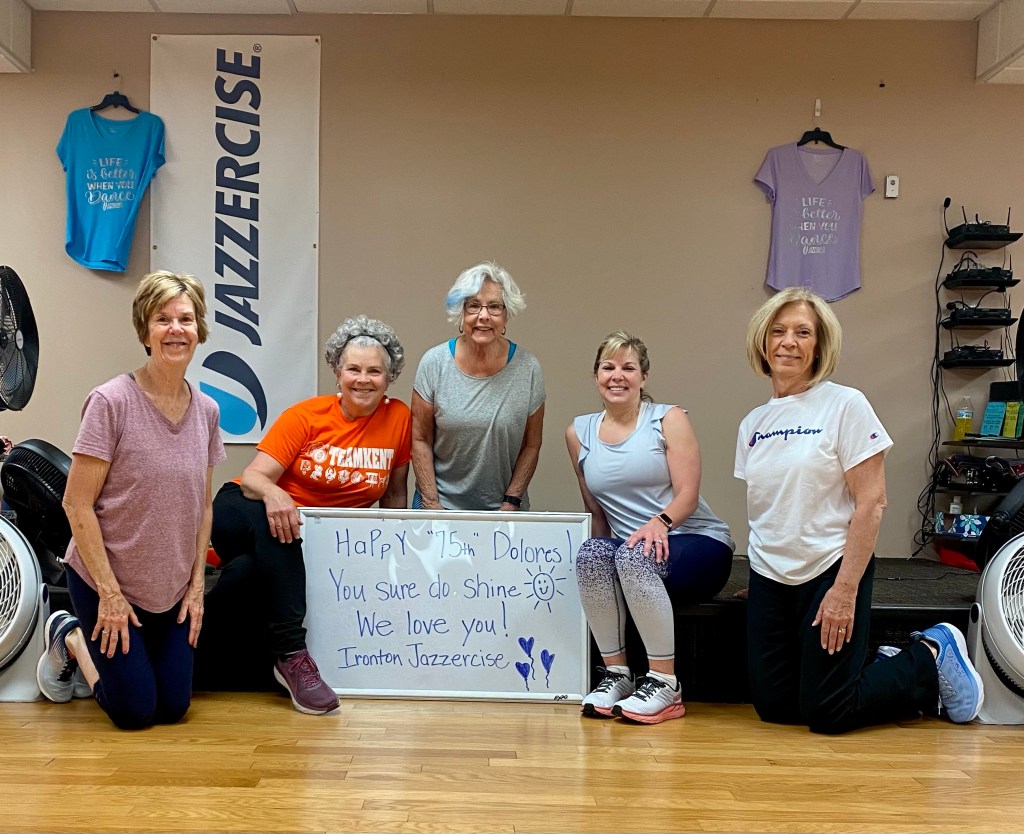
Several of her Jazzy friends left early, so unfortunately, I wasn’t able to photograph everyone in a group. Mom is center, and to the right of her is the instructor, Rita Isaac, who created and choreographed the Meghan Trainor playlist/workout!

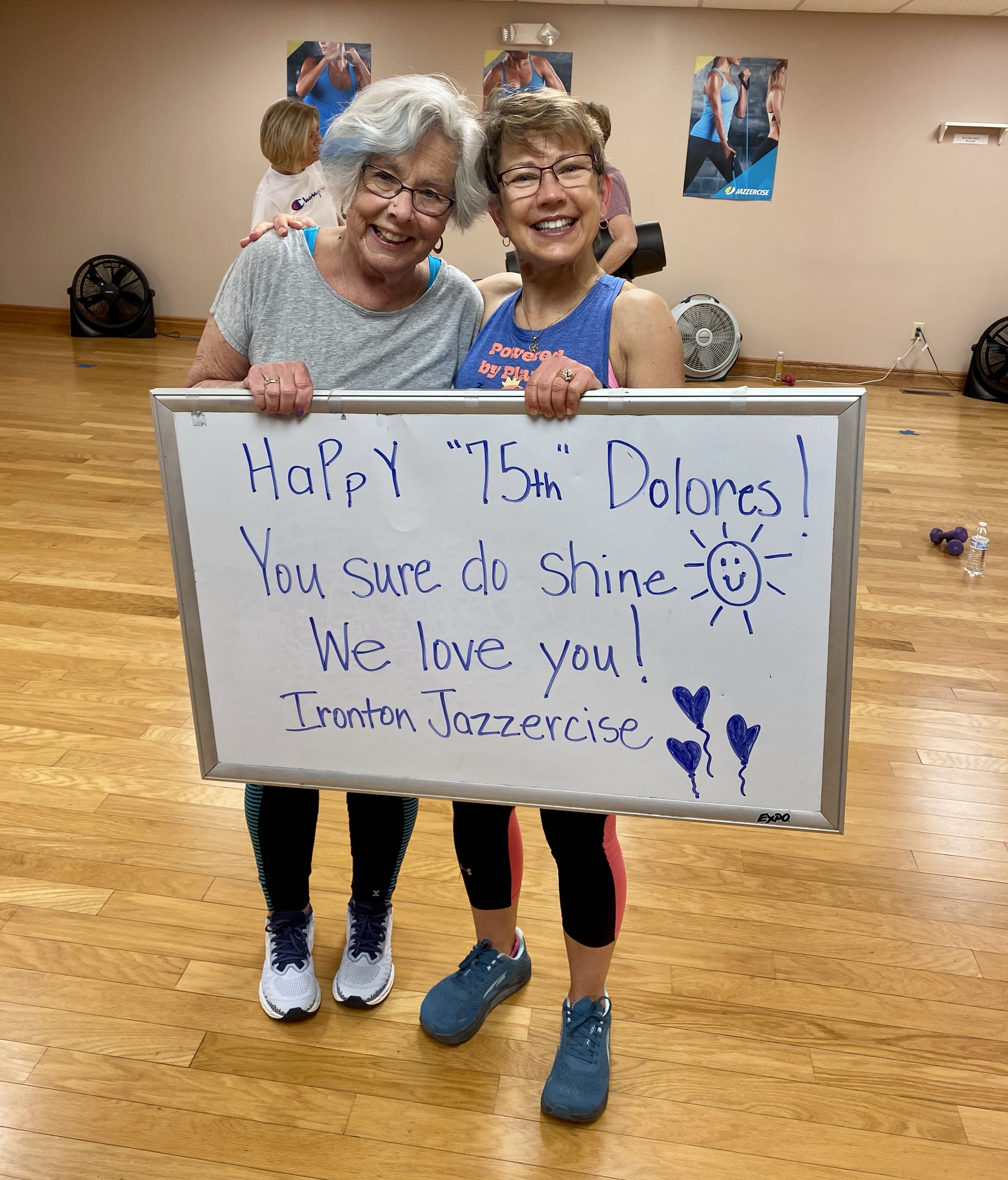
The latest regeneration of Dolores, my mom, is flourishing as I witnessed on May 7 in her Jazzercise class. Once she was able to get vaccinated, and restrictions were lifted, Mom became the proverbial butterfly flitting and floating in the grassy field that is life on the other side.  Watching her dance, bop, and clap her way through her Jazzercise class with smiles for miles, I couldn’t help but admire her renewed exuberance and vibrancy.  Seeing her surrounded once more by friends and acquaintances in her various community and social circles reassures, that indeed, there is a dawn after night, and there is joy after the pains of birth, or in this case, rebirth.

Happy Birthday, Mom!  May you continue to find ways to renew and restore, and may your story remind others that regeneration of the human spirit is indeed possible! 

A Handful of Mother’s Day Love

“Happy Mother’s Day, Mom! (And while I have you, quick apologies for ages 13-21)–PureWow

Photo by Giftpundits.com on Pexels.com

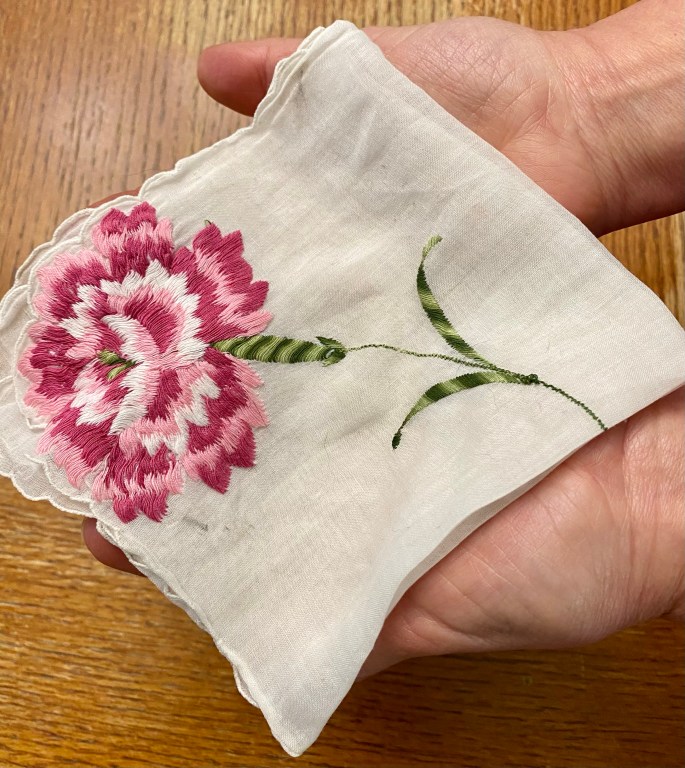
As I get ready for work in the morning, I often notice my maternal grandmother’s handkerchief draped over a framed print on a dresser.  It was a gift from my mother several years ago.  Recently, as I took in its gentle embroidery work, I picked it up and sniffed it in a futile attempt to pick up the scent of Helen, my grandmother.

Grandmother, whose scent was a unique blend of Folgers coffee, Avon cream, peppermint, and Estee Lauder’s Youth Dew, was always reassuring.  This morning, I was fatigued and feeling particularly nostalgic as I held Grandmother’s kerchief.  Her scent would have at least provided some small measure of comfort.  Instead, I was left to trace the delicate stitching.  Upon closer inspection, I noticed what appeared to be a stray pencil mark or two and I was taken into the past.

My mind drifted to that fundamentalist, country church of my youth.  I often begged my mom’s permission to sit with Grandmother and Pappaw.  Grandmother’s handbag, the size of a shoebox, was always well-supplied for church services that were sure to be long.  Unclasp the top, and inside, one could find mints, assorted candy, gum, pencils, pens, and old C & O notepads from Papaw’s time of working on the railroad.  While both my grandmother and my mom expected that I stand and hold the hymnal anytime we sang, grandmother permitted me to continue holding the hymnal on my lap as a makeshift desk in order to write, draw, or even play the dot game or hangman with a sibling or cousin–if they were seated with me. In this manner, I was able to remain respectfully quiet, which was also expected by both of my “ruling” women.

If the sermon offered to the attending flock hit a certain emotional note, or if someone sang a special song, such as one originally performed by a popular gospel group at the time, the Happy Goodman Family,  “What a Beautiful Day,” “God Walks the Dark Hills,” or if the congregation simply sang, “Amazing Grace,” I would often see tears stream down Grandmother’s face.  She’d reach in her purse for a handkerchief, dab at her eyes, and continue to hold on to that handkerchief, squeezing it as if her life depended on it.  Looking at the handkerchief, I suddenly remembered with great realism, Grandmother’s strong hands squeezing mine.  It was faint, and then it was gone.

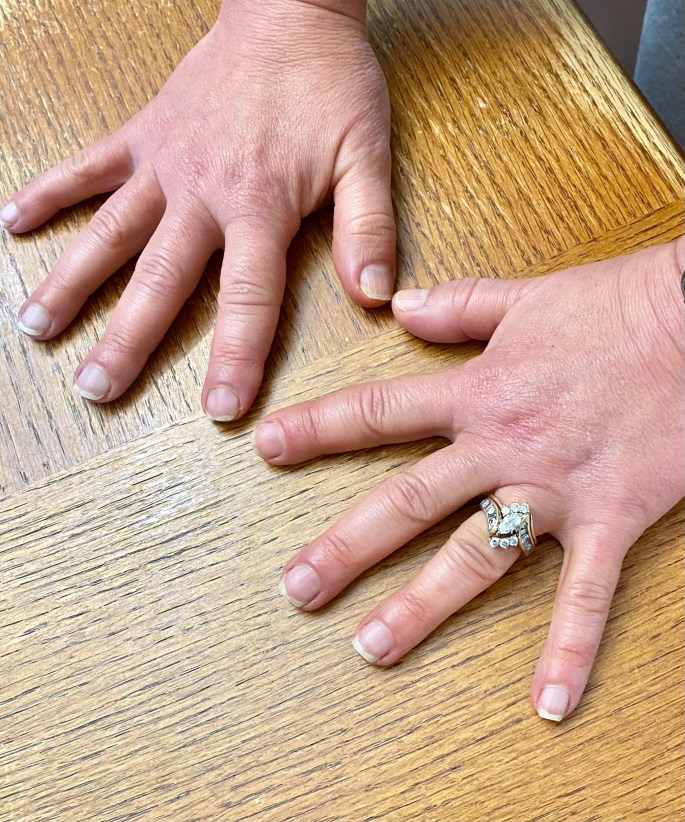
I looked at my own hands.  They are the hands of mother’s and my grandmother’s.  Already, at age 55, they are starting to slightly misshapen from squeezing/holding too tightly onto things.  My fingers, like the women before me, are short and wide–nothing like the Palmolive hand models of long ago commercials. However, like both women, my hands are strong as I am typically better at opening jars and bottle tops than my husband. 

Grandmother’s own hands were strong from years of manual labor.  She single-handedly ran a grocery store and managed/cooked/served for its lunch counter, butchered the store’s meat, maintained and sliced it’s deli cheese and lunch meats while also raising two young boys.  (She would not have my mother until over a decade later.) Later, after my grandparents lost nearly everything in the flood of 1937, they moved to higher ground, left the grocery store business, and Papaw began working exclusively for the railroad.  Grandmother then became a full-time devoted housewife and mother.  Those hands of hers ran a precise schedule for daily, weekly, and annual cleanings, cooking, laundry, ironing, and so forth.  In fact, looking at her handkerchief, I can tell it has been worn thin from repeated washings and ironing.  If there was one thing Grandmother knew how to do well, it was to create a reliable routine and schedule.

“My mother menu consisted of two choices: take it or leave it.”–Buddy Hackett

My mom likewise employed her mother’s ability to create a reliable daily structure with my three siblings and me. We got what she cooked (although Grandmother was far more indulgent with her grandkids), and we cleaned with regularity.  In fact, every Saturday we were expected to strip the sheets off our bed, remake our beds with clean sheets, and then dust/sweep our bedrooms.  Later, when we were older, we were also assigned another room in the house to likewise clean on Saturday.  It wasn’t until I was in high school that I realized very few of my friends had the same expectations!  In fact, one of my sister’s friends once shared, years later, that she drew inspiration from my mom’s Saturday schedule when raising her own children.

“I especially loved that when I spent the night with your sister, one of the siblings had to pick up her chore for that morning.”

In Grandmother’s daily routine, and later,  in Mom’s schedule, there was also set aside time for rest and relaxation.  You worked hard, when it was time to work, but likewise there was built in time for reading, relaxing, and rest. Grandmother’s house, and later my own childhood home, was filled with books, magazines, and, of course, several bibles.  Perhaps, it was because Grandmother’s 8th grade education bothered her, even though she was more educated than Papaw, reading was especially important to Grandmother, hence reading was also important to my own childhood home.

Recently, my mom has spent a good deal of time talking with me about her church.  She states that one of her friends at church loves Vestal Goodman, and all the rest of the Happy Goodman Family, whose songs were frequently sung at my Grandmother’s church.  Mom additionally has played Facebook videos of the church pianist who performs the ol’ time gospel tunes of Grandmother’s long ago church, and praises the pastor who knows how to touch her both intellectually and spiritually.  I can’t help but be reminded of Grandmother and secretly wonder if my mom carries a hanky to church too.

Preparing to write this piece, I clicked through a few youtube videos of the Happy Goodman Family, remembering their albums echoing through my grandparents house as Grandmother dusted and swept.  It wasn’t until I paused long enough for the entirety of “God Walks The Dark Hills,” that I noticed that Vestal was holding a handkerchief. As I clicked back through previously viewed videos, Vestal indeed was holding a hanky in each one!  I walked back to my bedroom and once more to pick up Grandmother’s delicate hanky.  Holding Grandmother’s handkerchief, I caught a glimpse of myself in the mirror, and I saw both my mom’s and grandmother’s faces staring back at me.  

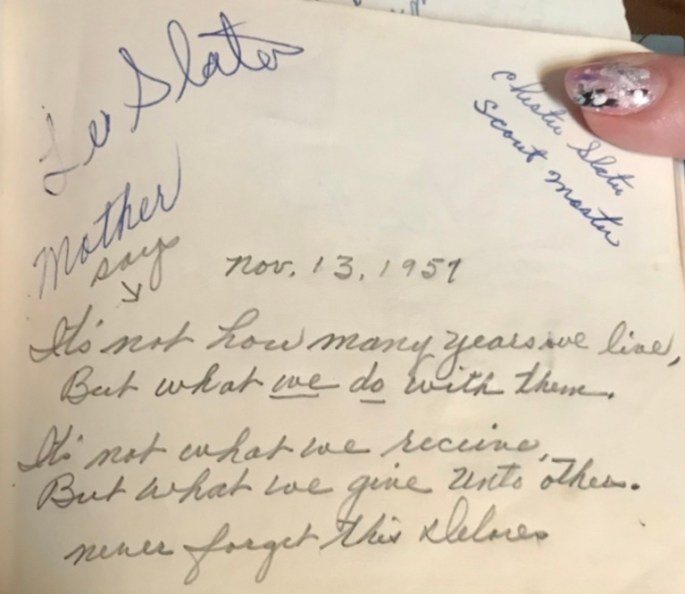
“It’s not how many years we live, but what we do with them.  It’s now what we receive, but what we give unto others.”–written by my grandmother, Helen Slater, on November 13, 1957 in my mother’s autograph book

Grandmother Helen, thanks for the “handy” reminder of the importance of faith, family, and all of those intangibles that I once took for granted.  Even now, you’re still giving me a hand. If you can see me in heaven, I’m sending you a hand-ful of gratitude on this coming Mother’s Day.  

And, Mom, I know that I was a hand-ful, so I’m especially sending you these words of Mother’s Day appreciation along with much love. You taught me not to start a sentence with “and,” but you know I often struggled with obedience.

P. S. This quote is for you, Mom . . .

“When your mother asks, ‘Do you want a piece of advice?’ it’s a mere formality. It doesn’t matter if you answer yes or no.  You’re going to get it anyway.”–Erma Bombeck

Photo by picjumbo.com on Pexels.com

When Cardinals Appear . . .

“When cardinals appear, angels are near.”–Unknown

Tink, plink, tink. It’s 6:00 am, and the first light of the dawn is beginning to show.  While the actual sunrise won’t occur for another 40-50 minutes, I hear the newest members of our neighborhood at it again. If this were a school day, I would have been awake.  However, on this occasion, it is the weekend, and I typically give myself permission to sleep in until 6:00 or 6:30.  Ugh! 

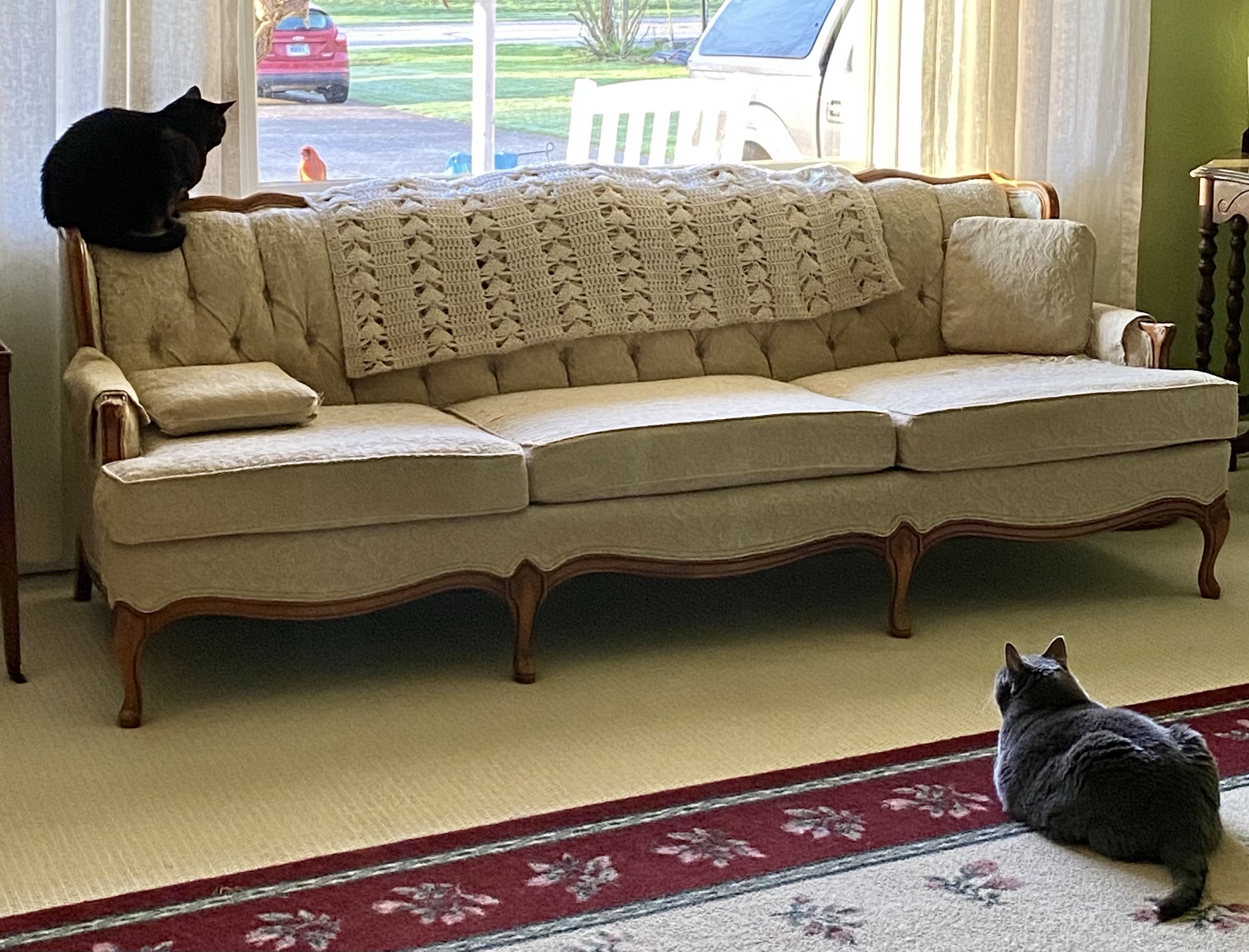
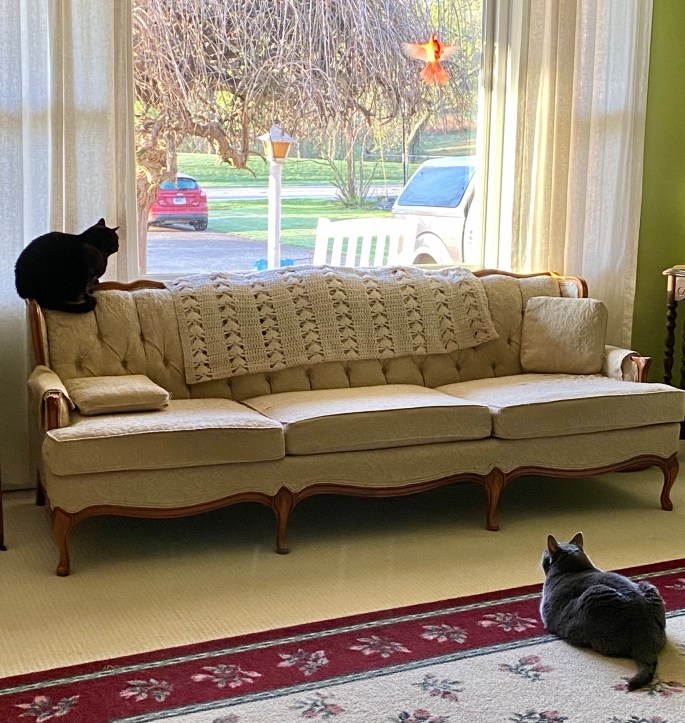
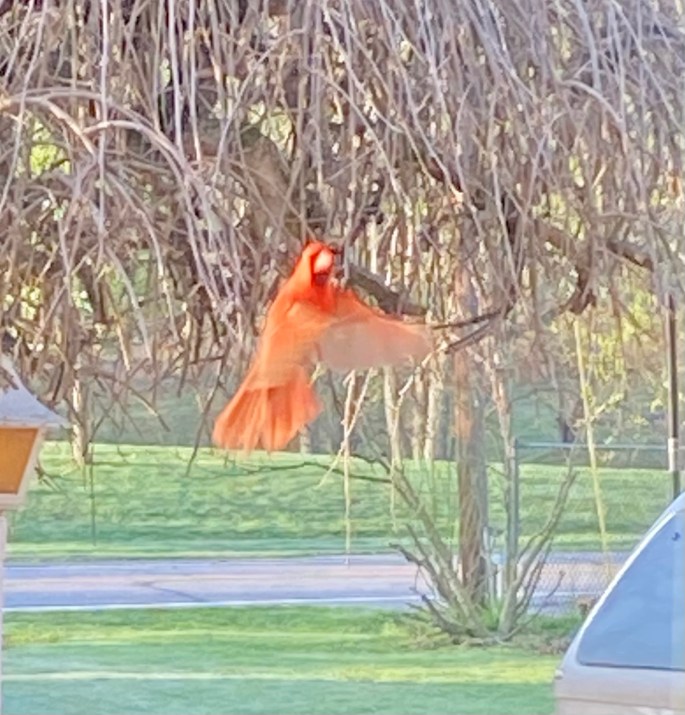
Boink. Doink. Boink.  The sound varies depending upon which room I am in.  Persistent.  Insistent. Relentless. All members of my household, human and feline, have moved from fascination to annoyance to down-right sympathy for our neighbor’s continuous need to pound, rattling both the living room picture window and the master bedroom window.  Don’t they ever get tired?

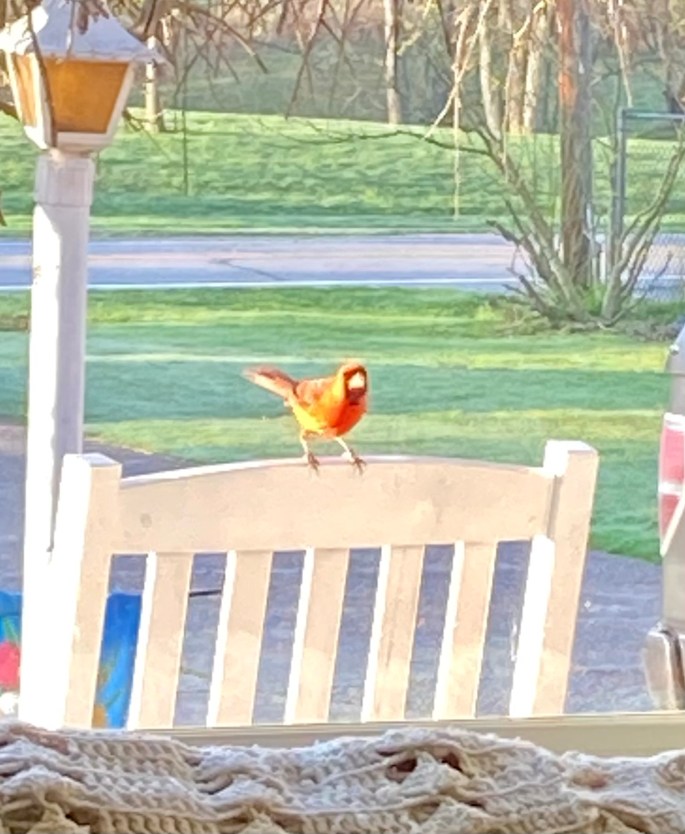
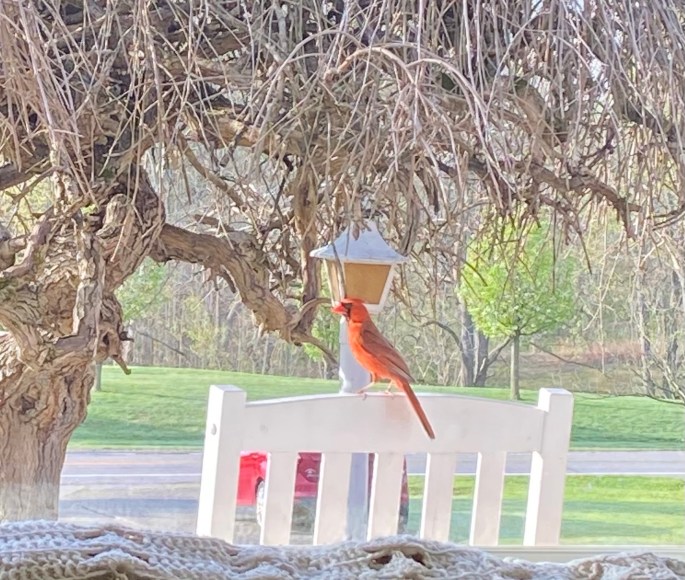
Our newest neighbors moved in around the beginning of April.  John, my husband, Maddie, our daughter, and me, did not really think much about them.  Each couple, one across from the front of our house; and the other, across from the bedroom end of our house; seemed peaceful and pleasant enough.  In fact, both pairs could often be heard singing to one another, especially during the first light of morning and the last light of evening.  The practice seemed like such a romantic thing to do.  Clearly, they were deeply in-love, or at the very least, highly infatuated with one another.

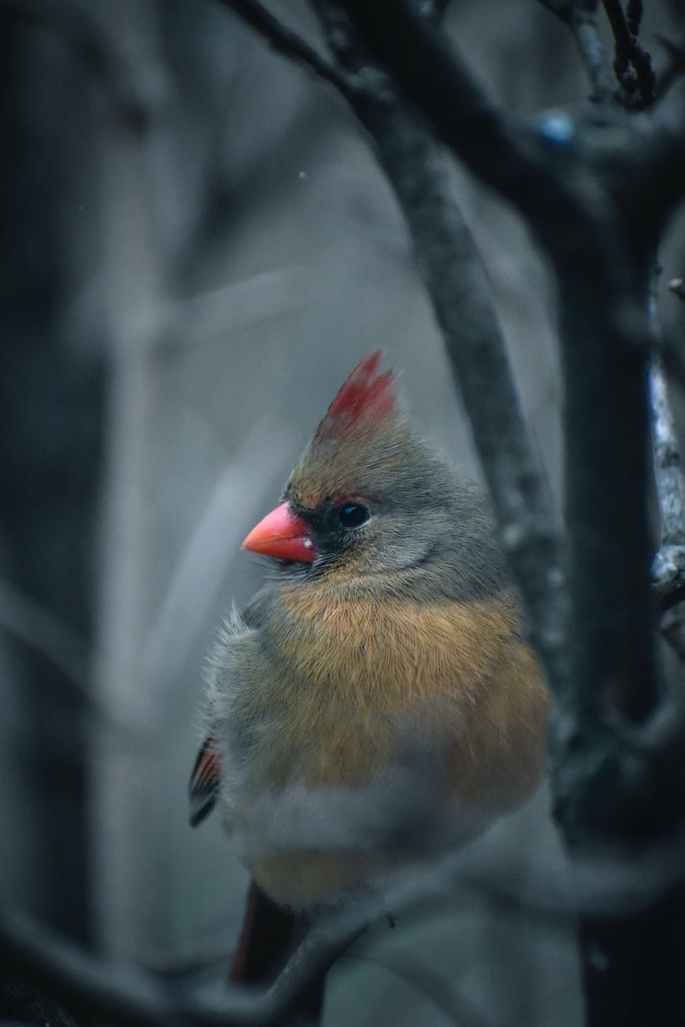
Furthermore, we couldn’t help but notice both males have a predilection for parading around dressed in bright red with flamboyantly styled hair.  While their female partners dress more subduedly in colors of brown and buff, they do appear to try to complement their male counterparts by donning caps with red feathers and hints of red skirt their lower half.  On an odd note, both couples seemed to only own black facial masks. 

Not long after both couples moved in, we also noticed they each had the habit of dining outside.  While that wasn’t particularly unusual, given the mildness of our early April weather, it was the habit of the males feeding the females that was most striking.  In fact, it appeared as if they kissed first, allowing the female to take the food from the male’s mouth.  What love birds both pairs appeared to be!

When their habit of banging around first began, the two pairs could be observed pounding away with great intent.  This, hysterically, drew great attention from both of our lacidzical cats.  Our feline companions could, with great regularity, be found wherever our neighbors could be seen industrially belting away–so curious were our cats’ desire to see our neighbors’ carrying-ons. 

By the second week of April, however, it was only the male partners that appeared to knock around–not that we were truly keeping tabs on them.  Meanwhile, their female partners were only occasionally detected outside of their new home.  It was whispered that the females were holed up inside privately nesting.  Although, it was reported that one couple, during this same week, was observed publicly engaged, in their odd practice of kissing-before-swapping-food-mouth-to-mouth.  

As I write this during the third full week of April, both couples seemed to have somewhat settled.  While the males can sometimes be heard plinking away, they are blessedly less active than when they first moved in.  However, the tune of the pair’s vocalizations still fills the air at the day’s beginning and end.   The rarely seen females can be heard from inside of their home singing a wide repertoire of choruses, while the male confidantes still proudly sing the same ol’ melody, over and over, right outside their home.

John, Maddie, and I recently stood at the front picture window looking out at one set of our newest neighbor’s home. Rumors were continuing to circulate regarding the state of the hidden females.  Most fodder contended that due to all of the hanky-panky-dining-habits, both couples must be in the family-way.  After all, what is to be expected from all of those acts of public display of affection and strange exchange of food?  Bunch of granola-eating hippies if you ask one commentator!

Of course, John and Maddie, used to my crunchy, granola-eating, tree-hugging ways, seem to have come to terms with our newest neighbors who munch, mouth, and swap nuts, seeds, and berries.  

“What’s one more plant-based eater in the neighborhood?” Maddie teases.  “You can make friends with them, Mom.  You know, swap recipes!”

John, more prone to roam the neighborhood, than Maddie and I, claims the latest tittle-tattle accuses both couples of sometimes eating insects and spiders.  

“Supposedly, someone watched one of the males spewing an entire bug into the mouth of his partner.”

Maddie cringed with disgust.  I quickly reminded her how some people do go on and on about things for which they have little to no knowledge.

“Yeah, but eating bugs is just, well, gross.  And, I thought eating nuts and seeds was weird . . . .”  

As Maddie walked away from the conversation, one of our new male neighbors determinedly drummed a window as if for effect.  At this sound, I walked closer to the window and waved my arms above my head.  I looked at him, as he moved towards his home.  I am fairly certain that, since the windows were open, he could hear me through the screen, so I told him to stop. 

“It’s like banging your head against the wall, Buddy.  It’s not productive.  Your partner needs your protection; I get it, but you’ve got no worries with us.  We’re cool if you guys have kids out-of-official-wedlock.  I mean, it’s my understanding that you and your partner have been together for life.  The neighbors you’ve got to worry about aren’t us anyway.  The more menacing neighbors are on the hills and in the woods around us.”

I thought he was listening.  He cocked his head from one side to the other, keeping his black mask in place. (Boy, does he take this COVID crisis seriously.)  However, right as I thought my message was getting through his tiny bird brain, (I hate to be rude, but seriously, our new neighbors are TOTAL bird brains.) he flitted away as if my words meant nothing to him.  

“Don’t say I didn’t warn you when you meet our hawkish neighbor on the hill!”  I exclaim to him, but I am expending energy on one who doesn’t want to listen.  Hmph!  Just like a male to not accept advice.

I am not sure that I would call our newest neighbors angels, and in spite of their red wardrobe, I wouldn’t refer to them as devils either. One thing is for sure, from the looks of their homes, all bound up tightly like twigs of a nest, I think our new neighbors are here to stay for a while.  Maybe Maddie is right, perhaps I should ask them for their granola recipe.  After all, if it inspires all that kissing, it might be worth trying!

“Cardinals may protect a territory size of 1/2 to 6 acres during breeding season. Males will chase other males and females will chase other females from the pair’s territories.  Cardinal birds often fight with their reflection in house windows and car mirrors.” –Wild-Bird-Watching.com

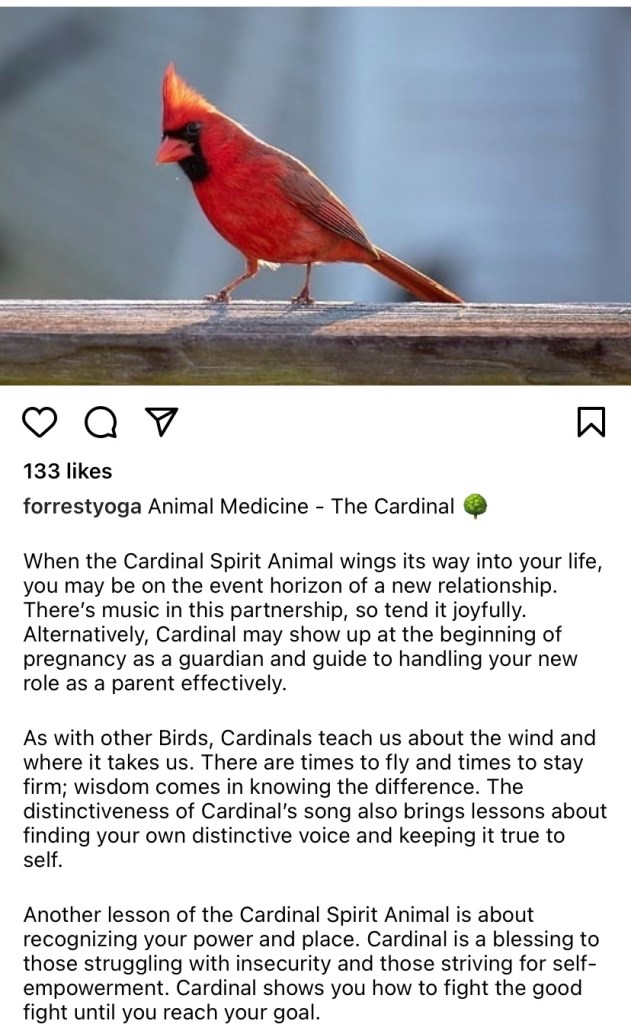
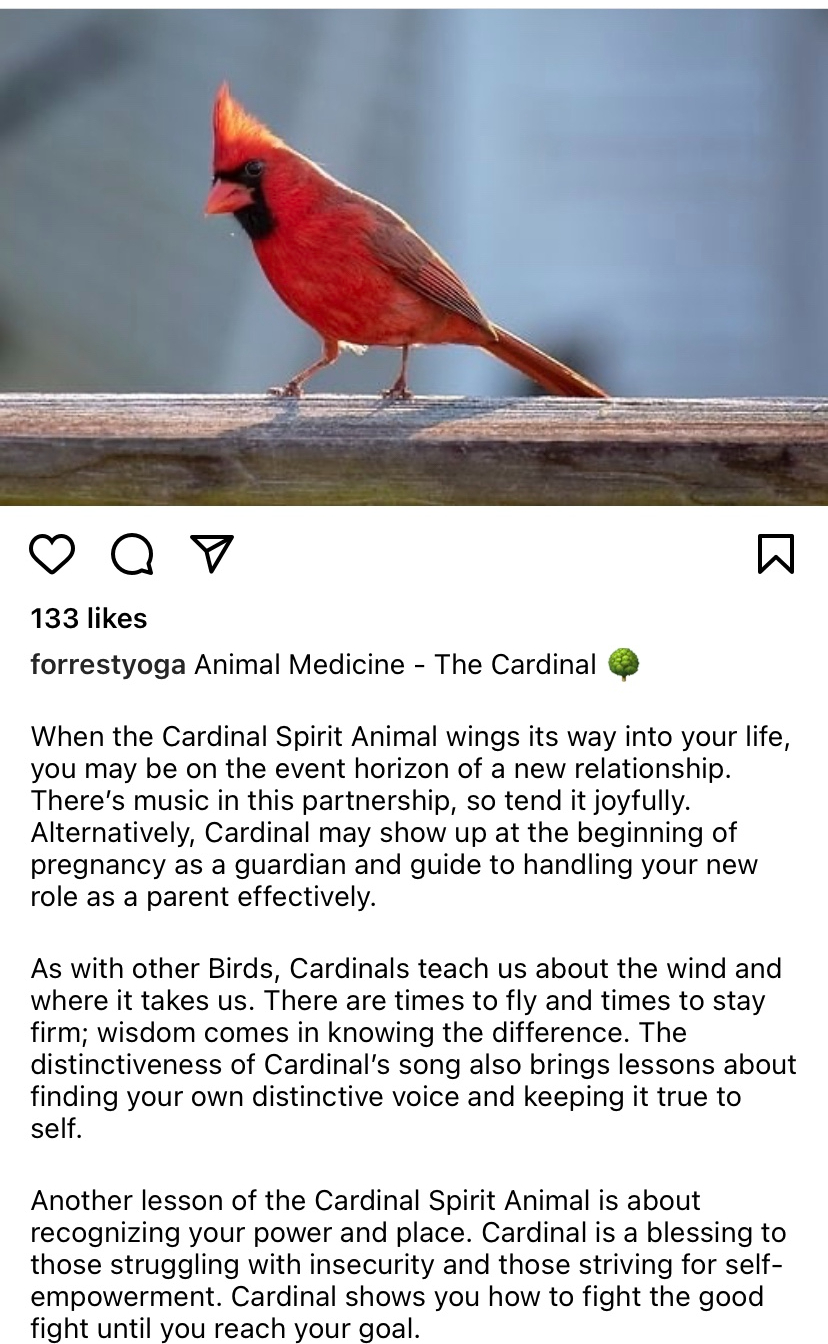
As seen on Instagram @ forrestyoga

Visit Virginia Beach

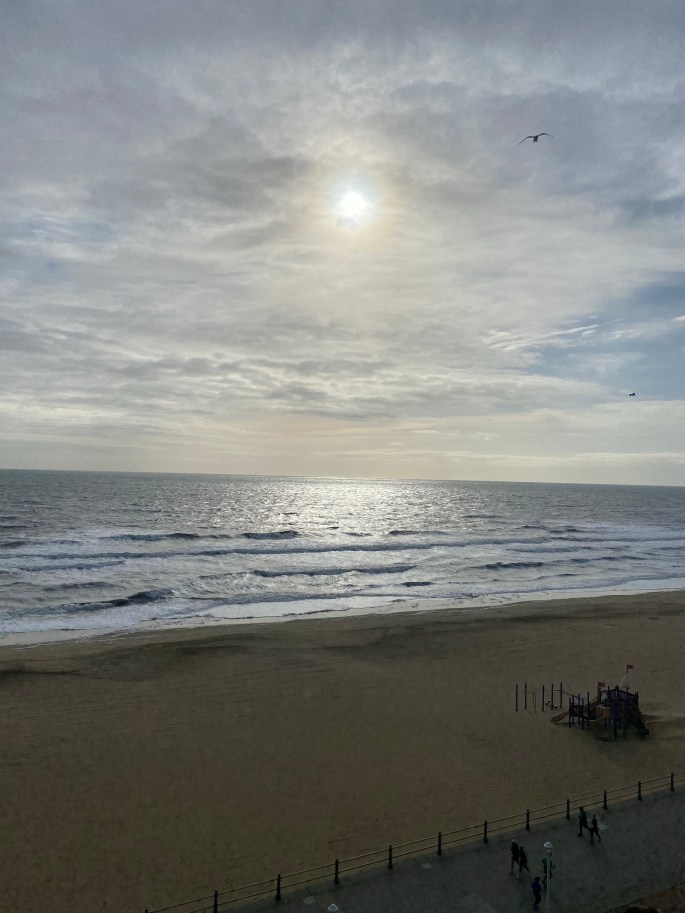
This was the view out of our beach front hotel room at Virginia Beach. (It was clearly Rita’s day!)

“Because there’s nothing more beautiful than the way the ocean refuses to stop kissing the shoreline, no matter how many times it’s sent away.” – Sarah Kay

Recently, as some readers may recall, John, my husband, and I had the opportunity to visit Virginia Beach for its annual event, The Shamrock Marathon, Half-Marathon, and 8K event.  Of course, the 2020 event was cancelled due to pandemic restrictions, and the 2021 event, in which I participated, was a hybrid virtual event–it could either be run virtually from any location, or ran any day of the designated three-day weekend of the event on-site via a self-guided route that was well marked and supervised.  In spite of the not-so-cooperative weather during our stay, John, and I thoroughly enjoyed our stay at Virginia Beach so much that we have talked about returning.  Therefore, as more families begin to travel again, I wanted to share our experience in this family and couple friendly town.

While we were there, we took in a few sites, but quickly realized that we did not have enough time to adequately explore this area of Virginia.  Additionally, with a few clicks of the keyboard, while relaxing and taking in the view of the Virginia Beach boardwalk and beach from the comfort of our hotel room, I learned that there is so much more to Virginia Beach than just the boardwalk/town area in which we were staying!  Therefore, I will share a few of the highlights from our visit as well as a few tidbits I discovered from a short bit of research. 

‘‘In the planning and preparation to re-open the beaches of Virginia Beach, we believe we’ve defined the Gold Standard for beach safety and cleanliness, and our Hotel and Restaurant Associations followed suit with their own new protocols with the same important goals.’’–Virginia Beach CVB

To begin, John and I checked the usual sites, AirBnB and VRBO for budget friendly rentals.  However, since we were hoping to stay in a place with an ocean view, we quickly realized that those homes came with a price–either out of our budget or the houses were nearly as small as a hotel room.  We then compared home rental costs with oceanfront hotels and condos.  Much to our surprise, it turned out that the latter were much more reasonably priced and conveniently located within walking distance to restaurants, shops, and the Virginia Beach boardwalk.  Furthermore, due to the short nature of this trip, we knew we would not be taking time to cook, nor would we spend much time in the place in which we were staying. Therefore, the hotel seemed like the way to go.

The Hampton Inn, with its restaurant on the beach, in which we stayed.

“Together, we’ve all made a pledge to VB Smarter – and adhere to these protocols without compromise. It is Virginia Beach’s way to shine a light on our collective commitment to ensuring a safe, fun, and relaxing environment for all.”–Virginia Beach CVB

John and I were super impressed with the protocols throughout the oceanfront area of Virginia Beach.  We felt safe, and likewise, did not feel restricted in our travel or experiences. The city definitely seemed to have the right balance.  While we did walk to several of the restaurants and shops near our hotel, and we also enjoyed visiting other parts of the town due to the free parking that was in place until April 1.

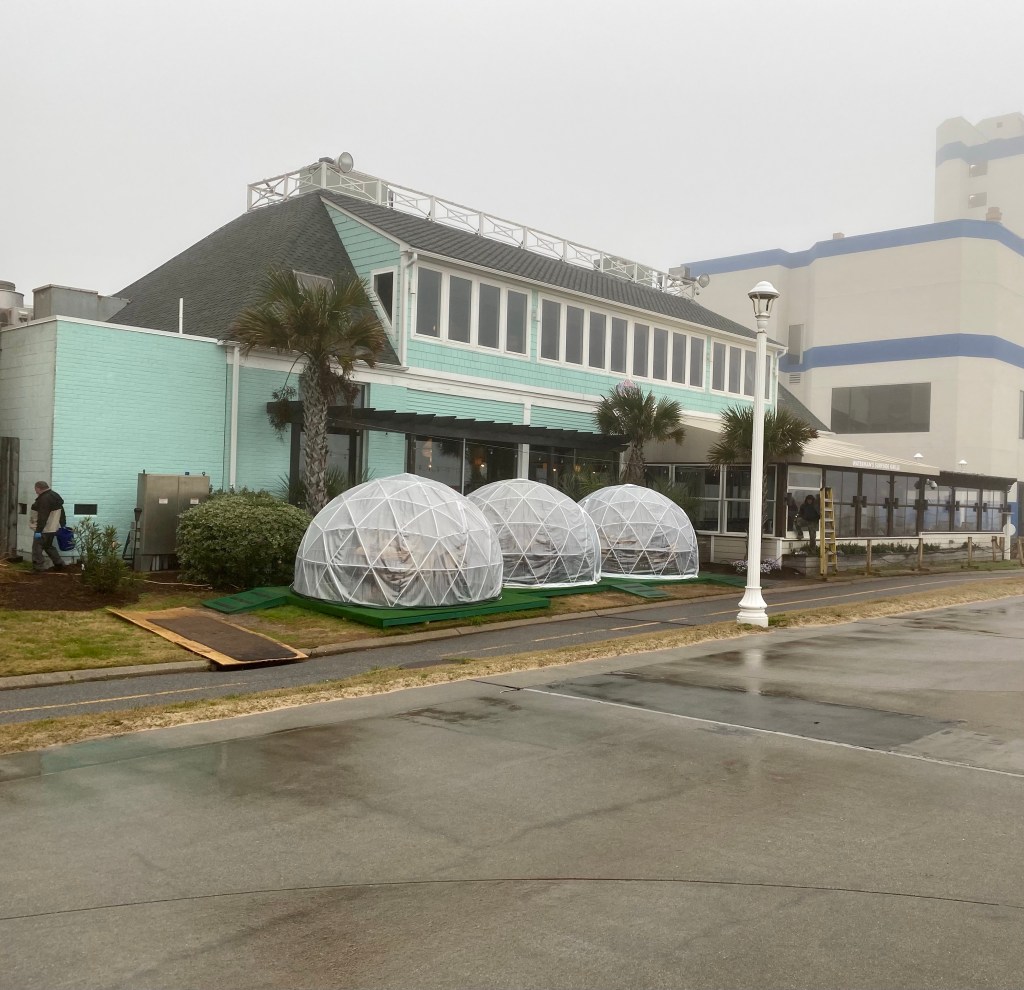
One creative approach to out-of-doors dining in the era of COVID–Individual geodomes for groups!

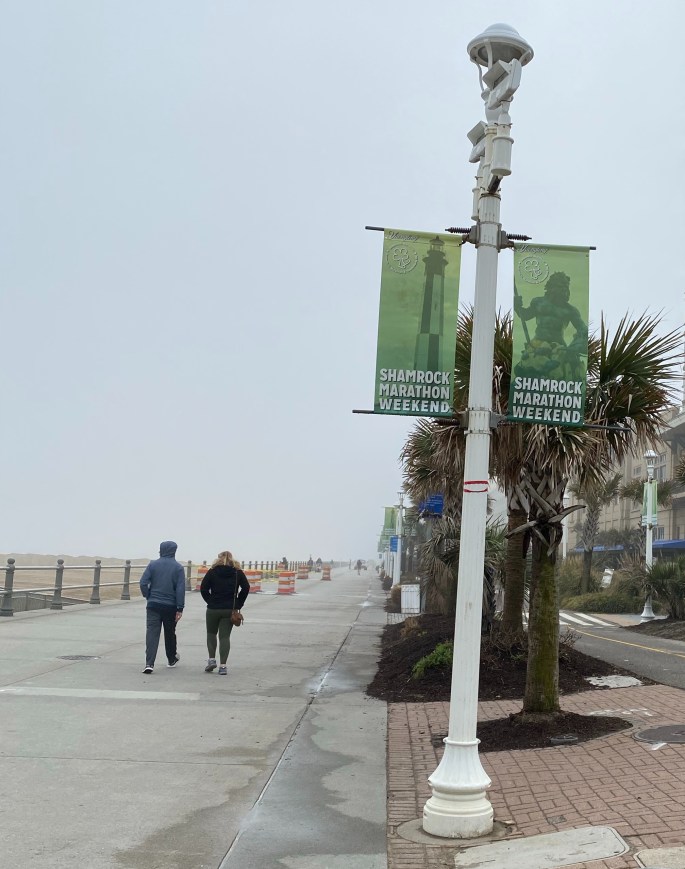
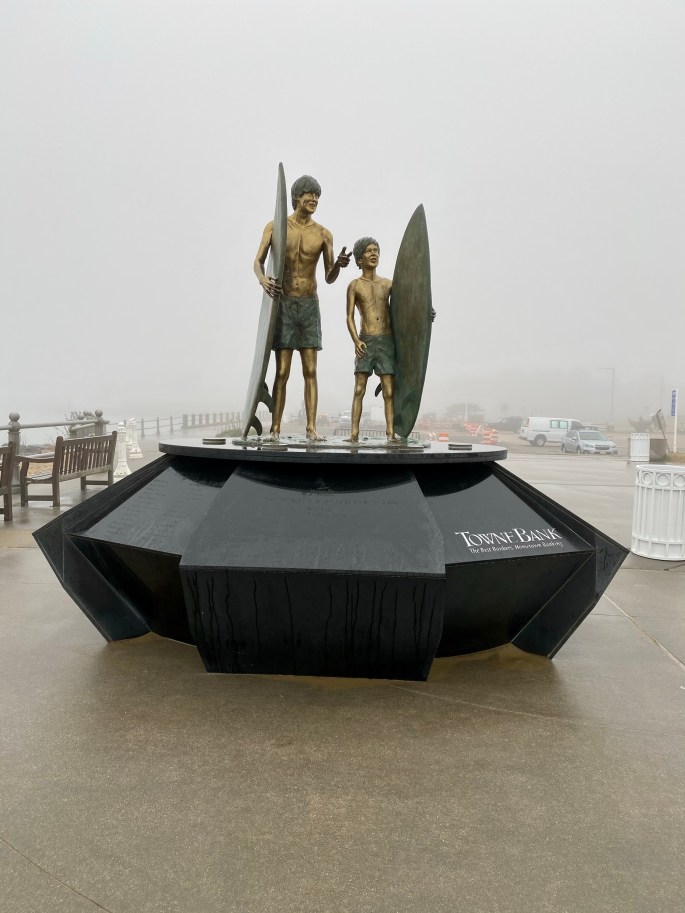
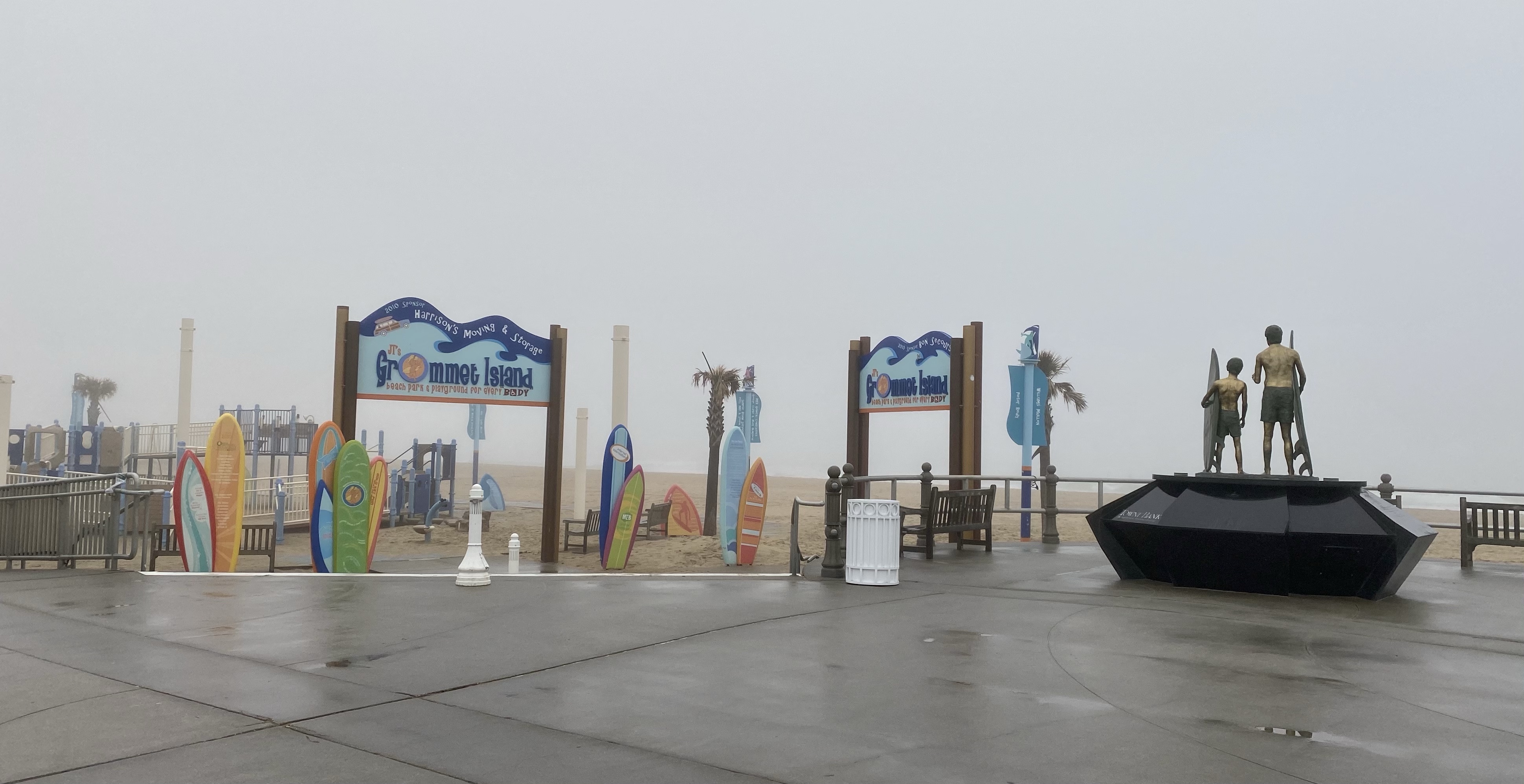
Since our hotel’s back door literally opened out to the Virginia Beach boardwalk, John and I took full advantage of this area daily.  This three mile long and 28 foot wide expanse, equally divided with lanes for biking versus walking, runs from 2nd Street to 40th Street.  It is full of local attractions and numerous oceanfront restaurants and eateries.  Highlights include the JT Grommet Island Park, a perfectly shaded park for active children to let off some energy while parents still remain oceanfront and near public restrooms/showers.  Along the path are also two museums, the Atlantic Wildfowl museum, located in the de Witt Cottage, built in 1895, and the Surf and Rescue Museum, housed in a former U. S. Life Saving Station that is now listed on the National Register of Historic Places.  Near our hotel was the well-known Virginia Beach Fishing Pier that does not require a fishing license.  Finally, further down from the pier was the festive 31st Street Park, home of the iconic King Neptune which was also the start/finish line for the Shamrock Marathon events.

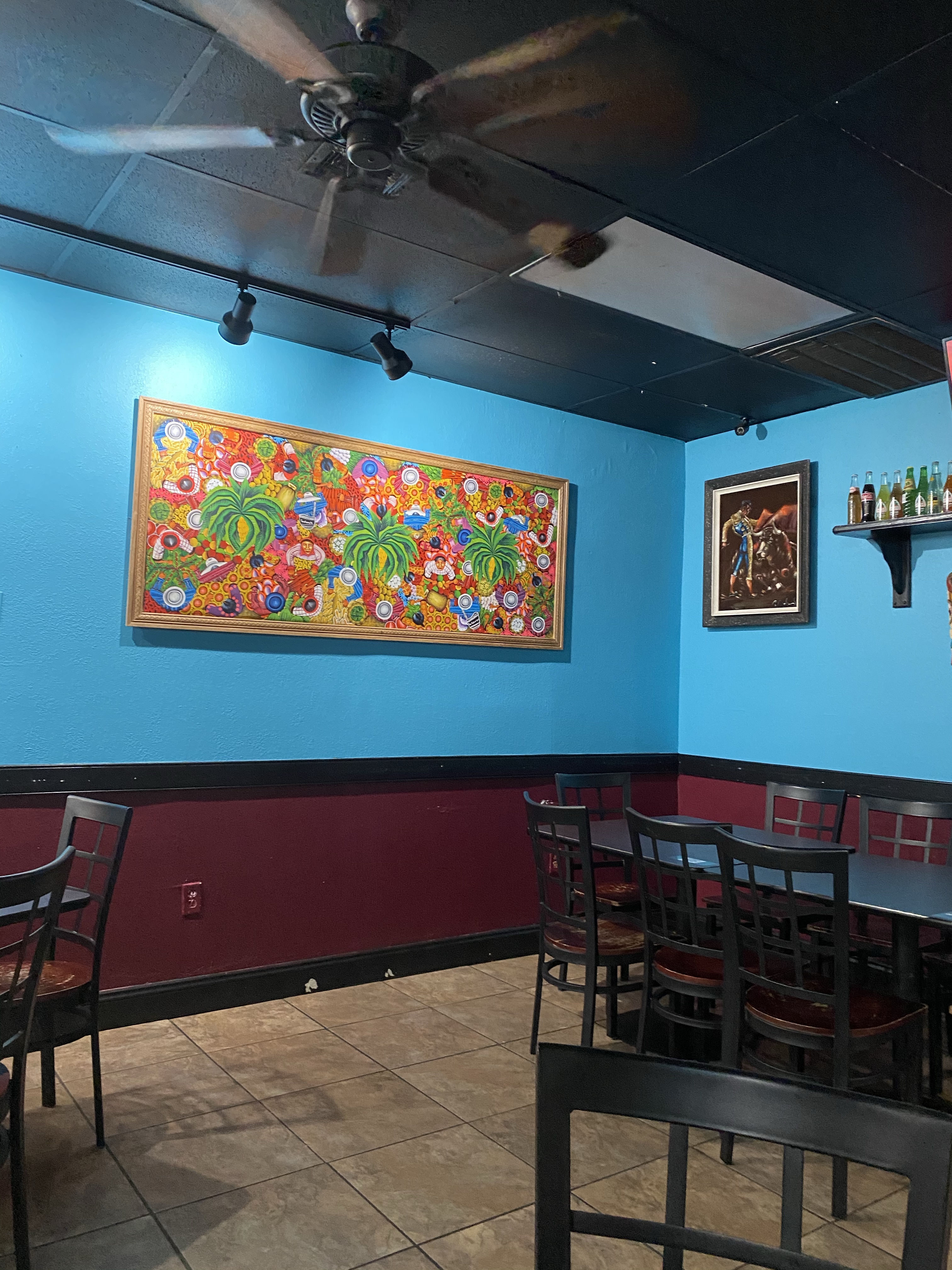
Of course, food was a big part of our short stay; however, restaurants can be a bit tricky for me due to the fact that I have celiac disease, so I cannot eat products with wheat and gluten. Additionally, I choose to eat plant-based.  Virginia Beach, however, did not disappoint me or leave me feeling hungry.  We serendipitously discovered a hidden gem within a short walking distance from our hotel, Side Street Cantina, filled with Peruvian-influenced Mexican fare. Located in a colorful building with vibrant and funky decor, the staff worked hard to accommodate my dietary needs.  In fact, John and I loved it so much, we ended up dining there twice!  The menu was lengthy and varied, portions were generous, the drinks were cold, and food was cooked to perfection.  This is the perfect casual dining experience within walking distance from the beach.

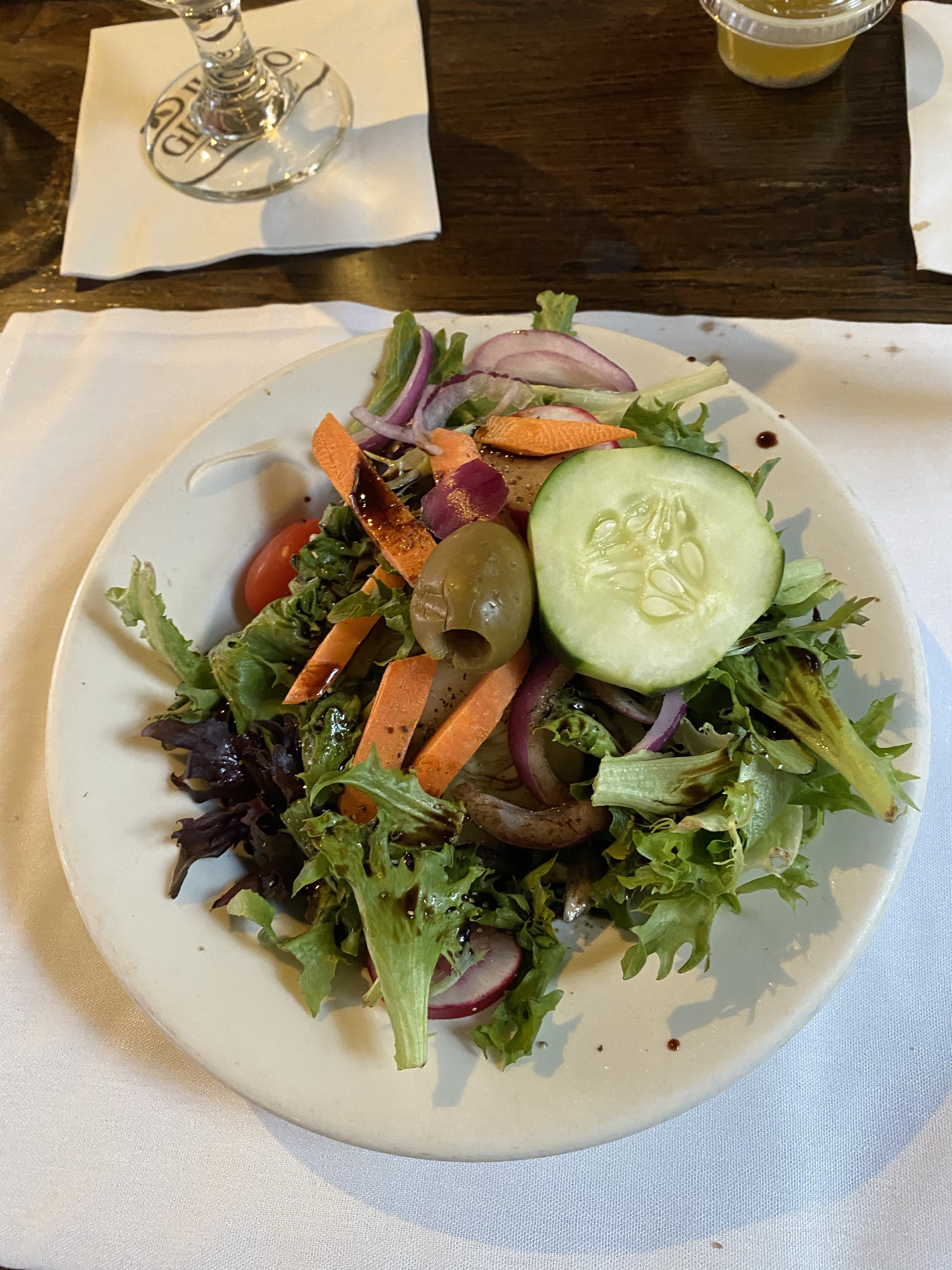
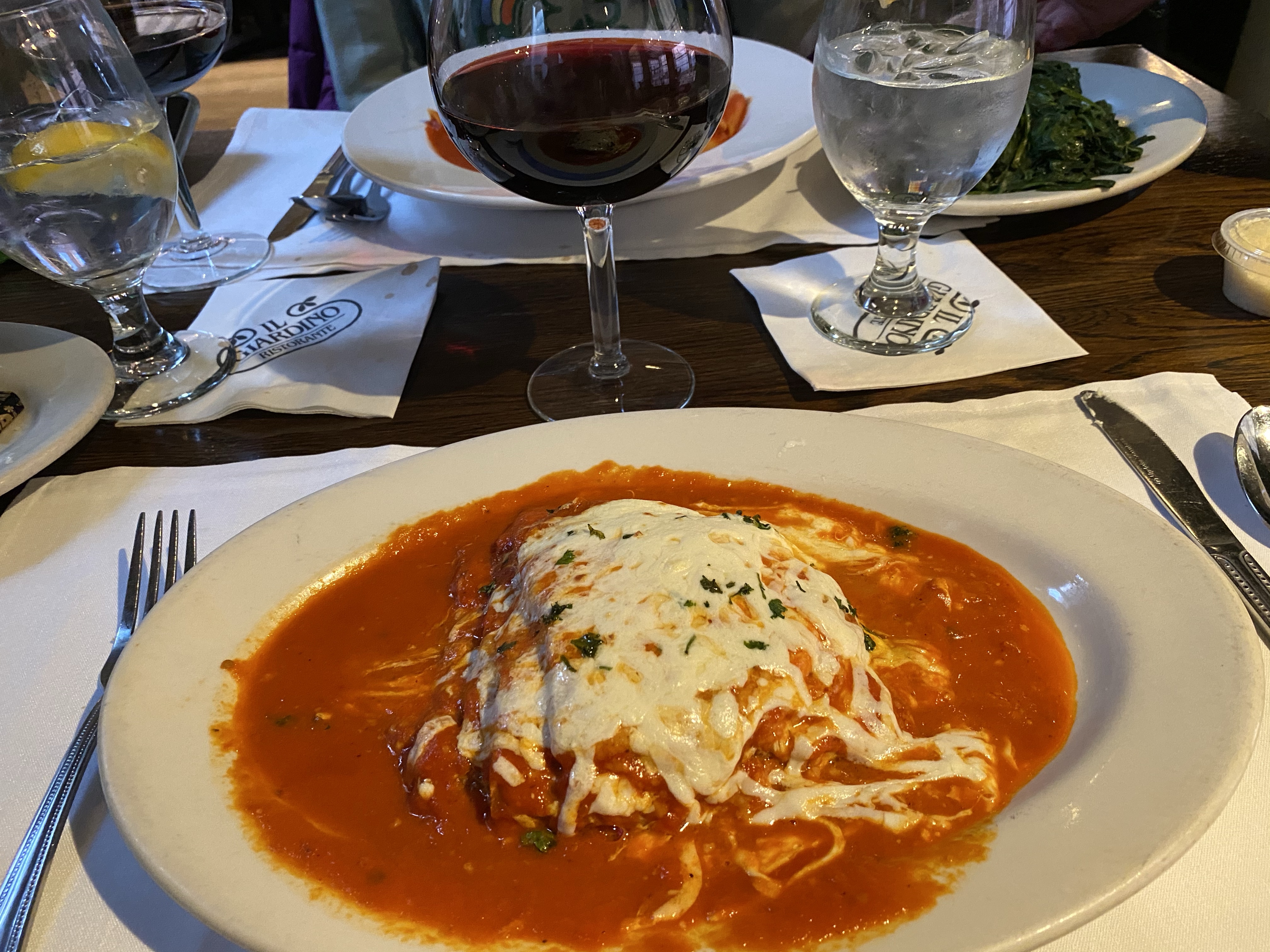
Another restaurant within walking distance was Il Giardino Ristorante. Self-described as “upscale dining,” John and I found this restaurant to be the perfect place to celebrate the fact that I survived 12 weeks of half-marathon training and the extreme weather conditions of the actual event. Filled a wood-burning oven–creating a warm, aromatic scent emanating throughout the dining area–a wide variety of green plants, and an enormous wine collection lining the walls, the vibe of the restaurant felt clubby, and yet, relaxing.  It turned out that the exceptional service and outstanding food ended up being the shining star! Wow, did we ever enjoy this meal. 

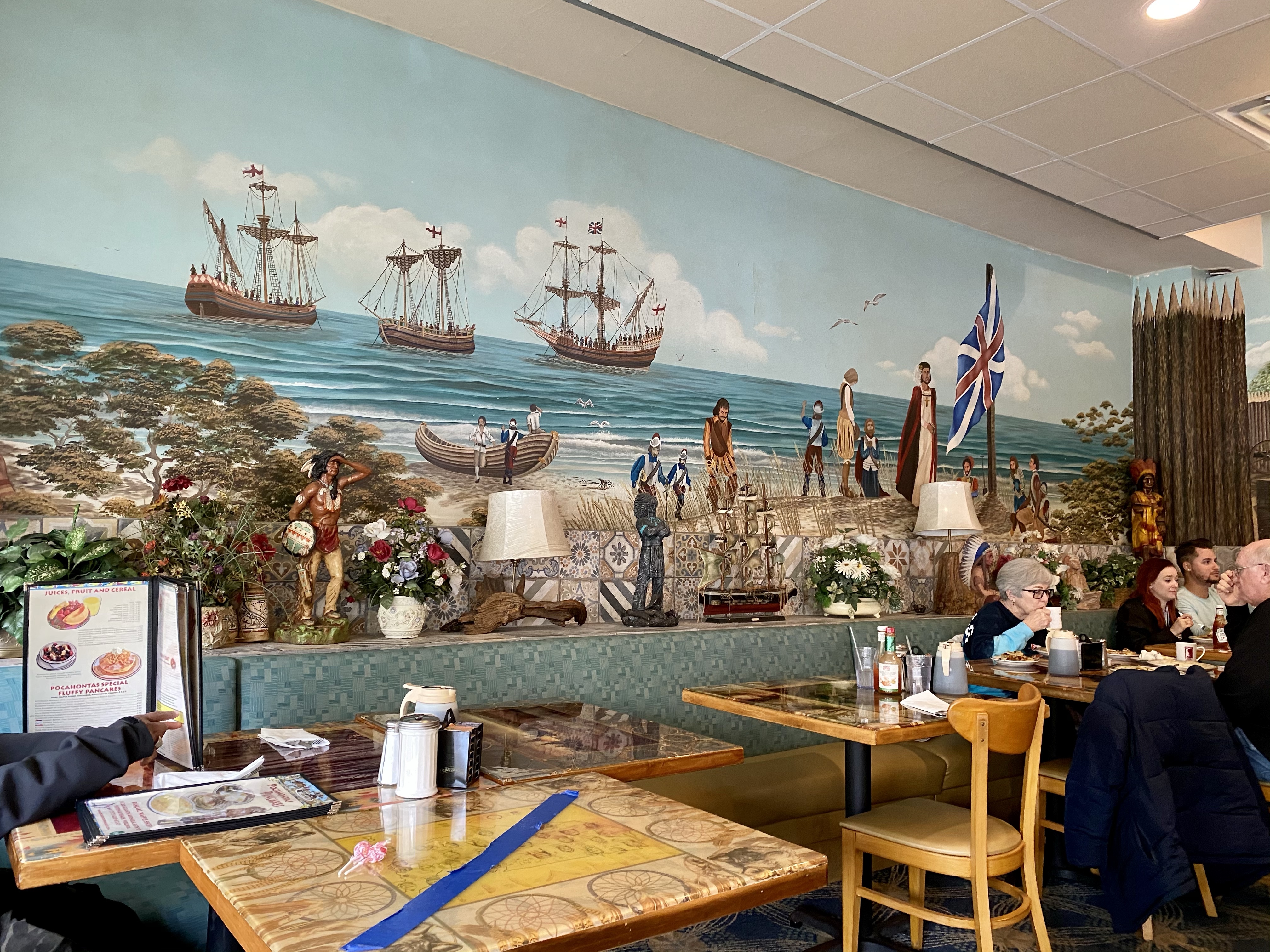
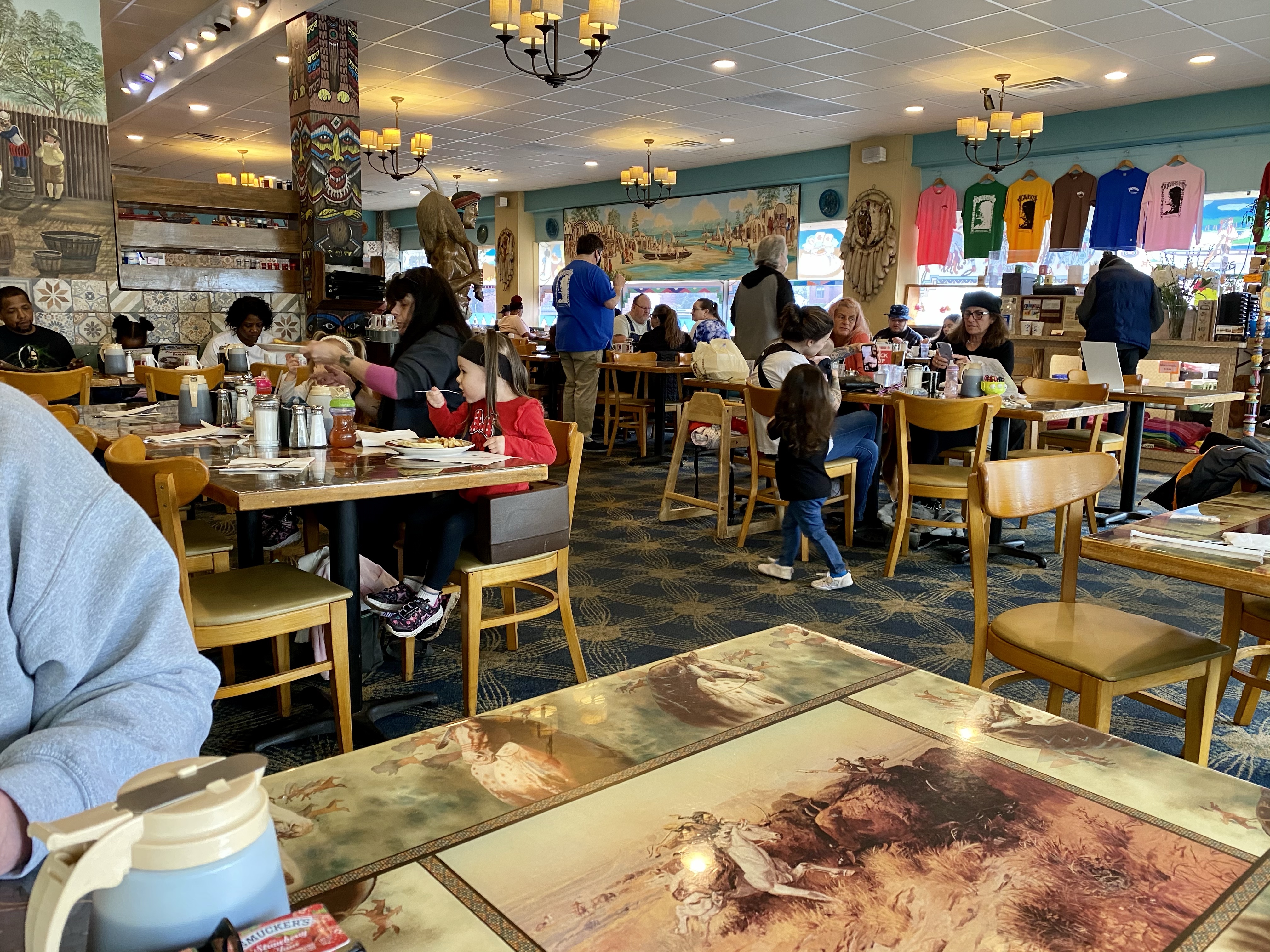
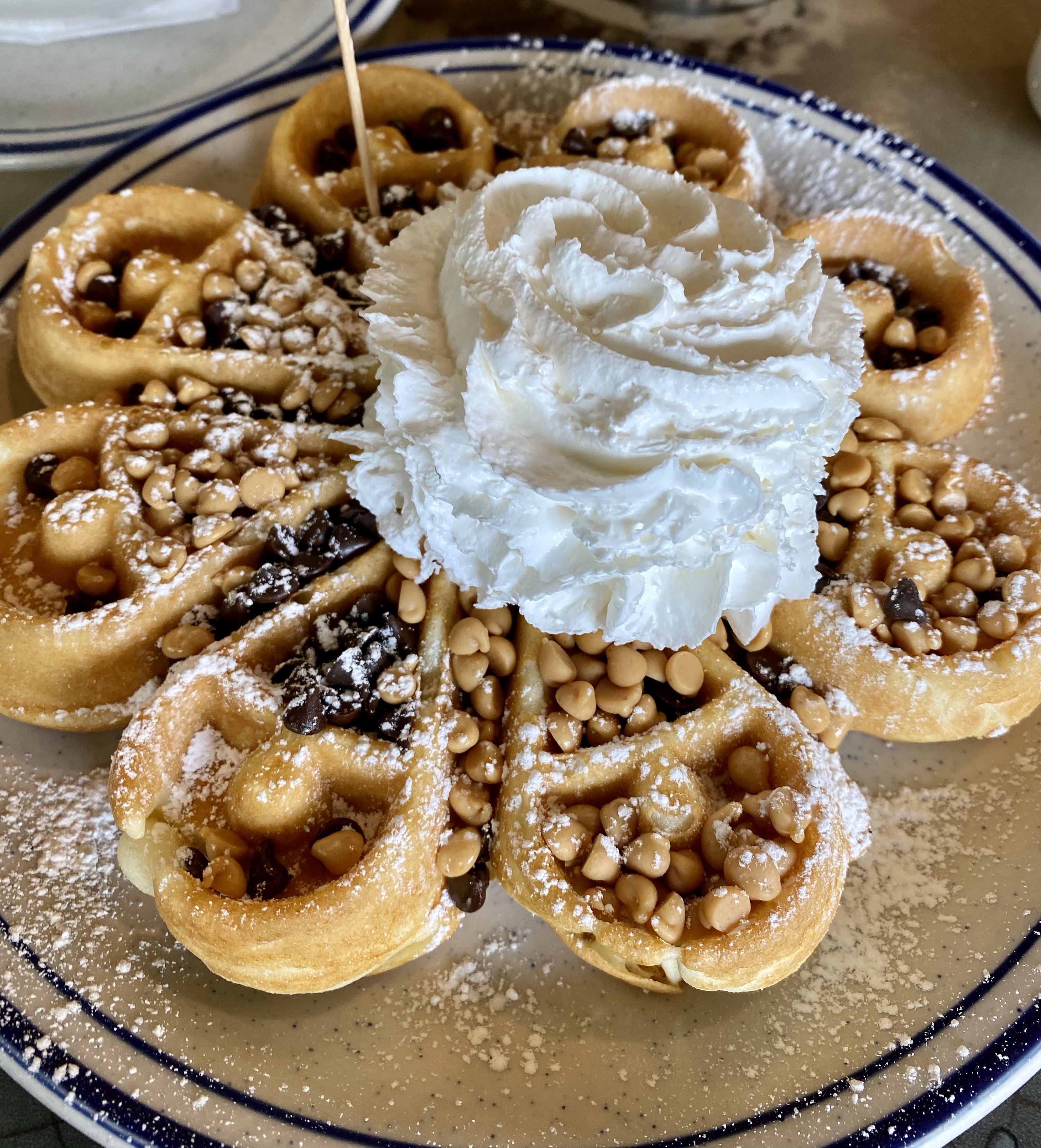
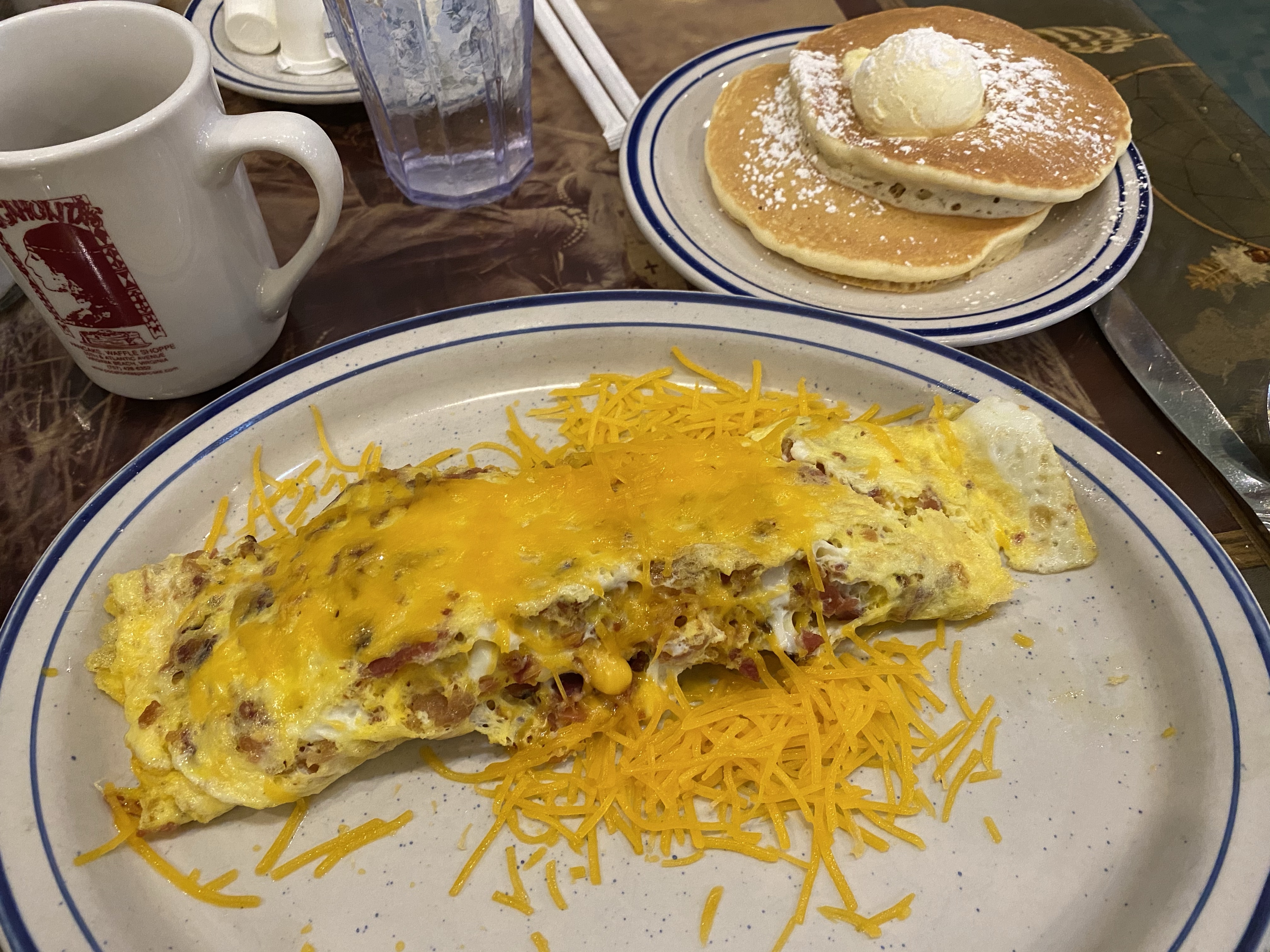
One more exceptional dining experience that John and I discovered was Pocahontas Pancake House.  Decked out in slightly cheesy Jamestown & Powhatan murals with a teepee, this family owned, super-clean eatery turned out to be gluten free heaven for me!  Clearly, a local favorite based upon the crowd, this breakfast and lunch only diner, served up more breakfast and lunch gluten free options than I have ever before experienced.  Their menu was more like a novella, and my choices ranged from waffles, pancakes, bagels, muffins, bread, and wraps!  Plus, numerous vegan/vegetarian options, along with countless meat/egg-centric options for John.  We dined here twice and relished every single bite!

“Whether you’re a history buff, outdoor enthusiast, or die-hard foodie, or you’re just looking to do little bit of everything, Virginia Beach is an adventure you just have to experience for yourself.”–Virginia Beach CVB

While John and I did take a quick trip to visit the Lynnhaven Mall, one of the largest malls on the East Coast, we spent the remainder of our time taking in the sights and sounds along the boardwalk and beachfront town areas of Virginia Beach.  However, as I discovered with quick internet search, there is MUCH more to discover in the Virginia Beach area.  From outdoor adventures throughout the beach and Chesapeake Bay areas to more inland adventures, from historic explorations to arts and cultural discoveries, from micro breweries and distilleries to Town Center adventures and family fun, and from Sandbridge to Pungo, the areas of Virginia Beach offer a wide variety of unique beach vacation opportunities.  John and I look forward to exploring more of what this area has to offer especially since it is only a short six-to-seven hour drive away!   

From our vaccinated family to yours, we wish you the return of safe and happy travels!