Fighting Reflections

A cardinal, a window, and a lesson in perception

🐦‍🔥The Cardinal Is Back

“Guess who’s back?”

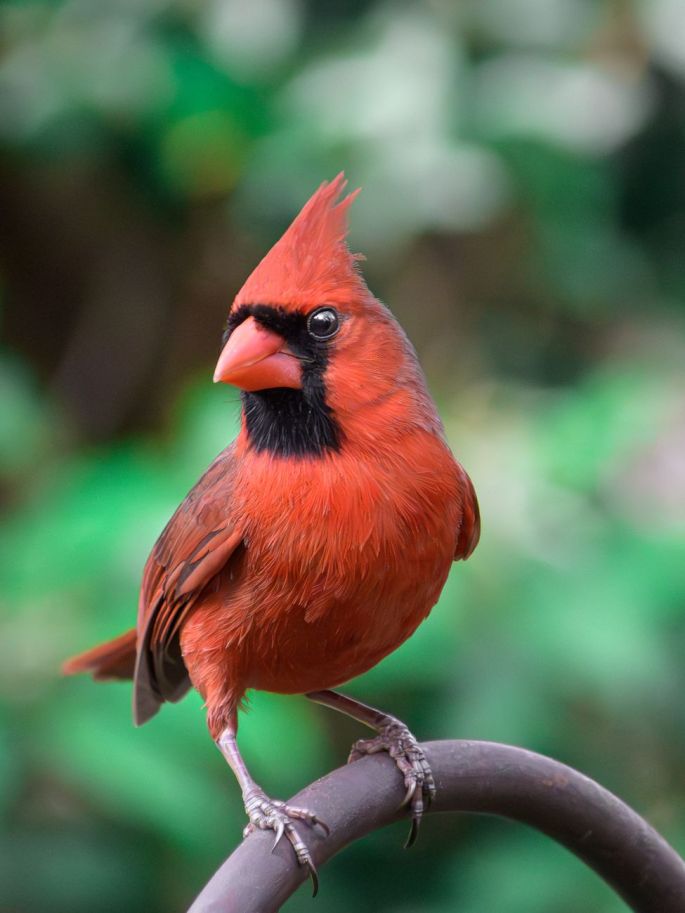
My husband’s message came through my AirPods as I ran early one Saturday morning in May. Then, in quick succession, two more messages followed. One was an image of a cardinal in mid-flight, attacking a window that I would later view on my phone. The other said, “It’s our crazy cardinal friend from last year who won’t stop banging the window. Tippi (our cat) is going CRAZY!”

Ten or so minutes later . . . “OMG! The Boy (our neighbor’s outdoor cat) just jumped as high as the window and nearly caught the bird. Feathers are flying!”

Thus began the return of our daily sound effects. Beginning at first light and continuing off and on throughout the day until full dark falls, we hear the thuds, the whams, and the kerthuds of the colorful, but crazed, cardinal attacking either the bay window or the large picture window at the front of our house. 

I added window clings “guaranteed to prevent even the most aggressive birds” from attacking the windows, but the sounds and the grotesque bird droppings that demand frequent cleaning tell a different story. Watching the cardinal attack from the outside while my 18-year-old cat keeps a vigilant watch—as though her aging joints were a force to be reckoned with—I frequently find myself shaking my head, wondering what on earth the bird thinks he is accomplishing other than a headache. 

From a biological point of view, I get the cardinal’s motivation. He’s naturally driven to fiercely protect his mating and nesting territory during this time of year. When he catches a glimpse of himself in the reflection of the window, he thinks another male is encroaching on his territory. So he attacks by charging and pecking the glass. Then, when he sees his own aggressive movements, he thinks the “intruder” is attacking back. This causes the cardinal to get even angrier and more aggressive, perpetuating the endless cycle of attacks.

The Problem Isn’t His Determination

 I admire the bird’s determination. The problem is not his determination; it is his perception. He isn’t fighting another bird. He’s fighting himself. 

🪟When We Keep Hitting the Glass

How often are we like the determined cardinal? How often do we keep mulling over and returning to the same argument, the same disappointment, the same heartache, the same resentment, and so on? How many times have we tried to change someone who is not yet ready to change? Yet our perception and determination trick our minds—and hearts—into thinking we can. 

We convince ourselves that “If I explain it this way, one more time, then they will finally respond this way.” 

“If only I try harder, then this will finally happen.”

“If only I push, pull, arrange, help . . . just a little bit more, then this will all fall into place.”

And yet, nothing changes. Like the cardinal, we keep hitting the glass. We may have warnings and interruptions that should cause us to reconsider—much like The Boy tried—but our misguided perception has convinced us otherwise.

The cardinal has lost countless feathers. His droppings, no doubt increased by his own anxiety, are piling up alongside those feathers for me to clean up. The bird spends untold energy defending itself from an enemy that isn’t there.

Humans, myself included, do a very similar thing. We spend untold amounts of emotional and mental energy, lose precious time, and sacrifice our peace trying to defeat “something” that may only exist in our minds due to our perceptions. Sometimes the “enemy” is not another person, as we may think. Sometimes the so-called battle is with ourselves, our assumptions, our fears, or even our need to be right. The toll is real. The bruises are real, even when the battle is not.

🧐Seeing More Clearly

The cardinal lacks the power to recognize his own reflection. Humans can. We have the power to pause and ask: “What if my perception is off?” or “What if my focus is fuzzy and I am not seeing correctly as a result?” 

This may mean stepping back in order to stop “banging our heads,” as it were. It may mean taking another look and examining the situation with a fresh perspective in order to identify what is really there.

I am reminded of my most recent eye exam.  “Do you prefer A or B? Is C clearer than B? What about D?” the doctor asked as she adjusted the lenses.

The doctor went from one eye to the other until finally she revealed the view with both eyes properly adjusted. What a difference in clarity that made when I was asked to read that bottom row for the third time.

Wham! I hear the cardinal as I write this. Kerthud! Ugh, that flash of red hurts my head in sympathy for this poor bird. His endless resolve to keep fighting causes me to feel tired for him. 

Every morning, since that first Saturday in late May, Mr. Cardinal is back, convinced that his rival still exists. I watch him and wonder. How many of my own battles have looked exactly the same? How many times have I mistaken my own reflection for a rival, misperceived the reality of a situation, or spent so much energy fighting glass?

The cardinal has become a daily reminder that sometimes the most important change is not changing what stands before us, but changing the lens through which we view it. 
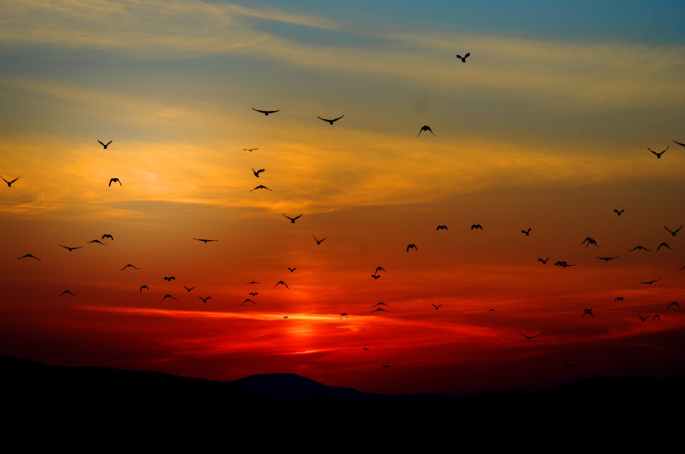
Birdsong: A Harbinger of Hope

“Faith is the bird that feels the light and sings when the dawn is still dark.” –Rabindranath Tagore

It is typically during the seventh hour of the day at some point in February, when there is a noticeable shift in the time the sun rises, that I become aware of their return.  Upon first hearing their growing morning melodies, while walking into the school in which I am an educator, their sweet sounds encourage me that winter will not last forever. With the arrival of March, there is a gradual shift in the start of their chorus as it begins earlier like the daylight.  As March melts into April, and April fades into May, their symphonious soundings continue to advance, in sync with the brightening of the sky.  Softly their voices appear, as darkness begins lifting its veil, until the cacophony of their songs reaches full crescendo with the rising of the sun.

“Birdsong brings relief

to my longing.

I am just as ecstatic as they are,

but with nothing to say!

Please, universal soul, practice

some song, or something, through me!”–Rumi

As one who rises well before dawn, but does not necessarily enjoy such premature risings, I do, nonetheless, appreciate the moments before the brightening of the sky:  birdsong.  These hopeful melodies, it seems to me, offer praise and thanksgiving for the arrival of the new day.  Birds sing regardless of the temperatures, whether there is frost or dew on the ground, or whether there is a bitter bite of the wind or the air is utter stillness.  Their animated voices echo among and around the hills of our area, playing a sort of hide and seek with the give and take of the various songs of each species.

I once read that because King Solomon understood what the birds were saying in their chirpings, they often remained near him.  Supposedly, St. Francis’ presence was so calm and reassuring that songbirds frequently alighted upon his shoulders.  While I am not sure that either of these accounts are much more than lore, they are certainly lovely images to contemplate in the midst of a morning birdsong performance.

Photo by Jess Vide on Pexels.com

This year, it seems to me that the birdsong of sunrises is a metaphor not only signifying the arrival of spring, but also life after the pandemic–at least for those of us fortunate enough to live where those affected by COVID seem to be decreasing.  Like a great collective exhalation, the birds’ songs reflect the hope and freedom that is life after quarantine.  The freedom for humans to flit, flutter, and fly from place to place, as if riding on the wings of these birds, seems as welcome as the spring weather.  Of course, I would not yet throw caution to the wind, but it does seem, at least for now, the worst is behind us.

This weekend, for the first time in months, I met a friend, and we walked together on a local walking path.  In spite of the early morning chill, the give and take of conversation while exercising felt as victorious as the first blossom of crocus emerging through a crust of white snow in late February or early March. As we walked and talked, birds offered a euphonious soundtrack, better than any store muzak, as they chattered, called, and chirped from limbs, lines, and landscape, tilting their small heads this way and that; our great guardians of the walk.

As the birds awakened my later weekend slumberings on the morning of this writing, I couldn’t help but wonder, as I wiped the sleep out of my eyes, at the birds’ optimism.  Even in the darkest days of quarantine, those harmonious fowls kept up their song.  In fact, they never ceased, not for one day.  No matter the restrictions, the overwhelm, the confusion, and the fear that existed among the human population, especially in the early stages of the pandemic, the birds held fast to their habit of daily, lyrical praise.

There is a scientific theory loosely held by a few scientists that the songs of birds, especially in the early dawn hours, vibrate at an ideal frequency to promote plant growth and yield.  It is theorized that when exposed to bird song, the stomata–the mouth-like opening found on the bottoms of leaves–open wider.  This widening allows for a greater exchange of air–expelling more oxygen–and also permits greater absorption of water and nutrients.  

Photo by Dariusz Grosa on Pexels.com

I can’t help but wonder if that is what the birds are likewise trying to do for humans.  In an act of Divine Instrumentation, a bird’s song is not only to aid in the growth of plants, but likewise in the swelling of the human soul.  Perhaps, those songs occur, in the birth of the day, when all is fresh and renewed from a night of rest, at an optimal time to widen the human heart, providing a greater opening for an exchange and absorption of optimism and aspiration from these winged creatures.  

In fact, one could think of each lifted note sung by feathered friends as a harbinger of the positive possibilities each gift of sunrise brings us–if only we allow our souls to remain open to them.  Working symbiotically with the oxygen expelled from the stomata of a plant, we too, can increase our own personal growth and yield by remaining unrestricted to the promising potential each day offers.  Even though the sky is still dark, the birds faithfully start their singing.  We can choose to do the same. 

 “ . . . . Birds make great sky-circles of their freedom.

How do they learn it?

They fall, and falling,

They’re given wings.–Rumi

Photo by Jou00e3o Jesus on Pexels.com