Surrender and Accept Change

“And when the night is cloudy, there is still a light that shines on me, shine until tomorrow, let it be.”–Paul McCartney

Photo by Zeeshaan Shabbir on Pexels.com

During the height of the pandemic, I cultivated the habit of a daily meditation practice.  In particular, I often used an app that was free of charge for those in the service careers, including educators.  In addition to offering guided meditations, it also offered short (3-5 minute) video clips designed to bolster spirits, inspire courage, and calm feelings of anxiousness.

While I can’t say I was a regular viewer of those videos, I did enjoy, and often learn, from the ones I did watch.  One video in particular, used time-lapse photography to demonstrate the ways in which light changes throughout the day.  It was one of my favorites, so much so, that I saved the link to my laptop to rewatch from time-to-time

During this video, the narrator explains the way our experience of color changes over the course of a day and the science behind it. Beyond the obvious point of light brightening at the beginning of the day and darkening at the end of the day, there is a daily light progression that we may not perceive.  It allows us to experience every color of the light spectrum within one 24 hour period.  Much of this progression has to do with the nitrogen and oxygen in the atmosphere scattering the light waves coming from the sun and making the sky appear blue.

Photo by Skitterphoto on Pexels.com

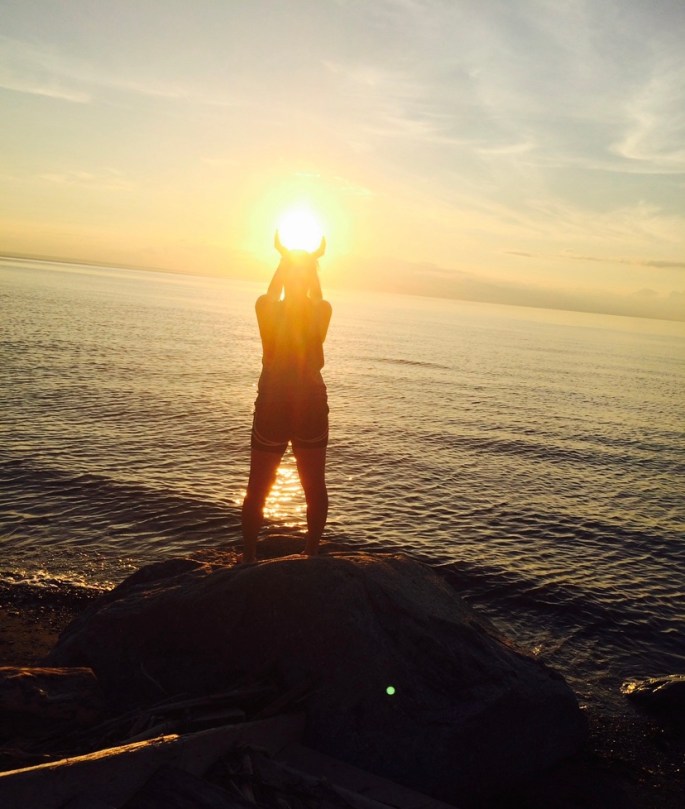
At sunrise, we see more reds and oranges, while other colors, like greens, blues, and purples, appear darker and more muted.  Then, as the morning progresses, yellow light becomes the dominant color we tend to associate with sunlight. Meanwhile, the “yellow” sunlight reflected upon the so-called blue of the sky intensifies the color of anything that is green up until noon.  Then this same light/color progression begins to reverse itself throughout the remainder of the day until the sun sets.  As the sun returns to its lowest point on the horizon, the light returns to a red-orange hue, and then gradually fades into the blues and violets associated with night, illuminated by what we perceive as the white light of the moon. 

And so it is with life. Change happens daily, from moment to moment, and life never stays the same.  Like the changing of light rays throughout the day, many of these changes are so subtle, they are often not observed in the moment, such as the growth of our children, or our own aging process.  For example, a parent may not clearly see the day-to-day growth occurring within the physical development of their own child, until one day, they happen to notice the child’s clothes are suddenly too short/small.   Likewise, we may not discern our own aging process until we see a picture of ourself from as few as five years prior, and suddenly we are face-to-face with our own change.  

As an educator, I sometimes measure life in terms of an August to July school year, rather than the typical January to December calendar year, depending upon what is being measured.  Nonetheless, I recognize, now more than ever, that time is fluid, and it matters not how I measure time because it continues to flow and stream like the daily progression of light.

That being said, these past 12 months have been full of joys, changes, and of course, challenges. Many of these changes were immediately as visible as a bright sunrise over the Ohio River. While others shifts were less visible, but nonetheless impactful. Then there were those challenging dull hue moments that accompany the colors of night that felt as long as evening shadows.  In fact, there were moments when it felt like I was riding life’s carousel, returning, again and again, to the same point as if progress was at a standstill.

And yet, now I can look back and see that, indeed, even if I wasn’t directly observing it, change was occurring.  While my eyes may not directly witness every sunrise, nor catch sight of all of  night’s blues and violets, these events still occur–without or without my direct detection. An invisible force, a guiding hand, if you will, greater than you and I can comprehend, maintains this on-going, ever-moving cycle of change.  It is ever present, even during those darkest, bluest nights when we often feel alone with the shadow-side of life and wonder if the darkness will ever abate.  

Ultimately, the darkness ebbs, and the light does begin to flow, but precisely as the light/colors of the day must go through their unique progression, so too must the solutions and resolutions to those dark and lonely life challenges.  Life, like light, will go on and will continue, along with the Source, the maker of light and life.  Therefore, we must surrender to this knowledge.  Surrender to the what is, and to what will be; surrender to the notion that we are not in-control.

The lesson for me this 2022-2023 year, and it is a tough morsel to swallow, is that the only guarantee of life, like the light progression of our day, is change.  While I can try to control certain factors, such as schedule and routine, the choices I make, or even how I measure time, for the most part, what will be, will be. 

Thus, as long as I wake up, whether I rise with the cool dark blue of the predawn hours, or I get up with the bright orange and red light of sunrise, there is a Source shining, not only within me, but throughout all of life.  Therefore, as the light surrenders, rather than falls, to its daily course of change, it is likewise my job to see the illuminated gift of each day as I ride the ups and downs of this carousel called life.  
Teachers Matter: Welcome to the Next Generation of Educators

“So enter that daily thou mayest grow in knowledge, wisdom, and love.” –Alumni Gateway, Ohio University, entrance view.

May 2017.  Upon high school graduation, like many, my daughter, Madelyn (Maddie), thought she had an idea regarding the direction of her adult path.  However, once immersed in the pursuit of this path, biochemistry/chemistry, despite excelling at it, she was miserable. Midway through her undergraduate studies, after much reflection, discussion, and contemplation, Maddie bravely decided to pivot.

Her decision to change course was not a simple one.  And while I do not want to speak for Maddie’s experience during this process, I do recall her stating that the one class that truly brought her joy during her first two years of undergraduate work was an art course.  Art was her minor, but in the decision to switch, art became her major, and biochemistry/chemistry became her minor.  

Like all change, there was some catching up to do and several adjustments, especially since she switched locations of study. Then COVID, and the ensuing pandemic, hit, impeding progress as the railways of education greatly slowed in an attempt to switch tracks.  This meant virtually navigating coursework meant to be completed in an art studio.

As the pandemic’s impact grew, the staggering blow of life-interrupted affected all, especially those between 18-25 years.  Daily living went upside down and sideways for this age group as the so-called normal way of interacting and connecting with friends, family, and mentors was often lost during times of isolation.  Even as restrictions gradually eased, those last two years of undergraduate study, while simultaneously working part-time, were not the typical college-age experiences for Maddie and her peers.

In the shadow of the COVID cloud, Maddie was also reflecting, examining, and embracing a greater understanding of herself to best determine what her next steps into adulthood would look like.  Again, I cannot speak to her internal experience, but from the outside, her contemplation process appeared deep, honest, and, at times, painful.  I wanted to help ease the discomfort of this transitional process, but as with any metamorphosis, only the person within the cocoon can undergo the change.

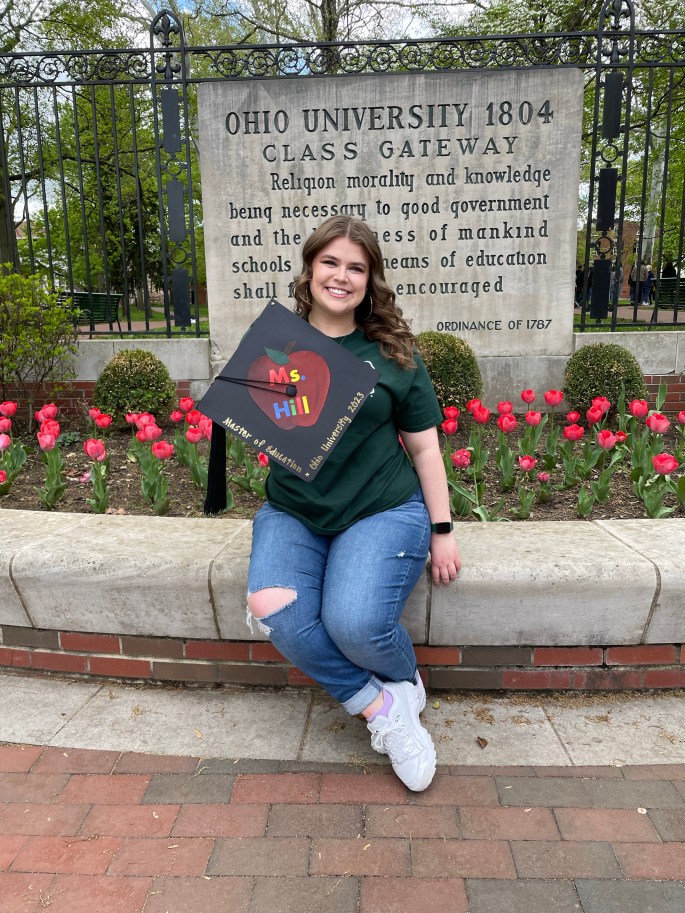
Beside a bright green cap, you will see Madelyn looking up at us with a glowing face of pride.

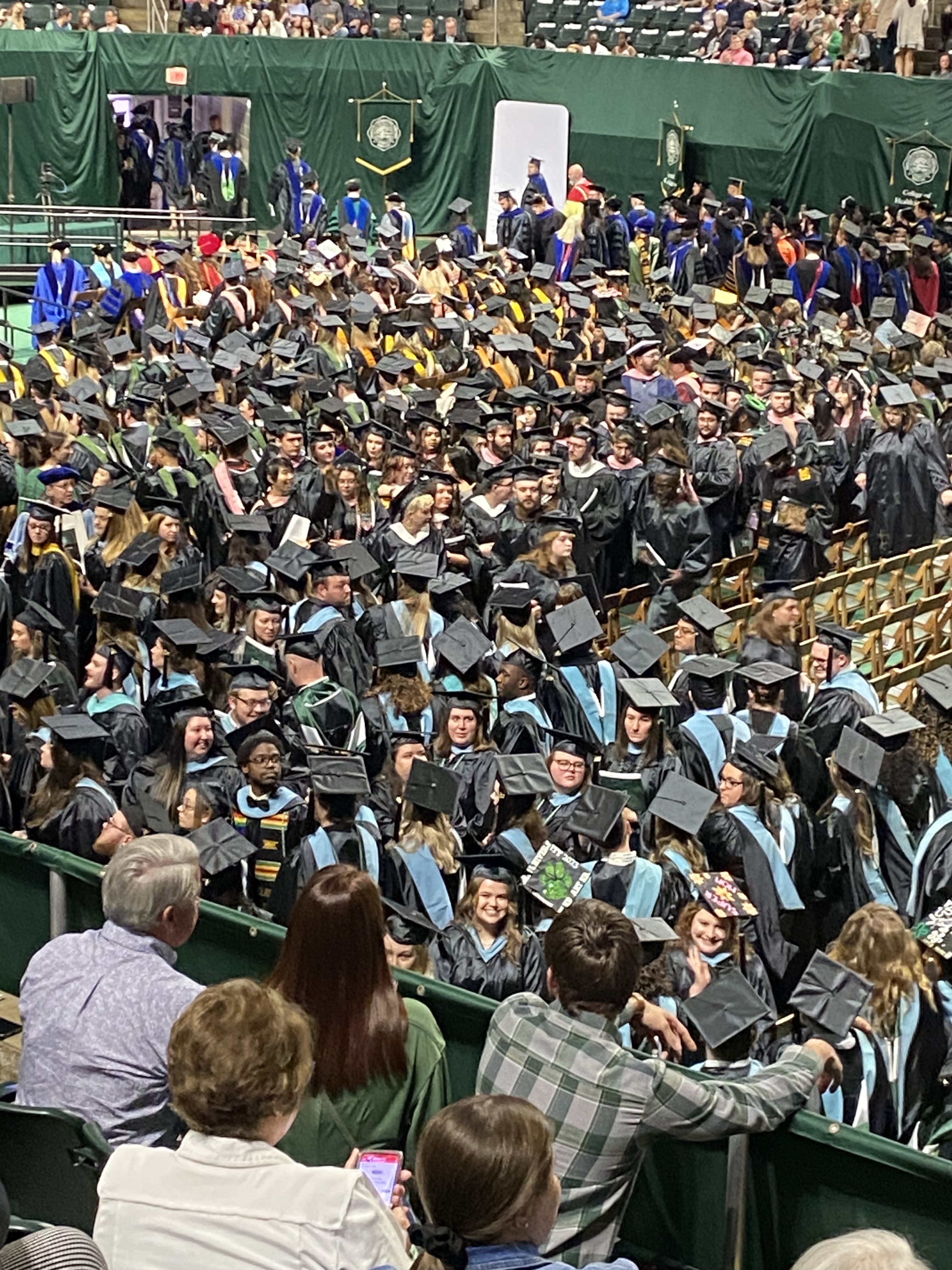
May 2023. John, my husband, and I waited as the candidates for Doctoral and Master’s degrees from Ohio University, our alma mater, made their way into the Convocation Center.  It was a long procession with Patton College of Education entering as the next-to-last school of candidates. Finally, we spied Maddie with a smile for miles, waving at us, face glowing with pride.  She had not only emerged victorious from the cocoon of young adult transition, but also, she had successfully earned a Master of Education degree during this transformation and appeared ready to take flight.  I hoped that like a sponge, she soaked up all the joy, hope, and satisfaction relegated to such a momentous occasion.

Celebratory milestone moments of life are few and far between.  These cherished junctures of life mark a moment in time when one can say, “I did it.  I put in the work.”  Or, as Maddie likes to say, “Nevertheless, she persisted.”  And persist, she did.

And so, as John and I sat there, tears frequently slipping out of our eyes, I reflected over the ways in which this moment could potentially impact her life.  You see, our daughter is now a fourth generation educator, the ninth teacher of our collective families.  Education is not an easy career, and often the rewards are not, per se, tangible–at least if you measure monetarily.  Instead, the rewards are more intrinsic.  It is a calling to go forth and make a difference in the lives of others.

It struck John and me that these hundreds of candidates, no matter their field, present in full regalia, were there, in part due to their past teachers.  In fact, though teachers are often at the bottom of the pay scale, there isn’t a single adult, or child over the age of five, whose lives have not been impacted by a teacher.  As with any field, there are always going to be some bad apples, but the dynamic teacher, the teacher who cares, who is passionate about his or her students and subject matter can truly make a difference, and, in some cases, be transformational.  Call me biased, but there is not a doubt in my mind that Maddie will be the latter.

I have often shared a story about my Papaw.  He once pulled me aside and said, “Stethie,” (that is how he said Stephie), “Your ol’ Papaw only got a 5th grade education.”  

Papaw then spoke proudly of his sister who had gone to college, earned her degree, and went on to become a teacher. 

“Don’t be dumb like your ol’ Papaw.  Get your education.  Go as far as you can with it.” 

He went on to encourage me to be a teacher, like his sister, and later, his daughter, my mother.  

“There’s no greater job.”

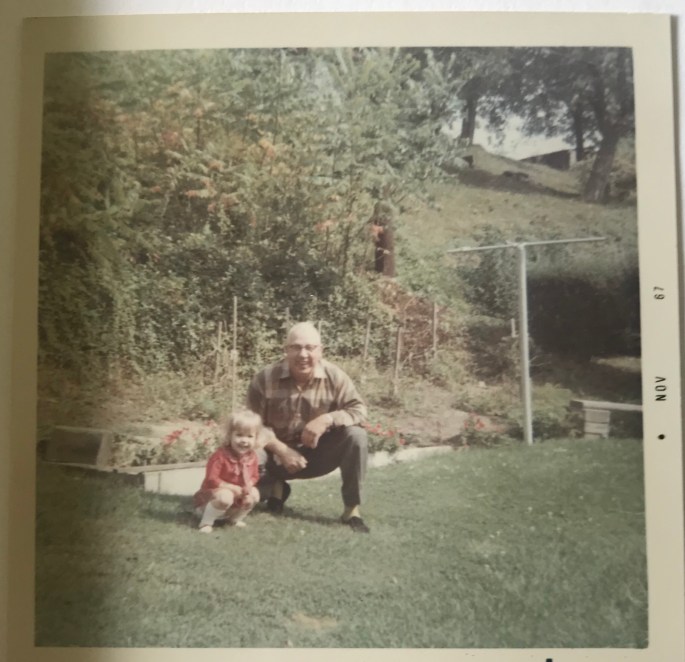
Papaw and me when I was around two years old in his backyard in front of his garden.

Little did he know that I would not only go on to become a teacher, but also marry an educator who was from a family of teachers.  Therefore, I can only imagine the smile on Papaw’s heavenly face, knowing his belief about education still inspires and motivates today.

This story will be published in May on the final day of National Teacher Appreciation Week. Numerous colleges and universities will be graduating more educators around this same time period, but the fact remains that the long-standing shortage of teachers that has been increasing since before the pandemic, will continue to grow. In fact, according to the Economic Policy Institute, this is not a result of the number of qualified candidates as much as it is the working conditions and lack of compensation.  

I am hopeful this will change for my daughter and her educational peers, but I am often discouraged by current political culture and societal trends, especially with regards to the importance of education.  Nonetheless, Madelyn comes from a long line of people who knew, know, and believe(d) in the merit of quality education and the impact of a positive teacher. My prayer is that she, along with the newest class of teachers entering the field, will proudly stand on the shoulders of those who came before them, and bless this world and its children, with their many gifts in even greater and more innovative ways than their predecessors could have ever dreamed.

“So depart that daily thou mayest better serve thy fellow man, thy country, and thy God.”–Alumni Gateway, Ohio University, exit view.

Sawubona: How this one word could change the world

“Every individual matters. Every individual has a role to play. Every individual makes a difference.”–Jane Goodall

Photo by Savvas Stavrinos on Pexels.com

Listening to a podcast recently, a word piqued my curiosity.  Sawubona.  The speaker stated that this term had a moment of notoriety in the 1990s in the business world based upon a book written to encourage companies to solve group problems through various systems of learning.  This may explain why I never heard of it up until now as I was, and still am, in the field of education as opposed to business.

As I understand it, at its most basic level, it is a Zulu expression of greeting, another way of saying “hello.”  However, as heard in the podcast, and confirmed in later reading, its meaning is far from a common greeting.

Depending upon the source read, Sawubona, means “I see you,” or “We see you.”  In response–again, depending upon the source–the other person greets, “Yebo, Sawubona,” (Yes, I/we see you too), or “Shiboka” (I exist for you).  Regardless, it is the seeing of the other person and acknowledgement of existing to help the other, that most stood out to me. 

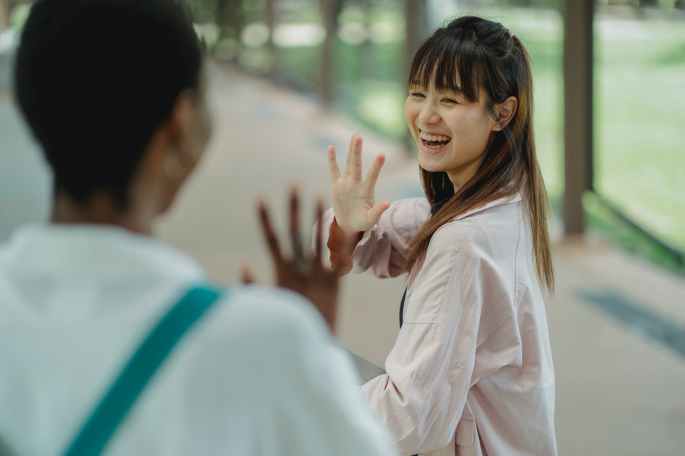
Photo by Sora Shimazaki on Pexels.com

Quite often, in our morning rush, our greetings and responses are typically short, polite, and given with a smile as we promptly move on to our work and/or day at hand.  Certainly, there are occasions when we pause long enough to ask about a specific event or person, but as our schedule often demands, we listen, long enough to be polite before moving quickly on, without really looking.  

I know I do this, and I feel fairly certain that I am not the only one.  Therefore, I do not want the thesis of this piece to be interpreted as finger wagging or shaming.  Instead, I hope to provoke some thought regarding the importance of seeing our shared humanity in one another and existing in a state of respect –even if we don’t see eye-to-eye with everyone with whom we meet.

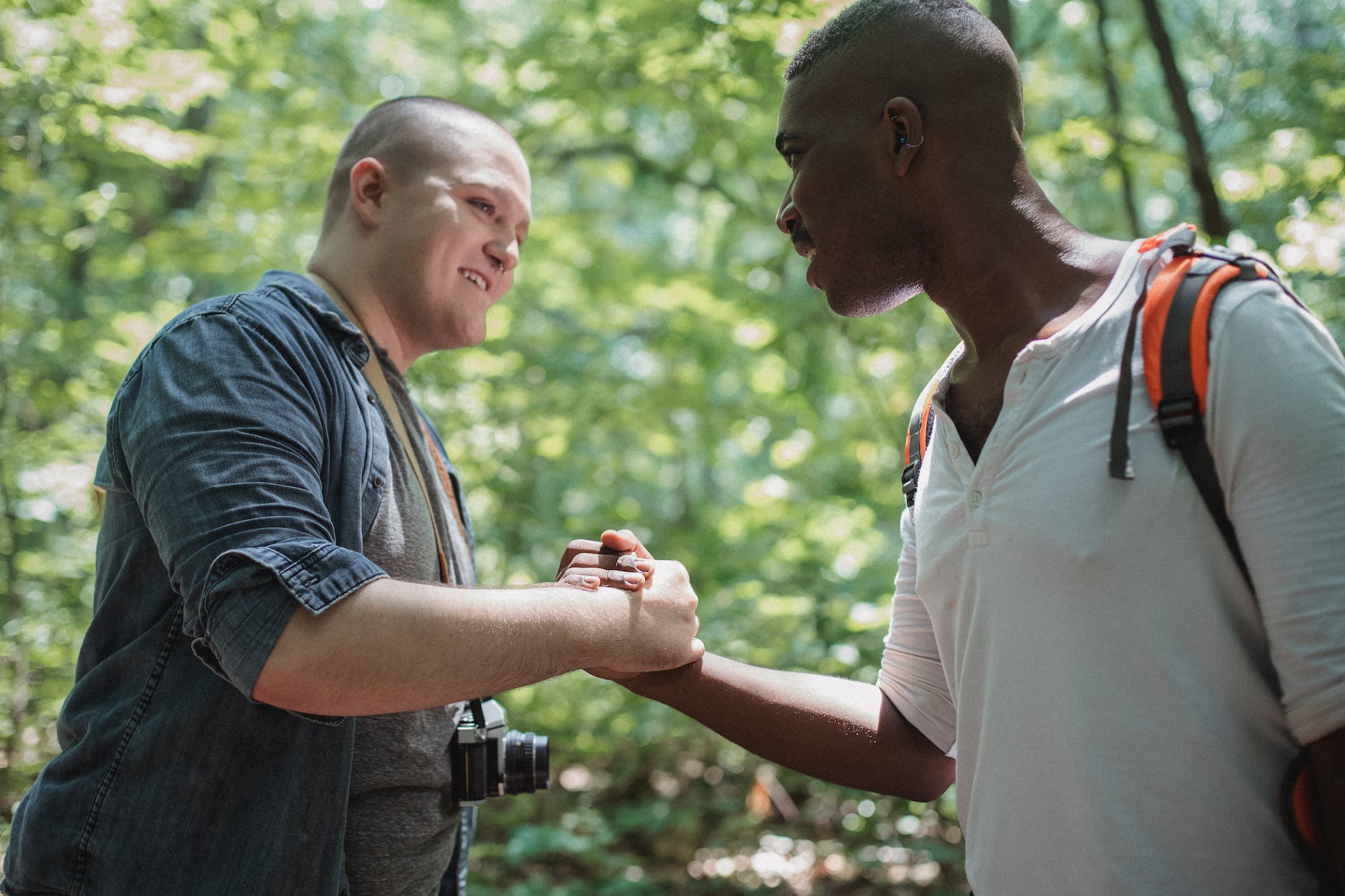
Photo by Yan Krukau on Pexels.com

Respect, according to Merriam-Webster, is derived from the Latin root, respectus, which means, looking back (at), refuge, regard, and consideration. The beauty, to me, of Sawubona is in the underlying message of regard for the other person. I SEE you is such a powerful acknowledgement. It is a way of communicating that I SEE (regard/consider) your uniqueness, your talents, and your gifts, no matter the differences we may have.

I once heard a story of a farmer who espoused hate towards a certain political figure.  As it turned out, the politician asked to visit the farmer for a conversation.  The farmer told the politician’s team that he felt reluctant for the politician’s visit because the farmer espoused a certain faith, and given the public servant’s political status, the farmer assumed the politician could not possibly have a faith affiliation.  Nevertheless, a meeting was arranged, and the two men of opposing sides walked the farmer’s land together as the farmer talked and shared his concerns about his way of living.  The political figure looked and listened. 

Later, as the conversation progressed, the two men ended up in the farmer’s house, drinking coffee and learning more about one another.  When the farmer realized that he, indeed, shared the same faith practices as the politician, he called a few of his friends to join in the conversation.  As the story goes, upon the politician’s departure, the two men shook hands, but the farmer made it clear that he still would not vote for this political figure.  However, he added that he was surprised to learn the two of them had more in common than he realized.  He further invited the politician to return to his home at a later date, so that they could continue their conversation.

Photo by Kamaji Ogino on Pexels.com

Some might ask what is the point of the story if the farmer was not convinced to vote for the politician. Instead, I think it makes a case for the idea of Sawubona. Two men, on opposite sides of the political fence, spending time with one another, asking questions, listening, learning, and finding some common ground in their shared human experience is a way of conveying consideration or regard for one another. They didn’t have to agree on all points in order to respectfully get along.  In fact, as it turned out, the politician would later reach out to the same farmer when certain legislation was being considered that would have affected the farmer and his community in order to gain a greater understanding of the potential impact.

Reflecting on Sawubona is a lesson of seeing others and being seen by others. It is understanding that we do exist together for one another.  We may have our differences, but it is those collective differences that can create a community of support.  Each individual has their own gifts and talents that we bring to the proverbial community table.  And, thank heavens, because there are so many skill sets of others upon which I rely in order to live, work, and participate in many other daily activities. 

When we truly take time to see others, we can see the common struggles, celebrations, and life experiences. We can feel compassion for another’s suffering, and we can feel the joy of their milestone celebrations. Furthermore, we can appreciate the gifts and talents of others, even those with whom we may disagree on certain subjects. 

Photo by fauxels on Pexels.com

In the end, I am not suggesting that the idea behind Sawubona is easy. Instead, I encourage us to think of Sawubona as a practice. A practice in which we take time to look others in the eye more frequently when greeting in order to make others feel seen.  Additionally, it is a practice for when we find ourselves feeling angry or incensed by an opinion different from our own, to challenge us to pause, and look more closely for the common human thread shared with that person of opposition.  

One word cannot solve all problems, but if we begin to look for more Sawubona moments, it might allow for more opportunities–like the farmer and the politician–for listening, learning, and finding common ground.  When we feel seen/heard by another person, it makes us feel respected, and that feels good.  Therefore, imagine the positive reverberations that could be created within our own local communities if we began to offer that same Sawubona feeling to even one person per day.  It is certainly worth considering. 

Photo by Pixabay on Pexels.com

Heal and Recover Smoothie

“Our food should be our medicine, and our medicine should be our food. “– Hippocrates.

Photo by Jane Doan on Pexels.com

As I’ve recently written about, I have been recovering from a surgical procedure of the spine, specifically my neck. Prior to this surgery, I spent time talking with the doctor’s nurse about not only what to expect, but how to appropriately prepare.  One point of preparation was to plan for soft foods as part of the recovery process.  This is because I would most likely experience dysphagia, difficult/painful swallowing.  

Reflecting on this point later, I knew that most traditional soft foods that were suggested would not, from a nutritional standpoint, promote healing.  Therefore, I began to research foods that would promote healing after surgery. Surprisingly, there was not only abundant information, but most articles agreed on the same basic food groups: healthy fats; foods high in vitamins A and C as well as fiber; dark leafy greens and cruciferous vegetables; berries; and healthy sources of protein. 

Photo by cottonbro studio on Pexels.com

As I read through various articles, one piece, written by a spinal health center, emphasized the importance of using smoothies as a way to consume soft foods that would nutritionally promote healing and help with recovery.  However, I had already blown through two blenders–literally. Each one, a budget friendly investment with the promise of high speed, power blending, had already crossed over to the great appliance graveyard.

That’s when I recalled reading about the pocket-friendliness of higher-end, refurbished blenders.  In passing, I mentioned this idea to my brother.  Unbeknownst to me, he used, and still has, at least one refurbished kitchen appliance.  He attested to their value and performance.

One week out from my surgery, after pouring through product reviews, I selected and ordered my American made, refurbished blender that came with a five-year warranty.  Since then, I have powered through fruit and vegetable blends like a professional smoothie maker.  No overheating, no smoking, no waiting for the blender to cool down. 

Photo by Polina Tankilevitch on Pexels.com

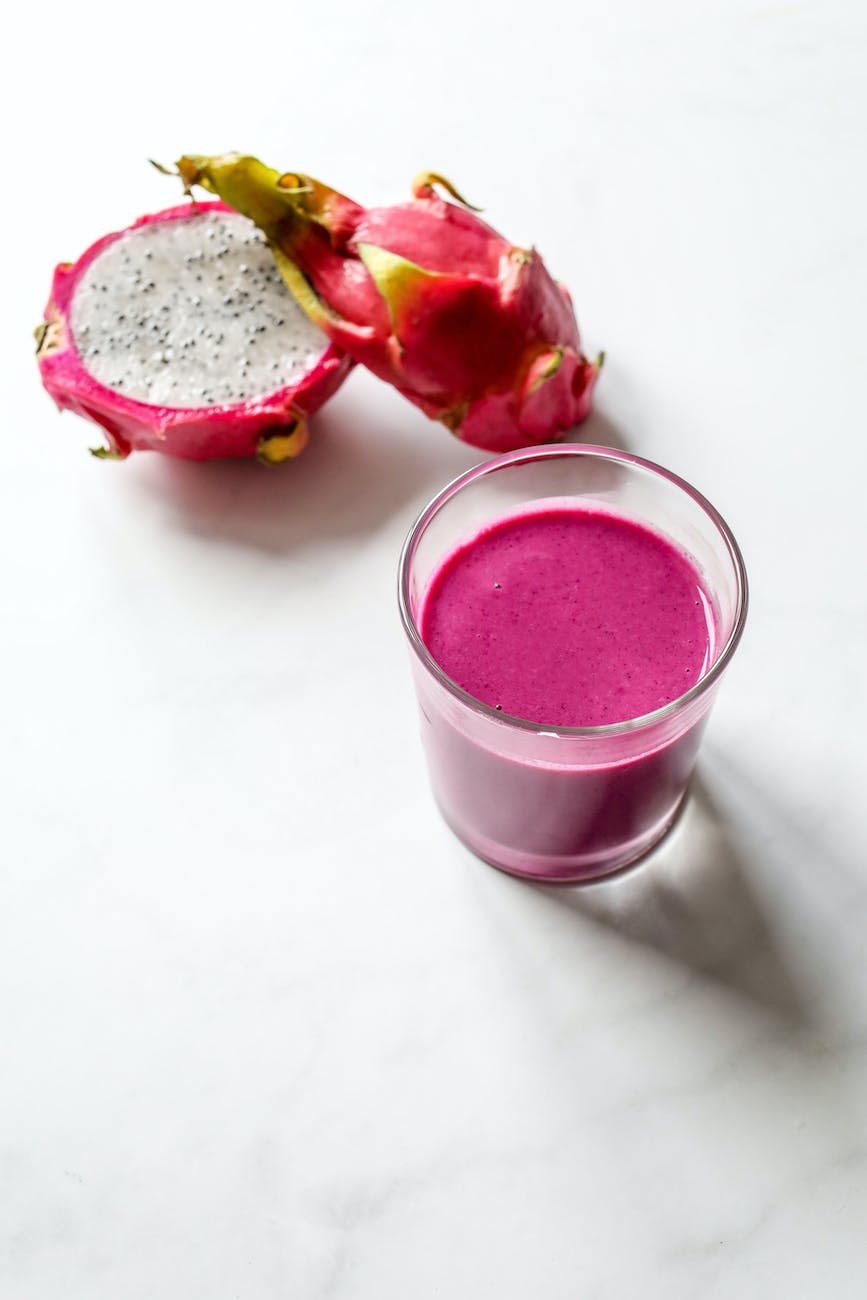
In fact, I’ve enjoyed rotating through several smoothie recipes, but the one I am sharing with you today is one of my current favorites because the color is so stunning.  However, don’t let the gorgeous, magenta color fool you; it is chock full of foods designed to promote, protect, and heal the body from the inside.

In fact, the first ingredient, riced cauliflower is a cruciferous vegetable that reduces inflammation.  It is naturally high in fiber, B-vitamins, phytonutrients and antioxidants.  Mango and dragon berries are high in vitamins, packed with fiber, polyphenols, and antioxidants that protect the body, reduce inflammation, and boost the immune system.  Whereas, elderberry syrup has long been touted for hundreds of years as part of traditional folk medicine remedies for boosting the immune system and shortening the duration of respiratory viruses, which may be due to its high in Vitamin C and antioxidant content. 

Then, I added in a bit of ground ginger to aid in digestion and as a natural pain reliever.  I also included a scoop of vanilla protein powder, high in amino acids to assist in the healing of my incision and the rebuilding of muscle tissue. Sometimes I used other berries, in lieu of dragon berries, and occasionally, I tossed in some ground seeds as a source of healthy fats and more protein.  I have even added a stalk of celery and part of a cucumber on some days–just to add in a few more vegetables. Additionally, I used mostly frozen fruits and vegetables, which meant nothing went to waste due to an expiration date.

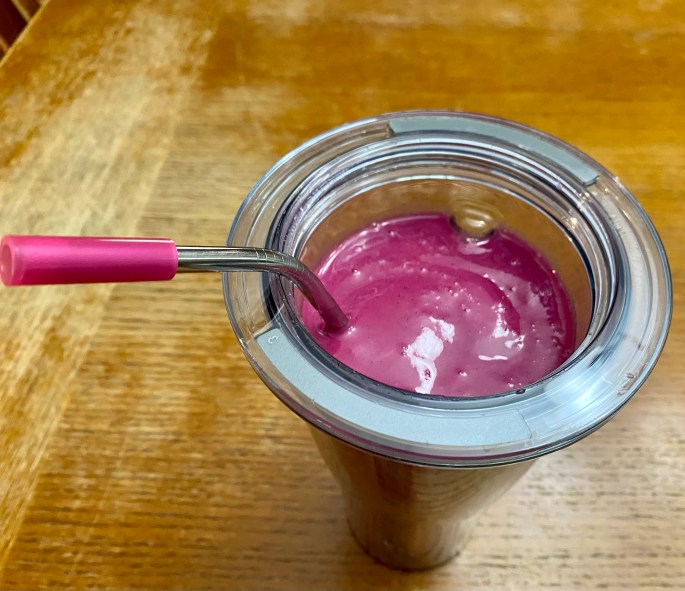
All told, my simple, tasty smoothies, along with my daily bowl of oatmeal, and a few other carefully selected and prepared foods, helped me through the time period in which swallowing was difficult.  They provided my body with key nutrients to promote healing and reduced my risk for falling prey to a respiratory illness.  As an added bonus, the fiber kept my guy happy and chugging right along.  Plus, I now have a fantastic blender that is reliable and will be a source of inspiration for all sorts of nutritional and fun concoctions for future recipes.

From home to yours I hope this delightfully vibrant, refreshing, nutrition filled smoothie will boost you through allergy season or any other time your immune system needs a little extra umph. 

Wishing you the best of health . . .

Heal and Recover Smoothie

Ingredients:

1 cup frozen riced cauliflower 

½  lime

1 cup liquid 

½ to 1 cup mango (dependent upon caloric and/or taste needs)

1 cup dragon berries (or other favorite berries)

2 teaspoons elderberry syrup 

Optional add-ins:

1 stalk celery, cut into chunks

½ medium cucumber, peeled

¼  teaspoon ground ginger 

1-2 scoops favorite protein powder 

1-2 tablespoons favorite ground seed: chia, hemp hearts, flax

Directions:

Add in all ingredients into blender and blend until smooth

Notes & Substitutions:

*Can eliminate all veggies, if you prefer only fruit

*Can eliminate lime, if not a fan.

*Can substitute kale, romaine lettuce, or spinach (However, your smoothie will look more brown than magenta.)

*Liquids can include: favorite type milk, water, coconut water

*Banana, or even pineapple, can be substituted for mango

* Up to 2 tablespoons pomegranate or tart cherry juice can be substituted for elderberry syrup 

*Finely chopped, ¼ inch long, fresh ginger for ground ginger

Move into Health, Part 10: Create a fitness plan that meets you where you are

Photo by MART PRODUCTION on Pexels.com

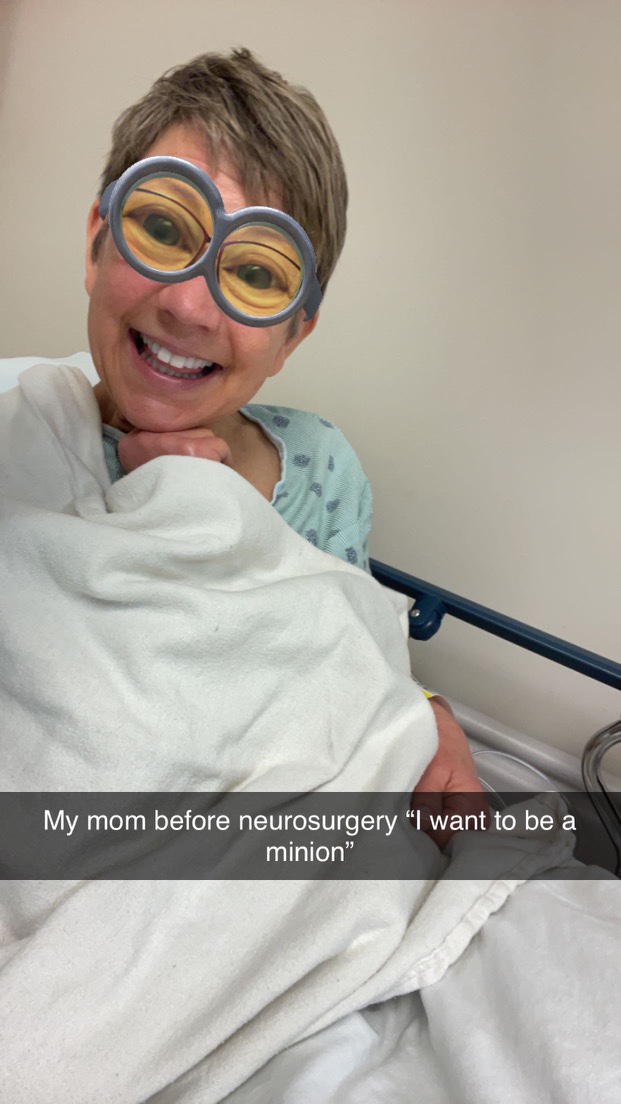
I came across a quote only days after my recent ACDF surgery by Oprah Winfrey that read, “Challenges are gifts that force us to search for a new center of gravity. Don’t fight them. Just find a new way to stand.” It accurately summed up what I have been trying to do as I recover.  Find new ways to stand, sit, sleep, work, walk, etc. . . Of course, I am blessed that my surgery did not require more than one night’s stay in the hospital, and wasn’t more serious.  Nonetheless, surgery is no joke and recovery is for real.

My movement was limited for days following surgery.  I had to learn to turn at the waist, rather than use my neck. Additionally, I had to focus on using my stomach muscles to get in and out of bed to avoid straining my neck. And, all forms of exercise, except for walking, was eliminated per staunch medical advice that my family took to heart with frequent reminders. (They didn’t need to worry, I truly wasn’t feeling like doing much during those first few days.)

Photo by SHVETS production on Pexels.com

Walking, I was told by the release nurse, was to be completed every hour, even if it meant only completing one lap around the dining room table before I sat back down.  However, I was encouraged, once I got past what the nurse called the “recliner days”–days when swelling and inflammation (aka pain) was at the highest level–to try to walk 10-15 minutes each hour.  I had just completed a half-marathon, albeit slowly, only weeks earlier, and now this was my new fitness plan. What a shift!

So why was walking so important, even on those days when I didn’t feel like moving?  Well, it turns out there are numerous valid reasons according to my doctor and as described in countless studies out of the Mayo Clinic, University of Wisconsin, and in a 2020 US News and World Report article. Here are a few of the reasons cited:

  • Prevention of post-surgery complications
  • Enhances blood flow throughout the body
  • Increases the flow of oxygen throughout the body
  • Accelerates wound healing
  • Strengthens muscles and bones
  • Improves digestion (aka ability to poop) and the function of urinary tract while reducing bloating and gas
  • Reduces risk for blood clots, infections, and lung issues, such as pneumonia
  • Boosts mood and self-esteem  

Why do I share all of this?  To make the point that my old fitness plan was, and currently is, no longer appropriate for me.  I had to adopt a fitness plan that meets my body’s needs where it is.  Therefore, my current movement plan consists of short segments of walking completed throughout the day as I remain home recovering, which complies with medical advice from my doctor and best meets the needs of my body.  

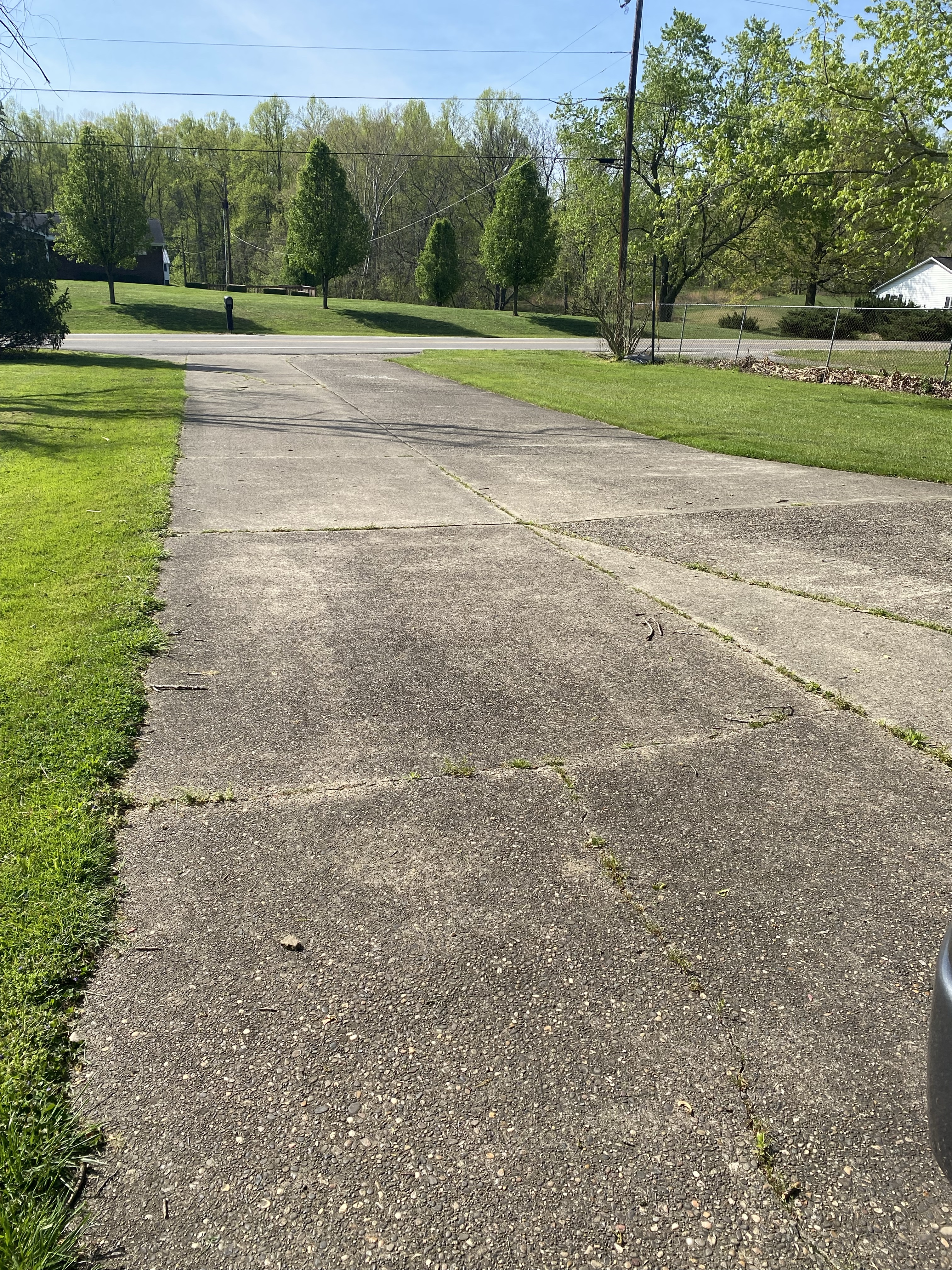
Gentle walking on my driveway or in my house is part of the slow and steady recovery plan.

At the time of writing this, I am entering my third week of recovery. After my two-week, post-operative appointment, I now have permission to begin to gently explore a few  strengthening exercises and stretches that can be completed without forward bending.  Additionally, I can begin to explore my neck range of motion with a few doctor approved neck stretches and strengthening exercises, but nothing more.  Slow and steady helps me find my new center of gravity.

Due to this experience, I want to continue to encourage you, Dear Reader, to carefully plan how you will enter, or reenter, your own exercise/movement plan this spring.  Create a plan that meets your needs, and commit to doing it–even if you don’t “feel like it.”  Personally speaking, I could feel angry and convince myself that if I can’t exercise the way I once did, then I won’t do anything at all. After all, it would be easy for me to sit around all day and use my surgery as an excuse to do nothing.  Conversely, I could try to push too hard with the delusion that, “The staff doesn’t really know ME,” and begin overdoing it with images of former, younger me dancing in my head

Instead, I have accepted the reality of my situation, rather than reject the medical advice I have been given.  They are the professionals, not me.  I have to meet my body where it’s at when it comes to fitness.  Sure, I have dreams of hiking again, walking (or jogging) the entire bike path of Ritter Park, and even practicing yoga with regularity, but none of those will ever happen if I don’t recover first.  And my first step in recovery is walking, so my body can focus on the miraculous work of healing.

Welcome walking into your life! You might be surprised by the benefits!

Therefore, no matter where you are, what shape you are in, or any other personal obstacles that you may be facing unbeknownst to me, I still encourage you to never give up on regularly incorporating movement into your day. Avoid the temptation to make excuses for yourself, but at the same time, don’t start off with a complicated plan.  Talk to your health care provider, and then start.

Start where you are.  If you don’t regularly move, then begin, like me, with short walks around your home, or up and down your driveway or sidewalk.  Do that 3-4 times per week.  The following week, add one more lap, or add five more minutes to your walk, and complete it 3-4 times per week.  Gradually, you will build up your time and the distance covered.  By keeping this up over several weeks, you will create the habit of moving.  Your body, lungs, and heart will be stronger, and I wouldn’t be surprised if you find you are reaping other unexpected benefits!

Think about this, my friends, if walking is scientifically established as one of the best tools for recovery after surgery, what can it do for you?  Don’t beat yourself up because you are no longer what you once were, you didn’t exercise over winter due to the cold weather, you’ve never really tried to exercise previously, or you’re somewhere in between, like me.  Start where you are at, and move one step at a time.  Rome wasn’t built in a day, and neither is fitness, but you have to take the first step, and spring is a great time to start.  

Here we go my friend, take my hand, let’s find that new center of gravity, and cross this bridge together, one healing step at a time.

Open the door to spring, and find your new center of gravity one small step at a time!

A Lesson on the Power of Positivity

Lift up your two hands; remember one is for helping others while the other is for helping you.”–Israelmore Ayivor

“So, what do you do?”

Her name was Pam.  I did not get her last name, but she was one of several nurses with whom I came into contact during my recent stay in a local hospital due to a surgical procedure.  Pam was a competent, no-nonsense, veteran nurse, and she was asking me this question on my second day when my thinking was a bit less clouded by anesthesia and pain meds. 

“I am a teacher, and I write,” was my simple response.

She asked several more polite questions regarding teaching while taking my vitals and dispensing meds; in turn, I asked about her work experience.  

Photo by RF._.studio on Pexels.com

Then, she asked what I wrote about it.  I tried to describe the various topics about which I most often wrote, and I ultimately summed it up by explaining that I tried to focus my writing on the positive topics, especially the ways in which readers can positively impact themselves and/or others.

My response really got her talking about the fact she believed there was too much negativity put out into the world.  Pam then invited John, my husband, and me to imagine what would happen if people would take time to say one nice thing to another person?  She went on to ask us to further envision those people, in turn, saying one nice thing to another person, and the way in which the chain of positivity would most likely continue.  

 Then, she looked at me and implored, “That’s what I want you to write about next.”

Photo by Binti Malu on Pexels.com

Pam made an excellent point. There is way too much negativity in the world, and I do not want to disappoint Pam.  That is because she, along with Jennifer, Natalie and Brittany took excellent care of me immediately following surgery.  However, Pam spent the longest amount of time with me over those two days, so this piece is written, not only in honor of Pam, but also in honor of all those who positively impacted my recovery.

 Based upon my interactions with Pam, her professional conduct exemplifies what she was preaching to me. Specifically, when Pam first took charge of my care, when I was transferred from the post-surgery area to a hospital room, she insisted that I walk from the stretcher to the bed in the room.  Of course, she guided and steadied me, as I was still strongly under the influence of anesthesia and pain meds, but her insistence established a positive tone for my recovery: the affirming belief that I could take ownership of my recovery.

Pam urged me to walk within the first 30 minutes of arriving on the floor.  Again, she steadied me.  When I asked how far I was supposed to go, she did not limit me.  In fact, she told me to choose my directions and go as far as I wanted to go within the confines of the floor.  Therefore, I felt compelled to go the full length of my boundaries, albeit ever-so-slowly and on wobbly legs initially.

Photo by Brett Jordan on Pexels.com

Those first walking efforts were then met with praise and encouragement.  Phrases like, “You’re doing great,” or “That’s good,,” buoyed my bruised spirit.  Furthermore, when I apologized for moving slowly, she kept encouraging me.  When I worried about being so unsteady, she instructed me to look straight ahead in the direction in which I was moving.  

Furthermore, Pam (and the rest of the nurses) insisted I do as much as I could on my own.  She did not hold onto me long, once my muscle memory of walking returned.  To be sure, her hands were at the ready each time I waivered a bit, but she always maintained a stance that facilitated as much independence as I could muster.  

Of course, I fully admit several of my memories are veiled under a haze of postoperative fog.  Nonetheless, the ones that remain, I believe, are stored there because of the positive efforts of nursing staff, family, and friends.  

In fact, several studies validate that the way in which a person reacts to specific events or situations determines, not only one’s ability to commit to memory what happened, but also affects one’s ability to recall that event/situation later.  What’s even more interesting is that memories of emotional events are more vivid and remain more accurate as time passes.

Photo by Anna Shvets on Pexels.com

This explains why, when I was first separated from John and my daughter and taken to a pre-operative area, I began to feel real tinges of fear.  I was left alone in a curtained off corner with operating staff moving all around while other patients were being wheeled by for surgery.  Furthermore, I did not have my glasses on, so my vision was not clear. Panic began to set in, and slow tears began to trickle out of my eyes. 

Two distinct and separate memories remain from that time-period.  First, there was a female who kept looking at me from across the room.  I have no idea her position, but suddenly she walked over to me with a small box of hospital-issued tissues.  I do not remember precisely what she said, but her voice was soothing, her eyes were kind, and her gentle pat with her gloved palm communicated understanding.

In contrast, several long moments later, the anesthesiologist arrived with a nonplussed look that quickly turned into a look of frustration when he heard that I had Raynaud’s disease, which could potentially affect the arterial line he needed to draw for the surgery.  While I knew it wasn’t my fault, as I had repeatedly shared this information throughout the numerous paperwork, somehow the information had missed him.  Immediately, my level of fear increased, not only because I irrationally felt he was angry with me, but also because my brain began to overthink about the two IVs, arterial line in my wrist, and a slew of other needles that would be involved during the procedure.

The unknown female in the pre-op room actions versus the aggrieved attitude of the anesthesiologist, perfectly illustrate Pam’s point.  If you spread negativity, even unintentionally, it lingers with others, and can potentially spread.  Likewise, when you offer others kindness, generosity, patience, and positivity it ripples out in waves across humanity; however, instead of stirring up little fires of fear, those positive qualities quell the fears and anxieties of troubled hearts, and perhaps, offer hope to those in need.

Thank you, for the exemplary reminder, Pam.  Wherever you are, may your day be filled with positive moments worth remembering in the same way I will remember you, and the rest of the nurses, who not only cared for me, but chose, and continue to choose, to positively impact lives.  Thank you.

Photo by alleksana on Pexels.com

Trusting before a surgery

Photo by Jonathan Borba on Pexels.com

A quote attributed to voice actor, Billy West, states, “Life is for living.  I was a little scared before surgery ‘cause of the release you sign that says there’s always a very small percent chance that you’ll die during the operation.”  This quote pretty much sums up how I feel as I write this piece the morning before I have a fairly common neck surgery.  I am a little scared, but I am going to trust.  Trust my surgeon; trust that Divine Providence will guide his hands, eyes, and mind; trust the surgical team that will be in there with me; and be at ease knowing I am loved and supported by a community of family and friends.

As fate would have it, I was recently listening to a guided meditation designed to focus on my breathing in order to reduce anxiety. The meditation teacher ended the session by explaining that if you mix up the letters of TRUST, you can create the word, strut.  Therefore, by trusting in the Divine, you can “strut” into the future in the confidence that you are held and beloved.  Needless to say, I love word-play, so that idea grabbed my attention, leading me down a further path of thought . . . 

Photo by Sharefaith on Pexels.com

It led me to reflect on a popular acronym for the word, FEAR: false evidence appearing real.  The closer to the date of my surgery, the more real the fear has felt, which seems so silly to the logical part of my mind.  Honestly, I think a large part of it has had to do with the overwhelming task of preparing to be out of commission for at least four weeks.  This is due to the fact that I am not naturally organized, so to try to think through all the different details that needed to be addressed, especially with regards to my classroom as well as several other items, seemed daunting.

Another reason I think the feelings of fear increased was because well-intentioned friends and family members began asking, the week before my procedure, how I felt.  Up until they started asking, I hadn’t really felt/thought too much about the procedure.  I mean, after all, if you don’t think about it, it can’t hurt you, right?!?!

Photo by Pixabay on Pexels.com

Seriously, I knew that those who asked were sincerely trying to connect with me, or let me know they cared and/or were interested in my well-being.  For that, I am eternally grateful.  Which led me to create my own word-play-acronym for FEAR:  friendly embrace affecting (my) resistance. 

For weeks, I had resisted thinking/dwelling upon the impending procedure.  Heart-felt questions expressed by loved ones allowed me to face my resistance to the surgery, express my feelings (fairly) openly and honest, and offered me a metaphorical embrace of support, care, and/or love–which is often hard to accept when you are used to being the one who gives it to others.

In fact, this FEAR–friendly embrace affecting (my) resistance–has allowed me to see that if I am going to give to others, I have to humbly accept when others give to me, even if it feels uncomfortable.  For example, I had a student stop me after class and ask me to not worry about them while I was gone.  She offered me a note, along with a beautifully handwritten prayer from her Baháʼí faith.

 “Let us pray for you now,” she said.  I was moved to tears.

A beautiful prayer from the Bahá’í faith written by a student for me.

Our school and church priest stopped me to say that he would be praying for me.  I didn’t even know he knew!

A parent filled a paper box to the brim with individually wrapped items for my post-surgery care, complete with four night shirts with buttons up the front, so as to avoid having to pull clothes over my neck incision.  There were teas, chocolates, books, a coloring meditation book created by her son’s uncle, colored pencils, a massaging tool, cold/hot pack, and several other considerate touches that I would not have thought of.  Plus, she showered me with messages of encouragement.  This was yet another example of a friendly embrace affecting (my) resistance.

A very thoughtful care package.

My daughter asked the university in which she is enrolled in a 12-month, fast-track graduate program, for permission to be absent for a couple days to help me out.  John, my husband of nearly 34 years, took the entire week off work, something he would never do under normal circumstances.  My parents have been praying, my siblings have been texting/sending funny memes, friends have been reaching out and sending both text and video messages.  All friendly embraces affecting (my) resistance.

So about the fear . . . yes, it is present as I write these words.  Yes, I feel it in my gut and in my slightly elevated heart rate.  However, by the time you have read this, Dear Reader, I will have TRUST(ed) the Divine and the many guided, well-trained hands of the surgical room, and I will have STRUT(ed) into my recovery phase.  It will not be an easy process, most likely; however, any kind of healing process is slow and full of challenges.  Nonetheless, “I will FEAR no evil,” and I will continue to try my best to allow those friendly embraces to affect (my likely) resistance along the recovery route. 

Photo by Andres Ayrton on Pexels.com

Grateful memories of Virginia Beach, Shamrock Marathon 2023

“We should learn to savor some moments to let time feel worth existing.”–Munia Khan

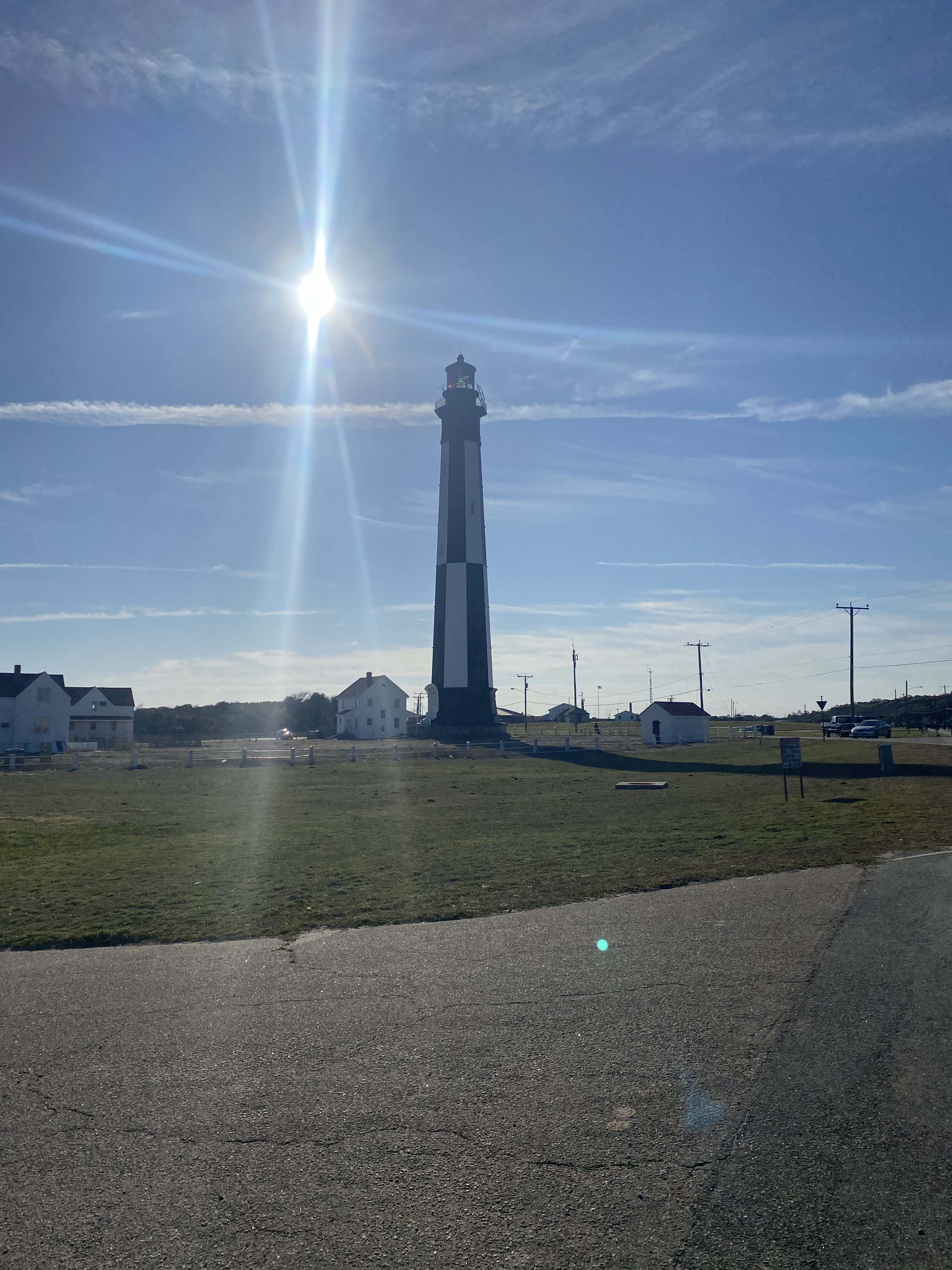
One of the Cape Henry Lighthouses, situated on Fort Story.

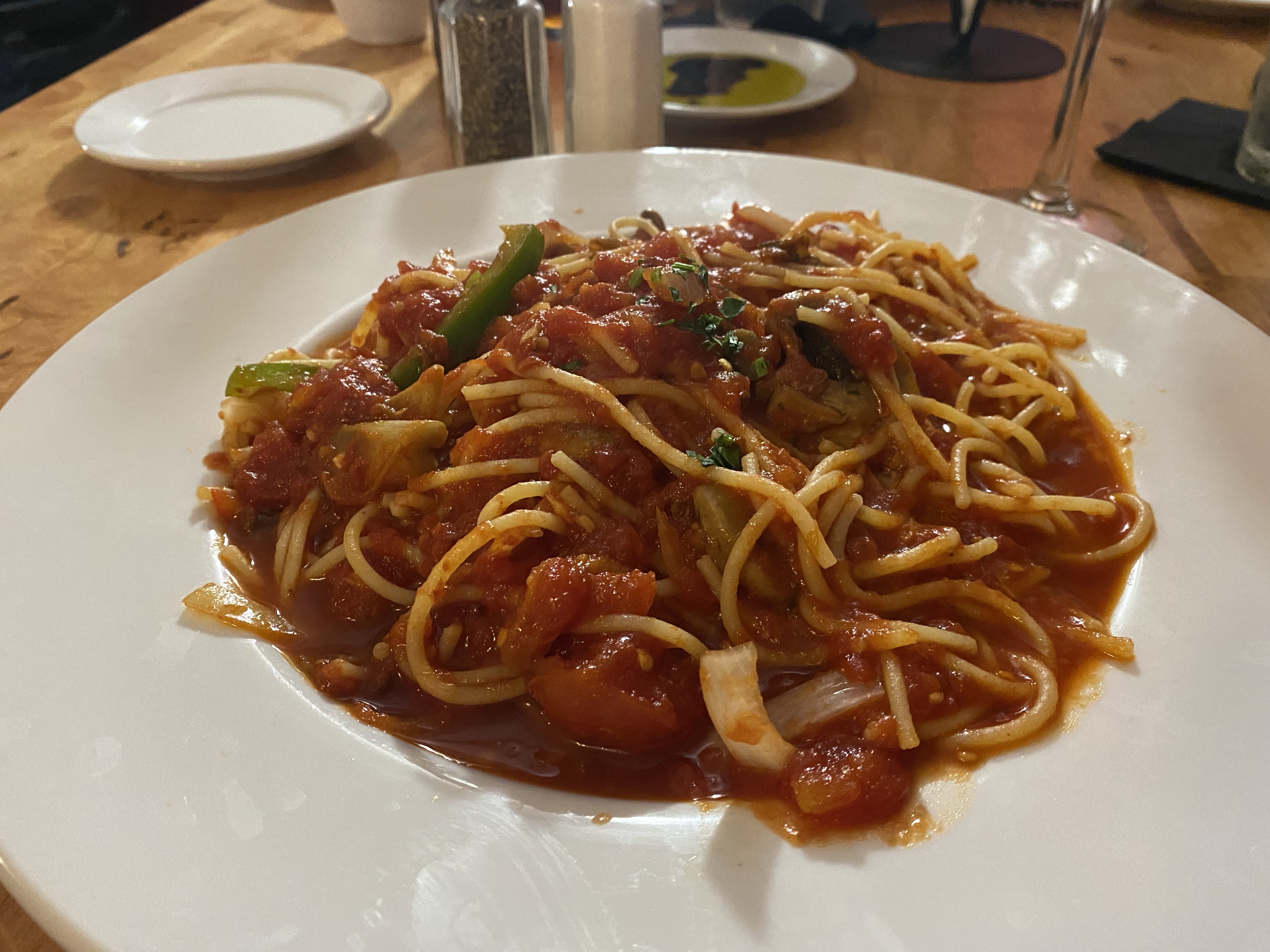
“How do you feel about tomorrow?”  my husband, John, asked me as we sat at a corner table for two in Mannino’s Italian Bistro in Virginia Beach, a hidden gem we had discovered during last year’s visit.  

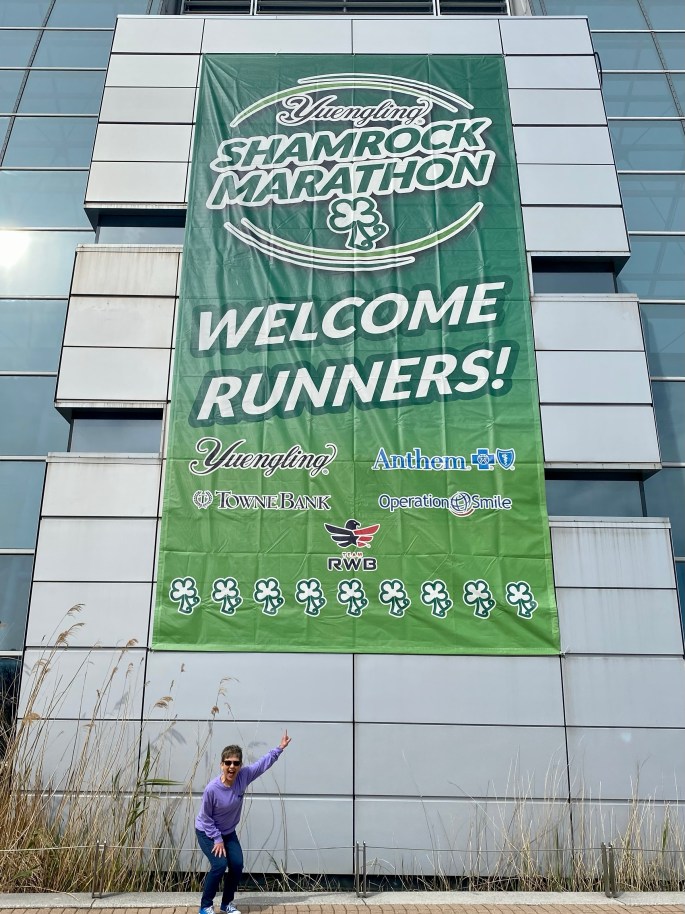
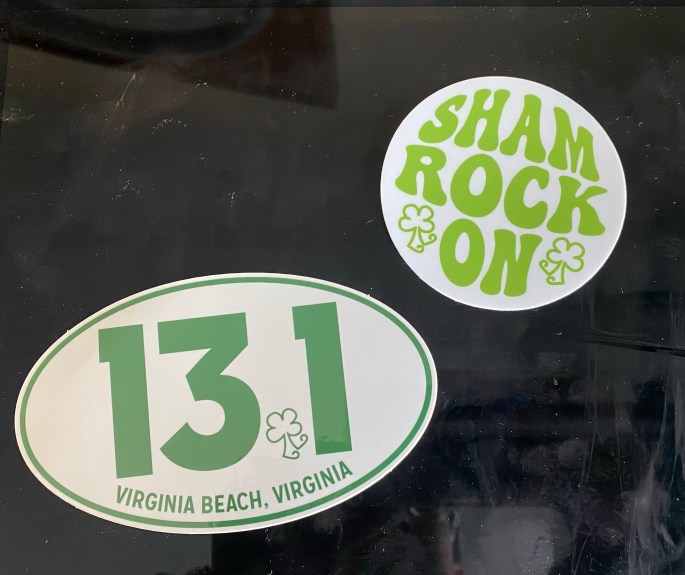
We had arrived around 5:40, hoping to beat the crowd for an early dinner the night before I participated in the 51st annual Shamrock Half Marathon. Clearly, we were not the only ones who had thought of that!  The restaurant was positively packed with runners and their family and/or friends.  Therefore, I mulled over my answer to the animated vibe of enthusiastic and celebratory conversations.

“I will let it be.  See how it unfolds and just . . . enjoy and be grateful.”

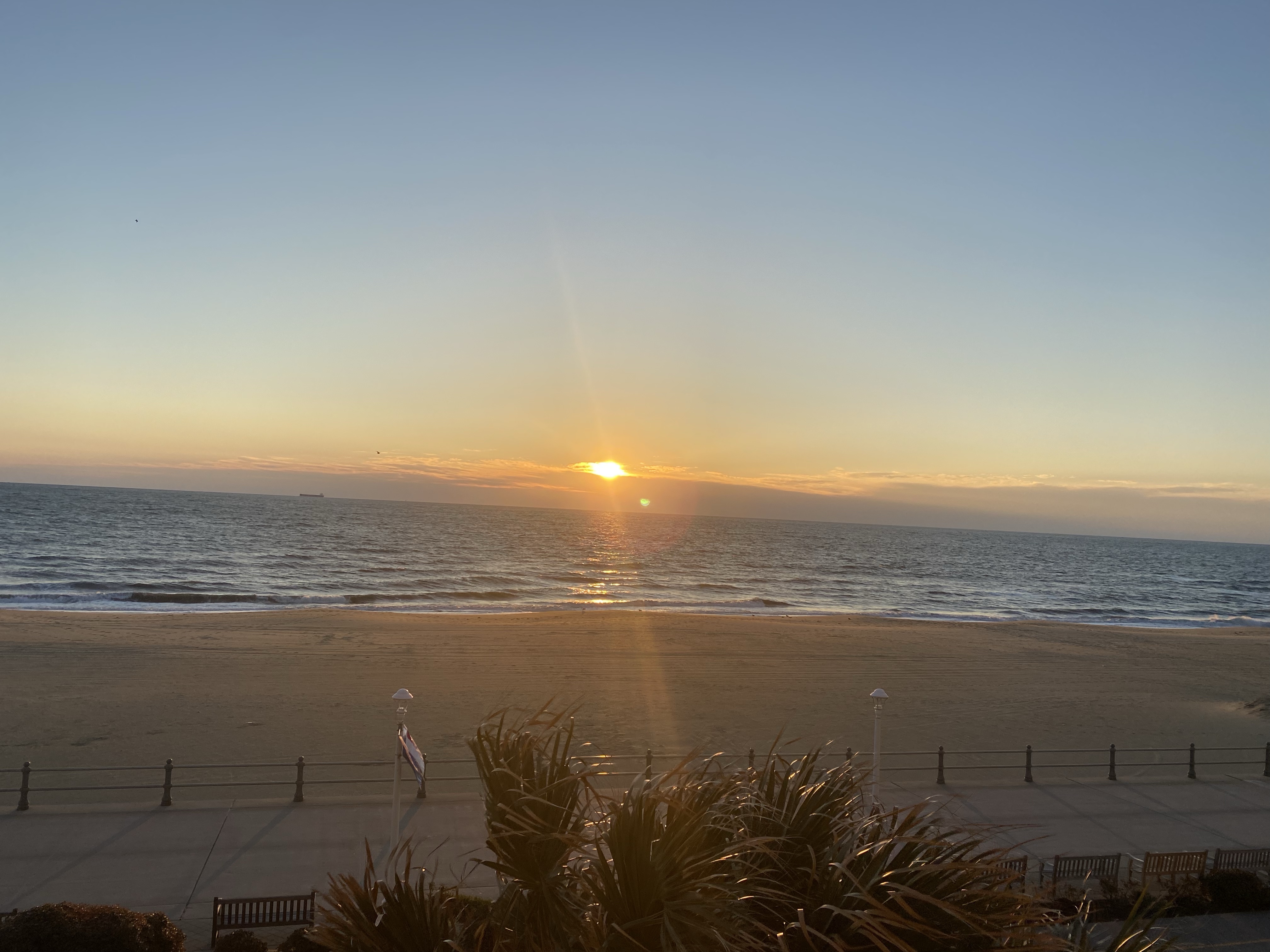
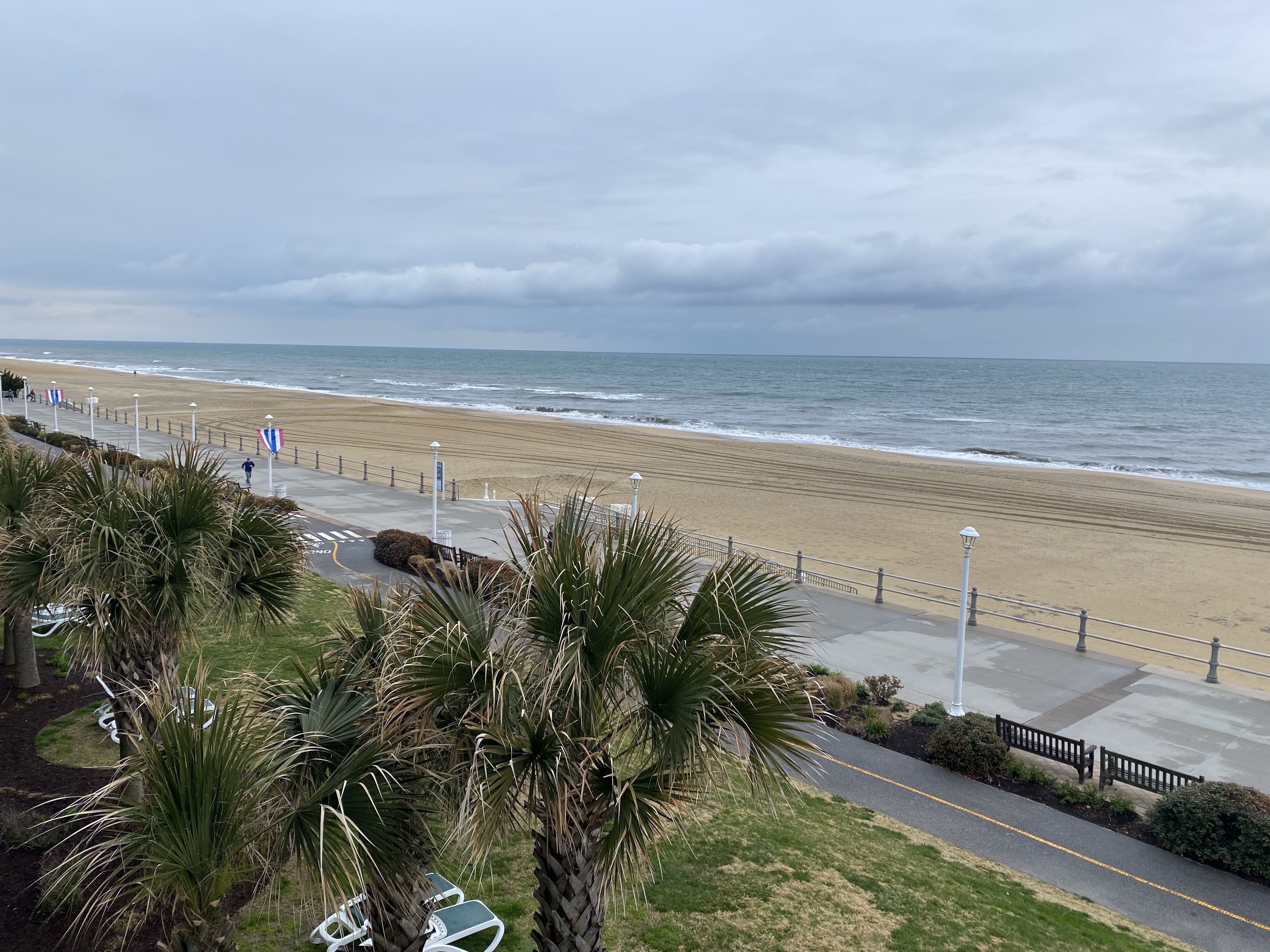
Looking back over the twelve months prior to that weekend, March 17-19, we had withstood several unforeseen challenges, and still had more face upon returning home.  However, for this weekend, we took a time-out.  We took time to breathe in that salty air of renewal, watch the waves caress the shoreline, feel the warmth of the sun as it kissed our cheeks, and soak up as much joy as our hearts could hold. No rush; no hurry; few worries.

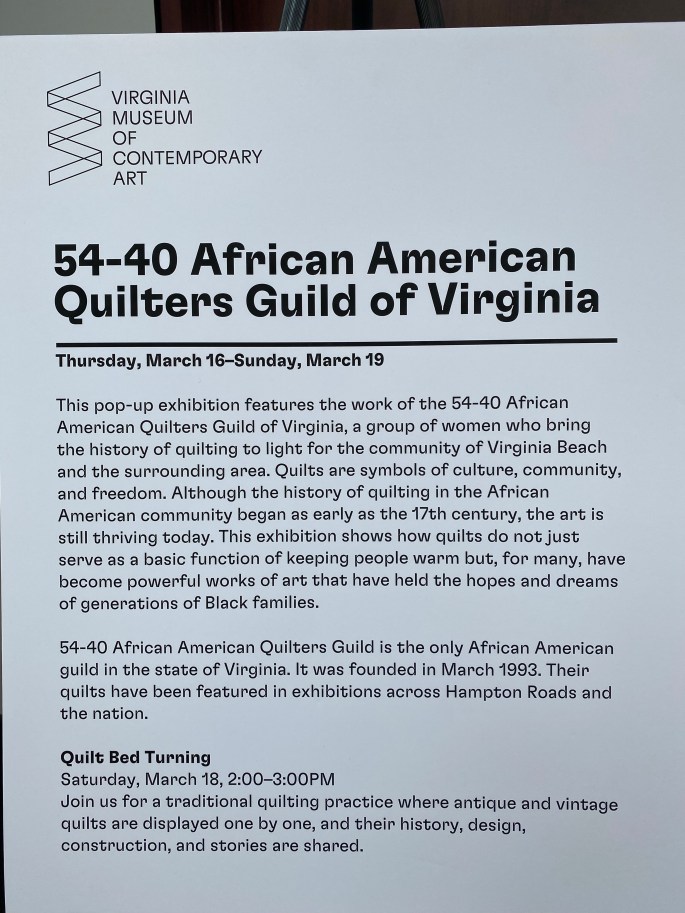
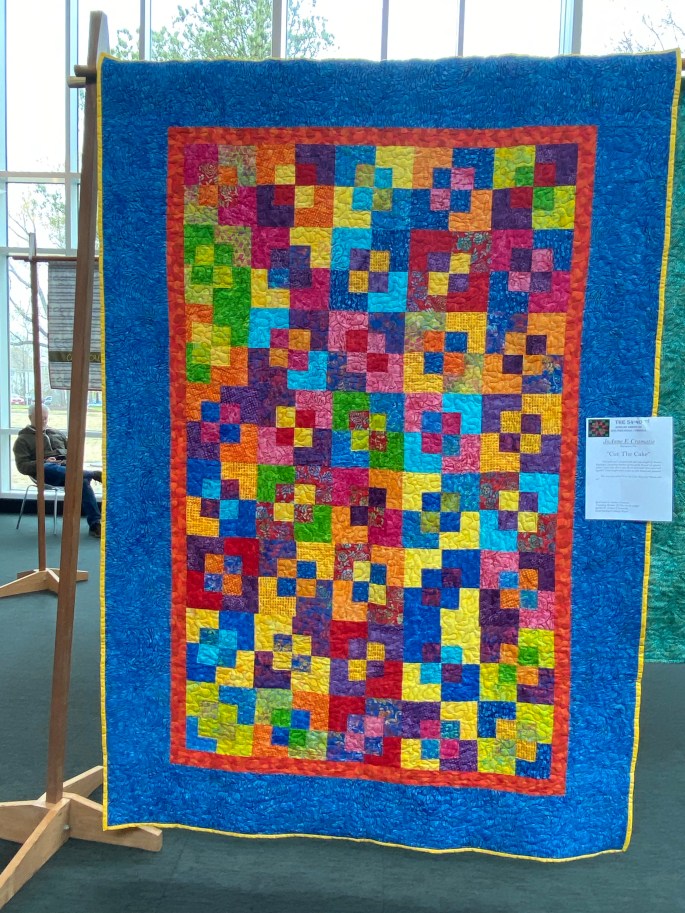
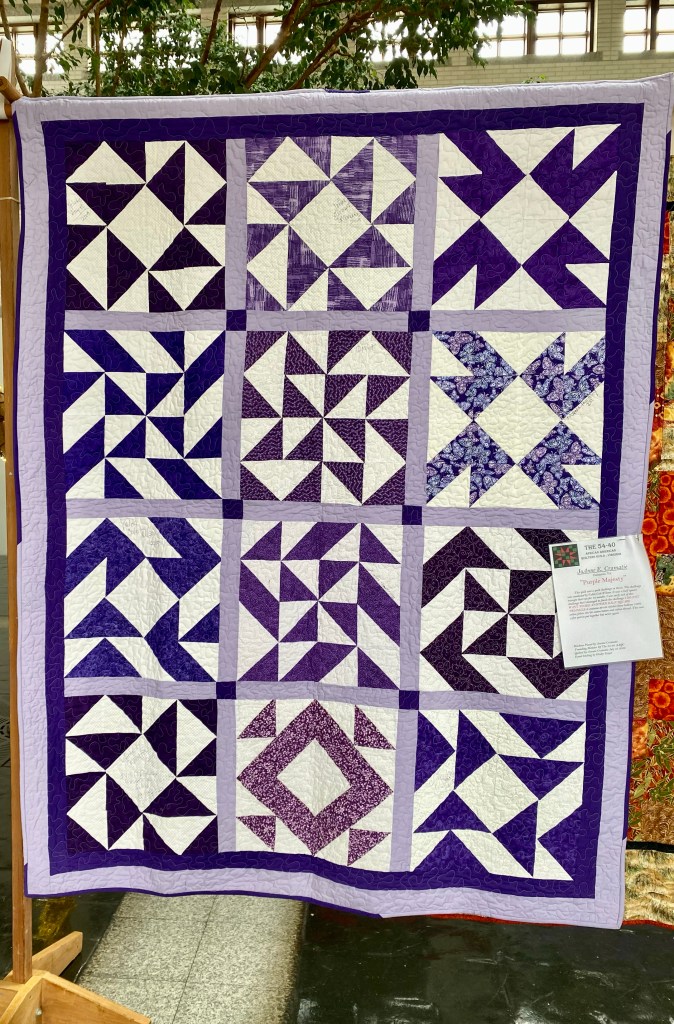
One of the highlights of our trip was discovering the Virginia Museum of Contemporary Arts.  This contemporary, non-collecting museum is a vibrant and welcoming space.  During the weekend in which we were there, the museum’s exhibition galleries were brimming with a wide-variety of collections, including stunning quilted art from 54-40 African American Quilters Guild of Virginia. 

Additionally, it was Virginia MOCA’s annual celebration of youth art month, so there was a multitude of student art on display.  Additionally, we were able to take in a kaleidoscope of blown-glass color from the museum’s only permanent work of art, Mille Colori, by Dale Chihuly. Virginia MOCA is a gallery that appears to be a local favorite for good reason, and I encourage anyone visiting VB, who loves art, to visit it!

Immediately within the doors of Virginia MOCA, is an adorable, independent bookshop called, Read Books, which I recommend checking out while pursuing the museum.  It was while we were visiting this space that we learned that both the bookshop and the museum are part of the ViBe Creative District. This walkable designated area of VB is the heart of over 100 artists and creative businesses. Unfortunately, we didn’t have time to further explore this district, but we’ve added it to the top of the list of areas to explore next time we visit VB.

These discoveries reflect the joy of revisiting a diverse location, such as VB.  We get to return to those experiences that we previously relished; and yet, there remains an abundance of new sights with which to enjoy on future visits.  Two favorite VB spots for which John and I delighted in returning were Side Street Cantina and Pocahontas Pancakes and Waffle House. 

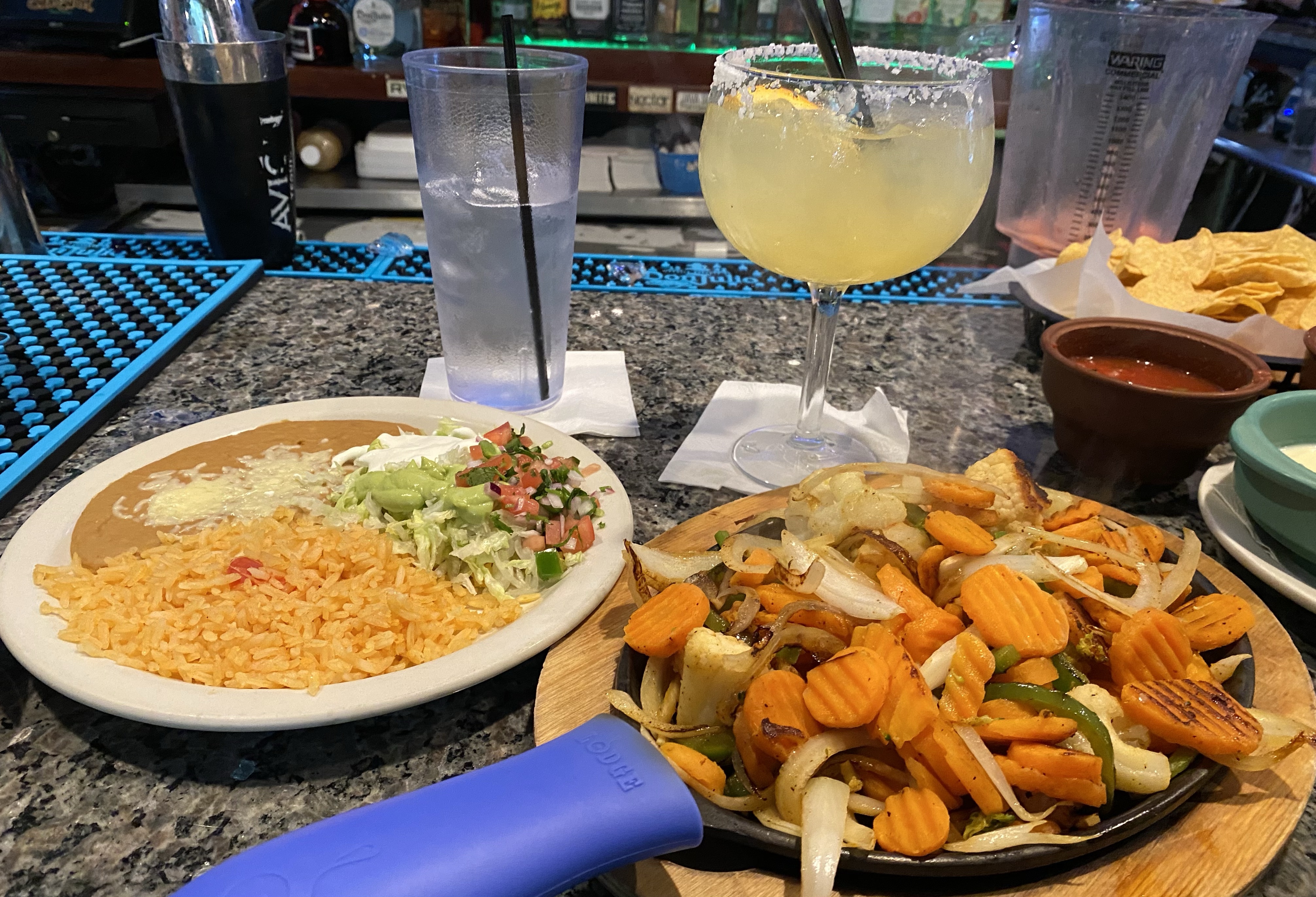
John and I love Mexican food, and the Peruvian-inspired Mexican food of Side Street Cantina always delivers.  This is our third year visiting this site, and the service and food remained consistently excellent.  In fact, their personable staff goes out of their way to make us feel like one of their regulars.  This establishment is worth experiencing if you are vacationing in VB. 

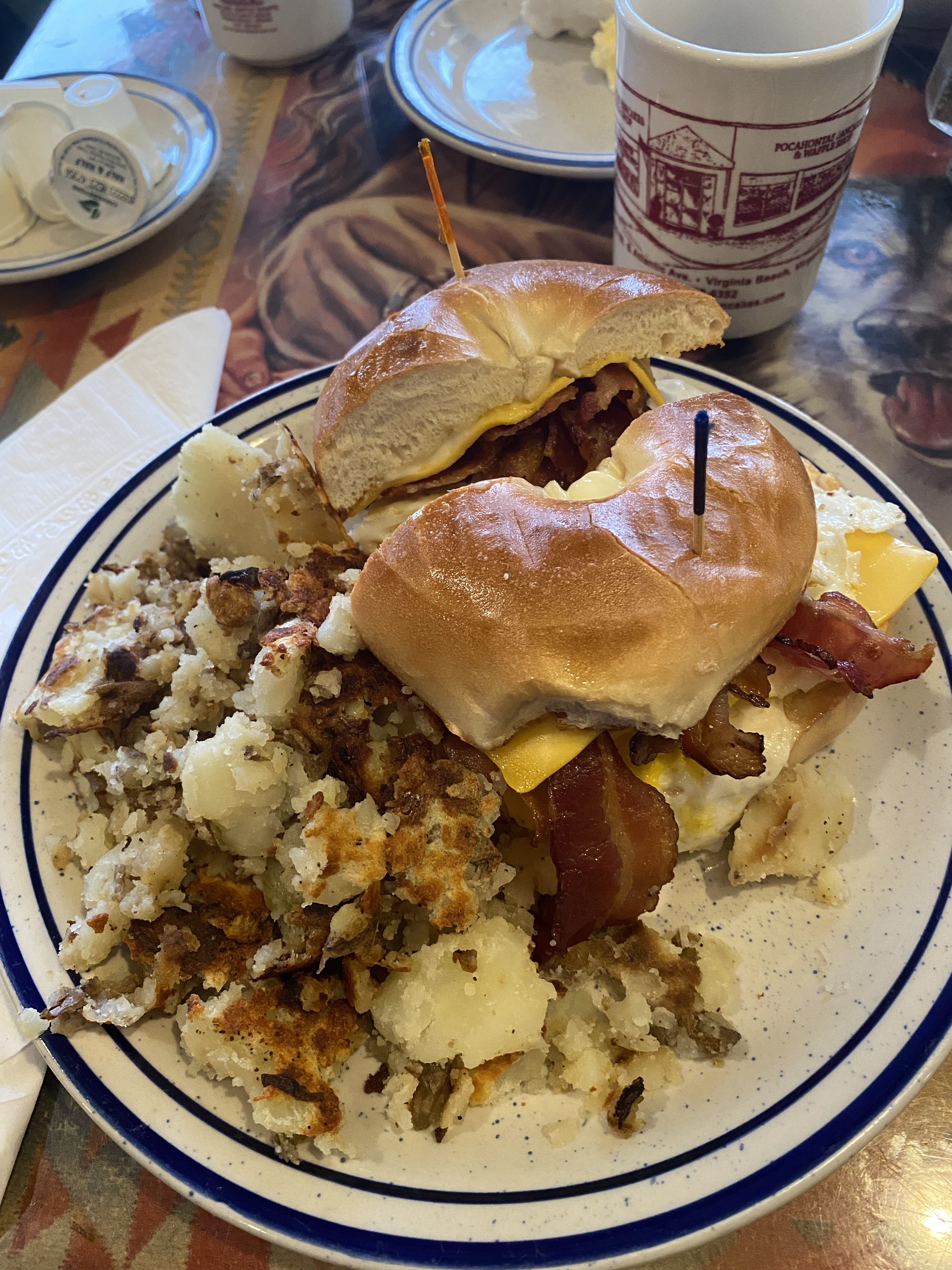
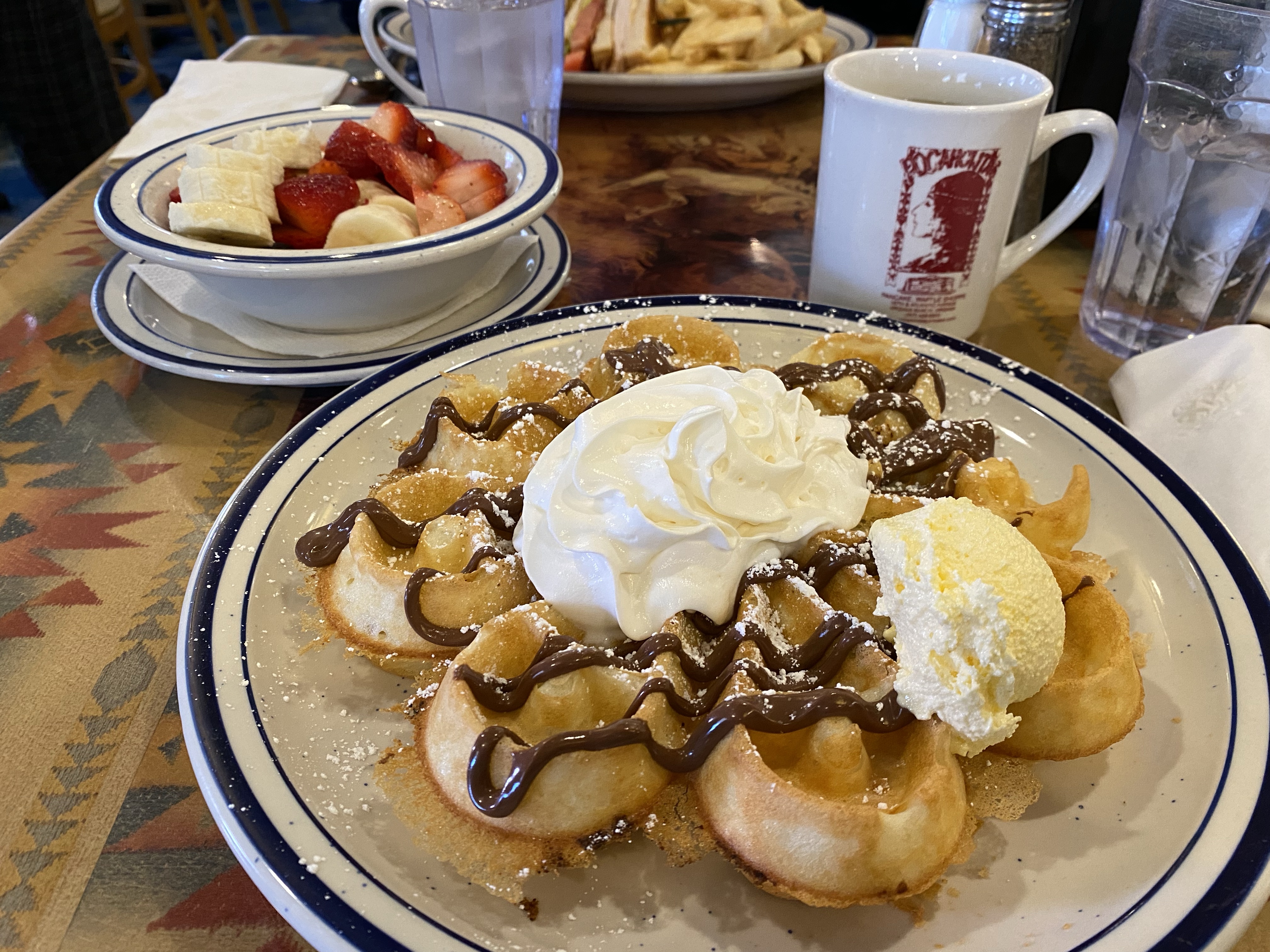
As for my all time favorite breakfast/lunch restaurant, it is Pocahontas Pancakes and Waffle House, and we made sure to eat there twice. This is because this quintessential eatery–in addition to having an expansive novel-like, made-to-order menu–offers a wide-array of gluten-free options. It was clear from the crowd over the weekend of events, this is a favorite dining experience for both locals and visitors like us who return year after year.  

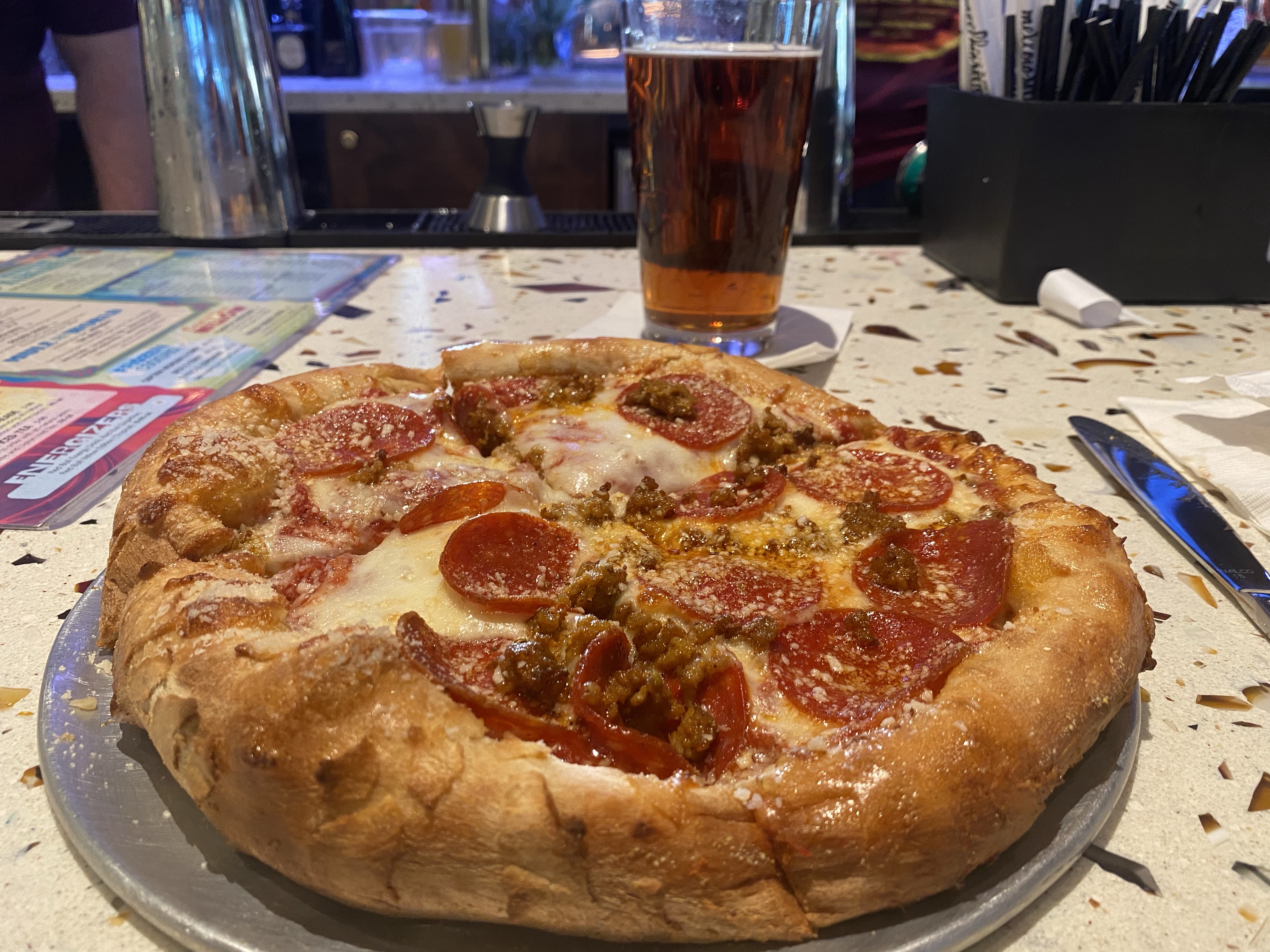
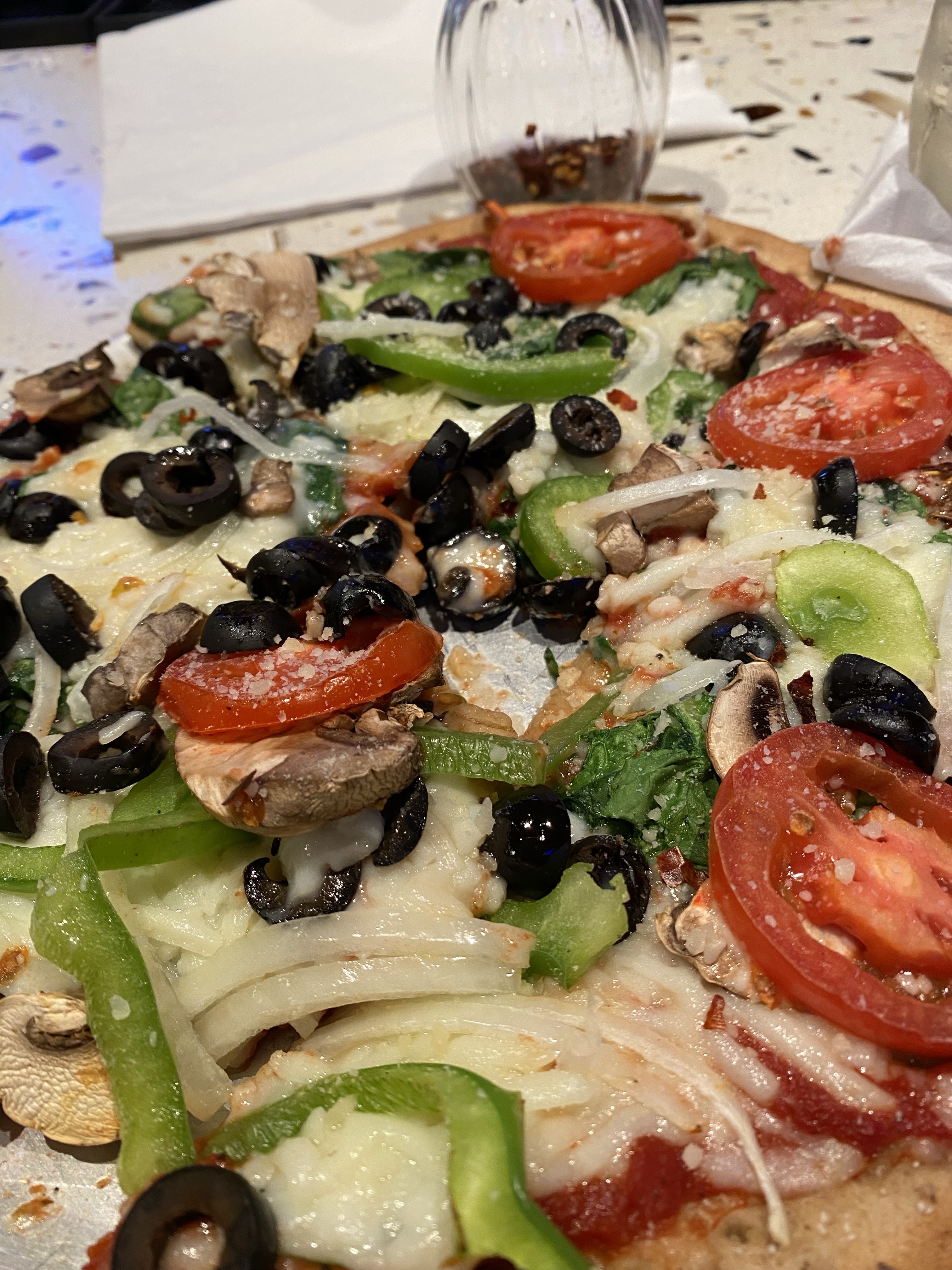
 Whereas, a new VB dining establishment we discovered on this trip was the Mellow Mushroom.  Sure it’s a chain, but it was within close walking distance to the hotel in which we stayed, and it was newly opened as of fall of 2022.  It made for the perfect place for a gluten-free pizza in the evening for which I ran the half-marathon.  Fans of the Mellow Mushroom establishment will not be disappointed.

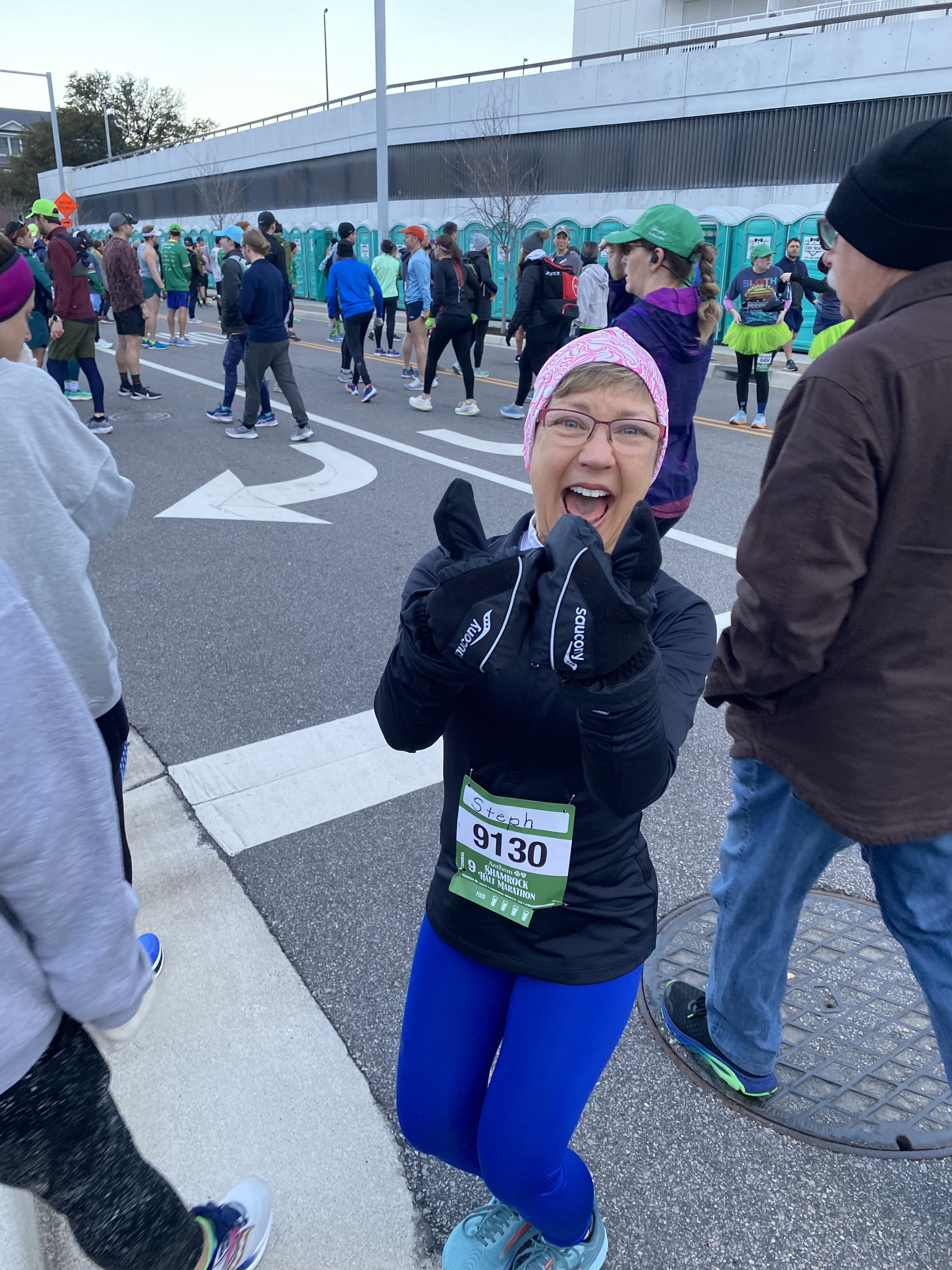
Meanwhile, back to the morning of the half marathon. John and I stayed at a hotel conveniently located near the starting line.  That said, John and I had a good laugh at my corral number.  We kept walking, and walking, to find the group with which I would start based upon estimated finish time.  My corral was nearly at the back of the line!  Nonetheless, I proudly joined my corral group and waited as each group was given their own individual countdown.  

The anticipation grew. 3, 2, 1!  We were off on an adventure!  And what an exhilarating adventure it was!

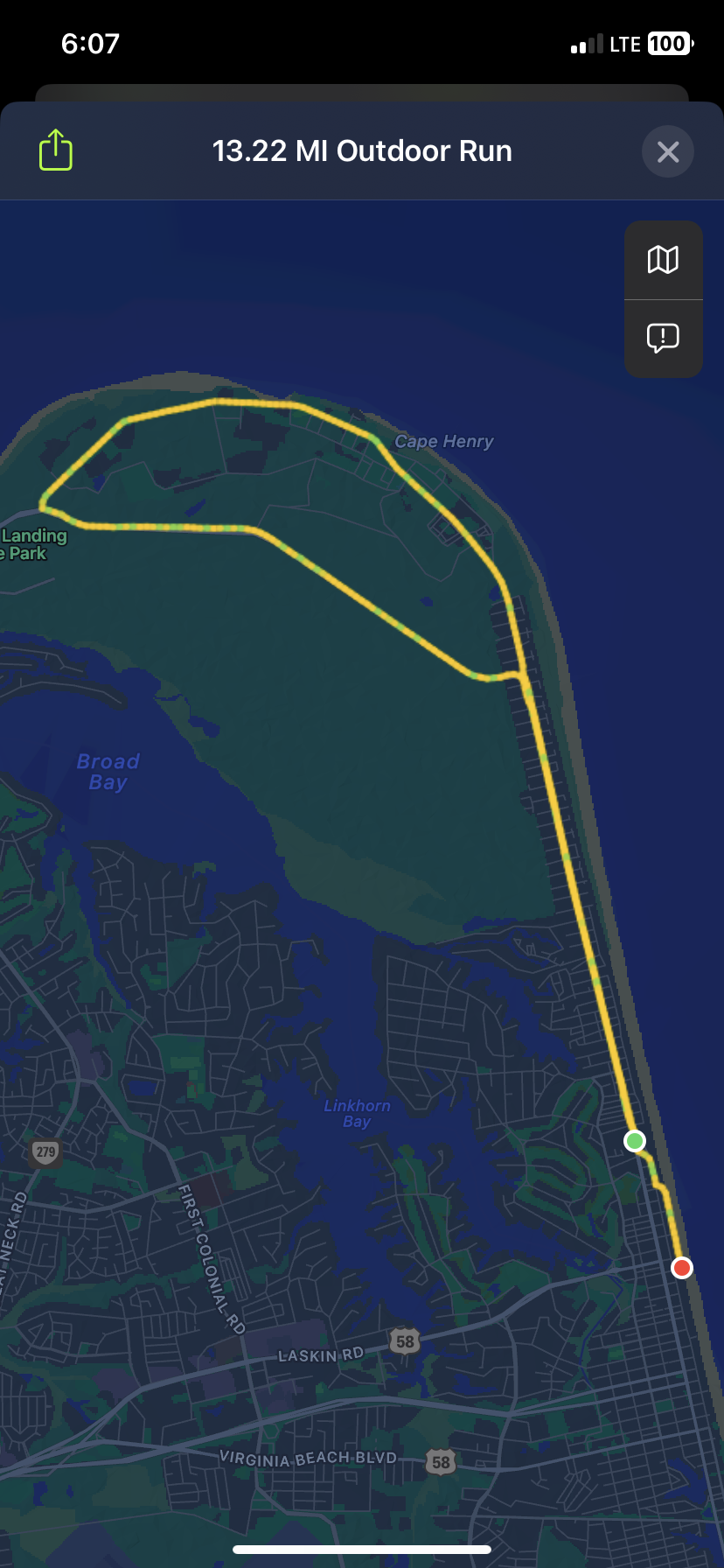
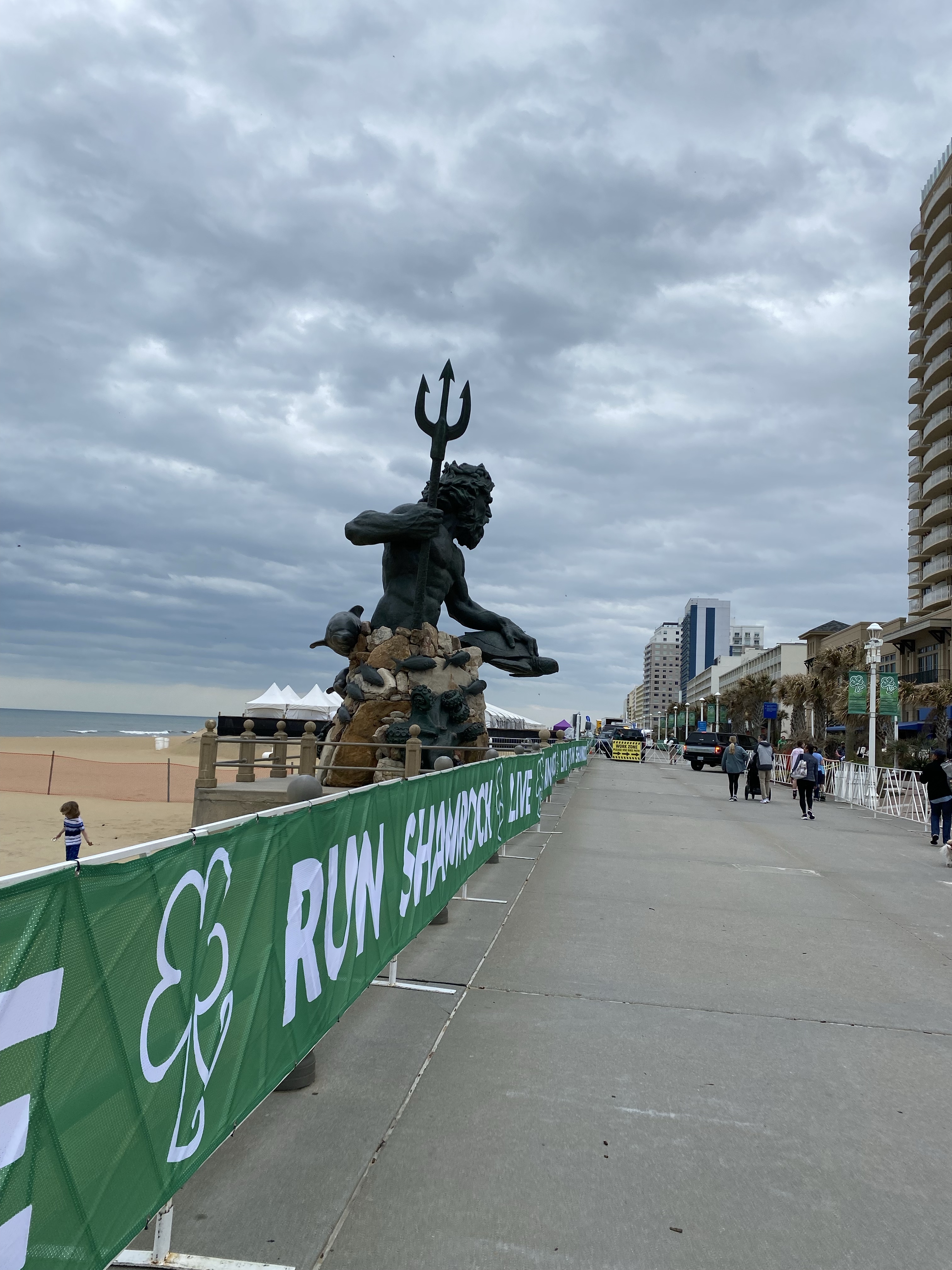
This is the first time I actually ran the event in-person, rather than virtually, so I was all-smiles taking in the sights.  Runners of all shapes, sizes, colors, genders, and ethnicities were supporting one another as we made our way along the northern end of Atlantic Ave.; up the creeping incline of Shore Drive; through Fort Story with special event permission; alongside Cape Henry Lighthouses; back down Atlantic Ave with the wind blessedly out our backs, and finally turning left on 37th street as we traversed the VB boardwalk during the final part of the last mile alongside of the Atlantic ocean, past the iconic King Neptune, to cross the finish line nearest to 30th street.

I simply could not stop smiling.  The sun was shining, and the temperatures were great for running (high 30s to low 40s).  As I crossed the finish line, tears came to my eyes; my heart was overflowing  with joy.  John was waiting at the finish line with our daughter, Maddie, on Facetime to join in the finish-line fun.   

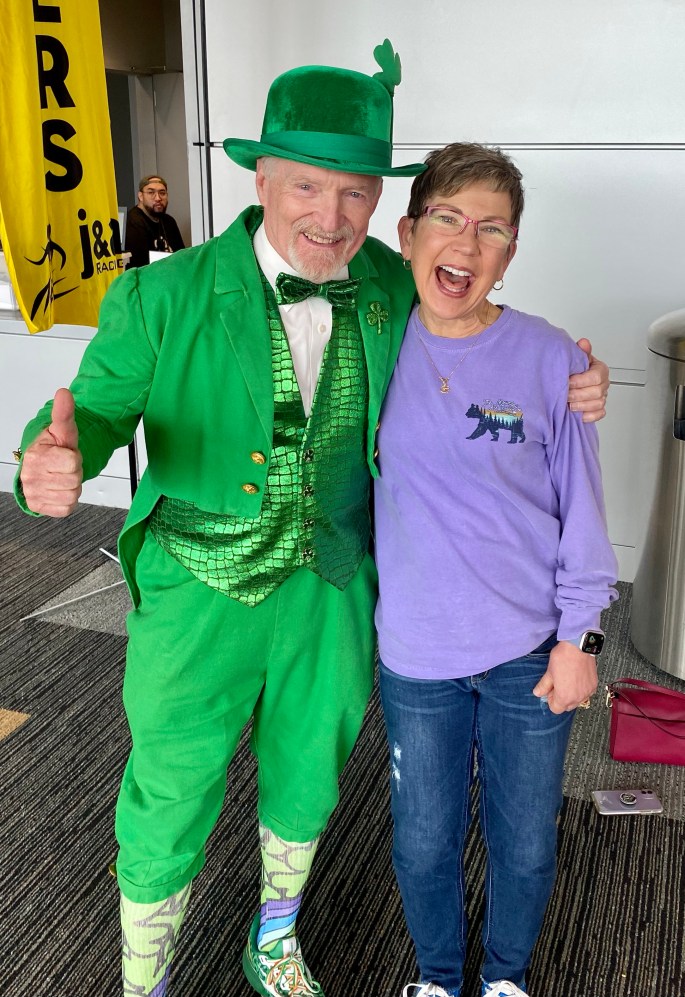
It was a glorious day and soul-renewing weekend. I am grateful to the friendly folks at J&A Racing (and VB) who believe in creating a safe, well-organized event that offers a sense of community for runners, walkers, and their families/friends of all stages of life and all levels of fitness–from walking to sprinting, and everyone in between.  This event does precisely what the organization sets out to do, make memories!

Green and White Enchilada Bake, featuring G-BOMBS, is a powerhouse of delicious nutrition

“Remember the acronym G-BOMBS, which stands for Greens, Beans, Onions, Mushrooms, Berries and Seeds. These foods fuel your body with protective micronutrients and phytochemicals that support your immune defenses and have a wide range of health-promoting effects. And here’s a bonus: They’re delicious!”–Joel Fuhrman, M.D.

Photo by Min An on Pexels.com

Beginning in December, I spent 16 weeks preparing to run, walk, or even crawl a half-marathon.  For those who are natural distance runners, completing a half-marathon is no big deal. However, for someone like me, it was a challenge, but it was an overall positive experience.

While preparing for this half marathon, I was battling an injury–one that did not affect my running, per se, but one that will ultimately require surgery.  Therefore, I knew I wanted my nutrition to solidly support the recovery of my middle-aged body.  However, for the sake of full disclosure, I still indulged my penchant for dark chocolate on a daily basis!

Photo by Pixabay on Pexels.com

I read, and continue to rely upon, the most up-to-date nutritional studies out of respected research institutes such as Harvard, Northwestern University, Cleveland Clinic, Mayo Clinic and so forth.  Additionally, I read more popularized sources of research such as Michael Pollan and National Geographic author/researcher, Dan Buettner, and his study of Blue Zones, as well as a few other noted sources.  The point is, I don’t make my food choices lightly, especially since I must also balance out these choices with my celiac disease and food sensitivities while still consuming food that looks great and tastes even better.

For a whole slew of reasons, I rely on a whole food, plant based diet 90% of the time, and this recipe–that I created during my half-marathon preparation–is an example of this.  I want my meals to be alive with color, texture, and balanced flavor, with a bit of spice thrown in.
Additionally, I try to regularly consume GBOMBS, greens, beans, onions, mushrooms, berries, and seeds, for the most nutritional bang for my buck, and this recipe has four of the six of them.  (I typically eat berries and some form of seeds–flax, chia, or hemp hearts–during an earlier meal of the day.)

Photo by Vanessa Loring on Pexels.com

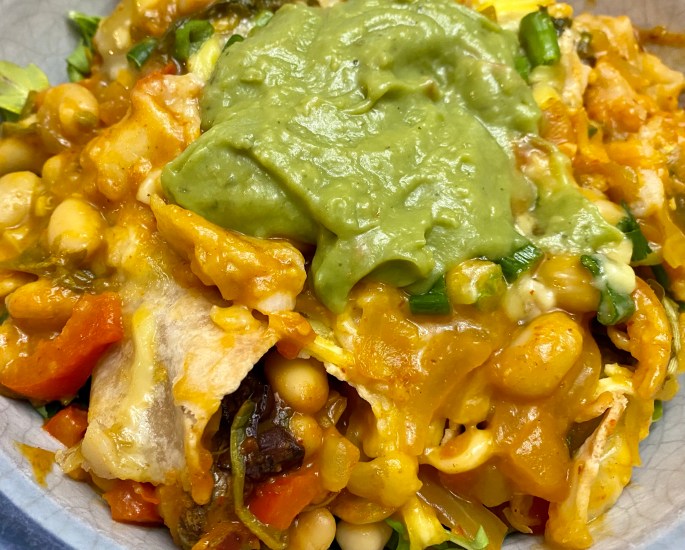
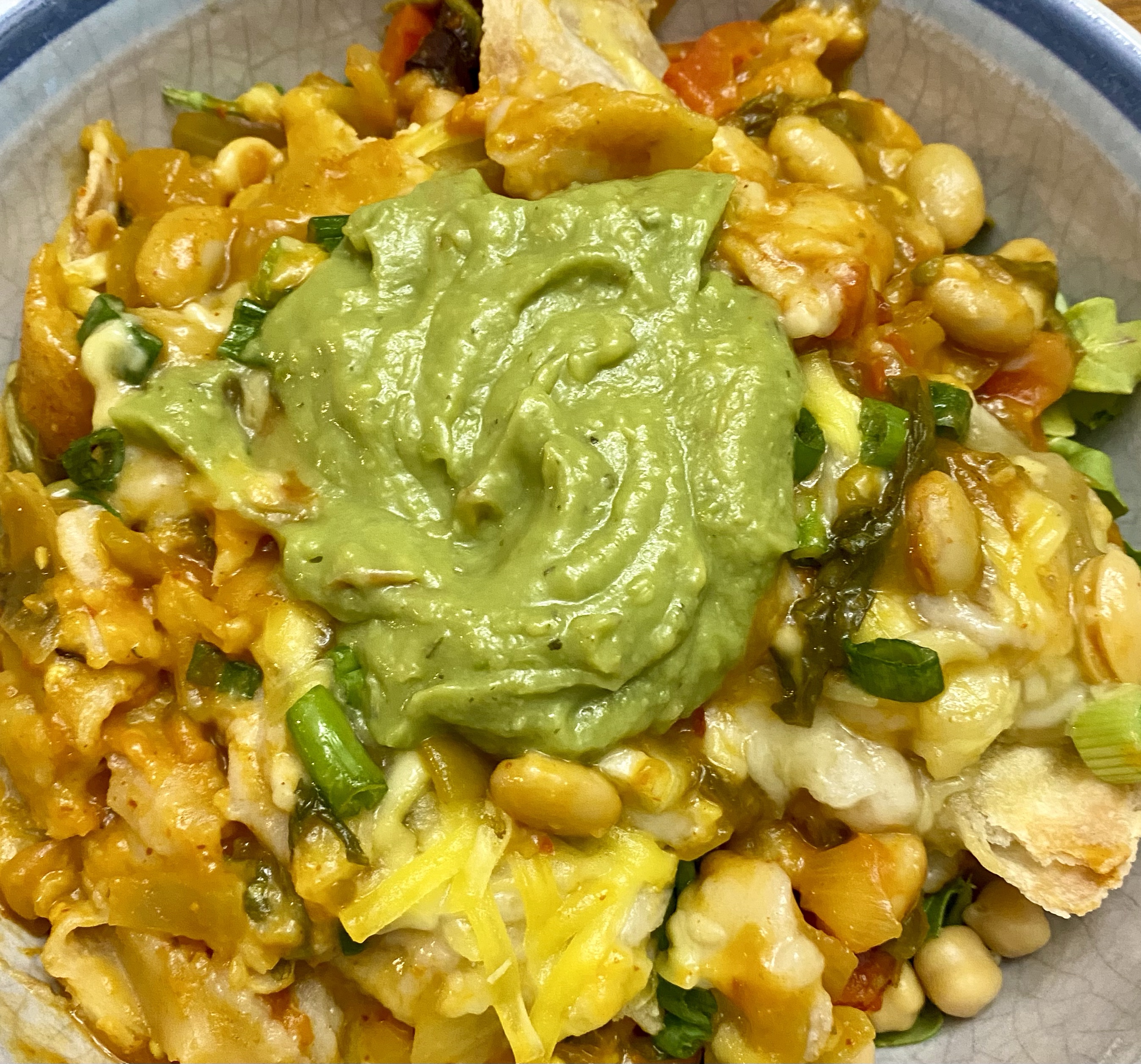
If you prefer to add meat, my recipe can accommodate your preference.  You could choose to replace the beans with chicken or seafood, or keep the beans, and add in meat.  Spices are optional, and I have made a note regarding why I add them.  I typically serve these enchiladas on a bed of leafy-greens and top them with a dollop of guacamole and chopped scallions.  However, you could serve them on top of rice, quinoa, or simply as they are.  Feel free to get a little frisky with the toppings of your choice!

Personal food choices are the N = 1. Therefore, I would never presume to tell anyone what they should or should not eat.  Nonetheless, I think most of us can agree, you can’t go wrong consuming a bit more veg.

From my home to yours, I hope you enjoy this recipe!

Ready to broil a bit.
Add your favorite toppings . . .
Serve it up on a bed of greens and/or grains and add more of your favorite toppings, such as guacamole.

Green and White Enchilada Bake

Ingredients:

½ cup vegetable broth or water

1 teaspoon minced garlic

1 cup chopped onion

½ cup chopped mushrooms, any type, optional 

½ cup chopped red, yellow, or orange bell pepper

2 teaspoons nutritional yeast (can substitute equal amounts of grated parmesan or chickpea flour)

½ teaspoon onion powder

¼ teaspoon crushed *red pepper, optional

¼ teaspoon *turmeric powder, optional 

Dash of *black pepper, optional

1 15 ounce can great northern beans, drained

1 4-ounce can green chiles

1 package low-sodium taco seasoning

8 ounces frozen spinach, thawed and drained

1 can green enchilada sauce

6-8 tortillas, depending upon size (I used gluten-free tortillas.)

2 cups shredded cheese, your choice (I used a vegan substitute for photos, but I’ve also gone without it.)

Directions:

Preheat the oven to 350 degrees.

Prepare a small casserole dish with nonstick cooking spray.

Chop onion and bell pepper, if using.

Heat a saucepan over medium heat.

Add minced garlic and broth, stir.

Add in onion and bell pepper, stir well.

Allow to simmer until vegetables begin to soften, about 3-5 minutes.

While vegetables are cooking, stir in nutritional yeast and onion powder 

If using crushed red pepper, turmeric powder, and dash of black pepper, stir those in as well.

Meanwhile, open, drain, and rinse the beans; stir into the simmering vegetable mixture.

Stir in green chiles and taco seasoning into the simmering vegetable and bean mixture, and allow it all to simmer for another 3-5 minutes, continuing to stir.

While the vegetable/bean mixture is simmering, stir in the spinach and allow it to simmer and wilt into the rest of the ingredients.

While vegetables are simmering, set up all tortillas, taco style, in the casserole dish.

Remove vegetables from heat; then, divide and fill tortillas with vegetable/bean mixture, folding down one side over the other, and using a toothpick, if needed, to keep closed.

If there is any remaining vegetable/bean mixture, pour over the tops of the closed tortillas.

Pour a can of green enchilada sauce over the closed tortillas.

Top with desired cheese, if using.

Bake, uncovered in the oven for approximately 25 minutes until sauce is bubbling at the edges.

Feel free to turn on the broiler for the last minute or two to brown the top of the casserole if desired.

Remove from the oven and allow to cool for 5-10 minutes before serving.

Makes 3-4 servings, two enchiladas per serving.

Top as desired.

Refrigerate any leftovers for up to 5 days.

*Note: Spices are a personal preference, so you choose if you want to add these ingredients.  Here’s why I do.

  • I use turmeric daily as an anti-inflammatory agent.  When cooking with tumeric, I pair with a dash of pepper as the pepper enhances the absorption of turmeric in the body by up to 2,000%.  Together both spices reduce inflammation and improve digestion.
  • I also regularly use crushed red pepper flakes and red pepper for its ingredient, capsaicin, which soothes stomach issues, boosts heart health, and fortifies the immune system.

Move Into Health, Part 9: The Long Game

“ . . . To me, old age is always 15 years older than I am.”–Francis Bacon

I recently ran across an inspirational story that was being shared across a multitude of media outlets.  Jean Bailey, a 102-year old resident and fitness coach of Elk Ridge Senior Living in Omaha, Nebraska, has been leading fitness classes there, four times a week, for the past three years.  

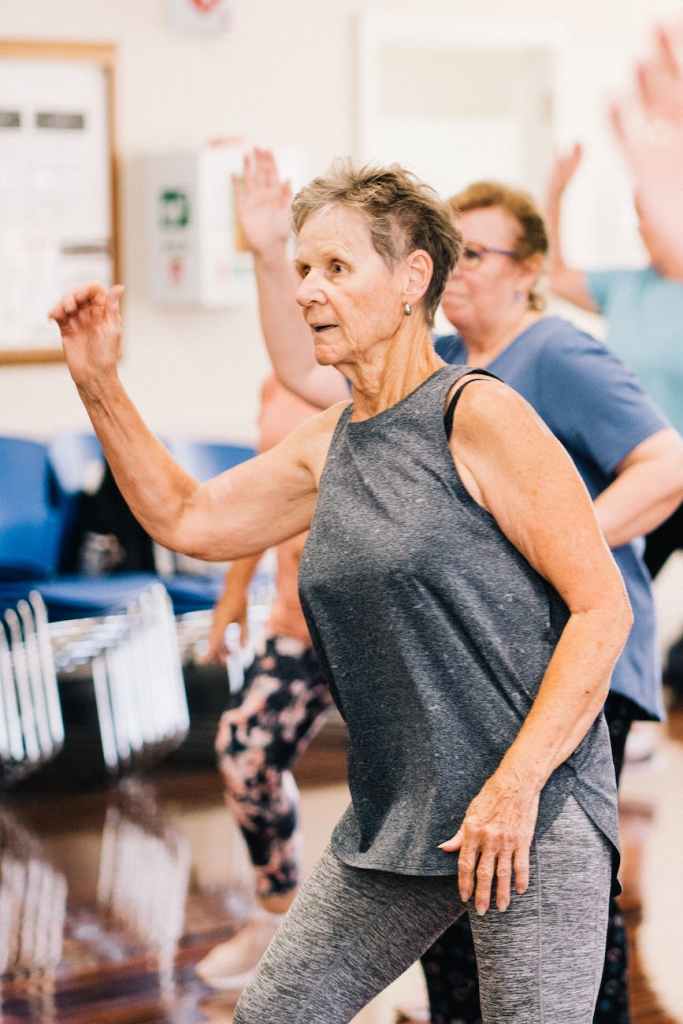
 Bailey’s classes consist of exercises that go through a wide range of motion, designed to get every part of the body moving, including activities such as overhead reach, arm circles, neck rotations, and seated toes touches to name a few.  Her classes last about 30 minutes.  Bailey realizes that, like her, many of her fellow exercisers have mobility limitations or their bodies are different from day to day; however, she believes that everyone, including herself, can benefit from doing what they can do.  

102 year old Jean Bailey leading an exercise class at Elk Ridge Senior Living in Omaha, Nebraska.

Bailey is redefining what it means to age.  She proudly proclaimed in a recent interview, “If you don’t keep your mind and body busy, then why are you here?” Friendships have blossomed and flourished since she first began leading the classes during the pandemic when Bailey invited her neighbors to bring chairs into the hall and exercise with her at a socially safe distance.  

Since COVID restrictions were lifted, Bailey has also been known to treat fellow exercisers with baked goods after class, especially in honor of someone’s birthday.  This is because, as Bailey points out, birthdays at their age are noteworthy. When asked if she’ll ever quit, she replied, “When I get old, I’ll quit!”

I share this story as part of the 9th installment of the “Move Into Health” series. Bailey’s story serves as a direct contrast to those limiting beliefs, which can easily entrap any one of us, regarding adopting or changing certain healthy lifestyle habits as we age. However, even though our bodies change with age, according to numerous scientific studies, there is very little difference between an 18-year old brain and a 100-year old brain from a cerebrovascular perspective; thus establishing, we are never too old to mentally adopt new habits or overcome poor habits that may have crept in over the years.

Bailey is most likely an example of what scientists call SuperAgers, those living into their eighth decade, and beyond, who possess cognitive function similar to that of a middle-aged adult.  In fact, neuroscientists at Northwestern University in Chicago have identified four specific habits of SuperAgers. Adopting these four SuperAgers’ healthy habits may help slow down the aging process within the brain (and the body), potentially staving off Alzheimer’s disease or other forms of dementia, while boosting overall health; thereby, spending less time at the doctor’s office and more time doing the things you love.  

Photo by Wellness Gallery Catalyst Foundation on Pexels.com

The four habits of SuperAgers are listed below. While I am not a proponent of changing everything all at once, I do sincerely believe that taking small steps towards any of these habits can have a positive impact upon personal health.

Daily Movement/Activity. You know the old adage, “Move it or lose it.”  Incorporating daily movement increases oxygen and blood flow–both of which benefit the brain.  Regular bouts of exercise, even as few as twice per week, strengthen not only the heart and lungs but can also strengthen muscles required for stability to avoid falling, help maintain a healthy weight, and reduce the risk for Alzheimer’s disease. As an added bonus, exercise can reduce the symptoms of depression and anxiety and lower your risk for heart disease, type 2 diabetes, high blood pressure, and even some cancers.

Photo by Tirachard Kumtanom on Pexels.com

Challenge yourself. Adopt habits of reading, puzzle solving, and learning. Experiencing the mild to moderate stress that often accompanies learning a new skill is good for creating and/or maintaining healthy neural pathways. Take classes, learn a new language, or choose any number of activities that get you out of your comfort zone.  Mental challenges are good for you and your brain.

Photo by Mathias Reding on Pexels.com

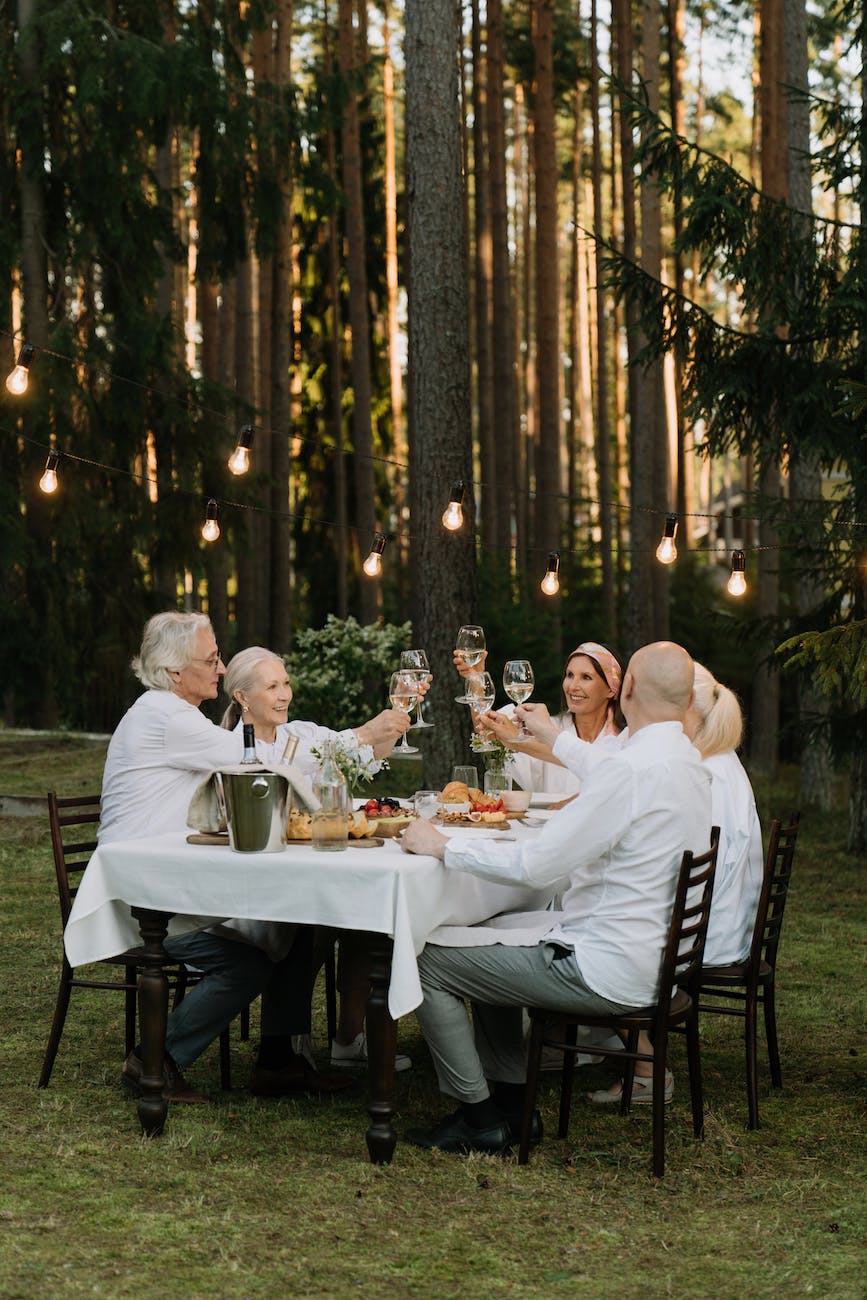
Get social.  Meeting regularly with friends, engaging with others via group settings, or partaking in family gatherings allow for the maintenance of healthy social relationships.  In fact, autopsies of SuperAgers reveals that the attention area of their brain has four to five times the amount of neurons responsible for social processing and awareness, when compared to others who lived into their 80s or later.

Photo by Kampus Production on Pexels.com

Drink, but in moderation. Moderate drinkers are less likely to develop memory issues, including Alzheimer’s disease.  However, too much alcohol creates the opposite effect on memory as well as increased belly fat (the most dangerous type), increased blood pressure, and numerous other health conditions.

Photo by cottonbro studio on Pexels.com

Two other beneficial habits worth considering that are also associated with aging well:

Adopt a MIND diet.  MIND, in addition to being a huge buzz word in current medical research for the prevention of Alzheimer’s disease and cognitive delays, is an acronym for Mediterranean-DASH Intervention for Neurodegenerative Delay.  It is a plant-based diet that combines the Mediterranean Diet and the DASH Diets. The MIND diet encourages the daily consumption of plenty of fruits (specifically berries), and vegetables (especially leafy greens), whole grains, legumes, nuts, as well as limited amounts of poultry, fish, and olive oil.  Not only are these foods good for overall brain health and cognitive function, but they also reduce inflammation and oxidative stress, two actions strongly associated with chronic health illnesses and disease. 

Photo by Yaroslav Shuraev on Pexels.com

Quit smoking. While I cannot pretend to know how hard it is to stop this habit, I do remember a nurse telling my mother-in-law during an emergency room visit that within 24 hours of quitting smoking, she would begin to reduce her risk of a heart-attack by 50% or more.  It still took her several more years before she quit; however, I will forever admire the way in which she finally gave up the habit at age 71. Although health issues related to a lifetime of smoking remained with her until the end, because she did quit, she added years to her life.  

Photo by Irina Iriser on Pexels.com

Who among us will be the next SuperAger?  No one can know for sure. To be certain, any one of us could follow all the so-called rules, and still develop Alzheimer’s disease, cancer, or other detrimental condition.  Nonetheless, watching Jean Bailey lead her exercise classes on Youtube and Twitter videos certainly persuades me to keep moving into my own health, and her story further motivates me to continue to share this valuable information. Adopting any or all of these healthy habits can’t hurt any of us, and they just might add a bit more quality to the quantity of years we have remaining.  Here’s to your health!
Photo by Jessica Lewis Creative on Pexels.com