Endless Echoes of Kindness

“Kind words can be short and easy to speak but their echoes are truly endless.”–Mother 

Teresa

Photo by Andrea Piacquadio on Pexels.com

It is Saturday morning, and I was once more at Ritter Park for my weekly run.  Arriving a bit later in the morning than originally planned, the sun had burned off most of the fog, and the temperature was beginning to rise.  Early morning exercisers were chatting and/or packing up vehicles in the parking lot as late morning exercisers began disembarking from their vehicles.  It reminded me of shift changes from long ago when I once worked at a fast food restaurant. 

Sweat came easily in the August heat, and my breathing quickly became more rapid. I felt my pace slowing–although, to be perfectly honest, I don’t run particularly fast on any given day. My desire to be here at an earlier time added further negativity to my mindset. Nonetheless, in spite of part of my mind urging me to quit, I continued on towards the goal I had set for myself at the onset.

Photo by Pixabay on Pexels.com

Prior to driving to the park, my day had not begun auspiciously.  A glass framed picture had randomly fallen off the wall, crashed onto the kitchen floor, taking with it a glass candle from the counter below it.  I was upset because the picture contained one of my favorite quotes, had been framed, and given to me by one of my sisters.  The clean-up took quite a bit of time, only to be followed by another larger item uncontrollably breaking in our main bathroom, sending me into a temporary river of uncontrolled tears as I wondered what else could go wrong.

Ahead on the path, I observed a man walking three dogs. Two of the three pooches were  incredibly large–I am not certain of the breed, perhaps Great Danes.  The other dog was tiny, made even smaller looking by its companions. Drawing closer to the dog walker, he kindly stepped off the crushed pebbled path with his dogs, and I wished him a “Good Morning.”

“Good morning to you.  I hope you have a great jog.”

His words were like magic beans as I felt my energy suddenly seem to grow.  I could have a great jog–no matter the pace.  Plus, given my slower stride, I had more time to take in the trees with their whispered leaf secrets, listen to the creek alongside the path gurgling its story of travels, and I had enough breath to pay forward encouragement to others.  Ultimately, the stranger’s moment of kindness positively impacted the rest of my slow, but steady run, and I was able to run the length of my modest distance goal.

Photo by Anna Tarazevich on Pexels.com
“As much as we need a prosperous economy, we also need a prosperity of kindness and decency.”–Caroline Kennedy

Sitting down a bit later for a bite to eat, I fired up my laptop and opened up a news app.  Scanning through one depressing headline after another, I began to notice the positive vibes from the morning run beginning to wane.  It seemed like the entire world, including our own country, could benefit from more acts of kindness and generosity–which made me curious.  Were there any tangible benefits of kindness?  I clicked off the disheartening news feed and began my research.

According to the Mayo Clinic, as well as several other leading research hospitals, kindness increases your levels of energy and instantly boosts your mood–so that effect of that man’s words weren’t my imagination.  Offering simple gestures of kindness increases one’s self-esteem, sense of empathy, and compassion.  Kindness has been shown to increase life span.  Furthermore, kindness decreases blood pressure, but increases levels of oxytocin, the feel-good hormone.  

In the brain, kindness decreases cortisol, a stress-inducing hormone, but increases serotonin and dopamine which in turn improves your sense of well-being and feelings of satisfaction.  Acting or receiving kindness also enhances endorphins, the brain’s natural painkillers.  Practicing kindness also reduces stress, anxiety, depression, and boosts the immune system.  I was already feeling better just reading about kindness as opposed to how I felt reading the news.

Photo by Ron Lach on Pexels.com

“Kindness costs nothing.” Irish proverb

Psychologists and sociologists also note that kindness is contagious.  It has a ripple effect.  In fact, studies indicate that if you receive a kind word, gesture, or act, you are more than likely to pay it forward to another person as I found myself doing at Ritter–offering words of encouragement to other runners and walkers with whom I encountered.  In a world in which social media continuously hawks wares of the latest, greatest, and always pricey health supplement, here’s one, tried and true, scientifically supported method that will not empty your bank account: kindness.

I am but one small voice in a world filled with thunderous voices and even louder, enticing distractions. Answers to global, national, and local problems, I do not have.  What I do have is the ability to act kindly.  If each person reading my words offered one or two acts of kindness every day to others with whom they encounter, and they in turn did the same, then they did the same . . . .  Like ripples traveling down the Ohio River in the wake of one boat, what an effect those acts of kindness might have.

Take more time to notice when people smile; speak kind words; open the door for you; allow you to enter a crowded lane of traffic on a backed-up commute route; or, simply offer to help you. Notice, and pay those actions forward.  Rather than feeding your soul with the negative loop of blaring headlines with the motto, “if it bleeds, it leads,” and the frenetic diversions of screens, focus instead on the precept, “if it’s kind, it’s aligned”–aligned with health, wellness, positivity, and most of all peace–for you and the recipient. 

Photo by Lisa on Pexels.com
Enthusiasm for Life in the Present Moment

“Discipline is not the enemy of enthusiasm.”–Joe Clark

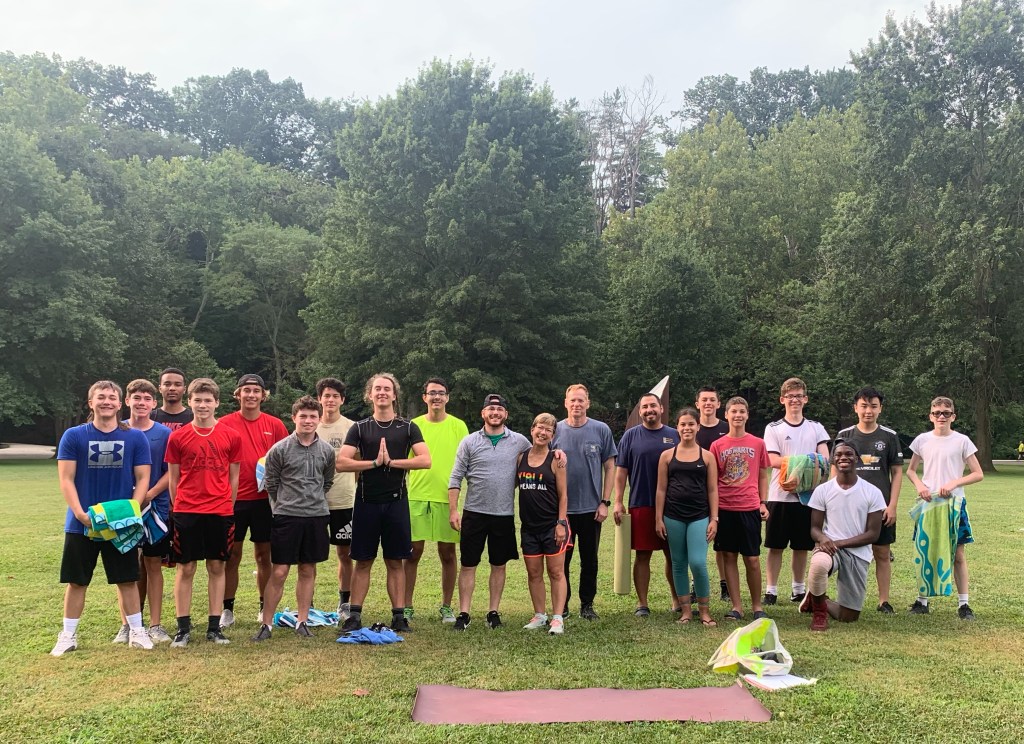
There they were. Athletically built and full of swagger, I listened to their coach who asked them to circle up around me in the dewy grass.  The fog was rising, but the sunlight remained hidden on this humid August Saturday morning.  They were quiet and rather fatigued-looking after a week of two-a-day practices; nonetheless, they were respectful as I began to talk to each of them, my eyes moving from athlete to athlete.  

The task before me was to provide a recovery yoga practice for the St. Joseph Central Catholic High School boy’s soccer team, the sibling school to the middle (and elementary) school for which I am a 6-8 educator.  I began our morning practice by setting an intention. Mid-way through my opening statements, the thought occurred to me that I might also be talking to myself.

I began the practice with the following quote by Julia Cameron, “Over an extended period of time, being an artist requires enthusiasm more than discipline.” However, I replaced “artist” with “athlete.”  Enthusiasm comes from the Greek word, enthousiasmos, enthous, or entheos–which essentially means to be possessed or inspired by God.  Other translations include: filled by God’s essence; or, inspiration or possession of God.  When looking at synonyms for enthusiasm–passion, ardor, zeal, fervor–one begins to truly feel the emotional strength and power of the word.

The purpose of selecting this intention for the team’s yoga practice was two-fold. First, I  wanted them to walk away from practice with the thought that in order to have a successful soccer season, it would not only require disciplined practices, thinking, actions, and reactions, but also their discipline must be infused with enthusiasm–for one another and for the game.  Additionally, I hoped they would sense the Creator’s guiding presence in their life, the One who divinely and individually created each one, as they moved into and through their coming season and school year.  

As seen on Instagram @ postiveenergyalways

Discipline and enthusiasm, I believe, go hand-in-hand, especially when reflecting upon this past year and half of living with COVID. Like many, I had maintained the discipline of preventative COVID measures throughout the summer, fall and winter of last year, but by the end of February of 2021, I was beginning to lose my enthusiasm. I was ready, more than ready, to give up.  In fact, I was ready to run away from life. It seemed to me that there had been far too many deaths, distractions, changes, illnesses, storms, flooding, and other torments of life.  Like so many around me, I felt I was, like the old southern, metaphorical expression made popular by the band, REM, “losing my religion,” and barely holding on. 

Thankfully, I did not give up.  Instead, I kept showing up, moving, one foot in front of the other, one day–sometimes even one moment–at a time.  By the time summer arrived, I decided to create a disciplined morning practice devoted to inner, spiritual work in an attempt to find that lost enthusiasm.  And guess what I discovered?  The Divine Creator was still there, and at a snail’s pace, I began to once more feel the True Source of inspiration.  I began to find enthusiasm once more.  

Photo by Dom J on Pexels.com

“Write this down:  My life is full of unlimited possibilities.”–Pablo

I woke early every morning and committed myself to the practice of writing–not for publication, but for me.  Each morning, before the sun had risen, I sat and wrote for nearly an hour following a formatted plan. It didn’t matter how much my inner-self tantrumed about the early hour, time commitment, or the work, I kept up the practice and believed in the process. I filled pages of journals–words that I ultimately shredded!  

In fact, hours of work were ultimately sent through a shredder because, in the end, the words I wrote did not need to be saved.  They had served their purpose by allowing my mind to process and recover.  It took weeks, but my mindset gradually shifted. Instead of thinking, “Oh, I have to get up and write,” I actually began to look forward to my writing practice.  I was finding my joy.

Photo by Gareth Willey on Pexels.com
As I worked with those high school boys, they found their muscles tight from the pounding and compacting of twice daily running and drills.  Their bodies were not easily given over to poses (stretching positions) through which I guided them. It was as if their bodies were saying, “No! I won’t!”  I encouraged the young men to breathe through the resistance, release the tension, and relax.  The more they took deep breaths, the more they were able to relax those tight muscles.  The more they relaxed, the more their bodies allowed them to stretch. 

At the end of nearly an hour, they entered their final pose, “savasana,” final relaxation pose.  Savasana is also known as corpse pose–as there is a dying away of the body and mind to all of its busyness.  Savasana is similar to powering down your computer or phone–it gives the body a chance to assimilate all that has happened within that hour of practice, reboot, and return to homeostasis.

As seen on Instagram @ spiritualist_within

Likewise, my summer practice of writing served a similar function.  I had to learn how to loosen my rigid and restricted way of thinking.  Instead of remaining in my isolated, ego-driven “No-brain,” I had relearn how to tap into my “Yes-brain.”   Through my disciplined morning practice of writing, prayer, and affirmations, it was as if my brain was metaphorically breathing deeply, learning to relax, and eventually relearned to say, “Yes,” even to things for which I cannot control.  My brain had to die away from the busyness of my ego–the poor, pitiful me side, and tap into the True Source

Making my way around the circle of kids relaxed in savasana, I sprayed each of their feet and ankles with peppermint spray as an act of soothing refreshment. I could not help but notice all of their blisters, calluses, and chafed skin.  It reminded me of how many of us feel as we deal with this new variant(s) of COVID.

Photo by Maksim Goncharenok on Pexels.com

“Always remember to take your Vitamins:  Take your Vitamin A for ACTION, Vitamin B for Belief, Vitamin C for Confidence, Vitamin D for Discipline, Vitamin E for Enthusiasm!!”–Pablo

Many may feel chafed, not only by the notion of wearing masks again, but also by the fact that we still can’t return to a so-called, “normal,” or the sense of homeostasis. We are asked to remain vigilant and disciplined regarding not only our health, but the well-being of others, and yet our souls are begging for soothing like the peppermint oil sprayed on the soccer player’s bedraggled feet.  It is worth remembering how far we have come, and if we made it through last year, we can make it again.

I will argue that Cameron’s words can be applied to this extended period of time as we continue to live with COVID.  We need a large dose of enthusiasm, more than discipline, in order to continue to embrace life as it is and keep going.  Enthusiasm is our God-given, on-going source of inspiration and energy.  When enthusiasm is combined with taking action and believing in our Higher Power, we can continue with confidence to remain disciplined and still experience joy.  Life may not be like it was, and frankly, it may never return to what we once knew, but life in the present moment–no matter the status–is continuing; and that, my friend, is worth a mask-covered smile.  

Miss Ollie Ray is all sunshine and smiles no matter the changes around her as seen in this picture from last school year.

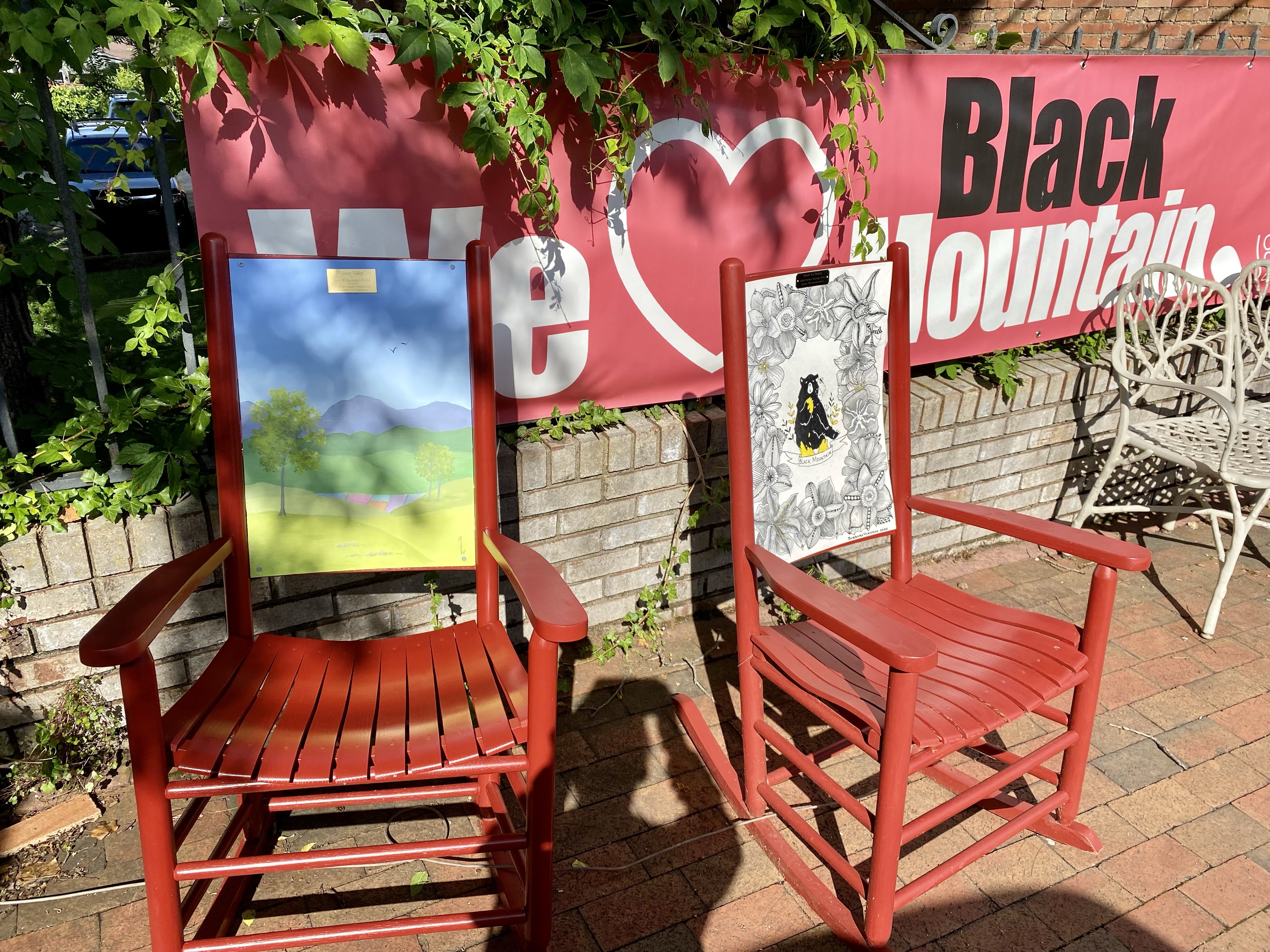
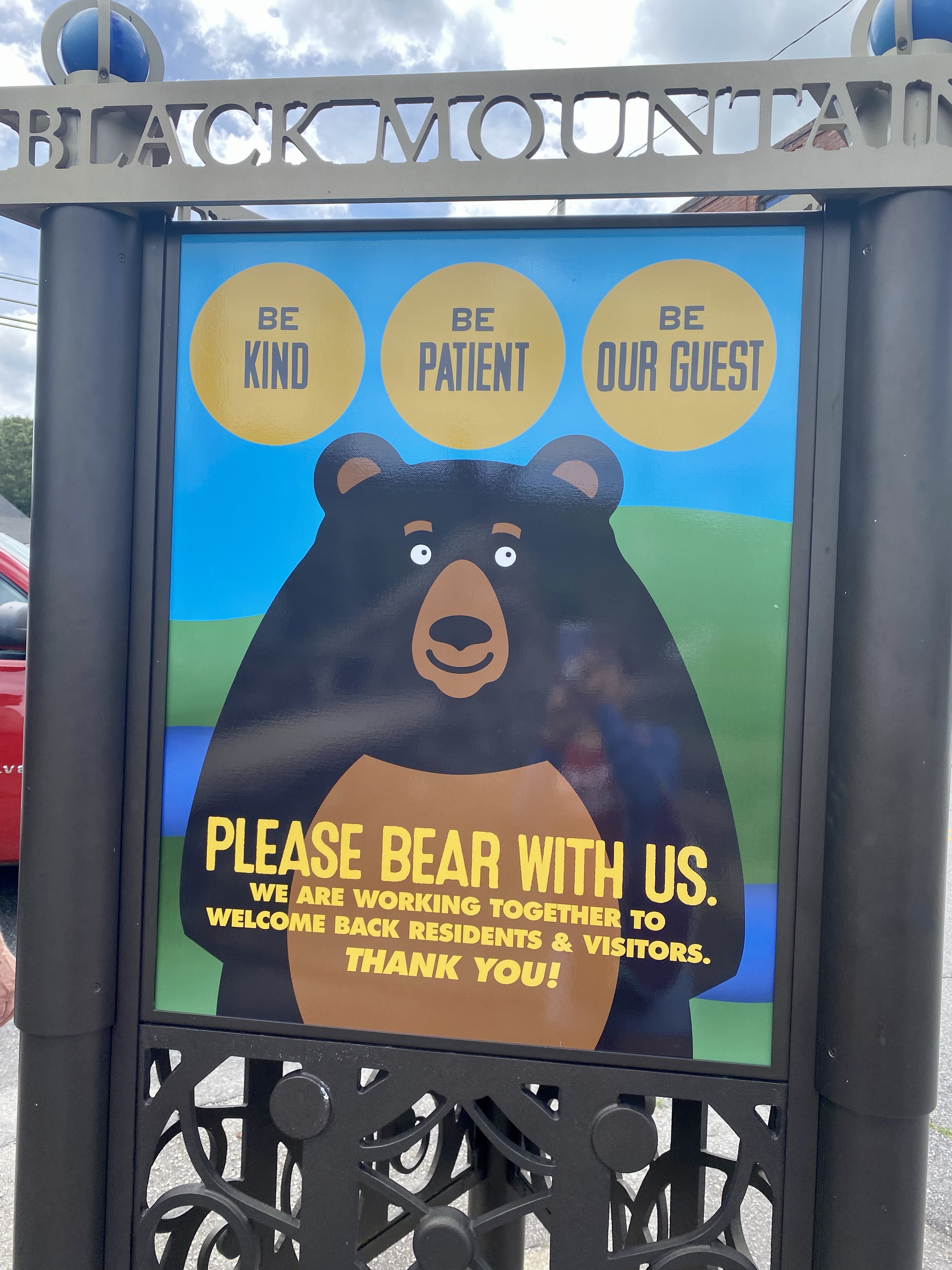
Black Mountain, NC, The New Cool

“Although I deeply love oceans, deserts, and other wild landscapes, it is only mountains that beckon me with that sort of painful magnetic pull to walk deeper and deeper into their beauty.”–Victoria Erikson

After all of the freedom of mask-free living, travel, and dining, it looks as if we might be heading right back into those not-so-care-free-mask-wearing days again–vaccinated or not.  Regardless of what position you take on COVID, vaccines, and masks, there is one topic on which most can agree based upon the summer of 2021–our collective love of travel.  Perhaps, it’s hard-wired into our DNA from the hunting-gathering days, but as a whole, a large part of our population embraces that wanderlust feeling–hitting the open road and taking off for a change of scenery in order to relax, recharge, and renew.

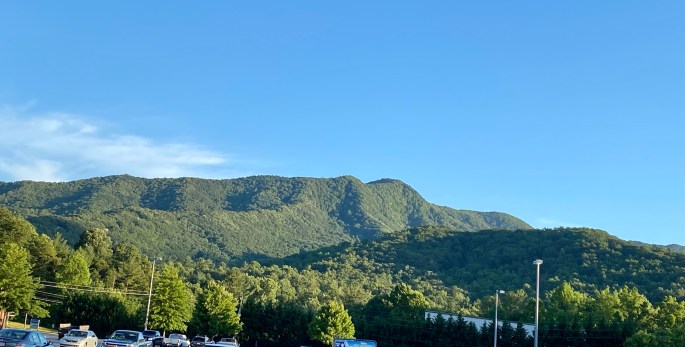
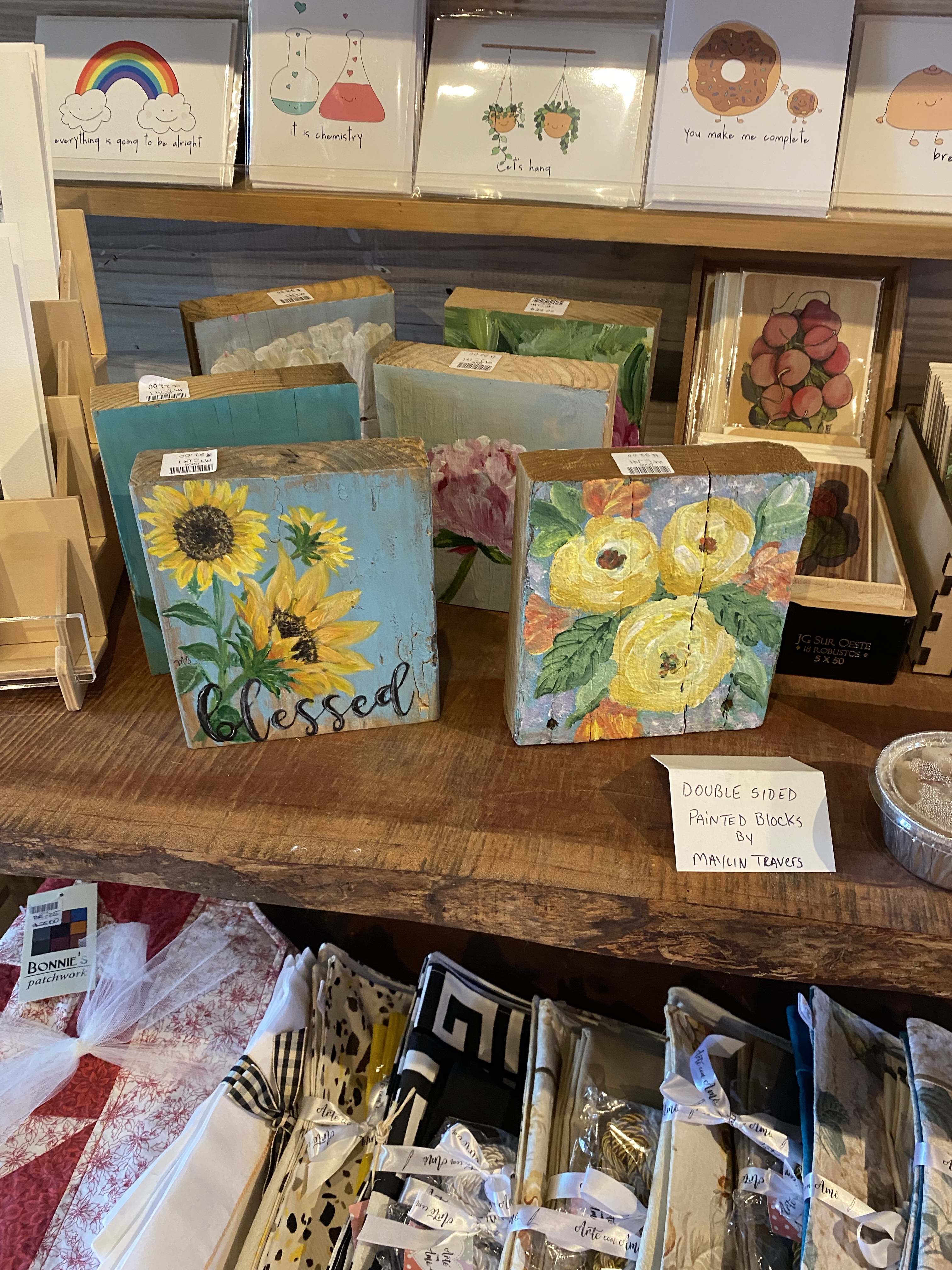
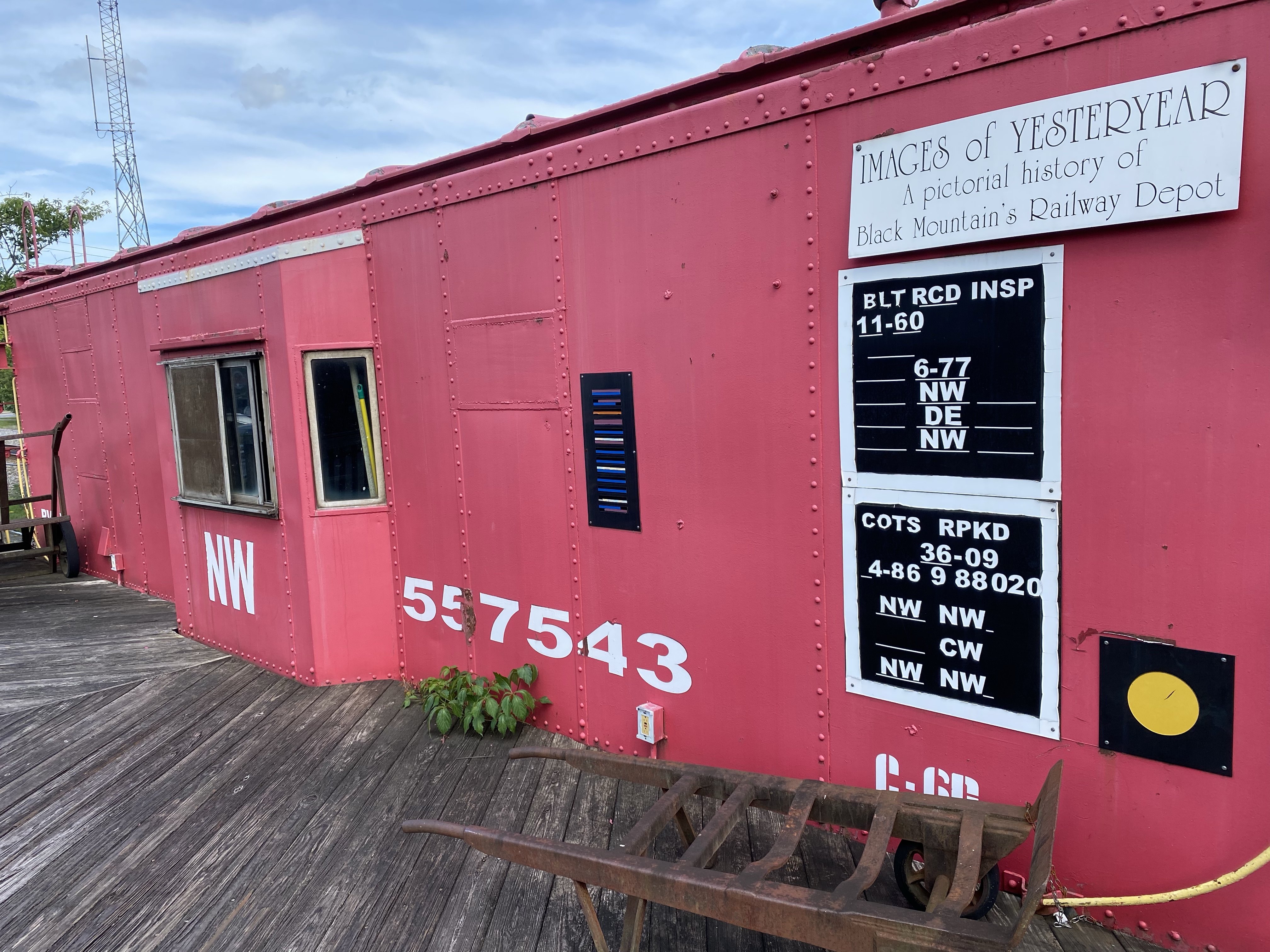
While my husband and I did not travel as much as we would have liked this past summer, we did discover an off-the-beaten path destination that we hope to return to in the near future–Black Mountain, NC.  Ideally, we would like to visit it again during the fall months, but since we are both educators, extended fall travel is not possible.  However, for those of you with the opportunity to travel during the fall months, I would encourage you to consider a visit to this charming and scenic area of NC.  Even with mask-restrictions, it’s an ideal travel destination due to its fine dining, shopping, museums, breweries/distillery/cideries, crafts, art, music, and more.   Plus, it also offers a plethora of out-of-doors activities in which you can practice social distancing if that’s your preference.  

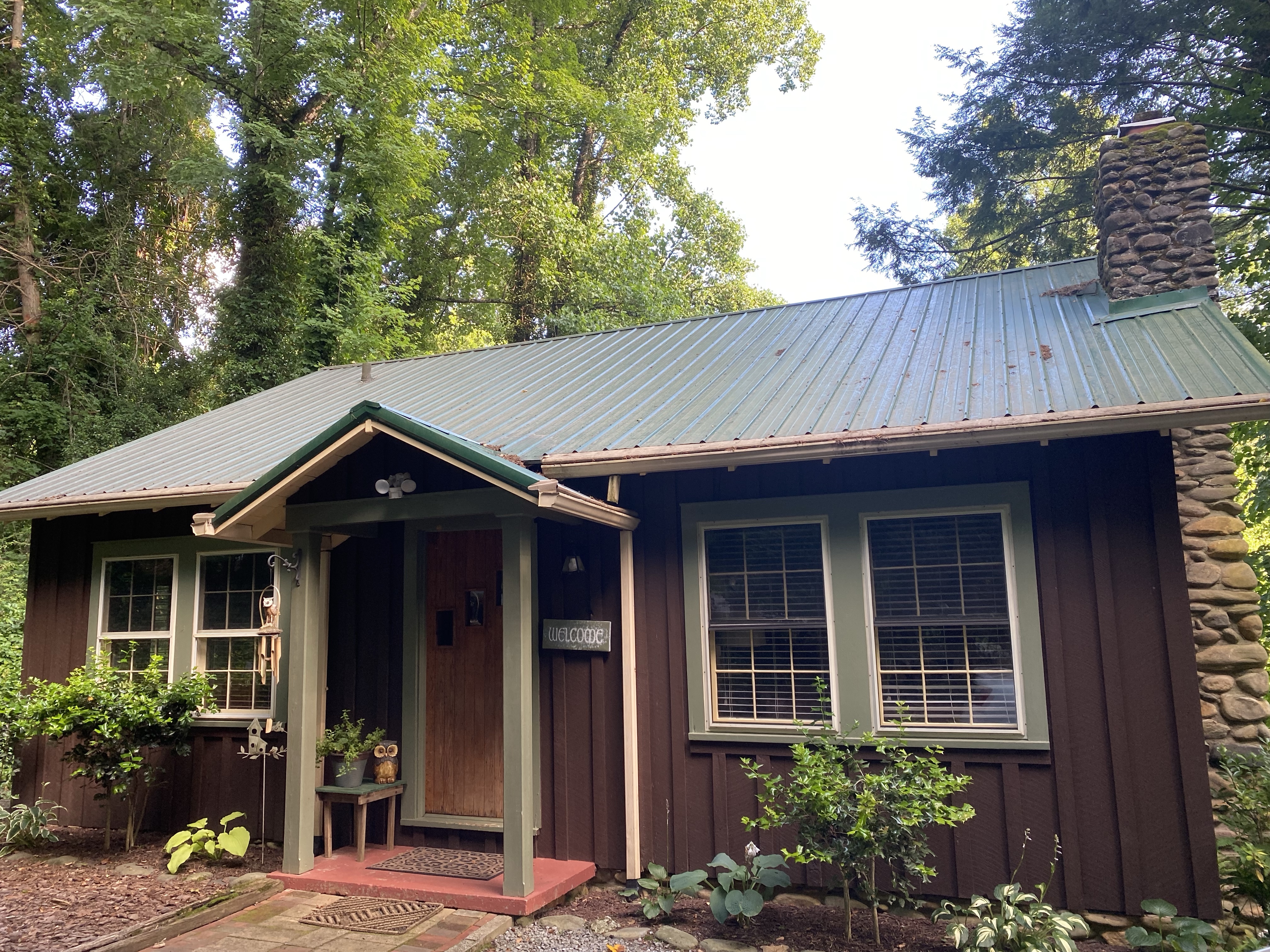
Using populars travel apps such as Airbnb, VRBO, TripAdvisor, or Yelp, you will not only find an abundance of ideas for activities in the vicinity, but also a wide range of places to stay sure to fit any budget, including rental homes/condos/apartments, bed and breakfasts, quaint inns, camping or glamping sites, resorts, and hotels. In fact, John and I were overwhelmed with all of the choices, but ultimately went with a VRBO rental home one mile from downtown Black Mountain called Getaway Disoway.  The owners, Tony and Tricia Wilkerson, were fantastic and responsive communicators, respected our privacy, and provided us with a clean, comfortable, and cozy cottage built in 1941 that we absolutely loved.

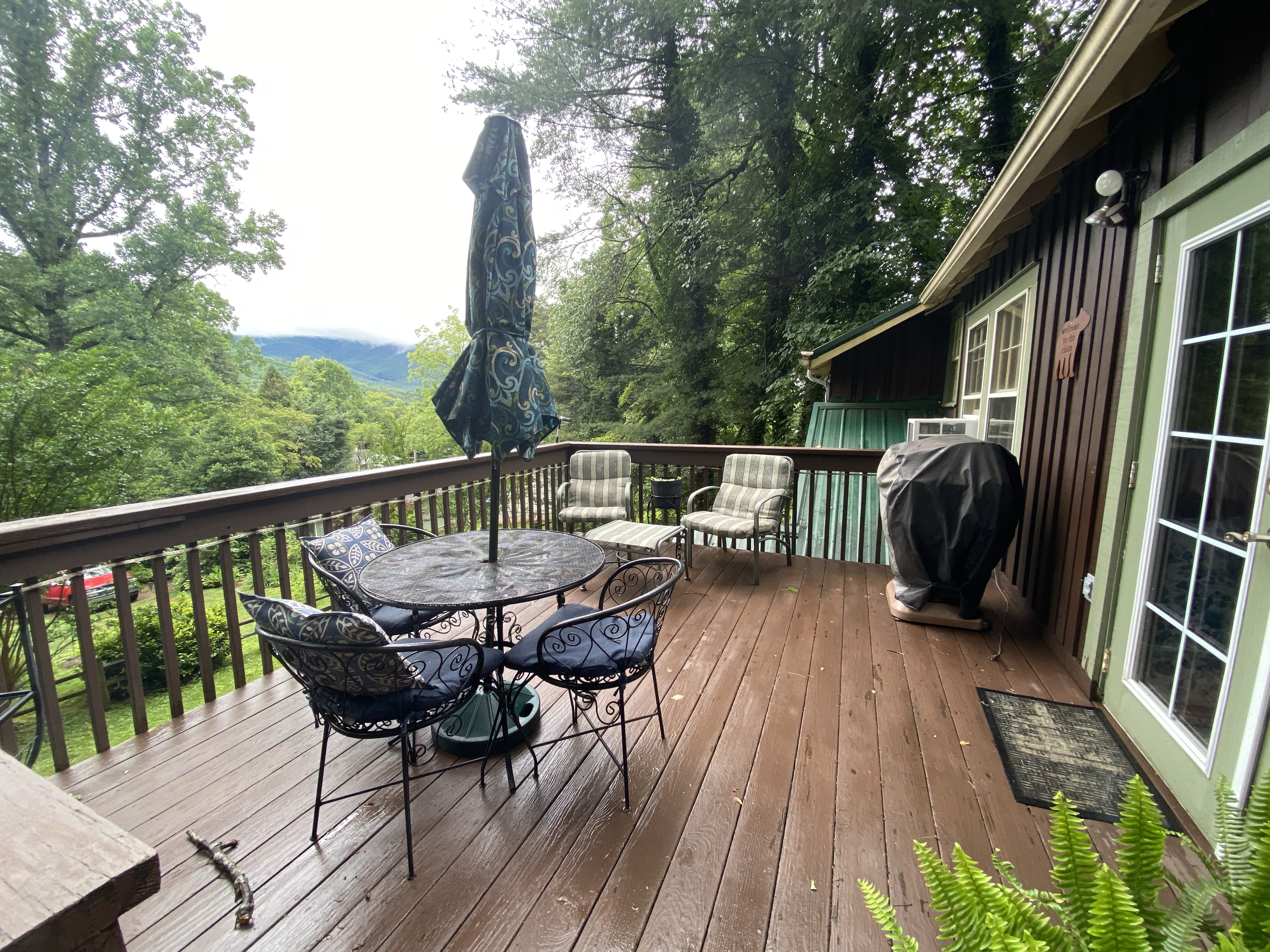
What’s not to love about squirrel watching as you relax on your mountain view deck?!

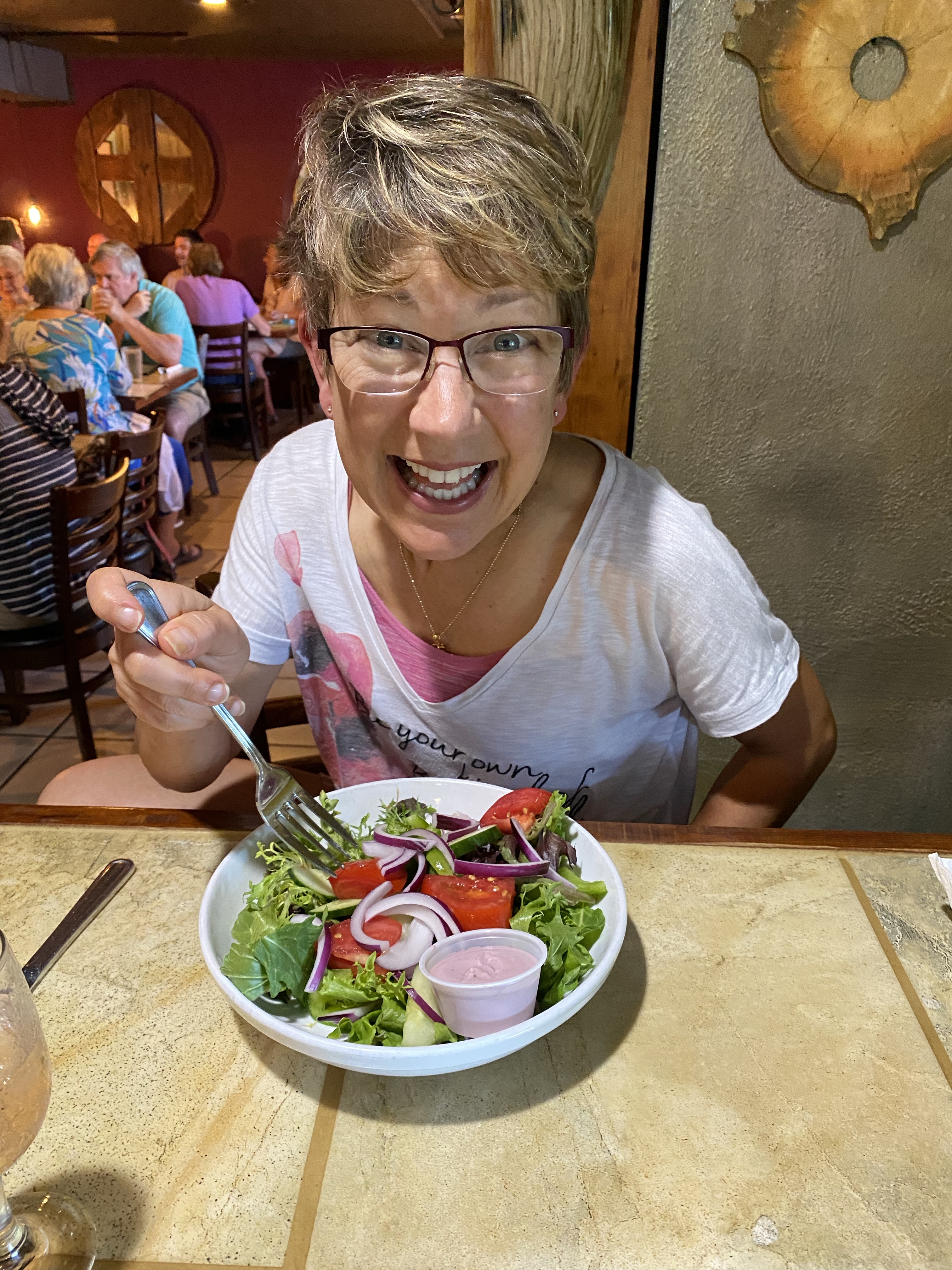
In the same way there are a myriad of places in which to stay in Black Mountain, there are likewise ample choices of eateries! This was good news for John and me since we have two different dining preferences.  I have to eat gluten free due to celiac disease, but I choose to also eat plant based; whereas, John is MUCH easier to feed as he is your basic meat, potato, salad kind-of-guy!  In spite of our differences when it comes to how we eat, we come together on our preference for eating at eclectic restaurants that are locally owned, and Black Mountain certainly has those!

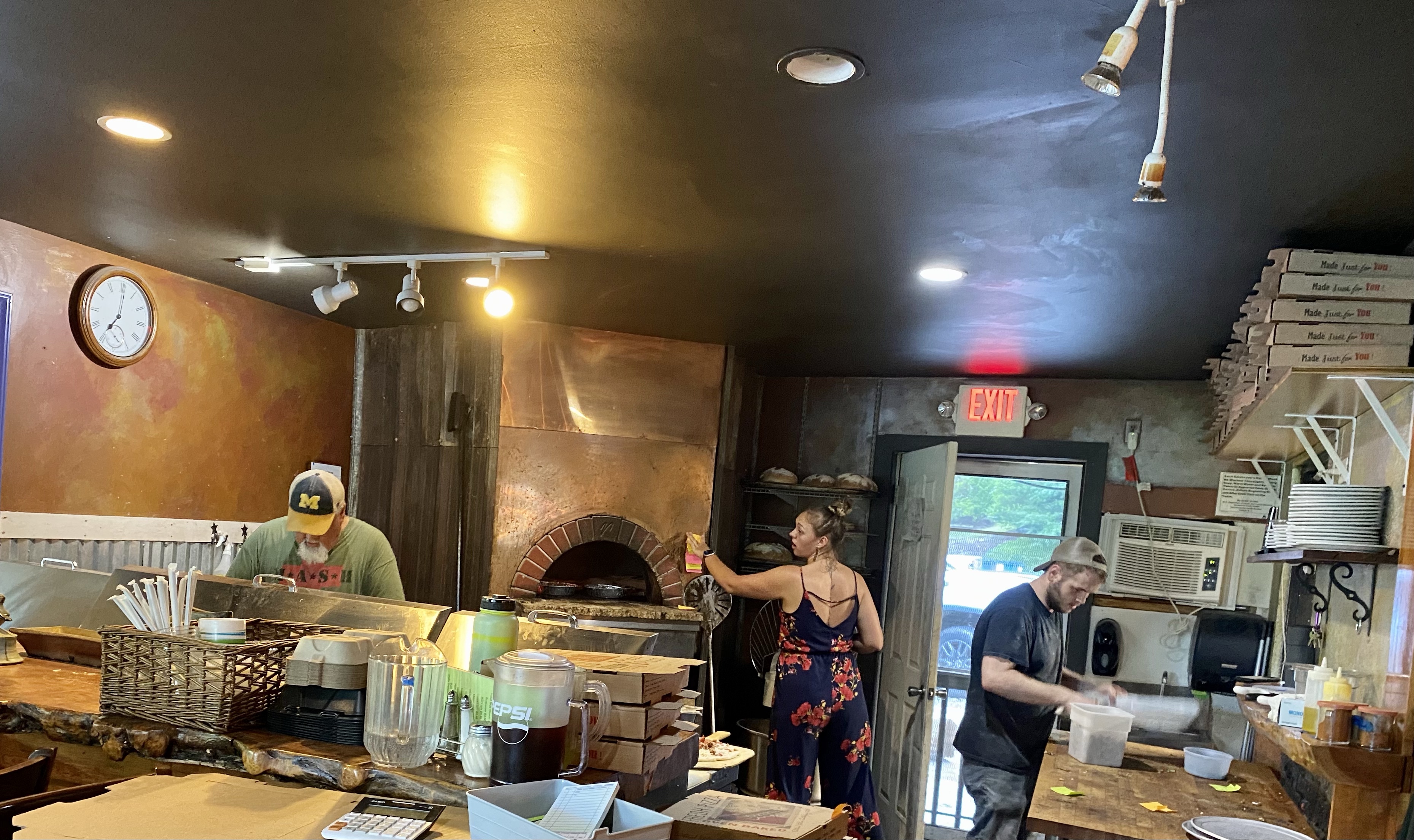
Our first food stop was FRESH: Wood Fired Pizza, featuring a classic menu of pizza, pasta, salads, and desserts.  The chef, Mark Tomczak, an award winning ceramics artist, worked as an assistant chef at The Inn and Spa at Cedar Falls, in Hocking Hills, Ohio.  Later, he became head chef at The Colonial, in Jackson, Ohio, before merging his talents.  FRESH features Tomczak’s fine food and pottery creations in a vibrant, funky atmosphere featuring ample outdoors dining.  Additionally, due to fact his youngest daughter, Emma, has a gluten intolerance, Tomczak’s menu offers multiple gluten free options, and his staff go out of their way to prepare gluten free food separately from the rest of menu items in an attempt to try, to the degree possible, keep their gluten free foods from being cross-contaminated.  John and I loved FRESH so much, we ate there twice!

The next day, we visited Cousins Cuban Cafe, where we met the chef and owner, Beatriz “Betty” Sperry, while trying to decide what to eat.  Sperry took charge immediately, asking questions, and based upon our answers, making recommendations.  Sperry, a first generation American whose parents immigrated from Cuba to Miami, FL, proudly shared with us the story of her family.  Their pictures adorn one wall of the cafe.  Sperry described Cuban cuisine as being robust and full of flavor, but without being too spicy.  Oh my, was she ever right, and they also had THE. BEST. COFFEE. EVER.  The cafe’s food was like none other we had previously experienced.  Sperry made John and I feel like one of the family as we sat at a small table near the kitchen, chatting with her and soaking up the atmosphere as the kitchen staff jovially, but quickly hustled to feed the ceaseless stream of hungry diners coming in for lunch.  We will definitely return to this homey breakfast/lunch bistro.

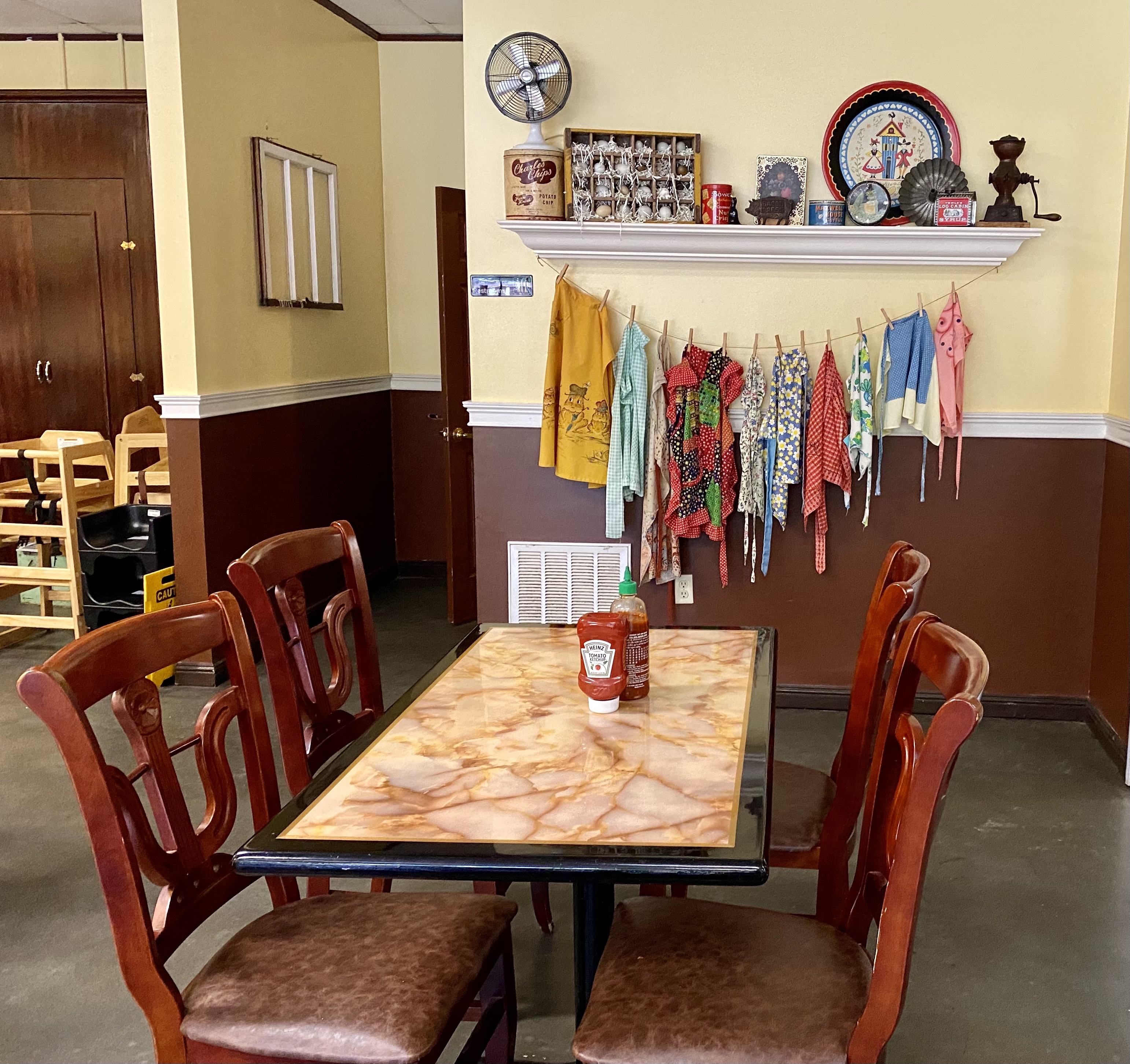
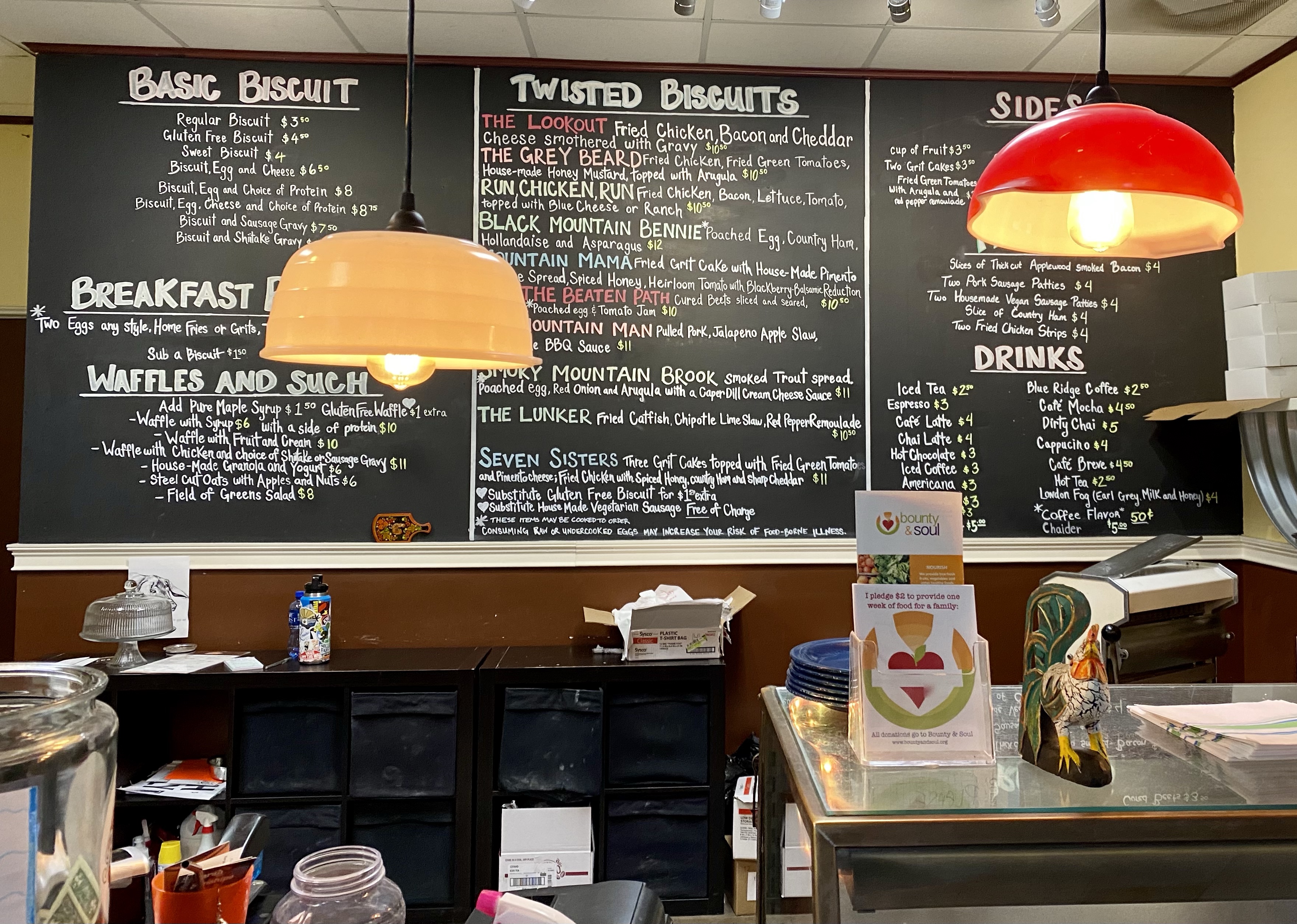
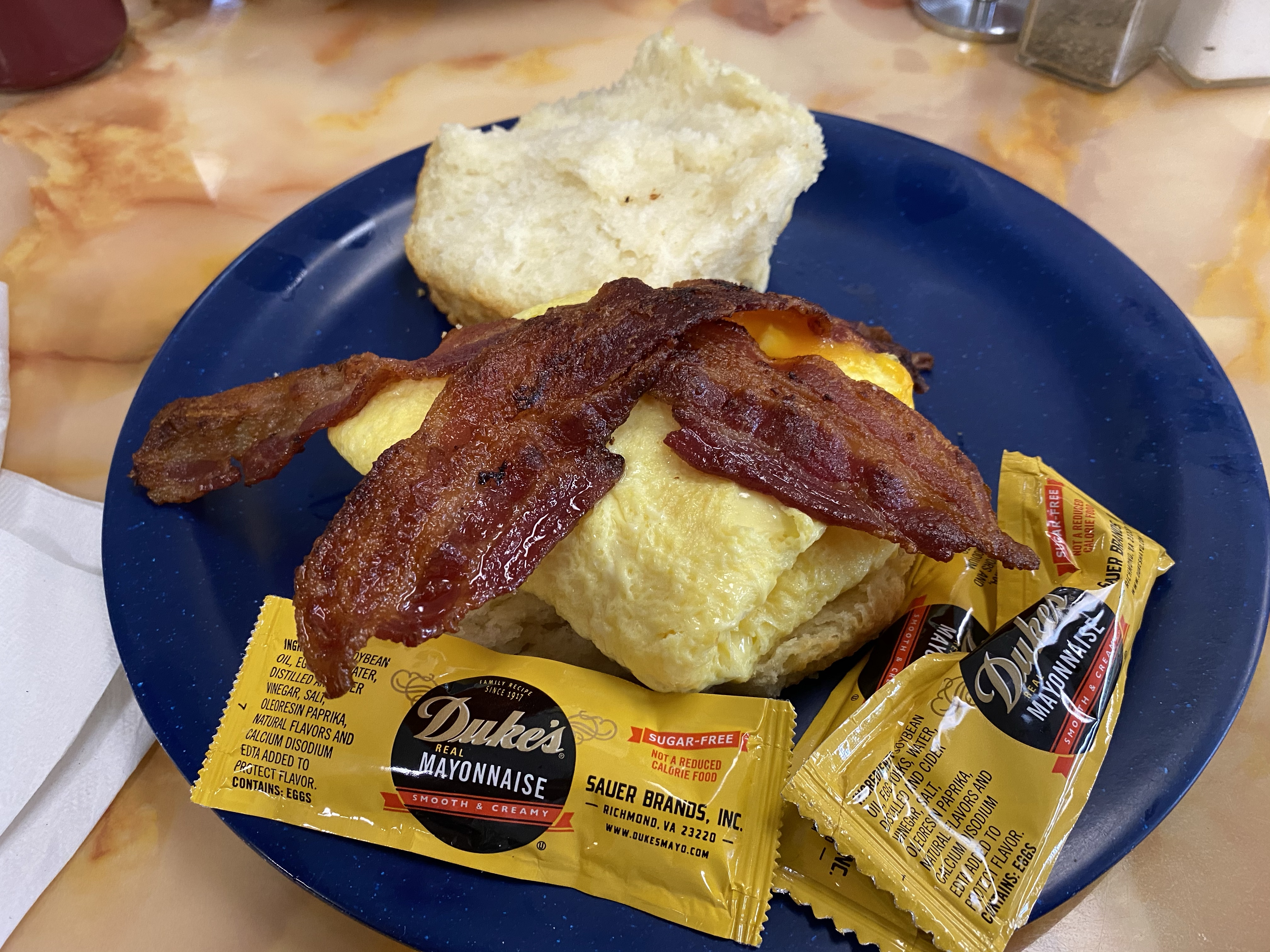
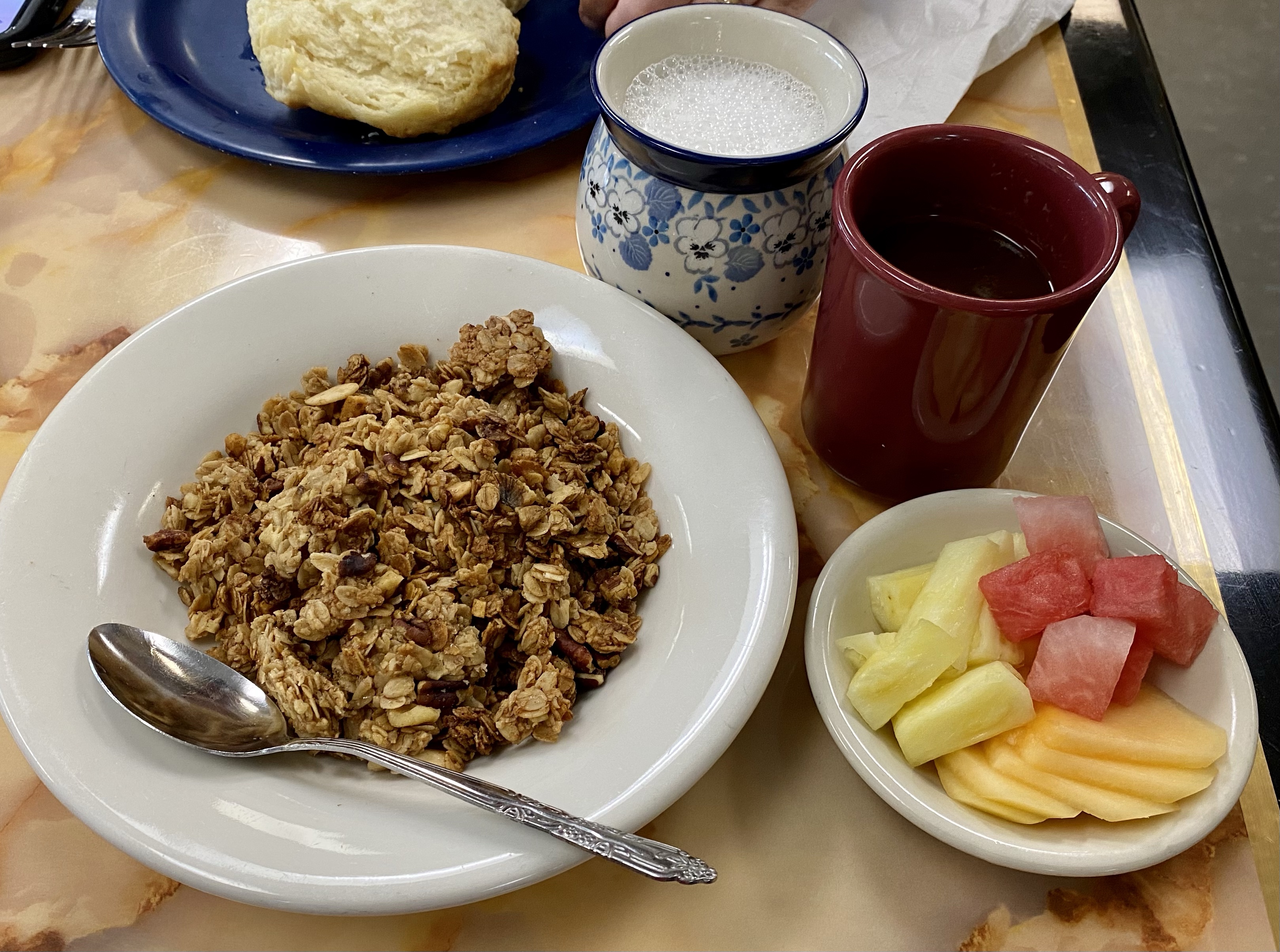
If you’re going to hike around mountains, you need to fuel strongly, and that’s exactly what John and I did twice at Blueridge Biscuit Company–home of the gluten-free biscuit!  Unfortunately for me, since we were on vacation, we slept later than we normally would, so the advertised gluten-free, 9 oz cathead biscuits were regrettably sold out both mornings!  No worries for me though, they had numerous other gluten-free offerings, including house made granola and plenty of hot coffee!  John appreciated the varied biscuit sandwich choices. (Yes, his biscuits were also 9 oz catheads too!)  However, biscuit-based meals were not the only foods served up at this breakfast/lunch eatery, there were plenty of waffles, eggs, proteins, sides, and such, sure to please even the pickiest eater.

What vacation isn’t complete without a little Mexican food to spice up the experience?  Which is why we had to visit Ole’s Guacamole.  Full confession:  I am a BIG eater when it comes to Mexican food, especially vegetarian fajitas.  John and I visited Ole’s on an evening after our longest hike, and we were hungry.  However, the portions at Ole’s were so generous, even I could not eat all of my food!  What’s more, my margarita was so big, I couldn’t drink all of it either!  Nonetheless, you did not hear either one of us complaining, and based upon the crowd, Ole’s has plenty of adoring fans ready to take on the clean-plate challenge! 

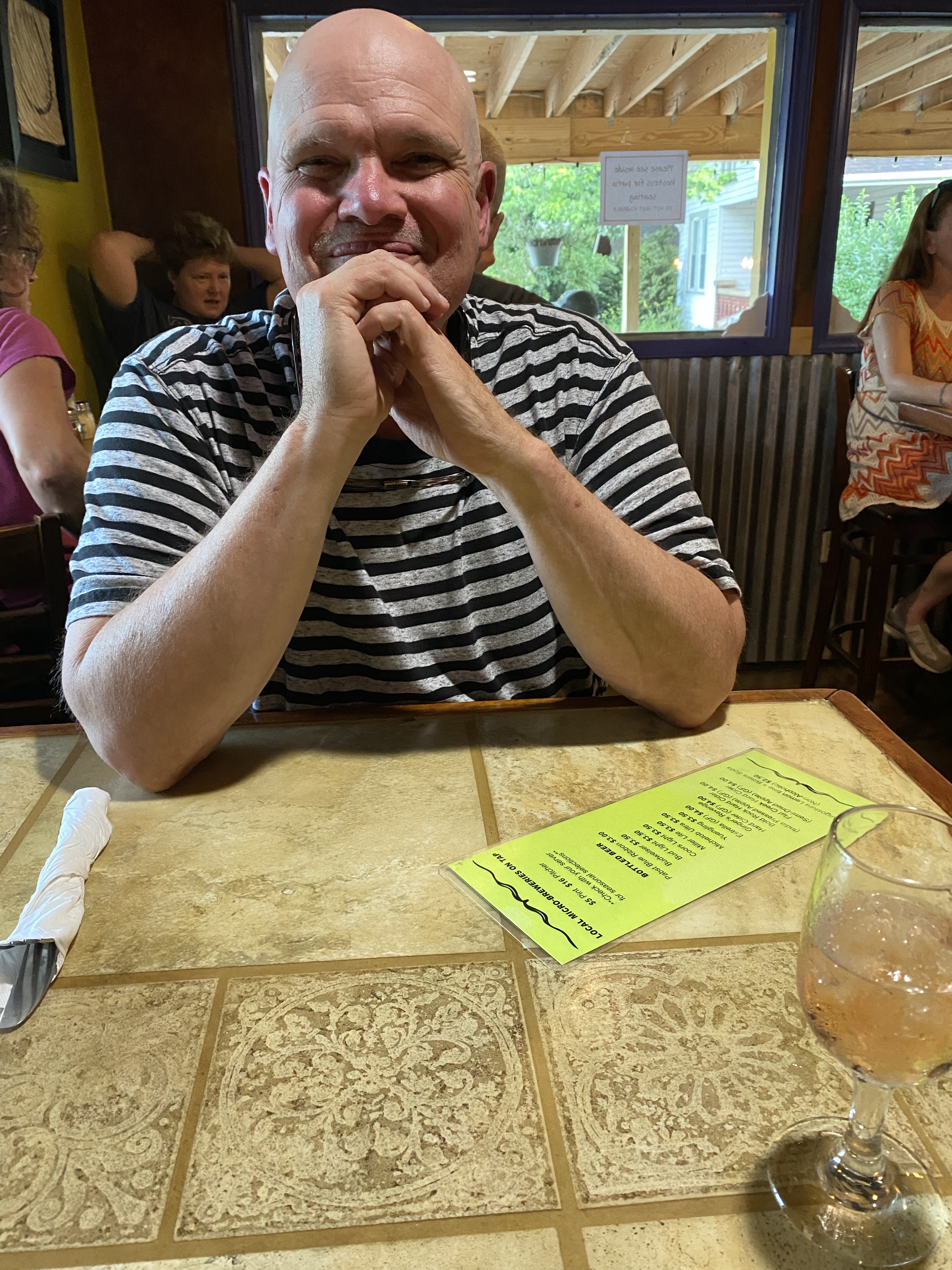
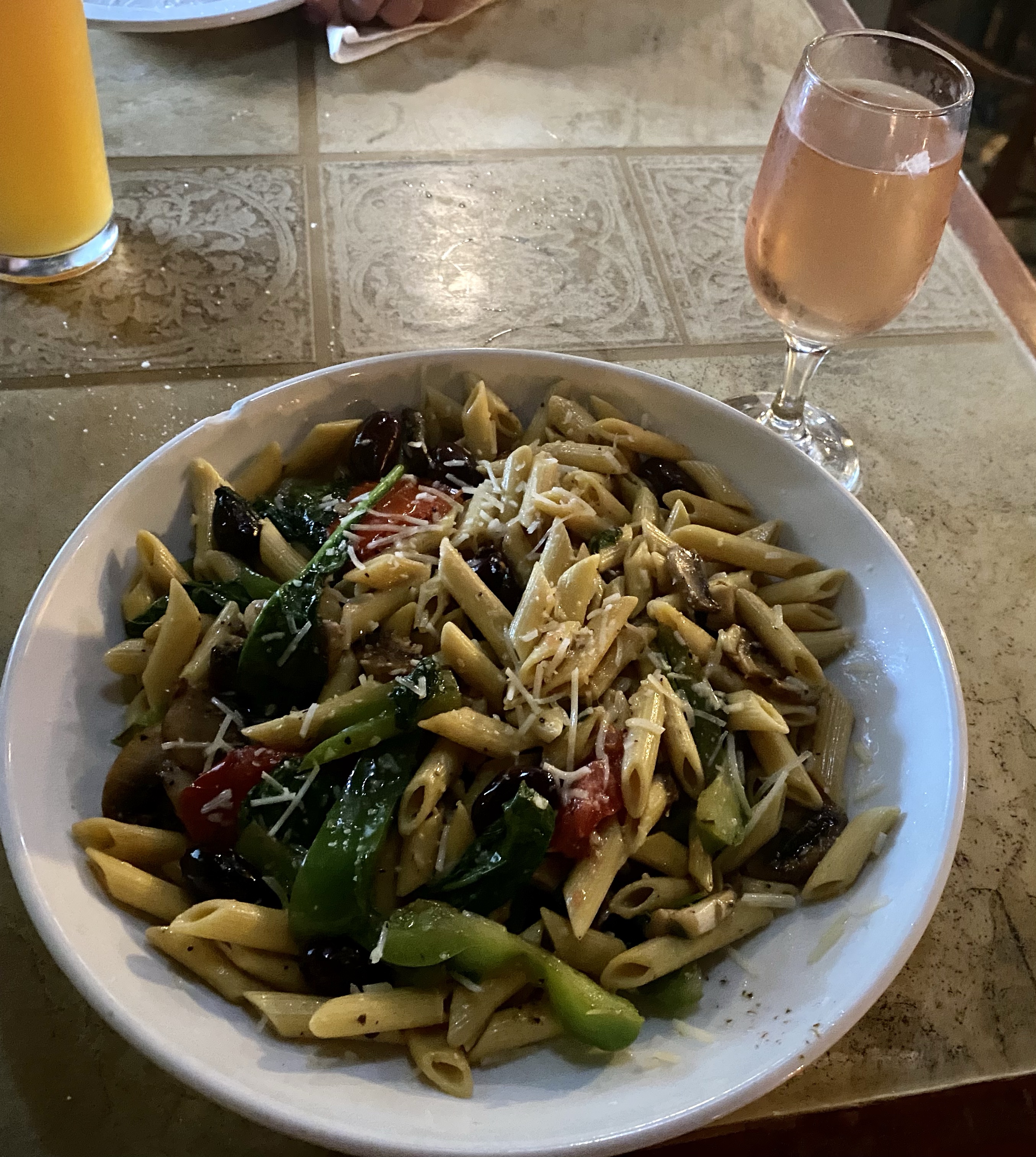
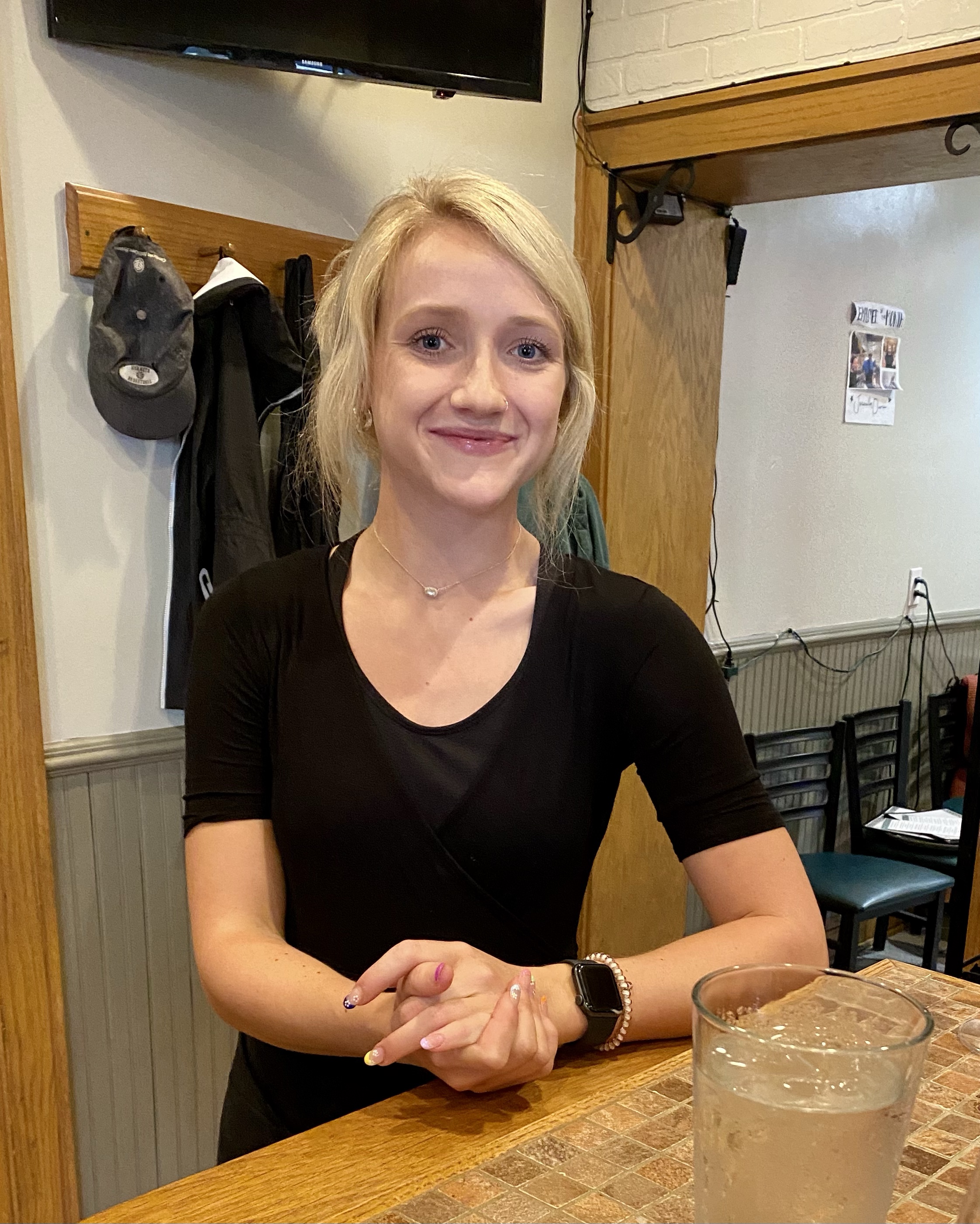
Last up, on our Black Mountain dining adventures was Black Mountain Bistro.  This locally owned and run restaurant offers an eclectic food and drink menu, including vegan/vegetarian and gluten-free options.  While dining there, we met Jaiden, our server extraordinaire who answered all of our questions, made recommendations, and even made time to discuss her favorite hiking spots in the area.  Our food was outstanding, the atmosphere was inviting, and it appeared to be a local favorite hang-out based upon the people we met.  We had hoped to return, but our trip turned out to be one day shorter than planned, thanks to my poor booking skills! 

All-in-all, John and I left a bit of our heart in Black Mountain, NC.  It is full of ample out-of-door spaces to explore, stunning scenery, a vibrant arts and craft scene, a hip, but welcoming vibe, and just the right amount of one-of-a-kind locally owned shops, restaurants, and businesses.  Stay tuned for more as we are already planning for a second trip to this mountain haven. 

Rocks in Your Head?

“It isn’t the mountains ahead to climb that wears you out; it’s the pebble in your shoe.”–Muhammad Ali

Have you ever been walking along and discovered a rock in your shoe?  It doesn’t seem to matter how small it is, suddenly, it is all that you can think about.  This is especially true if you are on a solo walk or run.  With each step, that multi-faceted, miniscule rock pokes and prods your foot until it becomes your sole focus. Likewise, if you are walking or running with another person, try as you might to ignore the aggravating rock, it remains in the periphery niggling away at your attention in spite of your best effort to focus on the unfolding conversation. 

Have you ever noticed how much more free and spacious your mind becomes if you pause long enough to take the rock out of your shoe?  If you’re with a friend, your concentration easily returns, and if you’re exercising alone, your mind relaxes and resumes its free-flow thought.  When this happens to me, I often ask myself, why did I take so long to shake that rock out of my shoe?  Why did I allow myself to be tormented by such a small thing?  

Photo by Matheus Natan on Pexels.com

Oddly enough, there are times that I will go an entire run or walk, and complete an errand or two, before I take time to slip off my shoe. Once home, I’ll sit down on the front stoop of my porch, take off my shoe and shake out scanty pebbles and/or debris. Slipping the shoe back on, it’s like putting on new footwear–all because I had been too stubborn, lazy, or petulant to take off my shoes and toss out the rocks.

After a recent moment of emptying the rocks out of my shoes, it occurred to me that those crushed rocks were quite a bit like thoughts that can sometimes run through my head.  These are often circular notions of self-doubt, self-criticism, or self-reproach.  Depending upon the day, situation, and/or context, the narrative can vary, but the ongoing, well-rehearsed mental skirmish between Naysayer Nellie and Wetblanket Wanda certainly know how to prick and needle my grey matter like the crushed detritus poking and prodding my foot when trapped in my shoe.

These pessimistic pests tend to most often join forces during times of stress, change, and/or increase in workload.  Sometimes, all it takes is one moment of so-called failure, frustration, or new challenge to inspire those two negative allies to vie for my attention as they quickly assemble a barrage of heated messages designed.  Then, like a challenging adolescent, they turn up the volume, in case I didn’t hear their propaganda the first hundred times!  

Ironically, I know their stories aren’t true. I recognize the disinformation for what it is; and yet, like the proverbial pebble in the shoe, I don’t quickly empty the shoe, or in this case, the prodding thoughts.  Instead, I allow those irksome ideas to create a foothold in consciousness, and repeatedly nettle away. It’s as if these defeatist messages have hijacked my brain.  

Photo by Kindel Media on Pexels.com

If I allow those obstructive thoughts to remain around long enough, like the shoe-bound pea gravel chafing my skin until blisters form, the negative mental chatter can create so much inflammation that my brain will begin its not-so-subtle messages of flight, fight, or freeze.  My head and heart will begin to pound, I will hold my breath, tighten parts of my body, such as my belly, back, or neck, and sleep becomes elusive or filled with nightmares.

What can I do?  Duh! Take off the proverbial shoe and shake out the rocks.  Not that it is easy, but I have to remind myself that thoughts are like clouds.  Even on the most overcast day, when all is gray and cloud-covered, the blue sky and the bright sun are still there–they have merely been hidden.  The sky is not the clouds, and I am not my thoughts–and neither are you, Dear Reader!  In fact, we are so much more than any negative messages sticking around in our heads. 

Photo by NEOSiAM 2021 on Pexels.com

 As I understand it, the emotional center of our brain is housed in the part of the area that evolved quite early in order to determine important life saving decisions such as, “Is this food poisonous or not?” or “Will this animal eat me?”  Once this area of the brain perceives something as dangerous–even if created by our own thoughts–this part of the brain won’t shut off until it feels safe.  (It is also worth noting that the same is true when this area of the brain experiences pleasure–it wants more and more.) 

However, we have another, more advanced part of the brain that allows humans to think, reason, make decisions, and plan.  Therefore, with practice, we can be aware of when the emotional center of the brain launches into its overwhelming fear-mongering.  We further have the capacity to choose whether or not we believe those negative stories, and we can also plan how to treat those thoughts when they do occur.  Furthermore, we can take daily actions to further reduce the rumbling rocky voices which are most often a product of fear . . . fear of failure, fear of success, fear of change, and fear of the unknown

“Remove the rock from your shoe rather than learn to limp comfortably.”–Stephen C. Paul

One of the best pieces of advice an acquaintance once shared with me:  “Stop yelling at yourself.”  She went on to ask if I would yell at my own daughter the way I think about myself.  When I said, no, she simply encouraged me to “play nice,” call fear by its rightful name, and then take steps to calm it down as you would with your own child.  

Many of the actions that can be taken to reduce negative/anxious thinking are not new suggestions.  Deep breathing, exercise, or simply walking away from a stressful situation for a specific time period are all actually quite helpful.  Other suggestions include: 

*Remind yourself of your past successes.

*Take small steps towards learning a new task. 

*Be willing to ask for help to reduce or understand new/heavy workloads.

*Talk to a trusted friend or family member–sometimes just naming your fears begins to tame them. 

*Write your problem on a piece of paper–dump it all, like you’re emptying your brain of pea gravel. The act of writing slows down the thoughts, relaxes your brains, and allows you to see things differently.  I’ve literally taken that written problem, slipped it under my pillow at night, and literally slept on it.  It never fails to surprise me how a little faith and trust that a solution will be found allows it to gradually unfold.  

Photo by Lisa on Pexels.com

*Learn to nurture and protect your thoughts. 

*Cultivate affirmative thoughts.

*Take preemptive action if you know certain situations trigger a strong emotional reaction. 

*Be gentle and kind with yourself. 

If you begin to notice your brain is launching into story mode, each time a thought attempts to pop into your head, try to mentally swipe it away like a fly at a picnic before it can grow.

The point is, just because you think something, doesn’t mean it’s true.  Sometimes the solution is as simple as shaking out rocks.  I’m not saying it’s easy; it’s not.  Nonetheless, it is worth remembering that emotions come and go, like ever changing weather, but they don’t have to permanently hijack your brain.  

Photo by Kelvin Valerio on Pexels.com
 

Steph’s Key Lime Smoothie

“When life give you limes, rearrange the letters until they say smile.”–unknown

Photo by Taryn Elliott on Pexels.com

Would you believe that eating limes or adding lime slices to water is actually quite beneficial to your health?  Personally, I love the flavor of lime.  I like to squirt the juice of a slice or two of lime on salad, in salsa, in refried beans, veggie pad thai, and many other dishes.  Lime is so refreshingly tart and tangy.  It gives instant zip to whatever it’s added, including water, and, of course, margaritas! 

When purchasing a lime, according to several top chefs, it’s best to look for limes with a bit of give to them.  While limes should not be mushy, they should not be hard as that is an indication that they are not juicy.  Additionally, lime, like lemons, can be stored at room temperature for about one week if kept out of direct sunlight.  However, most cooking sites recommend that for long term storage up to four weeks, place limes–and lemons for that matter–in a plastic bag and keep in the crisper drawer of your refrigerator.

Photo by Cup of Couple on Pexels.com

Limes, like nearly all citrus fruits, offer numerous health benefits including high levels of antioxidants which protect the body from free radicals or chemicals that can cause the body harm at a cellular level.  Additionally, limes are a good source of vitamins and minerals including vitamins A, B, C, and D, as well as calcium and magnesium.  Even with all of this obvious goodness, consuming limes has other health implications worth considering.

The peel, pithe, and juice of a lime may boost heart health by slowing down the build-up of plaque on the walls of your arteries.  Limes are also a good source of potassium which has been shown to help maintain healthy blood pressure levels. The acid in lime juice is good for digestion by helping the saliva break down food as well as increase digestive secretions in the stomach. It is a natural weight loss supplement due to the fact that it slightly boosts metabolism–like all citrus fruits.  Furthermore, it enhances immune function–an important factor in the age of the COVID virus and all of its nasty variants.

Photo by LAVA on Pexels.com

“Lime juice makes things taste fresher.  I use it for drinks, salsas, relishes, soups, and sauces.”–Bobby Flay

If you have not tried adding lime to water, I strongly recommend this practice.  I also find limes especially tasty when added to lemon flavored sparkling water for added zing.  Slices of lime are also nice when added to a glass of iced green tea.  The zest of a lime is an excellent addition to plain yogurt, vanilla ice cream, white cake mix, sour cream, rice, smoothies, and mixed with a coarse salt to line the rim of a drink glass or sprinkle over your favorite dish.  Store a bowl of leftover peel in your refrigerator as an air freshener or grind it up in the garbage disposal to deodorize.  Limes, as you can see, are extremely versatile, useful, and are certainly worth keeping on hand year round.

Now, add all of that lime goodness to a whole-food, plant based smoothie, and you’ve got one nutritional bomb for a meal.  I absolutely believe drinking your calories is typically not advisable–especially with regards to sugar-laden drinks.  However, it is hard to beat the convenience and portability of smoothies.  That’s why, if you’re going to drink your breakfast, (or any other meal for that matter) why not make the drink yourself?  This allows you to control the ingredients and the portions of each to fit your specific dietary needs.  It won’t break your bank, and as an added bonus, smoothies can be made ahead and frozen for up to three months while still maintaining their freshness until ready to use. 

Add a slice of fresh lime to seltzer is a nice addition!

Finally, if you need further evidence of the benefits of a whole food, plant-based smoothie, including this Key Lime Smoothie, look no further than the reigning queen of nutrition for which most Americans are missing in their diet:  fiber! According to Harvard School of Public Health, “children and adults need 20 to 30 grams of fiber per day for good health, but most Americans get only about 15 grams a day.”  Fiber comes in two varieties, soluble and insoluble, and both are beneficial for staving off hunger, regulating blood sugar levels, and preventing health issues, including diabetes, heart disease, certain cancers, diverticulitis, and constipation–the bane of aging.  

What is the best way to meet your fiber needs? Eat a wide variety of whole, plant based foods, such as fruits, vegetables, legumes, nuts, seeds, and whole grains–which is exactly why this recipe is beneficial.  Of course, you can take a fiber supplement, but these are void of other essential nutrients that are found in whole foods, and they certainly don’t taste as scrumptious as a cool, creamy smoothie.  

Show your body a little TLC with a nutritious, fiber filled, whole food plant based smoothie!

Made as described below, you are consuming 18+ grams of fiber per serving and  9+ grams protein.  Plus, these ingredients provide an excellent source of potassium, calcium, iron, and other vitamins, including a full day’s supply of Vitamin C.  Even if you decide to divide this recipe into two portions, you are still starting the day full of fiber, nutrition, and protein–enough to power through your busy schedule!  

Take it from me, it is possible to give your body some extra nutritional love, no matter how busy your schedule, with make ahead, freeze until needed, whole-food, plant based smoothies!  From my home to yours, I wish you healthy, whole food nutrition!

No gut bombs here! Just whole food plant based goodness!

Steph’s Key Lime Smooth Smoothie

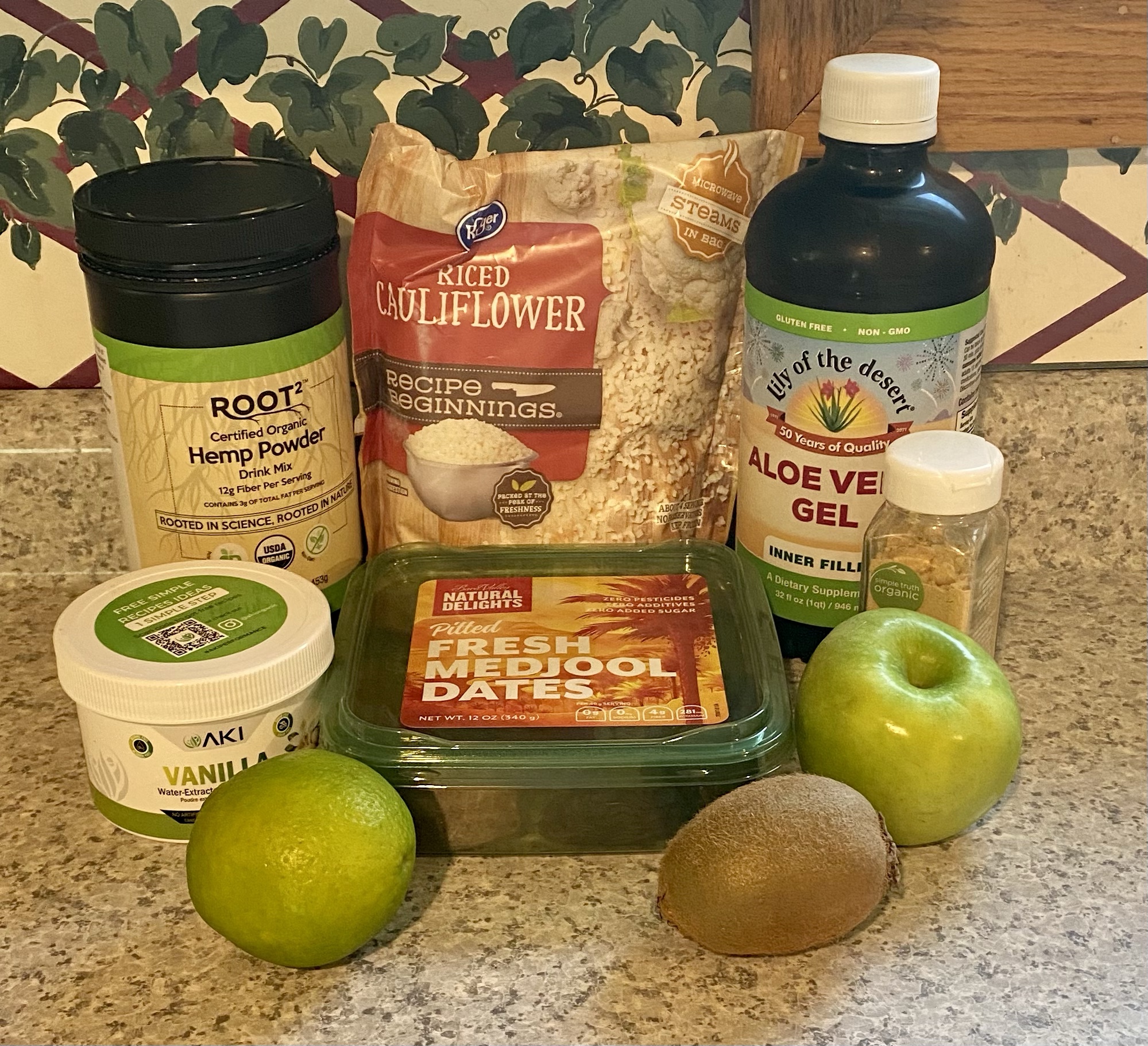
Ingredients:

1 ¼ cup favorite no sugar added vanilla milk (almond, soy, oat, etc)

¼ cup aloe vera

1 ½ cup frozen riced cauliflower (or a mix of your favorite greens such as kale, spinach, swiss chard)

1 rounded tablespoon of protein powder (make it vanilla for extra sweetness)

1 teaspoon vanilla extract or vanilla powder

1/2 inch fresh or 1/4 teaspoon ground ginger root 

Dash of salt

1-2 medjool date(s)

½  granny smith apple, destemmed and quartered

1 kiwi, peeled and quartered

1 lime, quartered (remove some skin, but leave most of pithe)

Optional: Add in 1 tablespoon ground flaxseeds, chia seeds, hemp heart, chopped walnuts for added nutrition

Directions:

Add milk, aloe vera, and riced cauliflower.

Blend those three ingredients until thoroughly blended.

Add in the rest of the ingredients in the order listed.

Blend until smooth.

Makes one extra large smoothie or two smaller smoothies.

Craggy Life Lessons

“Yonder were the mountains:  The sunlight revealed their tiny heads and wide shoulders, craggy and purple, with small black trees, delicate as eyelashes, on their slopes.”–Paul Theroux 

It never ceases to amaze me the ways in which life can manage to not only survive, but thrive.  As an experienced educator, I have worked with countless students, including those who come from the most anemic of backgrounds–impoverished in experiences, impoverished in love/emotional support, or impoverished financially.  Miraculously, many of those disadvantaged students still manage to not only survive their hardscrabble circumstances, but also find enough sustenance outside of their own rocky homelife for growth.  These kids are like camels–able to soak up enough goodness and nutrition from one or two smaller sources, such as a church, school, sports, and so forth, that allow them to flourish through long stints of inadequate and insubstantial living situations.

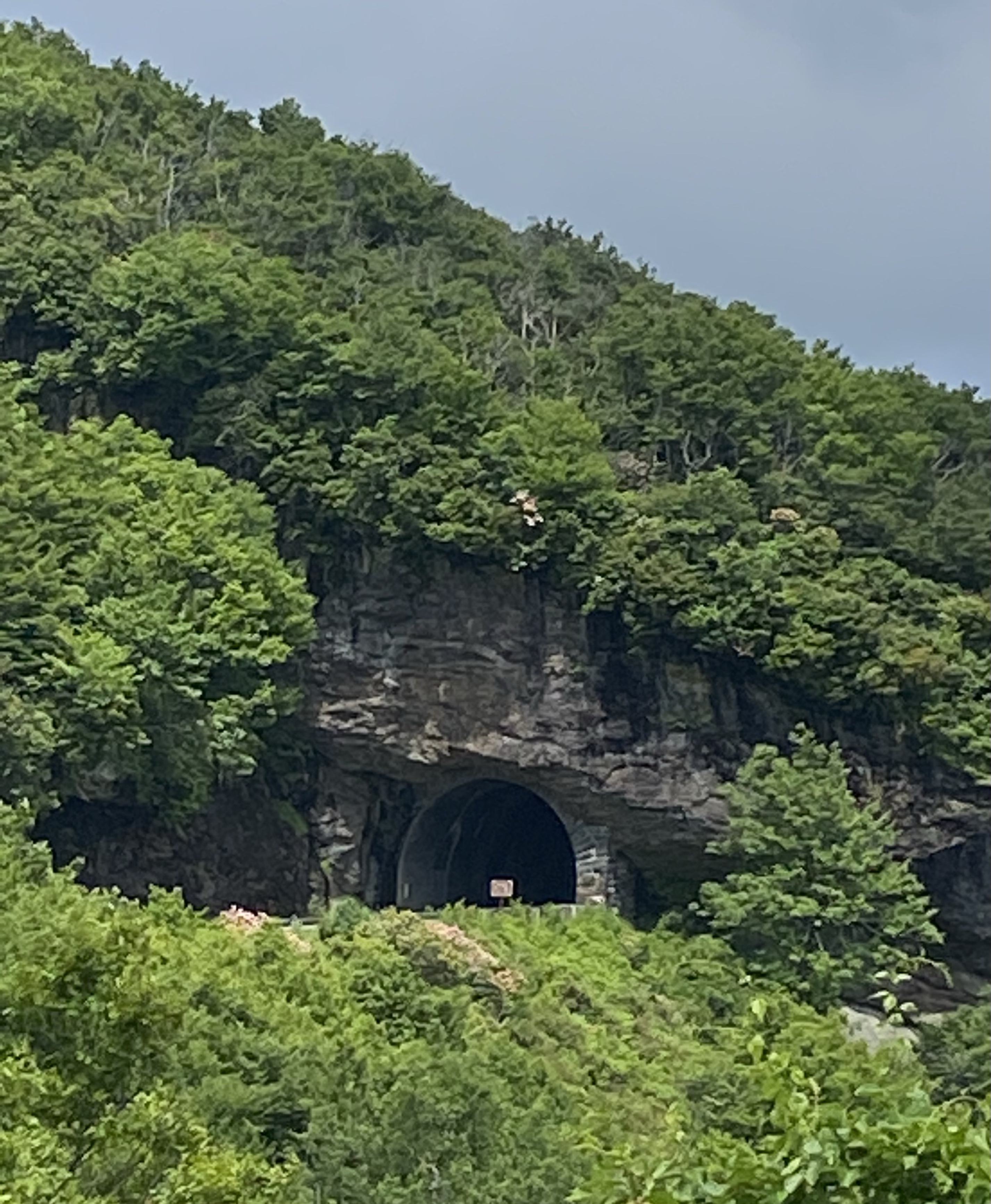
Craggy Pinnacle, elevation 5,817′, can be driven through via Blue Ridge Parkway tunnel or hiked to the top for epic 360 degree views.

Visiting Craggy Gardens, north of Asheville, NC and just off the Blue Ridge Parkway, I was reminded that not only can humans survive ramshackle environments, but also a wide array of plant life can likewise do the same. Craggy Gardens are part of the Great Craggy Mountains, or “the Craggies,” which is a rock-filled area of approximately 194 square miles in the Blue Ridge Mountains that border the Black Mountains.  The highest point of the Craggies is Craggy Dome rising at an elevation of 6,105 feet, but there are several other high peaks of interest in this unique geological and botanical habitat, including Craggy Pinnacle, through which visitors can drive and/or hike to the top along the scenic BRP. 

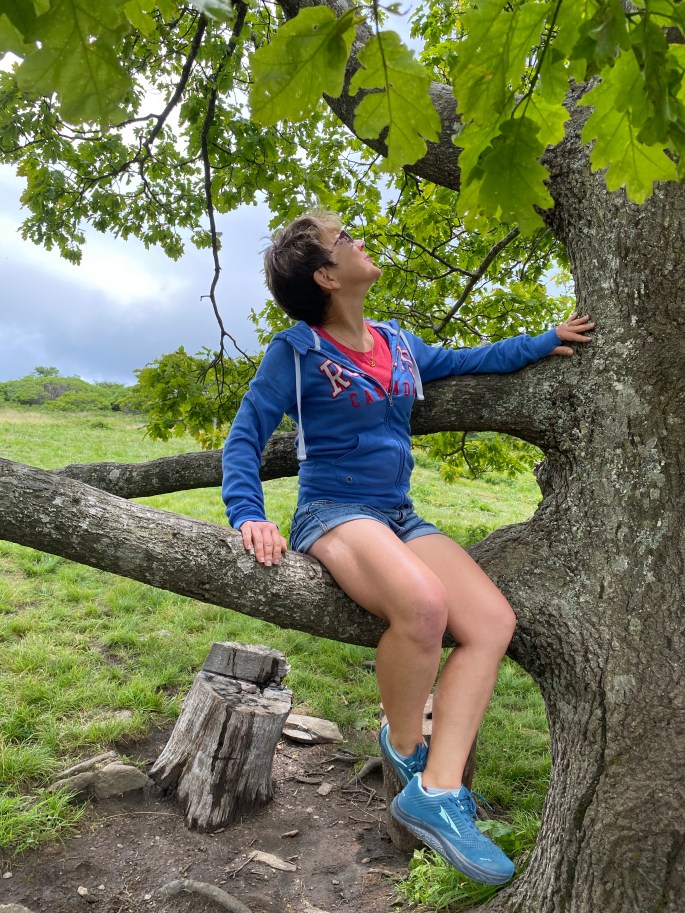
A few ancient symmetrical trees dot the bald of Craggy Flats which is mostly covered in grasses, shrubs, rocks, and few flowering plants.

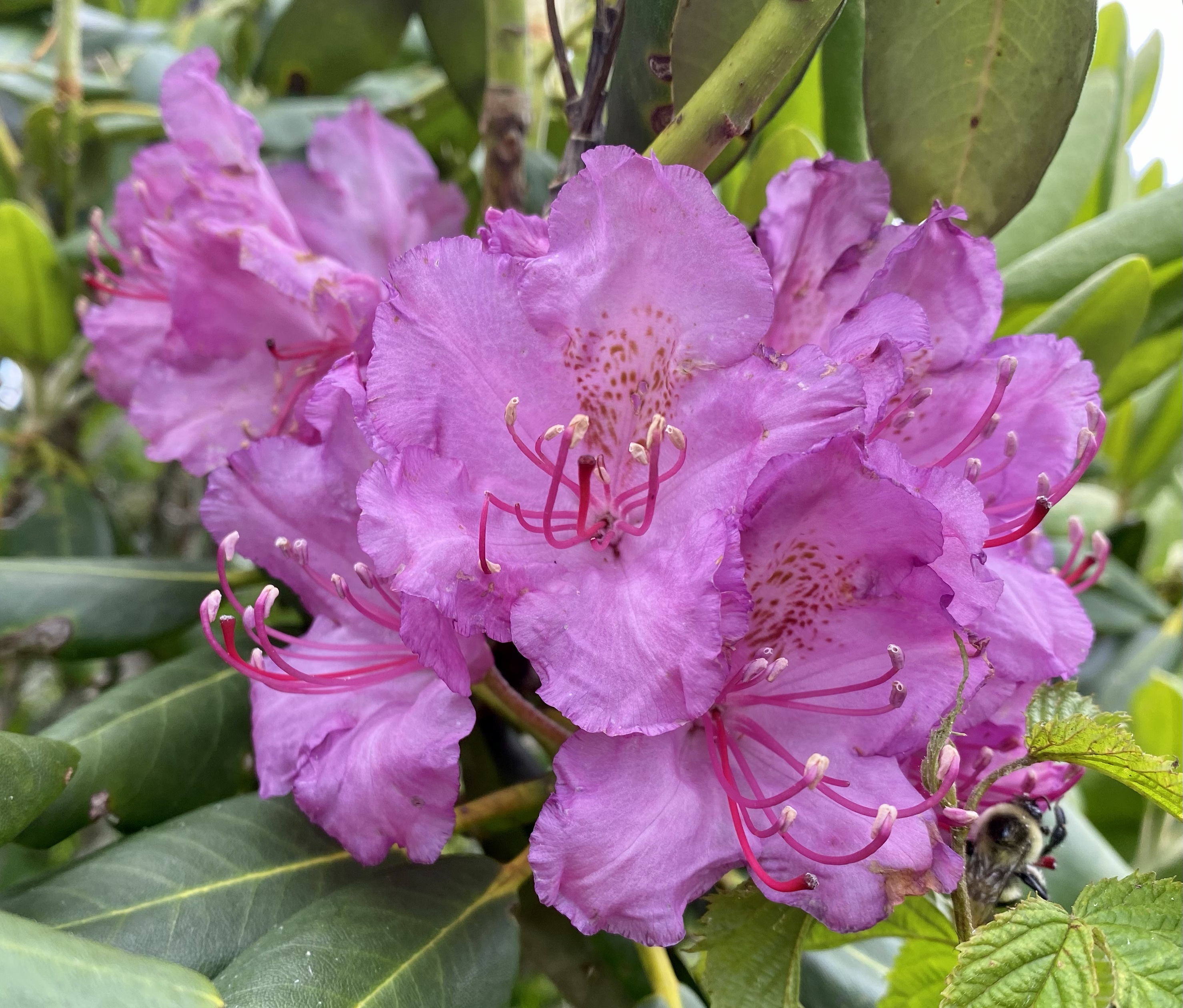
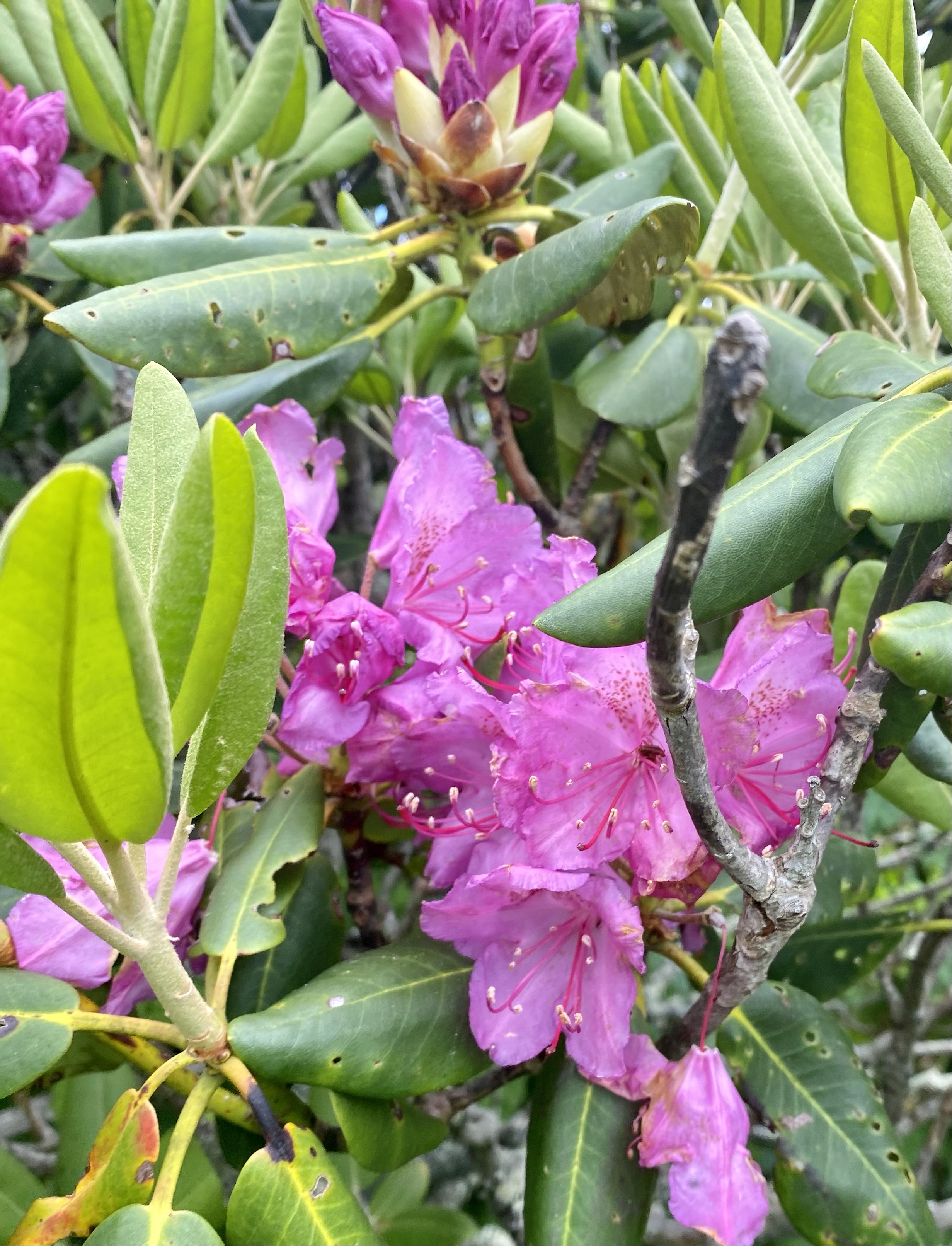
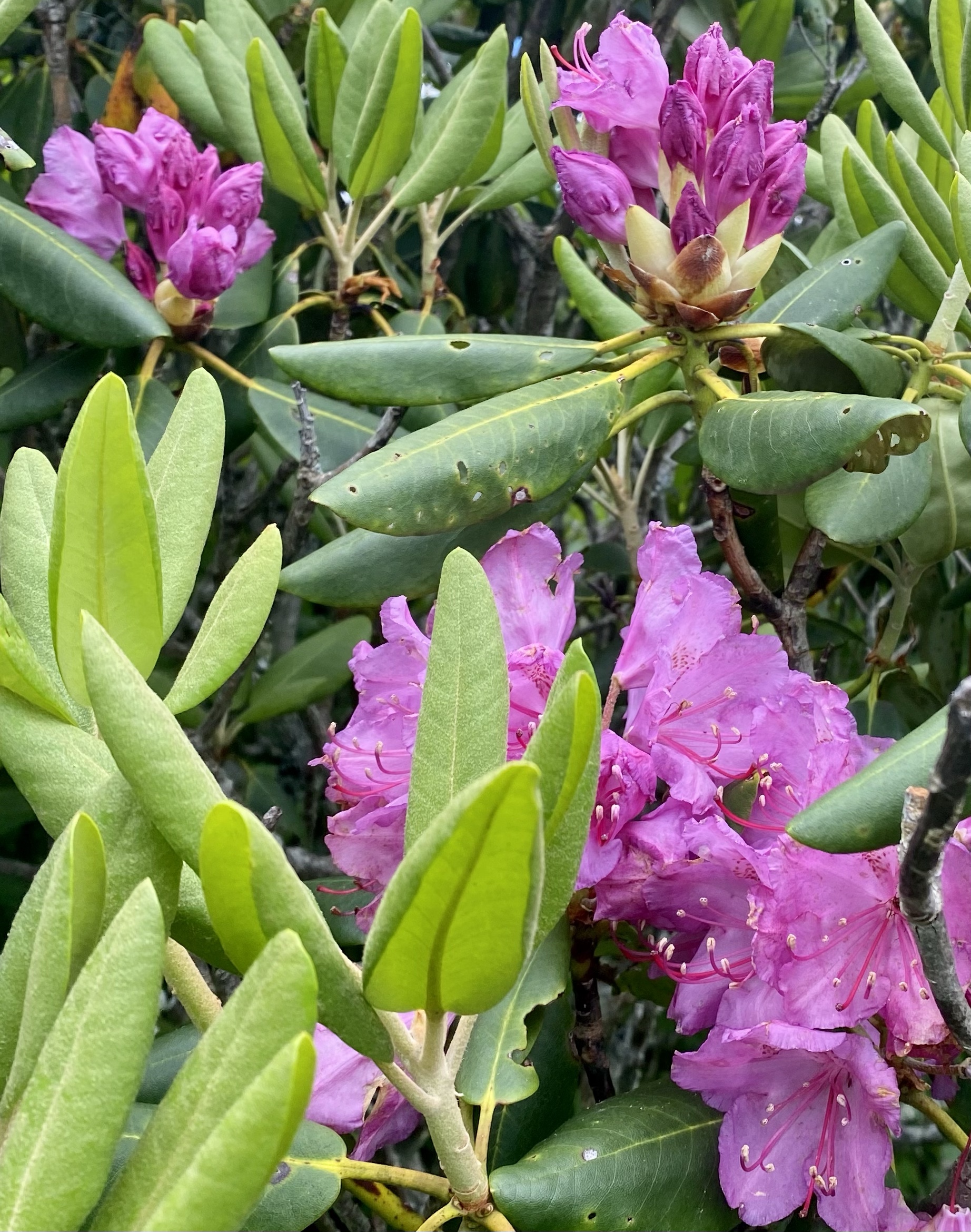
The Great Craggy Mountains are known for its exposed rocky, aka “craggy,” surfaces, high altitudes with spectacular vistas, and an elevated bald known for its rhododendrons, mountain laurel, flame azalea, other colorful wildflowers, and heath.  There is both a picnic area at milepost 367.6 and the Craggy Garden Visitor’s Center at milepost 264.4; plus, there are several hiking trails for a variety of hiking skill levels. Additionally, the Craggy Mountains are known for its twisted trees, May-apple flowers, Turkscap lilies, autumnal leaf colors, the clusters of red berries that decorate the Ash trees in the fall, and its rare and endangered plant life.  In fact, according to the Blue Ridge Parkway Guide, “Craggy Gardens has been recognized by the state of North Carolina as a Natural Heritage Area and has also been recommended as a National Natural Landmark.”

During our visit to the Craggy Mountains, John, my husband, and I stopped at the Craggy Garden Visitor Center.  At an elevation of 5,497 feet, the air was significantly cooler than when we left town, hovering in the high 50s.  Inside the visitor center, a warm fire blazed in a wood burning stove in a far corner with several rocking chairs around its hearth.  Outside, posted along the front wall, was a map of the different hiking trails in the vicinity.  

The Craggy Pinnacle Tunnel as seen from the Craggy Garden Visitor Center.

As newbies, we decided our first hiking experience in the Craggies should be uphill along Craggy Gardens Trail which led to the Craggy Flats at an elevation of 5,892 feet.  Since our visit was in late June, we were hoping to see the renowned Catawba rhododendron; however, John had already been warned that these infamous flowering pink and purple shrubs had come and gone with little fanfare.  Nonetheless, I was not to be deterred in my enthusiasm for the potential adventure that awaited along the trail.

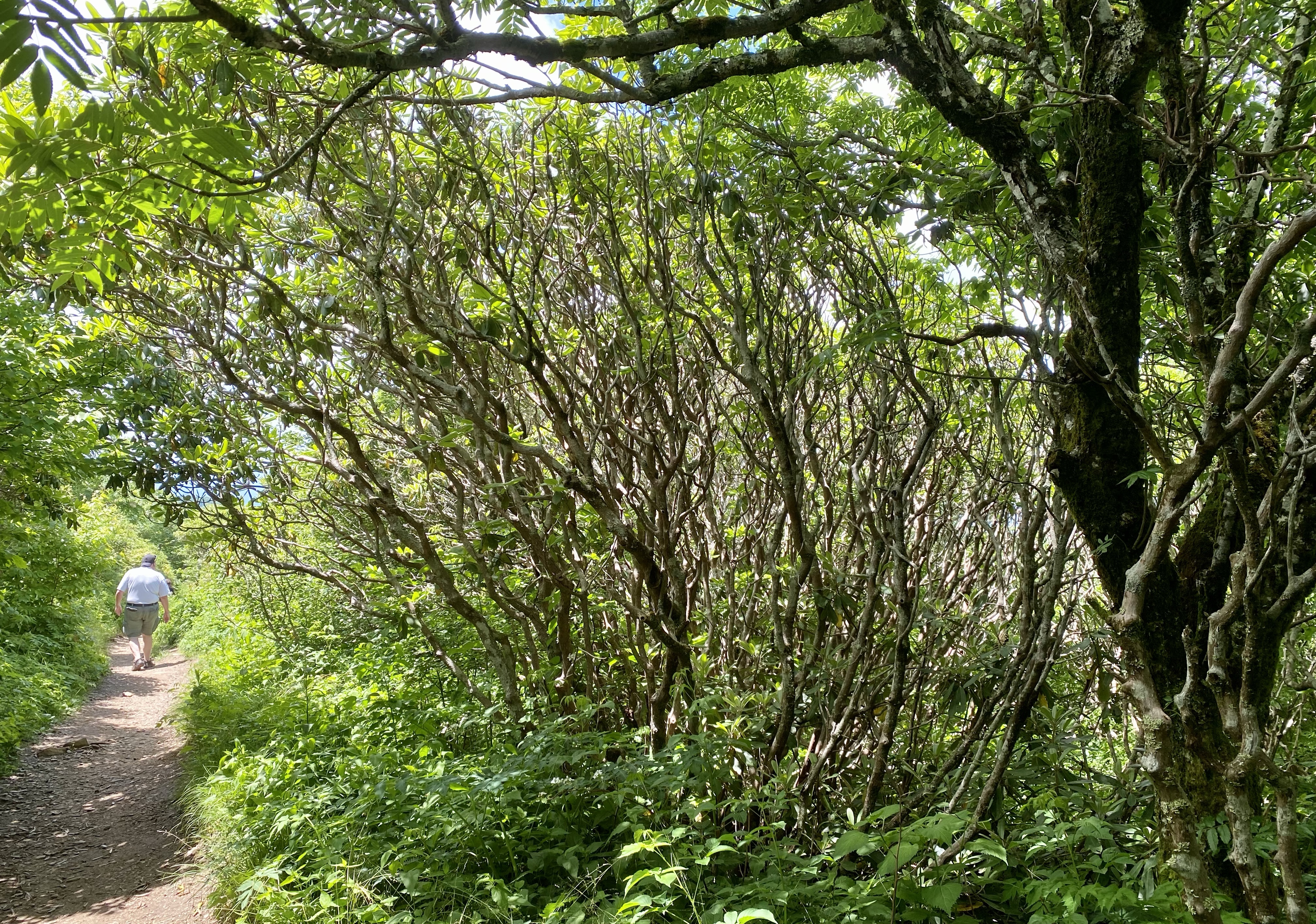
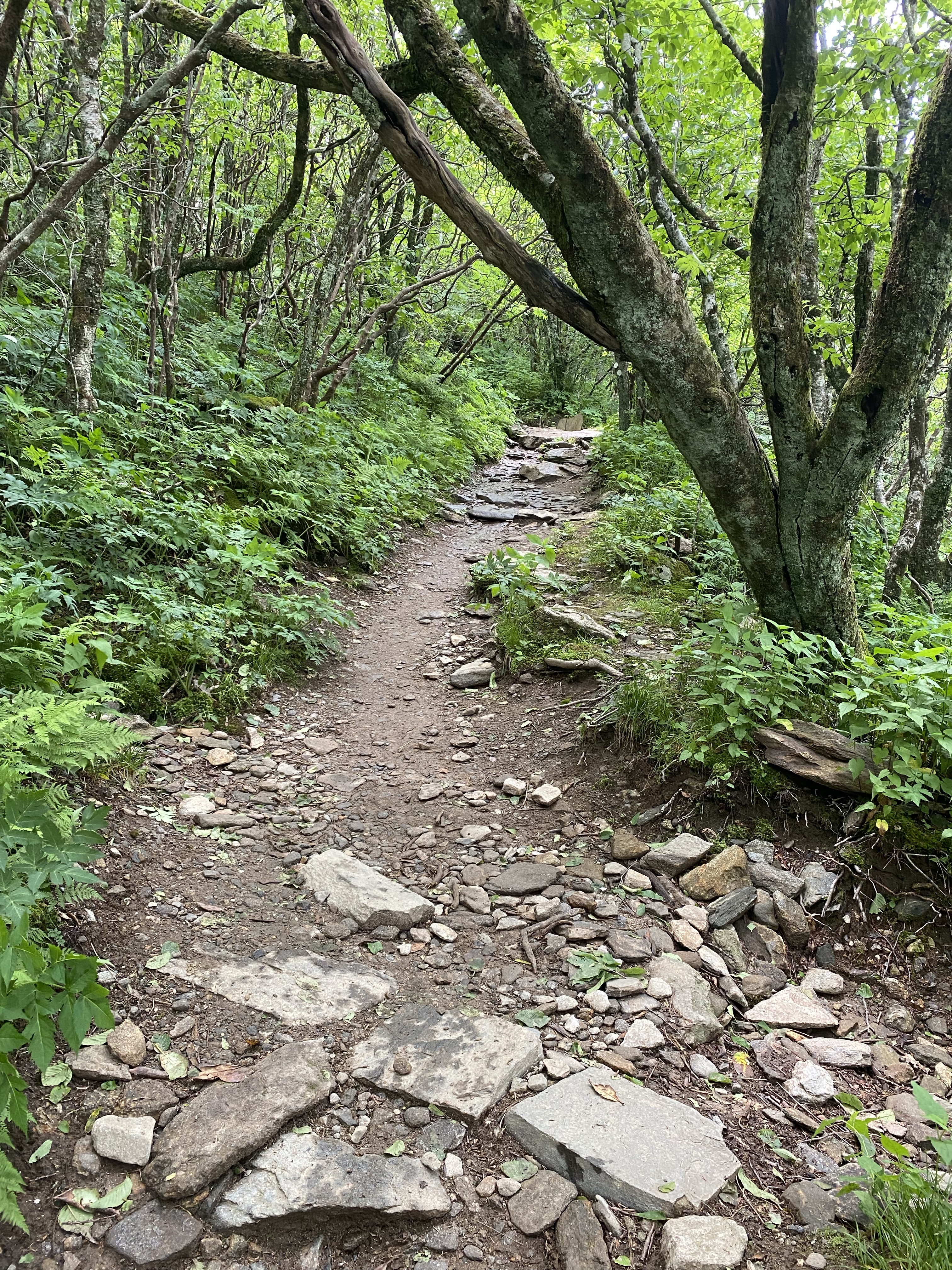
Craggy Garden Trail

  “Nature is a book of many pages and each page tells a fascinating story to him who learns her language. Our fertile valleys and craggy mountains recite an epic poem of geologic conflicts. The starry sky reveals gigantic suns and space and time without end.”–A. E. Douglass

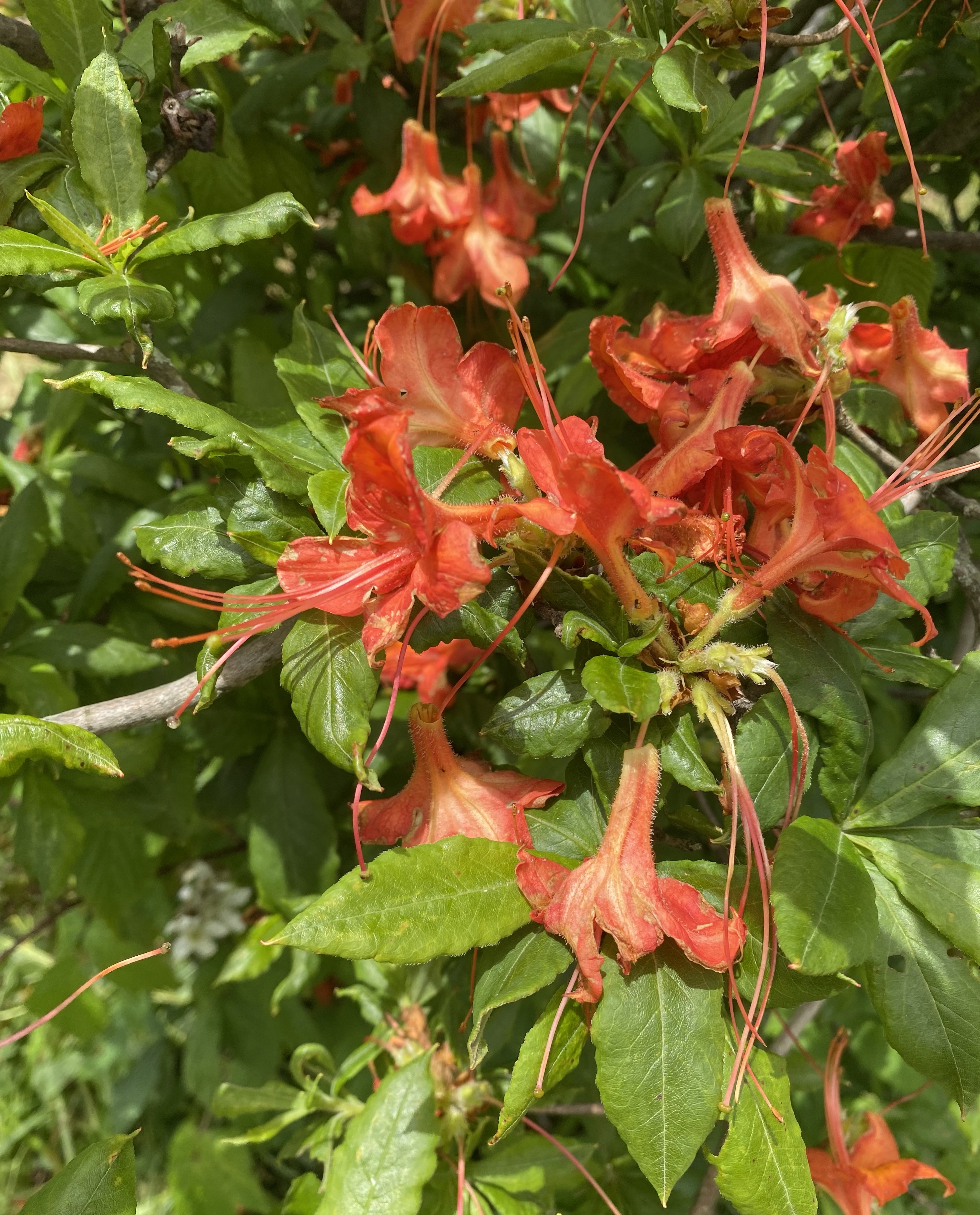
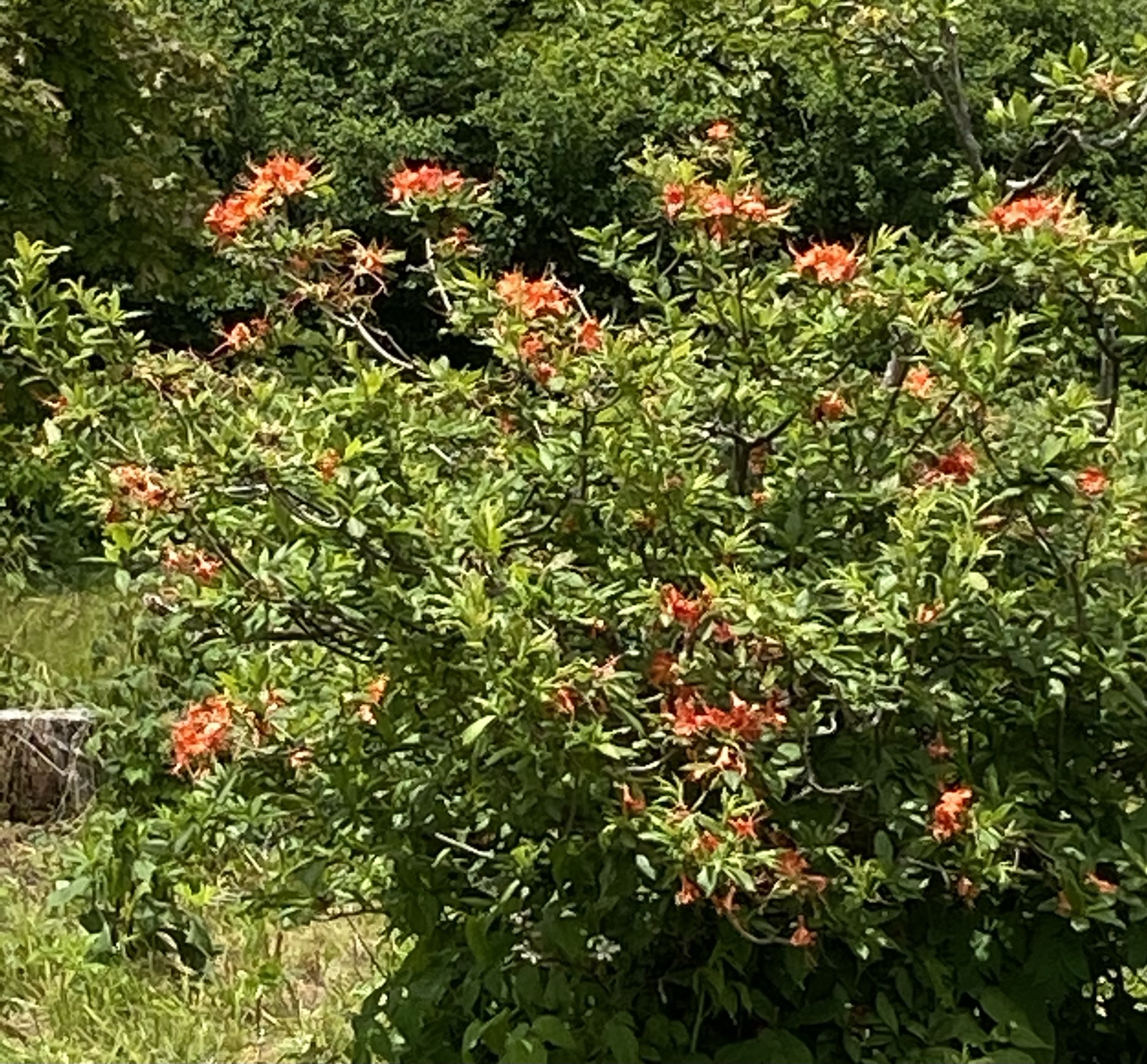
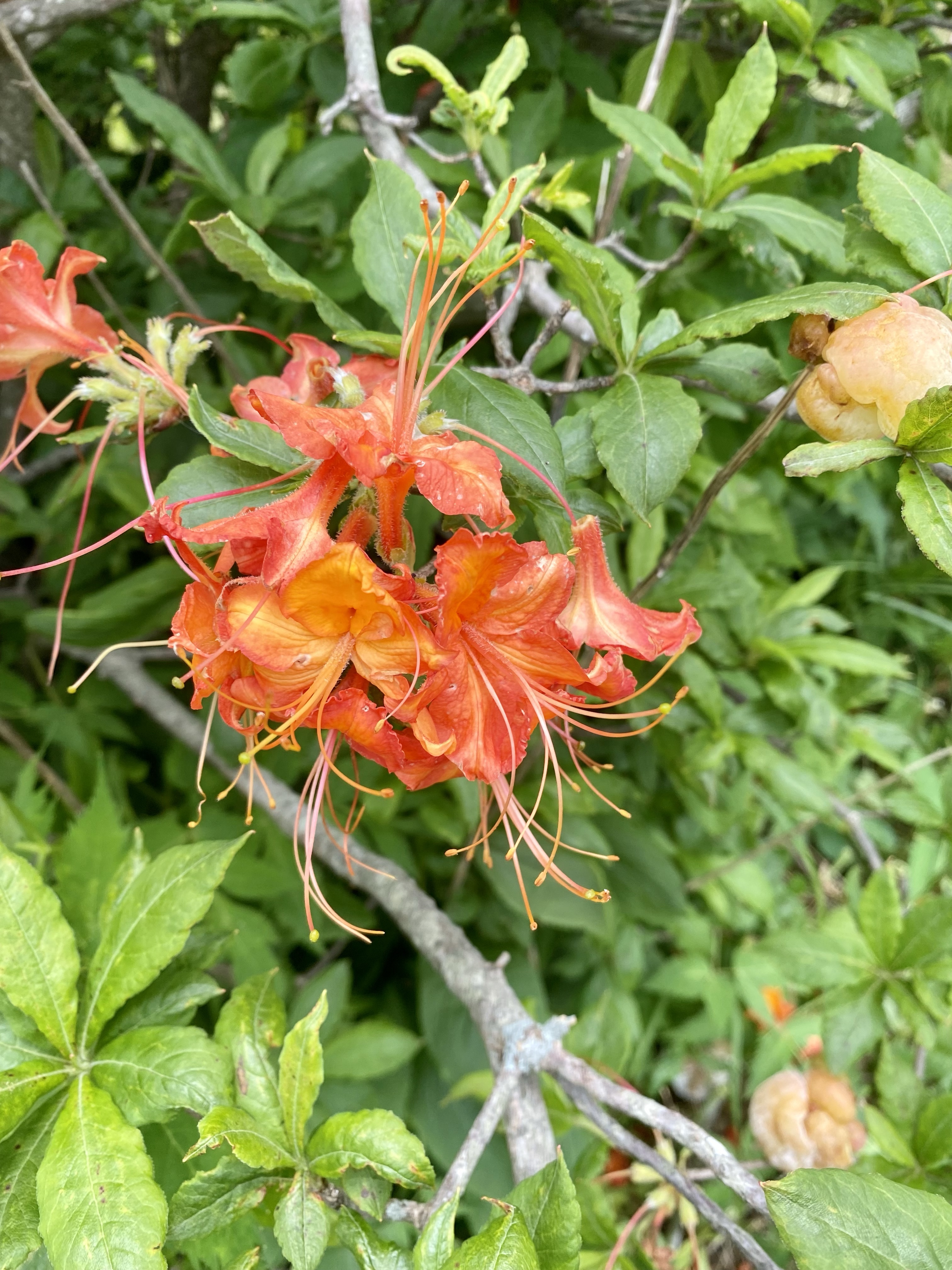
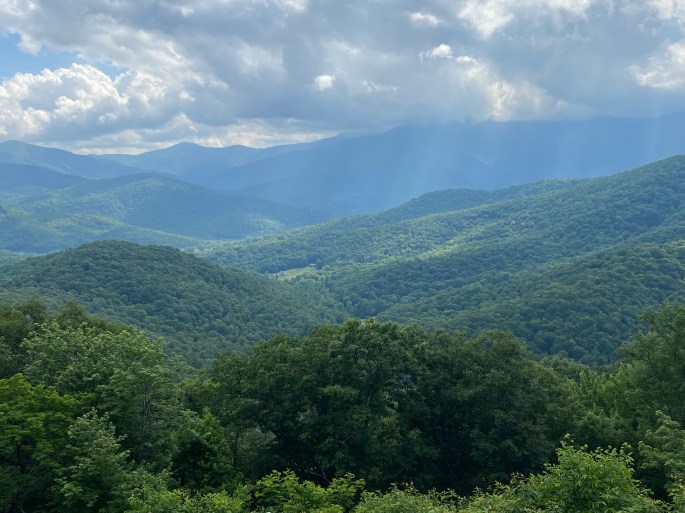
Trekking along the path, twisted trees and shrubs formed tattered tunnels through which we traversed higher into the altitude until we reached Craggy Flats.  This area is signified by a large shelter with paths going uphill to either side of the shelter.  Once at the top, the views were spectacular, allowing us to see layer upon layer of mountain line overlaid with cloud shadows.  While as a general rule, a bald is considered a treeless area, the Great Craggy Mountains’ bald was not entirely treeless as there were a few beauties with their broad limbs fanned out in perfect symmetry.  Mostly, the bald was covered with small flowers, grasses, dirt paths, and a few shrubs that were ablaze with orange flowers–a type of rodondendum called a flame azalea due to its flamboyant flowers.  

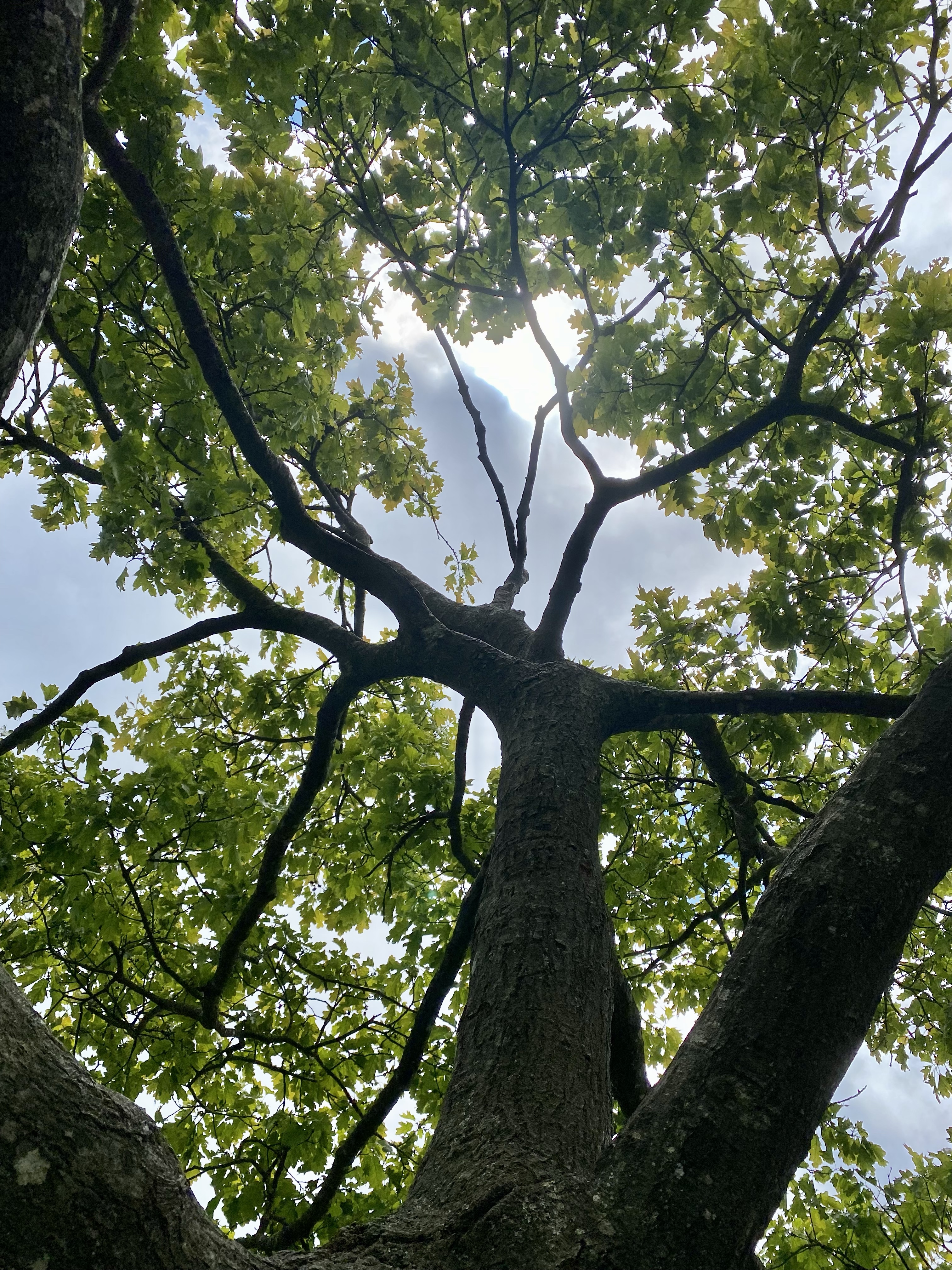
Vantage point of tree limbs

The Craggy Gardens Trail is often identified as one of the busiest trails in the area, but on the day/time John and I chose to explore it, there weren’t too many other hikers.  The hikers we did encounter were friendly and helpful, offering different pieces of advice for locating specific scenery.  In fact, one pair of sisters that I met during my exploration of the bald area remembered I was from Ohio and referred to me by shouting “Ohio!” whenever they found something of interest along the trail they thought I would want to see. 

The search for the Catawba Rhododendrone

On the way down from the bald, at the base of the flat, was a rhododendron upon whose backside (the back of the official Craggy Gardens Trail) was covered in purple Catawba rhododendron blooms!  I trotted back up the off-the-beaten-path to the top bald where the two sisters were admiring the flame azalea. I recalled they were looking for Catawba blossoms to photograph, and I wanted them to know about the hidden purple gems I had just found.  Excitedly, I led them down the hill while they readied their cameras; then I headed back to a shelter area where John was resting.

It seemed that while I was helping the sisters find rhododendron, John had made an acquaintance with a hungry squirrel that had discovered an abandoned banana peel.  It was quite the scene as John attempted to move in closer with his camera to video the squirrel. Meanwhile, the squirrel entertained John with its acrobatic attempts to eat the inside of the peel. It was certainly an “appealing” sight!

After the squirrely entertainment, John and I meandered down the hill to a gazebo overlooking the mountainside.  If we had chosen to continue further downhill, we would have traveled into the official Craggy Garden Picnic Area, but since we still wanted to visit Mount Mitchell, a bit further down the BRP, we chose to retrace our steps back to the visitor center.

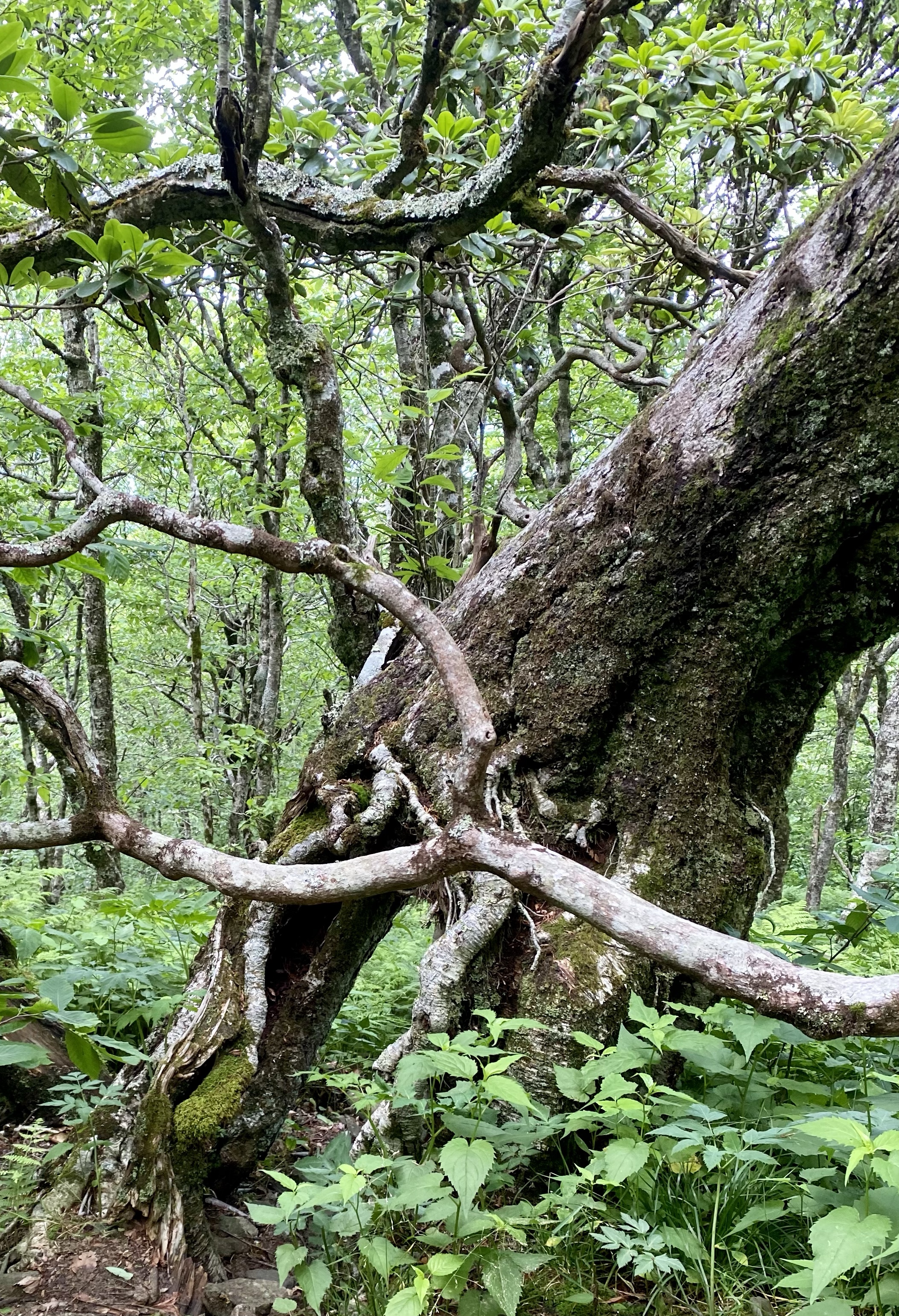
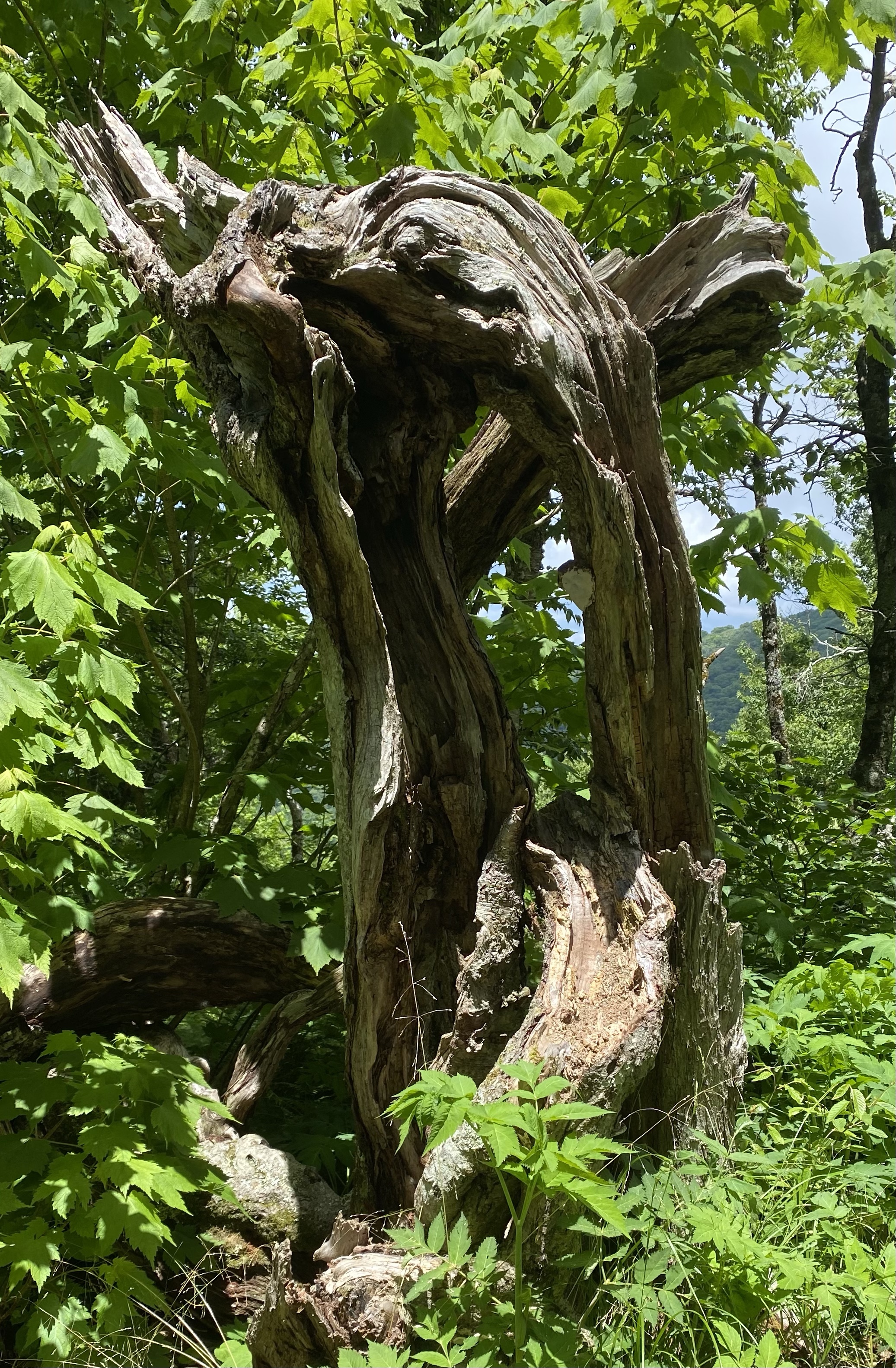
Walking back allowed me to more thoughtfully take in the gnarled trees and shrubs with roots winding over, around, and sometimes even through the rocky and rugged terrain.  Several roots appeared to have a large hole at the base of their trunks, and they still seemed to support life.  In fact, it was a marvel that any life at all could be supported in such a craggy area.

It further occurred to me that most lives–at some point in time–become rocky, rough, and even craggy, like several of my past students’ lives.  The miracle is that no matter how broken and stony life becomes for any of us, we have the ability to survive. Like the Craggy Mountain plants whose limbs twist this way and that to find the sunlight while their roots lengthen and stretch to find nourishment and water, we too, through faith and perseverance, can find ways to stretch, grow, and resiliently root into sources of life-sustaining nourishment.  Even if our roots develop a hole of loss, we can still rise up like the trees, shrubs, and other plant life of the Great Craggy Mountains.

Mount Mitchell and the Blue Ridge Parkway: An Inspiration to Soar High

“Mountains know secrets we need to learn. That it might take time, it might be hard, but if you just hold on long enough, you will find strength to rise up”–Tyler Knott 

As a kid, my dad loved to take the family out for a Sunday afternoon drive.  With no real destination in mind, it was a great, inexpensive way to calm rambunctious children. Put us in a warm car (This was the pre-air-conditioning days.) with the windows down, and the bright sun shining, we were all sure to be lulled into sleep–or at the very least tricked into quietude because there’s no sense trying to talk with open windows. 

I couldn’t help but think of those Sunday drives as John, my husband, and I made our way onto the Blue Ridge Parkway while staying in Black Mountain, NC.  Leaving town, we traveled west to Asheville in order to access the BRP. Moon roof opened and windows partially lowered, John and I relished the refreshing mountain air.  The higher in elevation we traveled, however, the higher our windows lifted as the air temperature decreased. Regardless of the temperature, we never tired of the breathtaking vistas along this ribbon of roadway.  It is no wonder that the BRP is often known as America’s Favorite Scenic Drive.

When traveling the BRP it was important to note that there were no gas stations along the way; however, there were plenty of places to hop off the parkway and travel into nearby towns to fill up.  The speed limit was 45 miles per hour, but steep curves and bicyclists slowed down speeds even more.  That was okay with John and me as we enjoyed our leisurely drive.  Furthermore, we couldn’t help but notice, in addition to a plethora of bicyclists, there were large numbers of motorcyclists taking advantage of the challenging, but spectacular winding stretch of road.  There were no tolls on this route, and nearly all of the stops along the way were free with plenty of places to picnic, take social media-worthy photos, hike/walk, or simply rest, relax, and take in the majestic scenery.  With mile markers and signage along the parkway, attractions and overlooks were easy to locate and identify. In fact, according to several sources, since being fully completed in 1987, the BRP has become the most visited National Park Service sites. 

With only a couple of days to explore the BRP due to torrential rains at the beginning of our stay, it was hard to decide which sites to visit.  Therefore, before heading to the BRP, I asked several Black Mountains residents for their favorite spots to visit and/or hike.  Mount Mitchell was a clear favorite.  Located about 35 miles north of Asheville at milepost 355.4, we could drive almost to the top of the highest mountain east of the Mississippi.  While driving to the “apex of the Appalachian Mountains,” John and I listened to the Mount Mitchell AM radio station with its delightful, homespun monologue that managed to be both entertaining and chock full of information. 

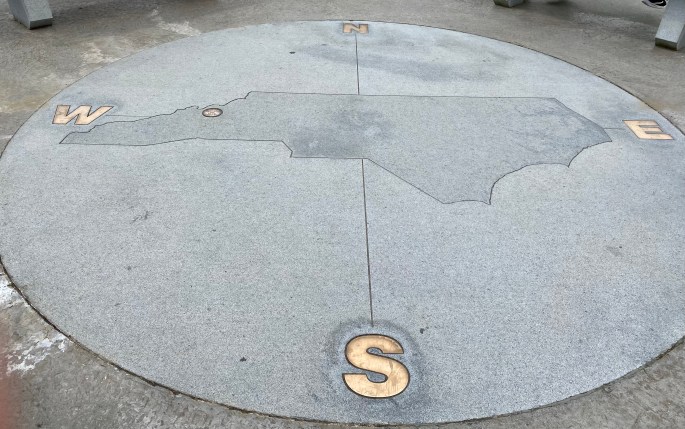
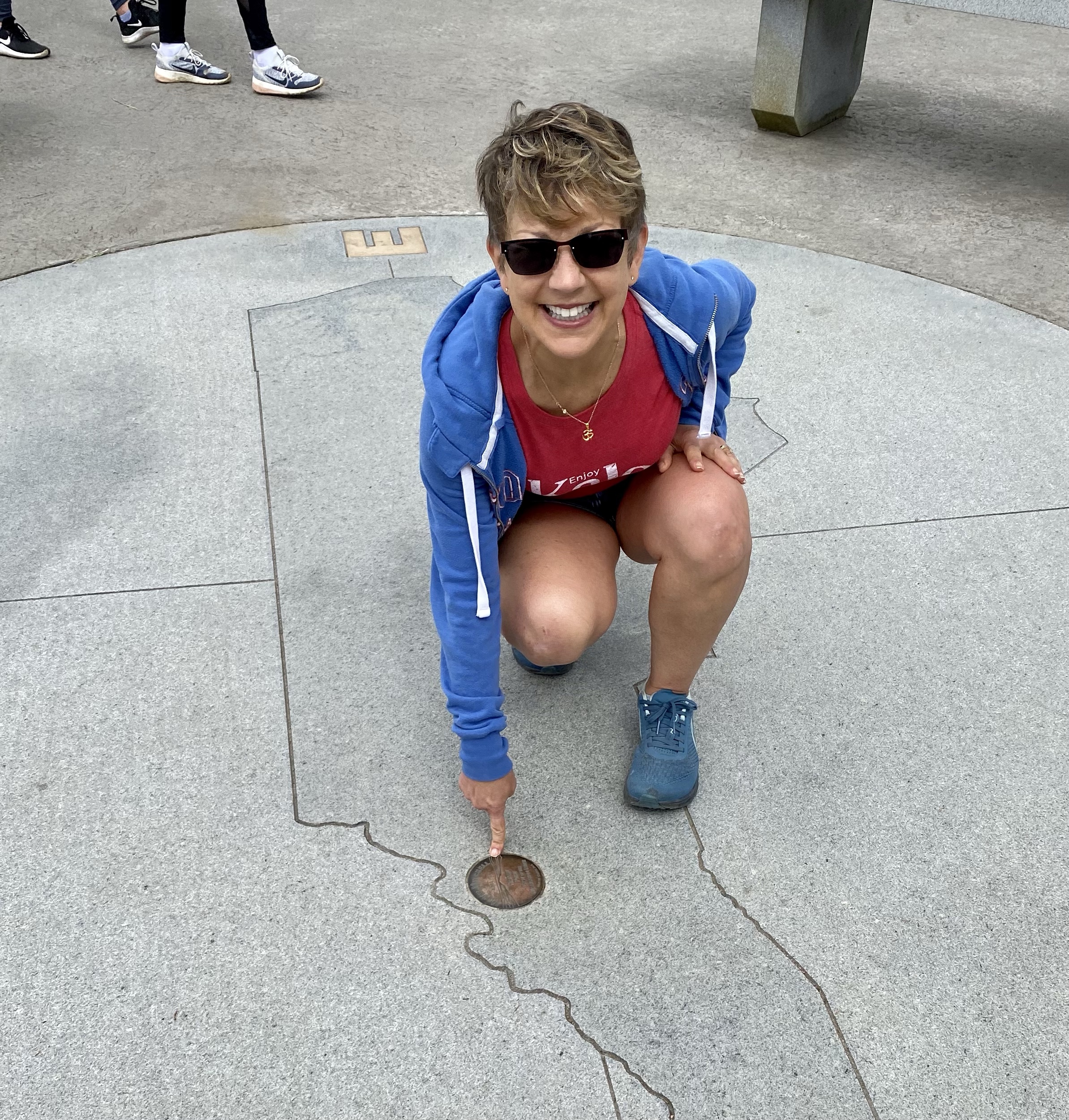
This marker shows the precise highest point east of the Mississippi.

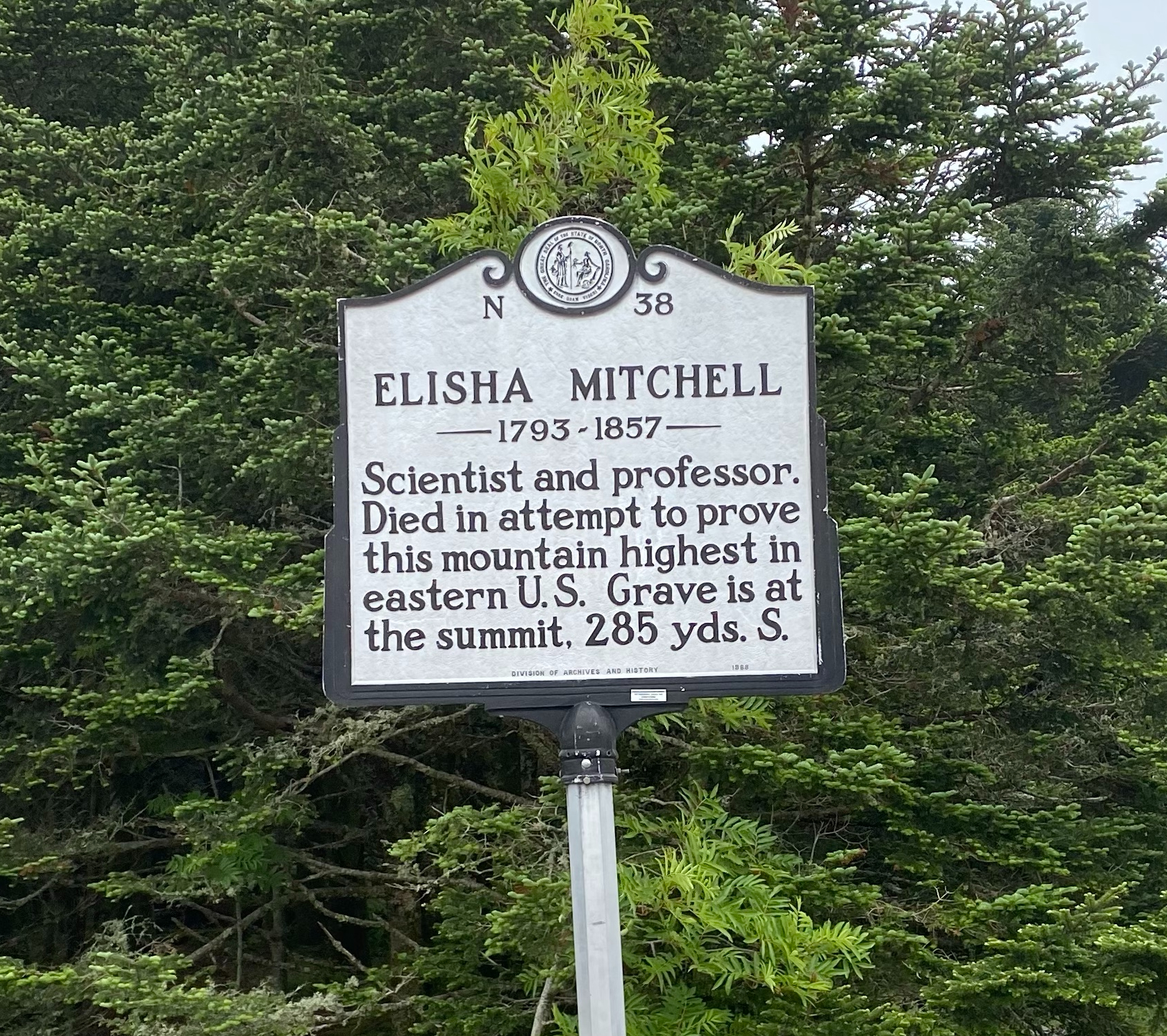
Of interest, Mount Mitchell is one peak located in the J-shaped Black Mountains which are considered part of the Blue Ridge Province of the Southern Appalachian.  It was once known by the Cherokee as Attakulla, which means “leaning wood” or “wood leaning up,” and was later named Black Dome by white settlers. However, the name officially changed in 1858 to commemorate Dr. Elisha Mitchell, a geologist, educator, Presbyterian minister, and beloved professor at the University of North Carolina, who passionately pursued his belief that Mount Mitchell was the highest peak in the Appalachian Mountains.

Dr. Mitchell’s story is epic and full of intrigue.  In fact, I could write pages on his story alone, but I’ll keep to simple facts.  Using barometric readings, mathematical formulas, as well as repeatedly journeying all over the mountainous terrain, Mitchell labored for years to prove his hypothesis. Sadly, in his zealous pursuit, Mitchell slipped and fell 60 feet into a pool at the bottom of what is now known as Mitchell Falls, ultimately hitting his head.  It is believed he died instantly.  Mitchell’s trail was doggedly tracked and his body found days later by well known mountain guide and storyteller, “Big Tom” Wilson, who had guided Mitchell on previous expeditions.

Without any of the modern technological advances, Mitchell’s work estimated the summit to be 6,672 feet. While scientists now know that Mount Mitchell is actually 6,684 feet high–Mitchell died not knowing how close his calculations were. His body is buried near the summit of his cherished Mount Mitchell to honor the magnitude and devotion of his work to this mountain.

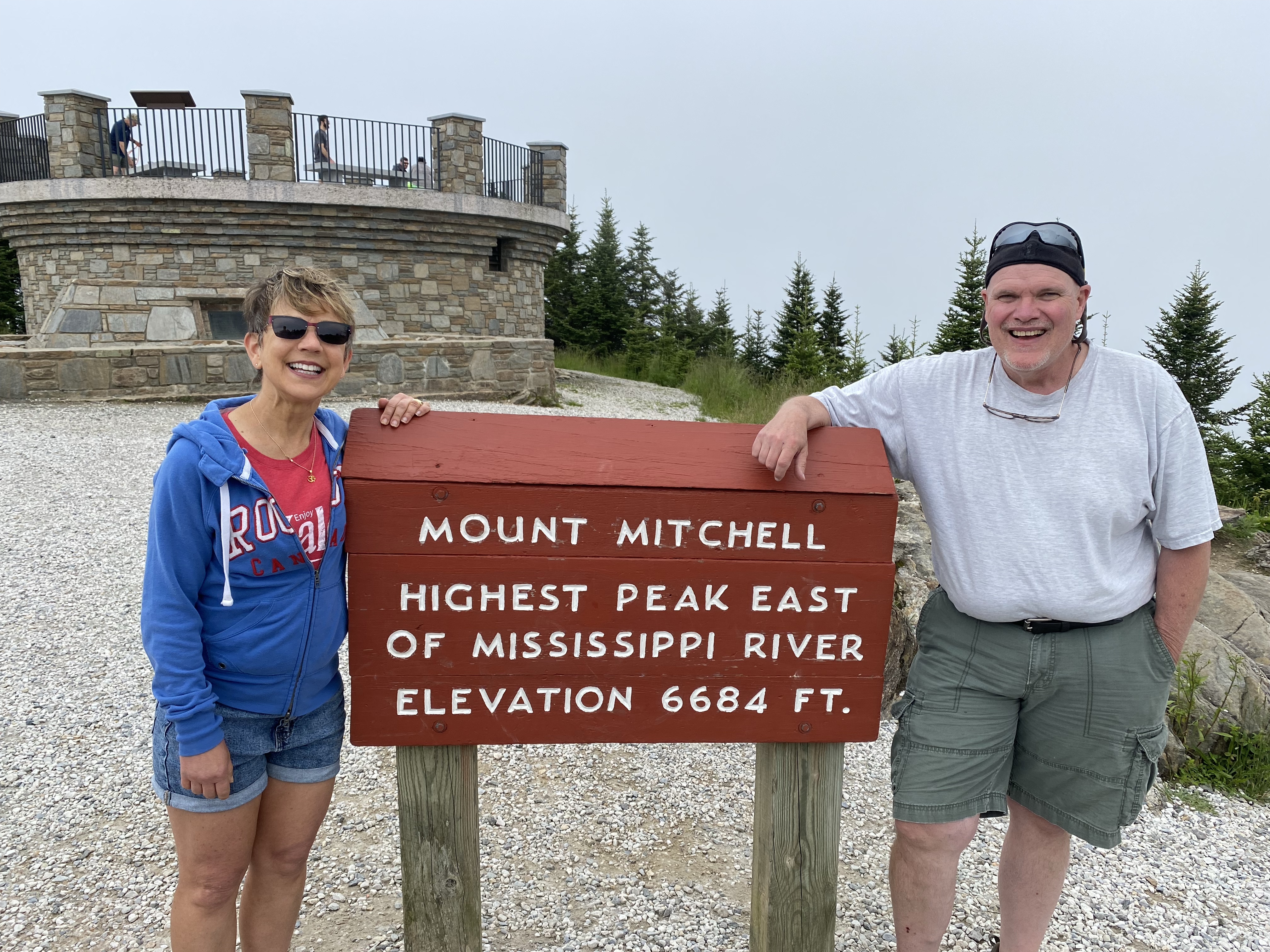
The observation deck and Dr. Elisha Mitchell’s burial site are located directly behind John and me in this picture.
Dr. Elisha Mitchell’s burial plaque. It is interesting to note that this marker refers to Mitchell first as “Reverend,” an indication of faith’s priority in his life.

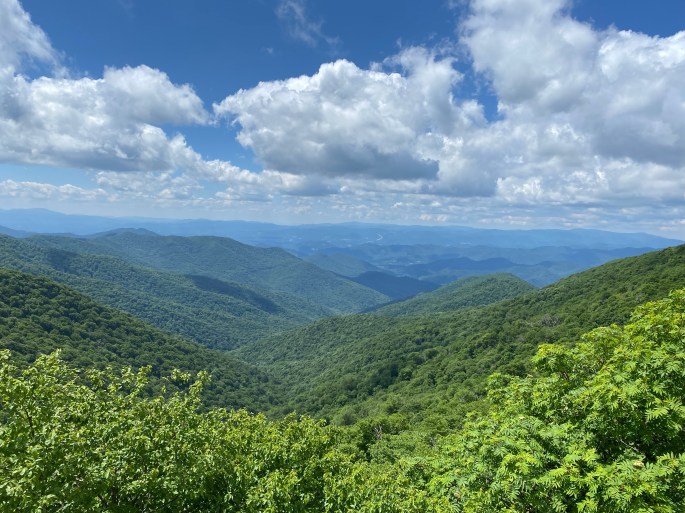
From the parking lot, John and I made the short ¼ to ½ mile steep hike along the paved path to the observation deck at the summit with its 360 degree view.  Initially, our panorama was blurred due to ongoing cloud cover traveling over the multitude of mountain peaks.  However, when the sunlight finally broke through the mist, the views were heart-quickening. According to information read in the museum, we were viewing mountain tops as far as 85 miles away! 

The cloud cover in parking lot when we first arrived at Mount Mitchell around 3:00 PM
Video of the cloud cover of parkinng lot.
Watching the clouds clear, allowing us to see mountain peaks 85 miles away.

No matter how tall the mountain is, it cannot block the sun. Tenacity and adversity are old foes.–Chinese Proverb

I felt as if I was floating on an island in the sky with the sun warming my skin. (It was around 50 degrees at the top, and it is worth noting that the top portion of Mitchell has a climate more similar to Canada than NC with many of its plants and animals reflective of northern Alpine country.) I couldn’t help but marvel at the wondrous carvings of mountain tops–at least that is how the layer upon layer of mountain peaks appeared to me.  In that moment, I sensed the greatness of our Creator, the awe of those old mountains, and felt gratitude for having the ability to be right there in that moment. It was one of those times that I placed my hand on my heart without thinking about it.  Then, realizing what I had done, I quickly moved my hand away–face feeling hot with embarrassment.

“We are now in the mountains, and they are in us, kindling enthusiasm, making every nerve quiver, filling every pore and cell of us.”–John Muir

Sauntering back down the path, only a few feet from the top, John and I took time to pause at the gravesite of Dr. Mitchell.  Reflecting over what I had learned about Mitchell’s life, it occurred to me that he was quite literally committed to maintaining higher ground with his fervent faith and understanding of science.  Even though this caused a rift between Dr. Mitchell and his former student, it did not deter Mitchell from his drive to uphold what the data substantiated and what he believed in his heart to be true.

In the early 1900s, the logging industry nearly decimated Mount Mitchell, raising concern across the state, including those of North Carolina governor, Locke Craig.  This led to the declaration of Mount Mitchill becoming North Carolina’s first state park in 1915.  Present day, Mount Mitchell State Park offers visitors seven hiking trails of varying lengths and challenge levels, a visitor’s center, museum, gift shop, and restaurant–although the restaurant is actually closed for remodeling until 2022. 

With more than 91 species of birds identified, an abundance of balsam firs–fragrant with the scent of Christmas–fresh blueberries, blackberries, and raspberries for visitor picking in August, an extensive number of rare plants and animals, and a number of dramatic historical stories attached to the mountain, I could not help but marvel at Mount Mitchell’s beauty and rich history. The story of Dr. Mitchell’s integrity, perseverance, and determination–along with the unparalleled mountain top views were/are a source of wonder, inspiration, and awe.  A visit to Mount Mitchell definitely leaves you feeling closer to the Divine and filled with a sense of the Creator’s peace.  

“Climb the mountains and get their good tidings. Nature’s peace will flow into you as sunshine flows into trees.”–John Muir

As seen on Instagram @ positiveenergyalways

May There Always Be a June

“Even the prettiest flower will die one day. It’s nature’s way of teaching us that nothing lasts forever.”–unknown

“Hmm . . .” I think, more than say, with a deep inhale as I yawned awake.  It was a rare, cool morning–a break from the typical heat and humidity of early July.  The bedroom windows were open, and I breathed in the fragrance of dewy grass, damp earth, and flowers. It was the lingering sweet floral scent that began a series of reflections regarding the significance of June and its likeness to the human life cycle.

At the time I am writing this, it is the July 4 weekend–marking, in my mind, the midpoint of summer.  Once July 4 begins, it feels like the rest of summer swiftly sails by.  Ah, but June.  June is sanguine–full of enough bright cheer to hold old-man winter at bay.  The early spring blossoms such as daffodils, crocus, and tulips have long passed.  Aromatic honeysuckle begins its fading away as the summer perennials and annuals begin blooming brightly in rapid succession.  July may be full of celebrations, explosive displays–all red, white, and blue–but, I adore June–modest, optimistic, June, and the colorful, unique flowers that blossom and thrive with its invitation to summer.

Photo by Suvan Chowdhury on Pexels.com

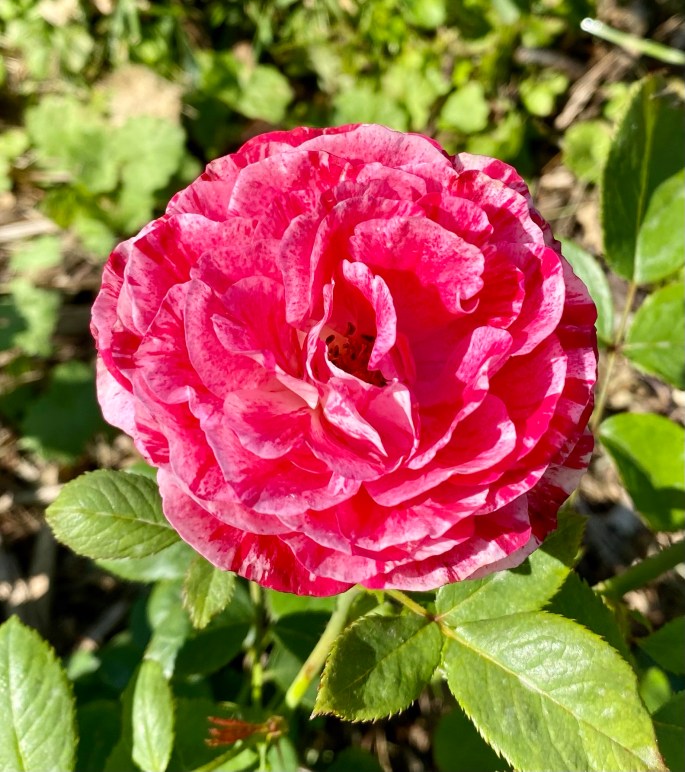
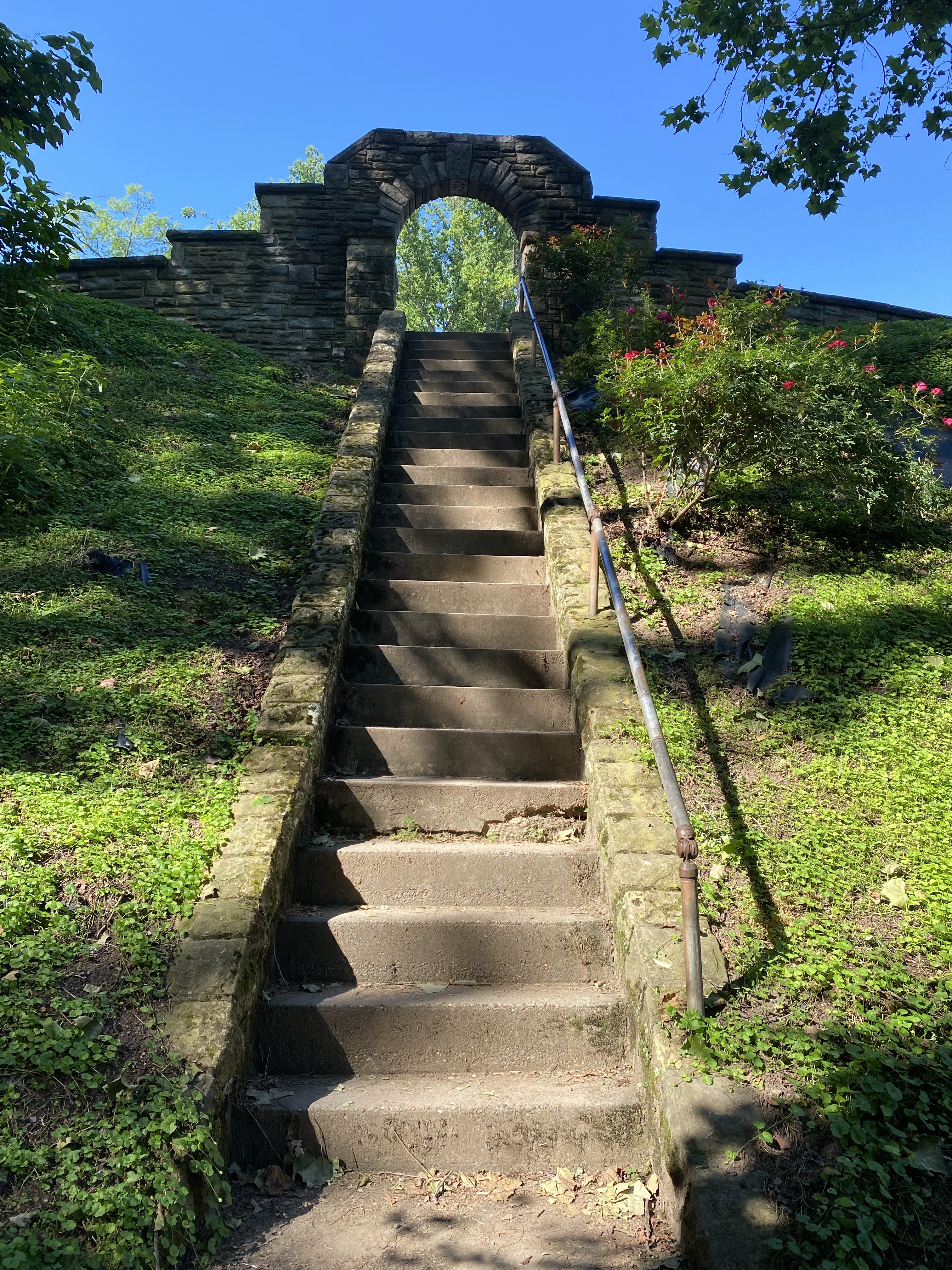
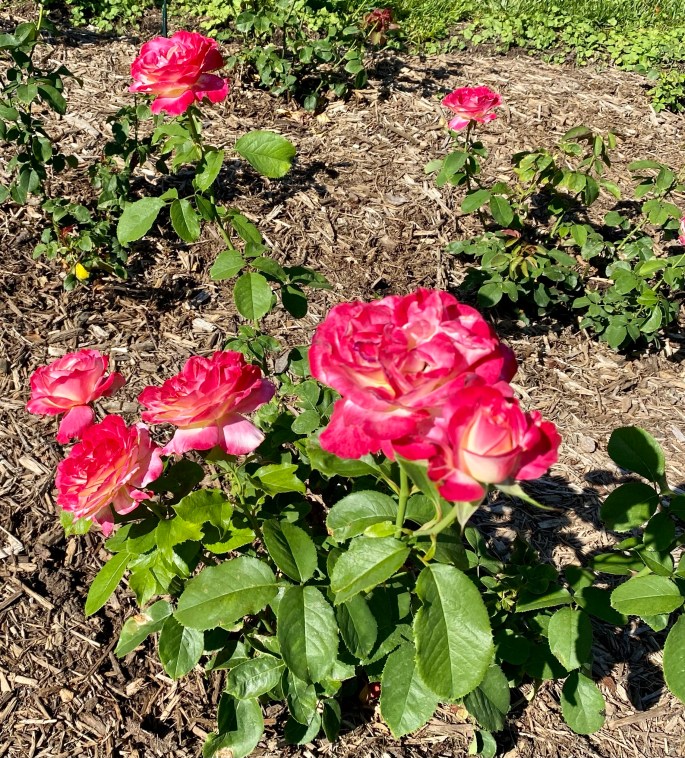
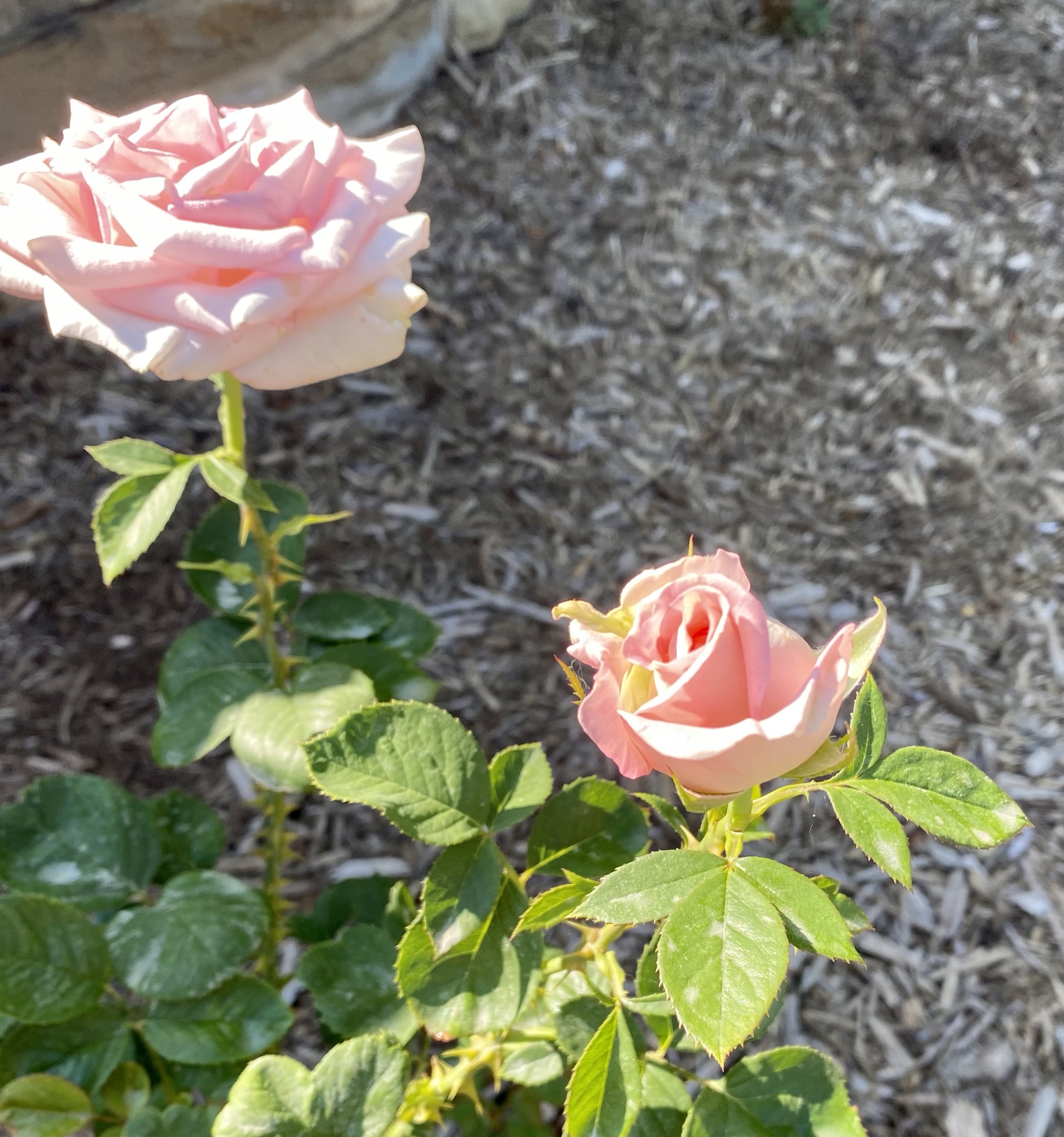
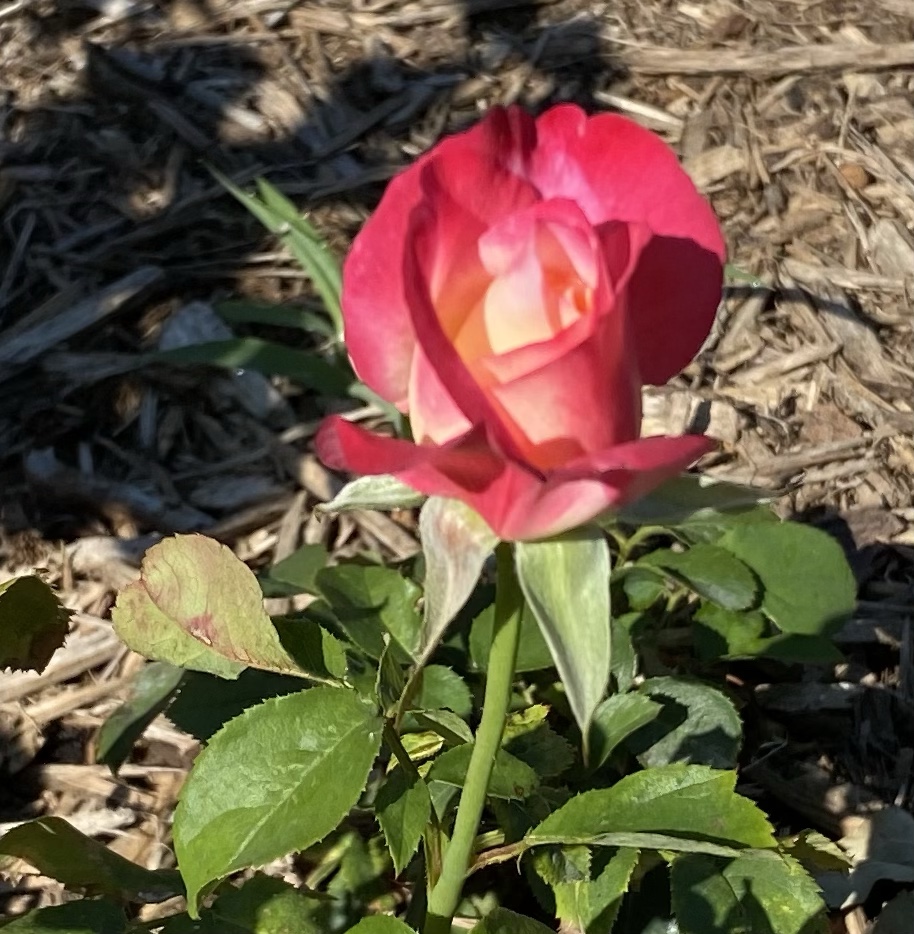
One morning, this past June, I was in Ritter Park to meet a friend for a walk.  However, the friend was running late, so I decided to meander up the old stone steps to the rose garden.  Sunshine, brilliantly glowed in its mid-morning slant, created a kaleidoscope of vivid colors, varying in texture, size, and shape. With no purpose other than to enjoy the moment, I wandered around the garden, drifting from one rose bush to the next, fascinated with all the minute differences not only among the varieties of rose bushes, but also among the flowers within the same bush.  Meanwhile, a gardener attentively tended the blooms.

Examining more closely, I noticed the various insects drawn to the roses. Bees, ants, beetles, moths and butterflies, flies, and even a few mosquitoes crawled, hovered, dove, and darted–busily buzzing about the roses with purposeful missions.  In one of the more isolated sections, closer to the wooded area of the park, I also observed a hummingbird dipping and diving among the various blossoms in a delightful, whirring dance of flight. As I let my gaze wander, my mind relaxed and began to make correlations with June, its flowers, and life.

“A rose can never be a sunflower, and a sunflower can never be a rose. All flowers are beautiful in their own way . . .”–Miranda Kerr

Each flower–from the number of petals to the size of each petal, from the varying life stages of each flower to the variances of color in each blossom–whether it be a rose in the Ritter Park garden or any one of the wide variety of flowers found in resident yards and public spaces–was, and is, a unique creation.  This is similar to the way each person, within the same family, or outside familial ties, is likewise a one-of-a-kind individual.  Flowers go through a dormant and a growing season of varying lengths, but all bloom seasonally, until they come to an end–whatever the life end may be. So it is with June and human life. 

The season of summer officially begins in June.  The air is sweet and heady with the fragrance of flowers. Winds and sunshine warm the air, and rain falls with purpose. Many plants are rooting and establishing while early spring greenery and blossoms are fading away into their dormancy. Daylight reaches its apex in June, while nighttime descends to its lowest point.  

Likewise, several key life events occurred and are honored in my own life each June.  I graduated from Ohio University in June.  Within that same month, I signed my first teaching contract, thus beginning the start of my career as an educator. Two year later, in June, I married my husband, an anniversary we have celebrated for 32 years.  Ten years later, our daughter was born in June.  As educators, my husband and I experience the arrival of each June as the beginning of a dormant period–an opportunity for reflection and renewal before a new school year begins in August.  Births and weddings, ebbs and flows, the highs and lows, and even celebrated endings.  It’s all there in June.

“All the flowers of tomorrow are in the seeds of today.”–Indian Proverb

I am but one person in the garden of many: my family, my work site, my community, and so forth.  All around me, younger lives are taking root, growing, and blossoming into their own personal expressions–making our collective garden more colorful and vibrant–buzzing with energy.  Meanwhile, I can’t help but notice that just as the flowers of June replace spring’s early blossoms, July has taken June’s place.  

Of course, one could argue that like the flowers, humans seem to be planted in dirt and threatened by weeds and all varieties of pestilence. However, when I was visiting the rose garden in June, it was the array of blossoms, in a rainbow of colors, that caught my eye, and made my heart smile.  They too were planted in dirt, confronted by pests and disease, but a gardener was there watching over them just as we have the Ultimate Gardener attending to our needs. 

The flowers offer their seeds and pollen to insects and birds to eat and disperse, ensuring more and different blooms for the future. Likewise, I pray that until my last petal drops, I am offering seeds of hope for others as June does for me.  One day, my memories of past Junes will fade away into permanent dormancy. In the meantime, I will savor the memories made this past June, find nourishment in the full blossoming of the July summer, and, in the weeks to come, accept August as the petals of summer begin to fall away, one by one.  

May there always be a June.

Crabtree Falls: Spotlighting a cascade of blessings in the midst of shadows

“There is a hidden message in every waterfall. It says, if you are flexible, falling will not hurt you!”–Mehmet Murat ildan

Crabtree Falls, just off the Blue Ridge Parkway north of Asheville, NC, is a photographers dream!

The dawning of the day brought forth memories of the day before: light sweat forming, the sound of heavy breathing, the curves of mountainous proportions, the ups and downs, and the taste of sweetness at having reached one incredible summit.  I wanted to do it again. Was it love?  Not exactly.  Instead, I was recalling the hikes from the previous day, including one short, but incredibly steep trek up to the top of Mount Mitchell, the highest peak in the Appalachian Mountains and east of the Mississippi River.  There is a reason for the slogan, “the mountains are calling” has been popularized!

John and I were fortunate enough to recently spend a few days in Black Mountain, NC, a delightful small town in the heart of the Appalachian Mountains.  Named after the mountains that surround it, the town of Black Mountain is a walkable, quaint town filled with over 200 businesses featuring local art, crafts, artisans of types, music, unique shops, galleries, breweries, and plenty of food venues for every dining desire.  Located about 15 miles from Asheville, NC, Black Mountain is also a hub for outdoor activities, but it is the surrounding mountain line that perpetually commanded the attention of John and me.

Our initial goals were to visit both Black Mountain and Asheville as well as enjoy a few hikes.  However, weather often alters best laid plans, and it certainly influenced ours.  In fact, on our first full day, we woke to a low-visibility/heavy fog warning for the surrounding mountains  due to the soaking, overnight rains that continued throughout most of the morning curtailing any hiking plans. 

On the positive side, this allowed us to fully explore and experience the warmth and creative energy of Black Mountain.  As we made our way through the town, browsing through one interesting shop after another, I asked locals to name their favorite hiking spots.  Granted it was a challenging question given the fact there are substantial choices in the area.  Nonetheless, certain locations kept emerging, including Mount Mitchell, Craggy Gardens, and Crabtree Falls. 

Thus, on the following day, John and I made our way to both Craggy Gardens and Mount Mitchell.  However, we were so enamoured with Craggy Garden that we did not spend as much time at Mount Mitchell as we had hoped.  No worries, or so we thought, we would return the following day on our way to Crabtree Falls.  Of course, if you want to make God laugh, tell him you have plans, right?

“I like the muted sounds, the shroud of grey, and the silence that comes with fog.”–Om Malik

As the following day evolved, our plans became, well, foggy, and we were not sure if the conditions would permit us to hike it given how the day started.  In order to get to Crabtree Falls, we had to traverse the Blue Ridge Parkway for nearly 90 minutes–not that this was a bad thing since this drive was, and is, oh-so-scenic! However, on this particular day, we watched with wonder as we drove through great clouds of layered gossamer drifting over the elevated mountainside, enveloping the road–and the scenic view.  

Air, so crisp and refreshing at the lower elevations, quickly became damp and bone-chilling as the temperature plummeted 20 degrees, and our visibility became drastically reduced.  Initially, our plans were to stop by Mount Mitchell before, and possibly after, visiting/hiking Crabtree Falls.  This was an attempt to experience a more clear view from the top of this summit.  Unfortunately, as we made our way up the access road towards the top of Mount Mitchell, the blanket of fog became more dense.  Stopping at the Mount Mitchell State Park Visitor Center for a map, it became clear that the cloud cover was set in for the next several hours.

Since we had never previously visited this part of the BRP, we envisioned that it was only a hop-skip-and-a-jump to Crabtree Falls!  Wrong!  Thirty minutes later, driving mostly through pea-like soup conditions, we finally arrived at Crabtree Falls Campground just past mile marker 339.  Finding the trail and determining the best strategy for tackling it was another story.

We had received what we thought was solid hiking advice from another couple.  They had advised us to start at the trailhead, and make the .9 downhill hike to the falls.  Then, instead of finishing the rest of the 1.5 trail to its end, this couple suggested that we turn around, and return the same way.  This shorter route sounded perfect since we wanted time to return to Mount Mitchell on the off-chance of cloud clearing.  It might have worked, if we had started at the trailhead!

Unfortunately, we did not see this sign until we finished our hike at the trailhead since we mistakenly hiked the trail in reverse!

After happily discovering restrooms in the campground before beginning our hike, we became turned around, and began the hike at the point in which most hikers consider the trail’s end!  We were on the 1.5 side of the trail that gently started and seemed pleasant, but it soon became rugged with thick, rambling roots acting like the proverbial bully sticking out his foot to purposely trip passersby.  In fact, for a large portion of this hike, we worried if we were even on the right path, but the few hikers we did encounter kept encouraging us that we were headed in the right direction.

We’re off to a pleasant start!

We kept traipsing, tripping, and trekking down the mountainside. Despite the air becoming cool and refreshing, we were sweating nonetheless. Along the way, we caught glimpses of Crabtree Creek and its numerous miniature falls creating a soothing natural soundtrack. Still, we wondered, was this all there was to see until another friendly family of hikers assured us that we were close. Our efforts and time, they assured, would be rewarded; however, they warned us that the next section would be a steep descent, full of mud, and slippery rocks.

Fun images along the gentle beginning–which was really the end!

Carefully continuing lower into the ravine, it began to feel as if we were descending into the damp cellar of Mother Nature with a fully opened, unseen spigot in the crevasse below.  Meanwhile, poor John, who had surgery on his knee ten months prior to this excursion, experienced jolts of sharp paint with each precipitous, downhill step.  Persevering through it all, I think we both felt hope rising as our minds whispered, “Wait, wait for it . . .” 

Crabtree Creek flowing alongside parts of the trail.

Crabtree Creek meandering alongside the trail.

Obstacles and slippery footing along the path.

“There’s no better place to find yourself than sitting by a waterfall and listening to it’s music.”–Roland R Kemler

There it was! Gushing, plummeting, and splashing over 70 feet of rock, Crabtree Creek, God’s ultimate shower. We stood in awe, witnessing such a magnificent creation from the hand of the Creator.  Moments ticked by, and then with great dramatic flare, a sunbeam spotlighted the falls.  I felt tugging at my heartstrings.

“Far away, there in the sunshine, are my highest aspirations. I may not reach them, but I can look up and see their beauty, believe in them, and try to follow where they lead.”–Louisa May Alcott

I reflected on the challenges of the hike down–from starting at the trail’s end to encountering all of the rocks, roots, sharp and sudden dips, as well as the slippery sections filled with mud.  What a likeness there was to life’s challenges–especially during the pandemic months.  Through it all, the shadow side of the mountain, like the shadow side of life, Divine Providence was present; and there, in that moment, we were bearing witness to blessing cascading from the heavens above.  

It was all uphill on the .9 return to the campground/parking area, but the worst was behind us.

We now faced a .9 mile uphill slope, but the worst was behind us, and we were not completing it alone.  Mount Mitchell would wait for another time.  For now, we would stay a while, resting beside the cool, celestial waters.

“Be still, and know that I am God . . .I will be exalted in the earth.”–Psalm 46:10

Shaker Village of Pleasant Hill, Gluten-free Miracles, and Corta-Lima: Lexington, KY, part 2 June 2021

 . . . “Shaker Village is reconnecting its campus to inspire a new community of adventurers, learners, makers and doers. . . . Find architectural wonders, plant a backyard garden and taste a new dish fresh-from-the-garden.”–shakervillageky.org

“Have you heard of Pleasant Hill?” I was asked.

In fact, I had not.  Hmm . . .

John, my husband, and I were staying in Lexington, KY, for a few days.  Since this wasn’t our first visit, we wanted to ensure we were visiting new spots.  As I read about Shaker Village, a year-round destination, it seemed right up our alley.  A 3,000 acre attraction honoring and remembering what was, at one time, the third largest community of Shakers in the United States from 1805 to 1910. 

The Historic Centre, The Farm, and The Preserve, all part of Shaker Village of Pleasant Hill, provide activities and events for a wide range of interests.  From history to religion, from science to art, from cooking to gardening, from technological advances to Appalachain ingenuity, from dining to shopping, from day trips to overnight stays, from hiking to boating, from paddling to horseback riding, and so much more, Shaker Village of Pleasant Hill is a one-stop source of inspiration and fun.  Visitors can opt for self-guided tours and activities, or join in one of the multiple-daily group led events. “Inn fact” (pun intended), BBC once named this Kentucky icon a “top hidden travel destination.”

The on-site Inn is unique due to the fact that visitors can stay in traditional guest rooms or suites, but can also choose to stay in one of 13 private cottages that are restored Shaker buildings.  The rooms, whether choosing a cottage or Inn room, make use of Shaker furniture replicas, hardwood flooring, and offer Kentucky countryside views.  While staying overnight, visitors can dine at the on-site restaurant, likewise appointed with Shaker-style furniture.  The restaurant’s menu features from-the-farm dishes and meals–changing as the growing seasons change–making for a unique year-round dining experience.

While visiting Shaker Village, guests can browse all three shops on its campus featuring local foods, art, and, of course, plenty of distinctive Shaker-style pieces and gifts.  Plus, they offer an on-line shop; therefore, allowing you to shop their one-of-a-kind wares at any time.  If shopping is not your thing, there is so much more to do at Shaker Village.

Since the Shakers believed that living a healthy lifestyle was an integral part of their spiritual life, Shaker Village offers numerous out-of-doors adventures.  There is a 36-mile trail system for hikers of all levels of experience, including family-friendly trails or more advanced treks. While hiking, take in a bird observational site, a 50-foot waterfall, High-Bridge, the first cantilever bridge in North America, or the 1866 Frame Stable, where the Shakers provided a change of horses for stage coaches.  If you prefer a more guided experience, most weekends in Shaker Village offer some form of special emphasis experience or trek, focusing on topics such as wildflowers, geology, foraging, birding, conservancy and so much more.  The village hosts seasonal runs, paddling expeditions, and other mind-body-spirit events. Additionally, you can even volunteer the third Saturday of every month to help the village in their efforts to remove invasive species.  There is just so much to do, see, and experience at Shaker Village. John and I were fully immersed and engaged for the entirety of our day there, and we only scratched the surface. We look forward to a return trip to explore more of what this destination has to offer!

The Farm at Shaker Village

Our day-long exploration of Shaker Village, as well as our previous day-tripping experiences, required proper fueling.  Boy, did we EVER find the dream! Miracles Bakery, located on 145 Burt Road in Lexington, was about a 10 minute drive from the Airbnb apartment in which we were staying.  What a miracle it was!  

“Miracles Bakery is a faith driven organization changing lives through the power of food, while helping folks with their journey.”–miraclesbakery.com
Since being diagnosed with celiac disease in my forties, all products containing gluten, wheat, barley, and rye are off limits. Therefore, I rarely ever indulge in truly decadent pastries, much less enjoy quality tasting bread.  Walking into an entire store dedicated to gluten-free baking as well as other allergies and diet specialties, I was overwhelmed with food choices for the first time in many years.  In fact, I thought I would cry.  

Meet Meghan Kerbyson, Manager, at Miracles Bakery.

Donuts, cookies, muffins, breads, cakes, cupcakes, pies, pizzas, pizza rolls, sandwiches, even biscuits–flakey, short and dreamy biscuits . . . .  Paleo, keto, vegan, and other dietary restrictions, such as egg, soy, or nuts?  Not a problem here.  Miracles Bakery truly looked like heaven, but John, who does NOT have any food allergies, and I had to put it to the taste test.  

Drum roll, please. . . We ended up eating brunch there three consecutive days!  Plus, we departed their store each day with a treat, or five, for later in the day.  On our last day, Saturday, their donut day, we brought home ½ dozen of those precious gluten-free and vegan gems.  Sweet blessings from above!  If you, or a loved one, has ANY sort of dietary restrictions, and you’re visiting Lexington, KY, Miracles Bakery is a MUST eatery.  Dine-in or carry-out.  You won’t go away hungry or leave disappointed.

“Corto Lima is a mid-scale Latin inspired restaurant specializing in a new brand of Latin cuisine with a modern interpretation.”–cortalima.com

Another food discovery, while visiting Lexington, KY, was Corto Lima, located at 101 Short Street.  This cozy, stylish corner restaurant has limited seating, but the line of waiting customers that John and I saw on a Friday evening, reinforced what we experienced: a dining experience worth waiting for!  Corta Lima describes itself as a, “mid-scale Latin inspired restaurant specializing in a new brand of Latin cuisine with a modern interpretation.”  According to their website, Chef Jonathan Lundy, creates delectable dishes, drawing inspiration from Mexico, the Caribbean, Central and South America, as well as the American Southwest.  Corto Lima’s menu features housemade artisanal corn tortillas, fresh ingredients, and offering gluten-free, vegetarian, and vegan options as well as plenty of meat-centered dishes.  Additionally, their beverage menu, created by Director of Operations/Owner TJ Cox, focuses on Tequilas, Mezcals Rums, and wines of Latin origin.  In fact, Corta Lima boasts the best Margarita in Lexington!
John and I were challenged over all of the varied and eclectic options.  While pursuing the menu, and asking our server/bartender, Nigel Haddad, multiple questions, we noshed on salsa trio, featuring salsa verde, pineapple serrano, and fire roasted tomato: so, so good!  Eventually, I chose a side of black beans and Quinoa Chaufa, and John gleefully selected freshly made Tamales–two orders!  Surrounded by a warm, sunny atmosphere, plenty of terra-cotta potted plants, a lively room of diners, and an attentive staff, our dining experience at Corta Lima was certainly memorable. We highly recommend it and hope to return!
Nigel Haddad, Bartender and server extraordinaire

A mere two hour drive from the Tri-State area, Lexington is a great jumping off point for mini-getaways at any point of the year!  The town is welcoming to all walks of life. It’s vibrant and full of the vitality and vigor for which Kentucky hospitality is known!  Spend a weekend or spend a week, you’ll find something for nearly every interest in Lexington.  Be sure to hit me up on social media with your favorite Lexington spot or share with me at stephsimply.com!  And, if you visit any of the locations mentioned here, be sure to tell them Steph simply sent you!