The Transformative Power of Art: A Visit to Tamarack

“Do you still feel up for going to the Tamarack?” my husband asked.

A Heavy Heart and a Planned Escape 🚘

Days earlier, we had loosely planned a day trip. The goal was to stop in Charleston for brunch on the way to Beckley, to nose around the galleries and marketplace of the Tamarack, and then return home, making a couple of quick errand stops along the way. Unfortunately, my spirit had been bruised by life, as sometimes happens, but despite feeling down, I agreed to go in the hopes it would be a pleasant distraction.

The brunch and drive along the WV Turnpike were heavy, filled with somber, clarifying conversation as my husband tried to help me clean out the closet of my cluttered heart. Tumbled, but not fully dried from an onslaught of despair, I entered the Tamarack lightened by our discussion, but still damp with distress. My intention from the outset was not to make a purchase, but instead soak up the vibrant and creative energy of the art, and by proxy the artists, who created it. 

Echoing my own feelings, Stella Adler stated, “Life beats down and crushes the soul and art reminds you that you have one.

Entering the Tamarack: A Sensory Shift

Once through the doors, I observed a crowd of people and wondered if this had been a good idea after all. Meandering to the right of the entrance, I surfed the sensory wave. Aromas of Appalachian-inspired cooking filled the air. A long line of people snaked around the fast-casual dining room as I made my way to the ladies’ room. Tamarack’s signature circular shape surrounding an open courtyard created a light and spacious feeling, even during this busy, pre-holiday time period. A multitude of glass windows, adorned with locally designed, gemstone-colored stained glass pieces, radiated an additional cheery warmth. The animated energy of visitors’ conversation added a rhythmic pulse to a popular sing-along soundtrack playing in the background. 

Letting the Atmosphere Settle the Spirit

As I allowed the wave to immerse me, I soon noticed that my breathing and pulse had slowed, tensions were eased, and the emotional flames were beginning to quell. Despite my earlier qualms, I could feel the atmosphere offering a form of calming consolation. The simple act of getting lost in the admiration and appreciation for each artist, and the art pieces they created, nourished my spirit. 

Wandering the Galleries: Beauty in Every Craft 🖼️

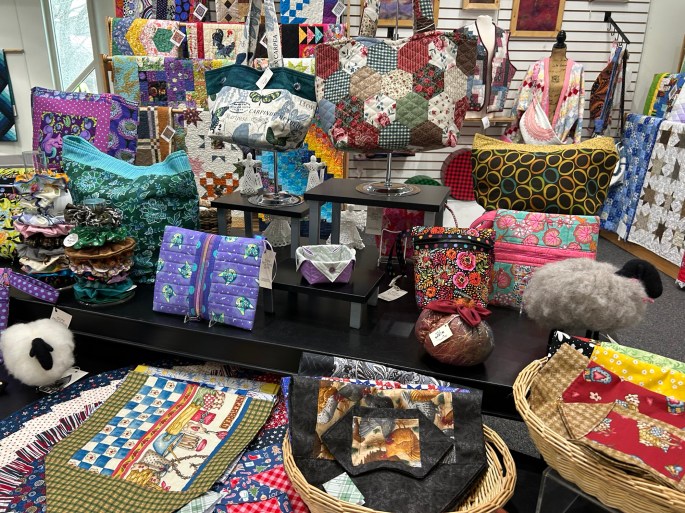
Allowing the natural flow of the galleries to pull me along, I took in richly detailed textiles and exquisite, delicate glass pieces. There were complex and intricate woodworks and artisanal earthen and pottery wares. Tables of WV grown and/or crafted wines, beers, ciders, soaps, candles, and one-of-kind foods/beverages were also available. 

I also stopped by the book nook, filled with locally written fictional and nonfictional books, novellas, cook books, maps, travel guides, and other artfully written materials. Additionally, there was a separate gallery, bright with ample natural light, filled with one-of-a-kind WV paintings, sculptures, prints, and photographs. 

Art as Memory: Echoes of Loved Ones 👵🏼

Allowing the current of creativity to slowly move me at will, the art grounded me into the present moment as I mindfully soaked up the vibrant energy. Different pieces evoked precious memories of loved ones: quilts of my grandmother’s attic, pieces of furniture and toys handcrafted by my husband’s grandfathers, earthen dishes that were reminiscent of family holiday casseroles, paintings and photographs of forested hills during the fall and winter months similar to those I hiked with my siblings and father as a child, and hand sewn creations that my mother once made.

The Healing Power of Art 🎨

I was further reminded of the many art therapy majors with whom I had classes all those long ago years. They often described the important role of art in therapeutic and school settings, a truth supported by research. Creating art and observing art supports mental health and well-being.  It often helps with emotional regulation by creating an outlet in which emotions can be channeled. Art is known to reduce stress and is often used as a tool for creating a greater understanding of one’s emotional atmosphere. Works of art often create a connection/conversation between the creator and viewer, which can provide an opportunity for both personal and collective healing.

Creativity as Community Storytelling

This is because art, such as the works I viewed at Tamarack, is often a reflection of the emotional landscape of a community, region, or even country. How many colorful and varied life stories, events, and personalities, past and living, were being conveyed and connected all under one circular roof? Each stitch, stroke, cut, hammer strike, click, and spin breathed life into each creation that spoke to the heart and soul of human resilience and hope.

In the Company of Strangers: Shared Wonder

As I meandered through the gallery devoted to paintings and photographs, I often lingered on works that spoke to me. Simultaneously, I overheard a pair of women, who were gazing at a section of paintings by a Mingo County artist, speaking with near reverence about their own childhood experiences in the same area. Another couple whispered with one another at nearly every piece, laughing at the memories specific images seemed to evoke. 

Spaces of Belonging: More Than a Marketplace

It occurred to me that art galleries, like the Tamarack, create centers of belonging–gathering places that celebrate the human experience. These transactional spaces aren’t just about exchanging money; they also provide an interchange of ideas and stories between artist, piece, and viewer. Investing in these community hubs is an investment in one another, supporting each other emotionally and culturally. People leave the Tamarack with a taste of what it means to be Appalachian.

A Quiet Affirmation

Standing in that gallery, soaking up all of the intriguing and thought-provoking images, an employee shook me out of my reverie by asking if I was enjoying my visit. I nodded, stating that I was feeling lighter and more grounded than when I entered. She unpretentiously declared, “Art can do that for you.”

We chatted a bit more before I moved on to look through the prints outside the gallery. I still did not have any answers to my specific concerns, but I did have a sense of peace that comes from being heard. Not that I was literally heard; rather, the struggles and joys, the sadness and celebrations, and the wonder and the awe that went into creating these pieces “heard” and spoke to my own related emotions. It was the beginning of healing and hope that often happens when surrounded by reflections of inner beauty.

Leaving with Lightness and Hope

Thomas Merton is credited with stating, “Art enables us to find ourselves and lose ourselves at the same time.” My visit to Tamarack allowed such a juxtaposition: by surrendering myself to time spent with art, my capacity for healing renewal was possible. It served as a reminder. When we immerse ourselves in the present moment, we kindle the still, small voice within, our hearts and minds steady at the sound of this whispering inner-knowing, and we can rest assured we are being held even when the heaviness of life weighs us down. Perhaps that is the gentle promise held within art: when life seems overwhelming and hopeless, the beauty of art and/or the creative process is there to offer us wings of hope for rising once more.

Running Toward Hope: A Marathon of Movement and Love

Every run is a work of art, a drawing on each day’s canvas. Some runs are shouts and some runs are whispers. Some runs are eulogies and others celebrations.”—Dagny Scott Barrios

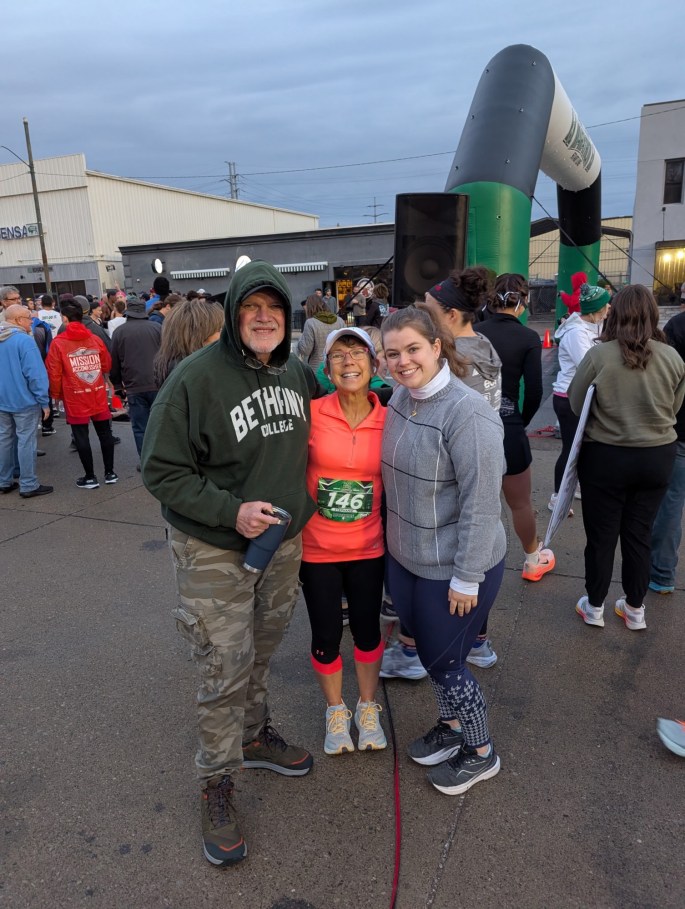
A group of three people, including a man in a green hoodie, a woman in a bright orange top with a running bib, and a woman in a gray sweater, gather smiling at a running event in an outdoor setting with other runners in the background.
Just before the start of the marathon I took time to get a hug from my two biggest supporters throughout the training process: my husband, L, and my daughter, R.

A Morning of Reflection and Gratitude 🌅

A light mist fell as an overcast gray morning began to chase away the night. I stood quietly in a throng of animated runners, taking deep breaths as reflection and gratitude washed over me. Months of preparation had led to this moment, and I felt thankful not only for my health but for the loving support that carried me here—to this celebration of movement, resilience, and connection.

Running as an Act of Hope ✨

It had been ten years since I last pinned on a bib for this distance, and my body hummed with anticipation, hope, and belief—the belief that movement is for everyone at every age, and that it is, in itself, an act of hope. I was about to embark on an emotional 26.2-mile trail of faith that became more about the people who supported me than the miles themselves.

Discovering Joy in Gentle Movement 😄

I came to running later in life, and it wasn’t easy at first. Only when I learned to approach running gently—to let go of preconceived (and societal) notions of what running “should” be—did I discover paths full of freedom, clarity, and renewal. Movement, whether running, walking, dancing, or stretching, benefits body, mind, and spirit. It brings a sense of structure to an often chaotic world and offers a feeling of accomplishment—if nothing else goes right in a day, at least I moved my body. Movement brings us alive to ourselves, our spirit, and, in turn, to the world around us.

The joy, I’ve learned, is in the doing—not in attaching to a pace, distance, or goal. Those things can be part of the experience, but they aren’t required.

A man and a woman embrace warmly in a crowded setting, both smiling in a moment of connection before a marathon.
Maddie’s, my daughter, boyfriend, Connor, flew all the way from Austin, TX to be part of this event. Together, with Maddie, he helped plan the marathon surprise of a lifetime!

Redefining What It Means to Age 🧓

As I neared my 60th birthday, I began to notice messaging that framed this decade as one of limitation. I decided instead to flip the narrative and celebrate the 60s as a decade of possibilities. Why not run into this new decade the way I ran into my 50s—with eyes and arms wide to adventure?

Training with Gentleness and Grace 😌

Since I was already running regularly, I committed to training for a marathon, but this time with gentleness. Instead of a traditional four-month build-up, I created a ten-month plan that encouraged patience, routine, and presence. Twice-weekly strength training and yoga joined the schedule, as did listening to my body and using the run-walk-run method as needed. I also focused on proper hydration and fueling before, during, and after runs. Most of all, my husband and daughter supported me from the very beginning—their quiet, everyday encouragement becoming a steady foundation of strength.

A woman running on a street wearing a bright pink long-sleeve top, black leggings, and a cap, displaying a race number on her waist.
Gentleness was a large part of the 10-month training block that led to this moment of hope and celebration.

Adapting Through Life’s Curveballs 😰

Training for a marathon brings rhythm and structure to daily life—the early morning runs, the long weekend miles that lengthen gradually, and the sweet evening stretches after dinner. But life, of course, has its curveballs: weather shifts, fatigue, scheduling conflicts, unexpected events, and bouts of self-doubt. With age, though, I’ve learned to adapt rather than resist these realities, co-creating a practical, flexible approach to progress.

As my weekend long runs grew longer, my husband and daughter often appeared—driving by, stopping to cheer, or jogging beside me for a short distance. These small bursts of love in action fueled my heart and kept me going. Training, I realized, was less about mileage and more about cultivating fortitude, flexibility, and gratitude—along with a dash of fierceness—all essential life skills carried from the road.

A group of enthusiastic spectators cheer on runners during a marathon, surrounded by autumn foliage and a partly cloudy sky.
Maddie, and my husband, John, often showed up during the last few miles of my Saturday long runs to cheer me on as Maddie is seen here doing during the actual event itself.

Race Day: A Celebration of Love 💖

As the marathon began, the city of Huntington vibrant in energy, rebelling against the lackluster sky. Rhythmic footfalls and nervous chatter surrounded me as runners jostled for position. Warmly dressed spectators cheered, waving handmade signs against a backdrop of burnished orange, crimson, and yellow autumn trees. Little did I know that my daughter had turned this event into an outpouring of love.

Surprises Along the Course 🫢

At the start, my husband, daughter, and her boyfriend—who had flown in from Texas to surprise me—stood cheering. But that was only the beginning. Every few miles along the route, my daughter had arranged for friends, family, and coworkers to appear, waving signs and calling my name. I didn’t realize the scope of her plan until near the end, but each familiar face filled me with renewed energy, gratitude, and joy.

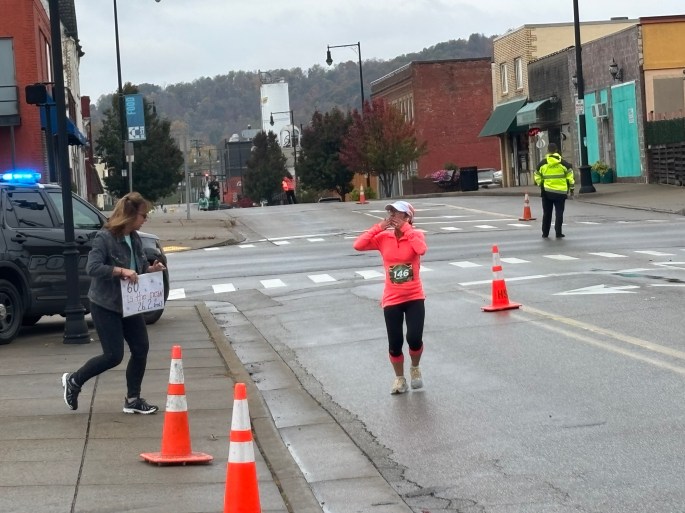
A female runner in a bright pink shirt crosses a street marked by traffic cones, while a supporter holds a sign nearby in a lively downtown setting.
The look of complete surprise when I see my sister, Traci, and her husband, David, around the 19-20 mile mark of the marathon. I had no idea they would show up along the route!
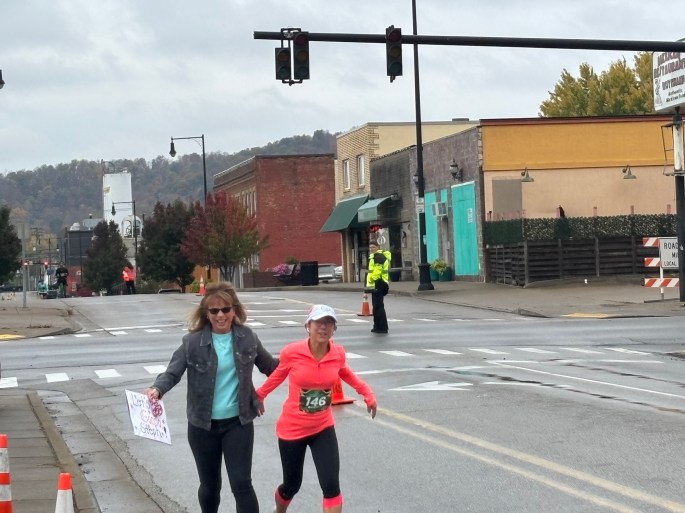
Two women running together on a city street during a marathon, with one holding a sign. They are surrounded by a lively atmosphere and shops in the background.
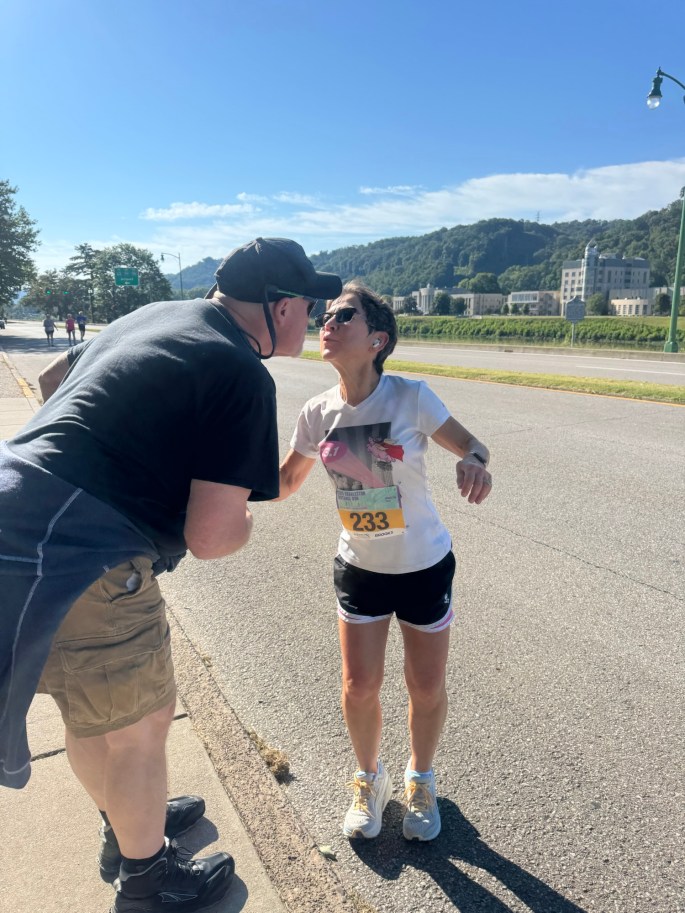
Of course, I had to veer off the path to give her hug, which helped uplift me over the next few miles.

Crossing the Finish Line 🏁

As I turned toward the final quarter mile, a group of race volunteers began singing “Happy Birthday” while my daughter’s boyfriend joined for a short burst of encouragement. My husband stood outside the stadium offering final words of encouragement, and my daughter met me at the bottom of the stadium ramp to run beside me as I approached the finish line. I wasn’t just completing a marathon; I was receiving the best birthday gift—a living reminder of love: a convergence of community, family, and friendship. It was a story of hope, purpose, generosity, and perseverance—the joy and power of a shared journey.

Two volunteers wearing bright reflective vests stand by a crosswalk in a park-like setting with blooming flowers and trees. In the background, a pathway leads towards a building under a cloudy sky.
This was the point, less than a quarter mile to go, when a group of race volunteers, led by an unknown female spectator and Conner, joined in to sing “Happy Birthday” to me as approached and rounded the corner to the finish line.

The Marathon as a Metaphor for Life 🪞

This journey mirrors life: we move forward by faith and grace, one step at a time, through both joy and challenge, supported by others who believe in us. That’s the power of movement—it connects us to our bodies, to others, and to something larger than ourselves. Choosing to move, to train, to keep going even when the path feels long, is an affirmation that with faith, growth and renewal are always possible—at any age.

Movement as a Lifelong Invitation 💌

Movement can take many forms: walking, stretching, dancing, or choosing to train for something big. The point is to move with intention and persistence, to embrace your own journey, and not attach to societal and social media messaging. Just move—and let movement open the door to new possibilities, both inner and outer.

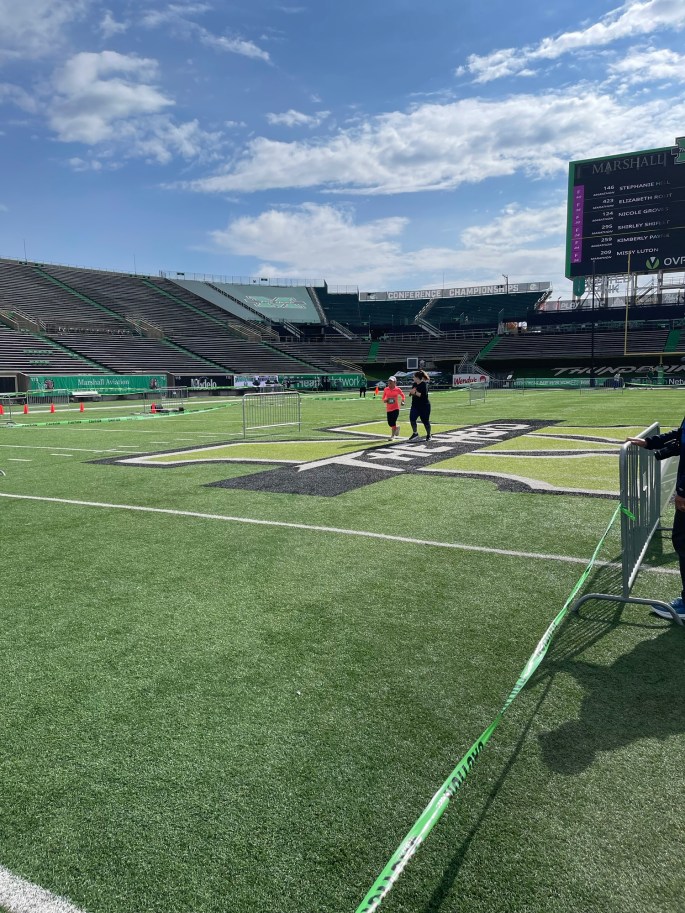
A runner crosses the finish line at a sports stadium, with spectators in the stands and a clear blue sky overhead.
Maddie runs alongside me for the last few feet, just as she did in 2015, to encourage across the finish line. Once I was close to the finish line, she dropped back behind the rope to let me finish alone. However, I really wasn’t alone. I was surrounded by a giant embrace of joy, hope, and love of family, friends, and community!!

The Joy Continues ☺️

The rhythm of footsteps, the smiles for miles, and the faces of loved ones along the route are forever imprinted in my heart—all reminders that every step matters. The marathon finish line was crossed, but the renewed sense of possibility and joy continues. Whatever your pace or path, keep moving forward—heart, mind, and spirit. You never know what acts of hope and love may be waiting for you along life’s path.

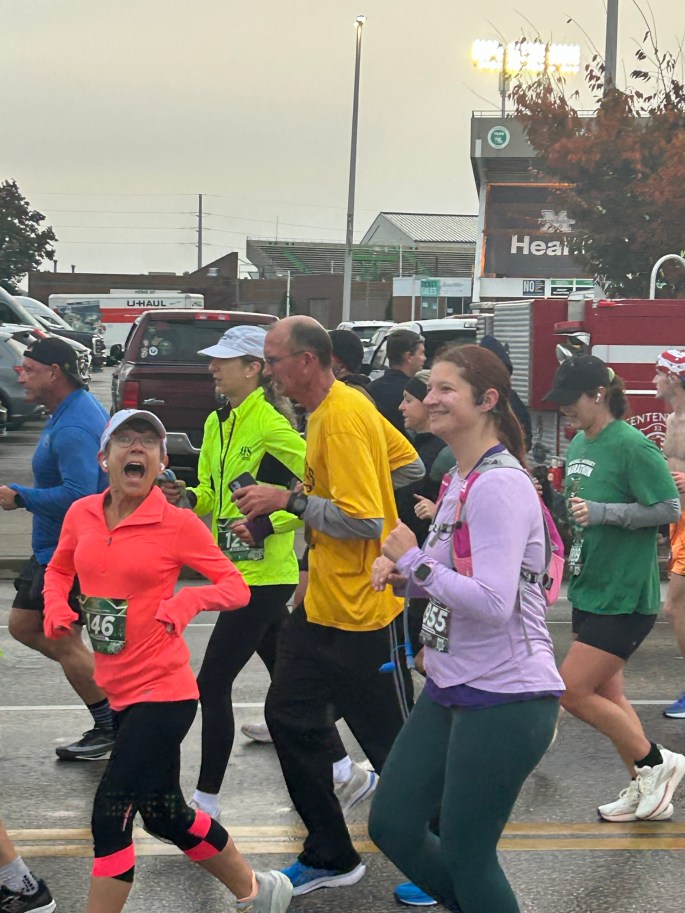
A group of runners participating in a marathon on an overcast morning, with diverse individuals wearing colorful athletic clothing and cheerful expressions.
The joy, and the journey of love and hope, continues . . .

A Grateful Heart 💜

P.S. Thank you to the countless and nameless MUM volunteers who invested hours of time to ensure the safety and success of runners, walkers, and those beloved spectators. And, an extra special heartfelt thank you to my friends and family who celebrated this milestone with me. And to Maddie and John, I love you to the moon and back.

A group of three smiling individuals taking a selfie on a subway or train, with a map visible in the background.
I wonder where the next path of adventure will lead?
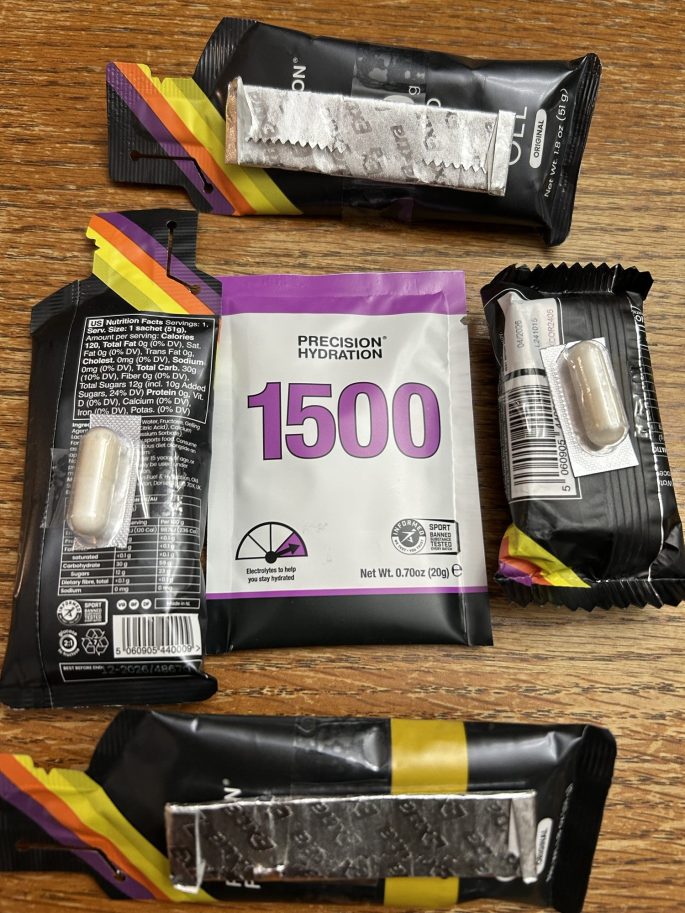
An assortment of hydration and energy products for runners, including electrolyte tablets and energy gels, arranged on a wooden surface.
Shout out to Precision Fuel and Hydration for the support during this training journey! I learned a lot from your team.

Running with Purpose: The Charleston Distance Classic and My Marathon Journey

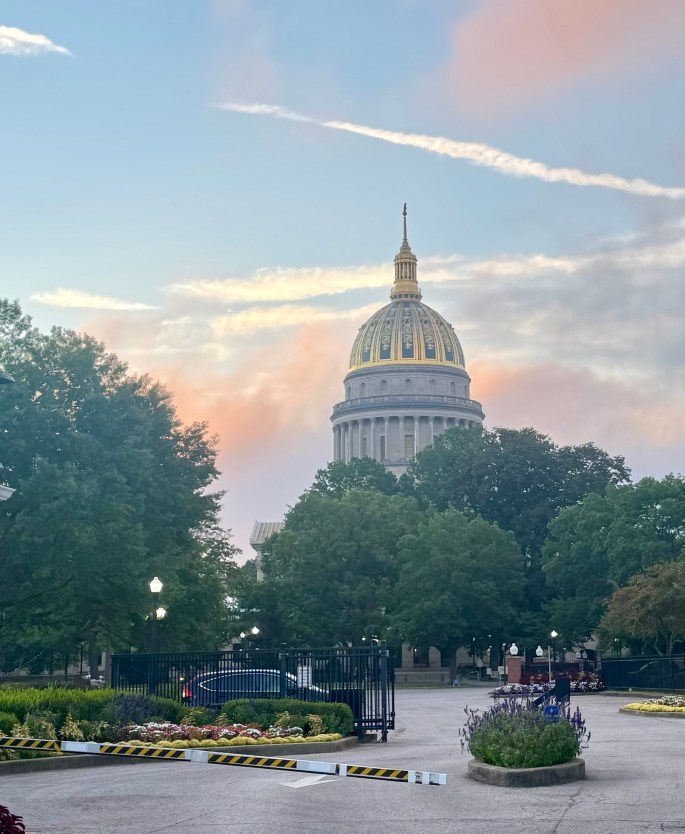
The West Virginia State Capitol building with a golden dome, surrounded by trees and a pastel sky at dawn.
The CDC starts in front of the state capitol of WV.

A Quote to Carry Me to the Start

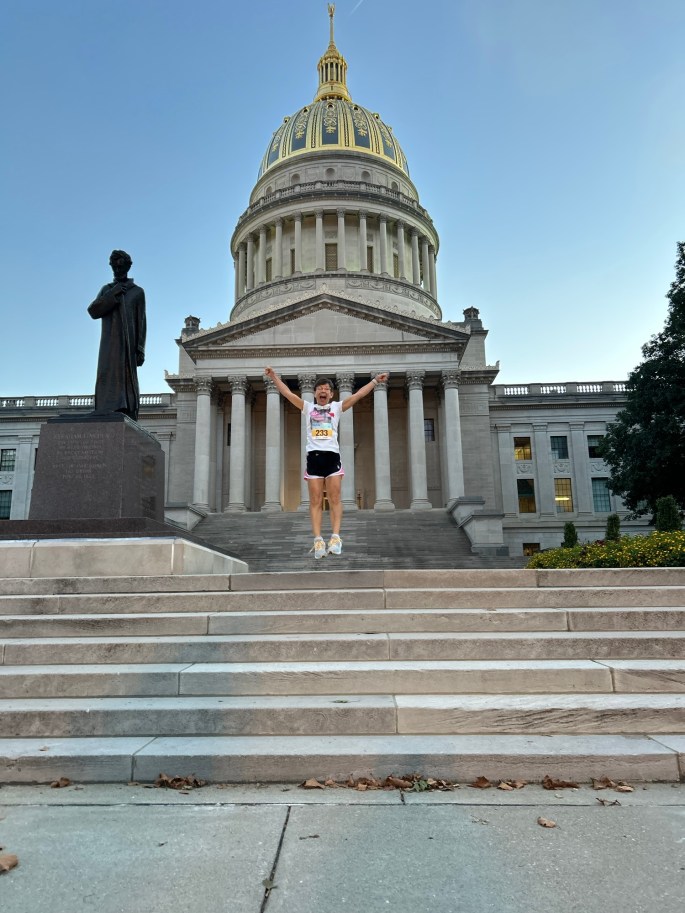
Dean Karnazes is often credited with saying, “Run when you can, walk if you have to, crawl if you must; just never give up.” His words echoed in my mind while I was experiencing a case of collywobbles as my family and I drove to Charleston, WV, in the predawn hours of Labor Day weekend. Only weeks earlier, I had decided I had built enough base fitness to run the Charleston Distance Classic (CDC), “America’s 15-miler.”

A joyful runner in a race, wearing a white shirt with a 13.1 badge and black shorts, excitedly posing with a water bottle while making a peace sign.
Ready to run the CDC!

Returning to the Classic After Ten Years

It had been more than ten years since I last ran it. In my previous two runs of the CDC, the weather was formidable, with the typical August heat wave bringing high heat and humidity. In fact, it wasn’t unusual to see runners collapse on the course—or cross the finish line only to collapse into the arms of medics from heat exhaustion.

Two women pose together smiling in front of a large government building with a golden dome, one wearing a race bib and athletic attire while the other is in casual sportswear.
My daughter was texting me messages of support throughout the race, so Siri could read them to me in my ear as I ran.

How Running Has Changed for Me

Life was different ten years ago. Besides being younger, I was fairly new to running and relied heavily on veteran runners for guidance. On one hand, I was fortunate to have others with whom to train; on the other hand, I didn’t yet have the aerobic base they had built over years. Plus, when I started running, I gave up strength and flexibility exercises, which I now know would have helped me. Instead, I focused on keeping up with others and hitting the weekly mileage goals.

Runner stands on a swing-shaped structure in front of the West Virginia State Capitol, smiling and wearing a race bib, under a clear sky.
Ready to swing into action.

Building Balance and Training for a MarathoN

Over the past decade, I’ve taken breaks from running—first from burnout, when I missed other forms of exercise. I rotated through strength training, yoga, walking, and cycling, always circling back to running. The pandemic brought running back to the forefront, as gyms and studios were closed.

Since then—and one major surgery later—I’ve learned to build a more balanced approach to exercise that includes a wide array of modalities, running among them. I exercise now for the joy of movement, as well as overall wellness. Still, I enjoy the discipline of a challenge. This year, in honor of another decade milestone, I’m training for the Marshall University Marathon (MUM)—the full 26.2 miles. Rather than follow a standard 16-week plan, I began in January, gradually building my aerobic base.

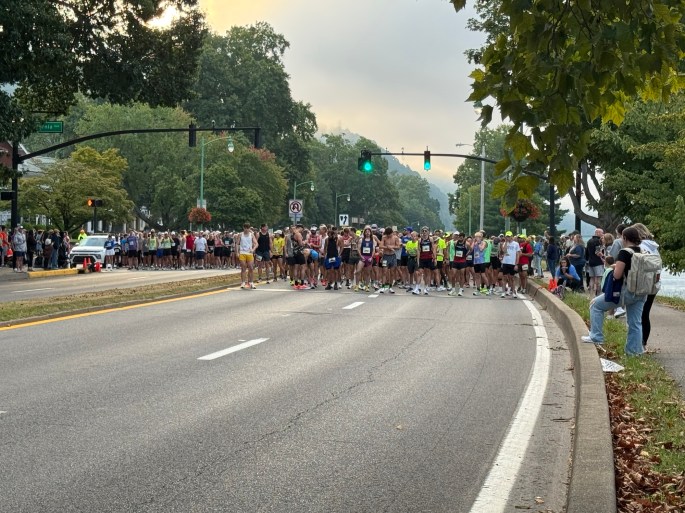
Runners lined up at the starting line of a race on a road, with traffic lights and spectators in the background.
The starting line for the CDC.

A Perfect Day to Race

It was this extended training that gave me confidence to run the CDC again. In addition, the weather worked in my favor. Temperatures were in the 50s when the race began in front of the state capitol. Running along the Kanawha River in the first mile, runners quickly spread out as paces varied.

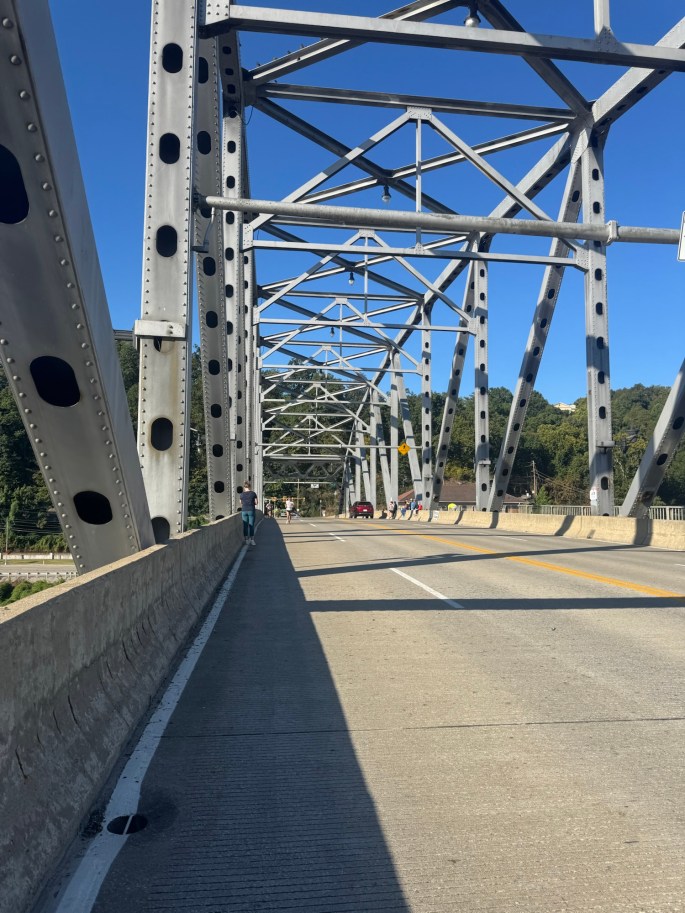
View of a bridge with steel beams and a roadway, featuring a few pedestrians in the distance.
The South Side bridge, which runners crossed twice–near mile 3 and again at mile 8.

“Capital Hill PUnishment” and the Course Challenge

Before long, we crossed the South Side Bridge and began the long trudge up Corridor G, aptly nicknamed “Capital Hill Punishment”—two miles of climbing. As if that weren’t enough, the course then wound through three hilly miles of Charleston’s South Hills neighborhoods. By the time we returned to the South Side Bridge, eight brutal miles were behind us. The final seven were mostly flat, except for one last incline near the end—just when our legs were good and toasted.

My Cheer Squad: John and Maddie

The CDC is a great spectator race, and I was lucky to have my husband, John, and daughter, Maddie, there. They were tireless cheerleaders, walking all over Charleston to encourage me. At the start, Maddie urged me on with excitement. At mile eight, as I crossed the South Side Bridge for the second time, she even ran alongside me for a short stretch, offering encouragement.

Between miles 11 and 12, they found me again, cheering and taking my empty handheld water bottle—by then more of an annoyance than a help. At Laidley Field, Maddie’s voice carried as soon as I stepped onto the track, her shouts of encouragement giving me the final push.

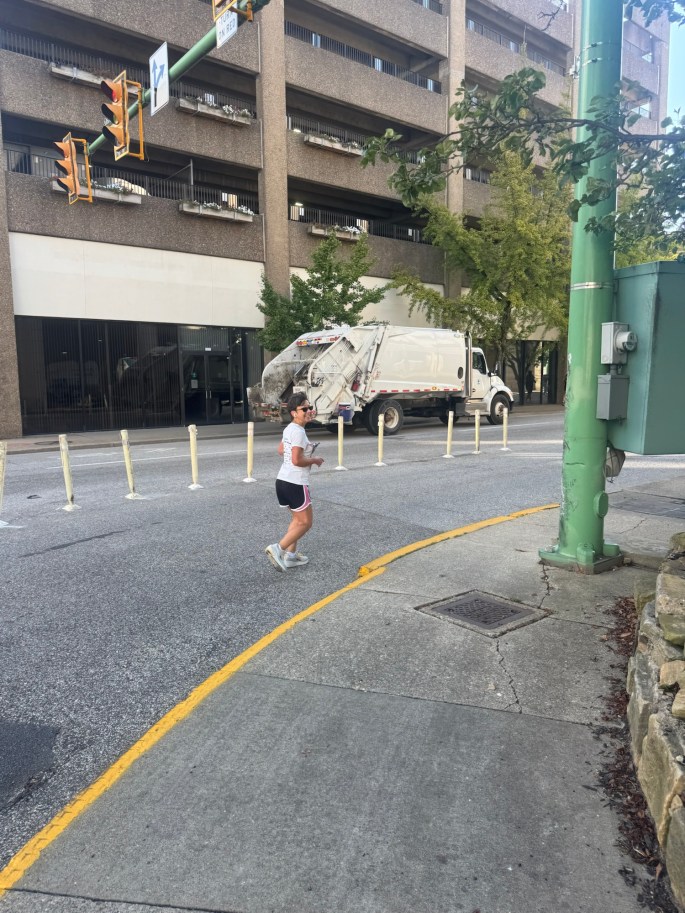
A person jogging on a city street with a garbage truck parked nearby and a multi-story building in the background.
This was mile 8. Afterwards, there was mostly flat course, EXCEPT for a last incline during the very last mile before the finish line. UGH!

Lessons from the Endless Last Mile

Honestly, that last mile seemed endless, and I learned a powerful lesson: even the final mile is still a mile long. My mental discipline slipped, and the fortitude that carried me there begged for rest. I grew whiny and irritable, which only amplified the aches and pains I had managed to ignore until then. It reminded me of my reaction in the last mile of a half marathon I ran this past spring in Asheville, NC.

Scenic view of a riverbank with lush greenery, walking path, and a bridge in the distance under a clear blue sky.
The beautiful Kanawha River that flows through Charleston, WV.

Strengthening My Fortitude

That last mile taught me what I must carry into the last weeks of marathon training: when the long runs get longest, I need to focus on strengthening my fortitude—especially at the very end. This, for me, is the hardest part. I try to follow the advice of Olympian Jeff Galloway (who is also credited with establishing the “Run-Walk-Run” method) to smile at each mile marker—since smiling releases those feel-good chemicals and helps relax the body. He also suggests repeating a mantra or power word. Perhaps I need to lean into this more.
Remembering My “Why”

I also need to remind myself of my “why” when the going gets tough. With the MUM, I hope to raise awareness for Branches Domestic Violence Shelter. Branches provides emergency shelter, legal assistance, counseling, case management, and even meal delivery for domestic violence survivors. Their work saves lives. If my miles can help encourage even a few people to support them, that will mean as much to me as crossing the finish line.

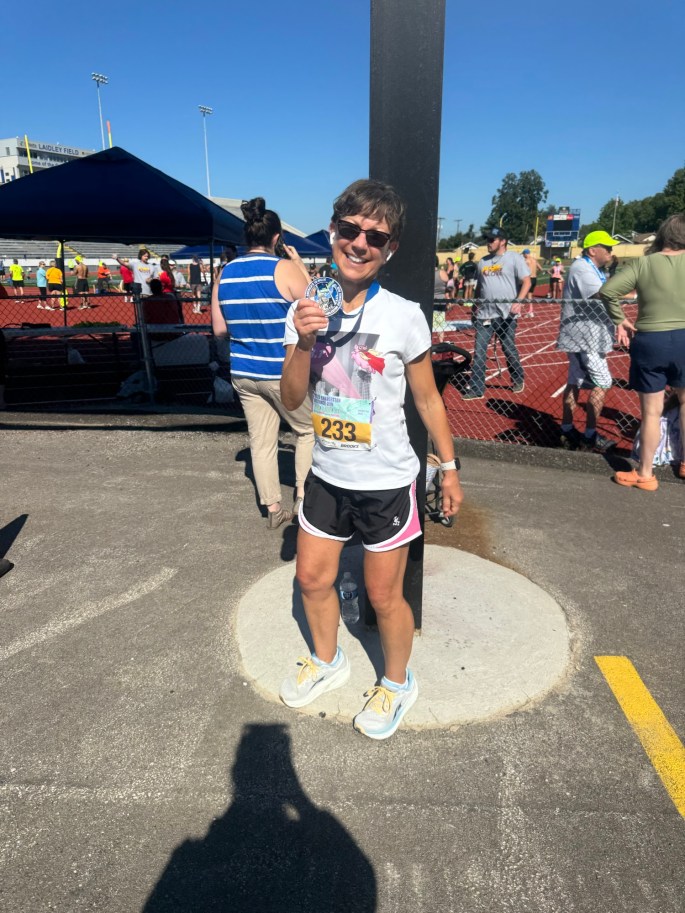
A smiling woman holding a medal, wearing athletic clothing, stands next to a post in a race finish area, with a crowd and tents in the background.
Feeling so grateful for my family, love, and support at the end of the CDC.

Running Differently, Running with Gratitude

Ten years later, I run differently. I take walk breaks when needed, and I’m grateful to still have my health. Running gives me energy, provides structure, and fills me with joy and purpose. Not every run is great, but each mile contributes to my community by keeping me connected to local races and to my own mental, physical, and spiritual well-being. Running also pulls me outdoors, connecting me with the Creator and with the delight of each season.

Never Give Up—In Running or in Life

Running the CDC reinforced the lesson of never giving up. I may be entering a new decade, but that doesn’t mean I have to give up striving for new goals—even if it means crawling to achieve them. Perhaps I’ll see you at the MUM. If not, I hope you’ll create your own journey. Either way, I invite you to celebrate with me—by supporting Branches or by committing to your own goal. Adjust as you must, but never give up. Step by step, with fortitude, tenacity, and a few deep breaths, you can do it.

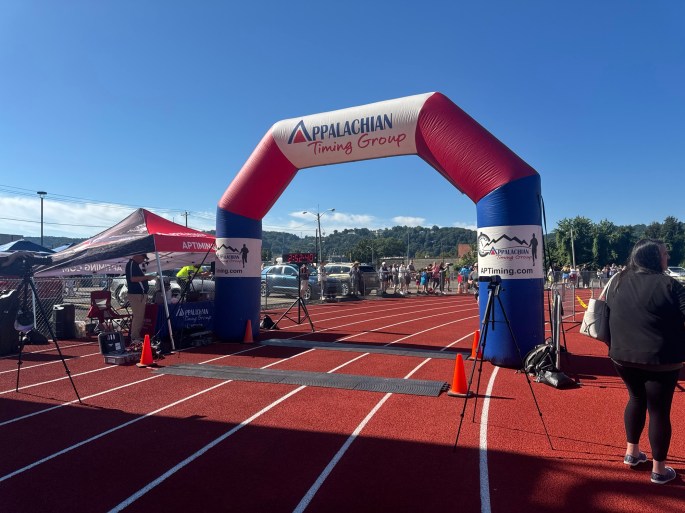
A running event starting line with an inflatable arch labeled 'Appalachian Timing Group' on a red track, set against a clear blue sky and distant hills.
Never give up! You can cross whatever finish line in life you need to cross!

The Art of Loving Unconditionally: Lessons from A River Runs Through It

A scenic view of a river meandering through lush greenery under a blue sky with clouds.
The flow of a river.

Words of Wisdom From a Classic read 📖

One of my favorite stories is A River Runs Through It by Norman Maclean. It is an exquisitely written, semi-biographical account of Maclean, and his brother, Paul, growing up in Montana as sons of a Presbyterian minister who taught his boys the art of fly-fishing. The movie version, directed by Robert Redford, captures the earnest beauty of Maclean’s prose. Both pieces weave together a tapestry of thought-provoking life themes centered around family love and connection (including unconditional love for a family member), grace, the fragility and brevity of life, and the eternal nature of time, with the art of fly-fishing as a metaphor as the unifying thread. 

The story’s emphasis on the complicated nature of the brothers’ relationship make it especially compelling and heart-wrenching. Therefore, I have revisited both works on numerous occasions. Each time I reread the story, (and subsequently watch the film) I discover a new gem and/or am reminded of a favorite part, such as a well-written phrase, a turn of words, a point of symbolism, and so forth. My most recent encounter with Maclean’s work was towards the end of December. 

There is a set of lines that stirs my heart every time I read them: 

“So it is . . .that we can seldom help anybody.  Either we don’t know what part to give or maybe we don’t like to give any part of ourselves.  Then, more often than not, the part that is needed is not wanted. And, even more often, we do not have the part that is needed.”

“We are willing to help, Lord, but what if anything is needed?”

Two boys hiking together by a river, wearing casual outdoor clothing and smiling at each other.
AI generated by WordPress.

How do we help others? 🧍🧍‍♂️

As I once more read each word, underlining and contemplating them in the quiet hours of morning, I reflected upon how, with each reading, those words still ring true, but their meaning evolves as I progress in age and life experience. Those bittersweet words bring to mind loved ones and students over the years for whom I have tried to help.

More recently, students of one of my classes and I were discussing their currently assigned book. The main character in their book grew up in a rough set of circumstances, and through a series of unfortunate events, wound up incarcerated in a juvenile detention center. One of the questions that book raises is: Can someone overcome their circumstances and change with the right intervention/outside help? 

The students debated valid points. Some endorsed the possibility that people can overcome their environment and change for the better. Others pointed out the difficulty of changing what has been hard wired into you. 

As the discussion continued, a student asked me what I thought. All eyes in the circle turned to me.

A silhouetted hand reaching out, symbolizing support and connection.
Photo by lalesh aldarwish on Pexels.com

Bittersweet reminder 🤔

Maclean’s words echoed in my mind as I carefully considered my response. Memories flooded my mind–former students and more personal situations in which I have been truly willing to help– offering extra time, extra care, and extra love. In many cases I have researched and offered suggestions of help–probably way too many with the presumption of, “I can help them fix it,” whatever “it ” may be.  I’ve further ridden the waves of the person’s ups and downs as they strive to overcome and change. I have been, and I still am, willing to help; Lord knows, but as Maclean so eloquently articulated, “{I}we can seldom help anybody.”

Helping others is a complicated process for which our hearts may be in the right place. However, as Maclean points out: most change within another person is not in our control.  Perhaps being willing to help is the best any of us can do unless asked–and even then–we can only offer our support; it is the person who must do the work within.  

Maybe, our support and love will help instigate the needed change, but there’s a strong chance that it won’t. Therefore, it is not our job to “fix” others; it is, instead, our job to love them.  Of course, we can still sincerely believe in the person and continue to pray and hope that the person will overcome their difficult situation or change for the better, but in the meantime we must accept them as they are. 

 Rather than say all of this to my students, I kept it simple. I shared my belief that by nature, hope springs eternal for me when it comes to believing in my students’ (and others’) capabilities for growth and change. I don’t think I could have remained an educator for nearly four decades if I did not believe that change and growth is possible for all of my students. 

A woman with long hair, dressed in dark clothing, is shown in a contemplative pose with her hands clasped together in front of her, against a dark background illuminated with red and blue lighting.
Photo by Mikhail Nilov on Pexels.com

Be Present 🙏

And, while I didn’t share this with my students, my belief and hope flows into my own personal life, too. However, my profession and personal experiences continue to inform me that overcoming what has been ingrained into you at a young age, be it genetic, environmental, or both, is difficult, even with the best help and support.  Furthermore, my experience has also humbly informed me that assuming the person wants help or wants to change is arrogant and so is thinking that we know how to help them.

This doesn’t mean we have to give up; rather, I am beginning to believe it’s about presence. We can be there for them by simply spending time with them as appropriate.  Likewise, we can provide positive support and encouragement, such as, answering the phone when they call, replying to a text they send, or being available to chat. 

Likewise, it doesn’t mean we go overboard using up all of our time and resources, leaving us emotionally, physically, or financially spent. Rather it’s important to find that fine line of being there, but not too much; having firm boundaries, but a welcoming heart/spirit. Mostly though, it seems important that we allow love to flow from us, like the waters of Big Blackfoot River in Maclean’s novella, so maybe on the person’s worst day, they will at least know that they are loved.  They. Are. Loved.

A close-up view of colorful puzzle pieces surrounding the words 'Accept. Understand. Love.' on a white background.
Photo by Tara Winstead on Pexels.com

Unconditional love 💜

In the words of thought-leader and influencer, Brené Brown, we must come to peace with the fact that “When you love someone unconditionally, you accept them for who they are, flaws and all.” And that, in the end, just as Maclean had to learn, must be enough. We can only change ourselves, no matter how much we want to help another. 

A chalkboard with the words 'HERE TO HELP' written in white letters on a black background.
Photo by Anna Tarazevich on Pexels.com

The Dance of Time: Snowflakes and Memories

“Like snowflakes your words fall silent, but my heart still hears your voice.”–Angie Weiland Crosby

Photo by Skyler Ewing on Pexels.com

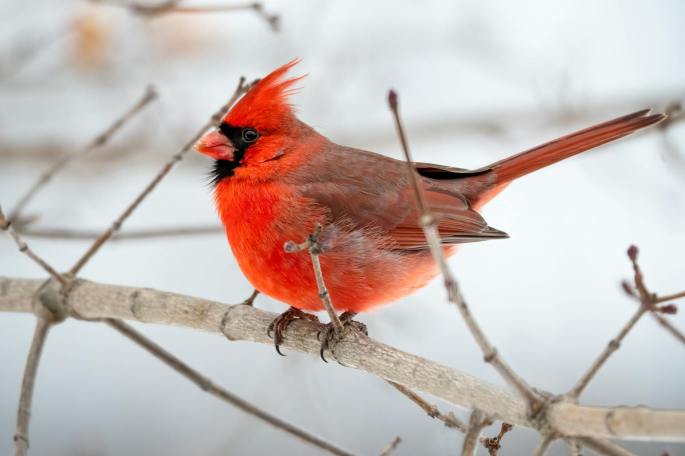
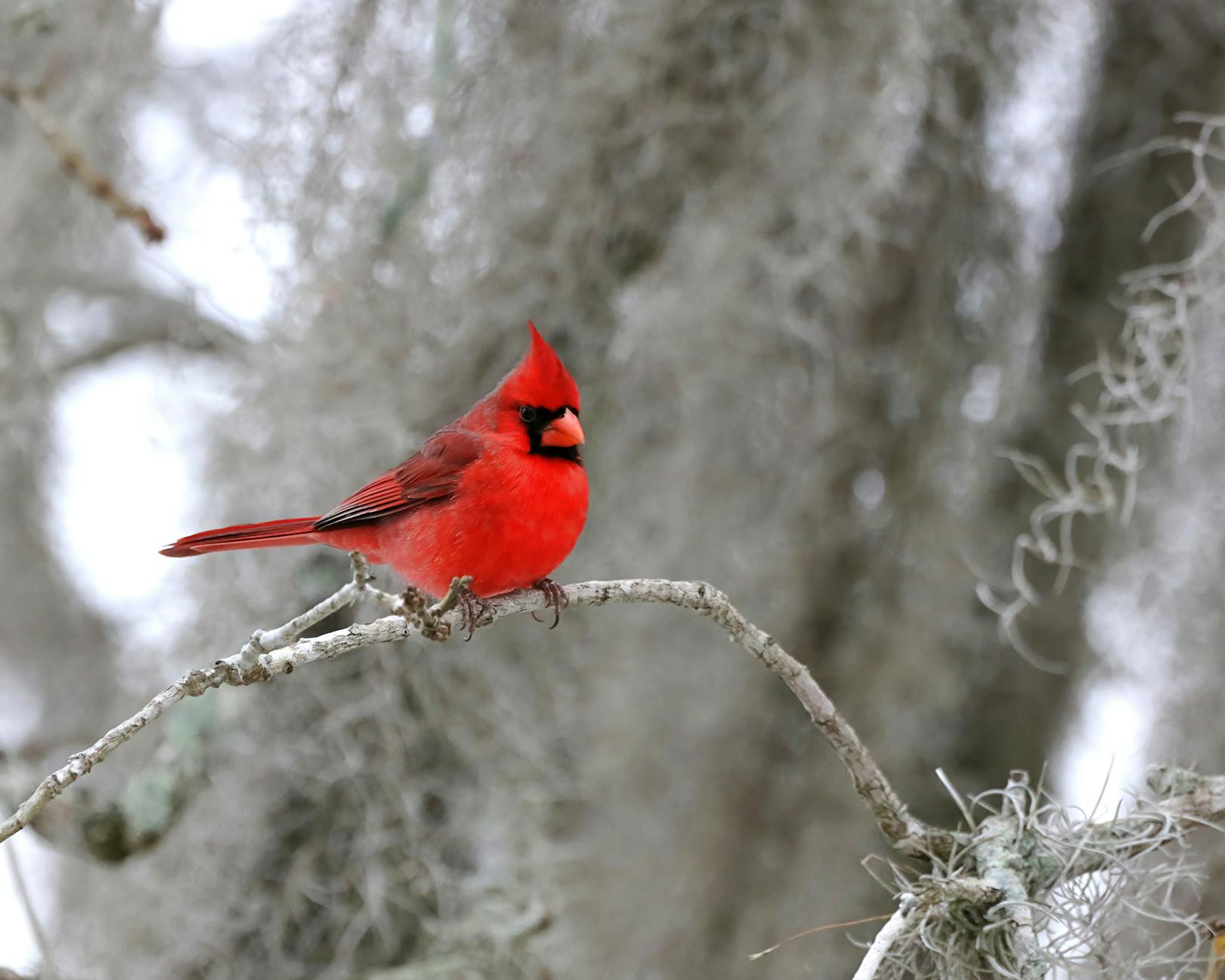
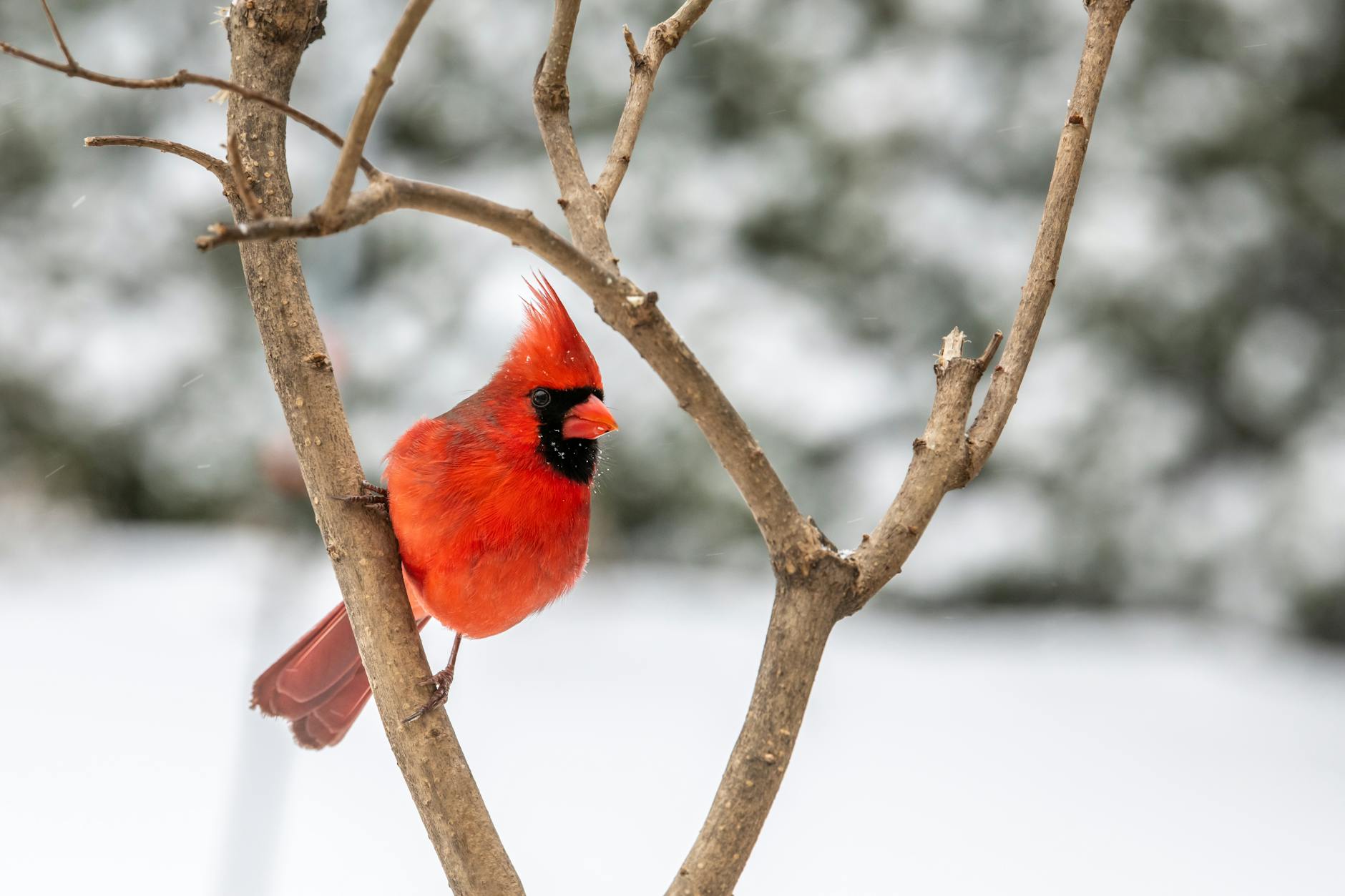
His radiant red contrasts the rambling lines of landscape blanketed in brilliant white over which Mother Nature continues to shake clouds full of crystalized sugar. There is a muted hush, like the stillness of our lungs between the inhale and exhale, and then with a shiver, she cascades more snowy powder in a frenetic freefall. The spry cardinal skips and hops through brambling branches. Then, tilts its head, as if it just remembered an important date, and lifts in flight. 

Inhale. Lips seal in a smiled memory of long ago. 

Pause. Sense the stillness 

Exhale. Perceive the prickle of the past.

Photo by Lena Glukhova on Pexels.com

Observing the steady dance of freed flakes, my mind meanders through the rolling hills of earlier life–so many memories sift through and then meld into the collective cache of moments. Childhood. Youth. Young adult. Parenting. Empty-nesting. Hands outstretched wide.  Collect the moments. Like snowflakes landing on a mitten, I cannot clasp such things for long. 

Inhale. Eyes soften their gaze.

Pause. Brain swirling through Kodacrhome images faded with time.

Exhale. Sense the shudder of time. 

Photo by Mari Anteroinen on Pexels.com

Accumulation of moments, unique in dimension and structure, pass through the sieve of consciousness. One reminiscence overlaps another in a spiraling swirl of sensory recollections. A Chex mix of her memories stirred up with mine.

Galoshes, long underwear and frosty wet jeans.

Layers of shirts and jackets, and a big ol’ coat.  

Mummified walking. 

Snowflakes dusting shoulders and hats; red, dripping noses. 

Snowballs, snowman, snowfort

Neighbors calling

Who hit me in the back?

Inhale. Gaze remains inward

Pause. Linger in timelessness. 

Exhale. Soften into space and time.

Photo by Nguyen Hung on Pexels.com

Rolling, rolling, snowballs large and small, impressions of the past and present pinging. How marvelous, to have these individual souvenirs of time heaped into a memory bank like snowflakes plowed into mounds alongside a road. 

Sounds of barking, scent of wet dog. 

Red sled, yellow cord; here we go again! 

Fearless flights of fancy, impervious to the elements

Mittens over gloves, wet and soaked through. 

Pink cheeks, cold hands; giggles and grins galore. 

Campbell soup and grilled cheese.

Cookies with hot cocoa and a giant floating marshmallow.

Soggy clothes, drip, drip, dripping on an overburdened rack.

Child, with canine companion, reading in big cozy chair

Photo by Vlad Cheu021ban on Pexels.com

Inhale deeply as eyes return to snow. 

Pause. Flakes flicker and fly 

Exhale. Present in the moment.

Photo by Skyler Ewing on Pexels.com

Scaning frosted tree arms splayed open for welcoming feathered friends. There he is again. Handsome boy. Tufted red hair, not a feather out of place. Unflappable and composed in a wintry playground. Head cocks and black eyes glisten. He seems to see me, and I am reminded of a conversation.

Before the snow arrived, my husband and I discussed the impending weather. He had worried and watched the approaching meteorological conditions.  “It will do what it will do,” I said.  Not to be dismissive of his concerns, but to instead, remind both of us that we can only watch and wait.  Then, if/when it arrives–as it did–we will know.

Photo by Yan Krukau on Pexels.com

In that moment, it occurred to me that so will life. Just like weather, life will do with us what life will do. We are not in as much control as we think we are. 

This doesn’t mean we should not prepare, plan (to the degree possible), and be aware of future events, but many, if not most, events cannot be known until we are in the midst of a whirling outpour. Sometimes, those moments merely require that we stand like a child, head thrown back and tongue out, tasting and savoring each precious moment. Other times, life drifts in deep, and we are shoveling out as best we can, holding on for the sun’s warmth.

Through the flurries and cloudbursts of storms, there is the throughline of the present moment. Life is happening now, and what is happening now will be our future memories. 

Photo by Nicki Dick on Pexels.com

The cardinal serves as a symbol for me of past and present. I cannot see the red feathered fellow in the winter without simultaneously being in awe of his present day beauty while also reminded of my Pappaw.  He loved to feed and watch the birds, especially in the winter; cardinals were his favorite.  “Now, Stethie, look at those red birds out there.  Aren’t they something?” 

Pappaw often told me bluejays were a “mean bird,” albeit “good-looking fellows.” He did not like the way they became territorial and aggressive towards other birds, especially the cardinals at his feeder. There were several occasions in which I’d watched him dart out of the house without a coat or hat and chase the bluejays away to protect “his red birds.”

Photo by Janice Carriger on Pexels.com

Pappaw is long gone. I am not sure if I appreciated my time with him during those once present moments as I should have. And yet, outside of my window, the cardinal continues its call of snowy days present and past.

 The coming and going of time begins in the “right here, right now” moments. Inhale. Connect to the arriving moment.  Pause. Feel the presence. Exhale. Tick. Tock. Another opportunity to collect a memory before, like the snow, it melts away. 

Photo by Arina Krasnikova on Pexels.com


Warm and toasty memories of grandparent’s kitchen

On average, a well-maintained pop-up toaster can last anywhere from 5 to 10 years.”–Storeable.com 

A toast to Love 🥂 🥯

“Bready” to work for 34 years!

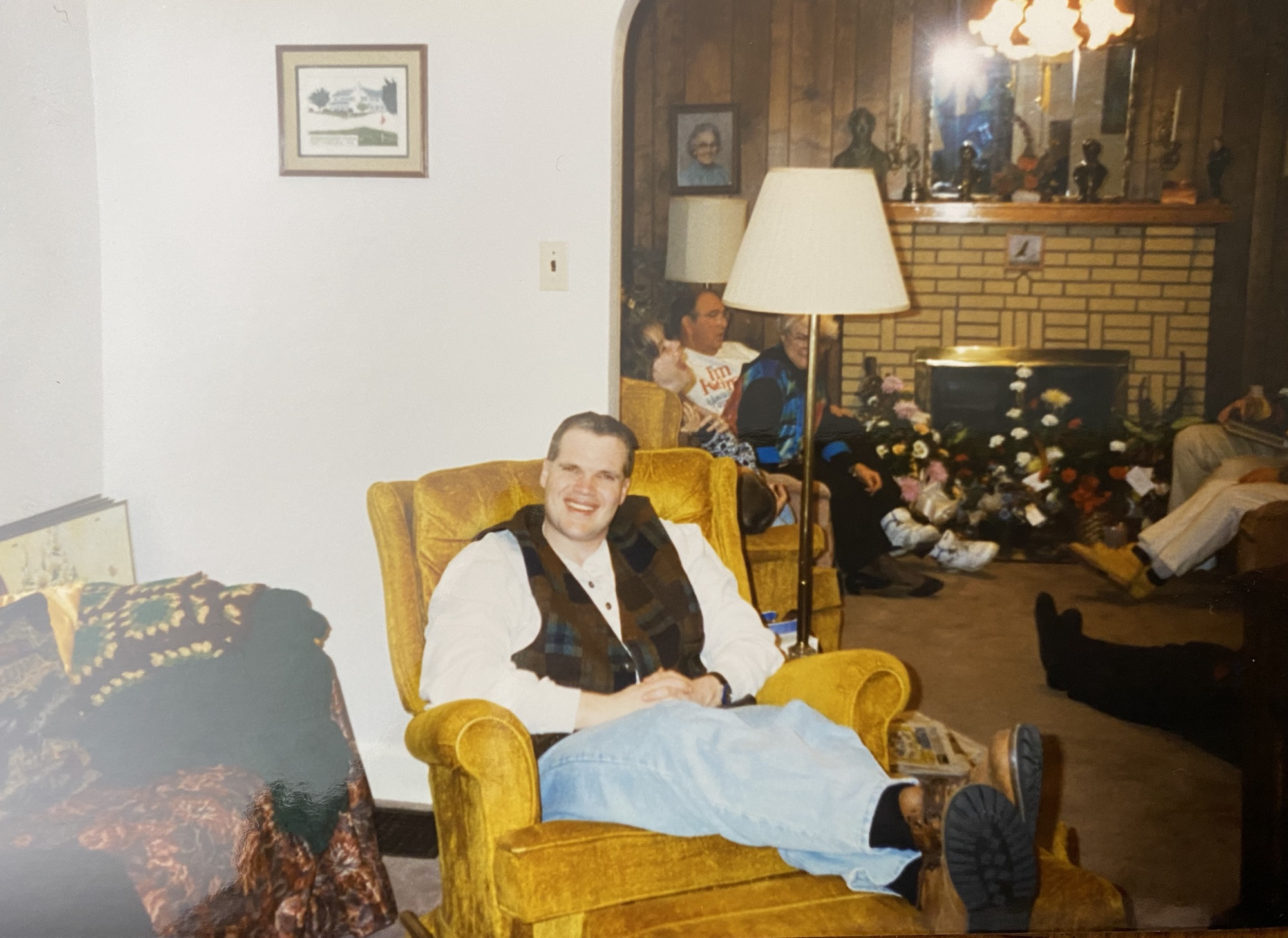
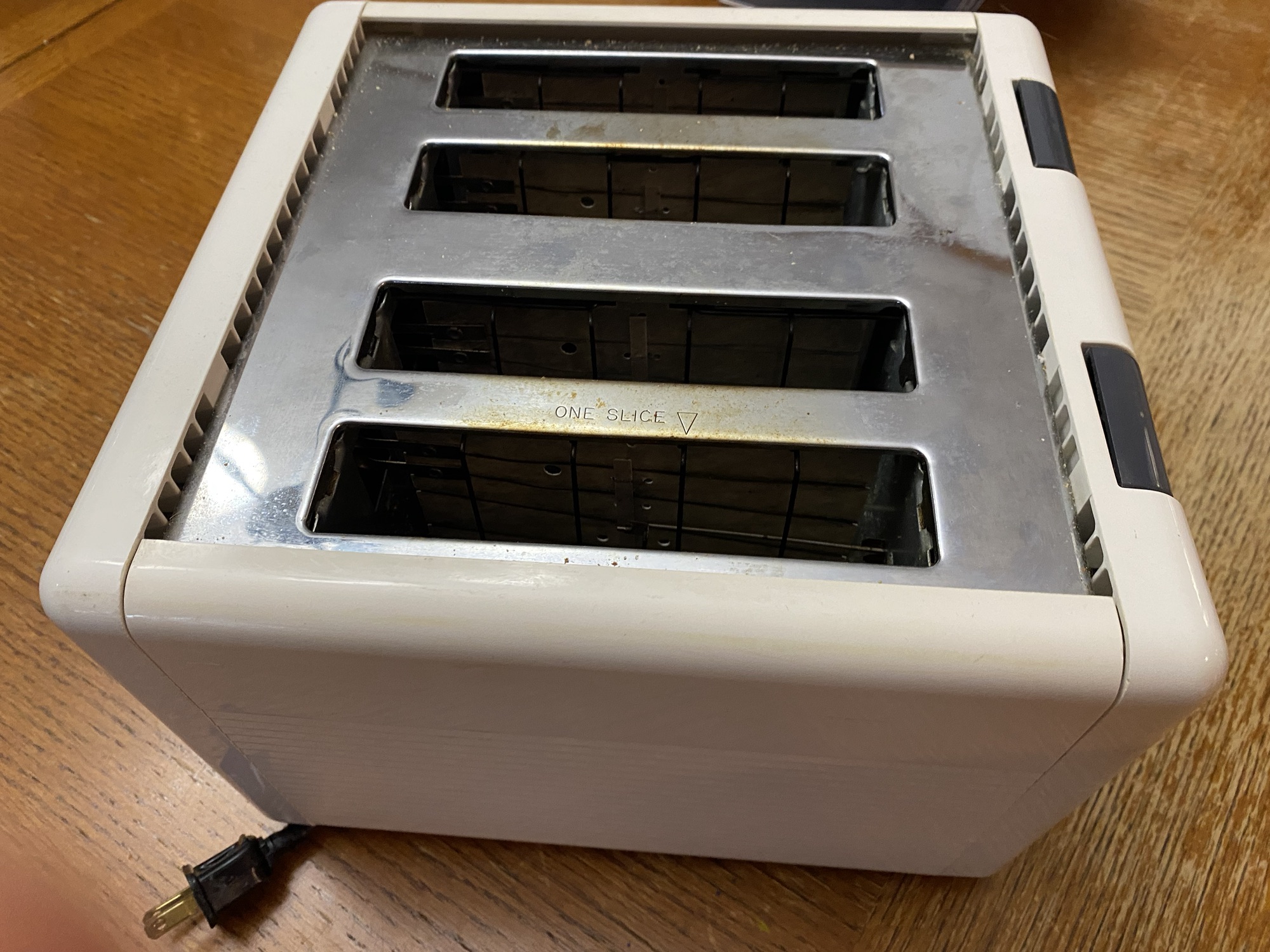
My grandparents gave John, my husband, and me a wide-slotted toaster in 1989. We cannot remember if it was a wedding gift or a Christmas gift during our first year of marriage. Regardless, Grandmother and Papaw were so proud to give it to us because it was just like theirs, white with four slots wide enough for bagels. 

Here’s the thing, John and I didn’t use the toaster that often until our own daughter was born ten years later when it became used on a more regular basis.  It was one of the last tangible connections to my grandparents.  The gift was from a time period before Alzhiemer’s disease overtook Papaw’s brain; therefore, it was more likely the two of them chose the gift together.  

Who’s the Center of Attention? 🤩

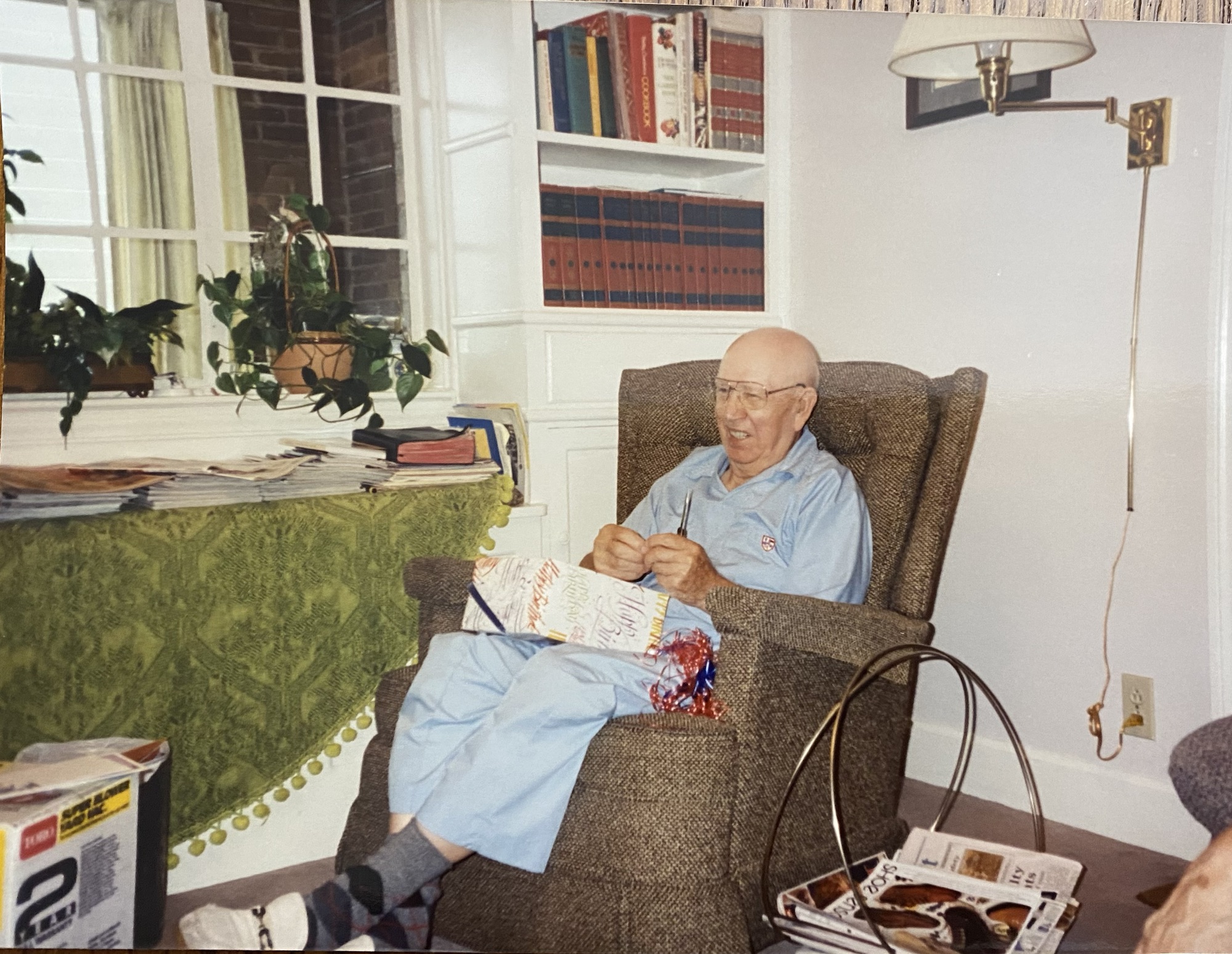
I can remember how Papaw first greeted John.  He looked at John, sized him up, and shook his hand.  Then, he looked at John’s hair, and asked, “You got all those hairs numbered to get your part so perfect?”  

At the time, John had, as Papaw called it, “a head-full-of-hair.” Thus, it became Papaw’s default joke-of-a-greeting with John.  That was one of Papaw’s ways–teasing a person to let them know he liked him or her. 

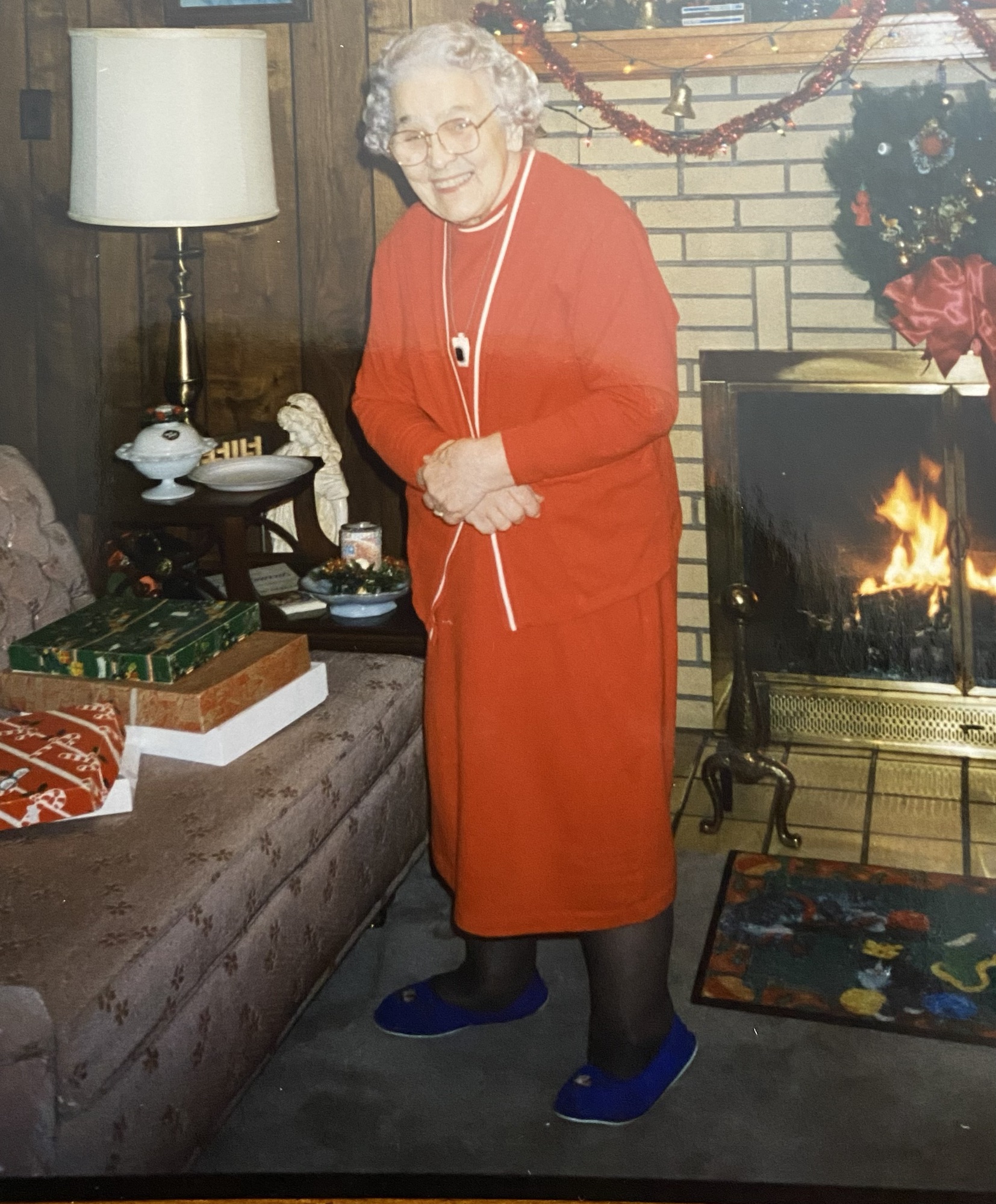
Grandmother tended to let Papaw take the spotlight while she remained present, but in the background.  She was quite adept at allowing Papaw to soak up all the attention, so she was embarrassed easily–and yet loved it–when attention occasionally turned to her.  John knew how to use this to his advantage.

Papaw would give John a hard time about his hair, the way John was dressed, or the shoes John was wearing.  In turn, John would banter good-naturedly with Papaw for a few moments.  Then, John would pivot and turn his attention to Grandmother, asking her a question such as, “Helen, how do you put up with this man?”

Grandmother’s eyes would light up–probably because she secretly wondered that very thing herself from time-to-time when Papaw was carrying on, but she would usually deflect the comment good naturedly while laughing. 

Family dinner Rules 🍽️

During family dinners, Grandmother still remained in the shadow of Papaw’s entertaining ways; however, her food was center-stage.  She was a good cook in that hard-scrabble, Kentucky/Appalachian way–a woman who had been poor during her childhood and continuing through the Great Depression. Therefore, her cooking methodology was a mix of traditional Appalachian-style foods and popular recipes of the time, made in the most cost effective way. (I could probably write a book on her cooking alone.)

Therefore, John would tease her mercilessly about her cooking.  One moment he would tell her how much he loved something, and then next he’d quip, “Now, Helen, I am not sure who makes the better  __________, you or _________, (He’d usually insert his mother’s or my other grandmother’s names.) so I’d better have some more of that if you don’t mind.  It will help me decide who the better cook is.”

Oh, how she basked in that kind of banter.  “Now, John . . . ,” she’d say as her face reddened.  Then, she’d smile, realize there was food in her teeth, and cover her smile with a napkin.  She’d wave her hand as if batting his comment away, but she’d ensure he–and everyone else gathered around the table–got more food. 

Clean up and Dish up 👂

After special dinners, Papaw, who usually did help clean up the kitchen, was given “permission,” especially during football season, to go ahead and sit down, with any other men that were present, to “watch” football and/or read the Sunday paper.  I put quotes around “watch” because after eating, Papaw would typically doze off part way through the game.  Nonetheless, 20 or so minutes later, he’d perk back up, and command the rapt attention of those that remained in the room with him.

Meanwhile, the women would clean up the kitchen, often making more coffee. The conversations were rich as the coffee and somewhat “dishy” about this person or that.  Once I was old enough, I would hang out in the kitchen, offering to “help,” but mostly hovering between the TV room and the kitchen, so I could hear the tales from both rooms.  

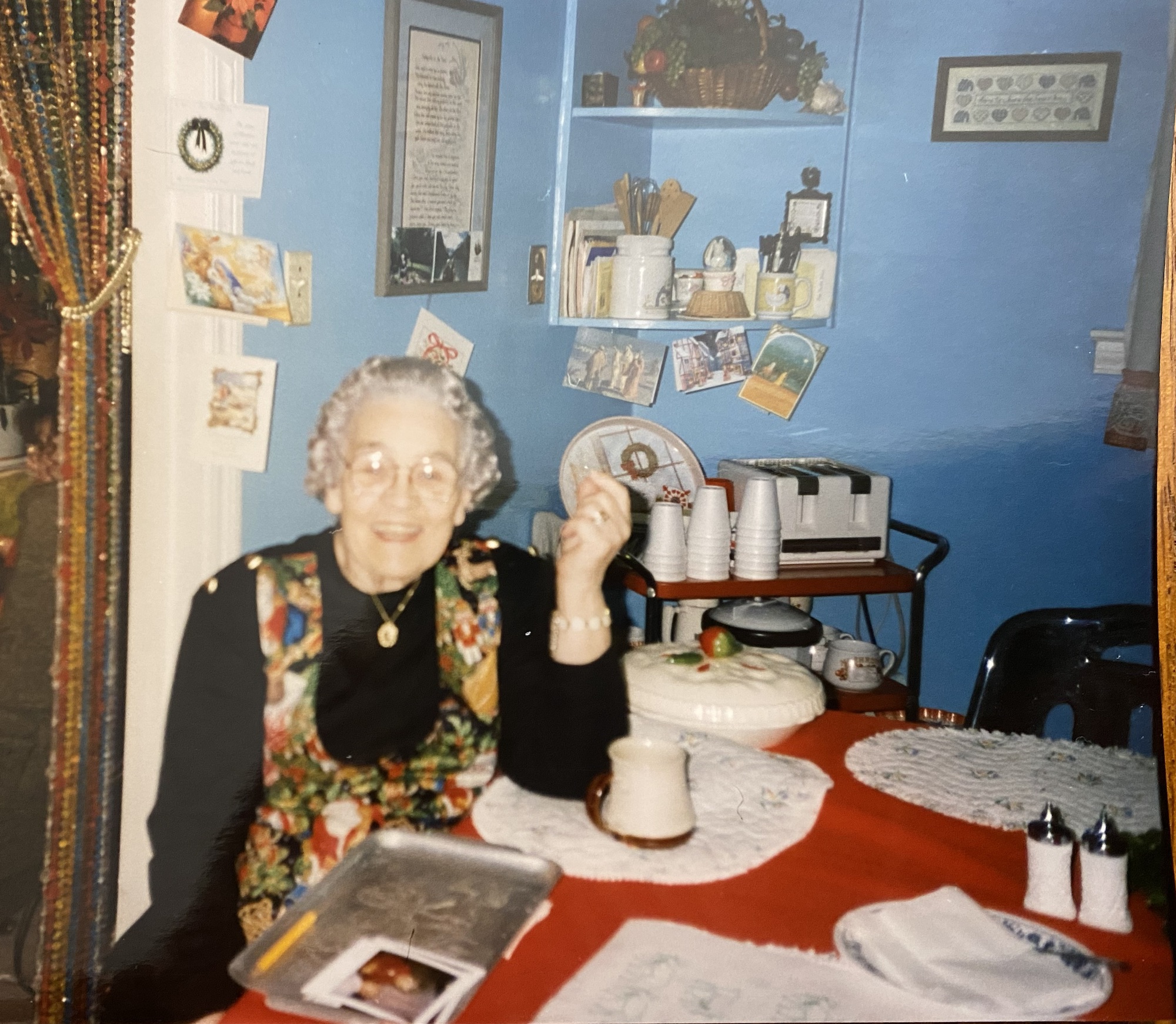
There was an intimacy in Grandmother and Papaw’s kitchen area that was warm and inviting. During winter months, their single-paned windows would thickly frost, and as a child, I felt sheltered and safe in an often chaotic world in that room.  Later, when I lived with them for two years as a young adult, I came to realize that even when it was just the two of them, that presence of peace could still be felt in their kitchen.

During those early adult years when I lived with them, they graciously shared their kitchen with me, so I could explore my own cooking interests. Grandmother especially loved it when I cooked with a wok or made homemade pizza, so she could eat something different than her traditional fare.  Papaw would just walk out of the kitchen and mutter under his breath about my “concoctions” while Grandmother sat at the kitchen table asking me questions about the recipe as I worked.

It was also during this time period that I observed their steadfast devotion in the early morning hours, when they made breakfast together.  Their breakfasts were usually simple, but that didn’t matter.  It was how their presence made the space feel. 

Their presence remains 👴🏻👵🏼

 If I listen hard enough, I can still hear the metallic clank of the toaster popping and the rhythmic perk, splurt, sigh of Grandmother’s percolator, brewing her aromatic coffee, filling the kitchen with an ethereal presence, as they two of them sat side-by-side at their kitchen table, talking about the coming day, current aches and pains, or strategizing for an upcoming, double-coupon, shopping day.

Grandmother shared her love of cooking and baking with me, and Papaw taught me the importance of an appreciative eater.  They both offered wisdom on the art of not wasting food and cooking on a budget.  They were patient with my presence in their sacred space–the kitchen–when I lived with them for those two years.  And they modeled that a kitchen table–and the events around it–are often the heart of a home.

With the toaster they gave me, it felt like a small part of Grandmother and Papaw remained with my own family in our kitchen, but this past Thanksgiving, the toaster quit working–only months after our daughter moved out to begin her career and life as I once did with them. 

I know it is a miracle it lasted as long as it did, but I still mourn its loss.  However, as I write this piece, I realize that Grandmother and Papaw’s kitchen is not lost, but remains in my heart and in my hands.  Their love wraps around me when I bake or cook one of those traditional recipes and even when I explore new ones.  The echoes of Papaw making himself an endeared, center-of-attention and his gruntings about my “concoctions” still whisper.   Likewise, visions of Grandmother sitting at my own kitchen table, eating with me in spirit, asking about my recipes, and savoring each new taste as her clouded blue eyes shine their light on me seem almost real.  I suppose, in the end, these words are written as a toast to their lasting influence.

Thank you for your service, toaster. Rest in peace.

Sweet Summer Strawberry Cake

“Every cake has a story to tell.”–unknown

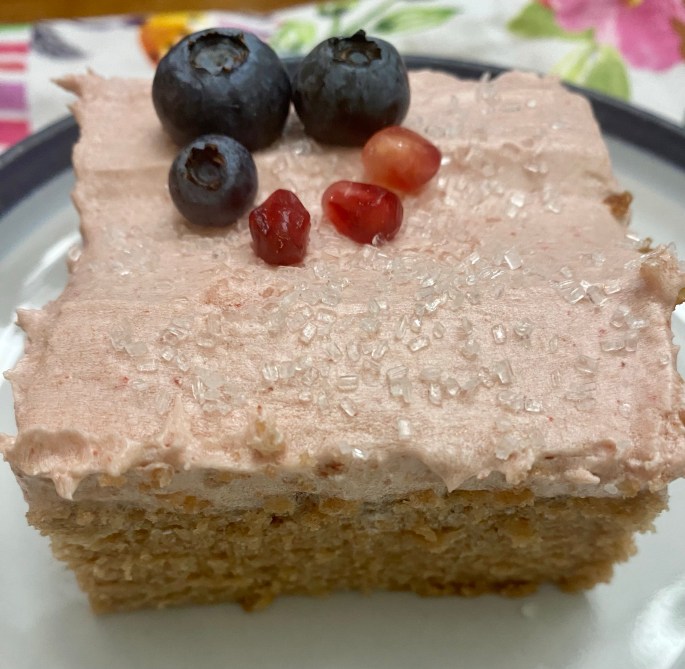
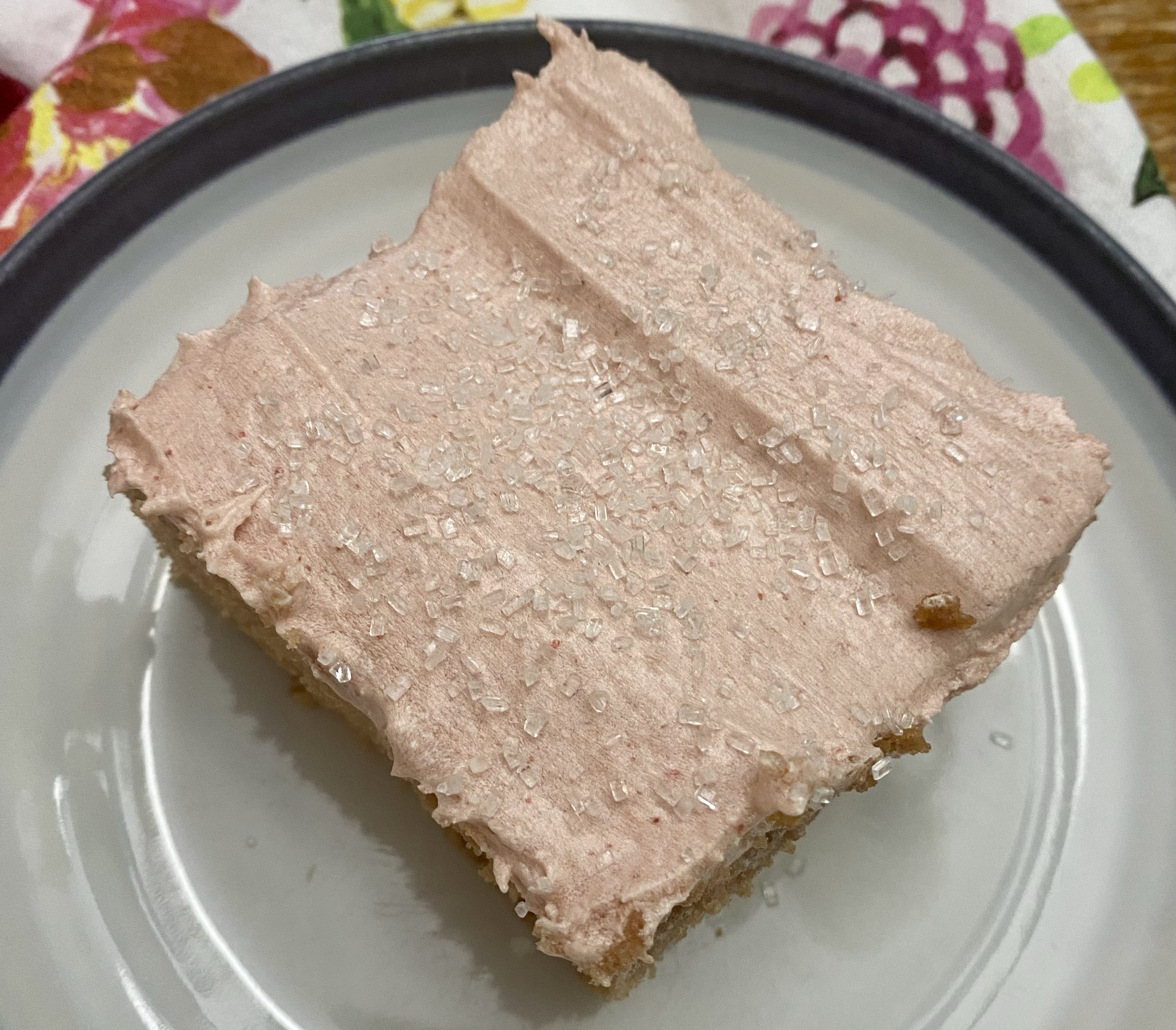
Sweet treat, strawberry cake

Family traditions🧑‍🍳

When I married into my husband’s family some thirty years ago, it was the merging of two families who enjoyed cooking, tried-and-true recipes, handed down from one generation to the next, typically accompanied by a story or two.  On my husband’s side, there were several excellent cooks, especially his mother, his sister, and her husband.  Whereas, in my own extended family, I grew up around three women–my grandmother, my mamaw, and my mom–who were great cooks in their own right.  Therefore, between the two families, there was a wealth of inspiration, ideas, and sources for recipes.  

To this day, many of those family recipes remain favorites.  However, since being diagnosed with celiac disease over ten years ago, I have been on a culinary quest to adapt many of those beloved recipes so that I can, forgive the pun, “have my cake and eat it too”! 

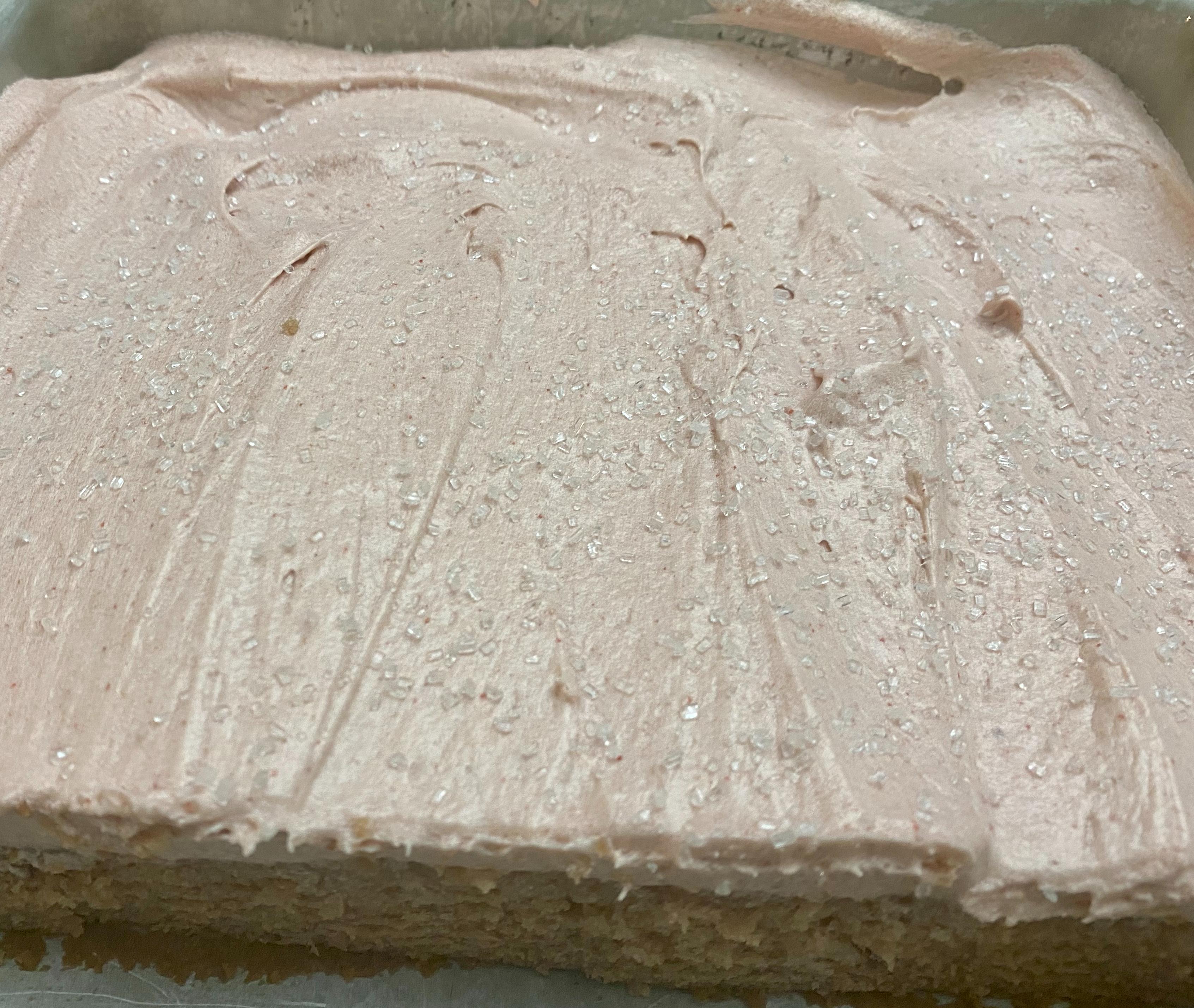
When I first saw my mother-in-law’s version of this recipe, I could help but notice the how thick and creamy the icing looked.

But First . . .🍰

The original Strawberry Cake recipe came from my mother-in-law, Colleen.  She and my grandmother were very similar when it came to their approach to cooking.  They both believed in the right to serve large portions, and both embraced the notion of going their own way instead of following recipes, step-by-step.  Therefore, when my grandmother, or Colleen, would share a written recipe, there was sure to be additional verbal directions and advice for best preparing the recipe.

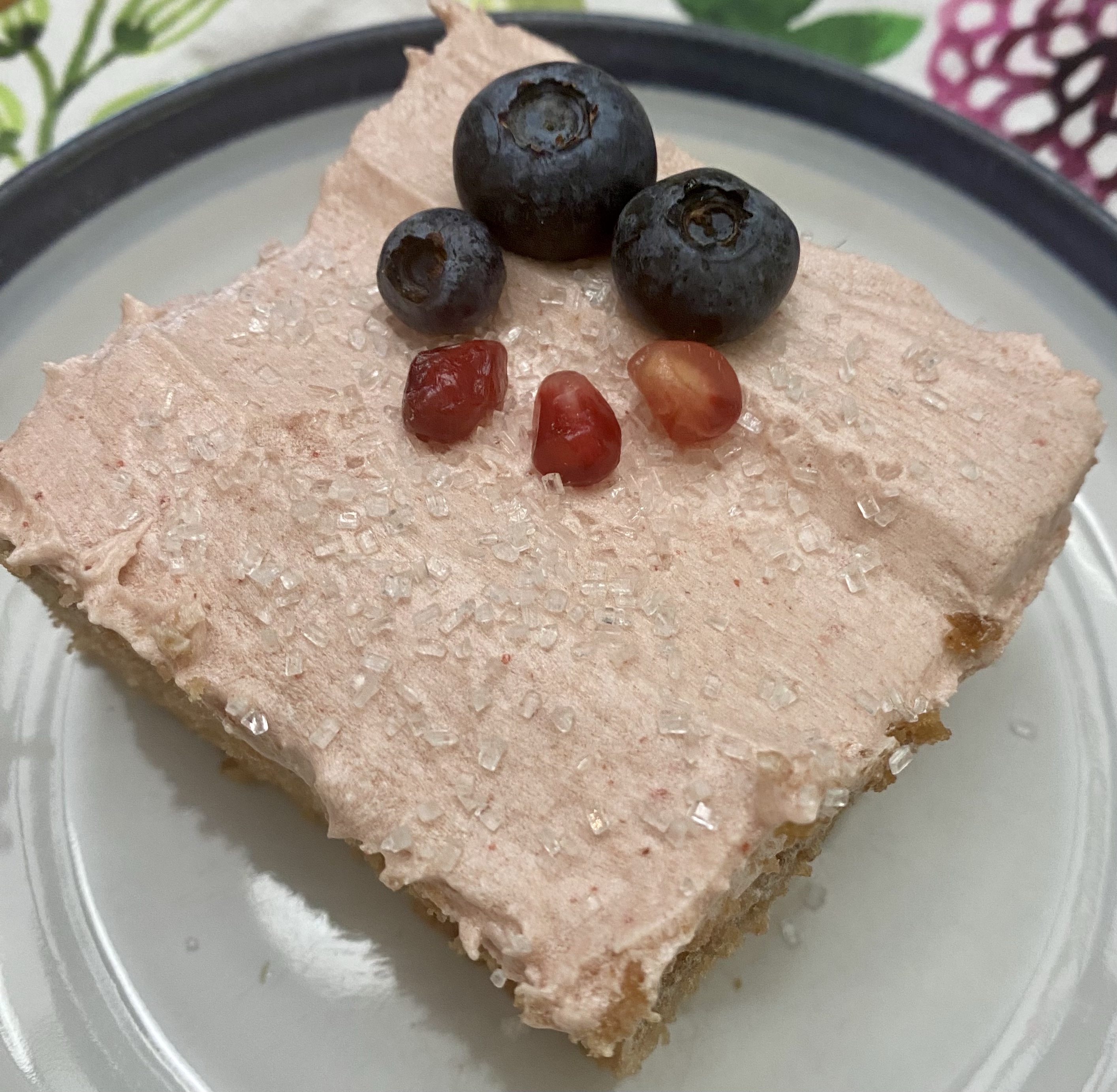
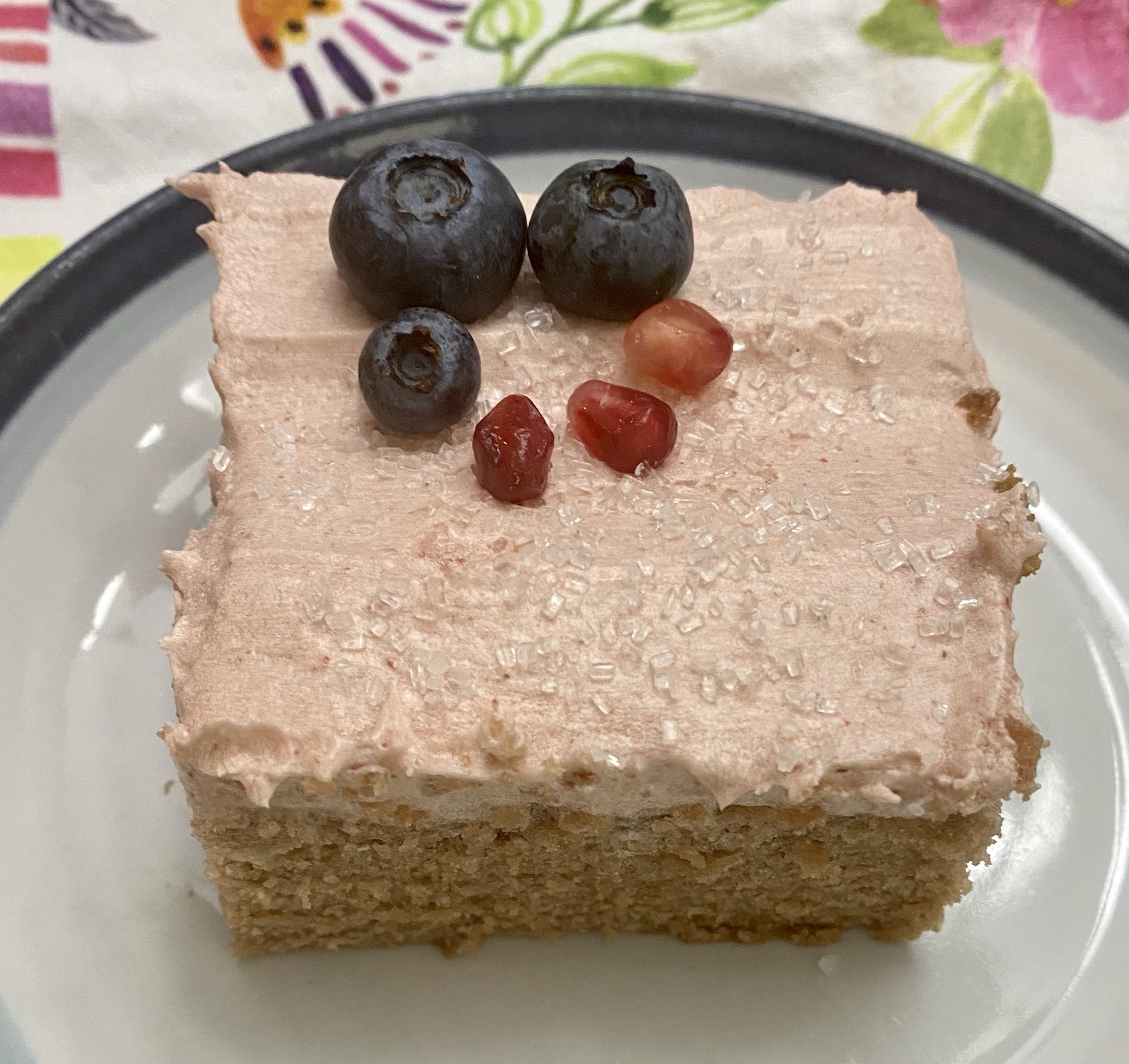
Dressing it up with sprinkles and blueberries if desired.

Never shy away from making a recipe your own🥣

It is that familial cooking spirit of never shying away from the right to make a recipe uniquely your own that continues to inspire me. Gluten-free baking wasn’t a “thing” when Grandmother and Colleen were living, so if I want to still enjoy those cooking stories from my past, I have to forge my own cooking path.  Nonetheless, I think they would have enjoyed many of my modified recipes, including this one. 

Add some pomegranate arils, for a bit more color contrast!

The eyes have it first👀

I recall the first time I ate this cake at Colleen’s house.  It was a Sunday family dinner, and I immediately noticed this beautiful, thickly frosted pink cake.  Now, my grandmother taught, “Your eyes eat things before your mouth,” and from the first look at that cake until the last bite, my eyes and mouth were in agreement: the cake was every bit the tasty confection it looked to be.  

The icing is thick and rich

Make it Gluten-free if you want🥮

I am not sure if my recipe adaptation is on-par with Colleen’s, but I do know that my own family loved it.  In fact, my adult daughter, one who typically, and quickly, discerns if I have made something gluten-free, asked if the cake was really gluten-free because she could not taste the difference.  Even more telling was the fact that she told me she thought that it was my best gluten-free recipe to date, and I could “bake it for her anytime.”  

Homemade strawberry reduction takes a bit more time, but it is so worth the effort! And, the leftovers of this reduction can used as you would any other fruit sauce or jelly.

Strawberry Reduction🍓

In addition to making the recipe gluten-free, I eliminated strawberry gelatin as a main ingredient, and instead, I made a strawberry reduction with double the amount of strawberries the original recipe called for.  My variation is also dairy-free, as I used non-dairy milk and butter; however, I did use real eggs.  That said, if you need this recipe to be egg-free, there are plenty of egg-replacement products available.  

The cake is light and spongy.

Cupcake Crazy?🧁

I’ve included directions for baking cupcakes and several cake variations, so the recipe can be baked and assembled in a variety ways.  Additionally, any leftover strawberry reduction tastes terrific spread over toast, stirred into oatmeal, or added to a smoothie.  

From my Family to Yours🏠

From my home to yours, I hope this recipe allows you to create your own cake story and recipe lineage.  Who knows, maybe one day, your grandkids will make their own version of Strawberry Cake! 

Any way you slice it up, this strawberry cake is sure to please!

Strawberry Cake (or Cupcakes) 🍰

Ingredients

½  cup milk (plant-based, if desired)

2 teaspoons white or apple cider vinegar

1 package white or yellow cake mix (gluten free, if needed)

3 tablespoons all purpose flour (gluten free, if needed)

3 eggs or equivalent egg-replacement

⅓ cup oil, melted butter, or applesauce

½ water

1 teaspoon pure vanilla extract

1 ½ cup strawberry reduction, completely cooled (see below)

*Strawberry Reduction

Ingredients

2 pounds fresh or frozen strawberries (If frozen, be sure to thaw for at least 20 minutes)

4 tablespoons sugar

1 tablespoon lemon juice

Strawberry Buttercream Frosting

Ingredients

1 stick butter, softened (plant-based, if desired)

¼-½ cup strawberry reduction, depending upon how much flavor you want

1 teaspoon vanilla extract

⅛ teaspoon salt

4-6 cups confectioners sugar

Up to 4 tablespoons milk, if needed for creaminess

Directions

*Make Strawberry Reduction 12-24 hours+ in advance

Thaw and/or remove stems from strawberries, then cut in half

Puree strawberries, sugar, and lemon juice in food processor or blender

Pour into medium saucepan and bring to low boil over medium heat

Reduce heat, but continue to simmer over low heat for 30 or so minutes, stirring occasionally

Allow strawberries to reduce to texture similar to that of tomato sauce

Allow to cool, then store in an airtight container in the refrigerator until completely cooled and/or ready to use.

Make Cake or cupcakes

Add vinegar to milk, set in fridge for five minutes (making “buttermilk”)

Meanwhile, preheat oven to 350 degrees

Coat cake pan(s) with nonstick cooking spray or line muffin tins with parchment paper

In a large mixing bowl, stir together cake mix and flour

Beat in eggs, one at a time.

Then, stir in “buttermilk,” water, oil (or butter or applesauce), and vanilla extract.

Next, fold in strawberry reduction, scraping down the sides as needed

For cupcakes:  divide batter among cupcakes, using a greased ice cream scoop, if desired, filling cup ½ – ⅔  full

For cake:  pour batter into one 9 x 13 cake pan, a 10-cup bundt pan, or divide between two 8” or 9” inch round pans

Baking time:  Cupcakes = 20-25 minutes; 9 x 13 pan = 30-35 minutes; Bundt pan = 45-48 minutes; Two round pans = 30-35 minutes or until toothpick inserted in center comes out clean

Allow cake or cupcakes to cool completely before frosting (I even put mine in the refrigerator for a couple of hours before frosting.)

Make the Frosting

In a large bowl, cream butter, strawberry reduction, vanilla extract and salt

Add in confectioner sugar, one cup at a time, until icing is firm

Then, add in milk, one tablespoon at a time, whipping in between each addition until desired consistency is reached.

Pipe or spread over cake or cupcakes.

Decorate tops of cake or cupcakes with red, white, or pink sugar sprinkles or freshly sliced strawberries

Store in airtight container and refrigerate

Makes 24 cupcakes or 1 cake of your choosing

May There Always Be a June

“Even the prettiest flower will die one day. It’s nature’s way of teaching us that nothing lasts forever.”–unknown

“Hmm . . .” I think, more than say, with a deep inhale as I yawned awake.  It was a rare, cool morning–a break from the typical heat and humidity of early July.  The bedroom windows were open, and I breathed in the fragrance of dewy grass, damp earth, and flowers. It was the lingering sweet floral scent that began a series of reflections regarding the significance of June and its likeness to the human life cycle.

At the time I am writing this, it is the July 4 weekend–marking, in my mind, the midpoint of summer.  Once July 4 begins, it feels like the rest of summer swiftly sails by.  Ah, but June.  June is sanguine–full of enough bright cheer to hold old-man winter at bay.  The early spring blossoms such as daffodils, crocus, and tulips have long passed.  Aromatic honeysuckle begins its fading away as the summer perennials and annuals begin blooming brightly in rapid succession.  July may be full of celebrations, explosive displays–all red, white, and blue–but, I adore June–modest, optimistic, June, and the colorful, unique flowers that blossom and thrive with its invitation to summer.

Photo by Suvan Chowdhury on Pexels.com

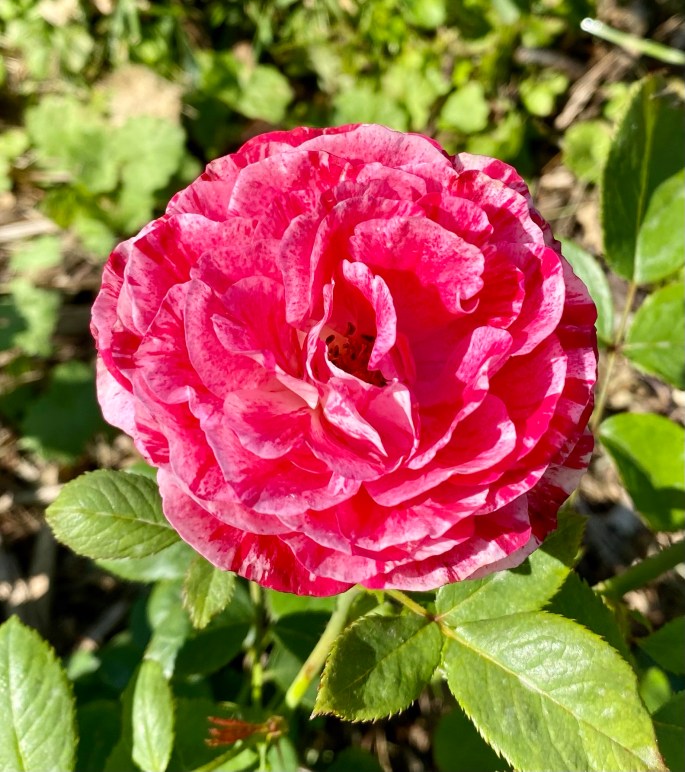
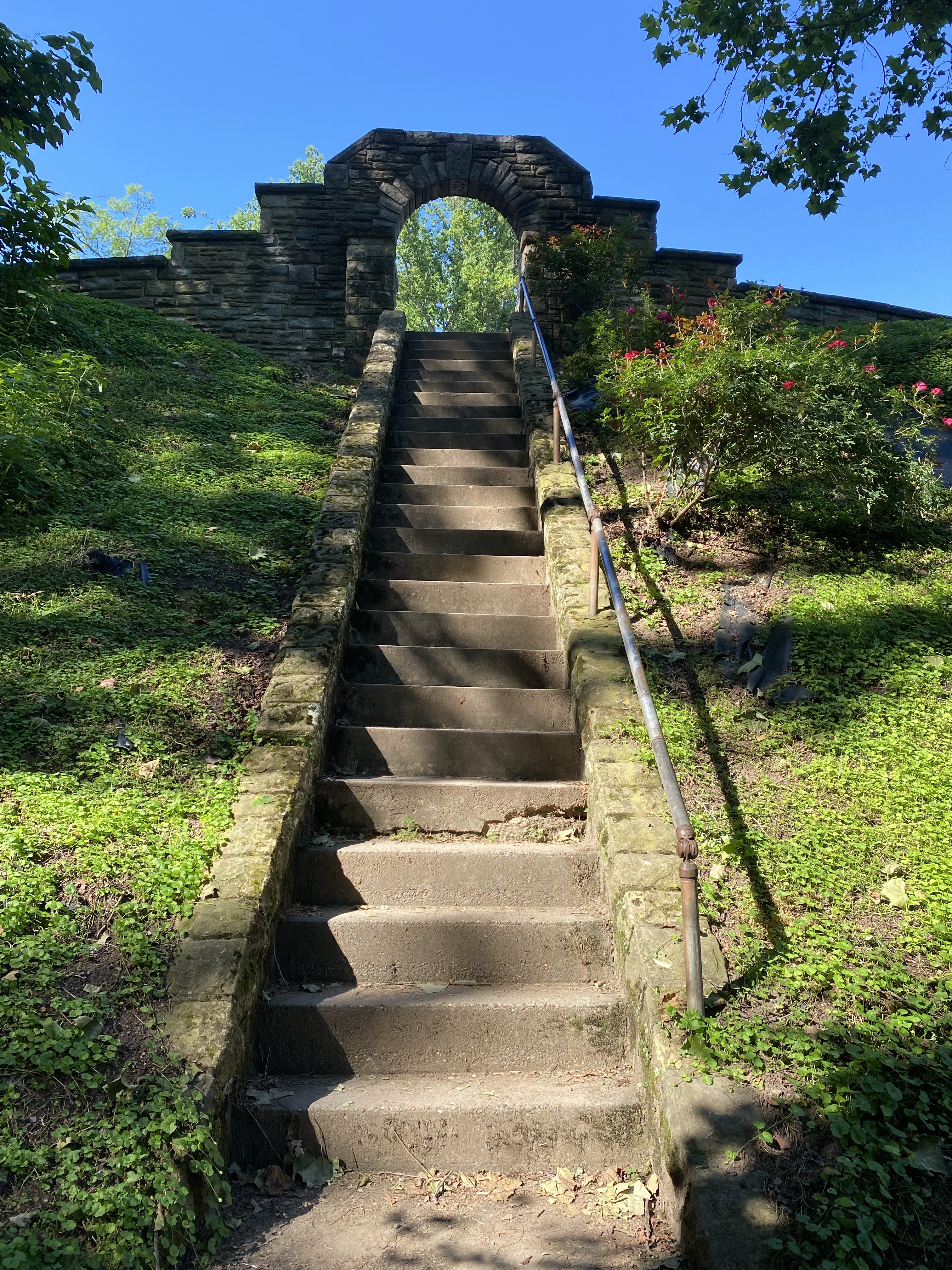
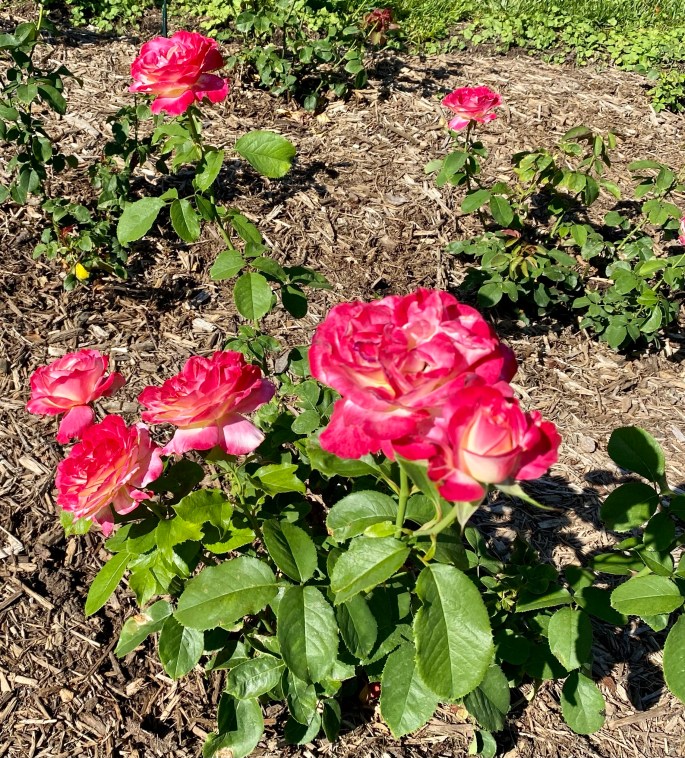
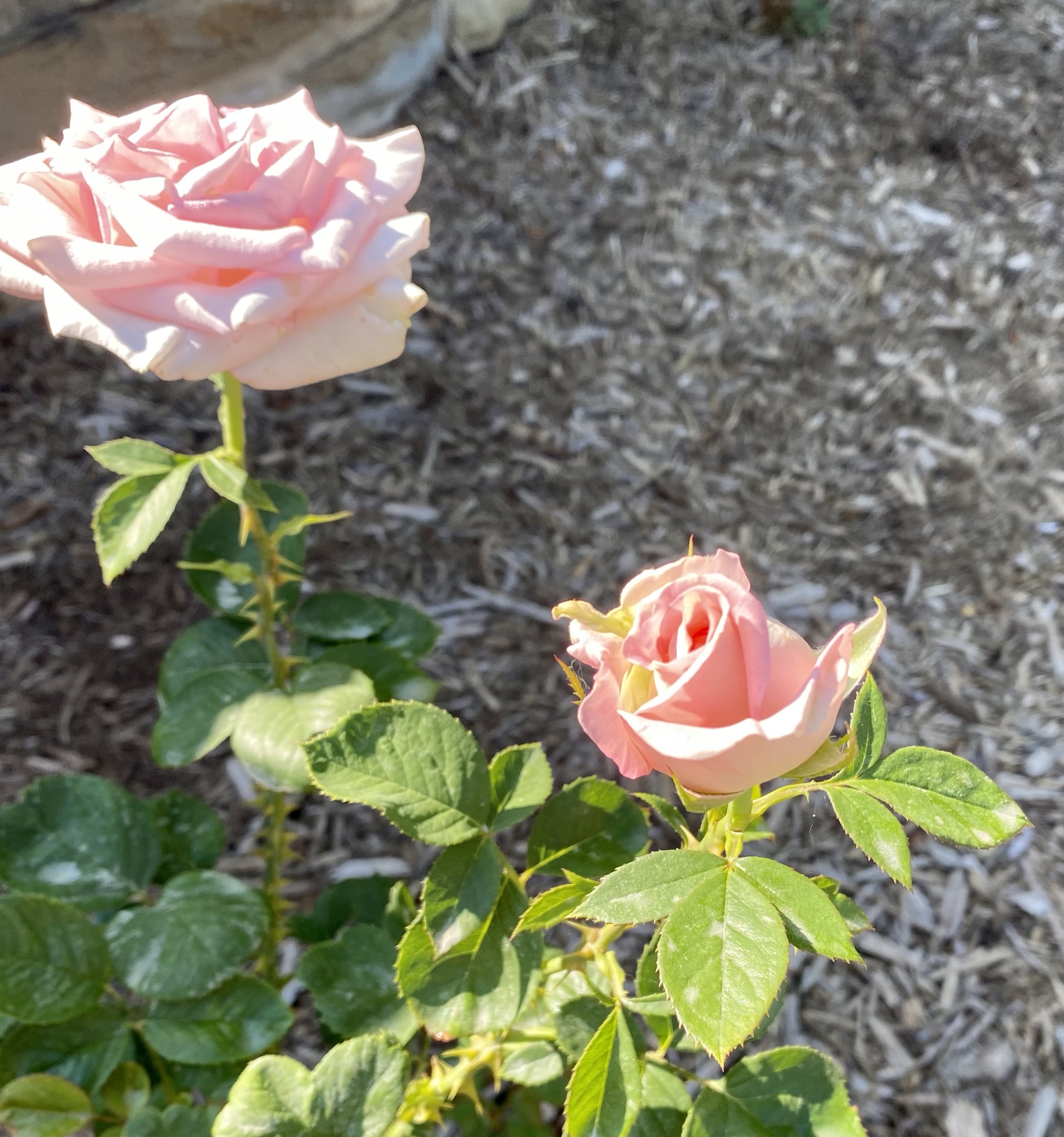
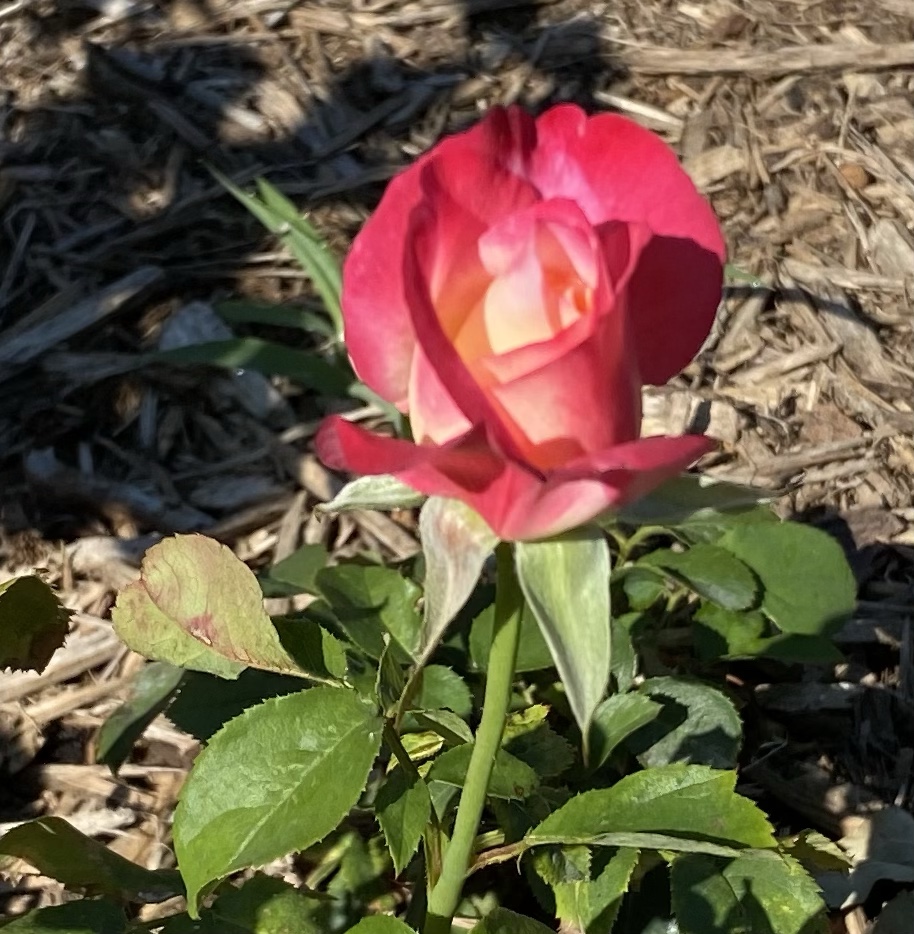
One morning, this past June, I was in Ritter Park to meet a friend for a walk.  However, the friend was running late, so I decided to meander up the old stone steps to the rose garden.  Sunshine, brilliantly glowed in its mid-morning slant, created a kaleidoscope of vivid colors, varying in texture, size, and shape. With no purpose other than to enjoy the moment, I wandered around the garden, drifting from one rose bush to the next, fascinated with all the minute differences not only among the varieties of rose bushes, but also among the flowers within the same bush.  Meanwhile, a gardener attentively tended the blooms.

Examining more closely, I noticed the various insects drawn to the roses. Bees, ants, beetles, moths and butterflies, flies, and even a few mosquitoes crawled, hovered, dove, and darted–busily buzzing about the roses with purposeful missions.  In one of the more isolated sections, closer to the wooded area of the park, I also observed a hummingbird dipping and diving among the various blossoms in a delightful, whirring dance of flight. As I let my gaze wander, my mind relaxed and began to make correlations with June, its flowers, and life.

“A rose can never be a sunflower, and a sunflower can never be a rose. All flowers are beautiful in their own way . . .”–Miranda Kerr

Each flower–from the number of petals to the size of each petal, from the varying life stages of each flower to the variances of color in each blossom–whether it be a rose in the Ritter Park garden or any one of the wide variety of flowers found in resident yards and public spaces–was, and is, a unique creation.  This is similar to the way each person, within the same family, or outside familial ties, is likewise a one-of-a-kind individual.  Flowers go through a dormant and a growing season of varying lengths, but all bloom seasonally, until they come to an end–whatever the life end may be. So it is with June and human life. 

The season of summer officially begins in June.  The air is sweet and heady with the fragrance of flowers. Winds and sunshine warm the air, and rain falls with purpose. Many plants are rooting and establishing while early spring greenery and blossoms are fading away into their dormancy. Daylight reaches its apex in June, while nighttime descends to its lowest point.  

Likewise, several key life events occurred and are honored in my own life each June.  I graduated from Ohio University in June.  Within that same month, I signed my first teaching contract, thus beginning the start of my career as an educator. Two year later, in June, I married my husband, an anniversary we have celebrated for 32 years.  Ten years later, our daughter was born in June.  As educators, my husband and I experience the arrival of each June as the beginning of a dormant period–an opportunity for reflection and renewal before a new school year begins in August.  Births and weddings, ebbs and flows, the highs and lows, and even celebrated endings.  It’s all there in June.

“All the flowers of tomorrow are in the seeds of today.”–Indian Proverb

I am but one person in the garden of many: my family, my work site, my community, and so forth.  All around me, younger lives are taking root, growing, and blossoming into their own personal expressions–making our collective garden more colorful and vibrant–buzzing with energy.  Meanwhile, I can’t help but notice that just as the flowers of June replace spring’s early blossoms, July has taken June’s place.  

Of course, one could argue that like the flowers, humans seem to be planted in dirt and threatened by weeds and all varieties of pestilence. However, when I was visiting the rose garden in June, it was the array of blossoms, in a rainbow of colors, that caught my eye, and made my heart smile.  They too were planted in dirt, confronted by pests and disease, but a gardener was there watching over them just as we have the Ultimate Gardener attending to our needs. 

The flowers offer their seeds and pollen to insects and birds to eat and disperse, ensuring more and different blooms for the future. Likewise, I pray that until my last petal drops, I am offering seeds of hope for others as June does for me.  One day, my memories of past Junes will fade away into permanent dormancy. In the meantime, I will savor the memories made this past June, find nourishment in the full blossoming of the July summer, and, in the weeks to come, accept August as the petals of summer begin to fall away, one by one.  

May there always be a June.