
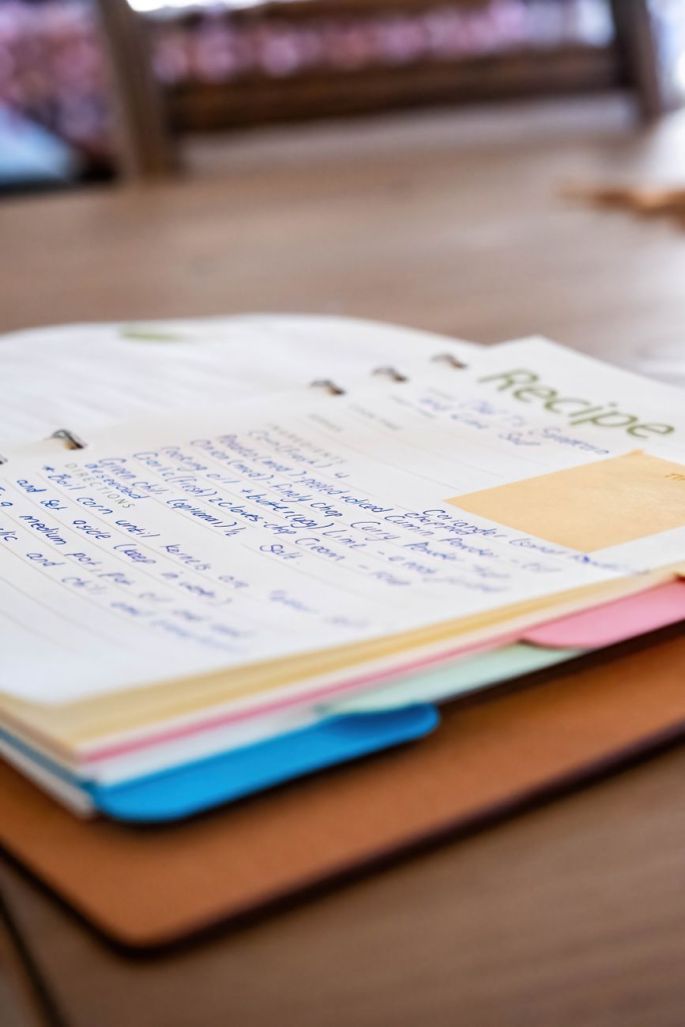
“But perhaps the most precious heirlooms are family recipes. …they remind us from whom and where we came and give others, in a bite, the story of another people from another place and another time.”—Stanley Tucci
Over the July 4 weekend, I was reading Demon Copperhead, by Barbara Kingsolver. It’s an Appalachian reimagining of Charles Dickens’ classic, David Copperfield. While the book is deeply harrowing at times, I often found myself lingering over family food scenes. The meals weren’t fancy in any way, but they reflected the simple, traditional recipes I grew up with—food that tasted of love and legacy. It made me think of the kitchens in which I learned that recipes were rarely followed exactly.
🧬 The Things We Inherit
Like Kingsolver’s novel, our recipes came with their own scaffolding. Each generation inherited the structure, then quietly rebuilt it to fit new lives. My maternal and paternal grandmothers cooked similar foods, but with their own personal stamp. Their frugal cooking was shaped by living through the Great Depression, but it was also influenced by changing food trends, double-coupon days, and seasonality of certain foods. My mother-in-law’s cooking reflected those Depression-era habits along with food trends she encountered through her work. Similarly, my own mother had four of us kids to feed on a budget, but her own mother’s influence could still be felt in her cooking.
Today, I take those beloved recipes and modify them to fit dietary needs and family preferences. My brother and sisters do the same thing. It’s not that we’re disrespecting the tradition; we are keeping it alive. Case in point: Grandmother Helen’s beloved-by-all brownie recipe, a vintage 1950s Betty Crocker cookbook original.
🍫 A Little More Chocolate
This was a quintessential dessert for special occasions and holidays. My siblings and cousins loved this rich, velvety chocolate treat—made even better in the summer with Papaw’s hand-cranked frozen custard.
The original recipe, for an 8 x 8 or 9 x 9 pan, called for two one-ounce squares of unsweetened chocolate, and the frosting used one ounce. Since grandmother always doubled the recipe, this meant double the chocolate, which can be expensive. Grandmother learned, and taught my mom, who shared this tip with me, that “in a pinch” you could get away with one or two fewer squares of chocolate to save money—or another trip to the store.
She also taught me the importance of using half butter and half shortening when baking brownies, or any other baked goods for that matter, as another money-saving method. Years later, I learned that combination wasn’t just economical. Butter contributes flavor, while shortening creates a softer, chewier brownie.
She made 1950s Betty Crocker brownies one way, and my mom made them her way—sometimes with all the chocolate, sometimes not. My brother and I now bake this treasured recipe, each with our own variations. To my knowledge, he makes his frosting out of cocoa powder, rather than melted unsweetened chocolate. I make my brownies gluten-free due to my celiac disease, but stick to the original frosting recipe.
🍰 Recipes for the People We Love
In a similar fashion, my mother-in-law once baked, and later shared the recipe, a strawberry cake that I was just wild about when my husband and I were first married. She knew I loved strawberries and wanted to make something she thought I would like. It was one of those recipes popularized in the 1970s made with strawberry gelatin and fresh strawberries in both the cake and the frosting.
Years later, when my daughter was quite young, she loved strawberries as much as I did, so I decided to dig up that long-ago recipe once made for me, and make it for one of my daughter’s birthday sleepover. The girls loved it, and lapped it up. However, later that night, my daughter became very sick because of the recipe’s rich ingredients: one cup oil plus four whole eggs in the cake, plus one cup butter in frosting.
I hadn’t made it since, but earlier in May, my daughter began reminiscing about it. This summer, I’ve made it for her a couple of times, including over the July Fourth weekend. I used my mother-in-law’s original recipe, but I made it gluten-free and found a way to dramatically reduce the eggs and oil without affecting the taste or texture of the cake.
I adapted the cake to fit the people I loved while still honoring the woman who first made it for me. Different times. Different needs. Same heart. Every generation may edit a recipe, but the love remains intact.
There are so many wonderful recipes that I have inherited from the women before me. Each recipe is filled with a memory, a history, and the hands that worked out of love, necessity, and grace. Simple recipes such as hot dog sauce that sometimes becomes spaghetti sauce; green beans and corn—half-runners from my family, pole beans from my husband’s; creamy, made-from-scratch macaroni and cheese; homemade bread; far too many desserts to count; and even the simple relish tray—an ever-present plate of pickled, salted, and stuffed morsels reserved for special occasions.
They all taste of laughter, good-natured teasing, hugs, kisses, and even tears of the past. And now I pass these gifts on to my daughter. She may barely remember some of them and never really knew others, but every time she eats these foods, she receives something they once gave me. Not genetically. Not historically. Personally. It is the tie that binds.
🍽️ What Still Tastes Like Home
Kingsolver inherited Dickens’ framework and made it unmistakably Appalachian. I inherited the recipes of both sides of my family. Neither remained unchanged. Both became richer because they were adapted rather than rigidly preserved. Maybe the best recipes were never meant to be followed exactly. They were meant to be shared, adapted, and passed on. And isn’t that the point?
Perhaps that is the great inheritance of recipes. They don’t simply feed those of us gathered around a table, but they connect us to those who came before us and to those who will come after.
Every family has recipes. The fortunate ones realize they are heirlooms—structures quietly rebuilt by each generation, yet always tasting of home.

