When a Stranger Helped Me Pick Up the Pieces

Sometimes the most meaningful acts of kindness come from strangers we may never see again.

❄️ The “Perfect Storm” at the Grocery Store

It was another cold, snowy morning with another round of snow on its way. School had been cancelled for the day, and I thought I would be “smart” by driving to the grocery store early. Surely no one else would do that ahead of the snow. They would have done their shopping last night, right?

Pulling into the parking lot, snow piles—peppered with dirt and debris—blocked several parking spots. Light snow sprinkled down from an angry sky darkened by winter’s wrath once again. It was a Friday, the first of the month, so I should have known that despite the early hour, few parking spots were available. Then it hit me: big-game weekend.

🛒 The Cart with the Stubborn Wheel

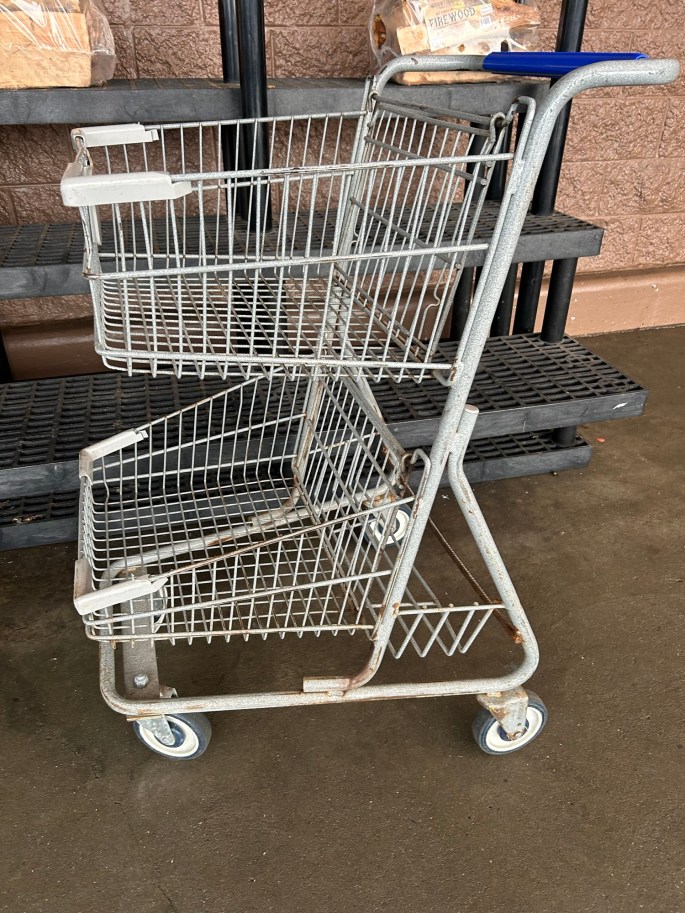
Once parked, it was a “perfect storm” inside the store. 80s pop music attempted to brighten the mood. Harsh fluorescent lighting contrasted the outside winter skies.  Paper ads of this week’s specials fluttered in the air as the double doors whooshed open and closed repeatedly. The only cart available was a small cart, which was perfect for my needs. The only problem? It had a front wheel that did not roll properly. 

I quickly attempted to push it. After all, I only needed a few items, but that stubborn wheel kept sticking, making corners especially difficult to turn. Nonetheless, I found a way to, well, get it rolling, and attempted to weave in and out through the throngs of dilly-dallying people and displays. 

I reminded myself of the mission since I had already “researched” prices online: Stick to the list organized by aisle numbers. Get in and get out quickly. Online work awaited me at home, and snowfall had already started. I told myself to slow down, but I kept my pace up anyway.

📦 When Everything Came Crashing Down

And, of course, it happened. The wheel stuck right as I tried to turn a corner. It was like a bad slow-mo scene from an old black-and-white B-movie. I tried to stop it, then catch it, but it wasn’t enough. An entire cardboard display–stockpiling the greatest hits of pharmacy specials—began to crumble to the floor.

 I stumbled, fumbled, and bumbled with individual boxes of pain relievers, antacids, toothpaste, vitamins, and cold/flu care items. Embarrassment colored my cheeks and a sensation of shame sent waves of heat through my body as my heart began to race. I was a child again, and it was “all my fault.” “You should have known better, Steph” echoed in my mind. I tried to work quickly, but my hands were as clumsy and klutzy as that misbehaving wheel. 

🤝 The Kindness of a Stranger

Then, I sensed a presence. I gazed up from a squat position on the floor and there stood a young woman with large expressive eyes. Her kindness was palpable as she stooped down beside me. Her long fingers worked with calm, coordinated dexterity, and she began to help me. I began to protest that it was “my mess,” not her responsibility. Her hands continued to work with precision, and she met my gaze, declaring that it was only cardboard–“no big deal.” 

The display was like putting together a 3-D jigsaw puzzle. Nonetheless, my heart slowed with the gentleness of her response. When we were finished, we each had a few items left over in our hands with no more room on the cardboard shelves. The unknown woman flipped her long chestnut hair over her shoulder and gave an unexpected child-like giggle. In a conspiratorial voice, she directed us to “put the rest of the items here.” It was on a shelf of an endcap of laundry detergent, beads, and dryer sheets.

She winked. “It makes about as much sense as this random display.” 

I thanked her profusely, but she waved me off with an it-was-nothing expression.

❄️ A Snowflake Memory

When my daughter was quite young, I recall playing with her, gleeful and reveling in the snow. “Catching” snowflakes on her mitten was a favorite activity. Time fell away as delicate flakes alighted onto our upturned mittens. There was a silent wonder that muted even the beating of our hearts as we gazed at each individual snowflake. “Look, Mommy, look!” she would say as slowly each snowflake melted into the fabric of our mittens, leaving only a whisper of a mark.

The woman escaped as quickly as she appeared. For a fleeting moment I was back in the snowy front yard with my daughter, silence filled my ears as the warmth of her generosity lingered within me. Then, just as quickly the milieu of the store came back into focus: the buzzing lights, calls for help up front, the throngs of people with party trays, beer, and bread, and another 80s be-bop song played in the background. 

With a warmed and lightened spirit, I trooped off to gather the few items remaining on my list. Of course, my cart still had the broken wheel, and it was still hard to maneuver it through crowded aisles and endcaps. Still, I was able to get the rest of my items without incident. 

How many of us navigate life’s challenges with little vulnerabilities wobbling within us like that shopping cart wheel?  Helping hands are seldom asked for, but often needed in a hurried and harried world.

🌊 The Ripple Effect of Kindness

A week or so later, when I visited the same store, I noticed a woman struggling to reach an item from her motorized shopping cart. One of her legs was in a boot—her current wobbly wheel. As I offered to help her, I was reminded of the helping hand that lifted me up during one of life’s storms and sensed the rippling waves of one person’s ordinary kindness.

Kindness, generosity, and brief moments of courage—these are the connections that steady us when life turns snowy and cold and hands us a cart with a wobbly wheel. 
Reading for fun provides lifelong benefits

There is more treasure in books than in all the pirate’s loot on Treasure Island.”–Walt Disney

Photo by Samson Katt on Pexels.com

I recently had a high school student ask me, with great sincerity, why reading was important.  

“It’s not like it’s as important as math, science, or even computer class,” he added.

Why read indeed?  It is a question I have had to answer for decades as an educator, and one that occurs with growing frequency.  When all the answers to nearly every conceivable question are merely a few keyboard clicks away, why pick up a book, especially a work of fiction.  The number of inquiries I now field from parents questioning the value of their teen children reading, when their child already has “so much to do” is also increasing.

My observations reflect overall data trends in the United States.  According to one recent 2021 study by the Pew Research Center, approximately 23% of the population did not read in part, or in whole, a book–paper, electronic, or audio–during last year.  Additionally, the number of American children between the ages of 9-13 who read for fun is also dropping according to another Pew Research Center article.  Adults who are reading, are reading fewer books than ever, approximately 12 books per year reports a recent 2021 Gallup Poll. This is the lowest number Gallup has observed since they first began tracking reading in 1990.

Given the fast pace of life, the number of responsibilities we tend to juggle, not to mention all social media outlets and streaming services that vie for our attention, I can certainly understand why reading has become a bottom feeder on society’s list of priorities.  However, research, science, and even the business world have a new message for us.  Reading, including reading fiction, is important, and it is worth considering moving to the forefront of routine priorities.

Photo by Alex Green on Pexels.com

Today a reader, tomorrow a leader.”–Margaret Fuller

Habitual reading is now viewed as beneficial to careers and to the business world.  This position is reflected in the growing number of recent articles by respected business publications, such as the Harvard Business Review, Business News Daily, and Business Insider.  This is because one of the benefits of reading fiction is that it helps strengthen several cognitive skills that are critical for developing EQ, or emotional intelligence. Reading increases one’s vocabulary and ability to solve problems creatively.  It fosters empathy, builds critical thinking skills, and increases the ability to understand and respect those whose beliefs and desires may differ from their own.   In fact, businesses are now using reading facilitators, such as Reflection Point, a nonprofit organization, to use shared workplace reading experiences and conversations as one method for strengthening collaboration and inclusion within the workplace. 

Beyond the business world, however, reading offers a wide array of benefits to every individual.  One of the more obvious benefits of reading is pleasure, which, in turn, reduces stress. Science not only backs this fact up, but also reveals both mental and physical benefits of reading, no matter your age.  From the youngest, emergent readers all the way through your senior years, and even those critical teen years, reading can benefit your mind and body throughout a lifetime.

Photo by Monstera on Pexels.com

Reading strengthens cognitive function and may reduce cognitive decline.  MRI and brain-scan based studies have demonstrated that reading dramatically changes your brain.  As you read, a complex series of signals and circuits are engaged throughout your brain.  As your reading skills advance, so do those neural pathways.  Additionally, reading stimulates a flow of blood, oxygen, and other nutrients to the brain, which could help stave off age-related cognitive decline and strengthen cognitive function and enhance memory.  Reading has even been linked to increased activity in the somatosensory cortex, the part of the brain that responds to physical sensations.

Reading can help manage stress. Obviously, reading is not the only tool for managing stress, but reading, as little as 30 minutes a day, has been shown to ease muscle tension while reducing blood pressure, heart rate, and feelings of stress. 

Reading fosters empathy and improves relationships. Empathy, the ability to understand how another person is feeling, is key to fostering social, interpersonal, and work relationships.  Reading about the lives of others, be they real or imaginary, broadens our experiences and offers insight into situations, feelings, and beliefs that we may not otherwise be able to experience.  This knowledge builds what is known as “theory of mind”, which can lead to more tolerant and compassionate attitudes towards others as well as for ourselves.

 Reading builds vocabulary. This one is a no-brainer, but it also exposes us to language outside of our everyday conversational experiences as well as to a variety of sentence structures, voices, and styles that can strengthen and enhance our personal communication skills.

Reading helps adolescents with self identity.  As a middle and high school educator of a so-called “soft-subject”, this is important validation.  Identity development is a critical component of the teen years.  Identity of self is typically developed through real-world relationships, events, and maturity, but it is now known that reading can also play an important role in this development. Reading allows teens a safe and distanced way to develop insight and explore relationships, friendships, cultural identities, and personal values which can help them as they navigate their own feelings, determine their identity/values while transitioning into adulthood.

Reading builds perseverance and inspires creativity.  Reading teaches you to be ok with ambiguity, and it reduces the desire for immediate gratification.  The ability to read a book demands setting a goal, sticking with it over a period of time, and builds our focus/concentration stamina.  These skills can translate into the ability to think creatively and solve problems. 

Reading may add years to lifespan.  While reading won’t replace longevity health habits such as eating well, incorporating movement throughout the day, and getting quality sleep, regular reading has been a proven life lengthener.  According to one study, reading a chapter per day, equivalent to 3½ hours per week, adds nearly two years more to a person’s life expectancy when compared to nonreaders. 

Reading may improve your mental well-being and prepare you for a good night’s sleep.  One of the top six tips for a better night’s sleep, according to doctors at the Mayo Clinic, includes reading a print book. Within about six minutes of reading a book, the body begins to relax, the heart begins to beat slower, and the day’s stress begins to fade into the background–all of which can lead to a better night’s sleep. In fact, the National Alliance on Mental Illness encourages reading as one method for reducing anxiety and depression, lowering stress levels, and increasing one’s ability to relax. 

Photo by George Milton on Pexels.com

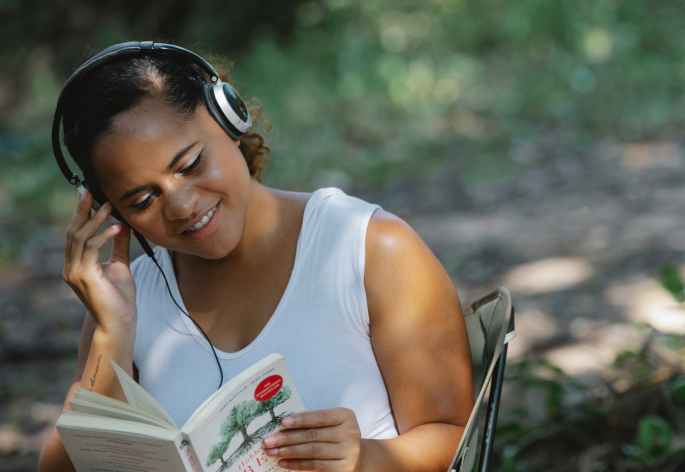
No matter how busy our lives may become, taking time for reading, even if it’s listening to an audio book during your work commute, is as important now as it was when we were young.  With an endless array of  books available on-line, in bookstores, and housed in local libraries, on any number of topics, why not grab one and start reading today.  Get a friend or family member to join, so you can both reap those wonderful benefits reading has to offer.  

P.S.  If you haven’t yet discovered the Libby app, a free digital library app available through most U.S. state public libraries, I highly recommend this app for its free digital and audio content of books, magazines, and other publications!  It’s a budget friendly, easy way to read on any device! 

Photo by Negative Space on Pexels.com