
What Holds

Marathon training changed what I thought was possible. It also taught me that some of life’s most important things aren’t meant to change.

“At the still point of the turning world. 

Neither flesh, nor fleshless; 

Neither from, nor towards; 

at the still point, there the dance is.” 

— T. S. Eliot

🌅 Morning Routine

It was still dark, cool but thankfully no longer the stinging cold of January. Reflective, fluorescent green straps and a chest lamp lit the road as I headed back to the car to meet my husband, John, finishing his workout at the gym. The first birds had begun, their harmonies promising the sun. I inhaled deeply and ran through the morning’s checklist.

Start the dishwasher once both showers were done. Finish herbal tea and refill my bottle with a hydration mix for work. Lunch was already packed—thankfully, my usual. Still left: pack my work bag, shower, and call my daughter. We typically chat most mornings while getting ready, fitting in conversation before the day takes over. Nothing unusual—just routine. 

By Thursday, fatigue would set in—work, early mornings, and daily workouts quietly draining both energy and focus. Routine wasn’t a matter of preference; it was, and still is, protection. Even then, something would likely slip through the cracks as the week wore on.

🧱 Building the Structure

I decided to run the Athens Marathon back in December, about a month after finishing the Marshall University Marathon. It felt like a way to give structure to the winter—to keep moving forward when it would have been easier not to. Paying the entry fee only strengthened that commitment.

It felt like stacking LEGO bricks into something precise. Each piece had to fit within the existing structure of life. Not everything is meant to change. Some things are meant to hold. 

Morning workouts were already the norm; they just needed to be retooled. Weekend runs grew longer. Laundry, errands, cleaning, and meal prep arranged themselves around them. The structure of the workweek held, so the miles moved earlier, stretching the edges of the day. At first, the fatigue of long runs was heavy. But the body adapted. Responsibilities did not. 

🕰️ What Changed—and What Didn’t

Brick-by-brick, I learned more about distance—and about myself. And still, there were only 24 hours in a day. Running became an integrated part of it, not the center. It provided energy for everything else. Life continued, steady as ever, carried by the constant presence and love of family and friends.

Beyond my own small routines, the world kept shifting—nationally and globally, in ways both loud and subtle. Change was constant, as it always is. And still, daily life asked the same things: to show up, to care for one another, and to keep going.

🫶 What Holds

In one sense, the training changed what I believed was possible. I stretched. I learned. I crossed the finish line. The goal was reached—but that was never the point.

Crossing that line was not about changing everything. It could not have occurred without what stayed constant—the steady and loving presence of family, the rhythm of daily life, the hope that carried me, the things that held when everything else was stretched.

When a Stranger Helped Me Pick Up the Pieces

Sometimes the most meaningful acts of kindness come from strangers we may never see again.

❄️ The “Perfect Storm” at the Grocery Store

It was another cold, snowy morning with another round of snow on its way. School had been cancelled for the day, and I thought I would be “smart” by driving to the grocery store early. Surely no one else would do that ahead of the snow. They would have done their shopping last night, right?

Pulling into the parking lot, snow piles—peppered with dirt and debris—blocked several parking spots. Light snow sprinkled down from an angry sky darkened by winter’s wrath once again. It was a Friday, the first of the month, so I should have known that despite the early hour, few parking spots were available. Then it hit me: big-game weekend.

🛒 The Cart with the Stubborn Wheel

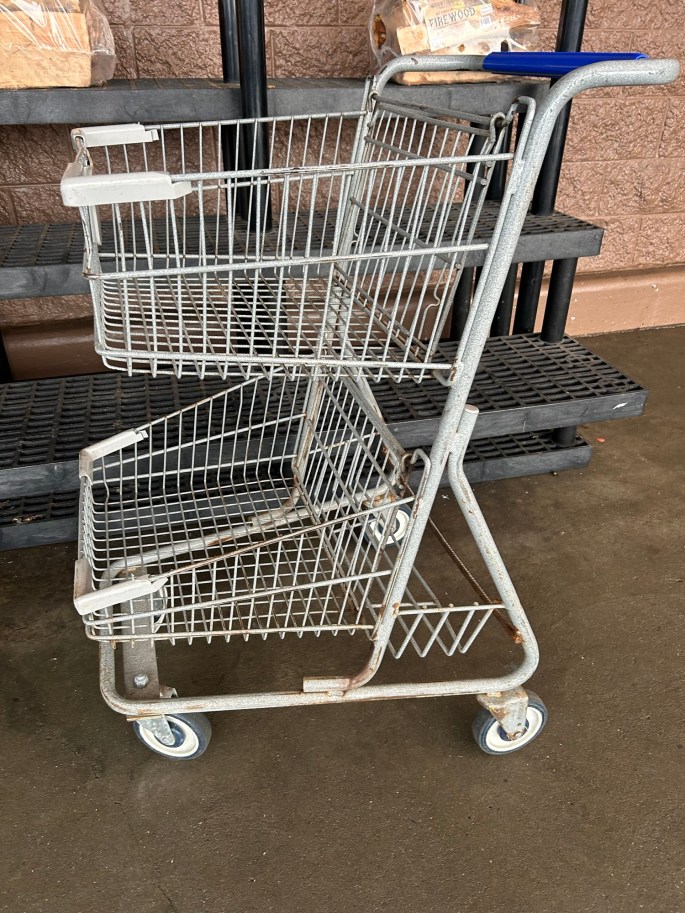
Once parked, it was a “perfect storm” inside the store. 80s pop music attempted to brighten the mood. Harsh fluorescent lighting contrasted the outside winter skies.  Paper ads of this week’s specials fluttered in the air as the double doors whooshed open and closed repeatedly. The only cart available was a small cart, which was perfect for my needs. The only problem? It had a front wheel that did not roll properly. 

I quickly attempted to push it. After all, I only needed a few items, but that stubborn wheel kept sticking, making corners especially difficult to turn. Nonetheless, I found a way to, well, get it rolling, and attempted to weave in and out through the throngs of dilly-dallying people and displays. 

I reminded myself of the mission since I had already “researched” prices online: Stick to the list organized by aisle numbers. Get in and get out quickly. Online work awaited me at home, and snowfall had already started. I told myself to slow down, but I kept my pace up anyway.

📦 When Everything Came Crashing Down

And, of course, it happened. The wheel stuck right as I tried to turn a corner. It was like a bad slow-mo scene from an old black-and-white B-movie. I tried to stop it, then catch it, but it wasn’t enough. An entire cardboard display–stockpiling the greatest hits of pharmacy specials—began to crumble to the floor.

 I stumbled, fumbled, and bumbled with individual boxes of pain relievers, antacids, toothpaste, vitamins, and cold/flu care items. Embarrassment colored my cheeks and a sensation of shame sent waves of heat through my body as my heart began to race. I was a child again, and it was “all my fault.” “You should have known better, Steph” echoed in my mind. I tried to work quickly, but my hands were as clumsy and klutzy as that misbehaving wheel. 

🤝 The Kindness of a Stranger

Then, I sensed a presence. I gazed up from a squat position on the floor and there stood a young woman with large expressive eyes. Her kindness was palpable as she stooped down beside me. Her long fingers worked with calm, coordinated dexterity, and she began to help me. I began to protest that it was “my mess,” not her responsibility. Her hands continued to work with precision, and she met my gaze, declaring that it was only cardboard–“no big deal.” 

The display was like putting together a 3-D jigsaw puzzle. Nonetheless, my heart slowed with the gentleness of her response. When we were finished, we each had a few items left over in our hands with no more room on the cardboard shelves. The unknown woman flipped her long chestnut hair over her shoulder and gave an unexpected child-like giggle. In a conspiratorial voice, she directed us to “put the rest of the items here.” It was on a shelf of an endcap of laundry detergent, beads, and dryer sheets.

She winked. “It makes about as much sense as this random display.” 

I thanked her profusely, but she waved me off with an it-was-nothing expression.

❄️ A Snowflake Memory

When my daughter was quite young, I recall playing with her, gleeful and reveling in the snow. “Catching” snowflakes on her mitten was a favorite activity. Time fell away as delicate flakes alighted onto our upturned mittens. There was a silent wonder that muted even the beating of our hearts as we gazed at each individual snowflake. “Look, Mommy, look!” she would say as slowly each snowflake melted into the fabric of our mittens, leaving only a whisper of a mark.

The woman escaped as quickly as she appeared. For a fleeting moment I was back in the snowy front yard with my daughter, silence filled my ears as the warmth of her generosity lingered within me. Then, just as quickly the milieu of the store came back into focus: the buzzing lights, calls for help up front, the throngs of people with party trays, beer, and bread, and another 80s be-bop song played in the background. 

With a warmed and lightened spirit, I trooped off to gather the few items remaining on my list. Of course, my cart still had the broken wheel, and it was still hard to maneuver it through crowded aisles and endcaps. Still, I was able to get the rest of my items without incident. 

How many of us navigate life’s challenges with little vulnerabilities wobbling within us like that shopping cart wheel?  Helping hands are seldom asked for, but often needed in a hurried and harried world.

🌊 The Ripple Effect of Kindness

A week or so later, when I visited the same store, I noticed a woman struggling to reach an item from her motorized shopping cart. One of her legs was in a boot—her current wobbly wheel. As I offered to help her, I was reminded of the helping hand that lifted me up during one of life’s storms and sensed the rippling waves of one person’s ordinary kindness.

Kindness, generosity, and brief moments of courage—these are the connections that steady us when life turns snowy and cold and hands us a cart with a wobbly wheel. 

Rolling from the Bottom: Lessons from the Long Run

Starting with a Budget of Energy

Piles of dirty snow still littered the brown grass around me. But unlike the previous week, I glided with more freedom over the cleared blacktop path. Temperatures rose from breath-visible mid-20s to the high-30s. As my muscles warmed, sweat began to blossom. I shed my top-layer and tossed it into the hatch of my vehicle, switching from my thermal hat to a lighter ball cap. 

“Manage that energy,” I reminded myself. Long training runs are like rolling a tube of toothpaste from the bottom–energy measured, not spent. There are more miles to go. Let it last. 

Lessons from a Tube of Toothpaste

As the oldest of four kids, I recall our family’s early years. Our budget was tight. Even as careers progressed, resources had to be carefully managed in a house of six.

“Roll the toothpaste from the bottom,” and remember, “a little dab will do you.” The tube had to last for all of us. Payday wasn’t here yet. I didn’t understand it then, but that toothpaste was not just about toothpaste. It was so much more.

The Micro-Decisions That Shape the Finish

As part of my marathon training, my Saturday run was 15 miles long. I could not squeeze out all of my energy in the beginning. I started low and slow, especially since I knew the temperatures would change so drastically over the course of the morning. This meant dressing in layers and removing those layers early enough to not get overheated. I also had to adhere to a fueling schedule to ensure I was taking in enough calories and electrolytes. Running long distances, I have learned, is not about speed–thank heavens for me. It’s about managing limited energy over time–and isn’t that like life? 

In order to finish a marathon, my previous fall marathon experience taught me that it is the micro-decisions that shape the finish line outcome. Energy to cross the finish line requires a well-managed budget. Hundreds of choices are made throughout the hours it takes to run 26.2 miles. Do I push now? Do I hold back longer? Do I fuel now? Do I hydrate now? Do I adjust my clothing? All of these decisions affect my budget. These decisions are tiny, almost invisible acts of stewardship–the careful and responsible management of resources entrusted to one’s care, as defined by the Merriam-Webster Dictionary.

The finish line is often decided in the first miles. Not in drama, but in restraint. Let it last.

Training for More Than Race Day

I am budgeting so that 10–20 years down the road I can get up off the floor without help, walk up steps, move for fun (dancing, anyone?), carry groceries, and maybe one day carry a grandchild. Running, and other forms of exercise, are part of those short-term goals on the journey of healthspan—not just living long, but living well into later years. In that sense, marathon training becomes a microcosm of life itself: we are learning how to sustain it.

The Long Tube of Life

Healthspan is a long tube as it were. We don’t know how much time is left. We don’t know the “weather” ahead of us. We don’t know when “payday” will come. Overspending energy early often has consequences. Neglect compounds, but discipline compounds. Strength builds gradually.

The body is a tube we do not get to replace. We have to plan with care.

Of course, sometimes it is hard to remain slowly steadfast. There are times in life when we “squeeze” too hard, trying to force something to happen. It’s understandable. We want to feel in control, but the truth is control is an illusion. 

When Life Requires More Than a “Dab”

However, there are situations over which we do have control. There are seasons, in a manner of speaking, of expenditure, when life requires more than a “dab” from us. We have times when focused efforts and long hours are required. Sometimes urgency is required; deadlines must be met. Even then, we don’t waste; we choose. Life is precious. Let it last.

Strength That Lasts

When we are young, we think strength is “squeezing hard.” We believe, fostered by societal influence, that we are measured and rewarded based on how quickly, how often, and how hard we squeeze. Over time, though, we learn that strength increases, as does contentment, when we squeeze life’s tube wisely. When we create a life budget, and based upon it, gather our provisions– our life skills–we can practice appropriate stewardship of the life we have been given. Strength comes from preparation, discipline, and patience. 

Finishing the Miles Well

Maybe finishing well isn’t about having more, but managing what we have been given with joy. We don’t want to rush to finish the tube quickly only to discover there are no refills. In the end, it is worth patiently striving to make our one sweet tube of life last, so we still have something to give and share during our final miles. And may those final miles count.