Unwrap your best holiday health: Ways to keep moving from Thanksgiving through those New Year’s Celebration

“Take care of your body. It’s the one place you have to live.”–Jim Rohn

This is my fifth installment of celebrating and encouraging movement for everyone.  If you’ve read my previous pieces, you already know that my goal is fairly simple.  I want to encourage everyone to move more in whatever manner works best for you, your body, and your schedule.  I do not believe in one-size fits all when it comes to fitness and health goals.  Instead, I am writing to explore techniques, habits, and motivations for incorporating more movement into life, even during the upcoming holiday season.

Why should you consider maintaining your movement/exercise routine during the weeks of Thanksgiving through the New Year celebration?  There are many possible reasons, but only you can decide your why(s).  Personally, it allows me to feel as if I have accomplished one positive thing for the day.  If everything else derails throughout the day, at least I exercised–even if it had to be for a reduced amount of time.  However, there are so many more valid reasons.

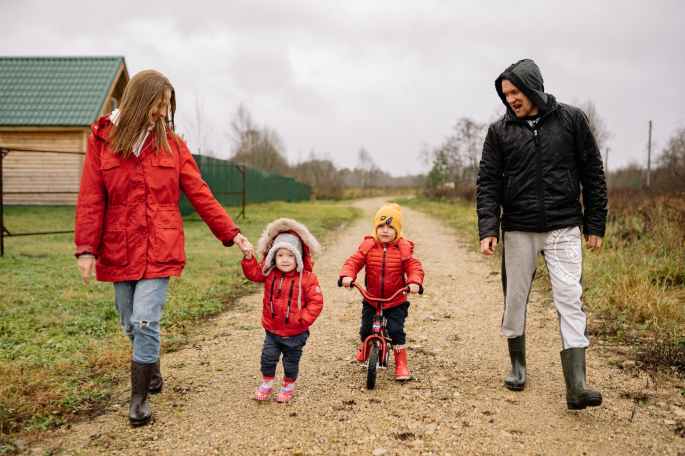
Photo by Julia Larson on Pexels.com

Increased movement and exercise is one positive way to combat the stress that often accompanies this season.  Although stress isn’t a disease, per se, it is the body’s physical, mental, and emotional responses to external events, especially change, which often occur from Thanksgiving through the New Year celebrations. High levels of holiday stress can detrimentally impact mental health.  However, being physically active throughout the holidays is a proven technique to significantly reduce stress levels.

Along the same lines, exercise during the holiday season can provide structure to your schedule. If you have already committed to moving more throughout your day/week, and you have already been consistently applying it, then continuing to follow through with that plan builds at least a sense of familiarity and comfort.  Even if you have to reduce your time and/or days for physical activity, there is at least that semblance of reassurance that you are choosing to still take care of yourself, which can increase the likelihood of making another healthier choice throughout your day/week.

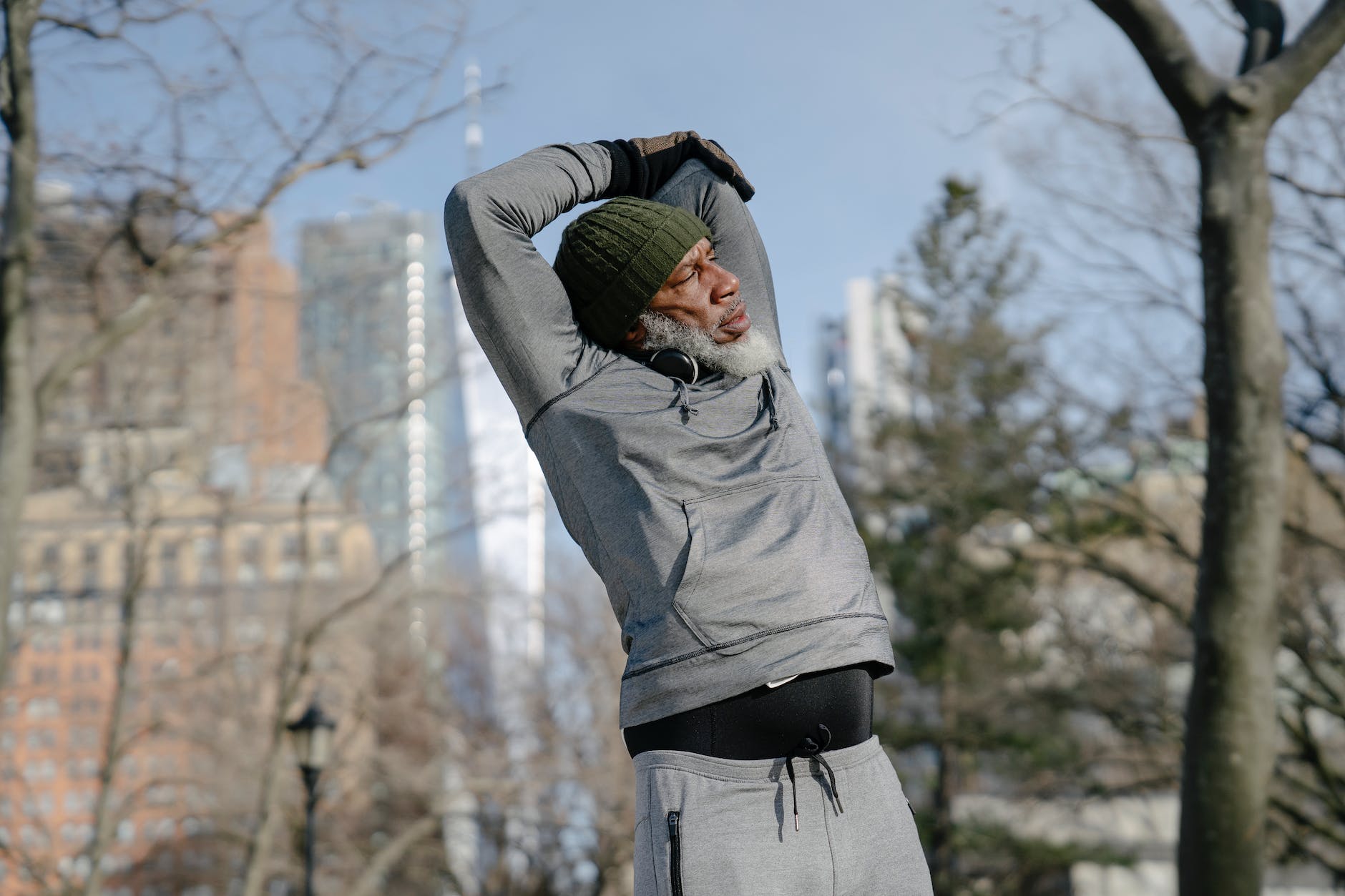
Photo by Barbara Olsen on Pexels.com

As counterintuitive as it may seem, exercise gives you more energy during the holidays.  Harvard Health explains it this way. Increased movement and exercise increases oxygen circulation, which in turn, allows your body to energy more efficiently and therefore function better.  Furthermore, exercise increases cellular level changes, including augmenting the production of mitochondria inside your muscle cells. Having more mitochondria translates to your body possessing an adequate energy supply.  Plus, exercise boosts the production of the feel-good hormones that likewise make you feel more energetic.

Exercise and increased movement is a proven way to combat anxiety and depression, often associated with the holiday season. Let’s be honest, for many people, the holidays often serve as a reminder of loved ones and traditions lost to the past.  For others, the increased requirements for more socialization, or so-called holiday-expectations, can trigger the desire to curl up in a fetal position and hide until the season is over.  Furthermore, increased levels of darkness often precipitate seasonal affective disorders (SAD), a form of depression that affects approximately 10 million people annually. Physical activity is a proven method for reducing symptoms by releasing endorphins that increase positive feelings.  

Physical activity can reduce increased sedentary behavior associated with late fall and winter months. Colder and/or inclement weather can reduce motivation to get outside and move. It’s only natural to want to stay in and watch sporting events, stream series, or watch old movies while noshing your way through comfort food snacks and often calorie laden beverages.  While there’s nothing inherently wrong with these behaviors, too much inactivity is not beneficial to the body, mind, and even spirit.  A commitment to physical activity, even if it is laps around your house on commercial breaks during sporting events or between streaming episodes will go a long way promoting your overall well-being.

Photo by Andres Ayrton on Pexels.com

In spite of all of these benefits, it can still feel challenging to maintain that fitness plan or movement goals you have established for yourself in previous months.  However, there are ways that can help you overcome obstacles.  The key is finding the ones that work for you as no one method/approach works for everyone.

Walk, march, or even jog around the neighborhood, if weather permits, or inside your house.  Even walking, marching, or jogging in place is beneficial!  If you don’t have time for your usual amount of time, such as 20 or 30 minutes, break it up into smaller time periods spread throughout the day.  If that isn’t possible, even one shorter burst of activity is better than none!
Consider exercising with an app, DVD, or streaming platform.  There are numerous apps and platforms that are free or reasonably priced.  In fact, you can even look up “holiday themed workouts” on Youtube lasting anywhere from 10-30+ minutes!

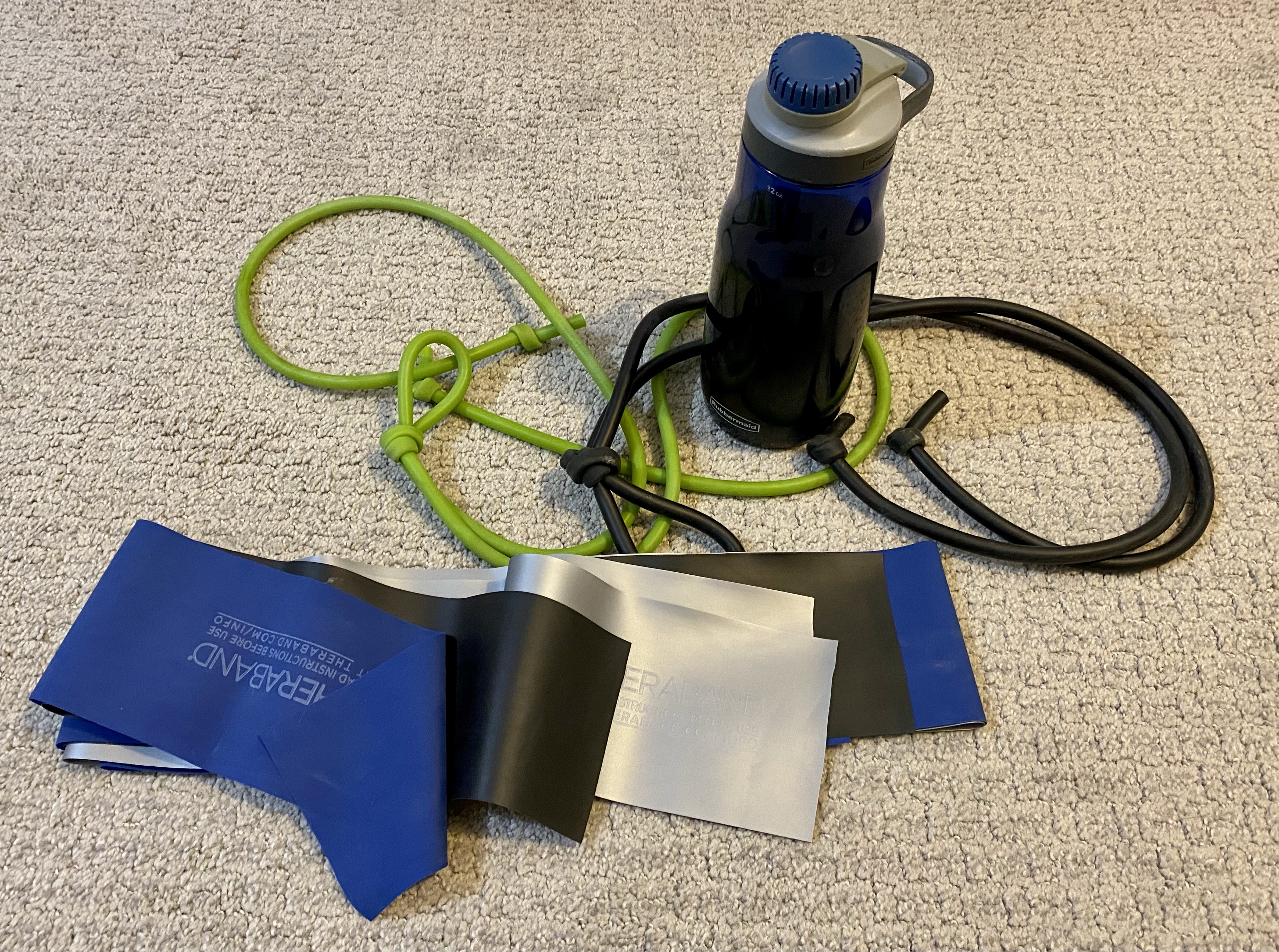
Inexpensive, portable exercise equipment are the perfect solution when traveling.

Invest in personal, home exercise equipment for use during inclement weather, traveling, or when short on time. Resistance bands and tubing, jump ropes, and exercise mats  are inexpensive, and easy to transport when traveling and/or visiting family/friends. The bands/tubing come in different sizes and resistant levels and require little training.  In fact, most come with a workout plan or can be found online.

Think outside the box, but keep it simple: 

  • Wake up 15-20 minutes earlier for a short movement period.  
  • Be mindful of the number of steps you take throughout the day, and challenge yourself to complete more than the day before.  
  • Wear exercise shoes when shopping and add power walk breaks in between stores or consider more frequent walks to your parked car after a store visit to stow away bags. 
  • Rethink your lunchtime, if your job allows, and use it as an opportunity for a short walk.
  • Challenge a fitness buddy to hold each other accountable to a realistic daily or weekly goal.
  • Complete bodyweight exercises throughout the day, such as push-ups against desk, body weight squats and lunges, chair tricep dips, twists, stretch, and so forth.  You might get a whole body workout by the day’s end!
  • Set realistic expectations and plan accordingly.  Consider reducing time/numbers of days per week, and then make a commitment to those.
  • Make movement part of the family/friend traditions if possible.  A family walk or dance session after a big holiday meal can not only improve digestion, but take the edge of any accumulated stress.
  • Make a holiday playlist.  It doesn’t have to be holiday music.  Instead, create a special playlist that motivates you when your energy is low.
  • Make sleep a priority too.  A well rested body moves with greater ease.
  • Hydrate consistently.  (Think of all the added sodium in those holiday treats.)

The holidays do not have to derail your exercise/movement routine.  There’s only one you and one body in which you live.  Therefore, think of physical activity during the holidays as the one gift you can give to yourself.  With a bit of flexibility, creative thinking, and determined mindset, you can continue to unwrap better health, one step, or choice of movement, at a time. 

Photo by Pavel Danilyuk on Pexels.com

Fall for The uniqueness of your own heartbeat

“There are days I drop words of comfort on myself like falling leaves and remember that it is enough to be taken care of by myself.”–Brian Andreas

Several years ago, I had the privilege of taking classes in order to become a certified yoga teacher. YTT, as it is often referred, was a year-long process that involved much reading, studying, and, of course, yoga practice. One of the more fascinating facts that I learned during this process was that each person has a unique heartbeat. It is a point of awe for which I find myself contemplating at times when I am in need of self-comfort/reassurance.

Driving home recently on a golden fall lit afternoon with gilded leaves swirling and whirling in a dance down to Mother Earth, I thought of our Creator and the unique gifts of creation all around. Ahead of me were the rolling hills of southern Ohio and beneath my road was a ribbon of river, sunlight glinting off its glassy flow.  Cracking the window and turning off the radio, I inhaled the crisp fall air as it glided through the car’s interior embracing me like an old friend.  Instinctively, one hand went to the heartspace of my chest, and in the moment, I felt the pulse of gratitude and sighed with peace.

Now, to be honest, it was also a sigh of relief.  I was more than happy to have the challenging work week behind me! However, that simple moment of gratitude and relief served as a reminder of the uniqueness of my heartbeat, and hence, the uniqueness of my own life.  Which led to my mind’s meanderings of the singularity of each individual life.

Photo by Darshak Pandya on Pexels.com

It turns out that national agencies, such as NASA and The Pentagon (at the request of US Special Forces) , as well as private technology companies, such as Bionym, a Toronto based company, recently acquired by Inominds out of San Jose, have been researching and harnessing the technology around the unique heartbeats of individuals. According to Andrew D’Souza, the one time president of Bionym, the original maker of Nymi, a wearable device that the uses an ECG to identify the wearer, each one of us has a unique heartbeat that is based upon the size and shape of our hearts as well as the orientation of our heart valves and our unique physiology.  This individualized rhythm can slightly change with age, about every five years, and can also be altered if a person suffers a major cardiac event, such as a heart attack. Nonetheless, even with age or a cardiac event, our heartbeat remains unique to each person. Even when our heart rate is elevated from exercise, stress, or anxiety, D’Souza explains that electrically speaking, our heart waves still look the same. 

Without going into further scientific depth my rabbit-hole deep dive produced, an overall message kept emerging, each person’s heartbeat is definitively different and unquestionably unique to each individual.  The power of this knowledge brought me back to that sense of awe and wonder that I felt on the autumnal afternoon drive home.  Even after an exhausting week in which I felt like one lone worker ant in a colony of ants, each with our own humble roles, knowing that my heartbeat was not like that of anyone else was a comforting reminder that I am, indeed, a uniquely Divine creation. And so are you Dear Reader!

In a world where divisiveness and partisan language seeks to divide, separate, and categorize us into opposing factions, it is worth remembering that each one of us is a unique creation, a child of our Creator.  Our individual heartbeats can serve as a reminder that we are here to, as the saying goes, march to the beat of a different drummer and not necessarily to conform to any one group or one way of being. We were not created to be the same.  Indeed, each one of us is unparalleled, designed to offer our special gifts and talents to the world.  No one else can be me, and no one else can be you!

Photo by Karolina Grabowska on Pexels.com

Therefore, on days when you’re feeling out of sorts, overlooked, or overwhelmed, place your hand on your heart center.  Feel the one-of-a-kind rhythm of your own heart.  Allow its individualized cadence to serve as a reminder that you do matter.  No one else can be you.  You, and you alone, were created to follow your own beat, and offer your own rhythms to the world.  

Your heartbeat demonstrates that you are special, and YOU ARE.  Know it.  Believe it.  Act on it in a positive way by caring for yourself and your heart, so in turn, you can walk to the beat of your own drumming heart, blessing the world in the unique ways in which only can do. 

Photo by Engin Akyurt on Pexels.com

The realness of depression and anxiety

Speaking with a child recently, she spoke to me of the very real pain she felt from her depression and anxiety.  She shared that one of her parents was embarrassed by her need for medication and therapy.  My heart broke for her, and I wished I could make her pain go away.  However, it is not that simple, and all I could do at the time was listen, so she felt heard.   

Photo by Mikhail Nilov on Pexels.com

The pain of depression, combined with the constant worry of anxiety is very real.  In fact, most of us have felt depressed at some point to a lesser or greater degree, depending upon circumstances.  In fact, my own experiences have been fairly short-lived, no more than 1-2 years, and I was able to continue on with work/life/education, albeit with great difficulty.  For some, it is a challenging seasonal event, tied to the anniversary of an event, holiday, or winter months. However, for many, depression, and its side-kick anxiety, is pervasive, lasting two or more years.

According to a March 2022 World Health Organization report, since the pandemic, there has been a 25% increase in the prevalence of depression and anxiety world wide, with young people and women having been most affected.  In addition, the National Institute of Mental Health adds that young people, aged 18-25, currently have the highest prevalence of mental illness, a whopping 30.6%.  Furthermore, in another WHO report, globally speaking, one in seven adolescents, aged 10-19, are currently experiencing some form of mental illness. Specifically, in the US, the American College of Obstetrician and Gynecologists reports that one in five youth, aged 9-17 years, are experiencing a diagnosable mental illness.  More sobering, acccording to the same report, suicide is the second leading cause of death among those aged 15-24 years old.

Photo by Pixabay on Pexels.com

As an educator, parent, and most of all, as a fellow human being, my heart breaks reading these statistics.  It only confirms what I am witnessing and encountering on a daily basis.  More teens and young adults with whom I come into contact on a regular basis are in real pain–whether I am aware of their mental anguish or not.  The most common mental illness among teens and young adults according to several health organizations include generalized anxiety, phobias, and depression.

However, it is not all grim.  Mental illness, especially among teens and young adults, is very treatable and manageable.  There are a wide-array of techniques and support systems designed to address the unique needs of each individual case, no matter the age. 

Treatment often starts with some form of psychotherapy, also known as counseling or therapy.  Therapy may last for only a short period, or over several years, depending upon the person.  It may focus on thoughts and feelings regarding current life, issues in the past, as well as concerns about the future.  Through therapy, the person not only feels supported and less isolated, but typically develops strategies and coping skills designed to address current mental health issues.  Additionally, therapy may also include ways to develop/strengthen specific relationships, overcome fears/insecurities, address past traumas, increase self-compassion and understanding, as well as create a plan for moving forward.

Photo by Polina Tankilevitch on Pexels.com

Medication is often another form of treatment used in tandem with therapy, but it does require monitoring of a psychiatrist or other trained medical doctor.  The most commonly used medications prescribed for depression and anxiety are safe and effective ways to treat mental illness.  Unfortunately, the wait times for such professionals, especially in recent times, can be months long.  

As a result, many school counselors, universities, family doctors, and churches/civic/community centers are stepping up their support for those in need of mental health support. Many universities offer access to free, or nearly, services via in-person, videolink, or phone.  Some church, civic, and community leaders are pooling services to likewise offer hotlines, group therapies, or other activities designed to promote and support mental health. 

Even once a person is diagnosed and in-treatment, progress takes time, and there can set-backs, as well as ups and downs, in the process; however, certain factors do help facilitate treatment/recovery.  These include:

  • Positive support from friends and family
  • Self-direction in determining own direction and goals for recovery
  • Positive environment living/working/educational setting
  • Financial stability
  • Self-responsibility to administer self care needs
The road for treatment, therapy, and recovery may be long and winding with ups and down, but with the right support and environment, a positive outcome can be achieved.

It is worth remembering that the therapy process is unique to each individual.  Those in therapy may not return to where they were before the illness.  Rather, the typical goal of therapy/medication is to increase a person’s ability to manage their own mental health using positive methods/coping strategies while still engaging with life.  

In the meantime, what can mere mortals do to foster and improve our own mental health? Ireland’s Public Health Agency offers five simple ways worth considering in order to maintain and improve our mental well being.  These include:

  • Connect-invest time in building relationships with family, friends, colleagues, and/or neighbors.
  • Be active– this doesn’t necessarily mean joining a gym, although it could, rather the focus is to move more, especially throughout your day, including walking
  • Keep learning-this boosts self-esteem and self-confidence as well as keeps the mind actively engaged
  • Take notice-increase awareness of the present moment; observe–without judgment–how thoughts and feelings fluctuate throughout the day, and how they may, or may not, affect the physical body
  • Give to others-acts of kindness, no matter how big or small, go a long way in helping others and positively impact personal mental well-being.

Mental illness is a very real thing, affecting nearly 50 million people in the United States, but there is hope. If you are experiencing mental health issues, do not be afraid to seek or ask for help.  And, please know that you are NOT alone. 

Furthermore, if you know someone who is suffering from a mental health issue, support them, offer forms of encouragement, and above all, let them know you care.  With so many silent sufferers in the world, it is more important than ever for us to be the light for one another.  

Now, more than ever, it is important to be the light for others with kind gestures, words, and deeds. ✨

Rest, recovery, and self-care: All important aspects of fitness

Self-care is never a selfish act–it is simply good stewardship of the only gift I have, the gift I was put on this earth to offer to others.”–Parker Palmer

Photo by Madison Inouye on Pexels.com

In previous writings, I have written to encourage reluctant movers/exercisers to find ways to increase movement, mobility, and/or exercise into their daily routine.  I absolutely and wholeheartedly believe in the importance of moving more and sitting less.  There is a vast array of scientific evidence that demonstrates movement and gentle exercise increases mental and physical well-being, decreases diseases, and furthers longevity.  While it doesn’t make you bulletproof, there’s not denying its benefits.  That being said, there is also a time and place for self-care AND rest and recovery days as they are known in the fitness industry.

   Let’s first differentiate between the two as both are worthy and valuable tools.  Technically, self-care can be defined as anything you do to take care of yourself.  Self-care can, and should, include a wide range of activities that nurture your physical, mental, and spiritual well-being.  In an ever-evolving world in which more and more value is placed upon hustle, productivity, and work along with the expectation to either pass on vacation days, or if you do, then there is the pressure to continue to work on those days–taking time to care for self is more important than ever.  Plain and simple, self care is vital to the integrity of our own health, so we are more effective both in and out of the work-setting.

Photo by Hassan OUAJBIR on Pexels.com

Self care is a practice that can occur on any day of the week or at any time of day. It can be as simple as offering yourself kind words of praise or encouragement when you do something well, such as thinking, “I am proud of you for choosing to do this.”  However, it can also be an entire day, away from work and/or stress, filled with activities that feed your soul, mind, and body.  The point is, self care will vary from person to person and can encompass a variety of actions.

In fact, according to many health experts, areas for which self-care can occur includes many dimensions. Some of the more obvious areas comprise of spiritual, emotional, occupational, and physical well-being.  However, less obvious areas for self-care include intellectual, social, financial, and environmental.  Given these diverse facets for self-care, it creates a vast array of opportunities for self-care activities.  Here are a just a few ideas to get you thinking, but by no means are definitive:

  • Journaling, writing, drawing, creating
  • Spending time outside, gentle walks with pet, hike
  • Spending less and paying down credit cards
  • Reading/listening to books; watching a documentary
  • Change jobs/careers; Clean up that resume
  • Exercise; prioritize sleep; regular medical checkups
  • Volunteer; regularly scheduled social or family events
  • Pray, meditate; read inspirational scriptures; attend the worship service of your choice
Photo by Zen Chung on Pexels.com

Leaning into daily self-care activities leads to a healthier, more well-rounded life. Just as regular movement/exercise can vary from person to person, and from day to day, self-care will too.  Even when/if current life situations limit time for self-care, a little can go a long way in contributing to our overall well being.

Likewise, rest and recovery days can be part of the self-care plan, and should be essential part of your movement/exercise plan.  Adequate rest and a day or two devoted to recovery offers the body numerous benefits. While our muscles, heart, and lungs become more efficient when we repeatedly complete the same action, such as walking, running, cycling, weightlifting, playing tennis/golf/basketball, or any other sport/activity, it also places stress on those same areas.  Resting and/or a day away from those activities, allow the muscles, lungs, and heart to take a break and recover, allowing you to actually make more progress. 

Photo by Pixabay on Pexels.com

Recovery can include completing movements/exercises that are outside of one’s regular routine, such as walkers taking a day to bike, those who play specific sports taking a day to practice yoga, or runners taking a day to swim.  However, recovery can also be a day devoted to rest, or at the very least, a day in which exercise is avoided.  Both types of recovery, in addition to a regular sleep schedule and nutritious eating habits, benefit the body in numerous ways.

Recovery days reduce the likelihood of injury and allow the muscles to rest and repair.  It also reduces muscle fatigue that can decrease performance and reduces muscle pain and soreness. Adding an active recovery day, allows our bodies and minds to experience and try out new forms of exercise. While days completely devoid of exercise allows the body and mind to rest.  Both types of recovery improve your ability to sleep soundly, promote longevity, and reduce stress. 

Photo by Anastasia Shuraeva on Pexels.com

In the end, increasing daily movement and activity as well as the implementation of a regularly scheduled form of exercise are important, but more isn’t always better, especially for those who are competitive or prone to over-doing it.  As with most things in life, the key to any wellness program is finding the right balance that works for Y-O-U, and that may change from season to season and from decade to decade.  

Taking care of your body, mind, and spirit are important and worthwhile investments.  After all, each of us is a creation of the Divine, but we are only given this one life.  Let’s honor our Creator by respecting the unique creation that is each of us, and live our lives to the fullest, imbued with the vitality of a healthy mind, body, and spirit!

Photo by Barbara Olsen on Pexels.com

Gratitude over Attitude

“Gratitude is one of the strongest and most transformative states of being. It shifts your perspective from lack to abundance and allows you to focus on the good in your life, which in turn pulls more goodness into your reality.”–Jen Sincero

I caught myself complaining, AGAIN, about an irritant within my life. While I was doing this in the safe company of a trusted person, it was a habit I was beginning to recognize and for which I was beginning to feel I needed to personally address.  Therefore, I began to ponder why I have such a strong tendency to bellyache, fuss, and grumble?   Does my complaining make anything better?  Does it benefit anyone?

Furthermore, why is it our nature to yammer on about all the so called wrongs in our life?  Part of the reason, I know, is that in a polite world, we often bottle our frustrated feelings inside and continue to wear a smile on the outside.  This often leads to our complaints exploding out of our mouths with the first opportunity to release them in like-minded/sympathetic company. It plain ol’ feels good to liberate the tension–which, on one hand, is a healthy coping mechanism.  

Photo by Keira Burton on Pexels.com

But what happens when we keep going on?  Telling anyone and everyone who will listen to us about the perceived infractions.  As our audience changes and expands, so does the story, expanding in power and hijacking our brains. We might even post our complaint on social media, magnifying the story and giving us the impression that we are truly supported, and most of all, righteous, in our indignation.

What does this gain us?  Is it a sense of control?  A sense of support?  A sense of community?  Perhaps all of that and more, but since I am not a psychologist, I’ll leave that answer to the professionals.  Instead, all of these ponderings brought me to the importance of mindset. 

Photo by RODNAE Productions on Pexels.com

One of the more inspired lines that I’ve run across, previously written about, and regularly applied in my own life, is “mood follows action.”  It is a phrase I implement when I don’t feel like doing a particular task, such as getting up early, tackling a workout, or instigating work/chores.  Those three words remind me that once I complete the task, I will feel a sense of accomplishment, and my mood will lift as a result.  It is the dread that is often worse than the actual doing. I began to wonder if something similar was true with regards to complaining . . .

action = increased complaining = decreased gratefulness = negative mood

If I continue to choose the action of frequently complaining, particularly about the same thing, am I creating my own negative mood?  And if so, am I creating a bias towards these so-called “terrible” events, making them out to be more grievous than they actually were?  What if instead, like the eye doctor asking me if I preferred A or B,  I flipped my daily lens so that it was tinted with more gratitude and shaded less with attitude? 

action = reduced complaints + increased gratefulness = happier mood

Photo by Anna Shvets on Pexels.com

I took this thought even further and researched what the science said. It turns out that complaining can actually negatively harm your health, not to mention serve as a repellent to others.  First of all, it turns out that every time we complain, our brain rewires itself to produce more negative thinking. According to neuroscience, synapses that fire in the production of the complaint, wire together, making it easier, over time to react, complain, and think negatively with more frequency.

Negative thinking/stressing and complaining can damage the hippocampus, which is responsible for overall cognitive function, problem solving, and critical thinking.  The smaller the hippocampus, the greater our decline in memory and the less adaptive we are to change. The more we complain and/or focus on the negative, the more we increase our levels of stress, and, in turn, cortisol.  High cortisol levels decrease immune function and make us more susceptible to a wide variety of health problems such as sleep disruptions, digestive dysfunction, depression, and high blood pressure to name a few.

Photo by MART PRODUCTION on Pexels.com

Complaining, and an overall pessimistic attitude, can shorten our lifespan.  Research indicates that optimistic thinkers tend to live longer than proverbial pessimists. Additionally, like attracts like. The more positive or negative we are, the more we tend to attract others who do the same. In fact, our brains naturally mimic those with whom we most often associate through a process called neuronal mirroring. This is often due to our ability to feel empathy, which can be a positive thing, but it can backfire on us if we repeatedly surround ourselves with negative people.

Nonetheless, there is a time and place for complaining, but it is how you frame it, and to whom you speak, that makes a difference. If something is truly worthy of a complaint, think constructively when talking (or writing) about it.  Identify, before initiating the conversation or written evaluation begins, a clear purpose about the specific goal/desired behavior. Then behavioral experts encourage us to deliver the complaint like a sandwich.

Photo by Suzy Hazelwood on Pexels.com

Start positive, with a true and affirming comment. (This first step may require some thought and some reframing, but it is worth the time to get the listener/reader to pay attention.) Next, state the desired outcome/behavior in a matter-of-fact tone without accusation.  Then, follow this with another positive, but true, statement.  Below is a highly simplistic example, but it illustrates the point.  

“I really love shopping at this store because the employees are so friendly and helpful.  However, lately, I encountered issues with the pick-up system in which numerous items in my order are not bagged.  I’d like to continue shopping here, so I am wondering if there is a way to ensure my order is properly bagged on my next visit.”

If, however, someone is directing the criticism to you; own it, and empower yourself as an agent of change rather than victim. By taking ownership of the issue, we have the power to create a solution that works for us. In the end, we earn more respect for owning up to our own mistakes, flaws, or misperceptions. Furthermore, it allows us to be perceived as a problem solver with integrity.

Photo by RODNAE Productions on Pexels.com

One point worth remembering is that, while complaining can be a healthy way to relieve stress, we want to be careful with whom we confide, who is around us when we make these comments, and how often we are complaining.  If you know that you will feel better to get a grievance off  your chest, do-so with trustworthy companions in a private location–rather than on a platform for everyone to read or in an area in which anyone can hear.  Then move on, let it go, and identify at least one positive about your day/situation on which to focus, including your controlables–one of which is your attitude.  

By training ourselves to choose gratitude over attitude, we are more likely to see our blessings, promote our own mental and physical well-being, and increase our ability to perform tasks.  Furthermore, we may ultimately attract more good to our life by merely opening our eyes to seeing it.  For many of us, however, this takes practice and time.  Therefore, the next time you find yourself complaining, be like the eye doctor, flip the lens, determine the better view, and find something for which to be grateful.  

.  

If you must complain, do so. Then, flip the lens and look for the points for which to feel grateful.

Maybe it’s time to close the window: Self-care and balance includes moving away from toxic people and situations

“Only in quiet waters do things mirror themselves undistorted.  Only in a quiet mind is adequate perception of the world.”–Hans Margolius

I love to sit at my desk in the flush of morning light writing with the window above my desk open.  Even when it is cold and chilly, I will often crack the window a few inches to enjoy the predawn air. There is something about the fresh air, the stillness, and the early hymn of dawn that fills me with a sense of peace and hope. The dawn air dissipates the frights of night that may have entered my dreams and nourishes my mind with renewed resiliency for whatever the day may bring.

Photo by Pixabay on Pexels.com

One especially hushed, predawn Sunday morning, as I sat, savoring the caress of fall air on my cheeks and hands, I noticed smoke rising from the yard beside mine.  It was my neighbor burning something.  I returned once more to my writing as the serenity of the morning continued humming its charming ambience.

Gradually, every so subtly, the scent of the air shifted. Wafts of acrid air began to drift in through the window screen.  Still, it wasn’t enough to detract from the overall freshness of the morning, and so I left the window open, continuing my writing.  

For 30-40 minutes, I continued my typing, pausing for moments here and there to gaze out the window and clarify my thoughts.  I noticed the dullness of the green leaves, a sure sign that Mother Nature is changing into her fall wardrobe. A single bird rapidly called in a repeated series of three trills, “Hello, hello, hello,” but earned no response. 

Photo by Brett Sayles on Pexels.com

Noticing the familiar tingling in my lower half, cued me into the fact my extremities needed a walk break.  I rose and walked outside to the newspaper box.  A cacophony of Canadian geese, singing their song of seasonal change, flew overhead towards the autumnal clouds.  

It was then I realized how strong the scent was.  Whatever was being burned in my neighbor’s yard had filled the air with a noxious haze that I had not noticed while at my desk with its slightly opened window. However, when I walked back into the house and returned to my desk, the insidious odor had indeed permeated the air.  How had I not noticed previously?

Perhaps it was due to the fact my window had only been partly opened or maybe it was due to my focus.  Regardless, the scent had gradually slithered through the opening of the window, changing the air in a subtle and measured manner that I had not noticed.  I began to reflect upon how often that happens in life, for better AND for worse.

Photo by George Becker on Pexels.com

The seemingly piecemeal process of aging is but one example.  Our children gradually change. Often, we may not notice it in the day to day, but one day you will look at your child and suddenly it hits you how much they have grown and changed.  Likewise, we may not notice our own aging process until we happen to see a photograph of ourselves, and like a slap on the face, we are quickly hit with the awareness of our own aging.  This is all a normal part of the evolution of life.

However, what about other life events? For example, the progressive way in which computers evolved and changed the way I teach.  When I began nearly 36 years ago, there were no computers in my classroom.  The most technological advancement that I had was a rolling chalkboard and a box of dustless chalk!  Flashforward, and my current classroom uses Apple TVs, Google classroom, iPads, Chromebooks, and Macbooks, with all students using their own device on which they are expected to complete work.  For better or worse, that change is here to stay.

I think back through history, for example, the rise of Hitler and Nazi Germany.  It all started in a seemingly moderate way, but it progressively evolved and soon evil, incrementally, blanketed much of Europe, affecting/influencing much of the world.  This, along with countless other historical events, remains a cautionary tale of the way in which harmful developments, left unchecked, can crawl into our lives without our realization until they have fully enmeshed themselves into society.

Photo by Melike Benli on Pexels.com

Back at my work area on that particular Sunday, I decided to close the window above my desk, and leave my writing space for a while, allowing the air to clear.  As I moved into other areas of my home, I could clearly observe the difference in air.  An hour or so later, the air in and around my workspace was cleared, and all it had taken was the simple act of closing the window.

There are certain ideas, concepts, environments, and even people–personally associated to us and distantly known by us– that are likewise toxic disguised in appealing and attractive soundbites, conversational style, and images.  Like the sweet lullaby of the break of dawn, they lull us into acceptance, or at the very least, acquiescence–better to play along or ignore in order to remain focused on our own goals. The problem is that, little by little, we begin to assimilate, breathe in, if you will, the poisoned atmosphere/attitude until it has permeated our being in ways we can’t clearly sense until we step away and gain a new perspective.  Only then do we fully feel the necessity of closing the proverbial window and stepping away from the baneful environment.

Photo by Mizuno K on Pexels.com

The irony of it all, is once you close the window and move on, you begin to realize that there had been a small, still voice inside you all along telling you something wasn’t right.  For me, on that Sunday morning, my tingling legs told me to move since my sense of smell had been so gradually overcome by the slowly shifting air.  Therefore, it is important to tune in, listen for that inner guidance, to Divine Providence.  Perhaps, you may not be able to remove yourself entirely from certain situations and/or certain people, and if that is the case, determine what you can change, and then act.  Close the window. Move in another direction, and notice how much better you will feel with fresh air and a fresh perspective. 

Photo by Peggy Anke on Pexels.com

Root to rise

There will always be rocks in the road ahead of us. They will be stumbling blocks or stepping stones; it all depends on how you use them.”–Friedrich Nietzsche

There were three crossings over the stream in which we had to choose to balance-step across rocks as John is doing here, or wade the water.

Life can be challenging.  Demanding work schedules, a multitude of community and family commitments, and even the basic chores of life can often leave many of us feeling depleted.  Then, throw into the day-to-day mix, some minor crisis and/or irritation, such as the washer quit working, the car is making a funny noise, or __________ is getting sick, and we begin to wonder how we will ever get through the coming day, much less the week. 

I was reflecting on this thought, not only from personal experience, but also from experiences of others. In a recent conversation with a young mother, I listened to the challenges she faces as she tries to balance the increasing demands of work, family life–especially her growing children’s varied activities/interests–and several house issues that require extra time, money, and attention.  It was clear, in spite of her ability to joke about it, that she was completely frazzled and worn out.  My heart went out to her.  

Photo by Ketut Subiyanto on Pexels.com

Haven’t we all been there?  Perhaps we may not have experienced her exact circumstances; nonetheless, feeling overwhelmed and over-extended is certainly a relatable human experience.  We all encounter rocky times along life’s path, and those times may feel like insurmountable stumbling blocks.  In fact, we may indeed stumble, stutter-step, and fall off the path, but the question is, can we then use those same life boulders as stepping stones?

Later in the same week, I found myself once more engaged with a parent of younger children.  In this conversation a young man was describing the demands of balancing the needs of his three children, whom he clearly adored, his beloved wife, and his work.  He described a recent experience in which he begrudgingly attended a study group at his church with his wife in the midst of a grueling week. 

“I did not want to go,” he said.  

Once there, however, he realized that it is at the busiest or most stressful times when he most needs to take some time for renewal if he truly wants to be of service at home or at work.

Photo by MART PRODUCTION on Pexels.com

Driving along a hill lined road a few days later, I observed a tree that seemed to grow out of the rocky rise.  Its multiple roots wrapped around and over the rock-defined prominence. I marveled at the tree’s ability to stay rooted and find nourishment in such an unlikely environment.  

In fact, later that day, I took time to read an article or two about trees that can live in rocky soil. I was stunned to learn that there is a wide variety of hardwood and softwood trees that can live in stony soil, including fruit trees.  It was the fruit trees that most surprised me because not only is the tree tasked with the job of sustaining and growing its root system, trunk, limbs, and leaves/needles, but it also must produce enough nourishment for the additional task of fruit growth.  

Photo by Elias Tigiser on Pexels.com

As I read these articles, I found that many trees’ roots have the ability to adapt and thrive in rocky, stony, or even compacted/dry soil.  Furthermore, many trees that are drought tolerant have shallow root systems. This adaptation offers them the ability to grow in rocky soil as their roots seek and stretch to find sources of water and nourishment.  Additionally, there are other trees with deeper root systems that somehow find a way to burrow in between rocks to find water and nutrients.  Regardless of the type of root system, the one commonality among all trees is the fact that they use those boulders and rocks as stepping stones from which they extend their branches towards the heavens, rising above a so-called inhospitable environment.

In an era of disparate sound bites, images of divisiveness and dissonance, and all the demands of life, we must strive to live more like the rock loving, sand embracing, and drought tolerant trees.  We must continually seek and stretch towards our true source of life, the great I AM.  It may be difficult, as life throws us one challenge after another. Therefore, we must take time to mimic those rock-loving trees by rooting down to rise up in order to offer our unique gifts–our fruit–to the world.  

Photo by Magda Ehlers on Pexels.com

Taking time to routinely root down into our inner faith world, allows us to rise above the stumbling blocks of life. Root down to rise up. Depending upon your faith and/or religious practice, that regular practice of “rooting down” may look different from one person to another in the same way trees’ roots vary.  However, they all serve the same purpose: anchoring us to our true foundation, keeping us straight and stable, and providing us with the ability to absorb the good and filter out the bad, storing-up a wide array of resources for when times get, well, even rockier. 

With the foundation of a well-established root system, we become like the trees that thrive in rocky and dry environments. We can climb around, over, and sometimes even remove life’s stumbling blocks, so we too can rise up, stretch towards our higher power, in order to produce more fruit, especially in our busiest times.  Root to rise.

Even in an rocky area known as Craggy Flats, ancient trees have rooted down and around the rocks in order to rise above its above of it all.

Good Fitness Doesn’t Have to Cost an Arm and a Leg

To enjoy the glow of good health, you must exercise.”–Gene Tunney

For the past two months I have written a couple of pieces focused on the importance of incorporating movement into your life.  It is my belief that movement benefits everyone and can add years to your life and life to years.  Therefore, this month, I’d like to blow open the myth that fitness requires a gym or club membership and/or requires special, and often, expensive equipment.  Rather, I’d like to shed light on free, nearly free, and budget friendly ways to increase movement and exercise.

Remember, in a capitalistic society, corporations and businesses want to make money.  Not that there’s anything inherently wrong with that, but my point is that you do not have to buy into all the slick and pretty packaged marketing!  As a consumer, you DO have choice.  So when those social media pop-up ads try to convince you that you need this “exclusive, just-for-you, one-time only offer” for a studio/gym membership or the “latest, greatest, in-debt-til-die exercise equipment, you absolutely have my permission to walk away—for real.

Photo by Liliana Drew on Pexels.com

In fact, walking, according to both the Mayo Clinic and University Hospitals 

Network is considered, “just as good as any other form of exercise.”  Of course, walking at a steady pace for a given period of time is the best, but all forms of walking count towards your overall health.  Walking for exercise is free, all you need is a supportive, comfortable pair of shoes.  It can be completed solo or with friends.  Plus, it can be completed in a multitude of  indoor and outdoor sites.  However, walking isn’t the only inexpensive way to increase movement and exercise into your life.

You can do housework or yard work as a workout.  Cue your favorite up-tempo tunes, set a timer, if you’d like, and get to work.  Keep moving until the job is done or the timer rings–whichever works best for you. 

Photo by RODNAE Productions on Pexels.com

If you have younger kids or grandkids, play with them.  Take them to a park if you don’t have access to a yard.  Better yet, ask them to join you while you walk, bike, hike a trail, or jog.  Play soccer, shoot some hoops, throw frisbee, toss a baseball or softball.  Other options include, but are not limited to, volleyball, pickleball, tennis, golf (make sure you’re walking if you want the full workout), badminton, and so on.  There are so many ways to move, play, and enjoy your kids/grandkids and even get to know some of their friends. Of course, all of these activities can also be enjoyed with friends!

Free workout options include walking, pushups, planks and walking up and down the steps of your house.”–Joe Cannon, MS, certified strength and conditioning specialist, NSCA certified personal trainer

Photo by Nathan Cowley on Pexels.com

Make use of equipment at home and youtube videos (or other sites to which you may have access).  With just your body weight, a chair, and stool, you can get a whole body strength workout. You can even use canned goods and water bottles/jugs as “weights.”  Honestly, there are so many free workouts available online that require little to no equipment that can provide fantastic cardio and/or strength workouts.

Two worthwhile items I do regularly use are a quality yoga mat and athletic shoes.  Both of these are versatile and worthwhile investments.  The yoga mat not only can be used for yoga, but it can also be used for any type of exercise that requires time on one’s back, belly, hands, and/or knees.  This one time investment is portable; it can be used on a back deck or patio, carried to the park, or taken along when traveling.  Similarly, a pair of good-fitting shoes are just as versatile.  Personally, I am always willing to invest a bit more for personal service to determine a proper fit for a supportive workout shoe from my local neighborhood running/walking store. (Shout out to Robert’s Running and Walking Shop!) 

Photo by Tirachard Kumtanom on Pexels.com

Other pieces of inexpensive equipment to consider:

  • Exercise bands and/or tubing (love these inexpensive items!)
  • Free weights, kettlebells, and/or medicine ball (in light, medium, and “heavier” variations)
  • Jumprope
  • Step bench (can be used both for cardio and strength training)
  • Fitness ball (can be used for a variety of core exercises)
  • Exercise DVD or apps (many apps are free or a low-cost)

Learn to be a savvy shopper.  You don’t automatically have to buy from one place, nor do you need to purchase items all at once.  Gradually add pieces, and consider purchasing used items on Amazon, eBay, Facebook market, Goodwill, and consignment shops.  I am often amazed at what I find at both Goodwill and consignment shops for next to nothing.

Budget friendly pieces of exercise equipment can be gradually added to your collection. You can even build your own step bench.

Personally, I love to find free fitness plans on-line, and modify them to fit my age/fitness level.  There are so many good sites, many of which I outlined in a previous article.  Once you find a plan you like, there are no decisions to make.  Simply follow the outlined plan for the set-number of days/weeks.  Your heart, mind, and body will thank you.  One word of caution, however, be sure the plan is appropriate for your level of fitness.  You want to set yourself up for success, so choose wisely.

Other budget-friendly tips include:

  • Split a gym membership with a friend.  Many gyms offer a payment plan that allows you to bring a friend for “free” for x-number of workouts. 
  • Join walking or running clubs.  Many parks, walking/running shoe stores, and even some malls offer these for little to no cost
  •  Join community gyms.  Many religious centers and some communities offer gym memberships for little cost to no cost.
  • Try donation based classes.  Many yoga studios and community centers offer weekly donation classes that are paid as or if you can.

Bottom line, you absolutely do not have to pay much, if anything, for a quality workout.   Other than perhaps quality footwear, you can absolutely get an excellent workout without spending any of your hard earned money.  Therefore, don’t let budgetary restrictions keep you from putting a little pep in your step and vitality in your years. Exercise your right to ignore those money-mongering marketers, and take charge of your own health AND budget! 

Photo by Andres Ayrton on Pexels.com

Seasonal Growth

“Every season is one of becoming, but not always one of blooming. Be gracious with your ever-evolving self.”— B. Oakman

This past May, John, my husband, and I were given nine tomato seedlings that our neighbor, Dianna, had started.  John purchased special potting soil, and I carefully planted those seedlings into large gardening containers.  They were my pet project this summer as I tended to them like a mother tends to a baby.  From suckering them to fertilizing them at specific points in the summer to monitoring the moisture in the soil to determine if I should water or not, I tried to be the best plant parent I could be. However, I knew that in spite of my best efforts, Mother Nature had more control than me.

Nonetheless, John and I ooed and awed over the plants’ first golden blooms.  We gleefully counted the tiny green orbs that first formed in place of the blossoms, and we celebrated as they grew bigger, and more petite tomatoes began to emerge.  As their color gradually transformed from chartreuse to a yellow-orange, and then gently evolved from an orange-red to scarlett, our anticipation mounted for a plentiful harvest, to the degree nine-plants could produce. 

Photo by Markus Spiske on Pexels.com

By the first week of August, we had a bounty of tomatoes.  None of them were particularly large, but they were bursting with flavor–the perfect tangy blend of sweet, tart, and acid.  With our first pickings, I cut-up fresh cucumber and tomato to add to shawarma-spiced chickpeas for me, and made bacon, lettuce, and tomato sandwiches on homemade bread for John.  Throughout the week, there were salad plates topped with aromatic, zesty tomatoes alongside dinner, and veggie sticks and tomatoes in bowls for packed lunch.  Oh, the ways we can, and do, enjoy tomatoes!

Last weekend, I was out picking more tomatoes, and I reflected on a conversation with my dad the previous week.  He lives in Melbourne, FL, about an hour or so, east of Orlando.  He and my bonus mom, Pam, have a fenced-in backyard that they have transformed into a tropical paradise.  Vibrantly filled with plants that would never grow here locally, thrive in their backyard as they continue to learn more about the growing seasons of Florida.

In that recent phone conversation, Dad and I discussed the plants they were currently trying to grow, and the ones they would soon plant, once the temperatures cooled and moderated.  One plant he was eagerly anticipating growing were tomatoes.  He explained his plan to plant a couple of seedlings, then several weeks later, plant a couple more, then he’d plant another a few about a month after that, and so on.  Apparently, unlike here, fall is the perfect time to plant tomatoes, and throughout the winter months, he gets to reap the harvest.

Therefore, when I shared with him how well my tomato plants were producing, he bemoaned the fact he could not yet have a fresh garden tomato, but of course, encouraged John and me to enjoy our season while we could.  Nonetheless, he was looking forward to the season when he, too, could enjoy a fresh slicer tomato on a sandwich or chopped up in a salad.  We talked some more about his different growing season, and the types of tomatoes he planned to try to grow this upcoming year before moving on to other topics at hand.

Photo by Polina Tankilevitch on Pexels.com

As I reflected on this conversation while picking tomatoes, with each snip of my pruning shears, I was simultaneously filled with gratitude for each tender fruit, but I was also feeling a bit of sadness for the fact that I could not share these with Dad.  Then, I reminded myself that he would be enjoying tomatoes, most likely in December, January, and February when our area will be chilling to rain, sleet, ice, and snow with not a single fresh tomato in sight.  That’s when it hit me.

In the same way I can gather tomatoes in August and September, but Dad cannot until the winter months, we all have different growing seasons in life.  I began to think about all the ways in which we, as part of our humanity, often compare our current position in life with that of others in similar circumstances, age-range, or whatnot, and feel as if our situation/status falls short in comparison.  Personally, I often think of dreams and hopes I still hold for the future, but due to life, many of those notions must be put on-hold for the time-being.  However, the more I snipped tomatoes, the more I began to realize that perhaps instead of comparing, and thinking about where/what I think I should be doing, maybe I would be better benefitted to switch my focus to cultivating and nurturing those seeds of hope, and recognize that it’s not their growing season . . .yet.

Photo by Binyamin Mellish on Pexels.com

“Be aware of what season you are in and give yourself the grace to be there.”--Kristen Dalton

Just as it is the growing season for me in southern Ohio, but not for my Dad in central Florida, the same is true for life.  Our lives are filled with seasons too.  There are times when we must let go of notions and things that no longer serve us, like the trees do in fall, and the winds change the color of our lives with a flourish.  Other times, our lives are filled with great spaces of dormancy as harsh and bitter winds send us into a blanket of darkness.  Then, there are those moments in which we experience blooms of hope, sometimes even in the midst of a rainy season.  That is when the magic can occur.

Through our letting gos and goodbyes, through those dark and latent times, and even through downpours of sorrows and grief, there remain within each of us, planted seeds of possibility and potentiality.  Those seeds have their own growing seasons, but each person has different seasons and different times for harvesting.  It is our job to be aware of our season, cultivate our inner seeds, and trust that when the time is right, new growth will occur.

As it is wisely stated in the book of Ecclesiastes, “There is a time for everything, and a season for every activity under the heavens . . . .He has made everything beautiful in its time.” Therefore, we must put our faith in our Creator, and rest in knowing that our hopes and dreams are indeed being cultivated by a force greater than us; and when the season is right, our season for growth, and ultimately harvest, will one day come into fruition.

Photo by Pixabay on Pexels.com

Plants roots us in the present moment

Biophilia: Love of living things and nature that human beings innately possess”–hypothesis of Edwin O. Wilson 

Photo by Markus Spiske on Pexels.com

This summer, I have relished time spent caring for both my indoor and outdoor plants.  While I don’t have many compared to other gardeners and indoor horticulturists, I find that I don’t need a larger number to reap the benefits of caring for plants. In fact, I continue to be surprised by the numerous ways in which nurturing plants increases my sense of well-being, and my recent research dive supports this, and so much more, too.

First, the back story.  I have always been drawn to plants and nature.  As a young girl, I drove my mother nuts stealing popcorn kernels from the kitchen, filling paper cups with yard soil, and planting those kernels in those soil-filled cups.  I’d set them in my bedroom window sill, water them when they were dry, and watch them grow.  The part that really got to my mom was when I fancied myself a scientist, and I began conducting my own “experiments” by placing those corn filled paper cups in different windows, and even in a bathroom without a window, to see which plant grew best, making notations in a self-made booklet. 

Photo by Eva Bronzini on Pexels.com

Additionally, my dad was wonderful for taking my sibs and me for walks in the woods behind our house. While walking, he would point out the different trees, identify the various nuts, and pause for us to take in the marvels of mushrooms, tiny flowers, ferns, or other low-lying plants of interest that as kids, we might not have otherwise noticed.  In addition to all of the wondrous sights, there was an abundance of scents, sounds, and even fanciful touches to fill our young minds with wonder–only I am not so sure that we always felt that way when coming in contact with brier bush! Nonetheless, both of these childhood experiences never left my heart.

Fortunately, I married someone who loves the outdoor space as much as I do, and thus our travels typically include some form of nature exploration.  However, my relationship with growing my own plants did not get rekindled until the past several years.  Oh, to be certain, I tried caring for and raising plants in fits and starts, but my attempts most often ended in the Death Comes to the Plant written in tandem with complete lack of proper care and yours truly.

Photo by Jacob Colvin on Pexels.com

“Your intuitive powers increase when you are with plants because your mind is silenced and you become more aware of the present moment.”–Sanchita Pandey

I should firmly state, before I go any further, that I have MUCH more to learn when it comes to plant care, and I still have my fair share of murderous flops.  However, that is the wonderful thing about caring for the few plants I have successfully not assassinated, I am growing right along with them. One thing I do know for sure is that when I am fully focused on plant care, my mind is firmly glued in the present moment, and all other worries and stresses of my life fade, momentarily, from my awareness.  

Nurturing plants can reduce stress and anxiety. In fact, researchers in the UK concluded that working plants, whether indoors or out-of-doors, depending upon the patients’ setting, increased feelings of well-being among those with anxiety, depression, and even dementia.  In fact, in one town in England, Manchester, there are general practitioners so-called prescribing potted plant care for patients who are experiencing depression, anxiety, and loneliness.  Programs such as those known as “horticultural therapy” and “Docs prescribing plants” were only just the tip of the iceberg in my research

Photo by Michelle Leman on Pexels.com

Along the same stem, plants have also been shown to expedite patient recovery from long-term illness in the hospital as seen in studies dating back to at least 2002.  Patients with scenic views of nature or those who have plants and/or flowers within their surroundings, needed less pain medication and/or spent less time in the hospital than those patients who did not have these botanically natural sights. 

Additionally, NASA scientists, way back in the 1980s, determined that low-light houseplants demonstrated the ability to improve indoor air quality by reducing the amount of indoor pollutants and toxic substances. NASA even offers a complete list of approved plants. Studies on this topic have since been conducted at both Virginia Tech and Washington State University have further established that house plants are efficient air cleaners and that even having as little as 2% of the room filled with plants will create an impact on air quality. 

Photo by cottonbro on Pexels.com

Not only do houseplants clean the air, they moisturize it as well.  This is important during the winter season and in arid environments that tend to have little moisture in the air.  The vapor plants regularly release can be beneficial for those who regularly suffer from dry nasal passages especially. Furthermore, believe it or not, there are some plants that release oxygen into the air throughout the day.  One of them is a common house plant known as the Snake Plant and the other is the Gerbera Daisy, which is not commonly grown indoors, but with proper care can survive two to three years.

Other noted and researched benefits of plants include, but are not limited to

  • Increased focus and productivity, in the work and school environment
  • Increased and sharpened attention span
  • Improved positive outlook at work–even Amazon got into the research
  • Improved cognition
  • Serve as a reminder that our actions have power
  • Demonstrate in real time the importance of completing little things
Photo by Markus Spiske on Pexels.com

Growing plants can be such a meditative and calming act. Their care unites us, if only for a few moments, to the present moment.  Nurturing house plants, or any other gardening endeavor, serves as a reminder of the miracle of life and our natural link to nature. With each drop of a dead leaf, plants remind us of the importance of dropping that which no longer serves us. When plants wilt and droop from lack of care, then perk back up from the simple act of watering, it is a reminder that we too can recover from wilting periods of time. Tending to plants further reminds us it’s ok to go through seasons of dormancy, and plants further remind us that when something isn’t working, it’s also ok to troubleshoot or ask/search for help. 

In the end, at least for me, caring for plants fosters the joy of biophilia, my own inner craving for growth alongside nature, and my deeper, more expressive connection to our shared Creator, the ultimate horticulturist.