
Sometimes the greatest lessons about aging, resilience, and self-compassion come from the most unexpected teachers.
It Was Supposed to Be “Easy-Peasy” 😌
“It’s so intuitive!” I was told.
“The GPS and data are so much more reliable.”
“The battery lasts so much longer.”
I had been considering switching from one brand of smartwatch to another. Fellow runners recommended it, but so did friends and family. My husband especially encouraged the switch because I had purchased one for him years earlier.
Still, I researched and debated the switch for years before finally deciding to “set the clock,” as it were, and buy one from a local shop. The team at Robert’s Running and Walking helped me set up my new watch. They assured me that it was “easy-peasy,” and I would “love it.”
Three days into owning one, I was ready to throw in the proverbial towel—or in this case, throw the dang watch through a window. I questioned my intelligence for buying it and wondered whether I had reached a new low in technological competence. I kept asking myself, “What’s wrong with you, Steph?”
My struggles with the new watch were not an isolated event. It was one domino in a series of small incidents that sent me spiraling into the I-am-so-stupid mindset. This negative self-talk, I have noticed, has become amplified with age. It is quite astonishing to see how quickly I can move from, “I don’t know how to do this,” to “There must be something wrong with me.”
A Better Question 🤔
During the height of my “something is wrong with me” stretch, I came across a social media creator who became an unexpected teacher. Actually, it was the creator’s moniker that caught my attention: “Whatstrongwithu”. I love a good play on words, so this turn of phrase really stood out to me.
Later, as I was preparing for bed, running through the day’s events with the outlook of the children’s book character, Alexander, known for his “terrible, horrible, no good, very bad days,” I had a flash of inspiration. What if I flipped my inner dialogue from “What’s wrong with you?” to “What’s strong with you?” like the moniker. What abilities, experiences, persistence, curiosity, kindness, adaptability, or perhaps even wisdom do I already possess?
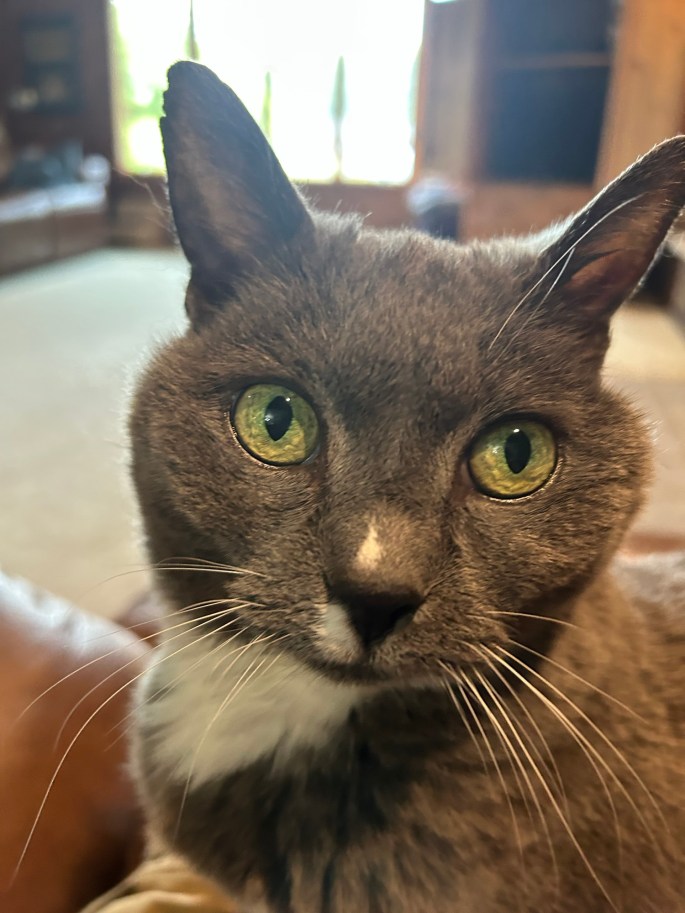
Then, my mind wandered to the previous week’s scare when we thought we would lose our beloved 18-year-old cat, Tippi-Tail. After beginning a new medication for hyperthyroidism, she developed alarming side effects and seemed to rapidly decline. We quickly scheduled an appointment with our veterinarian, fearing the worst. Fortunately, her symptoms turned out to be a short-lived reaction to the treatment, and her bloodwork revealed she was doing remarkably well for her age.
Tippi-Tail’s Nine Lives 😸
Reflecting on her life further, I thought of her “nine lives”, although, truth be told, she’s had about three. When she was young, Tippi acted impulsively. In fact, we often called her “wild” as she went rip-roaring through the house, knocking over plants, and attacking our then older feline friend, Bobbi with wild abandon. We would correct her with a squirt from a water bottle and a firm “no,” but she was fearless, looking at us with her big-eyed stare of indignation.
During her middle years, our home became busier and noisier with another cat, another dog, and our energetic daughter and her friends. The fearless kitten who once charged through the house with wild abandon was now more cautious, often retreating under beds or into closets when her world became too stimulating and overwhelming.
In recent years, since the passing of all other pets and our daughter having moved out, Tippi has become an affectionate, cuddly pet. She is now a lap cat who drools when she’s petted as her motor runs. Even more surprising, she greets guests instead of going into hiding, and will even allow them to pet her or occasionally honor them by curling up in their lap.
Learning to Grow Older 👵🏼
It dawned on me that Tippi-Tail wasn’t meant to be the cat she once was at two years old. She can’t jump as high or move as quickly as she once did, but she still leaps into the window when the neighbor’s cat appears. Her body has changed, yet she grooms herself with meticulous care. Tippi isn’t failing at being young. She is succeeding at being old.
At my age, my body may not move as it once did when I was younger. I may not learn new technology as quickly as I once did. I may need more recovery time than I once did. In fact, I may have to adapt how I do certain things, but that adaptation doesn’t mean I am failing.
Watching Tippi-Tail adapt to each stage of her life reminded me of something I needed to hear myself. Like Tippi-Tail, perhaps we aren’t failing at being the younger versions of ourselves. Perhaps we are learning how to succeed at who we are now.
Maybe the question isn’t, “What’s wrong with you?” Maybe the better question is, “What’s strong with you?” What strengths do we already possess that can help us navigate the challenges in front of us?
 Steph Simply